

The DOI matches its Crossref record; 81 of the 81 references it cites were found in a registry or an index.
Scalable production of tissue-like vascularized liver organoids from human PSCs
Open accessAbstract
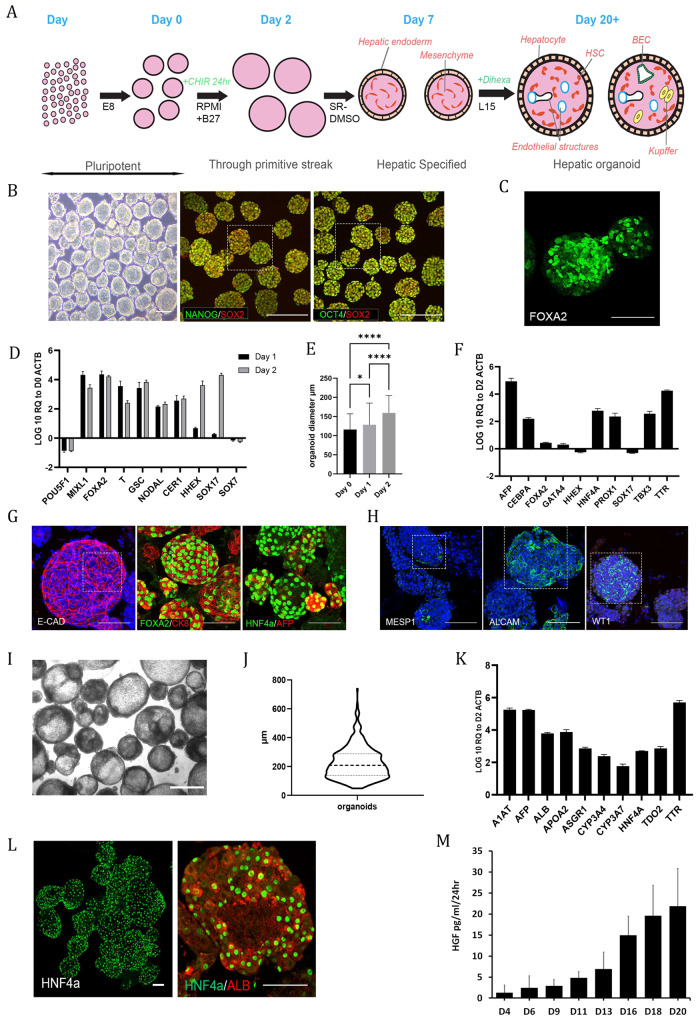
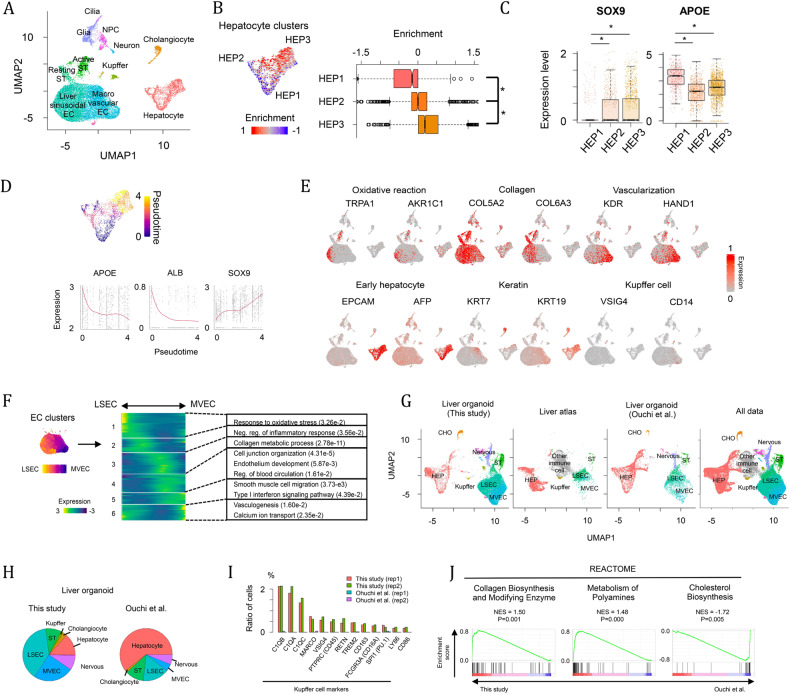
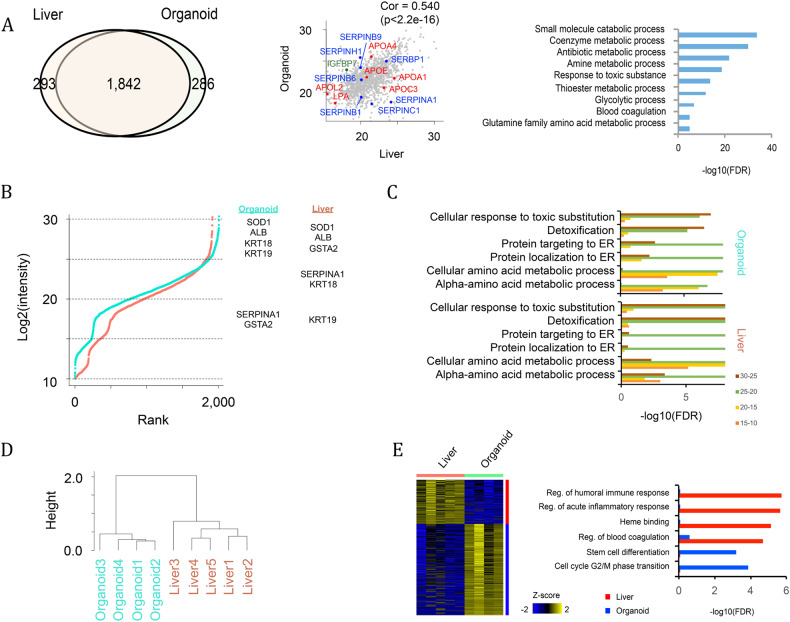
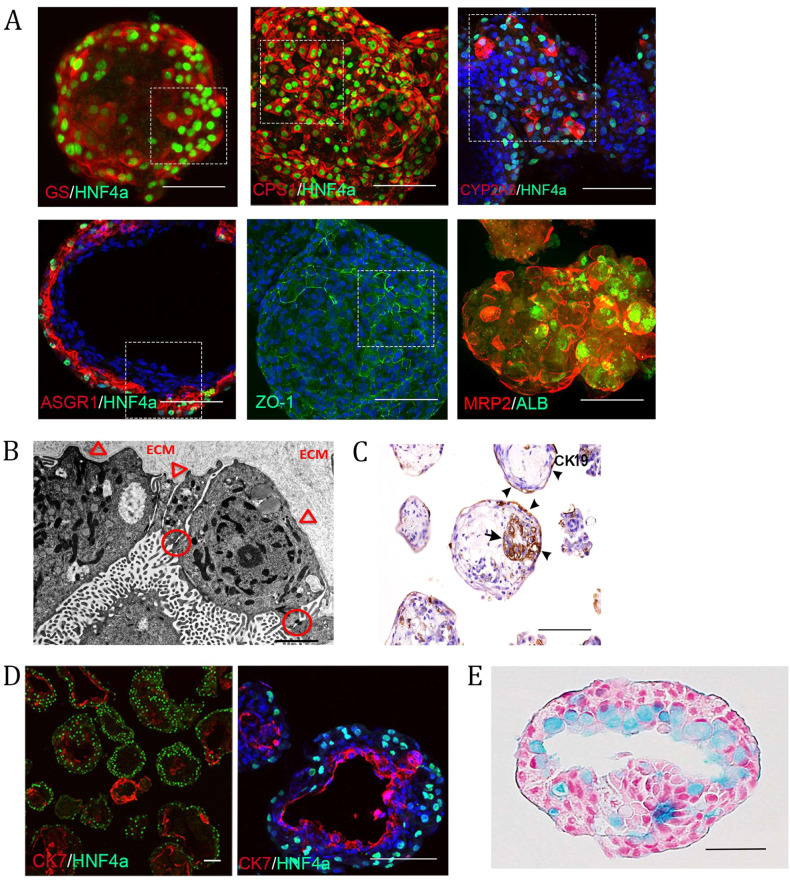
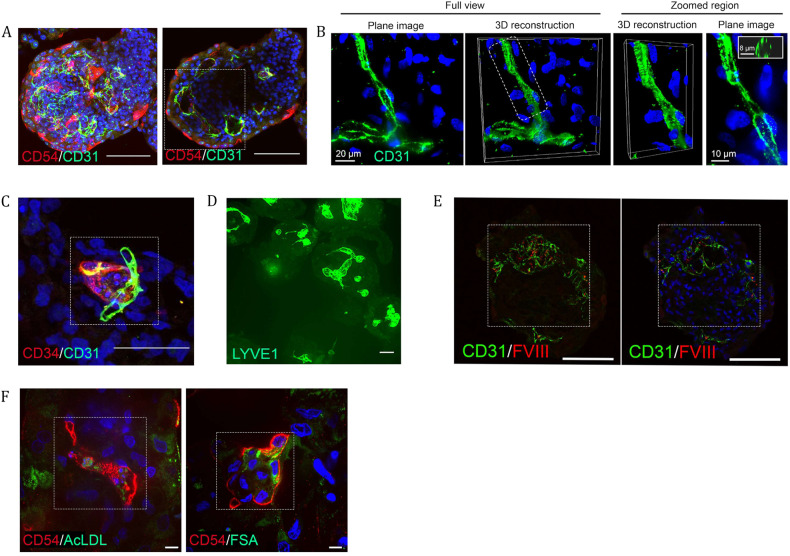
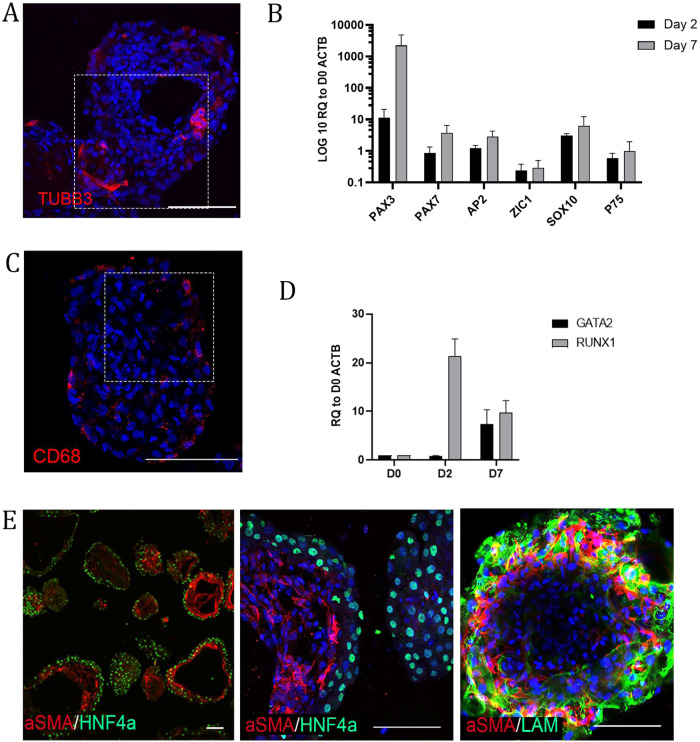
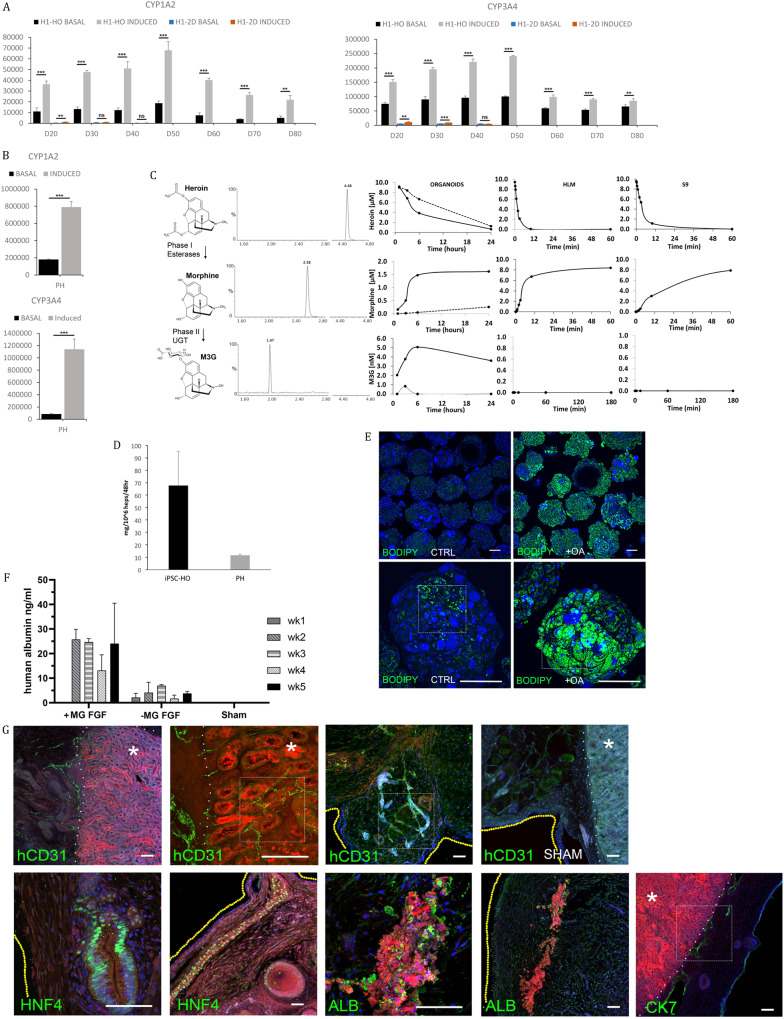
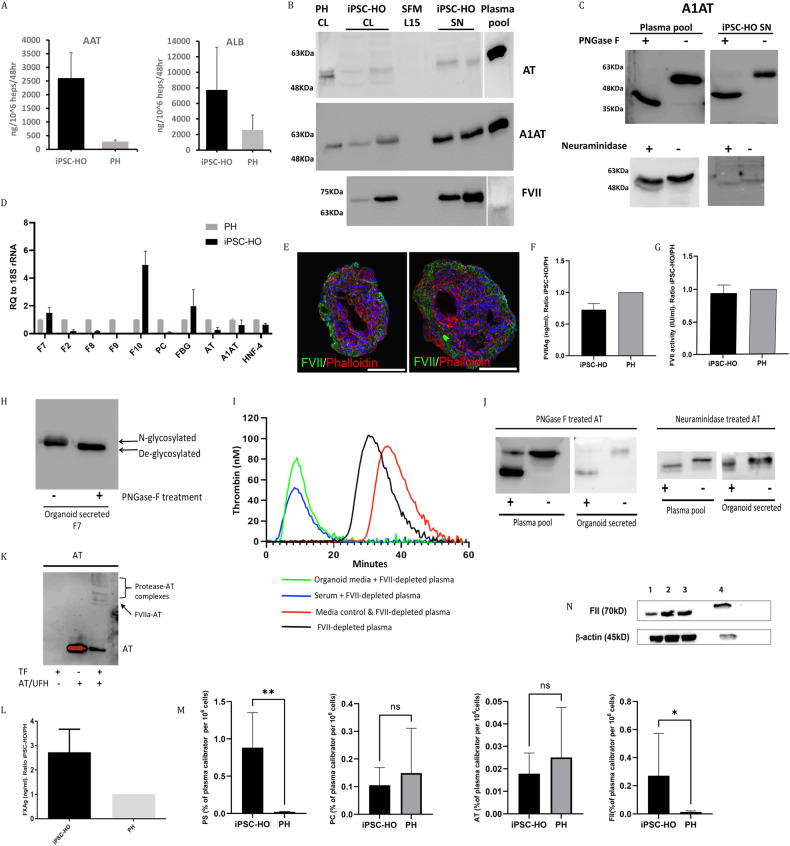
The lack of physiological parity between 2D cell culture and in vivo culture has led to the development of more organotypic models, such as organoids. Organoid models have been developed for a number of tissues, including the liver. Current organoid protocols are characterized by a reliance on extracellular matrices (ECMs), patterning in 2D culture, costly growth factors and a lack of cellular diversity, structure, and organization. Current hepatic organoid models are generally simplistic and composed of hepatocytes or cholangiocytes, rendering them less physiologically relevant compared to native tissue. We have developed an approach that does not require 2D patterning, is ECM independent, and employs small molecules to mimic embryonic liver development that produces large quantities of liver-like organoids. Using single-cell RNA sequencing and immunofluorescence, we demonstrate a liver-like cellular repertoire, a higher order cellular complexity, presenting with vascular luminal structures, and a population of resident macrophages: Kupffer cells. The organoids exhibit key liver functions, including drug metabolism, serum protein production, urea synthesis and coagulation factor production, with preserved post-translational modifications such as N-glycosylation and functionality. The organoids can be transplanted and maintained long term in mice producing human albumin. The organoids exhibit a complex cellular repertoire reflective of the organ and have de novo vascularization and liver-like function. These characteristics are a prerequisite for many applications from cellular therapy, tissue engineering, drug toxicity assessment, and disease modeling to basic developmental biology.
Overview
The claims and statistics of this paper haven’t been checked yet.
Run the check — free, no account needed. It reads the open-access text and checks the sources it cites.
Integrity signals
Registry
Cites
Statistics
Figures
Verification
Claims the paper makes
The claims and statistics of this paper haven’t been checked yet.
Run the check — free, no account needed. It reads the open-access text and checks the sources it cites.
Claims other papers make about this one
Each is checked against this paper’s own text: does it say what the citing paper says it does?
The source backs part of the claim, not all of it — or backs it for a different population, condition or comparison.
In the citing paper
“Studies have confirmed that liver organoids express key enzymes, including members of the cytochrome P450 (CYP450) family and hepatic transporters, though often at lower levels compared to native liver tissue14,15.”
From Temporal proteomic profiling of iPSC-derived human liver organoids reveals optimal maturation for drug metabolism and toxicology (2026) · cites this paper as [15]
Experimental — accuracy not yet measuredThe source backs part of the claim, not all of it — or backs it for a different population, condition or comparison.
In the citing paper
“By profiling protein expression dynamics, proteomics can offer a temporal roadmap of cellular differentiation and functional development in organoids14–17.”
From Temporal proteomic profiling of iPSC-derived human liver organoids reveals optimal maturation for drug metabolism and toxicology (2026) · cites this paper as [15]
Experimental — accuracy not yet measuredThe cited source says what the claim attributes to it.
In the citing paper
“Unlike most prior studies, which typically analyze snapshots of organoid development at single timepoints14,15, this study employs a longitudinal approach to track the dynamic transitions of iHLO populations.”
From Temporal proteomic profiling of iPSC-derived human liver organoids reveals optimal maturation for drug metabolism and toxicology (2026) · cites this paper as [15]
The cited source says what the claim attributes to it.
In the citing paper
“The findings from current study align with previous proteomic studies of liver organoids, which have demonstrated their capacity to recapitulate liver-specific phenotypes.”
From Temporal proteomic profiling of iPSC-derived human liver organoids reveals optimal maturation for drug metabolism and toxicology (2026) · cites this paper as [15]
The cited source says what the claim attributes to it.
In the citing paper
“Similarly, Harrison et al. compare iHLO protein profiles with native liver tissue and highlighted enrichment of detoxification pathways in both systems, emphasizing the relevance of organoids for metabolically intensive applications15.”
From Temporal proteomic profiling of iPSC-derived human liver organoids reveals optimal maturation for drug metabolism and toxicology (2026) · cites this paper as [15]
The cited source says what the claim attributes to it.
In the citing paper
“It is also noteworthy that Day 21, or around this timepoint, has been identified as an important stage for liver organoid functional development in several previous studies13,15,28,29.”
From Temporal proteomic profiling of iPSC-derived human liver organoids reveals optimal maturation for drug metabolism and toxicology (2026) · cites this paper as [15]
Self-check
Percentages, sums and reported differences re-computed from the paper’s own numbers.
The self-check needs the paper’s full text.
Citations
Cites
Subramanian, A., Tamayo, P., Mootha, V. K., Mukherjee, S., Ebert, B. L., Gillette, M. A., Paulovich, A., Pomeroy, S. L., Golub, T. R., Lander, E. S., et al. (2005) · Proceedings of the National Academy of Sciences · doi:10.1073/pnas.0506580102 · Cited by 53,625
HTSeq—a Python framework to work with high-throughput sequencing data
Anders, S., Pyl, P. T., & Huber, W. (2015) · Bioinformatics · doi:10.1093/bioinformatics/btu638 · Cited by 21,464
Integrating single-cell transcriptomic data across different conditions, technologies, and species
Butler, A., Hoffman, P., Smibert, P., Papalexi, E., & Satija, R. (2018) · Nature Biotechnology · doi:10.1038/nbt.4096 · Cited by 13,174
TopHat: discovering splice junctions with RNA-Seq
Trapnell, C., Pachter, L. S., & Salzberg, S. L. (2009) · Bioinformatics · doi:10.1093/bioinformatics/btp120 · Cited by 11,682
Normalization of RNA-seq data using factor analysis of control genes or samples
Risso, D., Ngai, J., Speed, T. P., & Dudoit, S. (2014) · Nature Biotechnology · doi:10.1038/nbt.2931 · Cited by 2,052
Using GOstats to test gene lists for GO term association
Falcon, S., & Gentleman, R. C. (2006) · Bioinformatics · doi:10.1093/bioinformatics/btl567 · Cited by 2,019
Monocytes and macrophages: developmental pathways and tissue homeostasis
Ginhoux, F., & Jung, S. (2014) · Nature Reviews Immunology · doi:10.1038/nri3671 · Cited by 1,840
Single cell RNA sequencing of human liver reveals distinct intrahepatic macrophage populations
MacParland, S. A., Liu, J. C., Ma, X.-Z., Innes, B. T., Bartczak, A. M., Gage, B. K., Manuel, J., Khuu, N., Echeverri, J., Linares, I., et al. (2018) · Nature Communications · doi:10.1038/s41467-018-06318-7 · Cited by 1,552
Icy: an open bioimage informatics platform for extended reproducible research
de Chaumont, F., Dallongeville, S., Chenouard, N., Hervé, N., Pop, S., Provoost, T., Meas‐Yedid, V., Pankajakshan, P., Lecomte, T., Montagner, Y. L., et al. (2012) · Nature Methods · doi:10.1038/nmeth.2075 · Cited by 1,538
Trefts, E., Gannon, M., & Wasserman, D. H. (2017) · Current Biology · doi:10.1016/j.cub.2017.09.019 · Cited by 1,452
Research works printed but not linked: 1
- Lewis, S. L., Dirksen, S. R., Lewis, S. M., Heitkemper, M. M. L. & Bucher, L. Clinical Companion to Medical-Surgical Nursing: Assessment and Management of Clinical Problems. (Elsevier, 2013).
Cited by
Sorted by citations
Liver Organoids: Recent Developments, Limitations and Potential
Harrison, S. P., Baumgarten, S., Verma, R., Lunov, O., Dejneka, A., & Sullivan, G. J. (2021) · Frontiers in Medicine · doi:10.3389/fmed.2021.574047 · Cited by 152
Self-citationRecent advances in lung organoid development and applications in disease modeling
Vazquez‐Armendariz, A. I., & Tata, P. R. (2023) · Journal of Clinical Investigation · doi:10.1172/jci170500 · Cited by 136
Multi-zonal liver organoids from human pluripotent stem cells
Reza, H. A., Santangelo, C., Iwasawa, K., Reza, A. A., Sekiya, S., Glaser, K., Bondoc, A., Merola, J., & Takebe, T. (2025) · Nature · doi:10.1038/s41586-025-08850-1 · Cited by 71
Organoids from pluripotent stem cells and human tissues: When two cultures meet each other
Artegiani, B., & Hendriks, D. F. G. (2025) · Developmental Cell · doi:10.1016/j.devcel.2025.01.005 · Cited by 54
Hu, Y., Zhu, T., Cui, H., & Cui, H. (2024) · Advanced Healthcare Materials · doi:10.1002/adhm.202403762 · Cited by 53
Metadata
- Authors
- Harrison, S. P., Siller, R., Tanaka, Y., Chollet, M. E., de la Morena-Barrio, M. E., Xiang, Y., Patterson, B., Andersen, E., Bravo-Pérez, C., Kempf, H., Åsrud, K. S., Lunov, O., Dejneka, A., Mowinckel, M.-C., Stavik, B., Sandset, P. M., Melum, E., Baumgarten, S., Bonanini, F., Kurek, D., Mathapati, S., Almaas, R., Sharma, K., Wilson, S. R., Skottvoll, F. S., Boger, I. C., Bogen, I. L., Nyman, T. A., Wu, J. J., Bezrouk, A., Cizkova, D., Corral, J., Mokry, J., Zweigerdt, R., Park, I.-H., & Sullivan, G. J.
- Affiliations
- Oslo University Hospital (NO)
- University of Oslo (NO)
- Hôpital Maisonneuve-Rosemont (CA)
- Yale University (US)
- Medizinische Hochschule Hannover (DE)
- Czech Academy of Sciences (CZ)
- Mimetas (Netherlands) (NL)
- Durham University (GB)
- Centro Regional de Hemodonación (ES)
- Corresponding author
- Sullivan, Gareth J.
- ORCID
- Harrison, Sean P.
- Siller, Richard
- Tanaka, Yoshiaki
- Xiang, Yangfei
- Andersen, Elisabeth
- Kempf, Henning
- Lunov, Oleg
- Dejneka, Alexandr
- Stavik, Benedicte
- Sandset, Per Morten
- Melum, Espen
- Bonanini, Flavio
- Kurek, Dorota
- Mathapati, Santosh
- Almaas, Runar
- Sharma, Kulbhushan
- Wilson, Steven R.
- Skottvoll, Frøydis S.
- Bogen, Inger Lise
- Nyman, Tuula A.
- Wu, Jun Jie
- Corral, Javier
- Mokry, Jaroslav
- Zweigerdt, Robert
- Park, In-Hyun
- Sullivan, Gareth J.
- Venue
- Experimental & Molecular Medicine
- Published
- 2023-09-01
- Volume
- 55
- Issue
- 9
- Pages
- 2005-2024
- ISSN
- 1226-3613 (ISSN-L)
- 2092-6413
- PMC
- PMC10545717
- OpenAlex
- W4386318431
- Cited by
- 119
- References
- 81
- Citations by year
- 2026: 41 · 2025: 45 · 2024: 26 · 2023: 3
- FWCI
- 10.25
- Type
- journal article
- Language
- en
- Open access
- gold
- doi.org
- Locations
- Experimental & Molecular Medicine (publishedVersion, cc-by)
- PubMed Central (publishedVersion, cc-by)
- PubMed (publishedVersion)
- St Andrews Research Repository (St Andrews Research Repository) (submittedVersion, cc-by)
- DOAJ (DOAJ: Directory of Open Access Journals) (submittedVersion, cc-by-sa)
- NORA - Norwegian Open Research Archives (submittedVersion, cc-by)
- Funders
- Norges Forskningsråd (262613, 247624)
- Topics
- Life Sciences › Biochemistry, Genetics and Molecular Biology › Molecular Biology › Pluripotent Stem Cells Research
- Physical Sciences › Engineering › Biomedical Engineering › 3D Printing in Biomedical Research
- Health Sciences › Medicine › Surgery › Tissue Engineering and Regenerative Medicine
- Keywords
- liver organoids, vascularized organoids, human pluripotent stem cells, organotypic culture, embryonic liver development, Kupffer cells, drug metabolism, albumin synthesis, transplantation, N-glycosylation, cellular diversity, disease modeling
- MeSH terms
- Animals, Cells, Cultured, Humans, Liver, Organoids, Hepatocytes, Tissue Engineering, Mice
About these checks
Registry, retraction, Cites and statistics results are computed, not judged, with one exception: a printed reference that no index lists is read once by a model before it counts as a citation error. Claims are extracted by a model and kept only when their quote appears verbatim in the text; each cited source is then checked, with a model’s help, for whether it says what the claim relies on. Those verdicts can be wrong — read the claim’s quote and the cited source before relying on one.
Statistics and arithmetic are recomputed, not judged.
Confidence bands are shown only for fields calibrated on our annotated test set. None is calibrated yet, so no band is shown.
What counts as a claim ›How we measure confidence ›How we check this ›
Are you an author, or do you see a problem with this page? Request a review
