

Wnt/β-catenin signaling components and mechanisms in bone formation, homeostasis, and disease
Open accessThe DOI matches its Crossref record; 502 of the 503 references it cites were found in a registry or an index.
Abstract
Wnts are secreted, lipid-modified proteins that bind to different receptors on the cell surface to activate canonical or non-canonical Wnt signaling pathways, which control various biological processes throughout embryonic development and adult life. Aberrant Wnt signaling pathway underlies a wide range of human disease pathogeneses. In this review, we provide an update of Wnt/β-catenin signaling components and mechanisms in bone formation, homeostasis, and diseases. The Wnt proteins, receptors, activators, inhibitors, and the crosstalk of Wnt signaling pathways with other signaling pathways are summarized and discussed. We mainly review Wnt signaling functions in bone formation, homeostasis, and related diseases, and summarize mouse models carrying genetic modifications of Wnt signaling components. Moreover, the therapeutic strategies for treating bone diseases by targeting Wnt signaling, including the extracellular molecules, cytosol components, and nuclear components of Wnt signaling are reviewed. In summary, this paper reviews our current understanding of the mechanisms by which Wnt signaling regulates bone formation, homeostasis, and the efforts targeting Wnt signaling for treating bone diseases. Finally, the paper evaluates the important questions in Wnt signaling to be further explored based on the progress of new biological analytical technologies.
Overview
The claims and statistics of this paper haven’t been checked yet.
Free: it reads the open-access text and checks the first 5 claims that cite a source we can check. Create a free account to check every claim.
Integrity signals
Registry
Cites
Statistics
Figures
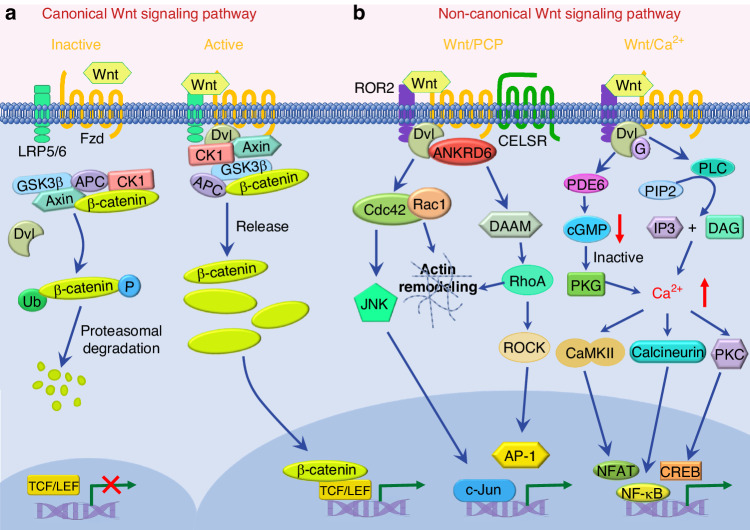
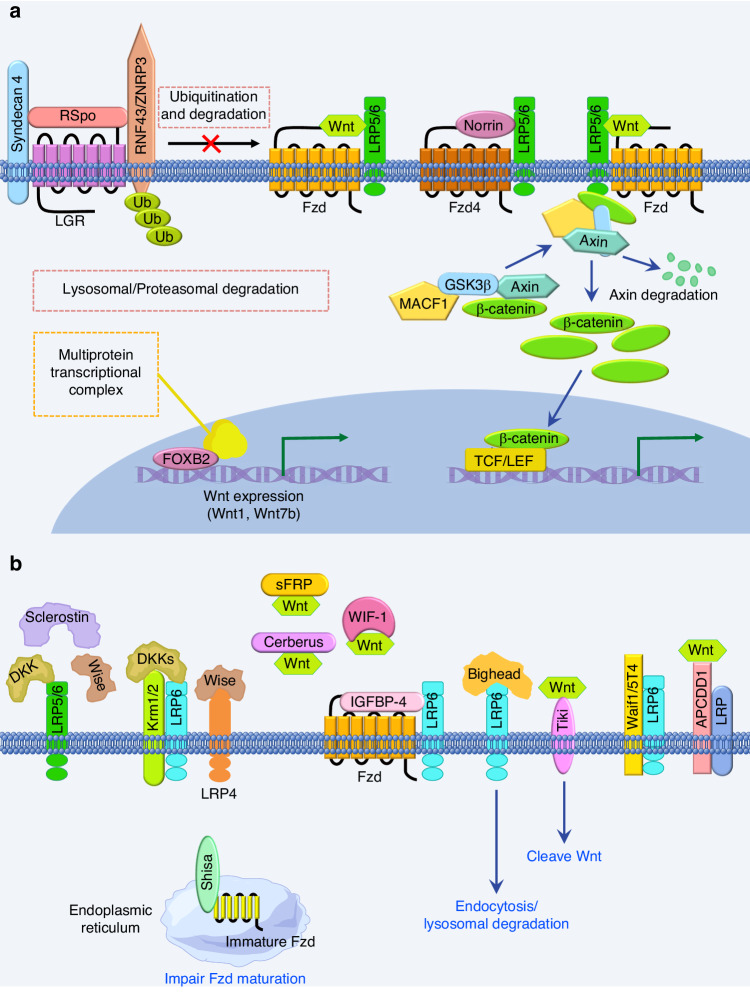
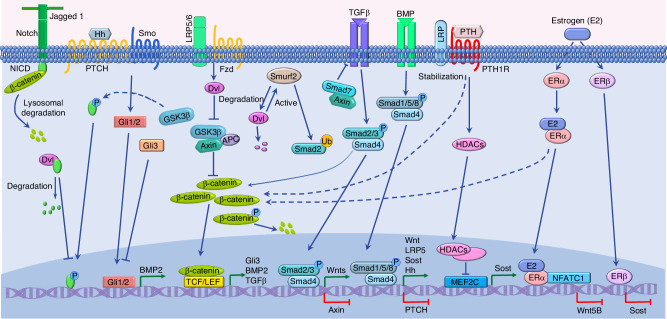
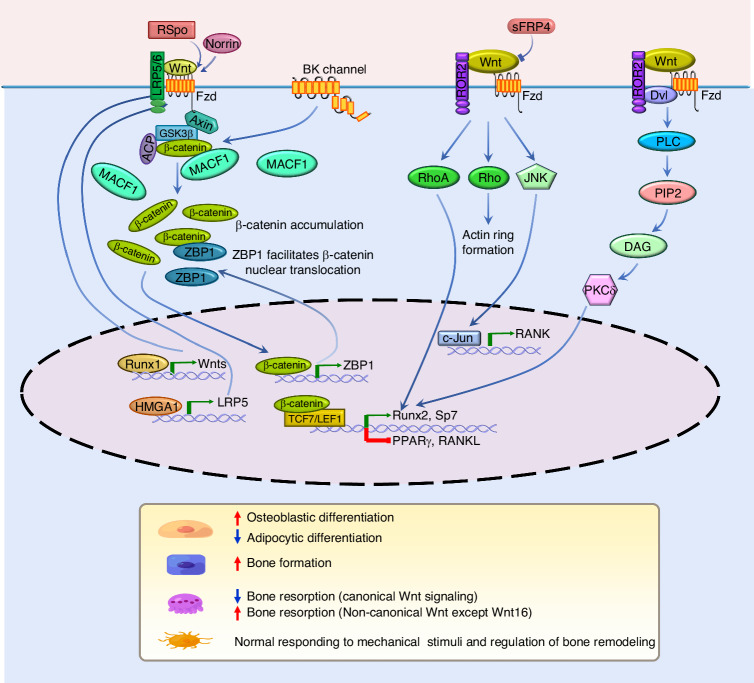
Verification
Claims the paper makes
The claims and statistics of this paper haven’t been checked yet.
Free: it reads the open-access text and checks the first 5 claims that cite a source we can check. Create a free account to check every claim.
Claims other papers make about this one
Each is checked against this paper’s own text: does it say what the citing paper says it does?
The source backs part of the claim, not all of it — or backs it for a different population, condition or comparison.
In the citing paper
“Genetic characterization of Wnt pathway components—particularly the osteocyte-derived Wnt inhibitor sclerostin—demonstrates that molecular and genotype-based stratification can predict individual therapeutic responses and guide precision selection of bone-anabolic interventions [149,150].”
From Interorgan Communications in Skeletal Pathophysiology: From Molecular Pathways to Multidisciplinary Therapies (2026) · cites this paper as [150]
Experimental — accuracy not yet measured
Self-check
Percentages, sums and reported differences re-computed from the paper’s own numbers.
The self-check needs the paper’s full text.
Citations
Cites
1 retracted
Peng, Z. Y., Lu, S., Lou, Z., Li, Z., Li, S., Yang, K., & Li, C. (2021) · Bioengineered · doi:10.1080/21655979.2021.1996015 · Cited by 21
RetractedWnt/β-catenin signaling and disease
Clevers, H., & Nusse, R. (2012) · Cell · doi:10.1016/j.cell.2012.05.012 · Cited by 5,554 · cited 2×
“1,2,19 In the canonical Wnt signaling pathway, β -catenin functions as a key transcriptional co-activator and transmits extracellular signals to activate the target genes (Fig.”
BackgroundStöckl, S., Göttl, C., Grifka, J., & Grässel, S. (2013) · Cellular Physiology and Biochemistry · doi:10.1159/000350089 · Cited by 4,656
Mutations affecting segment number and polarity in Drosophila
Nüsslein-Volhard, C., & Wieschaus, E. (1980) · Nature · doi:10.1038/287795a0 · Cited by 4,370
Wnt/β-Catenin Signaling, Disease, and Emerging Therapeutic Modalities
Nusse, R., & Clevers, H. (2017) · Cell · doi:10.1016/j.cell.2017.05.016 · Cited by 4,342
Osteoarthritis: A disease of the joint as an organ
Loeser, R. F., Goldring, S. R., Scanzello, C. R., & Goldring, M. B. (2012) · Arthritis & Rheumatism · doi:10.1002/art.34453 · Cited by 3,076 · cited 1×
“347 Wnts also play a key role in OA.”
BackgroundSpatially resolved, highly multiplexed RNA profiling in single cells
Chen, K. H., Boettiger, A. N., Moffitt, J. R., Wang, S., & Zhuang, X. (2015) · Science · doi:10.1126/science.aaa6090 · Cited by 2,969
Constitutive Transcriptional Activation by a β-Catenin-Tcf Complex in APC −/− Colon Carcinoma
Korinek, V., Barker, N., Morin, P. J., van Wichen, D., de Weger, R., Kinzler, K. W., Vogelstein, B., & Clevers, H. (1997) · Science · doi:10.1126/science.275.5307.1784 · Cited by 2,905
Identification of FAP Locus Genes from Chromosome 5q21
Kinzler, K. W., Nilbert, M. C., Su, L.-K., Vogelstein, B., Bryan, T. M., Levy, D. B., Smith, K. J., Preisinger, A. C., Hedge, P., McKechnie, D., et al. (1991) · Science · doi:10.1126/science.1651562 · Cited by 2,355
Wnt proteins are lipid-modified and can act as stem cell growth factors
Willert, K., Brown, J. D., Danenberg, E., Duncan, A. W., Weissman, I. L., Reya, T., Yates, J. R., & Nusse, R. (2003) · Nature · doi:10.1038/nature01611 · Cited by 2,257
Research works printed but not linked: 4
- Tu X Noncanonical Wnt signaling through G protein-linked PKCdelta activation promotes bone formation Dev. Cell 2007 12 113 127 10.1016/j.devcel.2006.11.003 17199045 PMC1861818 · DOI · Paper page
- Holmen SL Essential role of β-catenin in postnatal bone acquisition J. Biol. Chem. 2005 280 21162 21168 10.1074/jbc.M501900200 15802266 · DOI · Paper page
- Wei W Biphasic and dosage-dependent regulation of osteoclastogenesis by β-catenin Mol. Cell. Biol. 2011 31 4706 4719 10.1128/MCB.05980-11 21876000 PMC3232928 · DOI · Paper page
- Kramer I Osteocyte Wnt/β-catenin signaling is required for normal bone homeostasis Mol. Cell. Biol. 2010 30 3071 3085 10.1128/MCB.01428-09 20404086 PMC2876685 · DOI · Paper page
Cited by
Cell communication and relevant signaling pathways in osteogenesis–angiogenesis coupling
Shu-qing, L., Cai, X., Guo, J., Li, X., Li, W., Liu, Y., & Qi, M. (2025) · Bone Research · doi:10.1038/s41413-025-00417-0 · Cited by 189
The Future of Bone Repair: Emerging Technologies and Biomaterials in Bone Regeneration
Łuczak, J. W., Palusińska, M., Matak, D., Pietrzak, D., Nakielski, P., Lewicki, S., Grodzik, M., & Szymański, Ł. (2024) · International Journal of Molecular Sciences · doi:10.3390/ijms252312766 · Cited by 142
Advancing osteoarthritis research: The role of AI in clinical, imaging and omics fields
Ou, J., Zhang, J., Alswadeh, M., Zhu, Z., Tang, J., Sang, H., & Lu, K. (2025) · Bone Research · doi:10.1038/s41413-025-00423-2 · Cited by 61
“18 19 – 21 In this context, the engineering of bone/cartilage organoids has emerged as a novel platform for recapitulating the cellular and molecular environments of OA.”
Fang, X., Wang, Y., Chen, H., Yan, Z., Jin, S., Wu, Y., Shu, F., & Xiao, S. (2025) · MedComm · doi:10.1002/mco2.70381 · Cited by 99
“…translocates into the nucleus, where it forms complexes with T-cell factor/lymphoid enhancer factor (TCF/LEF) transcription factors, subsequently activating downstream genes involved in cell cycle progression (e.g., cyclin D1, c-myc), tissue remodeling (FGF20), and negative feedback (DKK1) [98].”
Signaling Pathways Driving MSC Osteogenesis: Mechanisms, Regulation, and Translational Applications
Wang, L., Ruan, M. Q., Bu, Q., & Zhao, C. (2025) · International Journal of Molecular Sciences · doi:10.3390/ijms26031311 · Cited by 71
Metadata
- Authors
- Hu, L., Chen, W., Qian, A., & Li, Y.-P.
- Affiliations
- Northwestern Polytechnical University (CN)
- Tulane University (US)
- Corresponding author
- Qian, Airong
- Venue
- Bone Research
- Published
- 2024-07-10
- Volume
- 12
- Issue
- 1
- Pages
- 39-39
- ISSN
- 2095-4700 (ISSN-L)
- 2095-6231
- PMC
- PMC11237130
- OpenAlex
- W4400496274
- Cited by
- 359
- References
- 503
- Citations by year
- 2026: 188 · 2025: 155 · 2024: 16
- FWCI
- 14.61
- Type
- journal article
- Language
- en
- Open access
- gold
- doi.org
- Licence
- cc-by
- creativecommons.org/licenses/by/4.0 (tdm)
- creativecommons.org/licenses/by/4.0 (vor)
- Locations
- Bone Research (publishedVersion, cc-by)
- PubMed Central (publishedVersion, cc-by)
- PubMed (publishedVersion)
- DOAJ (DOAJ: Directory of Open Access Journals) (submittedVersion)
- Funders
- U.S. Department of Health & Human Services | NIH | National Institute of Arthritis and Musculoskeletal and Skin Diseases (AR075735, AR074954, AR070135)
- U.S. Department of Health & Human Services | NIH | National Institute of Dental and Craniofacial Research (DE028264, DE023813)
- National Natural Science Foundation of China (81772017, 82072106)
- Natural Science Basic Research Plan in Shaanxi Province of China
- U.S. Department of Health & Human Services | NIH | National Institute on Aging (AG056438)
- Topics
- Life Sciences › Biochemistry, Genetics and Molecular Biology › Molecular Biology › Wnt/β-catenin signaling in development and cancer
- Life Sciences › Biochemistry, Genetics and Molecular Biology › Molecular Biology › Bone Metabolism and Diseases
- Health Sciences › Medicine › Orthopedics and Sports Medicine › Bone health and osteoporosis research
- Keywords
- Wnt/β-catenin signaling, bone formation, bone homeostasis, bone disease, Wnt receptors, Wnt inhibitors, signaling crosstalk, mouse model
- MeSH terms
- Animals, Bone Diseases, Homeostasis, Humans, Osteogenesis, Wnt Proteins, beta Catenin, Wnt Signaling Pathway
About these checks
Registry, retraction, Cites and statistics results are computed, not judged, with one exception: a printed reference that no index lists is read once by a model before it counts as a citation error. Claims are extracted by a model and kept only when their quote appears verbatim in the text; each cited source is then checked, with a model’s help, for whether it says what the claim relies on. Those verdicts can be wrong — read the claim’s quote and the cited source before relying on one.
Statistics and arithmetic are recomputed, not judged.
Confidence bands are shown only for fields calibrated on our annotated test set. None is calibrated yet, so no band is shown.
What counts as a claim ›How we measure confidence ›How we check this ›
Are you an author, or do you see a problem with this page? Request a review
How to cite
Cite CoChat for the checks on this page, and the paper for its own findings.
- This page
- CoChat. (2026). Citation check: Wnt/β-catenin signaling components and mechanisms in bone formation, homeostasis, and disease. https://app.cochat.ai/papers/10.1038/s41413-024-00342-8
- The paper
- Hu, L., Chen, W., Qian, A., & Li, Y.-P. (2024). Wnt/β-catenin signaling components and mechanisms in bone formation, homeostasis, and disease. Bone Research. https://doi.org/10.1038/s41413-024-00342-8
Data sources
Bibliographic data: Semantic Scholar, OpenAlex, Crossref.
Contains information from the Semantic Scholar Academic Graph Datasets, made available under the ODC Attribution License (ODC-BY 1.0).
Semantic Scholar’s data is described in: Kinney, R., et al. (2023). The Semantic Scholar Open Data Platform. arXiv:2301.10140.
