

A combined analysis of genetically correlated traits identifies 187 loci and a role for neurogenesis and myelination in intelligence
Open accessPublished version of a preprint
The DOI matches its Crossref record; 77 of the 78 references it cites were found in a registry or an index.
Abstract
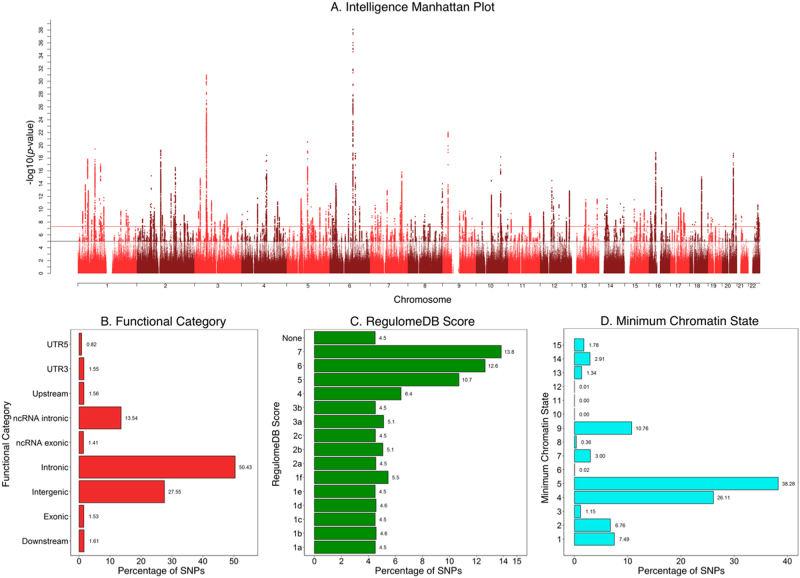
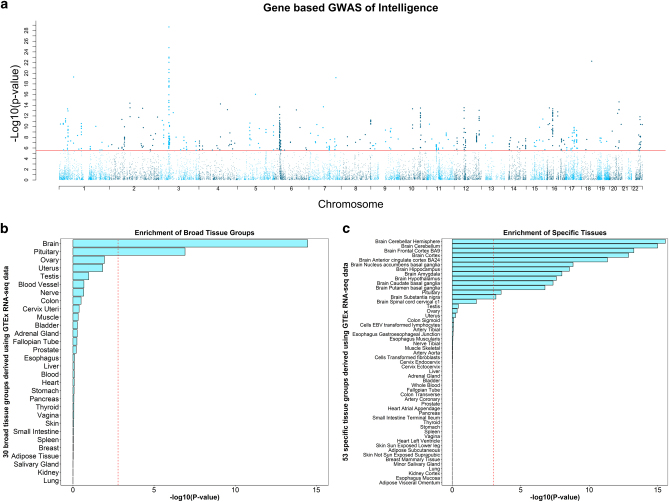
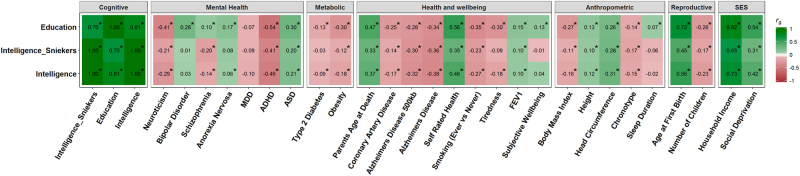
= 0.70). We used these findings as foundations for our use of a novel approach-multi-trait analysis of genome-wide association studies (MTAG; Turley et al. 2017)-to combine two large genome-wide association studies (GWASs) of education and intelligence, increasing statistical power and resulting in the largest GWAS of intelligence yet reported. Our study had four goals: first, to facilitate the discovery of new genetic loci associated with intelligence; second, to add to our understanding of the biology of intelligence differences; third, to examine whether combining genetically correlated traits in this way produces results consistent with the primary phenotype of intelligence; and, finally, to test how well this new meta-analytic data sample on intelligence predicts phenotypic intelligence in an independent sample. By combining datasets using MTAG, our functional sample size increased from 199,242 participants to 248,482. We found 187 independent loci associated with intelligence, implicating 538 genes, using both SNP-based and gene-based GWAS. We found evidence that neurogenesis and myelination-as well as genes expressed in the synapse, and those involved in the regulation of the nervous system-may explain some of the biological differences in intelligence. The results of our combined analysis demonstrated the same pattern of genetic correlations as those from previous GWASs of intelligence, providing support for the meta-analysis of these genetically-related phenotypes.
Overview
The claims and statistics of this paper haven’t been checked yet.
Free: it reads the open-access text and checks the first 5 claims that cite a source we can check. Create a free account to check every claim.
Integrity signals
Registry
Cites
Statistics
Figures
Verification
Claims the paper makes
The claims and statistics of this paper haven’t been checked yet.
Free: it reads the open-access text and checks the first 5 claims that cite a source we can check. Create a free account to check every claim.
Claims other papers make about this one
Each is checked against this paper’s own text: does it say what the citing paper says it does?
The source backs part of the claim, not all of it — or backs it for a different population, condition or comparison.
In the citing paper
“Most genome-wide association studies (GWAS) to date have focused on intelligence or g [234–237], and suggest that hundreds to thousands of genes additively influence variation in intelligence, with the effect of any one gene being very small (typically in GWAS, a variant has r2 < 0.05% [238]).”
From The role of prefrontal cortex in cognitive control and executive function (2022) · cites this paper as [237]
Experimental — accuracy not yet measured
Self-check
Percentages, sums and reported differences re-computed from the paper’s own numbers.
The self-check needs the paper’s full text.
Citations
Cites
Controlling the False Discovery Rate: A Practical and Powerful Approach to Multiple Testing
Benjamini, Y., & Hochberg, Y. (1995) · Journal of the Royal Statistical Society Series B: Statistical Methodology · doi:10.1111/j.2517-6161.1995.tb02031.x · Cited by 109,482 · cited 2×
“0168 for the final meta-analytic dataset on intelligence [46].”
BackgroundMethodSubramanian, A., Tamayo, P., Mootha, V. K., Mukherjee, S., Ebert, B. L., Gillette, M. A., Paulovich, A., Pomeroy, S. L., Golub, T. R., Lander, E. S., et al. (2005) · Proceedings of the National Academy of Sciences · doi:10.1073/pnas.0506580102 · Cited by 53,625 · cited 2×
“A total of 10,891 gene-sets (sourced from Gene Ontology [27], Reactome [28], and, MSigDB [29]) were examined for enrichment in intelligence.”
MethodGene Ontology: tool for the unification of biology
Ashburner, M., Ball, C. A., Blake, J. A., Botstein, D., Butler, H., Cherry, J. M., Davis, A. P., Dolinski, K., Dwight, S. S., Eppig, J. T., et al. (2000) · Nature Genetics · doi:10.1038/75556 · Cited by 43,206 · cited 2×
“A total of 10,891 gene-sets (sourced from Gene Ontology [27], Reactome [28], and, MSigDB [29]) were examined for enrichment in intelligence.”
MethodPLINK: a tool set for whole-genome association and population-based linkage analyses.
Purcell, S., Neale, B., Todd-Brown, K., Thomas, L., Ferreira, M. A. R., Bender, D., Maller, J., Sklar, P., de Bakker, P. I. W., Daly, M. J., et al. (2007) · The American Journal of Human Genetics · doi:10.1086/519795 · Cited by 34,089 · cited 1×
“These SNPs were found in 187 independent loci, identified using FUMA (Supplementary Table 2); [49, 36] this represents an increase of 169 loci compared to those”
ANNOVAR: functional annotation of genetic variants from high-throughput sequencing data
Wang, K., Li, M., & Hakonarson, H. (2010) · Nucleic Acids Research · doi:10.1093/nar/gkq603 · Cited by 14,621 · cited 3×
“The ANNOVAR [37] categories were used to identify the function of the SNP, and to locate its position within the genome.”
MethodGCTA: a tool for genome-wide complex trait analysis
Yang, J., Lee, S. H., Goddard, M. E., & Visscher, P. M. (2011) · The American Journal of Human Genetics · doi:10.1016/j.ajhg.2010.11.011 · Cited by 8,279 · cited 4×
“Using GCTA [9] on 131,790 reportedly-related participants one from each pair of related individuals was removed, based on a genetic relationship threshold of 0.025, leaving 332,050 individuals.”
MethodInfluentialA map of human genome variation from population-scale sequencing.
The 1000 Genomes Project Consortium (2010) · Nature · doi:10.1038/nature09534 · Cited by 7,877
An integrated map of genetic variation from 1,092 human genomes
The 1000 Genomes Project Consortium (2012) · Nature · doi:10.1038/nature11632 · Cited by 7,711
Biological insights from 108 schizophrenia-associated genetic loci
Schizophrenia Working Group of the Psychiatric Genomics Consortium (2014) · Nature · doi:10.1038/nature13595 · Cited by 7,577
Integrative analysis of 111 reference human epigenomes
Roadmap Epigenomics Consortium, Kundaje, A., Meuleman, W., Ernst, J., Bilenky, M., Yen, A., Heravi-Moussavi, A., Kheradpour, P., Zhang, Z., Wang, J., et al. (2015) · Nature · doi:10.1038/nature14248 · Cited by 6,368 · cited 2×
“127 epigenomes in the Roadmap Epigenomics Project [41].”
Background
Research works printed but not linked: 1
- 50. Brendan K Bulik-Sullivan, Po-Ru Loh, Hilary K Finucane, Ste- phan Ripke, Jian Yang, Nick Patterson, Mark J Daly, Alkes L Price, Benjamin M Neale, LD Score regression distinguishes confounding from polygenicity in genome-wide association stu- dies. Nature Genetics. 2015;47:291-5. · DOI · Paper page
Cited by
Items 201–300 of 314
Neuroimaging and epigenetic analysis reveal novel epigenetic loci in major depressive disorder
Yang, H.-H., Han, K., Kim, A., Kang, Y., Tae, W., Han, M.-R., & Ham, B. (2024) · Psychological Medicine · doi:10.1017/s0033291724000709 · Cited by 3
Watson, C. J., Zvrskovec, J., Merola, G. P., Gilchrist, L., Haussler, S. M., Schattner, M., Lo, C. W. H., Breen, G. D., Murray, R. M., Lewis, C. M., et al. (2026) · Molecular Psychiatry · doi:10.1038/s41380-026-03444-3 · Cited by 7
“Education is also highly correlated with intelligence, both from a genetic (rg = 0.7) [23] and phenotypic (r = 0.8) [24] standpoint.”
InfluentialHollowell, A., Gui, A., Wigdor, E. M., MORGAN, M., Hannigan, L. J., Corfield, E. C., Pool, R., Bruins, S., Ask, H., Middeldorp, C. M., et al. (2026) · Nature Human Behaviour · doi:10.1038/s41562-026-02486-5 · Cited by 3
“DDN has been associated with educational attainment 56 and intelligence 60 .”
Paul, S. E., Elsayed, N., Colbert, S. M. C., Bogdan, R., Hatoum, A. S., & Barch, D. M. (2024) · Development and Psychopathology · doi:10.1017/s0954579424001573 · Cited by 3
“…ability and SES (Tucker-Drob et al., 2013), as well as their shared genetic architecture ( rg = 0.65 – 0.82 in adults; Hill, Davies, et al., 2019; Hill, Marioni, et al., 2019), has been used to argue that cognitive deficits related to childhood poverty may be partially attributable to shared…”
InfluentialLife as an Intelligence Test: Intelligence, Education, and Behavioral Genetics
Scherz, P. (2021) · Culture Medicine and Psychiatry · doi:10.1007/s11013-021-09747-0 · Cited by 3
History, Status, and Development of AI-Based Learning Science
Wang, C., Cai, J., Gao, C.-L., & Ye, X. (2023) · SN Computer Science · doi:10.1007/s42979-023-01778-1 · Cited by 6
“found that cognitive ability and academic performance were positively correlated in an independent sample of subjects [29].”
BackgroundBrown, A. L., Sok, P., Raghubar, K. P., Lupo, P. J., Richard, M. A., Morrison, A. C., Yang, J., Stewart, C. F., Okcu, M. F., Chintagumpala, M., et al. (2023) · Neuro-Oncology · doi:10.1093/neuonc/noad072 · Cited by 3
Global developmental delay and a de novo deletion of the 16p13.13 region
Krakowski, A. D., Hoang, N., Trost, B., Summers, J., Ambrozewicz, P., & Vorstman, J. A. S. (2024) · BMJ Case Reports · doi:10.1136/bcr-2022-251521 · Cited by 3
Xia, C., Lu, Y., Zhou, Z., Marchi, M., Kweon, H., Ning, Y., Liewald, D. C. M., Anderson, E. L., Koellinger, P., Cox, S. R., et al. (2025) · Molecular Psychiatry · doi:10.1038/s41380-025-03047-4 · Cited by 7
“…attainment ( r g = 0.67, SE = 0.02) and social deprivation ( r g = 0.27, SE = 0.03) with cognitive ability found here and in previous studies [20, 21] and the fi nding that cognitive ability is a likely causal variable in differences in income and educational attainment in the UK [8, 12, 22],…”
InfluentialSelf-citationDeary, I. J. (2021) · Journal of Intelligence · doi:10.3390/jintelligence9030041 · Cited by 4
Self-citationThe Fault in Our Stars: Molecular Genetics and Information Technology Use
Brown, S. A., & Sias, R. W. (2023) · MIS Quarterly · doi:10.25300/misq/2022/17075 · Cited by 5
Paul, S. E., Elsayed, N. M., Bogdan, R., Colbert, S. M. C., Hatoum, A. S., & Barch, D. M. (2021) · medRxiv · doi:10.1101/2021.08.26.21262684 · Cited by 3
“13,14 At the same time, the moderate heritability of cognitive ability 15 and SES, as well as their shared genetic architecture (rg=0.65-0.82 in adults) 16,17 has been used to argue that cognitive deficits related to childhood poverty may be partially attributable to shared genetic liability.”
BackgroundInfluentialThe impact of poverty on mental illness: Emerging evidence of a causal relationshipPreprint
Marchi, M., Alkema, A., Xia, C., Thio, C. H. L., Chen, L.-Y., Schalkwijk, W., Galeazzi, G. M., Ferrari, S., Pingani, L., Kweon, H., et al. (2023) · medRxiv · doi:10.1101/2023.05.19.23290215 · Cited by 3
Self-citationThe genetics of fibromyalgia and its relationships to psychiatric and medical traits
Bright, U., Beck, S., Levey, D. F., Deak, J. D., Program, T. V. M. V., Gaziano, J. M., Stein, M. B., & Gelernter, J. E. (2026) · Nature Communications · doi:10.1038/s41467-026-75256-6 · Cited by 3
“CAMKV , signi fi cant in our cross-ancestry meta-analysis, was previously shown to affect intelligence 60 , educational attainment 61,62 and the pleiotropy between body mass index (BMI) and osteoarthritis 63 .”
Predicting Individual Differences in Cognitive Ability from Brain Imaging and Genetics
Anderson, K. M., & Holmes, A. J. (2021) · Cambridge University Press eBooks · doi:10.1017/9781108635462.021 · Cited by 3
Vertical pleiotropy explains the heritability of social science traits
Xia, C., & Hill, W. D. (2023) · Behavioral and Brain Sciences · doi:10.1017/s0140525x22002382 · Cited by 2
Self-citationLa libertad de elegir o la tiranía de la mejora
Grande, L. F. (2024) · Enrahonar An international journal of theoretical and practical reason · doi:10.5565/rev/enrahonar.1531 · Cited by 2
Mitra, A., Deats, S., Dickson, P. E., Zhu, J., Gardin, J., Nieman, B. J., Henkelman, R. M., Tsai, N., Chesler, E. J., Zhang, Z., et al. (2024) · Journal of Neuroscience · doi:10.1523/jneurosci.1389-23.2024 · Cited by 3
Zhang, X., Zhang, Y., Yan, H., Yu, H., Zhang, D., Mattay, V. S., Tan, H. Y., & Yue, W. (2024) · BMC Medicine · doi:10.1186/s12916-024-03365-4 · Cited by 3
“Firstly, we note that GWAS of complex diseases including in psychiatry, and in psychological constructs (e.g., intelligence quotient, psychological traits) [54, 55] has generally implicated genetic variants with small effect sizes.”
BackgroundGenomicSEM Modelling of Diverse Executive Function GWAS Improves Gene Discovery
Perry, L. C., Chevalier, N., & Luciano, M. (2025) · Behavior Genetics · doi:10.1007/s10519-025-10214-4 · Cited by 2
Genetic analyses of eight complex diseases using predicted continuous representations of disease
Chen, R. K., Rocheleau, G., Petrazzini, B. O., Forrest, I. S., Park, J. K., Duffy, Á., Vy, H. M. T., Jordan, D. M., & Do, R. (2025) · Cell Reports Methods · doi:10.1016/j.crmeth.2025.101115 · Cited by 4
“Of the 906 gene-disease pairs, 39 had corresponding genome-wide significant variants from case-control and/or all-feature predicted phenotypes (Table S7), of which 14 had variants only from predicted phenotypes, 13 only from case-control phenotypes, and 12 from both phenotypes.”
Алфимова, М. В., Kondratyev, N. V., Golov, A. K., & Голимбет, В. Е. (2019) · Russian Journal of Genetics · doi:10.1134/s1022795419020029 · Cited by 2
The sequence kernel association test for multicategorical outcomes
Jiang, Z., Zhang, H., Ahearn, T. U., García‐Closas, M., Chatterjee, N., Zhu, H., Zhan, X., & Zhao, N. (2023) · Genetic Epidemiology · doi:10.1002/gepi.22527 · Cited by 3
Unrevealing the shared genetic mechanisms underlying C-reactive protein and schizophrenia
Yang, Z., Li, D., Hé, Y., Chen, X., & Li, Z. (2023) · Progress in Neuro-Psychopharmacology and Biological Psychiatry · doi:10.1016/j.pnpbp.2023.110785 · Cited by 2
Grigorenko, E. L., & Burenkova, O. V. (2019) · Cambridge University Press eBooks · doi:10.1017/9781108770422.007 · Cited by 4
Exploring the genetic correlations of antisocial behaviour and life history traitsPreprint
Tielbeek, J., Barnes, J. C., Popma, A., Polderman, T., Lee, J. J., Perry, J. R. B., Posthuma, D., & Boutwell, B. (2018) · bioRxiv · doi:10.1101/247411 · Cited by 21
“Finally, although somewhat elevated, the magnitude of the genetic correlations observed herein is similar in magnitude compared to other related phenotypes, utilizing alternative samples [5,13].”
ResultSleep time, social jetlag and intelligence: biology or work timing?Preprint
Ujma, P. P., Baudson, T. G., Bódizs, R., & Dresler, M. (2019) · bioRxiv (Cold Spring Harbor Laboratory) · doi:10.1101/837443 · Cited by 2
Environmental Influences on Genetic Contributions to Intelligence and Education
Hill, W. D. (2021) · American Journal of Psychiatry · doi:10.1176/appi.ajp.2021.21050545 · Cited by 2
Self-citationDissecting Biological Pathways of Psychopathology using Cognitive GenomicsPreprint
Lam, M., Chen, C., Hill, W. D., Xia, C., Tian, R., Levey, D. F., Gelernter, J. E., Stein, M. B., Biogen Biobank team, Hatoum, A. S., et al. (2021) · medRxiv · doi:10.1101/2021.07.20.21260487 · Cited by 2
Self-citationMeng, W., Reel, P. S., Nangia, C., Rajendrakumar, A. L., Hébert, H. L., Adams, M. J., Zheng, H., Lu, Z. H., Ray, D., Colvin, L., et al. (2021) · medRxiv · doi:10.1101/2021.09.15.21263668 · Cited by 2
Self-citationMapping Mind-Brain Development: Towards a Comprehensive TheoryPreprint
Δημητρίου, Α. (2020) · PsyArXiv (OSF Preprints) · doi:10.31234/osf.io/zgf5p · Cited by 3
Korologou‐Linden, R., Schuurmans, I. K., Cecil, C. A. M., White, T. J. H., Banaschewski, T., Bokde, A. L. W., Desrivières, S., Grigis, A., Garavan, H., Gowland, P. A., et al. (2023) · medRxiv · doi:10.1101/2023.11.17.23297145 · Cited by 3
The restricted N-glycome of neurons is programmed during differentiationPreprint
Kiwimagi, K., Noël, M., Çetinbaş, M., Sadreyev, R. I., Wang, L., Smoller, J. W., Cummings, R. D., Weiss, R., & Mealer, R. G. (2024) · bioRxiv (Cold Spring Harbor Laboratory) · doi:10.1101/2024.10.15.618477 · Cited by 2
“On the opposite end of the allelic spectrum, a common missense variant (Ala391Thr - A391T, rs13107325) in SLC39A8 is associated with hundreds of complex human phenotypes by GWAS 6 , including decreased serum Mn 7 , schizophrenia 8 , intelligence 9 , and several neuroimaging findings 10,11 .”
BackgroundCognition in context: Pathways and compound risk in a sample of US non-Hispanic whites
Robinette, J. W., & Boardman, J. D. (2021) · Social Science & Medicine · doi:10.1016/j.socscimed.2021.114183 · Cited by 1
Chung, C. Y., Pan, D. J., Paracchini, S., Jiang, W., So, H., McBride, C. A., Maurer, U., Zheng, M., & Choy, K. W. (2023) · Human Genetics · doi:10.1007/s00439-023-02594-6 · Cited by 1
“2018) and variation in intelligence (Hill et al. 2018; Savage et al. 2018) in European populations.”
BackgroundReis, A., & Spinath, F. M. (2025) · Deutsches Ärzteblatt international · doi:10.3238/arztebl.m2024.0236 · Cited by 1
Stammen, C., Penate, J. S., Metzen, D., Hönscher, M. J., Fraenz, C., Schlüter, C., Güntürkün, O., Kumsta, R., & Genç, E. (2025) · Cerebral Cortex · doi:10.1093/cercor/bhaf199 · Cited by 4
Shared genetic etiology between childhood cognitive function and longevity
Hill, W. D., & Deary, I. J. (2025) · Genomic psychiatry : · doi:10.61373/gp025l.0098 · Cited by 2
Self-citationChen, H., Liao, Y., Tang, L., Wei, X., Li, T., & Chen, W. (2025) · Scientific Reports · doi:10.1038/s41598-025-25509-z · Cited by 3
“…pathways, synaptic function, and neurological disease-related processes, supporting their functional relevance to cognitive phenotypes. certain genetic variants may not directly influence external manifestations but exert effects indirectly through modulating internal cognitive abilities 67 .”
Mapping the genetic landscape of suicide risk: Insights from genomic SEM
Yao, K., Zhuo, C., Chen, X., Li, C., Song, H., Zou, J., & Tian, H. (2026) · Neurotherapeutics · doi:10.1016/j.neurot.2026.e00852 · Cited by 1
“Locus reduction analysis. associated with multiple traits, such as intelligence, cognitive function, and BMI [63 – 68].”
Genome-wide rare copy number variations potentially associated with drug resistance in epilepsy
Chakraborty, A., Kumar, K., Tripathi, S., Yadav, N., Chandra, P. S., Banerjee, J., Dixit, A. B., & Tripathi, M. (2026) · Scientific Reports · doi:10.1038/s41598-026-42657-y · Cited by 2
Wolfram, T., Moore, S., Li, J. H., Anomaly, J., Davidson, I., & Christensen, M. (2026) · Intelligence & Cognitive Abilities · doi:10.65550/001c.158459 · Cited by 5
Charting the Cognitive Development of Children Using Adult ‘Polygenic g Scores’
Lin, Y., & Plomin, R. J. (2026) · Intelligence & Cognitive Abilities · doi:10.65550/001c.160052 · Cited by 2
Finding genetic factors associated with cognitive abilities
Pomohaibo, V., Karapuzova, N., & Pavlenko, Y. H. (2021) · ScienceRise Pedagogical Education · doi:10.15587/2519-4984.2021.247416 · Cited by 2
“Here is a brief description of three of these genes, which were also found in previous studies – GATAD2B, SLC39A1 and AUTS2 [25, 26].”
ResultInfluentialPai, S., Hui, S., Weber, P., Narayan, S., Whitley, O., Li, P., Labrie, V., Baumbach, J., Wheeler, A. L., & Bader, G. D. (2023) · Cerebral Cortex · doi:10.1093/cercor/bhad142 · Cited by 1
Brown, E. A., Kales, S., Boyle, M. J., Vitti, J. J., Kotliar, D., Schaffner, S. F., Tewhey, R., & Sabeti, P. C. (2023) · Human Molecular Genetics · doi:10.1093/hmg/ddad177 · Cited by 1
Simulations of nerve signal propagation in axons
Pınar, Z. (2024) · Engineering Computations · doi:10.1108/ec-07-2024-0588 · Cited by 1
Melchior, M., & Hebebrand, J. (2018) · European Child & Adolescent Psychiatry · doi:10.1007/s00787-018-1142-z · Cited by 2
“In addition, we will get a grasp of the main mechanisms involved—data that already exist point to the importance of myelinisation and neurogenesis [20].”
BackgroundInfluentialEstimating the effects of copy‐number variants on intelligence using hierarchical Bayesian models
Jiang, L., Huguet, G., Schramm, C., Ciampi, A., Main, A., Passo, C., Jean‐Louis, M., Auger, M., Schumann, G., Porteous, D. J., et al. (2020) · Genetic Epidemiology · doi:10.1002/gepi.22344 · Cited by 1
P.0174 Imputed gene expression scores and cognitive function in patients with schizophrenia
Fabbri, C., & Serretti, A. (2021) · European Neuropsychopharmacology · doi:10.1016/j.euroneuro.2021.10.168 · Cited by 1
Genomic ancestry, cognitive ability, and socioeconomic outcomesPreprint
Kirkegaard, E. O. W., Fuerst, J. G. R., & Meisenberg, G. (2017) · OSF Preprints (OSF Preprints) · doi:10.31219/osf.io/4an93 · Cited by 1
Chambers, T., Escott‐Price, V., Legge, S. E., Baker, E. A., Singh, K. D., Walters, J., Caseras, X., & Anney, R. (2020) · bioRxiv (Cold Spring Harbor Laboratory) · doi:10.1101/2020.11.24.393249 · Cited by 1
Shared genetic aetiology between childhood intelligence and longevityPreprint
Hill, W. D., & Deary, I. J. (2021) · medRxiv · doi:10.1101/2021.02.10.21251491 · Cited by 1
“009.(6) However, unlike phenotypic analyses, in which childhood intelligence is used as a predictor of longevity, genetic correlations have, so far, only been derived using intelligence as assessed in adulthood and in older age.”
BackgroundSelf-citationBehavioral phenotyping of Zip8 393T-KI mice for in vivo study of schizophrenia pathogenesisPreprint
Terrillion, C. E., Kang, B.-H., & Melia, J. (2021) · bioRxiv (Cold Spring Harbor Laboratory) · doi:10.1101/2021.10.18.464839 · Cited by 1
Sex significantly impacts the function of major depression-linked variants in vivoPreprint
Mulvey, B., Selmanovic, D., & Dougherty, J. D. (2021) · bioRxiv (Cold Spring Harbor Laboratory) · doi:10.1101/2021.11.01.466849 · Cited by 1
Kim, G., Joo, Y. Y., Ahn, G., Wang, H., Moon, S., Kim, H., Ahn, W., & Cha, J. (2021) · doi:10.31219/osf.io/5x9hb · Cited by 1
Selita, F. (2023) · OSF Preprints (OSF Preprints) · doi:10.31219/osf.io/avuq4 · Cited by 1
The Convergence of Intelligence and LongevityPreprint
Gualtieri, C. (2024) · Qeios · doi:10.32388/wvwb0l
Hu, J. P., & Hu, J. (2025) · bioRxiv (Cold Spring Harbor Laboratory) · doi:10.1101/2025.09.09.675244 · Cited by 1
Kajonius, P. (2019) · Contemporary clinical neuroscience · doi:10.1007/978-3-319-90065-0_12
Genetic Contributions to Health Literacy
Fawns‐Ritchie, C., Davies, G., Hagenaars, S. P., & Deary, I. J. (2019) · Twin Research and Human Genetics · doi:10.1017/thg.2019.28 · Cited by 3
Self-citationThe Hidden Correlation between Intelligence and Autism
Yahya, R. (2020)
Pandey, N., Chandra, O., Mishra, S. V., & Kumar, V. (2020) · bioRxiv (Cold Spring Harbor Laboratory) · doi:10.1101/2020.12.29.424732
Pai, S., Hui, S., Weber, P., Whitley, O., Li, P.-P., Labrie, V., Baumbach, J., & Bader, G. D. (2019) · bioRxiv · doi:10.1101/751933
Wijewickrama, D. (2020) · PsyArXiv (OSF Preprints) · doi:10.31234/osf.io/9arzv
Purine transport in plasmodium falciparum
Quashie, N. B. (2008) · Enlighten: Theses (The University of Glasgow)
Bird, K. A. (2020) · SocArXiv (OSF Preprints) · doi:10.31235/osf.io/2qfkt
(2020) · PeerJ · doi:10.7287/peerj.8912v0.2/reviews/2
“As a highly heritable trait, intelligence has been intensively investigated using forward genetic approaches (Davies et al., 2015; Davies et al., 2016; Sniekers et al., 2017; Trampush et al., 2017; Zabaneh et al., 2018; Savage et al., 2018; Davies et al., 2018; Hill et al., 2016; Hill et al., 2019).”
BackgroundAlzheimer’s disease as a syndrome of overloaded amyloidic synaptic tagging in memory networksPreprint
Murphy, N. (2021) · OSF Preprints (OSF Preprints) · doi:10.31219/osf.io/7gsaz
Predictive Modeling Approaches
Barbey, A. K., Karama, S., & Haier, R. J. (2021) · Cambridge University Press eBooks · doi:10.1017/9781108635462.020
Cognitive aging: the role of genes and environments in patterns of change
Finkel, D., Pedersen, N. L., & Reynolds, C. A. (2022) · Elsevier eBooks · doi:10.1016/b978-0-12-821514-2.00005-2 · Cited by 1
Wu, J., Lu, G., Zhang, Y., Xia, H., He, X., Xu, P., Wu, L., Ding, L., Ma, L., & Peng, Q. (2022) · Research Square · doi:10.21203/rs.3.rs-1953777/v1
Three linked opposing regulatory variants under selection associate with IVDPreprint
Brown, E. A., Kales, S., Boyle, M. J., Vitti, J. J., Kotliar, D., Schaffner, S. F., Tewhey, R., & Sabeti, P. C. (2022) · bioRxiv (Cold Spring Harbor Laboratory) · doi:10.1101/2022.12.22.521605
David, H., & Gyarmathy, É. (2023) · Springer briefs in education · doi:10.1007/978-3-031-22795-0_6
Wang, M. (2023) · Personality and Individual Differences · doi:10.1016/j.paid.2023.112137
Transhumanismo: ¿homo sapies o ciborg? I Ponencias
de Vitoria, U. F., & Lacalle, M. (2022) · Editorial UFV eBooks · doi:10.32466/eufv-11
Kazantseva, A. V., Davydova, Y. D., Enikeeva, R. F., Takhirova, Z., Mustafin, R. N., Lobaskova, M. M., Malykh, S. B., & Хуснутдинова, Э. К. (2023) · Russian Journal of Genetics · doi:10.1134/s1022795423090065
“Multiple genome-wide association studies (GWAS) of various cognitive traits (including intelligence, educational level, and executive functions) have been conducted on Europeans [13–16].”
BackgroundResultOpinion Dynamics and Social Group Information Efficiency: an agent-based model
Petrunin, Y. Y. (2023) · Artificial Societies · doi:10.18254/s207751800028247-0
Yang, J., Zhao, B., Li, Q., Gao, F., Fan, Y., He, X., Ma, Q., Yang, L., Yan, B., Wang, W., et al. (2021) · Figshare · doi:10.6084/m9.figshare.13843853
Kazantseva, A. V., Davydova, Y. D., Enikeeva, R. F., Takhirova, Z., Mustafin, R. N., Lobaskova, M. M., Malykh, S. B., & Хуснутдинова, Э. К. (2023) · Генетика · doi:10.31857/s0016675823090060
Evolution of mental traits linked to cultural development in modern humans and NeanderthalsPreprint
Moriya, Y., Fujito, N. T., Terahara, M., Takahata, N., Satta, Y., Teshima, K. M., & Hayakawa, T. (2024) · bioRxiv (Cold Spring Harbor Laboratory) · doi:10.1101/2024.08.13.604521 · Cited by 1
Watson, C. J., Zvrskovec, J., Merola, G. P., Gilchrist, L., Haussler, S. M., Schattner, M., Lo, C. W. H., Breen, G. D., Murray, R. M., Lewis, C. M., et al. (2024) · medRxiv · doi:10.1101/2024.10.23.24315121
Liu, D., Talevi, V., Tavares, J. F., Wang, R., Imtiaz, M. A., Melas, K., Teumer, A., Wittfeld, K., Hillary, R. F., Vojinović, D., et al. (2024) · medRxiv · doi:10.1101/2024.12.20.24319418
Electrophysiological resting-state signatures link polygenic scores to general intelligence
Engler, R., Stammen, C., Arnau, S., Penate, J. S., Metzen, D., Digutsch, J., Gajewski, P. D., Getzmann, S., Fraenz, C., Reinders, J., et al. (2025) · Scientific Reports · doi:10.1101/2025.01.17.633388 · Cited by 1
Beneficial death: A substantial element of evolution?
Winterhalter, P. R., & Simm, A. (2025) · Biogerontology · doi:10.1007/s10522-024-10176-w
“In addition, complex traits tend to be inherited polyge-netically, such as height with 180 loci (Lango Allen et al. 2010), intelligence with about 538 genes of 187 loci (Hill et al. 2019), or aging with 137 loci (McCa-rtney et al. 2021).”
Richards, A. L., Fenner, E., Clifton, N. E., Cameron, D., Tume, C. E., Bray, N. J., Legge, S. E., Walters, J., Holmans, P., O’Donovan, M. C., et al. (2025) · medRxiv · doi:10.1101/2025.02.13.25322048
Shared genomic architecture of the brain white matter structural connectome and intelligencePreprint
Dong, X., Huang, W., Chen, H., Zhang, Y., Liu, B., & Shu, N. (2025) · bioRxiv (Cold Spring Harbor Laboratory) · doi:10.1101/2025.04.09.647917
Bentley, A. R., Brown, M. R., Musani, S. K., Schwander, K., Winkler, T. W., Sims, M., Kilpeläinen, T. O., Aschard, H., Bartz, T. M., Bielak, L. F., et al. (2025) · Translational Psychiatry · doi:10.1038/s41398-025-03418-z
“Intronic variants in MACROD2 have also been associated with measures of cognitive ability [56 – 58] and a variety of brain measurements [59 – 63].”
Molecular Analysis of Chinese FOXG1-Related Encephalopathy
Lu, G., Mai, G., & Peng, Q. (2025) · IntechOpen eBooks · doi:10.5772/intechopen.1013386 · Cited by 1
Hopkins, L. N., Avgan, N., Sutherland, H. G. E., Fernandez, F., Knowles, E. E. M., Haupt, L. M., Blangero, J., Glahn, D. C., Shum, D., Lea, R. A., et al. (2025) · Scientific Reports · doi:10.1038/s41598-025-32828-8 · Cited by 1
“…variant rs17130484, significantly associated with cognitive PC2, is located in WLS GNG12-AS1 which has been associated with cognitive processing speed 107 , while rs17189035, located in RD3 and also significantly associated with cognitive PC2 was been previously associated with intelligence 108 .”
Zhao, S., Chi, L., & Chen, H. (2024) · Figshare · doi:10.6084/m9.figshare.24240261
Yang, J., Zhao, B., Qian, L., Gao, F., Fan, Y., He, X., Ma, Q., Yang, L., Yan, B., Wang, W., et al. (2021) · Figshare · doi:10.6084/m9.figshare.13843844
Zhao, S., Chi, L., & Chen, H. (2023) · Figshare · doi:10.6084/m9.figshare.24240164
Additional file 4 of Blood-based epigenome-wide analyses of cognitive abilities
McCartney, D. L., Hillary, R. F., Conole, E. L. S., Banos, D. T., Gadd, D. A., Walker, R. M., Nangle, C., Flaig, R., Campbell, A., Murray, A. D., et al. (2022) · Figshare · doi:10.6084/m9.figshare.18585808
Self-citationAdditional file 3 of Blood-based epigenome-wide analyses of cognitive abilities
McCartney, D. L., Hillary, R. F., Conole, E. L. S., Banos, D. T., Gadd, D. A., Walker, R. M., Nangle, C., Flaig, R., Campbell, A., Murray, A. D., et al. (2022) · Figshare · doi:10.6084/m9.figshare.18585805
Self-citationAdditional file 1 of Blood-based epigenome-wide analyses of cognitive abilities
McCartney, D. L., Hillary, R. F., Conole, E. L. S., Banos, D. T., Gadd, D. A., Walker, R. M., Nangle, C., Flaig, R., Campbell, A., Murray, A. D., et al. (2022) · Figshare · doi:10.6084/m9.figshare.18585799
Self-citation
Metadata
- Authors
- Hill, W. D., Marioni, R. E., Maghzian, O., Ritchie, S. J., Hagenaars, S. P., McIntosh, A. M., Gale, C. R., Davies, G., & Deary, I. J.
- Affiliations
- University of Edinburgh (GB)
- The University of Queensland (AU)
- Harvard University (US)
- King's College London (GB)
- Corresponding author
- Hill, W. D.
- Venue
- Molecular Psychiatry
- Published
- 2018-01-11
- Volume
- 24
- Issue
- 2
- Pages
- 169-181
- ISSN
- 1359-4184 (ISSN-L)
- 1476-5578
- PMC
- PMC6344370
- OpenAlex
- W2765657625
- Semantic Scholar
- a56e1aa48b33ae0a75ffc93a5da602a134443f37
- Cited by
- 311
- References
- 78
- Citations by year
- 2026: 12 · 2025: 19 · 2024: 32 · 2023: 32 · 2022: 37 · 2021: 62 · 2020: 51 · 2019: 38 · 2018: 24
- FWCI
- 26.99
- Type
- journal article
- Language
- en
- Open access
- hybrid
- doi.org
- Licence
- cc-by
- creativecommons.org/licenses/by/4.0 (tdm)
- Locations
- Molecular Psychiatry (publishedVersion, cc-by)
- bioRxiv (Cold Spring Harbor Laboratory) (acceptedVersion)
- Europe PMC (PubMed Central) (publishedVersion, other-oa)
- PubMed Central (publishedVersion, cc-by)
- PubMed (publishedVersion)
- ePrints Soton (University of Southampton) (acceptedVersion)
- Research Portal (King's College London) (submittedVersion, cc-by)
- Edinburgh Research Explorer (University of Edinburgh) (submittedVersion, cc-by)
- Funders
- Wellcome Trust (104036/Z/14/Z, 104036)
- Age UK (10279, MR/K026992/1)
- University of Edinburgh (MR/K026992/1, 10279)
- Centre for Cognitive Ageing and Cognitive Epidemiology (MR/K026992/1)
- Directorate for Biological Sciences
- Medical Research Council (MR/K026992/1, 10279, 104036/Z/14/Z, MR/S015132/1, MC_PC_17228, MC_UU_12011/2)
- Biotechnology and Biological Sciences Research Council (MR/K026992/1, BB/F019394/1)
- Topics
- Life Sciences › Biochemistry, Genetics and Molecular Biology › Genetics › Genetic Associations and Epidemiology
- Social Sciences › Psychology › Experimental and Cognitive Psychology › Cognitive Abilities and Testing
- Life Sciences › Biochemistry, Genetics and Molecular Biology › Genetics › Genetic Mapping and Diversity in Plants and Animals
- Keywords
- intelligence, MTAG, genetic loci, neurogenesis, myelination, synapses, nervous system genes, genetic correlation
- MeSH terms
- Data Analysis, Cognition, Female, Humans, Intelligence, Male, Nerve Fibers, Myelinated, Genetic Predisposition to Disease, Multifactorial Inheritance, Polymorphism, Single Nucleotide, Genome-Wide Association Study, Neurogenesis, Genetic Loci
About these checks
Registry, retraction, Cites and statistics results are computed, not judged, with one exception: a printed reference that no index lists is read once by a model before it counts as a citation error. Claims are extracted by a model and kept only when their quote appears verbatim in the text; each cited source is then checked, with a model’s help, for whether it says what the claim relies on. Those verdicts can be wrong — read the claim’s quote and the cited source before relying on one.
Statistics and arithmetic are recomputed, not judged.
Confidence bands are shown only for fields calibrated on our annotated test set. None is calibrated yet, so no band is shown.
What counts as a claim ›How we measure confidence ›How we check this ›
Are you an author, or do you see a problem with this page? Request a review
Data sources
Bibliographic data: Semantic Scholar, OpenAlex, Crossref.
Contains information from the Semantic Scholar Academic Graph Datasets, made available under the ODC Attribution License (ODC-BY 1.0).
Semantic Scholar’s data is described in: Kinney, R., et al. (2023). The Semantic Scholar Open Data Platform. arXiv:2301.10140.
