

A combined analysis of genetically correlated traits identifies 187 loci and a role for neurogenesis and myelination in intelligence
Open accessPublished version of a preprint
The DOI matches its Crossref record; 77 of the 78 references it cites were found in a registry or an index.
Abstract
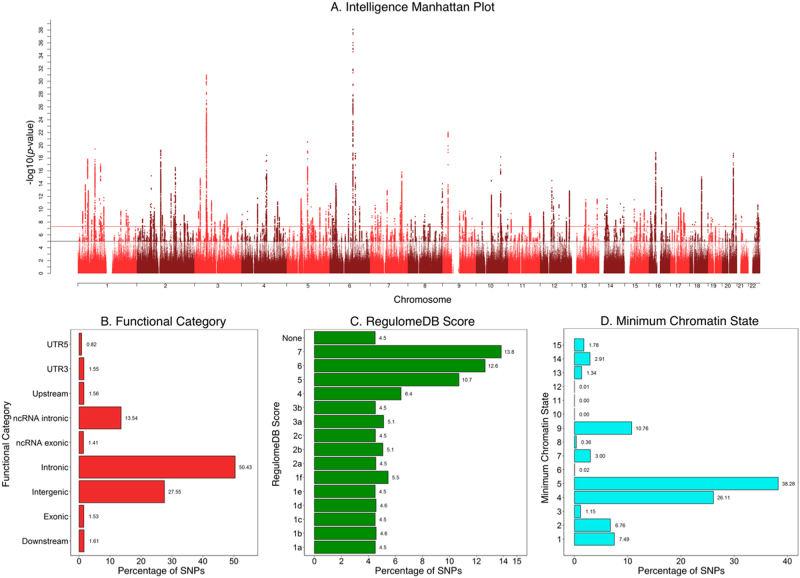
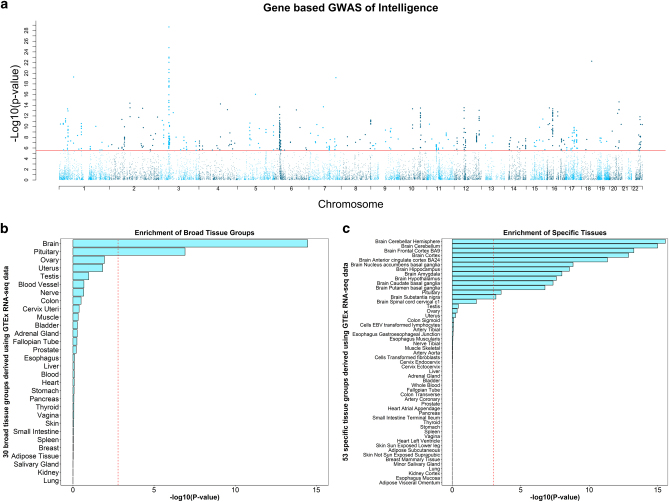
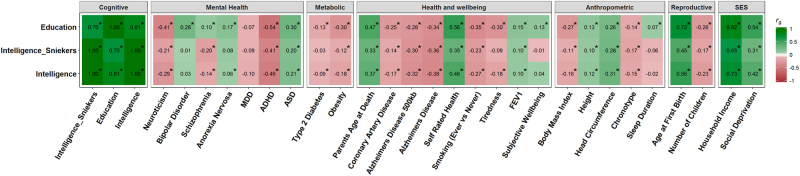
= 0.70). We used these findings as foundations for our use of a novel approach-multi-trait analysis of genome-wide association studies (MTAG; Turley et al. 2017)-to combine two large genome-wide association studies (GWASs) of education and intelligence, increasing statistical power and resulting in the largest GWAS of intelligence yet reported. Our study had four goals: first, to facilitate the discovery of new genetic loci associated with intelligence; second, to add to our understanding of the biology of intelligence differences; third, to examine whether combining genetically correlated traits in this way produces results consistent with the primary phenotype of intelligence; and, finally, to test how well this new meta-analytic data sample on intelligence predicts phenotypic intelligence in an independent sample. By combining datasets using MTAG, our functional sample size increased from 199,242 participants to 248,482. We found 187 independent loci associated with intelligence, implicating 538 genes, using both SNP-based and gene-based GWAS. We found evidence that neurogenesis and myelination-as well as genes expressed in the synapse, and those involved in the regulation of the nervous system-may explain some of the biological differences in intelligence. The results of our combined analysis demonstrated the same pattern of genetic correlations as those from previous GWASs of intelligence, providing support for the meta-analysis of these genetically-related phenotypes.
Overview
The claims and statistics of this paper haven’t been checked yet.
Free: it reads the open-access text and checks the first 5 claims that cite a source we can check. Create a free account to check every claim.
Integrity signals
Registry
Cites
Statistics
Figures
Verification
Claims the paper makes
The claims and statistics of this paper haven’t been checked yet.
Free: it reads the open-access text and checks the first 5 claims that cite a source we can check. Create a free account to check every claim.
Claims other papers make about this one
Each is checked against this paper’s own text: does it say what the citing paper says it does?
The source backs part of the claim, not all of it — or backs it for a different population, condition or comparison.
In the citing paper
“Most genome-wide association studies (GWAS) to date have focused on intelligence or g [234–237], and suggest that hundreds to thousands of genes additively influence variation in intelligence, with the effect of any one gene being very small (typically in GWAS, a variant has r2 < 0.05% [238]).”
From The role of prefrontal cortex in cognitive control and executive function (2022) · cites this paper as [237]
Experimental — accuracy not yet measured
Self-check
Percentages, sums and reported differences re-computed from the paper’s own numbers.
The self-check needs the paper’s full text.
Citations
Cites
Controlling the False Discovery Rate: A Practical and Powerful Approach to Multiple Testing
Benjamini, Y., & Hochberg, Y. (1995) · Journal of the Royal Statistical Society Series B: Statistical Methodology · doi:10.1111/j.2517-6161.1995.tb02031.x · Cited by 109,482 · cited 2×
“0168 for the final meta-analytic dataset on intelligence [46].”
BackgroundMethodSubramanian, A., Tamayo, P., Mootha, V. K., Mukherjee, S., Ebert, B. L., Gillette, M. A., Paulovich, A., Pomeroy, S. L., Golub, T. R., Lander, E. S., et al. (2005) · Proceedings of the National Academy of Sciences · doi:10.1073/pnas.0506580102 · Cited by 53,625 · cited 2×
“A total of 10,891 gene-sets (sourced from Gene Ontology [27], Reactome [28], and, MSigDB [29]) were examined for enrichment in intelligence.”
MethodGene Ontology: tool for the unification of biology
Ashburner, M., Ball, C. A., Blake, J. A., Botstein, D., Butler, H., Cherry, J. M., Davis, A. P., Dolinski, K., Dwight, S. S., Eppig, J. T., et al. (2000) · Nature Genetics · doi:10.1038/75556 · Cited by 43,206 · cited 2×
“A total of 10,891 gene-sets (sourced from Gene Ontology [27], Reactome [28], and, MSigDB [29]) were examined for enrichment in intelligence.”
MethodPLINK: a tool set for whole-genome association and population-based linkage analyses.
Purcell, S., Neale, B., Todd-Brown, K., Thomas, L., Ferreira, M. A. R., Bender, D., Maller, J., Sklar, P., de Bakker, P. I. W., Daly, M. J., et al. (2007) · The American Journal of Human Genetics · doi:10.1086/519795 · Cited by 34,089 · cited 1×
“These SNPs were found in 187 independent loci, identified using FUMA (Supplementary Table 2); [49, 36] this represents an increase of 169 loci compared to those”
ANNOVAR: functional annotation of genetic variants from high-throughput sequencing data
Wang, K., Li, M., & Hakonarson, H. (2010) · Nucleic Acids Research · doi:10.1093/nar/gkq603 · Cited by 14,621 · cited 3×
“The ANNOVAR [37] categories were used to identify the function of the SNP, and to locate its position within the genome.”
MethodGCTA: a tool for genome-wide complex trait analysis
Yang, J., Lee, S. H., Goddard, M. E., & Visscher, P. M. (2011) · The American Journal of Human Genetics · doi:10.1016/j.ajhg.2010.11.011 · Cited by 8,279 · cited 4×
“Using GCTA [9] on 131,790 reportedly-related participants one from each pair of related individuals was removed, based on a genetic relationship threshold of 0.025, leaving 332,050 individuals.”
MethodInfluentialA map of human genome variation from population-scale sequencing.
The 1000 Genomes Project Consortium (2010) · Nature · doi:10.1038/nature09534 · Cited by 7,877
An integrated map of genetic variation from 1,092 human genomes
The 1000 Genomes Project Consortium (2012) · Nature · doi:10.1038/nature11632 · Cited by 7,711
Biological insights from 108 schizophrenia-associated genetic loci
Schizophrenia Working Group of the Psychiatric Genomics Consortium (2014) · Nature · doi:10.1038/nature13595 · Cited by 7,577
Integrative analysis of 111 reference human epigenomes
Roadmap Epigenomics Consortium, Kundaje, A., Meuleman, W., Ernst, J., Bilenky, M., Yen, A., Heravi-Moussavi, A., Kheradpour, P., Zhang, Z., Wang, J., et al. (2015) · Nature · doi:10.1038/nature14248 · Cited by 6,368 · cited 2×
“127 epigenomes in the Roadmap Epigenomics Project [41].”
Background
Research works printed but not linked: 1
- 50. Brendan K Bulik-Sullivan, Po-Ru Loh, Hilary K Finucane, Ste- phan Ripke, Jian Yang, Nick Patterson, Mark J Daly, Alkes L Price, Benjamin M Neale, LD Score regression distinguishes confounding from polygenicity in genome-wide association stu- dies. Nature Genetics. 2015;47:291-5. · DOI · Paper page
Cited by
Genome-wide association studies
Uffelmann, E., Huang, Q. Q., Munung, N. S., de Vries, J., Okada, Y., Martin, A. R., Martin, H. C., Lappalainen, T., & Posthuma, D. (2021) · Nature Reviews Methods Primers · doi:10.1038/s43586-021-00056-9 · Cited by 1,849
The role of prefrontal cortex in cognitive control and executive function
Friedman, N. P., & Robbins, T. W. (2022) · Neuropsychopharmacology · doi:10.1038/s41386-021-01132-0 · Cited by 1,737
Grotzinger, A. D., Rhemtulla, M., de Vlaming, R., Ritchie, S. J., Mallard, T. T., Hill, W. D., Ip, H. F., Marioni, R. E., McIntosh, A. M., Deary, I. J., et al. (2019) · Nature Human Behaviour · doi:10.1038/s41562-019-0566-x · Cited by 958
Self-citationDavies, G., Lam, M., Harris, S. E., Trampush, J. W., Luciano, M., Hill, W. D., Hagenaars, S. P., Ritchie, S. J., Marioni, R. E., Fawns-Ritchie, C., et al. (2018) · Nature Communications · doi:10.1038/s41467-018-04362-x · Cited by 686
Self-citationThe new genetics of intelligence
Plomin, R., & von Stumm, S. (2018) · Nature Reviews Genetics · doi:10.1038/nrg.2017.104 · Cited by 483
Karlsson Linnér, R., Mallard, T. T., Barr, P. B., Sanchez-Roige, S., Madole, J. W., Driver, M. N., Poore, H. E., de Vlaming, R., Grotzinger, A. D., Tielbeek, J. J., et al. (2021) · Nature Neuroscience · doi:10.1038/s41593-021-00908-3 · Cited by 317
“…candidate gene for psychiatric disorders 37,38 ), neuronal growth regulator 1 ( NEGR1 ; associated with intelligence and educational attainment 39,40 ) and paired basic amino acid cleaving enzyme ( FURIN ; associated with schizophrenia, risk tolerance and vulnerability to psychiatric disorders…”
BackgroundZhao, B., Luo, T., Li, T., Li, Y., Zhang, J., Shan, Y., Wang, X., Yang, L., Zhou, F., Zhu, Z., et al. (2019) · Nature Genetics · doi:10.1038/s41588-019-0516-6 · Cited by 295
Multi-trait analysis for genome-wide association study of five psychiatric disorders
Wu, Y., Cao, H., Baranova, A., Huang, H., Li, S., Cai, L., Rao, S., Dai, M., Xie, M., Dou, Y., et al. (2020) · Translational Psychiatry · doi:10.1038/s41398-020-00902-6 · Cited by 218
Genome-wide association study of MRI markers of cerebral small vessel disease in 42,310 participants
Persyn, E., Hanscombe, K. B., Howson, J. M. M., Lewis, C. M., Traylor, M., & Markus, H. S. (2020) · Nature Communications · doi:10.1038/s41467-020-15932-3 · Cited by 213
Pleiotropy robust methods for multivariable Mendelian randomization
Grant, A. J., & Burgess, S. (2021) · Statistics in Medicine · doi:10.1002/sim.9156 · Cited by 194
Genome-wide analysis identifies molecular systems and 149 genetic loci associated with income
Hill, W. D., Davies, N. M., Ritchie, S. J., Skene, N. G., Bryois, J., Bell, S., Di Angelantonio, E., Roberts, D. J., Xueyi, S., Davies, G., et al. (2019) · Nature Communications · doi:10.1038/s41467-019-13585-5 · Cited by 185
Self-citationPolygenic Risk Scores in Clinical Psychology: Bridging Genomic Risk to Individual Differences
Bogdan, R., Baranger, D. A. A., & Agrawal, A. (2018) · Annual Review of Clinical Psychology · doi:10.1146/annurev-clinpsy-050817-084847 · Cited by 163
Genetic predictors of participation in optional components of UK Biobank
Tyrrell, J., Zheng, J., Beaumont, R., Hinton, K., Richardson, T. G., Wood, A. R., Davey Smith, G., Frayling, T. M., & Tilling, K. (2021) · Nature Communications · doi:10.1038/s41467-021-21073-y · Cited by 162
Genome-wide association study identifies 48 common genetic variants associated with handedness
Cuellar-Partida, G., Tung, J. Y., Eriksson, N., Albrecht, E., Aliev, F., Andreassen, O. A., Barroso, I., Beckmann, J. S., Boks, M. P., Boomsma, D. I., et al. (2020) · Nature Human Behaviour · doi:10.1038/s41562-020-00956-y · Cited by 159
“Other SNPs close to this gene have been associated with intelligence [44] and Parkinson’s disease [45].”
BackgroundSelf-citationCommon variants contribute to intrinsic human brain functional networks
Zhao, B., Li, T., Smith, S. M., Xiong, D., Wang, X., Yang, Y., Luo, T., Zhu, Z., Shan, Y., Matoba, N., et al. (2022) · Nature Genetics · doi:10.1038/s41588-022-01039-6 · Cited by 165
Anderson, E. L., Howe, L. D., Wade, K. H., Ben-Shlomo, Y., Hill, W. D., Deary, I. J., Sanderson, E. C., Zheng, J., Korologou-Linden, R., Stergiakouli, E., et al. (2020) · International Journal of Epidemiology · doi:10.1093/ije/dyz280 · Cited by 148
Self-citationSeyedsalehi, A., Warrier, V., Bethlehem, R. A. I., Perry, B. I., Burgess, S., & Murray, G. K. (2022) · Brain · doi:10.1093/brain/awac392 · Cited by 154
Myelin as a regulator of development of the microbiota-gut-brain axis
Keogh, C. E., Kim, D. H. J., Pusceddu, M. M., Knotts, T. A., Rabasa, G., Sladek, J. A., Hsieh, M. T., Honeycutt, M., Brust-Mascher, I., Barboza, M., et al. (2021) · Brain, Behavior, and Immunity · doi:10.1016/j.bbi.2020.11.001 · Cited by 137
“Neonatal Abx administration impairs hippocampal neurogenesis Given that cognitive function is associated with neurogenesis in humans (Hill et al., 2019), and that myelin is critical for maturation and stabilization of neurons, we assessed whether neurogenesis was impacted following neonatal Abx…”
BackgroundMethodGenetic variation, brain, and intelligence differences
Deary, I. J., Cox, S. R., & Hill, W. D. (2022) · Molecular Psychiatry · doi:10.1038/s41380-021-01027-y · Cited by 137
Self-citationDavies, N. M., Hill, W. D., Anderson, E. L., Sanderson, E., Deary, I. J., & Davey Smith, G. (2019) · eLife · doi:10.7554/elife.43990 · Cited by 135
Self-citationSeeboth, A., & Mõttus, R. (2018) · European Journal of Personality · doi:10.1002/per.2147 · Cited by 157
Lam, M., Hill, W. D., Trampush, J. W., Yu, J., Knowles, E., Davies, G., Stahl, E. A., Huckins, L. M., Liewald, D. C. M., Djurovic, S., et al. (2019) · The American Journal of Human Genetics · doi:10.1016/j.ajhg.2019.06.012 · Cited by 125
Self-citationGenome-wide association study of cerebral small vessel disease reveals established and novel loci
Chung, J., Marini, S., Pera, J., Norrving, B., Jiménez-Conde, J., Roquer, J., Fernández‐Cadenas, I., Tirschwell, D., Selim, M. H., Brown, D. L., et al. (2019) · Brain · doi:10.1093/brain/awz233 · Cited by 127
“Such cross-phenotype analyses increase the statistical power for a main phenotype of interest by utilizing another proxy phenotype obtained in large studies (Lam et al. , 2017; Hill et al. , 2018).”
Peyrot, W. J., & Price, A. L. (2021) · Nature Genetics · doi:10.1038/s41588-021-00787-1 · Cited by 123
Intelligence, health and death
Deary, I. J., Hill, W. D., & Galé, C. R. (2021) · Nature Human Behaviour · doi:10.1038/s41562-021-01078-9 · Cited by 119
Self-citationA general dimension of genetic sharing across diverse cognitive traits inferred from molecular data
de la Fuente, J., Davies, G., Grotzinger, A. D., Tucker-Drob, E. M., & Deary, I. J. (2020) · Nature Human Behaviour · doi:10.1038/s41562-020-00936-2 · Cited by 105
Self-citationExtending psychometric network analysis: Empirical evidence against g in favor of mutualism?
Kan, K.-J., van der Maas, H. L. J., & Levine, S. Z. (2019) · Intelligence · doi:10.1016/j.intell.2018.12.004 · Cited by 106
“Similarly, family studies and later molecular genetic studies have shown that IQ and g are substantially heritable (see Plomin & von Stumm, 2018, for a recent overview) and that the same holds for the many brain correlates of intelligence (Hill et al., 2018; Plomin & von Stumm, 2018).”
BackgroundHill, W. D., Weiß, A., Liewald, D. C. M., Davies, G., Porteous, D. J., Hayward, C., McIntosh, A. M., Galé, C. R., & Deary, I. J. (2019) · Molecular Psychiatry · doi:10.1038/s41380-019-0387-3 · Cited by 114
Self-citationDissecting polygenic signals from genome-wide association studies on human behaviour
Abdellaoui, A., & Verweij, K. J. H. (2021) · Nature Human Behaviour · doi:10.1038/s41562-021-01110-y · Cited by 115
Treur, J. L., Munafo, M. R., Logtenberg, E., Wiers, R. W. H. J., & Verweij, K. J. H. (2021) · Psychological Medicine · doi:10.1017/s003329172100180x · Cited by 112
Twin studies to GWAS: there and back again
Friedman, N. P., Banich, M. T., & Keller, M. C. (2021) · Trends in Cognitive Sciences · doi:10.1016/j.tics.2021.06.007 · Cited by 86
“Recently, the combination of twin/family-based designs with GWASs have allowed researchers to tease apart direct and indirect genetic effects.”
BackgroundInfluentialYao, X., Glessner, J. T., Li, J., Qi, X., Hou, X., Zhu, C., Li, X., March, M. E., Yang, L., Mentch, F. D., et al. (2021) · Translational Psychiatry · doi:10.1038/s41398-020-01195-5 · Cited by 85
“Similarly, the MTAG analysis on intelligence and education by Hill et al.56 and the ASSET analysis on cognitive ability, education, and SCZ by Lam et al.60 yielded consistent and complementary results, as compared and discussed in the latter study.”
MethodMalanchini, M., Rimfeld, K., Allegrini, A. G., Ritchie, S. J., & Plomin, R. J. (2020) · Neuroscience & Biobehavioral Reviews · doi:10.1016/j.neubiorev.2020.01.016 · Cited by 103
Self-citationAdewuyi, E. O., O’Brien, E. K., Nyholt, D. R., Porter, T., & Laws, S. M. (2022) · Communications Biology · doi:10.1038/s42003-022-03607-2 · Cited by 83
Dear, R. D., Wagstyl, K., Seidlitz, J., Markello, R. D., Arnatkevičiūtė, A., Anderson, K. M., Bethlehem, R. A. I., Raznahan, A., Bullmore, E. T., & Vértes, P. E. (2024) · Nature Neuroscience · doi:10.1038/s41593-024-01624-4 · Cited by 99
“1f,g), among which one GWAS explicitly linked intelligence to myelination 41 .”
BackgroundGlycobiology and schizophrenia: a biological hypothesis emerging from genomic research
Mealer, R. G., Williams, S., Daly, M. J., Scolnick, E. M., Cummings, R. D., & Smoller, J. W. (2020) · Molecular Psychiatry · doi:10.1038/s41380-020-0753-1 · Cited by 77
“GWAS have linked variants in MAN2A1 to intelligence and general cognitive ability [34, 35], further highlighting the importance of this gene in neurodevelopmental phenotypes.”
BackgroundYoshida, G., & Yañez, J. M. (2021) · BMC Genomics · doi:10.1186/s12864-020-07341-z · Cited by 77
The schizophrenia risk locus in SLC39A8 alters brain metal transport and plasma glycosylation
Mealer, R. G., Jenkins, B. G., Chen, C., Daly, M. J., Ge, T., Lehoux, S. D., Marquardt, T., Palmer, C. D., Park, J. H., Parsons, P. J., et al. (2020) · Scientific Reports · doi:10.1038/s41598-020-70108-9 · Cited by 76
Timmins, I. R., Zaccardi, F., Nelson, C. P., Franks, P. W., Yates, T. E., & Dudbridge, F. (2020) · Communications Biology · doi:10.1038/s42003-020-01357-7 · Cited by 70
Zhao, B., Shan, Y., Yang, Y., Yu, Z., Li, T., Wang, X., Luo, T., Zhu, Z., Sullivan, P. F., Zhao, H., et al. (2021) · Nature Communications · doi:10.1038/s41467-021-23130-y · Cited by 79
Martschenko, D., Trejo, S., & Domingue, B. W. (2019) · AERA Open · doi:10.1177/2332858418810516 · Cited by 64
Genetic evidence for assortative mating on alcohol consumption in the UK Biobank
Howe, L. J., Lawson, D. J., Davies, N. M., St. Pourcain, B., Lewis, S. J., Davey Smith, G., & Hemani, G. (2019) · Nature Communications · doi:10.1038/s41467-019-12424-x · Cited by 63
Huguet, G., Schramm, C., Douard, E. A., Tamer, P., Main, A., Monin, P., England, J., Jizi, K., Renne, T., Poirier, M., et al. (2021) · Molecular Psychiatry · doi:10.1038/s41380-020-00985-z · Cited by 71
Self-citationGenetic variation in CADM2 as a link between psychological traits and obesity
Morris, J., Bailey, M. E. S., Baldassarre, D., Cullen, B., Fairé, U. D., Ferguson, A., Gigante, B., Giral, P., Goel, A., Graham, N., et al. (2019) · Scientific Reports · doi:10.1038/s41598-019-43861-9 · Cited by 82
Comes, A. L., Senner, F., Budde, M., Adorjan, K., Anderson‐Schmidt, H., Andlauer, T. F. M., Gade, K., Heilbronner, M., Heilbronner, U., Kalman, J. L., et al. (2019) · Translational Psychiatry · doi:10.1038/s41398-019-0547-x · Cited by 83
Luoto, S. (2018) · Adaptive Human Behavior and Physiology · doi:10.1007/s40750-018-0103-6 · Cited by 62
Dahl, A., Thompson, M., An, U., Krebs, M. D., Appadurai, V., Border, R., Bacanu, S., Werge, T. M., Flint, J., Schork, A. J., et al. (2023) · Nature Genetics · doi:10.1038/s41588-023-01559-9 · Cited by 78
“These results are consistent with prior observations that MTAG-based summary statistics modestly inflate genetic correlation with the input phenotypes 46 .”
ResultDeary, I. J., Harris, S. E., & Hill, W. D. (2019) · Current Opinion in Psychology · doi:10.1016/j.copsyc.2018.07.005 · Cited by 56
Self-citationBlood-based epigenome-wide analyses of cognitive abilities
McCartney, D. L., Hillary, R. F., Conole, E. L. S., Baños, D. T., Gadd, D. A., Walker, R. M., Nangle, C., Flaig, R., Campbell, A., Murray, A. D., et al. (2022) · Genome biology · doi:10.1186/s13059-021-02596-5 · Cited by 57
“The P≤1 threshold for polygenic scores of cognitive ability has similar predictive performance as scores built using more conservative thresholds [35].”
MethodSelf-citationSherva, R., Gross, A., Mukherjee, S., Koesterer, R., Amouyel, P., Bellenguez, C., Dufouil, C., Bennett, D. A., Chibnik, L., Cruchaga, C., et al. (2020) · Alzheimer's & Dementia · doi:10.1002/alz.12106 · Cited by 54
Rosoff, D. B., Kaminsky, Z. A., McIntosh, A. M., Smith, G. D., & Lohoff, F. W. (2020) · Translational Psychiatry · doi:10.1038/s41398-020-01047-2 · Cited by 68
Self-citationZanetti, D., Rao, A. S., Gustafsson, S., Assimes, T. L., Montgomery, S. B., & Ingelsson, E. (2019) · Kidney International · doi:10.1016/j.kint.2018.12.017 · Cited by 60
From Epiphenomenon to Biologically Important Phenomena
Corr, P. J., & Mobbs, D. (2018) · Personality Neuroscience · doi:10.1017/pen.2017.1 · Cited by 52
“No doubt, much of the excitement in personality neuroscience arises from recent discoveries in molecular genetics, where polygenic contributions to personality traits (e.g., Luciano et al., 2018) and cognitive abilities (e.g., Hill et al., 2018) have been identified.”
BackgroundChambers, T., Escott‐Price, V., Legge, S. E., Baker, E. A., Singh, K. D., Walters, J., Caseras, X., & Anney, R. (2022) · Molecular Psychiatry · doi:10.1038/s41380-022-01443-8 · Cited by 50
“…a wide-range of traits including inferior posterior and fl occulonodular lobule [44], striatum and putamen volumes [44, 45], schizophrenia [33, 45], neurodevelopmental outcomes and intelligence test performance [46, 47] and numerous other factors [44, 48 – 50] ( http://www.nealelab.is/uk-biobank/).”
BackgroundKember, R. L., Vickers‐Smith, R., Zhou, H., Xu, H., Jennings, M. V., Dao, C., Davis, L. K., Sanchez‐Roige, S., Justice, A. C., Gelernter, J. E., et al. (2023) · American Journal of Psychiatry · doi:10.1176/appi.ajp.21090892 · Cited by 54
Genomic SEM Provides Insights into the Multivariate Genetic Architecture of Complex Traits
Grotzinger, A. D., Rhemtulla, M., de Vlaming, R., Ritchie, S. J., Mallard, T. T., Hill, W. D., Ip, H. F., McIntosh, A. M., Deary, I. J., Koellinger, P. D., et al. (2018) · bioRxiv (Cold Spring Harbor Laboratory) · doi:10.1101/305029 · Cited by 49
Self-citationSchmitt, J. E., Raznahan, A., CLASEN, L. S., Wallace, G. L., Pritikin, J. N., Lee, N., Giedd, J. N., & Neale, M. C. (2019) · Cerebral Cortex · doi:10.1093/cercor/bhz007 · Cited by 51
The schizophrenia-associated variant in SLC39A8 alters protein glycosylation in the mouse brain
Mealer, R. G., Williams, S., Noël, M., Yang, B., D’Souza, A. K., Nakata, T., Graham, D. B., Creasey, E. A., Çetinbaş, M., Sadreyev, R. I., et al. (2022) · Molecular Psychiatry · doi:10.1038/s41380-022-01490-1 · Cited by 47
Niarchou, M., Byrne, E. M., Trzaskowski, M., Sidorenko, J., Kemper, K. E., McGrath, J. J., O’Donovan, M. C., Owen, M. J., & Wray, N. R. (2020) · Translational Psychiatry · doi:10.1038/s41398-020-0688-y · Cited by 51
Patel, K., Xie, Z., Yuan, H., Islam, S. M. S., Xie, Y., He, W., Zhang, W., Gottlieb, A., Chen, H., Giancardo, L., et al. (2024) · Communications Biology · doi:10.1038/s42003-024-06096-7 · Cited by 57
Yang, Q., Millard, L. A. C., & Davey Smith, G. (2020) · International Journal of Epidemiology · doi:10.1093/ije/dyz250 · Cited by 43
Galván‐Femenía, I., Obón‐Santacana, M., Piñeyro, D., Guindo-Martínez, M., Duran, X., Carreras, A., Pluvinet, R., Velasco, J., Ramos, L., Aussó, S., et al. (2018) · Journal of Medical Genetics · doi:10.1136/jmedgenet-2018-105437 · Cited by 48
Grant, A. J., & Burgess, S. (2024) · The American Journal of Human Genetics · doi:10.1016/j.ajhg.2023.12.002 · Cited by 50
“…is an individual’s score on a verbal-numerical reasoning test used as a proxy for general cognitive function, as described in Hill et al. 39 and Davies et al. 49 The effects of intelligence and years of education on Alz-heimer disease were first considered by Davies et al. 49 using…”
How Real-World Data Can Facilitate the Development of Precision Medicine Treatment in Psychiatry
Koch, E. M., Pardiñas, A. F., O’Connell, K. S., Selvaggi, P., Camacho-Collados, J., Babić, A., Marshall, S., der Eycken, E. V., Angulo, C., Lu, Y., et al. (2024) · Biological Psychiatry · doi:10.1016/j.biopsych.2024.01.001 · Cited by 50
“Gene-set analysis (GSA) has become important to identify biological pathways and relevant tissue-and cell type-speci fi c insights related to GWAS fi ndings (46,48,95).”
BackgroundMarchi, M., Alkema, A., Xia, C., Thio, C. H. L., Chen, L.-Y., Schalkwijk, W., Galeazzi, G. M., Ferrari, S., Pingani, L., Kweon, H., et al. (2024) · Nature Human Behaviour · doi:10.1038/s41562-024-01919-3 · Cited by 51
“Although the genetic relationship between CA and mental illness differs from the genetic relationship between education and mental illness 20,57 , educational attainment is a likely causal factor in CA differences 58–60 and is a more straightforward target for interventions CA. Future research…”
BackgroundMethodInfluentialSelf-citationHill, W. D., Harris, S. E., & Deary, I. J. (2018) · Current Opinion in Psychology · doi:10.1016/j.copsyc.2018.07.007 · Cited by 44
“GWAS for intelligence have recently attained the statistical power required to reliably identify the loci that contribute to these heritability estimates with more than 200 being identified so far [22 ,23 ,24] (15 novel loci identified in Sniekers et al.”
BackgroundSelf-citationThe effects of genetic and modifiable risk factors on brain regions vulnerable to ageing and disease
Manuello, J., Min, J., McCarthy, P., Alfaro‐Almagro, F., Lee, S., Smith, S. M., Elliott, L. T., Winkler, A. M., & Douaud, G. (2024) · Nature Communications · doi:10.1038/s41467-024-46344-2 · Cited by 48
Multivariate genetic analysis of personality and cognitive traits reveals abundant pleiotropy
Hindley, G., Shadrin, A. A., van der Meer, D., Parker, N., Cheng, W., O’Connell, K. S., Bahrami, S., Lin, A., Karadag, N., Holen, B., et al. (2023) · Nature Human Behaviour · doi:10.1038/s41562-023-01630-9 · Cited by 41
Self-citationAnalysing an allelic series of rare missense variants of CACNA1I in a Swedish schizophrenia cohort
Báez-Nieto, D., Allen, A. S., Akers-Campbell, S., Yang, L., Budnik, N., Pupo, A., Shin, Y.-C., Genovese, G., Liao, M., Pérez‐Palma, E., et al. (2021) · Brain · doi:10.1093/brain/awab443 · Cited by 38
Genetic predictors of educational attainment and intelligence test performance predict voter turnout
Aarøe, L., Appadurai, V., Hansen, K. M., Schork, A. J., Werge, T. M., Mors, O. N., Børglum, A. D., HOUGAARD, D. M., Nordentoft, M., Mortensen, P. B., et al. (2020) · Nature Human Behaviour · doi:10.1038/s41562-020-00952-2 · Cited by 44
Frei, O., Hindley, G., Shadrin, A. A., van der Meer, D., Akdeniz, B. C., Hagen, E., Cheng, W., O’Connell, K. S., Bahrami, S., Parker, N., et al. (2024) · Nature Genetics · doi:10.1038/s41588-024-01771-1 · Cited by 43
“…Signatures Database (MSigDB) 3 , Gene Ontology (GO) 4 , Synaptic Gene Ontologies (SynGO) 5 and others, GSA has provided many prominent findings 6–8 , implicating the role of biological pathways and yielding relevant tissue-and cell-type-specific insights into complex human traits and…”
Peters, T., Nüllig, L., Antel, J., Naaresh, R., Laabs, B., Tegeler, L., Amhaouach, C., Libuda, L., Hinney, A., & Hebebrand, J. (2020) · Frontiers in Genetics · doi:10.3389/fgene.2020.00373 · Cited by 42
Mapping Mind-Brain Development: Towards a Comprehensive Theory
Spanoudis, G. C., & Δημητρίου, Α. (2020) · Journal of Intelligence · doi:10.3390/jintelligence8020019 · Cited by 41
Saffari, A., Arno, M. J., Nasser, E. E., Ronald, A., Wong, C. C. Y., Schalkwyk, L. C., Mill, J. S., Dudbridge, F., & Meaburn, E. L. (2019) · Molecular Autism · doi:10.1186/s13229-019-0285-1 · Cited by 39
Schmitt, J. E., Raznahan, A., Liu, S., & Neale, M. C. (2019) · NeuroImage · doi:10.1016/j.neuroimage.2019.116319 · Cited by 31
Tan, V. Y., & Timpson, N. J. (2022) · Annual Review of Genomics and Human Genetics · doi:10.1146/annurev-genom-121321-093606 · Cited by 33
Kang, M., Ang, T. F. A., Devine, S. A., Sherva, R., Mukherjee, S., Trittschuh, E. H., Gibbons, L. E., Scollard, P., Lee, M., Choi, S.-E., et al. (2023) · Molecular Neurodegeneration · doi:10.1186/s13024-023-00633-4 · Cited by 29
“Although the function of PURG is unknown, a SNP in this gene showed significant associations in GWAS of cognitive performance and intelligence [111, 112].”
BackgroundDoctor, please make me freer: Capabilities enhancement as a goal of medicine
Rueda, J., García‐Barranquero, P., & Lara, F. (2021) · Medicine Health Care and Philosophy · doi:10.1007/s11019-021-10016-5 · Cited by 35
The “Golden Age” of Behavior Genetics?
Charney, E. (2022) · Perspectives on Psychological Science · doi:10.1177/17456916211041602 · Cited by 33
Mid-Gestation lethality of Atxn2l-Ablated Mice
Key, J., Harter, P. N., Şen, N.-E., Gradhand, E., Auburger, G. W. J., & Gispert, S. (2020) · International Journal of Molecular Sciences · doi:10.3390/ijms21145124 · Cited by 30
Using DNA to predict intelligence
von Stumm, S., & Plomin, R. J. (2021) · Intelligence · doi:10.1016/j.intell.2021.101530 · Cited by 34
“…the pervasive effects of intelligence on education (Malanchini, Rimfeld, Allegrini, Ritchie, & Plomin, 2020), occupation (Schmidt & Hunter, 2004) and mental and physical health (Deary, Harris, & Hill, 2019), the intelligence GPS is correlated with a wide range of traits across the life sciences.”
BackgroundShared Genetic Risk in the Association of Screen Time With Psychiatric Problems in Children
Zhang, Y., Choi, K. W., Delaney, S., Ge, T., Pingault, J., & Tiemeier, H. W. (2023) · JAMA Network Open · doi:10.1001/jamanetworkopen.2023.41502 · Cited by 33
Donati, G., Dumontheil, I., & Meaburn, E. L. (2019) · Mind Brain and Education · doi:10.1111/mbe.12198 · Cited by 33
“70) have been reported between general cognitive ability and educational attainment (Hill et al., 2018), which indicates that a high proportion of the DNA sequence variants affecting g also have an effect on years spent in education (either directly or by mediation).”
InfluentialCeballos, F. C., Hazelhurst, S., Clark, D. W., Agongo, G., Asiki, G., Boua, P. R., Gómez-Olivé, F. X., Mashinya, F., Norris, S. A., Wilson, J. F., et al. (2020) · Nature Communications · doi:10.1038/s41467-020-19595-y · Cited by 32
The biological basis of intelligence: Benchmark findings
Hilger, K., Spinath, F. M., Troche, S. J., & Schubert, A. (2022) · Intelligence · doi:10.1016/j.intell.2022.101665 · Cited by 29
Genetic polymorphisms associated with adverse pregnancy outcomes in nulliparas
Khan, R. R., Guerrero, R. F., Wapner, R. J., Hahn, M. W., Raja, A., Salleb-Aouissi, A., Grobman, W. A., Simhan, H. N., Silver, R. M., Chung, J. M., et al. (2024) · Scientific Reports · doi:10.1038/s41598-024-61218-9 · Cited by 27
“While RPL7P20 codes for a pseudogene, several studies have made associations between SNPs at this locus and increased heart rate 42 as well as general cognition 43,44 .”
BackgroundHow Stifling Debate Around Race, Genes and IQ Can Do Harm
Carl, N. (2018) · Evolutionary Psychological Science · doi:10.1007/s40806-018-0152-x · Cited by 28
“…implications… political equality is a moral stance, not an empirical hypothesis”.5 Indeed, there is already substantial evidence that individuals differ from one another with respect to IQ at least partly for genetic reasons (Plomin and Deary, 2015; Sniekers et al., 2017; Hill et al., 2018).”
BackgroundWang, H., Yi, Z., & Shi, T. (2021) · Science China Life Sciences · doi:10.1007/s11427-020-1934-x · Cited by 34
Brain aging differs with cognitive ability regardless of education
Walhovd, K. B., Nyberg, L. H., Lindenberger, U., Amlien, I. K., Sørensen, Ø., Wang, Y., Mowinckel, A. M., Kievit, R., Ebmeier, K. P., Bartrés‐Faz, D., et al. (2022) · Scientific Reports · doi:10.1038/s41598-022-17727-6 · Cited by 25
The sleep EEG spectrum is a sexually dimorphic marker of general intelligence
Ujma, P. P., Konrad, B. N., Gombos, F., Simor, P., Pótári, A., Genzel, L., Pawlowski, M. A., Steiger, A., Bódizs, R., & Dresler, M. (2017) · Scientific Reports · doi:10.1038/s41598-017-18124-0 · Cited by 25
Aichele, S., Ghisletta, P., Corley, J., Pattie, A., Taylor, A. M., Starr, J. M., & Deary, I. J. (2018) · Psychological Science · doi:10.1177/0956797618804501 · Cited by 27
Self-citationIdentifying nootropic drug targets via large-scale cognitive GWAS and transcriptomics
Lam, M., Chen, C., Ge, T., Xia, Y., Hill, D. W., Trampush, J. W., Yu, J., Knowles, E., Davies, G., Stahl, E. A., et al. (2021) · Neuropsychopharmacology · doi:10.1038/s41386-021-01023-4 · Cited by 26
“Consistent with prior reports [7, 10, 37, 38], traits genetically correlated with GCA included education, reproduction, longevity, personality, smoking behavior, anthropometric, brain volume, psychiatric, dementias, lung function, sleep, glycemic, autoimmune, cardiometabolic, cancer and several ICD-10 medical phenotyp…”
InfluentialSelf-citationLinnér, R. K., Mallard, T., Barr, P. B., Sanchez-Roige, S., Madole, J., Driver, M. N., Poore, H., Grotzinger, A., Tielbeek, J., Johnson, E., et al. (2020) · bioRxiv · doi:10.1101/2020.10.16.342501 · Cited by 29
The role of environmental stress and DNA methylation in the longitudinal course of bipolar disorder
Comes, A. L., Czamara, D., Adorjan, K., Anderson‐Schmidt, H., Andlauer, T. F. M., Budde, M., Gade, K., Heilbronner, M., Kalman, J. L., Papiol, S., et al. (2020) · International Journal of Bipolar Disorders · doi:10.1186/s40345-019-0176-6 · Cited by 27
Decreases in Brain Size and Encephalization in Anatomically Modern Humans
Stibel, J. M. (2021) · Brain Behavior and Evolution · doi:10.1159/000519504 · Cited by 28
Cera, I., Whitton, L., Donohoe, G., Morris, D. W., Dechant, G., & Apostolova, G. (2019) · PLOS Genetics · doi:10.1371/journal.pgen.1007890 · Cited by 27
Exploring the genetic correlations of antisocial behaviour and life history traits
Tielbeek, J. J., Barnes, J. C., Popma, A., Polderman, T. J. C., Lee, J. J., Perry, J. R. B., Posthuma, D., & Boutwell, B. B. (2018) · BJPsych Open · doi:10.1192/bjo.2018.63 · Cited by 25
Adams, C. D. (2020) · Scientific Reports · doi:10.1038/s41598-020-63104-6 · Cited by 21
“The first came from the Hill et al. (2019), which included 248,482 individuals of European ancestry (SNP coefficients per one SD increase in intelligence test scores7.”
BackgroundMethodKrams, I. A., Luoto, S., Rubika, A., Krama, T., Elferts, D., Krams, R., Kecko, S., Skrinda, I., Moore, F. R., & Rantala, M. J. (2018) · American Journal of Physical Anthropology · doi:10.1002/ajpa.23754 · Cited by 22
Bird, K. A. (2021) · American Journal of Physical Anthropology · doi:10.1002/ajpa.24216 · Cited by 19
Metadata
- Authors
- Hill, W. D., Marioni, R. E., Maghzian, O., Ritchie, S. J., Hagenaars, S. P., McIntosh, A. M., Gale, C. R., Davies, G., & Deary, I. J.
- Affiliations
- University of Edinburgh (GB)
- The University of Queensland (AU)
- Harvard University (US)
- King's College London (GB)
- Corresponding author
- Hill, W. D.
- Venue
- Molecular Psychiatry
- Published
- 2018-01-11
- Volume
- 24
- Issue
- 2
- Pages
- 169-181
- ISSN
- 1359-4184 (ISSN-L)
- 1476-5578
- PMC
- PMC6344370
- OpenAlex
- W2765657625
- Semantic Scholar
- a56e1aa48b33ae0a75ffc93a5da602a134443f37
- Cited by
- 311
- References
- 78
- Citations by year
- 2026: 12 · 2025: 19 · 2024: 32 · 2023: 32 · 2022: 37 · 2021: 62 · 2020: 51 · 2019: 38 · 2018: 24
- FWCI
- 26.99
- Type
- journal article
- Language
- en
- Open access
- hybrid
- doi.org
- Licence
- cc-by
- creativecommons.org/licenses/by/4.0 (tdm)
- Locations
- Molecular Psychiatry (publishedVersion, cc-by)
- bioRxiv (Cold Spring Harbor Laboratory) (acceptedVersion)
- Europe PMC (PubMed Central) (publishedVersion, other-oa)
- PubMed Central (publishedVersion, cc-by)
- PubMed (publishedVersion)
- ePrints Soton (University of Southampton) (acceptedVersion)
- Research Portal (King's College London) (submittedVersion, cc-by)
- Edinburgh Research Explorer (University of Edinburgh) (submittedVersion, cc-by)
- Funders
- Wellcome Trust (104036/Z/14/Z, 104036)
- Age UK (10279, MR/K026992/1)
- University of Edinburgh (MR/K026992/1, 10279)
- Centre for Cognitive Ageing and Cognitive Epidemiology (MR/K026992/1)
- Directorate for Biological Sciences
- Medical Research Council (MR/K026992/1, 10279, 104036/Z/14/Z, MR/S015132/1, MC_PC_17228, MC_UU_12011/2)
- Biotechnology and Biological Sciences Research Council (MR/K026992/1, BB/F019394/1)
- Topics
- Life Sciences › Biochemistry, Genetics and Molecular Biology › Genetics › Genetic Associations and Epidemiology
- Social Sciences › Psychology › Experimental and Cognitive Psychology › Cognitive Abilities and Testing
- Life Sciences › Biochemistry, Genetics and Molecular Biology › Genetics › Genetic Mapping and Diversity in Plants and Animals
- Keywords
- intelligence, MTAG, genetic loci, neurogenesis, myelination, synapses, nervous system genes, genetic correlation
- MeSH terms
- Data Analysis, Cognition, Female, Humans, Intelligence, Male, Nerve Fibers, Myelinated, Genetic Predisposition to Disease, Multifactorial Inheritance, Polymorphism, Single Nucleotide, Genome-Wide Association Study, Neurogenesis, Genetic Loci
About these checks
Registry, retraction, Cites and statistics results are computed, not judged, with one exception: a printed reference that no index lists is read once by a model before it counts as a citation error. Claims are extracted by a model and kept only when their quote appears verbatim in the text; each cited source is then checked, with a model’s help, for whether it says what the claim relies on. Those verdicts can be wrong — read the claim’s quote and the cited source before relying on one.
Statistics and arithmetic are recomputed, not judged.
Confidence bands are shown only for fields calibrated on our annotated test set. None is calibrated yet, so no band is shown.
What counts as a claim ›How we measure confidence ›How we check this ›
Are you an author, or do you see a problem with this page? Request a review
Data sources
Bibliographic data: Semantic Scholar, OpenAlex, Crossref.
Contains information from the Semantic Scholar Academic Graph Datasets, made available under the ODC Attribution License (ODC-BY 1.0).
Semantic Scholar’s data is described in: Kinney, R., et al. (2023). The Semantic Scholar Open Data Platform. arXiv:2301.10140.
