

A combined analysis of genetically correlated traits identifies 187 loci and a role for neurogenesis and myelination in intelligence
Open accessPublished version of a preprint
The DOI matches its Crossref record; 77 of the 78 references it cites were found in a registry or an index.
Abstract
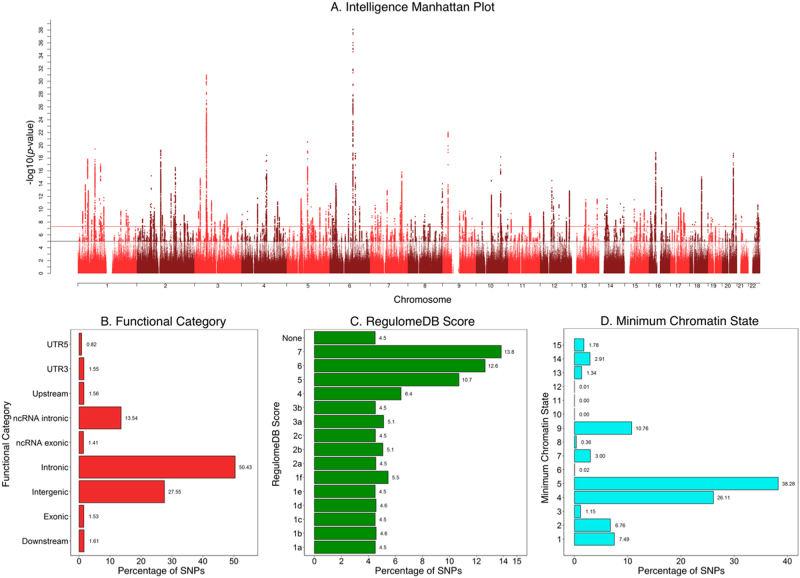
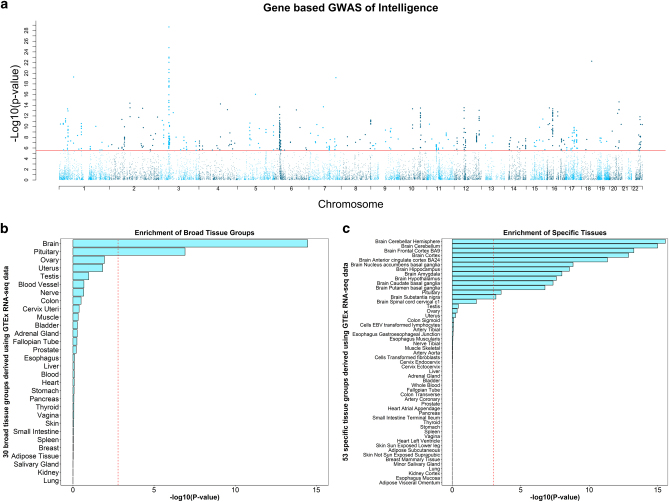
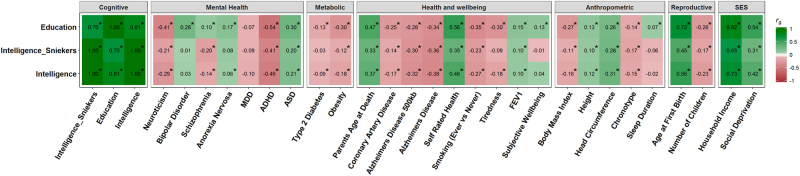
= 0.70). We used these findings as foundations for our use of a novel approach-multi-trait analysis of genome-wide association studies (MTAG; Turley et al. 2017)-to combine two large genome-wide association studies (GWASs) of education and intelligence, increasing statistical power and resulting in the largest GWAS of intelligence yet reported. Our study had four goals: first, to facilitate the discovery of new genetic loci associated with intelligence; second, to add to our understanding of the biology of intelligence differences; third, to examine whether combining genetically correlated traits in this way produces results consistent with the primary phenotype of intelligence; and, finally, to test how well this new meta-analytic data sample on intelligence predicts phenotypic intelligence in an independent sample. By combining datasets using MTAG, our functional sample size increased from 199,242 participants to 248,482. We found 187 independent loci associated with intelligence, implicating 538 genes, using both SNP-based and gene-based GWAS. We found evidence that neurogenesis and myelination-as well as genes expressed in the synapse, and those involved in the regulation of the nervous system-may explain some of the biological differences in intelligence. The results of our combined analysis demonstrated the same pattern of genetic correlations as those from previous GWASs of intelligence, providing support for the meta-analysis of these genetically-related phenotypes.
Overview
The claims and statistics of this paper haven’t been checked yet.
Free: it reads the open-access text and checks the first 5 claims that cite a source we can check. Create a free account to check every claim.
Integrity signals
Registry
Cites
Statistics
Figures
Verification
Claims the paper makes
The claims and statistics of this paper haven’t been checked yet.
Free: it reads the open-access text and checks the first 5 claims that cite a source we can check. Create a free account to check every claim.
Claims other papers make about this one
Each is checked against this paper’s own text: does it say what the citing paper says it does?
The source backs part of the claim, not all of it — or backs it for a different population, condition or comparison.
In the citing paper
“Most genome-wide association studies (GWAS) to date have focused on intelligence or g [234–237], and suggest that hundreds to thousands of genes additively influence variation in intelligence, with the effect of any one gene being very small (typically in GWAS, a variant has r2 < 0.05% [238]).”
From The role of prefrontal cortex in cognitive control and executive function (2022) · cites this paper as [237]
Experimental — accuracy not yet measured
Self-check
Percentages, sums and reported differences re-computed from the paper’s own numbers.
The self-check needs the paper’s full text.
Citations
Cites
Controlling the False Discovery Rate: A Practical and Powerful Approach to Multiple Testing
Benjamini, Y., & Hochberg, Y. (1995) · Journal of the Royal Statistical Society Series B: Statistical Methodology · doi:10.1111/j.2517-6161.1995.tb02031.x · Cited by 109,482 · cited 2×
“0168 for the final meta-analytic dataset on intelligence [46].”
BackgroundMethodSubramanian, A., Tamayo, P., Mootha, V. K., Mukherjee, S., Ebert, B. L., Gillette, M. A., Paulovich, A., Pomeroy, S. L., Golub, T. R., Lander, E. S., et al. (2005) · Proceedings of the National Academy of Sciences · doi:10.1073/pnas.0506580102 · Cited by 53,625 · cited 2×
“A total of 10,891 gene-sets (sourced from Gene Ontology [27], Reactome [28], and, MSigDB [29]) were examined for enrichment in intelligence.”
MethodGene Ontology: tool for the unification of biology
Ashburner, M., Ball, C. A., Blake, J. A., Botstein, D., Butler, H., Cherry, J. M., Davis, A. P., Dolinski, K., Dwight, S. S., Eppig, J. T., et al. (2000) · Nature Genetics · doi:10.1038/75556 · Cited by 43,206 · cited 2×
“A total of 10,891 gene-sets (sourced from Gene Ontology [27], Reactome [28], and, MSigDB [29]) were examined for enrichment in intelligence.”
MethodPLINK: a tool set for whole-genome association and population-based linkage analyses.
Purcell, S., Neale, B., Todd-Brown, K., Thomas, L., Ferreira, M. A. R., Bender, D., Maller, J., Sklar, P., de Bakker, P. I. W., Daly, M. J., et al. (2007) · The American Journal of Human Genetics · doi:10.1086/519795 · Cited by 34,089 · cited 1×
“These SNPs were found in 187 independent loci, identified using FUMA (Supplementary Table 2); [49, 36] this represents an increase of 169 loci compared to those”
ANNOVAR: functional annotation of genetic variants from high-throughput sequencing data
Wang, K., Li, M., & Hakonarson, H. (2010) · Nucleic Acids Research · doi:10.1093/nar/gkq603 · Cited by 14,621 · cited 3×
“The ANNOVAR [37] categories were used to identify the function of the SNP, and to locate its position within the genome.”
MethodGCTA: a tool for genome-wide complex trait analysis
Yang, J., Lee, S. H., Goddard, M. E., & Visscher, P. M. (2011) · The American Journal of Human Genetics · doi:10.1016/j.ajhg.2010.11.011 · Cited by 8,279 · cited 4×
“Using GCTA [9] on 131,790 reportedly-related participants one from each pair of related individuals was removed, based on a genetic relationship threshold of 0.025, leaving 332,050 individuals.”
MethodInfluentialA map of human genome variation from population-scale sequencing.
The 1000 Genomes Project Consortium (2010) · Nature · doi:10.1038/nature09534 · Cited by 7,877
An integrated map of genetic variation from 1,092 human genomes
The 1000 Genomes Project Consortium (2012) · Nature · doi:10.1038/nature11632 · Cited by 7,711
Biological insights from 108 schizophrenia-associated genetic loci
Schizophrenia Working Group of the Psychiatric Genomics Consortium (2014) · Nature · doi:10.1038/nature13595 · Cited by 7,577
Integrative analysis of 111 reference human epigenomes
Roadmap Epigenomics Consortium, Kundaje, A., Meuleman, W., Ernst, J., Bilenky, M., Yen, A., Heravi-Moussavi, A., Kheradpour, P., Zhang, Z., Wang, J., et al. (2015) · Nature · doi:10.1038/nature14248 · Cited by 6,368 · cited 2×
“127 epigenomes in the Roadmap Epigenomics Project [41].”
Background
Research works printed but not linked: 1
- 50. Brendan K Bulik-Sullivan, Po-Ru Loh, Hilary K Finucane, Ste- phan Ripke, Jian Yang, Nick Patterson, Mark J Daly, Alkes L Price, Benjamin M Neale, LD Score regression distinguishes confounding from polygenicity in genome-wide association stu- dies. Nature Genetics. 2015;47:291-5. · DOI · Paper page
Cited by
Items 101–200 of 314
Gonda, X., Eszlári, N., Török, D., Gál, Z., Bokor, J., Millinghoffer, A., Baksa, D., Petschner, P., Antal, P., Breen, G. D., et al. (2021) · Translational Psychiatry · doi:10.1038/s41398-021-01436-1 · Cited by 23
Kim, G., Joo, Y. Y., Ahn, G., Wang, H., Moon, S., Kim, H., Ahn, W., & Cha, J. (2022) · Human Brain Mapping · doi:10.1002/hbm.25888 · Cited by 20
Effects of Vitamin D Use on Outcomes of Psychotic Symptoms in Alzheimer Disease Patients
Wang, L., Ying, J., Fan, P., Weamer, E. A., DeMichele‐Sweet, M. A. A., López, O. L., Kofler, J., & Sweet, R. A. (2019) · American Journal of Geriatric Psychiatry · doi:10.1016/j.jagp.2019.03.016 · Cited by 21
“Multiple variants in EFTUD1 have been associated with cognitive ability (40), intelligence (41), and educational attainment (42).”
BackgroundXia, L., Ou, J., Li, K., Guo, H., Hu, Z., Bai, T., Zhao, J., Xia, K., & Zhang, F. (2019) · Autism Research · doi:10.1002/aur.2229 · Cited by 23
“…to remove the branching point glutamate, a process catalyzed by AGBL5/CCP5 SNX29 chr16:11976734-12574287 This locus is significant in Intelligence [Hill et al., 2019];Response to SSRI in MDD or openness [Amare et al., 2018]; Depression [Howard et al., 2018]; Schizophrenia [Amare et al., 2018;…”
BackgroundA General Cognitive Ability Factor for the UK Biobank
Williams, C. M., Labouret, G., Wolfram, T., Peyre, H., & Ramus, F. (2023) · Behavior Genetics · doi:10.1007/s10519-022-10127-6 · Cited by 18
“6% of the variance in intelligence (Davies et al. 2018; Hill et al. 2019; Lee et al. 2018).”
Identification of pleiotropy at the gene level between psychiatric disorders and related traits
Polushina, T. V., Banerjee, N., Giddaluru, S., Bettella, F., Espeseth, T., Lundervold, A. J., Djurovic, S., Cichon, S., Hoffmann, P., Nöthen, M. M., et al. (2021) · Translational Psychiatry · doi:10.1038/s41398-021-01530-4 · Cited by 20
“One of these 23 genes, SHANK3, had been reported in another study [10, 72].”
BackgroundEffect of non-normality and low count variants on cross-phenotype association tests in GWAS
Ray, D., & Chatterjee, N. (2019) · European Journal of Human Genetics · doi:10.1038/s41431-019-0514-2 · Cited by 21
The Influence of Dyslexia Candidate Genes on Reading Skill in Old Age
Luciano, M., Gow, A. J., Pattie, A., Bates, T. C., & Deary, I. J. (2018) · Behavior Genetics · doi:10.1007/s10519-018-9913-3 · Cited by 20
“, general cognitive ability) (Hill et al. 2018), individual SNP effects are likely to be very small (< .”
BackgroundSelf-citationCommon variants contribute to intrinsic human brain functional networksPreprint
Zhao, B., Li, T., Smith, S. M., Xiong, D., Wang, X., Yang, Y., Luo, T., Zhu, Z., Shan, Y., Matoba, N., et al. (2020) · bioRxiv (Cold Spring Harbor Laboratory) · doi:10.1101/2020.07.30.229914 · Cited by 19
Using Chronobiological Phenotypes to Address Heterogeneity in Bipolar Disorder
Gonzalez, R., Gonzalez, S. D., & McCarthy, M. J. (2019) · Complex Psychiatry · doi:10.1159/000506636 · Cited by 17
Levchenko, А., Kanapin, A. A., Samsonova, A. A., Fedorenko, O. Y., Kornetova, E. G., Nurgaliev, T., Mazo, G. E., Semke, A. V., Kibitov, A. O., Bokhan, N. A., et al. (2020) · Progress in Neuro-Psychopharmacology and Biological Psychiatry · doi:10.1016/j.pnpbp.2020.110134 · Cited by 19
Lord, J., Green, R., Choi, S. W., Hübel, C., Aarsland, D., Velayudhan, L., Sham, P. C., Legido‐Quigley, C., Richards, M., Dobson, R., et al. (2021) · Biological Psychiatry Global Open Science · doi:10.1016/j.bpsgos.2021.07.010 · Cited by 16
Brain Magnetic Resonance Imaging Phenome-Wide Association Study With Metal Transporter Gene SLC39A8
Hermann, E. R., Chambers, E., Davis, D. N., Montgomery, M. R., Lin, D., & Chowanadisai, W. (2021) · Frontiers in Genetics · doi:10.3389/fgene.2021.647946 · Cited by 18
“Manganese is an essential mineral for neurodevelopment and brain function, although high manganese exposure can lead to neurotoxicity that can manifest as parkinsonism and psychosis (Horning et al., 2015).”
BackgroundDai, K., Ding, L., Yang, X., Wang, S., & Rong, Z. (2025) · Microorganisms · doi:10.3390/microorganisms13092213 · Cited by 21
“Animal studies have further suggested that antibiotics may impair cognition by altering hippocampal neurogenesis and BDNF expression [183,184].”
McLoughlin, S., Tyndall, I. T., Pereira, A., & Mulhern, T. (2020) · Journal of Cognitive Enhancement · doi:10.1007/s41465-020-00187-z · Cited by 21
SNX29, a new susceptibility gene shared with major mental disorders in Han Chinese population
Chen, J., Zhao, Y., Khan, R. A. W., Li, Z., Zhou, J., Shen, J., Xiang, S.-Y., Li, N.-N., Wen, Z.-J., Jian, X.-M., et al. (2020) · The World Journal of Biological Psychiatry · doi:10.1080/15622975.2020.1845793 · Cited by 17
“2014), and SNX29 has been reported to be significantly associated with intelligence (Hill et al. 2019).”
BackgroundWendt, F. R., Lillo, A. D., Pathak, G. A., Angelis, F. D., Initiative, C.-1. H. G., & Polimanti, R. (2021) · Frontiers in Genetics · doi:10.3389/fgene.2021.765247 · Cited by 15
Donati, G., Dumontheil, I., Pain, O., Asbury, K., & Meaburn, E. L. (2021) · Scientific Reports · doi:10.1038/s41598-021-82877-y · Cited by 16
Morey, R. A., Zheng, Y., Bayly, H., Sun, D., Garrett, M. E., Gasperi, M., Maihofer, A. X., Baird, C. L., Grasby, K. L., Huggins, A. A., et al. (2024) · Translational Psychiatry · doi:10.1038/s41398-024-03152-y · Cited by 15
Judging in the genomic era: judges’ genetic knowledge, confidence and need for training
Selita, F., Smereczynska, V., Chapman, R., Toivainen, T., & Kovas, Y. V. (2020) · European Journal of Human Genetics · doi:10.1038/s41431-020-0650-8 · Cited by 16
Meng, W., Reel, P. S., Nangia, C., Rajendrakumar, A. L., Hébert, H. L., Guo, Q., Adams, M. J., Zheng, H., Lu, Z. H., Ray, D., et al. (2022) · Phenomics · doi:10.1007/s43657-022-00078-7 · Cited by 14
“Successful examples of recent GWAS meta-analysis studies on genetically correlated phenotypes have included education and intelligence as well as different hypertension phenotypes (Hill et al. 2019; Zhu et al. 2015).”
BackgroundSelf-citationMcLoughlin, S., Tyndall, I. T., & Pereira, A. (2020) · Journal of Behavioral Education · doi:10.1007/s10864-020-09399-x · Cited by 20
Zapata, I., Hecht, E. E., Serpell, J. A., & Alvarez, C. E. (2020) · bioRxiv (Cold Spring Harbor Laboratory) · doi:10.1101/2020.07.19.211078 · Cited by 14
The relationship between chronotype and intelligence: the importance of work timing
Ujma, P. P., Baudson, T. G., Bódizs, R., & Dresler, M. (2020) · Scientific Reports · doi:10.1038/s41598-020-62917-9 · Cited by 13
Neuronal SLC39A8 deficiency impairs cerebellar development by altering manganese homeostasis
Choi, E., Aring, L., Peng, Y., Correia, A. B., Lieberman, A. P., Iwase, S., & Seo, Y. A. (2024) · JCI Insight · doi:10.1172/jci.insight.168440 · Cited by 15
The Fallacy of Equating the Hereditarian Hypothesis with Racism
Carl, N. (2019) · Psych · doi:10.3390/psych1010018 · Cited by 21
“By contrast, there may hundreds or even thousands of genetic variants affecting cognitive ability [56,57].”
Wijayanti, D., Zhang, S., Bai, Y., Pan, C., Chen, H., Qu, L., Guo, Z., & Lan, X. (2022) · Animal Biotechnology · doi:10.1080/10495398.2022.2077214 · Cited by 13
Warne, R. T. (2021) · The American Journal of Psychology · doi:10.5406/amerjpsyc.134.4.0479 · Cited by 12
“In turn, these regions—and the brain as a whole—seem to be larger, healthier, and more organized in brighter people (Flashman, Andreasen, Flaum, & Swayze, 1997; Genç et al., 2018; Gignac & Bates, 2017; W. D. Hill et al., 2019).”
BackgroundNazarian, A., Philipp, I., Culminskaya, I. V., He, L., & Kulminski, A. M. (2022) · GeroScience · doi:10.1007/s11357-022-00617-0 · Cited by 12
“Rs1884507 (ZFP64, in LD with rs7412) and rs12139692 (NEGR1, in LD with rs429358) were associated with triglycerides [51] and intelligence [52], respectively, at P<5E-08.”
BackgroundInvestigating grey matter volumetric trajectories through the lifespan at the individual level
Shi, R., Xiang, S., Jia, T., Robbins, T. W., Kang, J., Banaschewski, T., Barker, G. J., Bokde, A. L. W., Desrivières, S., Flor, H., et al. (2024) · Nature Communications · doi:10.1038/s41467-024-50305-0 · Cited by 22
The emerging roles of long non-coding RNAs in the nervous system
Altaf, S., Cummins, M. J., Ittner, L. M., & Mattick, J. S. (2025) · Nature reviews. Neuroscience · doi:10.1038/s41583-025-00960-z · Cited by 19
“There are at least 205 genetic loci associated with intelligence 256 (some of which are linked to neurogenesis and myelination 257 ) and 148 different genetic loci that influence general cognitive function 253 .”
Rueda, J. (2021) · Theoria · doi:10.1111/theo.12349 · Cited by 15
“Although much about its genetic underpinnings is still unknown, intellectual abilities are influenced by more than 500 genes (Hill et al., 2019).”
BackgroundIan Deary and Robert Sternberg answer five self-inflicted questions about human intelligence
Deary, I. J., & Sternberg, R. J. (2021) · Intelligence · doi:10.1016/j.intell.2021.101539 · Cited by 17
Self-citationLi, M., Zhang, W., & Zhou, X. (2020) · PeerJ · doi:10.7717/peerj.8912 · Cited by 13
Lam, M., Chen, C.-Y., Hill, W. D., Xia, C., Tian, R., Levey, D. F., Gelernter, J., Stein, M. B., Biogen Biobank team, Hatoum, A. S., et al. (2021) · Nature Communications · doi:10.1016/j.euroneuro.2021.07.065 · Cited by 13
Self-citationGenome-wide association studies (GWAS) and post-GWAS analyses of impulsivity: A systematic review
Wang, J., Gu, R., Kong, X., Luan, S., & Luo, Y. L. L. (2024) · Progress in Neuro-Psychopharmacology and Biological Psychiatry · doi:10.1016/j.pnpbp.2024.110986 · Cited by 12
Williams, C. M., Peyre, H., & Ramus, F. (2022) · Cerebral Cortex · doi:10.1093/cercor/bhac468 · Cited by 10
Cognitive Genomics: Recent Advances and Current Challenges
Fitzgerald, J. C., Morris, D. W., & Donohoe, G. J. (2020) · Current Psychiatry Reports · doi:10.1007/s11920-019-1125-x · Cited by 13
Patel, K., Xie, Z., Yuan, H., Islam, S. M. S., Zhang, W., Gottlieb, A., Chen, H., Giancardo, L., Knaack, A., Fletcher, E. M., et al. (2022) · medRxiv · doi:10.1101/2022.12.10.22283302 · Cited by 11
“…found to be associated significantly (p 5X10 -8 ) with thalamic volume 34 , nucleus accumbens volume 8 , schizophrenia 35–38 , alcoholism 39–44 , intelligence 45,46 and other brain morphology related traits (brain volume measurement, neuroimaging measurement, cortical thickness) in GWAS catalog.”
BackgroundZhang, T., & Sun, L. (2018) · Genetic Epidemiology · doi:10.1002/gepi.22172 · Cited by 7
Duan, K., Chen, J., Calhoun, V. D., Jiang, W., Rootes-Murdy, K., Schoenmacker, G., Silva, R. F., Franke, B., Buitelaar, J. K., Hoogman, M., et al. (2023) · Translational Psychiatry · doi:10.1038/s41398-023-02349-x · Cited by 13
Morphometric traits predict educational attainment independently of socioeconomic background
Valge, M., Meitern, R., & Hõrak, P. (2019) · BMC Public Health · doi:10.1186/s12889-019-8072-7 · Cited by 14
Sanna, M., Li, X., Visconti, A., Freidin, M. B., Sacco, C., Ribero, S., Hysi, P. G., Bataille, V. A., Han, J., & Falchi, M. (2020) · Journal of Investigative Dermatology · doi:10.1016/j.jid.2020.08.014 · Cited by 12
“Functional characterization All associated loci pinpointed genes (TMEM182, CADM2, MIR2113, MTMR2/CEP57/FAM76B, and PLCL1/LINC01923/ SATB2) that have previously been linked by GWASs to behavioral traits including addiction (Clifton et al., 2018; Erzurumluoglu et al., 2019; Hill et al., 2019; Karlsson Linnér et al., 201…”
BackgroundInfluentialYang, J., Zhao, B., Li, Q., Gao, F., Fan, Y., He, X., Ma, Q., Yang, L., Yan, B., Wang, W., et al. (2021) · Molecular Brain · doi:10.1186/s13041-021-00743-4 · Cited by 12
Goat SNX29: mRNA expression, InDel and CNV detection, and their associations with litter size
Wang, Q., Bi, Y., Wang, Z., Zhu, H., Liu, M., Wu, X., & Pan, C. (2022) · Frontiers in Veterinary Science · doi:10.3389/fvets.2022.981315 · Cited by 10
Genome-wide association analysis of cognitive function in Danish long-lived individuals
Nygaard, M., Dowsett, J., McGue, M. K., Christensen, K., Christiansen, L., Tan, Q., & Mengel‐From, J. (2021) · Mechanisms of Ageing and Development · doi:10.1016/j.mad.2021.111463 · Cited by 11
Kouraki, A., Doherty, M., Fernandes, G., Zhang, W., Walsh, D. A., Kelly, A., & Valdes, A. M. (2022) · European Journal of Pain · doi:10.1002/ejp.1902 · Cited by 9
“PPT at sites away from the affected joint has been interpreted as an index of central sensitization T A B L E 1 The results of interest from the MAGMA gene- based association analysis of anterior tibia PPT phenotype Gene symbol CHR. Start position Stop position SNPS Z statistic Gene p- value Adjusted p* OR5B3 11 58169…”
BackgroundInfluentialPolygenic influences associated with adolescent cognitive skills
Mitchell, B. L., Hansell, N. K., McAloney, K., Martin, N. G., Wright, M. J., Rentería, M. E., & Grasby, K. L. (2022) · Intelligence · doi:10.1016/j.intell.2022.101680 · Cited by 10
Lu, G., Lu, G., Zhang, Y., Xia, H., He, X., Wu, L., Wu, L., Li, D., Ma, L., & Peng, Q. (2022) · Frontiers in Molecular Neuroscience · doi:10.3389/fnmol.2022.1039990 · Cited by 8
“It had been reported that PRDK1 was associated with intelligence (Hill et al., 2019), cognitive performance (Lee et al., 2018), depressive symptoms (Baselmans et al., 2019), and susceptibility to schizophrenia (a kind of psychiatric disorder) (Pantelis et al., 2014; Wu et al., 2020).”
BackgroundThe genetics of human fertility
Kim, Y., & Lee, J. J. (2018) · Current Opinion in Psychology · doi:10.1016/j.copsyc.2018.07.011 · Cited by 10
The schizophrenia risk locus in SLC39A8 alters brain metal transport and plasma glycosylationPreprint
Mealer, R. G., Jenkins, B. G., Chen, C.-Y., Daly, M. J., Ge, T., Lehoux, S. D., Marquardt, T., Palmer, C. D., Park, J. H., Parsons, P. J., et al. (2019) · bioRxiv (Cold Spring Harbor Laboratory) · doi:10.1101/757088 · Cited by 9
Yang, Z., Wu, H., Lee, P. H., Tsetsos, F., Davis, L. K., Yu, D., Lee, S., Dalsgaard, S., Haavik, J., Barta, C., et al. (2019) · bioRxiv (Cold Spring Harbor Laboratory) · doi:10.1101/770222 · Cited by 10
“Furthermore, many of our top associated genes had been previously associated with intelligence (81), cognitive abilities (82), depressive symptoms (83), neuroticism (84), and neurological disorders such as Parkinson disease (85).”
BackgroundCarey, C. E., Strong, R. W., Huang, Y., Aslibekyan, S. W., Gentleman, R. C., Smoller, J. W., Wilmer, J. B., Robinson, E., & Germine, L. T. (2021) · Biological Psychiatry · doi:10.1016/j.biopsych.2021.02.130 · Cited by 10
Håglin, S., Koch, E. M., Hackenhaar, F. S., Nyberg, L. H., & Kauppi, K. (2023) · Scientific Reports · doi:10.1038/s41598-023-35316-z · Cited by 10
Quantum Metalanguage and The New Cognitive Synthesis
Melkikh, A. V., Khrennikov, A., & Yampolskiy, R. V. (2019) · NeuroQuantology · doi:10.14704/nq.2019.17.1.1904 · Cited by 9
“According to experiments on human genome mapping, a very small number of genetic markers are related to intelligence test results (see, for example, Coleman et al., 2018; Hill et al., 2018).”
BackgroundKazantseva, A. V., Davydova, Y. D., Enikeeva, R. F., Mustafin, R. N., Malykh, S. B., Lobaskova, M. M., Kanapin, A. A., Prokopenko, I., & Хуснутдинова, Э. К. (2023) · Genes · doi:10.3390/genes14071355 · Cited by 10
Smajlagić, D., Jacobsen, K. K., Myrum, C., Haavik, J., Johansson, S., & Zayats, T. (2018) · Brain and Behavior · doi:10.1002/brb3.1144 · Cited by 10
Molecular Genetic Studies of Cognitive Ability
Malykh, S. B., Сергеевич, М. А., Karunas, A. S., Enikeeva, R. F., Davydova, Y. D., & Хуснутдинова, Э. К. (2019) · Russian Journal of Genetics · doi:10.1134/s1022795419070111 · Cited by 8
Soerensen, M., Hozakowska-Roszkowska, D. M., Nygaard, M., Larsen, M. J., Schwämmle, V., Christensen, K., Christiansen, L., & Tan, Q. (2020) · Frontiers in Neuroscience · doi:10.3389/fnins.2020.00233 · Cited by 8
Controlling for polygenic genetic confounding in epidemiologic association studies
Zhao, Z., Yang, X., Dorn, S., Miao, J., Barcellos, S., Fletcher, J. M., & Lu, Q. (2024) · Proceedings of the National Academy of Sciences · doi:10.1073/pnas.2408715121 · Cited by 7
“Interestingly, BD has been shown to positively correlate with higher EA on both the phenotypic and genetic levels ( 70 – 72 ).”
Mahadevan, J., Pathak, A. K., Vemula, A., Nadella, R. K., Viswanath, B., Jain, S., Rao, N. P., Narayanaswamy, J. C., Viswanath, B., Sivakumar, P. T., et al. (2021) · Scientific Reports · doi:10.1038/s41598-021-00123-x · Cited by 7
Bi, X., Liang, W., Zhao, Q., & Wang, J. (2023) · Bioinformatics · doi:10.1093/bioinformatics/btad662 · Cited by 11
Polygenic Risk of Mental Disorders and Subject-Specific School Grades
Jefsen, O. H., Holde, K. E. V., McGrath, J. J., Rajagopal, V. M., Albiñana, C., Vilhjálmsson, B. J., Grove, J., Agerbo, E., Yılmaz, Z., Plana‐Ripoll, O., et al. (2023) · Biological Psychiatry · doi:10.1016/j.biopsych.2023.11.020 · Cited by 7
“…between educational attainment and cognitive performance (22)], and personality traits, such as perfectionism (45) associated with AN, intelligence (46), and cognitive abilities (22) associated with ASD, and noncognitive (22) and creative (47,48) skills associated with BD, MDD, and SCZ.”
Zhao, S., Chi, L., & Chen, H. (2023) · Genome biology · doi:10.1186/s13059-023-03068-8 · Cited by 8
“…the higher-order cognition of humans, and GWASs indicate that intronic variants of FOXO3 are correlated with the surface area of the human cerebral cortex [52, 53], cortical thickness [53, 54], brain volume [55], vertex-wise sulcal depth [54], intelligence [56, 57], and schizophrenia [58, 59].”
BackgroundCarrieri, A., & Fermani, A. (2018) · Cogent Psychology · doi:10.1080/23311908.2018.1485474 · Cited by 10
“…a particular interest in the definition of intelligence, starting from the classical studies of Spearman (1904) and Cattell (1963), to more recent studies by Deary, Strand, Smith, and Fernandes (2007), (2010)), Hill et al. (2018), and the proposed restructuring suggested by Gardner (2000).”
BackgroundMechanical waves in myelinated axons
Tamm, K., Peets, T., & Engelbrecht, J. (2022) · Biomechanics and Modeling in Mechanobiology · doi:10.1007/s10237-022-01591-4 · Cited by 8
“It is now understood that myelin changes the generation and transmission of nerve impulses and it plays an important role in neuroplasticity, learning and intelligence (Hill et al. 2019) and could be even a participant in metabolism of neural cells (Ravera et al.”
BackgroundXia, C., Alliey‐Rodriguez, N., Tamminga, C. A., Keshavan, M. S., Pearlson, G. D., Keedy, S., Clementz, B. A., McDowell, J. E., Parker, D., Lencer, R., et al. (2024) · Molecular Psychiatry · doi:10.1038/s41380-024-02876-z · Cited by 10
Han, X., Liu, T., Ding, X., Liu, J., Lin, X., Wang, D., Riaz, M., Baird, P. N., Xie, Z., Cheng, Y., et al. (2021) · Journal of genetics and genomics/Journal of Genetics and Genomics · doi:10.1016/j.jgg.2021.08.011 · Cited by 6
Lee, H. K., Kwon, D. H., Aylor, D. L., & Marchuk, D. A. (2022) · The American Journal of Human Genetics · doi:10.1016/j.ajhg.2022.09.003 · Cited by 6
Cabana‐Domínguez, J., Bosch, R., Artigas, M. S., Alemany, S., Llonga, N., Vilar‐Ribó, L., Carabí‐Gassol, P., Arribas, L., Macias‐Chimborazo, V., Español‐Martín, G., et al. (2024) · Molecular Psychiatry · doi:10.1038/s41380-024-02582-w · Cited by 9
Schaupp, S. K., Schulze, T. G., & Budde, M. (2018) · Journal of Psychiatry and Brain Science · doi:10.20900/jpbs.20180012 · Cited by 7
Fears, S. C., Service, S. K., Kremeyer, B., Araya, C., Araya, X., Bejarano, J., Ramirez, M., Castrillón, G., Franco, J. G., Lopez, M. C., et al. (2020) · Molecular Psychiatry · doi:10.1038/s41380-020-0805-6 · Cited by 6
Growing minds have a maturing mental attention: A review of Demetriou and Spanoudis (2018)
Pascual‐Leone, J. (2018) · Intelligence · doi:10.1016/j.intell.2018.12.001 · Cited by 6
Fuerst, J. G. R., Сергеевич, Ш. В., & Kirkegaard, E. O. W. (2022) · doi:10.31234/osf.io/ge4zu · Cited by 6
Lee, H. K., Kwon, D. H., & Marchuk, D. A. (2022) · doi:10.1101/2022.06.29.498109 · Cited by 6
Richards, A. L., Fenner, E., Clifton, N. E., Cameron, D., Tume, C. E., Bray, N. J., Legge, S. E., Walters, J., Holmans, P., O’Donovan, M. C., et al. (2025) · Biological Psychiatry Global Open Science · doi:10.1016/j.bpsgos.2025.100601 · Cited by 6
Yu, X., Bastiaansen, J. W. M., Gulzari, B., Camara, M. D., Mulder, H. A., Komen, H., Groenen, M. A. M., & Megens, H. (2024) · Aquaculture · doi:10.1016/j.aquaculture.2024.740984 · Cited by 5
Effects of energy and essential fatty acids content in breast milk on infant's head dimensions
Babiszewska-Aksamit, M. (2020) · American Journal of Human Biology · doi:10.1002/ajhb.23418 · Cited by 5
Abarca-Barriga, H. H. (2021) · Revista de Neuro-Psiquiatría · doi:10.20453/rnp.v84i1.3936 · Cited by 9
“neurogénesis, regulación del desarrollo del sistema nervioso central (SNC), regulación del desarrollo celular, proyección neuronal, diferenciación del SNC, sinapsis, diferenciación neuronal y de los oligodendrocitos e interacción célula-célula (4,15).”
BackgroundThe collective effects of genetic variants and complex traits
Wang, M., & Huang, S. (2022) · Journal of Human Genetics · doi:10.1038/s10038-022-01105-1 · Cited by 6
Baird, J. (2017) · Vernon Wall Lecture · doi:10.53841/bpsvern.2017.1.37.4 · Cited by 5
Woolf, B. A. R., Gill, D., Grant, A. J., & Burgess, S. (2024) · PLoS ONE · doi:10.1371/journal.pone.0291183 · Cited by 5
Gerring, Z. F., Mina-Vargas, A., Gamazon, E. R., & Derks, E. M. (2020) · American Journal of Medical Genetics Part B Neuropsychiatric Genetics · doi:10.1002/ajmg.b.32829 · Cited by 6
“The cluster covers seven genes with eMAGMA associations (AMT, GPX1, NCKIPSD, P4HTM, WDR6, DALRD3, and CCDC71), several of which have been related to intelligence and cognitive functional measurement (Hill et al., 2019).”
BackgroundZhao, B., Shan, Y., Yang, Y., Li, T., Luo, T., Zhu, Z., Li, Y., & Hongtu Zhu, B. (2019) · bioRxiv (Cold Spring Harbor Laboratory) · doi:10.1101/842872 · Cited by 5
Identifying Nootropic Drug Targets via Large-Scale Cognitive GWAS and TranscriptomicsPreprint
Lam, M., Chia-Yen, C., Yan, X., Hill, W. D., Trampush, J. W., Yu, J., Knowles, E., Davies, G., Stahl, E. A., Huckins, L. M., et al. (2020) · bioRxiv (Cold Spring Harbor Laboratory) · doi:10.1101/2020.02.06.934752 · Cited by 5
Self-citationAvinun, R. (2019) · bioRxiv (Cold Spring Harbor Laboratory) · doi:10.1101/727552 · Cited by 4
Dahl, A. W., Thompson, M. J., An, U., Krebs, M., Appadurai, V., Border, R., Bacanu, S., Werge, T., Flint, J., Schork, A., et al. (2023) · bioRxiv · doi:10.1101/2022.08.15.503980 · Cited by 6
Chronotype is Associated with Sleep Quality in Older AdultsPreprint
Sauers, S. C., Toedebusch, C. D., Richardson, R., Spira, A. P., Morris, J. C., Holtzman, D. M., & Lucey, B. P. (2023) · medRxiv · doi:10.1101/2023.09.04.23294997 · Cited by 6
Thorpe, H. H. A., Cupertino, R. B., Pakala, S. R., Fontanillas, P., Jennings, M. V., Yang, J., Meredith, J. J., Greenwood, T. A., Bianchi, S. B., Vilar‐Ribó, L., et al. (2025) · Molecular Psychiatry · doi:10.1038/s41380-025-03356-8 · Cited by 13
“Participants with low response concordance or inappropriate response rates were excluded from the analysis (Supplementary Methods). k was not normally distributed; all further analysis was conducted on log10( k ) values [26].”
Jia, Z., Zhang, H., Lv, Y., Yu, L., Yuan, C., Zhang, L., Yang, C., Liu, H., Zheng, T., Xia, W., et al. (2024) · The Science of The Total Environment · doi:10.1016/j.scitotenv.2024.174350 · Cited by 5
Kumar, P., & Hazarika, M. (2020) · International Journal of Current Microbiology and Applied Sciences · doi:10.20546/ijcmas.2020.908.389 · Cited by 4
Barbu, M. C., Harris, M. A., Shen, X., Stolicyn, A., Green, C., Amador, C., Walker, R. M., Morris, S. W., Adams, M. J., Sandu, A., et al. (2021) · Epigenetics · doi:10.1080/15592294.2021.1997404 · Cited by 4
“In addition, FOXN3 has previously been associated with several brain-related phenotypes in previous GWAS, including intelligence (p = 1x10 [79];), selfreported educational attainment (p = 8x10), cognitive function measurement (p = 2x10), and mathematical ability (p = 3x10) [80].”
BackgroundSelf-citationMohammadnejad, A., Baumbach, J., Li, W., Lund, J., Larsen, M. J., Li, S., Mengel‐From, J., Michel, T. M., Christiansen, L., Christensen, K., et al. (2021) · Journal of Psychiatric Research · doi:10.1016/j.jpsychires.2021.05.074 · Cited by 4
Ye, J., Liu, L., Xu, X., Wen, Y. F., Li, P., Cheng, B., Cheng, S., Zhang, L., Ma, M., Qi, X., et al. (2020) · Aging · doi:10.18632/aging.102812 · Cited by 4
“It also suggested that neurogenesis was the process by which new neurons are created, a process previously associated with human intelligence using GWAS data [38].”
BackgroundGenetic “General Intelligence,” Objectively Determined and MeasuredPreprint
de la Fuente, J., Davies, G., Grotzinger, A. D., Tucker–Drob, E. M., & Deary, I. J. (2019) · bioRxiv (Cold Spring Harbor Laboratory) · doi:10.1101/766600 · Cited by 4
Self-citationHuguet, G., Schramm, C., Douard, E. A., Tamer, P., Main, A., Monin, P., England, J., Jizi, K., Renne, T., Poirier, M., et al. (2020) · bioRxiv (Cold Spring Harbor Laboratory) · doi:10.1101/2020.04.03.024554 · Cited by 4
“Two recent GWAS, have identified over 200 loci associated with intelligence 106 and education[15, 16] , potentially implicating 1000 genes.”
BackgroundSelf-citationDear, R., Wagstyl, K., Seidlitz, J., Markello, R. D., Arnatkevičiūtė, A., Anderson, K. M., Bethlehem, R. A. I., Raznahan, A., Bullmore, E. T., & Vértes, P. E. (2022) · bioRxiv (Cold Spring Harbor Laboratory) · doi:10.1101/2022.10.05.510582 · Cited by 4
Frei, O., Hindley, G., Shadrin, A., van der Meer, D., Akdeniz, B., Cheng, W., O'Connell, K., Bahrami, S., Parker, N., Smeland, O., et al. (2022) · medRxiv · doi:10.1101/2022.12.08.22283159 · Cited by 7
Shi, R., Xiang, S., Jia, T., Robbins, T. W., Kang, J., Banaschewski, T., Barker, G. J., Bokde, A. L. W., Desrivières, S., Flor, H., et al. (2023) · medRxiv · doi:10.1101/2023.09.20.23295841 · Cited by 4
Genome-wide association meta-analysis of age at onset of walkingPreprint
Gui, A., Hollowell, A., Wigdor, E., Morgan, M., Hannigan, L., Corfield, E., Odintsova, V., Hottenga, J., Wong, A., Pool, R., et al. (2024) · medRxiv · doi:10.1101/2024.05.07.24306845
“This locus has also been associated with intelligence 63 , educational attainment 64 , and height 49 ; assessing the top SNP in each of these GWAS, we find they are on the same RBL2 eQTL/missense haplotype.”
Background
Metadata
- Authors
- Hill, W. D., Marioni, R. E., Maghzian, O., Ritchie, S. J., Hagenaars, S. P., McIntosh, A. M., Gale, C. R., Davies, G., & Deary, I. J.
- Affiliations
- University of Edinburgh (GB)
- The University of Queensland (AU)
- Harvard University (US)
- King's College London (GB)
- Corresponding author
- Hill, W. D.
- Venue
- Molecular Psychiatry
- Published
- 2018-01-11
- Volume
- 24
- Issue
- 2
- Pages
- 169-181
- ISSN
- 1359-4184 (ISSN-L)
- 1476-5578
- PMC
- PMC6344370
- OpenAlex
- W2765657625
- Semantic Scholar
- a56e1aa48b33ae0a75ffc93a5da602a134443f37
- Cited by
- 311
- References
- 78
- Citations by year
- 2026: 12 · 2025: 19 · 2024: 32 · 2023: 32 · 2022: 37 · 2021: 62 · 2020: 51 · 2019: 38 · 2018: 24
- FWCI
- 26.99
- Type
- journal article
- Language
- en
- Open access
- hybrid
- doi.org
- Licence
- cc-by
- creativecommons.org/licenses/by/4.0 (tdm)
- Locations
- Molecular Psychiatry (publishedVersion, cc-by)
- bioRxiv (Cold Spring Harbor Laboratory) (acceptedVersion)
- Europe PMC (PubMed Central) (publishedVersion, other-oa)
- PubMed Central (publishedVersion, cc-by)
- PubMed (publishedVersion)
- ePrints Soton (University of Southampton) (acceptedVersion)
- Research Portal (King's College London) (submittedVersion, cc-by)
- Edinburgh Research Explorer (University of Edinburgh) (submittedVersion, cc-by)
- Funders
- Wellcome Trust (104036/Z/14/Z, 104036)
- Age UK (10279, MR/K026992/1)
- University of Edinburgh (MR/K026992/1, 10279)
- Centre for Cognitive Ageing and Cognitive Epidemiology (MR/K026992/1)
- Directorate for Biological Sciences
- Medical Research Council (MR/K026992/1, 10279, 104036/Z/14/Z, MR/S015132/1, MC_PC_17228, MC_UU_12011/2)
- Biotechnology and Biological Sciences Research Council (MR/K026992/1, BB/F019394/1)
- Topics
- Life Sciences › Biochemistry, Genetics and Molecular Biology › Genetics › Genetic Associations and Epidemiology
- Social Sciences › Psychology › Experimental and Cognitive Psychology › Cognitive Abilities and Testing
- Life Sciences › Biochemistry, Genetics and Molecular Biology › Genetics › Genetic Mapping and Diversity in Plants and Animals
- Keywords
- intelligence, MTAG, genetic loci, neurogenesis, myelination, synapses, nervous system genes, genetic correlation
- MeSH terms
- Data Analysis, Cognition, Female, Humans, Intelligence, Male, Nerve Fibers, Myelinated, Genetic Predisposition to Disease, Multifactorial Inheritance, Polymorphism, Single Nucleotide, Genome-Wide Association Study, Neurogenesis, Genetic Loci
About these checks
Registry, retraction, Cites and statistics results are computed, not judged, with one exception: a printed reference that no index lists is read once by a model before it counts as a citation error. Claims are extracted by a model and kept only when their quote appears verbatim in the text; each cited source is then checked, with a model’s help, for whether it says what the claim relies on. Those verdicts can be wrong — read the claim’s quote and the cited source before relying on one.
Statistics and arithmetic are recomputed, not judged.
Confidence bands are shown only for fields calibrated on our annotated test set. None is calibrated yet, so no band is shown.
What counts as a claim ›How we measure confidence ›How we check this ›
Are you an author, or do you see a problem with this page? Request a review
Data sources
Bibliographic data: Semantic Scholar, OpenAlex, Crossref.
Contains information from the Semantic Scholar Academic Graph Datasets, made available under the ODC Attribution License (ODC-BY 1.0).
Semantic Scholar’s data is described in: Kinney, R., et al. (2023). The Semantic Scholar Open Data Platform. arXiv:2301.10140.
