

A combined analysis of genetically correlated traits identifies 187 loci and a role for neurogenesis and myelination in intelligence
Open accessPublished version of a preprint
The DOI matches its Crossref record; 77 of the 78 references it cites were found in a registry or an index.
Abstract
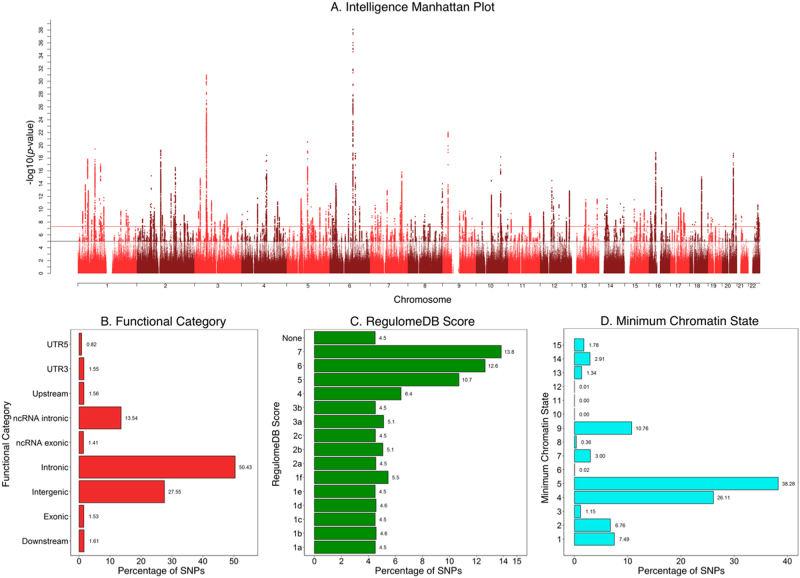
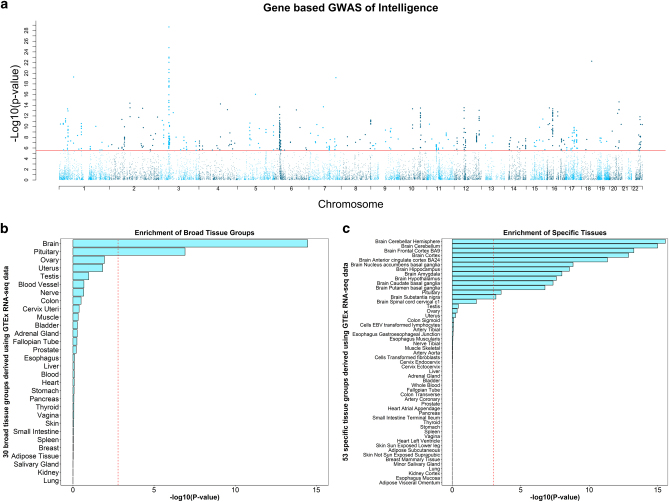
= 0.70). We used these findings as foundations for our use of a novel approach-multi-trait analysis of genome-wide association studies (MTAG; Turley et al. 2017)-to combine two large genome-wide association studies (GWASs) of education and intelligence, increasing statistical power and resulting in the largest GWAS of intelligence yet reported. Our study had four goals: first, to facilitate the discovery of new genetic loci associated with intelligence; second, to add to our understanding of the biology of intelligence differences; third, to examine whether combining genetically correlated traits in this way produces results consistent with the primary phenotype of intelligence; and, finally, to test how well this new meta-analytic data sample on intelligence predicts phenotypic intelligence in an independent sample. By combining datasets using MTAG, our functional sample size increased from 199,242 participants to 248,482. We found 187 independent loci associated with intelligence, implicating 538 genes, using both SNP-based and gene-based GWAS. We found evidence that neurogenesis and myelination-as well as genes expressed in the synapse, and those involved in the regulation of the nervous system-may explain some of the biological differences in intelligence. The results of our combined analysis demonstrated the same pattern of genetic correlations as those from previous GWASs of intelligence, providing support for the meta-analysis of these genetically-related phenotypes.
Overview
The claims and statistics of this paper haven’t been checked yet.
Free: it reads the open-access text and checks the first 5 claims that cite a source we can check. Create a free account to check every claim.
Integrity signals
Registry
Cites
Statistics
Figures
Verification
Claims the paper makes
The claims and statistics of this paper haven’t been checked yet.
Free: it reads the open-access text and checks the first 5 claims that cite a source we can check. Create a free account to check every claim.
Claims other papers make about this one
Each is checked against this paper’s own text: does it say what the citing paper says it does?
The source backs part of the claim, not all of it — or backs it for a different population, condition or comparison.
In the citing paper
“Most genome-wide association studies (GWAS) to date have focused on intelligence or g [234–237], and suggest that hundreds to thousands of genes additively influence variation in intelligence, with the effect of any one gene being very small (typically in GWAS, a variant has r2 < 0.05% [238]).”
From The role of prefrontal cortex in cognitive control and executive function (2022) · cites this paper as [237]
Experimental — accuracy not yet measured
Self-check
Percentages, sums and reported differences re-computed from the paper’s own numbers.
The self-check needs the paper’s full text.
Citations
Cites
Controlling the False Discovery Rate: A Practical and Powerful Approach to Multiple Testing
Benjamini, Y., & Hochberg, Y. (1995) · Journal of the Royal Statistical Society Series B: Statistical Methodology · doi:10.1111/j.2517-6161.1995.tb02031.x · Cited by 109,482 · cited 2×
“0168 for the final meta-analytic dataset on intelligence [46].”
BackgroundMethodSubramanian, A., Tamayo, P., Mootha, V. K., Mukherjee, S., Ebert, B. L., Gillette, M. A., Paulovich, A., Pomeroy, S. L., Golub, T. R., Lander, E. S., et al. (2005) · Proceedings of the National Academy of Sciences · doi:10.1073/pnas.0506580102 · Cited by 53,625 · cited 2×
“A total of 10,891 gene-sets (sourced from Gene Ontology [27], Reactome [28], and, MSigDB [29]) were examined for enrichment in intelligence.”
MethodGene Ontology: tool for the unification of biology
Ashburner, M., Ball, C. A., Blake, J. A., Botstein, D., Butler, H., Cherry, J. M., Davis, A. P., Dolinski, K., Dwight, S. S., Eppig, J. T., et al. (2000) · Nature Genetics · doi:10.1038/75556 · Cited by 43,206 · cited 2×
“A total of 10,891 gene-sets (sourced from Gene Ontology [27], Reactome [28], and, MSigDB [29]) were examined for enrichment in intelligence.”
MethodPLINK: a tool set for whole-genome association and population-based linkage analyses.
Purcell, S., Neale, B., Todd-Brown, K., Thomas, L., Ferreira, M. A. R., Bender, D., Maller, J., Sklar, P., de Bakker, P. I. W., Daly, M. J., et al. (2007) · The American Journal of Human Genetics · doi:10.1086/519795 · Cited by 34,089 · cited 1×
“These SNPs were found in 187 independent loci, identified using FUMA (Supplementary Table 2); [49, 36] this represents an increase of 169 loci compared to those”
ANNOVAR: functional annotation of genetic variants from high-throughput sequencing data
Wang, K., Li, M., & Hakonarson, H. (2010) · Nucleic Acids Research · doi:10.1093/nar/gkq603 · Cited by 14,621 · cited 3×
“The ANNOVAR [37] categories were used to identify the function of the SNP, and to locate its position within the genome.”
MethodGCTA: a tool for genome-wide complex trait analysis
Yang, J., Lee, S. H., Goddard, M. E., & Visscher, P. M. (2011) · The American Journal of Human Genetics · doi:10.1016/j.ajhg.2010.11.011 · Cited by 8,279 · cited 4×
“Using GCTA [9] on 131,790 reportedly-related participants one from each pair of related individuals was removed, based on a genetic relationship threshold of 0.025, leaving 332,050 individuals.”
MethodInfluentialA map of human genome variation from population-scale sequencing.
The 1000 Genomes Project Consortium (2010) · Nature · doi:10.1038/nature09534 · Cited by 7,877
An integrated map of genetic variation from 1,092 human genomes
The 1000 Genomes Project Consortium (2012) · Nature · doi:10.1038/nature11632 · Cited by 7,711
Biological insights from 108 schizophrenia-associated genetic loci
Schizophrenia Working Group of the Psychiatric Genomics Consortium (2014) · Nature · doi:10.1038/nature13595 · Cited by 7,577
Integrative analysis of 111 reference human epigenomes
Roadmap Epigenomics Consortium, Kundaje, A., Meuleman, W., Ernst, J., Bilenky, M., Yen, A., Heravi-Moussavi, A., Kheradpour, P., Zhang, Z., Wang, J., et al. (2015) · Nature · doi:10.1038/nature14248 · Cited by 6,368 · cited 2×
“127 epigenomes in the Roadmap Epigenomics Project [41].”
Background"General Intelligence," Objectively Determined and Measured
Spearman, C. (1904) · The American Journal of Psychology · doi:10.2307/1412107 · Cited by 6,207
A general framework for estimating the relative pathogenicity of human genetic variants
Kircher, M., Witten, D. M., Jain, P., O'Roak, B. J., Cooper, G. M., & Shendure, J. (2014) · Nature Genetics · doi:10.1038/ng.2892 · Cited by 6,183 · cited 2×
“To gauge the functional consequences of genetic variation at these SNPs they were first matched based on chromosome, base pair position, reference, and non-reference alleles to a database containing functional annotations including the ANNOVAR categories [37], combined annotation dependent depletion (CADD) scores [38]…”
MethodThe Reactome pathway Knowledgebase
Fabregat, A., Sidiropoulos, K., Garapati, P., Gillespie, M., Hausmann, K., Haw, R., Jassal, B., Jupe, S., Korninger, F., McKay, S., et al. (2016) · Nucleic Acids Research · doi:10.1093/nar/gkv1351 · Cited by 5,605
LD Score regression distinguishes confounding from polygenicity in genome-wide association studies
Schizophrenia Working Group of the Psychiatric Genomics Consortium, Bulik-Sullivan, B. K., Loh, P.-R., Finucane, H. K., Ripke, S., Yang, J., Patterson, N., Daly, M. J., Price, A. L., & Neale, B. M. (2015) · Nature Genetics · doi:10.1038/ng.3211 · Cited by 5,559 · cited 10×
“The presence of outliers can increase the standard error in LD score regression [12], and so SNPs where χ(2)> 80 were removed.”
BackgroundMethodInfluentialMETAL: fast and efficient meta-analysis of genomewide association scans
Willer, C. J., Li, Y., & Abecasis, G. R. (2010) · Bioinformatics · doi:10.1093/bioinformatics/btq340 · Cited by 5,205 · cited 3×
“The METAL meta-analysis and MTAG meta-analysis with education were re-run leaving out one of the groups who performed the VNR test.”
MethodThe Genotype-Tissue Expression (GTEx) pilot analysis: Multitissue gene regulation in humans
The GTEx Consortium, Ardlie, K. G., Deluca, D. S., Segrè, A. V., Sullivan, T. J., Young, T. R., Gelfand, E. T., Trowbridge, C. A., Maller, J. B., Tukiainen, T., et al. (2015) · Science · doi:10.1126/science.1262110 · Cited by 5,062
Common SNPs explain a large proportion of the heritability for human height
Yang, J., Benyamin, B., McEvoy, B. P., Gordon, S., Henders, A. K., Nyholt, D. R., Madden, P. A., Heath, A. C., Martin, N. G., Montgomery, G. W., et al. (2010) · Nature Genetics · doi:10.1038/ng.608 · Cited by 4,446 · cited 2×
“using the GREML-SC [8, 9] method indicate that around 20–30% of variation can be explained by variants in linkage disequilibrium (LD) with genotyped single nucleotide polymorphisms (SNPs) [10].”
MethodAn atlas of genetic correlations across human diseases and traits
ReproGen Consortium, Bulik-Sullivan, B., Psychiatric Genomics Consortium, Genetic Consortium for Anorexia Nervosa of the Wellcome Trust Case Control Consortium 3, Finucane, H. K., Anttila, V., Gusev, A., Day, F. R., Loh, P.-R., Duncan, L., et al. (2015) · Nature Genetics · doi:10.1038/ng.3406 · Cited by 4,255
(1998) · Cited by 4,172
Human Cognitive Abilities: A Survey of Factor-Analytic Studies
Carroll, J. B. (1993) · doi:10.1017/cbo9780511571312 · Cited by 4,121
Functional mapping and annotation of genetic associations with FUMA
Watanabe, K., Taskesen, E., van Bochoven, A., & Posthuma, D. (2017) · Nature Communications · doi:10.1038/s41467-017-01261-5 · Cited by 4,083
MAGMA: Generalized Gene-Set Analysis of GWAS Data
de Leeuw, C. A., Mooij, J. M., Heskes, T., & Posthuma, D. (2015) · PLOS Computational Biology · doi:10.1371/journal.pcbi.1004219 · Cited by 3,653 · cited 10×
“Tissue type gene expression In order to identify the importance of particular tissue types relevant to individual differences in intelligence, a gene property analysis was conducted using MAGMA.”
MethodInfluentialRobust relationship inference in genome-wide association studies
Manichaikul, A., Mychaleckyj, J. C., Rich, S. S., Daly, K., Sale, M., & Chen, W.-M. (2010) · Bioinformatics · doi:10.1093/bioinformatics/btq559 · Cited by 3,541 · cited 2×
“Finally, those individuals with>10 putative third degree relatives, identified by Bycroft et al. [30] by estimating the kinship coefficients for all pairs of samples using the software KING [34], were removed.”
MethodHuman cognitive abilities a survey of factor-analytic studies
Carroll, J. B. (2004) · Cited by 3,400
Integration of summary data from GWAS and eQTL studies predicts complex trait gene targets
Zhu, Z., Zhang, F., Hu, H., Bakshi, A., Robinson, M. R., Powell, J. E., Montgomery, G. W., Goddard, M. E., Wray, N. R., Visscher, P. M., et al. (2016) · Nature Genetics · doi:10.1038/ng.3538 · Cited by 3,352
A reference panel of 64,976 haplotypes for genotype imputation
the Haplotype Reference Consortium (2016) · Nature Genetics · doi:10.1038/ng.3643 · Cited by 2,836
Annotation of functional variation in personal genomes using RegulomeDB
Boyle, A. P., Hong, E. L., Hariharan, M., Cheng, Y., Schaub, M. A., Kasowski, M., Karczewski, K. J., Park, J., Hitz, B. C., Weng, S., et al. (2012) · Genome Research · doi:10.1101/gr.137323.112 · Cited by 2,722 · cited 1×
“To gauge the functional consequences of genetic variation at these SNPs they were first matched based on chromosome, base pair position, reference, and non-reference alleles to a database containing functional annotations including the ANNOVAR categories [37], combined annotation dependent depletion (CADD) scores [38]…”
MethodPartitioning heritability by functional annotation using genome-wide association summary statistics
ReproGen Consortium, Finucane, H. K., Schizophrenia Working Group of the Psychiatric Genomics Consortium, The RACI Consortium, Bulik-Sullivan, B., Gusev, A., Trynka, G., Reshef, Y., Loh, P.-R., Anttila, V., et al. (2015) · Nature Genetics · doi:10.1038/ng.3404 · Cited by 2,604 · cited 1×
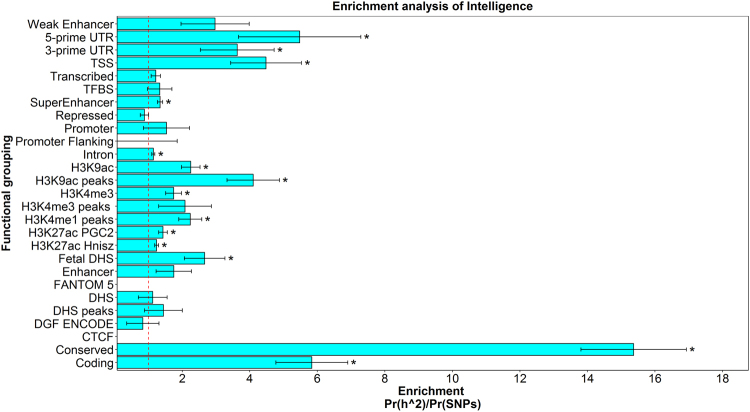
“Partitioned heritability was carried out using stratified linkage disequilibrium score regression [47].”
MethodChromHMM: automating chromatin-state discovery and characterization
Ernst, J., & Kellis, M. (2012) · Nature Methods · doi:10.1038/nmeth.1906 · Cited by 2,475
Wechsler Adult Intelligence Scale--Third Edition
Wechsler, D. (2019) · PsycTESTS Dataset · doi:10.1037/t49755-000 · Cited by 2,327
The Electronic Medical Records and Genomics (eMERGE) Consortium, Wood, A. R., The MIGen Consortium, The PAGE Consortium, Study, T. L. C., Esko, T., Yang, J., Vedantam, S., Pers, T. H., Gustafsson, S., et al. (2014) · Nature Genetics · doi:10.1038/ng.3097 · Cited by 1,853 · cited 1×
“This is compelling evidence that the number of uncovered genomewide significant loci associated with intelligence can be increased by raising the sample size—and thus the statistical power—of GWASs, as has been the case for other phenotypes such as height [17] and schizophrenia [18].”
BackgroundLezak, M. D., Howieson, D. B., Bigler, E. D., & Tranel, D. (1995) · Cited by 1,840
A Functional Role for Adult Hippocampal Neurogenesis in Spatial Pattern Separation
Clelland, C. D., Choi, M., Romberg, C., Clemenson, G. D., Fragniere, A., Tyers, P., Jessberger, S., Saksida, L. M., Barker, R. A., Gage, F. H., et al. (2009) · Science · doi:10.1126/science.1173215 · Cited by 1,642 · cited 1×
“studies, experimentally reducing analogous neurogenesis results in a poorer ability to discriminate between highly similar patterns [55], whereas increasing the number of new neurons produced results in an increased ability to successfully discriminate between highly similar stimuli [56].”
BackgroundIncreasing adult hippocampal neurogenesis is sufficient to improve pattern separation
Sahay, A., Scobie, K. N., Hill, A. S., O'Carroll, C. M., Kheirbek, M. A., Burghardt, N. S., Fenton, A. A., Dranovsky, A., & Hen, R. (2011) · Nature · doi:10.1038/nature09817 · Cited by 1,567 · cited 1×
“studies, experimentally reducing analogous neurogenesis results in a poorer ability to discriminate between highly similar patterns [55], whereas increasing the number of new neurons produced results in an increased ability to successfully discriminate between highly similar stimuli [56].”
BackgroundWhite matter in learning, cognition, and psychiatric disorders
Fields, R. D. (2008) · Trends in Neurosciences · doi:10.1016/j.tins.2008.04.001 · Cited by 1,337 · cited 1×
“maintained by the action of oligodendrocytes [61].”
Genome-wide association study identifies 74 loci associated with educational attainment
Okbay, A., Beauchamp, J. P., Fontana, M. A., Lee, J. J., Pers, T. H., Rietveld, C. A., Turley, P., Chen, G.-B., Emilsson, V., Meddens, S. F. W., et al. (2016) · Nature · doi:10.1038/nature17671 · Cited by 1,297 · cited 9×
“59, making it similar in statistical power to the Okbay education dataset [25] (mean χ(2)= 1.”
BackgroundMethodInfluentialSelf-citationPRSice: Polygenic Risk Score software
Euesden, J., Lewis, C. M., & O’Reilly, P. F. (2015) · Bioinformatics · doi:10.1093/bioinformatics/btu848 · Cited by 1,191 · cited 1×
“Using our meta-analytic dataset on intelligence, polygenic risk scores were derived for intelligence in each of the VNR groups using PRSice [48].”
MethodStudy, L. C., Okbay, A., Baselmans, B. M. L., De Neve, J.-E., Turley, P., Nivard, M. G., Fontana, M. A., Meddens, S. F. W., Linnér, R. K., Rietveld, C. A., et al. (2016) · Nature Genetics · doi:10.1038/ng.3552 · Cited by 1,013
Self-citationNeurogenesis in the striatum of the adult human brain
Ernst, A., Alkass, K., Bernard, S., Salehpour, M., Perl, S., Tisdale, J., Possnert, G., Druid, H., & Frisén, J. (2014) · Cell · doi:10.1016/j.cell.2014.01.044 · Cited by 937 · cited 1×
“New neurons are continually made in humans in the subgranular zone of the hippocampus and in the striatum; [54] in rodent”
BackgroundA Versatile Gene-Based Test for Genome-wide Association Studies
Liu, J. Z., Mcrae, A. F., Nyholt, D. R., Medland, S. E., Wray, N. R., Brown, K. M., Hayward, N. K., Montgomery, G. W., Visscher, P. M., Martin, N. G., et al. (2010) · The American Journal of Human Genetics · doi:10.1016/j.ajhg.2010.06.009 · Cited by 791 · cited 2×
“Statistical significance following FDR (using Benjamini-Hochberg procedure [51]) correction is indicated by an asterisk A combined analysis of genetically correlated traits identifies 187 loci for intelligence”
BackgroundMethodStudy, T. L. C., Yang, J., Bakshi, A., Zhu, Z., Hemani, G., Vinkhuyzen, A. A. E., Lee, S. H., Robinson, M. R., Perry, J. R. B., Nolte, I. M., et al. (2015) · Nature Genetics · doi:10.1038/ng.3390 · Cited by 745 · cited 2×
“More recent methods to measure heritability, such as GREML-KIN [13], and GREML-MS [14] using imputed SNPs, have found that some of the heritability of intelligence can be found in variants that are in poor LD with genotyped variants; by taking these into consideration, SNP heritability estimates of 0.54 (GREML-KIN) an…”
MethodInfluentialGenome-wide genetic data on ~500,000 UK Biobank participants
Bycroft, C., Freeman, C., Petkova, D., Band, G., Elliott, L. T., Sharp, K., Motyer, A., Vukcevic, D., Delaneau, O., O’Connell, J., et al. (2017) · bioRxiv (Cold Spring Harbor Laboratory) · doi:10.1101/166298 · Cited by 623 · cited 5×
“[30] by estimating the kinship coefficients for all pairs of samples using the software KING [34],”
BackgroundMethodInfluentialGenome-wide association studies establish that human intelligence is highly heritable and polygenic
Davies, G., Tenesa, A., Payton, A., Yang, J., Harris, S. E., Liewald, D., Ke, X., Le Hellard, S., Christoforou, A., Luciano, M., et al. (2011) · Molecular Psychiatry · doi:10.1038/mp.2011.85 · Cited by 608
Self-citationAdult-Generated Hippocampal Neurons Allow the Flexible Use of Spatially Precise Learning Strategies
Garthe, A., Behr, J., & Kempermann, G. (2009) · PLoS ONE · doi:10.1371/journal.pone.0005464 · Cited by 597 · cited 1×
“Additionally, neurogenesis appears to be involved in cognitive flexibility by serving to avoid interference between novel and previously formed memories in a spatial navigation task [57, 58].”
BackgroundSpatial Relational Memory Requires Hippocampal Adult Neurogenesis
Dupret, D., Revest, J.-M., Koehl, M., Ichas, F., De Giorgi, F., Costet, P., Abrous, D. N., & Piazza, P. V. (2008) · PLoS ONE · doi:10.1371/journal.pone.0001959 · Cited by 593
Quality control and conduct of genome-wide association meta-analyses
The Genetic Investigation of Anthropometric Traits (GIANT) Consortium, Winkler, T. W., Day, F. R., Croteau-Chonka, D. C., Wood, A. R., Locke, A. E., Mägi, R., Ferreira, T., Fall, T., Graff, M., et al. (2014) · Nature Protocols · doi:10.1038/nprot.2014.071 · Cited by 539 · cited 1×
“Allele frequency checks [31] were performed against the HRC [32] and 1000G [33] site lists, and variants were removed if the allele frequencies differed from the reference set by more than ±0.”
MethodSniekers, S., Stringer, S., Watanabe, K., Jansen, P. R., Coleman, J. R. I., Krapohl, E., Taskesen, E., Hammerschlag, A. R., Okbay, A., Zabaneh, D., et al. (2017) · Nature Genetics · doi:10.1038/ng.3869 · Cited by 490 · cited 10×
“We used summary results from the largest available GWAS on intelligence (n= 78,308) [16].”
BackgroundMethodInfluentialDeary, I. J. (2012) · Annual Review of Psychology · doi:10.1146/annurev-psych-120710-100353 · Cited by 467
Self-citationDeary, I. J., Weiss, A., & Batty, G. D. (2010) · Psychological Science in the Public Interest · doi:10.1177/1529100610387081 · Cited by 437
Self-citationDavies, G., Armstrong, N., Bis, J. C., Bressler, J., Chouraki, V, Giddaluru, S., Hofer, E., Ibrahim-Verbaas, C. A., Kirin, M., Lahti, J., et al. (2015) · Molecular Psychiatry · doi:10.1038/mp.2014.188 · Cited by 384 · cited 1×
“Future work using large GWAS that are exclusively based on established tests of intelligence [21] will provide”
MethodSelf-citationDavies, G., Marioni, R. E., Liewald, D. C., Hill, W. D., Hagenaars, S. P., Harris, S. E., Ritchie, S. J., Luciano, M., Fawns-Ritchie, C., Lyall, D., et al. (2016) · Molecular Psychiatry · doi:10.1038/mp.2016.45 · Cited by 373 · cited 1×
“This problem is ameliorated in studies like UK Biobank, which contain a large number of individuals who have supplied genetic data and taken the same cognitive test [22].”
BackgroundSelf-citationMETASTROKE Consortium, I. C. F. B. P. G., Hagenaars, S. P., SpiroMeta Consortium, CHARGE Consortium Pulmonary Group, C. C. A. A. L. G., Harris, S. E., Davies, G., Hill, W. D., Liewald, D. C. M., Ritchie, S. J., Marioni, R. E., et al. (2016) · Molecular Psychiatry · doi:10.1038/mp.2015.225 · Cited by 350 · cited 1×
“Many of these have been shown before using intelligence phenotypes [11, 12], and replicated using the verbal-numerical reasoning phenotype from UK Biobank; [53] however, we include them to show the similarities and differences between the genetic architecture found in our meta-analytic intelligence dataset and the thr…”
MethodSelf-citationIntelligence in youth and all-cause-mortality: systematic review with meta-analysis
Calvin, C. M., Deary, I. J., Fenton, C., Roberts, B. A., Der, G., Leckenby, N., & Batty, G. D. (2011) · International Journal of Epidemiology · doi:10.1093/ije/dyq190 · Cited by 345 · cited 1×
“Intelligence is predictive of health states, including mortality; [3, 4] a lower level of cognitive function in youth is associated with earlier death over the next several decades [5].”
BackgroundSelf-citationSniekers, S., Stringer, S., Watanabe, K., Jansen, P. R., Coleman, J. R. I., Krapohl, E., Taskesen, E., Hammerschlag, A. R., Okbay, A., Zabaneh, D., et al. (2017) · Nature Genetics · doi:10.1038/ng1017-1558c · Cited by 333
Adult‐born hippocampal neurons promote cognitive flexibility in mice
Burghardt, N. S., Park, E. H., Hen, R., & Fenton, A. A. (2012) · Hippocampus · doi:10.1002/hipo.22013 · Cited by 311 · cited 1×
“psychiatric disorders such as schizophrenia and autism [60],”
BackgroundBrain white matter tract integrity as a neural foundation for general intelligence
Penke, L., Maniega, S. M., Bastin, M. E., Valdés Hernández, M. C., Murray, C., Royle, N. A., Starr, J. M., Wardlaw, J. M., & Deary, I. J. (2012) · Molecular Psychiatry · doi:10.1038/mp.2012.66 · Cited by 303 · cited 1×
“system are associated with cognitive variation, we provide a molecular genetic basis for the link between white matter tract structure and intelligence [62].”
BackgroundSelf-citationRietveld, C. A., Esko, T., Davies, G., Pers, T. H., Turley, P., Benyamin, B., Chabris, C. F., Emilsson, V., Johnson, A. D., Lee, J. J., et al. (2014) · Proceedings of the National Academy of Sciences · doi:10.1073/pnas.1404623111 · Cited by 258 · cited 2×
“Educational attainment has been successfully used as a proxy phenotype for intelligence [24], owing in part to the phenotypic and genetic correlation between the traits [7], and to the ease with which it can be measured relatively consistently, facilitating the larger sample sizes required for loci discovery [25].”
Self-citationChildhood intelligence is heritable, highly polygenic and associated with FNBP1L
Benyamin, B., Pourcain, B., Davis, O. S., Davies, G., Hansell, N. K., Brion, M.-J., Kirkpatrick, R. M., Cents, R. A. M., Franić, S., Miller, M. B., et al. (2014) · Molecular Psychiatry · doi:10.1038/mp.2012.184 · Cited by 255
Self-citationTrabzuni, D., Ryten, M., Walker, R., Smith, C., Imran, S., Ramasamy, A., Weale, M. E., & Hardy, J. (2011) · Journal of Neurochemistry · doi:10.1111/j.1471-4159.2011.07432.x · Cited by 229
Calvin, C. M., Batty, G. D., Der, G., Brett, C. E., Taylor, A., Pattie, A., Čukić, I., & Deary, I. J. (2017) · BMJ · doi:10.1136/bmj.j2708 · Cited by 189 · cited 1×
“Intelligence is predictive of health states, including mortality; [3, 4] a lower level of cognitive function in youth is associated with earlier death over the next several decades [5].”
BackgroundSelf-citationMolecular Genetic Contributions to Social Deprivation and Household Income in UK Biobank
Hill, W. D., Hagenaars, S. P., Marioni, R. E., Harris, S. E., Liewald, D. C. M., Davies, G., Okbay, A., McIntosh, A. M., Gale, C. R., & Deary, I. J. (2016) · Current Biology · doi:10.1016/j.cub.2016.09.035 · Cited by 176
Self-citationGenomic analysis of family data reveals additional genetic effects on intelligence and personality
Hill, W. D., Arslan, R. C., Xia, C., Luciano, M., Amador, C., Navarro, P., Hayward, C., Nagy, R., Porteous, D. J., McIntosh, A. M., et al. (2018) · Molecular Psychiatry · doi:10.1038/s41380-017-0005-1 · Cited by 158
Self-citationMolecular genetic contributions to socioeconomic status and intelligence
Marioni, R. E., Davies, G., Hayward, C., Liewald, D., Kerr, S. M., Campbell, A., Luciano, M., Smith, B. H., Padmanabhan, S., Hocking, L. J., et al. (2014) · Intelligence · doi:10.1016/j.intell.2014.02.006 · Cited by 152 · cited 1×
“using the GREML-SC [8, 9] method indicate that around 20–30% of variation can be explained by variants in linkage disequilibrium (LD) with genotyped single nucleotide polymorphisms (SNPs) [10].”
MethodSelf-citationPerceptual Speed and IQ Are Associated Through Common Genetic Factors
Posthuma, D., de Geus, E. J. C., & Boomsma, D. I. (2001) · Behavior Genetics · doi:10.1023/a:1013349512683 · Cited by 145 · cited 1×
“gence can be explained by genetic factors [6].”
BackgroundCharacterization of the role of adult neurogenesis in touch‐screen discrimination learning
Swan, A. A., Clutton, J. E., Chary, P. K., Cook, S. G., Liu, G. G., & Drew, M. R. (2014) · Hippocampus · doi:10.1002/hipo.22337 · Cited by 101 · cited 1×
“Such findings have been expanded to include touch-screen discrimination tasks [59], as well as”
BackgroundAge-Dependent Pleiotropy Between General Cognitive Function and Major Psychiatric Disorders
Hill, W. D., Davies, G., Liewald, D. C., McIntosh, A. M., & Deary, I. J. (2016) · Biological Psychiatry · doi:10.1016/j.biopsych.2015.08.033 · Cited by 83 · cited 4×
“intelligence, although after correcting for multiple tests this estimate was not statistically significant [11].”
BackgroundMethodInfluentialSelf-citationHill, W. D., Davies, G., van de Lagemaat, L. N., Christoforou, A., Marioni, R. E., Fernandes, C. P. D., Liewald, D. C., Croning, M. D. R., Payton, A., Craig, L. C. A., et al. (2014) · Translational Psychiatry · doi:10.1038/tp.2013.114 · Cited by 77 · cited 1×
“43× 10), consistent with previous studies showing a role for synaptic plasticity [52].”
ResultSelf-citationXia, C., Amador, C., Huffman, J., Trochet, H., Campbell, A., Porteous, D., Scotland, G., Hastie, N. D., Hayward, C., Vitart, V., et al. (2016) · PLOS Genetics · doi:10.1371/journal.pgen.1005804 · Cited by 72 · cited 2×
“More recent methods to measure heritability, such as GREML-KIN [13], and”
MethodInfluentialReassessing the abundance of H3K9me2 chromatin domains in embryonic stem cells
Filion, G. J. P., & van Steensel, B. (2009) · Nature Genetics · doi:10.1038/ng0110-4 · Cited by 67
Hill, W. D., Davies, G., Harris, S. E., Hagenaars, S. P., The neuroCHARGE Cognitive Working group, Davies, G., Deary, I. J., Debette, S., Verbaas, C. I., Bressler, J., et al. (2016) · Translational Psychiatry · doi:10.1038/tp.2016.246 · Cited by 43 · cited 3×
“associated with intelligence differences [23].”
MethodResultInfluentialSelf-citationGenomic analysis of family data reveals additional genetic effects on intelligence and personality
Hill, W. D., Arslan, R. C., Xia, C., Luciano, M., Amador, C., Navarro, P., Hayward, C., Nagy, R., Porteous, D. J., McIntosh, A. M., et al. (2017) · bioRxiv (Cold Spring Harbor Laboratory) · doi:10.1101/106203 · Cited by 30
Self-citationMTAG: Multi-Trait Analysis of GWAS
Turley, P., Walters, R. K., Maghzian, O., Okbay, A., Lee, J. J., Fontana, M. A., Nguyen-Viet, T. A., Wedow, R., Zacher, M., Furlotte, N. A., et al. (2017) · bioRxiv (Cold Spring Harbor Laboratory) · doi:10.1101/118810 · Cited by 21 · cited 5×
“Through the use of summary statistics drawn from a large GWAS on intelligence and education, and the latest release of the UK Biobank genetic data used in conjunction with a recently-developed method, MTAG [26], we were able to”
BackgroundMethodInfluentialSelf-citationDeary, I. J., Weiss, A., & Batty, G. (2010) · UCL Discovery (University College London) · Cited by 19
Self-citationGenetic Associations with Subjective Well-Being Also Implicate Depression and NeuroticismPreprint
Okbay, A., Baselmans, B. M. L., Neve, J.-E. D., Turley, P., Nivard, M. G., Fontana, M. A., Meddens, S. F. W., Linnér, R. K., Rietveld, C. A., Derringer, J. L., et al. (2015) · bioRxiv (Cold Spring Harbor Laboratory) · doi:10.1101/032789 · Cited by 15
Spatial relational memory requires hippocampal adult neurogenesis
Abrous, D. N. (2009) · Frontiers in Behavioral Neuroscience · doi:10.3389/conf.neuro.08.2009.09.009 · Cited by 11 · cited 2×
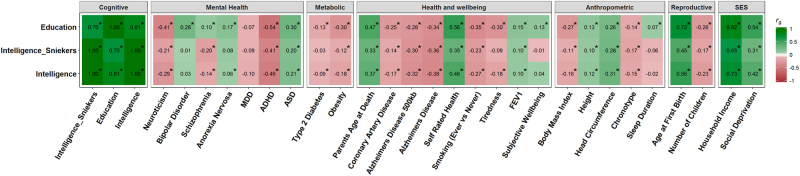
“Our new findings provide evidence that the previouslydiscovered differences in genetic correlations between traits such as schizophrenia and intelligence and education [11, 57, 12] are due to the fact that genetic effects acting solely on intelligence are those that are negatively genetically correlated with schizophr…”
BackgroundMann, M. R. W., & Bartolomei, M. S. (2000) · Nature Genetics · doi:10.1038/75575 · Cited by 11
Hill, W. D., Davies, G., Harris, S. E., et al. (2016) · bioRxiv (Cold Spring Harbor Laboratory) · doi:10.1101/063636 · Cited by 9
Self-citation
Research works printed but not linked: 1
- 50. Brendan K Bulik-Sullivan, Po-Ru Loh, Hilary K Finucane, Ste- phan Ripke, Jian Yang, Nick Patterson, Mark J Daly, Alkes L Price, Benjamin M Neale, LD Score regression distinguishes confounding from polygenicity in genome-wide association stu- dies. Nature Genetics. 2015;47:291-5. · DOI · Paper page
Cited by
Genome-wide association studies
Uffelmann, E., Huang, Q. Q., Munung, N. S., de Vries, J., Okada, Y., Martin, A. R., Martin, H. C., Lappalainen, T., & Posthuma, D. (2021) · Nature Reviews Methods Primers · doi:10.1038/s43586-021-00056-9 · Cited by 1,849
The role of prefrontal cortex in cognitive control and executive function
Friedman, N. P., & Robbins, T. W. (2022) · Neuropsychopharmacology · doi:10.1038/s41386-021-01132-0 · Cited by 1,737
Grotzinger, A. D., Rhemtulla, M., de Vlaming, R., Ritchie, S. J., Mallard, T. T., Hill, W. D., Ip, H. F., Marioni, R. E., McIntosh, A. M., Deary, I. J., et al. (2019) · Nature Human Behaviour · doi:10.1038/s41562-019-0566-x · Cited by 958
Self-citationDavies, G., Lam, M., Harris, S. E., Trampush, J. W., Luciano, M., Hill, W. D., Hagenaars, S. P., Ritchie, S. J., Marioni, R. E., Fawns-Ritchie, C., et al. (2018) · Nature Communications · doi:10.1038/s41467-018-04362-x · Cited by 686
Self-citationThe new genetics of intelligence
Plomin, R., & von Stumm, S. (2018) · Nature Reviews Genetics · doi:10.1038/nrg.2017.104 · Cited by 483
Metadata
- Authors
- Hill, W. D., Marioni, R. E., Maghzian, O., Ritchie, S. J., Hagenaars, S. P., McIntosh, A. M., Gale, C. R., Davies, G., & Deary, I. J.
- Affiliations
- University of Edinburgh (GB)
- The University of Queensland (AU)
- Harvard University (US)
- King's College London (GB)
- Corresponding author
- Hill, W. D.
- Venue
- Molecular Psychiatry
- Published
- 2018-01-11
- Volume
- 24
- Issue
- 2
- Pages
- 169-181
- ISSN
- 1359-4184 (ISSN-L)
- 1476-5578
- PMC
- PMC6344370
- OpenAlex
- W2765657625
- Semantic Scholar
- a56e1aa48b33ae0a75ffc93a5da602a134443f37
- Cited by
- 311
- References
- 78
- Citations by year
- 2026: 12 · 2025: 19 · 2024: 32 · 2023: 32 · 2022: 37 · 2021: 62 · 2020: 51 · 2019: 38 · 2018: 24
- FWCI
- 26.99
- Type
- journal article
- Language
- en
- Open access
- hybrid
- doi.org
- Licence
- cc-by
- creativecommons.org/licenses/by/4.0 (tdm)
- Locations
- Molecular Psychiatry (publishedVersion, cc-by)
- bioRxiv (Cold Spring Harbor Laboratory) (acceptedVersion)
- Europe PMC (PubMed Central) (publishedVersion, other-oa)
- PubMed Central (publishedVersion, cc-by)
- PubMed (publishedVersion)
- ePrints Soton (University of Southampton) (acceptedVersion)
- Research Portal (King's College London) (submittedVersion, cc-by)
- Edinburgh Research Explorer (University of Edinburgh) (submittedVersion, cc-by)
- Funders
- Wellcome Trust (104036/Z/14/Z, 104036)
- Age UK (10279, MR/K026992/1)
- University of Edinburgh (MR/K026992/1, 10279)
- Centre for Cognitive Ageing and Cognitive Epidemiology (MR/K026992/1)
- Directorate for Biological Sciences
- Medical Research Council (MR/K026992/1, 10279, 104036/Z/14/Z, MR/S015132/1, MC_PC_17228, MC_UU_12011/2)
- Biotechnology and Biological Sciences Research Council (MR/K026992/1, BB/F019394/1)
- Topics
- Life Sciences › Biochemistry, Genetics and Molecular Biology › Genetics › Genetic Associations and Epidemiology
- Social Sciences › Psychology › Experimental and Cognitive Psychology › Cognitive Abilities and Testing
- Life Sciences › Biochemistry, Genetics and Molecular Biology › Genetics › Genetic Mapping and Diversity in Plants and Animals
- Keywords
- intelligence, MTAG, genetic loci, neurogenesis, myelination, synapses, nervous system genes, genetic correlation
- MeSH terms
- Data Analysis, Cognition, Female, Humans, Intelligence, Male, Nerve Fibers, Myelinated, Genetic Predisposition to Disease, Multifactorial Inheritance, Polymorphism, Single Nucleotide, Genome-Wide Association Study, Neurogenesis, Genetic Loci
About these checks
Registry, retraction, Cites and statistics results are computed, not judged, with one exception: a printed reference that no index lists is read once by a model before it counts as a citation error. Claims are extracted by a model and kept only when their quote appears verbatim in the text; each cited source is then checked, with a model’s help, for whether it says what the claim relies on. Those verdicts can be wrong — read the claim’s quote and the cited source before relying on one.
Statistics and arithmetic are recomputed, not judged.
Confidence bands are shown only for fields calibrated on our annotated test set. None is calibrated yet, so no band is shown.
What counts as a claim ›How we measure confidence ›How we check this ›
Are you an author, or do you see a problem with this page? Request a review
Data sources
Bibliographic data: Semantic Scholar, OpenAlex, Crossref.
Contains information from the Semantic Scholar Academic Graph Datasets, made available under the ODC Attribution License (ODC-BY 1.0).
Semantic Scholar’s data is described in: Kinney, R., et al. (2023). The Semantic Scholar Open Data Platform. arXiv:2301.10140.
