

Identification of a novel gene regulating amygdala-mediated fear extinction
Open accessThe DOI matches its Crossref record; 83 of the 83 references it cites were found in a registry or an index.
Abstract
Recent years have seen advances in our understanding of the neural circuits associated with trauma-related disorders, and the development of relevant assays for these behaviors in rodents. Although inherited factors are known to influence individual differences in risk for these disorders, it has been difficult to identify specific genes that moderate circuit functions to affect trauma-related behaviors. Here, we exploited robust inbred mouse strain differences in Pavlovian fear extinction to uncover quantitative trait loci (QTL) associated with this trait. We found these strain differences to be resistant to developmental cross-fostering and associated with anatomical variation in basolateral amygdala (BLA) perineuronal nets, which are developmentally implicated in extinction. Next, by profiling extinction-driven BLA expression of QTL-linked genes, we nominated Ppid (peptidylprolyl isomerase D, a member of the tetratricopeptide repeat (TPR) protein family) as an extinction-related candidate gene. We then showed that Ppid was enriched in excitatory and inhibitory BLA neuronal populations, but at lower levels in the extinction-impaired mouse strain. Using a virus-based approach to directly regulate Ppid function, we demonstrated that downregulating BLA-Ppid impaired extinction, while upregulating BLA-Ppid facilitated extinction and altered in vivo neuronal extinction encoding. Next, we showed that Ppid colocalized with the glucocorticoid receptor (GR) in BLA neurons and found that the extinction-facilitating effects of Ppid upregulation were blocked by a GR antagonist. Collectively, our results identify Ppid as a novel gene involved in regulating extinction via functional actions in the BLA, with possible implications for understanding genetic and pathophysiological mechanisms underlying risk for trauma-related disorders.
Overview
The claims and statistics of this paper haven’t been checked yet.
Free: it reads the open-access text and checks the first 5 claims that cite a source we can check. Create a free account to check every claim.
Integrity signals
Registry
Cites
Statistics
Figures
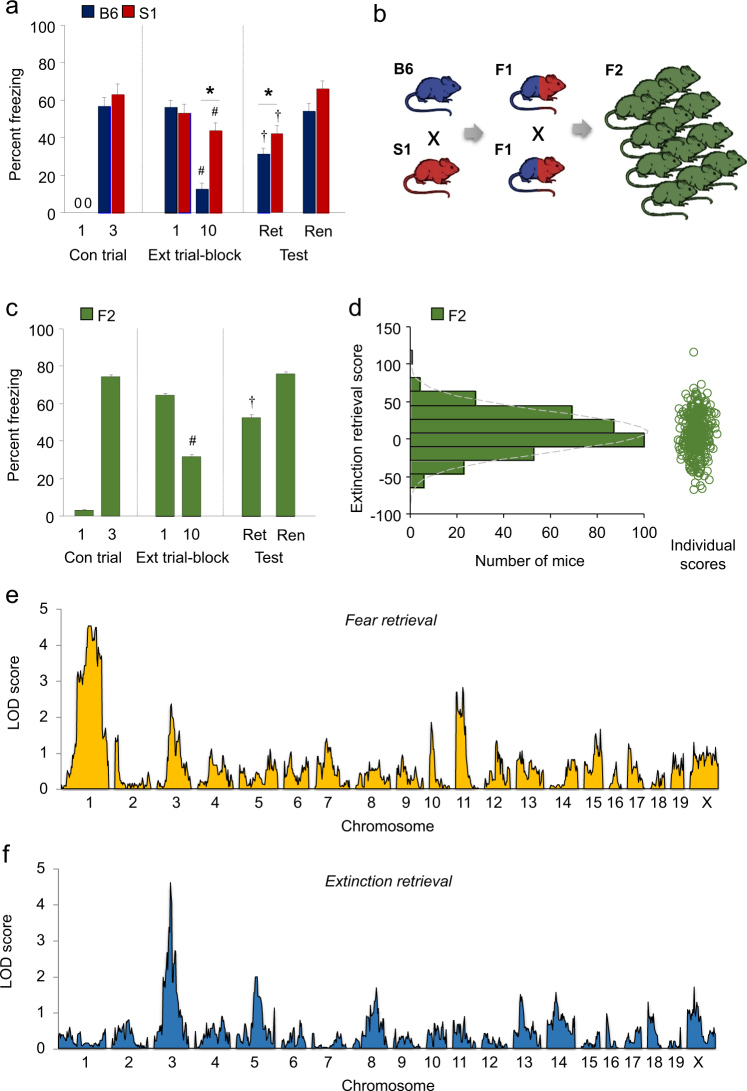
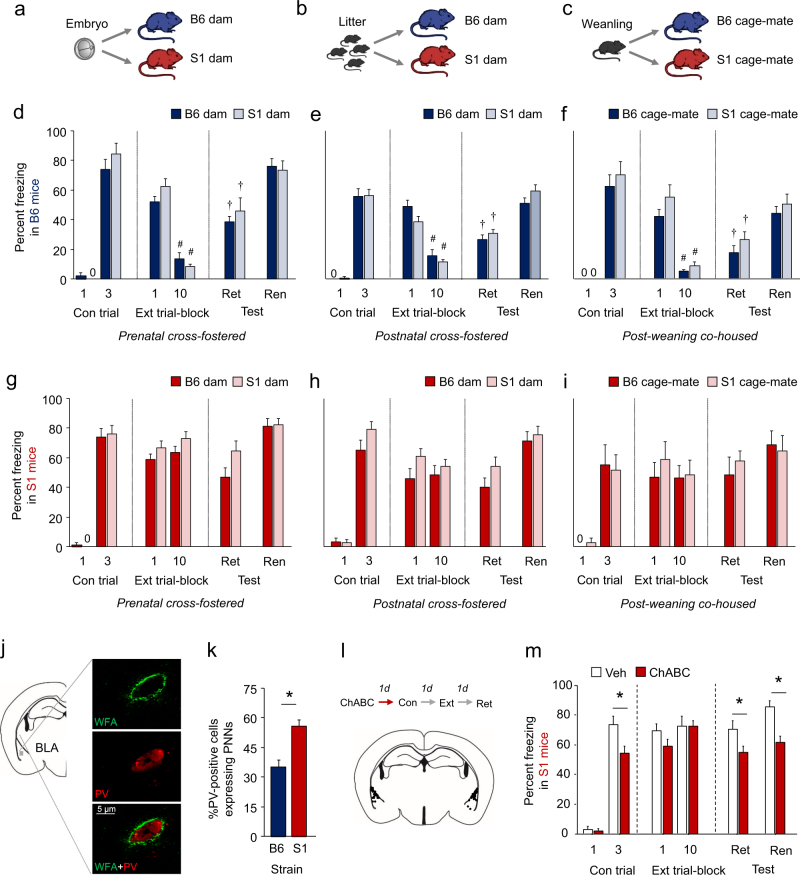
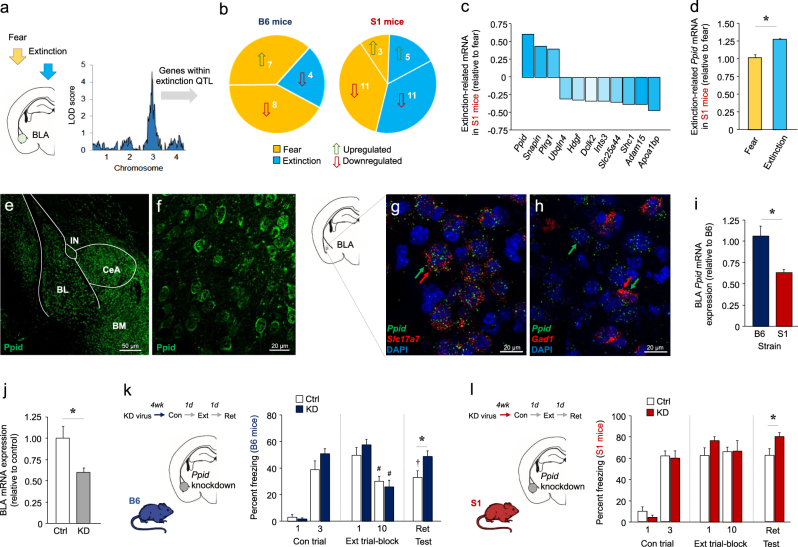
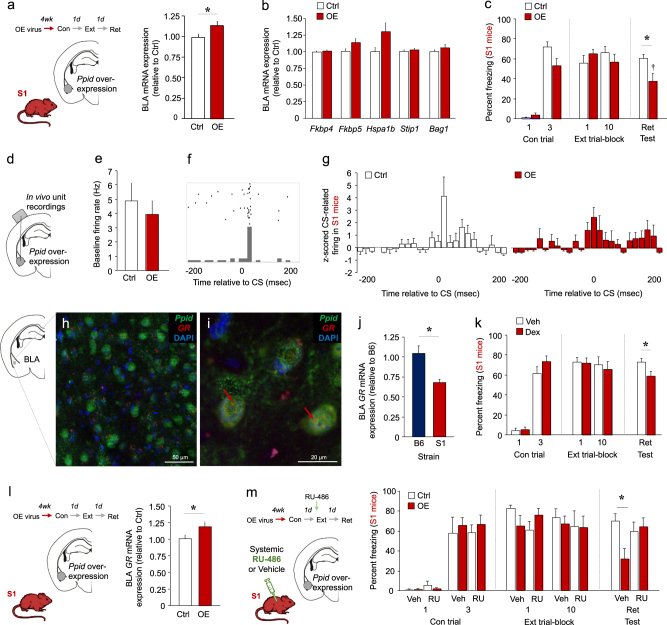
Verification
Claims the paper makes
The claims and statistics of this paper haven’t been checked yet.
Free: it reads the open-access text and checks the first 5 claims that cite a source we can check. Create a free account to check every claim.
Claims other papers make about this one
Each is checked against this paper’s own text: does it say what the citing paper says it does?
The cited source says what the claim attributes to it.
In the citing paper
“Since then, other studies have shown that PNN degradation in the hippocampus, medial prefrontal cortex (mPFC), anterior cingulate cortex, BLA, or auditory cortex impairs the expression of fear conditioning [62, 83–85].”
From The extracellular matrix and perineuronal nets in memory (2022) · cites this paper as [85]
Self-check
Percentages, sums and reported differences re-computed from the paper’s own numbers.
The self-check needs the paper’s full text.
Citations
Cites
R/qtl: QTL mapping in experimental crosses
Broman, K. W., Wu, H., Sen, Ś., & Churchill, G. A. (2003) · Bioinformatics · doi:10.1093/bioinformatics/btg112 · Cited by 3,463
Neuronal circuits for fear and anxiety
Tovote, P., Fadok, J. P., & Lüthi, A. (2015) · Nature Reviews Neuroscience · doi:10.1038/nrn3945 · Cited by 1,786 · cited 7×
“These data show that, consistent with our prediction, engineering suprathreshold levels of Ppid in the BLA is sufficient to, at least partially, rescue impaired extinction in the S1 strain (summarized in Figure S11,12).”
InfluentialFear Extinction as a Model for Translational Neuroscience: Ten Years of Progress
Milad, M. R., & Quirk, G. J. (2012) · Annual Review of Psychology · doi:10.1146/annurev.psych.121208.131631 · Cited by 1,466 · cited 3×
“…retrieval QTL are located at different genomic sites, it implies independent genetic influences on these traits and thereby provides a novel extension to mounting evidence that fear and extinction are mediated by overlapping but dissociable molecular pathways and neural circuits 12, 13, 21 .”
Binder, E. B. (2008) · JAMA · doi:10.1001/jama.299.11.1291 · Cited by 1,362
Caspi, A., Hariri, A. R., Holmes, A., Uher, R., & Moffitt, T. E. (2010) · American Journal of Psychiatry · doi:10.1176/appi.ajp.2010.09101452 · Cited by 1,346 · cited 1×
“This variation is due in part to the modifying influence of inherited risk and resilience factors and the interaction among genetic variants and stressful life events 2, 3 .”
Self-citationNeurobiological Basis of Failure to Recall Extinction Memory in Posttraumatic Stress Disorder
Milad, M. R., Pitman, R. K., Ellis, C. B., Gold, A. L., Shin, L. M., Lasko, N. B., Zeidan, M. A., Handwerger, K., Orr, S. P., & Rauch, S. L. (2009) · Biological Psychiatry · doi:10.1016/j.biopsych.2009.06.026 · Cited by 1,339
The Genetic Architecture of Quantitative Traits
Mackay, T. F. C. (2001) · Annual Review of Genetics · doi:10.1146/annurev.genet.35.102401.090633 · Cited by 1,106 · cited 1×
“We found that utilizing QTL analysis proved to be a tractable approach to nominate novel extinction candidates, but it is important to bear in mind that this strategy reveals individual genetic loci that typically only account for a small amount of the variance in a complex trait 76 .”
Switching on and off fear by distinct neuronal circuits
Herry, C., Ciocchi, S., Senn, V., Demmou, L., Müller, C., & Lüthi, A. (2008) · Nature · doi:10.1038/nature07166 · Cited by 950
Perineuronal Nets Protect Fear Memories from Erasure
Gogolla, N., Caroni, P., Lüthi, A., & Herry, C. (2009) · Science · doi:10.1126/science.1174146 · Cited by 760
Neuronal circuits of fear extinction
Herry, C., Ferraguti, F., Singewald, N., Letzkus, J. J., Ehrlich, I., & Lüthi, A. (2010) · European Journal of Neuroscience · doi:10.1111/j.1460-9568.2010.07101.x · Cited by 484
Cited by
Amygdala Circuit Substrates for Stress Adaptation and Adversity
Zhang, W.-H., Zhang, J.-Y., Holmes, A., & Pan, B.-X. (2021) · Biological Psychiatry · doi:10.1016/j.biopsych.2020.12.026 · Cited by 196
Self-citationThe extracellular matrix and perineuronal nets in memory
Fawcett, J. W., Fyhn, M., Jendelova, P., Kwok, J. C. F., Ruzicka, J., & Sorg, B. A. (2022) · Molecular Psychiatry · doi:10.1038/s41380-022-01634-3 · Cited by 169
A Discrete Dorsal Raphe to Basal Amygdala 5-HT Circuit Calibrates Aversive Memory
Sengupta, A., & Holmes, A. (2019) · Neuron · doi:10.1016/j.neuron.2019.05.029 · Cited by 109
Self-citationRodent models of impaired fear extinction
Singewald, N., & Holmes, A. (2019) · Psychopharmacology · doi:10.1007/s00213-018-5054-x · Cited by 101
Self-citationChronic stress dysregulates amygdalar output to the prefrontal cortex
Lowery-Gionta, E. G., Crowley, N. A., Bukalo, O., Silverstein, S., Holmes, A., & Kash, T. L. (2018) · Neuropharmacology · doi:10.1016/j.neuropharm.2018.06.032 · Cited by 84
Self-citationBaker, J. D., McMillan, I. O., Ospina, S. R., Gulick, D., & Blair, L. J. (2018) · International Journal of Molecular Sciences · doi:10.3390/ijms20010079 · Cited by 79
Prefrontal Regulation of Punished Ethanol Self-administration
Halladay, L. R., Kocharian, A., Piantadosi, P. T., Authement, M. E., Lieberman, A. G., Spitz, N. A., Coden, K., Glover, L. R., Costa, V. D., Alvarez, V. A., et al. (2020) · Biological Psychiatry · doi:10.1016/j.biopsych.2019.10.030 · Cited by 74
Self-citationA cortico-amygdala neural substrate for endocannabinoid modulation of fear extinction
Gunduz‐Cinar, O., Castillo, L. I., Xia, M. Y., Leer, E. V., Brockway, E. T., Pollack, G. A., Yasmin, F., Bukalo, O., Limoges, A., Oreizi-Esfahani, S., et al. (2023) · Neuron · doi:10.1016/j.neuron.2023.06.023 · Cited by 68
Self-citationBukalo, O., Nonaka, M., Weinholtz, C. A., Mendez, A., Taylor, W. W., & Holmes, A. (2020) · Behavioural Brain Research · doi:10.1016/j.bbr.2020.112913 · Cited by 40
Self-citationRovira-Esteban, L., Gunduz‐Cinar, O., Bukalo, O., Limoges, A., Brockway, E. T., Müller, K., Fenno, L. E., Kim, Y. S., Ramakrishnan, C., Andrási, T., et al. (2019) · eNeuro · doi:10.1523/eneuro.0220-19.2019 · Cited by 38
Self-citationBehavioral and Myelin-Related Abnormalities after Blast-Induced Mild Traumatic Brain Injury in Mice
Nonaka, M., Taylor, W. W., Bukalo, O., Tucker, L. B., Fu, A. H., Kim, Y., McCabe, J. T., & Holmes, A. (2021) · Journal of Neurotrauma · doi:10.1089/neu.2020.7254 · Cited by 37
Self-citationAstrocytes enable amygdala neural representations supporting memory
Bukalo, O., O’Sullivan, R., Tanisumi, Y., Mendez, A., Weinholtz, C. A., Zimmerman, S., Offenberg, V., Carpenter, O., Bhagwat, H., Mosley, S., et al. (2026) · Nature · doi:10.1038/s41586-025-10068-0 · Cited by 31
Self-citationBjorni, M., Rovero, N. G., Yang, E. R., Holmes, A., & Halladay, L. R. (2020) · Learning & Memory · doi:10.1101/lm.050807.119 · Cited by 28
Self-citationToward an animal model of borderline personality disorder
Corniquel, M. B., Koenigsberg, H. W., & Likhtik, E. (2019) · Psychopharmacology · doi:10.1007/s00213-019-05289-x · Cited by 25
Deficits across multiple behavioral domains align with susceptibility to stress in 129S1/SvImJ mice
Rodriguez, G., Moore, S. J., Neff, R. C., Glass, E., Stevenson, T. K., Stinnett, G. S., Seasholtz, A. F., Murphy, G. G., & Cazares, V. A. (2020) · Neurobiology of Stress · doi:10.1016/j.ynstr.2020.100262 · Cited by 24
Dorsolateral striatum engagement during reversal learning
Bergstrom, H. C., Lieberman, A. G., Graybeal, C., Lipkin, A. M., & Holmes, A. (2020) · Learning & Memory · doi:10.1101/lm.051714.120 · Cited by 21
Self-citationEnvironmental variables that ameliorate extinction learning deficits in the 129S1/SvlmJ mouse strain
Cazares, V. A., Rodriguez, G., Parent, R., Ouillette, L., Glanowska, K. M., Moore, S. J., & Murphy, G. G. (2019) · Genes Brain & Behavior · doi:10.1111/gbb.12575 · Cited by 18
Contributions of glucocorticoid receptors in cortical astrocytes to memory recall
Taylor, W. W., Imhoff, B. R., Sathi, Z. S., Liu, W. Y., Garza, K. M., & Dias, B. G. (2021) · Learning & Memory · doi:10.1101/lm.053041.120 · Cited by 18
Selective sub-nucleus effects of intra-amygdala oxytocin on fear extinction
Gunduz‐Cinar, O., Brockway, E. T., Castillo, L. I., Pollack, G. A., Erguven, T., & Holmes, A. (2020) · Behavioural Brain Research · doi:10.1016/j.bbr.2020.112798 · Cited by 15
Self-citationPan, H., Zhang, W., Liao, C.-Z., He, Y., Xiao, Z.-M., Qin, X., Liu, W.-Z., Wang, N., Zou, J., Liu, X., et al. (2020) · Frontiers in Neuroscience · doi:10.3389/fnins.2020.00299 · Cited by 15
Systemic neuro-dysregulation in depression: Evidence from genome-wide association
Tubbs, J. D., Ding, J., Baum, L., & Sham, P. C. (2020) · European Neuropsychopharmacology · doi:10.1016/j.euroneuro.2020.08.007 · Cited by 12
Improved visual discrimination learning in mice with partial 5-HT2B gene deletion
Radke, A. K., Piantadosi, P. T., Uhl, G. R., Hall, F. S., & Holmes, A. (2020) · Neuroscience Letters · doi:10.1016/j.neulet.2020.135378 · Cited by 11
Self-citationObray, J. D., Denton, A. R., Carroll-Deaton, J., Marquardt, K., Chandler, L. J., & Scofield, M. D. (2024) · Alcohol · doi:10.1016/j.alcohol.2024.12.006 · Cited by 10
O’Connor, R. M., McCafferty, C. P., Bravo, J. A., Singewald, N., Holmes, A., & Cryan, J. F. (2018) · Psychopharmacology · doi:10.1007/s00213-018-5031-4 · Cited by 10
Self-citationTurning strains into strengths for understanding psychiatric disorders
Moore, S. J., Murphy, G. G., & Cazares, V. A. (2020) · Molecular Psychiatry · doi:10.1038/s41380-020-0772-y · Cited by 10
Maternal rank acquisition in a primate with low aggression and coalition rates
Donabedian, R., & Cords, M. (2021) · Behavioral Ecology and Sociobiology · doi:10.1007/s00265-021-03021-4 · Cited by 9
Mennesson, M., Orav, E., Gigliotta, A., Kulesskaya, N., Saarnio, S., Kirjavainen, A., Kesaf, S., Winkel, F., Llach Pou, M., Umemori, J., et al. (2020) · eneuro · doi:10.1523/eneuro.0541-19.2020 · Cited by 8
“They prevent LTP at excitatory synapses in the hippocampus (Carstens et al., 2016) and protect fear memories from erasure during extinction in the amygdala (Gogolla et al., 2009; Gunduz-Cinar et al., 2019).”
BackgroundCharacteristics of gut microbiota dysbiosis in patients with colorectal polyps
Wu, X., He, X., & Xie, Y. (2025) · World Journal of Gastrointestinal Oncology · doi:10.4251/wjgo.v17.i1.98872 · Cited by 8
Park, K., Park, H.-Y., & Chung, C. (2024) · Neurobiology of Stress · doi:10.1016/j.ynstr.2024.100606 · Cited by 8
Hunting for Genes Underlying Emotionality in the Laboratory Rat: Maps, Tools and Traps
Ramos, A., Granzotto, N., Kremer, R., Boeder, A. M., de Araújo, J. F. P., Pereira, A. G., & Izídio, G. S. (2022) · Current Neuropharmacology · doi:10.2174/1570159x20666220901154034 · Cited by 7
Altered Dopamine Signaling in Extinction-Deficient Mice
Gunduz‐Cinar, O., Fritz, E. M., Xia, M. Y., Leer, E. V., Crow, N., Holmes, A., & Singewald, N. (2025) · eNeuro · doi:10.1523/eneuro.0174-25.2025 · Cited by 6
Self-citationLeveraging interindividual variability in threat conditioning of inbred mice to model trait anxiety
Kovlyagina, I., Wierczeiko, A., Todorov, H., Jacobi, E., Tevosian, M., von Engelhardt, J., Gerber, S., & Lutz, B. (2024) · PLoS Biology · doi:10.1371/journal.pbio.3002642 · Cited by 5
The role of the endocannabinoid system in stress- and fear-related processes
Spohrs, J. (2021) · OPen Access Repositorium der Universität Ulm (OPARU) (Ulm University) · doi:10.18725/oparu-36441 · Cited by 1
Sex chromosome genes contribute to cocaine vulnerability in a strain-dependent mannerPreprint
Le, A. L., Dickey, A. N., Duong, T.-B., Rissman, E. F., & Lynch, W. J. (2026) · Research Square · doi:10.21203/rs.3.rs-9519927/v1
Kainate receptor auxiliary subunits NETO1 and NETO2 in anxiety and fear-related behaviors
Mennesson, M. (2019) · Helda - University of Helsinki Institutional Repository
Phospholipase A2 downregulates inhibitory transmission in the amygdala and impairs fear extinction
Park, K., & Chung, C. (2026) · Neuropsychopharmacology · doi:10.1038/s41386-026-02461-8
Corticolimbic Circuitry and Genomic Risk for Stress-Related Psychopathology
Paul, S. E., Elsayed, N. M., Bondy, E., & Bogdan, R. (2020) · Elsevier eBooks · doi:10.1016/b978-0-12-813156-5.00030-3
Investigating Neural Correlates of Behavior Through In Vivo Electrophysiology
Halladay, L. R. (2023) · Current Protocols · doi:10.1002/cpz1.769
Self-citation
Metadata
- Authors
- Gunduz-Cinar, O., Brockway, E., Lederle, L., Wilcox, T., Halladay, L. R., Ding, Y., Oh, H., Busch, E. F., Kaugars, K., Flynn, S., Limoges, A., Bukalo, O., MacPherson, K. P., Masneuf, S., Pinard, C., Sibille, E., Chesler, E. J., & Holmes, A.
- Affiliations
- National Institutes of Health (US)
- Jackson Laboratory (US)
- University of Pittsburgh (US)
- Centre for Addiction and Mental Health (CA)
- Corresponding author
- Holmes, Andrew
- ORCID
- Venue
- Molecular Psychiatry
- Published
- 2018-01-08
- Volume
- 24
- Issue
- 4
- Pages
- 601-612
- ISSN
- 1359-4184 (ISSN-L)
- 1476-5578
- PMC
- PMC6035889
- OpenAlex
- W2784299524
- Semantic Scholar
- c917b2163963ac7abd7907c743c13355b4dfe736
- Cited by
- 38
- References
- 83
- Citations by year
- 2026: 3 · 2025: 1 · 2024: 4 · 2023: 2 · 2022: 2 · 2021: 4 · 2020: 12 · 2019: 6 · 2018: 4
- FWCI
- 3.87
- Type
- journal article
- Language
- en
- Open access
- hybrid
- doi.org
- Licence
- cc-by-nc-nd
- creativecommons.org/licenses/by-nc-nd/4.0 (tdm)
- Locations
- Molecular Psychiatry (publishedVersion, cc-by-nc-nd)
- Europe PMC (PubMed Central) (publishedVersion, cc-by-nc-nd)
- PubMed Central (publishedVersion, cc-by-nc-nd)
- PubMed (publishedVersion)
- Minerva Access (University of Melbourne) (submittedVersion, cc-by-nc-nd)
- The Mouseion at the JAXlibrary (Jackson Laboratory) (submittedVersion, cc-by-nc)
- The Mouseion at the JAXlibrary (Jackson Laboratory) (submittedVersion)
- Funders
- National Institutes of Health (Z99‐AA999999)
- National Institute on Alcohol Abuse and Alcoholism (R01AA018776, AA018776, Z99 AA999999, Z01AA000411, ZIAAA000411)
- National Institute of Mental Health (F31MH012050, F32MH063559, K01MH067721)
- National Institute on Drug Abuse (R01DA037927, P50DA039841)
- Topics
- Life Sciences › Neuroscience › Cognitive Neuroscience › Memory and Neural Mechanisms
- Social Sciences › Psychology › Clinical Psychology › Posttraumatic Stress Disorder Research
- Life Sciences › Neuroscience › Cellular and Molecular Neuroscience › Neuroscience and Neuropharmacology Research
- Keywords
- fear extinction, basolateral amygdala, pituitary pars intermedia dysfunction, tetratricopeptide repeat proteins, perineuronal nets, quantitative trait loci, inbred mouse strains, glucocorticoid receptor, trauma-related disorders, gene expression profiling
- MeSH terms
- Tetratricopeptide Repeat, Amygdala, Animals, Extinction, Psychological, Fear, Male, Memory, Mice, Inbred C57BL, Neurons, Prefrontal Cortex, Cyclophilins, Quantitative Trait Loci, Mice, Basolateral Nuclear Complex
About these checks
Registry, retraction, Cites and statistics results are computed, not judged, with one exception: a printed reference that no index lists is read once by a model before it counts as a citation error. Claims are extracted by a model and kept only when their quote appears verbatim in the text; each cited source is then checked, with a model’s help, for whether it says what the claim relies on. Those verdicts can be wrong — read the claim’s quote and the cited source before relying on one.
Statistics and arithmetic are recomputed, not judged.
Confidence bands are shown only for fields calibrated on our annotated test set. None is calibrated yet, so no band is shown.
What counts as a claim ›How we measure confidence ›How we check this ›
Are you an author, or do you see a problem with this page? Request a review
Data sources
Bibliographic data: Semantic Scholar, OpenAlex, Crossref.
Contains information from the Semantic Scholar Academic Graph Datasets, made available under the ODC Attribution License (ODC-BY 1.0).
Semantic Scholar’s data is described in: Kinney, R., et al. (2023). The Semantic Scholar Open Data Platform. arXiv:2301.10140.
