

Identification of a novel gene regulating amygdala-mediated fear extinction
Open accessThe DOI matches its Crossref record; 83 of the 83 references it cites were found in a registry or an index.
Abstract
Recent years have seen advances in our understanding of the neural circuits associated with trauma-related disorders, and the development of relevant assays for these behaviors in rodents. Although inherited factors are known to influence individual differences in risk for these disorders, it has been difficult to identify specific genes that moderate circuit functions to affect trauma-related behaviors. Here, we exploited robust inbred mouse strain differences in Pavlovian fear extinction to uncover quantitative trait loci (QTL) associated with this trait. We found these strain differences to be resistant to developmental cross-fostering and associated with anatomical variation in basolateral amygdala (BLA) perineuronal nets, which are developmentally implicated in extinction. Next, by profiling extinction-driven BLA expression of QTL-linked genes, we nominated Ppid (peptidylprolyl isomerase D, a member of the tetratricopeptide repeat (TPR) protein family) as an extinction-related candidate gene. We then showed that Ppid was enriched in excitatory and inhibitory BLA neuronal populations, but at lower levels in the extinction-impaired mouse strain. Using a virus-based approach to directly regulate Ppid function, we demonstrated that downregulating BLA-Ppid impaired extinction, while upregulating BLA-Ppid facilitated extinction and altered in vivo neuronal extinction encoding. Next, we showed that Ppid colocalized with the glucocorticoid receptor (GR) in BLA neurons and found that the extinction-facilitating effects of Ppid upregulation were blocked by a GR antagonist. Collectively, our results identify Ppid as a novel gene involved in regulating extinction via functional actions in the BLA, with possible implications for understanding genetic and pathophysiological mechanisms underlying risk for trauma-related disorders.
Overview
The claims and statistics of this paper haven’t been checked yet.
Free: it reads the open-access text and checks the first 5 claims that cite a source we can check. Create a free account to check every claim.
Integrity signals
Registry
Cites
Statistics
Figures
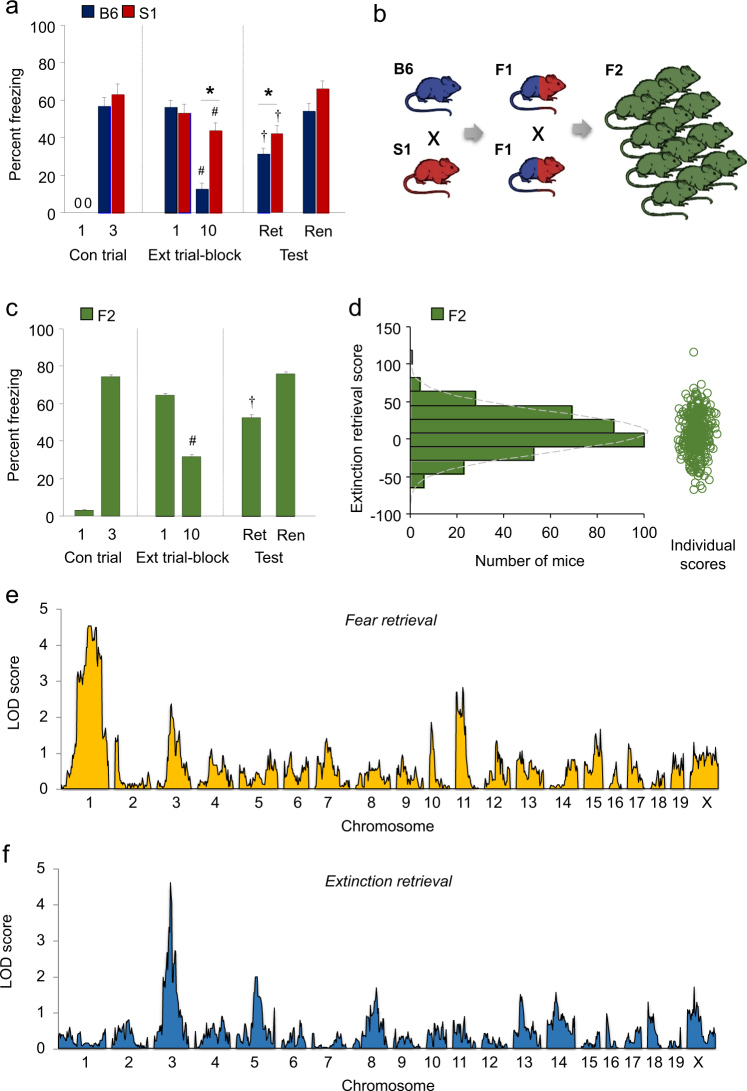
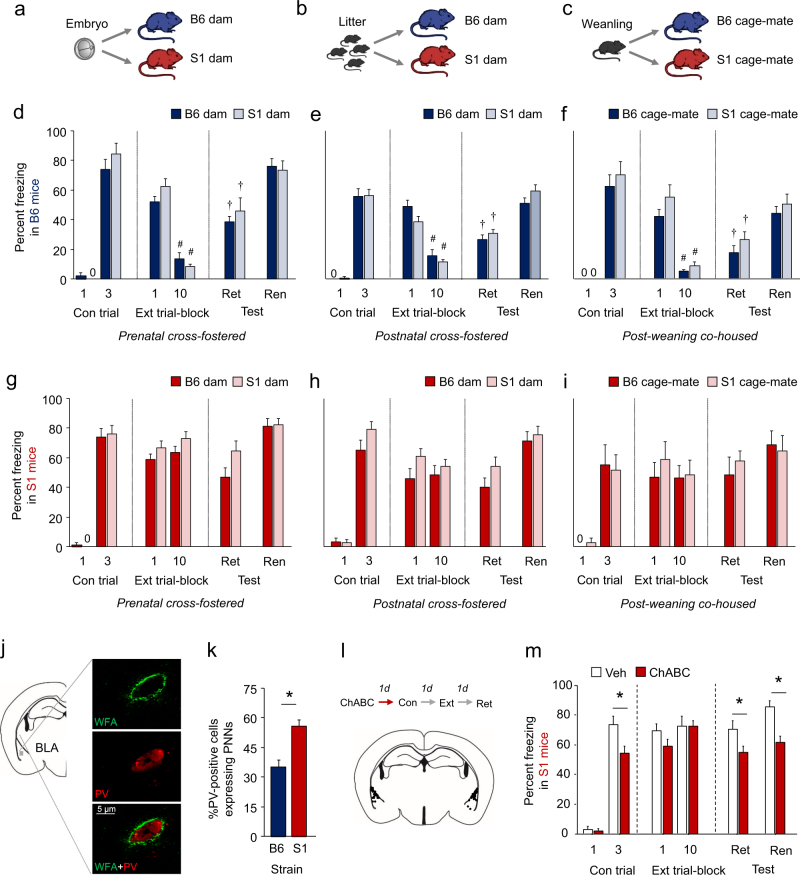
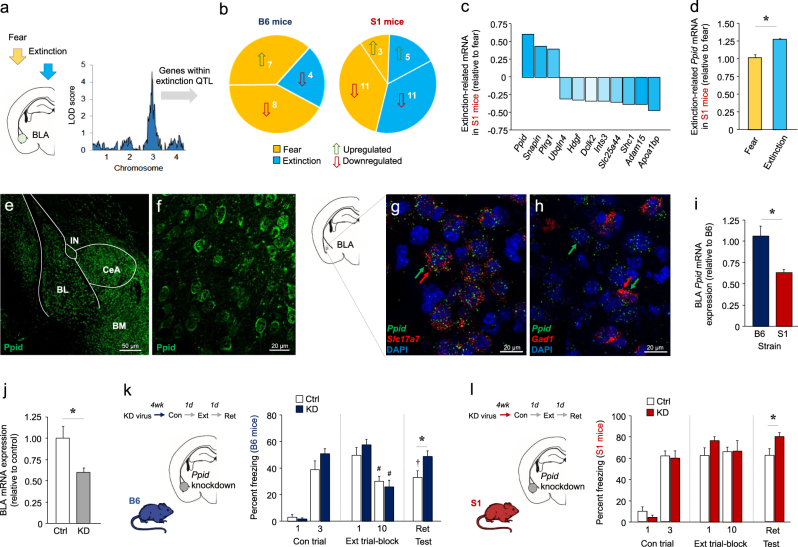
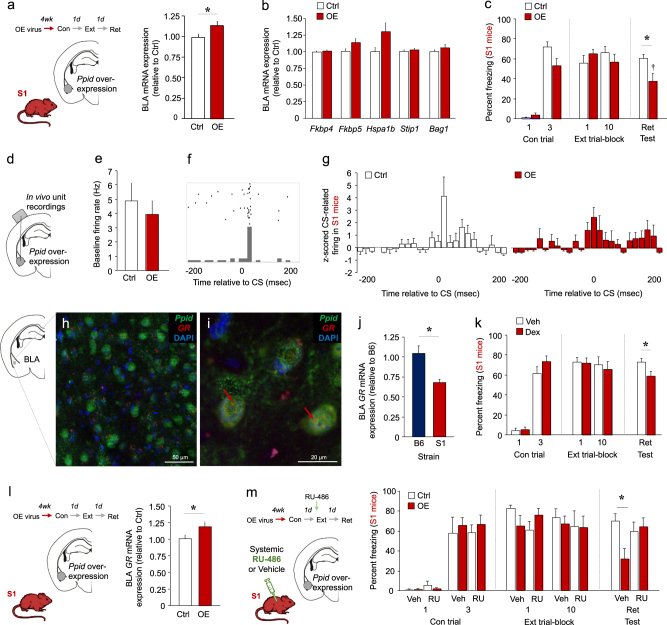
Verification
Claims the paper makes
The claims and statistics of this paper haven’t been checked yet.
Free: it reads the open-access text and checks the first 5 claims that cite a source we can check. Create a free account to check every claim.
Claims other papers make about this one
Each is checked against this paper’s own text: does it say what the citing paper says it does?
The cited source says what the claim attributes to it.
In the citing paper
“Since then, other studies have shown that PNN degradation in the hippocampus, medial prefrontal cortex (mPFC), anterior cingulate cortex, BLA, or auditory cortex impairs the expression of fear conditioning [62, 83–85].”
From The extracellular matrix and perineuronal nets in memory (2022) · cites this paper as [85]
Self-check
Percentages, sums and reported differences re-computed from the paper’s own numbers.
The self-check needs the paper’s full text.
Citations
Cites
R/qtl: QTL mapping in experimental crosses
Broman, K. W., Wu, H., Sen, Ś., & Churchill, G. A. (2003) · Bioinformatics · doi:10.1093/bioinformatics/btg112 · Cited by 3,463
Neuronal circuits for fear and anxiety
Tovote, P., Fadok, J. P., & Lüthi, A. (2015) · Nature Reviews Neuroscience · doi:10.1038/nrn3945 · Cited by 1,786 · cited 7×
“These data show that, consistent with our prediction, engineering suprathreshold levels of Ppid in the BLA is sufficient to, at least partially, rescue impaired extinction in the S1 strain (summarized in Figure S11,12).”
InfluentialFear Extinction as a Model for Translational Neuroscience: Ten Years of Progress
Milad, M. R., & Quirk, G. J. (2012) · Annual Review of Psychology · doi:10.1146/annurev.psych.121208.131631 · Cited by 1,466 · cited 3×
“…retrieval QTL are located at different genomic sites, it implies independent genetic influences on these traits and thereby provides a novel extension to mounting evidence that fear and extinction are mediated by overlapping but dissociable molecular pathways and neural circuits 12, 13, 21 .”
Binder, E. B. (2008) · JAMA · doi:10.1001/jama.299.11.1291 · Cited by 1,362
Caspi, A., Hariri, A. R., Holmes, A., Uher, R., & Moffitt, T. E. (2010) · American Journal of Psychiatry · doi:10.1176/appi.ajp.2010.09101452 · Cited by 1,346 · cited 1×
“This variation is due in part to the modifying influence of inherited risk and resilience factors and the interaction among genetic variants and stressful life events 2, 3 .”
Self-citationNeurobiological Basis of Failure to Recall Extinction Memory in Posttraumatic Stress Disorder
Milad, M. R., Pitman, R. K., Ellis, C. B., Gold, A. L., Shin, L. M., Lasko, N. B., Zeidan, M. A., Handwerger, K., Orr, S. P., & Rauch, S. L. (2009) · Biological Psychiatry · doi:10.1016/j.biopsych.2009.06.026 · Cited by 1,339
The Genetic Architecture of Quantitative Traits
Mackay, T. F. C. (2001) · Annual Review of Genetics · doi:10.1146/annurev.genet.35.102401.090633 · Cited by 1,106 · cited 1×
“We found that utilizing QTL analysis proved to be a tractable approach to nominate novel extinction candidates, but it is important to bear in mind that this strategy reveals individual genetic loci that typically only account for a small amount of the variance in a complex trait 76 .”
Switching on and off fear by distinct neuronal circuits
Herry, C., Ciocchi, S., Senn, V., Demmou, L., Müller, C., & Lüthi, A. (2008) · Nature · doi:10.1038/nature07166 · Cited by 950
Perineuronal Nets Protect Fear Memories from Erasure
Gogolla, N., Caroni, P., Lüthi, A., & Herry, C. (2009) · Science · doi:10.1126/science.1174146 · Cited by 760
Neuronal circuits of fear extinction
Herry, C., Ferraguti, F., Singewald, N., Letzkus, J. J., Ehrlich, I., & Lüthi, A. (2010) · European Journal of Neuroscience · doi:10.1111/j.1460-9568.2010.07101.x · Cited by 484
Neural and cellular mechanisms of fear and extinction memory formation
Orsini, C. A., & Maren, S. (2012) · Neuroscience & Biobehavioral Reviews · doi:10.1016/j.neubiorev.2011.12.014 · Cited by 429
50 years of hurdles and hope in anxiolytic drug discovery
Griebel, G., & Holmes, A. (2013) · Nature Reviews Drug Discovery · doi:10.1038/nrd4075 · Cited by 414
Self-citationMaren, S., & Holmes, A. (2016) · Neuropsychopharmacology · doi:10.1038/npp.2015.180 · Cited by 412
Self-citationGenetic architecture of quantitative traits in mice, flies, and humans
Flint, J., & Mackay, T. F. C. (2009) · Genome Research · doi:10.1101/gr.086660.108 · Cited by 410
Kilpatrick, D. G., Koenen, K. C., Ruggiero, K. J., Acierno, R., Galea, S., Resnick, H. S., Roitzsch, J., Boyle, J., & Gelernter, J. (2007) · American Journal of Psychiatry · doi:10.1176/appi.ajp.2007.06122007 · Cited by 405
Singewald, N., Schmuckermair, C., Whittle, N., Holmes, A., & Ressler, K. J. (2015) · Pharmacology & Therapeutics · doi:10.1016/j.pharmthera.2014.12.004 · Cited by 390
Self-citationFear erasure in mice requires synergy between antidepressant drugs and extinction training
Karpova, N. N., Pickenhagen, A., Lindholm, J., Tiraboschi, E., Kulesskaya, N., Ágústsdóttir, A., Antila, H., Popova, D., Akamine, Y., Sullivan, R., et al. (2011) · Science · doi:10.1126/science.1214592 · Cited by 382
Twin Studies of Psychiatric Illness: An Update
Kendler, K. S. (2001) · Archives of General Psychiatry · doi:10.1001/archpsyc.58.11.1005 · Cited by 382
Gunduz-Cinar, O., MacPherson, K. P., Cinar, R., Gamble-George, J., Sugden, K., Williams, B., Godlewski, G., Ramikie, T. S., Gorka, A. X., Alapafuja, S. O., et al. (2013) · Molecular Psychiatry · doi:10.1038/mp.2012.72 · Cited by 307 · cited 1×
“We again focused on the BLA for this gene expression analysis, given the region’s critical role in extinction 22 and evidence of extinction-related BLA abnormalities in S1 mice 58, 59 .”
Self-citationFAAH genetic variation enhances fronto-amygdala function in mouse and human
Dincheva, I., Drysdale, A. T., Hartley, C. A., Johnson, D. C., Jing, D., King, E. C., Ra, S., Gray, J. M., Yang, R., DeGruccio, A. M., et al. (2015) · Nature Communications · doi:10.1038/ncomms7395 · Cited by 289
Fear extinction and BDNF: translating animal models of PTSD to the clinic
Andero, R., & Ressler, K. J. (2012) · Genes, Brain and Behavior · doi:10.1111/j.1601-183x.2012.00801.x · Cited by 276
Gene–environment interactions at the FKBP5 locus: sensitive periods, mechanisms and pleiotropism
Zannas, A. S., & Binder, E. B. (2014) · Genes, Brain and Behavior · doi:10.1111/gbb.12104 · Cited by 268
Silverstein, A. M., Galigniana, M. D., Chen, M.-S., Owens-Grillo, J. K., Chinkers, M., & Pratt, W. B. (1997) · Journal of Biological Chemistry · doi:10.1074/jbc.272.26.16224 · Cited by 257
Glucocorticoids Can Induce PTSD-Like Memory Impairments in Mice
Kaouane, N., Porte, Y., Vallée, M., Brayda-Bruno, L., Mons, N., Calandreau, L., Marighetto, A., Piazza, P. V., & Desmedt, A. (2012) · Science · doi:10.1126/science.1207615 · Cited by 250
Hefner, K., Whittle, N., Juhasz, J., Norcross, M., Karlsson, R.-M., Saksida, L. M., Bussey, T. J., Singewald, N., & Holmes, A. (2008) · The Journal of Neuroscience · doi:10.1523/jneurosci.4904-07.2008 · Cited by 248
Self-citationLogue, M. W., Baldwin, C., Guffanti, G., Melista, E., Wolf, E. J., Reardon, A. F., Uddin, M., Wildman, D., Galea, S., Koenen, K. C., et al. (2013) · Molecular Psychiatry · doi:10.1038/mp.2012.113 · Cited by 237
Prefrontal inputs to the amygdala instruct fear extinction memory formation
Bukalo, O., Pinard, C. R., Silverstein, S., Brehm, C., Hartley, N. D., Whittle, N., Colacicco, G., Busch, E., Patel, S., Singewald, N., et al. (2015) · Science Advances · doi:10.1126/sciadv.1500251 · Cited by 234 · cited 1×
“The sample size used in each behavioral tests were determined on the basis of findings from our previous fear and extinction studies 39 (see online methods for a full description of all procedures used).”
Self-citationYang, Y.-L., Chao, P.-K., & Lu, K.-T. (2006) · Neuropsychopharmacology · doi:10.1038/sj.npp.1300899 · Cited by 215
QTL Analysis of Multiple Behavioral Measures of Anxiety in Mice
Henderson, N. D., Turri, M. G., DeFries, J. C., & Flint, J. (2004) · Behavior Genetics · doi:10.1023/b:bege.0000017872.25069.44 · Cited by 192
Ratajczak, T., Carrello, A., Mark, P. J., Warner, B. J., Simpson, R. J., Moritz, R. L., & House, A. K. (1993) · Journal of Biological Chemistry · doi:10.1016/s0021-9258(19)38636-3 · Cited by 187
Genome-wide Association Studies of Posttraumatic Stress Disorder in 2 Cohorts of US Army Soldiers
Stein, M. B., Chen, C.-Y., Ursano, R. J., Cai, T., Gelernter, J., Heeringa, S. G., Jain, S., Jensen, K. P., Maihofer, A. X., Mitchell, C., et al. (2016) · JAMA Psychiatry · doi:10.1001/jamapsychiatry.2016.0350 · Cited by 183
FKBP5 and emotional neglect interact to predict individual differences in amygdala reactivity
White, M. G., Bogdan, R., Fisher, P. M., Muñoz, K. E., Williamson, D. E., & Hariri, A. R. (2012) · Genes, Brain and Behavior · doi:10.1111/j.1601-183x.2012.00837.x · Cited by 180
Immunophilins: Beyond Immunosuppression
Hamilton, G. S., & Steiner, J. P. (1998) · Journal of Medicinal Chemistry · doi:10.1021/jm980307x · Cited by 178
Genome-wide Association Study Identifies New Susceptibility Loci for Posttraumatic Stress Disorder
Xie, P., Kranzler, H. R., Yang, C., Zhao, H., Farrer, L. A., & Gelernter, J. (2013) · Biological Psychiatry · doi:10.1016/j.biopsych.2013.04.013 · Cited by 168
Quantitative trait locus analysis of contextual fear conditioning in mice
Wehner, J. M., Radcliffe, R. A., Rosmann, S. T., Christensen, S. C., Rasmussen, D. L., Fulker, D. W., & Wiles, M. (1997) · Nature Genetics · doi:10.1038/ng1197-331 · Cited by 164
Quantitative trait loci analysis affecting contextual conditioning in mice
Caldarone, B. J., Saavedra, C., Tartaglia, K., Wehner, J. M., Dudek, B. C., & Flaherty, L. A. (1997) · Nature Genetics · doi:10.1038/ng1197-335 · Cited by 155
Amygdala-Dependent Fear Is Regulated by Oprl1 in Mice and Humans with PTSD
Andero, R., Brothers, S. P., Jovanovic, T., Chen, Y. T., Salah-Uddin, H., Cameron, M., Bannister, T. D., Almli, L., Stevens, J. S., Bradley, B., et al. (2013) · Science Translational Medicine · doi:10.1126/scitranslmed.3005656 · Cited by 152
Hsp90-binding immunophilins link p53 to dynein during p53 transport to the nucleus
Galigniana, M. D., Harrell, J. M., O'Hagen, H. M., Ljungman, M., & Pratt, W. B. (2004) · Journal of Biological Chemistry · doi:10.1074/jbc.m402223200 · Cited by 150 · cited 2×
“Prior work has shown that Ppid interacts with the dynein motor complex to assist translocation of the GR to the nucleus 72–74 and is upregulated in the hippocampus after stress 75 .”
Temporally massed CS presentations generate more fear extinction than spaced presentations.
Cain, C. K., Blouin, A. M., & Barad, M. (2003) · Journal of Experimental Psychology: Animal Behavior Processes · doi:10.1037/0097-7403.29.4.323 · Cited by 142
The Hypocretin/Orexin System Mediates the Extinction of Fear Memories
Flores, Á., Valls-Comamala, V., Costa, G., Saravia, R., Maldonado, R. J., & Berrendero, F. (2014) · Neuropsychopharmacology · doi:10.1038/npp.2014.146 · Cited by 141
Individual differences in recovery from traumatic fear
Holmes, A., & Singewald, N. (2013) · Trends in Neurosciences · doi:10.1016/j.tins.2012.11.003 · Cited by 139
Self-citationImmunophilin Chaperones in Steroid Receptor Signalling
Ratajczak, T., Ward, B., & Minchin, R. (2003) · Current Topics in Medicinal Chemistry · doi:10.2174/1568026033451934 · Cited by 136
Cowan, C. S. M., Callaghan, B. L., Kan, J. M., & Richardson, R. (2016) · Genes, Brain and Behavior · doi:10.1111/gbb.12263 · Cited by 124
Mapping Quantitative Trait Loci for Fear-like Behaviors in Mice
Gershenfeld, H. K., & Paul, S. M. (1997) · Genomics · doi:10.1006/geno.1997.5002 · Cited by 124
Parker, C. C., Gopalakrishnan, S., Carbonetto, P., Gonzales, N. M., Leung, E., Park, Y. J., Aryee, E., Davis, J., Blizard, D. A., Ackert-Bicknell, C. L., et al. (2016) · Nature Genetics · doi:10.1038/ng.3609 · Cited by 121
Dexamethasone Treatment Leads to Enhanced Fear Extinction and Dynamic Fkbp5 Regulation in Amygdala
Sawamura, T., Klengel, T., Armario, A., Jovanović, T., Norrholm, S. D., Ressler, K. J., & Andero, R. (2015) · Neuropsychopharmacology · doi:10.1038/npp.2015.210 · Cited by 114
Camp, M., MacPherson, K. P., Lederle, L. I., Graybeal, C., Gaburro, S., DeBrouse, L., Ihne, J. L., Bravo, J. A., O’Connor, R. M., Ciocchi, S., et al. (2012) · Neuropsychopharmacology · doi:10.1038/npp.2011.340 · Cited by 110
Self-citationMozhui, K., Ciobanu, D. C., Schikorski, T., Wang, X., Lu, L., & Williams, R. W. (2008) · PLoS Genetics · doi:10.1371/journal.pgen.1000260 · Cited by 99
Callaghan, B. L., & Richardson, R. (2012) · Translational Psychiatry · doi:10.1038/tp.2012.65 · Cited by 97
Selection for contextual fear conditioning affects anxiety‐like behaviors and gene expression
Ponder, C. A., Kliethermes, C. L., Drew, M. R., Muller, J., Das, K., Risbrough, V. B., Crabbe, J. C., Gilliam, T. C., & Palmer, A. A. (2007) · Genes, Brain and Behavior · doi:10.1111/j.1601-183x.2007.00306.x · Cited by 95
Renoir, J. M., Mercier-Bodard, C., Hoffmann, K., Le Bihan, S., Ning, Y. M., Sanchez, E. R., Handschumacher, R. E., & Baulieu, E. E. (1995) · Proceedings of the National Academy of Sciences · doi:10.1073/pnas.92.11.4977 · Cited by 94
Chaperoning steroidal physiology: Lessons from mouse genetic models of Hsp90 and its cochaperones
Sanchez, E. R. (2012) · Biochimica et Biophysica Acta (BBA) - Molecular Cell Research · doi:10.1016/j.bbamcr.2011.11.006 · Cited by 94
Bourke, C. H., Raees, M. Q., Malviya, S., Bradburn, C. A., Binder, E. B., & Neigh, G. N. (2013) · Psychoneuroendocrinology · doi:10.1016/j.psyneuen.2012.05.001 · Cited by 92
Durable fear memories require PSD-95
Fitzgerald, P. J., Pinard, C. R., Camp, M. C., Feyder, M., Sah, A., Bergstrom, H. C., Graybeal, C., Liu, Y., Schlüter, O. M., Grant, S. G., et al. (2015) · Molecular Psychiatry · doi:10.1038/mp.2014.161 · Cited by 86
Self-citationSerotonin transporter polyadenylation polymorphism modulates the retention of fear extinction memory
Hartley, C. A., McKenna, M. C., Salman, R., Holmes, A., Casey, B. J., Phelps, E. A., & Glatt, C. E. (2012) · Proceedings of the National Academy of Sciences · doi:10.1073/pnas.1202044109 · Cited by 82
Self-citationGene networks associated with conditional fear in mice identified using a systems genetics approach
Park, C. C., Gale, G. D., de Jong, S., Ghazalpour, A., Bennett, B. J., Farber, C. R., Langfelder, P., Lin, A., Khan, A. H., Eskin, E., et al. (2011) · BMC Systems Biology · doi:10.1186/1752-0509-5-43 · Cited by 81
Owen, E. H., Christensen, S. C., Paylor, R., & Wehner, J. M. (1997) · Behavioral Neuroscience · doi:10.1037//0735-7044.111.2.292 · Cited by 76
Prefrontal single-unit firing associated with deficient extinction in mice
Fitzgerald, P. J., Whittle, N., Flynn, S. M., Graybeal, C., Pinard, C. R., Gunduz-Cinar, O., Kravitz, A. V., Singewald, N., & Holmes, A. (2014) · Neurobiology of Learning and Memory · doi:10.1016/j.nlm.2013.11.002 · Cited by 72
Self-citationKilaru, V, Iyer, S. V., Almli, L. M., Stevens, J. S., Lori, A., Jovanovic, T., Ely, T. D., Bradley, B., Binder, E. B., Koen, N., et al. (2016) · Translational Psychiatry · doi:10.1038/tp.2016.69 · Cited by 72
Epigenetics and developmental plasticity across species
Champagne, F. A. (2013) · Developmental Psychobiology · doi:10.1002/dev.21036 · Cited by 68
Bukalo, O., Pinard, C. R., & Holmes, A. (2014) · British Journal of Pharmacology · doi:10.1111/bph.12779 · Cited by 67
Self-citationDevelopmental regulation of fear learning and anxiety behavior by endocannabinoids
Lee, T. T. ‐., Hill, M. N., & Lee, F. S. (2016) · Genes, Brain and Behavior · doi:10.1111/gbb.12253 · Cited by 67
PACAP and the PAC1 Receptor in Post-Traumatic Stress Disorder
Dias, B. G., & Ressler, K. J. (2012) · Neuropsychopharmacology · doi:10.1038/npp.2012.147 · Cited by 61
Stockman, J. A. (2009) · Yearbook of Pediatrics · doi:10.1016/s0084-3954(08)79072-9 · Cited by 59
Galatzer‐Levy, I. R., Andero, R., Sawamura, T., Jovanović, T., Papini, S., Ressler, K. J., & Norrholm, S. D. (2016) · Neuropharmacology · doi:10.1016/j.neuropharm.2016.12.023 · Cited by 59
High-resolution mapping of quantitative trait loci for emotionality in selected strains of mice
Turri, M. G., Talbot, C. J., Radcliffe, R. A., Wehner, J. M., & Flint, J. (1999) · Mammalian Genome · doi:10.1007/s003359901169 · Cited by 58
Umemori, J., Winkel, F., Castrén, E., & Karpova, N. N. (2015) · International Journal of Developmental Neuroscience · doi:10.1016/j.ijdevneu.2015.05.006 · Cited by 53
Genome-Wide Association for Fear Conditioning in an Advanced Intercross Mouse Line
Parker, C. C., Sokoloff, G., Cheng, R., & Palmer, A. A. (2012) · Behavior Genetics · doi:10.1007/s10519-011-9524-8 · Cited by 51
Spironolactone and low-dose dexamethasone enhance extinction of contextual fear conditioning
Ninomiya, E. M., Martynhak, B. J., Zanoveli, J. M., Correia, D., Cunha, C. D., & Andreatini, R. (2010) · Progress in Neuro-Psychopharmacology and Biological Psychiatry · doi:10.1016/j.pnpbp.2010.06.025 · Cited by 50
Fine scale mapping of a genetic locus for conditioned fear
Talbot, C. J., Radcliffe, R. A., Fullerton, J. M., HITZEMANN, R. J., Wehner, J. M., & Jonathan Flint, C. (2003) · Mammalian Genome · doi:10.1007/s00335-002-3059-5 · Cited by 50
Callaghan, B. L., Graham, B. M., Li, S., & Richardson, R. (2013) · Frontiers in Psychiatry · doi:10.3389/fpsyt.2013.00090 · Cited by 48
Extinction learning, which consists of the inhibition of retrieval, can be learned without retrieval
de Carvalho Myskiw, J., Furini, C. R. G., Schmidt, B., Ferreira, F., & Izquierdo, I. (2015) · Proceedings of the National Academy of Sciences · doi:10.1073/pnas.1423465112 · Cited by 45
Confirmation of Contextual Fear Conditioning QTLs by Short-Term Selection
Radcliffe, R. A., Lowe, M. V., & Wehner, J. M. (2000) · Behavior Genetics · doi:10.1023/a:1001910107167 · Cited by 43
Sartori, S. B., Maurer, V., Murphy, C. P., Schmuckermair, C., Muigg, P., Neumann, I. D., Whittle, N., & Singewald, N. (2015) · The International Journal of Neuropsychopharmacology · doi:10.1093/ijnp/pyv128 · Cited by 42
Temporal factors in the extinction of fear in inbred mouse strains differing in extinction efficacy
MacPherson, K. P., Whittle, N., Camp, M., Gunduz‐Cinar, O., Singewald, N., & Holmes, A. (2013) · Biology of Mood & Anxiety Disorders · doi:10.1186/2045-5380-3-13 · Cited by 32
Self-citationAnxiety genetics – findings from cross-species genome-wide approaches
Sokolowska, E., & Hovatta, I. (2013) · Biology of Mood & Anxiety Disorders · doi:10.1186/2045-5380-3-9 · Cited by 30
Calcineurin inhibition blocks within-, but not between-session fear extinction in mice
Almeida-Corrêa, S., Moulin, T. C., Carneiro, C. F. D., Gonçalves, M. M. C., Junqueira, L. S., & Amaral, O. B. (2015) · Learning & Memory · doi:10.1101/lm.037770.114 · Cited by 27
Sokoloff, G., Parker, C. C., Lim, J. E., & Palmer, A. A. (2011) · Genes Brain & Behavior · doi:10.1111/j.1601-183x.2011.00699.x · Cited by 27
Ponder, C. A., Huded, C. P., Munoz, M. B., Gulden, F. O., Gilliam, T. C., & Palmer, A. A. (2008) · Behavior Genetics · doi:10.1007/s10519-008-9203-6 · Cited by 26
Cook, M. N., Baker, J. A., Heldt, S. A., Williams, R. W., Hamre, K. M., & Lu, L. (2015) · Physiological Genomics · doi:10.1152/physiolgenomics.00114.2014 · Cited by 19
Parker, C. C., Sokoloff, G., Leung, E., Kirkpatrick, S. L., & Palmer, A. A. (2013) · Genes Brain & Behavior · doi:10.1111/gbb.12064 · Cited by 12
The Weber-Fechner law and the discrimination of color mass.
Philip, B. R. (1941) · Journal of Experimental Psychology · doi:10.1037/h0057828 · Cited by 10
Gene-environment interactions at the FKBP5 locus: sensitive periods, mechanisms and pleiotropism
Zannas, A., & Binder, E. (2014) · Max Planck Digital Library · Cited by 7
Cited by
Amygdala Circuit Substrates for Stress Adaptation and Adversity
Zhang, W.-H., Zhang, J.-Y., Holmes, A., & Pan, B.-X. (2021) · Biological Psychiatry · doi:10.1016/j.biopsych.2020.12.026 · Cited by 196
Self-citationThe extracellular matrix and perineuronal nets in memory
Fawcett, J. W., Fyhn, M., Jendelova, P., Kwok, J. C. F., Ruzicka, J., & Sorg, B. A. (2022) · Molecular Psychiatry · doi:10.1038/s41380-022-01634-3 · Cited by 169
A Discrete Dorsal Raphe to Basal Amygdala 5-HT Circuit Calibrates Aversive Memory
Sengupta, A., & Holmes, A. (2019) · Neuron · doi:10.1016/j.neuron.2019.05.029 · Cited by 109
Self-citationRodent models of impaired fear extinction
Singewald, N., & Holmes, A. (2019) · Psychopharmacology · doi:10.1007/s00213-018-5054-x · Cited by 101
Self-citationChronic stress dysregulates amygdalar output to the prefrontal cortex
Lowery-Gionta, E. G., Crowley, N. A., Bukalo, O., Silverstein, S., Holmes, A., & Kash, T. L. (2018) · Neuropharmacology · doi:10.1016/j.neuropharm.2018.06.032 · Cited by 84
Self-citation
Metadata
- Authors
- Gunduz-Cinar, O., Brockway, E., Lederle, L., Wilcox, T., Halladay, L. R., Ding, Y., Oh, H., Busch, E. F., Kaugars, K., Flynn, S., Limoges, A., Bukalo, O., MacPherson, K. P., Masneuf, S., Pinard, C., Sibille, E., Chesler, E. J., & Holmes, A.
- Affiliations
- National Institutes of Health (US)
- Jackson Laboratory (US)
- University of Pittsburgh (US)
- Centre for Addiction and Mental Health (CA)
- Corresponding author
- Holmes, Andrew
- ORCID
- Venue
- Molecular Psychiatry
- Published
- 2018-01-08
- Volume
- 24
- Issue
- 4
- Pages
- 601-612
- ISSN
- 1359-4184 (ISSN-L)
- 1476-5578
- PMC
- PMC6035889
- OpenAlex
- W2784299524
- Semantic Scholar
- c917b2163963ac7abd7907c743c13355b4dfe736
- Cited by
- 38
- References
- 83
- Citations by year
- 2026: 3 · 2025: 1 · 2024: 4 · 2023: 2 · 2022: 2 · 2021: 4 · 2020: 12 · 2019: 6 · 2018: 4
- FWCI
- 3.87
- Type
- journal article
- Language
- en
- Open access
- hybrid
- doi.org
- Licence
- cc-by-nc-nd
- creativecommons.org/licenses/by-nc-nd/4.0 (tdm)
- Locations
- Molecular Psychiatry (publishedVersion, cc-by-nc-nd)
- Europe PMC (PubMed Central) (publishedVersion, cc-by-nc-nd)
- PubMed Central (publishedVersion, cc-by-nc-nd)
- PubMed (publishedVersion)
- Minerva Access (University of Melbourne) (submittedVersion, cc-by-nc-nd)
- The Mouseion at the JAXlibrary (Jackson Laboratory) (submittedVersion, cc-by-nc)
- The Mouseion at the JAXlibrary (Jackson Laboratory) (submittedVersion)
- Funders
- National Institutes of Health (Z99‐AA999999)
- National Institute on Alcohol Abuse and Alcoholism (R01AA018776, AA018776, Z99 AA999999, Z01AA000411, ZIAAA000411)
- National Institute of Mental Health (F31MH012050, F32MH063559, K01MH067721)
- National Institute on Drug Abuse (R01DA037927, P50DA039841)
- Topics
- Life Sciences › Neuroscience › Cognitive Neuroscience › Memory and Neural Mechanisms
- Social Sciences › Psychology › Clinical Psychology › Posttraumatic Stress Disorder Research
- Life Sciences › Neuroscience › Cellular and Molecular Neuroscience › Neuroscience and Neuropharmacology Research
- Keywords
- fear extinction, basolateral amygdala, pituitary pars intermedia dysfunction, tetratricopeptide repeat proteins, perineuronal nets, quantitative trait loci, inbred mouse strains, glucocorticoid receptor, trauma-related disorders, gene expression profiling
- MeSH terms
- Tetratricopeptide Repeat, Amygdala, Animals, Extinction, Psychological, Fear, Male, Memory, Mice, Inbred C57BL, Neurons, Prefrontal Cortex, Cyclophilins, Quantitative Trait Loci, Mice, Basolateral Nuclear Complex
About these checks
Registry, retraction, Cites and statistics results are computed, not judged, with one exception: a printed reference that no index lists is read once by a model before it counts as a citation error. Claims are extracted by a model and kept only when their quote appears verbatim in the text; each cited source is then checked, with a model’s help, for whether it says what the claim relies on. Those verdicts can be wrong — read the claim’s quote and the cited source before relying on one.
Statistics and arithmetic are recomputed, not judged.
Confidence bands are shown only for fields calibrated on our annotated test set. None is calibrated yet, so no band is shown.
What counts as a claim ›How we measure confidence ›How we check this ›
Are you an author, or do you see a problem with this page? Request a review
Data sources
Bibliographic data: Semantic Scholar, OpenAlex, Crossref.
Contains information from the Semantic Scholar Academic Graph Datasets, made available under the ODC Attribution License (ODC-BY 1.0).
Semantic Scholar’s data is described in: Kinney, R., et al. (2023). The Semantic Scholar Open Data Platform. arXiv:2301.10140.
