

Genomic analysis of family data reveals additional genetic effects on intelligence and personality
Open accessPublished version of a preprint
The DOI matches its Crossref record; 94 of the 95 references it cites were found in a registry or an index.
Abstract
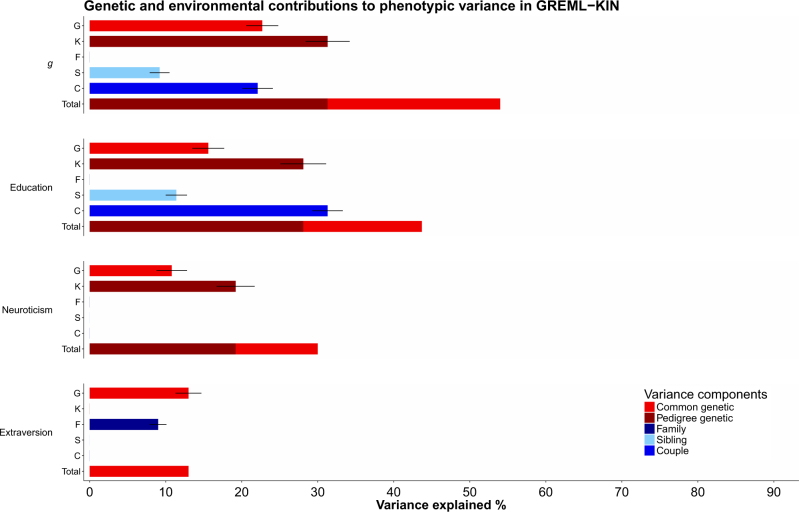
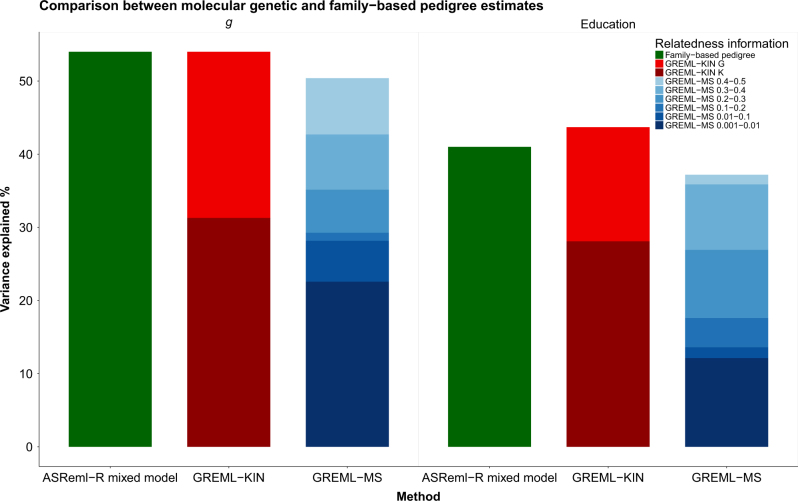
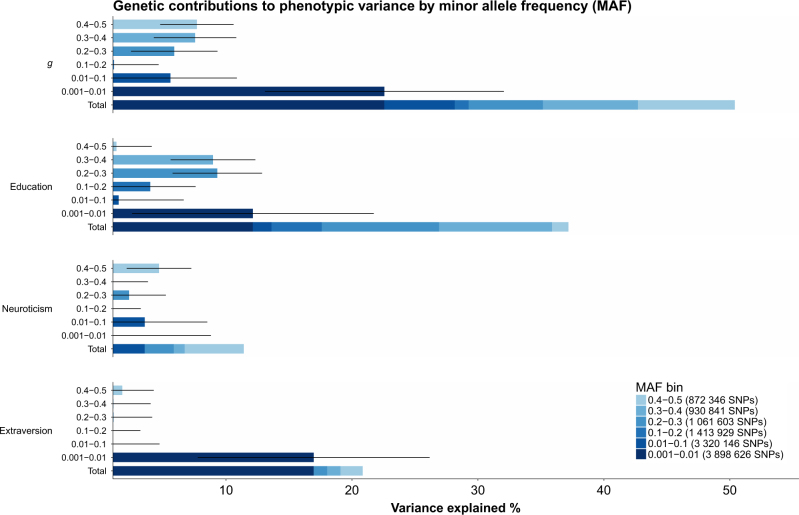
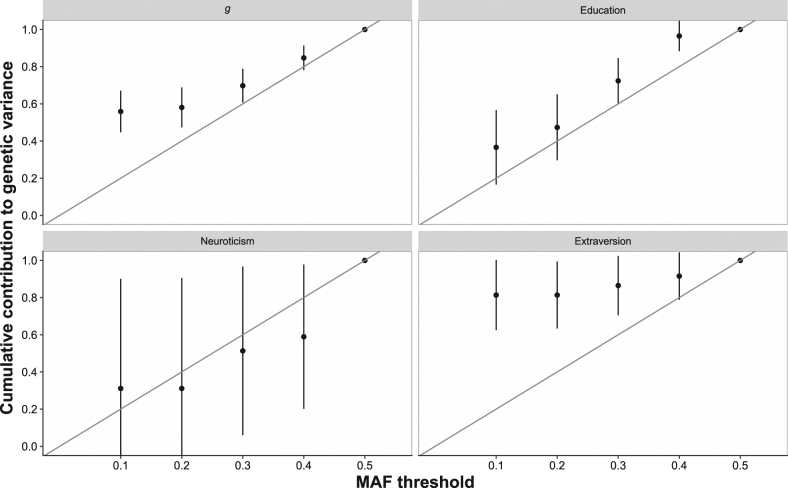
Pedigree-based analyses of intelligence have reported that genetic differences account for 50-80% of the phenotypic variation. For personality traits these effects are smaller, with 34-48% of the variance being explained by genetic differences. However, molecular genetic studies using unrelated individuals typically report a heritability estimate of around 30% for intelligence and between 0 and 15% for personality variables. Pedigree-based estimates and molecular genetic estimates may differ because current genotyping platforms are poor at tagging causal variants, variants with low minor allele frequency, copy number variants, and structural variants. Using ~20,000 individuals in the Generation Scotland family cohort genotyped for ~700,000 single-nucleotide polymorphisms (SNPs), we exploit the high levels of linkage disequilibrium (LD) found in members of the same family to quantify the total effect of genetic variants that are not tagged in GWAS of unrelated individuals. In our models, genetic variants in low LD with genotyped SNPs explain over half of the genetic variance in intelligence, education, and neuroticism. By capturing these additional genetic effects our models closely approximate the heritability estimates from twin studies for intelligence and education, but not for neuroticism and extraversion. We then replicated our finding using imputed molecular genetic data from unrelated individuals to show that ~50% of differences in intelligence, and ~40% of the differences in education, can be explained by genetic effects when a larger number of rare SNPs are included. From an evolutionary genetic perspective, a substantial contribution of rare genetic variants to individual differences in intelligence, and education is consistent with mutation-selection balance.
Overview
The claims and statistics of this paper haven’t been checked yet.
Free: it reads the open-access text and checks the first 5 claims that cite a source we can check. Create a free account to check every claim.
Integrity signals
Registry
Cites
Statistics
Figures
Verification
Claims the paper makes
The claims and statistics of this paper haven’t been checked yet.
Free: it reads the open-access text and checks the first 5 claims that cite a source we can check. Create a free account to check every claim.
Claims other papers make about this one
Each is checked against this paper’s own text: does it say what the citing paper says it does?
The source backs part of the claim, not all of it — or backs it for a different population, condition or comparison.
In the citing paper
“Correlated personality traits and cognitive abilities may have shared etiologies including genetic (63), neurobiological (64, 65), cultural (66, 67), educational (68), and other factors.”
From Meta-analytic relations between personality and cognitive ability (2023) · cites this paper as [63]
Experimental — accuracy not yet measured
Self-check
Percentages, sums and reported differences re-computed from the paper’s own numbers.
The self-check needs the paper’s full text.
Citations
Cites
GCTA: a tool for genome-wide complex trait analysis
Yang, J., Lee, S. H., Goddard, M. E., & Visscher, P. M. (2011) · The American Journal of Human Genetics · doi:10.1016/j.ajhg.2010.11.011 · Cited by 8,279 · cited 3×
“Restricted maximum likelihood (REML), implemented using the GCTA software [56], was used to estimate the variance explained by each of the variance components, with statistical significance determined using a loglikelihood ratio test (LRT) and the Wald test.”
Method"General Intelligence," Objectively Determined and Measured
Spearman, C. (1904) · The American Journal of Psychology · doi:10.2307/1412107 · Cited by 6,207
Common SNPs explain a large proportion of the heritability for human height
Yang, J., Benyamin, B., McEvoy, B. P., Gordon, S., Henders, A. K., Nyholt, D. R., Madden, P. A., Heath, A. C., Martin, N. G., Montgomery, G. W., et al. (2010) · Nature Genetics · doi:10.1038/ng.608 · Cited by 4,446 · cited 1×
“Estimating the phenotypic variance explained For each trait we first fitted the two GRMs and the three SRMs simultaneously using a linear mixed model (LMM) using the GCTA software [56, 57].”
MethodThe Neuropsychological Assessment
Ogden, J. A. (2005) · Fractured Minds · doi:10.1093/oso/9780195171358.003.0002 · Cited by 4,364
An atlas of genetic correlations across human diseases and traits
ReproGen Consortium, Bulik-Sullivan, B., Psychiatric Genomics Consortium, Genetic Consortium for Anorexia Nervosa of the Wellcome Trust Case Control Consortium 3, Finucane, H. K., Anttila, V., Gusev, A., Day, F. R., Loh, P.-R., Duncan, L., et al. (2015) · Nature Genetics · doi:10.1038/ng.3406 · Cited by 4,255 · cited 2×
“The genetically informative evidence that is available tends to show that variants associated with intelligence are also linked to better health [20, 21], although these effects may be outweighed by a negative effect on fertility [22, 23].”
(1998) · Cited by 4,172
Wechsler Adult Intelligence Scale-III
Ryan, J. J., & Lopez, S. J. (2001) · Understanding Psychological Assessment · doi:10.1007/978-1-4615-1185-4_2 · Cited by 3,731
A revised version of the Psychoticism scale
Eysenck, S. B. G., Eysenck, H. J., & Barrett, P. (1985) · Personality and Individual Differences · doi:10.1016/0191-8869(85)90026-1 · Cited by 3,094
A reference panel of 64,976 haplotypes for genotype imputation
the Haplotype Reference Consortium (2016) · Nature Genetics · doi:10.1038/ng.3643 · Cited by 2,836
The g factor: the science of mental ability
(1998) · Choice Reviews Online · doi:10.5860/choice.36-2443 · Cited by 2,746
Research works printed but not linked: 1
- Raven JC Court JH Raven’s progressive matrices and vocabulary scales 1998 UK Oxford Psychologists Press Oxford
Cited by
Davies, G., Lam, M., Harris, S. E., Trampush, J. W., Luciano, M., Hill, W. D., Hagenaars, S. P., Ritchie, S. J., Marioni, R. E., Fawns-Ritchie, C., et al. (2018) · Nature Communications · doi:10.1038/s41467-018-04362-x · Cited by 686
Self-citationHill, W. D., Marioni, R. E., Maghzian, O., Ritchie, S. J., Hagenaars, S. P., McIntosh, A. M., Gale, C. R., Davies, G., & Deary, I. J. (2019) · Molecular Psychiatry · doi:10.1038/s41380-017-0001-5 · Cited by 311
Self-citationGenome-wide analysis identifies molecular systems and 149 genetic loci associated with income
Hill, W. D., Davies, N. M., Ritchie, S. J., Skene, N. G., Bryois, J., Bell, S., Di Angelantonio, E., Roberts, D. J., Xueyi, S., Davies, G., et al. (2019) · Nature Communications · doi:10.1038/s41467-019-13585-5 · Cited by 185
Self-citationHealth inequalities: Persistence and change in European welfare states
Mackenbach, J. P. (2019) · doi:10.1093/oso/9780198831419.001.0001 · Cited by 170
Rethinking the fast-slow continuum of individual differences
Del Giudice, M. (2020) · Evolution and Human Behavior · doi:10.1016/j.evolhumbehav.2020.05.004 · Cited by 166
Relatedness disequilibrium regression estimates heritability without environmental bias
Young, A. I., Frigge, M. L., Gudbjartsson, D. F., Thorleifsson, G., Bjornsdottir, G., Sulem, P., Masson, G., Thorsteinsdottir, U., Stefansson, K., & Kong, A. (2018) · Nature Genetics · doi:10.1038/s41588-018-0178-9 · Cited by 173
“RDR, like other methods using IBD segments7,8, may underestimate the heritability due to rare variants.”
A critique of life history approaches to human trait covariation
Zietsch, B. P., & Sidari, M. J. (2019) · Evolution and Human Behavior · doi:10.1016/j.evolhumbehav.2019.05.007 · Cited by 153
The Cambridge Handbook of Personality Psychology
Corr, P. J., & Matthews, G. (2020) · Cambridge University Press eBooks · doi:10.1017/9781108264822 · Cited by 162
Gialluisi, A., Andlauer, T. F. M., Mirza‐Schreiber, N., Moll, K., Becker, J., Hoffmann, P., Ludwig, K. U., Czamara, D., Pourcain, B. S., Honbolygó, F., et al. (2020) · Molecular Psychiatry · doi:10.1038/s41380-020-00898-x · Cited by 158
“these traits approached the total heritability estimates from previous studies, when including also rare variants [86].”
ResultA Five–Factor Theory Perspective on Causal Analysis
McCrae, R. R., & Sutin, A. R. (2018) · European Journal of Personality · doi:10.1002/per.2134 · Cited by 149
“Hill et al. (2017), using a sample of related individuals and a different analytic approach, found heritabilities of .30 and .13 for Neuroticism and Extraversion, respectively.”
Genetic variation, brain, and intelligence differences
Deary, I. J., Cox, S. R., & Hill, W. D. (2022) · Molecular Psychiatry · doi:10.1038/s41380-021-01027-y · Cited by 137
Self-citationDavies, N. M., Hill, W. D., Anderson, E. L., Sanderson, E., Deary, I. J., & Davey Smith, G. (2019) · eLife · doi:10.7554/elife.43990 · Cited by 135
Self-citationLam, M., Hill, W. D., Trampush, J. W., Yu, J., Knowles, E., Davies, G., Stahl, E. A., Huckins, L. M., Liewald, D. C. M., Djurovic, S., et al. (2019) · The American Journal of Human Genetics · doi:10.1016/j.ajhg.2019.06.012 · Cited by 125
Self-citationIntelligence, health and death
Deary, I. J., Hill, W. D., & Galé, C. R. (2021) · Nature Human Behaviour · doi:10.1038/s41562-021-01078-9 · Cited by 119
Self-citationScreening Human Embryos for Polygenic Traits Has Limited Utility
Karavani, E., Zuk, O., Zeevi, D., Barzilai, N., Stefanis, N. C., Hatzimanolis, A., Smyrnis, N., Avramopoulos, D., Kruglyak, L., Atzmon, G., et al. (2019) · Cell · doi:10.1016/j.cell.2019.10.033 · Cited by 111
Mammalian brain glycoproteins exhibit diminished glycan complexity compared to other tissues
Williams, S., Noël, M., Lehoux, S. D., Çetinbaş, M., Xavier, R. J., Sadreyev, R. I., Scolnick, E. M., Smoller, J. W., Cummings, R. D., & Mealer, R. G. (2022) · Nature Communications · doi:10.1038/s41467-021-27781-9 · Cited by 113
Hill, W. D., Weiß, A., Liewald, D. C. M., Davies, G., Porteous, D. J., Hayward, C., McIntosh, A. M., Galé, C. R., & Deary, I. J. (2019) · Molecular Psychiatry · doi:10.1038/s41380-019-0387-3 · Cited by 114
“[10] who found that, by including the variance”
BackgroundResultInfluentialSelf-citationMeta-analytic relations between personality and cognitive ability
Stanek, K. C., & Ones, D. S. (2023) · Proceedings of the National Academy of Sciences · doi:10.1073/pnas.2212794120 · Cited by 97
“Correlated personality traits and cognitive abilities may have shared etiologies including genetic (63), neurobiological (64, 65), cultural (66, 67), educational (68), and other factors.”
BackgroundTemperament and brain networks of attention
Posner, M. I., & Rothbart, M. K. (2018) · Philosophical Transactions of the Royal Society B Biological Sciences · doi:10.1098/rstb.2017.0254 · Cited by 102
Hur, J., Stockbridge, M. D., Fox, A. S., & Shackman, A. J. (2019) · Progress in brain research · doi:10.1016/bs.pbr.2019.03.012 · Cited by 103
Savi, A. O., Marsman, M., van der Maas, H. L. J., & Maris, G. K. J. (2019) · Perspectives on Psychological Science · doi:10.1177/1745691619866447 · Cited by 73
The contribution of X-linked coding variation to severe developmental disorders
Martin, H. C., Gardner, E. J., Samocha, K. E., Kaplanis, J., Akawi, N. A., Sifrim, A., Eberhardt, R. Y., Tavares, A. L. T., Neville, M. D. C., Niemi, M., et al. (2021) · Nature Communications · doi:10.1038/s41467-020-20852-3 · Cited by 77
Huguet, G., Schramm, C., Douard, E. A., Tamer, P., Main, A., Monin, P., England, J., Jizi, K., Renne, T., Poirier, M., et al. (2021) · Molecular Psychiatry · doi:10.1038/s41380-020-00985-z · Cited by 71
Self-citationWorldview-motivated rejection of science and the norms of science
Lewandowsky, S., & Oberauer, K. (2021) · Cognition · doi:10.1016/j.cognition.2021.104820 · Cited by 72
Luoto, S. (2018) · Adaptive Human Behavior and Physiology · doi:10.1007/s40750-018-0103-6 · Cited by 62
Individual differences in developmental plasticity: A role for early androgens?
Giudice, M. D., Barrett, E. S., Belsky, J., Hartman, S., Martel, M. M., Sangenstedt, S., & Kuzawa, C. W. (2018) · Psychoneuroendocrinology · doi:10.1016/j.psyneuen.2018.02.025 · Cited by 60
“…exposure; and (b) for traits in which males are more variable than females, higher levels of early androgens should increase individual susceptibility to the environment in both sexes, above and beyond their directional effects on development (e.g., behavioral masculinization; Hines, 2011).”
Montag, C., Ebstein, R. P., Jawinski, P., & Markett, S. A. (2020) · Neuroscience & Biobehavioral Reviews · doi:10.1016/j.neubiorev.2020.06.020 · Cited by 62
Deary, I. J., Harris, S. E., & Hill, W. D. (2019) · Current Opinion in Psychology · doi:10.1016/j.copsyc.2018.07.005 · Cited by 56
“Some new techniques are helping to find these and close the gap between twin-based and SNP-based heritability [28].”
BackgroundSelf-citationThe Genetic Basis of Creativity: A Multivariate Approach
Barbot, B., & Eff, H. (2019) · Cambridge University Press eBooks · doi:10.1017/9781316979839.009 · Cited by 51
Genetic stratification of depression by neuroticism: revisiting a diagnostic tradition
Adams, M. J., Howard, D. M., Luciano, M., Clarke, T., Davies, G., Hill, W. D., Smıth, D. J., Deary, I. J., Porteous, D. J., & McIntosh, A. M. (2019) · Psychological Medicine · doi:10.1017/s0033291719002629 · Cited by 53
“Twin, family and genomic studies have shown that population variation in Neu and liability to depression are conferred by both genetic and environmental risk factors (Sullivan et al., 2000; Keller et al., 2005; Lubke et al., 2012; Boraska et al., 2014; Zeng et al., 2016; Hill et al., 2018).”
BackgroundSelf-citationKandler, C., Bratko, D., Butković, A., Hlupić, T. V., Tybur, J. M., Wesseldijk, L. W., de Vries, R. E., Jern, P., & Lewis, G. J. (2021) · Journal of Personality and Social Psychology · doi:10.1037/pspp0000366 · Cited by 53
Avinun, R. (2019) · Perspectives on Psychological Science · doi:10.1177/1745691619867107 · Cited by 50
Valentine Joseph Owan, P. D., Ekpenyong, J. A., Chuktu, O., Asuquo, M. E., Ogar, J. O., Owan, M. V., & Okon, S. A. (2022) · Frontiers in Psychology · doi:10.3389/fpsyg.2022.1024017 · Cited by 55
Hill, W. D., Harris, S. E., & Deary, I. J. (2018) · Current Opinion in Psychology · doi:10.1016/j.copsyc.2018.07.007 · Cited by 44
Self-citationMcManus, I. C. (2022) · Symmetry · doi:10.3390/sym14040814 · Cited by 42
DeYoung, C. G., & Blain, S. D. (2020) · Cambridge University Press eBooks · doi:10.1017/9781108264822.026 · Cited by 39
Ben‐Eliyahu, A., & Zeidner, M. (2020) · Cambridge University Press eBooks · doi:10.1017/9781108264822.041 · Cited by 34
Menie, M. A. W. O., Luoto, S., Peñaherrera‐Aguirre, M., & Sarraf, M. A. (2021) · Evolutionary Psychological Science · doi:10.1007/s40806-021-00280-2 · Cited by 31
Clarke, T., Zeng, Y., Navrady, L. B., Xia, C., Haley, C., Campbell, A., Navarro, P., Amador, C., Adams, M. J., Howard, D. M., et al. (2019) · Wellcome Open Research · doi:10.12688/wellcomeopenres.13893.2 · Cited by 30
Self-citationThe epidemiology of cognitive development
Guez, A., Peyre, H., Williams, C. M., Labouret, G., & Ramus, F. (2020) · Cognition · doi:10.1016/j.cognition.2021.104690 · Cited by 29
Decreases in Brain Size and Encephalization in Anatomically Modern Humans
Stibel, J. M. (2021) · Brain Behavior and Evolution · doi:10.1159/000519504 · Cited by 28
“Various phenotypes associated with general cognitive ability were compared against hereditary data to determine possible correlations and selection bias for rare variants associated with each phenotype across the Generation Scotland dataset [Hill et al., 2018].”
BackgroundGenomic findings and their implications for the evolutionary social sciences
Zietsch, B. P. (2024) · Evolution and Human Behavior · doi:10.1016/j.evolhumbehav.2024.106596 · Cited by 27
Familial Influences on Neuroticism and Education in the UK Biobank
Cheesman, R., Coleman, J. R. I., Rayner, C., Purves, K. L., Morneau‐Vaillancourt, G., Glanville, K. P., Choi, S. W., Breen, G. D., & Eley, T. C. (2019) · Behavior Genetics · doi:10.1007/s10519-019-09984-5 · Cited by 29
Reisenzein, R., Hildebrandt, A., & Weber, H. (2020) · Cambridge University Press eBooks · doi:10.1017/9781108264822.009 · Cited by 37
Why we need families in genomic research on developmental psychopathology
Cheesman, R., Ayorech, Z., Eilertsen, E. M., & Ystrøm, E. (2023) · JCPP Advances · doi:10.1002/jcv2.12138 · Cited by 27
The sleep EEG spectrum is a sexually dimorphic marker of general intelligence
Ujma, P. P., Konrad, B. N., Gombos, F., Simor, P., Pótári, A., Genzel, L., Pawlowski, M. A., Steiger, A., Bódizs, R., & Dresler, M. (2017) · Scientific Reports · doi:10.1038/s41598-017-18124-0 · Cited by 25
Krams, I. A., Luoto, S., Rubika, A., Krama, T., Elferts, D., Krams, R., Kecko, S., Skrinda, I., Moore, F. R., & Rantala, M. J. (2018) · American Journal of Physical Anthropology · doi:10.1002/ajpa.23754 · Cited by 22
Gao, P., Fu, Y. H. H., He, X., Zhang, D., Chi, H., Huang, Y., Wang, Z.-B., Zhang, W., Ou, Y., Ge, Y., et al. (2025) · Journal of Advanced Research · doi:10.1016/j.jare.2025.06.046 · Cited by 25
“In the mediation model, brain regions and previously identified peripheral biomarkers most strongly associated with frailty and neuropsychiatric disorders were considered mediators, while mental health and cognitive function served as outcomes (Supplementary Table 21–24).”
Jing, X., Peng, P., & Huang, Z. (2019) · Soft Computing · doi:10.1007/s00500-019-04095-z · Cited by 20
McLoughlin, S., Tyndall, I. T., Pereira, A., & Mulhern, T. (2020) · Journal of Cognitive Enhancement · doi:10.1007/s41465-020-00187-z · Cited by 21
The Five-Factor Model of Personality: Consensus and Controversy
McCrae, R. R. (2020) · Cambridge University Press eBooks · doi:10.1017/9781108264822.013 · Cited by 39
Kim, J., Song, K., & Sutin, A. R. (2021) · Social Science & Medicine · doi:10.1016/j.socscimed.2021.114329 · Cited by 21
Bird, K. A. (2021) · American Journal of Physical Anthropology · doi:10.1002/ajpa.24216 · Cited by 19
“For narrow sense heritability estimates, I use 0.35, based on several family based analyses (Chipuer et al., 1990; Cloninger et al., 1979; Devlin et al., 1997; Loehlin, 1978; Rao et al., 1982), and 0.5, based Polderman and Benyamin (2015)) and Hill and Arslan (2018).”
MethodInfluentialMcLoughlin, S., Tyndall, I. T., & Pereira, A. (2020) · Journal of Behavioral Education · doi:10.1007/s10864-020-09399-x · Cited by 20
Robinson, M. D., & Sedikides, C. (2020) · Cambridge University Press eBooks · doi:10.1017/9781108264822.031 · Cited by 19
Assessing Genetic Overlap Between Platelet Parameters and Neurodegenerative Disorders
Tirozzi, A., Izzi, B., Noro, F., Marotta, A., Gianfagna, F., Hoylaerts, M., Cerletti, C., Donati, M. B., de Gaetano, G., Iacoviello, L., et al. (2020) · Frontiers in Immunology · doi:10.3389/fimmu.2020.02127 · Cited by 17
“This hypothesis has been supported by recent findings for other complex traits like general cognition, educational attainment (28), and dyslexia (29), where only half of the heritability has been explained by common SNPs.”
ResultClarke, T.-K., Zeng, Y., Navrady, L., Xia, C., Haley, C., Campbell, A., Navarro, P., Amador, C., Adams, M. J., Howard, D. M., et al. (2018) · Wellcome Open Research · doi:10.12688/wellcomeopenres.13893.1 · Cited by 16
Self-citationvon Borell, C., Weiß, A., & Penke, L. (2019) · Behavioral Ecology and Sociobiology · doi:10.1007/s00265-019-2633-8 · Cited by 19
“604 Additionally, extended study designs show that rare genetic variants that are not tagged in 605 GWAS can contribute to individual variation in complex traits (Hill et al. 2018).”
Self-citationIan Deary and Robert Sternberg answer five self-inflicted questions about human intelligence
Deary, I. J., & Sternberg, R. J. (2021) · Intelligence · doi:10.1016/j.intell.2021.101539 · Cited by 17
Self-citationTóth, A., Juhász, T., & Kálmán, B. G. (2022) · Acta Polytechnica Hungarica · doi:10.12700/aph.19.4.2022.4.12 · Cited by 21
“The neo-socio-analytical model of personality psychology characterizes the individual with the three-fold relationship of acceptance-identity-societal roles and takes the position that genes [19] and sociocultural influences determine the development of the personality [24].”
MethodThe DCIDE framework: systematic investigation of evolutionary hypotheses, exemplified with autism
Hunt, A., & Jaeggi, A. V. (2025) · Biological reviews/Biological reviews of the Cambridge Philosophical Society · doi:10.1111/brv.70010 · Cited by 17
Development of Personality across the Life Span
Atherton, O. E., Donnellan, M. B., & Robins, R. W. (2020) · Cambridge University Press eBooks · doi:10.1017/9781108264822.017 · Cited by 20
Peñaherrera‐Aguirre, M., Sarraf, M. A., Menie, M. A. W. O., & Miller, G. F. (2023) · Intelligence · doi:10.1016/j.intell.2023.101795 · Cited by 14
Assortative mating and within-spouse pair comparisons
Howe, L. J., Battram, T., Morris, T., Hartwig, F. P., Hemani, G., Davies, N. M., & Smith, G. D. (2021) · PLoS Genetics · doi:10.1371/journal.pgen.1009883 · Cited by 15
Mind-Personality Relations from Childhood to Early Adulthood
Δημητρίου, Α., Spanoudis, G. C., Žebec, M. S., Ανδρέου, Μ., Golino, H. F., & Kazi, S. (2018) · Journal of Intelligence · doi:10.3390/jintelligence6040051 · Cited by 16
“, [30]) and the brain basis [31,32] of intelligence and personality suggests that specific genetic profiles channel brain formation and functioning imposing common constraints on mental and personality functioning.”
BackgroundLam, M., Chen, C.-Y., Hill, W. D., Xia, C., Tian, R., Levey, D. F., Gelernter, J., Stein, M. B., Biogen Biobank team, Hatoum, A. S., et al. (2021) · Nature Communications · doi:10.1016/j.euroneuro.2021.07.065 · Cited by 13
Self-citationApproach–Avoidance Theories of Personality
Corr, P. J., & Krupıć, D. (2020) · Cambridge University Press eBooks · doi:10.1017/9781108264822.025 · Cited by 15
Evolutionary Personality Psychology
Lewis, D. M. G., Al-Shawaf, L., & Buss, D. M. (2020) · Cambridge University Press eBooks · doi:10.1017/9781108264822.022 · Cited by 24
Cognitive Genomics: Recent Advances and Current Challenges
Fitzgerald, J. C., Morris, D. W., & Donohoe, G. J. (2020) · Current Psychiatry Reports · doi:10.1007/s11920-019-1125-x · Cited by 13
States and Situations, Traits and Environments
Asendorpf, J. B., & Rauthmann, J. F. (2020) · Cambridge University Press eBooks · doi:10.1017/9781108264822.007 · Cited by 11
Polygenic influences associated with adolescent cognitive skills
Mitchell, B. L., Hansell, N. K., McAloney, K., Martin, N. G., Wright, M. J., Rentería, M. E., & Grasby, K. L. (2022) · Intelligence · doi:10.1016/j.intell.2022.101680 · Cited by 10
Wootton, O., Shadrin, A. A., Bjella, T. D., Smeland, O. B., van der Meer, D., Frei, O., O’Connell, K. S., Ueland, T., Andreassen, O. A., Stein, D. J., et al. (2024) · Scientific Reports · doi:10.1038/s41598-024-66085-y · Cited by 9
“Genes were mapped to unique significant loci for each latent cognitive factor-schizophrenia pair using data provided by Ensembl 30 (Supplementary Tables 8–10).”
MethodDakowicz, A., & Dakowicz, L. (2021) · Kwartalnik Naukowy Fides et Ratio · doi:10.34766/fetr.v46i2.797 · Cited by 9
“The atmosphere of marriage life is basically shaped by both spouses, who express themselves in various ways because of their personality determinants, such as temperament and intelligence, which are hardly modifiable (Hill et al., 2018; Lengua, Gartstein, Prinzie, 2019).”
BackgroundCaprara, G. V., & Vecchione, M. (2020) · Cambridge University Press eBooks · doi:10.1017/9781108264822.038 · Cited by 10
Conceptual and Historical Perspectives
Cloninger, S. C. (2020) · Cambridge University Press eBooks · doi:10.1017/9781108264822.004 · Cited by 8
Temperament and Brain Networks of Attention
Rothbart, M. K., Posner, M. I., & Sheese, B. E. (2020) · Cambridge University Press eBooks · doi:10.1017/9781108264822.016 · Cited by 8
The polygenic and poly-environmental nature of personality
Kandler, C., & Instinske, J. (2025) · Current Opinion in Psychology · doi:10.1016/j.copsyc.2025.102068 · Cited by 8
Hill, W. D. (2018) · Twin Research and Human Genetics · doi:10.1017/thg.2018.12 · Cited by 7
“The heritability of intelligence is around 50% when considering variants from across the full spectrum of the allelic frequency (Hill et al., 2018), and around 20% when including only common variants tagged by genotyped single nucleotide polymorphisms (SNPs; Marioni et al., 2014).”
BackgroundSelf-citationThe Potential Role of Epigenetics in Aquaculture
Wang, H., & Shen, Z. (2023) · Wiley eBooks · doi:10.1002/9781119821946.ch1 · Cited by 9
Process overlap theory is a milestone achievement among intelligence theories.
Schneider, W. J., & McGrew, K. S. (2019) · Journal of Applied Research in Memory and Cognition · doi:10.1016/j.jarmac.2019.06.006 · Cited by 7
Biesanz, J. C., & Wallace, J. D. (2020) · Cambridge University Press eBooks · doi:10.1017/9781108264822.006 · Cited by 9
Liu, T., Li, C., Zhang, R., Millender, E., Miao, H., Ormsbee, M. J., Guo, J., Westbrook, A. L., Pan, Y., Wang, J., et al. (2023) · Alzheimer s Research & Therapy · doi:10.1186/s13195-023-01343-1 · Cited by 7
“The heritability estimates are as high as 20–50% for general cognition [6, 7] and 58–79% for late onset Alzheimer’s disease (AD) [8].”
BackgroundPersonality, Preferences and Socioeconomic Behavior
Ferguson, E., Zhao, K., & Smillie, L. D. (2020) · Cambridge University Press eBooks · doi:10.1017/9781108264822.044 · Cited by 9
Mackenbach, J. P. (2019) · Oxford University Press eBooks · doi:10.1093/oso/9780198831419.003.0001 · Cited by 6
Class, genes, and rationality: A gene–environment interaction approach to ideology
Ahlskog, R. (2024) · Political Psychology · doi:10.1111/pops.13023 · Cited by 6
“Whereas the expected between-family R 2 of the used PGI is 15.77% (Becker et al., 2021), SNP heritability estimates (also between-family) of cognitive performance are in the range of 30%–50% (Davies et al., 2016; Hill et al., 2018).”
InfluentialHill, W. D. (2018) · Twin Research and Human Genetics · doi:10.1017/thg.2018.55 · Cited by 5
Self-citationZhu, Y., Zhang, H., Qi, J., Liu, Y., Yan, Y., Wang, T., & Zeng, P. (2023) · SSM - Population Health · doi:10.1016/j.ssmph.2023.101587 · Cited by 5
“…there is a clear classification (based on ISCED category definitions), it has been found that NVQ or HNC or equivalent qualifications coded as having 19 years of education would exaggerate their average years of education in the UK Biobank (Hill, et al., 2018; Lee et al., 2018; Okbay et al., 2022).”
BackgroundMethodJames, C., Pemberton, J. M., Navarro, P., & Knott, S. (2024) · Heredity · doi:10.1038/s41437-024-00673-6 · Cited by 5
“This method has so far been applied to a range of traits in humans (Xia et al. 2016; Hill et al. 2018) as well as in wild passerine birds (Silva et al. 2017) and farmed salmon (Kokkinias 2022).”
MethodSelf-citationPatterns of health inequalities
Mackenbach, J. P. (2019) · Oxford University Press eBooks · doi:10.1093/oso/9780198831419.003.0002 · Cited by 5
Personality in Clinical Psychology
Widiger, T. A., & McCabe, G. A. (2020) · Cambridge University Press eBooks · doi:10.1017/9781108264822.042 · Cited by 6
Cognitive Processes and Models
Matthews, G. (2020) · Cambridge University Press eBooks · doi:10.1017/9781108264822.028 · Cited by 7
Decomposing heritability and genetic covariance by direct and indirect effect paths
Song, J., Zou, Y., Wu, Y., Miao, J., Yu, Z., Fletcher, J. M., & Lu, Q. (2023) · PLoS Genetics · doi:10.1371/journal.pgen.1010620 · Cited by 5
“Methods like M-GCTA [30,31], TrioGCTA [32], RDR [33], and GREML-KIN [34] have leveraged family structures in genetic samples to improve heritability estimation and quantify variance components for maternal, paternal, offspring, and sibling genetic effects.”
MethodWhen and why is “extraversion” associated with social popularity?Preprint
Ilmarinen, V. (2018) · Thesis Commons (OSF Preprints) · doi:10.31237/osf.io/3nfgh · Cited by 6
“Indeed, the findings from molecular genetics may suggest that extraversion is a different type of trait than, for example, schizophrenia (Visscher et al., 2017), intelligence (Hill et al., 2018), and even neuroticism (Luciano et al., 2017; Nagel et al., 2017).”
BackgroundInfluentialEstimating Nonlinear Selection on Behavioral Reaction NormsPreprint
Martin, J. S. (2021) · EcoEvoRxiv · doi:10.32942/osf.io/u26tz · Cited by 5
Salgado, J. F., Anderson, N. R., & Moscoso, S. (2020) · Cambridge University Press eBooks · doi:10.1017/9781108264822.040 · Cited by 5
Ujma, P. P., & Kovacs, K. (2020) · Journal of Intelligence · doi:10.3390/jintelligence8030027 · Cited by 4
“However, recent large-scale genome-wide association studies (GWASs) revealed a large number of single nucleotide polymorphisms (SNPs) associated with cognitive ability (Lam et al. 2017; Savage et al. 2017; Trampush et al. 2017; Zabaneh et al. 2017; Davies et al. 2018; Hill et al. 2018).”
BackgroundModels of Personality Structure
Raad, B. D., & Barelds, D. P. H. (2020) · Cambridge University Press eBooks · doi:10.1017/9781108264822.012 · Cited by 7
Personality Traits and Mental Disorders
Hakulinen, C. A., Jokela, M. M., Kivimäki, M., & Elovainio, M. J. (2020) · Cambridge University Press eBooks · doi:10.1017/9781108264822.018 · Cited by 7
Kawamoto, T., van der Linden, D., Dunkel, C. S., & Ando, J. (2021) · Personality and Individual Differences · doi:10.1016/j.paid.2021.111125 · Cited by 4
Personality in Cross-Cultural Perspective
Dragūns, J. G., & Tanaka‐Matsumi, J. (2020) · Cambridge University Press eBooks · doi:10.1017/9781108264822.037 · Cited by 5
Metadata
- Authors
- Hill, W. D., Arslan, R. C., Xia, C., Luciano, M., Amador, C., Navarro, P., Hayward, C., Nagy, R., Porteous, D. J., McIntosh, A. M., Deary, I. J., Haley, C. S., & Penke, L.
- Affiliations
- University of Edinburgh (GB)
- Max Planck Institute for Human Development (DE)
- Institute of Genetics and Cancer (GB)
- Royal Edinburgh Hospital (GB)
- Roslin Institute (GB)
- Leibniz ScienceCampus Primate Cognition (DE)
- Corresponding author
- Hill, W. David
- ORCID
- Venue
- Molecular Psychiatry
- Published
- 2018-01-10
- Volume
- 23
- Issue
- 12
- Pages
- 2347-2362
- ISSN
- 1359-4184 (ISSN-L)
- 1476-5578
- PMC
- PMC6294741
- OpenAlex
- W2949255043
- Cited by
- 158
- References
- 90
- Citations by year
- 2026: 3 · 2025: 9 · 2024: 8 · 2023: 11 · 2022: 10 · 2021: 17 · 2020: 53 · 2019: 30 · 2018: 16
- FWCI
- 17.75
- Type
- journal article
- Language
- en
- Open access
- hybrid
- doi.org
- Licence
- cc-by
- creativecommons.org/licenses/by/4.0 (tdm)
- Locations
- Molecular Psychiatry (publishedVersion, cc-by)
- Europe PMC (PubMed Central) (publishedVersion, other-oa)
- PubMed Central (publishedVersion, cc-by)
- PubMed (publishedVersion)
- GoeScholar The Publication Server of the Georg-August-Universität Göttingen (Georg-August-Universität Göttingen) (submittedVersion, cc-by)
- GRO (submittedVersion, cc-by)
- Edinburgh Research Explorer (University of Edinburgh) (submittedVersion, cc-by)
- Funders
- Wellcome Trust (104036/Z/14/Z, 104036)
- Scottish Government
- Scottish Funding Council (HR03006)
- Age UK (MR/K026992/1)
- University of Edinburgh (MR/K026992/1)
- Centre for Cognitive Ageing and Cognitive Epidemiology (MR/K026992/1)
- Directorate for Biological Sciences
- Chief Scientist Office, Scottish Government Health and Social Care Directorate (HR03006)
- Medical Research Council (MR/K026992/1, 104036/Z/14/Z, MC_PC_U127592696, MC_PC_U127561128, MC_PC_U127592696 and MC_PC_U127561128, MC_UU_00007/10)
- Biotechnology and Biological Sciences Research Council (MR/K026992/1)
- Topics
- Life Sciences › Biochemistry, Genetics and Molecular Biology › Genetics › Genetic Associations and Epidemiology
- Social Sciences › Psychology › Experimental and Cognitive Psychology › Cognitive Abilities and Testing
- Life Sciences › Biochemistry, Genetics and Molecular Biology › Genetics › Genetic Mapping and Diversity in Plants and Animals
- Keywords
- intelligence, personality traits, heritability, rare variants, linkage disequilibrium, family-based genetic analysis, neuroticism, extraversion, mutation-selection balance, single nucleotide polymorphisms, imputation
- MeSH terms
- Adolescent, Adult, Aged, Aged, 80 and over, Alleles, Family, Female, Genotype, Humans, Intelligence, Male, Middle Aged, Pedigree, Personality, Phenotype, Scotland, Genetic Variation, Cohort Studies, Linkage Disequilibrium, Polymorphism, Single Nucleotide, Genomics, Genome-Wide Association Study
About these checks
Registry, retraction, Cites and statistics results are computed, not judged, with one exception: a printed reference that no index lists is read once by a model before it counts as a citation error. Claims are extracted by a model and kept only when their quote appears verbatim in the text; each cited source is then checked, with a model’s help, for whether it says what the claim relies on. Those verdicts can be wrong — read the claim’s quote and the cited source before relying on one.
Statistics and arithmetic are recomputed, not judged.
Confidence bands are shown only for fields calibrated on our annotated test set. None is calibrated yet, so no band is shown.
What counts as a claim ›How we measure confidence ›How we check this ›
Are you an author, or do you see a problem with this page? Request a review
Data sources
Bibliographic data: Semantic Scholar, OpenAlex, Crossref.
Contains information from the Semantic Scholar Academic Graph Datasets, made available under the ODC Attribution License (ODC-BY 1.0).
Semantic Scholar’s data is described in: Kinney, R., et al. (2023). The Semantic Scholar Open Data Platform. arXiv:2301.10140.
