

Ketamine modulates fronto-striatal circuitry in depressed and healthy individuals
Open accessThe DOI matches its Crossref record; 77 of the 77 references it cites were found in a registry or an index.
Abstract
Ketamine improves motivation-related symptoms in depression but simultaneously elicits similar symptoms in healthy individuals, suggesting that it might have different effects in health and disease. This study examined whether ketamine affects the brain’s fronto-striatal system, which is known to drive motivational behavior. The study also assessed whether inflammatory mechanisms—which are known to influence neural and behavioral motivational processes—might underlie some of these changes. These questions were explored in the context of a double-blind, placebo-controlled, crossover trial of ketamine in 33 individuals with treatment-resistant major depressive disorder (TRD) and 25 healthy volunteers (HVs). Resting-state functional magnetic resonance imaging (rsfMRI) was acquired 2 days post-ketamine (final sample: TRD n = 27, HV n = 19) and post-placebo (final sample: TRD n = 25, HV n = 18) infusions and was used to probe fronto-striatal circuitry with striatal seed-based functional connectivity. Ketamine increased fronto-striatal functional connectivity in TRD participants toward levels observed in HVs while shifting the connectivity profile in HVs toward a state similar to TRD participants under placebo. Preliminary findings suggest that these effects were largely observed in the absence of inflammatory (C-reactive protein) changes and were associated with both acute and sustained improvements in symptoms in the TRD group. Ketamine thus normalized fronto-striatal connectivity in TRD participants but disrupted it in HVs independently of inflammatory processes. These findings highlight the potential importance of reward circuitry in ketamine’s mechanism of action, which may be particularly relevant for understanding ketamine-induced shifts in motivational symptoms.
Overview
The claims and statistics of this paper haven’t been checked yet.
Free: it reads the open-access text and checks the first 5 claims that cite a source we can check. Create a free account to check every claim.
Integrity signals
Registry
Cites
Statistics
Figures
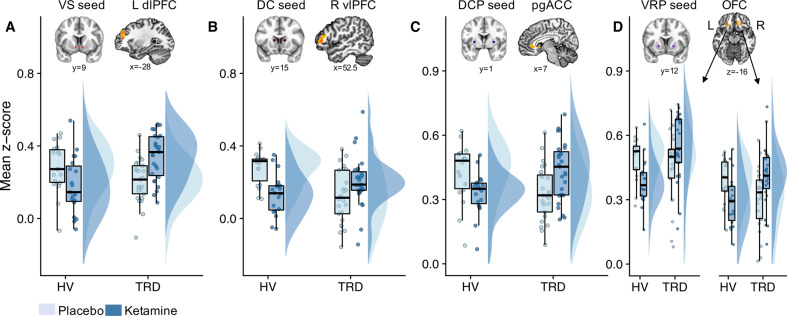
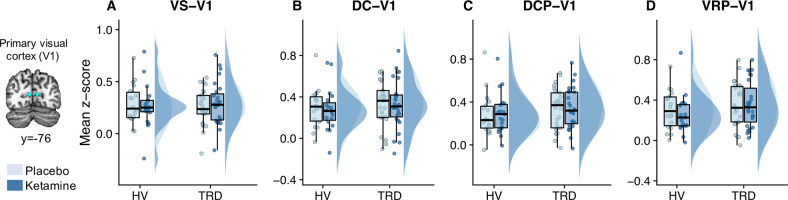
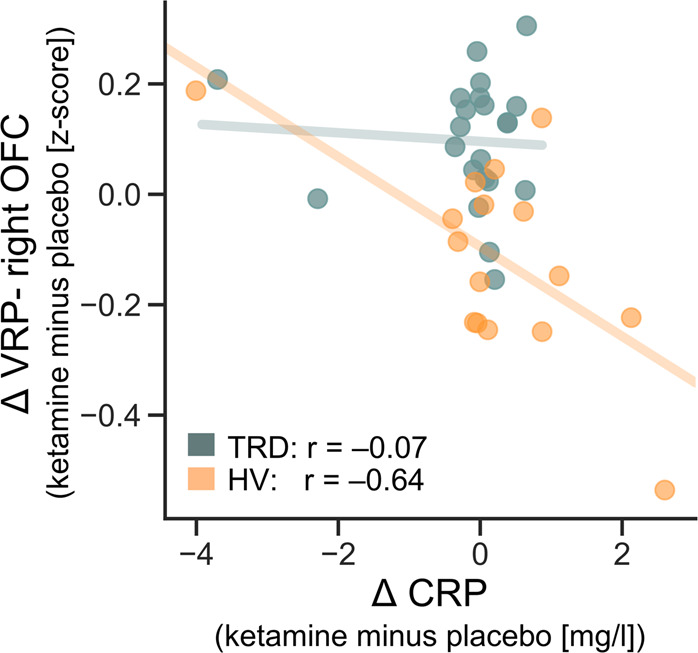
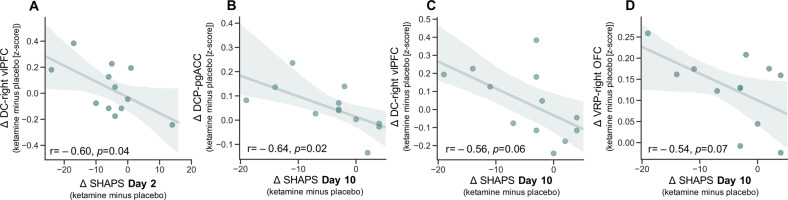
Verification
Claims the paper makes
The claims and statistics of this paper haven’t been checked yet.
Free: it reads the open-access text and checks the first 5 claims that cite a source we can check. Create a free account to check every claim.
Claims other papers make about this one
Each is checked against this paper’s own text: does it say what the citing paper says it does?
The source backs part of the claim, not all of it — or backs it for a different population, condition or comparison.
In the citing paper
“ketamine has been found to be effective for traditionally treatment-refractory symptoms such as suicidality, anxiety, and anhedonia, and to impact functional circuitries related to motivation [8,9].”
From Ketamine in neuropsychiatric disorders: an update (2024) · cites this paper as [9]
Experimental — accuracy not yet measuredThe cited source says what the claim attributes to it.
In the citing paper
“Another restingstate fMRI study found that ketamine increased frontostriatal connectivity in participants with TRD, an effect that was disrupted when ketamine was administered to healthy volunteers [9]”
From Ketamine in neuropsychiatric disorders: an update (2024) · cites this paper as [9]
Self-check
Percentages, sums and reported differences re-computed from the paper’s own numbers.
The self-check needs the paper’s full text.
Citations
Cites
A new depression scale designed to be sensitive to change
Montgomery, S. A., & Åsberg, M. (1979) · British Journal of Psychiatry · doi:10.1192/bjp.134.4.382 · Cited by 13,962
AFNI: Software for analysis and visualization of functional magnetic resonance neuroimages
Cox, R. W. (1996) · Computers and Biomedical Research · doi:10.1006/cbmr.1996.0014 · Cited by 10,913
From inflammation to sickness and depression: when the immune system subjugates the brain
Dantzer, R., O'Connor, J. C., Freund, G. G., Johnson, R. W., & Kelley, K. W. (2008) · Nature Reviews Neuroscience · doi:10.1038/nrn2297 · Cited by 7,395
The role of inflammation in depression: from evolutionary imperative to modern treatment target
Miller, A. H., & Raison, C. L. (2016) · Nature Reviews Immunology · doi:10.1038/nri.2015.5 · Cited by 3,942
Antidepressant effects of ketamine in depressed patients
Berman, R. M., Cappiello, A., Anand, A., Oren, D. A., Heninger, G. R., Charney, D. S., & Krystal, J. H. (2000) · Biological Psychiatry · doi:10.1016/s0006-3223(99)00230-9 · Cited by 3,856
Inflammation and Its Discontents: The Role of Cytokines in the Pathophysiology of Major Depression
Miller, A. H., Maletic, V., & Raison, C. L. (2009) · Biological Psychiatry · doi:10.1016/j.biopsych.2008.11.029 · Cited by 3,848
A randomized trial of an N-methyl-D-aspartate antagonist in treatment-resistant major depression.
Zarate, C. A., Singh, J. B., Carlson, P. J., Brutsche, N. E., Ameli, R., Luckenbaugh, D. A., Charney, D. S., & Manji, H. K. (2006) · Archives of General Psychiatry · doi:10.1001/archpsyc.63.8.856 · Cited by 3,766
Self-citationThe reward circuit: linking primate anatomy and human imaging
Haber, S. N., & Knutson, B. (2010) · Neuropsychopharmacology · doi:10.1038/npp.2009.129 · Cited by 3,718
Kaiser, R. H., Andrews-Hanna, J. R., Wager, T. D., & Pizzagalli, D. A. (2015) · JAMA Psychiatry · doi:10.1001/jamapsychiatry.2015.0071 · Cited by 2,281
A scale for the assessment of hedonic tone the Snaith-Hamilton pleasure scale
Snaith, R. P., Hamilton, M., Morley, S., Humayan, A., Hargreaves, D., & Trigwell, P. (1995) · British Journal of Psychiatry · doi:10.1192/bjp.167.1.99 · Cited by 1,778
Cited by
Pizzagalli, D. A. (2022) · American Journal of Psychiatry · doi:10.1176/appi.ajp.20220423 · Cited by 199
Effects of chronic stress on cognitive function – From neurobiology to intervention
Girotti, M., Bulin, S. E., & Carreno, F. R. (2024) · Neurobiology of Stress · doi:10.1016/j.ynstr.2024.100670 · Cited by 212
“Measures of functional connectivity in these cohorts revealed increases and decreases in fron-tostriatal functional connectivity in TRD and healthy individuals, respectively (Mkrtchian et al., 2021), reflecting the contrasting impacts of ketamine on executive function.”
Yao, Y., Guo, D., Lu, T., Liu, F.-L., Huang, S., Diao, M.-Q., Li, S., Zhang, X.-J., Kosten, T. R., Shi, J., et al. (2024) · Psychiatry Research · doi:10.1016/j.psychres.2024.115886 · Cited by 175
“Ketamine also shows rapid antidepressant effects which reduce suicidal ideation (Abbar et al., 2022; Beaudequin et al., 2021; Mkrtchian et al., 2021).”
Novel Glutamatergic Modulators for the Treatment of Mood Disorders: Current Status
Henter, I. D., Park, L. T., & Zarate, C. A. (2021) · CNS Drugs · doi:10.1007/s40263-021-00816-x · Cited by 142
“In addition to these robust antidepressant effects, a single subanesthetic-dose (R,S)-ketamine infusion has also been found to have significant and rapid (1–4 h) anti-suicidal ideation effects [48–53], anti-anhedonic properties [54, 55], and therapeutic potential in other disorders such as posttraumatic stress disorde…”
BackgroundSelf-citationFunctional connectomics in depression: insights into therapies
Chai, Y., Sheline, Y. I., Oathes, D. J., Balderston, N. L., Rao, H., & Yu, M. (2023) · Trends in Cognitive Sciences · doi:10.1016/j.tics.2023.05.006 · Cited by 120
Roles of the medial and lateral orbitofrontal cortex in major depression and its treatment
Zhang, B., Rolls, E. T., Wang, X., Xie, C., Cheng, W., & Feng, J. (2024) · Molecular Psychiatry · doi:10.1038/s41380-023-02380-w · Cited by 156
“6A) [136].”
Ketamine in neuropsychiatric disorders: an update
Johnston, J. N., Kadriu, B., Kraus, C., Henter, I. D., & Zarate, C. A. (2024) · Neuropsychopharmacology · doi:10.1038/s41386-023-01632-1 · Cited by 108
“…was found to affect several diagnostic and therapeutic domains and brain circuitries; for instance, ketamine has been found to be effective for traditionally treatment-refractory symptoms such as suicidality, anxiety, and anhedonia, and to impact functional circuitries related to motivation [8, 9].”
BackgroundSelf-citationThe anterior cingulate cortex as a key locus of ketamine’s antidepressant action
Alexander, L., Jelen, L. A., Mehta, M. A., & Young, A. H. (2021) · Neuroscience & Biobehavioral Reviews · doi:10.1016/j.neubiorev.2021.05.003 · Cited by 78
“, 2015; Treadway and Pizzagalli, 2014), it is no surprise that several of the studies implicating ACC regions in the antidepressant or anti-anhedonic response to ketamine also imply functional importance of connectivity with the striatum (Dandash et al., 2015; Lally et al., 2015; Mkrtchian et al., 2020; Murrough et al…”
InfluentialJohnston, J. N., Kadriu, B., Allen, J., Gilbert, J. R., Henter, I. D., & Zarate, C. A. (2023) · Neuropharmacology · doi:10.1016/j.neuropharm.2023.109422 · Cited by 76
Self-citationColwell, M., Tagomori, H., Chapman, S., Gillespie, A. L., Cowen, P. J., Harmer, C. J., & Murphy, S. E. (2022) · Translational Psychiatry · doi:10.1038/s41398-022-02249-6 · Cited by 74
“Interestingly, frontostriatal functional connectivity increases in individuals with TRD and decreases in healthy individuals 2-days postinfusion [116], mirroring the opposing effects of ketamine on cognitive ability across these populations.”
BackgroundA unified model of ketamine’s dissociative and psychedelic properties
Marguilho, M., Figueiredo, I., & Castro-Rodrigues, P. (2022) · Journal of Psychopharmacology · doi:10.1177/02698811221140011 · Cited by 78
“…activity (Pulcu et al., 2021; Yang et al., 2018) seems to be a specific mechanism for ketamine-induced immediate improvement in anhedonia in depressed individuals and we speculate that it may be the trigger to the normalization in frontostriatal connectivity reported by Mkrtchian et al. (2020).”
BackgroundResultPettorruso, M., Guidotti, R., d’Andrea, G., Risio, L. D., D’Andrea, A., Chiappini, S., Carullo, R., Barlati, S., Zanardi, R., Rosso, G., et al. (2023) · Psychiatry Research · doi:10.1016/j.psychres.2023.115378 · Cited by 67
“Clinicians used the Montgomery-Åsberg Depression Rating Scale (MADRS) (Montgomery and Asberg 1979), the Hamilton Anxiety Rating Scale (HAM-A-21) (HAMILTON 1959), the Hamilton Depression Rating Scale (HAM-D-21) (HAMILTON 1960) and the Brief Psychiatric Rating Scale (BPRS) (Zanello et al., 2013) to…”
Muscat, S.-A., Hartelius, G., Crouch, C., & Morin, K. W. (2021) · Frontiers in Psychiatry · doi:10.3389/fpsyt.2021.710338 · Cited by 63
“For example, there is evidence that in certain conditions, with appropriate ketamine dosage, and at certain times post-treatment remitters showed temporary normalization (106) in global brain connectivity (GBC) between salience networks and the default mode network (DMN) (85); and between the dorsal caudate and the ve…”
BackgroundYang, Z., Jian, L., Qiu, H., Zhang, C., Cheng, S., Ji, J., Li, T., Wang, Y., Li, J., & Li, K. (2021) · Translational Psychiatry · doi:10.1038/s41398-021-01646-7 · Cited by 60
Ketamine as a Treatment for Anorexia Nervosa: A Narrative Review
Keeler, J. L., Treasure, J. L., Juruena, M. F., Kan, C., & Himmerich, H. (2021) · Nutrients · doi:10.3390/nu13114158 · Cited by 61
Pleasure, Reward Value, Prediction Error and Anhedonia
Kieslich, K., Valton, V., & Roiser, J. P. (2022) · Current topics in behavioral neurosciences · doi:10.1007/7854_2021_295 · Cited by 64
Self-citationApathy and Motivation: Biological Basis and Drug Treatment
Costello, H., Husain, M., & Roiser, J. P. (2023) · The Annual Review of Pharmacology and Toxicology · doi:10.1146/annurev-pharmtox-022423-014645 · Cited by 64
Self-citationNeural plasticity and depression treatment
Wang, Y., Song, N., Ding, Y., & Zhang, L. (2022) · IBRO Neuroscience Reports · doi:10.1016/j.ibneur.2022.09.001 · Cited by 55
Medeiros, G. C., Matheson, M., Demo, I., Reid, M. J., Matheson, S., Twose, C., Smith, G. S., Gould, T. D., Zarate, C. A., Barrett, F. S., et al. (2023) · The Lancet Psychiatry · doi:10.1016/s2215-0366(23)00183-9 · Cited by 49
Self-citationKotoula, V., Evans, J. W., Punturieri, C., & Zarate, C. A. (2023) · Frontiers in Neuroimaging · doi:10.3389/fnimg.2023.1110258 · Cited by 43
“ketamine normalized the connectivity changes associated with depression (Abdallah et al., 2017; Evans et al., 2018; Mkrtchian et al., 2021).”
BackgroundResultInfluentialSelf-citationSouza‐Marques, B., Santos‐Lima, C., Araújo-de-Freitas, L., Vieira, F., Jesus‐Nunes, A. P., Quarantini, L. C., & Sampaio, A. S. (2021) · Harvard Review of Psychiatry · doi:10.1097/hrp.0000000000000312 · Cited by 43
“This finding further strengthens a neuroplasticity hypothesis, supporting previous evidence that has shown enhanced functional connectivity in the dorsolateral and orbitofrontal cortex after ketamine.(82) Abnormal response to negative feedback and hyposensitivity to rewards are associated with failures in motivation a…”
ResultKetamine rescues anhedonia by cell-type- and input-specific adaptations in the nucleus accumbens
Lucantonio, F., Roeglin, J., Li, S., Lu, J., Shi, A., Czerpaniak, K., Fiocchi, F. R., Bontempi, L., Shields, B. C., Zarate, C. A., et al. (2025) · Neuron · doi:10.1016/j.neuron.2025.02.021 · Cited by 39
“39,71,72 Additionally,magneticresonance imaging studies showed that ketamine exerts enhanced antide-pressanteffectsinpatientswithrelativelysmallerhippocampus, 73 supporting the notion that ketamine’s effects may depend on a particularbalancebetweenmPFC-andhippocampal-NAc inputs.”
Self-citationNeuroimaging-Derived Biomarkers of the Antidepressant Effects of Ketamine
Zavaliangos‐Petropulu, A., Al‐Sharif, N., Taraku, B., Leaver, A. M., Sahib, A. K., Espinoza, R. T., & Narr, K. L. (2022) · Biological Psychiatry Cognitive Neuroscience and Neuroimaging · doi:10.1016/j.bpsc.2022.11.005 · Cited by 40
“Changes in limbic RSFC (amygdala, hippocampus) have also been linked to improved behavioral inhibition (34), anhedonia (34,42), and suicidality (33).”
InfluentialA translational perspective on the anti-anhedonic effect of ketamine and its neural underpinnings
Pulcu, E., Guinea, C., Cowen, P. J., Murphy, S. E., & Harmer, C. J. (2022) · Molecular Psychiatry · doi:10.1038/s41380-021-01183-1 · Cited by 35
Alexander, L., Hawkins, P. C. T., Evans, J. W., Mehta, M. A., & Zarate, C. A. (2023) · Translational Psychiatry · doi:10.1038/s41398-023-02674-1 · Cited by 36
“The methods in this paper are similar to those described previously [19, 26, 27].”
BackgroundMethodInfluentialSelf-citationIntrinsic Connectivity Networks of Glutamate-Mediated Antidepressant Response: A Neuroimaging Review
Demchenko, I., Tassone, V. K., Kennedy, S. H., Dunlop, K., & Bhat, V. (2022) · Frontiers in Psychiatry · doi:10.3389/fpsyt.2022.864902 · Cited by 29
“(147) 27, 19 fMRI N/A • Seed-to-whole-brain analysis with four striatal seeds (3.”
BackgroundKetamine treatment for anhedonia in unipolar and bipolar depression: a systematic review
Kwaśny, A., Kwaśna, J., Wilkowska, A., Szarmach, J., Słupski, J., Włodarczyk, A., & Cubała, W. J. (2024) · European Neuropsychopharmacology · doi:10.1016/j.euroneuro.2024.04.014 · Cited by 30
Pharmacological Treatments for Anhedonia
Klein, M. E., Grice, A. B., Sheth, S., Go, M., & Murrough, J. W. (2022) · Current topics in behavioral neurosciences · doi:10.1007/7854_2022_357 · Cited by 29
The Patient’s Perspective on the Effects of Intranasal Esketamine in Treatment-Resistant Depression
Pepe, M., Bartolucci, G., Marcelli, I., Pesaresi, F., Brugnami, A., Caso, R., Fischetti, A., Grisoni, F., Mazza, M., Camardese, G., et al. (2023) · Brain Sciences · doi:10.3390/brainsci13101494 · Cited by 28
“Anhedonia, defined as “markedly diminished interest/pleasure in all/almost all activities [22]”, is a core symptom of depression and stands out as a key target of treatments, including glutamatergic antagonists [47,48].”
BackgroundAlario, A. A., & Niciu, M. J. (2021) · Chronic Stress · doi:10.1177/24705470211014210 · Cited by 26
Kotoula, V., Webster, T., Stone, J. M., & Mehta, M. A. (2021) · Brain and Neuroscience Advances · doi:10.1177/23982128211055426 · Cited by 29
Saberi, A., Ebneabbasi, A., Rahimi, S., Sarebannejad, S., Şen, Z. D., Graf, H., Walter, M., Sorg, C., Camilleri, J. A., Laird, A. R., et al. (2024) · Molecular Psychiatry · doi:10.1038/s41380-024-02780-6 · Cited by 27
“The treatment of MDD using various therapeutic approaches can affect intra-and inter-network connectivity of the FPN [9], DMN [122], and SAN [123 – 125].”
Kritzer, M. D., Pae, C., & Masand, P. S. (2022) · Expert Opinion on Drug Safety · doi:10.1080/14740338.2022.2069749 · Cited by 23
Taraku, B., Woods, R. P., Boucher, M., Espinoza, R. T., Jog, M., Al‐Sharif, N., Narr, K. L., & Zavaliangos‐Petropulu, A. (2023) · Human Brain Mapping · doi:10.1002/hbm.26217 · Cited by 25
Neurocognitive effects of subanesthetic serial ketamine infusions in treatment resistant depression
Zavaliangos‐Petropulu, A., McClintock, S. M., Khalil, J., Joshi, S. H., Taraku, B., Al‐Sharif, N., Espinoza, R. T., & Narr, K. L. (2023) · Journal of Affective Disorders · doi:10.1016/j.jad.2023.04.015 · Cited by 27
Antos, Z., Żukow, X., Bursztynowicz, L., & Jakubów, P. (2024) · International Journal of Molecular Sciences · doi:10.3390/ijms252413658 · Cited by 21
“In contrast, in healthy volunteers, connectivity in these frontal areas diminished following ketamine administration [200].”
Sun, J., Du, Z., Ma, Y., Chen, L., Wang, Z., Guo, C., Luo, Y., Gao, D., Yang, H., Zhang, L., et al. (2022) · Frontiers in Neurology · doi:10.3389/fneur.2022.922207 · Cited by 23
Voute, M., Lambert, C., Pereira, B., & Pickering, G. P. (2023) · JAMA Network Open · doi:10.1001/jamanetworkopen.2023.14406 · Cited by 21
The role of NMDARs in the anesthetic and antidepressant effects of ketamine
Zhou, L., & Duan, J. (2023) · CNS Neuroscience & Therapeutics · doi:10.1111/cns.14464 · Cited by 17
“59,60 Ketamine can affect the functional connectivity between the cortex and striatum in depressed individuals and thereby produce antidepressant effects, 61 although some contradictory results have been reported.”
ResultYun, J., & Kim, Y. (2024) · Psychiatry Research · doi:10.1016/j.psychres.2024.116092 · Cited by 19
“Third, increased rs-FC was found between the striatum versus subgenual ACC (Alexander et al., 2023; Chen et al., 2019) and orbitofrontal cortex (Mkrtchian et al., 2021).”
BackgroundCarboni, E., & Carta, A. R. (2022) · Journal of Integrative Neuroscience · doi:10.31083/j.jin2105144 · Cited by 17
Functional MRI markers for treatment-resistant depression: Insights and challenges
Kotoula, V., Evans, J. W., Punturieri, C., Johnson, S. C., & Zarate, C. A. (2023) · Progress in brain research · doi:10.1016/bs.pbr.2023.04.001 · Cited by 19
Self-citationRossi, G. N., Hallak, J. E. C., Baker, G. B., Dursun, S. M., & SANTOS, R. G. D. (2022) · European Archives of Psychiatry and Clinical Neuroscience · doi:10.1007/s00406-022-01460-2 · Cited by 16
“Two of these studies [34, 35] were derived from the same previous trial [47] but utilized different samples from each other.”
BackgroundResultBridging the gap: (a)typical psychedelic and near-death experience insights
Fritz, P., Lejeune, N., Cardone, P., Gosseries, O., & Martial, C. (2024) · Current Opinion in Behavioral Sciences · doi:10.1016/j.cobeha.2023.101349 · Cited by 13
Kwan, A. T. H., Rosenblat, J. D., Mansur, R. B., Teopiz, K. M., & McIntyre, R. S. (2024) · Journal of Affective Disorders · doi:10.1016/j.jad.2024.05.116 · Cited by 12
Kojic, M., Saelens, J., Kadriu, B., Zarate, C. A., & Kraus, C. (2022) · Current topics in behavioral neurosciences · doi:10.1007/7854_2022_313 · Cited by 13
Self-citationStrawbridge, R., Izurieta, E., Day, E., Tee, H., Young, K., Tong, C. C. H. Y., Young, A. H., & Cleare, A. J. (2022) · Neuroscience Applied · doi:10.1016/j.nsa.2022.101014 · Cited by 12
Nguyen, T. M. L., Jollant, F., Tritschler, L., Colle, R., Corruble, E., & Gardier, A. M. (2023) · Pharmaceuticals · doi:10.3390/ph16040634 · Cited by 11
Ready for a “breakthrough” with ketamine? A look at recent pharmacological insights!
Himmelseher, S., & Kochs, E. F. (2021) · Current Opinion in Anaesthesiology · doi:10.1097/aco.0000000000001017 · Cited by 10
Persistent Brain Connectivity Changes in Healthy Volunteers Following Nitrous Oxide Inhalation
Palanca, B. J. A., Conway, C. R., Zeffiro, T. A., Gott, B. M., Nguyen, T. A., Janski, A. M., Jain, N., Komen, H., Burke, B. A., Zorumski, C. F., et al. (2023) · Biological Psychiatry Global Open Science · doi:10.1016/j.bpsgos.2023.01.006 · Cited by 10
“Furthermore, extrapolating our fi ndings from healthy control participants without depression to patients with depression is not unprecedented (20) but should be done cautiously because drug effects on the two populations may be disparate (49).”
BackgroundDepression with comorbid borderline personality disorder - could ketamine be a treatment catalyst?
Więdłocha, M., Marcinowicz, P., Komarnicki, J., Tobiaszewska, M., Dębowska, W., Dębowska, M. D., & Szulc, A. (2024) · Frontiers in Psychiatry · doi:10.3389/fpsyt.2024.1398859 · Cited by 12
Petrozzi, B. P., Spangemacher, M., Deicher, A., Drews, L., Defert, J., Silva-Colmenero, A. Y., Wein, P., Riedinger, E., Gründer, G., Gilles, M., et al. (2024) · Frontiers in Psychiatry · doi:10.3389/fpsyt.2024.1415505 · Cited by 12
Temizer, R., Chen, Y., & Aoki, C. J. (2022) · Synapse · doi:10.1002/syn.22253 · Cited by 9
“Ketamine’s therapeutic responses are thought to be due to circuit-level changes in the brain, lasting far after the drug has been cleared from the body (Keeler et al., 2021;Mkrtchian et al., 2021).”
BackgroundIonescu, T. M., Grohs, G., & Hengerer, B. (2023) · Frontiers in Neuroscience · doi:10.3389/fnins.2023.1177428 · Cited by 8
“Intriguingly, in depressed patients, most previous studies indicated increases in FC induced by ketamine at 48 h after administration, although these changes did not persist after 10 days (Evans et al., 2018; Kotoula et al., 2021; Mkrtchian et al., 2021).”
Resultd’Andrea, G., Chiappini, S., Ciavoni, L., Tucci, R., Martino, F., Semeraro, F. M., Battista, D. D., Mosca, A., Miuli, A., Carlo, F. D., et al. (2025) · Translational Psychiatry · doi:10.1038/s41398-025-03654-3 · Cited by 11
“In this context, increased connectivity after ketamine infusions between prefrontal areas (as VLPFC) and subcortical striatal regions (i.e., caudate) has been reported in several fMRI studies [63, 76, 78, 83].”
InfluentialSong, D., Liu, P., Ma, X., Chang, D., Zhang, X., Wang, Y., & Wang, Z. (2026) · Psychiatry Research Neuroimaging · doi:10.1016/j.pscychresns.2026.112365 · Cited by 8
Recent advances in the psychopharmacology of major depressive disorder
Alexander, L., & Young, A. H. (2022) · BJPsych Advances · doi:10.1192/bja.2022.14 · Cited by 9
The cognitive neuroscience of ketamine in major depression
Costi, S., Wigg, C., Pulcu, E., Murphy, S. E., & Harmer, C. J. (2025) · Brain · doi:10.1093/brain/awaf242 · Cited by 49
“81 Additional evidence indicates that ketamine enhances fronto-striatal connectivity 83 while reducing connectivity between the default mode network (DMN) and regions such as the sgACC 84 and the insula, 85 aligning these connectivity measures more closely with those observed in healthy controls.”
Juneja, K., Afroze, S., Goti, Z., Sahu, S., Asawa, S., Bhuchakra, H. P., Natarajan, B., & Pandey, S. (2024) · Discover Mental Health · doi:10.1007/s44192-024-00077-2 · Cited by 7
Frontostriatal circuitry and the tryptophan kynurenine pathway in major psychiatric disorders
Liang, S., Zhao, L., Ni, P., Wang, Q., Guo, W., Xu, Y., Cai, J., Tao, S., Li, X., Deng, W., et al. (2023) · Psychopharmacology · doi:10.1007/s00213-023-06466-9 · Cited by 8
“Findings in the present study suggested that frontostriatal dysconnectivity was common in major psychiatric disorders, which was consistent with previous research (Chen et al. 2020; Li et al. 2020; Mkrtchian et al. 2021; Sarpal et al. 2015; Shukla et al. 2019).”
López‐Arnau, R., Camarasa, J., Carbó, M., Nadal‐Gratacós, N., Puigseslloses, P., Espinosa‐Velasco, M., Urquizu, E., Escubedo, E., & Pubill, D. (2022) · Frontiers in Psychiatry · doi:10.3389/fpsyt.2022.990405 · Cited by 7
N-Skatyltryptamines—Dual 5-HT6R/D2R Ligands with Antipsychotic and Procognitive Potential
Hogendorf, A., Hogendorf, A. S., Kurczab, R., Satała, G., Szewczyk, B., Cieślik, P., Latacz, G., Handzlik, J., Lenda, T., Kaczorowska, K., et al. (2021) · Molecules · doi:10.3390/molecules26154605 · Cited by 6
Burrows, M., Kotoula, V., Dipasquale, O., Stringaris, A. K., & Mehta, M. A. (2023) · Journal of Psychopharmacology · doi:10.1177/02698811231189432 · Cited by 6
“…(Abdallah et al., 2020), an increase in the connectivity of reward processing areas, mainly the ventral striatum (VS) with frontal brain regions (Mkrtchian et al., 2020), and the normalisation of insula connectivity with the rest of the brain, up to 48 h after ketamine’s administration (Evans…”
BackgroundNetwork localization of brain functional effects of ketamine treatment for major depression
Ma, H., Liu, H., Zhang, W., Zhao, X., Zhang, D., an, K., Qian, Y., & Zhu, J. (2026) · European Psychiatry · doi:10.1192/j.eurpsy.2026.10164 · Cited by 5
Ketamine for Major Depressive Disorder
Costi, S. (2023) · Current topics in behavioral neurosciences · doi:10.1007/7854_2023_453 · Cited by 6
Zhu, Q., Tian, S., Zhang, L., Ding, H., Gao, Y., Tang, Y., Yang, X., Zhu, Y., & Qi, M. (2024) · European Journal of Neuroscience · doi:10.1111/ejn.16267 · Cited by 6
“…neuroimaging method, has been widely used to study the basic mechanism and cognitive processes of human brain diseases without seriously designed experiments (Tian et al., 2020), such as in AD (Han et al., 2021), Parkinson ’ s disease (Jia et al., 2019) and depression (Mkrtchian et al., 2021).”
MethodZhang, X., Huang, M., Wangyang, X., Leiming, D., Yu, Y., & Zeng, J. (2025) · Journal of Affective Disorders · doi:10.1016/j.jad.2025.120133 · Cited by 4
Shan, Z., Can, A., Mohamed, A. Z., Dutton, M., Hermens, D. F., Calhoun, V. D., Williams, L. M., Bennett, M. R., & Lagopoulos, J. (2024) · European Archives of Psychiatry and Clinical Neuroscience · doi:10.1007/s00406-024-01831-x · Cited by 4
“The increased brain flexibility (numbers of transitions among brain states) provides a possible underlying process of brain function normalisation observed in static resting fMRI studies [9–11].”
Campolina, A. G., & de Oliveira, M. A. T. (2025) · Healthcare · doi:10.3390/healthcare13212714 · Cited by 5
Zhang, F., Wang, C., Lan, X., Li, W., Fu, L., Ye, Y., Liu, H., Wu, K., Zhou, Y., & Ning, Y. (2022) · Frontiers in Neuroscience · doi:10.3389/fnins.2022.956056 · Cited by 5
“Recently, an increasing number of researchers have used neuroimaging to explore the mechanism of ketamine action in MDD through functional connectivity (FC), a neuroimaging analysis using blood oxygenation level-dependent (BOLD) signals obtained from the in vivo brain (Scheidegger et al., 2016; Kraguljac et al., 2017;…”
BackgroundChallenges and Frontiers in Computational Metabolic Psychiatry
Chesebro, A. G., Antal, B. B., Weistuch, C., & Mujica-Parodi, L. R. (2024) · Biological Psychiatry Cognitive Neuroscience and Neuroimaging · doi:10.1016/j.bpsc.2024.10.011 · Cited by 4
Neurotransmitter modulation of human facial emotion recognition
Vlazaki, M., Harmer, C. J., Cowen, P. J., & Pulcu, E. (2025) · Journal of Psychopharmacology · doi:10.1177/02698811251338225 · Cited by 4
“In the past 2 decades, several studies clearly demonstrated the rapid antidepressant effects of ketamine (Berman et al., 2000; Coyle and Laws, 2015; Lally et al., 2014; Mkrtchian et al., 2020), which put NMDA receptors in the spotlight with regards to drug discovery in psychiatry.”
Jelen, L. A., O’Daly, O., Zelaya, F. O., Stone, J. M., Young, A. H., & Mehta, M. A. (2026) · American Journal of Psychiatry · doi:10.1176/appi.ajp.20250903 · Cited by 4
Phillips, J. L., Blier, P., & Talbot, J. D. (2023) · Journal of Affective Disorders Reports · doi:10.1016/j.jadr.2023.100613 · Cited by 6
Bogdanov, M., Scott, J. N., Esfand, S. M., Boyle, B. W., Lees, T., Li, M., Woronko, S. E., Linton, S. R., Jenkins, A. R., Miller, C., et al. (2026) · Biological Psychiatry Global Open Science · doi:10.1016/j.bpsgos.2026.100688 · Cited by 3
Teopiz, K. M., Wong, S., Le, G. H., Badulescu, S., Lo, H. K. Y., Guillen-Burgos, H. F., Ho, R., Rhee, T. G., Dri, C. E., Cao, B., et al. (2025) · Journal of Affective Disorders · doi:10.1016/j.jad.2025.120476 · Cited by 2
Zang, Z., Li, A., Zhang, Z., Wu, T., Chen, X., Qiao, K., Paerhati, A., Yang, Z., & Wang, G. (2025) · Neurotherapeutics · doi:10.1016/j.neurot.2025.e00790 · Cited by 2
“In addition, it differentially modulated striato-prefrontal circuits in TRD patients versus healthy individuals [54].”
Faisal, H., Le, G. H., Kwan, A. T. H., Wong, S., Cheung, W., Dri, C. E., Cao, B., Rhee, T. G., Bargiota, S. I., Lo, H. K. Y., et al. (2026) · CNS Spectrums · doi:10.1017/s109285292610087x · Cited by 3
“41,45,48 One additional longitudinal resting-state study in TRD compared 0.5 mg/kg vs 0.2 mg/kg vs placebo, with scans acquired at baseline and day 3 post-infusion.”
InfluentialWang, Y., Zhou, J., Chen, X., Liu, R., Zhang, Z., Feng, Y., Zhou, Y., & Wang, G. (2025) · NeuroImage Clinical · doi:10.1016/j.nicl.2025.103842 · Cited by 2
“Mkrtchian et al. (2021) conducted a resting-state fMRI study and found that ketamine normalized frontal-striatal functional connectivity in treatment-resistant MDD to levels comparable to those in HCs (Mkrtchian et al., 2021).”
Kétamine et suicidalité : modèles animaux pour comprendre son mécanisme d’action
Nguyen, T. M. L., Jollant, F., Tritschler, L., Colle, R., Corruble, E., & Gardier, A. M. (2023) · Annales Pharmaceutiques Françaises · doi:10.1016/j.pharma.2023.10.008 · Cited by 2
Detecting neuroplastic effects induced by ketamine in healthy human subjects: A multimodal approach
Agnorelli, C., Peill, J. M., Sawicka, G., Kurtin, D. L., Shatalina, E., Ahmad, K., Wall, M. B., Rua, C., Godfrey, K., Ertl, N., et al. (2026) · Journal of Cerebral Blood Flow & Metabolism · doi:10.1177/0271678x261431447 · Cited by 1
“There was a”
Ding, X., Wu, Y., Yang, J., Zhu, G., & Sun (2026) · Psychopathology · doi:10.1159/000551413 · Cited by 1
“…functional connectivity between the ventral striatum and dorsolateral PFC, the dorsal caudate and ventrolateral PFC, as well as the ventral rostral putamen and orbitofrontal cortex – effects that normalize these pathways toward the connectivity profiles observed in healthy individuals [25].”
InfluentialDepression in neurodegenerative disease: neurobiological mechanisms and emerging treatments
Costello, H., Reeves, S., Glue, P., Young, A. H., & Howard, R. J. (2026) · Molecular Psychiatry · doi:10.1038/s41380-026-03728-8 · Cited by 3
“…may be in part mediated by modulation of key regions within reward processing circuits, including normalisation of frontostriatal connectivity [65] and increased dorsal anterior cingulate activity [56, 66], changes that may enhance the fl exible use of reward-related information and improve…”
Predictable Biomarkers for Rapid-Acting Antidepressant Response to Ketamine
Tan, Y., & Hashimoto, K. (2021) · Contemporary clinical neuroscience · doi:10.1007/978-3-030-79790-4_3 · Cited by 1
Ketamine and Other Glutamate Receptor Antagonists As Fast-Actin
Chen, M., Su, T., & Tsai, S. (2022) · Neuromethods · doi:10.1007/978-1-0716-2083-0_19 · Cited by 1
Speers, L. J., Sissons, D. J., Cleland, L., & Bilkey, D. K. (2023) · Journal of Psychopharmacology · doi:10.1177/02698811231187339 · Cited by 1
“Ketamine has also been shown to impact motivation in human participants, with improved motivation observed in participants diagnosed with depression (Lally et al., 2015; Mkrtchian et al., 2021), while impaired motivation is observed in healthy control participants (Driesen et al.”
BackgroundMi, W., Gao, Y., Lin, H., Deng, S., Mu, Y., & Zhang, H. (2024) · Psychiatry Research Neuroimaging · doi:10.1016/j.pscychresns.2024.111847 · Cited by 1
Simone, G. D., Prisco, M. D., Oliva, V., Vellucci, L., Ciccarelli, M., Mazza, B., Fico, G., Fornaro, M., Iasevoli, F., Vieta, E., et al. (2025) · Molecular Psychiatry · doi:10.1038/s41380-025-03351-z · Cited by 2
Potencial terapêutico da cetamina em transtornos depressivos
Mendes, L. F. D. S., Bezerra, C. D. S., Piauilino, B. C. N., de Sousa, L. L., Leal, A. K. M. P., Moura, P. R. D. S. E. S., da Silva, L. S. A., Noronha, M. Y. D. C., & Menezes, A. G. V. A. (2023) · Research Society and Development · doi:10.33448/rsd-v12i2.40153
Psychiatric Disorders and Respiratory Failure: Key Concept
Bhattacharya, D., Esquinas, A. M., & Mandal, M. (2023) · Springer eBooks · doi:10.1007/978-3-031-27968-3_4
Rosenhagen, M. C., Elowe, J., Forte, A. M., & Schaad, N. (2023) · American Journal of Psychiatry and Neuroscience · doi:10.11648/j.ajpn.20231103.12 · Cited by 2
Danon, M., Mékaoui, L., & Gorwood, P. A. P. M. (2024) · EMC - Neurologia · doi:10.1016/s1634-7072(24)49341-0 · Cited by 1
Dutra, R. N., Nascimento, M. V. F., Gontijo, J. P. S., LISBOA, K. S., Viana, G. F., Coelho, N. C., Dutra, S. M., & Alves, B. D. M. L. (2025) · STUDIES IN HEALTH SCIENCES · doi:10.54022/shsv6n1-037 · Cited by 1
Yamamoto, Y., Nakashima, M., & Suzuki, K. (2025) · Heliyon · doi:10.1016/j.heliyon.2025.e43701
Höfels, S. (2025) · BILT Student Research Journal 2025 - Issue 6 · doi:10.70969/20251001
Djorovic, D. J., Ivanović, J., Jezdić, K., Sharmin, D., Aranđelović, J., Cook, J. M., & Savić, M. M. (2025) · Medicinska istrazivanja · doi:10.5937/medi0-57913
The neurobiology of suicidal ideation: an integrative review
Rodrigues, F. D. A. A., Rodrigues, M. A. C., & Silva, A. (2025) · Ciencia Latina Revista Científica Multidisciplinar · doi:10.37811/cl_rcm.v9i4.19242
Patients and Healthy Volunteers Are Not the Same: The Distinct Responses to Ketamine
Himmelseher, S., & Kochs, E. F. (2025) · Neuromethods · doi:10.1007/978-1-0716-4603-8_15 · Cited by 1
Time-dependent biphasic alterations in brain metabolism following chronic ketamine exposure in mice
Lim, S.-H., Choi, Y., Kim, E., Kim, C. H., & Song, H. (2025) · Frontiers in Pharmacology · doi:10.3389/fphar.2025.1629824
“…is known to induce widespread metabolic alterations across the brain, previous studies have highlighted the striatum as a critical region involved in its neuropharmacological effects, particularly in relation to dopamine regulation and reward processing (Mkrtchian et al., 2021; Chen et al., 2020).”
The neural correlates of ketamine infusion in major depressive disorder : A systematic review
Gustafsson, E., & Tano, S. (2024) · University Library of Skövde (University of Skövde)
Metadata
- Authors
- Mkrtchian, A., Evans, J. W., Kraus, C., Yuan, P., Kadriu, B., Nugent, A. C., Roiser, J. P., & Zarate, C. A.
- Affiliations
- National Institutes of Health (US)
- University College London (GB)
- Corresponding author
- Mkrtchian, Anahit
- ORCID
- Venue
- Molecular Psychiatry
- Published
- 2020-09-14
- Volume
- 26
- Issue
- 7
- Pages
- 3292-3301
- ISSN
- 1359-4184 (ISSN-L)
- 1476-5578
- PMC
- PMC8462973
- OpenAlex
- W3086459126
- Semantic Scholar
- bcfc5c26a1e2bb211b424fc535e5bedb532e488c
- Cited by
- 110
- References
- 75
- Citations by year
- 2026: 14 · 2025: 18 · 2024: 17 · 2023: 29 · 2022: 19 · 2021: 13
- FWCI
- 9.14
- Type
- journal article
- Language
- en
- Open access
- hybrid
- doi.org
- Licence
- cc-by
- creativecommons.org/licenses/by/4.0 (tdm)
- creativecommons.org/licenses/by/4.0 (vor)
- Locations
- Molecular Psychiatry (publishedVersion, cc-by)
- PubMed Central (publishedVersion, cc-by)
- PubMed (publishedVersion)
- UCL Discovery (University College London) (submittedVersion)
- Funders
- U.S. Department of Health & Human Services | NIH | National Institute of Mental Health (ZIAMH002857)
- Topics
- Health Sciences › Medicine › Pharmacology (medical) › Treatment of Major Depression
- Life Sciences › Neuroscience › Neurology › Transcranial Magnetic Stimulation Studies
- Life Sciences › Neuroscience › Cognitive Neuroscience › Functional Brain Connectivity Studies
- Keywords
- ketamine, frontostriatal circuits, functional connectivity, striatum, motivation, reward systems, inflammation, C-reactive protein, placebo response
- MeSH terms
- Antidepressive Agents, Depressive Disorder, Major, Major Depressive Disorder, Double-Blind Method, Humans, Ketamine, Magnetic Resonance Imaging, Depressive Disorder, Treatment-Resistant
About these checks
Registry, retraction, Cites and statistics results are computed, not judged, with one exception: a printed reference that no index lists is read once by a model before it counts as a citation error. Claims are extracted by a model and kept only when their quote appears verbatim in the text; each cited source is then checked, with a model’s help, for whether it says what the claim relies on. Those verdicts can be wrong — read the claim’s quote and the cited source before relying on one.
Statistics and arithmetic are recomputed, not judged.
Confidence bands are shown only for fields calibrated on our annotated test set. None is calibrated yet, so no band is shown.
What counts as a claim ›How we measure confidence ›How we check this ›
Are you an author, or do you see a problem with this page? Request a review
Data sources
Bibliographic data: Semantic Scholar, OpenAlex, Crossref.
Contains information from the Semantic Scholar Academic Graph Datasets, made available under the ODC Attribution License (ODC-BY 1.0).
Semantic Scholar’s data is described in: Kinney, R., et al. (2023). The Semantic Scholar Open Data Platform. arXiv:2301.10140.
