

Ketamine modulates fronto-striatal circuitry in depressed and healthy individuals
Open accessThe DOI matches its Crossref record; 77 of the 77 references it cites were found in a registry or an index.
Abstract
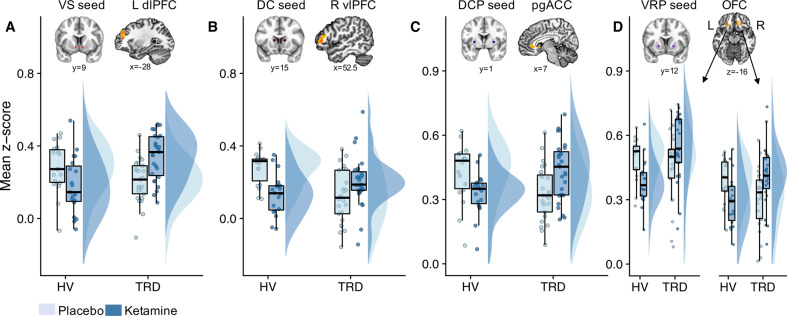
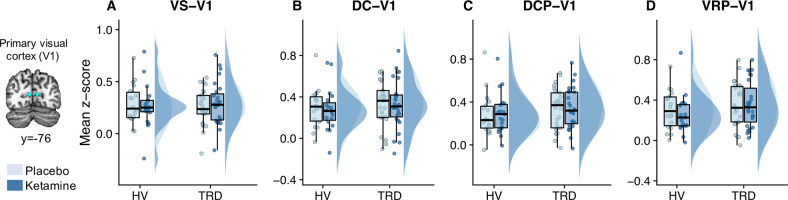
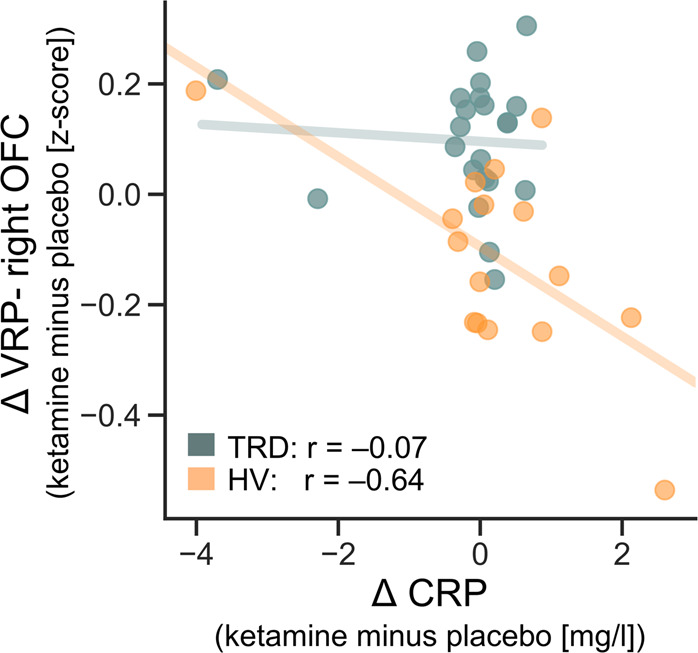
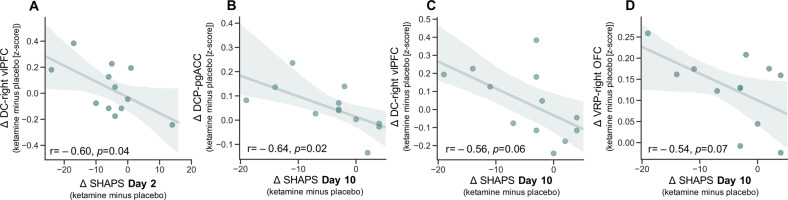
Ketamine improves motivation-related symptoms in depression but simultaneously elicits similar symptoms in healthy individuals, suggesting that it might have different effects in health and disease. This study examined whether ketamine affects the brain’s fronto-striatal system, which is known to drive motivational behavior. The study also assessed whether inflammatory mechanisms—which are known to influence neural and behavioral motivational processes—might underlie some of these changes. These questions were explored in the context of a double-blind, placebo-controlled, crossover trial of ketamine in 33 individuals with treatment-resistant major depressive disorder (TRD) and 25 healthy volunteers (HVs). Resting-state functional magnetic resonance imaging (rsfMRI) was acquired 2 days post-ketamine (final sample: TRD n = 27, HV n = 19) and post-placebo (final sample: TRD n = 25, HV n = 18) infusions and was used to probe fronto-striatal circuitry with striatal seed-based functional connectivity. Ketamine increased fronto-striatal functional connectivity in TRD participants toward levels observed in HVs while shifting the connectivity profile in HVs toward a state similar to TRD participants under placebo. Preliminary findings suggest that these effects were largely observed in the absence of inflammatory (C-reactive protein) changes and were associated with both acute and sustained improvements in symptoms in the TRD group. Ketamine thus normalized fronto-striatal connectivity in TRD participants but disrupted it in HVs independently of inflammatory processes. These findings highlight the potential importance of reward circuitry in ketamine’s mechanism of action, which may be particularly relevant for understanding ketamine-induced shifts in motivational symptoms.
Overview
The claims and statistics of this paper haven’t been checked yet.
Free: it reads the open-access text and checks the first 5 claims that cite a source we can check. Create a free account to check every claim.
Integrity signals
Registry
Cites
Statistics
Figures
Verification
Claims the paper makes
The claims and statistics of this paper haven’t been checked yet.
Free: it reads the open-access text and checks the first 5 claims that cite a source we can check. Create a free account to check every claim.
Claims other papers make about this one
Each is checked against this paper’s own text: does it say what the citing paper says it does?
The source backs part of the claim, not all of it — or backs it for a different population, condition or comparison.
In the citing paper
“ketamine has been found to be effective for traditionally treatment-refractory symptoms such as suicidality, anxiety, and anhedonia, and to impact functional circuitries related to motivation [8,9].”
From Ketamine in neuropsychiatric disorders: an update (2024) · cites this paper as [9]
Experimental — accuracy not yet measuredThe cited source says what the claim attributes to it.
In the citing paper
“Another restingstate fMRI study found that ketamine increased frontostriatal connectivity in participants with TRD, an effect that was disrupted when ketamine was administered to healthy volunteers [9]”
From Ketamine in neuropsychiatric disorders: an update (2024) · cites this paper as [9]
Self-check
Percentages, sums and reported differences re-computed from the paper’s own numbers.
The self-check needs the paper’s full text.
Citations
Cites
A new depression scale designed to be sensitive to change
Montgomery, S. A., & Åsberg, M. (1979) · British Journal of Psychiatry · doi:10.1192/bjp.134.4.382 · Cited by 13,962
AFNI: Software for analysis and visualization of functional magnetic resonance neuroimages
Cox, R. W. (1996) · Computers and Biomedical Research · doi:10.1006/cbmr.1996.0014 · Cited by 10,913
From inflammation to sickness and depression: when the immune system subjugates the brain
Dantzer, R., O'Connor, J. C., Freund, G. G., Johnson, R. W., & Kelley, K. W. (2008) · Nature Reviews Neuroscience · doi:10.1038/nrn2297 · Cited by 7,395
The role of inflammation in depression: from evolutionary imperative to modern treatment target
Miller, A. H., & Raison, C. L. (2016) · Nature Reviews Immunology · doi:10.1038/nri.2015.5 · Cited by 3,942
Antidepressant effects of ketamine in depressed patients
Berman, R. M., Cappiello, A., Anand, A., Oren, D. A., Heninger, G. R., Charney, D. S., & Krystal, J. H. (2000) · Biological Psychiatry · doi:10.1016/s0006-3223(99)00230-9 · Cited by 3,856
Inflammation and Its Discontents: The Role of Cytokines in the Pathophysiology of Major Depression
Miller, A. H., Maletic, V., & Raison, C. L. (2009) · Biological Psychiatry · doi:10.1016/j.biopsych.2008.11.029 · Cited by 3,848
A randomized trial of an N-methyl-D-aspartate antagonist in treatment-resistant major depression.
Zarate, C. A., Singh, J. B., Carlson, P. J., Brutsche, N. E., Ameli, R., Luckenbaugh, D. A., Charney, D. S., & Manji, H. K. (2006) · Archives of General Psychiatry · doi:10.1001/archpsyc.63.8.856 · Cited by 3,766
Self-citationThe reward circuit: linking primate anatomy and human imaging
Haber, S. N., & Knutson, B. (2010) · Neuropsychopharmacology · doi:10.1038/npp.2009.129 · Cited by 3,718
Kaiser, R. H., Andrews-Hanna, J. R., Wager, T. D., & Pizzagalli, D. A. (2015) · JAMA Psychiatry · doi:10.1001/jamapsychiatry.2015.0071 · Cited by 2,281
A scale for the assessment of hedonic tone the Snaith-Hamilton pleasure scale
Snaith, R. P., Hamilton, M., Morley, S., Humayan, A., Hargreaves, D., & Trigwell, P. (1995) · British Journal of Psychiatry · doi:10.1192/bjp.167.1.99 · Cited by 1,778
Balleine, B. W., & O'Doherty, J. P. (2010) · Neuropsychopharmacology · doi:10.1038/npp.2009.131 · Cited by 1,775
Synaptic Dysfunction in Depression: Potential Therapeutic Targets
Duman, R. S., & Aghajanian, G. K. (2012) · Science · doi:10.1126/science.1222939 · Cited by 1,651
Neurocircuitry of Mood Disorders
Price, J. L., & Drevets, W. C. (2010) · Neuropsychopharmacology · doi:10.1038/npp.2009.104 · Cited by 1,606
Haapakoski, R., Mathieu, J., Ebmeier, K. P., Alenius, H., & Kivimäki, M. (2015) · Brain, Behavior, and Immunity · doi:10.1016/j.bbi.2015.06.001 · Cited by 1,129
Functional connectivity of human striatum: a resting state FMRI study
Di Martino, A., Scheres, A., Margulies, D. S., Kelly, A. M. C., Uddin, L. Q., Shehzad, Z., Biswal, B., Walters, J. R., Castellanos, F. X., & Milham, M. P. (2008) · Cerebral Cortex · doi:10.1093/cercor/bhn041 · Cited by 1,090
Duman, R. S., Sanacora, G., & Krystal, J. H. (2019) · Neuron · doi:10.1016/j.neuron.2019.03.013 · Cited by 1,026
Haber, S. N. (2016) · Dialogues in Clinical Neuroscience · doi:10.31887/dcns.2016.18.1/shaber · Cited by 922
Neural circuits underlying the pathophysiology of mood disorders
Price, J. L., & Drevets, W. C. (2012) · Trends in Cognitive Sciences · doi:10.1016/j.tics.2011.12.011 · Cited by 788
Neuroscience of apathy and anhedonia: a transdiagnostic approach
Husain, M., & Roiser, J. P. (2018) · Nature Reviews Neuroscience · doi:10.1038/s41583-018-0029-9 · Cited by 640
Self-citationFelger, J. C., Li, Z., Haroon, E., Woolwine, B. J., Jung, M. Y., Hu, X., & Miller, A. H. (2016) · Molecular Psychiatry · doi:10.1038/mp.2015.168 · Cited by 620
Inflammation-Induced Anhedonia: Endotoxin Reduces Ventral Striatum Responses to Reward
Eisenberger, N. I., Berkman, E. T., Inagaki, T. K., Rameson, L. T., Mashal, N. M., & Irwin, M. R. (2010) · Biological Psychiatry · doi:10.1016/j.biopsych.2010.06.010 · Cited by 596
Reward and Punishment Processing in Depression
Eshel, N., & Roiser, J. P. (2010) · Biological Psychiatry · doi:10.1016/j.biopsych.2010.01.027 · Cited by 575
Self-citationRaincloud plots: a multi-platform tool for robust data visualization
Allen, M., Poggiali, D., Whitaker, K., Marshall, T. R., van Langen, J., & Kievit, R. A. (2021) · Wellcome Open Research · doi:10.12688/wellcomeopenres.15191.2 · Cited by 498
Linear mixed-effects modeling approach to FMRI group analysis
Chen, G., Saad, Z. S., Britton, J. C., Pine, D. S., & Cox, R. W. (2013) · NeuroImage · doi:10.1016/j.neuroimage.2013.01.047 · Cited by 447
Heller, A. S., Johnstone, T., Shackman, A. J., Light, S. N., Peterson, M. J., Kolden, G. G., Kalin, N. H., & Davidson, R. J. (2009) · Proceedings of the National Academy of Sciences · doi:10.1073/pnas.0910651106 · Cited by 444
Inflammation Effects on Motivation and Motor Activity: Role of Dopamine
Felger, J. C., & Treadway, M. T. (2017) · Neuropsychopharmacology · doi:10.1038/npp.2016.143 · Cited by 442
The neuropsychology of ventral prefrontal cortex: Decision-making and reversal learning
Clark, L., Cools, R., & Robbins, T. W. (2004) · Brain and Cognition · doi:10.1016/s0278-2626(03)00284-7 · Cited by 439
Uher, R., Perlis, R. H., Henigsberg, N., Zobel, A., Rietschel, M., Mors, O., Hauser, J., Dernovsek, M. Z., Souery, D., Bajs, M., et al. (2012) · Psychological Medicine · doi:10.1017/s0033291711001905 · Cited by 420
Treatment-resistant depression and peripheral C-reactive protein.
Chamberlain, S. R., Cavanagh, J., de Boer, P., Mondelli, V., Jones, D. N. C., Drevets, W. C., Cowen, P. J., Harrison, N. A., Pointon, L., Pariante, C. M., et al. (2019) · British Journal of Psychiatry · doi:10.1192/bjp.2018.66 · Cited by 400
Capuron, L., Pagnoni, G., Drake, D. F., Woolwine, B. J., Spivey, J. R., Crowe, R. J., Votaw, J. R., Goodman, M. M., & Miller, A. H. (2012) · Archives of General Psychiatry · doi:10.1001/archgenpsychiatry.2011.2094 · Cited by 382
Dysfunctional reward processing in depression
Admon, R., & Pizzagalli, D. A. (2015) · Current Opinion in Psychology · doi:10.1016/j.copsyc.2014.12.011 · Cited by 343
Reviewing the ketamine model for schizophrenia
Frohlich, J., & Van Horn, J. D. (2014) · Journal of Psychopharmacology · doi:10.1177/0269881113512909 · Cited by 303
Ketamine Treatment and Global Brain Connectivity in Major Depression
Abdallah, C. G., Averill, L. A., Collins, K. A., Geha, P., Schwartz, J., Averill, C., DeWilde, K. E., Wong, E., Anticevic, A., Tang, C. Y., et al. (2017) · Neuropsychopharmacology · doi:10.1038/npp.2016.186 · Cited by 300
Lally, N., Nugent, A. C., Luckenbaugh, D. A., Ameli, R., Roiser, J. P., & Zarate, C. A. (2014) · Translational Psychiatry · doi:10.1038/tp.2014.105 · Cited by 271
Self-citationCircuit Mechanisms of Reward, Anhedonia, and Depression
Höflich, A., Michenthaler, P., Kasper, S., & Lanzenberger, R. (2019) · International Journal of Neuropsychopharmacology · doi:10.1093/ijnp/pyy081 · Cited by 253
Ketamine has distinct electrophysiological and behavioral effects in depressed and healthy subjects
Nugent, A. C., Ballard, E. D., Gould, T. D., Park, L. T., Moaddel, R., Brutsche, N. E., & Zarate, C. A. (2019) · Molecular Psychiatry · doi:10.1038/s41380-018-0028-2 · Cited by 250
Self-citationKokkinou, M., Ashok, A. H., & Howes, O. D. (2018) · Molecular Psychiatry · doi:10.1038/mp.2017.190 · Cited by 247
Belujon, P., & Grace, A. A. (2014) · Biological Psychiatry · doi:10.1016/j.biopsych.2014.04.014 · Cited by 225
Driesen, N. R., McCarthy, G., Bhagwagar, Z., Bloch, M., Calhoun, V, D'Souza, D. C., Gueorguieva, R., He, G., Ramachandran, R., Suckow, R. F., et al. (2013) · Molecular Psychiatry · doi:10.1038/mp.2012.194 · Cited by 224
Neural correlates of change in major depressive disorder anhedonia following open-label ketamine
Lally, N., Nugent, A. C., Luckenbaugh, D. A., Niciu, M. J., Roiser, J. P., & Zarate, C. A. (2015) · Journal of Psychopharmacology · doi:10.1177/0269881114568041 · Cited by 224
Self-citationKetamine and Peripheral Inflammation
De Kock, M., Loix, S., & Lavand'homme, P. (2013) · CNS Neuroscience & Therapeutics · doi:10.1111/cns.12104 · Cited by 224
FATCAT: (An Efficient) Functional And Tractographic Connectivity Analysis Toolbox
Taylor, P. A., & Saad, Z. S. (2013) · Brain Connectivity · doi:10.1089/brain.2013.0154 · Cited by 210
Frontostriatal functional connectivity in major depressive disorder
Furman, D. J., Hamilton, J. P., & Gotlib, I. H. (2011) · Biology of Mood & Anxiety Disorders · doi:10.1186/2045-5380-1-11 · Cited by 208
Yang, J.-J., Wang, N., Yang, C., Shi, J.-Y., Yu, H.-Y., & Hashimoto, K. (2015) · Biological Psychiatry · doi:10.1016/j.biopsych.2014.06.021 · Cited by 202
Morris, L. S., Kundu, P., Dowell, N., Mechelmans, D. J., Favre, P., Irvine, M. A., Robbins, T. W., Daw, N., Bullmore, E. T., Harrison, N. A., et al. (2016) · Cortex · doi:10.1016/j.cortex.2015.11.004 · Cited by 198
Anhedonia in depression: biological mechanisms and computational models
Cooper, J. A., Arulpragasam, A. R., & Treadway, M. T. (2018) · Current Opinion in Behavioral Sciences · doi:10.1016/j.cobeha.2018.01.024 · Cited by 180
Evans, J. W., Szczepanik, J., Brutsché, N., Park, L. T., Nugent, A. C., & Zarate, C. A. (2018) · Biological Psychiatry · doi:10.1016/j.biopsych.2018.01.027 · Cited by 173
Self-citationSharma, A., Wolf, D. H., Ciric, R., Kable, J. W., Moore, T. M., Vandekar, S. N., Katchmar, N., Daldal, A., Ruparel, K., Davatzikos, C., et al. (2017) · American Journal of Psychiatry · doi:10.1176/appi.ajp.2016.16070774 · Cited by 165
Functional corticostriatal connection topographies predict goal-directed behaviour in humans
Marquand, A. F., Haak, K. V., & Beckmann, C. F. (2017) · Nature Human Behaviour · doi:10.1038/s41562-017-0146 · Cited by 158
Pan, P. M., Sato, J. R., Salum, G. A., Rohde, L. A., Gadelha, A., Zugman, A., Mari, J., Jackowski, A., Picon, F., Miguel, E. C., et al. (2017) · American Journal of Psychiatry · doi:10.1176/appi.ajp.2017.17040430 · Cited by 156
Marchand, W. R. (2010) · Brain Structure and Function · doi:10.1007/s00429-010-0280-y · Cited by 154
Altered functional connectivity of primary visual cortex in early blindness
Yu, C., Liu, Y., Li, J., Zhou, Y., Wang, K., Tian, L., Qin, W., Jiang, T., & Li, K. (2008) · Human Brain Mapping · doi:10.1002/hbm.20420 · Cited by 137
Molecular Pharmacology and Neurobiology of Rapid-Acting Antidepressants
Gould, T. D., Zarate, C. A., & Thompson, S. M. (2019) · Annual Review of Pharmacology and Toxicology · doi:10.1146/annurev-pharmtox-010617-052811 · Cited by 133
Self-citationAlexander, L., Gaskin, P. L. R., Sawiak, S. J., Fryer, T. D., Hong, Y. T., Cockcroft, G. J., Clarke, H. F., & Roberts, A. C. (2019) · Neuron · doi:10.1016/j.neuron.2018.11.021 · Cited by 120
Yao, N., Skiteva, O., Zhang, X., Svenningsson, P., & Chergui, K. (2018) · Molecular Psychiatry · doi:10.1038/mp.2017.239 · Cited by 118
Yin, L., Xu, X., Chen, G., Mehta, N. D., Haroon, E., Miller, A. H., Luo, Y., Li, Z., & Felger, J. C. (2019) · Brain, Behavior, and Immunity · doi:10.1016/j.bbi.2019.05.011 · Cited by 110
Murrough, J. W., Collins, K. A., Fields, J., DeWilde, K. E., Phillips, M. L., Mathew, S. J., Wong, E., Tang, C. Y., Charney, D. S., & Iosifescu, D. V. (2015) · Translational Psychiatry · doi:10.1038/tp.2015.10 · Cited by 109
Development of corticostriatal connectivity constrains goal-directed behavior during adolescence
Insel, C., Kastman, E. K., Glenn, C. R., & Somerville, L. H. (2017) · Nature Communications · doi:10.1038/s41467-017-01369-8 · Cited by 108
Stone, J. M., Erlandsson, K., Arstad, E., Squassante, L., Teneggi, V., Bressan, R. A., Krystal, J. H., Ell, P. J., & Pilowsky, L. S. (2008) · Psychopharmacology · doi:10.1007/s00213-007-1047-x · Cited by 103
Greenberg, T., Chase, H. W., Almeida, J. R., Stiffler, R., Zevallos, C. R., Aslam, H. A., Deckersbach, T., Weyandt, S., Cooper, C., Toups, M., et al. (2015) · American Journal of Psychiatry · doi:10.1176/appi.ajp.2015.14050594 · Cited by 93
Neural correlates of rapid antidepressant response to ketamine in bipolar disorder
Nugent, A. C., Diazgranados, N., Carlson, P. J., Ibrahim, L., Luckenbaugh, D. A., Brutsche, N., Herscovitch, P., Drevets, W. C., & Zarate, C. A. (2014) · Bipolar Disorders · doi:10.1111/bdi.12118 · Cited by 85
Self-citationBrowning, M., Kingslake, J., Dourish, C. T., Goodwin, G. M., Harmer, C. J., & Dawson, G. R. (2019) · European Neuropsychopharmacology · doi:10.1016/j.euroneuro.2018.11.1102 · Cited by 83
Yang, X., Tian, K., Wang, D., Wang, Y., Cheung, E. F. C., Xie, G., & Chan, R. C. K. (2017) · Journal of Affective Disorders · doi:10.1016/j.jad.2017.04.053 · Cited by 78
Treadway, M. T., & Pizzagalli, D. A. (2014) · Biology of Mood & Anxiety Disorders · doi:10.1186/2045-5380-4-5 · Cited by 76
Lv, Q., Yang, L., Li, G., Wang, Z., Shen, Z., Yu, W., Jiang, Q., Hou, B., Pu, J., Hu, H., et al. (2015) · Biological Psychiatry · doi:10.1016/j.biopsych.2015.02.028 · Cited by 75
Ballard, E. D., Yarrington, J. S., Farmer, C. A., Lener, M. S., Kadriu, B., Lally, N., Williams, D., Machado-Vieira, R., Niciu, M. J., Park, L., et al. (2018) · Journal of Affective Disorders · doi:10.1016/j.jad.2018.01.027 · Cited by 74
Self-citationKetamine normalizes brain activity during emotionally valenced attentional processing in depression
Reed, J. L., Nugent, A. C., Furey, M. L., Szczepanik, J. E., Evans, J. W., & Zarate, C. A. (2018) · NeuroImage: Clinical · doi:10.1016/j.nicl.2018.07.006 · Cited by 67
Self-citationAltered corticostriatal functional connectivity in individuals with high social anhedonia
Wang, Y., Liu, W.-H., Li, Z., Wei, X.-H., Jiang, X.-Q., Geng, F.-L., Zou, L.-Q., Lui, S. S. Y., Cheung, E. F. C., Pantelis, C., et al. (2016) · Psychological Medicine · doi:10.1017/s0033291715001592 · Cited by 65
Hamilton, J. P., Sacchet, M. D., Hjørnevik, T., Chin, F. T., Shen, B., Kämpe, R., Park, J. H., Knutson, B. D., Williams, L. M., Borg, N., et al. (2018) · Translational Psychiatry · doi:10.1038/s41398-018-0316-2 · Cited by 61
Reed, J. L., Nugent, A. C., Furey, M. L., Szczepanik, J. E., Evans, J. W., & Zarate, C. A. (2019) · Biological Psychiatry: Cognitive Neuroscience and Neuroimaging · doi:10.1016/j.bpsc.2019.01.005 · Cited by 56 · cited 1×
“This pattern dovetails with our recent findings showing that ketamine restores dysfunctional neural mechanisms underlying emotional processing in depression but shifts these in the opposite direction in HVs [60, 61].”
ResultSelf-citationDisrupted reward and cognitive control networks contribute to anhedonia in depression
Gong, L., He, C., Zhang, H., Zhang, H., Zhang, Z., & Xie, C. (2018) · Journal of Psychiatric Research · doi:10.1016/j.jpsychires.2018.05.010 · Cited by 56
Vichaya, E. G., & Dantzer, R. (2018) · Current Opinion in Behavioral Sciences · doi:10.1016/j.cobeha.2018.01.008 · Cited by 47
Dandash, O., Harrison, B. J., Adapa, R., Gaillard, R., Giorlando, F., Wood, S. J., Fletcher, P. C., & Fornito, A. (2015) · Neuropsychopharmacology · doi:10.1038/npp.2014.210 · Cited by 46
Thiebes, S., Leicht, G., Curic, S., Steinmann, S., Polomac, N., Andreou, C., Eichler, I., Eichler, L., Zöllner, C., Gallinat, J., et al. (2017) · Journal of Psychiatry and Neuroscience · doi:10.1503/jpn.160187 · Cited by 45
Treatment-resistant depression and peripheral C-reactive proteinPreprint
Chamberlain, S. R., Cavanagh, J., de Boer, P., et al. (2017) · bioRxiv (Cold Spring Harbor Laboratory) · doi:10.1101/197012 · Cited by 40
Pollak, T. A., Simoni, S. D., Barimani, B., Zelaya, F. O., Stone, J. M., & Mehta, M. A. (2015) · Psychopharmacology · doi:10.1007/s00213-015-4078-8 · Cited by 37
Cited by
Pizzagalli, D. A. (2022) · American Journal of Psychiatry · doi:10.1176/appi.ajp.20220423 · Cited by 199
Effects of chronic stress on cognitive function – From neurobiology to intervention
Girotti, M., Bulin, S. E., & Carreno, F. R. (2024) · Neurobiology of Stress · doi:10.1016/j.ynstr.2024.100670 · Cited by 212
“Measures of functional connectivity in these cohorts revealed increases and decreases in fron-tostriatal functional connectivity in TRD and healthy individuals, respectively (Mkrtchian et al., 2021), reflecting the contrasting impacts of ketamine on executive function.”
Yao, Y., Guo, D., Lu, T., Liu, F.-L., Huang, S., Diao, M.-Q., Li, S., Zhang, X.-J., Kosten, T. R., Shi, J., et al. (2024) · Psychiatry Research · doi:10.1016/j.psychres.2024.115886 · Cited by 175
“Ketamine also shows rapid antidepressant effects which reduce suicidal ideation (Abbar et al., 2022; Beaudequin et al., 2021; Mkrtchian et al., 2021).”
Novel Glutamatergic Modulators for the Treatment of Mood Disorders: Current Status
Henter, I. D., Park, L. T., & Zarate, C. A. (2021) · CNS Drugs · doi:10.1007/s40263-021-00816-x · Cited by 142
“In addition to these robust antidepressant effects, a single subanesthetic-dose (R,S)-ketamine infusion has also been found to have significant and rapid (1–4 h) anti-suicidal ideation effects [48–53], anti-anhedonic properties [54, 55], and therapeutic potential in other disorders such as posttraumatic stress disorde…”
BackgroundSelf-citationFunctional connectomics in depression: insights into therapies
Chai, Y., Sheline, Y. I., Oathes, D. J., Balderston, N. L., Rao, H., & Yu, M. (2023) · Trends in Cognitive Sciences · doi:10.1016/j.tics.2023.05.006 · Cited by 120
Metadata
- Authors
- Mkrtchian, A., Evans, J. W., Kraus, C., Yuan, P., Kadriu, B., Nugent, A. C., Roiser, J. P., & Zarate, C. A.
- Affiliations
- National Institutes of Health (US)
- University College London (GB)
- Corresponding author
- Mkrtchian, Anahit
- ORCID
- Venue
- Molecular Psychiatry
- Published
- 2020-09-14
- Volume
- 26
- Issue
- 7
- Pages
- 3292-3301
- ISSN
- 1359-4184 (ISSN-L)
- 1476-5578
- PMC
- PMC8462973
- OpenAlex
- W3086459126
- Cited by
- 110
- References
- 75
- Citations by year
- 2026: 14 · 2025: 18 · 2024: 17 · 2023: 29 · 2022: 19 · 2021: 13
- FWCI
- 9.14
- Type
- journal article
- Language
- en
- Open access
- hybrid
- doi.org
- Licence
- cc-by
- creativecommons.org/licenses/by/4.0 (tdm)
- creativecommons.org/licenses/by/4.0 (vor)
- Locations
- Molecular Psychiatry (publishedVersion, cc-by)
- PubMed Central (publishedVersion, cc-by)
- PubMed (publishedVersion)
- UCL Discovery (University College London) (submittedVersion)
- Funders
- U.S. Department of Health & Human Services | NIH | National Institute of Mental Health (ZIAMH002857)
- Topics
- Health Sciences › Medicine › Pharmacology (medical) › Treatment of Major Depression
- Life Sciences › Neuroscience › Neurology › Transcranial Magnetic Stimulation Studies
- Life Sciences › Neuroscience › Cognitive Neuroscience › Functional Brain Connectivity Studies
- Keywords
- ketamine, frontostriatal circuits, functional connectivity, striatum, motivation, reward systems, inflammation, C-reactive protein, placebo response
- MeSH terms
- Antidepressive Agents, Depressive Disorder, Major, Major Depressive Disorder, Double-Blind Method, Humans, Ketamine, Magnetic Resonance Imaging, Depressive Disorder, Treatment-Resistant
About these checks
Registry, retraction, Cites and statistics results are computed, not judged, with one exception: a printed reference that no index lists is read once by a model before it counts as a citation error. Claims are extracted by a model and kept only when their quote appears verbatim in the text; each cited source is then checked, with a model’s help, for whether it says what the claim relies on. Those verdicts can be wrong — read the claim’s quote and the cited source before relying on one.
Statistics and arithmetic are recomputed, not judged.
Confidence bands are shown only for fields calibrated on our annotated test set. None is calibrated yet, so no band is shown.
What counts as a claim ›How we measure confidence ›How we check this ›
Are you an author, or do you see a problem with this page? Request a review
Data sources
Bibliographic data: Semantic Scholar, OpenAlex, Crossref.
Contains information from the Semantic Scholar Academic Graph Datasets, made available under the ODC Attribution License (ODC-BY 1.0).
Semantic Scholar’s data is described in: Kinney, R., et al. (2023). The Semantic Scholar Open Data Platform. arXiv:2301.10140.
