

Precision medicine for mood disorders: objective assessment, risk prediction, pharmacogenomics, and repurposed drugs
Open accessThe DOI matches its Crossref record; 37 of the 38 references it cites were found in a registry or an index.
Abstract
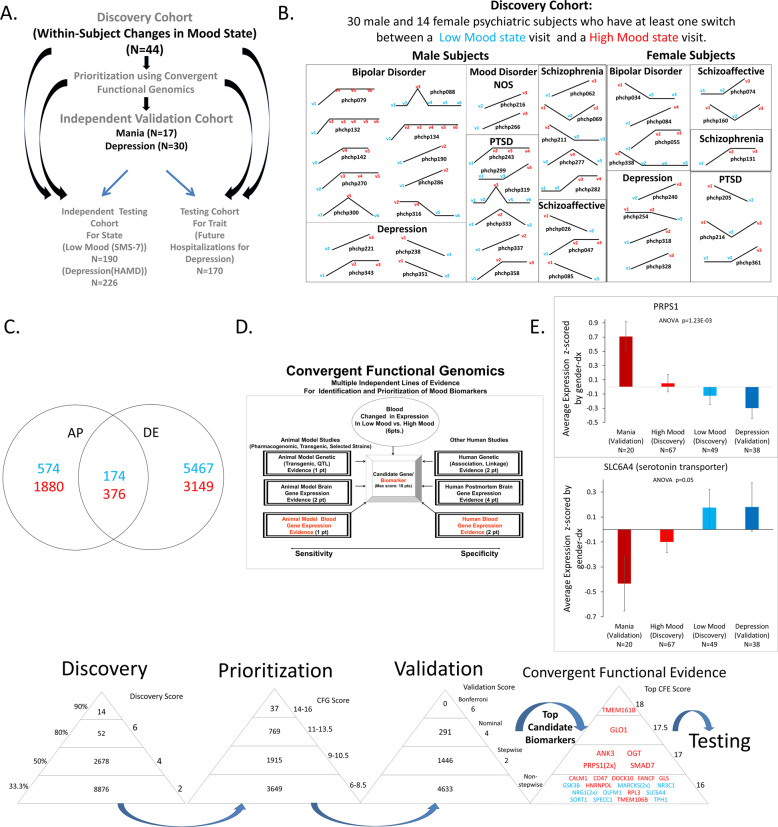
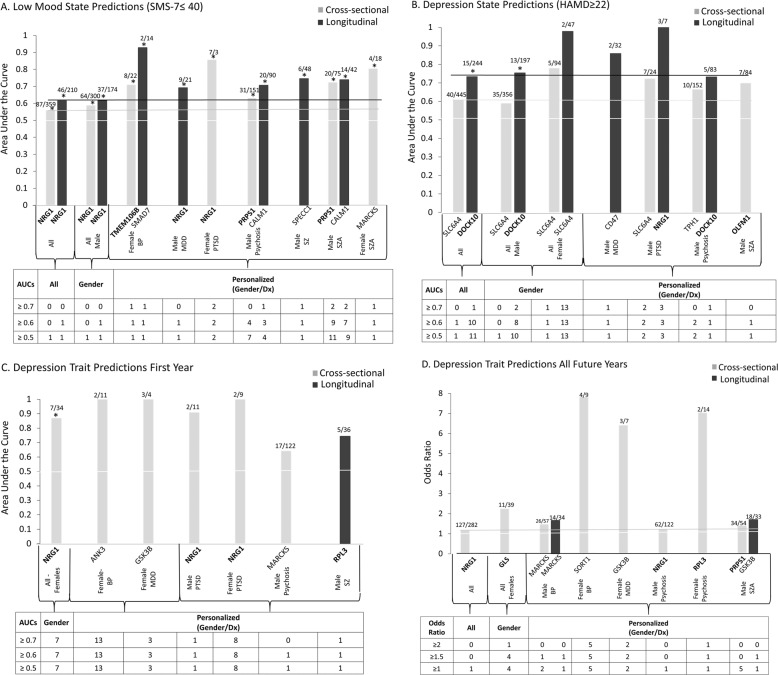
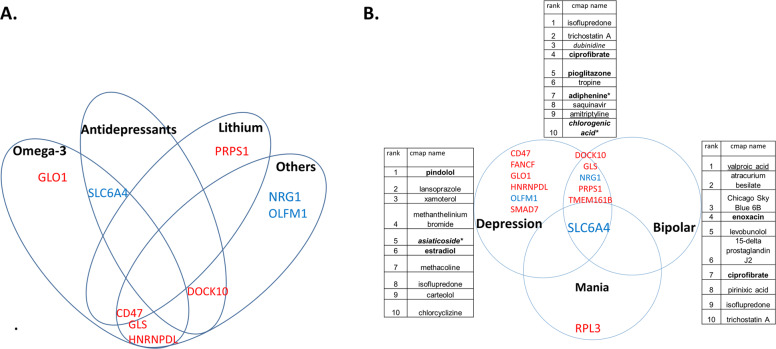
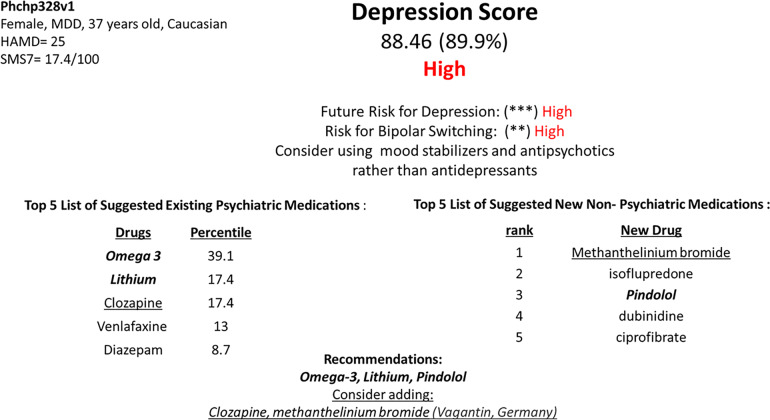
Mood disorders (depression, bipolar disorders) are prevalent and disabling. They are also highly co-morbid with other psychiatric disorders. Currently there are no objective measures, such as blood tests, used in clinical practice, and available treatments do not work in everybody. The development of blood tests, as well as matching of patients with existing and new treatments, in a precise, personalized and preventive fashion, would make a significant difference at an individual and societal level. Early pilot studies by us to discover blood biomarkers for mood state were promising [1], and validated by others [2]. Recent work by us has identified blood gene expression biomarkers that track suicidality, a tragic behavioral outcome of mood disorders, using powerful longitudinal within-subject designs, validated them in suicide completers, and tested them in independent cohorts for ability to assess state (suicidal ideation), and ability to predict trait (future hospitalizations for suicidality) [3–6]. These studies showed good reproducibility with subsequent independent genetic studies [7]. More recently, we have conducted such studies also for pain [8], for stress disorders [9], and for memory/Alzheimer’s Disease [10]. We endeavored to use a similar comprehensive approach to identify more definitive biomarkers for mood disorders, that are transdiagnostic, by studying mood in psychiatric disorders patients. First, we used a longitudinal within-subject design and whole-genome gene expression approach to discover biomarkers which track mood state in subjects who had diametric changes in mood state from low to high, from visit to visit, as measured by a simple visual analog scale that we had previously developed (SMS-7). Second, we prioritized these biomarkers using a convergent functional genomics (CFG) approach encompassing in a comprehensive fashion prior published evidence in the field. Third, we validated the biomarkers in an independent cohort of subjects with clinically severe depression (as measured by Hamilton Depression Scale, (HAMD)) and with clinically severe mania (as measured by the Young Mania Rating Scale (YMRS)). Adding the scores from the first three steps into an overall convergent functional evidence (CFE) score, we ended up with 26 top candidate blood gene expression biomarkers that had a CFE score as good as or better than SLC6A4, an empirical finding which we used as a de facto positive control and cutoff. Notably, there was among them an enrichment in genes involved in circadian mechanisms. We further analyzed the biological pathways and networks for the top candidate biomarkers, showing that circadian, neurotrophic, and cell differentiation functions are involved, along with serotonergic and glutamatergic signaling, supporting a view of mood as reflecting energy, activity and growth. Fourth, we tested in independent cohorts of psychiatric patients the ability of each of these 26 top candidate biomarkers to assess state (mood (SMS-7), depression (HAMD), mania (YMRS)), and to predict clinical course (future hospitalizations for depression, future hospitalizations for mania). We conducted our analyses across all patients, as well as personalized by gender and diagnosis, showing increased accuracy with the personalized approach, particularly in women. Again, using SLC6A4 as the cutoff, twelve top biomarkers had the strongest overall evidence for tracking and predicting depression after all four steps: NRG1, DOCK10, GLS, PRPS1, TMEM161B, GLO1, FANCF, HNRNPDL, CD47, OLFM1, SMAD7, and SLC6A4. Of them, six had the strongest overall evidence for tracking and predicting both depression and mania, hence bipolar mood disorders. There were also two biomarkers (RLP3 and SLC6A4) with the strongest overall evidence for mania. These panels of biomarkers have practical implications for distinguishing between depression and bipolar disorder. Next, we evaluated the evidence for our top biomarkers being targets of existing psychiatric drugs, which permits matching patients to medications in a targeted fashion, and the measuring of response to treatment. We also used the biomarker signatures to bioinformatically identify new/repurposed candidate drugs. Top drugs of interest as potential new antidepressants were pindolol, ciprofibrate, pioglitazone and adiphenine, as well as the natural compounds asiaticoside and chlorogenic acid. The last 3 had also been identified by our previous suicidality studies. Finally, we provide an example of how a report to doctors would look for a patient with depression, based on the panel of top biomarkers (12 for depression and bipolar, one for mania), with an objective depression score, risk for future depression, and risk for bipolar switching, as well as personalized lists of targeted prioritized existing psychiatric medications and new potential medications. Overall, our studies provide objective assessments, targeted therapeutics, and monitoring of response to treatment, that enable precision medicine for mood disorders.
Overview
The claims and statistics of this paper haven’t been checked yet.
Free: it reads the open-access text and checks the first 5 claims that cite a source we can check. Create a free account to check every claim.
Integrity signals
Registry
Cites
Statistics
Figures
Verification
Claims the paper makes
The claims and statistics of this paper haven’t been checked yet.
Free: it reads the open-access text and checks the first 5 claims that cite a source we can check. Create a free account to check every claim.
Claims other papers make about this one
Each is checked against this paper’s own text: does it say what the citing paper says it does?
The source backs part of the claim, not all of it — or backs it for a different population, condition or comparison.
In the citing paper
“Similarly, blood testing has identified genes (e.g., NRG1 which is involved in regulation of proliferation, survival, and differentiation of many cell types including neurons and epithelial cells207), proteins (e.g. CD47 which is implicated in neuroinflammatory cascades208), and proinflammatory markers (IL-1β, IL-6)209-211 that are associated with depression.”
From Dysregulation of adult hippocampal neuroplasticity in major depression: Pathogenesis and therapeutic implications (2022) · cites this paper as [211]
Experimental — accuracy not yet measuredThe cited source says what the claim attributes to it.
In the citing paper
“A recent study also implicates the significance of asiaticoside, among other candidate drugs, as an emerging anti‐depressant. 77”
From Therapeutic Properties and Pharmacological Activities of Asiaticoside and Madecassoside: A Review (2023) · cites this paper as [77]
Self-check
Percentages, sums and reported differences re-computed from the paper’s own numbers.
The self-check needs the paper’s full text.
Citations
Cites
Lamb, J., Crawford, E. D., Peck, D., Modell, J. W., Blat, I. C., Wrobel, M. J., Lerner, J., Brunet, J.-P., Subramanian, A., Ross, K. N., et al. (2006) · Science · doi:10.1126/science.1132939 · Cited by 5,257 · cited 5×
“We also used the biomarker gene expression signatures to interrogate the Connectivity Map database from Broad/MIT, and the NIH LINCS database, in order to identify drugs and natural compounds that can be repurposed for treating and preventing depression, including bipolar depression.”
MethodInfluentialHoward, D. M., Adams, M. J., Clarke, T.-K., Hafferty, J. D., Gibson, J., Shirali, M., Coleman, J. R. I., Hagenaars, S. P., Ward, J., Wigmore, E. M., et al. (2019) · Nature Neuroscience · doi:10.1038/s41593-018-0326-7 · Cited by 2,565
Genome-wide association study identifies 30 loci associated with bipolar disorder
eQTLGen Consortium, Stahl, E. A., BIOS Consortium, the Bipolar Disorder Working Group of the Psychiatric Genomics Consortium, Breen, G., Forstner, A. J., McQuillin, A., Ripke, S., Trubetskoy, V., Mattheisen, M., et al. (2019) · Nature Genetics · doi:10.1038/s41588-019-0397-8 · Cited by 1,519 · cited 1×
“, their Table 1) [31], 187 out of 553 genes for depression (Coleman et.”
BackgroundPersonal omics profiling reveals dynamic molecular and medical phenotypes
Chen, R., Mias, G. I., Li-Pook-Than, J., Jiang, L., Lam, H. Y. K., Chen, R., Miriami, E., Karczewski, K. J., Hariharan, M., Dewey, F. E., et al. (2012) · Cell · doi:10.1016/j.cell.2012.02.009 · Cited by 1,291 · cited 1×
“A within-subject design factors out genetic variability, as well as some medications, lifestyle, and demographic effects on gene expression, permitting identification of relevant signal with Ns as small as 1 [29].”
BackgroundHirschfeld, R. M. A., Lewis, L., & Vornik, L. A. (2003) · PubMed · Cited by 943
Hirschfeld, R. M. A., Lewis, L., & Vornik, L. A. (2003) · The Journal of Clinical Psychiatry · doi:10.4088/jcp.v64n0209 · Cited by 922 · cited 5×
“Others 0.10469 Independent testing cohort State predictions Clinical Depression(HAMD ≥ 22) 226 Male= 181 Female= 45 BP= 74 MDD= 39 SZA= 48 SZ= 36 PTSD= 21 MOOD= 5 PSYCH= 3 EA= 156 AA= 66 Asian= 1 Hispanic= 2 Mixed= 1 All= 46.71 (9.42) Clinical depression= 44.4 (n= 40) Others= 46.9 (n= 445) T-test for age between clini…”
BackgroundInfluentialSex-specific transcriptional signatures in human depression
Labonté, B., Engmann, O., Purushothaman, I., Menard, C., Wang, J., Tan, C., Scarpa, J. R., Moy, G., Loh, Y.-H. E., Cahill, M., et al. (2017) · Nature Medicine · doi:10.1038/nm.4386 · Cited by 748 · cited 1×
“stress-induced depression, as described by Nestler and colleagues [22].”
MethodThe transcriptional landscape of age in human peripheral blood
Peters, M. J., Joehanes, R., Pilling, L. C., Schurmann, C., Conneely, K. N., Powell, J., Reinmaa, E., Sutphin, G. L., Zhernakova, A., Schramm, K., et al. (2015) · Nature Communications · doi:10.1038/ncomms9570 · Cited by 725 · cited 2×
“Interestingly, it is increased in expression in blood in our previous biomarker studies on suicidality [6], stress [9], pain [8], and psychosis [17], as well as increased in expression in blood in aging [18], all co-morbidities associated with depression.”
BackgroundA Genome-wide RNAi Screen for Modifiers of the Circadian Clock in Human Cells
Zhang, E. E., Liu, A. C., Hirota, T., Miraglia, L. J., Welch, G., Pongsawakul, P. Y., Liu, X., Atwood, A., Huss, J. W., Janes, J., et al. (2009) · Cell · doi:10.1016/j.cell.2009.08.031 · Cited by 431 · cited 1×
“Biological understanding Clock gene database We compiled a database of genes associated with circadian function, by using a combination of review papers [13, 14] and searches of existing databases CircaDB (http://circadb.”
MethodBagot, R. C., Cates, H. M., Purushothaman, I., Lorsch, Z. S., Walker, D. M., Wang, J., Huang, X., Schlüter, O. M., Maze, I., Peña, C. J., et al. (2016) · Neuron · doi:10.1016/j.neuron.2016.04.015 · Cited by 333 · cited 1×
“DOCK10 (dedicator of cytokinesis 10) has some prior human evidence in human blood from bipolars [20], and is decreased in expression in brain in an animal model of depression [21].”
Background
Cited by
Tartt, A. N., Mariani, M. B., Hen, R., Mann, J. J., & Boldrini, M. (2022) · Molecular Psychiatry · doi:10.1038/s41380-022-01520-y · Cited by 408
Therapeutic Properties and Pharmacological Activities of Asiaticoside and Madecassoside: A Review
Bandopadhyay, S., Mandal, S., Ghorai, M., Jha, N. K., Kumar, M., Radha, Ghosh, A., Proćków, J., Pérez de la Lastra, J. M., & Dey, A. (2023) · Journal of Cellular and Molecular Medicine · doi:10.1111/jcmm.17635 · Cited by 220
McCarthy, M. J., Gottlieb, J. F., Gonzalez, R., McClung, C. A., Alloy, L. B., Cain, S., Dulcis, D., Etain, B., Frey, B. N., Garbazza, C., et al. (2022) · Bipolar Disorders · doi:10.1111/bdi.13165 · Cited by 136
“…in MDD) would show similar circadian profiles in BD. Preliminary work in this area has implicated rhythmically expressed genes in blood as a means of distinguishing MDD from BD. 235 Newer modalities such as epigenetics and microbiome analyses have been proposed, but remain to be examined.”
Goetzl, E. J., Wolkowitz, O. M., Srihari, V. H., Reus, V. I., Goetzl, L., Kapogiannis, D., Heninger, G. R., & Mellon, S. H. (2021) · Molecular Psychiatry · doi:10.1038/s41380-021-01268-x · Cited by 105
“One recently emerging technology relies on analyses of blood mRNAs to track and predict the course and severity of depression and mania, as well as to identify potentially beneficial drug treatments [11].”
BackgroundGenophenotypic Factors and Pharmacogenomics in Adverse Drug Reactions
Cacabelos, R., Naidoo, V., Corzo, L., Cacabelos, N., & Carril, J. C. (2021) · International Journal of Molecular Sciences · doi:10.3390/ijms222413302 · Cited by 107
Predicting relapse or recurrence of depression: systematic review of prognostic models
Moriarty, A. S., Meader, N., Snell, K. I. E., Riley, R. D., Paton, L. W., Dawson, S., Hendon, J., Chew-Graham, C. A., Gilbody, S., Churchill, R., et al. (2022) · The British Journal of Psychiatry · doi:10.1192/bjp.2021.218 · Cited by 71
“53 Nevertheless, such an approach may not be clinically feasible, and an important consideration for researchers is the context and setting in which a prognostic model is intended to be used.”
Kimbrel, N. A., Ashley-Koch, A. E., Qin, X. J., Lindquist, J. H., Garrett, M. E., Dennis, M. F., Hair, L. P., Huffman, J. E., Jacobson, D. A., Madduri, R. K., et al. (2022) · Molecular Psychiatry · doi:10.1038/s41380-022-01472-3 · Cited by 70
Precision Medicine Approaches to Mental Health Care
Scala, J. J., Ganz, A. B., & Snyder, M. P. (2022) · Physiology · doi:10.1152/physiol.00013.2022 · Cited by 63
He, X., Huang, Y., Liu, Y., Zhang, X., Wang, Q., Liu, Y., Ma, X., Long, X., Ruan, Y., Lei, H., et al. (2023) · Molecular Therapy · doi:10.1016/j.ymthe.2023.01.031 · Cited by 59
Epigenetic Targeting of Histone Deacetylases in Diagnostics and Treatment of Depression
Park, H., Kim, J., Ahn, S. H., & Ryu, H. (2021) · International Journal of Molecular Sciences · doi:10.3390/ijms22105398 · Cited by 58
Zhang, Y. W., Wang, J., & Fang, T. H. (2022) · Frontiers in Public Health · doi:10.3389/fpubh.2022.953363 · Cited by 51
“, electroencephalogram testing (81) or blood examination (82), are recommended because they can provide a more objective indication of depression levels than self-reported methods.”
BackgroundPharmaco-Multiomics: A New Frontier in Precision Psychiatry
Dhieb, D., & Bastaki, K. (2025) · International Journal of Molecular Sciences · doi:10.3390/ijms26031082 · Cited by 41
From Personalized Medicine to Precision Psychiatry?
Češková, E., & Petr, Š. (2021) · Neuropsychiatric Disease and Treatment · doi:10.2147/ndt.s337814 · Cited by 41
“His group assessed 26 blood gene expression biomarkers with the ability to objectify diagnosis of mood disorders, predict its clinical course, and match patients to pharmacogenetically appropriate medications.(1) Pharmacogenomics-guided treatment is a promising approach, especially given the rapidly decreasing costs o…”
BackgroundPhenotypes, mechanisms and therapeutics: insights from bipolar disorder GWAS findings
Li, M., Li, T., Xiao, X., Chen, J., Hu, Z., & Fang, Y. (2022) · Molecular Psychiatry · doi:10.1038/s41380-022-01523-9 · Cited by 41
“They successfully identified genes serving as biomarkers for tracking and predicting disease progression, and highlighted RLP3 and SLC6A4 as genes with the strongest overall evidence for mania [58].”
BackgroundMethodRoseberry, K., Le-Niculescu, H., Levey, D. F., Bhagar, R., Soe, K. C., Rogers, J., Palkowitz, S., Piña, N. N., Anastasiadis, W. A., Gill, S., et al. (2023) · Molecular Psychiatry · doi:10.1038/s41380-023-01998-0 · Cited by 40
Self-citationOrtega, M. A., Fraile‐Μartinez, O., Montero, C. G., Díaz, R., López-González, L., Monserrat, J., Barrena-Blázquez, S., Álvarez-Mon, M. Á., Lahera, G., & Álvarez‐Mon, M. (2024) · Military Medical Research · doi:10.1186/s40779-024-00577-w · Cited by 39
“It is estimated that approximately 1 in 4 individuals will suffer at least once in their life from a type of affective disorder, that is highly disabling for the subject who suffers from it [2].”
InfluentialLyu, N., Zhao, Q., Fu, B., Li, J., Wang, H., Yang, F., Liu, S., Huang, J., Zhang, X., Zhang, L., et al. (2023) · BMC Psychiatry · doi:10.1186/s12888-023-04846-1 · Cited by 34
“Subsequent genes related to circadian, neurotrophic, cell differentiation, serotonergic and glutamatergic signaling in mood episodes were also reported [63], such as NRG1, DOCK10, GLS, PRPS1, TMEM161B, GLO1, FANCF, HNRNPDL, CD47, OLFM1, SMAD7, and SLC6A4 for depression, while RLP3 and SLC6A4 for mania.”
BackgroundFrom energy metabolism to mood regulation: The rise of lactate as a therapeutic target
Zhang, S., Xia, J., He, W., Zou, Y., Liu, W., Li, L., Huang, Z., Li, Q., Li, Q. X., & Liu, W. (2025) · Journal of Advanced Research · doi:10.1016/j.jare.2025.04.018 · Cited by 32
Kaczmarek‐Majer, K., Dominiak, M., Antosik-Wójcińska, A. Z., Hryniewicz, O., Kamińska, O., Opara, K. R., Owsiński, J. W., Radziszewska, W., Sochacka, M., & Święcicki, Ł. (2024) · Acta Psychiatrica Scandinavica · doi:10.1111/acps.13735 · Cited by 31
Shao, J., Qin, J., Wang, H., Sun, Y., Zhang, W., Wang, X., Wang, T., Li, X., Yao, Z., & Lü, Q. (2023) · Biological Psychiatry · doi:10.1016/j.biopsych.2023.08.005 · Cited by 31
Chae, W. R., Baumert, J. J., Nübel, J., Brasanac, J., Gold, S. M., Hapke, U., & Otte, C. (2023) · European Neuropsychopharmacology · doi:10.1016/j.euroneuro.2023.03.007 · Cited by 30
Non-canonical pathways in the pathophysiology and therapeutics of bipolar disorder
Machado‐Vieira, R., Courtes, A. C., Zarate, C. A., Henter, I. D., & Manji, H. K. (2023) · Frontiers in Neuroscience · doi:10.3389/fnins.2023.1228455 · Cited by 28
Profiling placental DNA methylation associated with maternal SSRI treatment during pregnancy
Inkster, A. M., Konwar, C., Peñaherrera, M. S., Brain, U. M., Khan, A., Price, E. M., Schuetz, J. M., Portales-Casamar, É., Burt, A., Marsit, C. J., et al. (2022) · Scientific Reports · doi:10.1038/s41598-022-26071-8 · Cited by 27
“DOCK10 is also a target of the antidepressant ketamine, which increases DOCK10 expression in association with the drug’s intended outcome of eliciting a more positive mood (62).”
BackgroundHill, M. D., Gill, S., Le-Niculescu, H., MacKie, O., Bhagar, R., Roseberry, K., Murray, O. K., Dainton‐Howard, H., Wolf, S. K., Shekhar, A., et al. (2024) · Molecular Psychiatry · doi:10.1038/s41380-024-02433-8 · Cited by 27
Self-citationPrecision medicine in psychiatry: biomarkers to the forefront
Niculescu, A. B., & Le-Niculescu, H. (2021) · Neuropsychopharmacology · doi:10.1038/s41386-021-01183-3 · Cited by 25
Self-citationZhong, R., Wu, X., Chen, J., & Fang, Y. (2025) · Journal of Medical Internet Research · doi:10.2196/72229 · Cited by 20
“Approximately 1 in 4 individuals is estimated to experience an affective disorder at least once in their lifetime, often leading to substantial and lasting disability for those affected [3].”
Scorza, P., Duarte, C. S., Lee, S., Wu, H., Posner, J., Baccarelli, A., & Monk, C. (2023) · Journal of the American Academy of Child & Adolescent Psychiatry · doi:10.1016/j.jaac.2023.02.018 · Cited by 18
Next-generation precision medicine for suicidality prevention
Bhagar, R., Gill, S., Le-Niculescu, H., Yin, C., Roseberry, K., Mullen, J., Schmitz, M., Paul, E. J., Cooke, J., Tracy, C., et al. (2024) · Translational Psychiatry · doi:10.1038/s41398-024-03071-y · Cited by 18
Self-citationKoch, E. M., Puusepp, T., Einarsson, G., Mitchell, B. L., Harder, A., Lin, Y., García‐Marín, L. M., Krebs, K., Shadrin, A. A., Xiong, Y., et al. (2025) · Molecular Psychiatry · doi:10.1038/s41380-025-03357-7 · Cited by 17
Next-generation precision medicine for pain
Bhagar, R., Le-Niculescu, H., Corey, S. C., Gettelfinger, A. S., Schmitz, M. P., Ebushi, A., Matei, E., Woods, C., Mullen, J., Kurian, S. M., et al. (2025) · Molecular Psychiatry · doi:10.1038/s41380-025-03186-8 · Cited by 16
Self-citationBonilla, D. A., Moreno, Y., Rawson, E. S., Forero, D. A., Stout, J. R., Kerksick, C. M., Roberts, M. D., & Kreider, R. B. (2021) · Nutrients · doi:10.3390/nu13082521 · Cited by 15
“Combined together, we enhance our ability to distinguish signals from noise, even with limited cohorts and datasets [46]; therefore, CFG is useful for identifying novel candidate genes and pathways for specific phenotypes [47–50] and compound-mediated gene regulation [51,52].”
BackgroundMethodRNA biomarkers for alcohol use disorder
Ferguson, L. B., Mayfield, R. D., & Messing, R. O. (2022) · Frontiers in Molecular Neuroscience · doi:10.3389/fnmol.2022.1032362 · Cited by 14
Virtanen, M., Törmälehto, S., Partonen, T., Elovainio, M. J., Ruuhela, R., Hakulinen, C. A., Komulainen, K., Airaksinen, J. K. E., Väänänen, A., Koskinen, A., et al. (2023) · Epidemiology and Psychiatric Sciences · doi:10.1017/s2045796023000768 · Cited by 13
“The present results may also contribute to precision medicine (Le-Niculescu et al. , 2021) and can inform clinicians and workplaces to prepare for varying healthcare needs.”
ResultChen, M., Tian, H., Huang, G., Fang, T., Lin, X., Shan, J., Cai, Z., Chen, G., Chen, S., Chen, C., et al. (2021) · Translational Psychiatry · doi:10.1038/s41398-021-01750-8 · Cited by 12
Cocchi, M., Mondo, E., Romeo, M., & Traina, G. (2022) · International Journal of Molecular Sciences · doi:10.3390/ijms23063253 · Cited by 11
Neurobiology of Mood Disorders
Manchia, M., & Schatzberg, A. F. (2024) · Springer eBooks · doi:10.1007/978-3-030-51366-5_83 · Cited by 11
Statins in depression: a repurposed medical treatment can provide novel insights in mental health
Giorgi, R. D., Cowen, P. J., & Harmer, C. J. (2022) · International Review of Psychiatry · doi:10.1080/09540261.2022.2113369 · Cited by 10
“…in neuropsychiatric disorders (Avan et al., 2021; Fernandes et al., 2021; Fracassi et al., 2019; Rahola, 2012; Tao et al., 2021), and especially in depression (Covington et al., 2010; Fabbri et al., 2021; Le-Niculescu et al., 2021; Maes et al., 2012; Mohammad Sadeghi et al., 2021; So et al., 2019).”
BackgroundGiorgi, R. D., Crescenzo, F. D., Cowen, P. J., Harmer, C. J., & Cipriani, A. (2023) · BMC Medicine · doi:10.1186/s12916-023-03138-5 · Cited by 11
“Evidence from pre-clinical [9–12] and clinical [13–16] studies suggests that statins are promising candidates to repurpose for the treatment of depressive disorders, especially when combined with conventional antidepressant medications [17–20].”
BackgroundClinical Utility of Fluid Biomarker in Depressive Disorder
Serretti, A. (2022) · Clinical Psychopharmacology and Neuroscience · doi:10.9758/cpn.2022.20.4.585 · Cited by 9
“This may have a relevant impact for routine clinical practice, an example has been recently reported [19].”
BackgroundYoussef, N. A., Madangarli, N., Bachu, A. K., & Patel, R. S. (2023) · Annals of Clinical Psychiatry · doi:10.12788/acp.0107 · Cited by 9
“22,23 Le-Niculescu et al 24 sought to identify biomarkers that can detect and differentiate mania and depression.”
Lee, M., & Passarotti, A. M. (2022) · Frontiers in Psychiatry · doi:10.3389/fpsyt.2022.1011301 · Cited by 9
Ma, L., Cunningham, K. A., Anastasio, N. C., Bjork, J. M., Taylor, B. A., Arias, A. J., Riley, B. P., Snyder, A. D., & Moeller, F. G. (2022) · Translational Psychiatry · doi:10.1038/s41398-022-01934-w · Cited by 8
“For example, several genetic markers have been identified as predicting depression, an observation which has recently been validated within an independent cohort of participants with clinically severe depression [14, 15].”
ResultIbrahim, E. C., Gorgievski, V., Ortiz-Teba, P., Belzeaux-R, R., Turecki, G., Sibille, E. L., Charbonnier, G., & Tzavara, E. T. (2022) · International Journal of Molecular Sciences · doi:10.3390/ijms232113543 · Cited by 8
“For the moment, despite efforts in this direction, there is no reliable biomarker that can predict the therapeutic response in a patient suffering from an MDE, and there is no absolute predictor to guide the choice of the therapeutic approach [9].”
Circulating long noncoding RNA: New frontiers in biomarker research for mood disorders
Roy, B., Verma, A. K., Hulwi, E., & Dwivedi, Y. (2024) · Genomic psychiatry : · doi:10.61373/gp024i.0046 · Cited by 8
Pisanu, C., Squassina, A., Paribello, P., Dall’Acqua, S., Sut, S., Nasini, S., Bertazzo, A., Congiu, D., Meloni, A., Garzilli, M., et al. (2022) · Metabolites · doi:10.3390/metabo12111127 · Cited by 7
Wertman, E. (2024) · Journal of Clinical Medicine · doi:10.3390/jcm13144202 · Cited by 6
“…syn-dromal entity (e.g., depression or systemic sickness behavior [264] or fatigue [265–268] that are perceived as depressive behavior [263]); - Endophenotypes—a specific behavioral disorder that has various internal phenotypes (e.g., several endophenotypes of depression or agitation) [269–272].”
BackgroundCorrelation of peripheral olfactomedin 1 with Alzheimer’s disease and cognitive functions
Wei, C., Zhang, G., Fu, X., Zhao, M. L., Zhai, W., Shen, Y., & Sun, L. (2025) · Translational Psychiatry · doi:10.1038/s41398-025-03373-9 · Cited by 6
“These disorders include multiple sclerosis, amyotrophic lateral sclerosis, mania, depressive disorder, Tourette syndrome, obsessive-compulsive disorder, and attention-de fi cit/hyperactivity disorder [6 – 8].”
Machahary, N., Thakran, S., Thampi, G., Gangte, N., Sood, M., Kaushik, M., & Kukreti, R. (2025) · Biochemical and Biophysical Research Communications · doi:10.1016/j.bbrc.2025.153007 · Cited by 6
Mental health and validity of the psycho-neurobiological stress model
Guillén, J. M. B. (2022) · American Journal of Psychiatric Research and Reviews · doi:10.28933/ajprr-2021-12-3105 · Cited by 5
Zakaria, W. N. A., Wijaya, A., Al-Rahbi, B., Ahmad, A. H., Zakaria, R., & Othman, Z. (2023) · Psychiatric Genetics · doi:10.1097/ypg.0000000000000338 · Cited by 4
“Findings from the present study may be useful in identifying important topics for future research such as screening and diagnosis of at-risk populations based on the polygenic risk score (Fullerton and Nurnberger, 2019), personalised therapeutical options based on biomarkers (Le-Niculescu et al., 2021), and Mendelian…”
BackgroundGene expression signatures of response to fluoxetine treatment: systematic review and meta-analyses
Cooper, D. G., Cowden, J. P., Vo, P., Stanley, P. E., Karbowski, J. T., Gaertig, V. S., Lukan, C. J., Worthington, A., & Class, C. A. (2025) · Molecular Psychiatry · doi:10.1038/s41380-025-03118-6 · Cited by 3
“Additionally, Le-Niculescu et al. have identi fi ed biomarkers for mood disorders that are present in both brain and blood, providing more evidence for the value of these markers [20].”
Precision psychiatry in depression via mechanism based stratification and therapy
Wang, M., Jiang, Y., Wu, C., Liao, J., Zhou, B., Yuan, Y., & Sun, J. (2026) · Targetome · doi:10.48130/targetome-0026-0014 · Cited by 3
Callovini, T., Nicola, M. D., Pepe, M., Crocamo, C., Bartoli, F., Sani, G., & Carrà, G. (2024) · Journal of Psychiatric Research · doi:10.1016/j.jpsychires.2024.10.019 · Cited by 3
Piechota, M., Hoinkis, D., Korostyński, M., Gołda, S., Pera, J., & Dziedzic, T. (2023) · Journal of Neurochemistry · doi:10.1111/jnc.15902 · Cited by 3
“Examples of such stimuli include Toll- like receptor agonists other than LPS (Figueroa- Hall et al., 2020), T cells activators (e.g., enterotoxin SEB, anti- CD3/ CD28 antibodies) (Leday et al., 2018; Maes, 2011) or glucocorticoids (Menke et al., 2012).”
An Exercise Immune Fitness Test to Unravel Disease Mechanisms—A Proof-of-Concept Heart Failure Study
Bondar, G., Mahapatra, A. D., Bao, T.-M., Silacheva, I., Hairapetian, A., Vu, T., Su, S., Katappagari, A., Liana, G., Chandran, J., et al. (2024) · Journal of Clinical Medicine · doi:10.3390/jcm13113200 · Cited by 3
Temporal effects on death by suicide: empirical evidence and possible molecular correlates
Bhagar, R., Le-Niculescu, H., Roseberry, K., Kosary, K., Daly, C., Ballew, A., Yard, M., Sandusky, G. E., & Niculescu, A. B. (2023) · Discover Mental Health · doi:10.1007/s44192-023-00035-4 · Cited by 3
Self-citationGong, A. J., Garg, T., Khalil, A. A. F., Gowda, P. C., Mathai, S. C., Rowan, N. R., Merlo, C. A., & Weiss, C. R. (2023) · American Journal of Rhinology and Allergy · doi:10.1177/19458924231207123 · Cited by 3
“12,20,115,116 In our literature search, we found that anxiety and depression were assessed often.”
BackgroundPharmacogenomics in Psychiatric Diseases
Kekić, A. (2023) · Springer eBooks · doi:10.1007/978-3-031-45903-0_9 · Cited by 3
Zhao, X., Huang, G., Xie, Z., Yaxiong, M. O., Zhu, H., Gao, Y., Han, Y., & Tang, W. (2024) · Neuropsychiatric Disease and Treatment · doi:10.2147/ndt.s438942 · Cited by 3
Heterogenous nuclear ribonucleoprotein D-like controls endothelial cell functions
Fischer, S. E., Lichtenthaeler, C., Stepanenko, A., Heyl, F., Maticzka, D., Kemmerer, K., Klostermann, M., Backofen, R., Zarnack, K., & Weigand, J. E. (2023) · Biological Chemistry · doi:10.1515/hsz-2023-0254 · Cited by 2
“HNRNPDL belongs to the prion-like RNA-processing proteins, which can aggregate in inclusions implicated in many neurodegenerative diseases (Navarro et al. 2015) and was recently identi fi ed as potential biomarker and drug target in depression (Le-Niculescu et al. 2021).”
Zhang, J., Yang, H., Chen, X., Xu, L., Zhang, X., & Tang, X. (2026) · Journal of Affective Disorders · doi:10.1016/j.jad.2026.121688 · Cited by 2
Zhang, P., Fu, H., Qiang, F., Xu, T., & Lin, Y. (2026) · Acta Psychologica · doi:10.1016/j.actpsy.2026.106782 · Cited by 2
Toledo, K., Kaur, H., Javiel, M. A., & Barreto, J. (2022) · International journal of high school research · doi:10.36838/v4i3.9 · Cited by 2
Lu, Z., Sun, Y., Kang, Z., Zhao, G., Zhang, Y., Sun, J., Yuan, R., & Yue, W. (2025) · Military Medical Research · doi:10.1186/s40779-025-00636-w · Cited by 2
“Several studies have suggested that GLO1 inhibitors may serve as promising therapeutic agents for mental disorders [39–41].”
Shen, G., Chen, L., Liu, Y., Zhu, Q., Kang, Y., Luo, X., Wang, F., & Wang, W. (2024) · BMC Psychiatry · doi:10.1186/s12888-024-05787-z · Cited by 1
“Variants in the ANK3 gene may influence the structural and functional integrity of neural circuits by affecting axonal stability and synaptic organization, which can influence the transmission of emotional signals [48].”
BackgroundJaroszyński, F., Cyran, P., Jaroszyńska, A., Paleczny, J., Parobczak, R., Winciorek, J., Wiśniewska, A. M., Połujański, P., & Kowal, J. (2024) · Archiv Euromedica · doi:10.35630/2024/14/3.341 · Cited by 1
“As many as 1 in every 4 people experiences an episode of mental disorder during their lifetime [29].”
BackgroundNavigating the Intersection of Technology and Depression Precision Medicine
Irmak-Yazicioglu, M. B., & Arslan, A. (2024) · Advances in experimental medicine and biology · doi:10.1007/978-981-97-4402-2_20 · Cited by 1
Precision medicine for brain health and prevention of neurodegenerative/neurocognitive decline
Hausman-Cohen, S., & Bilich, C. (2024) · Elsevier eBooks · doi:10.1016/b978-0-323-98808-7.00011-4 · Cited by 1
Serum proteomic correlates of mental health symptoms in a representative UK population sample
Dearman, A., Bao, Y., Schalkwyk, L. C., & Kumari, M. (2025) · Brain Behavior & Immunity - Health · doi:10.1016/j.bbih.2025.100947 · Cited by 1
Meena, R. (2025) · Journal of Pharmacology Genetics and Molecular Biology · doi:10.64062/jpgmb.vol1.issue4.14 · Cited by 1
Precision Medicine in Psychiatric Disorders
Gonda, X., Gecse, K., Gál, Z., & Juhász, G. (2022) · Springer eBooks · doi:10.1007/978-981-19-5082-7_6 · Cited by 1
Mousavi, S. R., Moghadam, M. F., Jamalinasab, A., Farahani, E., Yousefi, B., & Hassanvand, P. (2023) · Journal of Multidisciplinary Care · doi:10.34172/jmdc.1171 · Cited by 1
Calesella, F. (n.d.) · Archivio Istituzionale della Ricerca - Università Vita-Salute San Raffaele · Cited by 1
Precision Medicine: Neuropsychodynamic Psychiatry Model of Major Depressive Disorder
Yaqi, H. (2021) · Advances in Social Science, Education and Humanities Research/Advances in social science, education and humanities research · doi:10.2991/assehr.k.211220.268
IsHak, W. W., Magakian, N., Ishak, W. W., Mikhail, A. A., & Lim, R. F. (2023) · Springer eBooks · doi:10.1007/978-3-031-15401-0_25
Neurobiological Foundations of Mood Disorders
Manchia, M., & Schatzberg, A. F. (2023) · Springer eBooks · doi:10.1007/978-3-030-42825-9_83-1
Hassanvand, P., Moghadam, M. F., Jamalinasab, A., & Mousavi, S. R. (2023) · Jundishapur Journal of Chronic Disease Care · doi:10.5812/jjcdc-137783
“These are debilitating disorders due to their recurring nature, inevitable complications, and heavy costs (1-3) and affect one in every four persons during their lifetime (1).”
BackgroundJakaria, F., & Yuliwulandari, R. (2023) · Junior Medical Journal · doi:10.33476/jmj.v2i1.3779
Luo, L., Xu, R., Mu, F., Li, H., Liu, Y., Gao, J., Wu, Y., Wang, K., Liu, Y., Zhang, Y., et al. (2024) · Journal of Affective Disorders · doi:10.1016/j.jad.2024.08.065
Langzeitverläufe bipolarer Störungen
Czempiel, T., Mikoláš, P., Bauer, M., Vogel, S., & Ritter, P. S. (2024) · Der Nervenarzt · doi:10.1007/s00115-024-01791-6
Osman, M. M. (2025) · World Journal of Advanced Research and Reviews · doi:10.30574/wjarr.2025.26.2.2080
Improving the Diagnosis of Mood Disorders: A Mini-Review of Recent Approaches
Whissell, C. (2025) · Open Journal of Depression · doi:10.4236/ojd.2025.144006
The Clinician in the Loop: How Multimodal AI Affects Clinical Decision-Making in Mental HealthcarePreprint
Noto, J., Panda, O. D., Uka, C. C., Tabatabaee, O., Carroll, N., Weiner, D., & Binkley, C. E. (2025) · Research Square · doi:10.21203/rs.3.rs-8216300/v1
Statins in depression: a meta-analytic, epidemiological, and experimental medicine approach
Giorgi, R. D. (2022) · Oxford University Research Archive (ORA) (University of Oxford) · doi:10.5287/bodleian:2rnbmx4nd
Neyer, S. (2022) · Gutenberg Open Science · doi:10.25358/openscience-8120
Giorgi, R. D., Crescenzo, F. D., Cowen, P. J., Harmer, C. J., & Cipriani, A. (2023) · Figshare · doi:10.6084/m9.figshare.24522540
Shen, G., Chen, L., Liu, Y., Zhu, Q., 康意敏, Luo, X., Wang, F., & Wang, W. (2024) · Figshare · doi:10.6084/m9.figshare.25749882
Lyu, N., Zhao, Q., Fu, B., Li, J., Wang, H., Yang, F., Liu, S., Huang, J., Zhang, X., Zhang, L., et al. (2024) · Figshare · doi:10.6084/m9.figshare.26598533
Genetic influences on puppy and juvenile guide dog behaviour
Hunt, R. L. (2025) · Nottingham ePrints (University of Nottingham)
Patel, K. (2024) · D-Scholarship@Pitt (University of Pittsburgh)
Ruan, Z., & Zhu, J. (2026) · Brain and Behavior · doi:10.1002/brb3.71274
“Neurotrophic factors, which promote neuronal growth and survival, further underscore the importance of neuroplasticity in BD (Le-Niculescu et al. 2021 ).”
Association between Keratoconus and Mood Disorders
Maldytė, M. (2025) · Lithuanian University of Health Sciences
Zachos, K. A. (2025) · TSpace (University of Toronto)
Tang, H., Wu, Y., Deng, W., Liang, J., Zhang, C., & Sun, J. (2026) · Research Square · doi:10.21203/rs.3.rs-8976053/v1
Tsou, C., Yang, D.-W., & Chen, H.-W. (2026) · General Hospital Psychiatry · doi:10.1016/j.genhosppsych.2026.04.016
Precision Psychiatry: From Symptom-based Diagnoses to Biological Stratification
Sharma, M., Chail, A., & Murab, P. (2026) · Annals of Indian Psychiatry · doi:10.4103/aip.aip_148_26
Xie, T., Hu, J., Tian, X., Ma, G., Li, J., Yang, J., Chen, Y., & Luo, C. (2026) · Research Square · doi:10.21203/rs.3.rs-9991884/v1
Kuai, X., Shao, D., Wang, S., Zhang, F., Zhang, S., Wang, X., & Wang, J. (2026) · Brain and Behavior · doi:10.1002/brb3.71571
“Affecting an estimated one in four individuals in their lifetime, they frequently lead to substantial and long-term disability (Le-Niculescu et al. 2021 ).”
Metadata
- Authors
- Le-Niculescu, H., Roseberry, K., Gill, S. S., Levey, D. F., Phalen, P. L., Mullen, J., Williams, A., Bhairo, S., Voegtline, T., Davis, H., Shekhar, A., Kurian, S. M., & Niculescu, A. B.
- Affiliations
- Indiana University School of Medicine (US)
- Yale University (US)
- University of Maryland, Baltimore (US)
- University of Pittsburgh (US)
- Scripps Health (US)
- Corresponding author
- Niculescu, A. B.
- ORCID
- Venue
- Molecular Psychiatry
- Published
- 2021-04-08
- Volume
- 26
- Issue
- 7
- Pages
- 2776-2804
- ISSN
- 1359-4184 (ISSN-L)
- 1476-5578
- PMC
- PMC8505261
- OpenAlex
- W3139996120
- Cited by
- 94
- References
- 38
- Citations by year
- 2026: 11 · 2025: 13 · 2024: 18 · 2023: 23 · 2022: 19 · 2021: 10
- FWCI
- 12.54
- Type
- journal article
- Language
- en
- Open access
- hybrid
- doi.org
- Licence
- cc-by
- creativecommons.org/licenses/by/4.0 (tdm)
- creativecommons.org/licenses/by/4.0 (vor)
- Locations
- Molecular Psychiatry (publishedVersion, cc-by)
- PubMed Central (publishedVersion, cc-by)
- PubMed (publishedVersion)
- Purdue University Indianapolis (Indiana University) (submittedVersion, cc-by)
- IUScholarWorks (Indiana University) (submittedVersion, cc-by)
- Funders
- U.S. Department of Veterans Affairs (I01 CX000139, I01 CX002094)
- National Institutes of Health (1dp2od007363-01)
- National Institute of Mental Health (R01MH117431)
- Topics
- Health Sciences › Medicine › Psychiatry and Mental health › Bipolar Disorder and Treatment
- Health Sciences › Medicine › Pharmacology (medical) › Treatment of Major Depression
- Life Sciences › Biochemistry, Genetics and Molecular Biology › Genetics › Genetic Associations and Epidemiology
- Keywords
- mood disorders, depression, bipolar disorder, circadian genes, serotonin transporter, risk prediction, pharmacogenomics, drug repurposing, suicide risk, transdiagnostic biomarkers, personalized medicine, within-subjects design, circadian rhythm, neuroinflammation
- MeSH terms
- Humans, Pharmacogenetics, Reproducibility of Results, Risk Assessment, Mood Disorders, Precision Medicine, Drug Repositioning
About these checks
Registry, retraction, Cites and statistics results are computed, not judged, with one exception: a printed reference that no index lists is read once by a model before it counts as a citation error. Claims are extracted by a model and kept only when their quote appears verbatim in the text; each cited source is then checked, with a model’s help, for whether it says what the claim relies on. Those verdicts can be wrong — read the claim’s quote and the cited source before relying on one.
Statistics and arithmetic are recomputed, not judged.
Confidence bands are shown only for fields calibrated on our annotated test set. None is calibrated yet, so no band is shown.
What counts as a claim ›How we measure confidence ›How we check this ›
Are you an author, or do you see a problem with this page? Request a review
Data sources
Bibliographic data: Semantic Scholar, OpenAlex, Crossref.
Contains information from the Semantic Scholar Academic Graph Datasets, made available under the ODC Attribution License (ODC-BY 1.0).
Semantic Scholar’s data is described in: Kinney, R., et al. (2023). The Semantic Scholar Open Data Platform. arXiv:2301.10140.
