

The DOI matches its Crossref record; 166 of the 166 references it cites were found in a registry or an index.
A systematic review of gut microbiota composition in observational studies of major depressive disorder, bipolar disorder and schizophrenia
Open accessAbstract
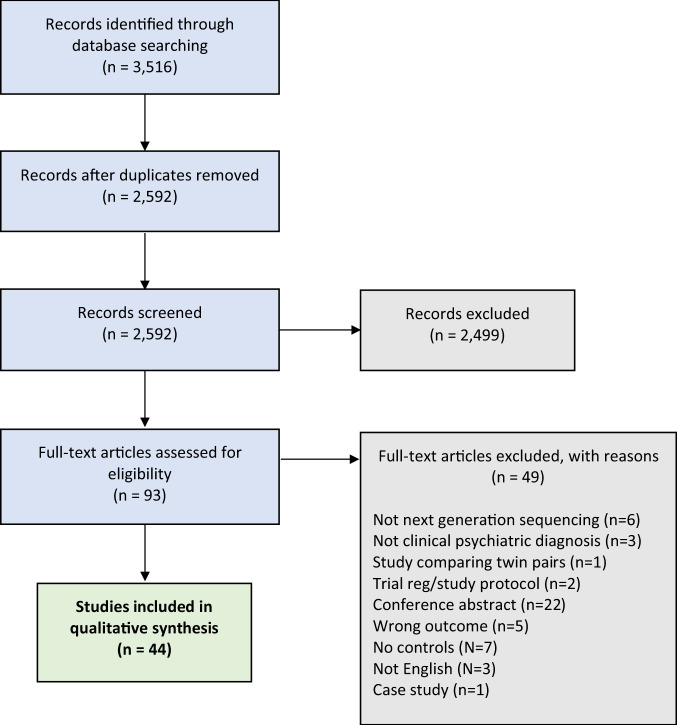
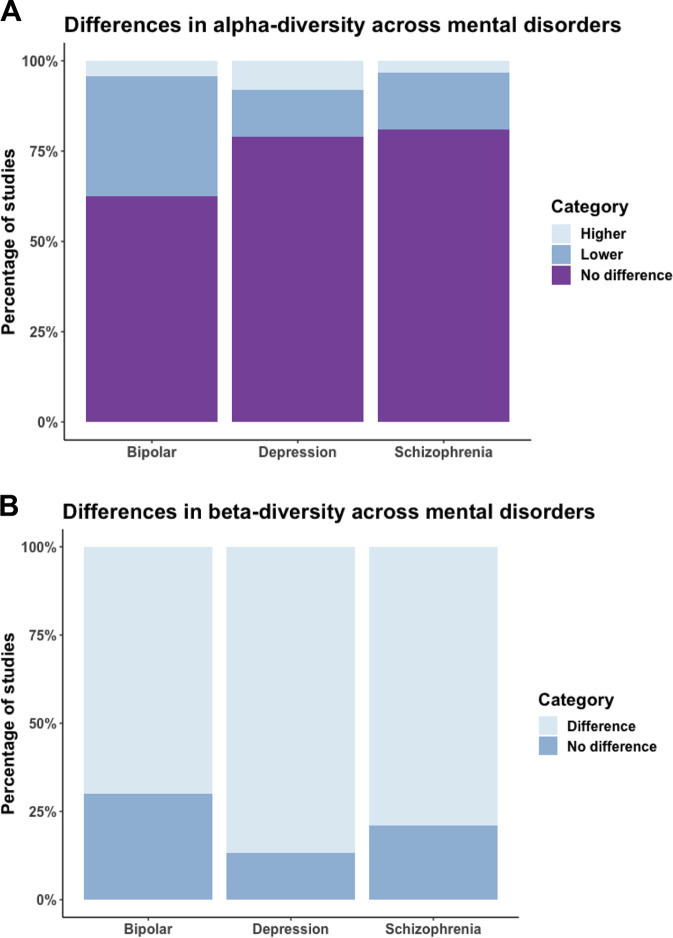
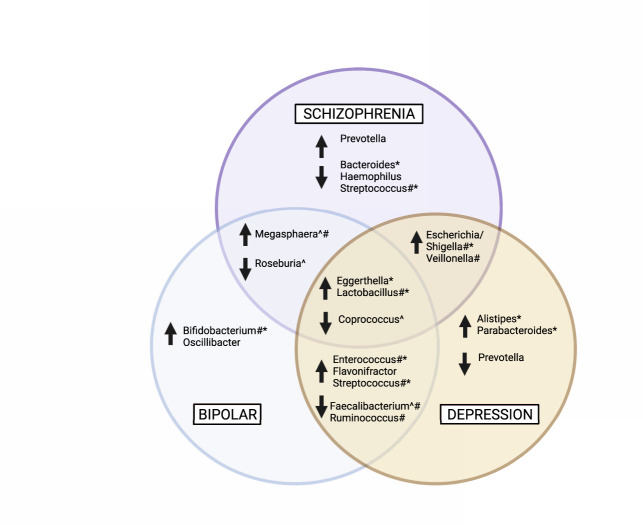
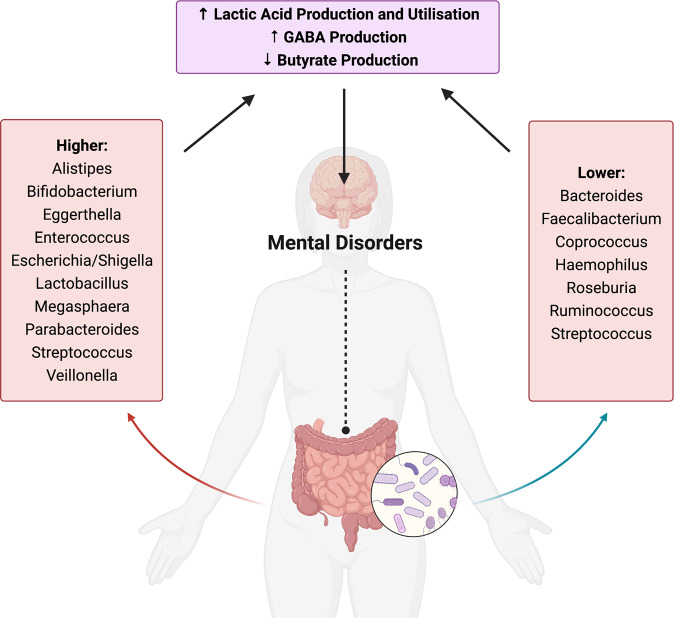
The emerging understanding of gut microbiota as ‘metabolic machinery’ influencing many aspects of physiology has gained substantial attention in the field of psychiatry. This is largely due to the many overlapping pathophysiological mechanisms associated with both the potential functionality of the gut microbiota and the biological mechanisms thought to be underpinning mental disorders. In this systematic review, we synthesised the current literature investigating differences in gut microbiota composition in people with the major psychiatric disorders, major depressive disorder (MDD), bipolar disorder (BD) and schizophrenia (SZ), compared to ‘healthy’ controls. We also explored gut microbiota composition across disorders in an attempt to elucidate potential commonalities in the microbial signatures associated with these mental disorders. Following the PRISMA guidelines, databases were searched from inception through to December 2021. We identified 44 studies (including a total of 2510 psychiatric cases and 2407 controls) that met inclusion criteria, of which 24 investigated gut microbiota composition in MDD, seven investigated gut microbiota composition in BD, and 15 investigated gut microbiota composition in SZ. Our syntheses provide no strong evidence for a difference in the number or distribution (α-diversity) of bacteria in those with a mental disorder compared to controls. However, studies were relatively consistent in reporting differences in overall community composition (β-diversity) in people with and without mental disorders. Our syntheses also identified specific bacterial taxa commonly associated with mental disorders, including lower levels of bacterial genera that produce short-chain fatty acids (e.g. butyrate), higher levels of lactic acid-producing bacteria, and higher levels of bacteria associated with glutamate and GABA metabolism. We also observed substantial heterogeneity across studies with regards to methodologies and reporting. Further prospective and experimental research using new tools and robust guidelines hold promise for improving our understanding of the role of the gut microbiota in mental and brain health and the development of interventions based on modification of gut microbiota.
Overview
The claims and statistics of this paper haven’t been checked yet.
Run the check — free, no account needed. It reads the open-access text and checks the sources it cites.
Integrity signals
Registry
Cites
Statistics
Figures
Verification
Claims the paper makes
The claims and statistics of this paper haven’t been checked yet.
Run the check — free, no account needed. It reads the open-access text and checks the sources it cites.
Claims other papers make about this one
Each is checked against this paper’s own text: does it say what the citing paper says it does?
The cited source says what the claim attributes to it.
In the citing paper
“The gut microbiome, increasingly implicated in MDD and other psychiatric disorders232, as well as in several physical diseases, may potentially underpin their interactions.”
From Comorbidity between major depressive disorder and physical diseases: a comprehensive review of epidemiology, mechanisms and management (2023) · cites this paper as [232]
Self-check
Percentages, sums and reported differences re-computed from the paper’s own numbers.
The self-check needs the paper’s full text.
Citations
Cites
KEGG: Kyoto Encyclopedia of Genes and Genomes
Kanehisa, M. (2000) · Nucleic Acids Research · doi:10.1093/nar/28.1.27 · Cited by 37,077
KEGG: Kyoto Encyclopedia of Genes and Genomes
Ogata, H., Goto, S., Sato, K., Fujibuchi, W., Bono, H., & Kanehisa, M. (1999) · Nucleic Acids Research · doi:10.1093/nar/27.1.29 · Cited by 31,232
Rayyan-a web and mobile app for systematic reviews.
Ouzzani, M., Hammady, H., Fedorowicz, Z., & Elmagarmid, A. (2016) · Systematic Reviews · doi:10.1186/s13643-016-0384-4 · Cited by 26,092
Predictive functional profiling of microbial communities using 16S rRNA marker gene sequences
Langille, M. G. I., Zaneveld, J., Caporaso, J. G., McDonald, D., Knights, D., Reyes, J. A., Clemente, J. C., Burkepile, D. E., Vega Thurber, R. L., Knight, R., et al. (2013) · Nature Biotechnology · doi:10.1038/nbt.2676 · Cited by 9,116
Diversity, stability and resilience of the human gut microbiota
Lozupone, C. A., Stombaugh, J. I., Gordon, J. I., Jansson, J. K., & Knight, R. (2012) · Nature · doi:10.1038/nature11550 · Cited by 5,533
Cryan, J. F., O'Riordan, K. J., Cowan, C. S. M., Sandhu, K. V., Bastiaanssen, T. F. S., Boehme, M., Codagnone, M. G., Cussotto, S., Fulling, C., Golubeva, A. V., et al. (2019) · Physiological Reviews · doi:10.1152/physrev.00018.2018 · Cited by 5,286 · cited 1×
“Although gut bacteria assist with the maintenance of health, they can also disrupt homeostatic regulation and may influence the aetiology and pathophysiology of many diseases, including mental disorders [6].”
BackgroundParada Venegas, D., De la Fuente, M. K., Landskron, G., González, M. J., Quera, R., Dijkstra, G., Harmsen, H. J. M., Faber, K. N., & Hermoso, M. A. (2019) · Frontiers in Immunology · doi:10.3389/fimmu.2019.00277 · Cited by 3,820
(2013) · The Lancet · doi:10.1016/s0140-6736(12)62129-1 · Cited by 3,010
The Dopamine Hypothesis of Schizophrenia: Version III--The Final Common Pathway
Howes, O. D., & Kapur, S. (2009) · Schizophrenia Bulletin · doi:10.1093/schbul/sbp006 · Cited by 2,693
Influence of diet on the gut microbiome and implications for human health
Singh, R. K., Chang, H.-W., Yan, D., Lee, K. M., Ucmak, D., Wong, K., Abrouk, M., Farahnik, B., Nakamura, M., Zhu, T. H., et al. (2017) · Journal of Translational Medicine · doi:10.1186/s12967-017-1175-y · Cited by 2,599
Research works printed but not linked: 1
- Mirzayi C, Renson A, Zohra F, Elsafoury S, Kasselman L, van de Wijgert J et al. Strengthening The Organizing and Reporting of Microbiome Studies (STORMS). bioRxiv. 2020;2020.06.24.167353.
Cited by
Sorted by citations
Items 501–506 of 506
Wirowski, N., Pozzebon, F. L., Lobato, A. S., Cardoso, T. D. A., Mondin, T. C., Souza, L. D. D. M., da Silva, R. A., Jansen, K., Kapczinski, F. P., Kremer, F. S., et al. (2026) · The European Journal of Psychiatry · doi:10.1016/j.ejpsy.2026.100385
Teixeira, A. L., de Carvalho, R. T., Barbosa, I. G., Daray, F. M., Bauer, M. E., & de Miranda, A. S. (2026) · Brain Behavior and Immunity Integrative · doi:10.1016/j.bbii.2026.100203
The integrated bioenergetic-interoceptive model of schizophrenia-spectrum disorders
Szendi, I., & Treuer, T. (2026) · Frontiers in Psychiatry · doi:10.3389/fpsyt.2026.1911221
Bian, X., Liu, J., Zhao, X., Zhang, Y., Zhang, T., Yang, X., & Sun, X. (2026) · Phytomedicine · doi:10.1016/j.phymed.2026.158906
Calvanese, C. M., Valentino, V., Buzzanca, D., Demarinis, C., Perri, G., Saba, F., Cardenia, V., Bugianesi, E., Bo, S., Pontonio, E., et al. (2026) · Food Research International · doi:10.1016/j.foodres.2026.121127
Meruelo, A. D., Severance, E. G., Lea, A., & Coccaro, E. F. (2026) · Psychiatry Research · doi:10.1016/j.psychres.2026.117565
Metadata
- Authors
- McGuinness, A. J., Davis, J. A., Dawson, S. L., Loughman, A., Collier, F., O’Hely, M., Simpson, C. A., Green, J., Marx, W., Hair, C., Guest, G., Mohebbi, M., Berk, M., Stupart, D., Watters, D., & Jacka, F. N.
- Affiliations
- Barwon Health (AU)
- The University of Melbourne (AU)
- Deakin University (AU)
- Corresponding author
- Jacka, F. N.
- ORCID
- Venue
- Molecular Psychiatry
- Published
- 2022-02-22
- Volume
- 27
- Issue
- 4
- Pages
- 1920-1935
- ISSN
- 1359-4184 (ISSN-L)
- 1476-5578
- PMC
- PMC9126816
- OpenAlex
- W4213219820
- Cited by
- 502
- References
- 166
- Citations by year
- 2026: 88 · 2025: 133 · 2024: 130 · 2023: 100 · 2022: 51
- FWCI
- 10.78
- Type
- journal article
- Language
- en
- Open access
- hybrid
- doi.org
- Locations
- Molecular Psychiatry (publishedVersion, cc-by)
- PubMed Central (publishedVersion, cc-by)
- PubMed (publishedVersion)
- ResearchOnline at James Cook University (James Cook University) (submittedVersion)
- Deakin Research Online (Deakin University) (submittedVersion)
- Figshare (submittedVersion, cc-by)
- Minerva Access (University of Melbourne) (submittedVersion, cc-by)
- Funders
- Pfizer
- PA Research Foundation
- Clifford Craig Foundation
- Jack Brockhoff Foundation
- Australian Government
- European Space Agency
- Bond University
- Multiple Sclerosis Australia
- Australian Academy of Science
- Australian Rotary Health (1156072)
- Beyond Blue
- La Trobe University
- Deakin University (1156072)
- RMIT University
- University of Melbourne (1156072)
- Swisse Wellness
- Servier
- H. Lundbeck A/S
- Epilepsy Society
- National Institutes of Health
- Allergan
- Medical Research Council
- National Health and Medical Research Council (1194982, 1156072)
- Cancer Council Queensland
- Topics
- Life Sciences › Biochemistry, Genetics and Molecular Biology › Molecular Biology › Gut microbiota and health
- Life Sciences › Neuroscience › Biological Psychiatry › Tryptophan and brain disorders
- Health Sciences › Medicine › Gastroenterology › Gastrointestinal motility and disorders
- Keywords
- gut microbiota, major depressive disorder, bipolar disorder, schizophrenia, microbial diversity, short-chain fatty acids, butyrate, lactic acid bacteria, glutamate metabolism, GABA metabolism, mental illness, microbial signatures
- MeSH terms
- Gastrointestinal Microbiome, Bipolar Disorder, Brain, Depressive Disorder, Major, Major Depressive Disorder, Humans, Schizophrenia
About these checks
Registry, retraction, Cites and statistics results are computed, not judged, with one exception: a printed reference that no index lists is read once by a model before it counts as a citation error. Claims are extracted by a model and kept only when their quote appears verbatim in the text; each cited source is then checked, with a model’s help, for whether it says what the claim relies on. Those verdicts can be wrong — read the claim’s quote and the cited source before relying on one.
Statistics and arithmetic are recomputed, not judged.
Confidence bands are shown only for fields calibrated on our annotated test set. None is calibrated yet, so no band is shown.
What counts as a claim ›How we measure confidence ›How we check this ›
Are you an author, or do you see a problem with this page? Request a review
