

Extra-striatal D2/3 receptor availability in youth at risk for addiction
Open accessThe DOI matches its Crossref record; 65 of the 65 references it cites were found in a registry or an index.
Abstract
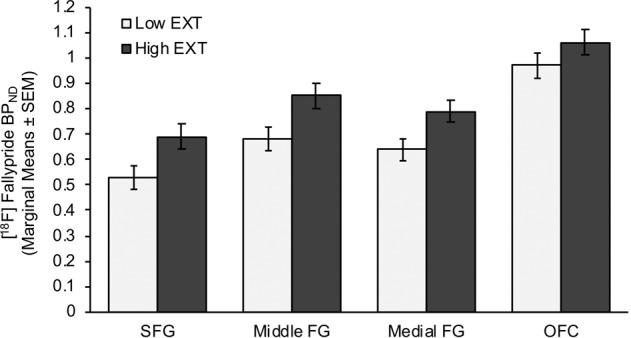
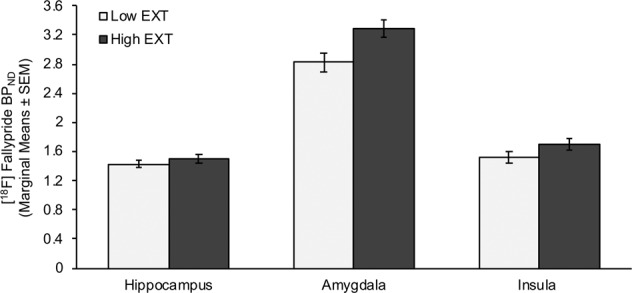
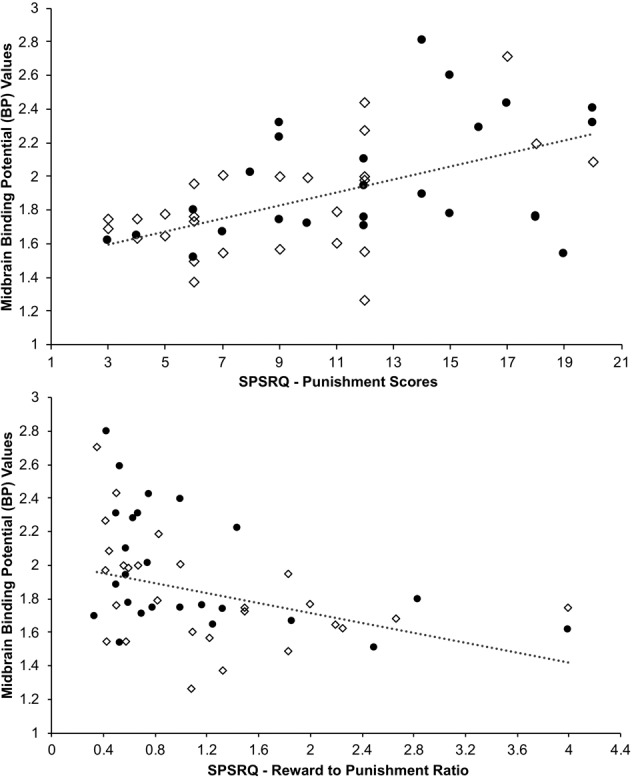
The neurobiological traits that confer risk for addictions remain poorly understood. However, dopaminergic function throughout the prefrontal cortex, limbic system, and upper brainstem has been implicated in behavioral features that influence addiction vulnerability, including poor impulse control, and altered sensitivity to rewards and punishments (i.e., externalizing features). To test these associations in humans, we measured type-2/3 dopamine receptor (DA 2/3 R) availability in youth at high vs. low risk for substance use disorders (SUDs). In this study, N = 58 youth (18.5 ± 0.6 years) were recruited from cohorts that have been followed since birth. Participants with either high (high EXT; N = 27; 16 F/11 M) or low pre-existing externalizing traits (low EXT; N = 31; 20 F/11 M) underwent a 90-min positron emission tomography [ 18 F]fallypride scan, and completed the Barratt Impulsiveness Scale (BIS-11), Substance Use Risk Profile scale (SURPS), and Sensitivity to Punishment (SP) and Sensitivity to Reward (SR) questionnaire. We found that high vs. low EXT trait participants reported elevated substance use, BIS-11, SR, and SURPS impulsivity scores, had a greater prevalence of psychiatric disorders, and exhibited higher [ 18 F]fallypride binding potential (BP ND ) values in prefrontal, limbic and paralimbic regions, even when controlling for substance use. Group differences were not evident in midbrain dopamine cell body regions, but, across all participants, low midbrain BP ND values were associated with low SP scores. Together, the results suggest that altered DA 2/3 R availability in terminal extra-striatal and dopamine cell body regions might constitute biological vulnerability traits, generating an EXT trajectory for addictions with and without co-occurring alterations in punishment sensitivity (i.e., an internalizing feature).
Overview
The claims and statistics of this paper haven’t been checked yet.
Free: it reads the open-access text and checks the first 5 claims that cite a source we can check. Create a free account to check every claim.
Integrity signals
Registry
Cites
Statistics
Figures
Verification
Claims the paper makes
The claims and statistics of this paper haven’t been checked yet.
Free: it reads the open-access text and checks the first 5 claims that cite a source we can check. Create a free account to check every claim.
Self-check
Percentages, sums and reported differences re-computed from the paper’s own numbers.
The self-check needs the paper’s full text.
Citations
Cites
SAUNDERS, J. B., AASLAND, O. G., BABOR, T. F., DE LA FUENTE, J. R., & GRANT, M. (1993) · Addiction · doi:10.1111/j.1360-0443.1993.tb02093.x · Cited by 13,597 · cited 5×
“High EXT participants also exhibited evidence of more problematic drinking, as indexed by higher AUDIT scores [F (1,56)= 4.64, p= 0.036; partial η2= 0.076] and more occasions of binge drinking [F(1,57)= 5.65, p= 0.021, η2= 0.09], a greater number of lifetime cannabis use occasions [F(1,56)= 7.48, p= 0.008; partial η2=…”
MethodInfluentialTalairach, J., Tournoux, P., & Rayport, M. (1988) · Thieme eBooks · Cited by 5,058
Simplified Reference Tissue Model for PET Receptor Studies
Lammertsma, A. A., & Hume, S. P. (1996) · NeuroImage · doi:10.1006/nimg.1996.0066 · Cited by 2,021
Fifty years of the Barratt Impulsiveness Scale: an update and review
Stanford, M. S., Mathias, C. W., Dougherty, D. M., Lake, S. L., Anderson, N. E., & Patton, J. H. (2009) · Personality and Individual Differences · doi:10.1016/j.paid.2009.04.008 · Cited by 1,609
Torrubia, R., Ávila, C., Moltó, J., & Caseras, X. (2001) · Personality and Individual Differences · doi:10.1016/s0191-8869(00)00183-5 · Cited by 1,311 · cited 5×
“Multivariate ANOVAs were carried out to assess group differences on the SURPS, BIS-11, and SPSRQ. [18F]Fallypride BPND values.”
MethodInfluentialStructure and Function of the Human Insula
Uddin, L. Q., Nomi, J. S., Hébert-Seropian, B., Ghaziri, J., & Boucher, O. (2017) · Journal of Clinical Neurophysiology · doi:10.1097/wnp.0000000000000377 · Cited by 1,262
Damage to the insula disrupts addiction to cigarette smoking
Naqvi, N. H., Rudrauf, D., Damasio, H., & Bechara, A. (2007) · Science · doi:10.1126/science.1135926 · Cited by 1,245
Adolescent cortical development: A critical period of vulnerability for addiction
Crews, F., He, J., & Hodge, C. (2007) · Pharmacology Biochemistry and Behavior · doi:10.1016/j.pbb.2006.12.001 · Cited by 1,091
Dissociable dopamine dynamics for learning and motivation
Mohebi, A., Pettibone, J. R., Hamid, A. A., Wong, J.-M. T., Vinson, L. T., Patriarchi, T., Tian, L., Kennedy, R. T., & Berke, J. D. (2019) · Nature · doi:10.1038/s41586-019-1235-y · Cited by 735
Shohamy, D., & Adcock, R. A. (2010) · Trends in Cognitive Sciences · doi:10.1016/j.tics.2010.08.002 · Cited by 707
Reliability of the Timeline Followback for cocaine, cannabis, and cigarette use
Robinson, S. M., Sobell, L. C., Sobell, M. B., & Leo, G. I. (2014) · Psychology of Addictive Behaviors · doi:10.1037/a0030992 · Cited by 699
Contrasting Roles of Basolateral Amygdala and Orbitofrontal Cortex in Impulsive Choice
Winstanley, C. A., Theobald, D. E. H., Cardinal, R. N., & Robbins, T. W. (2004) · The Journal of Neuroscience · doi:10.1523/jneurosci.5606-03.2004 · Cited by 675
A behavior rating scale for the preschool child.
Behar, L., & Stringfield, S. (1974) · Developmental Psychology · doi:10.1037/h0037058 · Cited by 631
Dopaminergic Network Differences in Human Impulsivity
Buckholtz, J. W., Treadway, M. T., Cowan, R. L., Woodward, N. D., Li, R., Ansari, M. S., Baldwin, R. M., Schwartzman, A. N., Shelby, E. S., Smith, C. E., et al. (2010) · Science · doi:10.1126/science.1185778 · Cited by 600
Woicik, P. A., Stewart, S. H., Pihl, R. O., & Conrod, P. J. (2009) · Addictive Behaviors · doi:10.1016/j.addbeh.2009.07.001 · Cited by 574
Self-citationLeyton, M. (2002) · Neuropsychopharmacology · doi:10.1016/s0893-133x(02)00366-4 · Cited by 476 · cited 1×
“Most of this work has focused on the striatum [4, 6, 7], but there is growing interest in the contributions of extra-striatal regions.”
BackgroundSelf-citationNew Dimensions in the Quantitative Classification of Mental Illness
Kotov, R. (2011) · Archives of General Psychiatry · doi:10.1001/archgenpsychiatry.2011.107 · Cited by 369
Animal: Validation and Applications of Nonlinear Registration-Based Segmentation
Collins, D. L., & Evans, A. C. (1997) · International Journal of Pattern Recognition and Artificial Intelligence · doi:10.1142/s0218001497000597 · Cited by 351 · cited 1×
“Normalized images were then classified into white matter, gray matter and cerebral spinal fluid, and segmented using a probabilistic atlas based approach (Automatic Nonlinear Image Matching and Anatomical Labeling [ANIMAL]) [39].”
MethodAmygdala-prefrontal cortical circuitry regulates effort based decision making
Floresco, S. B., & Ghods-Sharifi, S. (2006) · Cerebral Cortex · doi:10.1093/cercor/bhj143 · Cited by 316
Personality and psychopathology: working toward the bigger picture.
Krueger, R. F., & Tackett, J. L. (2003) · Journal of Personality Disorders · doi:10.1521/pedi.17.2.109.23986 · Cited by 282
A Prosocial Scale for the Preschool Behaviour Questionnaire: Concurrent and Predictive Correlates
Tremblay, R. E., Vitaro, F., Gagnon, C., Piché, C., & Royer, N. (1992) · International Journal of Behavioral Development · doi:10.1177/016502549201500204 · Cited by 242
Self-citationResting state networks distinguish human ventral tegmental area from substantia nigra
Murty, V. P., Shermohammed, M., Smith, D. V., Carter, R. M., Huettel, S. A., & Adcock, R. A. (2014) · NeuroImage · doi:10.1016/j.neuroimage.2014.06.047 · Cited by 219
Krank, M., Stewart, S. H., O'Connor, R., Woicik, P. B., Wall, A.-M., & Conrod, P. J. (2011) · Addictive Behaviors · doi:10.1016/j.addbeh.2010.08.010 · Cited by 201
Dopamine ups and downs in vulnerability to addictions: a neurodevelopmental model
Leyton, M., & Vezina, P. (2014) · Trends in Pharmacological Sciences · doi:10.1016/j.tips.2014.04.002 · Cited by 127
Self-citationKheramin, S., Body, S., Ho, M.-Y., Vel�zquez-Martinez, D. N., Bradshaw, C. M., Szabadi, E., Deakin, J. F. W., & Anderson, I. M. (2004) · Psychopharmacology · doi:10.1007/s00213-004-1813-y · Cited by 117
Dopamine Release in Chronic Cannabis Users: A [11C]Raclopride Positron Emission Tomography Study
Urban, N. B. L., Slifstein, M., Thompson, J. L., Xu, X., Girgis, R. R., Raheja, S., Haney, M., & Abi-Dargham, A. (2012) · Biological Psychiatry · doi:10.1016/j.biopsych.2011.12.018 · Cited by 114
The expanding effects of cocaine: studies in a nonhuman primate model of cocaine self-administration
Porrino, L. J., Daunais, J. B., Smith, H. R., & Nader, M. A. (2003) · Neuroscience & Biobehavioral Reviews · doi:10.1016/j.neubiorev.2003.11.013 · Cited by 113
Vosberg, D. E., Leyton, M., & Flores, C. (2020) · Molecular Psychiatry · doi:10.1038/s41380-019-0561-7 · Cited by 109
Self-citationCropley, V. L., Innis, R. B., Nathan, P. J., Brown, A. K., Sangare, J. L., Lerner, A., Ryu, Y. H., Sprague, K. E., Pike, V. W., & Fujita, M. (2008) · Synapse · doi:10.1002/syn.20506 · Cited by 104
Wong, D. F., Young, D., Wilson, P. D., Meltzer, C. C., & Gjedde, A. (1997) · Journal of Cerebral Blood Flow & Metabolism · doi:10.1097/00004647-199703000-00009 · Cited by 99
Beeler, J. A., Faust, R. P., Turkson, S., Ye, H., & Zhuang, X. (2016) · Biological Psychiatry · doi:10.1016/j.biopsych.2015.07.009 · Cited by 95
Fotros, A., Casey, K. F., Larcher, K., Verhaeghe, J. A., Cox, S. M., Gravel, P., Reader, A. J., Dagher, A., Benkelfat, C., & Leyton, M. (2013) · Neuropsychopharmacology · doi:10.1038/npp.2013.77 · Cited by 89 · cited 2×
“Of potentially greater importance, the [(18)F]fallypride BPND values in our high-risk participants and age-matched controls [61] were higher than what we have found in people with a current moderate to severe SUD [17, 51], particularly in limbic and paralimbic regions (Supplementary Table 1).”
BackgroundResultSelf-citationDopaminergic Mechanisms Underlying Normal Variation in Trait Anxiety
Berry, A. S., White, R. L., Furman, D. J., Naskolnakorn, J. R., Shah, V. D., D’Esposito, M., & Jagust, W. J. (2019) · Journal of Neuroscience · doi:10.1523/jneurosci.2382-18.2019 · Cited by 87
Differential expression of autoreceptors in the ascending dopamine systems of the human brain.
Meador-Woodruff, J. H., Damask, S. P., & Watson, S. J. (1994) · Proceedings of the National Academy of Sciences · doi:10.1073/pnas.91.17.8297 · Cited by 84
Motion correction of multi-frame PET data in neuroreceptor mapping: Simulation based validation
Costes, N., Dagher, A., Larcher, K., Evans, A. C., Collins, D. L., & Reilhac, A. (2009) · NeuroImage · doi:10.1016/j.neuroimage.2009.05.052 · Cited by 82
Self-citationThe Quebec Newborn Twin Study Into Adolescence: 15 Years Later
Boivin, M., Brendgen, M., Dionne, G., Dubois, L., Pérusse, D., Robaey, P., Tremblay, R. E., & Vitaro, F. (2013) · Twin Research and Human Genetics · doi:10.1017/thg.2012.129 · Cited by 78 · cited 1×
“METHODS AND MATERIALS Participants We recruited transitional age youth (18–20 year) from: (i) the “Quebec Longitudinal Study of Child Development” (QLSCD; 31 participants from the 572 born in 1996 [19], and 22 from 2120 born in 1997–1998 [20]) and (ii) the “Quebec Newborn Twin Study” (QNTS; 5 participants from 662 twi…”
MethodSelf-citationChristian, B. T., Narayanan, T. K., Shi, B., & Mukherjee, J. (2000) · Synapse · doi:10.1002/1098-2396(200010)38:1<71::aid-syn8>3.0.co;2-2 · Cited by 76
Dawson, D. A., Goldstein, R. B., Moss, H. B., Li, T.-K., & Grant, B. F. (2010) · Drug and Alcohol Dependence · doi:10.1016/j.drugalcdep.2010.04.019 · Cited by 74
Ciano, P. D., & Everitt, B. J. (2005) · European Journal of Pharmacology · doi:10.1016/j.ejphar.2005.09.024 · Cited by 73 · cited 1×
“However, the contribution of these DA2/3Rs might be complex: in laboratory animals, their stimulation decreases impulsive behaviors and incentive motivational effects [52, 53], while also increasing cocaine-seeking behaviors [54].”
BackgroundSeaman, K. L., Smith, C. T., Juarez, E. J., Dang, L. C., Castrellon, J. J., Burgess, L. L., San Juan, M. D., Kundzicz, P. M., Cowan, R. L., Zald, D. H., et al. (2019) · Human Brain Mapping · doi:10.1002/hbm.24585 · Cited by 70 · cited 3×
“The [(18)F]fallypride BPND values in our low-risk participants (see unadjusted BPND values in Supplementary Table 1) were similar to what have been previously found in a large sample of healthy volunteers [61].”
ResultRominger, A., Cumming, P. D., Xiong, G., Koller, G., Böning, G., Wulff, M., Zwergal, A., Förster, S., Reilhac, A., Munk, O. L., et al. (2011) · Addiction Biology · doi:10.1111/j.1369-1600.2011.00355.x · Cited by 69
Laere, K. V., Varrone, A., Booij, J., Borght, T. V., Nobili, F. M., Ozlem Kapucu, L., Walker, Z., Någren, K., Tatsch, K., & Darcourt, J. (2009) · European Journal of Nuclear Medicine and Molecular Imaging · doi:10.1007/s00259-009-1265-z · Cited by 66
Côté, S. M., Orri, M., Brendgen, M., Vitaro, F., Boivin, M., Japel, C., Séguin, J. R., Geoffroy, M., Rouquette, A., Falissard, B., et al. (2017) · International Journal of Methods in Psychiatric Research · doi:10.1002/mpr.1566 · Cited by 66
Self-citationKim, B.-K., Yoon, S., Nakajima, R., Lee, H. J., Lim, H. J., Lee, Y.-K., Choi, J.-S., Yoon, B.-J., Augustine, G. J., & Baik, J. (2018) · Proceedings of the National Academy of Sciences · doi:10.1073/pnas.1811664115 · Cited by 66 · cited 1×
“However, the contribution of these DA2/3Rs might be complex: in laboratory animals, their stimulation decreases impulsive behaviors and incentive motivational effects [52, 53], while also increasing cocaine-seeking behaviors [54].”
BackgroundPardey, M. C., Kumar, N. N., Goodchild, A. K., & Cornish, J. L. (2013) · Journal of Psychopharmacology · doi:10.1177/0269881112465497 · Cited by 61
Cocaine cue-induced dopamine release in the human prefrontal cortex
Milella, M. S., Fotros, A., Gravel, P., Casey, K. F., Larcher, K., Verhaeghe, J. A. J., Cox, S. M. L., Reader, A. J., Dagher, A., Benkelfat, C., et al. (2016) · Journal of Psychiatry and Neuroscience · doi:10.1503/jpn.150207 · Cited by 56
Self-citationA Swedish Population-Based Multivariate Twin Study of Externalizing Disorders
Kendler, K. S., Lönn, S. L., MAES, H. H. M., Lichtenstein, P., Sundquist, J., & Sundquist, K. (2015) · Behavior Genetics · doi:10.1007/s10519-015-9741-7 · Cited by 49
Gallezot, J., Kloczynski, T., Weinzimmer, D. P., Labaree, D. C., Zheng, M., Lim, K., Rabiner, E. A., Ridler, K., Pittman, B. P., Huang, Y. H., et al. (2013) · Neuropsychopharmacology · doi:10.1038/npp.2013.286 · Cited by 49 · cited 1×
“These covariates were selected to control for drug use, which may affect [(18)F]fallypride BPND values, and other DA activity indices [44, 45].”
MethodJung, Y., Montel, R. A., Shen, P., Mash, D. C., & Goldman, D. A. (2019) · JAMA Network Open · doi:10.1001/jamanetworkopen.2019.14940 · Cited by 48
Thiel, K. J., Wenzel, J. M., Pentkowski, N. S., Hobbs, R. J., Alleweireldt, A. T., & Neisewander, J. L. (2010) · Behavioural Brain Research · doi:10.1016/j.bbr.2010.06.021 · Cited by 40
Emotion dysregulation and amygdala dopamine D2-type receptor availability in methamphetamine users
Okita, K., Ghahremani, D. G., Payer, D. E., Robertson, C. L., Dean, A. C., Mandelkern, M. A., & London, E. D. (2016) · Drug and Alcohol Dependence · doi:10.1016/j.drugalcdep.2016.01.029 · Cited by 37
Johnson, P. I., & Napier, T. C. (2000) · Synapse · doi:10.1002/1098-2396(200010)38:1<61::aid-syn7>3.0.co;2-6 · Cited by 36
Psychometric Properties of the BIS/BAS Scales and the SPSRQ in Flemish Adolescents
Vandeweghe, L., Matton, A., Beyers, W., Vervaet, M., Braet, C., & Goossens, L. (2016) · Psychologica Belgica · doi:10.5334/pb.298 · Cited by 34
Vijayraghavan, S., Major, A. J., & Everling, S. (2017) · Frontiers in Neural Circuits · doi:10.3389/fncir.2017.00091 · Cited by 33
Olivetti, P. R., Balsam, P. D., Simpson, E. H., & Kellendonk, C. (2019) · Basic & Clinical Pharmacology & Toxicology · doi:10.1111/bcpt.13271 · Cited by 33 · cited 1×
“In either scenario, the widespread increases in DA2/3Rs could lead to elevated DA2/3R-mediated signaling, disrupting better calibrated reward processing [59, 60].”
Background5.3 Dopamine’s Influence on Prefrontal Cortical Cognition: Actions and Circuits in Behaving Primates
Arnsten, A. F. T., Vijayraghavan, S., Wang, M., Gamo, N. J., & Paspalas, C. D. (2009) · Dopamine Handbook · doi:10.1093/acprof:oso/9780195373035.003.0016 · Cited by 23
Human dopamine receptor D2/D3 availability predicts amygdala reactivity to unpleasant stimuli
Kobiella, A., Vollstädt‐Klein, S., Fauth‐Bühler, M., Graf, C., Buchholz, H., Bernow, N., Yakushev, I. Y., Landvogt, C., Schreckenberger, M., Gründer, G., et al. (2009) · Human Brain Mapping · doi:10.1002/hbm.20900 · Cited by 22
Alvanzo, A. A. H., Wand, G. S., Kuwabara, H., Wong, D. F., Xu, X., & McCaul, M. E. (2015) · Addiction Biology · doi:10.1111/adb.12300 · Cited by 22
Altered dopamine transmission as a familial risk trait for addictions
Leyton, M. (2016) · Current Opinion in Behavioral Sciences · doi:10.1016/j.cobeha.2016.11.011 · Cited by 16
Self-citationCox, S. M. L., Tippler, M., Jaworska, N., Smart, K. A., Ryan, N. C., Durand, F., Allard, D., Benkelfat, C., Parent, S., Dagher, A., et al. (2020) · Neuropsychopharmacology · doi:10.1038/s41386-020-0708-x · Cited by 16
Self-citationDopamine D2/D3 receptor availability and venturesomeness
Bernow, N., Yakushev, I. Y., Landvogt, C., Buchholz, H., Smolka, M. N., Bartenstein, P., Lieb, K., Gründer, G., Vernaleken, I., Schreckenberger, M., et al. (2011) · Psychiatry Research Neuroimaging · doi:10.1016/j.pscychresns.2011.01.011 · Cited by 10
Seaman, K. L., Smith, C. T., Juarez, E. J., et al. (2018) · bioRxiv (Cold Spring Harbor Laboratory) · doi:10.1101/358200 · Cited by 8
Fujita, M., Cropley, V., Nathan, P. J., Brown, A. K., Sangare, J., Lerner, A., Ryu, Y. H., Sprague, K., Berman, K. F., Pike, V. W., et al. (2007) · Journal of Cerebral Blood Flow & Metabolism · Cited by 4
Volkow, N. D., Wang, G.-J., Begleiter, H., Porjesz, B., Fowler, J. S., Telang, F., Wong, C., Ma, Y., Logan, J., Goldstein, R., et al. (2006) · Archives of General Psychiatry · doi:10.1001/archpsyc.63.9.999 · Cited by 2
Factor structure of the Barratt impulsiveness scale
Patton, J. H., Stanford, M. S., & Barratt, E. S. (1995) · Journal of Clinical Psychology · doi:10.1002/1097-4679(199511)51:6<768::aid-jclp2270510607>3.0.co;2-1
Research works printed but not linked: 1
- First MB Williams JBW Karg RS Spitzer RL Structured clinical interview for DSM-5 research version 2015 Arlington, VA, USA American Psychiatric Association
Cited by
Hansen, J. Y., Shafiei, G., Markello, R. D., Smart, K., Cox, S. M. L., Nørgaard, M., Beliveau, V., Wu, Y., Gallezot, J.-D., Aumont, É., et al. (2022) · Nature Neuroscience · doi:10.1038/s41593-022-01186-3 · Cited by 797
“Here we make some specific notes: (1) 5-HTT and GABAA involve comparisons between the same tracers (DASB and flumazenil, respectively) but one map is autoradiography-informed (see [12] and [79]) and the other is not [29, 30, 106]; (2) raclopride is a popular D2 tracer but has unreliable binding in the cortex, and is t…”
MethodSelf-citationImpulsivity traits and neurocognitive mechanisms conferring vulnerability to substance use disorders
Verdejo‐García, A., & Albein‐Urios, N. (2020) · Neuropharmacology · doi:10.1016/j.neuropharm.2020.108402 · Cited by 125
Hansen, J. Y., Shafiei, G., Markello, R. D., Smart, K. A., Cox, S. M. L., Nørgaard, M., Beliveau, V., Wu, Y., Gallezot, J., Aumont, É., et al. (2021) · bioRxiv (Cold Spring Harbor Laboratory) · doi:10.1101/2021.10.28.466336 · Cited by 83
Self-citationHansen, J. Y., Shafiei, G., Markello, R. D., Smart, K. A., Cox, S. M. L., Wu, Y., Gallezot, J., Aumont, É., Servaes, S., Scala, S. G., et al. (2022) · Research Square · doi:10.21203/rs.3.rs-1040925/v1 · Cited by 30
Self-citationLi, Z., Li, J., Wang, N., Lv, Y., Zou, Q., & Wang, J. (2023) · NeuroImage · doi:10.1016/j.neuroimage.2023.120434 · Cited by 33
“…2012; Beliveau et al., 2017), 5HT4 (Beliveau et al., 2017), CB1 (Laurikainen et al., 2019), D1 (Kaller et al., 2017), D2 (Alakurtti et al., 2015; Jaworska et al., 2020), DAT (Dukart et al., 2018), 18 F-DOPA (G ´ omez et al., 2018), GABAa (Dukart et al., 2018; N ø rgaard et al., 2021), mGluR5…”
Metadata
- Authors
- Jaworska, N., Cox, S. M. L., Tippler, M., Castellanos-Ryan, N., Benkelfat, C., Parent, S., Dagher, A., Vitaro, F., Boivin, M., Pihl, R. O., Côté, S. M., Tremblay, R. E., Séguin, J. R., & Leyton, M.
- Affiliations
- University of Ottawa (CA)
- McGill University (CA)
- Université de Montréal (CA)
- Centre Hospitalier Universitaire Sainte-Justine (CA)
- Université Laval (CA)
- Corresponding author
- Leyton, Marco
- ORCID
- Venue
- Neuropsychopharmacology
- Published
- 2020-04-07
- Volume
- 45
- Issue
- 9
- Pages
- 1498-1505
- ISSN
- 0893-133X (ISSN-L)
- 1740-634X
- PMC
- PMC7360619
- OpenAlex
- W3015092112
- Cited by
- 38
- References
- 63
- Citations by year
- 2026: 11 · 2025: 6 · 2024: 9 · 2023: 4 · 2022: 2 · 2021: 3 · 2020: 3
- FWCI
- 1.38
- Type
- journal article
- Language
- en
- Open access
- hybrid
- doi.org
- Licence
- cc-by
- creativecommons.org/licenses/by/4.0 (tdm)
- creativecommons.org/licenses/by/4.0 (vor)
- Locations
- Neuropsychopharmacology (publishedVersion, cc-by)
- PubMed Central (publishedVersion, cc-by)
- PubMed (publishedVersion)
- Funders
- Fonds de Recherche du Québec - Santé (35282, 981055, 991027)
- Gouvernement du Canada | Canadian Institutes of Health Research (MOP-133537, MOP-97910, MOP-133537, MOP-44072, MOP-97910)
- Fonds de Recherche du Québec-Société et Culture (2002-RS-79238, 2009-RG-124779)
- Gouvernement du Canada | Social Sciences and Humanities Research Council of Canada (410-99-1048, 839-2000-1008)
- Topics
- Life Sciences › Neuroscience › Cellular and Molecular Neuroscience › Neurotransmitter Receptor Influence on Behavior
- Health Sciences › Medicine › Epidemiology › Substance Abuse Treatment and Outcomes
- Life Sciences › Neuroscience › Cognitive Neuroscience › Neural and Behavioral Psychology Studies
- Keywords
- externalizing traits, addiction vulnerability, impulsivity, reward sensitivity, punishment sensitivity, [18F]fallypride, prefrontal cortex, limbic system, biological vulnerability, substance use risk
- MeSH terms
- Adolescent, Corpus Striatum, Humans, Impulsive Behavior, Receptors, Dopamine D2, Positron-Emission Tomography, Receptors, Dopamine D3
About these checks
Registry, retraction, Cites and statistics results are computed, not judged, with one exception: a printed reference that no index lists is read once by a model before it counts as a citation error. Claims are extracted by a model and kept only when their quote appears verbatim in the text; each cited source is then checked, with a model’s help, for whether it says what the claim relies on. Those verdicts can be wrong — read the claim’s quote and the cited source before relying on one.
Statistics and arithmetic are recomputed, not judged.
Confidence bands are shown only for fields calibrated on our annotated test set. None is calibrated yet, so no band is shown.
What counts as a claim ›How we measure confidence ›How we check this ›
Are you an author, or do you see a problem with this page? Request a review
Data sources
Bibliographic data: Semantic Scholar, OpenAlex, Crossref.
Contains information from the Semantic Scholar Academic Graph Datasets, made available under the ODC Attribution License (ODC-BY 1.0).
Semantic Scholar’s data is described in: Kinney, R., et al. (2023). The Semantic Scholar Open Data Platform. arXiv:2301.10140.
