

The role of prefrontal cortex in cognitive control and executive function
Open accessThe DOI matches its Crossref record; 262 of the 267 references it cites were found in a registry or an index; 145 of the 304 sources its claims cite were checked for support.
Abstract
Concepts of cognitive control (CC) and executive function (EF) are defined in terms of their relationships with goal-directed behavior versus habits and controlled versus automatic processing, and related to the functions of the prefrontal cortex (PFC) and related regions and networks. A psychometric approach shows unity and diversity in CC constructs, with 3 components in the most commonly studied constructs: general or common CC and components specific to mental set shifting and working memory updating. These constructs are considered against the cellular and systems neurobiology of PFC and what is known of its functional neuroanatomical or network organization based on lesioning, neurochemical, and neuroimaging approaches across species. CC is also considered in the context of motivation, as "cool" and "hot" forms. Its Common CC component is shown to be distinct from general intelligence (g) and closely related to response inhibition. Impairments in CC are considered as possible causes of psychiatric symptoms and consequences of disorders. The relationships of CC with the general factor of psychopathology (p) and dimensional constructs such as impulsivity in large scale developmental and adult populations are considered, as well as implications for genetic studies and RDoC approaches to psychiatric classification.
Overview
CoChat Summary
## TL;DR
This review argues that cognitive control (CC) and executive function (EF) are both unified and fractionated: common processes exist, but distinct components such as working memory updating, mental set shifting, response inhibition, and hot versus cool control also show separability. It also links these CC/EF processes to prefrontal cortex (PFC) networks, neurochemistry, and transdiagnostic psychopathology, emphasizing that CC deficits are broadly relevant to mental health but are not identical to intelligence or impulsivity.
## Key findings
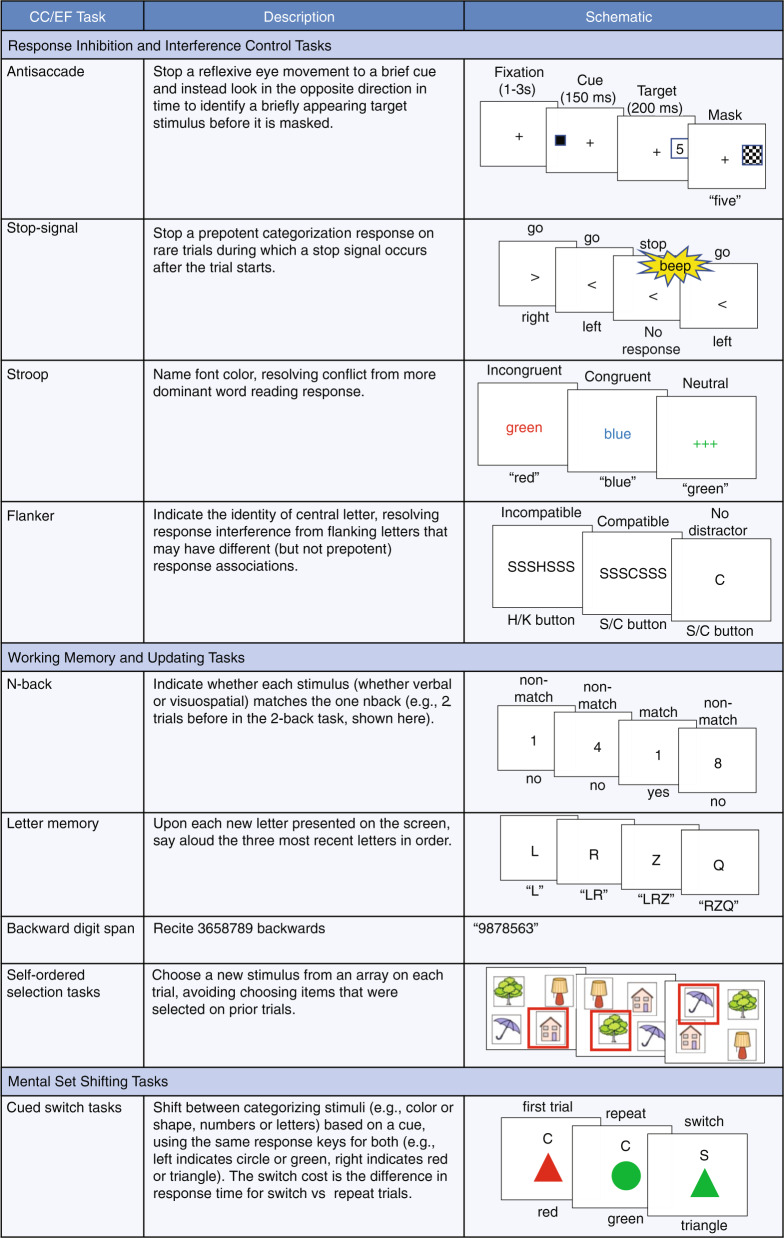
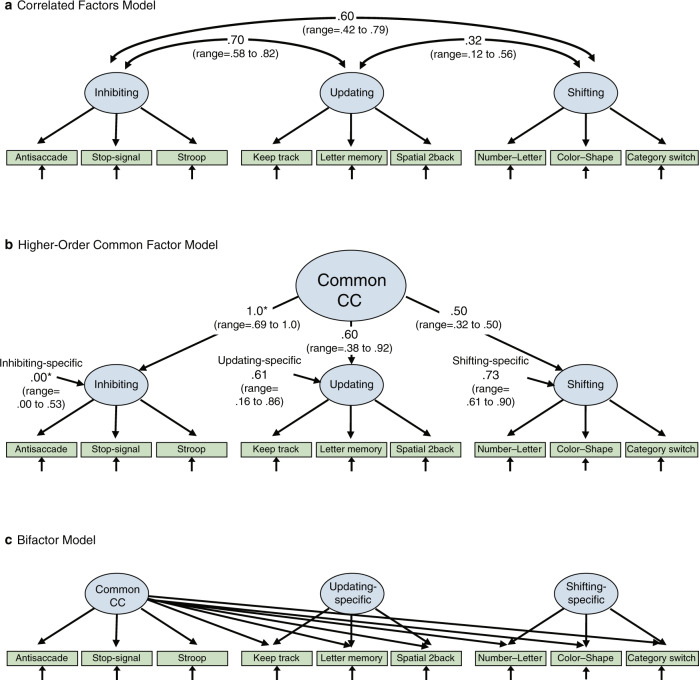
- Psychometric studies of CC/EF repeatedly find unity and diversity: in Miyake et al.’s model, correlations among the latent factors for inhibition, updating, and shifting were r = 0.42–0.63, while individual task correlations were only r = –0.05 to 0.34.
- The paper argues that the Common CC factor is closely related to response inhibition and is distinct from general intelligence (g), although intelligence still correlates substantially with common CC; reported correlations with common CC range from r = 0.53–0.91, but are only r = 0.53–0.68 in adult latent-variable samples.
- Neurobiological evidence supports both shared and distinct PFC contributions: lesion and neuroimaging studies dissociate dlPFC (working memory and some switching) from OFC/vlPFC (reversal learning and extra-dimensional set-shifting), and identify networks including the fronto-parietal network (FPN), cingulo-opercular network (CON), and default mode network (DMN).
- Across disorders, CC deficits are transdiagnostic and related to the p factor; the paper reports that common CC is associated with p at r = –0.16 to –0.56, and cites meta-analyses linking CC deficits to MDD, PTSD, OCD, bipolar disorder, schizophrenia, ADHD, conduct disorder/antisocial personality disorder, and substance use disorders.
## Methods
- This is a narrative review that synthesizes evidence from psychometric latent-variable studies, lesion studies, fMRI/meta-analyses, resting-state/connectivity studies, neurochemical/pharmacological work, and genetic/twin/family studies.
- The review draws on samples ranging from college students in psychometric work to patients with focal lesions, healthy children and adults, and large adult datasets; one cited imaging study included N = 251 healthy adults, and one meta-analysis included 193 fMRI studies of executive function.
- Main analysis is conceptual synthesis: it compares competing models of CC/EF organization, PFC specialization, and their links to psychopathology, rather than reporting a new empirical dataset.
## Limitations
- The paper explicitly notes that the neurobiological underpinnings of the p factor are not well understood and that its psychological interpretation varies.
- It repeatedly indicates that causal direction remains unclear for CC–psychopathology and CC–substance use associations; some evidence suggests shared genetic/environmental influences, but bidirectional effects are also plausible.
- Evident from the text: this is a review, so it does not present new original data and cannot resolve inconsistencies across studies or establish causal mechanisms on its own.
Model-written summary. Check it against the paper before relying on it.
Integrity signals
Registry
Cites
Statistics
Figures
Verification
Claims the paper makes
75 Valid · 4 Not valid · 74 Not checked · 49 Own results and interpretations
At least one cited source doesn’t support this claim or points to a different paper, and none confirmed it — see the verdicts below.
In the paper
“By contrast, the Predicted Response Outcome model [117] uses as its basis unsigned prediction errors of any type, whether appetitive or aversive outcomes, and whether negative (unexpected omission of expected outcome) or positive (unexpected occurrence of outcome) “surprise,” over multiple time-scales to directly affect actions (and not stimulus representations).”
§ The role of prefrontal cortex in cognitive control and executive function > Fractionation and integration of CC within PFC > Fractionation of CC
What the sources say
- Disputedcites [117] Alexander WH Brown JW Medial prefrontal cortex as an action-outcome predictor Nat Neurosci 2011 14 1338 44 21926982 PMC3183374 sourceExperimental — accuracy not yet measured
Split into 2 atoms — 0 confirmed, 1 partially supported, 1 disputed, 0 misattributed, 0 unverifiable. Expand the claim to see per-atom verdicts.
Checked by a reasoning model — may be wrong.
plainstates a cause- Asserted: passes — The authors put it forward as true.
- Checkable: passes — It can be checked against evidence.
- Load-bearing: passes — The paper’s conclusions depend on it.
- Based: passes — The paper gives a reason why it holds.
- Disputed
The cited sources support only part of this claim — read each source’s verdict below.
In the paper
“The cellular physiology of these regions is characterized by rapid firing and properties of neural plasticity that may enable such functions as goal maintenance in working memory and the flexible functioning of an MD network [24–27].”
§ The role of prefrontal cortex in cognitive control and executive function > Psychological organization of CC
What the sources say
- Not checked — no full text of the sourcecites [24] Fuster JM Unit activity in prefrontal cortex during delayed-response performance: neuronal correlates of transient memory J Neurophysiol 1973 36 61 78 4196203 source
- Not checked — no full text of the sourcecites [25] Funahashi S Bruce CJ Goldman-Rakic PS Mnemonic coding of visual space in the monkey’s dorsolateral prefrontal cortex J Neurophysiol 1989 61 331 49 2918358 source
- Not checked — no full text of the sourcecites [26] Shinomoto S Miyazaki Y Tamura H Fujita I Regional and laminar differences in in vivo firing patterns of primate cortical neurons J Neurophysiol 2005 94 567 75 15758054 source
- Partly supportedcites [27] Rodriguez G Sarazin M Clemente A Holden S Paz JT Delord B Conditional bistability, a generic cellular mnemonic mechanism for robust and flexible working memory computations J Neurosci 2018 38 5209 19 29712783 PMC6705937 sourceExperimental — accuracy not yet measured
The Discussion (page unavailable) proposes that intrinsic plasticity and spike-mediated mechanisms contribute to flexible, persistent activity during prefrontal working memory. It does not establish rapid firing as a defining property of granular prefrontal regions or discuss a multiple-demand network, so those parts of the attributed claim are unsupported. (LLM, conf=0.84)
hedgedstates a possible cause- Asserted: passes — The authors put it forward as true.
- Checkable: passes — It can be checked against evidence.
- Load-bearing: unclear — It is unclear whether the paper’s conclusions depend on it.
- Based: passes — The paper gives a reason why it holds.
The cited sources support only part of this claim — read each source’s verdict below.
In the paper
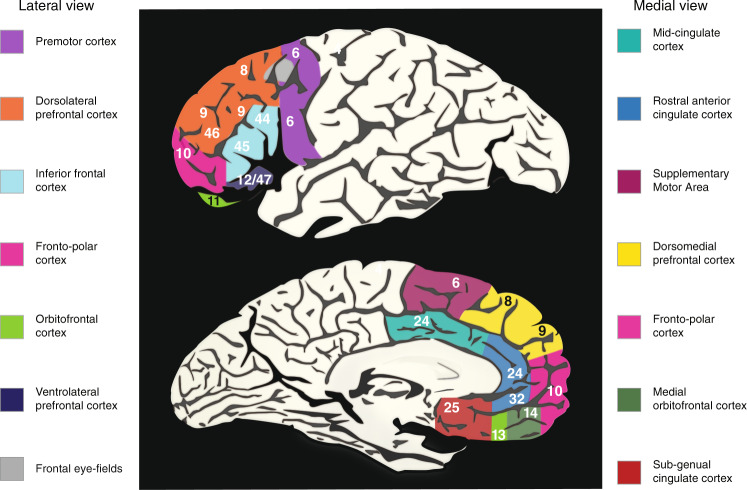
“Moreover, PFC functions probably depend on specializations of dendritic branching and spine density of pyramidal cells, especially in the cycloarchitectonically distinct regions of the granular PFC (Fig. 2) [21–23].”
§ The role of prefrontal cortex in cognitive control and executive function > Psychological organization of CC
What the sources say
- Partly supportedcites [21] Elston G Benavides-Piccione R Elston A Manger P Defelipe J Pyramidal cells in prefrontal cortex of primates: marked differences in neuronal structure among species Front Neuroanat 2011 5 2 21347276 PMC3039119 sourceExperimental — accuracy not yet measured
The Abstract links differences in pyramidal-cell branching and spine development across cortical areas to the functions those cells perform. The Discussion includes one dorsolateral granular prefrontal area (12vl) in a comparison, but the study examines inferotemporal cortex and does not establish that prefrontal functions depend especially on specializations across distinct granular prefrontal regions. Page numbers were not available in our copy. (LLM, conf=0.82)
- Not checked — no full text of the sourcecites [22] Semendeferi K Teffer K Buxhoeveden DP Park MS Bludau S Amunts K Spatial organization of neurons in the frontal pole sets humans apart from great apes Cereb Cortex 2011 21 1485 97 21098620 source
- Not checked — no full text of the sourcecites [23] Allman JM Watson KK Tetreault NA Hakeem AY Intuition and autism: a possible role for Von Economo neurons Trends Cogn Sci 2005 9 367 73 16002323 source
hedgedstates a possible cause- Asserted: passes — The authors put it forward as true.
- Checkable: passes — It can be checked against evidence.
- Load-bearing: unclear — It is unclear whether the paper’s conclusions depend on it.
- Based: passes — The paper gives a reason why it holds.
- Partly supported
The cited sources support only part of this claim — read each source’s verdict below.
In the paper
“There are also distinct functions within nodes of the FPN, where some of the “manipulation” sub-processes of working memory are mediated by parietal cortex, for example, including representations and operations relevant for mental arithmetic [76] and mental rotation [77].”
§ The role of prefrontal cortex in cognitive control and executive function > Fractionation and integration of CC within PFC > Fractionation of CC
What the sources say
- Partly supportedcites [76] Chochon F Cohen L Moortele PF van de, Dehaene S Differential contributions of the left and right inferior parietal lobules to number processing J Cogn Neurosci 1999 11 617 30 10601743 sourceExperimental — accuracy not yet measured
The Conclusion (p. 11) reports that both parietal regions contribute to mental arithmetic and describes parietal involvement in manipulating numerical quantity, supporting the part attributed to citation [76]. But the discussion of working memory (A Parieto-Fronto-Cingular Network for Number Processing, p. 7) links it especially to prefrontal and anterior cingulate activation; it does not establish that parietal cortex mediates a working-memory manipulation sub-process. Mental rotation is attached to a different citation, [77], and is not assessed here. (LLM, conf=0.83)
- Partly supportedcites [77] Georgopoulos AP Pellizzer G The mental and the neural: psychological and neural studies of mental rotation and memory scanning Neuropsychologia. 1995 33 1531 47 8584184 sourceExperimental — accuracy not yet measured
The paper reviews neural evidence for mental rotation, but it does not establish the parietal-cortex role attributed to it here. In “Neural bases for visuomotor and visual mental rotations” (p. 9), it reports motor-cortex activity during visuomotor mental rotation and says no other brain areas were explored in that task. The mental-arithmetic example has a separate citation and is not assessed here. (LLM, conf=0.86)
plainstates a cause- Asserted: passes — The authors put it forward as true.
- Checkable: passes — It can be checked against evidence.
- Load-bearing: unclear — It is unclear whether the paper’s conclusions depend on it.
- Based: passes — The paper gives a reason why it holds.
- Partly supported
The cited sources support only part of this claim — read each source’s verdict below.
In the paper
“Research with children suggests separability of hot and cool CC in terms of their relations with each other and with other measures [50, 52–57].”
§ The role of prefrontal cortex in cognitive control and executive function > Psychological organization of CC
What the sources say
- Not checked — no full text of the sourcecites [50] Zelazo PD Carlson SM Hot and cool executive function in childhood and adolescence: development and plasticity Child Dev Perspect 2012 6 354 60 source
- Partly supportedcites [52] Poon K Hot and cool executive functions in adolescence: development and contributions to important developmental outcomes Front Psychol 2018 8 2311 29367850 PMC5767838 sourceExperimental — accuracy not yet measured
The Relations among Cool and Hot Executive Function Tests section reports no significant correlation between hot and cool measures, and the Academic Performance and Psychological Adjustment sections report different associations with those outcomes. The study supports separability, but its participants were adolescents aged 12–17 (Methodology: Participants), not a sample specifically of younger children. No page numbers are available in our copy. (LLM, conf=0.83)
- Not checked — no full text of the sourcecites [53] Botdorf M Rosenbaum GM Patrianakos J Steinberg L Chein JM Adolescent risk-taking is predicted by individual differences in cognitive control over emotional, but not non-emotional, response conflict Cogn Emot 2017 31 972 9 27050317 source
- Supportedcites [54] Kim S Nordling JK Yoon JE Boldt LJ Kochanska G Effortful control in “hot” and “cool” tasks differentially predicts children’s behavior problems and academic performance J Abnorm Child Psychol 2013 41 43 56 22798038 PMC3737587 source
The Results (Confirmatory Factor Analysis Comparing Measurement Models; page not available) report that a model separating hot and cool functions fit the children's data well, while a single-factor model fit significantly worse. The Results (Structural Equation Models; page not available) also report different relations with other measures: hot effortful control predicted behavior problems, whereas a cool-task measure predicted academic performance. A second-order unidimensional model also fit, consistent with the citing sentence's cautious 'suggests' wording. (LLM, conf=0.88)
- Not checked — no full text of the sourcecites [55] Hongwanishkul D Happaney KR Lee WSC Zelazo PD Assessment of hot and cool executive function in young children: age-related changes and individual differences Dev Neuropsychol 2005 28 617 44 16144430 source
- Partly supportedcites [56] Harden KP Kretsch N Mann FD Herzhoff K Tackett JL Steinberg L Beyond dual systems: a genetically-informed, latent factor model of behavioral and self-report measures related to adolescent risk-taking Dev Cogn Neurosci 2017 25 221 34 28082127 PMC6886471 sourceExperimental — accuracy not yet measured
The Discussion section “Cognitive (Dys)control and the ability-personality distinction” reports that cognitive dyscontrol and premeditation were separable and had different relationships with IQ. That supports the general point about distinct control-related measures, but the paper does not identify these as hot and cool cognitive control or establish that distinction in children; its findings concern adolescents. (LLM, conf=0.82)
- Supportedcites [57] Willoughby M Kupersmidt J Voegler-Lee M Bryant D Contributions of hot and cool self-regulation to preschool disruptive behavior and academic achievement Dev Neuropsychol 2011 36 162 80 21347919 PMC5555639 source
The Discussion (p. null) reports that preschool children's performance on self-regulatory tasks was better represented by a two-factor (hot vs. cool) model than a single undifferentiated factor, with the two latent factors only moderately correlated (φ = .47) — separability in their relation to each other. The same section and the Conclusion state that cool regulation was uniquely associated with academic achievement while hot regulation was uniquely associated with inattentive-overactive behavior — separability in their relations with other measures. The paper frames the constructs as hot/cool self-regulation rather than 'cognitive control,' but the content attributed matches; the claim is one citation among several ([50, 52–57]) and this source supports it. (LLM, conf=0.90)
hedgedstates an association- Asserted: passes — The authors put it forward as true.
- Checkable: passes — It can be checked against evidence.
- Load-bearing: unclear — It is unclear whether the paper’s conclusions depend on it.
- Based: passes — The paper gives a reason why it holds.
101 more claims · 45 with their cited sources checked
Create a free account to see all 202 claims and to verify the 2 references still open.
- It may state two separate claims as one. 70
- Probably not a substantial claim. 29
Claims other papers make about this one
Each is checked against this paper’s own text: does it say what the citing paper says it does?
The source backs part of the claim, not all of it — or backs it for a different population, condition or comparison.
In the citing paper
“Cognitive flexibility builds on working memory and inhibitory control and includes attentional shifting, strategy updating, response to feedback, reversal learning, task switching, exploration, and creative problem-solving (8, 24, 25).”
From Neural mechanisms underlying cognitive inflexibility in obsessive-compulsive disorder: a review (2026) · cites this paper as [25]
Experimental — accuracy not yet measuredThe cited source says what the claim attributes to it.
In the citing paper
“l-dlPFC is integral to higher-order cognition (i.e., executive function) [10,11], which modulates episodic memory in MCI by way of enhancing encoding and facilitating retrieval [12–14].”
From A phase I trial of accelerated intermittent theta burst rTMS for amnestic MCI (2024) · cites this paper as [11]
The check wasn’t confident either way, so it gives no verdict — never disputed.
In the citing paper
“This is in contrast with individuals with bilateral basolateral amygdala lesions, who have no problem recalling dreams, although their dreams are shorter and simpler (they also have more positive and less negative emotions)205.”
From Consciousness and sleep (2024) · cites this paper as [205]
Experimental — accuracy not yet measuredIn the citing paper
“For example, representations and algorithms in digital technologies can model how brain systems are organized and work, suggesting sound theoretical connections between neuroscience and digital technologies used in e-learning [119-122].”
From Leveraging AI in E-Learning: Personalized Learning and Adaptive Assessment through Cognitive Neuropsychology—A Systematic Analysis (2024) · cites this paper as [122]
In the citing paper
“The PFC serves as a hub for cognitive regulation, coordinating activity across cortical and subcortical regions to support complex, goal-directed behaviour and tasks.”
From Sleep deprivation and memory: A neurobiological perspective (2026) · cites this paper as Friedman and Robbins, 2021
Citations
Cites
Miyake, A., Friedman, N. P., Emerson, M. J., Witzki, A. H., Howerter, A., & Wager, T. D. (2000) · Cognitive Psychology · doi:10.1006/cogp.1999.0734 · Cited by 15,798 · cited 5×
“, sequencing subgoals) to result in more complex postulated CC functions like planning [33].”
BackgroundMethodInfluentialSelf-citationDiamond, A. (2013) · Annual Review of Psychology · doi:10.1146/annurev-psych-113011-143750 · Cited by 13,268
An Integrative Theory of Prefrontal Cortex Function
Miller, E. K., & Cohen, J. D. (2001) · Annual Review of Neuroscience · doi:10.1146/annurev.neuro.24.1.167 · Cited by 12,803 · cited 5×
“Specifically, building on Desimone and Duncan’s [170] model of such competitive dynamics during visual attention, Miller and Cohen argued that prefrontal goal representations enable weak stimulus-response mappings to out-compete more habitual ones when appropriate: Goal representations bias competition by boosting act…”
BackgroundMethodInfluentialMetacognition and cognitive monitoring: A new area of cognitive–developmental inquiry
Flavell, J. H. (1979) · American Psychologist · doi:10.1037/0003-066x.34.10.906 · Cited by 11,282 · cited 1×
“, impulsiveness); and metacognition [249] including social aspects (e.”
BackgroundNeural Mechanisms of Selective Visual Attention
Desimone, R., & Duncan, J. (1995) · Annual Review of Neuroscience · doi:10.1146/annurev.ne.18.030195.001205 · Cited by 8,388 · cited 3×
“Specifically, building on Desimone and Duncan’s [170] model of such competitive dynamics during visual attention, Miller and Cohen argued that prefrontal goal representations enable weak stimulus-response mappings to out-compete more habitual ones when appropriate: Goal representations bias competition by boosting act…”
BackgroundDissociable intrinsic connectivity networks for salience processing and executive control
Seeley, W. W., Menon, V., Schatzberg, A. F., Keller, J., Glover, G. H., Kenna, H., Reiss, A. L., & Greicius, M. D. (2007) · The Journal of Neuroscience · doi:10.1523/jneurosci.5587-06.2007 · Cited by 7,426 · cited 1×
“However, neuroimaging studies comparing CC tasks with non-emotional and emotional stimuli find that they involve similar CC regions [58, 59] (dorsal ACC, anterior insula, and lateral and medial PFC), but tasks with emotional conflict also recruit distinct neural regions related to salience and emotional processing (am…”
BackgroundInsensitivity to future consequences following damage to human prefrontal cortex
Bechara, A., Damasio, A. R., Damasio, H., & Anderson, S. W. (1994) · Cognition · doi:10.1016/0010-0277(94)90018-3 · Cited by 6,128 · cited 2×
“Subsequent work established that such deficits were caused by extensive damage to the orbitofrontal and ventromedial (vm)PFC, extending into the frontal pole (BA-10) [109, 110].”
BackgroundControlled and automatic human information processing: I. Detection, search, and attention.
Schneider, W., & Shiffrin, R. M. (1977) · Psychological Review · doi:10.1037/0033-295x.84.1.1 · Cited by 5,902 · cited 1×
“This process has many similarities with the distinction between controlled and automatic responding [6], which approximately aligns with the learning theory distinction between goal-directed and habitual responding [7].”
ResultSaliency, switching, attention and control: a network model of insula function
Menon, V., & Uddin, L. Q. (2010) · Brain Structure and Function · doi:10.1007/s00429-010-0262-0 · Cited by 5,592 · cited 1×
“However, neuroimaging studies comparing CC tasks with non-emotional and emotional stimuli find that they involve similar CC regions [58, 59] (dorsal ACC, anterior insula, and lateral and medial PFC), but tasks with emotional conflict also recruit distinct neural regions related to salience and emotional processing (am…”
BackgroundLarge-scale brain networks and psychopathology: a unifying triple network model
Menon, V. (2011) · Trends in Cognitive Sciences · doi:10.1016/j.tics.2011.08.003 · Cited by 4,168
Cited by
Items 401–500 of 1,733
Huang, P., Arif, Y., Rempe, M. P., Son, J. J., John, J. A., McDonald, K. M., Petro, N. M., Garrison, G. M., Okelberry, H. J., Kress, K. A., et al. (2025) · The Journal of Physiology · doi:10.1113/jp287085 · Cited by 8
Chen, X., Kim, Y., & Kawaguchi, D. (2025) · Frontiers in Neural Circuits · doi:10.3389/fncir.2025.1568610 · Cited by 12
Neocortical tau propagation is a mediator of clinical heterogeneity in Alzheimer’s disease
Chongtham, A., Ramakrishnan, A., Farinas, M., Broekaart, D. W. M., Seo, J. H., Zhu, C. W., Sano, M., Shen, L., & Pereira, A. C. (2025) · Molecular Psychiatry · doi:10.1038/s41380-025-02998-y · Cited by 13
“…to a cell-based strain isolation system [21] that allows the morphological classi fi cation of tau inclusions within biosensor cells treated with tau seeds derived from different human tauopathy brain homogenates to delineate biochemically distinct prion-like strains of tau aggregate conformers.”
Xiong, R., Hu, Y., Wang, M., Han, T., Hu, Y., Ma, C., & Li, B. (2025) · Proceedings of the National Academy of Sciences · doi:10.1073/pnas.2412995122 · Cited by 8
“The prefrontal cortex (PFC) is the last matured brain region during ontogeny and is the center for cognition such as executive function ( 13 ).”
Roy, S., Fan, Y., Mosayebi-Samani, M., Claus, M., Yavari, F., Kleinsorge, T., & Nitsche, M. A. (2025) · International Journal of Clinical and Health Psychology · doi:10.1016/j.ijchp.2025.100569 · Cited by 9
“For instance, the vmPFC and orbitofrontal cortex (OFC) are primarily involved in emotion regulation and mediating amygdala processing (Dixon et al., 2017; Etkin et al., 2011), whereas the dlPFC plays a key role in WM (Barbey et al., 2013; Friedman & Robbins, 2021).”
Exercise prescription for improving chronic low back pain in adults: a network meta-analysis
Zhao, K., Zhang, P., Li, H., & Li, L. (2025) · Frontiers in Public Health · doi:10.3389/fpubh.2025.1512450 · Cited by 20
“Through deep breathing and gentle movements, participants could further relax their bodies and consolidate the benefits of the practice (50–52).”
Al‐Beltagi, M., Saeed, N. K., Bediwy, A. S., Bediwy, E. A., & Elbeltagi, R. M. (2025) · World Journal of Clinical Pediatrics · doi:10.5409/wjcp.v14.i3.105290 · Cited by 10
The effects of cannabis use disorder on cognitive functions: A meta-analysis
Pilon, F., Dumais, A., Giguère, C., & Potvin, S. (2025) · Addictive Behaviors · doi:10.1016/j.addbeh.2025.108434 · Cited by 13
Reinforcement learning in artificial intelligence and neurobiology
Alkam, T., Benschoten, A. H. V., & Tarshizi, E. (2025) · Neuroscience Informatics · doi:10.1016/j.neuri.2025.100220 · Cited by 13
Supercomplexity: bridging the gap between aesthetics and cognition
Bortolotti, A., Candeloro, G., Palumbo, R., & Sacco, P. L. (2025) · Frontiers in Neuroscience · doi:10.3389/fnins.2025.1552363 · Cited by 11
Mouille, A., Gaillard, C., Ästrand, E., Wardak, C., Hamed, S. B., & Amengual, J. L. (2025) · PLoS Biology · doi:10.1371/journal.pbio.3003353 · Cited by 8
Reframing oxytocin as a behavioral flexibility hormone
Walle, K. M., Sartorius, A. M., Deilhaug, E., Kang, H., Nærland, T., Andreassen, O. A., Westlye, L. T., & Quintana, D. S. (2026) · Neuroscience & Biobehavioral Reviews · doi:10.1016/j.neubiorev.2026.106628 · Cited by 11
Mannfolk, C., Liberg, B., Abé, C., & Rahm, C. (2022) · Biological Psychiatry Global Open Science · doi:10.1016/j.bpsgos.2022.02.004 · Cited by 9
“Executive function, which includes cognitive control, is dependent on frontal lobe function (17).”
BackgroundTaylor, R. L., Rogers, C. E., Smyser, C. D., & Barch, D. M. (2023) · Child Psychiatry & Human Development · doi:10.1007/s10578-023-01531-y · Cited by 7
Neurocognitive Functioning in Patients with Painful Temporomandibular Disorders
Staniszewski, K., Ronold, E. H., Hammar, Å., & Rosén, A. (2023) · Journal of Pain Research · doi:10.2147/jpr.s414922 · Cited by 10
Vanova, M., Ettinger, U., Aldridge‐Waddon, L., Jennings, B. J., Norbury, R., & Kumari, V. (2023) · Cortex · doi:10.1016/j.cortex.2023.08.017 · Cited by 8
“…activations mainly in the right inferior frontal gyrus (IFG), bilaterally anterior cingulate cortex (ACC), insula, supplementary motor area (SMA), precentral gyrus, and right inferior parietal lobule (Friedman and Robbins, 2022; Gavazzi et al., 2021; Isherwood et al., 2021; Wessel and Aron, 2017).”
BackgroundPrefrontal network engagement by deep brain stimulation in limbic hubs
Allawala, A. B., Bijanki, K. R., Oswalt, D. N., Mathura, R. K., Adkinson, J. A., Pirtle, V., Shofty, B., Robinson, M. E., Harrison, M. T., Mathew, S. J., et al. (2024) · Frontiers in Human Neuroscience · doi:10.3389/fnhum.2023.1291315 · Cited by 10
Determinants of exercise adherence in sedentary middle‐aged and older adults
Cabral, D. F., Fried, P. J., Bigliassi, M., Cahalin, L. P., & Gomes‐Osman, J. (2024) · Psychophysiology · doi:10.1111/psyp.14591 · Cited by 11
“The modulation of MEPs in cortico-motor plasticity response to TMS following iTBS has been interpreted as indicative of neuroplastic mechanisms resembling LTP-like response rather than directly associated with executive control areas like the dorsolateral prefrontal cortex.(44) In addition, we have identified various…”
BackgroundQiu, Y., Wu, X., Liu, B., Huang, R., & Wu, H. (2024) · Human Brain Mapping · doi:10.1002/hbm.26696 · Cited by 7
“The lPFC is engaged in higher-order cognitive functions, including working memory, attentional control, and decision-making (Brunoni & Vanderhasselt, 2014; Friedman & Robbins, 2022).”
BackgroundHealthy Lifestyle Related to Executive Functions in Chilean University Students: A Pilot Study
Navarrete, F. C., Arriagada-Hernández, C., Fuentes-Vilugrón, G., Jara-Tomckowiack, L., Levín-Catrilao, Á., Martín, P. D. V., Muñoz-Troncoso, F., & Delgado‐Floody, P. (2024) · Healthcare · doi:10.3390/healthcare12101022 · Cited by 18
“However, they decline in old age, mainly due to structural and functional changes in the prefrontal cortex [8].”
BackgroundA causal role of the right dorsolateral prefrontal cortex in random exploration
Toghi, A., Chizari, M., & Khosrowabadi, R. (2024) · Scientific Reports · doi:10.1038/s41598-024-76025-5 · Cited by 14
“Based on the premise that exploration needs more cognitive control resources than exploitation 38 , they suggested that the frontoparietal network (FPN) promotes explorative behavior by engaging externally-directed cognitive processes, and default mode network (DMN) supports exploitative behavior with internally-direc…”
Executive Function Associations With Audibility-Adjusted Speech Perception in Noise
Eckert, M. A., Matthews, L. J., Vaden, K. I., & Dubno, J. R. (2024) · Journal of Speech Language and Hearing Research · doi:10.1044/2024_jslhr-24-00333 · Cited by 9
Lee, S.-A., Kim, J., & Park, J. (2024) · Journal of Intelligence · doi:10.3390/jintelligence12110108 · Cited by 8
Yang, W., Si, S.-C., Li, J., Ma, Y.-X., Zhao, H., & Liu, J. (2024) · Molecular and Cellular Endocrinology · doi:10.1016/j.mce.2024.112406 · Cited by 7
Rosen, M. L., Li, A., Mikkelsen, C. A., & Aslin, R. Ν. (2024) · Developmental Review · doi:10.1016/j.dr.2024.101170 · Cited by 9
Weng, R., Ren, S., Su, J., Jiang, H., Yang, H., Gao, X., Jiang, Z., Fei, Y., Guan, Y., Xie, F., et al. (2024) · European Journal of Nuclear Medicine and Molecular Imaging · doi:10.1007/s00259-024-06995-1 · Cited by 9
“These regions include medial SFG, MFG, OFC, PCUN, etc., which are widely reported to be involved in working memory and executive function [54–57].”
The effect of transcranial Direct Current Stimulation on the Iowa Gambling Task: a scoping review
Salice, S., Antonietti, A., & Colautti, L. (2024) · Frontiers in Psychology · doi:10.3389/fpsyg.2024.1454796 · Cited by 7
Li, Z., Wang, H., Song, J., & Gong, J. (2024) · Sensors · doi:10.3390/s25010052 · Cited by 8
“Differences in activity performance between task and resting states in the prefrontal cortex (PFC) reflect the brain’s functional regulation mechanisms under different cognitive demands [42].”
Hasse-Sousa, M., Martins, D. S., Petry-Perin, C., de Britto, M. J. S., Remus, I. B., Lapa, C. D. O., Reckziegel, R. D. F. X., de Sales, S. C., de Jesus, L. S., Philippsen, M., et al. (2022) · Journal of Affective Disorders · doi:10.1016/j.jad.2022.09.077 · Cited by 8
Calakos, K. C., Hillmer, A. T., Anderson, J. M., LeVasseur, B., Baldassarri, S. R., Angarita, G. A., Matuskey, D., Kapinos, M., Zheng, M., Huang, Y. H., et al. (2023) · Neuropsychopharmacology · doi:10.1038/s41386-023-01535-1 · Cited by 8
Bertrand, C. M., Bell, M. A., & Deater-Deckard, K. D. (2023) · Journal of Family Psychology · doi:10.1037/fam0001065 · Cited by 13
Noninvasive Brain Stimulation Techniques for Treatment-Resistant Depression
Boscutti, A., Figueiredo, J. M. D., Razouq, D., Murphy, N., Cho, R., & Selvaraj, S. (2023) · Psychiatric Clinics of North America · doi:10.1016/j.psc.2023.02.005 · Cited by 12
Wagshul, M. E., Foley, F. W., Chaudhary, K., Lipton, M. L., Motl, R. W., İzzetoğlu, M., Hernandez, M. E., Picone, M. A., & Holtzer, R. (2023) · Neurorehabilitation and neural repair · doi:10.1177/15459683231164787 · Cited by 7
Yan, Y., Zhan, J., Ince, R. A. A., & Schyns, P. G. (2023) · Journal of Neuroscience · doi:10.1523/jneurosci.0156-23.2023 · Cited by 11
“…of the predictive cue in the dorsolateral prefrontal cortex (dlPFC, (Sanches et al., 2009)), often related to working memory (D’Esposito et al., 1998; Rowe et al., 2000; Friedman and Robbins, 2022), selective attention (Goddard et al., 2022) and task performance (Collette et al., 2005).”
BackgroundThe Controllosphere: The Neural Origin of Cognitive EffortPreprint
Holroyd, C. B. (2023) · doi:10.31234/osf.io/2qmhg · Cited by 7
Dynamic layer-specific processing in the prefrontal cortex during working memoryPreprint
Degutis, J. K., Chaimow, D., Haenelt, D., Assem, M., Duncan, J., Haynes, J., Weiskopf, N., & Lorenz, R. (2023) · bioRxiv (Cold Spring Harbor Laboratory) · doi:10.1101/2023.10.27.564330 · Cited by 6
Sato, S. D., Shah, V. A., Fettrow, T., Hall, K. G., Tays, G. D., Cenko, E., Roy, A., Clark, D. J., Ferris, D. P., Hass, C. J., et al. (2025) · NeuroImage · doi:10.1016/j.neuroimage.2025.121155 · Cited by 6
Isella, V., Licciardo, D., Ferri, F., Crivellaro, C., Morzenti, S., Appollonio, I. M., & Ferrarese, C. (2023) · Neurological Sciences · doi:10.1007/s10072-023-07148-2 · Cited by 7
Bayesian predictive coding hypothesis: Brain as observer’s key role in insight
Dutta, A. (2024) · Medical Hypotheses · doi:10.1016/j.mehy.2024.111546 · Cited by 9
Broadscale dampening of uncertainty adjustment in the aging brain
Kosciessa, J. Q., Mayr, U., Lindenberger, U., & Garrett, D. D. (2024) · Nature Communications · doi:10.1038/s41467-024-55416-2 · Cited by 9
“…cue, they couldattend to only a single target feature during stimulus presentation (low uncertainty); whereas multi-feature cues reduced information about whichfeaturewouldbeprobed,thusnecessitating(extra-dimensional) attentionswitches 52,53 betweenuptofourtargetfeatures( “ targetload ” ; Fig.”
fNIRS Classification of Adults With ADHD Enhanced by Feature Selection
Hong, M., Dong, S.-Y., McIntyre, R. S., Chiang, S., & Ho, R. (2024) · IEEE Transactions on Neural Systems and Rehabilitation Engineering · doi:10.1109/tnsre.2024.3522121 · Cited by 9
Smegal, L. F., Baillet, M., Schneider, C., Jutten, R., Boyle, R., Rentz, D., Johnson, K. A., Sperling, R., Papp, K., & Jacobs, H. (2025) · Neurobiology of Aging · doi:10.1016/j.neurobiolaging.2025.03.015 · Cited by 4
Differential neural responses to body image-related cyberbullying in adolescent females
Prince, T., Levenstein, J. M., Driver, C., Mulgrew, K. E., Mills, L., Boyes, A., Shan, Z., McLoughlin, L. T., & Hermens, D. F. (2025) · NeuroImage · doi:10.1016/j.neuroimage.2025.121266 · Cited by 7
Doolittle, T., & Duque‐Wilckens, N. (2025) · Advances in experimental medicine and biology · doi:10.1007/978-3-031-89525-8_11 · Cited by 6
Cortical activation changes in supratentorial stroke patients during posture-cognition dual task
He, J. Y. D., Chen, G., Zhu, X., Zhu, S., Geng, A., Kan, C., Xu, S., Wang, T., Guo, C., Zhu, L., et al. (2025) · Frontiers in Neurology · doi:10.3389/fneur.2025.1521687 · Cited by 7
Tapia‐Medina, M. G., Cosío‐Guirado, R., Peró, M., Cañete‐Massé, C., Villuendas‐González, E. R., & Guàrdia‐Olmos, J. (2025) · Frontiers in Neuroscience · doi:10.3389/fnins.2025.1576932 · Cited by 7
“Frontal and prefrontal circuits are accountable for executive function (EF) and cognitive control (CC), which are often used as synonyms (Friedman and Robbins, 2021).”
Selective Visual Attention in ADHD: A Narrative Review
Klein, J. L., Allen, H. A., Clibbens, J., Cook, A., Amanatidou, V., & Mavritsaki, E. (2025) · Current Neurology and Neuroscience Reports · doi:10.1007/s11910-025-01435-5 · Cited by 10
Ahmed, M. K., Abdou, K., Ibrahim, W. W., Mohamed, A. F., & El-Boghdady, N. A. (2025) · Journal of Neuroimmune Pharmacology · doi:10.1007/s11481-025-10231-4 · Cited by 11
“Patients with prefrontal cortex dysfunction reported deficits in spa - tial working memory performance (Friedman and Robbins 2022).”
Yin, Y., Hu, J., Wu, H., Yang, X., Qi, J., Huang, L., Luo, Z.-Y., Jin, S., Hu, N.-Y., Luo, Z.-C., et al. (2025) · Acta Pharmaceutica Sinica B · doi:10.1016/j.apsb.2025.07.034 · Cited by 9
Yoon, Y. B., & Jung, W. H. (2025) · Scientific Reports · doi:10.1038/s41598-025-13599-8 · Cited by 9
“…results show that the control of impulses through cognitive reappraisal is mediated by the left VS. Previous neuroimaging studies have identified other brain areas, such as the DLPFC, that are essential for top-down control over emotions and the inhibition of impulsive responses 50,51 .”
Obesity and Cognitive Function: Leptin Role Through Blood–Brain Barrier and Hippocampus
Al-Suhaimi, E. A., Rubaish, A. A., Al-Dossary, H. A., Homeida, M. A., Shehzad, A., & Homeida, A. M. (2025) · Molecular Neurobiology · doi:10.1007/s12035-025-05262-0 · Cited by 11
“The frontal lobe has a key part in these functions, with its network organization being crucial across different species and motivational contexts [16].”
A Neuromorphic Circuit With Supramodal Attention Effects Based on Cognitive Resource Limitation
Guo, M. L., Zheng, C., Dou, G., & Iu, H. H. (2025) · IEEE Transactions on Circuits and Systems I Regular Papers · doi:10.1109/tcsi.2025.3605405 · Cited by 13
“In the brain, attention is collaboratively controlled by a distributed network, with PFC serving as the highest control center to generate goal-oriented priority signals and coordinatively instruct subordinate networks to implement selective information processing [26].”
Regional adiposity shapes brain and cognition in adults
Zhang, D., Fu, Y.-H., Shen, C., Liu, C., Chen, N., Cao, H., Lau, K. K., & Qiu, A. (2025) · Nature Mental Health · doi:10.1038/s44220-025-00501-8 · Cited by 11
“These cognitive domains are crucial to healthy aging 59 and are closely linked to the functions of the frontal, parietal and temporal cortical regions 60–62 , which plausibly supports that regional adiposity may contribute to cortical brain aging and subsequent cognitive decline.”
A cognitive neuroscience approach to understanding aggression and its treatment
Blair, J., Habel, U., Votinov, M., Wagels, L., & Denson, T. F. (2025) · Neuroscience & Biobehavioral Reviews · doi:10.1016/j.neubiorev.2025.106386 · Cited by 11
Multimodal prediction of situation awareness during automated driving: a gaze and EEG-based approach
Lim, C., Liang, N., Villarreal, R. T., Prakah-Asante, K. O., Pitts, B. J., & Yu, D. (2025) · Ergonomics · doi:10.1080/00140139.2025.2571792 · Cited by 11
“…visuospatial integration (Behrmann, Geng, and shomstein 2004) and the prefrontal cortex to working memory and attentional control (Funahashi 2017; Friedman and Robbins 2022). in our study context, these eeG signals may have captured internal cognitive processes related to traffic sign…”
Analysis of language patterns in schizophrenia based on natural language processing
Huang, J., Xu, J., Zhao, Y., Zhang, M., Tian, Z., Qu, W., Tan, Y., Wang, Z., & Tan, S. (2025) · Psychiatry Research · doi:10.1016/j.psychres.2025.116894 · Cited by 7
Remember the gut: The emerging role of microbial SCFAs in cognitive health
de Paiva, I. H. R., Duarte-Silva, E. P., & Peixoto, C. A. (2025) · Food Bioscience · doi:10.1016/j.fbio.2025.107838 · Cited by 16
Randomized controlled trial of resistance exercise and brain aging clocks
González-Gómez, R., Demnitz, N., Coronel, C., Gates, A. T., Kjær, M., Siebner, H. R., Boraxbekk, C., & Ibáñez, A. M. (2026) · GeroScience · doi:10.1007/s11357-026-02141-x · Cited by 11
“…revealed evidence for a training-related delay in brain aging, reflecting widespread functional changes rather than effects limited to memory [36, 37], its strengthened connectivity may represent a mechanistic link between exercise and cognitive improvements reported after high-intensity…”
Magnon, V., Dutheil, F., & Vallet, G. T. (2022) · Physiology & Behavior · doi:10.1016/j.physbeh.2022.113911 · Cited by 10
Neural Mechanisms of the Reward System and the Cognitive Control System in Internet Addicts
Dossi, N., & Pesce, R. C. (2023) · Science Insights · doi:10.15354/si.23.re255 · Cited by 9
Zhou, W., Xie, X., Hu, J., Wang, M., Hu, X., Shi, L., Zhou, C., & Sun, X. (2023) · Journal of Magnetic Resonance Imaging · doi:10.1002/jmri.28781 · Cited by 11
Functionality of oral and articulatory praxis in older preschool children with logopathology
Бєлова, О., & Конопляста, С. Ю. (2023) · CHILD`S HEALTH · doi:10.22141/2224-0551.18.6.2023.1627 · Cited by 11
The cerebellum monitors errors and entrains executive networks
André, P., Cantore, N., Lucibello, L., Migliaccio, P., Rossi, B., Carboncini, M. C., Aloisi, A. M., Manzoni, D., & Arrighi, P. (2023) · Brain Research · doi:10.1016/j.brainres.2023.148730 · Cited by 9
“In such cases, awareness of a conflict emerges and a frontal executive network needs to be further recruited for successfully carrying out the task (Andre and Arrighi, 2003; Arrighi et al., 2016).”
BackgroundLaksmidewi, A. A. A. P., Mahendra, I. N. B., Soejitno, A., & Vania, A. (2024) · Oriental Pharmacy and Experimental Medicine · doi:10.1007/s13596-023-00737-8 · Cited by 8
“Thus, the Stroop test is often as a screening tool to detect subtle, sub-clinical brain damage and cognitive impairment, as well as a tool to measure a person’s mental flexibility (Braga et al. 2022; Friedman and Robbins 2022).”
Brain Frontal-Lobe Misery Perfusion in COVID-19 ICU Survivors: An MRI Pilot Study
Song, J., Khanduja, S., Rando, H. J., Shi, W., Hazel, K., Pottanat, G., Jones, E., Xu, C., Hu, Z., Lin, D. D. M., et al. (2024) · Brain Sciences · doi:10.3390/brainsci14010094 · Cited by 6
“The frontal lobe, including the prefrontal cortex, plays a critical role in high-level cognitive functions such as memory, attention, and executive function [27].”
BackgroundSon, J. J., Killanin, A. D., Arif, Y., Johnson, H. J., Okelberry, H. J., Weyrich, L., Wang, Y., Calhoun, V. D., Stephen, J. M., Taylor, B. K., et al. (2024) · Developmental Cognitive Neuroscience · doi:10.1016/j.dcn.2024.101371 · Cited by 8
Ross, G., Radtke‐Schuller, S., & Frӧhlich, F. (2024) · Neuroscience & Biobehavioral Reviews · doi:10.1016/j.neubiorev.2024.105701 · Cited by 6
Chen, Y., Wang, S., Zhang, X., Yang, Q., Hua, M., Li, Y., Qin, W., Liu, F., & Liang, M. (2024) · Schizophrenia Bulletin · doi:10.1093/schbul/sbae084 · Cited by 6
Vivó, F., Solana, E., Calvi, A., López-Soley, E., Reid, L. B., Pascual‐Diaz, S., Garrido, C., Planas‐Tardido, L., Cabrera‐Maqueda, J. M., Albà-Arbalat, S., et al. (2024) · Human Brain Mapping · doi:10.1002/hbm.26706 · Cited by 7
“…center, integrates sensory and motor signals, while the caudate and putamen, essential for voluntary motor movements and procedural learning, collaborate with the superior frontal cortex in executive functions and decision-making (Friedman & Robbins, 2021; Shine et al., 2023; Zhang et al., 2021).”
BackgroundWei, L., Chen, Y., Chen, X., Baeken, C., & Wu, G. (2024) · NeuroImage · doi:10.1016/j.neuroimage.2024.120725 · Cited by 8
Oh, S., Kim, S., Lee, J., Park, B., Won, J. H., & Park, H. (2024) · NeuroImage Clinical · doi:10.1016/j.nicl.2024.103660 · Cited by 9
Developmental exposure to cannabis compromises dopamine system function and behavior
Solinas, M., & Melis, M. (2024) · Current Opinion in Behavioral Sciences · doi:10.1016/j.cobeha.2024.101442 · Cited by 8
“Among the brain regions undergoing major refinement during adolescence, the PFC is pivotal for modulating higher cognitive abilities, emotional processes, social skills, and adaptive behaviors [53].”
BackgroundSurani, Z., Turesky, T. K., Sullivan, E., Shama, T., Haque, R., Islam, N., Kakon, S. H., Yu, X., Petri, W. A., Nelson, C. A., et al. (2024) · Journal of Experimental Child Psychology · doi:10.1016/j.jecp.2024.106072 · Cited by 9
High-intensity physiological activation disrupts the neural signatures of conflict processing
Avancini, C., Ciria, L. F., Alameda, C., Palenciano, A. F., Canales‐Johnson, A., Bekinschtein, T. A., & Sanabria, D. (2024) · Communications Biology · doi:10.1038/s42003-024-06851-w · Cited by 9
Physically activated modes of attentional control
Giesbrecht, B., Bullock, T., & Garrett, J. (2024) · Trends in Cognitive Sciences · doi:10.1016/j.tics.2024.11.006 · Cited by 12
Liu, M., Ren‐Li, R., Sun, J., Yeo, J. S. Y., Ma, J., Yan, J., BuMaYiLaMu‐XueKeEr, Tu, Z., & Li, Y. (2025) · CNS Neuroscience & Therapeutics · doi:10.1111/cns.70301 · Cited by 8
“These deficits directly impact cognitive processes such as memory encoding, retrieval, and executive function [112]. rTMS can help restore or strengthen these connections, compensating for the deficits caused by early neurodegeneration.”
Neuroimaging studies of cognitive dysfunction following cancer and treatment
Silverman, D. H. S., Sleurs, C., Laic, R. A. G., Amidi, A., Chen, B. T., Deprez, S., & McDonald, B. C. (2025) · Journal of Clinical and Experimental Neuropsychology · doi:10.1080/13803395.2025.2526647 · Cited by 13
“…(Alcantara et al., 2019; Chiaravalloti et al., 2013; D’Agata et al., 2013), and cingulate cortex (Gamal et al., 2021; Horky et al., 2014), correspond to areas with functions known to be most consistently impaired in patients suffering from CRCI (Friedman & Robbins, 2021; Stanislav et al., 2013).”
Influencia de las competencias parentales en la atención y la flexibilidad cognitiva de escolares
Bernal-Ruiz, F., Pérez, C. P. T., Tapia, D. M. C., Farías, D. A. R., Carvajal, C. V., Hurtubia, M. P. F., & López, L. K. Q. (2021) · LIBERABIT. Revista Peruana de Psicología · doi:10.24265/liberabit.2021.v27n2.06 · Cited by 6
Correlating MRI‐based brain volumetry and cognitive assessment in people with Down syndrome
Hamadelseed, O., & Skutella, T. (2023) · Brain and Behavior · doi:10.1002/brb3.3186 · Cited by 9
“The PFC is a brain region critical for learning and memory (Alemany-González et al., 2020; Friedman & Robbins, 2022).”
BackgroundSourty, M., Nasseef, M. T., Liberti, C. C.-D., Mondino, M., Noblet, V., Parise, E. M., Markovic, T., Browne, C. J., Darcq, E., Nestler, E. J., et al. (2023) · Biological Psychiatry · doi:10.1016/j.biopsych.2023.07.013 · Cited by 10
Detection and characterization of resting state functional networks in squirrel monkey brain
Sengupta, A., Wang, F., Mishra, A., Reed, J. L., Chen, L. M., & Gore, J. C. (2023) · Cerebral Cortex Communications · doi:10.1093/texcom/tgad018 · Cited by 7
The Cognitive Profile of Intellectual Giftedness
Asensio, D., Fernández-Mera, A., & Duñabeitia, J. A. (2023) · International Journal of Educational Psychology · doi:10.17583/ijep.11828 · Cited by 14
“…between EFs and intelligence is endorsed by neuroimaging data showing that these cognitive skills are mainly managed by the prefrontal cortex of the human brain (Friedman & Robbins, 2021; Jones & Graff-Radford, 2021) and that intelligence is also related to this same area (Sternberg, 2012).”
BackgroundYan, W.-S., Liu, M., & Liu, S.-J. (2023) · Psychology Research and Behavior Management · doi:10.2147/prbm.s441949 · Cited by 6
Cretton, A., Schipper, K., Hassan, M., Ruggeri, P., & Barral, J. (2024) · Cerebral Cortex · doi:10.1093/cercor/bhae425 · Cited by 10
Ask, T. F., Lugo, R. G., fritsch, J., Veng, K., Eck, J., Özmen, M.-T., Bärreiter, B., Knox, B. J., & Sütterlin, S. (2023) · PsyArXiv (OSF Preprints) · doi:10.31234/osf.io/a9dwe · Cited by 14
Lamsma, J., Raine, A., Kia, S. M., Cahn, W., Arold, D., Banaj, N., Barone, A., Brosch, K., Brouwer, R. M., Brunetti, A., et al. (2024) · medRxiv · doi:10.1101/2024.02.04.24302268 · Cited by 5
Sleep deprivation and memory: A neurobiological perspective
Adeniji, K. O., Igado, O. O., Olopade, F. E., & Femi-Akinlosotu, O. M. (2026) · IBRO Neuroscience Reports · doi:10.1016/j.ibneur.2026.01.010 · Cited by 6
“Its extensive connectivity with cortical and subcortical areas like the hippocampus, fronto-parietal cortex, visual cortex, and thalamus enables it to coordinate the diverse processes required for adaptive cognition and behaviour (Friedman and Robbins, 2021; Jobson et al., 2021).”
Head-Toes-Knees-Shoulders task and EF in two samples of adolescents in Brazil and United States
Fernandes, V. D. R., Becker, D. R., McClelland, M. M., & Deslandes, A. C. (2023) · Frontiers in Psychology · doi:10.3389/fpsyg.2023.1149053 · Cited by 8
“The ability to use perception and knowledge to select actions and thoughts coherent with our emotions and motivation allows us to respond accurately to what the environment demands (Friedman and Robbins, 2022).”
Happer, J. P., Beaton, L. E., Wagner, L. C., Hodgkinson, C. A., Goldman, D. A., & Marinković, K. (2024) · Biological Psychology · doi:10.1016/j.biopsycho.2024.108826 · Cited by 5
“Val 158 Met is thought to modulate cortical dopamine signaling primarily within the prefrontal cortex (PFC, Cools, 2019; Friedman & Robbins, 2022; Ott & Nieder, 2019) as the PFC is a major recipient of dopaminergic projections from the ventral tegmental area (Seamans & Yang, 2004).”
Liu, Y., Zhong, Z., Chen, J., Kuo, H., Chen, X., Wang, P., Shi, M., Yang, M., Liu, B., & Liu, G. (2024) · Frontiers in Neurology · doi:10.3389/fneur.2024.1419128 · Cited by 11
Facca, M., Felice, A. D., & Bertoldo, A. (2024) · NeuroImage · doi:10.1016/j.neuroimage.2024.120902 · Cited by 10
“Both myelination and synaptic density track a sensory-fugal axis of brain organization, with the sensory pole characterized by high myelination and low density of synapses and the transmodal cortex displaying the opposite pattern 23,56 .”
Cortés-Álvarez, N. Y., Vuelvas-Olmos, C. R., Marmolejo-Murillo, L. G., Sánchez‐Duarte, E., & Lara-Morales, A. (2025) · Nursing Reports · doi:10.3390/nursrep15050151 · Cited by 7
“One of the most affected cognitive domains in this process is executive functions, a specialized subset of cognitive functions primarily associated with the brain’s prefrontal cortex, which are crucial for goal-directed behavior and self-regulation [3].”
Topography of cognition: Evolution of parallel distributed association networks in primates
Buckner, R. L. (2025) · Elsevier eBooks · doi:10.1016/b978-0-443-27380-3.00009-9 · Cited by 11
Duan, T. Q., Hagenauer, M. H., Flandreau, E. I., Bader, A., Nguyen, D. M., Maras, P. M., de Lima, R. M. S., Gyles, T. M., Mclain, C., Meaney, M. J., et al. (2025) · Brain and Behavior · doi:10.1002/brb3.70608 · Cited by 13
Fortea, A., Ortuño, M., Masias, M., Guasp, M., de la Serna, E., Armangué, T., Baeza, I., Borràs, R., Prades, L., Rosa-Justícia, M., et al. (2025) · Biological Psychiatry · doi:10.1016/j.biopsych.2025.07.006 · Cited by 8
Gray, T. L., Dallat, C., & Jackson, P. (2025) · Springer eBooks · doi:10.1007/978-981-96-5455-0_3 · Cited by 7
Jiang, M., Liu, Y., & Gao, X. (2025) · Frontiers in Physiology · doi:10.3389/fphys.2025.1631905 · Cited by 10
Liu, H., Yang, X., Shao, W., & Yu, X. (2025) · Educational Psychology Review · doi:10.1007/s10648-025-10062-y · Cited by 9
Carmo, G. Q. D., Ayotte‐Beaudet, J., & Jordan, C. (2025) · Journal of Environmental Psychology · doi:10.1016/j.jenvp.2025.102788 · Cited by 6
The CB1 receptor: linking impulsivity and substance use disorder
Belmont, O. A., Becerril-Meléndez, L. A., & Méndez‐Díaz, M. (2025) · Frontiers in Neuroscience · doi:10.3389/fnins.2025.1621242 · Cited by 8
“…temptation or impulses is known as self-control, involves delaying gratification, resisting immediate urges, and focusing on long-term goals (Duckworth and Steinberg, 2015) and depends critically of the PFC (Dalley et al., 2002; Euston et al., 2012; Friedman and Robbins, 2022; Kim and Lee, 2011).”
Metadata
- Authors
- Friedman, N. P., & Robbins, T. W.
- Affiliations
- University of Colorado Boulder (US)
- University of Cambridge (GB)
- Corresponding author
- Friedman, Naomi P.
- Robbins, Trevor W.
- Venue
- Neuropsychopharmacology
- Published
- 2021-08-18
- Volume
- 47
- Issue
- 1
- Pages
- 72-89
- ISSN
- 0893-133X (ISSN-L)
- 1740-634X
- PMC
- PMC8617292
- OpenAlex
- W3195973239
- Cited by
- 1,737
- References
- 267
- Citations by year
- 2026: 457 · 2025: 561 · 2024: 388 · 2023: 221 · 2022: 97 · 2021: 12
- FWCI
- 26.47
- Type
- journal article
- Language
- en
- Open access
- hybrid
- doi.org
- Licence
- cc-by
- creativecommons.org/licenses/by/4.0 (tdm)
- creativecommons.org/licenses/by/4.0 (vor)
- Locations
- Neuropsychopharmacology (publishedVersion, cc-by)
- PubMed Central (publishedVersion, cc-by)
- PubMed (publishedVersion)
- Apollo (University of Cambridge) (submittedVersion, cc-by)
- Apollo
- Funders
- U.S. Department of Health & Human Services | NIH | National Institute on Drug Abuse (DA046413, DA042742, DA051018)
- U.S. Department of Health & Human Services | NIH | National Institute of Mental Health (MH117131)
- U.S. Department of Health & Human Services | NIH | National Institute on Aging (AG046938)
- National Research Foundation (Singapore) CREATE Grant to the University of Cambridge and Nanyang Technological University for the Centre of Lifelong Learning and Individualised Cognition (CLIC).
- Topics
- Life Sciences › Neuroscience › Cognitive Neuroscience › Neural and Behavioral Psychology Studies
- Social Sciences › Psychology › Clinical Psychology › Historical and Modern Theater Studies
- Life Sciences › Neuroscience › Cellular and Molecular Neuroscience › Neurotransmitter Receptor Influence on Behavior
- Keywords
- prefrontal cortex, cognitive control, executive function, mental set shifting, working memory updating, response inhibition, motivation, general intelligence, general psychopathology factor, impulsivity, mental illness, psychiatric classification, Research Domain Criteria
- MeSH terms
- Adult, Cognition, Humans, Intelligence, Memory, Short-Term, Prefrontal Cortex, Executive Function
About these checks
Registry, retraction, Cites and statistics results are computed, not judged, with one exception: a printed reference that no index lists is read once by a model before it counts as a citation error. Claims are extracted by a model and kept only when their quote appears verbatim in the text; each cited source is then checked, with a model’s help, for whether it says what the claim relies on. Those verdicts can be wrong — read the claim’s quote and the cited source before relying on one.
The claim verdicts this report counts are experimental: their accuracy is not yet measured.
A language model drew the claims from the paper on 2026-09-28, under version 3 of the claim definition (model deepseek-v4.1-flash, prompt extract-v3).
A second model labelled each claim on 2026-09-28 (model jev-1.13-20260917, definition revision gold-guideline-v0.2).
Cited sources are checked with a language model’s help (gpt-6-sol and qwen3.8-omni-flash).
Statistics and arithmetic are recomputed, not judged.
Confidence bands are shown only for fields calibrated on our annotated test set. None is calibrated yet, so no band is shown.
What counts as a claim ›How we measure confidence ›How we check this ›
Are you an author, or do you see a problem with this page? Request a review
Data sources
Bibliographic data: Semantic Scholar, OpenAlex, Crossref.
Contains information from the Semantic Scholar Academic Graph Datasets, made available under the ODC Attribution License (ODC-BY 1.0).
Semantic Scholar’s data is described in: Kinney, R., et al. (2023). The Semantic Scholar Open Data Platform. arXiv:2301.10140.
