

The role of prefrontal cortex in cognitive control and executive function
Open accessThe DOI matches its Crossref record; 262 of the 267 references it cites were found in a registry or an index; 145 of the 304 sources its claims cite were checked for support.
Abstract
Concepts of cognitive control (CC) and executive function (EF) are defined in terms of their relationships with goal-directed behavior versus habits and controlled versus automatic processing, and related to the functions of the prefrontal cortex (PFC) and related regions and networks. A psychometric approach shows unity and diversity in CC constructs, with 3 components in the most commonly studied constructs: general or common CC and components specific to mental set shifting and working memory updating. These constructs are considered against the cellular and systems neurobiology of PFC and what is known of its functional neuroanatomical or network organization based on lesioning, neurochemical, and neuroimaging approaches across species. CC is also considered in the context of motivation, as "cool" and "hot" forms. Its Common CC component is shown to be distinct from general intelligence (g) and closely related to response inhibition. Impairments in CC are considered as possible causes of psychiatric symptoms and consequences of disorders. The relationships of CC with the general factor of psychopathology (p) and dimensional constructs such as impulsivity in large scale developmental and adult populations are considered, as well as implications for genetic studies and RDoC approaches to psychiatric classification.
Overview
CoChat Summary
## TL;DR
This review argues that cognitive control (CC) and executive function (EF) are both unified and fractionated: common processes exist, but distinct components such as working memory updating, mental set shifting, response inhibition, and hot versus cool control also show separability. It also links these CC/EF processes to prefrontal cortex (PFC) networks, neurochemistry, and transdiagnostic psychopathology, emphasizing that CC deficits are broadly relevant to mental health but are not identical to intelligence or impulsivity.
## Key findings
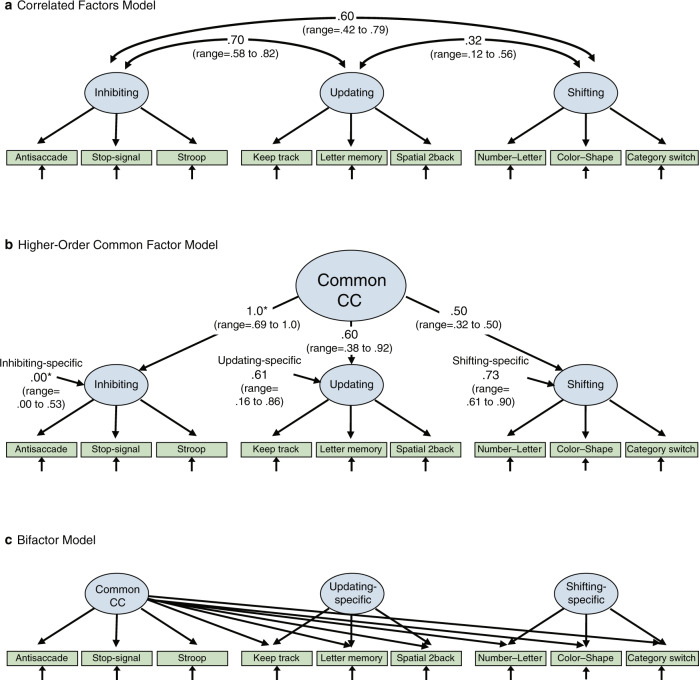
- Psychometric studies of CC/EF repeatedly find unity and diversity: in Miyake et al.’s model, correlations among the latent factors for inhibition, updating, and shifting were r = 0.42–0.63, while individual task correlations were only r = –0.05 to 0.34.
- The paper argues that the Common CC factor is closely related to response inhibition and is distinct from general intelligence (g), although intelligence still correlates substantially with common CC; reported correlations with common CC range from r = 0.53–0.91, but are only r = 0.53–0.68 in adult latent-variable samples.
- Neurobiological evidence supports both shared and distinct PFC contributions: lesion and neuroimaging studies dissociate dlPFC (working memory and some switching) from OFC/vlPFC (reversal learning and extra-dimensional set-shifting), and identify networks including the fronto-parietal network (FPN), cingulo-opercular network (CON), and default mode network (DMN).
- Across disorders, CC deficits are transdiagnostic and related to the p factor; the paper reports that common CC is associated with p at r = –0.16 to –0.56, and cites meta-analyses linking CC deficits to MDD, PTSD, OCD, bipolar disorder, schizophrenia, ADHD, conduct disorder/antisocial personality disorder, and substance use disorders.
## Methods
- This is a narrative review that synthesizes evidence from psychometric latent-variable studies, lesion studies, fMRI/meta-analyses, resting-state/connectivity studies, neurochemical/pharmacological work, and genetic/twin/family studies.
- The review draws on samples ranging from college students in psychometric work to patients with focal lesions, healthy children and adults, and large adult datasets; one cited imaging study included N = 251 healthy adults, and one meta-analysis included 193 fMRI studies of executive function.
- Main analysis is conceptual synthesis: it compares competing models of CC/EF organization, PFC specialization, and their links to psychopathology, rather than reporting a new empirical dataset.
## Limitations
- The paper explicitly notes that the neurobiological underpinnings of the p factor are not well understood and that its psychological interpretation varies.
- It repeatedly indicates that causal direction remains unclear for CC–psychopathology and CC–substance use associations; some evidence suggests shared genetic/environmental influences, but bidirectional effects are also plausible.
- Evident from the text: this is a review, so it does not present new original data and cannot resolve inconsistencies across studies or establish causal mechanisms on its own.
Model-written summary. Check it against the paper before relying on it.
Integrity signals
Registry
Cites
Statistics
Figures
Verification
Claims the paper makes
75 Valid · 4 Not valid · 74 Not checked · 49 Own results and interpretations
At least one cited source doesn’t support this claim or points to a different paper, and none confirmed it — see the verdicts below.
In the paper
“By contrast, the Predicted Response Outcome model [117] uses as its basis unsigned prediction errors of any type, whether appetitive or aversive outcomes, and whether negative (unexpected omission of expected outcome) or positive (unexpected occurrence of outcome) “surprise,” over multiple time-scales to directly affect actions (and not stimulus representations).”
§ The role of prefrontal cortex in cognitive control and executive function > Fractionation and integration of CC within PFC > Fractionation of CC
What the sources say
- Disputedcites [117] Alexander WH Brown JW Medial prefrontal cortex as an action-outcome predictor Nat Neurosci 2011 14 1338 44 21926982 PMC3183374 sourceExperimental — accuracy not yet measured
Split into 2 atoms — 0 confirmed, 1 partially supported, 1 disputed, 0 misattributed, 0 unverifiable. Expand the claim to see per-atom verdicts.
Checked by a reasoning model — may be wrong.
plainstates a cause- Asserted: passes — The authors put it forward as true.
- Checkable: passes — It can be checked against evidence.
- Load-bearing: passes — The paper’s conclusions depend on it.
- Based: passes — The paper gives a reason why it holds.
- Disputed
The cited sources support only part of this claim — read each source’s verdict below.
In the paper
“The cellular physiology of these regions is characterized by rapid firing and properties of neural plasticity that may enable such functions as goal maintenance in working memory and the flexible functioning of an MD network [24–27].”
§ The role of prefrontal cortex in cognitive control and executive function > Psychological organization of CC
What the sources say
- Not checked — no full text of the sourcecites [24] Fuster JM Unit activity in prefrontal cortex during delayed-response performance: neuronal correlates of transient memory J Neurophysiol 1973 36 61 78 4196203 source
- Not checked — no full text of the sourcecites [25] Funahashi S Bruce CJ Goldman-Rakic PS Mnemonic coding of visual space in the monkey’s dorsolateral prefrontal cortex J Neurophysiol 1989 61 331 49 2918358 source
- Not checked — no full text of the sourcecites [26] Shinomoto S Miyazaki Y Tamura H Fujita I Regional and laminar differences in in vivo firing patterns of primate cortical neurons J Neurophysiol 2005 94 567 75 15758054 source
- Partly supportedcites [27] Rodriguez G Sarazin M Clemente A Holden S Paz JT Delord B Conditional bistability, a generic cellular mnemonic mechanism for robust and flexible working memory computations J Neurosci 2018 38 5209 19 29712783 PMC6705937 sourceExperimental — accuracy not yet measured
The Discussion (page unavailable) proposes that intrinsic plasticity and spike-mediated mechanisms contribute to flexible, persistent activity during prefrontal working memory. It does not establish rapid firing as a defining property of granular prefrontal regions or discuss a multiple-demand network, so those parts of the attributed claim are unsupported. (LLM, conf=0.84)
hedgedstates a possible cause- Asserted: passes — The authors put it forward as true.
- Checkable: passes — It can be checked against evidence.
- Load-bearing: unclear — It is unclear whether the paper’s conclusions depend on it.
- Based: passes — The paper gives a reason why it holds.
The cited sources support only part of this claim — read each source’s verdict below.
In the paper
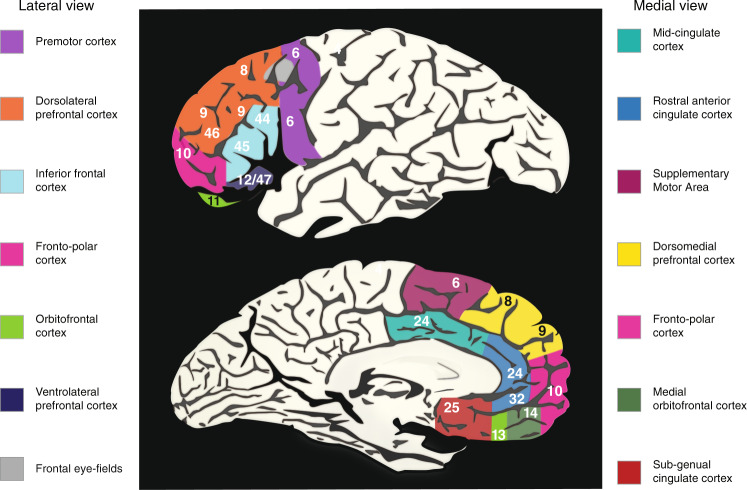
“Moreover, PFC functions probably depend on specializations of dendritic branching and spine density of pyramidal cells, especially in the cycloarchitectonically distinct regions of the granular PFC (Fig. 2) [21–23].”
§ The role of prefrontal cortex in cognitive control and executive function > Psychological organization of CC
What the sources say
- Partly supportedcites [21] Elston G Benavides-Piccione R Elston A Manger P Defelipe J Pyramidal cells in prefrontal cortex of primates: marked differences in neuronal structure among species Front Neuroanat 2011 5 2 21347276 PMC3039119 sourceExperimental — accuracy not yet measured
The Abstract links differences in pyramidal-cell branching and spine development across cortical areas to the functions those cells perform. The Discussion includes one dorsolateral granular prefrontal area (12vl) in a comparison, but the study examines inferotemporal cortex and does not establish that prefrontal functions depend especially on specializations across distinct granular prefrontal regions. Page numbers were not available in our copy. (LLM, conf=0.82)
- Not checked — no full text of the sourcecites [22] Semendeferi K Teffer K Buxhoeveden DP Park MS Bludau S Amunts K Spatial organization of neurons in the frontal pole sets humans apart from great apes Cereb Cortex 2011 21 1485 97 21098620 source
- Not checked — no full text of the sourcecites [23] Allman JM Watson KK Tetreault NA Hakeem AY Intuition and autism: a possible role for Von Economo neurons Trends Cogn Sci 2005 9 367 73 16002323 source
hedgedstates a possible cause- Asserted: passes — The authors put it forward as true.
- Checkable: passes — It can be checked against evidence.
- Load-bearing: unclear — It is unclear whether the paper’s conclusions depend on it.
- Based: passes — The paper gives a reason why it holds.
- Partly supported
The cited sources support only part of this claim — read each source’s verdict below.
In the paper
“There are also distinct functions within nodes of the FPN, where some of the “manipulation” sub-processes of working memory are mediated by parietal cortex, for example, including representations and operations relevant for mental arithmetic [76] and mental rotation [77].”
§ The role of prefrontal cortex in cognitive control and executive function > Fractionation and integration of CC within PFC > Fractionation of CC
What the sources say
- Partly supportedcites [76] Chochon F Cohen L Moortele PF van de, Dehaene S Differential contributions of the left and right inferior parietal lobules to number processing J Cogn Neurosci 1999 11 617 30 10601743 sourceExperimental — accuracy not yet measured
The Conclusion (p. 11) reports that both parietal regions contribute to mental arithmetic and describes parietal involvement in manipulating numerical quantity, supporting the part attributed to citation [76]. But the discussion of working memory (A Parieto-Fronto-Cingular Network for Number Processing, p. 7) links it especially to prefrontal and anterior cingulate activation; it does not establish that parietal cortex mediates a working-memory manipulation sub-process. Mental rotation is attached to a different citation, [77], and is not assessed here. (LLM, conf=0.83)
- Partly supportedcites [77] Georgopoulos AP Pellizzer G The mental and the neural: psychological and neural studies of mental rotation and memory scanning Neuropsychologia. 1995 33 1531 47 8584184 sourceExperimental — accuracy not yet measured
The paper reviews neural evidence for mental rotation, but it does not establish the parietal-cortex role attributed to it here. In “Neural bases for visuomotor and visual mental rotations” (p. 9), it reports motor-cortex activity during visuomotor mental rotation and says no other brain areas were explored in that task. The mental-arithmetic example has a separate citation and is not assessed here. (LLM, conf=0.86)
plainstates a cause- Asserted: passes — The authors put it forward as true.
- Checkable: passes — It can be checked against evidence.
- Load-bearing: unclear — It is unclear whether the paper’s conclusions depend on it.
- Based: passes — The paper gives a reason why it holds.
- Partly supported
The cited sources support only part of this claim — read each source’s verdict below.
In the paper
“Research with children suggests separability of hot and cool CC in terms of their relations with each other and with other measures [50, 52–57].”
§ The role of prefrontal cortex in cognitive control and executive function > Psychological organization of CC
What the sources say
- Not checked — no full text of the sourcecites [50] Zelazo PD Carlson SM Hot and cool executive function in childhood and adolescence: development and plasticity Child Dev Perspect 2012 6 354 60 source
- Partly supportedcites [52] Poon K Hot and cool executive functions in adolescence: development and contributions to important developmental outcomes Front Psychol 2018 8 2311 29367850 PMC5767838 sourceExperimental — accuracy not yet measured
The Relations among Cool and Hot Executive Function Tests section reports no significant correlation between hot and cool measures, and the Academic Performance and Psychological Adjustment sections report different associations with those outcomes. The study supports separability, but its participants were adolescents aged 12–17 (Methodology: Participants), not a sample specifically of younger children. No page numbers are available in our copy. (LLM, conf=0.83)
- Not checked — no full text of the sourcecites [53] Botdorf M Rosenbaum GM Patrianakos J Steinberg L Chein JM Adolescent risk-taking is predicted by individual differences in cognitive control over emotional, but not non-emotional, response conflict Cogn Emot 2017 31 972 9 27050317 source
- Supportedcites [54] Kim S Nordling JK Yoon JE Boldt LJ Kochanska G Effortful control in “hot” and “cool” tasks differentially predicts children’s behavior problems and academic performance J Abnorm Child Psychol 2013 41 43 56 22798038 PMC3737587 source
The Results (Confirmatory Factor Analysis Comparing Measurement Models; page not available) report that a model separating hot and cool functions fit the children's data well, while a single-factor model fit significantly worse. The Results (Structural Equation Models; page not available) also report different relations with other measures: hot effortful control predicted behavior problems, whereas a cool-task measure predicted academic performance. A second-order unidimensional model also fit, consistent with the citing sentence's cautious 'suggests' wording. (LLM, conf=0.88)
- Not checked — no full text of the sourcecites [55] Hongwanishkul D Happaney KR Lee WSC Zelazo PD Assessment of hot and cool executive function in young children: age-related changes and individual differences Dev Neuropsychol 2005 28 617 44 16144430 source
- Partly supportedcites [56] Harden KP Kretsch N Mann FD Herzhoff K Tackett JL Steinberg L Beyond dual systems: a genetically-informed, latent factor model of behavioral and self-report measures related to adolescent risk-taking Dev Cogn Neurosci 2017 25 221 34 28082127 PMC6886471 sourceExperimental — accuracy not yet measured
The Discussion section “Cognitive (Dys)control and the ability-personality distinction” reports that cognitive dyscontrol and premeditation were separable and had different relationships with IQ. That supports the general point about distinct control-related measures, but the paper does not identify these as hot and cool cognitive control or establish that distinction in children; its findings concern adolescents. (LLM, conf=0.82)
- Supportedcites [57] Willoughby M Kupersmidt J Voegler-Lee M Bryant D Contributions of hot and cool self-regulation to preschool disruptive behavior and academic achievement Dev Neuropsychol 2011 36 162 80 21347919 PMC5555639 source
The Discussion (p. null) reports that preschool children's performance on self-regulatory tasks was better represented by a two-factor (hot vs. cool) model than a single undifferentiated factor, with the two latent factors only moderately correlated (φ = .47) — separability in their relation to each other. The same section and the Conclusion state that cool regulation was uniquely associated with academic achievement while hot regulation was uniquely associated with inattentive-overactive behavior — separability in their relations with other measures. The paper frames the constructs as hot/cool self-regulation rather than 'cognitive control,' but the content attributed matches; the claim is one citation among several ([50, 52–57]) and this source supports it. (LLM, conf=0.90)
hedgedstates an association- Asserted: passes — The authors put it forward as true.
- Checkable: passes — It can be checked against evidence.
- Load-bearing: unclear — It is unclear whether the paper’s conclusions depend on it.
- Based: passes — The paper gives a reason why it holds.
101 more claims · 45 with their cited sources checked
Create a free account to see all 202 claims and to verify the 2 references still open.
- It may state two separate claims as one. 70
- Probably not a substantial claim. 29
Claims other papers make about this one
Each is checked against this paper’s own text: does it say what the citing paper says it does?
The source backs part of the claim, not all of it — or backs it for a different population, condition or comparison.
In the citing paper
“Cognitive flexibility builds on working memory and inhibitory control and includes attentional shifting, strategy updating, response to feedback, reversal learning, task switching, exploration, and creative problem-solving (8, 24, 25).”
From Neural mechanisms underlying cognitive inflexibility in obsessive-compulsive disorder: a review (2026) · cites this paper as [25]
Experimental — accuracy not yet measuredThe cited source says what the claim attributes to it.
In the citing paper
“l-dlPFC is integral to higher-order cognition (i.e., executive function) [10,11], which modulates episodic memory in MCI by way of enhancing encoding and facilitating retrieval [12–14].”
From A phase I trial of accelerated intermittent theta burst rTMS for amnestic MCI (2024) · cites this paper as [11]
The check wasn’t confident either way, so it gives no verdict — never disputed.
In the citing paper
“This is in contrast with individuals with bilateral basolateral amygdala lesions, who have no problem recalling dreams, although their dreams are shorter and simpler (they also have more positive and less negative emotions)205.”
From Consciousness and sleep (2024) · cites this paper as [205]
Experimental — accuracy not yet measuredIn the citing paper
“For example, representations and algorithms in digital technologies can model how brain systems are organized and work, suggesting sound theoretical connections between neuroscience and digital technologies used in e-learning [119-122].”
From Leveraging AI in E-Learning: Personalized Learning and Adaptive Assessment through Cognitive Neuropsychology—A Systematic Analysis (2024) · cites this paper as [122]
In the citing paper
“The PFC serves as a hub for cognitive regulation, coordinating activity across cortical and subcortical regions to support complex, goal-directed behaviour and tasks.”
From Sleep deprivation and memory: A neurobiological perspective (2026) · cites this paper as Friedman and Robbins, 2021
Citations
Cites
Miyake, A., Friedman, N. P., Emerson, M. J., Witzki, A. H., Howerter, A., & Wager, T. D. (2000) · Cognitive Psychology · doi:10.1006/cogp.1999.0734 · Cited by 15,798 · cited 5×
“, sequencing subgoals) to result in more complex postulated CC functions like planning [33].”
BackgroundMethodInfluentialSelf-citationDiamond, A. (2013) · Annual Review of Psychology · doi:10.1146/annurev-psych-113011-143750 · Cited by 13,268
An Integrative Theory of Prefrontal Cortex Function
Miller, E. K., & Cohen, J. D. (2001) · Annual Review of Neuroscience · doi:10.1146/annurev.neuro.24.1.167 · Cited by 12,803 · cited 5×
“Specifically, building on Desimone and Duncan’s [170] model of such competitive dynamics during visual attention, Miller and Cohen argued that prefrontal goal representations enable weak stimulus-response mappings to out-compete more habitual ones when appropriate: Goal representations bias competition by boosting act…”
BackgroundMethodInfluentialMetacognition and cognitive monitoring: A new area of cognitive–developmental inquiry
Flavell, J. H. (1979) · American Psychologist · doi:10.1037/0003-066x.34.10.906 · Cited by 11,282 · cited 1×
“, impulsiveness); and metacognition [249] including social aspects (e.”
BackgroundNeural Mechanisms of Selective Visual Attention
Desimone, R., & Duncan, J. (1995) · Annual Review of Neuroscience · doi:10.1146/annurev.ne.18.030195.001205 · Cited by 8,388 · cited 3×
“Specifically, building on Desimone and Duncan’s [170] model of such competitive dynamics during visual attention, Miller and Cohen argued that prefrontal goal representations enable weak stimulus-response mappings to out-compete more habitual ones when appropriate: Goal representations bias competition by boosting act…”
BackgroundDissociable intrinsic connectivity networks for salience processing and executive control
Seeley, W. W., Menon, V., Schatzberg, A. F., Keller, J., Glover, G. H., Kenna, H., Reiss, A. L., & Greicius, M. D. (2007) · The Journal of Neuroscience · doi:10.1523/jneurosci.5587-06.2007 · Cited by 7,426 · cited 1×
“However, neuroimaging studies comparing CC tasks with non-emotional and emotional stimuli find that they involve similar CC regions [58, 59] (dorsal ACC, anterior insula, and lateral and medial PFC), but tasks with emotional conflict also recruit distinct neural regions related to salience and emotional processing (am…”
BackgroundInsensitivity to future consequences following damage to human prefrontal cortex
Bechara, A., Damasio, A. R., Damasio, H., & Anderson, S. W. (1994) · Cognition · doi:10.1016/0010-0277(94)90018-3 · Cited by 6,128 · cited 2×
“Subsequent work established that such deficits were caused by extensive damage to the orbitofrontal and ventromedial (vm)PFC, extending into the frontal pole (BA-10) [109, 110].”
BackgroundControlled and automatic human information processing: I. Detection, search, and attention.
Schneider, W., & Shiffrin, R. M. (1977) · Psychological Review · doi:10.1037/0033-295x.84.1.1 · Cited by 5,902 · cited 1×
“This process has many similarities with the distinction between controlled and automatic responding [6], which approximately aligns with the learning theory distinction between goal-directed and habitual responding [7].”
ResultSaliency, switching, attention and control: a network model of insula function
Menon, V., & Uddin, L. Q. (2010) · Brain Structure and Function · doi:10.1007/s00429-010-0262-0 · Cited by 5,592 · cited 1×
“However, neuroimaging studies comparing CC tasks with non-emotional and emotional stimuli find that they involve similar CC regions [58, 59] (dorsal ACC, anterior insula, and lateral and medial PFC), but tasks with emotional conflict also recruit distinct neural regions related to salience and emotional processing (am…”
BackgroundLarge-scale brain networks and psychopathology: a unifying triple network model
Menon, V. (2011) · Trends in Cognitive Sciences · doi:10.1016/j.tics.2011.08.003 · Cited by 4,168
Cited by
Zhai, C., Wibowo, S., & Li, L. D. (2024) · Smart Learning Environments · doi:10.1186/s40561-024-00316-7 · Cited by 1,567
“…for academic rigor and avoiding laziness, suggesting that disengagement from challenging cognitive tasks could potentially weaken activities in key neural regions: the ventromedial prefrontal cortex (vmPFC) and the amygdala and prefrontal cortex (PFC) and the hippocampus (Friedman & Robbins, 2022).”
BackgroundHalkiopoulos, C., & Gkintoni, E. (2024) · Electronics · doi:10.3390/electronics13183762 · Cited by 328
“For example, representations and algorithms in digital technologies can model how brain systems are organized and work, suggesting sound theoretical connections between neuroscience and digital technologies used in e-learning [119–122].”
Kringelbach, M. L., Perl, Y. S., Tagliazucchi, E., & Deco, G. (2023) · Science Advances · doi:10.1126/sciadv.ade6049 · Cited by 105
Physical exercise, cognition, and brain health in aging
Boa Sorte Silva, N. C., Barha, C. K., Erickson, K. I., Kramer, A. F., & Liu-Ambrose, T. (2024) · Trends in Neurosciences · doi:10.1016/j.tins.2024.04.004 · Cited by 119
Du, J., DiNicola, L. M., Angeli, P. A., Saadon‐Grosman, N., Sun, W., Kaiser, S., Ladopoulou, J., Xue, A., Yeo, B. T. T., Eldaief, M. C., et al. (2024) · Journal of Neurophysiology · doi:10.1152/jn.00308.2023 · Cited by 148
Advances in modeling learning and decision-making in neuroscience
Collins, A. G. E., & Shenhav, A. (2021) · Neuropsychopharmacology · doi:10.1038/s41386-021-01126-y · Cited by 125
“…has fl ourished, driven not only by novel empirical observations (see Soltani & Koechlin [1], Monosov & Rushworth [2], and Friedman & Robbins [3] this issue (also see the chapter by Friedman &Robbins in this volume) but also by the increased availability of computational models to account…”
BackgroundThe Neuropsychology of Anxiety: An enquiry into the functions of the septo-hippocampal system
McNaughton, N., & Gray, J. A. (2024) · doi:10.1093/oso/9780198843313.001.0001 · Cited by 97
The mediodorsal thalamus in executive control
Wolff, M., & Halassa, M. M. (2024) · Neuron · doi:10.1016/j.neuron.2024.01.002 · Cited by 137
Rodríguez-Nieto, G., Seer, C., Sidlauskaite, J., Vleugels, L., Van Roy, A., Hardwick, R., & Swinnen, S. (2022) · NeuroImage · doi:10.1016/j.neuroimage.2022.119665 · Cited by 89
Environmental contributions to cognitive development: The role of cognitive stimulation
Rakesh, D., McLaughlin, K. A., Sheridan, M. A., Humphreys, K. L., & Rosen, M. L. (2024) · Developmental Review · doi:10.1016/j.dr.2024.101135 · Cited by 152
Cognitive neuroscience perspective on memory: overview and summary
Sridhar, S., Khamaj, A., & Asthana, M. K. (2023) · Frontiers in Human Neuroscience · doi:10.3389/fnhum.2023.1217093 · Cited by 80
“The PFC is a source of top-down signals that influence processing in the posterior and subcortical regions (Braver et al., 2008; Friedman and Robbins, 2022).”
BackgroundJoyce, M. K. P., Uchendu, S., & Arnsten, A. F. T. (2024) · Biological Psychiatry · doi:10.1016/j.biopsych.2024.06.016 · Cited by 102
Kalogerakou, T., & Αντωνιάδου, Μ. (2024) · Antioxidants · doi:10.3390/antiox13121508 · Cited by 125
Tononi, G., Boly, M., & Cirelli, C. (2024) · Neuron · doi:10.1016/j.neuron.2024.04.011 · Cited by 70
Maudrich, T., Ragert, P., Perrey, S., & Kenville, R. (2022) · Brain stimulation · doi:10.1016/j.brs.2022.11.007 · Cited by 81
“Functional roles of prefrontal subdivisions such as dorsolateral prefrontal cortex (dlPFC) and orbital prefrontal cortex (oPFC) extend from cognitive control of motor behavior [72] to the disengagement of motor activity [73], and fatigue [74].”
Mohapatra, A. N., & Wagner, S. (2023) · Frontiers in Psychiatry · doi:10.3389/fpsyt.2023.1205199 · Cited by 81
Audiovisual gamma stimulation for the treatment of neurodegeneration
Blanco‐Duque, C., Chan, D., Kahn, M. C., Murdock, M. H., & Tsai, L. (2023) · Journal of Internal Medicine · doi:10.1111/joim.13755 · Cited by 85
Stucke, N. J., & Doebel, S. (2024) · Psychological Bulletin · doi:10.1037/bul0000445 · Cited by 69
You, Y., Liu, J., Li, X., Wang, P., Liu, R., & Ma, X. (2024) · PeerJ · doi:10.7717/peerj.17057 · Cited by 68
White matter abnormalities and cognition in aging and Alzheimer disease
Peter, C., Sathe, A., Shashikumar, N., Pechman, K. R., Workmeister, A. W., Jackson, T. B., Huo, Y., Mukherjee, S., Mez, J., Dumitrescu, L. C., et al. (2025) · JAMA Neurology · doi:10.1001/jamaneurol.2025.1601 · Cited by 59
Shi, P., Tang, Y., Zhang, Z., Feng, X., & Li, C. (2022) · Brain Sciences · doi:10.3390/brainsci12121734 · Cited by 88
“Executive function can be described as a higher-level, top-down thinking process that is closely related to frontal brain activity [1].”
BackgroundNekar, D. M., Lee, D.-Y., Hong, J.-H., Kim, J.-S., Kim, S.-G., Seo, Y.-G., & Yu, J.-H. (2022) · Healthcare · doi:10.3390/healthcare10101981 · Cited by 76
“Cognitive flexibility, cognitive inhibition, and reaction time depend on the activity of the prefrontal cortex and its associated regions, such as the cingulate cortex [35].”
BackgroundFrömer, R., & Shenhav, A. (2021) · Neuroscience & Biobehavioral Reviews · doi:10.1016/j.neubiorev.2021.12.006 · Cited by 66
Chu, M., Zhang, Y., Chen, J., Chen, W., Hong, Z., Zhang, Y., Yu, H., Zhang, F., Ye, X., Li, J., et al. (2022) · Journal of Integrative Neuroscience · doi:10.31083/j.jin2105130 · Cited by 65
Daviddi, S., Pedale, T., Jacques, P. L. S., Schacter, D. L., & Santangelo, V. (2023) · Cortex · doi:10.1016/j.cortex.2023.03.005 · Cited by 57
Cognitive Control as a Multivariate Optimization Problem
Ritz, H., Leng, X., & Shenhav, A. (2022) · Journal of Cognitive Neuroscience · doi:10.1162/jocn_a_01822 · Cited by 64
“Over the past half-century, our understanding of the human brain’s capacity for cognitive control has grown tremendously (Menon & D’Esposito, 2022; Friedman & Robbins, 2021; von Bastian et al., 2020; Koch, Poljac, Müller, & Kiesel, 2018; Fortenbaugh, DeGutis, & Esterman, 2017; Abrahamse, Braem,…”
BackgroundKlein, F., Kohl, S. H., Lührs, M., Mehler, D. M. A., & Sorger, B. (2024) · Philosophical Transactions of the Royal Society B Biological Sciences · doi:10.1098/rstb.2023.0087 · Cited by 71
Besteher, B., Rocktäschel, T., Garza, A. P., Machnik, M., Ballez, J., Helbing, D. L., Finke, K., Reuken, P. A., Güllmar, D., Gaser, C., et al. (2023) · Brain Behavior and Immunity · doi:10.1016/j.bbi.2023.11.028 · Cited by 58
Prefrontal contributions to the stability and variability of thought and conscious experience
Zamani, A., Carhart-Harris, R. L., & Christoff, K. (2021) · Neuropsychopharmacology · doi:10.1038/s41386-021-01147-7 · Cited by 51
“At the neural level, this is thought to be implemented through the PFC’s biasing influences on the neural activity of other regions throughout the brain [120] (see also Freidman and Robbins, this issue [121]).”
BackgroundImmersion in nature enhances neural indices of executive attention
McDonnell, A. S., & Strayer, D. L. (2024) · Scientific Reports · doi:10.1038/s41598-024-52205-1 · Cited by 73
Executive Function Strengths in Athletes: a Systematic Review and Meta‐Analysis
Ren, S., Shi, P., Feng, X., Zhang, K., & Wang, W. (2025) · Brain and Behavior · doi:10.1002/brb3.70212 · Cited by 49
Decoding the neurocircuitry of gut feelings: Region-specific microbiome-mediated brain alterations
Sharvin, B. L., Aburto, M. R., & Cryan, J. F. (2023) · Neurobiology of Disease · doi:10.1016/j.nbd.2023.106033 · Cited by 53
“The PFC is located within the frontal lobe and is widely accepted to have two primary subdivisions based on surrounding neurocircuitry and functional specialisation: the dorsolateral and ventromedial regions (Friedman and Robbins, 2021; Hathaway and Newton, 2022).”
BackgroundHuang, H., Lin, Y., Panyod, S., Chen, R.-A., Lin, Y., Chai, L. M. X., Hsu, C., Wu, W., Lu, K., Huang, Y., et al. (2022) · Journal of Ethnopharmacology · doi:10.1016/j.jep.2022.115872 · Cited by 48
Brain mechanisms underlying catatonia: A systematic review
Cattarinussi, G., Gugliotta, A. A., Hirjak, D., Wolf, R. C., & Sambataro, F. (2022) · Schizophrenia Research · doi:10.1016/j.schres.2022.11.002 · Cited by 49
Assem, M., Shashidhara, S., Glasser, M. F., & Duncan, J. (2024) · Cerebral Cortex · doi:10.1093/cercor/bhad537 · Cited by 53
Blomstrand, P., Tesan, D., Nylander, E. M., & Ramstrand, N. (2023) · European Review of Aging and Physical Activity · doi:10.1186/s11556-023-00325-4 · Cited by 52
“…from a recent systematic review which demonstrated that mind–body exercise Effect size data used in our meta-analysis induces changes in neural activity and functional connectivity in the brain [47], including the pre-frontal cortex which has an important role for cognitive functions [56, 57].”
BackgroundZhou, Z., Yan, Y., Gu, H., Sun, R., Liao, Z., Xue, K., & Tang, C. (2023) · Neural Regeneration Research · doi:10.4103/1673-5374.389631 · Cited by 53
“In a random number generation test task, PD patients with executive dysfunction showed a decline in medial PFC (mPFC) network activation (Friedman and Robbins, 2022).”
BackgroundMohamed, D. I., El-Waseef, D. A. E.-D. A., Nabih, E. S., El-Kharashi, O. A., El-Kareem, H. F. A., Nahas, H. H. A., Abdel‐Wahab, B. A., Helmy, Y. A., Alshawwa, S. Z., & Saied, E. M. (2022) · Pharmaceutics · doi:10.3390/pharmaceutics14030529 · Cited by 45
“Several studies reported that the prefrontal cortex, which plays a vital role in cognitive functions, is more vulnerable to alcohol-related brain damage [7], while steatosis occurs in almost all individuals who excessively consume alcohol.”
BackgroundGao, Y., Hu, Y., Wang, J., Liu, C., Im, H., Jin, W., Zhu, W., Ge, W., Zhao, G., Yao, Q., et al. (2025) · NeuroImage · doi:10.1016/j.neuroimage.2025.121029 · Cited by 43
Creatine monohydrate supplementation for older adults and clinical populations
Candow, D. G., Ostojic, S. M., Chilibeck, P. D., Longobardi, I., Gualano, B., Tarnopolsky, M. A., Wallimann, T., Moriarty, T., Kreider, R. B., Forbes, S. C., et al. (2025) · Journal of the International Society of Sports Nutrition · doi:10.1080/15502783.2025.2534130 · Cited by 43
“The PFC is a region highly active during tasks of executive function [253] and neural activity in this area has been shown to become less localized with age over time [254].”
Mindfulness-Based Interventions and the Hypothalamic–Pituitary–Adrenal Axis: A Systematic Review
Vargas‐Uricoechea, H., Castellanos-Pinedo, A., Urrego-Noguera, K., Vargas-Sierra, H. D., Fernández, M. V. P., Barceló, E., & Giraldo, A. F. R. (2024) · Neurology International · doi:10.3390/neurolint16060115 · Cited by 63
“This approach is possible because refined openness and awareness allow for subtle changes in affective states to be detected with greater flexibility, which in turn reduces habitual rumination tendencies, thereby improving the adaptive regulation of emotions [150,151].”
Neurochemical effects of sepsis on the brain
Barichello, T., Giridharan, V. V., Catalão, C. H. R., Ritter, C., & Dal‐Pizzol, F. (2023) · Clinical Science · doi:10.1042/cs20220549 · Cited by 49
Salehi, N., Nahrgang, S., Petershagen, W., Dembek, T. A., Pedrosa, D. J., Timmermann, L., Weber, I., & Oehrn, C. R. (2024) · Brain · doi:10.1093/brain/awad433 · Cited by 44
Orthogonal neural encoding of targets and distractors supports multivariate cognitive control
Ritz, H., & Shenhav, A. (2024) · Nature Human Behaviour · doi:10.1038/s41562-024-01826-7 · Cited by 61
“12,87), but for completeness we also examined how different subnetworks in both the lPFC and dACC aligned with coherence encoding.”
BackgroundAlgaidi, S. A. (2025) · Brain Research · doi:10.1016/j.brainres.2025.149461 · Cited by 40
Lamb, R. L., Neumann, K., & Linder, K. A. (2022) · Computers and Education Artificial Intelligence · doi:10.1016/j.caeai.2022.100078 · Cited by 71
Thalamic nuclei changes in early and late onset Alzheimer's disease
Forno, G., Saranathan, M., Contador, J., Guillen, N., Falgàs, N., Tort-Merino, A., Balasa, M., Sanchez-Valle, R., Hornberger, M., & Lladó, A. (2023) · Current Research in Neurobiology · doi:10.1016/j.crneur.2023.100084 · Cited by 39
Christoforou, M., Jones, E. J. H., White, P., & Charman, T. (2023) · JCPP Advances · doi:10.1002/jcv2.12123 · Cited by 55
“Further, both ASD and ADHD have been associated with abnormalities in the prefrontal cortex, which is linked to EF (Friedman & Robbins, 2022).”
Thomson, A. R., Pasanta, D., Arichi, T., & Puts, N. A. J. (2024) · Neuroscience & Biobehavioral Reviews · doi:10.1016/j.neubiorev.2024.105728 · Cited by 56
Functional networks in prolonged disorders of consciousness
Li, H., Zhang, X., Sun, X., Dong, L., Lu, H., Yue, S., & Zhang, H. (2023) · Frontiers in Neuroscience · doi:10.3389/fnins.2023.1113695 · Cited by 47
“It is centered on the dorsolateral prefrontal cortex (DLPFC) and the posterior parietal cortex (PPC), and also includes the frontal eye fields (FEF) and part of the dorsomedial prefrontal cortex (dmPFC) that coordinate executive function (Chen et al., 2013; Friedman and Robbins, 2022; Menon and D’Esposito, 2022).”
BackgroundSchizophrenia, a disease of impaired dynamic metabolic flexibility: A new mechanistic framework
Sarnyai, Z., & Ben‐Shachar, D. (2024) · Psychiatry Research · doi:10.1016/j.psychres.2024.116220 · Cited by 43
Leisman, G., & Melillo, R. J. (2022) · Frontiers in Neuroanatomy · doi:10.3389/fnana.2022.936025 · Cited by 43
“The prefrontal cortex supports the maintenance of set, in problem-solving tasks (Friedman and Robbins, 2022), and in implementing strategic and sequential planning (Desrochers et al.”
BackgroundBrain mechanisms underlying the inhibitory control of thought
Anderson, M. C., Crespo‐García, M., & Sankarasubramanian, S. (2025) · Nature reviews. Neuroscience · doi:10.1038/s41583-025-00929-y · Cited by 59
“3b) that may itself reflect inhibitory control 117 .”
Detection of Cognitive Load Modulation by EDA and HRV
Boffet, A., Arsac, L. M., Ibanez, V., Sauvet, F., & Deschodt‐Arsac, V. (2025) · Sensors · doi:10.3390/s25082343 · Cited by 44
“The prefrontal cortex (PFC) is a key structure for executive functions [3].”
Thalamocortical architectures for flexible cognition and efficient learning
Scott, D. N., Mukherjee, A., Nassar, M. R., & Halassa, M. M. (2024) · Trends in Cognitive Sciences · doi:10.1016/j.tics.2024.05.006 · Cited by 63
Nippert, K. E., Rowland, C. P., Vazey, E. M., & Moorman, D. E. (2024) · Neuropharmacology · doi:10.1016/j.neuropharm.2024.110114 · Cited by 38
Chen, Y., Wang, Y., Wüstenberg, T., Kizilcec, R. F., Fan, Y., Li, Y., Lu, B., Yuan, M., Zhang, J., Zhang, Z., et al. (2025) · Trials · doi:10.1186/s13063-025-08950-3 · Cited by 80
Mothers’ and fathers’ executive function both predict emergent executive function in toddlerhood
Ribner, A., Devine, R. T., Blair, C., Hughes, C. H., & NewFAMS Investigators (2022) · Developmental Science · doi:10.1111/desc.13263 · Cited by 42
Fernandes, B., Wright, M. L., & Essau, C. A. (2023) · Children · doi:10.3390/children10010139 · Cited by 48
“The significant changes observed in EF skills in this study might have contributed to the successful control of emotional problems and maladaptive emotion regulation, as EF is mediated by the prefrontal cortex [47]; abnormalities and variation in this region is likely associated with emotional problems such as anxiety…”
BackgroundCosta, G. D. A., Silva, N. K. D. G. T., Marianno, P., Chivers, P., Bailey, A., & Camarini, R. (2022) · Neuroscience · doi:10.1016/j.neuroscience.2023.07.001 · Cited by 40
From Stress to Synapse: The Neuronal Atrophy Pathway to Mood Dysregulation
Krasner, H., Ong, C. V., Hewitt, P., & Vida, T. A. (2025) · International Journal of Molecular Sciences · doi:10.3390/ijms26073219 · Cited by 42
“Within the prefrontal cortex, diminished connectivity and dendritic complexity have been shown to impair its ability to modulate emotional responses and cognitive functions such as decision-making and problem-solving [153].”
Metacognition as a Consequence of Competing Evolutionary Time Scales
Kuchling, F., Fields, C., & Levin, M. G. (2022) · Entropy · doi:10.3390/e24050601 · Cited by 32
“In humans, metacognition is broadly associated with executive control [14,15] and “deliberate” Process-1 problem solving [16–18], though whether there is a clean, architectural difference between this and “automated” Process-2 problem solving remains subject to considerable debate [19–21].”
BackgroundCharacterising the unity and diversity of executive functions in a within-subject fMRI study
Saylık, R., Williams, A. L., Murphy, R. A., & Szameitat, A. J. (2022) · Scientific Reports · doi:10.1038/s41598-022-11433-z · Cited by 53
Mittli, D. (2023) · Brain Behavior & Immunity - Health · doi:10.1016/j.bbih.2023.100703 · Cited by 42
Miguel, P. M., Meaney, M. J., & Silveira, P. P. (2023) · Biological Psychiatry · doi:10.1016/j.biopsych.2023.01.008 · Cited by 59
“Subcomponents including planning (which requires shifting skills and working memory), self-monitoring, and problem solving emerge from these foundational EFs and are essential for goal-directed behaviors (13,14).”
Gkintoni, E., Vassilopoulos, S. P., & Νικολάου, Γ. (2025) · Biomimetics · doi:10.3390/biomimetics10060397 · Cited by 66
Mapping neurodevelopmental diversity in executive function
Mareva, S., Lead Investigators, Astle, D. E., Baker, K., Gathercole, S. E., Holmes, J., Kievit, R., Manly, T., Team of Researchers and PhD Students, Akarca, D., et al. (2024) · Cortex · doi:10.1016/j.cortex.2023.11.021 · Cited by 45
Cognitive Training with Neurofeedback Using fNIRS Improves Cognitive Function in Older Adults
Acevedo, B. P., Dattatri, N., Le, J., Lappinga, C., & Collins, N. L. (2022) · International Journal of Environmental Research and Public Health · doi:10.3390/ijerph19095531 · Cited by 39
“These results are in line with the established role of the PFC in cognitive control and EF [32].”
ResultOlfaction and Executive Cognitive Performance: A Systematic Review
Ramaswamy, V. M. C., & Schofield, P. W. (2022) · Frontiers in Psychology · doi:10.3389/fpsyg.2022.871391 · Cited by 36
“Functional imaging studies demonstrate the substantial overlap between neural substrates for olfactory identification, discrimination and executive functioning, (Drevets, 2000; Zald and Pardo, 2000; Torregrossa et al., 2008; Han et al., 2019; Friedman and Robbins, 2022).”
BackgroundBaek, C. Y., Kim, H. D., Yoo, D. Y., Kang, K. Y., & Lee, J. W. (2023) · Journal of NeuroEngineering and Rehabilitation · doi:10.1186/s12984-023-01211-x · Cited by 35
DiNicola, L. M., Sun, W., & Buckner, R. L. (2023) · Journal of Neurophysiology · doi:10.1152/jn.00277.2023 · Cited by 29
“Prefrontal cortex (PFC) is a heterogeneous structure that, among other functions, supports maintaining information and goals in mind and fl exibly adapting behavior to changing environmental demands (1 – 11).”
BackgroundChen, R., Zhao, B., Huang, J., Zhang, M., Wang, Y., Fu, J., Liang, H., & Zhan, H. (2024) · The Journal of Prevention of Alzheimer s Disease · doi:10.14283/jpad.2024.65 · Cited by 30
“The hippocampus and prefrontal cortex are the core regions responsible for memory and executive function processes, respectively (73, 74).”
BackgroundThe uniqueness of human vulnerability to brain aging in great ape evolution
Vickery, S., Patil, K. R., Dahnke, R., Hopkins, W. D., Sherwood, C. C., Caspers, S., Eickhoff, S. B., & Hoffstaedter, F. (2024) · Science Advances · doi:10.1126/sciadv.ado2733 · Cited by 34
Fu, X.-N., Qin, M., Liu, X., Cheng, L., Zhang, L., Zhang, X., Lei, Y., Zhou, Q., Sun, P., Lin, L., et al. (2023) · Frontiers in Neuroscience · doi:10.3389/fnins.2023.1220122 · Cited by 30
“org matter (Friedman and Robbins, 2022; Li et al., 2022b; Gustavson et al., 2023), and there are a few studies on the correlation between neuro metabolites and executive function in the ACC and PCC.”
BackgroundWang, T., Wang, S., Wang, C.-L., & Wong, S. (2024) · Frontiers in Psychiatry · doi:10.3389/fpsyt.2023.1305397 · Cited by 41
“Traditionally, the frontal lobe was considered to play a pivotal role, given its responsibility for executive functions, which encompass a range of cognitive processes like attention control, inhibition, working memory, and cognitive flexibility (21–24).”
BackgroundDynamic reorganization of task-related network interactions in post-stroke aphasia recovery
Jiang, Z., Kuhnke, P., Stockert, A., Wawrzyniak, M., Halai, A. D., Saur, D., & Hartwigsen, G. (2025) · Brain · doi:10.1093/brain/awaf036 · Cited by 35
“12,54,55 In contrast, SMA/dACC plays a role in monitoring conflicts and detecting salient events.”
Chiang, M., Yen, C., & Chen, H. (2022) · Sustainability · doi:10.3390/su141811352 · Cited by 38
Neurologic outcome following liver transplantation for methylmalonic aciduria
Martinelli, D., Catesini, G., Greco, B., Guarnera, A., Parrillo, C., Maines, E., Longo, D., Napolitano, A., Nictolis, F. D., Cairoli, S., et al. (2023) · Journal of Inherited Metabolic Disease · doi:10.1002/jimd.12599 · Cited by 30
Scientific Rationale for the Treatment of Cognitive Deficits from Long COVID
Zadeh, A. F., Arnsten, A. F. T., & Wang, M. (2023) · Neurology International · doi:10.3390/neurolint15020045 · Cited by 27
Herz, D. M., Frank, M. J., Tan, H., & Groppa, S. (2024) · Brain · doi:10.1093/brain/awae184 · Cited by 39
“3,6,16,39,40 41-43 Thus, the architecture of cortico-STN networks seems well suited to implement the controlled pause or delay of an action, which has been supported by evidence in non-human primates.”
Antonioni, A., Baroni, A., Fregna, G., Ahmed, I., & Straudi, S. (2024) · Digital Health · doi:10.1177/20552076241292677 · Cited by 34
“65,66 67 – 70 Consistently, several studies have documented alterations in dlPFC in painful conditions that regress when pain disappears, suggesting its pivotal role in the pain network.”
Alberry, B., & Silveira, P. P. (2023) · Neuroscience & Biobehavioral Reviews · doi:10.1016/j.neubiorev.2023.105350 · Cited by 30
“The PFC is a key brain region for cognitive control and executive function (Friedman and Robbins, 2021), with many conditions associated with the dysfunction of these processes, particularly in response to environmental adversity (Wellman et al.”
Xia, J., Chen, N., & Qiu, A. (2023) · Medical Image Analysis · doi:10.1016/j.media.2023.102921 · Cited by 29
RETRACTED: Decoding the elite soccer player’s psychological profile
Bonetti, L., Vestberg, T., Jafari, R., Seghezzi, D., Ingvar, M., Kringelbach, M. L., Filgueiras, A., & Petrović, P. (2025) · Proceedings of the National Academy of Sciences · doi:10.1073/pnas.2415126122 · Cited by 34
“As a development, executive functions, i.e. higher - order top–down regulatory mechanisms controlling low - level processes ( 15 , 16 ), were hypothesized to be of great importance for success in ball sports as they make it possible to adapt and plan behavior in a quickly changing environment ( 17…”
RetractedKräplin, A., Joshanloo, M., Wolff, M., Krönke, K., Goschke, T., Bühringer, G., & Smolka, M. N. (2022) · Psychopharmacology · doi:10.1007/s00213-022-06224-3 · Cited by 30
Schachar, R. J. (2023) · Neuroscience & Biobehavioral Reviews · doi:10.1016/j.neubiorev.2023.105461 · Cited by 34
Hassani, S. A., Neumann, A. R., Russell, J. K., Jones, C. K., & Womelsdorf, T. (2023) · Proceedings of the National Academy of Sciences · doi:10.1073/pnas.2216792120 · Cited by 25
“In primates, reversal learning and the extradimen-sional updating of attentional sets depend on dissociable subareas of the prefrontal cortex with ED shifting and the recognition of attention sets depending particularly on the ventrolateral prefrontal cortex (55, 56).”
Szabó, E., Ashina, S., Melo‐Carrillo, A., Bolo, N. R., Borsook, D., & Burstein, R. (2023) · NeuroImage Clinical · doi:10.1016/j.nicl.2023.103531 · Cited by 26
Elmers, J., Yu, S., Talebi, N., Prochnow, A., & Beste, C. (2024) · iScience · doi:10.1016/j.isci.2024.109521 · Cited by 34
“66,67 Therefore, the involvement of primary motor areas is also reasonable and also corroborates previous work on WM gating.”
ResultBehrens, L. M. P., Gasparotto, J., Rampelotto, P. H., Escalona, M. A. R., da Silva, L. D. S., Kessler, F. G. C., Barbosa, C. P., Campos, M. S., Dorn, M., Gelain, D. P., et al. (2024) · The Journal of Nutritional Biochemistry · doi:10.1016/j.jnutbio.2024.109660 · Cited by 30
Gao, M., Huang, L., Jiang, Y., Zhang, T., Zhu, G., Zhang, Q., Tian, J., Zhao, R., Duan, X., & Liu, Z.-L. (2025) · Journal of Medical Internet Research · doi:10.2196/73140 · Cited by 34
“The regulation of attention and executive functions primarily relies on the prefrontal cortex, parietal lobe, and the network of connections between them [56,57].”
The development of cognitive flexibility and its implications for mental health disorders
Tong, K., Fu, X., Hoo, N. P., Kean Mun, L., Vassiliu, C., Langley, C., Sahakian, B. J., & Leong, V. (2024) · Psychological Medicine · doi:10.1017/s0033291724001508 · Cited by 23
Effects of Dietary Methionine Restriction on Cognition in Mice
Lail, H. L., Mabb, A. M., Parent, M. B., Pinheiro, F., & Wanders, D. (2023) · Nutrients · doi:10.3390/nu15234950 · Cited by 23
“Working memory is an executive function most closely associated with the prefrontal cortex [24–26].”
BackgroundFrom gut microbiota to brain: implications on binge eating disorders
Guo, W., & Xiong, W. (2024) · Gut Microbes · doi:10.1080/19490976.2024.2357177 · Cited by 33
“106 The presence of deficits in working memory, cognitive flexibility, and inhibitory control, which are the three fundamental components of executive function, has been found to contribute to symptoms associated with binge eating.”
BackgroundLi, S., Wang, Z., Wang, J., & He, J. (2024) · Thinking Skills and Creativity · doi:10.1016/j.tsc.2024.101572 · Cited by 42
de la Fuente, J., Vicente, J. M. M., Pachón-Basallo, M., Sánchez, F. J. P., Vera, M. M., & Romero, M. P. A. (2022) · Frontiers in Psychology · doi:10.3389/fpsyg.2022.876292 · Cited by 33
Pan, N., Yang, C., Suo, X., Shekara, A., Hu, S., Gong, Q., & Wang, S. (2023) · European Child & Adolescent Psychiatry · doi:10.1007/s00787-023-02231-7 · Cited by 28
“As a core brain region engaged in emotion regulation and cognitive control [53, 54], the VLPFC has been widely reported to be linked with risk and resilience for stress-related mental disorders [55].”
Gait control by the frontal lobe
Takakusaki, K. (2023) · Handbook of clinical neurology · doi:10.1016/b978-0-323-98818-6.00021-2 · Cited by 26
Fornaro, S., & Vallesi, A. (2024) · Current Psychology · doi:10.1007/s12144-023-04312-x · Cited by 21
“The above-discussed literature may suggest the involvement of prefrontal abnormalities in OCD, as the prefrontal cortex (PFC) plays a key role in executive functioning and cognitive control (for reviews, see (Menon & D’Esposito, 2022; Friedman & Robbins, 2022)).”
Federico, G., Alfano, V., Garramone, F., Mele, G., Salvatore, M., Aiello, M., & Cavaliere, C. (2022) · Frontiers in Aging Neuroscience · doi:10.3389/fnagi.2022.806374 · Cited by 23
Metadata
- Authors
- Friedman, N. P., & Robbins, T. W.
- Affiliations
- University of Colorado Boulder (US)
- University of Cambridge (GB)
- Corresponding author
- Friedman, Naomi P.
- Robbins, Trevor W.
- Venue
- Neuropsychopharmacology
- Published
- 2021-08-18
- Volume
- 47
- Issue
- 1
- Pages
- 72-89
- ISSN
- 0893-133X (ISSN-L)
- 1740-634X
- PMC
- PMC8617292
- OpenAlex
- W3195973239
- Cited by
- 1,737
- References
- 267
- Citations by year
- 2026: 457 · 2025: 561 · 2024: 388 · 2023: 221 · 2022: 97 · 2021: 12
- FWCI
- 26.47
- Type
- journal article
- Language
- en
- Open access
- hybrid
- doi.org
- Licence
- cc-by
- creativecommons.org/licenses/by/4.0 (tdm)
- creativecommons.org/licenses/by/4.0 (vor)
- Locations
- Neuropsychopharmacology (publishedVersion, cc-by)
- PubMed Central (publishedVersion, cc-by)
- PubMed (publishedVersion)
- Apollo (University of Cambridge) (submittedVersion, cc-by)
- Apollo
- Funders
- U.S. Department of Health & Human Services | NIH | National Institute on Drug Abuse (DA046413, DA042742, DA051018)
- U.S. Department of Health & Human Services | NIH | National Institute of Mental Health (MH117131)
- U.S. Department of Health & Human Services | NIH | National Institute on Aging (AG046938)
- National Research Foundation (Singapore) CREATE Grant to the University of Cambridge and Nanyang Technological University for the Centre of Lifelong Learning and Individualised Cognition (CLIC).
- Topics
- Life Sciences › Neuroscience › Cognitive Neuroscience › Neural and Behavioral Psychology Studies
- Social Sciences › Psychology › Clinical Psychology › Historical and Modern Theater Studies
- Life Sciences › Neuroscience › Cellular and Molecular Neuroscience › Neurotransmitter Receptor Influence on Behavior
- Keywords
- prefrontal cortex, cognitive control, executive function, mental set shifting, working memory updating, response inhibition, motivation, general intelligence, general psychopathology factor, impulsivity, mental illness, psychiatric classification, Research Domain Criteria
- MeSH terms
- Adult, Cognition, Humans, Intelligence, Memory, Short-Term, Prefrontal Cortex, Executive Function
About these checks
Registry, retraction, Cites and statistics results are computed, not judged, with one exception: a printed reference that no index lists is read once by a model before it counts as a citation error. Claims are extracted by a model and kept only when their quote appears verbatim in the text; each cited source is then checked, with a model’s help, for whether it says what the claim relies on. Those verdicts can be wrong — read the claim’s quote and the cited source before relying on one.
The claim verdicts this report counts are experimental: their accuracy is not yet measured.
A language model drew the claims from the paper on 2026-09-28, under version 3 of the claim definition (model deepseek-v4.1-flash, prompt extract-v3).
A second model labelled each claim on 2026-09-28 (model jev-1.13-20260917, definition revision gold-guideline-v0.2).
Cited sources are checked with a language model’s help (gpt-6-sol and qwen3.8-omni-flash).
Statistics and arithmetic are recomputed, not judged.
Confidence bands are shown only for fields calibrated on our annotated test set. None is calibrated yet, so no band is shown.
What counts as a claim ›How we measure confidence ›How we check this ›
Are you an author, or do you see a problem with this page? Request a review
Data sources
Bibliographic data: Semantic Scholar, OpenAlex, Crossref.
Contains information from the Semantic Scholar Academic Graph Datasets, made available under the ODC Attribution License (ODC-BY 1.0).
Semantic Scholar’s data is described in: Kinney, R., et al. (2023). The Semantic Scholar Open Data Platform. arXiv:2301.10140.
