

Chronic adolescent exposure to cannabis in mice leads to sex-biased changes in gene expression networks across brain regions
Open accessPublished version of a preprint
The DOI matches its Crossref record; 79 of the 79 references it cites were found in a registry or an index.
Abstract
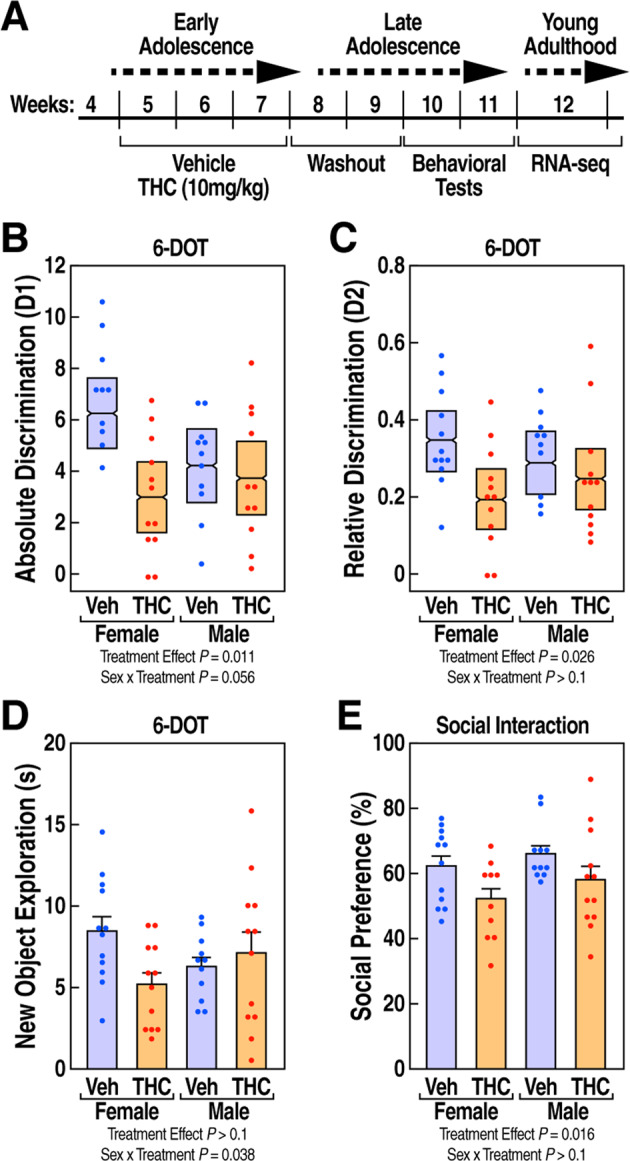
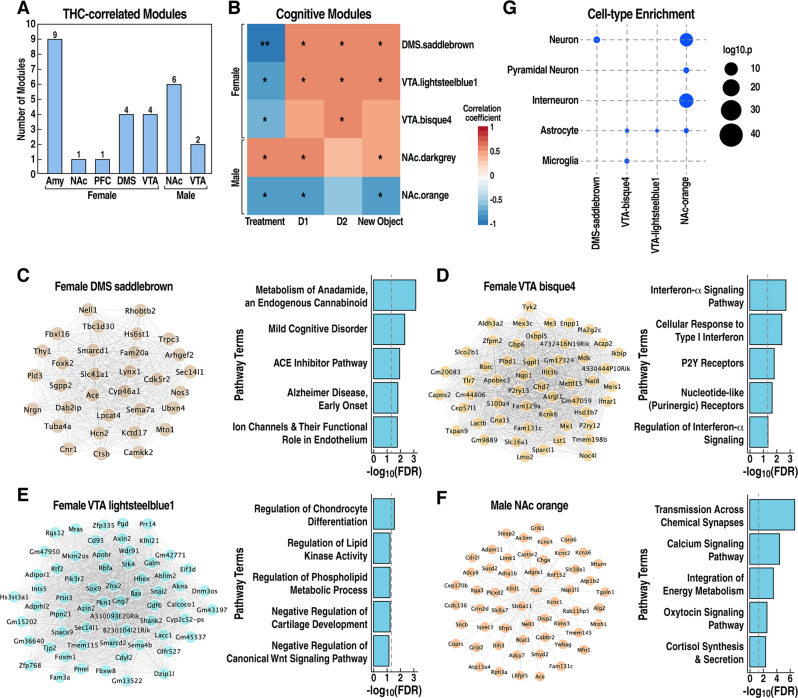
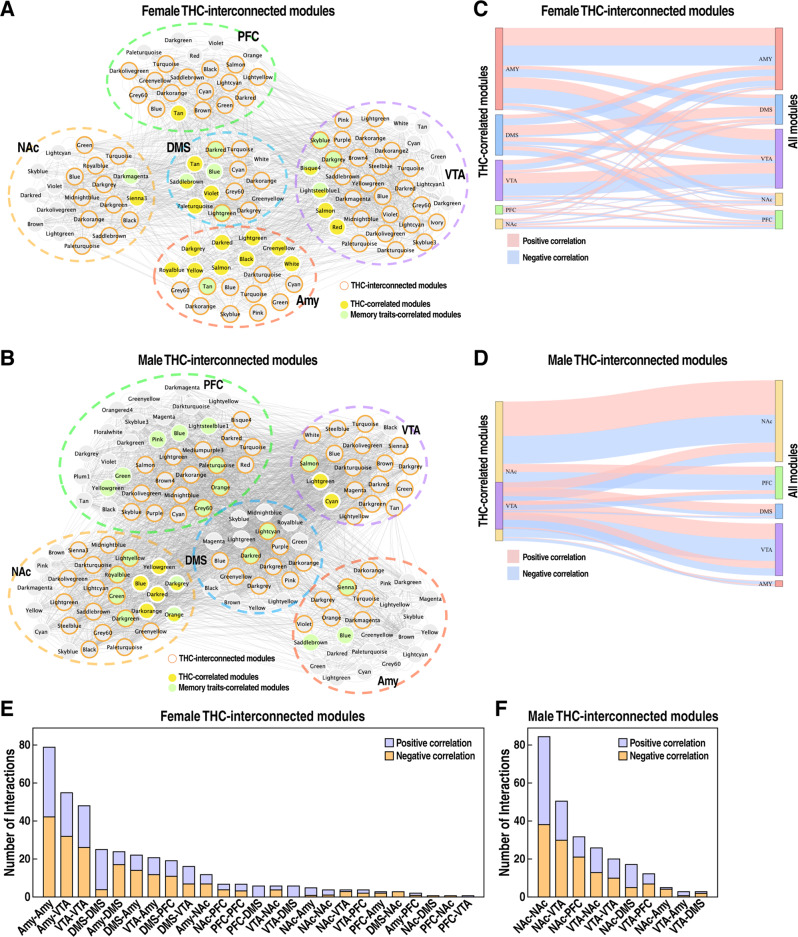
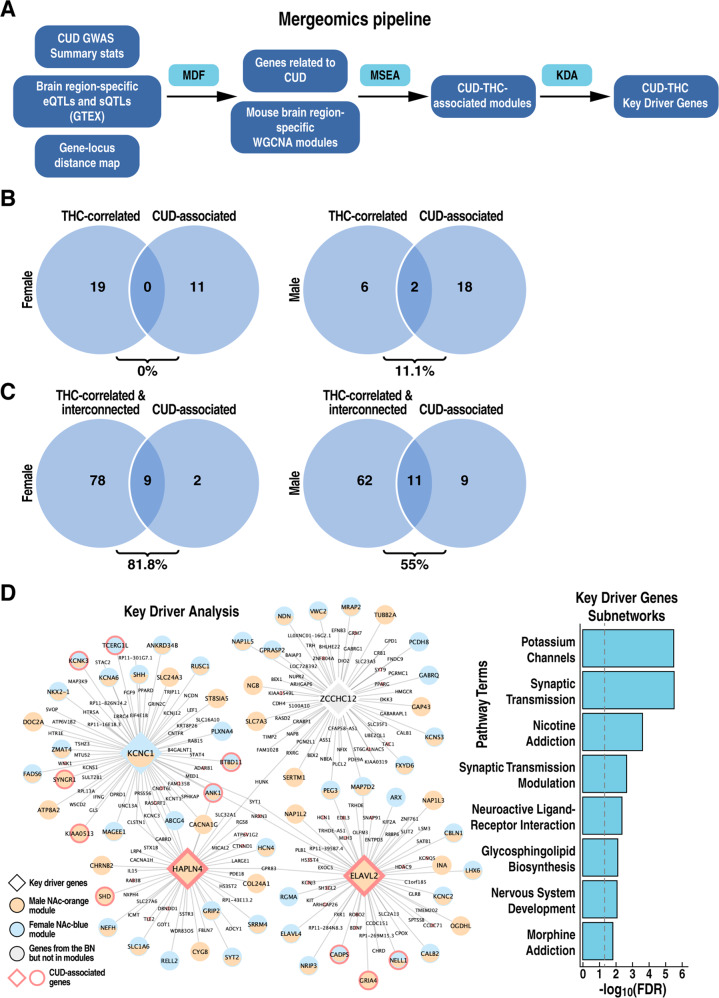
During adolescence, frequent and heavy cannabis use can lead to serious adverse health effects and cannabis use disorder (CUD). Rodent models of adolescent exposure to the main psychoactive component of cannabis, delta-9-tetrahydrocannabinol (THC), mimic the behavioral alterations observed in adolescent users. However, the underlying molecular mechanisms remain largely unknown. Here, we treated female and male C57BL6/N mice with high doses of THC during early adolescence and assessed their memory and social behaviors in late adolescence. We then profiled the transcriptome of five brain regions involved in cognitive and addiction-related processes. We applied gene coexpression network analysis and identified gene coexpression modules, termed cognitive modules, that simultaneously correlated with THC treatment and memory traits reduced by THC. The cognitive modules were related to endocannabinoid signaling in the female dorsal medial striatum, inflammation in the female ventral tegmental area, and synaptic transmission in the male nucleus accumbens. Moreover, cross-brain region module-module interaction networks uncovered intra- and inter-region molecular circuitries influenced by THC. Lastly, we identified key driver genes of gene networks associated with THC in mice and genetic susceptibility to CUD in humans. This analysis revealed a common regulatory mechanism linked to CUD vulnerability in the nucleus accumbens of females and males, which shared four key drivers (Hapln4, Kcnc1, Elavl2, Zcchc12). These genes regulate transcriptional subnetworks implicated in addiction processes, synaptic transmission, brain development, and lipid metabolism. Our study provides novel insights into disease mechanisms regulated by adolescent exposure to THC in a sex- and brain region-specific manner.
Overview
The claims and statistics of this paper haven’t been checked yet.
Free: it reads the open-access text and checks the first 5 claims that cite a source we can check. Create a free account to check every claim.
Integrity signals
Registry
Cites
Statistics
Figures
Verification
Claims the paper makes
The claims and statistics of this paper haven’t been checked yet.
Free: it reads the open-access text and checks the first 5 claims that cite a source we can check. Create a free account to check every claim.
Claims other papers make about this one
Each is checked against this paper’s own text: does it say what the citing paper says it does?
The cited source says what the claim attributes to it.
In the citing paper
“For example, Zuo and colleagues [137] reported that female mice exhibited a larger number of differentially expressed genes (DEGs) across the amygdala and dorsal medial striatum (DMS) compared to males.”
From Consequences of adolescent drug use (2023) · cites this paper as [137]
Self-check
Percentages, sums and reported differences re-computed from the paper’s own numbers.
The self-check needs the paper’s full text.
Citations
Cites
WGCNA: an R package for weighted correlation network analysis
Langfelder, P., & Horvath, S. (2008) · BMC Bioinformatics · doi:10.1186/1471-2105-9-559 · Cited by 27,252
Determination and characterization of a cannabinoid receptor in rat brain
Devane, W. A., Dysarz, F. A., Johnson, M. R., Melvin, L. S., & Howlett, A. C. (1988) · Molecular Pharmacology · doi:10.1016/s0026-895x(25)09876-1 · Cited by 2,443 · cited 2×
“The biological effects of THC are mediated mainly by members of the G protein-76 coupled receptors (GPCR) family, such as cannabinoid receptors 1 (CB1R) and 2 (CB2R) 16 .”
BackgroundJohnston, L., Miech, R., & O'Malley, P. (2020) · doi:10.3998/2027.42/162579 · Cited by 1,611 · cited 1×
“Recent data showed that more than one-third of 12th graders in the US used cannabis in the past year, reflecting an overall decline in the perceived risk of regular cannabis use among adolescents [2].”
BackgroundAn Introduction to the Endogenous Cannabinoid System
Lu, H.-C., & Mackie, K. (2016) · Biological Psychiatry · doi:10.1016/j.biopsych.2015.07.028 · Cited by 1,234
The endocannabinoid system and the brain.
Mechoulam, R., & Parker, L. A. (2013) · Annual Review of Psychology · doi:10.1146/annurev-psych-113011-143739 · Cited by 1,090
Cell type-specific loss of BDNF signaling mimics optogenetic control of cocaine reward
Lobo, M. K., Covington, H. E., Chaudhury, D., Friedman, A. K., Sun, H., Damez-Werno, D., Dietz, D. M., Zaman, S., Koo, J. W., Kennedy, P. J., et al. (2010) · Science · doi:10.1126/science.1188472 · Cited by 880
Effects of Cannabis Use on Human Behavior, Including Cognition, Motivation, and Psychosis: A Review
Volkow, N. D., Swanson, J. M., Evins, A. E., DeLisi, L. E., Meier, M. H., Gonzalez, R., Bloomfield, M. A. P., Curran, H. V., & Baler, R. (2016) · JAMA Psychiatry · doi:10.1001/jamapsychiatry.2015.3278 · Cited by 867
Crean, R. D., Crane, N. A., & Mason, B. J. (2011) · Journal of Addiction Medicine · doi:10.1097/adm.0b013e31820c23fa · Cited by 732
Endocannabinoids: endogenous cannabinoid receptor ligands with neuromodulatory action
Di Marzo, V., Melck, D., Bisogno, T., & De Petrocellis, L. (1998) · Trends in Neurosciences · doi:10.1016/s0166-2236(98)01283-1 · Cited by 712
Hernandez-Avila, C. A., Rounsaville, B. J., & Kranzler, H. R. (2004) · Drug and Alcohol Dependence · doi:10.1016/j.drugalcdep.2004.02.001 · Cited by 600
Endocannabinoid signaling as a synaptic circuit breaker in neurological disease
Katona, I., & Freund, T. F. (2008) · Nature Medicine · doi:10.1038/nm.f.1869 · Cited by 579
Cannabis use and cannabis use disorder
Connor, J. P., Stjepanović, D., Le Foll, B., Hoch, E., Budney, A. J., & Hall, W. D. (2021) · Nature Reviews Disease Primers · doi:10.1038/s41572-021-00247-4 · Cited by 552 · cited 2×
“Moreover, early cannabis use before 16 years of age increases the risk of developing psychiatric disorders, including cannabis use disorder (CUD) [9, 10].”
Backgroundthe 23andMe Research Team, Pasman, J. A., The Substance Use Disorders Working Group of the Psychiatric Genomics Consortium, International Cannabis Consortium, Verweij, K. J. H., Gerring, Z., Stringer, S., Sanchez-Roige, S., Treur, J. L., Abdellaoui, A., et al. (2018) · Nature Neuroscience · doi:10.1038/s41593-018-0206-1 · Cited by 498
Young adult sequelae of adolescent cannabis use: an integrative analysis.
Silins, E., Horwood, L. J., Patton, G. C., Fergusson, D. M., Olsson, C. A., Hutchinson, D. M., Spry, E., Toumbourou, J. W., Degenhardt, L., Swift, W., et al. (2014) · The Lancet Psychiatry · doi:10.1016/s2215-0366(14)70307-4 · Cited by 443
Keep off the grass? Cannabis, cognition and addiction
Curran, H. V., Freeman, T. P., Mokrysz, C., Lewis, D. A., Morgan, C. J. A., & Parsons, L. H. (2016) · Nature Reviews Neuroscience · doi:10.1038/nrn.2016.28 · Cited by 389 · cited 1×
“The high prevalence rates of cannabis use among adolescents pose a significant concern as cannabis misuse by adolescents can lead to persistent cognitive impairments in learning, attention, and memory 3–8 .”
BackgroundMechanisms contributing to prefrontal cortex maturation during adolescence
Caballero, A., Granberg, R., & Tseng, K. Y. (2016) · Neuroscience & Biobehavioral Reviews · doi:10.1016/j.neubiorev.2016.05.013 · Cited by 357
Sex-Dependent Effects of Cannabis and Cannabinoids: A Translational Perspective
Cooper, Z. D., & Craft, R. M. (2018) · Neuropsychopharmacology · doi:10.1038/npp.2017.140 · Cited by 350 · cited 1×
“For example, sex-specific hormonal changes [71] or pharmacokinetic factors [72] during adolescence and the differential density of cannabinoid receptors in the female and male brain [73] could contribute to the sex differences observed in our study.”
BackgroundSturman, D. A., & Moghaddam, B. (2011) · Neuroscience & Biobehavioral Reviews · doi:10.1016/j.neubiorev.2011.04.003 · Cited by 341
A large-scale genome-wide association study meta-analysis of cannabis use disorder
Johnson, E. C., Demontis, D., Thorgeirsson, T. E., Walters, R. K., Polimanti, R., Hatoum, A. S., Sanchez-Roige, S., Paul, S. E., Wendt, F. R., Clarke, T.-K., et al. (2020) · The Lancet Psychiatry · doi:10.1016/s2215-0366(20)30339-4 · Cited by 339 · cited 1×
“[11] CUD GWAS are labeled with red borderline.”
BackgroundCraft, R. M., Marusich, J. A., & Wiley, J. L. (2013) · Life Sciences · doi:10.1016/j.lfs.2012.06.009 · Cited by 299
Programming of neural cells by (endo)cannabinoids: from physiological rules to emerging therapies
Maccarrone, M., Guzmán, M., Mackie, K., Doherty, P., & Harkany, T. (2014) · Nature Reviews Neuroscience · doi:10.1038/nrn3846 · Cited by 298
Cahill, K. M., Huo, Z., Tseng, G. C., Logan, R. W., & Seney, M. L. (2018) · Scientific Reports · doi:10.1038/s41598-018-27903-2 · Cited by 292 · cited 1×
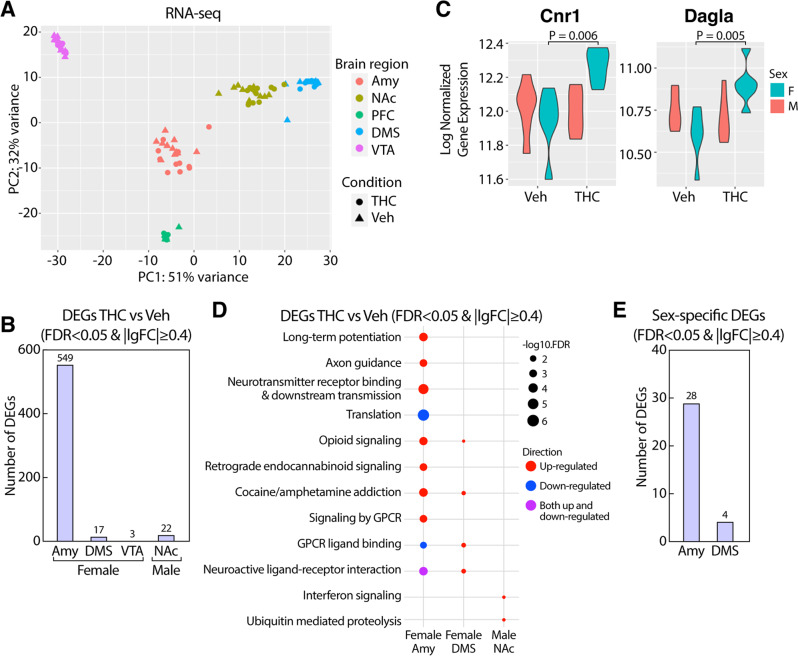
“In agreement with DEG analysis, threshold-free RRHO2 [33] analysis showed minimal overlap in DEGs when we compared gene expression changes between most pairs of brain regions or between sexes (Fig.”
ResultCircuitry for associative plasticity in the amygdala involves endocannabinoid signaling
Azad, S. C., Monory, K., Marsicano, G., Cravatt, B. F., Lutz, B., Zieglgänsberger, W., & Rammes, G. (2004) · The Journal of Neuroscience · doi:10.1523/jneurosci.2134-04.2004 · Cited by 263 · cited 1×
“Consistent with these observations, animal studies also reported perturbation of synaptic transmission in the Amy and NAc following administration of exogenous cannabinoids [64, 65], which is in line with our observation that eCB genes (Cnr1 and Dagla) are upregulated in the female Amy.”
ResultGilman, J. M., Kuster, J. K., Lee, S., Lee, M. J., Kim, B. W., Makris, N., van der Kouwe, A., Blood, A. J., & Breiter, H. C. (2014) · The Journal of Neuroscience · doi:10.1523/jneurosci.4745-13.2014 · Cited by 250 · cited 4×
“In line with these findings, brain morphological studies of human cannabis users have shown that marijuana use may be associated with disrupting the neural organization of the Amy and NAc 61 .”
InfluentialThe endocannabinoid system: emotion, learning and addiction
Moreira, F. A., & Lutz, B. (2008) · Addiction Biology · doi:10.1111/j.1369-1600.2008.00104.x · Cited by 222
The Role of the Endocannabinoid System and Genetic Variation in Adolescent Brain Development
Meyer, H. C., Lee, F. S., & Gee, D. G. (2018) · Neuropsychopharmacology · doi:10.1038/npp.2017.143 · Cited by 219 · cited 1×
“Moreover, the fluctuations of eCB signaling during adolescence influence the pubertal changes in gonadal hormone secretion [21].”
BackgroundCannabis and the Developing Brain: Insights into Its Long-Lasting Effects
Hurd, Y. L., Manzoni, O. J., Pletnikov, M. V., Lee, F. S., Bhattacharyya, S., & Melis, M. (2019) · The Journal of Neuroscience · doi:10.1523/jneurosci.1165-19.2019 · Cited by 218
Cannabinoid self‐administration in rats: sex differences and the influence of ovarian function
Fattore, L., Spano, M. S., Altea, S., Angius, F., Fadda, P., & Fratta, W. (2007) · British Journal of Pharmacology · doi:10.1038/sj.bjp.0707465 · Cited by 199
Association of Cannabis Use During Adolescence With Neurodevelopment
Albaugh, M. D., Ottino-Gonzalez, J., Sidwell, A., Lepage, C., Juliano, A., Owens, M. M., Chaarani, B., Spechler, P., Fontaine, N., Rioux, P., et al. (2021) · JAMA Psychiatry · doi:10.1001/jamapsychiatry.2021.1258 · Cited by 176
Roles of the Endocannabinoid System in Learning and Memory
Marsicano, G., & Lafenêtre, P. (2009) · Current topics in behavioral neurosciences · doi:10.1007/978-3-540-88955-7_8 · Cited by 174
Sherva, R., Wang, Q., Kranzler, H., Zhao, H., Koesterer, R., Herman, A., Farrer, L. A., & Gelernter, J. (2016) · JAMA Psychiatry · doi:10.1001/jamapsychiatry.2016.0036 · Cited by 174
Modulating the Neuromodulators: Dopamine, Serotonin, and the Endocannabinoid System
Peters, K. Z., Cheer, J. F., & Tonini, R. (2021) · Trends in Neurosciences · doi:10.1016/j.tins.2021.02.001 · Cited by 168
Gender Differences in Adolescent Marijuana Use and Associated Psychosocial Characteristics
Schepis, T. S., Desai, R. A., Cavallo, D. A., Smith, A. E., McFetridge, A., Liss, T. B., Potenza, M. N., & Krishnan-Sarin, S. (2011) · Journal of Addiction Medicine · doi:10.1097/adm.0b013e3181d8dc62 · Cited by 161
Sex differences in antinociceptive and motoric effects of cannabinoids.
Tseng, A. H., & Craft, R. (2001) · European Journal of Pharmacology · doi:10.1016/s0014-2999(01)01267-5 · Cited by 156
Miwa, J. M., Stevens, T. R., King, S. L., Caldarone, B. J., Ibanez-Tallon, I., Xiao, C., Fitzsimonds, R. M., Pavlides, C., Lester, H. A., Picciotto, M. R., et al. (2006) · Neuron · doi:10.1016/j.neuron.2006.07.025 · Cited by 154
Trajectory of adolescent cannabis use on addiction vulnerability
Hurd, Y. L., Michaelides, M., Miller, M. L., & Jutras-Aswad, D. (2014) · Neuropharmacology · doi:10.1016/j.neuropharm.2013.07.028 · Cited by 153
Gender effects on amygdala morphometry in adolescent marijuana users
McQueeny, T., Padula, C. B., Price, J., Medina, K. L., Logan, P., & Tapert, S. F. (2011) · Behavioural Brain Research · doi:10.1016/j.bbr.2011.05.031 · Cited by 139 · cited 1×
“In particular, previous studies have documented that female teenagers who use marijuana are more susceptible than males to structural abnormalities of the Amy, which were correlated with worse internalizing symptoms [63].”
BackgroundHamilton, P. J., & Nestler, E. J. (2019) · Current Opinion in Neurobiology · doi:10.1016/j.conb.2019.05.005 · Cited by 137
Miller, M. L., Chadwick, B., Dickstein, D. L., Purushothaman, I., Egervari, G., Rahman, T., Tessereau, C., Hof, P. R., Roussos, P., Shen, L., et al. (2019) · Molecular Psychiatry · doi:10.1038/s41380-018-0243-x · Cited by 134 · cited 12×
“Miller et al reported that adolescent exposure to THC in male rats was associated with gene expression changes related to cytoskeleton and chromatin regulation in the PFC 26 .”
BackgroundResultInfluentialTseng, A. H., Harding, J. W., & Craft, R. M. (2004) · Behavioural Brain Research · doi:10.1016/j.bbr.2004.01.029 · Cited by 132 · cited 1×
“For example, sex-specific hormonal changes [71] or pharmacokinetic factors [72] during adolescence and the differential density of cannabinoid receptors in the female and male brain [73] could contribute to the sex differences observed in our study.”
BackgroundGenome-wide association study implicates CHRNA2 in cannabis use disorder
Demontis, D., Rajagopal, V. M., Thorgeirsson, T. E., Als, T. D., Grove, J., Leppälä, K., Gudbjartsson, D. F., Pallesen, J., Hjorthøj, C., Reginsson, G. W., et al. (2019) · Nature Neuroscience · doi:10.1038/s41593-019-0416-1 · Cited by 131
Shu, L., Zhao, Y., Kurt, Z., Byars, S. G., Tukiainen, T., Kettunen, J., Orozco, L. D., Pellegrini, M., Lusis, A. J., Ripatti, S., et al. (2016) · BMC Genomics · doi:10.1186/s12864-016-3198-9 · Cited by 130
Self-citationZamberletti, E., Gabaglio, M., Prini, P., Rubino, T., & Parolaro, D. (2015) · European Neuropsychopharmacology · doi:10.1016/j.euroneuro.2015.09.021 · Cited by 127
Craft, R. M., Wakley, A. A., Tsutsui, K. T., & Laggart, J. D. (2011) · Journal of Pharmacology and Experimental Therapeutics · doi:10.1124/jpet.111.188540 · Cited by 125
Viveros, M., Llorente, R., Suarez, J., Llorente-Berzal, A., López-Gallardo, M., & Rodriguez de Fonseca, F. (2012) · Journal of Psychopharmacology · doi:10.1177/0269881111408956 · Cited by 124 · cited 1×
“The eCB system plays a critical role in the maturation of brain circuits during adolescence by regulating excitatory and inhibitory neurotransmission [20].”
BackgroundMurphy, M., Mills, S., Winstone, J., Leishman, E., Wager-Miller, J., Bradshaw, H., & Mackie, K. (2017) · Cannabis and Cannabinoid Research · doi:10.1089/can.2017.0034 · Cited by 120
Castellanos-Ryan, N., Pingault, J.-B., Parent, S., Vitaro, F., Tremblay, R. E., & Séguin, J. R. (2017) · Development and Psychopathology · doi:10.1017/s0954579416001280 · Cited by 111
O’Tuathaigh, C. M. P., Hryniewiecka, M., Behan, Á. T., Tighe, O., Coughlan, C. A., Desbonnet, L., Cannon, M. D., Karayiorgou, M., Gogos, J. A., Cotter, D., et al. (2010) · Neuropsychopharmacology · doi:10.1038/npp.2010.100 · Cited by 110
Evidence for a Sex-Specific Residual Effect of Cannabis on Visuospatial Memory
Pope, H. G., Jacobs, A., Mialet, J.-P., Yurgelun-Todd, D., & Gruber, S. (2010) · Psychotherapy and Psychosomatics · doi:10.1159/000289132 · Cited by 101
A genome-wide association study of DSM-IV cannabis dependence: Genomics of cannabis dependence
Agrawal, A., Lynskey, M. T., Hinrichs, A., Grucza, R., Saccone, S. F., Krueger, R., Neuman, R., Howells, W., Fisher, S., Fox, L., et al. (2011) · Addiction Biology · doi:10.1111/j.1369-1600.2010.00255.x · Cited by 101
Ding, J., Blencowe, M., Nghiem, T., Ha, S.-M., Chen, Y.-W., Li, G., & Yang, X. (2021) · Nucleic Acids Research · doi:10.1093/nar/gkab405 · Cited by 97 · cited 2×
“To gain further insights into the genes, coexpression networks, and pathways associated with CUD, we applied the Mergeomic pipeline [31, 40] to integrate the human CUD GWAS signals with THC-correlated gene coexpression networks for each brain region and sex in mice (Fig.”
MethodSelf-citationKolb, B., Gorny, G., Limebeer, C. L., & Parker, L. A. (2006) · Synapse · doi:10.1002/syn.20313 · Cited by 84
Antinociceptive, behavioural and neuroendocrine effects of CP 55,940 in young rats
Romero, E., Martín‐Fernández, B., Sagredo, O., Gomez, N., Urigüen, L., Guaza, C., de Miguel, R., Ramos, J. A., & Viveros, M. (2002) · Developmental Brain Research · doi:10.1016/s0165-3806(02)00306-1 · Cited by 81
The influence of cannabinoids on learning and memory processes of the dorsal striatum
Goodman, J., & Packard, M. G. (2015) · Neurobiology of Learning and Memory · doi:10.1016/j.nlm.2015.06.008 · Cited by 79
Berto, S., Usui, N., Konopka, G., & Fogel, B. L. (2016) · Human Molecular Genetics · doi:10.1093/hmg/ddw110 · Cited by 78 · cited 1×
“ELAVL2 is an RNA-binding protein involved in splicing in neuronal development [43], and ZCCHC12 is a neuronal transcriptional coactivator [44].”
BackgroundShu, L., Chan, K. H. K., Zhang, G., Huan, T., Kurt, Z., Zhao, Y., Codoni, V., Trégouët, D.-A., Cardiogenics Consortium, Yang, J., et al. (2017) · PLOS Genetics · doi:10.1371/journal.pgen.1007040 · Cited by 78
Self-citationCannabinoid modulation of drug reward and the implications of marijuana legalization
Covey, D. P., Wenzel, J. M., & Cheer, J. F. (2015) · Brain Research · doi:10.1016/j.brainres.2014.11.034 · Cited by 72
López-Gallardo, M., López-Rodríguez, A. B., Llorente-Berzal, Á., Rotllant, D., Mackie, K., Armario, A., Nadal, R., & Viveros, M.-P. (2012) · Neuroscience · doi:10.1016/j.neuroscience.2011.09.063 · Cited by 71
Mäkelä, P., Wakeley, J., Gijsman, H. J., Robson, P. J., Bhagwagar, Z., & Rogers, R. D. (2005) · Neuropsychopharmacology · doi:10.1038/sj.npp.1300871 · Cited by 70
Developmental regulation of fear learning and anxiety behavior by endocannabinoids
Lee, T. T. ‐., Hill, M. N., & Lee, F. S. (2016) · Genes, Brain and Behavior · doi:10.1111/gbb.12253 · Cited by 67
Jouroukhin, Y., Zhu, X., Shevelkin, A. V., Hasegawa, Y., Abazyan, B. N., Saito, A., Pevsner, J., Kamiya, A., & Pletnikov, M. V. (2018) · Biological Psychiatry · doi:10.1016/j.biopsych.2018.07.024 · Cited by 62
Role of the dorsal hippocampus in object memory load
Sannino, S., Russo, F., Torromino, G., Pendolino, V., Calabresi, P., & De Leonibus, E. (2012) · Learning & Memory · doi:10.1101/lm.025213.111 · Cited by 57
Cannabis Use Disorder in Adolescence
Simpson, A. K., & Magid, V. (2016) · Child and Adolescent Psychiatric Clinics of North America · doi:10.1016/j.chc.2016.03.003 · Cited by 40 · cited 1×
“Moreover, early cannabis use before 16 years of age increases the risk of developing psychiatric disorders, including cannabis use disorder (CUD) [9, 10].”
BackgroundSwartzwelder, N. A., Risher, M., Abdelwahab, S. H., D’Abo, A., Rezvani, A. H., Levin, E. D., Wilson, W. A., Swartzwelder, H. S., & Acheson, S. K. (2012) · Neuroscience Letters · doi:10.1016/j.neulet.2012.08.037 · Cited by 39
Saravia, R., Ten-Blanco, M., Julià-Hernández, M., Gagliano, H., Andero, R., Armario, A., Maldonado, R., & Berrendero, F. (2019) · Neuropharmacology · doi:10.1016/j.neuropharm.2018.11.016 · Cited by 37
Fionda, V. (2017) · Elsevier eBooks · doi:10.1016/b978-0-12-809633-8.20420-2 · Cited by 30
Fields, J. A., Swinton, M. K., Montilla‐Perez, P., Ricciardelli, E., & Telese, F. (2022) · Cannabis and Cannabinoid Research · doi:10.1089/can.2020.0128 · Cited by 30 · cited 1×
“Moreover, previous reports have shown that astrocytes play a role in mediating the effects of repetitive exposure to cannabinoids [46, 69], including astrogliosis in the VTA [70].”
BackgroundSelf-citationEdamatsu, M., Miyano, R., Fujikawa, A., Fujii, F., Hori, T., Sakaba, T., & Oohashi, T. (2018) · Journal of Neurochemistry · doi:10.1111/jnc.14571 · Cited by 29 · cited 1×
“KNCN1 is a voltage-gated potassium channel [41], and HAPLN4 is a component of the perineuronal net [42].”
BackgroundFerland, J. N., Ellis, R. J., Rompala, G. R., Landry, J. A., Callens, J. E., Ly, A., Frier, M. D., Uzamere, T. O., & Hurd, Y. L. (2022) · Molecular Psychiatry · doi:10.1038/s41380-022-01467-0 · Cited by 25 · cited 3×
“However, these analyses were limited to one brain region in male rats [26, 27].”
BackgroundResultInfluentialPintori, N., Castelli, M. P., Miliano, C., Simola, N., Fadda, P., Fattore, L., Scherma, M., Ennas, M. G., Mostallino, R., Flore, G., et al. (2021) · British Journal of Pharmacology · doi:10.1111/bph.15494 · Cited by 21
Nia, A. B., Mann, C. L., Spriggs, S. A., DeFrancisco, D., Carbonaro, S., Parvez, L., GALYNKER, I. I., Perkel, C., & Hurd, Y. L. (2019) · The Journal of Clinical Psychiatry · doi:10.4088/jcp.18m12539 · Cited by 19
Iemolo, A., Montilla‐Perez, P., Nguyen, J. D., Risbrough, V. B., Taffe, M. A., & Telese, F. (2020) · Neuropharmacology · doi:10.1016/j.neuropharm.2021.108495 · Cited by 19
Self-citationHuman ZCCHC12 activates AP-1 and CREB signaling as a transcriptional co-activator
Li, H., Liu, Q., Hu, X., Feng, D., Xiang, S., He, Z., Hu, X., Zhou, J., Ding, X., Zhou, C., et al. (2009) · Acta Biochimica et Biophysica Sinica · doi:10.1093/abbs/gmp042 · Cited by 17 · cited 1×
“ELAVL2 is an RNA-binding protein involved in splicing in neuronal development [43], and ZCCHC12 is a neuronal transcriptional coactivator [44].”
BackgroundSelf-citationSabran‐Cohen, T., Bright, U., Zer‐Aviv, T. M., & Akirav, I. (2021) · European Journal of Neuroscience · doi:10.1111/ejn.15425 · Cited by 15
Social impairments in mice lacking the voltage-gated potassium channel Kv3.1
Bee, S., Ringland, A., & Coutellier, L. D. (2021) · Behavioural Brain Research · doi:10.1016/j.bbr.2021.113468 · Cited by 10 · cited 1×
“KNCN1 is a voltage-gated potassium channel [41], and HAPLN4 is a component of the perineuronal net [42].”
BackgroundAcute Abdominal Pain in a Lung Transplant Recipient
van den Berg, J. W., Verschuuren, E. A. M., Ouwens, J. P., Rottier, C., Koëter, G. H., de Boer, W. J., & van der Bij, W. (1999) · Respiration · doi:10.1159/000029365 · Cited by 8
Effects of Cannabis Use on Human Behavior—Reply
Volkow, N. D. (2016) · JAMA Psychiatry · doi:10.1001/jamapsychiatry.2016.1332 · Cited by 8
Genetic determinants of cannabis use: a systematic review protocol
Hillmer, A., Chawar, C., Sanger, S., D’Elia, A., Butt, M., Kapoor, R., Kapczinski, F. P., Paré, G., Thabane, L., & Samaan, Z. (2020) · Systematic Reviews · doi:10.1186/s13643-020-01442-2 · Cited by 4 · cited 1×
“Associations between coexpression modules altered by THC and human cannabis use disorder Recent GWAS have started to identify genetic variants associated with CUD [39].”
BackgroundZhou, X., Barkley‐Levenson, A. M., Montilla‐Perez, P., Telese, F., & Palmer, A. A. (2021) · Genes Brain & Behavior · doi:10.1111/gbb.12760 · Cited by 4
Self-citation
Cited by
Consequences of adolescent drug use
Steinfeld, M. R., & Torregrossa, M. M. (2023) · Translational Psychiatry · doi:10.1038/s41398-023-02590-4 · Cited by 237
“For example, Zuo and colleagues [137] reported that female mice exhibited a larger number of differentially expressed genes (DEGs) across the amygdala and dorsal medial striatum (DMS) compared to males.”
BackgroundUse of Cannabis and Cannabinoids for Treatment of Cancer
Cherkasova, V., Wang, B., Gerasymchuk, M., Fiselier, A., Kovalchuk, O., & Kovalchuk, I. (2022) · Cancers · doi:10.3390/cancers14205142 · Cited by 78
Early life adversity: Epigenetic regulation underlying drug addiction susceptibility
Winter, J. J., Rodríguez-Acevedo, K. L., Dittrich, M., & Heller, E. A. (2023) · Molecular and Cellular Neuroscience · doi:10.1016/j.mcn.2023.103825 · Cited by 19
“Transcriptional profiling of adult rodent NAc following adolescent THC or saline exposure identifies sex-specific differential gene expression (Zuo et al., 2022; Orihuel et al., 2021).”
BackgroundIzquierdo-Luengo, C., Ten-Blanco, M., Ponce-Renilla, M., Perezzan, R., Pereda-Pérez, I., & Berrendero, F. (2023) · Translational Psychiatry · doi:10.1038/s41398-023-02469-4 · Cited by 16
“By using the EPM, most of the studies have not shown differences in anxiety in adult male [24, 40, 41] or female [40, 41] rodents due to adolescent Δ 9 -THC exposure, although an anxiogenic-like effect was observed in adult male mice in another report [42].”
Developmental exposure to cannabis compromises dopamine system function and behavior
Solinas, M., & Melis, M. (2024) · Current Opinion in Behavioral Sciences · doi:10.1016/j.cobeha.2024.101442 · Cited by 8
“Preclinical studies have confirmed these negative effects of exposure to cannabis during adolescence on emotionality, cognition, and risks of addiction and have helped elucidate the underlying neurobiological mechanisms [61,62,65].”
Background
Metadata
- Authors
- Zuo, Y., Iemolo, A., Montilla-Perez, P., Li, H.-R., Yang, X., & Telese, F.
- Affiliations
- University of California, Los Angeles (US)
- University of California San Diego (US)
- Corresponding author
- Telese, Francesca
- Venue
- Neuropsychopharmacology
- Published
- 2022-08-22
- Volume
- 47
- Issue
- 12
- Pages
- 2071-2080
- ISSN
- 0893-133X (ISSN-L)
- 1740-634X
- PMC
- PMC9556757
- OpenAlex
- W4292608353
- Cited by
- 25
- References
- 74
- Citations by year
- 2026: 7 · 2025: 8 · 2024: 4 · 2023: 4 · 2022: 2
- FWCI
- 2.69
- Type
- journal article
- Language
- en
- Open access
- hybrid
- doi.org
- Licence
- cc-by
- creativecommons.org/licenses/by/4.0 (tdm)
- creativecommons.org/licenses/by/4.0 (vor)
- Locations
- Neuropsychopharmacology (publishedVersion, cc-by)
- bioRxiv (Cold Spring Harbor Laboratory) (acceptedVersion, cc-by-nc-nd)
- PubMed Central (publishedVersion, cc-by)
- PubMed (publishedVersion)
- eScholarship (California Digital Library) (submittedVersion, cc-by)
- Funders
- U.S. Department of Health & Human Services | NIH | National Center for Advancing Translational Sciences (UL1TR001881)
- U.S. Department of Health & Human Services | NIH | National Institute on Drug Abuse (U01DA050239, DP1DA042232)
- Topics
- Health Sciences › Medicine › Pharmacology (medical) › Cannabis and Cannabinoid Research
- Life Sciences › Neuroscience › Cellular and Molecular Neuroscience › Neurotransmitter Receptor Influence on Behavior
- Health Sciences › Medicine › Pediatrics, Perinatology and Child Health › Prenatal Substance Exposure Effects
- Keywords
- adolescent cannabis exposure, delta-9-tetrahydrocannabinol, cannabis use disorder, sex differences, gene co-expression network, gene expression profiling, endocannabinoid signaling, dorsomedial striatum, ventral tegmental area, nucleus accumbens, synaptic transmission, neuroinflammation, memory impairment, social behavior, driver genes, KCNC1, ELAVL2, genetic susceptibility
- MeSH terms
- Adolescent, Animals, Brain, Cannabis, Female, Hallucinogens, Humans, Male, Mice, Inbred C57BL, Sex Factors, Dronabinol, Gene Expression, Mice, Shaw Potassium Channels, Gene Regulatory Networks, Cannabinoid Receptor Agonists, Endocannabinoids
About these checks
Registry, retraction, Cites and statistics results are computed, not judged, with one exception: a printed reference that no index lists is read once by a model before it counts as a citation error. Claims are extracted by a model and kept only when their quote appears verbatim in the text; each cited source is then checked, with a model’s help, for whether it says what the claim relies on. Those verdicts can be wrong — read the claim’s quote and the cited source before relying on one.
Statistics and arithmetic are recomputed, not judged.
Confidence bands are shown only for fields calibrated on our annotated test set. None is calibrated yet, so no band is shown.
What counts as a claim ›How we measure confidence ›How we check this ›
Are you an author, or do you see a problem with this page? Request a review
Data sources
Bibliographic data: Semantic Scholar, OpenAlex, Crossref.
Contains information from the Semantic Scholar Academic Graph Datasets, made available under the ODC Attribution License (ODC-BY 1.0).
Semantic Scholar’s data is described in: Kinney, R., et al. (2023). The Semantic Scholar Open Data Platform. arXiv:2301.10140.
