

Effect of the ketogenic diet on glycemic control, insulin resistance, and lipid metabolism in patients with T2DM: a systematic review and meta-analysis
Open accessThe DOI matches its Crossref record; 52 of the 52 references it cites were found in a registry or an index.
Abstract
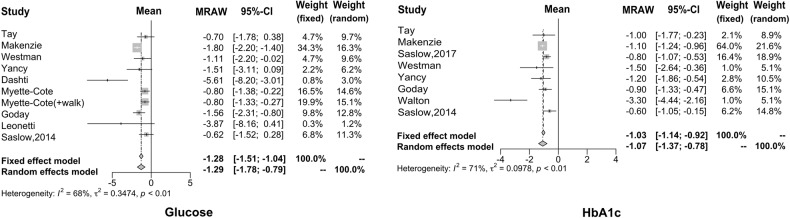
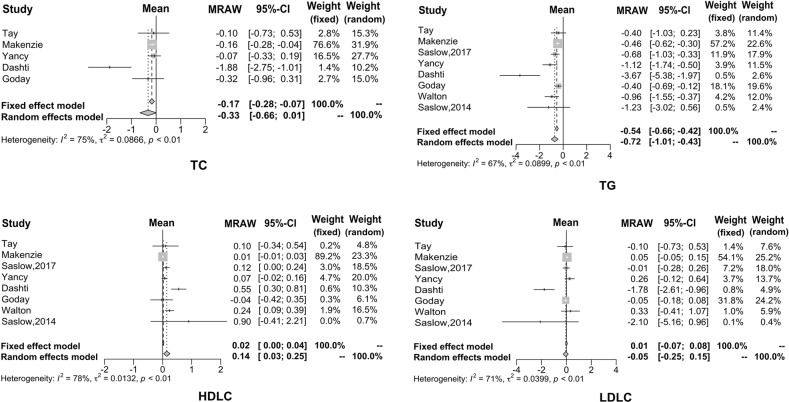
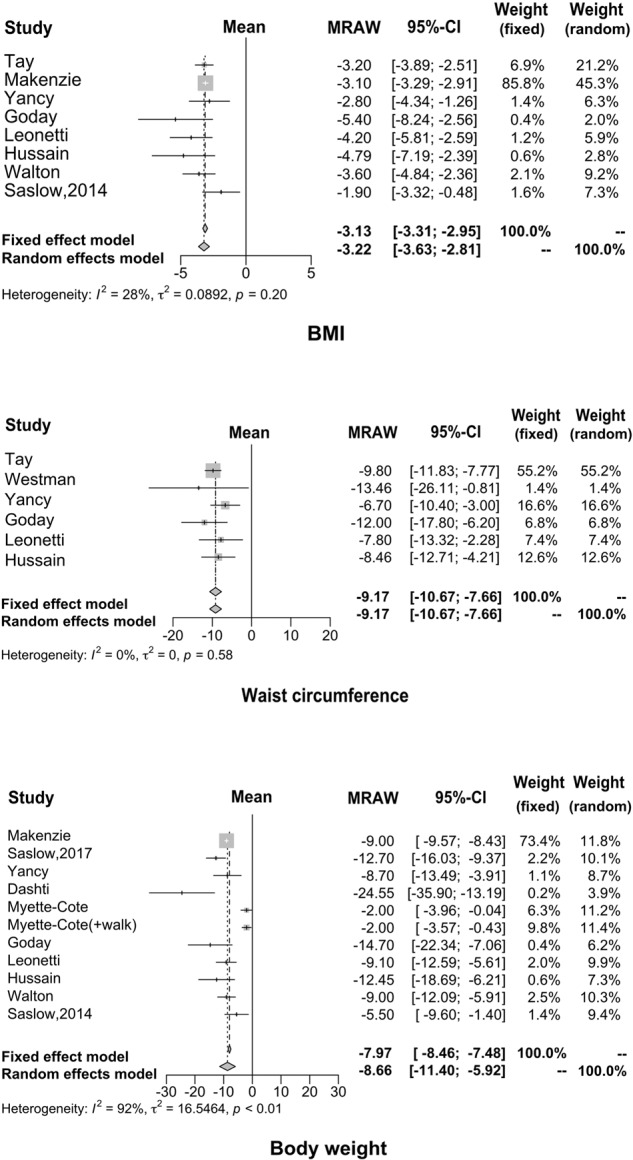
Background: At present, the beneficial effect of the ketogenic diet (KD) on weight loss in obese patients is generally recognized. However, a systematic research on the role of KD in the improvement of glycemic and lipid metabolism of patients with diabetes is still found scarce. Methods: This meta-study employed the meta-analysis model of random effects or of fixed effects to analyze the average difference before and after KD and the corresponding 95% CI, thereby evaluating the effect of KD on T2DM. Results: After KD intervention, in terms of glycemic control, the level of fasting blood glucose decreased by 1.29 mmol/L (95% CI: −1.78 to −0.79) on average, and glycated hemoglobin A1c by 1.07 (95% CI: −1.37 to −0.78). As for lipid metabolism, triglyceride was decreased by 0.72 (95% CI: −1.01 to −0.43) on average, total cholesterol by 0.33 (95% CI: −0.66 to −0.01), and low-density lipoprotein by 0.05 (95% CI: −0.25 to −0.15); yet, high-density lipoprotein increased by 0.14 (95% CI: 0.03−0.25). In addition, patients’ weight decreased by 8.66 (95% CI: −11.40 to −5.92), waist circumference by 9.17 (95% CI: −10.67 to −7.66), and BMI by 3.13 (95% CI: −3.31 to −2.95). Conclusion: KD not only has a therapeutic effect on glycemic and lipid control among patients with T2DM but also significantly contributes to their weight loss.
Overview
The claims and statistics of this paper haven’t been checked yet.
Free: it reads the open-access text and checks the first 5 claims that cite a source we can check. Create a free account to check every claim.
Integrity signals
Registry
Cites
Statistics
Figures
Verification
Claims the paper makes
The claims and statistics of this paper haven’t been checked yet.
Free: it reads the open-access text and checks the first 5 claims that cite a source we can check. Create a free account to check every claim.
Claims other papers make about this one
Each is checked against this paper’s own text: does it say what the citing paper says it does?
The source backs part of the claim, not all of it — or backs it for a different population, condition or comparison.
In the citing paper
“Ketogenic or very‐low‐carbohydrate diets can be a practical approach to weight loss and glycemic control for some people, while others find long‐term adherence difficult [290, 291, 292].”
From Nutritional priorities to support GLP ‐1 therapy for obesity: A joint Advisory from the American College of Lifestyle Medicine, the American Society for Nutrition, the Obesity Medicine Association, and The Obesity Society (2025) · cites this paper as [291]
Experimental — accuracy not yet measuredIn the citing paper
“Ketogenic or very-low-carbohydrate diets can be a practical approach to weight loss and glycemic control for some people, while others find long-term adherence difficult [[284], [285], [286]].”
In the citing paper
“Our findings corroborate previous evidence indicating that HbA1c levels can be significantly reduced on both a ketogenic diet (35–38) and a Mediterranean diet (39–44), especially if the diet is restricted in added sugars and refined carbohydrates (2).”
Self-check
Percentages, sums and reported differences re-computed from the paper’s own numbers.
The self-check needs the paper’s full text.
Citations
Cites
Meta-analysis in clinical trials
DerSimonian, R., & Laird, N. (1986) · Controlled Clinical Trials · doi:10.1016/0197-2456(86)90046-2 · Cited by 39,552
Quantifying heterogeneity in a meta‐analysis
Higgins, J. P. T., & Thompson, S. G. (2002) · Statistics in Medicine · doi:10.1002/sim.1186 · Cited by 36,763
Stratton, I. M. (2000) · BMJ · doi:10.1136/bmj.321.7258.405 · Cited by 9,059
Global estimates of diabetes prevalence for 2013 and projections for 2035
Guariguata, L., Whiting, D. R., Hambleton, I., Beagley, J., Linnenkamp, U., & Shaw, J. E. (2014) · Diabetes Research and Clinical Practice · doi:10.1016/j.diabres.2013.11.002 · Cited by 4,642 · cited 2×
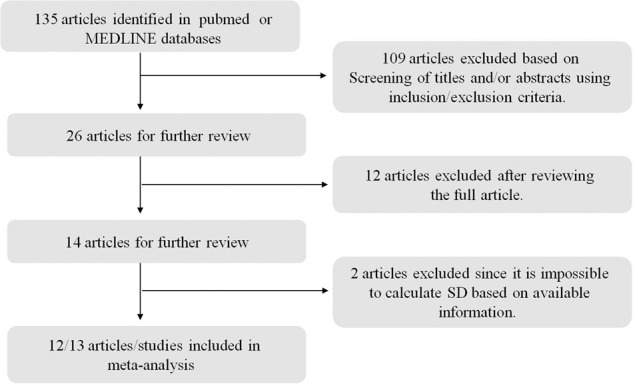
“Exclusive criteria: (1) case report studies were excluded; (2) meta-analysis or review studies were excluded; (3) studies on other diseases rather than type II diabetes were excluded; and (4) if only the respective mean and standard errors were available, such studies were excluded given it is hard to get an accurate…”
BackgroundMethodGuh, D. P., Zhang, W., Bansback, N., Amarsi, Z., Birmingham, C. L., & Anis, A. H. (2009) · BMC Public Health · doi:10.1186/1471-2458-9-88 · Cited by 3,855
Quantitative Synthesis in Systematic Reviews
Lau, J., Ioannidis, J. P. A., & Schmid, C. H. (1997) · Annals of Internal Medicine · doi:10.7326/0003-4819-127-9-199711010-00008 · Cited by 2,517
Insulin resistance and hyperglycaemia in cardiovascular disease development
Laakso, M., & Kuusisto, J. (2014) · Nature Reviews Endocrinology · doi:10.1038/nrendo.2014.29 · Cited by 858
Westman, E. C., Yancy, W. S., Mavropoulos, J. C., Marquart, M., & McDuffie, J. R. (2008) · Nutrition & Metabolism · doi:10.1186/1743-7075-5-36 · Cited by 475
Comparison of low- and high-carbohydrate diets for type 2 diabetes management: a randomized trial
Tay, J., Luscombe-Marsh, N. D., Thompson, C. H., Noakes, M., Buckley, J. D., Wittert, G. A., Yancy, W. S., & Brinkworth, G. D. (2015) · The American Journal of Clinical Nutrition · doi:10.3945/ajcn.115.112581 · Cited by 341
Hall, K. D., Chen, K. Y., Guo, J., Lam, Y. Y., Leibel, R. L., Mayer, L. E., Reitman, M. L., Rosenbaum, M., Smith, S. R., Walsh, B. T., et al. (2016) · The American Journal of Clinical Nutrition · doi:10.3945/ajcn.116.133561 · Cited by 330
Cited by
Items 101–200 of 277
Hironaka, J., Hamaguchi, M., Ichikawa, T., Nakajima, H., Okamura, T., Majima, S., Senmaru, T., Okada, H., Ushigome, E., Nakanishi, N., et al. (2024) · Journal of Diabetes Investigation · doi:10.1111/jdi.14326 · Cited by 12
Li, Z., Li, A., Liu, P., Zhang, B., & Yan, Y. (2024) · Frontiers in Nutrition · doi:10.3389/fnut.2024.1485642 · Cited by 11
Niu, Y., Gao, T., Ouyang, H., Zhang, Y., Gong, T., Zhang, Z., Cao, X., & Fu, Y. S. (2024) · ACS Applied Bio Materials · doi:10.1021/acsabm.3c01216 · Cited by 11
Liu, K., Yang, Q., Lang, Y., Zou, Y., Yuan, J., Yang, J., Ma, J., Cai, L., Kong, X., Yang, F., et al. (2025) · Journal of Diabetes · doi:10.1111/1753-0407.70140 · Cited by 11
“Ketogenic interventions, such as the KD, offer additional benefits by promoting weight loss, reducing inflammation, and improving insulin sensitivity [36].”
Bolyard, M. L., Graziano, C. M., Fontaine, K. R., Sayer, R. D., Fisher, G., & Plaisance, E. P. (2023) · Nutrients · doi:10.3390/nu15234876 · Cited by 11
“Several studies show that a standard low-carbohydrate ( 5% by kcals), high-fat ( ≥ 80% fat ketogenic diet (KD) increases circulating ketone concentrations and consistently produces weight loss [3–14], with exceptions [15,16], that results from decreased hunger and appetite [17].”
BackgroundKetogenic diet preserves muscle mass and strength in a mouse model of type 2 diabetes
Park, S. B., & Yang, S. J. (2024) · PLoS ONE · doi:10.1371/journal.pone.0296651 · Cited by 13
Self-citationJackson, M. I. (2022) · Metabolites · doi:10.3390/metabo12070591 · Cited by 12
“Humans consuming low carbohydrate foods typically manifest a reduction in fasting blood glucose [22].”
BackgroundElsahoryi, N. A., Alkurd, R. A. F., Subih, H. S., & Musharbash, R. (2023) · Obesity Medicine · doi:10.1016/j.obmed.2023.100496 · Cited by 11
Diet, Physical Exercise, and Gut Microbiota Modulation in Metabolic Syndrome: A Narrative Review
Onu, A., Tutu, A., Trofin, D. M., Onu, I., Galaction, A., Onita, C. A., Iordan, D. A., & Matei, D.-V. (2026) · Life · doi:10.3390/life16010098 · Cited by 10
Caretto, A., Zanardini, A., Frontino, G., & Pedone, E. (2026) · Nutrients · doi:10.3390/nu18071119 · Cited by 12
ADCY3: the pivotal gene in classical ketogenic diet for the treatment of epilepsy
Lin, M.-X., Gong, J., Wu, L., Lin, X. C., Zhang, Y., Lin, W., Huang, H., & Zhu, C. (2024) · Frontiers in Cellular Neuroscience · doi:10.3389/fncel.2024.1305867 · Cited by 9
Regional differences in the reduction in cerebral FDG uptake induced by the ketogenic diet
Bennett, O., Ramsay, S. C., Malacova, E., Bourgeat, P., Goodman, S. J., Dunn, C. J., Robinson, B. M., Lee, K., & Pattison, D. A. (2022) · European Journal of Hybrid Imaging · doi:10.1186/s41824-022-00150-5 · Cited by 9
Ketone bodies in renal function and diabetic kidney disease
Mechchate, H. (2025) · The Journal of Nutritional Biochemistry · doi:10.1016/j.jnutbio.2025.109915 · Cited by 8
Hsu, C., Chen, C., Hou, C., Chen, Y., Chang‐Chien, G., Lin, S.-F., & Tain, Y. (2025) · Antioxidants · doi:10.3390/antiox14091136 · Cited by 10
“In contrast, plant-based and Mediterranean diets lower T2DM and obesity risk and are considered optimal in pregnancy [140,141].”
Ketogenic diets and metabolic dysfunction-associated steatotic liver disease: a literature review
Sun, K., Li, W., Chen, Y., Nelson, E. A. S., Chen, X., & Hui, L. L. (2025) · Cell & Bioscience · doi:10.1186/s13578-025-01494-8 · Cited by 8
“With a very low intake of carbohydrates, especially simple and refined ones, ketogenic diets may also reduce insulin resistance directly through improvements of both post-prandial surge [75] and the fasting levels [76] of glucose and insulin in patients with hyperglycemia and hyperinsulinemia.”
Liu, Y., Hu, G., Zhang, Y., & Lin, J. (2024) · Nutritional Neuroscience · doi:10.1080/1028415x.2024.2329481 · Cited by 8
Shao, W., Su, Y., Liu, J., Liu, Y., Zhao, J., & Fan, X. (2024) · Diabetes & Metabolism · doi:10.1016/j.diabet.2024.101543 · Cited by 9
“It is interesting to note that some initial studies have suggested that a "ketogenic diet" could be therapeutic due to its strong suppression of insulin secretion [93].”
Beretta, M. V., Flores, C., Colameo, G. F., Echabe, L. W., & Busnello, F. M. (2024) · Nutrition Reviews · doi:10.1093/nutrit/nuae123 · Cited by 10
Ketogenic diet and β-hydroxybutyrate in osteoporosis: current progress and controversy
Luo, C., Dai, Z., He, W., He, Y., Yang, P. C., Huang, M., Li, J., Xu, Y., & Huang, W. G. (2025) · Frontiers in Nutrition · doi:10.3389/fnut.2025.1508695 · Cited by 9
Fan, G., Guo, D. L., & Zuo, H. (2023) · European Journal of Pharmacology · doi:10.1016/j.ejphar.2023.176087 · Cited by 9
Nicola, L. D., Cupisti, A., D’Alessandro, C., Gesualdo, L., Santoro, D., & Bellizzi, V. (2024) · Journal of Nephrology · doi:10.1007/s40620-024-02135-y · Cited by 10
“In the mean-while, SGLT2is, nsMRAs, GLP1-RAs may be considered pharmacological support to the (basic) dietary approach to insulin resistance, mainly consisting of low-calorie, high-fiber intake, as well as exercise training [38–40].”
Han, L., Yang, H., Zheng, Y., Wei, X., Dan, W., Zhang, L., Ding, Q., Ma, X., Wang, X., Zhao, L., et al. (2021) · Chinese Medicine · doi:10.1186/s13020-021-00479-2 · Cited by 8
Obesity and emerging intervention strategies: Mechanistic insights and novel drug targets
Feng, X., Li, S., Li, J., & Su, Z. (2025) · Chinese Medical Journal · doi:10.1097/cm9.0000000000003919 · Cited by 7
“[49] The Mediterranean diet’s effects on energy balance may be mediated through improved insulin sensitivity and modulation of gut hormones.”
The Ketogenic Diet in Type 2 Diabetes and Obesity: A Narrative Review of Clinical Evidence
Kilian, J., Szlęzak, D., Tyszka‐Czochara, M., Filipowicz-Popielarska, E., & Bronowicka-Adamska, P. (2026) · Nutrients · doi:10.3390/nu18030397 · Cited by 9
“A systematic review and meta-analysis by Yuan et al. [32] demonstrated that KD significantly improves glycemic control and insulin resistance in patients with type T2DM.”
Luthviatin, N., Setiani, O., Widjarnarko, B., & Rahfiludin, M. Z. (2024) · Narra J · doi:10.52225/narra.v4i1.704 · Cited by 7
Impact of Short-Term Lipid Overload on Whole-Body Physiology
Keles, U., Kalem-Yapar, N. E., Hultén, H., Zhao, L. N., & Kaldis, P. (2024) · Molecular and Cellular Biology · doi:10.1080/10985549.2024.2438814 · Cited by 8
Mind the Metabolic Gap: Bridging Migraine and Alzheimer's disease through Brain Insulin Resistance
Moro, L. D., Pirovano, E., & Rota, E. (2024) · Aging and Disease · doi:10.14336/ad.2024.0351 · Cited by 12
“Interestingly, it was also proven that the ketogenic diet was able to reduce insulin-resistance in other diseases, like T2DM and PCOS [235, 236].”
Gołąbek, K. D., & Regulska−Ilow, B. (2022) · Journal of Obesity · doi:10.1155/2022/7531518 · Cited by 8
“Eight of these studies also evaluated TG reduction of 0.33mmol/L (I2 � 67%), LDL-c of 0.05 (I2 � 71%), and HDL-c increase of 0.14mmol/L (I2 � 78%).”
BackgroundMethodInfluentialAl-Badrani, S. M., & Al‐Sowayan, N. S. (2022) · Journal of Biosciences and Medicines · doi:10.4236/jbm.2022.1012009 · Cited by 10
The ketogenic diet and metabolic treatments for neuropsychiatric disorders
Palmer, C. (2025) · BJPsych Open · doi:10.1192/bjo.2025.50 · Cited by 8
Practical guidelines for addressing common questions and misconceptions about the ketogenic diet
Rice, S. M., & Reynolds, D. B. (2025) · Journal of Metabolic Health · doi:10.4102/jmh.v8i1.113 · Cited by 6
The association of obesity with cardiovascular disease risk and risk-enhancing factors
Paparodis, R. D., Bantouna, D., Livadas, S., & Angelopoulos, N. (2026) · Journal of clinical lipidology · doi:10.1016/j.jacl.2025.08.018 · Cited by 6
The Effects of Ketogenic Diet on Brain Gene Expressions in Type 2 Diabetes Background
Ren, Q., Fu, J., Duan, X., Sun, L., Mu, Z., Liang, W., Li, Y., Wang, Z., & Xiu, S. (2024) · Neuroscience · doi:10.1016/j.neuroscience.2024.04.008 · Cited by 6
Impact of low-carbohydrate diet on health status: an umbrella review
Alkhunein, S., Alawad, R., Alhumaidan, O. A., Fatani, B., Alolayan, A., Alfelyeh, T., Alakeel, S. A., & Almuhtadi, Y. (2024) · Frontiers in Nutrition · doi:10.3389/fnut.2024.1321198 · Cited by 6
Xu, L., Sun, X., Wang, N., Wang, Y., Yan, L., & Zhang, C. (2025) · Scientific Reports · doi:10.1038/s41598-025-88073-6 · Cited by 8
Shi, J., Yin, G., Shi, Z., Zhang, S., Wei, J., Xue, T., & Su, X. (2024) · Endocrine Research · doi:10.1080/07435800.2024.2353121 · Cited by 5
“31 Numerous studies have shown that exercise can improve dyslipidemia, lower blood triglyceride, total cholesterol and LDL-C, and increase HDL-C levels.”
BackgroundNavigating the Spectrum of 4 Evidence-Based Nutrition Options for Type 2 Diabetes Management
Baskin, R. G., & Karp, K. A. (2025) · The Journal of Clinical Endocrinology & Metabolism · doi:10.1210/clinem/dgae646 · Cited by 6
Pattamaprapanont, P., Nava, R. C., Grover, R., Formato, M., Cooney, E. M., Pinto, A. P., Alves-Wagner, A. B., Das, A., Guan, Y., Annambhotla, M., et al. (2026) · Nature Communications · doi:10.1038/s41467-026-69349-5 · Cited by 6
“Mounting evidence demonstrates potential for ketogenic diets to improve glucose homeostasis and reduce body weight in those with type 2 diabetes 22 – 24 .”
Akinjinmi, A. A., Amballi, A. A., Abdulrahman, A. O., Aderinto, N., Adeniyi, A. A., Akindele, I. A., AbdulBasit, O. M., & Obeagu, E. I. (2025) · Medicine · doi:10.1097/md.0000000000045526 · Cited by 5
Qi, M., Shao, X., Ding, L., Zhou, Y., Yang, L., Chi, J., Che, K., Wang, Y., Xiao, M., Zhao, Y., et al. (2022) · Frontiers in Endocrinology · doi:10.3389/fendo.2022.967929 · Cited by 5
The effects of intermittent fasting and a low-carbohydrate diet on type 2 diabetes
Pelc, M. A. (2023) · JAAPA · doi:10.1097/01.jaa.0000923536.23229.d3 · Cited by 5
Impact of ketogenic diet on cardiovascular disease
Zaghloul, M. S., Elizondo-Benedetto, S., & Zayed, M. A. (2023) · Nutrition Reviews · doi:10.1093/nutrit/nuad152 · Cited by 6
Alluwyam, A. H., & Estrella, E. D. (2024) · Cureus · doi:10.7759/cureus.66419 · Cited by 6
“By examining 13 relevant studies, they found that the keto diet can effectively lower fasting blood sugar, reduce haemoglobin A1c, improve cholesterol levels, and decrease body mass index (BMI) [7].”
BackgroundLiu, T., Zhu, C., Ma, P., Ma, X., & Fan, D. (2025) · Food Bioscience · doi:10.1016/j.fbio.2025.106905 · Cited by 4
Dawson, J., Rangan, A., & Rangan, G. K. (2025) · Journal of Nephrology · doi:10.1007/s40620-025-02378-3 · Cited by 4
“Clinical trials have shown elevations of LDL-C between 6–35% 37–41 following the use of ketogenic diets, although this effect is not consistent [50].”
Jaisil, P., Eid, S., Guo, K., Savelieff, M. G., Jang, D., Kim, B., Pacut, C. M., Hayes, J. M., Rigan, D. M., Carter, A., et al. (2025) · Experimental Neurology · doi:10.1016/j.expneurol.2025.115483 · Cited by 4
“Potential approaches include a healthy low-fat diet intervention (SDI) (Sims-Robinson et al., 2016), KD intervention (KDI) (Yuan et al., 2020), and exercise (EX) intervention (EXI) (Zhao et al., 2021), which all improve weight and glucose, insulin, and lipid metrics in individuals with MetS,…”
Effects of the ketogenic diet on skin—potential benefits and risks
Chylińska, N., & Maciejczyk, M. (2025) · Frontiers in Nutrition · doi:10.3389/fnut.2025.1686056 · Cited by 4
Ketogenic Diet Plus Resistance Training Applied to Physio-Pathological Conditions: A Brief Review
Cannataro, R., Petro, J. L., Abrego-Guandique, D. M., Cione, E., Caroleo, M. C., Kreider, R. B., & Bonilla, D. A. (2024) · Applied Sciences · doi:10.3390/app14135445 · Cited by 5
“Based on a meta-study which employed the meta-analysis model, it was found that the KD controls fasting blood glucose, and improves lipid metabolism in type 2 patients [47].”
MethodAssociation between intestinal microflora and obesity
Savytska, M., Kozyk, M., Strubchevska, K., YOSYPENKO, K., Falalyeyeva, T. M., Kobyliak, N. M., Boccuto, L., Pellicano, R., Fagoonee, S., Scarpellini, E., et al. (2023) · Minerva Gastroenterology · doi:10.23736/s2724-5985.23.03379-x · Cited by 4
Genetics and diet shape the relationship between islet function and whole body metabolism
Yau, B., Madsen, S., Nelson, M. E., Cooke, K. C., Fritzen, A. M., Thorius, I. H., Stöckli, J., James, D. E., & Kebede, M. A. (2024) · American Journal of Physiology-Endocrinology and Metabolism · doi:10.1152/ajpendo.00060.2024 · Cited by 4
Yan, Y., Asemani, S., Jamilian, P., & Yang, C. (2025) · Diabetology & Metabolic Syndrome · doi:10.1186/s13098-025-01890-7 · Cited by 8
“Other studies, such as those by Snorgaard et al. (2016) [19] and Yuan et al. (2020) [35], specifically looked at how glucose-lowering medications interacted with carbohydrate restriction.”
InfluentialObésité, inflammation et COVID-19 : intérêt préventif de l’alimentation cétogène ?
Charlot, A., Boumiza, R., Roux, M., & Zoll, J. (2021) · Biologie Aujourd hui · doi:10.1051/jbio/2021004 · Cited by 5
The role of the dietary patterns in the cardiovascular disease risk prevention
Pelczyńska, M., Burak, W., Królak, S., Geppert, A., Lipczyński, M., Grzybołowska, J., & Kociubiński, P. (2022) · Journal of Medical Science · doi:10.20883/medical.e704 · Cited by 6
Shah, S. U., Waseem, T., Afridi, T., & Shah, M. I. (2022) · Pakistan Heart Journal · doi:10.47144/phj.v55i2.2331 · Cited by 4
Whole Food and Ketogenic-Informed Dietary Interventions for OCD: A Metabolic Perspective
Dawson, S., Rucklidge, J. J., & Schofield, G. (2025) · Current Treatment Options in Psychiatry · doi:10.1007/s40501-025-00361-0 · Cited by 4
Ketogenic Diet and Endocrine and Metabolic Diseases: A Bibliometric Study and Visualization Analysis
Zhang, X., Jiang, Y., Cai, T., Huang, Z., Wu, Y., & Zhang, J. (2024) · Endocrine Metabolic & Immune Disorders - Drug Targets · doi:10.2174/0118715303317289240820114329 · Cited by 3
Ding, S., Banerjee, A., Burke, S. N., & Hernandez, A. R. (2025) · GeroScience · doi:10.1007/s11357-025-01632-7 · Cited by 3
“KDs are also typically associated with loss of body fat and improved glycemic control [19].”
Carrillo-Larco, R. M., Guzman‐Vilca, W. C., Xu, X., & Bernabé‐Ortiz, A. (2025) · Primary care diabetes · doi:10.1016/j.pcd.2025.06.005 · Cited by 3
Migraine Headache: Dietary Approaches and Nutritional Supplements
Lucius, K. (2022) · Integrative and Complementary Therapies · doi:10.1089/ict.2022.29016.klu · Cited by 4
“34,35 No matter the dietary approach taken when assisting a person with migraines, it is clear that triggers may vary considerably among different people.”
Efek Diet Ketogenik Pada Diabetes Mellitus Tipe 2: Scoping Review
Putri, M. N. H., Dewi, M. A., & Handayani, D. (2022) · Amerta Nutrition · doi:10.20473/amnt.v6i3.2022.326-341 · Cited by 7
Dialysis as a Novel Adjuvant Treatment for Malignant Cancers
Hobro, S., Nilsson, A., Sternby, J., Öberg, C. M., Pietras, K., Axelson, H., Carneiro, A., Kinhult, S., Christensson, A. G., Fors, J., et al. (2022) · Cancers · doi:10.3390/cancers14205054 · Cited by 3
Batsis, J. A., Batchek, D. J., Petersen, C. L., Gross, D. C., Lynch, D. H., Spangler, H., & Cook, S. B. (2023) · Nutrients · doi:10.3390/nu15234947 · Cited by 3
“Based on the negative effects of increased amino acid levels coupled with studies conducted on the ketogenic diet [41,48], moderate (rather than high) levels of protein intake may be a consideration to improve glycemic control [49].”
BackgroundAbdel-Kareem, N. M., Elshazly, S. M., Fattah, M. A. A. E., Aldahish, A. A., Zaitone, S. A., Ali, S. K., & El-Haleim, E. A. A. (2024) · Pharmaceuticals · doi:10.3390/ph17081054 · Cited by 3
“However several studies in the last few years, such as a study by Paoli, et al., have suggested the improvement of insulin resistance by a KD, based on their findings [19,20].”
BackgroundRamipril and ketogenic diet response in cognitive dysfunction of insulin-resistant rats
Abdel-Kareem, N. M., Elshazly, S. M., Fattah, M. A. A. E., Zaitone, S. A., El-Masry, T. A., Saleh, A., & El-Haleim, E. A. A. (2025) · Frontiers in Pharmacology · doi:10.3389/fphar.2025.1620139 · Cited by 2
“When the body experiences extreme hunger or a limited amount of carbohydrates, the liver transforms fatty acids into ketone bodies, which differs from pathological ketosis (Yuan et al., 2020).”
De, S., Chiew, A., Chong, S. V., Chiew, J., Lum, N. P. Y., Khor, Y. C., Barman, M., Das, S., & Abas, A. L. (2025) · International Journal of Obesity · doi:10.1038/s41366-025-01832-3 · Cited by 2
“Long-term research on this dietary strategy may prove very helpful in the prevention and management of people with diabetes and heart disease.”
The effect of a kibble diet versus a raw meat-based diet on energy metabolism biomarkers in dogs
Holm, S. V., Baarman, E., Anturaniemi, J., Hemida, M. B. M., Salin, S., Vuori, K. A. M., Moore, R., & Hielm-Björkman, A. K. (2025) · The Veterinary Journal · doi:10.1016/j.tvjl.2025.106462 · Cited by 2
Zhu, W., Chen, Q., Li, D., & Yi, L. (2026) · European journal of medical research · doi:10.1186/s40001-026-04126-0 · Cited by 2
The mechanisms underlying COVID-19 induced insulin resistance: a narrative review
Zhu, B., Qu, S., Li, J., Deng, W., Shen, W., & Chen, J. (2026) · Frontiers in Endocrinology · doi:10.3389/fendo.2026.1781679 · Cited by 2
“Retrospective studies have shown that metformin-treated patients with T2DM exhibit reduced ICU admissions and mortality following SARS-CoV-2 infection compared to those not receiving metformin (140, 141).”
InfluentialA ketogenic diet reduces hepatic alcohol metabolism and alcohol consumption in rats
Elvig, S. K., McGinn, M. A., Li, X., Vendruscolo, J. C. M., Gomez, J. L., Pawlosky, R. J., Mackowiak, B., Gonzalez, L., King, M., Michaelides, M., et al. (2026) · Neuropsychopharmacology · doi:10.1038/s41386-026-02383-5 · Cited by 2
“Asexpected and consistent with previous studies [8, 23, 24], the KD increased blood ketone levels and decreased blood glucose levels, con fi rming the induction of nutritional ketosis.”
Self-citationMózes, N., Fehér, Á., Csípő, T., Fazekas‐Pongor, V., Lipécz, Á., Major, D., Lehoczki, A., Dósa, N., Pártos, K., Csík, B., et al. (2026) · Nutrients · doi:10.3390/nu18071091 · Cited by 2
“Many clinical studies report improvements in glycemic con-trol, body weight, inflammatory markers, and metabolic risk factors during ketogenic interventions [39,43,152–154].”
Intérêt du régime cétogène dans la prise en charge de la maladie d’Alzheimer
Charlot, A., Lernould, A., Plus, I., & Zoll, J. (2023) · Biologie Aujourd hui · doi:10.1051/jbio/2023031 · Cited by 2
Shah, P., Sawhney, A., Anamika, F., Kanagala, S. G., Parikh, K., Mendpara, V. A., Garg, N., & Jain, R. (2023) · Cardiovascular & Hematological Agents in Medicinal Chemistry · doi:10.2174/0118715257267341231031120105 · Cited by 2
Lu, N., Zhou, X.-L., & Guo, F. (2024) · Investigación Clínica · doi:10.54817/ic.v65n3a08 · Cited by 2
“24 .”
Hamed, G. M., Abou-Bakr, D. A., Saleh, N., Elshishiny, M. I., & Morsy, W. E. (2024) · Journal of Evolutionary Biochemistry and Physiology · doi:10.1134/s0022093024040124 · Cited by 2
Li, J., Mao, B., Tang, X., Zhang, Q., Zhao, J., Zhang, H., & Cui, S. (2025) · Food Reviews International · doi:10.1080/87559129.2025.2494063 · Cited by 3
“[69] Hence, mTOR regulation re-essential in the treatment and prevention of acne (Fig.”
Type 2 diabetes remission with very low-energy ketogenic treatment: a retrospective real-world study
Sofrà, D., Núñez-García, M., Sajoux, I., Caprio, M., & Amati, F. (2025) · Obesity Medicine · doi:10.1016/j.obmed.2025.100633 · Cited by 2
Ozsoz, C. F., Yıldız, E., & Gürbüz, O. (2022) · Izmir Democracy University Health Sciences Journal · doi:10.52538/iduhes.1093564 · Cited by 4
Maximizing lifestyle changes to manage type 2 diabetes
McMullan (2022) · The Journal of Family Practice · doi:10.12788/jfp.0482 · Cited by 2
“Concerns have been raised about the ketogenic diet, particularly as it relates to lipid metabolism and cholesterol levels; however, in the 2 referenced meta-analyses, the total cholesterol and triglyceride levels actually declined in the ketogenic intervention groups with minimal effect on LDL-C.(12,13) This may allev…”
BackgroundInfluentialEditorial: Impact of ketogenic diet on metabolic and brain health
Sacchetti, P., Jain, S., Yadav, H., & Paoli, A. (2023) · Frontiers in Neuroscience · doi:10.3389/fnins.2022.1107741 · Cited by 2
“As metabolic syndromes are intrinsically linked to chronic systemic inflammation, interventions such as KTs, that improve glycemic response and insulin sensitivity (Yuan et al., 2020), should also improve systemic inflammation.”
BackgroundRodríguez, Y. B. B., & Jerves, J. A. T. (2023) · Revista Médica HJCA · doi:10.14410/2022.14.3.rb.27 · Cited by 3
Hanke, L. K., Poggiante, F., & Molettieri, P. (2023) · Exploration of Foods and Foodomics · doi:10.37349/eff.2023.00019 · Cited by 1
Colgan, D. D., Stadler, D. D., Hope, A. A., Zwickey, H. L., Davenport, T. E., & Weimbs, T. (2025) · Case Reports in Clinical Medicine · doi:10.4236/crcm.2025.148052 · Cited by 2
Gomez, A. P. B., Beccari, A., Bresolin, M. S. D. S., Davalos, M. L. V., de Souza, F. O., dos Santos, N. C., Vieira, J. M. P., Langwinski, M. E., & Chaux, A. (2025) · Revista Ibero-Americana de Humanidades, Ciências e Educação · doi:10.51891/rease.v11i8.20571 · Cited by 1
Salutary Effects of Nutritional Ketosis for the Diseased Human Heart
Crabtree, C. D., Buga, A., Han, Y., Simonetti, O. P., & Volek, J. S. (2025) · Current Atherosclerosis Reports · doi:10.1007/s11883-025-01333-8 · Cited by 1
“…on glucose oxidation and accelerated rates of lipolysis and ketogenesis [44], ketone uptake and oxidation [44 ], weight loss in the context of individuals with excess adiposity [45 , 46], improved glycemic and lipid/lipo - protein management [47], and normalization of insulin sen - sitivity [48].”
Pang, Q., Li, B., Zhang, S., & Li, J. (2025) · BMC Pediatrics · doi:10.1186/s12887-025-06008-6 · Cited by 1
“The combination of KD and lacosamide (LCM) may have a synergistic effect on improving lipid profiles [43, 44].”
Prevention and intervention against obesity and overweight in the military: a systematic review
Scheit, L., Baustert, L., & Schroeder, J. (2025) · Journal of Occupational Medicine and Toxicology · doi:10.1186/s12995-025-00480-7 · Cited by 2
“These results were comparable to those identified in a review article covering ketogenic diets in the general population describing even larger weight losses of in average almost nine kilo grams [41].”
Eldakhakhny, B. M., Ghoneim, F. M., Almoghrabi, Y. M., Ajabnoor, G., Alandejani, F., El‐khair, S. M. A., Elsamanoudy, S. A., Shamrani, T., Siddiqui, M. A., & Elsamanoudy, A. Z. (2026) · Frontiers in Nutrition · doi:10.3389/fnut.2025.1704597 · Cited by 1
Sun, W., Gao, Q., Tang, S., Sun, Y., Kang, X., Jiang, L., Zhao, X., Li, Z., An, X., Ji, H., et al. (2026) · Nutrition Reviews · doi:10.1093/nutrit/nuaf250 · Cited by 1
Ahmead, M., Taqatqa, H., & Nabulsi, M. (2026) · Frontiers in Medicine · doi:10.3389/fmed.2026.1783847 · Cited by 1
“Finally, the findings of the present study revealed that participants adhering to an average dietary pattern were more likely to have good glycemic control compared to those with a poor dietary pattern, consistent with other research (96–98).”
Górecka, K., Soboska, K., Pacholczyk, M., Pirola, L., & Balcerczyk, A. (2026) · Cellular and Molecular Life Sciences · doi:10.1007/s00018-026-06264-4 · Cited by 3
“Ketogenic diets, characterized by low carbohydrate intake and a high proportion of fatty acids, promote a state of ketosis and adherence to this type of diet can be associated with improved insulin sensitivity [22].”
A fat chance at neuroprotection: Ketogenic diet and Parkinson's disease
Hitawala, G., & Lm, S. (2026) · Clinical Nutrition ESPEN · doi:10.1016/j.clnesp.2026.103430 · Cited by 1
Ketogenic diet, cardiometabolic diseases and aging
Cioffi, G., Cuomo, G., Carluccio, R., Testa, C., Lorenzo, A. D., Vito, L. D., Parisi, V., Conte, M., Leosco, D., & Giallauria, F. (2026) · 老年心脏病学杂志:英文版 · doi:10.26599/1671-5411.2026.05.005 · Cited by 1
Effect of a Ketogenic Diet on Body Weight and Lipid Profile
(2022) · European Journal of Medical and Health Sciences · doi:10.34104/ejmhs.022.08017 · Cited by 1
Prevalence of Ketosis-Prone Diabetes Mellitus in Specialist Hospital Sokoto, Nigeria
Shinkafi, T. S., Jamilu, A., Bello, S. O., & Sahabi, D. M. (2023) · KIU journal of science engineering and technology · doi:10.59568/kjset-2023-2-1-17 · Cited by 1
Alteraciones metabólicas en mujeres adultas obesas como efecto del uso de dietas cetogénicas
Yunga, D. E. A., & Domínguez, G. F. M. (2023) · RECIMUNDO · doi:10.26820/recimundo/7.(2).jun.2023.153-162 · Cited by 1
Morgan, C., Annegers, B., Taylor, M., Fox, S. S., & Titcomb, T. J. (2024) · European Journal of Neurology · doi:10.1111/ene.16294 · Cited by 1
“Likewise, the ke - togenic diet may be valuable for reducing type 2 DM related AD risk and mortality by reducing peripheral [ 38 ] and neuronal [39] insulin resistance.”
BackgroundIndraswari, A. D. W., Yulia, Y., & Hariyati, R. T. S. (2024) · Journal of Telenursing (JOTING) · doi:10.31539/joting.v6i1.9253 · Cited by 1
“Self management yang kurang baik akan berpengaruh terhadap kontrol glikemik, sulitnya mengontrol berat badan dan hiperlipidemia walaupun mereka telah menjalani pengobatan (Chen et al., 2023; Kelly T et al., 2020; Yuan & Wang, 2020) .”
BackgroundLorencet, J. P., Laskos, L. L. L., & Swiech, J. N. D. (2025) · Revista Sociedade Científica · doi:10.61411/rsc202590418 · Cited by 1
Swami, S., Ghotekar, L. H., Prakash, A., Aggarwal, R., Margekar, S. L., Gogoi, P., & Ojha, A. (2025) · Cureus · doi:10.7759/cureus.88698 · Cited by 2
“…patterns high in refined carbohydrates, saturated fats, and processed foods have been found to exacerbate insulin resistance, whereas those rich in whole grains, fruits, vegetables, lean proteins, and healthy fats are associated with improved glycemic control and enhanced insulin sensitivity [8,9].”
The ketogenic diet as a treatment paradigm for neurological disease
Jaisil, P., Eid, S., Elzinga, S. E., Koubek, E. J., Meyer, J. D., & Feldman, E. L. (2024) · Elsevier eBooks · doi:10.1016/b978-0-12-820480-1.00148-0 · Cited by 1
Metadata
- Authors
- Yuan, X., Wang, J., Yang, S., Gao, M., Cao, L., Li, X., Hong, D., Tian, S., & Sun, C.
- Affiliations
- First Hospital of Jilin University (CN)
- Corresponding author
- Tian, Suyan
- Sun, Chenglin
- Venue
- Nutrition & Diabetes
- Published
- 2020-11-30
- Volume
- 10
- Issue
- 1
- Pages
- 38-38
- ISSN
- 2044-4052 (ISSN-L)
- PMC
- PMC7705738
- OpenAlex
- W3109589967
- Semantic Scholar
- 7bb281e624b02f40f837b489b4a1881113111774
- Cited by
- 240
- References
- 52
- Citations by year
- 2026: 23 · 2025: 51 · 2024: 64 · 2023: 43 · 2022: 42 · 2021: 17
- FWCI
- 3.41
- Type
- journal article
- Language
- en
- Open access
- gold
- doi.org
- Licence
- cc-by
- creativecommons.org/licenses/by/4.0 (tdm)
- creativecommons.org/licenses/by/4.0 (vor)
- Locations
- Nutrition and Diabetes (publishedVersion, cc-by)
- PubMed Central (publishedVersion, cc-by)
- PubMed (publishedVersion)
- Funders
- People's Government of Jilin Province
- Jilin University (JJKH20201081KJ, JDYYJC010, JJKH20190032KJ, 20180623006TC, 20200404213YY, JDYYZH-1902019)
- Education Department of Jilin Province (20180623006TC, JJKH20201081KJ, 20200404213YY, JDYYZH-1902019, JJKH20190032KJ, JDYYJC010)
- First Hospital of Jilin University
- Topics
- Health Sciences › Medicine › Physiology (medical) › Diet and metabolism studies
- Health Sciences › Medicine › Physiology (medical) › Dietary Effects on Health
- Health Sciences › Medicine › Endocrinology, Diabetes and Metabolism › Diabetes Management and Research
- Keywords
- ketogenic diet, type 2 diabetes, glycemic control, insulin resistance, lipid metabolism, fasting blood glucose, HbA1c, triglycerides, cholesterol, low-density lipoprotein, high-density lipoprotein, weight loss, waist circumference, body mass index
- MeSH terms
- Glycemic Control, Adult, Aged, Blood Glucose, Cholesterol, Diabetes Mellitus, Type 2, Female, Glycated Hemoglobin, Humans, Insulin Resistance, Lipids, Male, Middle Aged, Triglycerides, Weight Loss, Body Mass Index, Lipid Metabolism, Waist Circumference, Diet, Ketogenic
About these checks
Registry, retraction, Cites and statistics results are computed, not judged, with one exception: a printed reference that no index lists is read once by a model before it counts as a citation error. Claims are extracted by a model and kept only when their quote appears verbatim in the text; each cited source is then checked, with a model’s help, for whether it says what the claim relies on. Those verdicts can be wrong — read the claim’s quote and the cited source before relying on one.
Statistics and arithmetic are recomputed, not judged.
Confidence bands are shown only for fields calibrated on our annotated test set. None is calibrated yet, so no band is shown.
What counts as a claim ›How we measure confidence ›How we check this ›
Are you an author, or do you see a problem with this page? Request a review
Data sources
Bibliographic data: Semantic Scholar, OpenAlex, Crossref.
Contains information from the Semantic Scholar Academic Graph Datasets, made available under the ODC Attribution License (ODC-BY 1.0).
Semantic Scholar’s data is described in: Kinney, R., et al. (2023). The Semantic Scholar Open Data Platform. arXiv:2301.10140.
