

Novel insights into stress-induced susceptibility to influenza: corticosterone impacts interferon-β responses by Mfn2-mediated ubiquitin degradation of MAVS
Open accessThe DOI matches its Crossref record; 44 of the 44 references it cites were found in a registry or an index.
Abstract
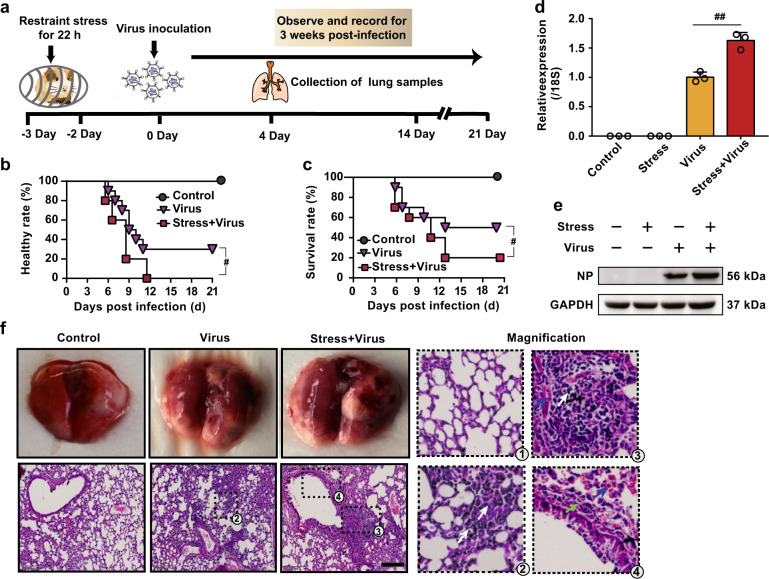
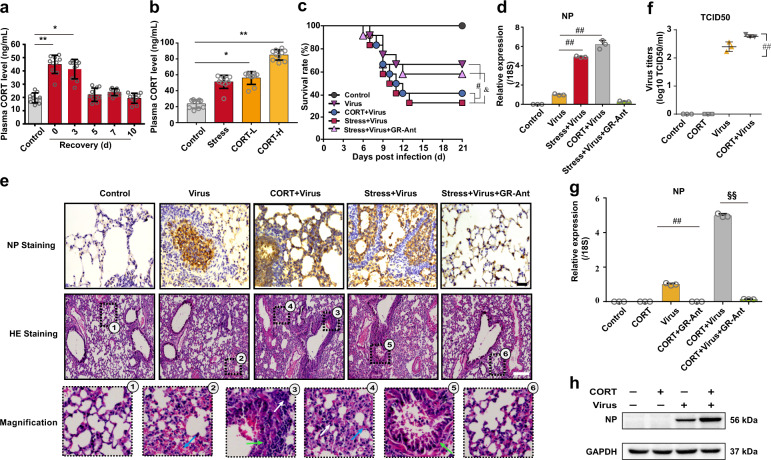
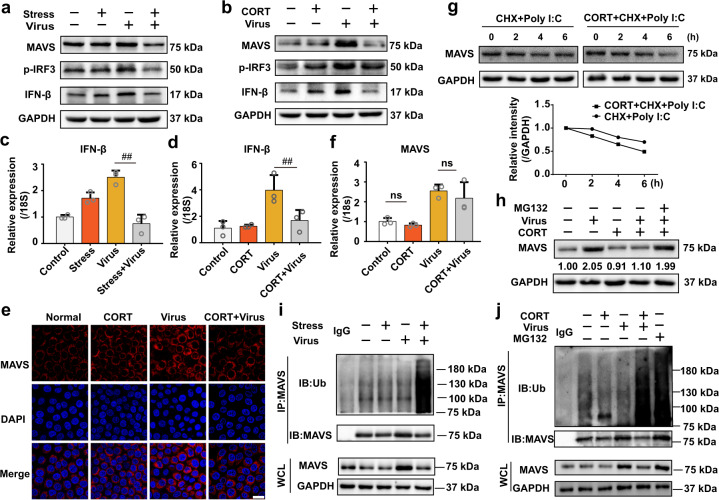
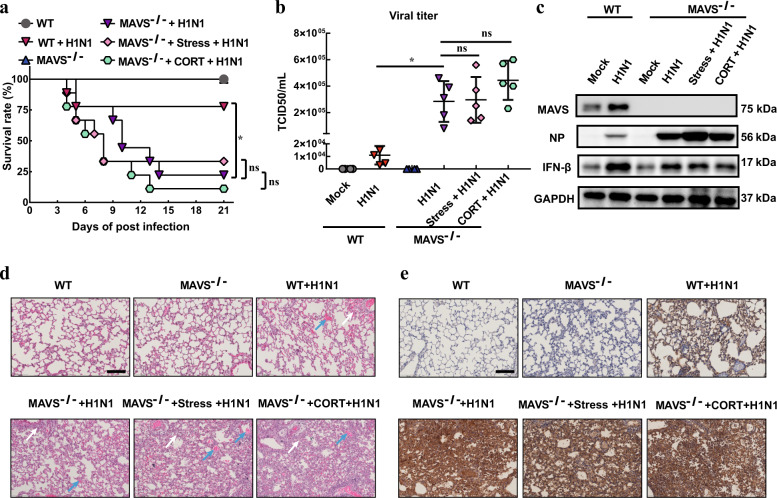
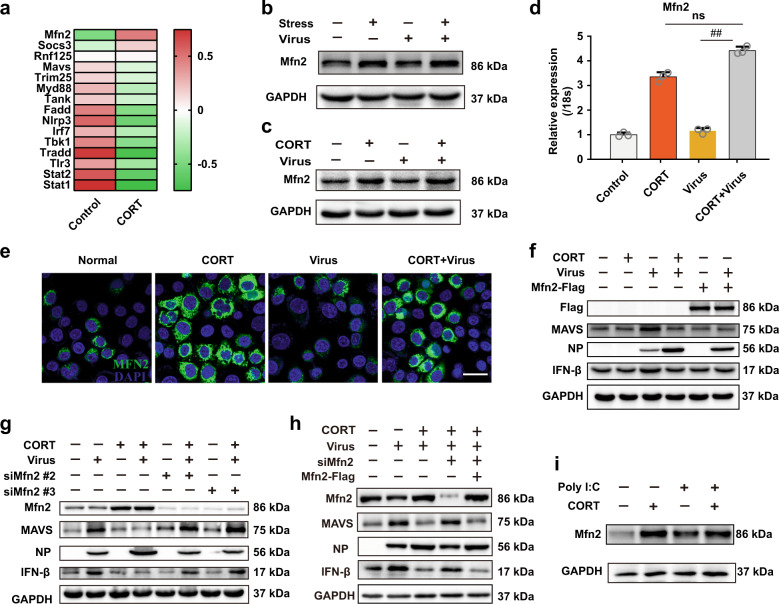
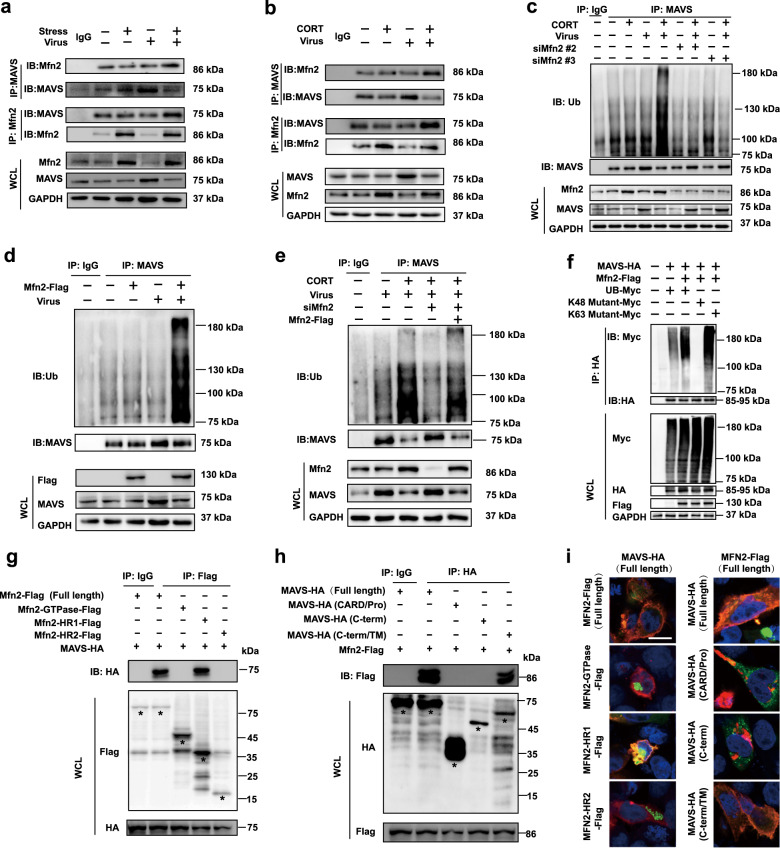
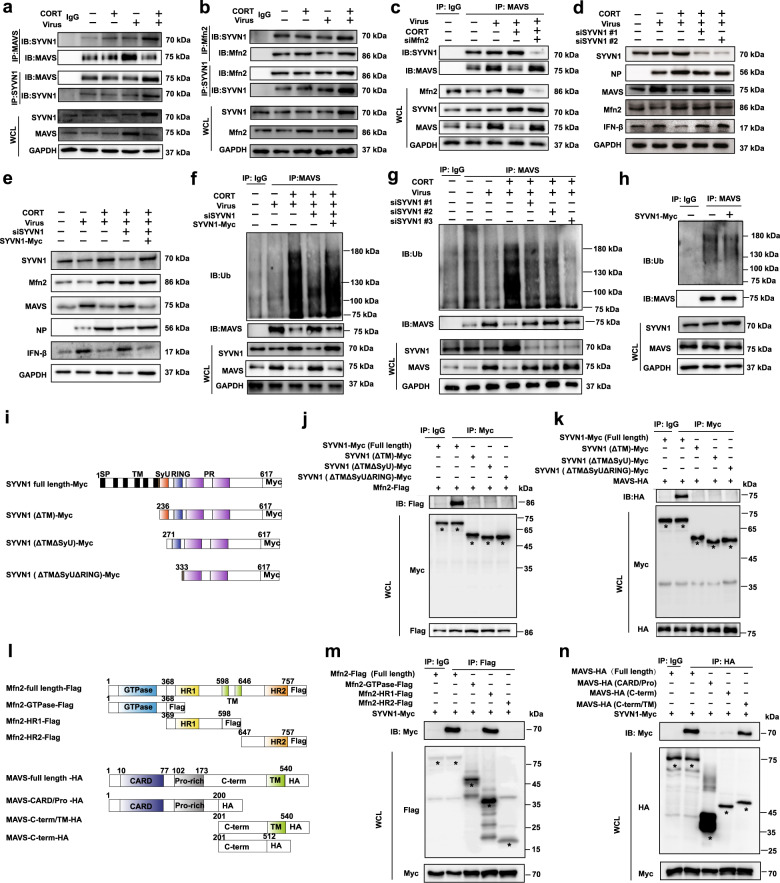
Although stress has been known to increase the susceptibility of pathogen infection, the underlying mechanism remains elusive. In this study, we reported that restraint stress dramatically enhanced the morbidity and mortality of mice infected with the influenza virus (H1N1) and obviously aggravated lung inflammation. Corticosterone (CORT), a main type of glucocorticoids in rodents, was secreted in the plasma of stressed mice. We further found that this stress hormone significantly boosted virus replication by restricting mitochondrial antiviral signaling (MAVS) protein-transduced IFN-β production without affecting its mRNA level, while the deficiency of MAVS abrogated stress/CORT-induced viral susceptibility in mice. Mechanistically, the effect of CORT was mediated by proteasome-dependent degradation of MAVS, thereby resulting in the impediment of MAVS-transduced IFN-β generation in vivo and in vitro. Furthermore, RNA-seq assay results indicated the involvement of Mitofusin 2 (Mfn2) in this process. Gain- and loss-of-function experiments indicated that Mfn2 interacted with MAVS and recruited E3 ligase SYVN1 to promote the polyubiquitination of MAVS. Co-immunoprecipitation experiments clarified an interaction between any two regions of Mfn2 (HR1), MAVS (C-terminal/TM) and SYVN1 (TM). Collectively, our findings define the Mfn2-SYVN1 axis as a new signaling cascade for proteasome-dependent degradation of MAVS and a ‘fine tuning’ of antiviral innate immunity in response to influenza infection under stress.
Overview
The claims and statistics of this paper haven’t been checked yet.
Free: it reads the open-access text and checks the first 5 claims that cite a source we can check. Create a free account to check every claim.
Integrity signals
Registry
Cites
Statistics
Figures
Verification
Claims the paper makes
The claims and statistics of this paper haven’t been checked yet.
Free: it reads the open-access text and checks the first 5 claims that cite a source we can check. Create a free account to check every claim.
Claims other papers make about this one
Each is checked against this paper’s own text: does it say what the citing paper says it does?
The cited source says what the claim attributes to it.
In the citing paper
“Similar to humans with MDD, stressed mice are also more susceptible to infections by pathogens such as Escherichia coli, influenza and SARS-CoV-269,150,151.”
From Central regulation of stress-evoked peripheral immune responses (2023) · cites this paper as [151]
Self-check
Percentages, sums and reported differences re-computed from the paper’s own numbers.
The self-check needs the paper’s full text.
Citations
Cites
Mitochondrial Dysfunction and Oxidative Stress in Neurodegenerative Diseases
Lin, M. T., & Beal, M. F. (2006) · Nature · doi:10.1038/nature05292 · Cited by 6,455 · cited 1×
“reported to impact the mitochondria function and dynamics, which raised the possibility that stress-inhibited IFN-β response might stem from the deterioration of MAVS antivirus signaling.(17,18) In this study, we utilized restraint stress mouse model to elucidate the potential mechanism responsible for stressincreased…”
MethodRecognition of double-stranded RNA and activation of NF-κB by Toll-like receptor 3
Alexopoulou, L., Holt, A. C., Medzhitov, R., & Flavell, R. A. (2001) · Nature · doi:10.1038/35099560 · Cited by 6,129
Seth, R. B., Sun, L., Ea, C.-K., & Chen, Z. J. (2005) · Cell · doi:10.1016/j.cell.2005.08.012 · Cited by 3,329 · cited 1×
“Stress/CORT impeded MAVS antiviral signaling MAVS can potently activate IRF3 and propagate IFNs and ISGs, which plays a crucial role in defending RNA virus infection.(20,21) We thus investigated the effect of stress/CORT on MAVS antiviral signaling pathway.”
BackgroundPsychological Stress and Disease
Cohen, S., Janicki-Deverts, D., & Miller, G. E. (2007) · JAMA · doi:10.1001/jama.298.14.1685 · Cited by 3,168 · cited 1×
“Accumulating evidences have demonstrated the link of stressprovoked disease susceptibility and compromised immune functions.(8,9) During viral infection, the host’s defense system plays crucial roles in maintaining the fitness dependent on complicated interactions of innate and adaptive immune components.”
BackgroundType I interferons in infectious disease
McNab, F., Mayer-Barber, K., Sher, A., Wack, A., & O'Garra, A. (2015) · Nature Reviews Immunology · doi:10.1038/nri3787 · Cited by 2,780
Stress-induced immune dysfunction: implications for health
Glaser, R., & Kiecolt-Glaser, J. K. (2005) · Nature Reviews Immunology · doi:10.1038/nri1571 · Cited by 2,190
Troeger, C., Blacker, B., Khalil, I. A., Rao, P. C., Cao, J., Zimsen, S. R. M., Albertson, S. B., Deshpande, A., Farag, T., Abebe, Z., et al. (2018) · The Lancet Infectious Diseases · doi:10.1016/s1473-3099(18)30310-4 · Cited by 1,968 · cited 1×
“Their high morbidity and mortality rates have resulted in huge economic and social burdens.(2) However, it is known that not all the people would be infected by influenza virus during its outburst.”
BackgroundHou, F., Sun, L., Zheng, H., Skaug, B., Jiang, Q.-X., & Chen, Z. J. (2011) · Cell · doi:10.1016/j.cell.2011.06.041 · Cited by 1,282 · cited 1×
“Stress/CORT impeded MAVS antiviral signaling MAVS can potently activate IRF3 and propagate IFNs and ISGs, which plays a crucial role in defending RNA virus infection.(20,21) We thus investigated the effect of stress/CORT on MAVS antiviral signaling pathway.”
Innate immunity to influenza virus infection
Iwasaki, A., & Pillai, P. S. (2014) · Nature Reviews Immunology · doi:10.1038/nri3665 · Cited by 1,068 · cited 1×
“Host factors play an important role in determining the outcome of an influenza infection.(4,5) Pathogen resistance might be one determining factor that effectively eliminates the virus from the body; whereas, another one could be pathogen tolerance, which could reduce or alleviate tissue damages caused by virus infect…”
BackgroundNLRX1 is a regulator of mitochondrial antiviral immunity
Moore, C. B., Bergstralh, D. T., Duncan, J. A., Lei, Y., Morrison, T. E., Zimmermann, A. G., Accavitti-Loper, M. A., Madden, V. J., Sun, L., Ye, Z., et al. (2008) · Nature · doi:10.1038/nature06501 · Cited by 587 · cited 1×
“MAVS is located in the mitochondrial outer membrane, along with several other mitochondrial proteins such as NLRX1 and Mfn2 associated with MAVS, which may either negatively or positively regulate MAVS function and influence the immune balance.(23,34,35) Consistent with a previous study reported by Yasukawa et al.”
ResultReviewing the History of Pandemic Influenza: Understanding Patterns of Emergence and Transmission
Saunders-Hastings, P., & Krewski, D. (2016) · Pathogens · doi:10.3390/pathogens5040066 · Cited by 562 · cited 1×
“INTRODUCTION Influenza viruses are highly contagious diseases and their outbreaks have led to severe causes for death worldwide.(1) Their high morbidity and mortality rates have resulted in huge economic and social burdens.”
BackgroundNew low-viscosity overlay medium for viral plaque assays.
Matrosovich, M. N., Matrosovich, T. Y., Garten, W., & Klenk, H. D. (2006) · Virology Journal · doi:10.1186/1743-422x-3-63 · Cited by 476
Stress-Induced Immune Dysregulation: Implications for Wound Healing, Infectious Disease and Cancer
Godbout, J. P., & Glaser, R. (2006) · Journal of Neuroimmune Pharmacology · doi:10.1007/s11481-006-9036-0 · Cited by 386 · cited 1×
“Accumulating evidences have demonstrated the link of stressprovoked disease susceptibility and compromised immune functions.(8,9) During viral infection, the host’s defense system plays crucial roles in maintaining the fitness dependent on complicated interactions of innate and adaptive immune components.”
BackgroundPCBP2 mediates degradation of the adaptor MAVS via the HECT ubiquitin ligase AIP4
You, F., Sun, H., Zhou, X., Sun, W., Liang, S., Zhai, Z., & Jiang, Z. (2009) · Nature Immunology · doi:10.1038/ni.1815 · Cited by 339 · cited 1×
“How viral infection reduces MAVS level at later time points have been explored by previous reports, from the perspective of miRNA-regulated expression,(30) ubiquitination/autophagy-mediated degradation.(31,32) Conversely, there are some studies suggesting that MAVS can be deubiquitinated upon virus infection,(33) givi…”
BackgroundSelf-citationLiu, B., Zhang, M., Chu, H., Zhang, H., Wu, H., Song, G., Wang, P., Zhao, K., Hou, J., Wang, X., et al. (2017) · Nature Immunology · doi:10.1038/ni.3641 · Cited by 333
Mitofusin 2 Inhibits Mitochondrial Antiviral Signaling
Yasukawa, K., Oshiumi, H., Takeda, M., Ishihara, N., Yanagi, Y., Seya, T., Kawabata, S.-I., & Koshiba, T. (2009) · Science Signaling · doi:10.1126/scisignal.2000287 · Cited by 255 · cited 2×
“have reported that Mfn2 interacted with MAVS to modulate antiviral immunity.(23) The present study has depicted that CORT accelerated MAVS degradation, and Mfn2 was of great importance in this process.”
BackgroundResultLi, Y., Xie, P., Lu, L., Wang, J., Diao, L., Liu, Z., Guo, F., He, Y., Liu, Y., Huang, Q., et al. (2017) · Nature Communications · doi:10.1038/s41467-017-00299-9 · Cited by 238
Self-citationCastanier, C., Zemirli, N., Portier, A., Garcin, D., Bidère, N., Vazquez, A., & Arnoult, D. (2012) · BMC Biology · doi:10.1186/1741-7007-10-44 · Cited by 221
Jin, S., Tian, S., Luo, M., Xie, W., Liu, T., Duan, T., Wu, Y., & Cui, J. (2017) · Molecular Cell · doi:10.1016/j.molcel.2017.09.005 · Cited by 209 · cited 1×
“How viral infection reduces MAVS level at later time points have been explored by previous reports, from the perspective of miRNA-regulated expression,(30) ubiquitination/autophagy-mediated degradation.(31,32) Conversely, there are some studies suggesting that MAVS can be deubiquitinated upon virus infection,(33) givi…”
BackgroundSelf-citationAn N-terminal addressing sequence targets NLRX1 to the mitochondrial matrix
Arnoult, D., Soares, F., Tattoli, I., Castanier, C., Philpott, D. J., & Girardin, S. E. (2009) · Journal of Cell Science · doi:10.1242/jcs.051193 · Cited by 203 · cited 1×
“MAVS is located in the mitochondrial outer membrane, along with several other mitochondrial proteins such as NLRX1 and Mfn2 associated with MAVS, which may either negatively or positively regulate MAVS function and influence the immune balance.(23,34,35) Consistent with a previous study reported by Yasukawa et al.”
ResultThe GRIP1:IRF3 interaction as a target for glucocorticoid receptor-mediated immunosuppression
Reily, M. M., Pantoja, C., Hu, X., Chinenov, Y., & Rogatsky, I. (2006) · The EMBO Journal · doi:10.1038/sj.emboj.7600919 · Cited by 149 · cited 1×
“However, more efforts are required to explore the influence of CORT on RNA virus infection-specific MAVS antivirus signaling, although there have already been interesting reports suggesting that GR can compete with IRF3 for GRIP1 to inhibit IFN-β transcription, and also can restrain the STAT transcription complex acti…”
BackgroundWang, Y., Tong, X., & Ye, X. (2012) · The Journal of Immunology · doi:10.4049/jimmunol.1201445 · Cited by 137
Liuyu, T., Yu, K., Ye, L., Zhang, Z., Zhang, M., Ren, Y., Cai, Z., Zhu, Q., Lin, D., & Zhong, B. (2018) · Cell Research · doi:10.1038/s41422-018-0107-6 · Cited by 137
Hsu, A. C.-Y., Dua, K., Starkey, M. R., Haw, T.-J., Nair, P. M., Nichol, K., Zammit, N., Grey, S. T., Baines, K. J., Foster, P. S., et al. (2017) · JCI Insight · doi:10.1172/jci.insight.90443 · Cited by 119
Dobbs, C. M., Feng, N., Beck, F. M., & Sheridan, J. F. (1996) · The Journal of Immunology · doi:10.4049/jimmunol.157.5.1870 · Cited by 109 · cited 1×
“reported that CORT induced by restraint stress suppressed the influenza virus (A/PR/8/34)-specific production of Th1-type (IL-2) and Th2-type (IL-10) cytokines by cells from lymph nodes and spleens to increase influenza mortality.(28) However, more efforts are required to explore the influence of CORT on RNA virus inf…”
BackgroundPan, Y., Li, R., Meng, J.-L., Mao, H.-T., Zhang, Y., & Zhang, J. (2014) · The Journal of Immunology · doi:10.4049/jimmunol.1302632 · Cited by 106 · cited 2×
“It also remains unknown whether CORT affects other E3 ligases of MAVS, including AIP4,31 TRIM25,37,38 TRIM31,39 Smurf1,40 and Smurf2.”
BackgroundThe Hypothalamic-Pituitary-Adrenal Axis and Viral Infection
Bailey, M., Engler, H., Hunzeker, J., & Sheridan, J. F. (2003) · Viral Immunology · doi:10.1089/088282403322017884 · Cited by 100
Mitochondrial Control of Innate Immunity and Inflammation
Jin, H. S., Suh, H.-W., Kim, S.-J., & Jo, E.-K. (2017) · Immune Network · doi:10.4110/in.2017.17.2.77 · Cited by 100 · cited 1×
“Upon recognition of RNA virus by retinoic acid inducible gene-I (RIG-I), MAVS functions as the adaptor to drive the phosphorylation of interferon regulatory factor 3 (IRF3), followed by IFN-β transcription.(15,16) Intriguingly, stress has been”
BackgroundOslund, K. L., & Baumgarth, N. (2011) · Future Virology · doi:10.2217/fvl.11.63 · Cited by 97 · cited 1×
“Host factors play an important role in determining the outcome of an influenza infection.(4,5) Pathogen resistance might be one determining factor that effectively eliminates the virus from the body; whereas, another one could be pathogen tolerance, which could reduce or alleviate tissue damages caused by virus infect…”
BackgroundSubcellular Localizations of RIG-I, TRIM25, and MAVS Complexes
Sánchez-Aparicio, M. T., Ayllón, J., Leo‐Macías, A., Wolff, T., & García‐Sastre, A. (2016) · Journal of Virology · doi:10.1128/jvi.01155-16 · Cited by 96
The impact of influenza on the health and health care utilisation of elderly people
Fleming, D. M., & Elliot, A. J. (2005) · Vaccine · doi:10.1016/j.vaccine.2005.04.018 · Cited by 87 · cited 1×
“DISCUSSION Individuals under stress have weakened immunity and most likely need hospitalization after influenza virus infection, raising the possibility that stress is a susceptible factor of influenza infection.(26) This hypothesis has been supported by increasing evidences,(13,14,27) in addition to our research.”
ResultCai, Y., Li, Y.-F., Tang, L., Tsoi, B., Chen, M., Chen, H., Chen, X., Tan, R., Kurihara, H., & He, R. (2015) · BioMed Research International · doi:10.1155/2015/675149 · Cited by 85 · cited 1×
“Stressful experiences increase both the susceptibility and frequency of diseases, prolong recovery time, and enhance the incidences of secondary health complications after viral infection.(6,7) However, the exact mechanism in deciding how stress enhances host susceptibility to influenza viruses remains elusive.”
BackgroundSelf-citationLuo, Z., Liu, L., Wang, X., Li, W., Jie, C., Chen, H., Wei, F., Lu, D.-H., Yan, C., Лю, Б., et al. (2019) · Frontiers in Pharmacology · doi:10.3389/fphar.2019.00078 · Cited by 85 · cited 2×
“1b, c), which was consistent with our previous reports.(13,14) In addition to morbidity and mortality rates, we demonstrated that the gene and protein expressions of viral nuclear protein (NP), an indicator of viral replication level, were more dramatically enhanced in mice infected with virus post-stress than that of…”
BackgroundResultSelf-citationHutchins, A. P., Jauch, R., Dyla, M., & Miranda-Saavedra, D. (2014) · Cell Regeneration · doi:10.1186/2045-9769-3-1 · Cited by 84 · cited 1×
“All other bioinformatic analysis was performed using glbase.(44)”
MethodAge-specific mortality risk from pandemic influenza
Ma, J., Dushoff, J. G., & Earn, D. J. D. (2011) · Journal of Theoretical Biology · doi:10.1016/j.jtbi.2011.08.003 · Cited by 69 · cited 1×
“However, it is known that not all the people would be infected by influenza virus during its outburst.(3) Host factors play an important role in determining the outcome of an influenza infection.”
BackgroundFeng, L., Zhang, J., Zhu, N., Ding, Q., Zhang, X., Yu, J., Qiang, W., Zhang, Z., Ma, Y., Huang, D., et al. (2017) · Autophagy · doi:10.1080/15548627.2017.1280207 · Cited by 67 · cited 1×
“For instance, SYVN1 has been reported to mainly locate in endoplasmic reticulum (ER).(36) Therefore, it remains uncertain how E3 ligase is trans-located from ER to mitochondria.”
BackgroundSelf-citationVargas-López, V., Torres‐Berrío, A., González‐Martínez, L. F., Múnera, A., & Lamprea, M. R. (2015) · Behavioural Brain Research · doi:10.1016/j.bbr.2015.05.006 · Cited by 58
Pike, K. A., Hutchins, A. P., Vinette, V., Théberge, J.-F., Sabbagh, L., Tremblay, M. L., & Miranda‐Saavedra, D. (2014) · Science Signaling · doi:10.1126/scisignal.2005020 · Cited by 58 · cited 1×
“RNA-seq data was aligned to the Ensembl v73 transcript annotations using bowtie and RSEM as previously described.(43) All other bioinformatic analysis was performed using glbase.”
MethodE3 ubiquitin ligases, the powerful modulator of innate antiviral immunity
Zheng, Y., & Gao, C. (2019) · Cellular Immunology · doi:10.1016/j.cellimm.2019.04.003 · Cited by 53 · cited 1×
“Identification of SYVN1 as the E3 ligase in Mfn2-mediated MAVS ubiquitination E3 ligase plays an indispensable role in the ubiquitination process.(24) In order to define the E3 ligase in Mfn2-mediated MAVS ubiquitination during influenza infection, we initially resorted to UbiBrowser database to make a prediction,(25)…”
MethodHe, R., Wang, M., Wang, C.-Z., Chen, B.-T., Lu, C., Yao, X., Chen, J., & Kurihara, H. (2011) · Journal of Agricultural and Food Chemistry · doi:10.1021/jf104982y · Cited by 51
Self-citationPijanowski, Ł., Jurecka, P., Irnazarow, I., Kepka, M., Szwejser, E., Kemenade, B. M. L. V.-V., & Chadzińska, M. (2015) · Fish Physiology and Biochemistry · doi:10.1007/s10695-015-0084-3 · Cited by 51 · cited 1×
“Stressful experiences could activate the hypothalamicpituitary-adrenal (HPA) axis, resulting in an elevation of stress hormones, mainly glucocorticoids (GCs) that could induce immunosuppression.(11,12) Our previous studies have indicated that stress-provoked host’s susceptibility to influenza was associated with imped…”
BackgroundDe, R., Mazumder, S., Sarkar, S., Debsharma, S., Siddiqui, A. A., Saha, S. J., Banerjee, C., Nag, S., Saha, D., & Bandyopadhyay, U. (2017) · Free Radical Biology and Medicine · doi:10.1016/j.freeradbiomed.2017.10.009 · Cited by 46 · cited 1×
“reported to impact the mitochondria function and dynamics, which raised the possibility that stress-inhibited IFN-β response might stem from the deterioration of MAVS antivirus signaling.(17,18) In this study, we utilized restraint stress mouse model to elucidate the potential mechanism responsible for stressincreased…”
MethodChen, H., Jie, C., Tang, L., Meng, H., Li, X., Li, Y., Chen, L., Yan, C., Kurihara, H., Li, Y.-F., et al. (2017) · Phytomedicine · doi:10.1016/j.phymed.2017.02.004 · Cited by 35 · cited 4×
“CORT was extracted from the plasma and quantified by HPLC.(13) Plasma (0.”
BackgroundMethodResultInfluentialSelf-citationBalancing anti-viral innate immunity and immune homeostasis
Mishra, S., & Kumar, H. (2017) · Cellular and Molecular Immunology · doi:10.1038/cmi.2017.98 · Cited by 7 · cited 1×
“Upon recognition of RNA virus by retinoic acid inducible gene-I (RIG-I), MAVS functions as the adaptor to drive the phosphorylation of interferon regulatory factor 3 (IRF3), followed by IFN-β transcription.(15,16) Intriguingly, stress has been”
Background
Cited by
Central regulation of stress-evoked peripheral immune responses
Chan, K. L., Poller, W. C., Swirski, F. K., & Russo, S. J. (2023) · Nature Reviews Neuroscience · doi:10.1038/s41583-023-00729-2 · Cited by 207
E3 ubiquitin ligase SYVN1 is a key positive regulator for GSDMD-mediated pyroptosis
Shi, Y., Yang, Y., Xu, W., Shi, D., Xu, W., Fu, X., Lv, Q., Xia, J. L., & Shi, F. (2022) · Cell Death and Disease · doi:10.1038/s41419-022-04553-x · Cited by 70
Virus-host interaction networks as new antiviral drug targets for IAV and SARS-CoV-2
Chen, N., Zhang, B., Deng, L., Liang, B., & Ping, J. (2022) · Emerging Microbes & Infections · doi:10.1080/22221751.2022.2071175 · Cited by 62
“showed that the CORT level was increased significantly under stress conditions, thereby ultimately mediating the degradation of MAVS to promote IAV replication [56].”
BackgroundWu, Y., Luo, X., Zhou, Q., Gong, H., Gao, H., Liu, T., Chen, J., Liang, L., Kurihara, H., Li, Y.-F., et al. (2021) · Acta Pharmaceutica Sinica B · doi:10.1016/j.apsb.2021.06.002 · Cited by 42
Self-citationMAVS Antagonizes Human Stem Cell Senescence as a Mitochondrial Stabilizer
Wang, C., Yang, K., Liu, X., Wang, S., Song, M., Belmonte, J. C. I., Qu, J. T., Liu, G., & Zhang, W. (2023) · Research · doi:10.34133/research.0192 · Cited by 37
“For example, the mitochondrial fusion protein MFN1 may bind to MAVS and positively regulate the MAVS-mediated antiviral response [56], while mitofusin protein MFN2 interacts with MAVS and negatively regulates antiviral signaling [54,67].”
Background
Metadata
- Authors
- Luo, Z., Liu, L.-F., Jiang, Y.-N., Tang, L.-P., Li, W., Ouyang, S.-H., Tu, L.-F., Wu, Y.-P., Gong, H.-B., Yan, C.-Y., Jiang, S., Lu, Y.-H., Liu, T., Jiang, Z., Kurihara, H., Yu, Y., Yao, X.-S., Li, Y.-F., & He, R.-R.
- Affiliations
- Jinan University (CN)
- Shenyang Pharmaceutical University (CN)
- Corresponding author
- Yao, Xin-Sheng
- Li, Yi-Fang
- He, Rong-Rong
- ORCID
- Venue
- Signal Transduction and Targeted Therapy
- Published
- 2020-09-18
- Volume
- 5
- Issue
- 1
- Pages
- 202-202
- ISSN
- 2059-3635 (ISSN-L)
- PMC
- PMC7499204
- OpenAlex
- W3087374453
- Cited by
- 34
- References
- 44
- Citations by year
- 2026: 5 · 2025: 6 · 2024: 7 · 2023: 6 · 2022: 6 · 2021: 4
- FWCI
- 1.40
- Type
- journal article
- Language
- en
- Open access
- gold
- doi.org
- Licence
- cc-by
- creativecommons.org/licenses/by/4.0 (tdm)
- creativecommons.org/licenses/by/4.0 (vor)
- Locations
- Signal Transduction and Targeted Therapy (publishedVersion, cc-by)
- PubMed (publishedVersion)
- Funders
- Case Western Reserve University
- National Natural Science Foundation of China (81622050, U1801284, 81873209, 81673709, 81573675, 2017BT01Y036)
- Guangdong Provincial Pearl River Talents Program (2017BT01Y036)
- National Key Research and Development Program of China (2017YFC1700404)
- Science and Technology Planning Project of Guangdong Province (2017BT01Y036)
- Topics
- Life Sciences › Immunology and Microbiology › Immunology › interferon and immune responses
- Life Sciences › Immunology and Microbiology › Immunology › Immune Response and Inflammation
- Life Sciences › Biochemistry, Genetics and Molecular Biology › Cell Biology › Endoplasmic Reticulum Stress and Disease
- Keywords
- restraint stress, corticosterone, H1N1 influenza, MAVS, mitofusin 2, SYVN1, interferon-beta, ubiquitin-proteasome degradation, mitochondrial antiviral signaling, antiviral innate immunity, viral susceptibility, lung inflammation, polyubiquitination
- MeSH terms
- Animals, Corticosterone, Male, Orthomyxoviridae Infections, Stress, Physiological, Interferon-beta, GTP Phosphohydrolases, Ubiquitin, Adaptor Proteins, Signal Transducing, Mice, Influenza A Virus, H1N1 Subtype, Proteolysis
About these checks
Registry, retraction, Cites and statistics results are computed, not judged, with one exception: a printed reference that no index lists is read once by a model before it counts as a citation error. Claims are extracted by a model and kept only when their quote appears verbatim in the text; each cited source is then checked, with a model’s help, for whether it says what the claim relies on. Those verdicts can be wrong — read the claim’s quote and the cited source before relying on one.
Statistics and arithmetic are recomputed, not judged.
Confidence bands are shown only for fields calibrated on our annotated test set. None is calibrated yet, so no band is shown.
What counts as a claim ›How we measure confidence ›How we check this ›
Are you an author, or do you see a problem with this page? Request a review
Data sources
Bibliographic data: Semantic Scholar, OpenAlex, Crossref.
Contains information from the Semantic Scholar Academic Graph Datasets, made available under the ODC Attribution License (ODC-BY 1.0).
Semantic Scholar’s data is described in: Kinney, R., et al. (2023). The Semantic Scholar Open Data Platform. arXiv:2301.10140.
