

The molecular biology of pancreatic adenocarcinoma: translational challenges and clinical perspectives
Open accessThe DOI matches its Crossref record; 388 of the 388 references it cites were found in a registry or an index.
Abstract
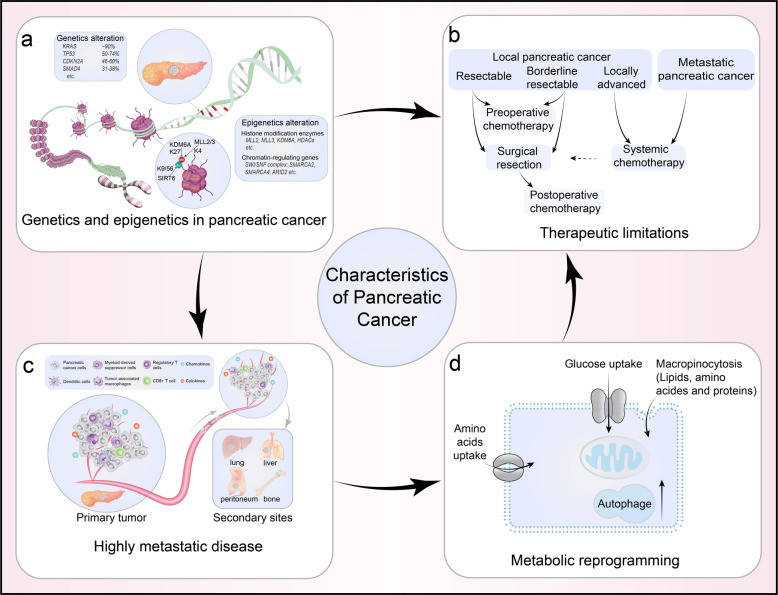
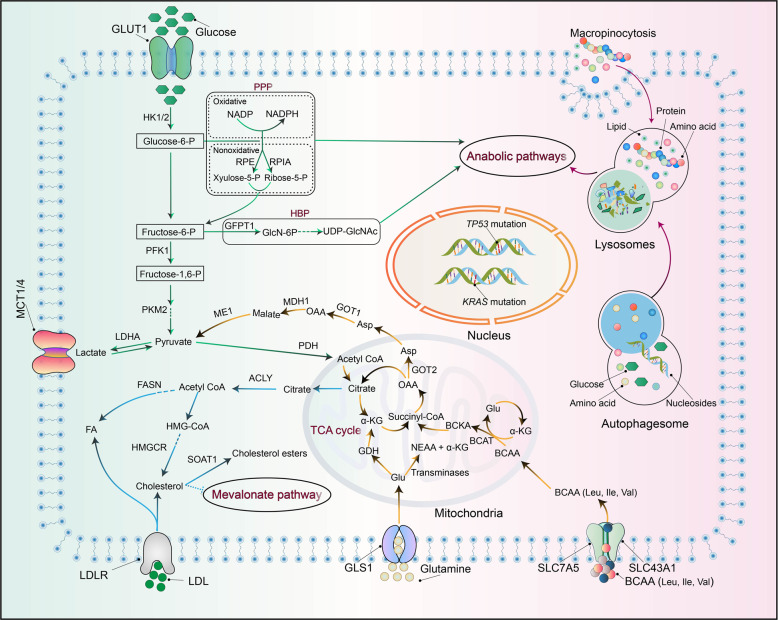
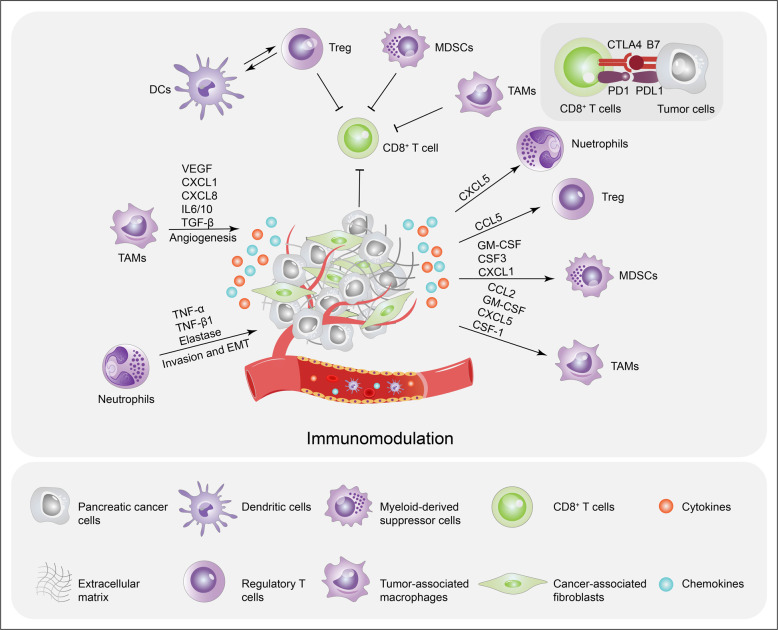
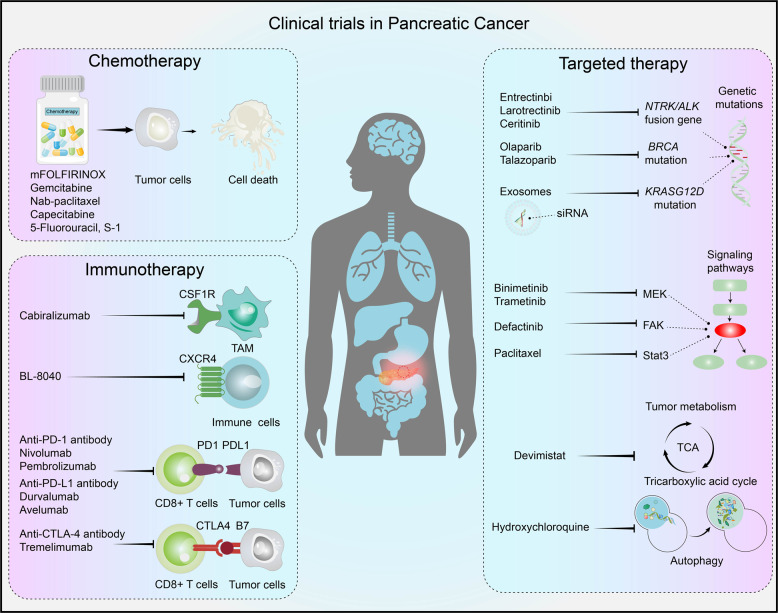
Pancreatic cancer is an increasingly common cause of cancer mortality with a tight correspondence between disease mortality and incidence. Furthermore, it is usually diagnosed at an advanced stage with a very dismal prognosis. Due to the high heterogeneity, metabolic reprogramming, and dense stromal environment associated with pancreatic cancer, patients benefit little from current conventional therapy. Recent insight into the biology and genetics of pancreatic cancer has supported its molecular classification, thus expanding clinical therapeutic options. In this review, we summarize how the biological features of pancreatic cancer and its metabolic reprogramming as well as the tumor microenvironment regulate its development and progression. We further discuss potential biomarkers for pancreatic cancer diagnosis, prediction, and surveillance based on novel liquid biopsies. We also outline recent advances in defining pancreatic cancer subtypes and subtype-specific therapeutic responses and current preclinical therapeutic models. Finally, we discuss prospects and challenges in the clinical development of pancreatic cancer therapeutics.
Overview
The claims and statistics of this paper haven’t been checked yet.
Free: it reads the open-access text and checks the first 5 claims that cite a source we can check. Create a free account to check every claim.
Integrity signals
Registry
Cites
Statistics
Figures
Verification
Claims the paper makes
The claims and statistics of this paper haven’t been checked yet.
Free: it reads the open-access text and checks the first 5 claims that cite a source we can check. Create a free account to check every claim.
Claims other papers make about this one
Each is checked against this paper’s own text: does it say what the citing paper says it does?
The source backs part of the claim, not all of it — or backs it for a different population, condition or comparison.
In the citing paper
“TP53 mutations, found in 50–90% of pancreatic ductal adenocarcinomas, significantly affect carcinogenesis, prognosis and treatment response [17,21,34,35].”
From Significance of TP53, CDKN2A, SMAD4 and KRAS in Pancreatic Cancer (2024) · cites this paper as [35]
Experimental — accuracy not yet measured
Self-check
Percentages, sums and reported differences re-computed from the paper’s own numbers.
The self-check needs the paper’s full text.
Citations
Cites
1 retracted
Chen, S., Chen, X., Shan, T., Ma, J., Lin, W., Li, W., & Kang, Y. (2018) · International Journal of Biological Sciences · doi:10.7150/ijbs.22555 · Cited by 61 · cited 1×
“CAFs can enhance aerobic glycolysis and secrete high-energy metabolites, including lactate and pyruvate.(235) Moreover, it has been demonstrated that enhanced autophagy in CAFs contributes to the release of amino acids, which tumor cells can use as anabolic substrates.”
BackgroundRetractedSung, H., Ferlay, J., Siegel, R. L., Laversanne, M., Soerjomataram, I., Jemal, A., & Bray, F. (2021) · CA: A Cancer Journal for Clinicians · doi:10.3322/caac.21660 · Cited by 108,699
Hallmarks of Cancer: The Next Generation
Hanahan, D., & Weinberg, R. A. (2011) · Cell · doi:10.1016/j.cell.2011.02.013 · Cited by 66,590
Siegel, R. L., Miller, K. D., Fuchs, H. E., & Jemal, A. (2021) · CA: A Cancer Journal for Clinicians · doi:10.3322/caac.21654 · Cited by 16,522
Safety and activity of anti-PD-L1 antibody in patients with advanced cancer
Brahmer, J. R., Tykodi, S. S., Chow, L. Q. M., Hwu, W.-J., Topalian, S. L., Hwu, P., Drake, C. G., Camacho, L. H., Kauh, J., Odunsi, K., et al. (2012) · New England Journal of Medicine · doi:10.1056/nejmoa1200694 · Cited by 7,945 · cited 1×
“However, the results of early clinical trials investigating the efficacy of the anti-CTLA-4 antibody ipilimumab or the anti-PD-L1 antibody BMS-936559 in patients with advanced pancreatic cancer were disappointing.(371,372) In the phase 2 KEYNOTE-158 study of pembrolizumab (an anti-PD-1 monoclonal antibody), an ORR of…”
BackgroundFOLFIRINOX versus Gemcitabine for Metastatic Pancreatic Cancer
Conroy, T., Desseigne, F., Ychou, M., Bouché, O., Guimbaud, R., Bécouarn, Y., Adenis, A., Raoul, J.-L., Gourgou-Bourgade, S., de la Fouchardière, C., et al. (2011) · New England Journal of Medicine · doi:10.1056/nejmoa1011923 · Cited by 7,810 · cited 2×
“The treatment method changed in 2011 when FOLFIRINOX demonstrated a better survival benefit compared with that of gemcitabine monotherapy.(11) Thereafter, gemcitabine plus nab-paclitaxel was adopted as another first-line treatment option.”
BackgroundMethodSpencer, P. M., Cameron, J. L., & Lin, L. (2000) · Cited by 7,202
Increased Survival in Pancreatic Cancer with nab-Paclitaxel plus Gemcitabine
Von Hoff, D. D., Ervin, T., Arena, F. P., Chiorean, E. G., Infante, J., Moore, M., Seay, T., Tjulandin, S. A., Ma, W. W., Saleh, M. N., et al. (2013) · New England Journal of Medicine · doi:10.1056/nejmoa1304369 · Cited by 6,712 · cited 2×
“001) compared with gemcitabine monotherapy.(12) According to a large-scale retrospective study, FOLFIRINOX and nab-paclitaxel plus gemcitabine have similar outcomes.”
BackgroundBurris, H. A., Moore, M. J., Andersen, J., Green, M. R., Rothenberg, M. L., Modiano, M. R., Cripps, M. C., Portenoy, R. K., Storniolo, A. M., Tarassoff, P., et al. (1997) · Journal of Clinical Oncology · doi:10.1200/jco.1997.15.6.2403 · Cited by 5,894
Tumour exosome integrins determine organotropic metastasis
Hoshino, A., Costa-Silva, B., Shen, T.-L., Rodrigues, G., Hashimoto, A., Tesic Mark, M., Molina, H., Kohsaka, S., Di Giannatale, A., Ceder, S., et al. (2015) · Nature · doi:10.1038/nature15756 · Cited by 5,101 · cited 1×
“Moreover, exosome-derived integrin (α6β4, α6β1, and αvβ5) uptake by resident cells (liver Kupffer cells, lung fibroblasts, or epithelial cells) contributes to organ-specific pre-metastatic niche formation via activation of SRC proto-oncogene (Src) phosphorylation and pro-inflammatory S100 gene expression.(136) The ext…”
Background
Cited by
Zhang, M., Ma, Y., Ye, X., Zhang, N., Pan, L., & Wang, B. (2023) · Signal Transduction and Targeted Therapy · doi:10.1038/s41392-023-01464-x · Cited by 522
“Endocrine system and metabolism TRP channels also have a wide range of physiological functions in the endocrine system and metabolism, including in diseases such as cancer, obesity, kidney disease, metabolic syndrome, and diabetes.(181,502,503)”
BackgroundFrontiers in pancreatic cancer on biomarkers, microenvironment, and immunotherapy
Yu, B., Shao, S., & Ma, W. (2024) · Cancer Letters · doi:10.1016/j.canlet.2024.217350 · Cited by 132
Pancreatic cancer tumor microenvironment is a major therapeutic barrier and target
Hartupee, C. D., Nagalo, B. M., Chabu, C. Y., Tesfay, M. Z., Coleman‐Barnett, J., West, J. T., & Moaven, O. (2024) · Frontiers in Immunology · doi:10.3389/fimmu.2024.1287459 · Cited by 139
Significance of TP53, CDKN2A, SMAD4 and KRAS in Pancreatic Cancer
Stefanoudakis, D., Frountzas, M., Schizas, D., Michalopoulos, N. V., Drakaki, A., & Toutouzas, K. G. (2024) · Current Issues in Molecular Biology · doi:10.3390/cimb46040177 · Cited by 110
“TP53 mutations, found in 50–90% of pancreatic ductal adenocarcinomas, signi fi cantly a ff ect carcinogenesis, prognosis and treatment response [17,21,34,35]. chromosome 17, acts as a tumor suppressor by regulating cell division.”
BackgroundHu, B., Wu, C., Mao, H., Gu, H., Dong, H., Yan, J., Qi, Z., Lin, Y., Dong, Q., & Long, J. (2022) · Annals of Translational Medicine · doi:10.21037/atm-22-407 · Cited by 90
“PDAC is distinguished by extensive desmoplasia, which accounts for 90% of the total tumor volume and includes extracellular matrix (ECM), immune cells, vasculature, and cancer-associated fibroblasts (CAFs) (2,3).”
Self-citation
Metadata
- Authors
- Wang, S., Zheng, Y., Yang, F., Zhu, L., Zhu, X.-Q., Wang, Z.-F., Wu, X.-L., Zhou, C.-H., Yan, J.-Y., Hu, B.-Y., Kong, B., Fu, D.-L., Bruns, C., Zhao, Y., Qin, L.-X., & Dong, Q.-Z.
- Affiliations
- Fudan University (CN)
- University Hospital Cologne (DE)
- TUM Klinikum (DE)
- Corresponding author
- Zhao, Yue
- Qin, Lun-Xiu
- ORCID
- Venue
- Signal Transduction and Targeted Therapy
- Published
- 2021-07-05
- Volume
- 6
- Issue
- 1
- Pages
- 249-249
- ISSN
- 2059-3635 (ISSN-L)
- PMC
- PMC8255319
- OpenAlex
- W3179240236
- Cited by
- 369
- References
- 388
- Citations by year
- 2026: 62 · 2025: 91 · 2024: 92 · 2023: 70 · 2022: 50 · 2021: 4
- FWCI
- 6.57
- Type
- journal article
- Language
- en
- Open access
- gold
- doi.org
- Licence
- cc-by
- creativecommons.org/licenses/by/4.0 (tdm)
- creativecommons.org/licenses/by/4.0 (vor)
- Locations
- Signal Transduction and Targeted Therapy (publishedVersion, cc-by)
- PubMed Central (publishedVersion, cc-by)
- PubMed (publishedVersion)
- Kölner Universitäts PublikationsServer (Universität zu Köln) (publishedVersion)
- DOAJ (DOAJ: Directory of Open Access Journals) (submittedVersion, cc-by-sa)
- Funders
- National Natural Science Foundation of China (81672820, 20XD1400900, 81940074, 81872356, 81802903)
- Shanghai International Science and Technology
- National Key Research and Development Program of China (2017YFC1308604)
- Program of Shanghai Academic Research Leader (20XD1400900)
- Topics
- Health Sciences › Medicine › Oncology › Pancreatic and Hepatic Oncology Research
- Health Sciences › Medicine › Surgery › Pancreatitis Pathology and Treatment
- Life Sciences › Biochemistry, Genetics and Molecular Biology › Cancer Research › Cancer Genomics and Diagnostics
- Keywords
- pancreatic ductal adenocarcinoma, metabolic reprogramming, tumor microenvironment, molecular classification, biomarkers, liquid biopsy, cancer therapeutics, tumor heterogeneity
- MeSH terms
- Adenocarcinoma, Humans, Pancreatic Neoplasms, Prognosis, Tumor Microenvironment
About these checks
Registry, retraction, Cites and statistics results are computed, not judged, with one exception: a printed reference that no index lists is read once by a model before it counts as a citation error. Claims are extracted by a model and kept only when their quote appears verbatim in the text; each cited source is then checked, with a model’s help, for whether it says what the claim relies on. Those verdicts can be wrong — read the claim’s quote and the cited source before relying on one.
Statistics and arithmetic are recomputed, not judged.
Confidence bands are shown only for fields calibrated on our annotated test set. None is calibrated yet, so no band is shown.
What counts as a claim ›How we measure confidence ›How we check this ›
Are you an author, or do you see a problem with this page? Request a review
Data sources
Bibliographic data: Semantic Scholar, OpenAlex, Crossref.
Contains information from the Semantic Scholar Academic Graph Datasets, made available under the ODC Attribution License (ODC-BY 1.0).
Semantic Scholar’s data is described in: Kinney, R., et al. (2023). The Semantic Scholar Open Data Platform. arXiv:2301.10140.
