

Cellular zinc metabolism and zinc signaling: from biological functions to diseases and therapeutic targets
Open accessThe DOI matches its Crossref record; 708 of the 708 references it cites were found in a registry or an index.
Abstract
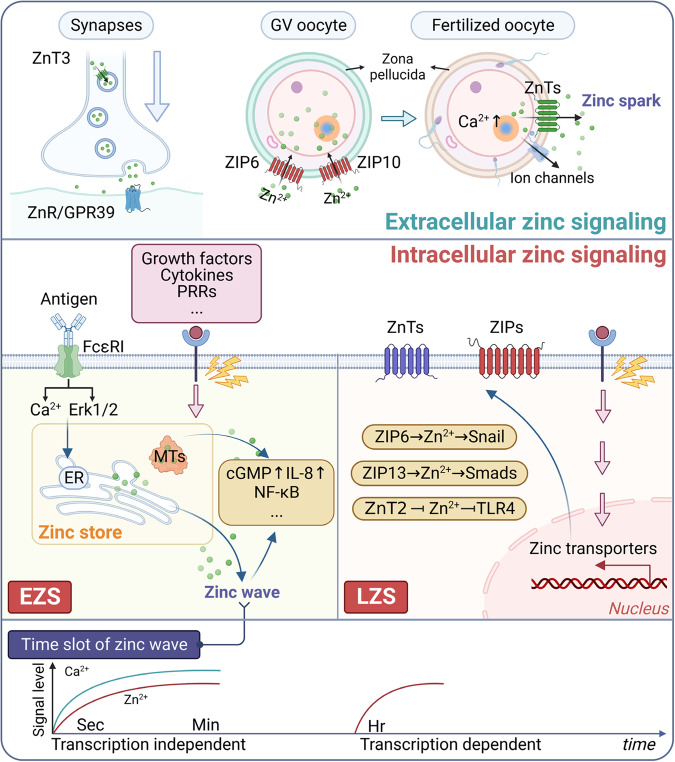
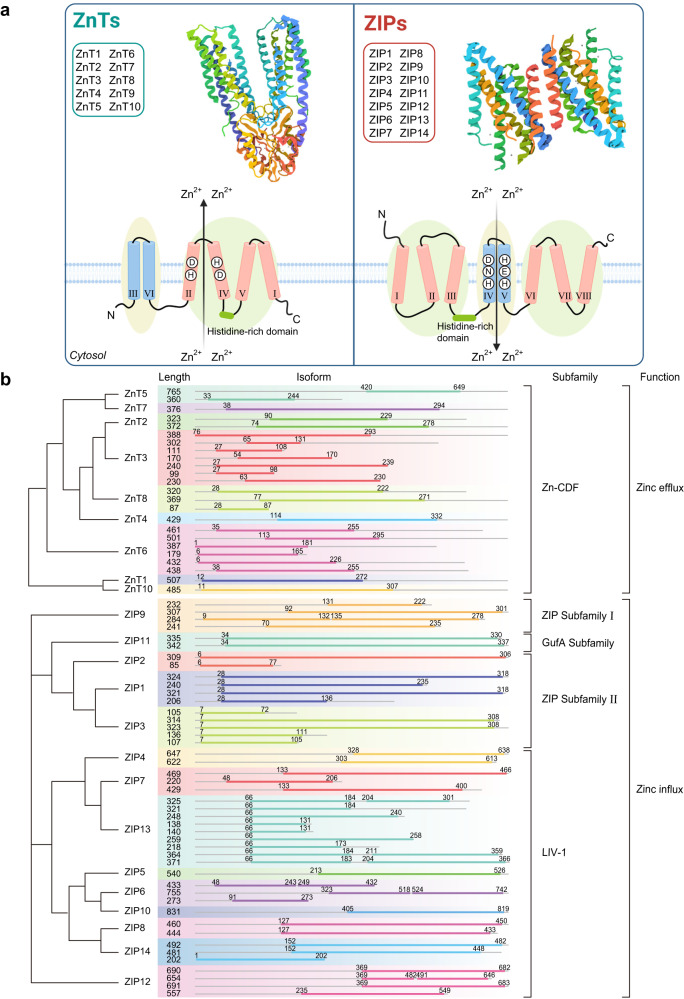
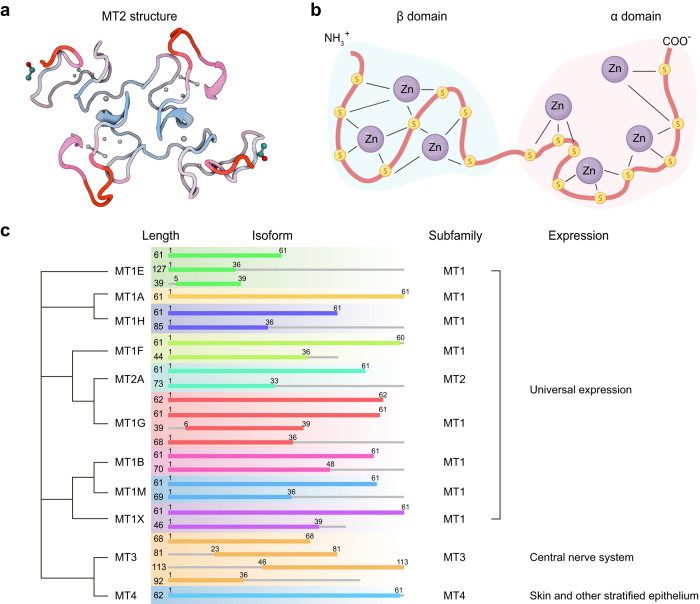
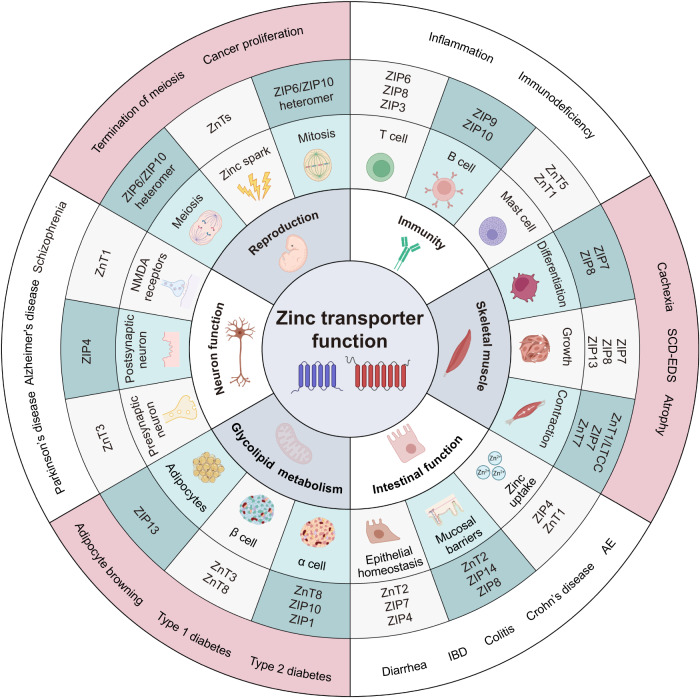
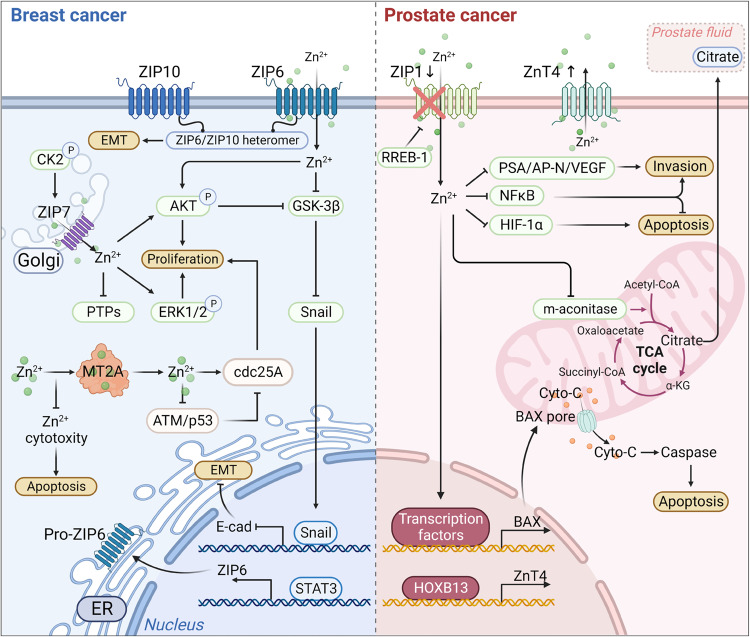
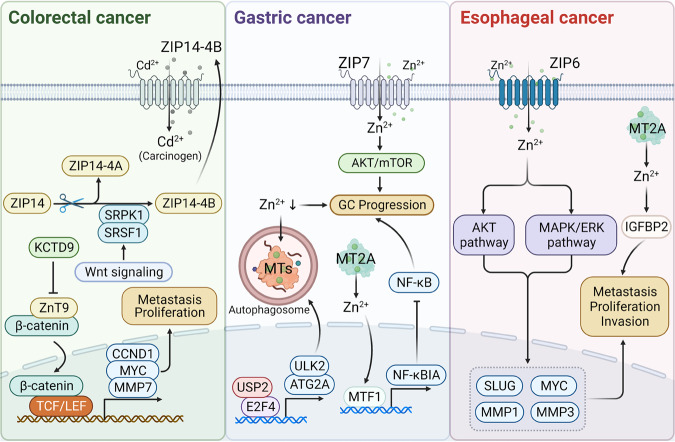
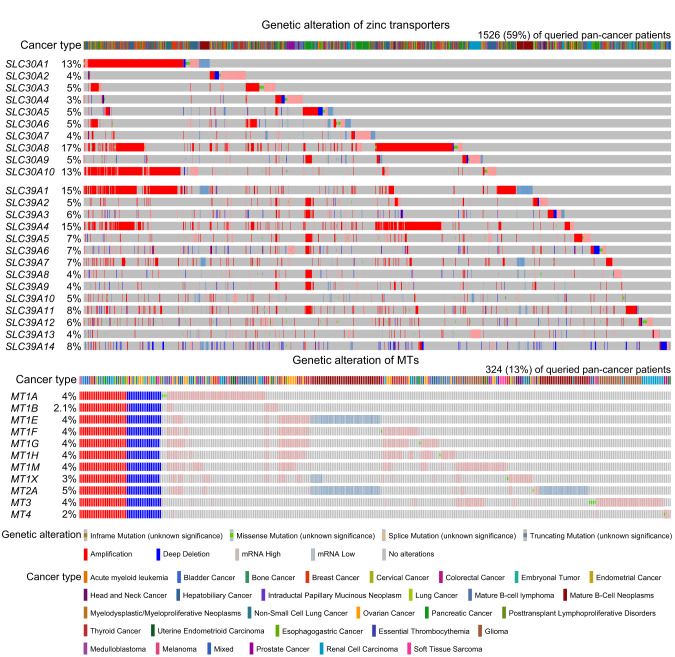
Zinc metabolism at the cellular level is critical for many biological processes in the body. A key observation is the disruption of cellular homeostasis, often coinciding with disease progression. As an essential factor in maintaining cellular equilibrium, cellular zinc has been increasingly spotlighted in the context of disease development. Extensive research suggests zinc’s involvement in promoting malignancy and invasion in cancer cells, despite its low tissue concentration. This has led to a growing body of literature investigating zinc’s cellular metabolism, particularly the functions of zinc transporters and storage mechanisms during cancer progression. Zinc transportation is under the control of two major transporter families: SLC30 (ZnT) for the excretion of zinc and SLC39 (ZIP) for the zinc intake. Additionally, the storage of this essential element is predominantly mediated by metallothioneins (MTs). This review consolidates knowledge on the critical functions of cellular zinc signaling and underscores potential molecular pathways linking zinc metabolism to disease progression, with a special focus on cancer. We also compile a summary of clinical trials involving zinc ions. Given the main localization of zinc transporters at the cell membrane, the potential for targeted therapies, including small molecules and monoclonal antibodies, offers promising avenues for future exploration.
Overview
The claims and statistics of this paper haven’t been checked yet.
Free: it reads the open-access text and checks the first 5 claims that cite a source we can check. Create a free account to check every claim.
Integrity signals
Registry
Cites
Statistics
Figures
Verification
Claims the paper makes
The claims and statistics of this paper haven’t been checked yet.
Free: it reads the open-access text and checks the first 5 claims that cite a source we can check. Create a free account to check every claim.
Claims other papers make about this one
Each is checked against this paper’s own text: does it say what the citing paper says it does?
The check wasn’t confident either way, so it gives no verdict — never disputed.
In the citing paper
“Zinc strengthens tight junctions through regulation of occludin proteolysis and claudin-3 transcription [290], increases mucus production, and reduces gastric acid secretion [184,291,292], while also promoting wound healing [293].”
From Nutritional Approaches to Enhance GLP-1 Analogue Therapy in Obesity: A Narrative Review (2025) · cites this paper as [291]
Experimental — accuracy not yet measured
Self-check
Percentages, sums and reported differences re-computed from the paper’s own numbers.
The self-check needs the paper’s full text.
Citations
Cites
1 retracted
Majumder, S., Roy, S., Kaffenberger, T. M., Wang, B., Costinean, S., Frankel, W. L., Bratasz, A., Kuppusamy, P., Hai, T., Ghoshal, K., et al. (2010) · Cancer Research · doi:10.1158/0008-5472.can-10-2839 · Cited by 49
RetractedSiegel, R. L., Miller, K. D., Wagle, N. S., & Jemal, A. (2023) · CA: A Cancer Journal for Clinicians · doi:10.3322/caac.21763 · Cited by 16,303
Cancer drug resistance: an evolving paradigm
Holohan, C., Van Schaeybroeck, S., Longley, D. B., & Johnston, P. G. (2013) · Nature Reviews Cancer · doi:10.1038/nrc3599 · Cited by 4,681 · cited 1×
“576,577 Activation of the EMT program enables tumor cells to resist the therapeutic agents, which is consistent with the attribute of CSCs. 578,579 As previously mentioned, zinc transporters are pivotal in cell stemness and EMT programs, re fl ecting their function in chemoresistance.”
BackgroundWalsh, D. M., Klyubin, I., Fadeeva, J. V., Cullen, W. K., Anwyl, R., Wolfe, M. S., Rowan, M. J., & Selkoe, D. J. (2002) · Nature · doi:10.1038/416535a · Cited by 4,291 · cited 1×
“551 555 The expression level of ZnT3 in the cortex has been observed to decline with age in individuals with AD and in healthy individuals.”
BackgroundIntestinal mucosal barrier function in health and disease
Turner, J. R. (2009) · Nature reviews. Immunology · doi:10.1038/nri2653 · Cited by 3,952 · cited 1×
“187 Recent studies have suggested that zinc plays a crucial role in preserving the integrity of mucosal barriers, which is linked to the immunological responses of gastrointestinal diseases in the mucosa 188 – 190 (Fig.”
BackgroundTransitions between epithelial and mesenchymal states: acquisition of malignant and stem cell traits
Polyak, K., & Weinberg, R. A. (2009) · Nature Reviews Cancer · doi:10.1038/nrc2620 · Cited by 3,302 · cited 1×
“576,577 Activation of the EMT program enables tumor cells to resist the therapeutic agents, which is consistent with the attribute of CSCs. 578,579 As previously mentioned, zinc transporters are pivotal in cell stemness and EMT programs, re fl ecting their function in chemoresistance.”
BackgroundPan-cancer analysis of whole genomes
The ICGC/TCGA Pan-Cancer Analysis of Whole Genomes Consortium, Aaltonen, L. A., Abascal, F., Abeshouse, A., Aburatani, H., Adams, D. J., Agrawal, N., Ahn, K. S., Ahn, S.-M., Aikata, H., et al. (2020) · Nature · doi:10.1038/s41586-020-1969-6 · Cited by 3,064
Self-citationA genome-wide association study identifies novel risk loci for type 2 diabetes
Sladek, R., Rocheleau, G., Rung, J., Dina, C., Shen, L., Serre, D., Boutin, P., Vincent, D., Belisle, A., Hadjadj, S., et al. (2007) · Nature · doi:10.1038/nature05616 · Cited by 2,993
The changing landscape of atherosclerosis
Libby, P. (2021) · Nature · doi:10.1038/s41586-021-03392-8 · Cited by 2,873 · cited 1×
“Hyperlipidemic environments and in fl am-matory factors are known to signi fi cantly contribute to the development of AS. 465 Recent research highlights the critical role of ZD in the progression of this condition.”
BackgroundSignal integration by JNK and p38 MAPK pathways in cancer development
Wagner, E. F., & Nebreda, Á. R. (2009) · Nature Reviews Cancer · doi:10.1038/nrc2694 · Cited by 2,586
Research works printed but not linked: 5
- Liu MJ ZIP8 regulates host defense through zinc-mediated inhibition of NF-κB Cell Rep. 2013 3 386 400 10.1016/j.celrep.2013.01.009 23403290 PMC3615478 · DOI · Paper page
- Davidson HW Wenzlau JM O’Brien RM Zinc transporter 8 (ZnT8) and β cell function Trends Endocrinol. Metab. 2014 25 415 424 10.1016/j.tem.2014.03.008 24751356 PMC4112161 · DOI · Paper page
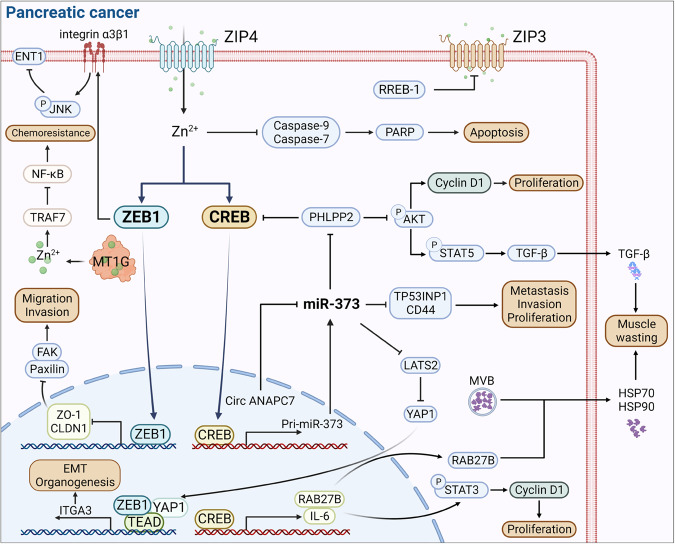
- Shi X Circular RNA ANAPC7 inhibits tumor growth and muscle wasting via PHLPP2-AKT-TGF-beta signaling axis in pancreatic cancer Gastroenterology 2022 162 2004 2017.e2002 10.1053/j.gastro.2022.02.017 35176309 PMC10428768 · DOI · Paper page
- Aguirre-Portolés C ZIP9 is a druggable determinant of sex differences in melanoma Cancer Res. 2021 81 5991 6003 10.1158/0008-5472.CAN-21-0982 34706862 PMC8977092 · DOI
- Kim B Cytoplasmic zinc promotes IL-1β production by monocytes and macrophages through mTORC1-induced glycolysis in rheumatoid arthritis Sci. Signal. 2022 15 eabi7400 10.1126/scisignal.abi7400 35015571 · DOI
Cited by
Items 401–401 of 401
Nutrition for the Prevention and Control of Chronic Degenerative Diseases
Renzo, L. D., & Gualtieri, P. (2026) · Nutrients · doi:10.3390/nu18213572
Metadata
- Authors
- Chen, B., Yu, P., Chan, W. N., Xie, F., Zhang, Y., Liang, L., Leung, K. T., Lo, K. W., Yu, J., Tse, G. M. K., Kang, W., & To, K. F.
- Affiliations
- Chinese University of Hong Kong (HK)
- Nanfang Hospital (CN)
- Hubei University of Medicine (CN)
- Corresponding author
- Kang, Wei
- To, Ka Fai
- ORCID
- Venue
- Signal Transduction and Targeted Therapy
- Published
- 2024-01-03
- Volume
- 9
- Issue
- 1
- Pages
- 6-6
- ISSN
- 2059-3635 (ISSN-L)
- PMC
- PMC10761908
- OpenAlex
- W4390519793
- Semantic Scholar
- fff46c81e19a2eee8c207ed3ee2f7faa37d6f6e0
- Cited by
- 420
- References
- 707
- Citations by year
- 2026: 179 · 2025: 184 · 2024: 57
- FWCI
- 22.21
- Type
- journal article
- Language
- en
- Open access
- gold
- doi.org
- Licence
- cc-by
- creativecommons.org/licenses/by/4.0 (tdm)
- creativecommons.org/licenses/by/4.0 (vor)
- Locations
- Signal Transduction and Targeted Therapy (publishedVersion, cc-by)
- PubMed Central (publishedVersion, cc-by)
- PubMed (publishedVersion)
- DOAJ (DOAJ: Directory of Open Access Journals) (submittedVersion, cc-by-sa)
- Funders
- National Natural Science Foundation of China (82272990)
- Topics
- Health Sciences › Nursing › Nutrition and Dietetics › Trace Elements in Health
- Physical Sciences › Environmental Science › Health, Toxicology and Mutagenesis › Heavy Metal Exposure and Toxicity
- Health Sciences › Medicine › Hematology › Iron Metabolism and Disorders
- Keywords
- zinc signaling, zinc transporters, metallothionein, zinc homeostasis, tumor progression, monoclonal antibodies, targeted therapy
- MeSH terms
- Biological Phenomena, Homeostasis, Humans, Zinc, Disease Progression, Membrane Transport Proteins
About these checks
Registry, retraction, Cites and statistics results are computed, not judged, with one exception: a printed reference that no index lists is read once by a model before it counts as a citation error. Claims are extracted by a model and kept only when their quote appears verbatim in the text; each cited source is then checked, with a model’s help, for whether it says what the claim relies on. Those verdicts can be wrong — read the claim’s quote and the cited source before relying on one.
Statistics and arithmetic are recomputed, not judged.
Confidence bands are shown only for fields calibrated on our annotated test set. None is calibrated yet, so no band is shown.
What counts as a claim ›How we measure confidence ›How we check this ›
Are you an author, or do you see a problem with this page? Request a review
Data sources
Bibliographic data: Semantic Scholar, OpenAlex, Crossref.
Contains information from the Semantic Scholar Academic Graph Datasets, made available under the ODC Attribution License (ODC-BY 1.0).
Semantic Scholar’s data is described in: Kinney, R., et al. (2023). The Semantic Scholar Open Data Platform. arXiv:2301.10140.
