

Butyrate enhances mitochondrial function during oxidative stress in cell lines from boys with autism
Open accessThe DOI matches its Crossref record; 112 of the 112 references it cites were found in a registry or an index.
Abstract
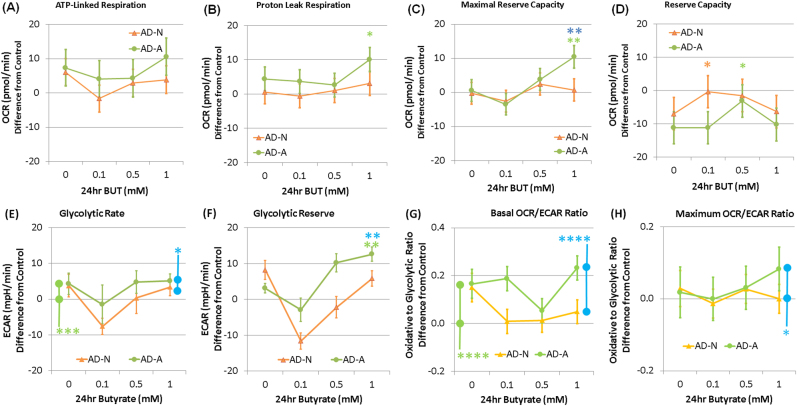
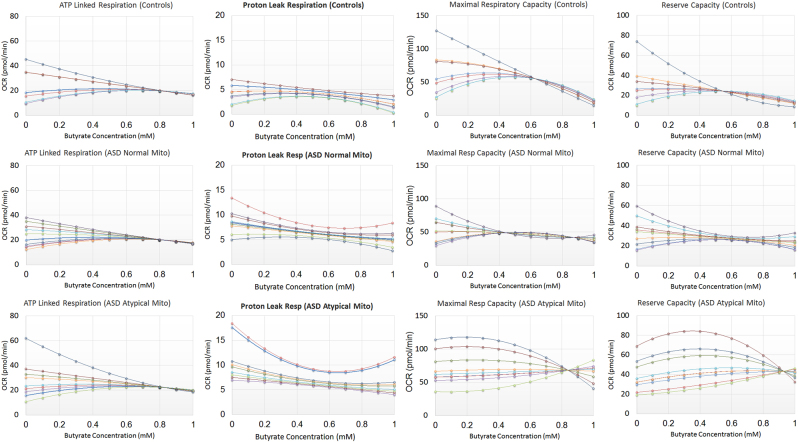
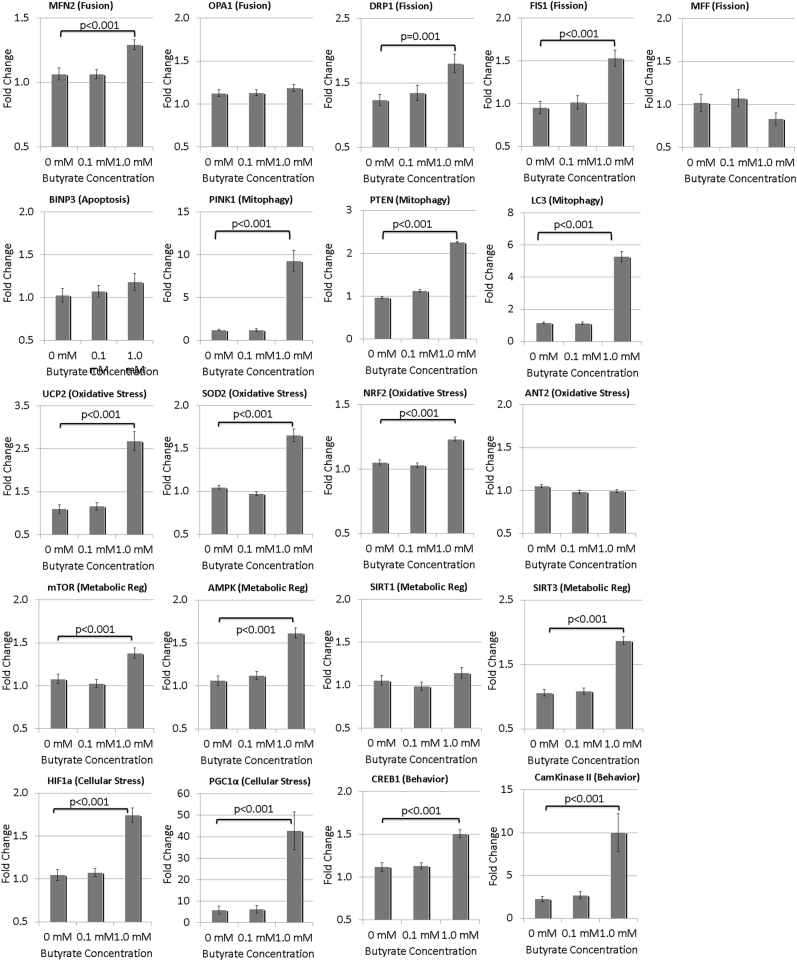
Butyrate (BT) is a ubiquitous short-chain fatty acid (SCFA) principally derived from the enteric microbiome. BT positively modulates mitochondrial function, including enhancing oxidative phosphorylation and beta-oxidation and has been proposed as a neuroprotectant. BT and other SCFAs have also been associated with autism spectrum disorders (ASD), a condition associated with mitochondrial dysfunction. We have developed a lymphoblastoid cell line (LCL) model of ASD, with a subset of LCLs demonstrating mitochondrial dysfunction (AD-A) and another subset of LCLs demonstrating normal mitochondrial function (AD-N). Given the positive modulation of BT on mitochondrial function, we hypothesized that BT would have a preferential positive effect on AD-A LCLs. To this end, we measured mitochondrial function in ASD and age-matched control (CNT) LCLs, all derived from boys, following 24 and 48 h exposure to BT (0, 0.1, 0.5, and 1 mM) both with and without an in vitro increase in reactive oxygen species (ROS). We also examined the expression of key genes involved in cellular and mitochondrial response to stress. In CNT LCLs, respiratory parameters linked to adenosine triphosphate (ATP) production were attenuated by 1 mM BT. In contrast, BT significantly increased respiratory parameters linked to ATP production in AD-A LCLs but not in AD-N LCLs. In the context of ROS exposure, BT increased respiratory parameters linked to ATP production for all groups. BT was found to modulate individual LCL mitochondrial respiration to a common set-point, with this set-point slightly higher for the AD-A LCLs as compared to the other groups. The highest concentration of BT (1 mM) increased the expression of genes involved in mitochondrial fission (PINK1, DRP1, FIS1) and physiological stress (UCP2, mTOR, HIF1α, PGC1α) as well as genes thought to be linked to cognition and behavior (CREB1, CamKinase II). These data show that the enteric microbiome-derived SCFA BT modulates mitochondrial activity, with this modulation dependent on concentration, microenvironment redox state, and the underlying mitochondrial function of the cell. In general, these data suggest that BT can enhance mitochondrial function in the context of physiological stress and/or mitochondrial dysfunction, and may be an important metabolite that can help rescue energy metabolism during disease states. Thus, insight into this metabolic modulator may have wide applications for both health and disease since BT has been implicated in a wide variety of conditions including ASD. However, future clinical studies in humans are needed to help define the practical implications of these physiological findings.
Overview
The claims and statistics of this paper haven’t been checked yet.
Free: it reads the open-access text and checks the first 5 claims that cite a source we can check. Create a free account to check every claim.
Integrity signals
Registry
Cites
Statistics
Figures
Verification
Claims the paper makes
The claims and statistics of this paper haven’t been checked yet.
Free: it reads the open-access text and checks the first 5 claims that cite a source we can check. Create a free account to check every claim.
Claims other papers make about this one
Each is checked against this paper’s own text: does it say what the citing paper says it does?
The cited source says what the claim attributes to it.
In the citing paper
“Furthermore, gut microbiota-derived short-chain fatty acids (SCFAs), such as propionic acid [69, 70] and butyric acid [71, 72], produced by bacterial fermentation of carbohydrates have immunomodulatory properties”
From Gut microbiota changes in children with autism spectrum disorder: a systematic review (2020) · cites this paper as [71]
In the citing paper
“Though it seems that dysbiosis is not dependent on the manifestation of GI symptoms in autistic children [212]”
From The Role of Microbiota-Gut-Brain Axis in Neuropsychiatric and Neurological Disorders (2021) · cites this paper as [212]
Self-check
Percentages, sums and reported differences re-computed from the paper’s own numbers.
The self-check needs the paper’s full text.
Citations
Cites
den Besten, G., van Eunen, K., Groen, A. K., Venema, K., Reijngoud, D.-J., & Bakker, B. M. (2013) · Journal of Lipid Research · doi:10.1194/jlr.r036012 · Cited by 5,048
Host-gut microbiota metabolic interactions
Nicholson, J. K., Holmes, E., Kinross, J., Burcelin, R., Gibson, G., Jia, W., & Pettersson, S. (2012) · Science · doi:10.1126/science.1223813 · Cited by 4,760
Normal gut microbiota modulates brain development and behavior
Heijtz, R. D., Wang, S., Anuar, F., Qian, Y., Björkholm, B., Samuelsson, A., Hibberd, M. L., Forssberg, H., & Pettersson, S. (2011) · Proceedings of the National Academy of Sciences · doi:10.1073/pnas.1010529108 · Cited by 3,228
Short chain fatty acids in human large intestine, portal, hepatic and venous blood
Cummings, J. H., Pomare, E. W., Branch, W. J., Naylor, C. P., & Macfarlane, G. T. (1987) · Gut · doi:10.1136/gut.28.10.1221 · Cited by 3,119
Butyrate improves insulin sensitivity and increases energy expenditure in mice
Gao, Z., Yin, J., Zhang, J., Ward, R. E., Martin, R. J., Lefevre, M., Cefalu, W. T., & Ye, J. (2009) · Diabetes · doi:10.2337/db08-1637 · Cited by 2,204
The microbiome and butyrate regulate energy metabolism and autophagy in the mammalian colon
Donohoe, D. R., Garge, N., Zhang, X., Sun, W., O'Connell, T. M., Bunger, M. K., & Bultman, S. J. (2011) · Cell Metabolism · doi:10.1016/j.cmet.2011.02.018 · Cited by 2,003
Le Poul, E., Loison, C., Struyf, S., Springael, J.-Y., Lannoy, V., Decobecq, M.-E., Brezillon, S., Dupriez, V., Vassart, G., Van Damme, J., et al. (2003) · Journal of Biological Chemistry · doi:10.1074/jbc.m301403200 · Cited by 1,651
The core gut microbiome, energy balance and obesity
Turnbaugh, P. J., & Gordon, J. I. (2009) · The Journal of Physiology · doi:10.1113/jphysiol.2009.174136 · Cited by 993
Mitochondrial dysfunction in autism spectrum disorders: a systematic review and meta-analysis
Rossignol, D. A., & Frye, R. E. (2012) · Molecular Psychiatry · doi:10.1038/mp.2010.136 · Cited by 907
Self-citationThe neuropharmacology of butyrate: the bread and butter of the microbiota-gut-brain axis
Stilling, R. M., van de Wouw, M., Clarke, G., Stanton, C., Dinan, T. G., & Cryan, J. F. (2016) · Neurochemistry International · doi:10.1016/j.neuint.2016.06.011 · Cited by 891
Research works printed but not linked: 1
- Frye RE Biomarkers of Abnormal Energy Metabolism in Children with Autism Spectrum Disorder North Am. J. Med. Sci. 2012 5 141 147 10.7156/v5i3p141 · DOI · Paper page
Cited by
The Role of Microbiota-Gut-Brain Axis in Neuropsychiatric and Neurological Disorders
Socała, K., Doboszewska, U., Szopa, A., Serefko, A., Włodarczyk, M., Zielińska, A., Poleszak, E., Fichna, J., & Wlaź, P. (2021) · Pharmacological Research · doi:10.1016/j.phrs.2021.105840 · Cited by 857
Gut microbiota mediates intermittent-fasting alleviation of diabetes-induced cognitive impairment
Liu, Z., Dai, X., Zhang, H., Shi, R., Hui, Y., Jin, X., Zhang, W., Wang, L., Wang, Q., Wang, D., et al. (2020) · Nature Communications · doi:10.1038/s41467-020-14676-4 · Cited by 549
Autism Spectrum Disorders and the Gut Microbiota
Fattorusso, A., Di Genova, L., Dell’Isola, G., Mencaroni, E., & Esposito, S. (2019) · Nutrients · doi:10.3390/nu11030521 · Cited by 484
Microbiota-derived metabolites as drivers of gut–brain communication
Ahmed, H., Leyrolle, Q., Koistinen, V., Kärkkäinen, O., Layé, S., Delzenne, N., & Hanhineva, K. (2022) · Gut Microbes · doi:10.1080/19490976.2022.2102878 · Cited by 462
“On the contrary, butyric or propionic acid treatments have been associated with disturbed mitochondrial fatty acid metabolism in a rat model of ASD(111) but butyric acid alone improved mitochondrial function in lymphoblastoid cell line derived from ASD boys.(112) Recently, Hulme et al.”
BackgroundAburto, M. R., & Cryan, J. F. (2024) · Nature Reviews Gastroenterology & Hepatology · doi:10.1038/s41575-023-00890-0 · Cited by 359
The Protective Role of Butyrate against Obesity and Obesity-Related Diseases
Coppola, S., Avagliano, C., Calignano, A., & Berni Canani, R. (2021) · Molecules · doi:10.3390/molecules26030682 · Cited by 261
Clinical and Molecular Characteristics of Mitochondrial Dysfunction in Autism Spectrum Disorder
Rose, S., Niyazov, D. M., Rossignol, D. A., Goldenthal, M., Kahler, S. G., & Frye, R. E. (2018) · Molecular Diagnosis & Therapy · doi:10.1007/s40291-018-0352-x · Cited by 232
“A subset of ASD LCLs as well as control LCLs, acute ROS exposure following TCAH exposure attenuated the decline in mitochondrial respiration, indicating that mitochondrial protective pathways may have been activated by acute ROS, and that these protective pathways had been primed for activation in an AD-”
BackgroundInfluentialSelf-citationGut Microbiota Metabolism and Interaction with Food Components
Vernocchi, P., Del Chierico, F., & Putignani, L. (2020) · International Journal of Molecular Sciences · doi:10.3390/ijms21103688 · Cited by 227
“There are several studies on the effect of butyrate on mitochondrial activity, which has also been studied in lymphoblastoid cell lines (LCL) derived from children with autism spectrum disorder (ASD).”
BackgroundCausal roles of mitochondrial dynamics in longevity and healthy aging
Sharma, A., Smith, H. J., Yao, P., & Mair, W. B. (2019) · EMBO reports · doi:10.15252/embr.201948395 · Cited by 220
“Furthermore, butyrate induced the expression of genes involved in both mitochondrial fission ( Drp-1 , Fis-1 ) and mitophagy ( Pink-1 , Lc3 , Pten), in vitro , suggesting that SCFAs produced primarily from gut microbiome can fine-tune mitochondrial function, biogenesis, and dynamics [208].”
Buret, A. G., Motta, J.-P., Allain, T., Ferraz, J., & Wallace, J. L. (2019) · Journal of Biomedical Science · doi:10.1186/s12929-018-0495-4 · Cited by 203
Changes in the Gut Microbiota of Children with Autism Spectrum Disorder
Zou, R., Xu, F., Wang, Y., Duan, M., Guo, M., Zhang, Q., Zhao, H., & Zheng, H. (2020) · Autism Research · doi:10.1002/aur.2358 · Cited by 198
“Meanwhile, butyrate could rescue the ASD-type behavior [Takuma et al., 2014] and has been proposed as a neuroprotectant to increase the expression of genes related to cognition and behavior [Rose et al., 2018].”
BackgroundFrye, R. E. (2018) · CNS Drugs · doi:10.1007/s40263-018-0556-y · Cited by 151
“Studies from our laboratory have demonstrated that both propionic acid and butyrate, two of the most abundant short-chain fatty acids, affect mitochondrial metabolism uniquely in ASD cell lines [211, 212] and other studies demonstrate that a subset of”
BackgroundSelf-citationZhang, M., Ma, W., Zhang, J., He, Y., & Wang, J. (2018) · Scientific Reports · doi:10.1038/s41598-018-32219-2 · Cited by 188
Zeng, X., Gao, X., Peng, Y., Wu, Q., Zhu, J., Tan, C., Xia, G., You, C., Xu, R., Pan, S., et al. (2019) · Frontiers in Cellular and Infection Microbiology · doi:10.3389/fcimb.2019.00004 · Cited by 185
Butyric acid: Applications and recent advances in its bioproduction
Jiang, L., Fu, H., Yang, H. K., Xu, W., Wang, J., & Yang, S.-T. (2018) · Biotechnology Advances · doi:10.1016/j.biotechadv.2018.09.005 · Cited by 184
Muthukumaran, M. S., Mudgil, P., Baba, W. N., Ayoub, M. A., & Maqsood, S. (2022) · Food Reviews International · doi:10.1080/87559129.2021.2008953 · Cited by 166
Mitochondrial Dysfunction in Autism Spectrum Disorder: Unique Abnormalities and Targeted Treatments
Frye, R. E. (2020) · Seminars in Pediatric Neurology · doi:10.1016/j.spen.2020.100829 · Cited by 161
Self-citationLuo, S., Wen, R., Wang, Q., Zhao, Z., Nong, F., Fu, Y., Huang, S., Chen, J., Zhou, L., & Luo, X. (2019) · Journal of Ethnopharmacology · doi:10.1016/j.jep.2018.08.033 · Cited by 160
Sodium butyrate supplementation ameliorates diabetic inflammation in db/db mice
Xu, Y., Gao, C., Guo, H., Zhang, W., Huang, W. G., Tang, S., Gan, W.-J., Xu, Y., Zhou, H., & Zhu, Q. (2018) · Journal of Endocrinology · doi:10.1530/joe-18-0137 · Cited by 158
Enteric short‐chain fatty acids promote proliferation of human neural progenitor cells
Yang, L. L., Millischer, V., Rodin, S., MacFabe, D. F., Villaescusa, J. C., & Lavebratt, C. (2020) · Journal of Neurochemistry · doi:10.1111/jnc.14928 · Cited by 157
Self-citationVarghese, S., Rao, S., Khattak, A., Zamir, F., & Chaari, A. (2024) · Nutrients · doi:10.3390/nu16213663 · Cited by 152
Frye, R. E., Rincon, N., McCarty, P. J., Brister, D., Scheck, A. C., & Rossignol, D. A. (2024) · Neurobiology of Disease · doi:10.1016/j.nbd.2024.106520 · Cited by 153
Self-citationGut microbiota changes in children with autism spectrum disorder: a systematic review
Ho, L. K. H., Tong, V. J. W., Syn, N., Nagarajan, N., Tham, E. H., Tay, S. K., Shorey, S., Tambyah, P. A., & Law, E. C. N. (2020) · Gut Pathogens · doi:10.1186/s13099-020-0346-1 · Cited by 149
The Human Gut Microbiome as a Potential Factor in Autism Spectrum Disorder
Alharthi, A., Alhazmi, S., Alburae, N., & Bahieldin, A. (2022) · International Journal of Molecular Sciences · doi:10.3390/ijms23031363 · Cited by 98
Modern Biomarkers for Autism Spectrum Disorder: Future Directions
Jensen, A., Lane, A. L., Werner, B. A., McLees, S. E., Fletcher, T. S., & Frye, R. E. (2022) · Molecular Diagnosis & Therapy · doi:10.1007/s40291-022-00600-7 · Cited by 130
“The FRAA has been shown to predict response to leucovorin treatment in a recent double-blind placebo-controlled trial [112].”
MethodSelf-citationMaguire, M., & Maguire, G. (2019) · Reviews in the Neurosciences · doi:10.1515/revneuro-2018-0024 · Cited by 111
Anderson, G., & Maes, M. H. J. (2020) · Current Topics in Medicinal Chemistry · doi:10.2174/1568026620666200131094445 · Cited by 122
Unlocking gut-liver-brain axis communication metabolites: energy metabolism, immunity and barriers
Sun, X., Shukla, M., Wang, W., & Li, S. (2024) · npj Biofilms and Microbiomes · doi:10.1038/s41522-024-00610-9 · Cited by 118
Mitochondrial function and abnormalities implicated in the pathogenesis of ASD
Castora, F. J. (2018) · Progress in Neuro-Psychopharmacology and Biological Psychiatry · doi:10.1016/j.pnpbp.2018.12.015 · Cited by 119
“These findings would support the contention that enteric microbiome-derived butyrate modulates mitochondrial activity within the LCL ASD model system (Rose et al., 2018)”
Multiple roles of short-chain fatty acids in Alzheimer disease
Chen, H., Meng, L., & Shen, L. (2022) · Nutrition · doi:10.1016/j.nut.2021.111499 · Cited by 103
Gut flora and metabolism are altered in epilepsy and partially restored after ketogenic diets
Gong, X., Cai, Q., Liu, X., An, D., Zhou, D., Luo, R., Peng, R., & Hong, Z. (2021) · Microbial Pathogenesis · doi:10.1016/j.micpath.2021.104899 · Cited by 91
Autism Spectrum Disorder from the Womb to Adulthood: Suggestions for a Paradigm Shift
Panisi, C., Guerini, F. R., Abruzzo, P. M., Balzola, F. A., Biava, P. M., Bolotta, A., Brunero, M., Burgio, E., Chiara, A., Clerici, M., et al. (2021) · Journal of Personalized Medicine · doi:10.3390/jpm11020070 · Cited by 80
“Its concentration has been shown to be reduced in fecal samples from ASD children [168], and its supplementation had a positive effect in lymphoblastoid cell lines derived from children with ASD under physiological stress, and, in particular, in cell lines with underlying mitochondrial dysfunction [169], providing int…”
BackgroundThe potential role of mitochondria in the microbiota-gut-brain axis: Implications for brain health
Qiao, L., Yang, G., Wang, P., & Xu, C. (2024) · Pharmacological Research · doi:10.1016/j.phrs.2024.107434 · Cited by 78
Systematic Review: Autism Spectrum Disorder and the Gut Microbiota
Korteniemi, J., Karlsson, L., & Aatsinki, A. (2023) · Acta Psychiatrica Scandinavica · doi:10.1111/acps.13587 · Cited by 77
The influence of microbiota on ferroptosis in intestinal diseases
Yao, T. S., & Li, L. (2023) · Gut Microbes · doi:10.1080/19490976.2023.2263210 · Cited by 78
“54,96 For instance, butyrate in cell lines derived from patients with autism has been found to regulate mitochondrial functions, including enhancing oxidative phosphorylation and β-oxidation under physiological stress or mitochondrial dysfunction 54 and activating the peroxisome…”
BackgroundD-Galactose Induces Chronic Oxidative Stress and Alters Gut Microbiota in Weaned Piglets
Han, H. L., Liu, Z., Yin, J., Gao, J., He, L., Wang, C., Hou, R., He, X., Wang, G., Li, T., et al. (2021) · Frontiers in Physiology · doi:10.3389/fphys.2021.634283 · Cited by 74
Frye, R. E., Cakir, J., Rose, S., Delhey, L. M., Bennuri, S. C., Tippett, M., Melnyk, S., James, S. J., Palmer, R. F., Austin, C. E., et al. (2020) · Molecular Psychiatry · doi:10.1038/s41380-020-00885-2 · Cited by 74
Self-citationMurtaza, N., Cheng, A. A., Brown, C. O., Meka, D. P., Hong, S., Uy, J. A., El-Hajjar, J., Pipko, N., Unda, B. K., Schwanke, B., et al. (2022) · Cell Reports · doi:10.1016/j.celrep.2022.111678 · Cited by 65
From Dysbiosis to Neurodegenerative Diseases through Different Communication Pathways: An Overview
Intili, G., Paladino, L., Rappa, F., Alberti, G., Plicato, A., Calabrò, F., Fucarino, A., Cappello, F., Bucchieri, F., Tomasello, G., et al. (2023) · Biology · doi:10.3390/biology12020195 · Cited by 74
Chong, C. Y. L., Orr, D. W., Plank, L. D., Vatanen, T., O'Sullivan, J. M., & Murphy, R. (2020) · Nutrients · doi:10.3390/nu12040937 · Cited by 73
Roussin, L., Prince, N., Perez‐Pardo, P., Kraneveld, A. D., Rabot, S., & Naudon, L. (2020) · Microorganisms · doi:10.3390/microorganisms8091369 · Cited by 75
“In another similar in vitro study, Rose et al. (2018) [41] found that LCL derived from ASD patients also responded differently to butyrate than LCL from control subjects.”
BackgroundInfluentialPopulation heterogeneity in clinical cohorts affects the predictive accuracy of brain imaging
Benkarim, O. M., Paquola, C., Park, B., Kebets, V., Hong, S., de Wael, R. V., Zhang, S., Yeo, B. T. T., Eickenberg, M., Ge, T., et al. (2022) · PLoS Biology · doi:10.1371/journal.pbio.3001627 · Cited by 70
Frye, R. E., Cakir, J., Rose, S., Delhey, L. M., Bennuri, S. C., Tippett, M., Palmer, R. F., Austin, C. E., Curtin, P. C. P., & Arora, M. (2020) · Translational Psychiatry · doi:10.1038/s41398-020-00905-3 · Cited by 62
Self-citationCalatayud, M., Xiong, C., Laing, G. D., Raber, G., Francesconi, K. A., & de Wiele, T. V. (2018) · Environmental Science & Technology · doi:10.1021/acs.est.8b04457 · Cited by 61
Liao, J.-X., Chen, Y.-W., Shih, M., Tain, Y., Yeh, Y., Chiu, M., Chang, S. K. C., & Hou, C. (2021) · International Journal of Molecular Sciences · doi:10.3390/ijms22105273 · Cited by 60
“Butyric acid also modulates mitochondrial function, including the enhancement of oxidative phosphorylation and β-oxidation, and has been demonstrated as a neuroprotectant that alleviates mitochondrial dysfunction in patients with autism spectrum disorders [49].”
BackgroundDiet-dependent gut microbiota impacts on adult neurogenesis through mitochondrial stress modulation
Ribeiro, M. F., Santos, A. A., Afonso, M. B., Rodrigues, P. M., Santos, S. S., Castro, R. E., Rodrigues, C. M. P., & Solá, S. (2020) · Brain Communications · doi:10.1093/braincomms/fcaa165 · Cited by 62
“ergy, biogenesis and dynamics in the small intestine, liver, muscle and adipose tissues (Rose et al., 2018; Uittenbogaard et al., 2018).”
BackgroundLilja, S., Stoll, C., Krammer, U. D. B., Hippe, B., Duszka, K., Debebe, T., Höfinger, I., König, J. S., Pointner, A., & Haslberger, A. G. (2021) · International Journal of Molecular Sciences · doi:10.3390/ijms22052331 · Cited by 59
“Correspondingly to the beneficial impact of butyrate on mitochondrial function [39,40], we observed a positive trend between stool butyrate and mtDNA content in the blood of the intervention group.”
BackgroundYe, Q., Zeng, X., Wang, S., Zeng, X., Yang, G., Ye, C., Cai, S., Chen, M., Li, S., & Qiao, S. (2021) · The FASEB Journal · doi:10.1096/fj.202000444r · Cited by 56
Dou, X., Ma, Z., Yan, D., Gao, N., Li, Z., Li, Y., Feng, X., Meng, L., & Shan, A. (2022) · Food & Function · doi:10.1039/d1fo03183j · Cited by 53
Pecorelli, A., Ferrara, F., Messano, N., Cordone, V., Schiavone, M. L., Cervellati, F., Woodby, B. L., Cervellati, C., Hayek, J., & Valacchi, G. (2020) · The FASEB Journal · doi:10.1096/fj.201902677r · Cited by 52
Deng, W., Wang, S., Li, F., Wang, F., Xing, Y. P., Li, Y., Lv, Y., Ke, H., Li, Z., Lv, P. J., et al. (2022) · Frontiers in Microbiology · doi:10.3389/fmicb.2022.1000419 · Cited by 43
“low levels of butyric acid, on the other hand, actively modulate neurotransmitter gene expression and alleviate behavioral abnormalities (Rose et al., 2018; Chen et al., 2021).”
BackgroundGut Microbiome Interactions with Oxidative Stress: Mechanisms and Consequences for Health
Semenova, N. V., Garashchenko, N. E., Kolesnikov, S. I., Darenskaya, M. A., & Kolesnikova, L. (2024) · Pathophysiology · doi:10.3390/pathophysiology31030023 · Cited by 52
“It has been suggested that the number of human cells in the human body may be fewer than its microbial cells and that the number of human genes may be 10–100 times less than what is found in the intestine of the host [1,7–9].”
BackgroundInfluentialThe microbiome and cognitive aging: a review of mechanisms
Komanduri, M., Gondalia, S. V., Scholey, A. B., & Stough, C. K. K. (2019) · Psychopharmacology · doi:10.1007/s00213-019-05231-1 · Cited by 49
Redox signaling, mitochondrial metabolism, epigenetics and redox active phytochemicals
Wu, R., Li, S. N., Hudlikar, R. R., Wang, L., Shannar, A., Peter, R. M., Chou, P. J., Kuo, H. D., Liu, Z., & Kong, A. T. (2020) · Free Radical Biology and Medicine · doi:10.1016/j.freeradbiomed.2020.12.007 · Cited by 49
The role of mast cells in the gut and brain
Traina, G. (2021) · Journal of Integrative Neuroscience · doi:10.31083/j.jin.2021.01.313 · Cited by 49
Cho, J. H., Chae, C. W., Lim, J. R., Jung, Y. H., Han, S. J., Yoon, J. H., Park, J. Y., & Han, H. J. (2024) · Autophagy · doi:10.1080/15548627.2024.2323785 · Cited by 48
“In addition, butyrate induces mito-phagy and enhances the expression of the mitophagy-related proteins PINK1, MAP1LC3B/LCB (microtubule associated protein 1 light chain 3 beta), PTEN (phosphatase and tensin homolog), and PRKN which improves cell viability [24–26].”
BackgroundThe Microbiota‐Gut‐Brain Connection: A New Horizon in Neurological and Neuropsychiatric Disorders
Faysal, M. F., Zehravi, M., Sutradhar, B., Amin, M. A., Shanmugarajan, T. S., Arjun, U. V. N. V., Ethiraj, S., Durairaj, A., Dayalan, G., Ahamad, S. K., et al. (2025) · CNS Neuroscience & Therapeutics · doi:10.1111/cns.70593 · Cited by 49
“GI disorders, when present, exacerbate neurobehavioral symptoms in autistic children [150], even though dysbiosis appears to be independent of the occurrence of GI symptoms in these individuals [151].”
Mitochondrial morphology is associated with respiratory chain uncoupling in autism spectrum disorder
Frye, R. E., Lionnard, L., Singh, I. N., Karim, M. A., Chajra, H., Fréchet, M., Kissa, K., Racine, V., Ammanamanchi, A., McCarty, P. J., et al. (2021) · Translational Psychiatry · doi:10.1038/s41398-021-01647-6 · Cited by 47
Self-citationMitochondria May Mediate Prenatal Environmental Influences in Autism Spectrum Disorder
Frye, R. E., Cakir, J., Rose, S., Palmer, R. F., Austin, C. E., Curtin, P. C. P., & Arora, M. (2021) · Journal of Personalized Medicine · doi:10.3390/jpm11030218 · Cited by 46
Self-citationBarone, R. M. E., Rizzo, R., Tabbì, G., Malaguarnera, M., Frye, R. E., & Bastin, J. (2019) · International Journal of Molecular Sciences · doi:10.3390/ijms20081878 · Cited by 45
Self-citationPrajapati, S. K., Yadav, D., Katiyar, S., Jain, S., & Yadav, H. (2025) · Biomolecules · doi:10.3390/biom15070954 · Cited by 43
“In mouse models of colitis, butyrate supplementation has been shown to normalize mitochondrial membrane potential, restore cristae architecture, and elevate ATP levels [115].”
Gut microbiota metabolites in autistic children: An epigenetic perspective
Sabit, H., Tombuloğlu, H., Rehman, S., Almandil, N. B., Çevik, E., Abdel-Ghany, S. E., Rashwan, S., Abasiyanik, M. F., & Waye, M. M. Y. (2021) · Heliyon · doi:10.1016/j.heliyon.2021.e06105 · Cited by 43
Gao, T., Wang, Z., Dong, Y., Cao, J., & Chen, Y. (2021) · International Journal of Molecular Sciences · doi:10.3390/ijms222111894 · Cited by 42
Chen, N., Chan, C. K., Khan, F. U., Makhijani, P., Valentino, T. R., Winer, S., Luk, C. T., & Winer, D. A. (2026) · Ageing Research Reviews · doi:10.1016/j.arr.2026.103036 · Cited by 42
The Role of Butyric Acid in Treatment Response in Drug-Naïve First Episode Schizophrenia
Li, X., Fan, X., Yuan, X., Pang, L., Hu, S., Wang, Y., Huang, X., & Song, X. (2021) · Frontiers in Psychiatry · doi:10.3389/fpsyt.2021.724664 · Cited by 41
“There is growing evidence that links decreased synaptic consolidation and pruning in early childhood with both ASD and schizophrenia (33, 34).”
BackgroundInfluentialSeo, M., & Anderson, G. (2019) · Current Pharmaceutical Design · doi:10.2174/1381612825666191105102545 · Cited by 41
Ravi, A., Umapathy, S., & Pan, I. (2025) · Cellular and Molecular Neurobiology · doi:10.1007/s10571-025-01609-2 · Cited by 39
“…and providing energy substrates, butyrate is particularly beneficial in the context of PD due to its stronger anti-inflammatory effects and ability to enhance mitochondrial function, making it a promising candidate for therapeutic intervention in PD (Rose et al. 2018; Elford et al. 2024).”
Wang, C., Cao, S., Zhang, Q., Shen, Z., Feng, J., Hong, Q., Lu, J., Xie, F., Peng, Y., & Hu, C. (2019) · Journal of Agricultural and Food Chemistry · doi:10.1021/acs.jafc.8b06208 · Cited by 39
The Aged Intestine: Performance and Rejuvenation
Wang, Q., Qi, Y., Shen, W., Xu, J., Wang, L., Chen, S., Hou, T., & Si, J. (2021) · Aging and Disease · doi:10.14336/ad.2021.0202 · Cited by 40
Zachos, K. A., Gamboa, J. A., Dewji, A. S., Lee, J., Brijbassi, S., & Andreazza, A. C. (2024) · Frontiers in Pharmacology · doi:10.3389/fphar.2024.1428242 · Cited by 38
Bennuri, S. C., Rose, S., & Frye, R. E. (2019) · Frontiers in Psychiatry · doi:10.3389/fpsyt.2019.00269 · Cited by 40
“In addition, further studies have implicated the enteric microbiome-derived short-chain fatty acids butyrate (42) and propionic acid (39) in increasing respiratory rates of mitochondria in LCLs from children with ASD.”
BackgroundSelf-citationFecal Microbiota Transplantation in Autism Spectrum Disorder
Li, Y., Wang, Y., & Zhang, T. (2022) · Neuropsychiatric Disease and Treatment · doi:10.2147/ndt.s382571 · Cited by 38
“Recent studies have suggested that gut microbiota metabolites, such as propionic acid and butyrate can have effects on mitochondrial activity in lymphoblastoid cell line from children with ASD.(45,46) 4-cresol produced by clostridium difficile can affect GABAergic and glutamate transport, causing neurological and phys…”
BackgroundInfluentialKassan, M., Kwon, Y., Munkhsaikhan, U., Sahyoun, A. M., Ishrat, T., Galán, M., González, A. A., Abidi, A. H., Kassan, A., & Ait‐Aissa, K. (2023) · Antioxidants · doi:10.3390/antiox12010160 · Cited by 38
“Furthermore, SCFAs are known to regulate mitochondrial function in the gut [40], lymphoblastoid cells [41], hepatocytes [42], beta cells [5], and adipose tissue [43].”
BackgroundLi, Z., Sun, T., He, Z., Li, Z., Zhang, W., Wang, J., & Xiang, H. (2022) · Molecular Neurobiology · doi:10.1007/s12035-022-02971-8 · Cited by 37
Mitochondria could be a potential key mediator linking the intestinal microbiota to depression
Chen, J., & Vitetta, L. (2020) · Journal of Cellular Biochemistry · doi:10.1002/jcb.29311 · Cited by 36
“The ability of butyrate to increase mitochondrial function has also been demonstrated in a lymphoblastoid cell line.(81) The important role of butyrate in mitochondrial functionality has been demonstrated in colonocytes.”
BackgroundMa, L., Zhang, L., Li, J., Zhang, X., Xie, Y., Li, X., Yang, B., & Yang, H. (2023) · Molecular Medicine · doi:10.1186/s10020-023-00745-z · Cited by 36
“In a lymphoblastoid cell line isolated from boys with autism spectrum disorders, butyrate has the ability to improve mitochondrial function during physiological stress and/ or mitochondrial dysfunction (Rose et al. 2018).”
BackgroundYang, Z., Luo, Y., Yang, Z., Liu, Z., Li, M., Wu, X. R., Chen, L., & Xin, W. (2025) · Neural Regeneration Research · doi:10.4103/nrr.nrr-d-24-01422 · Cited by 36
“(Rose et al., 2018).”
Wang, X., Ding, R., Song, Y., Wang, J., Zhang, C., Han, S., Han, J., & Zhang, R. (2020) · Neural Plasticity · doi:10.1155/2020/8832694 · Cited by 38
“gov/) to test the statistical enrichment of differential expression genes in KEGG pathways [35, 36].”
BackgroundSun, Y., Zhou, C., Chen, Y., He, X., Gao, F., & Xue, D. (2022) · Journal of Investigative Medicine · doi:10.1136/jim-2020-001715 · Cited by 36
Wang, J., Pan, J., Chen, H., Li, Y., Amakye, W. K., Liang, J., Ma, B., Chu, X., Mao, L., & Zhang, Z. (2019) · Frontiers in Neuroscience · doi:10.3389/fnins.2019.01216 · Cited by 30
“In addition, butyrate appeared to be neuroprotective in lymphoblastoid cell line in boys with autism (Frye et al., 2017; Rose et al., 2018).”
BackgroundEpigenetic Aberrations in Major Psychiatric Diseases Related to Diet and Gut Microbiome Alterations
Nohesara, S., Abdolmaleky, H. M., & Thiagalingam, S. (2023) · Genes · doi:10.3390/genes14071506 · Cited by 35
“…functions like enhancing oxidative phosphorylation and beta-oxidation, suppressing microglia-mediated neuroinflammation, regulating the microbiome–gut–brain axis, reducing oxidative stress-induced transport deficits of tryptophan or its activity as a histone deacetylase inhibitor [176–179].”
Pochakom, A., Mu, C., Rho, J. M., Tompkins, T. A., Mayengbam, S., & Shearer, J. (2022) · Brain Sciences · doi:10.3390/brainsci12060781 · Cited by 34
Kundu, S., Nayak, S., Rakshit, D., Singh, T., Shukla, R., Khatri, D. K., & Mishra, A. (2023) · European Journal of Neurology · doi:10.1111/ene.15767 · Cited by 35
“Mounting evidence has indicated that SCFAs have various favourable effects on mammals such as immunological regulation [50], energy consumption [51], and maturation of microglia in the brain [52 ].”
Oduro-Donkor, D., Turner, M. C., Farnaud, S., Renshaw, D., Kyrou, I., Hanson, P., Hattersley, J., Weickert, M. O., Menon, V., Randeva, H. S., et al. (2020) · Expert Review of Endocrinology & Metabolism · doi:10.1080/17446651.2020.1801412 · Cited by 33
Li, X., Dong, L., Li, A., Yi, J., Brotto, M., & Zhou, J. (2022) · Biomolecules · doi:10.3390/biom12020333 · Cited by 33
Brister, D., Werner, B. A., Gideon, G., McCarty, P. J., Lane, A. L., Burrows, B. T., McLees, S. E., Adelson, P. D., Arango, J. I., Marsh, W. L., Jr., et al. (2022) · Metabolites · doi:10.3390/metabo12050371 · Cited by 33
“Studies have also demonstrated that both propionate [68] and butyrate [69] can modulate mitochondrial function in ASD cell lines.”
BackgroundSelf-citationLv, Q.-Q., You, C., Zou, X., & Deng, H. (2018) · Psychiatry Research · doi:10.1016/j.psychres.2018.06.027 · Cited by 32
Moreira, M. D. S., & Aragão, G. F. (2022) · Amplla Editora eBooks · doi:10.51859/amplla.tea2232-1 · Cited by 31
Nicese, M. N., Bijkerk, R., van Zonneveld, A. J., van den Berg, B. M., & Rotmans, J. I. (2023) · International Journal of Molecular Sciences · doi:10.3390/ijms241713090 · Cited by 31
“Moreover, it has been reported that butyrate can reduce oxidative stress by improving mitochondrial function in STZ-treated pancreatic β-cells [23] and neuronal cells [24].”
BackgroundButyrate mitigates TNF-α-induced attachment of monocytes to endothelial cells
Wang, Y., Xu, Y., Mao, Y., Zhang, M., Xiao, M., & Li, X. (2020) · Journal of Bioenergetics and Biomembranes · doi:10.1007/s10863-020-09841-9 · Cited by 31
Rocks, T., West, M. L., Hockey, M., Aslam, H., Lane, M. M., Loughman, A., Jacka, F. N., & Ruusunen, A. A. (2020) · Progress in Neuro-Psychopharmacology and Biological Psychiatry · doi:10.1016/j.pnpbp.2020.110201 · Cited by 31
Non-permissive SARS-CoV-2 infection in human neurospheres
Pedrosa, C. D. S. G., Goto‐Silva, L., Temerozo, J. R., Souza, L. R. Q., Vitória, G., Ornelas, I. M., Karmirian, K., Mendes, M. A., Gomes, I. C., Sacramento, C. Q., et al. (2021) · Stem Cell Research · doi:10.1016/j.scr.2021.102436 · Cited by 32
Application background and mechanism of short-chain fatty acids in sepsis-associated encephalopathy
Zhang, Q., Lu, C., Fan, W., Zhang, J., & Yin, Y. (2023) · Frontiers in Cellular and Infection Microbiology · doi:10.3389/fcimb.2023.1137161 · Cited by 31
“Moreover, gut microbiome-derived butyrate can modulate mitochondrial activity and enhance mitochondrial function at the gene level in the context of increased ROS production, which is associated with cognition function (Rose et al., 2018).”
BackgroundKang, H. (2023) · International Journal of Molecular Sciences · doi:10.3390/ijms24119338 · Cited by 31
Carrasco, M., Salazar, C., Tiznado, W., & Ruíz, L. M. (2019) · Cells · doi:10.3390/cells8040367 · Cited by 30
“Fw-MFN1: 5′-GTTGGAGCGGAGACTTAGCA-3′; Rev-MFN1: 5′-TCCGAGATAGCACCTCACCA-3′; Fw-MFN2: 5′-CGCTTATCCACTTCCCTCCTC-3′; Rev-MFN2: 5′-AGCAGGGACATTGCGCTTC-3′; Fw-OPA1: 5′-GTGCTGCCCGCCTAGAAA-3′; Rev-OPA1: 5′-TGACAGGCACCCGTACTCAGT-3′; Fw-FIS1: 5′-TACGTCCGCGGGTTGCT-3′; Rev-FIS1: 5′-CCAGTTCCTTGGCCTGGTT-3′; Fw-DRP1: 5′-TGGGCGCCGACA…”
BackgroundInfluentialZhao, R.-H., Zheng, P., Liu, S., Tang, Y., Li, E.-Y., Sun, Z., & Jiang, M. (2019) · PubMed Central · doi:10.7499/j.issn.1008-8830.2019.07.009 · Cited by 28
“感 觉 知 觉 此外,Rigsbee 等 [15] 发现肠易激综合征儿童肠道 Veillonella 和 Prevotella 水平较健康对照组升高。 在出生后 1 年中,婴儿的肠道微生物结构趋 于稳定。本研究发现 ASD 儿童肠道菌群的物种均 匀性和多样性较健康对照组儿童降低,且两组儿 童肠道菌群在物种组成上存在显著差异。在门水 平,肠道菌群以 Fimicutes 和 Bacteroidetes 为主, 其次为 Actinobacteria 和 Proteobacteria,与参考文 献 [16] 结果一致;ASD 儿童肠道菌群 Fimicutes 比例 较健康对照组显著降低,而 Acidobacteria 比例较健 康对照组显…”
BackgroundInfluentialPhysiological mediators of prenatal environmental influences in autism spectrum disorder
Frye, R. E., Cakir, J., Rose, S., Palmer, R. F., Austin, C. E., & Curtin, P. C. P. (2021) · BioEssays · doi:10.1002/bies.202000307 · Cited by 27
“is important for maintaining healthy enterocytes, gut health and mitochondrial function,[74] has been shown to be protective for physiologically stressed mitochondrial in a cellular model of ASD[75]”
BackgroundSelf-citationKostiuchenko, O., Lushnikova, I., & Skibo, G. G. (2024) · Regenerative medicine reports . · doi:10.4103/regenmed.regenmed-d-24-00004 · Cited by 26
Zhang, L., Ko, C., & Zeng, Y.-M. (2022) · Nature and Science of Sleep · doi:10.2147/nss.s354742 · Cited by 26
Wang, L., Lv, W., Yang, J., Xu, L., Li, H., Tan, H.-J., Quan, R., Long, P.-P., Shen, H., Shen, J., et al. (2023) · Frontiers in Microbiology · doi:10.3389/fmicb.2023.1117905 · Cited by 27
“The increased activity of the oxidative phosphorylation pathway will lead to the increase of reactive oxygen species (ROS) and neuronal apoptosis rate (Rose et al., 2018; Singh et al., 2019).”
Background
Metadata
- Authors
- Rose, S., Bennuri, S. C., Davis, J. E., Wynne, R., Slattery, J. C., Tippett, M., Delhey, L., Melnyk, S., Kahler, S. G., MacFabe, D. F., & Frye, R. E.
- Affiliations
- Arkansas Children's Research Institute (US)
- Alberta Children's Hospital Research Institute (CA)
- Barrow Neurological Institute (US)
- Corresponding author
- Frye, Richard E.
- Venue
- Translational Psychiatry
- Published
- 2018-02-02
- Volume
- 8
- Issue
- 1
- Pages
- 42-42
- ISSN
- 2158-3188 (ISSN-L)
- PMC
- PMC5804031
- OpenAlex
- W2802398839
- Semantic Scholar
- 1561e7fddaa3ecab90904c7713d06fb0b0b7e2e4
- Cited by
- 226
- References
- 112
- Citations by year
- 2026: 27 · 2025: 24 · 2024: 31 · 2023: 20 · 2022: 40 · 2021: 26 · 2020: 29 · 2019: 18 · 2018: 11
- FWCI
- 7.47
- Type
- journal article
- Language
- en
- Open access
- gold
- doi.org
- Licence
- cc-by
- creativecommons.org/licenses/by/4.0 (tdm)
- creativecommons.org/licenses/by/4.0 (vor)
- Locations
- Translational Psychiatry (publishedVersion, cc-by)
- PubMed Central (publishedVersion, cc-by)
- PubMed (publishedVersion)
- DOAJ (DOAJ: Directory of Open Access Journals) (submittedVersion)
- Topics
- Life Sciences › Biochemistry, Genetics and Molecular Biology › Molecular Biology › Mitochondrial Function and Pathology
- Life Sciences › Neuroscience › Cognitive Neuroscience › Autism Spectrum Disorder Research
- Life Sciences › Biochemistry, Genetics and Molecular Biology › Molecular Biology › Gut microbiota and health
- Keywords
- butyrate, short-chain fatty acids, autism spectrum disorder, mitochondrial dysfunction, oxidative stress, reactive oxygen species, lymphoblastoid cell lines, mitochondrial respiration, ATP production, PINK1, Drp1, Fis1, PGC-1α, mTOR, HIF-1α, UCP2, CREB1, CaMKII
- MeSH terms
- Autism Spectrum Disorder, Gastrointestinal Microbiome, Butyrates, Cell Line, Child, Humans, Lymphocytes, Male, Mitochondria, Reactive Oxygen Species, Oxidative Stress, Mitochondrial Diseases
About these checks
Registry, retraction, Cites and statistics results are computed, not judged, with one exception: a printed reference that no index lists is read once by a model before it counts as a citation error. Claims are extracted by a model and kept only when their quote appears verbatim in the text; each cited source is then checked, with a model’s help, for whether it says what the claim relies on. Those verdicts can be wrong — read the claim’s quote and the cited source before relying on one.
Statistics and arithmetic are recomputed, not judged.
Confidence bands are shown only for fields calibrated on our annotated test set. None is calibrated yet, so no band is shown.
What counts as a claim ›How we measure confidence ›How we check this ›
Are you an author, or do you see a problem with this page? Request a review
Data sources
Bibliographic data: Semantic Scholar, OpenAlex, Crossref.
Contains information from the Semantic Scholar Academic Graph Datasets, made available under the ODC Attribution License (ODC-BY 1.0).
Semantic Scholar’s data is described in: Kinney, R., et al. (2023). The Semantic Scholar Open Data Platform. arXiv:2301.10140.
