

Intrinsic functional connectivity predicts remission on antidepressants: a randomized controlled trial to identify clinically applicable imaging biomarkers
Open accessThe DOI matches its Crossref record; 47 of the 48 references it cites were found in a registry or an index.
Abstract
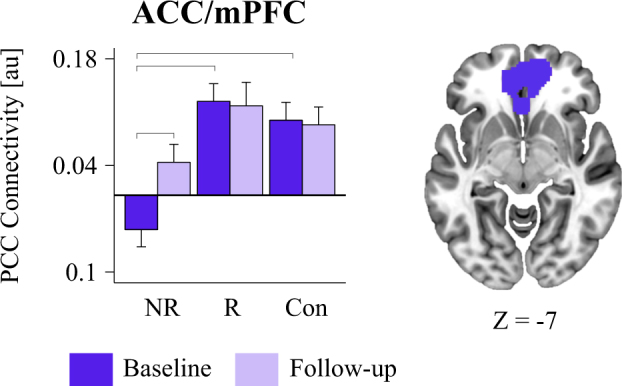
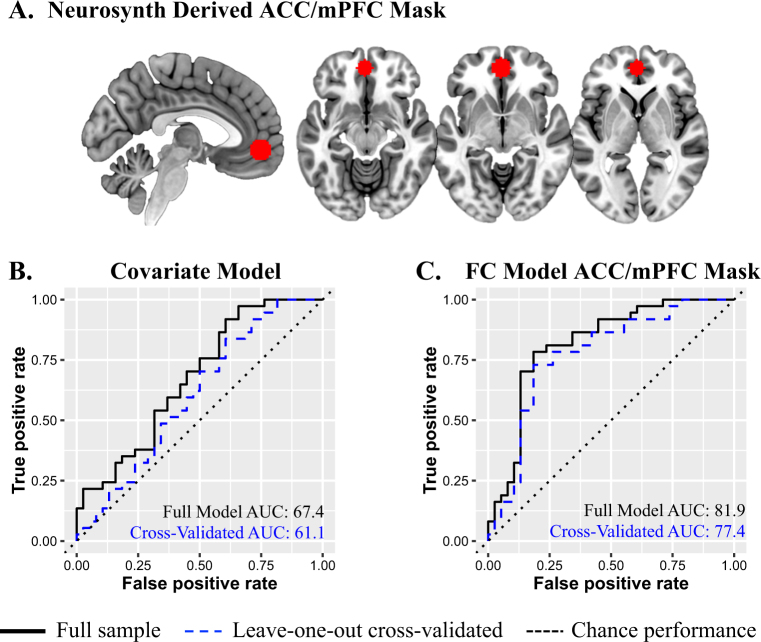
Default mode network (DMN) dysfunction (particularly within the anterior cingulate cortex (ACC) and medial prefrontal cortex (mPFC)) has been implicated in major depressive disorder (MDD); however, its contribution to treatment outcome has not been clearly established. Here we tested the role of DMN functional connectivity as a general and differential biomarker for predicting treatment outcomes in a large, unmedicated adult sample with MDD. Seventy-five MDD outpatients completed fMRI scans before and 8 weeks after randomization to escitalopram, sertraline, or venlafaxine-XR. A whole-brain voxel-wise t-test identified profiles of pretreatment intrinsic functional connectivity that distinguished patients who were subsequently classified as remitters or non-remitters at follow-up. Connectivity was seeded in the PCC, an important node of the DMN. We further characterized differences between remitters, non-remitters, and 31 healthy controls and characterized changes pretreatment to posttreatment. Remitters were distinguished from non-remitters by relatively intact connectivity between the PCC and ACC/mPFC, not distinguishable from healthy controls, while non-remitters showed relative hypo-connectivity. In validation analyses, we demonstrate that PCC–ACC/mPFC connectivity predicts remission status with >80% cross-validated accuracy. In analyses testing whether intrinsic connectivity differentially relates to outcomes for a specific type of antidepressant, interaction models did not survive the corrected threshold. Our findings demonstrate that the overall capacity to remit on commonly used antidepressants may depend on intact organization of intrinsic functional connectivity between PCC and ACC/mPFC prior to treatment. The findings highlight the potential utility of functional scans for advancing a more precise approach to tailoring antidepressant treatment choices.
Overview
The claims and statistics of this paper haven’t been checked yet.
Free: it reads the open-access text and checks the first 5 claims that cite a source we can check. Create a free account to check every claim.
Integrity signals
Registry
Cites
Statistics
Figures
Verification
Claims the paper makes
The claims and statistics of this paper haven’t been checked yet.
Free: it reads the open-access text and checks the first 5 claims that cite a source we can check. Create a free account to check every claim.
Claims other papers make about this one
Each is checked against this paper’s own text: does it say what the citing paper says it does?
The cited source says what the claim attributes to it.
In the citing paper
“Increases between the PCC and the ACC and mPFC have been reported in patients who receive treatment, but do not remit32.”
From The relationship between resting-state functional connectivity, antidepressant discontinuation and depression relapse (2020) · cites this paper as [32]
The check wasn’t confident either way, so it gives no verdict — never disputed.
In the citing paper
“The results of studies examining the impact of ADM initiation on connectivity are heterogeneous28–39.”
From The relationship between resting-state functional connectivity, antidepressant discontinuation and depression relapse (2020) · cites this paper as [32]
Experimental — accuracy not yet measured
Self-check
Percentages, sums and reported differences re-computed from the paper’s own numbers.
The self-check needs the paper’s full text.
Citations
Cites
Hamilton, M. (1960) · Journal of Neurology, Neurosurgery & Psychiatry · doi:10.1136/jnnp.23.1.56 · Cited by 32,817
(1998) · The Journal of Clinical Psychiatry · Cited by 19,139
Kessler, R. C. (1994) · Archives of General Psychiatry · doi:10.1001/archpsyc.1994.03950010008002 · Cited by 12,370 · cited 4×
“Data volumes that were associated with extreme (1) movement (framewise displacement from one time point to the next) and (2) changes in blood-oxygen-level-depedent BOLD signal intensity (as indexed by the mean squared difference in signal intensity over the entire volume from one time point to the next divided by the…”
BackgroundMethodInfluential(1998) · PubMed · Cited by 10,216
Power, J. D., Barnes, K. A., Snyder, A. Z., Schlaggar, B. L., & Petersen, S. E. (2012) · NeuroImage · doi:10.1016/j.neuroimage.2011.10.018 · Cited by 7,429
Functional connectivity in the resting brain: a network analysis of the default mode hypothesis
Greicius, M. D., Krasnow, B., Reiss, A. L., & Menon, V. (2003) · Proceedings of the National Academy of Sciences · doi:10.1073/pnas.0135058100 · Cited by 6,358
Whiteford, H. A., Degenhardt, L., Rehm, J., Baxter, A. J., Ferrari, A. J., Erskine, H. E., Charlson, F. J., Norman, R. E., Flaxman, A. D., Johns, N., et al. (2013) · The Lancet · doi:10.1016/s0140-6736(13)61611-6 · Cited by 6,006
Large-scale brain networks and psychopathology: a unifying triple network model
Menon, V. (2011) · Trends in Cognitive Sciences · doi:10.1016/j.tics.2011.08.003 · Cited by 4,168
Trivedi, M. H., Rush, A. J., Wisniewski, S. R., Nierenberg, A. A., Warden, D., Ritz, L., Norquist, G., Howland, R. H., Lebowitz, B., McGrath, P. J., et al. (2006) · American Journal of Psychiatry · doi:10.1176/appi.ajp.163.1.28 · Cited by 3,879
Movement‐Related effects in fMRI time‐series
Friston, K. J., Williams, S., Howard, R., Frackowiak, R. S. J., & Turner, R. (1996) · Magnetic Resonance in Medicine · doi:10.1002/mrm.1910350312 · Cited by 3,774 · cited 1×
“Motion effects were also modeled for each task using the Volterra expansion of the realignment parameters proposed in Friston et al. (1996) (24 regressors; Rt, Rt 2, Rt-1, Rt-1 2 where Rs are the realignment parameters estimated during the preprocessing stage)37.”
Method
Research works printed but not linked: 2
- Andersson, J. L., Jenkinson, M. & Smith, S. M. Non-Linear Optimisation. FMRIB Technical Report TR07JA1 (FMRIB Centre, Oxford, United Kingdom, 2007).
- Cleary P Guy W Factor analysis of the Hamilton Depression Scale Drugs Exp. Clin. Res. 1977 1 115 120
Cited by
Major Depressive Disorder: Advances in Neuroscience Research and Translational Applications
Li, Z., Ruan, M., Chen, J., & Fang, Y. (2021) · Neuroscience Bulletin · doi:10.1007/s12264-021-00638-3 · Cited by 326
“symptoms [117] and the response to antidepressants [118, 119], ECT [120, 121], and repetitive transcranial magnetic stimulation [122].”
BackgroundZhang, Y., Wu, W., Toll, R. T., Naparstek, S., Maron-Katz, A., Watts, M., Gordon, J., Jeong, J., Astolfi, L., Shpigel, E., et al. (2020) · Nature Biomedical Engineering · doi:10.1038/s41551-020-00614-8 · Cited by 241
New and emerging approaches to treat psychiatric disorders
Scangos, K. W., State, M. W., Miller, A. H., Baker, J. T., & Williams, L. M. (2023) · Nature Medicine · doi:10.1038/s41591-022-02197-0 · Cited by 180
Self-citationIntrinsic connectomes are a predictive biomarker of remission in major depressive disorder
Korgaonkar, M. S., Goldstein-Piekarski, A. N., Fornito, A., & Williams, L. M. (2020) · Molecular Psychiatry · doi:10.1038/s41380-019-0574-2 · Cited by 163
“Few studies have examined whether pre-treatment intrinsic neural characteristics may pre-dispose an individual to respond to antidepressant medications [19, 20].”
BackgroundMethodSelf-citationNemeroff, C. B. (2020) · American Journal of Psychiatry · doi:10.1176/appi.ajp.2020.20060845 · Cited by 152
Mapping Neural Circuit Biotypes to Symptoms and Behavioral Dimensions of Depression and Anxiety
Goldstein‐Piekarski, A. N., Ball, T. M., Samara, Z., Staveland, B. R., Keller, A. S., Fleming, S. L., Grisanzio, K. A., Holt-Gosselin, B., Stetz, P. C., Ma, J., et al. (2021) · Biological Psychiatry · doi:10.1016/j.biopsych.2021.06.024 · Cited by 170
Self-citationAccelerated TMS - moving quickly into the future of depression treatment
van Rooij, S. J. H., Arulpragasam, A. R., McDonald, W. M., & Philip, N. S. (2023) · Neuropsychopharmacology · doi:10.1038/s41386-023-01599-z · Cited by 166
The neurobiology of treatment-resistant depression: A systematic review of neuroimaging studies
Runia, N., Yücel, D. E., Lok, A., de Jong, K., Denys, D. A. J. P., van Wingen, G. A., & Bergfeld, I. O. (2022) · Neuroscience & Biobehavioral Reviews · doi:10.1016/j.neubiorev.2021.12.008 · Cited by 117
“This finding is in line with pharmacotherapy studies showing that lower baseline FC between the posterior and anterior DMN is associated with antidepressant non-response (Andreescu et al., 2013; Goldstein-Piekarski et al., 2018).”
Chin Fatt, C. R., Jha, M. K., Cooper, C. M., Fonzo, G., South, C., Grannemann, B., Carmody, T., Greer, T. L., Kurian, B., Fava, M., et al. (2020) · American Journal of Psychiatry · doi:10.1176/appi.ajp.2019.18070870 · Cited by 125
Tozzi, L., Zhang, X., Chesnut, M., Holt-Gosselin, B., Ramirez, C. A., & Williams, L. M. (2021) · NeuroImage Clinical · doi:10.1016/j.nicl.2021.102570 · Cited by 138
Self-citationNeural Mechanisms and Psychology of Psychedelic Ego Dissolution
Stoliker, D., Egan, G. F., Friston, K. J., & Razi, A. (2022) · Pharmacological Reviews · doi:10.1124/pharmrev.121.000508 · Cited by 81
Rajpurkar, P., Yang, J., Dass, N., Vale, V., Keller, A. S., Irvin, J., Taylor, Z., Basu, S., Ng, A., & Williams, L. M. (2020) · JAMA Network Open · doi:10.1001/jamanetworkopen.2020.6653 · Cited by 88
Self-citationCohen, S. E., Zantvoord, J. B., Wezenberg, B. N., Bockting, C., & van Wingen, G. A. (2021) · Translational Psychiatry · doi:10.1038/s41398-021-01286-x · Cited by 93
Intrinsic Brain Network Biomarkers of Antidepressant Response: a Review
Dunlop, K., Talishinsky, A., & Liston, C. (2019) · Current Psychiatry Reports · doi:10.1007/s11920-019-1072-6 · Cited by 80
Brain connectivity in major depressive disorder: a precision component of treatment modalities?
Tura, A., & Goya‐Maldonado, R. (2023) · Translational Psychiatry · doi:10.1038/s41398-023-02499-y · Cited by 71
“Davis et al. (2019) and Dong et al. (2020) investigated the effect of SSRIs and SNRIs on SC but found no significant changes after 8 weeks, and 6 months after treatment, respectively [32, 34].”
BackgroundResultInfluentialBrain regulation of emotional conflict predicts antidepressant treatment response for depression
Fonzo, G. A., Etkin, A., Zhang, Y., Wu, W., Cooper, C. M., Fatt, C. C., Jha, M. K., Trombello, J. M., Deckersbach, T., Adams, P., et al. (2019) · Nature Human Behaviour · doi:10.1038/s41562-019-0732-1 · Cited by 63
Precision Medicine Approaches to Mental Health Care
Scala, J. J., Ganz, A. B., & Snyder, M. P. (2022) · Physiology · doi:10.1152/physiol.00013.2022 · Cited by 63
Long, F., Chen, Y. A., Zhang, Q., Li, Q., Wang, Y., Wang, Y., Li, H., Zhao, Y., McNamara, R. K., DelBello, M. P., et al. (2024) · Molecular Psychiatry · doi:10.1038/s41380-024-02710-6 · Cited by 61
“Although outcome prediction features mainly involved DMN and limbic networks, predictive neuroimaging features differed somewhat among modality and intervention subgroups.”
MRI predictors of pharmacotherapy response in major depressive disorder
Gerlach, A. R., Karim, H. T., Peciña, M., Ajilore, O., Taylor, W. D., Butters, M. A., & Andreescu, C. (2022) · NeuroImage: Clinical · doi:10.1016/j.nicl.2022.103157 · Cited by 57
A multimetric systematic review of fMRI findings in patients with MDD receiving ECT
Casteràs, D. P., Cano, M., Camprodon, J. A., Loo, C. K. A., Palao, D. J., Soriano‐Mas, C., & Cardoner, N. (2020) · Progress in Neuro-Psychopharmacology and Biological Psychiatry · doi:10.1016/j.pnpbp.2020.110178 · Cited by 66
Li, L., Su, Y., Wu, Y., Castellanos, F. X., Li, K., Li, J., Si, T., & Yan, C. (2021) · Human Brain Mapping · doi:10.1002/hbm.25391 · Cited by 58
“Recent studies revealed hypo-connectivity within the DMN in patients with first-episode drug-naïve (FEDN) MDD (Wang, Yu, Wu, Wu, & Wang, 2019), and in unremitted MDD patients (Goldstein-Piekarski et al., 2018).”
BackgroundWilliams, L. M., Coman, J. T., Stetz, P. C., Walker, N. C., Kozel, F. A., George, M. S., Yoon, J., Hack, L. M., Madore, M. R., Lim, K. O., et al. (2021) · BMC Psychiatry · doi:10.1186/s12888-020-03030-z · Cited by 50
“Some degree of DMN dysfunction is observed in persistently unwell MDD patients [13] and can identify MDD patients who do not remit on antidepressants [14].”
BackgroundMethodSelf-citationNeuroimaging for precision medicine in psychiatry
Williams, L. M., & Whitfield, S. (2024) · Neuropsychopharmacology · doi:10.1038/s41386-024-01917-z · Cited by 52
Self-citationZhao, K., Xie, H., Fonzo, G. A., Tong, X., Carlisle, N. B., Chidharom, M., Etkin, A., & Zhang, Y. (2023) · Molecular Psychiatry · doi:10.1038/s41380-023-01958-8 · Cited by 50
Kotoula, V., Evans, J. W., Punturieri, C., & Zarate, C. A. (2023) · Frontiers in Neuroimaging · doi:10.3389/fnimg.2023.1110258 · Cited by 43
“35 Goldstein-Piekarski et al. (2018) Aim: To test the role of the DMN as a general and differential biomarker for predicting treatment outcomes in a large, unmedicated adult sample with depression.”
BackgroundIntegrating sleep, neuroimaging, and computational approaches for precision psychiatry
Goldstein‐Piekarski, A. N., Holt-Gosselin, B., O’Hora, K., & Williams, L. M. (2019) · Neuropsychopharmacology · doi:10.1038/s41386-019-0483-8 · Cited by 46
Self-citationThe functional connectome in posttraumatic stress disorder
Breukelaar, I. A., Bryant, R. A., & Korgaonkar, M. S. (2021) · Neurobiology of Stress · doi:10.1016/j.ynstr.2021.100321 · Cited by 39
“The details of the acquisition and pre-processing has been described previously (Goldstein-Piekarski et al., 2018) and is detailed in the supplementary methods.”
MethodSelf-citationPaolini, M., Harrington, Y. A., Colombo, F., Bettonagli, V., Poletti, S., Carminati, M., Colombo, C., Benedetti, F., & Zanardi, R. (2023) · Journal of Psychopharmacology · doi:10.1177/02698811231190859 · Cited by 38
“…lower rs-FC between ACC, ventro-medial prefrontal cortex and posterior cingulate cortex has been associated with better treatment response (Dunlop et al., 2017; Goldstein-Piekarski et al., 2018), as well as higher connectivity with right dorsolateral prefrontal cortex (Straub et al., 2017).”
BackgroundBatail, J.-M., Xiao, X., Azeez, A., Tischler, C., Kratter, I. H., Bishop, J. H., Saggar, M., & Williams, N. R. (2023) · Translational Psychiatry · doi:10.1038/s41398-023-02537-9 · Cited by 33
Wu, H., Liu, R., Zhou, J., Feng, L., Wang, Y., Chen, X., Zhang, Z., Cui, J., Zhou, Y., & Wang, G. (2022) · Translational Psychiatry · doi:10.1038/s41398-022-02152-0 · Cited by 32
“First, the follow-up time of studies with a large sample size is relatively short, usually, 2 weeks or 8 weeks [16, 21, 22], which is insufficient to determine whether patients can achieve remission [6].”
BackgroundFischer, A. S., Holt-Gosselin, B., Fleming, S. L., Hack, L. M., Ball, T. M., Schatzberg, A. F., & Williams, L. M. (2021) · Neuropsychopharmacology · doi:10.1038/s41386-020-00905-3 · Cited by 30
Self-citationBerwian, I. M., Wenzel, J. G., Kuehn, L., Schnuerer, I., Kasper, L., Veer, I. M., Seifritz, E., Stephan, K. E., Walter, H., & Huys, Q. J. M. (2020) · Scientific Reports · doi:10.1038/s41598-020-79170-9 · Cited by 29
Intrinsic Connectivity Networks of Glutamate-Mediated Antidepressant Response: A Neuroimaging Review
Demchenko, I., Tassone, V. K., Kennedy, S. H., Dunlop, K., & Bhat, V. (2022) · Frontiers in Psychiatry · doi:10.3389/fpsyt.2022.864902 · Cited by 29
Liu, J., Zhang, B., Wilson, G., Kong, J., & Initiative, T. A. D. N. (2019) · Frontiers in Aging Neuroscience · doi:10.3389/fnagi.2019.00228 · Cited by 32
Nakamura, T., Tomita, M., Horikawa, N., Ishibashi, M., Uematsu, K., Hiraki, T., Abe, T., & Uchimura, N. (2021) · Neuropsychopharmacology Reports · doi:10.1002/npr2.12165 · Cited by 28
Saad, J. F., Griffiths, K. R., Kohn, M. R., Braund, T. A., Clarke, S. D., Williams, L. M., & Korgaonkar, M. S. (2022) · Frontiers in Human Neuroscience · doi:10.3389/fnhum.2022.859538 · Cited by 34
“We thank Lavier Gomes, Ms. Sheryl Foster, and the Department of Radiology at Westmead Hospital for their substantial contributions to magnetic resonance imaging data acquisition for iSPOT-A and LIMCA, Tracey Tsang, who served as the iSPOT-A trial coordinator, and Sariah Hobby, Yennie Hyunh, and Jodie Logan, who assist…”
MethodInfluentialSelf-citationZhang, S., Zhou, J., Cui, J., Zhang, Z., Liu, R., Feng, Y., Feng, L., Wang, Y., Chen, X., Wu, H., et al. (2023) · Human Brain Mapping · doi:10.1002/hbm.26231 · Cited by 29
“Two studies investigated the intrinsic functional connectivity derived from task-based fMRI time series (Goldstein-Piekarski et al., 2018; Korgaonkar et al., 2020).”
BackgroundInfluentialSun, J., Chen, L., He, J., Wang, Z., Guo, C., Ma, Y., Luo, Y., Gao, D.-Q., Yang, H., Fang, J., et al. (2022) · Frontiers in Psychology · doi:10.3389/fpsyg.2022.849847 · Cited by 28
Korgaonkar, M. S., Chakouch, C., Breukelaar, I. A., Erlinger, M., Felmingham, K. L., Forbes, D., Williams, L. M., & Bryant, R. A. (2020) · Translational Psychiatry · doi:10.1038/s41398-020-00938-8 · Cited by 29
Self-citationJiang, J., Li, L., Lin, J., Hu, X., Zhao, Y., Sweeney, J. A., & Gong, Q. (2022) · Neuroscience & Biobehavioral Reviews · doi:10.1016/j.neubiorev.2022.104991 · Cited by 25
“, 2016), disrupted functional connection of the DMN has been suggested to be a key alteration in depression (Goldstein-Piekarski et al., 2018; Liu et al., 2020c; Mulders et al., 2016).”
Quantifying person-level brain network functioning to facilitate clinical translation
Ball, T. M., Goldstein‐Piekarski, A. N., Gatt, J. M., & Williams, L. M. (2017) · Translational Psychiatry · doi:10.1038/tp.2017.204 · Cited by 26
Self-citationLu, F., Cui, Q., Zou, Y., Guo, Y., Luo, W., Yu, Y., Gao, J., Cai, X., Fu, L., Yuan, S., et al. (2023) · Bioengineering · doi:10.3390/bioengineering10121374 · Cited by 26
Prompiengchai, S., & Dunlop, K. (2024) · Neuropsychopharmacology · doi:10.1038/s41386-024-01907-1 · Cited by 26
Sinha, P., Joshi, H., & Ithal, D. (2021) · Frontiers in Human Neuroscience · doi:10.3389/fnhum.2020.616054 · Cited by 24
Karvelis, P., Charlton, C. E., Allohverdi, S. G., Bedford, P., Hauke, D. J., & Diaconescu, A. O. (2022) · Network Neuroscience · doi:10.1162/netn_a_00233 · Cited by 26
“Goldstein-Piekarski et al. (2018) also used iSPOT-D data, to predict treatment remission using connectivity within the DMN, with a focus on the posterior cingulate cortex (PCC).”
BackgroundMethodSun, J., Du, Z., Ma, Y., Chen, L., Wang, Z., Guo, C., Luo, Y., Gao, D., Yang, H., Zhang, L., et al. (2022) · Frontiers in Neurology · doi:10.3389/fneur.2022.922207 · Cited by 23
Association of Neural Connectome With Early Experiences of Abuse in Adults
Korgaonkar, M. S., Breukelaar, I. A., Felmingham, K. L., Williams, L. M., & Bryant, R. A. (2023) · JAMA Network Open · doi:10.1001/jamanetworkopen.2022.53082 · Cited by 21
Self-citationvan der Wijk, G., Harris, J. K., Hassel, S., Davis, A. D., Zamyadi, M., Arnott, S. R., Milev, R. V., Lam, R. W. M., Frey, B. N., Hall, G. B., et al. (2021) · Cerebral Cortex · doi:10.1093/cercor/bhab286 · Cited by 22
Duan, L. N., Gao, Y., Shao, X., Tian, C., Fu, C., & Zhu, G. (2020) · Frontiers in Psychiatry · doi:10.3389/fpsyt.2020.00647 · Cited by 21
Harris, J. K., Hassel, S., Davis, A. D., Zamyadi, M., Arnott, S. R., Milev, R. V., Lam, R. W. M., Frey, B. N., Hall, G. B., Müller, D. J., et al. (2022) · NeuroImage Clinical · doi:10.1016/j.nicl.2022.103120 · Cited by 22
Early score fluctuation and placebo response in a study of major depressive disorder
Targum, S. D., Cameron, B. R., Ferreira, L., & MacDonald, I. D. (2019) · Journal of Psychiatric Research · doi:10.1016/j.jpsychires.2019.11.014 · Cited by 18
Barreiros, A. R., Breukelaar, I. A., Prentice, A., Mayur, P. M., Tomimatsu, Y., Funayama, K., Foster, S., Malhi, G. S., Arns, M., Harris, A. D., et al. (2024) · NeuroImage Clinical · doi:10.1016/j.nicl.2024.103656 · Cited by 19
Self-citationBreukelaar, I. A., Griffiths, K. R., Harris, A. W. F., Foster, S., Williams, L. M., & Korgaonkar, M. S. (2020) · Cortex · doi:10.1016/j.cortex.2020.08.014 · Cited by 17
Self-citationCarvalho, S., Gonçalves, Ó. F., Brunoni, A. R., Fernandes-Gonçalves, A., Fregni, F., & Leite, J. (2020) · Frontiers in Psychiatry · doi:10.3389/fpsyt.2020.563058 · Cited by 18
Singh, M. K., & Thase, M. E. (2025) · CNS Spectrums · doi:10.1017/s1092852925000094 · Cited by 18
“96 Similarly, the comparative effectiveness of existing therapeutics can be explored based on neural circuit changes in response to different compounds.”
Zhang, R., Tam, S.-K. T. S., Wong, N. M. L., Wu, J., Tao, J., Chen, L., Lin, K., & Lee, T. M. C. (2021) · NeuroImage Clinical · doi:10.1016/j.nicl.2021.102916 · Cited by 16
Common and differential neural mechanisms underlying mood disorders
Rai, S., Griffiths, K. R., Breukelaar, I. A., Barreiros, A. R., Boyce, P. M., Hazell, P., Foster, S., Malhi, G. S., Harris, A. W. F., & Korgaonkar, M. S. (2022) · Bipolar Disorders · doi:10.1111/bdi.13248 · Cited by 15
“Antipsychotic, n (%) 11 (28) 2 (5) 8 (20) — —”
Self-citationSong, E. J., Tozzi, L., & Williams, L. M. (2024) · Biological Psychiatry · doi:10.1016/j.biopsych.2024.03.016 · Cited by 16
“Higher connectivity between the DMN and the frontoparietal attention circuit (also known as the central executive network) has also been found to predict remission on these antidepressants (42 – 44).”
Self-citationSun, Y., Tao, S., Tian, S., Shao, J., Mo, Z., Wang, X., Wang, H., Zhao, P., Chen, Z., Yao, Z., et al. (2021) · Journal of Affective Disorders · doi:10.1016/j.jad.2021.01.047 · Cited by 16
Kuburi, S., Passa, A.-M. D., Tassone, V. K., Mahmood, R., Lalovic, A., Ladha, K. S., Dunlop, K., Rizvi, S. J., Demchenko, I., & Bhat, V. (2022) · Chronic Stress · doi:10.1177/24705470221115342 · Cited by 18
“Moreover, mPFC intrinsic connectivity prior to antidepressant treatment has been predictive of remission outcomes in MDD patients.(80) Despite existing evidence supporting the amygdala and mPFC/vmPFC as neural correlates of treatment response following conventional antidepressants, more data are necessary to determine…”
ResultKlimova, A., Breukelaar, I. A., Bryant, R. A., & Korgaonkar, M. S. (2022) · Human Brain Mapping · doi:10.1002/hbm.26101 · Cited by 15
“The acquisition, preprocessing and derivation of the intrinsic signal have been described previously (Goldstein-Piekarski et al., 2018; Korgaonkar et al., 2020).”
MethodSelf-citationTsolaki, E. C., Narr, K. L., Espinoza, R. T., Wade, B., Hellemann, G. S., Kubicki, A., Vasavada, M. M., Njau, S. N., & Pouratian, N. (2020) · Biological Psychiatry Cognitive Neuroscience and Neuroimaging · doi:10.1016/j.bpsc.2020.05.010 · Cited by 15
Tozzi, L., Anene, E. T., Gotlib, I. H., Wintermark, M., Kerr, A. B., Wu, H., Seok, D., Narr, K. L., Sheline, Y. I., Whitfield, S., et al. (2021) · NeuroImage · doi:10.1016/j.neuroimage.2021.118694 · Cited by 14
Self-citationBraund, T. A., Breukelaar, I. A., Griffiths, K. R., Tillman, G., Palmer, D. M., Bryant, R. A., Phillips, M. L., Harris, A. W. F., & Korgaonkar, M. S. (2021) · Biological Psychiatry Cognitive Neuroscience and Neuroimaging · doi:10.1016/j.bpsc.2021.07.010 · Cited by 13
Self-citationYe, Y., Wang, C., Lan, X., Li, W., Fu, L., Zhang, F., Liu, H., Wu, K., Zhou, Y., & Ning, Y. (2022) · NeuroImage Clinical · doi:10.1016/j.nicl.2022.103230 · Cited by 13
“…patients and healthy controls (Li et al., 2013; Peng et al., 2021; Yan et al., 2019), and pretreatment functional connectivity associated with response to pharmaceutical and non-pharmaceutical treatments has been found (Dunlop et al., 2017; Goldstein-Piekarski et al., 2018; Salomons et al., 2014).”
BackgroundAhmed, R., Boyd, B. D., Elson, D. M., Albert, K. M., Begnoche, J. P., Kang, H., Landman, B. A., Szymkowicz, S. M., Andrews, P., Vega, J. N., et al. (2022) · Psychological Medicine · doi:10.1017/s0033291722003579 · Cited by 20
“Higher connectivity between DMN hub regions, specifically the posterior cingulate cortex (PCC) and anterior cingulate cortex (ACC)/medial prefrontal cortex (mPFC) regions, predicted remission to first-line antidepressant regimens (Goldstein-Piekarski et al., 2018).”
InfluentialPaštrnák, M., Klírová, M., Bareš, M., & Novák, T. (2024) · BMC Neuroscience · doi:10.1186/s12868-024-00895-8 · Cited by 11
“The variability of these findings may be related to clinical heterogeneity, i.e., depression severity [36, 38], responsiveness to treatment [39], and length of the episode [40].”
BackgroundTowards an expanded neurocognitive account of ketamine’s rapid antidepressant effects
Dai, Y., Harrison, B. J., Davey, C. G., & Steward, T. (2025) · The International Journal of Neuropsychopharmacology · doi:10.1093/ijnp/pyaf010 · Cited by 11
“…hypoconnectivity between the anterior and posterior DMN was found in patients with depression that did not respond to serotonergic antidepressants, 125 and some literature has shown functional connectivity increases only in anterior regions of the DMN associated with improvements in depression,…”
Developing Clinically Interpretable Neuroimaging Biotypes in Psychiatry
Ahn, J., Foland‐Ross, L. C., Akiki, T. J., Boyar, L., Wydler, I., Bostian, C. M., Zhang, X., Yang, H., Ellsay, A., Ma, E. W., et al. (2025) · Biological Psychiatry · doi:10.1016/j.biopsych.2025.08.019 · Cited by 11
“…Treatment for Depression) trial found similar significant predictions (37); higher baseline connectivity between the default mode and frontoparietal attention network was associated with remission (38), and amPFC–posterior cingulate cortex (PCC) connectivity predicted antidepressant response (39).”
Self-citationGoldstein‐Piekarski, A. N., & Williams, L. M. (2019) · Elsevier eBooks · doi:10.1016/b978-0-12-813333-0.00021-4 · Cited by 14
Self-citationThomas, P. J., Leow, A., Klumpp, H., Phan, K. L., & Ajilore, O. (2023) · Biological Psychiatry Cognitive Neuroscience and Neuroimaging · doi:10.1016/j.bpsc.2023.06.008 · Cited by 15
Bulubas, L., Padberg, F., Mezger, E., Suen, P. J. C., Bueno, P. V. S., Duran, F., Busatto, G. F., Amaro, E., Benseñor, I. M., Lotufo, P. A., et al. (2020) · European Archives of Psychiatry and Clinical Neuroscience · doi:10.1007/s00406-020-01187-y · Cited by 9
Kang, Y., Jung, J., Han, K., Auer, D. P., & Ham, B. (2025) · Journal of Affective Disorders · doi:10.1016/j.jad.2025.120607 · Cited by 8
an, K., Zhang, D., Gao, M., Zhang, Y., Zhang, Q., Jiang, Y., Qian, Y., & Zhu, J. (2026) · Neurobiology of Disease · doi:10.1016/j.nbd.2026.107363 · Cited by 7
Wang, X., Li, X., Shao, J., Dai, Z., Hua, L., Yan, R., Yao, Z., & Lü, Q. (2024) · Clinical Neurophysiology · doi:10.1016/j.clinph.2024.02.004 · Cited by 8
Zhao, L., Wang, D., Xue, S., Tan, Z., Hong, L., Wang, Y., Li, H., Pan, C., Fu, S., Hu, X., et al. (2022) · Frontiers in Psychiatry · doi:10.3389/fpsyt.2021.771147 · Cited by 7
“The FC between the medial prefrontal cortex and posterior cingulate cortex at baseline was predictive of the remission status of antidepressant treatment (19).”
BackgroundXiao, X., Bentzley, B. S., Cole, E. J., Tischler, C., Stimpson, K. H., Duvio, D., Bishop, J. H., DeSouza, D. D., Schatzberg, A. F., Keller, C. J., et al. (2019) · bioRxiv (Cold Spring Harbor Laboratory) · doi:10.1101/672154 · Cited by 7
Brain changes associated with depression treatment: a meta-analysis
Perez, G. M., Rosenberg, B. M., Xu, W., & Oathes, D. J. (2025) · NeuroImage Clinical · doi:10.1016/j.nicl.2025.103874 · Cited by 6
Ho, C.-C., Peng, S., Yu, Y.-H., Chu, Y.-R., Huang, S., & Kuo, P. (2024) · Journal of Affective Disorders · doi:10.1016/j.jad.2024.08.139 · Cited by 7
Precision medicine in mood disorders
Serretti, A. (2022) · Psychiatry and Clinical Neurosciences Reports · doi:10.1002/pcn5.1 · Cited by 6
Berkovitch, L., Lee, K., Ji, J., Helmer, M., Rahmati, M., Demšar, J., Kraljič, A., Matkovič, A., Tamayo, Z., Murray, J. D., et al. (2025) · Psychological Medicine · doi:10.1017/s0033291725100962 · Cited by 4
“…significant predictive effect of the DMN (Chin Fatt et al., 2020, 2023; Chin Fatt, Cooper, Jha, Aslan, et al., 2021; Dichter, Gibbs, & Smoski, 2015; Goldstein-Piekarski et al., 2018) or of the rostral anterior cingulate cortex connectivity (Cooper et al., 2019; Dunlop, Talishinsky, & Liston, 2019;…”
Applying a neural circuit taxonomy in depression and anxiety for personalized psychiatry
Williams, L. M., & Goldstein‐Piekarski, A. N. (2019) · Elsevier eBooks · doi:10.1016/b978-0-12-813176-3.00042-0 · Cited by 6
Self-citationWang, Z., Baeken, C., & Wu, G. (2023) · Metabolites · doi:10.3390/metabo13080920 · Cited by 5
Uygur, A. B., Yıldız, S., Velioğlu, H. A., Özşimşek, A., Öktem, E. Ö., Bayraktaroğlu, Z., Ergün, T., Lakadamyalı, H., Hanoğlu, L., Çankaya, Ş., et al. (2020) · Journal of Clinical Neuroscience · doi:10.1016/j.jocn.2020.12.001 · Cited by 4
Neuromarkers in addiction: definitions, development strategies, and recent advances
Harp, N. R., Wager, T. D., & Kober, H. (2024) · Journal of Neural Transmission · doi:10.1007/s00702-024-02766-2 · Cited by 4
“…is to compare a neuromarker in development to resting-state networks and meta-analytic topic maps (e.g., Neurosynth; Kohoutova et al. 2020), and perhaps even use these tools to identify a priori regions of interest for neuromarker development (Goldstein-Piekarski et al. 2018; Wager et al. 2013).”
The Classification of Depression: Embracing Phenotypic Heterogeneity in the Era of the RDoC
Ballard, E. D., Henter, I. D., & Zarate, C. A. (2019) · Elsevier eBooks · doi:10.1016/b978-0-12-813333-0.00001-9 · Cited by 6
Wang, T., Gao, C., Li, J., Li, L., Yue, Y., Liu, X., Chen, S., Hou, Z., Yin, Y., Jiang, W., et al. (2023) · The Canadian Journal of Psychiatry · doi:10.1177/07067437231210787 · Cited by 3
Functional connectivity profiles of amygdala subregions in posttraumatic stress disorder
Haris, E. M., Bryant, R. A., Felmingham, K. L., Williams, L. M., & Korgaonkar, M. S. (2025) · Translational Psychiatry · doi:10.1038/s41398-025-03508-y · Cited by 2
“Details regarding the acquisition and pre-processing of fMRI data have been previously described [29].”
Self-citationBohon, C., Weinbach, N., & Lock, J. (2019) · Frontiers in Psychiatry · doi:10.3389/fpsyt.2019.00919 · Cited by 2
“It is also possible to utilize functional connectivity in these networks to predict treatment outcome, as connectivity in the DMN has been a consistent neural marker and predictor of treatment response in depression (24, 25).”
BackgroundZhang, L., Han, Y., Lv, D., Yao, P., Chen, L., Yuan, Y., Zhao, J., Guo, W., Guo, Z., & Ou, Y. (2026) · Psychiatry and Clinical Neurosciences · doi:10.1111/pcn.70071 · Cited by 1
“49 However, limited research has focused on cerebellar FCs in patients with TRD. Notably, Guo et al . reported decreased FCs between the cerebellar ECN (bilateral Crus I and right Crus II) and the precuneus in TRD compared to non-TRD, indicating that impaired functional integration of the…”
Gerlach, A., Neppach, A., Snyder, I., Dombrovski, A. Y., & Peciña, M. (2026) · Journal of Affective Disorders · doi:10.1016/j.jad.2026.122252 · Cited by 1
Psychotic experiences, social cognition and pragmatic communication in the psychosis continuum
Bosia, M., Parola, A., Soto, G., & Garcia, R. R. (2023) · Frontiers research topics · doi:10.3389/978-2-83251-738-3 · Cited by 1
Measuring Brain Connectivity to Predict Antidepressant Response
Yager, J. (2018) · Journal watch · doi:10.1056/nejm-jw.na46299
Zamarrenho, L. G. (2020) · Digital Library of Theses and Dissertations (Universidade de São Paulo) · doi:10.11606/t.17.2020.tde-23082020-104553
Hack, L. M., Zandvakili, A., & Williams, L. M. (2023) · Oxford University Press eBooks · doi:10.1093/oxfordhb/9780198832256.013.42
Self-citationTura, A. (2024) · eDiss (Georg-August-Universität Göttingen) · doi:10.53846/goediss-10519
Gillespie, C. F., & Nemeroff, C. B. (2024) · Elsevier eBooks · doi:10.1016/b978-0-443-19176-3.00046-7
Fujita, S., Fuchikami, M., Fujita, S., Miyagi, T., Okada, S., Omura, J., & Morinobu, S. (2025) · Psychopharmacology · doi:10.1007/s00213-025-06891-y · Cited by 1
“With regard to ILC activity during extinction training, although its necessity for later retrieval had been reported (Do-Monte et al. 2015; Goldstein-Piekarski et al. 2018; Likhtik et al. 2008 ; Quirk et al. 2003), and how that activity enhances later retrieval is scarcely understood.”
Who does iCBT work for and why: predicting and understanding treatment outcomes in depression
Lee, C. T. (2024) · Trinity's Access to Research Output (TARA) (Trinity College Dublin)
Metadata
- Authors
- Goldstein-Piekarski, A. N., Staveland, B. R., Ball, T. M., Yesavage, J., Korgaonkar, M. S., & Williams, L. M.
- Affiliations
- Stanford University (US)
- VA Palo Alto Health Care System (US)
- The University of Sydney (AU)
- Corresponding author
- Williams, Leanne M.
- Venue
- Translational Psychiatry
- Published
- 2018-03-06
- Volume
- 8
- Issue
- 1
- Pages
- 57-57
- ISSN
- 2158-3188 (ISSN-L)
- PMC
- PMC5838245
- OpenAlex
- W2789683669
- Cited by
- 108
- References
- 48
- Citations by year
- 2026: 12 · 2025: 9 · 2024: 12 · 2023: 14 · 2022: 18 · 2021: 15 · 2020: 14 · 2019: 12 · 2018: 1
- FWCI
- 6.25
- Type
- journal article
- Language
- en
- Open access
- gold
- doi.org
- Licence
- cc-by
- creativecommons.org/licenses/by/4.0 (tdm)
- creativecommons.org/licenses/by/4.0 (vor)
- Locations
- Translational Psychiatry (publishedVersion, cc-by)
- PubMed Central (publishedVersion, cc-by)
- PubMed (publishedVersion)
- DOAJ (DOAJ: Directory of Open Access Journals) (submittedVersion)
- Funders
- National Institutes of Health
- National Institute of Mental Health (R01MH101496, F32MH108299, T32MH019938)
- Topics
- Life Sciences › Neuroscience › Cognitive Neuroscience › Functional Brain Connectivity Studies
- Health Sciences › Medicine › Pharmacology (medical) › Treatment of Major Depression
- Life Sciences › Neuroscience › Neurology › Transcranial Magnetic Stimulation Studies
- Keywords
- major depressive disorder, default mode network, intrinsic functional connectivity, antidepressant response prediction, posterior cingulate cortex, anterior cingulate cortex, medial prefrontal cortex, escitalopram, sertraline, venlafaxine
- MeSH terms
- Adult, Depressive Disorder, Major, Major Depressive Disorder, Female, Gyrus Cinguli, Humans, Magnetic Resonance Imaging, Male, Middle Aged, Nerve Net, Prognosis, Remission Induction, Outcome Assessment, Health Care, Prefrontal Cortex, Antidepressive Agents, Second-Generation, Connectome
About these checks
Registry, retraction, Cites and statistics results are computed, not judged, with one exception: a printed reference that no index lists is read once by a model before it counts as a citation error. Claims are extracted by a model and kept only when their quote appears verbatim in the text; each cited source is then checked, with a model’s help, for whether it says what the claim relies on. Those verdicts can be wrong — read the claim’s quote and the cited source before relying on one.
Statistics and arithmetic are recomputed, not judged.
Confidence bands are shown only for fields calibrated on our annotated test set. None is calibrated yet, so no band is shown.
What counts as a claim ›How we measure confidence ›How we check this ›
Are you an author, or do you see a problem with this page? Request a review
Data sources
Bibliographic data: Semantic Scholar, OpenAlex, Crossref.
Contains information from the Semantic Scholar Academic Graph Datasets, made available under the ODC Attribution License (ODC-BY 1.0).
Semantic Scholar’s data is described in: Kinney, R., et al. (2023). The Semantic Scholar Open Data Platform. arXiv:2301.10140.
