

Serotonin receptors and suicide, major depression, alcohol use disorder and reported early life adversity
Open accessThe DOI matches its Crossref record; 106 of the 106 references it cites were found in a registry or an index.
Abstract
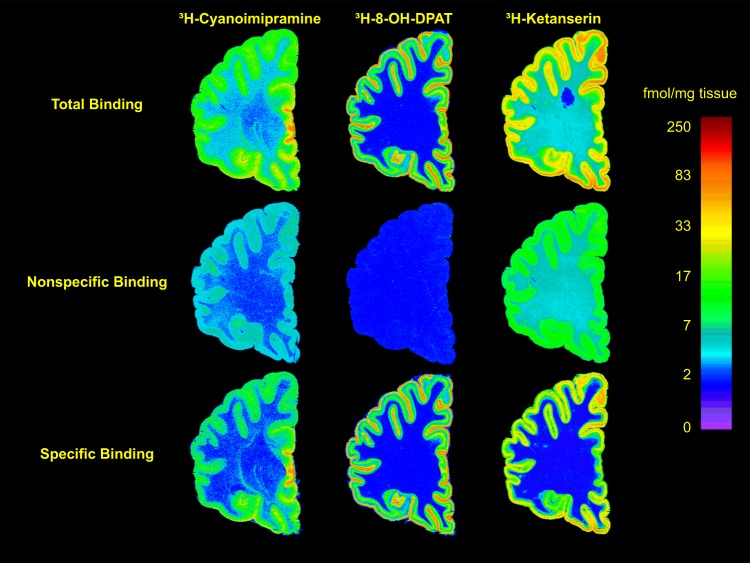
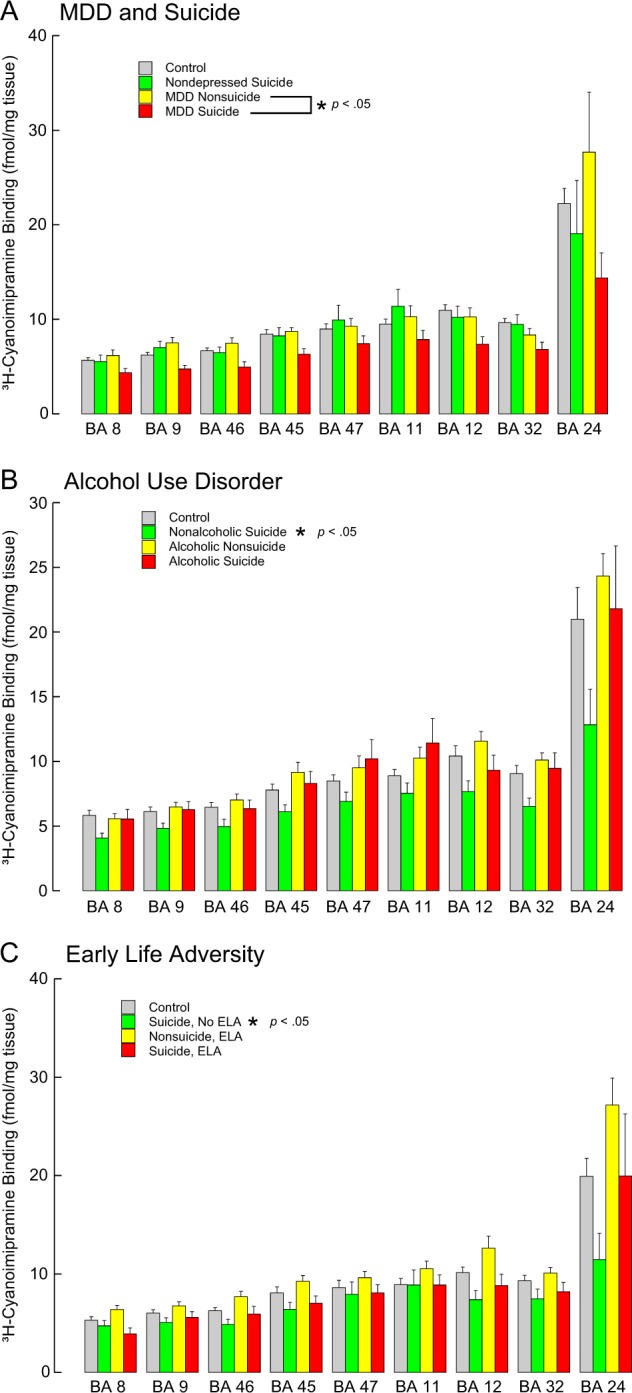
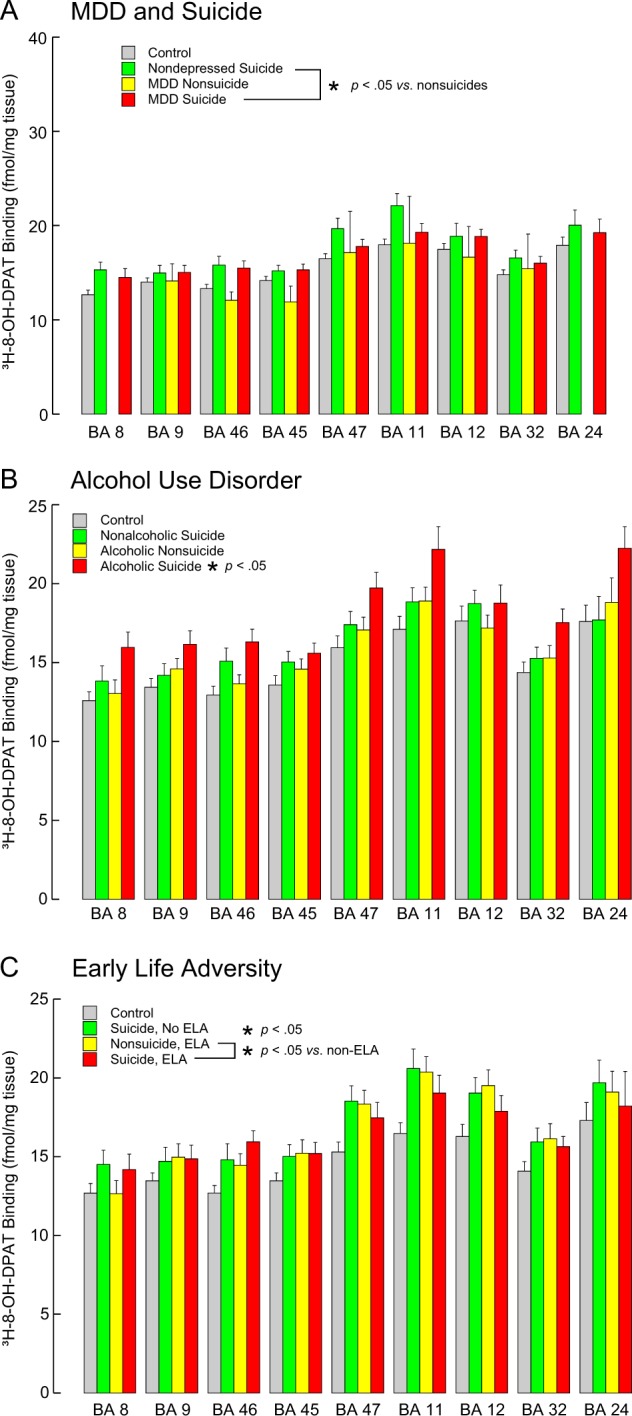
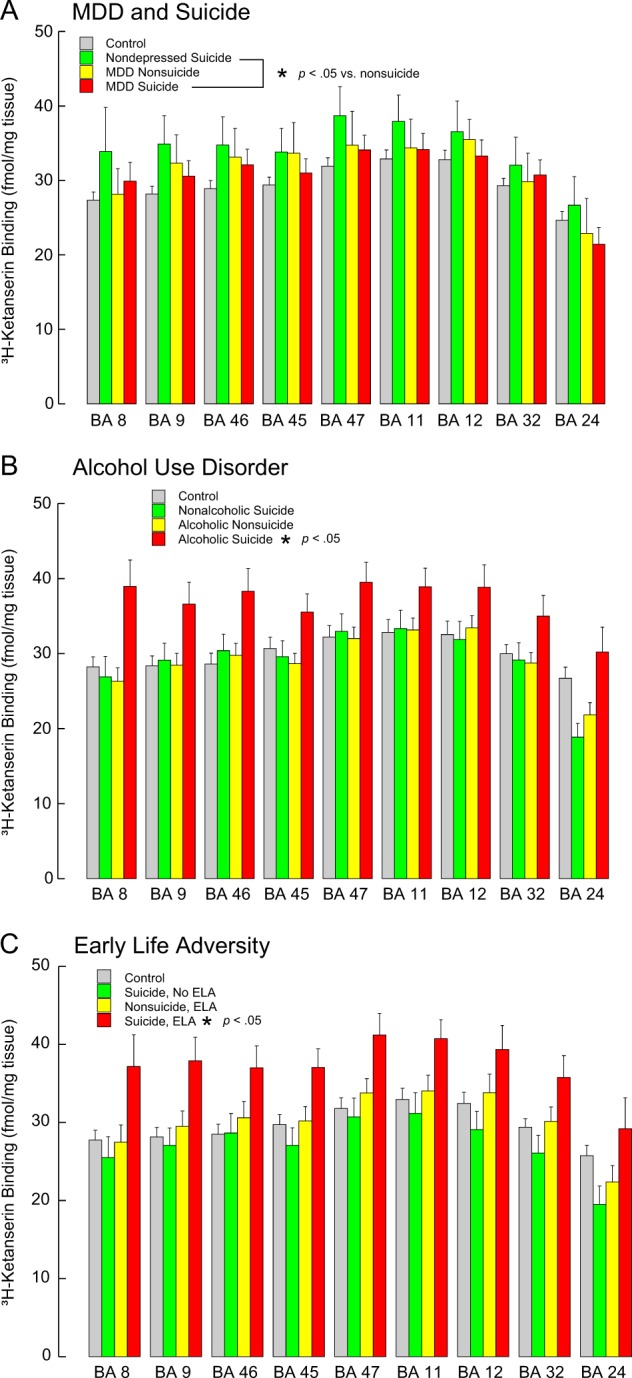
Serotonin neurotransmitter deficits are reported in suicide, major depressive disorder (MDD) and alcohol use disorder (AUD). To compare pathophysiology in these disorders, we mapped brain serotonin transporter (SERT), 5-HT 1A, and 5-HT 2A receptor binding throughout prefrontal cortex and in anterior cingulate cortex postmortem. Cases and controls died suddenly minimizing agonal effects and had a postmortem interval ≤24 h to avoid compromised brain integrity. Neuropathology and toxicology confirmed absence of neuropathology and psychotropic medications. For most subjects (167 of 232), a DSM-IV Axis I diagnosis was made by psychological autopsy. Autoradiography was performed in right hemisphere coronal sections at a pre-genual level. Linear model analyses included sex and age with group and Brodmann area as interaction terms. SERT binding was lower in suicides (p = 0.004) independent of sex (females < males, p < 0.0001), however, the lower SERT binding was dependent on MDD diagnosis (p = 0.014). Higher SERT binding was associated with diagnosis of alcoholism (p = 0.012). 5-HT 1A binding was greater in suicides (p < 0.001), independent of MDD (p = 0.168). Alcoholism was associated with higher 5-HT 1A binding (p < 0.001) but only in suicides (p < 0.001). 5-HT 2A binding was greater in suicides (p < 0.001) only when including MDD (p = 0.117) and alcoholism (p = 0.148) in the model. Reported childhood adversity was associated with higher SERT and 5-HT 1A binding (p = 0.004) in nonsuicides and higher 5-HT 2A binding (p < 0.001). Low SERT and more 5-HT 1A and 5-HT 2A binding in the neocortex in depressed suicides is dependent on Axis I diagnosis and reported childhood adversity. Findings in alcoholism differed from those in depression and suicide indicating a distinct serotonin system pathophysiology.
Overview
The claims and statistics of this paper haven’t been checked yet.
Free: it reads the open-access text and checks the first 5 claims that cite a source we can check. Create a free account to check every claim.
Integrity signals
Registry
Cites
Statistics
Figures
Verification
Claims the paper makes
The claims and statistics of this paper haven’t been checked yet.
Free: it reads the open-access text and checks the first 5 claims that cite a source we can check. Create a free account to check every claim.
Claims other papers make about this one
Each is checked against this paper’s own text: does it say what the citing paper says it does?
The source backs part of the claim, not all of it — or backs it for a different population, condition or comparison.
In the citing paper
“Lower central serotonin (5-HT) activity has been associated with increased suicide risk, independent of psychiatric diagnoses (18).”
From Exploring the neurobiological markers of suicidal behaviors in pediatric population: a narrative review (2026) · cites this paper as [18]
Experimental — accuracy not yet measuredThe source backs part of the claim, not all of it — or backs it for a different population, condition or comparison.
In the citing paper
“Neurotransmitter dysregulation plays a central role in the pathophysiology of suicidal behavior.”
From Exploring the neurobiological markers of suicidal behaviors in pediatric population: a narrative review (2026) · cites this paper as [18]
Experimental — accuracy not yet measuredThe source backs part of the claim, not all of it — or backs it for a different population, condition or comparison.
In the citing paper
“Several studies have reported that suicidal behavior arises from a complex interplay between monoaminergic, neurotrophic, and excitatory–inhibitory systems, with serotonergic dysfunction representing a core neurochemical substrate (18, 19).”
From Exploring the neurobiological markers of suicidal behaviors in pediatric population: a narrative review (2026) · cites this paper as [18]
Experimental — accuracy not yet measuredIn the citing paper
“Less presynaptic serotonin transporter binding in major depression is seen throughout most of the PFC, but in suicide an additional deficit is confined to the ventral PFC and ACC, suggesting a role in decision making (115, 116).”
From A brain-centric model of suicidal behavior (2020) · cites this paper as [116]
Self-check
Percentages, sums and reported differences re-computed from the paper’s own numbers.
The self-check needs the paper’s full text.
Citations
Cites
Influence of life stress on depression: moderation by a polymorphism in the 5-HTT gene
Caspi, A., Sugden, K., Moffitt, T. E., Taylor, A., Craig, I. W., Harrington, H., McClay, J., Mill, J., Martin, J., Braithwaite, A., et al. (2003) · Science · doi:10.1126/science.1083968 · Cited by 8,120
Sex Differences and the Epidemiology of Depression
Weissman, M. M. (1977) · Archives of General Psychiatry · doi:10.1001/archpsyc.1977.01770130100011 · Cited by 1,840
Aggression in humans correlates with cerebrospinal fluid amine metabolites
Brown, G. L., Goodwin, F. K., Ballenger, J. C., Goyer, P. F., & Major, L. F. (1979) · Psychiatry Research · doi:10.1016/0165-1781(79)90053-2 · Cited by 1,132
Evolving Knowledge of Sex Differences in Brain Structure, Function, and Chemistry
Cosgrove, K. P., Mazure, C. M., & Staley, J. K. (2007) · Biological Psychiatry · doi:10.1016/j.biopsych.2007.03.001 · Cited by 996
Heim, C., & Binder, E. B. (2012) · Experimental Neurology · doi:10.1016/j.expneurol.2011.10.032 · Cited by 986
Pet imaging of serotonin 1A receptor binding in depression
Drevets, W. C., Frank, E., Price, J. C., Kupfer, D. J., Holt, D., Greer, P. J., Huang, Y., Gautier, C., & Mathis, C. (1999) · Biological Psychiatry · doi:10.1016/s0006-3223(99)00189-4 · Cited by 666
Sargent, P. A., Kjaer, K. H., Bench, C. J., Rabiner, E. A., Messa, C., Meyer, J., Gunn, R. N., Grasby, P. M., & Cowen, P. J. (2000) · Archives of General Psychiatry · doi:10.1001/archpsyc.57.2.174 · Cited by 642
Mann, J. J., Huang, Y.-Y., Underwood, M. D., Kassir, S. A., Oppenheim, S., Kelly, T. M., Dwork, A. J., & Arango, V. (2000) · Archives of General Psychiatry · doi:10.1001/archpsyc.57.8.729 · Cited by 613
Self-citationJohnson, J. G., Cohen, P., Gould, M. S., Kasen, S., Brown, J., & Brook, J. S. (2002) · Archives of General Psychiatry · doi:10.1001/archpsyc.59.8.741 · Cited by 553
van Heeringen, K., & Mann, J. J. (2014) · The Lancet Psychiatry · doi:10.1016/s2215-0366(14)70220-2 · Cited by 550
Self-citation
Research works printed but not linked: 3
- Labonte, B., Turecki, G. in The Neurobiological Basis of Suicide (ed Dwivedi, Y.) 275–296 (CRC Press, Boca Raton, 2012). 23035294
- Arango, V. & Mann, J. J. in Neurobiology of Mental Illness, 3rd edn (eds Charney, D. & Nestler E. J) 515–529 (Oxford University Press: Oxford, UK, 2009).
- Pandey, G. N. et al. in Contemporary Neuropsychiatry (eds Miyoshi, K., Shapiro, C. M., Gaviria M. & Morita Y) 314–321 (Springer-Verlag: Tokyo, 2001).
Cited by
Items 101–144 of 144
Understanding the predisposing risk factors of young suicide
Wardhan, R., & Mudgal, P. (2020) · International Journal of Research in Medical Sciences · doi:10.18203/2320-6012.ijrms20204985 · Cited by 1
Базовкина, Д. В., Kondaurova, E. M., Adonina, S. N., Bazhenova, E. Y., & Kulikov, A. V. (2023) · Neurochemical Journal · doi:10.1134/s1819712423030042 · Cited by 1
The Etiopathogenic Mosaic of Suicidal Behaviour
Temelie-Olinici, D., Knieling, A., Vâță, D., Solovăstru, L. G., Neamţu, M., Mocanu, M., Pătrașcu, A.-I., Grecu, V.-B., & Leca, D. A. (2025) · Behavioral Sciences · doi:10.3390/bs15010087 · Cited by 1
Liu, X.-S., Vrijsen, J. N., Yan, L., Haak, K. V., Collard, R. M., van Eijndhoven, P., Beckmann, C. F., Fernández, G., Tendolkar, I., & Kohn, N. (2026) · Brain Structure and Function · doi:10.1007/s00429-026-03134-4 · Cited by 1
Factors associated with violent offenders with mental illness in forensic psychiatric evaluations
Lin, C.-H., Hsieh, W.-C., Lin, L.-T., & Chan, C.-H. (2025) · PLoS ONE · doi:10.1371/journal.pone.0336918 · Cited by 1
Increased risk of suicide in substance use disorder: a neurobiological perspective
Thippaiah, S. M., Wang, M., Ransdell, M., Tang, Y., & Fanous, A. H. (2026) · The World Journal of Biological Psychiatry · doi:10.1080/15622975.2026.2618990 · Cited by 1
Sullivan, G. A. (2021) · Lincoln (University of Nebraska) · Cited by 1
Alcohol Consumption and Suicidal Behavior: Current Research Evidence and Potential for Prevention
Kõlves, K., Crossin, R., & Witt, K. (2022) · Springer eBooks · doi:10.1007/978-3-030-92392-1_61 · Cited by 1
Serotonin Deficits as a Factor in Suicidal Behavior a Critical Review
Mangini, E. J., & Field, T. (2024) · doi:10.61440/jcpn.2024.v2.31 · Cited by 1
Parasiliti, C. P. (2020) · OhioLink ETD Center (Ohio Library and Information Network) · Cited by 1
Constitutional and biological predictors of the risk of suicidal behavior in mental disorders
Корнетов, А. Н., Алексеевич, Г. С., Kornetova, E. G., Mednova, I. A., & Ivanova, S. A. (2026) · Bulletin of Siberian Medicine · doi:10.20538/1682-0363-2025-4-143-152 · Cited by 1
Alonso, L., Peeva, P., Stasko, S., Bäder, M., Alenina, N. V., Winter, Y., & Rivalan, M. (2021) · Zenodo (CERN European Organization for Nuclear Research) · doi:10.5281/zenodo.4912528 · Cited by 1
Engineering a stable synaptogenic coating for brain-computer Interfaces
Clément, J.-P. (2021) · eScholarship@McGill (McGill) · doi:10.82308/4998 · Cited by 1
Nowaczyk, N. (2021) · Repozytorium Uniwersytetu im. Adama Mickiewicza (Adam Mickiewicz University in Poznań) · Cited by 1
Salehi, M., Saeidi, M., Amanat, M., Barias, T., Anyeji, U., Alzein, O., & Gunturu, S. (2026) · Frontiers in Pediatrics · doi:10.3389/fped.2026.1738009
The Therapeutic Alliance and Maintaining Physical Safety
Greenberg, T. M. (2020) · Springer eBooks · doi:10.1007/978-3-030-45285-8_4
Truong, J. (2020) · TSpace (University of Toronto)
Suicide as a Systemic Disorder
Lengvenytė, A., Olié, É., & Courtet, P. (2021) · Springer eBooks · doi:10.1007/978-3-030-71229-7_19
Alloy, L. B., Chat, I. K.-Y., Grehl, M. M., Kautz, M. M., Dunning, E. E., Adogli, Z. V., Smith, L. T., Walsh, R. F. L., & Stephenson, A. R. (2021) · Elsevier eBooks · doi:10.1016/b978-0-12-818697-8.00225-9
Устойчивость к антидепрессантам: почему возникает и что с этим делать?, "Природа"
Tsybko, A. S. (2023) · Priroda · doi:10.7868/s0032874x23020011
Corelaţia dintre tulburările induse de consumul de alcool şicomportamentul suicidar
Ciobanu, A. M., Niculae, C. P., Geza, L., & Catrinescu, L. M. (2023) · Psihiatru ro · doi:10.26416/psih.74.3.2023.8663
Базовкина, Д. В., Kondaurova, E. M., Adonina, S. N., Bazhenova, E. Y., & Kulikov, A. V. (2023) · Нейрохимия · doi:10.31857/s1027813323030044
Time perception and suicidal ideation during COVID-19 pandemic: A longitudinal study
Sanz‐Gómez, S., Dubois, J., Alacreu‐Crespo, A., Giner, L., Lengvenytė, A., Olié, É., & Courtet, P. (2024) · Journal of Affective Disorders · doi:10.1016/j.jad.2024.10.094
Tyron, J. M., Ip, C.-T., Jørgensen, M. B., & Jensen, K. H. R. (2024) · Journal of Affective Disorders · doi:10.1016/j.jad.2024.11.073
Mathew, A., Alex, A. M., Shafeeque, C. M., Beegum, M. S., Krishnapillai, V., & Banerjee, M. (2025) · Biomarkers in Neuropsychiatry · doi:10.1016/j.bionps.2025.100126
Idées et conduites suicidaires: Une dimension transdiagnostique pour une psychiatrie de précision
Lengvenytė, A., Olié, É., Leboyer, M., & Courtet, P. (2025) · médecine/sciences · doi:10.1051/medsci/2025066
Mechanistic Links Between Early Adversity and Suicide: A Neuropsychoanalytic ModelPreprint
Turk, A. (2025) · Preprints.org · doi:10.20944/preprints202508.2009.v1
The Neurobiology of Late-Life Depression
Lee, K. J., Kim, H. J., & Kim, Y. (2025) · 신경정신의학 · doi:10.4306/jknpa.2025.64.3.164
Identifying the Neural Predictors of Suicide Risk: A Focus on Pain Processing
Wang, S. (2021) · TSpace (University of Toronto)
Pędzich, B. D. (2024) · VUBIR (Vrije Universiteit Brussel)
Prädiktion von und Intervention nach suizidalem Verhalten
Bahlmann, L. (2025) · Common Library Network (Der Gemeinsame Bibliotheksverbund) · doi:10.22032/dbt.67506
Roy, G. P., Mohammad, M., Perera, H. H. R., Jeshani, M. N. D., Jeyakanthan, M., Perera, R. I. A., & Shibly, M. S. M. (2025) · JUNIOR RESEARCHERS · doi:10.52340/jr.2025.03.05.19
Tracing the Echoes of Childhood Adversity
Liu, X. (2026) · Radboud University Press eBooks · doi:10.54195/9789465152219
McNaughton, N. (2026) · Routledge eBooks · doi:10.4324/9781003465027
Toppa, P. H., Rushmore, J., Haggerty, K., Papadimitriou, G. M., Dougherty, D. D., Kubicki, M. R., González–Mora, J. L., Pallanti, S., Castañeyra-Perdomo, A., Yeterian, E. H., et al. (2026) · Neuroimaging · doi:10.64898/2026.02.12.705574
Tehrani, A. E. (2023) · TSpace (University of Toronto)
Conejero, I. (2020) · theses.fr (ABES) · doi:10.70675/e0cb59ecz80a8z4338za3ddz2ea8e8d0334d
Complex Neurobiological Mechanisms and Risk Factors Underlying Late-Life Depression
Lee, K. J., & Kim, Y. (2026) · Advances in experimental medicine and biology · doi:10.1007/978-981-95-6872-7_16
Rice, R. C., Rathod, R. S., Gil, D. V., Frawley, R. R., Ferguson, L. B., Hill, S. Y., Homanics, G. E., & Farris, S. P. (2026) · bioRxiv (Cold Spring Harbor Laboratory) · doi:10.64898/2026.06.29.735337
Loader, S. (2026) · ScholarWorks (Walden University)
Sharif, A. F., Jahan, A. B., Salloum, I. M., & Francis, A. (2026) · American Journal on Addictions · doi:10.1111/ajad.70205
Surendran, S., Nelluri, V., Sukumar, S., David, L. R., Ravichandran, S., Uzun, B., Ozsahin, D. U., Babu, M. G. R., Kadavigere, R., Shettigar, D., et al. (2026) · Elsevier eBooks · doi:10.1016/b978-0-443-28967-5.00031-9
Mental health and wellbeing of children
Xu, T., Chen, Z., Liu, P., & Zhang, J. (2026) · Frontiers research topics · doi:10.3389/978-2-8325-8953-3
Nari, F., Park, M., Kim, S. H., Chun, J., Kim, S. Y., & Jeong, W. (2026) · BMC Psychiatry · doi:10.1186/s12888-026-08857-6
Metadata
- Authors
- Underwood, M. D., Kassir, S. A., Bakalian, M. J., Galfalvy, H., Dwork, A. J., Mann, J. J., & Arango, V.
- Affiliations
- Columbia University Irving Medical Center (US)
- New York State Psychiatric Institute (US)
- Macedonian Academy of Sciences and Arts (MK)
- Corresponding author
- Underwood, Mark D.
- ORCID
- Venue
- Translational Psychiatry
- Published
- 2018-12-14
- Volume
- 8
- Issue
- 1
- Pages
- 279-279
- ISSN
- 2158-3188 (ISSN-L)
- PMC
- PMC6294796
- OpenAlex
- W2904112223
- Cited by
- 128
- References
- 106
- Citations by year
- 2026: 11 · 2025: 16 · 2024: 11 · 2023: 19 · 2022: 15 · 2021: 34 · 2020: 12 · 2019: 10
- FWCI
- 6.37
- Type
- journal article
- Language
- en
- Open access
- gold
- doi.org
- Licence
- cc-by
- creativecommons.org/licenses/by/4.0 (tdm)
- creativecommons.org/licenses/by/4.0 (vor)
- Locations
- Translational Psychiatry (publishedVersion, cc-by)
- Europe PMC (PubMed Central) (publishedVersion, other-oa)
- PubMed Central (publishedVersion, cc-by)
- PubMed (publishedVersion)
- DOAJ (DOAJ: Directory of Open Access Journals) (submittedVersion)
- Funders
- U.S. Department of Health & Human Services | NIH | National Institute of Mental Health (MH40210, MH62185)
- U.S. Department of Health & Human Services | NIH | National Institute on Alcohol Abuse and Alcoholism (AA09004, AA11293)
- U.S. Department of Health & Human Services | National Institutes of Health (MH90964, MH64168)
- Dr. Mann receives royalties for the commercial use of the C-SSRS from the Research Foundation for Mental Hygiene.
- Topics
- Life Sciences › Neuroscience › Cellular and Molecular Neuroscience › Neurotransmitter Receptor Influence on Behavior
- Social Sciences › Psychology › Clinical Psychology › Suicide and Self-Harm Studies
- Health Sciences › Medicine › Pharmacology (medical) › Treatment of Major Depression
- Keywords
- serotonin receptors, suicide, major depressive disorder, alcoholism, serotonin transporter, 5-HT1A receptor, 5-HT2A receptor, childhood adversity, prefrontal cortex, anterior cingulate cortex, psychological autopsy, sex differences
- MeSH terms
- Adverse Childhood Experiences, Adult, Alcoholism, Autoradiography, Brain, Major Depressive Disorder, Female, Gyrus Cinguli, Humans, Male, Middle Aged, Suicide, Prefrontal Cortex, Receptor, Serotonin, 5-HT1A, Receptor, Serotonin, 5-HT2A, Serotonin Plasma Membrane Transport Proteins
About these checks
Registry, retraction, Cites and statistics results are computed, not judged, with one exception: a printed reference that no index lists is read once by a model before it counts as a citation error. Claims are extracted by a model and kept only when their quote appears verbatim in the text; each cited source is then checked, with a model’s help, for whether it says what the claim relies on. Those verdicts can be wrong — read the claim’s quote and the cited source before relying on one.
Statistics and arithmetic are recomputed, not judged.
Confidence bands are shown only for fields calibrated on our annotated test set. None is calibrated yet, so no band is shown.
What counts as a claim ›How we measure confidence ›How we check this ›
Are you an author, or do you see a problem with this page? Request a review
Data sources
Bibliographic data: Semantic Scholar, OpenAlex, Crossref.
Contains information from the Semantic Scholar Academic Graph Datasets, made available under the ODC Attribution License (ODC-BY 1.0).
Semantic Scholar’s data is described in: Kinney, R., et al. (2023). The Semantic Scholar Open Data Platform. arXiv:2301.10140.
