

Mechanisms and treatment of late-life depression
Open accessThe DOI matches its Crossref record; 200 of the 201 references it cites were found in a registry or an index; 53 of the 155 sources its claims cite were checked for support.
Abstract
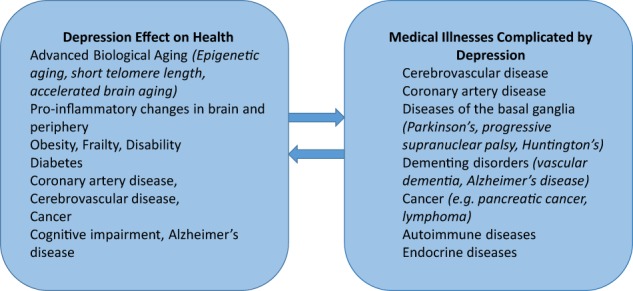
Depression predisposes to medical illnesses and advances biological aging indicated by shorter telomere length, accelerated brain aging and advanced epigenetic aging. Medical illnesses also increase the risk of late-life depression. The reciprocal relationships of depression with aging-related and disease-related processes have generated pathogenetic hypotheses and provided treatment targets. Targeting risk factors of vascular disease in mid-life is a logical approach in prevention of vascular depression. The depression-executive dysfunction and the vascular depression syndromes have clinical presentations and neuroimaging findings consistent with frontostriatal abnormalities. Dopamine D 2/3 agonists are effective in depression of Parkinson’s disease and their efficacy needs to be assessed in these two syndromes. Computerized cognitive remediation targeting functions of the cognitive control network may improve both executive functions and depressive symptoms of late-life major depression. Significant progress has been made in neurostimulation treatments in depressed younger adults. TMS targeting deep structures responsible for mood regulation is well tolerated by older adults and its efficacy in syndromes of late-life depression needs to be studied. Efficacious psychotherapies for late-life depression exist, but are underutilized in part because of their complexity. Streamlined, stepped psychotherapies targeting behaviors assumed to result from dysfunction of brain networks implicated in late-life depression can be easy to learn and have potential for dissemination. However, their effectiveness needs further investigation. Depression increases the risk of dementing disorders. Antidepressants are rather ineffective in treating depression of demented patients, but long-term use of antidepressants may reduce the risk of dementia. However, confirmation studies are needed.
Overview
CoChat Summary
TL;DR
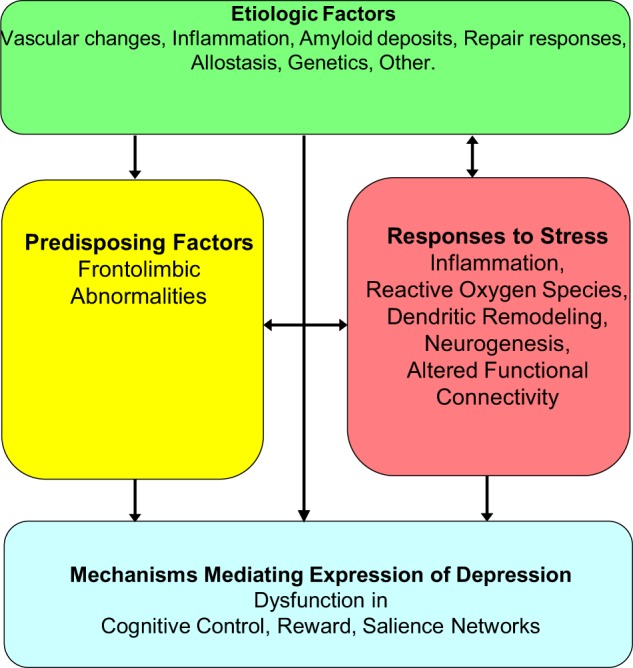
This review proposes that late-life depression reflects dysfunction in reward, salience, and cognitive control networks, with contributions from vascular disease, inflammation, and possibly amyloid/tau pathology. It argues that depression-executive dysfunction and vascular depression respond poorly to antidepressants and reviews novel treatments, while noting that many require confirmation.
Key findings
- Depression was associated with 45% higher risk for stroke (95% CI 1.29–1.63) and 25% higher risk for stroke-related mortality (95% CI 1.11–1.40).
- Approximately 30% of depressed older adults have abnormal executive test performance; depression-executive dysfunction predicts poor antidepressant response and early relapse/recurrence. In late-life major depression, antidepressant NNT was 14.4 (95% CI 8.3–50) for remission and 6.7 (95% CI 4.8–10) for response versus placebo.
- ECT remission rates are 60–80%; right unilateral ultrabrief pulse ECT plus venlafaxine led to remission in 61.7% and response in 70%, with mean 7.3 (SD 3.1) treatments. Deep TMS produced higher remission than sham rTMS (40.0 vs. 14.8%).
- In vascular depression, higher systolic blood pressure (147 vs. 134 mm Hg) increased odds of brain infarcts by 46%, gross infarct by 46%, and microinfarcts by 36%. Nimodipine augmentation achieved remission in 54% vs. 27% (NNT 4, 95% CI 2–12), and fewer recurrences (3.7% vs. 35.7%; NNT 3, 95% CI 2–9).
Methods
- Narrative review of mechanisms and treatment of late-life depression, synthesizing clinical, neuroimaging, neuropathological, biomarker, and treatment literature.
- Organizes evidence around hypotheses including depression-executive dysfunction, vascular depression, inflammation, and amyloid/tau accumulation.
- Discusses evidence-based therapies (antidepressants, ECT, psychotherapy) and novel therapies (D2/3 agonists, computerized cognitive remediation, TMS, antihypertensives, statins, anti-inflammatory agents).
Limitations
- Stated: most novel treatments are not clinically used because of inadequate empirical evidence, small effect size, cost, complexity of administration, and other factors; confirmation studies are needed.
- Stated: discrepancies in amyloid/tau studies make it unclear whether and which Alzheimer’s-related neurobiological changes relate to late-life depression; some neuropathology studies failed to link vascular brain lesions with depression.
- Evident from the text: as a narrative review, it does not report a systematic search strategy, formal quality appraisal, or meta-analytic synthesis.
Model-written summary. Check it against the paper before relying on it.
Integrity signals
Registry
Cites
Statistics
Figures
Verification
Claims the paper makes
43 Valid · 7 Not valid · 65 Not checked · 7 Own results and interpretations
At least one cited source doesn’t support this claim or points to a different paper, and none confirmed it — see the verdicts below.
In the paper
“Depressed individuals have 45% (95% CI: 1.29–1.63) higher risk for stroke than non-depressed individuals and 25% (95% CI: 1.11–1.40) higher risk for stroke-related mortality5.”
§ Mechanisms and treatment of late-life depression > Introduction
What the sources say
- Disputedcites [5] Pan A Sun Q Okereke OI Rexrode KM Hu FB Depression and risk of stroke morbidity and mortality: a meta-analysis and systematic review JAMA 2011 306 1241 1249 10.1001/jama.2011.1282 21934057 PMC3242806 sourceExperimental — accuracy not yet measured
The Abstract’s Results report a pooled hazard ratio of 1.55 (95% CI, 1.25–1.93) for fatal stroke, corresponding to a 55% higher risk—not 25%. The cited 1.25 (95% CI, 1.11–1.40) estimate is for ischemic stroke, not stroke-related mortality. (LLM, conf=0.94)
Checked by a reasoning model — may be wrong.
plainstates an association- Asserted: passes — The authors put it forward as true.
- Checkable: passes — It can be checked against evidence.
- Load-bearing: unclear — It is unclear whether the paper’s conclusions depend on it.
- Based: passes — The paper gives a reason why it holds.
- Disputed
The cited sources support only part of this claim — read each source’s verdict below.
In the paper
“Depressed individuals have 45% (95% CI: 1.29–1.63) higher risk for stroke than non-depressed individuals and 25% (95% CI: 1.11–1.40) higher risk for stroke-related mortality5.”
§ Mechanisms and treatment of late-life depression > Introduction
What the sources say
- Partly supportedcites [5] Pan A Sun Q Okereke OI Rexrode KM Hu FB Depression and risk of stroke morbidity and mortality: a meta-analysis and systematic review JAMA 2011 306 1241 1249 10.1001/jama.2011.1282 21934057 PMC3242806 sourceExperimental — accuracy not yet measured
The Abstract Results and the RESULTS section ('Depression and Risk of Stroke Morbidity & Mortality') confirm the first half: pooled adjusted HR 1.45 (95% CI, 1.29–1.63) for total stroke across 28 prospective cohort studies (n=317,540; 8,478 cases). However, the 25% figure with CI 1.11–1.40 is the source's estimate for ISCHEMIC stroke (6 studies), not for stroke-related mortality; the meta-analysis's fatal-stroke (mortality) estimate is HR 1.55 (95% CI, 1.25–1.93) from 8 studies. So the citing sentence's mortality attribution of the 1.25 (1.11–1.40) number is not supported by this source. (LLM, conf=0.85)
plainstates an association- Asserted: passes — The authors put it forward as true.
- Checkable: passes — It can be checked against evidence.
- Load-bearing: unclear — It is unclear whether the paper’s conclusions depend on it.
- Based: passes — The paper gives a reason why it holds.
- Partly supported
The cited sources support only part of this claim — read each source’s verdict below.
In the paper
“Approximately 30% of depressed older adults have abnormal performance in tests of verbal fluency, response inhibition, novel problem solving, cognitive flexibility, working memory, and/or ideomotor planning11,21 (Table 1).”
§ Mechanisms and treatment of late-life depression > Mechanisms of late-life depression > The depression-executive dysfunction syndrome hypothesis
What the sources say
- Partly supportedcites [11] Manning KJ Steffens DC State of the science of neural systems in late-life depression: impact on clinical presentation and treatment outcome J. Am. Geriatr. Soc. 2018 66 Suppl 1 S17 s23 10.1111/jgs.15353 29659005 PMC5905432 sourceExperimental — accuracy not yet measured
The Executive Dysfunction section (Underlying Network Dysfunction) does support the substance: 'Estimates suggest 30–40% of non-demented older adults with major depression exhibit signs of executive dysfunction on cognitive examination,' followed by the list of tests of verbal fluency, the Wisconsin Card Sorting Test (novel problem solving, cognitive flexibility, working memory), the Tower of London (planning) and the Stroop Color–Word Interference (response inhibition). However, the citing sentence narrows the hedged 'estimates suggest 30–40%' to a flat 'approximately 30%', drops the 'non-demented' qualifier on the population, and converts 'ideomotor planning' from the source's plain 'planning' (Tower of London); it also fuses the prevalence estimate (credited in our copy to ref. 24, Lockwood et al. 2002) with the test battery (credited to ref. 25, Lim et al. 2013) into a single claim that the 30% figure applies to abnormal performance on those named tests. No passage in our copy contradicts the claim; it is our copy's only statement of this prevalence. (LLM, conf=0.75)
- Partly supportedcites [21] Lim J Sensitivity of cognitive tests in four cognitive domains in discriminating MDD patients from healthy controls: a meta-analysis Int. Psychogeriatr. 2013 25 1543 1557 10.1017/S1041610213000689 23725644 sourceExperimental — accuracy not yet measured
Our copy supports impaired performance on tests in the named domains in MDD — the Executive function results (Stroop SMD = 0.84, WCST SMD = -0.40, Verbal Fluency SMD = -0.57) and the Memory/processing-speed sections report significant group-level deficits — but it never reports a proportion or percentage of patients with 'abnormal' performance, so the '~30%' figure has no counterpart; the analysis pools standardized mean differences only (Data extraction and analysis). The population is also not depressed older adults: 22 trials of mixed-age MDD patients (955 patients), of which only six had mean age above 60 (Results), and the age subgroup analysis found Verbal Fluency impairment in younger (<60) patients (Subgroup analysis). The domain vocabulary used here is attention, processing speed, executive function and memory (Cognitive measures), not response inhibition, novel problem solving, cognitive flexibility, working memory or ideomotor planning. (LLM, conf=0.70)
plain- Asserted: passes — The authors put it forward as true.
- Checkable: passes — It can be checked against evidence.
- Load-bearing: passes — The paper’s conclusions depend on it.
- Based: passes — The paper gives a reason why it holds.
- Partly supported
The cited sources support only part of this claim — read each source’s verdict below.
In the paper
“Depression has been associated with greater WMH severity in white matter tracts of the cingulum, uncinate fasciculus, and superior longitudinal fasciculus59,60, as well as the frontal25 and temporal lobes61.”
§ Mechanisms and treatment of late-life depression > Mechanisms of late-life depression > The vascular depression hypothesis
What the sources say
- Partly supportedcites [59] Taylor WD Fiber tract-specific white matter lesion severity Findings in late-life depression and by AGTR1 A1166C genotype Hum. Brain Mapp. 2013 34 295 303 10.1002/hbm.21445 22021115 PMC3772522 sourceExperimental — accuracy not yet measured
Taylor et al. (2013) support the cingulum part with their own result: the depressed cohort showed a significantly greater fiber-tract WML ratio only in the left upper cingulum near the cingulate gyrus (Results, 'Fiber tract WML volume differences between diagnostic cohorts'; Discussion). However, the uncinate fasciculus and superior longitudinal fasciculus associations are not this study's finding — the paper reports them as Sheline et al. (2008)'s result (Introduction) and explicitly states in the Discussion that 'our findings differ from a prior study, where LLD was associated with greater WML volume in multiple fiber tracts, including the SLF, IFO, ILF, and UNC.' So the citation is offered for a multi-tract association that this source only relays (and contrasts with its own data), while its own contribution is the cingulum localization. The frontal/temporal-lobe portion of the sentence carries separate citations (25, 61) and is not judged here, though the Introduction does note that most studies link frontal WMLs to late-life depression via other works. (LLM, conf=0.78)
- Not checked yetcites [60] Sheline YI Regional white matter hyperintensity burden in automated segmentation distinguishes late-life depressed subjects from comparison subjects matched for vascular risk factors Am. J. Psychiatry 2008 165 524 532 10.1176/appi.ajp.2007.07010175 18281408 PMC4118770 source
- Not checked yetcites [25] Taylor WD Localization of age-associated white matter hyperintensities in late-life depression Prog. Neuropsychopharmacol. Biol. Psychiatry 2003 27 539 544 10.1016/S0278-5846(02)00358-5 12691791 source
plainstates an association- Asserted: passes — The authors put it forward as true.
- Checkable: passes — It can be checked against evidence.
- Load-bearing: passes — The paper’s conclusions depend on it.
- Based: passes — The paper gives a reason why it holds.
- Partly supported
Every source the paper cites for this claim was checked and supports it.
In the paper
“Cerebrovascular risk factors are associated with WMH in healthy young adults42.”
§ Mechanisms and treatment of late-life depression > Mechanisms of late-life depression > The vascular depression hypothesis
What the sources say
- Supportedcites [42] Williamson W Association of cardiovascular risk factors with mri indices of cerebrovascular structure and function and white matter hyperintensities in young adults JAMA 2018 320 665 673 10.1001/jama.2018.11498 30140877 PMC6142949 source
The Abstract (Conclusions and Relevance, p. 4) states that in young adults without clinical evidence of cerebrovascular disease, modifiable cardiovascular risk factors were associated with MR indices of cerebral vessel structure and function and with white matter hyperintensities. The Abstract Results (p. 3) likewise report that white matter hyperintensity count correlated with cardiovascular risk factors in univariable and multivariable models in participants of mean age 25, and the Discussion (p. 13) quantifies a ~20% difference in lesion burden between lowest and highest risk scores. The claim's 'healthy young adults' matches the paper's own population descriptor; only the wording differs ('cerebrovascular' vs the paper's 'modifiable cardiovascular' risk factors). (LLM, conf=0.90)
plainstates an association- Asserted: passes — The authors put it forward as true.
- Checkable: passes — It can be checked against evidence.
- Load-bearing: unclear — It is unclear whether the paper’s conclusions depend on it.
- Based: passes — The paper gives a reason why it holds.
- Supported
77 more claims · 34 with their cited sources checked
Create a free account to see all 122 claims and to verify the 102 references still open.
- It may state two separate claims as one. 33
- Probably not a substantial claim. 8
Claims other papers make about this one
Each is checked against this paper’s own text: does it say what the citing paper says it does?
The source backs part of the claim, not all of it — or backs it for a different population, condition or comparison.
In the citing paper
“This is in line with the extensive literature indicating a favorable outcome after adequate treatment in LLD [39].”
From Preliminary evidence for preserved synaptic density in late-life depression (2024) · cites this paper as [39]
Experimental — accuracy not yet measuredThe cited source says what the claim attributes to it.
In the citing paper
“As the first-line pharmacological interventions, selective serotonin reuptake inhibitors exhibit some efficacy in alleviating depressive symptoms, but their ability to address EFD in LLD patients remains limited.4”
From Can Intermittent Theta-Burst Stimulation of Dorsolateral Prefrontal Cortex Relieve Executive Dysfunction in Patients With Late-Life Depression? (2024) · cites this paper as [4]
The cited source says what the claim attributes to it.
In the citing paper
“Notably, the presence of EFD is indicative of resistance to antidepressant treatment, increased disability, poor quality of life, and an elevated susceptibility to suicide.3,4”
From Can Intermittent Theta-Burst Stimulation of Dorsolateral Prefrontal Cortex Relieve Executive Dysfunction in Patients With Late-Life Depression? (2024) · cites this paper as [4]
The cited source says what the claim attributes to it.
In the citing paper
“As the first-line pharmacological interventions, selective serotonin reuptake inhibitors exhibit some efficacy in alleviating depressive symptoms, but their ability to address EFD in LLD patients remains limited.4”
From Can Intermittent Theta-Burst Stimulation of Dorsolateral Prefrontal Cortex Relieve Executive Dysfunction in Patients With Late-Life Depression? (2024) · cites this paper as [4]
The cited source says what the claim attributes to it.
In the citing paper
“Notably, the presence of EFD is indicative of resistance to antidepressant treatment, increased disability, poor quality of life, and an elevated susceptibility to suicide.3,4”
From Can Intermittent Theta-Burst Stimulation of Dorsolateral Prefrontal Cortex Relieve Executive Dysfunction in Patients With Late-Life Depression? (2024) · cites this paper as [4]
2 more claims about this paper
Create a free account to see every claim other papers make about this one.
Citations
Cites
Inflammation and Its Discontents: The Role of Cytokines in the Pathophysiology of Major Depression
Miller, A. H., Maletic, V., & Raison, C. L. (2009) · Biological Psychiatry · doi:10.1016/j.biopsych.2008.11.029 · Cited by 3,848
Cipriani, A., Furukawa, T. A., Salanti, G., Chaimani, A., Atkinson, L. Z., Ogawa, Y., Leucht, S., Ruhe, H. G., Turner, E. H., Higgins, J. P. T., et al. (2018) · The Lancet · doi:10.1016/s0140-6736(17)32802-7 · Cited by 3,541
Slavich, G. M., & Irwin, M. R. (2014) · Psychological Bulletin · doi:10.1037/a0035302 · Cited by 2,206
Alexopoulos, G. S. (2005) · The Lancet · doi:10.1016/s0140-6736(05)66665-2 · Cited by 2,024
Self-citation'Vascular Depression' Hypothesis
Alexopoulos, G. S. (1997) · Archives of General Psychiatry · doi:10.1001/archpsyc.1997.01830220033006 · Cited by 1,843
Self-citationRaison, C. L., Rutherford, R. E., Woolwine, B. J., Shuo, C., Schettler, P., Drake, D. F., Haroon, E., & Miller, A. H. (2013) · JAMA Psychiatry · doi:10.1001/2013.jamapsychiatry.4 · Cited by 1,617
Peripheral cytokine and chemokine alterations in depression: a meta‐analysis of 82 studies
Köhler, C. A., Freitas, T. H., Maes, M., de Andrade, N. Q., Liu, C. S., Fernandes, B. S., Stubbs, B., Solmi, M., Veronese, N., Herrmann, N., et al. (2017) · Acta Psychiatrica Scandinavica · doi:10.1111/acps.12698 · Cited by 1,443
Sertraline treatment of major depression in patients with acute MI or unstable angina
Glassman, A. H. (2002) · JAMA · doi:10.1001/jama.288.6.701 · Cited by 1,414
Mood disorders and allostatic load
McEwen, B. S. (2003) · Biological Psychiatry · doi:10.1016/s0006-3223(03)00177-x · Cited by 1,135
Potential US Population Impact of the 2017 ACC/AHA High Blood Pressure Guideline
Muntner, P., Carey, R. M., Gidding, S., Jones, D. W., Taler, S. J., Wright, J. T., & Whelton, P. K. (2018) · Circulation · doi:10.1161/circulationaha.117.032582 · Cited by 942
Research works printed but not linked: 1
- NAS. Standrards for Psychosocial Interventions. 2015 Washington, D.C NAS
Cited by
Items 301–400 of 690
Plasminogen Activator Inhibitor‐1 in the Pathophysiology of Late Life Depression
Métivier, L., Vivien, D., Goy, R., Agin, V., Bui, É., & Benbrika, S. (2024) · International Journal of Geriatric Psychiatry · doi:10.1002/gps.70015 · Cited by 6
Prokhorova, T. A., Savushkina, O. K., Бокша, И. С., Терешкина, Е. Б., Сафарова, Т. П., Yakovleva, O. B., Корнилов, В. В., Шипилова, Е. С., Vorobyeva, E. A., & Burbaeva, G. S. (2021) · S S Korsakov Journal of Neurology and Psychiatry · doi:10.17116/jnevro202112103186 · Cited by 6
Depressive Symptoms Profiles and Cognitive Outcomes After Stroke
Scopelliti, G., Mele, F., Cova, I., Masserini, F., Cucumo, V., Maestri, G., Nicotra, A., Forgione, A., Bertora, P., Pomati, S., et al. (2025) · Brain and Behavior · doi:10.1002/brb3.70801 · Cited by 6
Decline and fall of aging astrocytes: the human perspective
Verkhratsky, A., & Semyanov, A. V. (2024) · Neural Regeneration Research · doi:10.4103/nrr.nrr-d-24-00418 · Cited by 6
Sleep Medicine - Asleep or Awake?
(2024) · doi:10.5772/intechopen.104201 · Cited by 5
Latent classes of symptom trajectories among major depressive disorder patients in China
Wang, Y., Li, J., Bian, W., Duan, Y., Geng, W., Jiang, J., Zhao, X., Li, T., Jiang, Y., Shi, L., et al. (2024) · Journal of Affective Disorders · doi:10.1016/j.jad.2024.01.144 · Cited by 5
Nusawat, P., & Leelasantitham, A. (2024) · The Open Public Health Journal · doi:10.2174/0118749445318733240513061523 · Cited by 5
Vassilaki, M. E., Syrjanen, J. A., Krell‐Roesch, J., Graff‐Radford, J., Vemuri, P., Scharf, E. L., Machulda, M. M., Fields, J. A., Kremers, W. K., Lowe, V. J., et al. (2023) · Journal of Alzheimer s Disease Reports · doi:10.3233/adr-230073 · Cited by 5
Badawy, A. M., Gad, A. M., Abdel-Maged, A. E.-S., Michel, H. E., El‐Naga, R. N., & Azab, S. S. (2025) · Journal of Neuroimmune Pharmacology · doi:10.1007/s11481-025-10244-z · Cited by 5
Alessi, M. R., Barroso, D. C., Barbosa, E. C., Sehgal, K., Vieira, G. H., Miozzo, I. A., Freitas, V. T. H., Larcipretti, A. L. L., Balogun, M., Miyashiro, L., et al. (2025) · Asian Journal of Psychiatry · doi:10.1016/j.ajp.2025.104409 · Cited by 5
Wang, X., Zhou, J., Zhu, K., Wang, Y., Ma, X., Ren, L., Chengwei, G., Zhang, Z., Lü, P., & Zhang, Q. (2024) · BMC Psychiatry · doi:10.1186/s12888-024-06276-z · Cited by 5
Wathra, R. A., Men, X., Elsheikh, S. S. M., Marshe, V. S., Rajji, T. K., Lissemore, J. I., Mulsant, B. H., Karp, J. F., Reynolds, C. F., Lenze, E. J., et al. (2023) · Translational Psychiatry · doi:10.1038/s41398-023-02532-0 · Cited by 5
Mack, M., Badache, A. C., Erden, A., Giannaki, C. D., Haider, S., Καλτσάτου, Α., Akik, B. K., Netz, Y., Павлова, Ю., Stavrinou, P. S., et al. (2024) · PLoS ONE · doi:10.1371/journal.pone.0297348 · Cited by 5
Woodard, G. S., Mraz, A., & Renn, B. N. (2023) · BMC Psychiatry · doi:10.1186/s12888-023-04528-y · Cited by 5
Anita, N. Z., Gonzalez‐Prado, R., Paredes, A. M., Tarraf, W., Kuwayama, S., Stickel, A. M., Sotres‐Alvarez, D., Gallo, L. C., Pendedo, F. J., Daviglus, M. L., et al. (2025) · International Psychogeriatrics · doi:10.1016/j.inpsyc.2025.100058 · Cited by 5
Vidya, K. L., Srivastava, S., Singh, B. P., & Kar, S. K. (2022) · CNS Spectrums · doi:10.1017/s1092852922001018 · Cited by 5
The use of neuroprotectors in the treatment of late depression
Сафарова, Т. П., & Si, G. (2020) · S S Korsakov Journal of Neurology and Psychiatry · doi:10.17116/jnevro202012010246 · Cited by 5
Rollandi, I., Banerjee, S., Qiu, Y., Fiallo, O., Abramson, T. A., Berman, J., Solomonov, N., & Sirey, J. A. (2023) · Psychotherapy Research · doi:10.1080/10503307.2023.2292743 · Cited by 5
Walker, T. J., Mohankumar, R., Kraus, S. W., Cotton, B. P., & Renn, B. N. (2024) · Frontiers in Public Health · doi:10.3389/fpubh.2024.1418690 · Cited by 5
Depression, Anxiety, and Other Mood Disorders
Jalil, J., Volle, D. C., Zhu, T., & Sassounian, M. (2023) · Springer eBooks · doi:10.1007/978-3-030-01782-8_88-1 · Cited by 5
Effects of vaccination against COVID-19 on the emotional health of older adults
Alarcon-Ruiz, C. A., Romero-Albino, Z., Soto-Becerra, P., Huarcaya-Victoria, J., Runzer-Colmenares, F. M., Romani-Huacani, E., Villarreal‐Zegarra, D., Maguiña, J. L., Apolaya-Segura, M., & Cuba-Fuentes, M. S. (2022) · F1000Research · doi:10.12688/f1000research.123395.1 · Cited by 5
Yang, M., Chen, B., Zhou, H., Mai, N., Zhang, M., Wu, Z., Peng, Q., Wang, Q., Liu, M., Zhang, S., et al. (2023) · Journal of Alzheimer s Disease · doi:10.3233/jad-220968 · Cited by 5
Treatments for vascular depression in older adults: A systematic review
Flôr-Rodrigues, B., Aissa, S. B., Miranda, D., Compagne, C., Vandel, P., von Gunten, A., Orgeta, V., Mueller, C., Swierkosz-Lenart, K., & Moyano, B. P. (2026) · International Psychogeriatrics · doi:10.1016/j.inpsyc.2026.100249 · Cited by 5
Zhang, L., Yu, M., Wang, L., Steffens, D. C., Wu, R., Potter, G. G., & Liu, M. (2022) · Lecture notes in computer science · doi:10.1007/978-3-031-21014-3_27 · Cited by 6
Yamanashi, H., Akabame, S., Miyata, J., Honda, Y., Nonaka, F., Shimizu, Y., Nakamichi, S., Kawashiri, S., Tamai, M., Arima, K., et al. (2022) · Aging · doi:10.18632/aging.204345 · Cited by 5
Politis, A. M., Alexopoulos, P., & Vorvolakos, T. (2020) · International Psychogeriatrics · doi:10.1017/s1041610219002254 · Cited by 5
Apathy in dementia: pharmacological and nonpharmacological treatment strategies
Büyükgök, D., İnce, E., & Bılgıç, B. (2025) · Current Opinion in Psychiatry · doi:10.1097/yco.0000000000001054 · Cited by 5
Yamada, Y., Nakashima, H., Nagae, M., Watanabe, K., Fujisawa, C., Komiya, H., Tajima, T., Satake, S., Takeya, Y., Umeda‐Kameyama, Y., et al. (2026) · Geriatrics and gerontology international/Geriatrics & gerontology international · doi:10.1111/ggi.70598 · Cited by 5
Krause, B., Siddarth, P., Milillo, M. M., Kilpatrick, L. A., Ercoli, L. M., Narr, K. L., & Lavretsky, H. (2023) · International Psychogeriatrics · doi:10.1017/s1041610223004386 · Cited by 5
The Effect of Genetic Variations in the Vitamin D Receptor Gene on the Course of Depressive Symptoms
Wenzler, A. N., van de Loo, B. P. A., van der Velde, N., & van Schoor, N. M. (2024) · Journal of Nutrition · doi:10.1016/j.tjnut.2024.04.030 · Cited by 5
Fraccalini, T., TAROZZO, B., Roberts, T., Trogolo, A., Ceravolo, G., Maraschi, A., Vecchini, J. M., Ribeiro, L. S., Piras, V., Binello, E., et al. (2026) · Journal of Geriatric Psychiatry and Neurology · doi:10.1177/08919887261449835 · Cited by 4
Network of positive affect and depression in older adults
Hopkins, E. G., Leman, P. J., Cervin, M., Numbers, K. T., Brodaty, H., Sachdev, P. S., & Medvedev, O. N. (2025) · Journal of Affective Disorders · doi:10.1016/j.jad.2025.120529 · Cited by 4
Recent Advances in Multimodal Non-Pharmacological Interventions for Late-Life Depression
Xu, T., Mao, Y., Wang, Y., Gong, Y., & Yu, E. (2025) · Neuropsychiatric Disease and Treatment · doi:10.2147/ndt.s558969 · Cited by 4
Qin, P., Li, F., Li, X., & Feng, X. (2026) · Frontiers in Psychiatry · doi:10.3389/fpsyt.2026.1772542 · Cited by 4
Forbes, M., Watson, T., Topliss, D. J., Lotfaliany, M., Mohebbi, M., Woods, R. L., McNeil, J. J., & Berk, M. (2025) · American Journal of Geriatric Psychiatry · doi:10.1016/j.jagp.2025.02.012 · Cited by 4
Reward System in Late-Life Depression: a Cross-Sectional Case-Control Study
Ngan, S. T. J., Chan, W. C., Wong, S. T., Wong, C. S. M., & Cheng, C. P. W. (2023) · East Asian Archives of Psychiatry · doi:10.12809/eaap2309 · Cited by 4
Gu, C., Long, Z., Fang, Z., Wu, L., Yang, F., & Luo, W. (2026) · BMC Geriatrics · doi:10.1186/s12877-026-07029-1 · Cited by 4
Tudorancea, I.-M., Stanciu, G. D., Torrent, C., Madero, S., Hriţcu, L., & Tamba, B.-I. (2025) · Dialogues in Clinical Neuroscience · doi:10.1080/19585969.2025.2499458 · Cited by 4
Zhang, Y., Peng, Y., & Pu, J. (2026) · Molecular Neurobiology · doi:10.1007/s12035-025-05586-x · Cited by 4
Taiwo, Z., Tighe, E. L., Tone, E. B., Light, S. N., & Dotson, V. M. (2023) · Aging & Mental Health · doi:10.1080/13607863.2023.2211545 · Cited by 4
Remission is insufficient: predictors and mechanistic models of recurrence in late-life depression
Taylor, W. D., Gerlach, A., Szymkowicz, S. M., Gujral, S., & Andreescu, C. (2026) · Neuropsychopharmacology · doi:10.1038/s41386-026-02324-2 · Cited by 4
Relevance of the Indian telemedicine guidelines 2020 in psychogeriatric care: A critical appraisal
Mukhopadhyay, S., & Banerjee, D. (2021) · Journal of Geriatric Mental Health · doi:10.4103/jgmh.jgmh_24_21 · Cited by 4
Characteristics of Severe Late-Life Depression in the Prodromal Phase of Neurodegenerative Dementia
Nishida, H., Takamiya, A., Kudo, S., Uchida, T., Yamagata, B., Bun, S., Uchida, H., Jessen, F., Mimura, M., & Hirano, J. (2024) · The American Journal of Geriatric Psychiatry Open Science Education and Practice · doi:10.1016/j.osep.2024.10.003 · Cited by 4
Twait, E. L., Smit, A. P., Beran, M., Rissanen, I. L., & Geerlings, M. I. (2024) · Journal of Affective Disorders · doi:10.1016/j.jad.2024.12.077 · Cited by 4
Common Sleep Problems and Management in Older Adults
Cheng, C. P.-W., & Wong, Y. P. (2024) · IntechOpen eBooks · doi:10.5772/intechopen.111656 · Cited by 4
A Transcriptomic Signature of Depressive Symptoms in Late Life
Matan‐Lithwick, S. A., Misztal, M. C., Yang, M., DeLong, T., Tripathy, S. J., Dunn, J. T., Bennett, D. A., Jager, P. L. D., Wang, Y., Fisher, D. W., et al. (2025) · Biological Psychiatry Global Open Science · doi:10.1016/j.bpsgos.2025.100448 · Cited by 4
Mei, X., Ming, L., Ruan, N., Zhao, Z., Xu, T., & Zheng, C. (2026) · Frontiers in Aging Neuroscience · doi:10.3389/fnagi.2026.1713472 · Cited by 4
Malik, M. A. (2023) · Epidemiology and Public Health · doi:10.52768/epidemiolpublichealth/1008 · Cited by 4
Nakagawa, K., Kodama, K., Nagata, W., Takahashi, S., Satoh, Y., & Ishizuka, T. (2024) · Behavioural Brain Research · doi:10.1016/j.bbr.2024.115330 · Cited by 4
Frailty measures in immuno-metabolic subtypes of late-life depression; A two-year prospective study
Kokkeler, K. J. E., Voshaar, R. C. O., Rhebergen, D., van den Brink, R. H. S., Spijker, J., & Marijnissen, R. M. (2021) · Archives of Gerontology and Geriatrics · doi:10.1016/j.archger.2021.104603 · Cited by 4
Marin, L. F. C., López, G. V., & Salas, I. A. (2023) · Salud Mental · doi:10.17711/sm.0185-3325.2023.025 · Cited by 4
Liu, C., Li, L., Zhu, D., Lin, S., Ren, L., Zhen, W., Tan, W., Wang, L., Tian, L., Wang, Q., et al. (2024) · Journal of Affective Disorders · doi:10.1016/j.jad.2024.02.030 · Cited by 4
Kamariotou, E., Chloros, D., Spyratos, D. G., Michalopoulou, D., Tsiouprou, I., & Sichletidis, L. T. (2025) · Diseases · doi:10.3390/diseases13080266 · Cited by 4
Zou, T., Liu, J., Zhang, L., Liu, F., Zhang, E., Wang, X., Ju, J., Huang, X., & Fang, Q. (2025) · Experimental Gerontology · doi:10.1016/j.exger.2025.113020 · Cited by 4
Prediction of electroconvulsive therapy response and remission in late-life depression: a review
Moyano, B. P., Swierkosz-Lenart, K., Amoussou, J. R., von Gunten, A., & Schuster, J. (2024) · Swiss Medical Weekly · doi:10.57187/s.3684 · Cited by 4
Baker, K., Taylor, W. D., & Szymkowicz, S. M. (2025) · Journal of Clinical and Experimental Neuropsychology · doi:10.1080/13803395.2025.2520356 · Cited by 3
Liu, C., Li, L., Pan, W., Mao, P., Ren, L., Li, B., & Ma, X. (2024) · International Journal of Geriatric Psychiatry · doi:10.1002/gps.6095 · Cited by 3
Booij, J., Schalbroeck, R., Wartenhorst, M., van Hooijdonk, C. F. M., Chahid, Y., Cobben, R., Dols, A., Schutter, N., Oudega, M. L., de Bie, R. M. A., et al. (2025) · American Journal of Geriatric Psychiatry · doi:10.1016/j.jagp.2025.07.014 · Cited by 3
Personalized medicine in old age psychiatry and Alzheimer’s disease
Siafarikas, N. (2024) · Frontiers in Psychiatry · doi:10.3389/fpsyt.2024.1297798 · Cited by 3
Kassel, M. T., Kryza‐Lacombe, M., Insel, P. S., Rhodes, E., Satre, D. D., Nelson, J. C., Tosun, D., Mathews, C. A., & Mackin, R. S. (2023) · American Journal of Geriatric Psychiatry · doi:10.1016/j.jagp.2023.08.009 · Cited by 3
Xiang, X., Narbut, E., Zhang, X., Ash, S., Turner, S., An, R., Jester, J. M., Park, S., Habash, S., & Himle, J. A. (2025) · JMIR Research Protocols · doi:10.2196/72953 · Cited by 3
ÖZDEMİR, K., Engin, A. O., & Yazıcı, A. G. (2020) · Journal of Education and Learning · doi:10.5539/jel.v9n5p270 · Cited by 3
Yasuno, F., Kimura, Y., Nihashi, T., Minami, H., Minami, H., Takeda, A., Sakurai, T., & Kato, T. (2026) · International Psychogeriatrics · doi:10.1016/j.inpsyc.2026.100199 · Cited by 3
Hédouin, R., Roy, J.-C., Desmidt, T., Robert, G. H., & Coloigner, J. (2024) · Scientific Reports · doi:10.1038/s41598-024-67535-3 · Cited by 3
Effect of Vitamin B12 supplementation in late-life depression: A randomized controlled trial
Misal, P., Srivastava, S., Sonal, A., Agarwal, V., & Ali, W. (2024) · Journal of Geriatric Mental Health · doi:10.4103/jgmh.jgmh_11_24 · Cited by 3
Yang, Q. Z., Guo, W., Wang, L., Zhang, Y., Tian, Y., Ming, D., Xiao, X., & Yang, J. (2025) · Behavioural Brain Research · doi:10.1016/j.bbr.2025.115696 · Cited by 3
Christl, J., Grumbach, P., Jockwitz, C., Wege, N., Caspers, S., & Meisenzahl, E. M. (2025) · Journal of Affective Disorders · doi:10.1016/j.jad.2025.120885 · Cited by 3
Moyano, B., von Gunten, A., Mueller, C., Yaman-Deveci, R., Howard, R. J., Stewart, R., Young, A. H., Costello, H., Bulteau, S., Calvet, B., et al. (2026) · European Psychiatry · doi:10.1192/j.eurpsy.2026.12228 · Cited by 3
Ripamonti, E., Rostila, M., & Saarela, J. M. (2024) · SSM - Population Health · doi:10.1016/j.ssmph.2024.101721 · Cited by 3
Reaction Time Indicators for Assessing Cognitive Functions
Lm, K., Гуляев, С. А., & Khanukhov, D. M. (2025) · Neuroscience and Behavioral Physiology · doi:10.1007/s11055-025-01843-7 · Cited by 3
Frontal-striatal tract integrity and depression in older adults with and without multiple sclerosis
Cote, S. E., Wagshul, M. E., Foley, F. W., Picone, M. A., Lipton, M. L., Lee, J. S., & Holtzer, R. (2024) · Neurological Sciences · doi:10.1007/s10072-024-07316-y · Cited by 3
Schurr, M. S., Chen, Y. T., Raue, P. J., Areán, P. A., Alexopoulos, G. S., & Renn, B. N. (2025) · The American Journal of Geriatric Psychiatry Open Science Education and Practice · doi:10.1016/j.osep.2025.04.002 · Cited by 3
Self-citationPredicting the Risk of Depression in the Elderly by Immunological Indicators Research
Simonov, A. N., Klyushnik, T. P., Андросова, Л. В., & Сафарова, Т. П. (2020) · Psikhiatriya · doi:10.30629/2618-6667-2020-18-4-26-32 · Cited by 3
Arend, I. C., Moshier, E. L., Azuri, Y., Heymann, A. D., Mamistavlov, M., Soleimani, L., Sano, M. C., Beeri, M. S., & Ravona‐Springer, R. (2023) · International Journal of Geriatric Psychiatry · doi:10.1002/gps.6011 · Cited by 3
Lee, Y., Chang, Y., Barquero, C., Wu, C., Chao, S., Chen, D. Y. T., Chen, J., Cherng, Y., & Wang, C. (2025) · Journal of Geriatric Psychiatry and Neurology · doi:10.1177/08919887251334999 · Cited by 3
Disrupted microsaccade responses in late-life depression
Lee, Y., Tai, Y., Chang, Y., Barquero, C., Chao, S., & Wang, C. (2025) · Scientific Reports · doi:10.1038/s41598-025-86399-9 · Cited by 3
Zada, W., Murtaza, G., Iqbal, G., Abbas, G., Khan, S. A., & Mannan, A. (2022) · Sains Malaysiana · doi:10.17576/jsm-2022-5110-22 · Cited by 3
Can we promote cognitive resilience in late-life depression?
Dotson, V. M. (2022) · International Psychogeriatrics · doi:10.1017/s1041610222000941 · Cited by 3
Chen, X., Zhang, C., He, Y., Liu, Y., Kaihua, X., & Sun, F. (2026) · Geriatrics and gerontology international/Geriatrics & gerontology international · doi:10.1111/ggi.70340 · Cited by 3
Im, S.-J., Lee, J., & Kim, S. (2021) · Experimental Neurobiology · doi:10.5607/en20056 · Cited by 3
Platelet glutathione reductase and glutathione-S-transferase in elderly patients with depression
Savushkina, O. K., Терешкина, Е. Б., Prokhorova, T. A., Сафарова, Т. П., Yakovleva, O. B., Шипилова, Е. С., & Burbaeva, G. S. (2021) · S S Korsakov Journal of Neurology and Psychiatry · doi:10.17116/jnevro202112109179 · Cited by 3
Identifying data-driven subtypes of major depressive disorder with electronic health records
Sharma, A., Verhaak, P. F., McCoy, T. H., Perlis, R. H., & Doshi‐Velez, F. (2024) · Journal of Affective Disorders · doi:10.1016/j.jad.2024.03.162 · Cited by 3
Moyano, B. P., Orgeta, V., von Gunten, A., Vandel, P., Ma, R., Stewart, R. J., & Mueller, C. (2026) · Frontiers in Psychiatry · doi:10.3389/fpsyt.2026.1795874 · Cited by 3
The Association Between Depression and Suicidal Behavior
Rodríguez, F. M. M. (2024) · IntechOpen eBooks · doi:10.5772/intechopen.1004500 · Cited by 3
Ayunurrochim, A. F., Ekadinata, N., & Rohman, M. F. (2024) · Corona Jurnal Ilmu Kesehatan Umum Psikolog Keperawatan dan Kebidanan · doi:10.61132/corona.v2i2.410 · Cited by 3
Þórsdóttir, H. M., & Pálsdóttir, L. D. (2021) · Skemman · Cited by 3
Adami, P. V. M., Jessen, F., Brosseron, F., Bewernick, B. H., Domschke, K., Luppa, M., Wagner, M., Peters, O., Froelich, L., Riedel-Heller, S., et al. (2026) · European Psychiatry · doi:10.1192/j.eurpsy.2026.10153 · Cited by 3
Wang, K., & Wang, L. (2025) · Technology and Health Care · doi:10.1177/09287329251330722 · Cited by 3
Alcalá, J. Á., Dorado, V. O., Herrera, G. D. P. A., Chamón, S. L., & Molinera, V. G. (2025) · Frontiers in Psychiatry · doi:10.3389/fpsyt.2025.1568777 · Cited by 2
Geriatric Syndromes: Definition, Assessment, and Effective Therapy
Bilder, G. E., & Brown-O’Hara, P. (2025) · Springer eBooks · doi:10.1007/978-3-031-84831-5_7 · Cited by 2
Models of depressive pseudoamnestic disorder
Choi, J.-W., Lee, S., Motter, J. N., Kim, H., Andrews, H., Doraiswamy, P. M., Devanand, D. P., & Goldberg, T. E. (2022) · Alzheimer s & Dementia Translational Research & Clinical Interventions · doi:10.1002/trc2.12335 · Cited by 2
Mennenga, S. E., Hanson, T., Semple, M. G., Lifshitz, D., Flores, B., Balducci, J., Harker, S. A., Ford, A., & Lewis, C. R. (2025) · Research Square · doi:10.21203/rs.3.rs-7890051/v1 · Cited by 2
Oughli, H. A., Ainsworth, N. J., Butters, M. A., Brown, P. J., Gebara, M. A., Gettinger, T. R., Karp, J. F., Lavretsky, H., Lenard, E. M., Miller, J. P., et al. (2025) · The Lancet Healthy Longevity · doi:10.1016/j.lanhl.2025.100767 · Cited by 2
Yu, J. (2024) · Open Medicine · doi:10.1515/med-2024-1001 · Cited by 2
Turnbull, A. G., Gross, J. J., & Lin, F. V. (2026) · Neuron · doi:10.1016/j.neuron.2026.01.022 · Cited by 2
La depresión como factor de riesgo de la demencia: fisiopatología y modelos preclínicos de estudio
Hernández-Enseñat, D., Wong-Guerra, M., Ramírez-Sánchez, J., Fonseca-Fonseca, L. A., & Núñez-Figueredo, Y. (2023) · Psiquiatría Biológica · doi:10.1016/j.psiq.2023.100439 · Cited by 2
Depression in patients with cerebral microangiopathy
Bogolepova, A. N. (2023) · Neurology neuropsychiatry Psychosomatics · doi:10.14412/2074-2711-2023-2-83-90 · Cited by 2
Trajectories of late-life depression: insights from molecular imaging
Holmes, S. E., & Smith, G. S. (2026) · Neuropsychopharmacology · doi:10.1038/s41386-026-02340-2 · Cited by 2
Zheng, W., Gu, L.-M., Tan, J., Zhou, Y., Wang, C., Lan, X., Zhang, B., Li, Z., & Ning, Y. (2024) · Current Neuropharmacology · doi:10.2174/1570159x23666240923112548 · Cited by 2
The crossroads between osteosarcopenia and intrinsic capacity—a narrative review
Neto, N. J., Hajj‐Boutros, G., Lok, W., Borda, M. G., Prokopidis, K., Rammal, H., Rivas, D., Samhat, H., Baltasar‐Fernandez, I., Imani, M., et al. (2026) · The Journals of Gerontology Series A · doi:10.1093/gerona/glag102 · Cited by 2
Metadata
- Authors
- Alexopoulos, G. S.
- Affiliations
- Cornell University (US)
- Corresponding author
- Alexopoulos, George S.
- Venue
- Translational Psychiatry
- Published
- 2019-08-05
- Volume
- 9
- Issue
- 1
- Pages
- 188-188
- ISSN
- 2158-3188 (ISSN-L)
- PMC
- PMC6683149
- OpenAlex
- W2964643970
- Semantic Scholar
- 7d44386c13149a19ac9b0ffb54694253f038ba2a
- Cited by
- 592
- References
- 201
- Citations by year
- 2026: 87 · 2025: 95 · 2024: 111 · 2023: 99 · 2022: 78 · 2021: 86 · 2020: 34
- FWCI
- 6.34
- Type
- journal article
- Language
- en
- Open access
- gold
- doi.org
- Licence
- cc-by
- creativecommons.org/licenses/by/4.0 (tdm)
- creativecommons.org/licenses/by/4.0 (vor)
- Locations
- Translational Psychiatry (publishedVersion, cc-by)
- PubMed Central (publishedVersion, cc-by)
- PubMed (publishedVersion)
- DOAJ (DOAJ: Directory of Open Access Journals) (submittedVersion)
- Funders
- U.S. Department of Health & Human Services | NIH | National Institute of Mental Health (P50 MH113838, R01 MH102252)
- Topics
- Health Sciences › Medicine › Pharmacology (medical) › Treatment of Major Depression
- Life Sciences › Neuroscience › Neurology › Transcranial Magnetic Stimulation Studies
- Health Sciences › Medicine › Psychiatry and Mental health › Dementia and Cognitive Impairment Research
- Keywords
- geriatric depression, vascular depression, telomere length, brain aging, epigenetic aging, executive dysfunction, Parkinson's disease, cognitive control network, transcranial magnetic stimulation, psychotherapy, dementia risk, antidepressants, older adults
- MeSH terms
- Aged, Major Depressive Disorder, Humans, Parkinson Disease, Vascular Diseases
About these checks
Registry, retraction, Cites and statistics results are computed, not judged, with one exception: a printed reference that no index lists is read once by a model before it counts as a citation error. Claims are extracted by a model and kept only when their quote appears verbatim in the text; each cited source is then checked, with a model’s help, for whether it says what the claim relies on. Those verdicts can be wrong — read the claim’s quote and the cited source before relying on one.
The claim verdicts this report counts are experimental: their accuracy is not yet measured.
A language model drew the claims from the paper on 2026-10-05, under version 3 of the claim definition (model deepseek-v4.1-flash, prompt extract-v3).
A second model labelled each claim on 2026-10-05 (model jev-1.13-20260917, definition revision gold-guideline-v0.2).
Cited sources are checked with a language model’s help (gpt-6-sol and qwen3.8-omni-flash).
Statistics and arithmetic are recomputed, not judged.
Confidence bands are shown only for fields calibrated on our annotated test set. None is calibrated yet, so no band is shown.
What counts as a claim ›How we measure confidence ›How we check this ›
Are you an author, or do you see a problem with this page? Request a review
Data sources
Bibliographic data: Semantic Scholar, OpenAlex, Crossref.
Contains information from the Semantic Scholar Academic Graph Datasets, made available under the ODC Attribution License (ODC-BY 1.0).
Semantic Scholar’s data is described in: Kinney, R., et al. (2023). The Semantic Scholar Open Data Platform. arXiv:2301.10140.
