

Mechanisms and treatment of late-life depression
Open accessThe DOI matches its Crossref record; 200 of the 201 references it cites were found in a registry or an index; 53 of the 155 sources its claims cite were checked for support.
Abstract
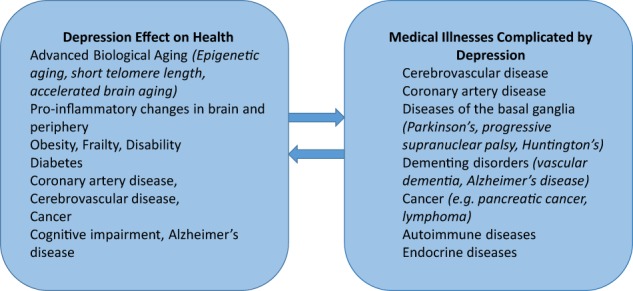
Depression predisposes to medical illnesses and advances biological aging indicated by shorter telomere length, accelerated brain aging and advanced epigenetic aging. Medical illnesses also increase the risk of late-life depression. The reciprocal relationships of depression with aging-related and disease-related processes have generated pathogenetic hypotheses and provided treatment targets. Targeting risk factors of vascular disease in mid-life is a logical approach in prevention of vascular depression. The depression-executive dysfunction and the vascular depression syndromes have clinical presentations and neuroimaging findings consistent with frontostriatal abnormalities. Dopamine D 2/3 agonists are effective in depression of Parkinson’s disease and their efficacy needs to be assessed in these two syndromes. Computerized cognitive remediation targeting functions of the cognitive control network may improve both executive functions and depressive symptoms of late-life major depression. Significant progress has been made in neurostimulation treatments in depressed younger adults. TMS targeting deep structures responsible for mood regulation is well tolerated by older adults and its efficacy in syndromes of late-life depression needs to be studied. Efficacious psychotherapies for late-life depression exist, but are underutilized in part because of their complexity. Streamlined, stepped psychotherapies targeting behaviors assumed to result from dysfunction of brain networks implicated in late-life depression can be easy to learn and have potential for dissemination. However, their effectiveness needs further investigation. Depression increases the risk of dementing disorders. Antidepressants are rather ineffective in treating depression of demented patients, but long-term use of antidepressants may reduce the risk of dementia. However, confirmation studies are needed.
Overview
CoChat Summary
TL;DR
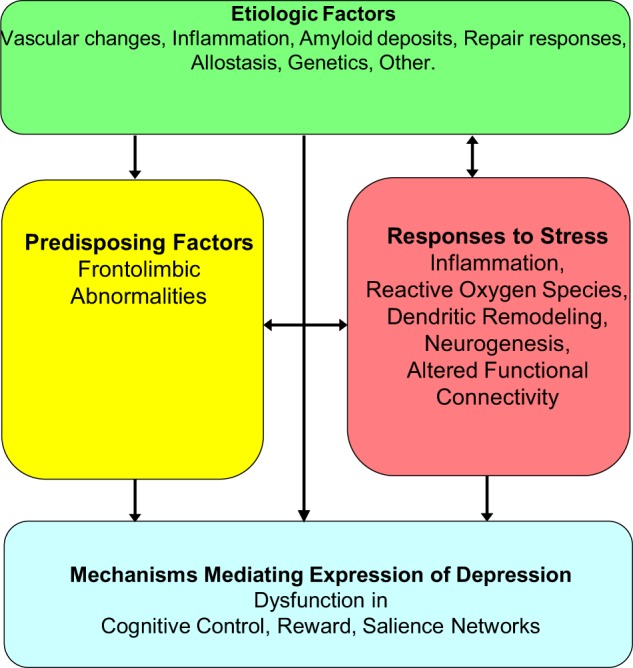
This review proposes that late-life depression reflects dysfunction in reward, salience, and cognitive control networks, with contributions from vascular disease, inflammation, and possibly amyloid/tau pathology. It argues that depression-executive dysfunction and vascular depression respond poorly to antidepressants and reviews novel treatments, while noting that many require confirmation.
Key findings
- Depression was associated with 45% higher risk for stroke (95% CI 1.29–1.63) and 25% higher risk for stroke-related mortality (95% CI 1.11–1.40).
- Approximately 30% of depressed older adults have abnormal executive test performance; depression-executive dysfunction predicts poor antidepressant response and early relapse/recurrence. In late-life major depression, antidepressant NNT was 14.4 (95% CI 8.3–50) for remission and 6.7 (95% CI 4.8–10) for response versus placebo.
- ECT remission rates are 60–80%; right unilateral ultrabrief pulse ECT plus venlafaxine led to remission in 61.7% and response in 70%, with mean 7.3 (SD 3.1) treatments. Deep TMS produced higher remission than sham rTMS (40.0 vs. 14.8%).
- In vascular depression, higher systolic blood pressure (147 vs. 134 mm Hg) increased odds of brain infarcts by 46%, gross infarct by 46%, and microinfarcts by 36%. Nimodipine augmentation achieved remission in 54% vs. 27% (NNT 4, 95% CI 2–12), and fewer recurrences (3.7% vs. 35.7%; NNT 3, 95% CI 2–9).
Methods
- Narrative review of mechanisms and treatment of late-life depression, synthesizing clinical, neuroimaging, neuropathological, biomarker, and treatment literature.
- Organizes evidence around hypotheses including depression-executive dysfunction, vascular depression, inflammation, and amyloid/tau accumulation.
- Discusses evidence-based therapies (antidepressants, ECT, psychotherapy) and novel therapies (D2/3 agonists, computerized cognitive remediation, TMS, antihypertensives, statins, anti-inflammatory agents).
Limitations
- Stated: most novel treatments are not clinically used because of inadequate empirical evidence, small effect size, cost, complexity of administration, and other factors; confirmation studies are needed.
- Stated: discrepancies in amyloid/tau studies make it unclear whether and which Alzheimer’s-related neurobiological changes relate to late-life depression; some neuropathology studies failed to link vascular brain lesions with depression.
- Evident from the text: as a narrative review, it does not report a systematic search strategy, formal quality appraisal, or meta-analytic synthesis.
Model-written summary. Check it against the paper before relying on it.
Integrity signals
Registry
Cites
Statistics
Figures
Verification
Claims the paper makes
43 Valid · 7 Not valid · 65 Not checked · 7 Own results and interpretations
At least one cited source doesn’t support this claim or points to a different paper, and none confirmed it — see the verdicts below.
In the paper
“Depressed individuals have 45% (95% CI: 1.29–1.63) higher risk for stroke than non-depressed individuals and 25% (95% CI: 1.11–1.40) higher risk for stroke-related mortality5.”
§ Mechanisms and treatment of late-life depression > Introduction
What the sources say
- Disputedcites [5] Pan A Sun Q Okereke OI Rexrode KM Hu FB Depression and risk of stroke morbidity and mortality: a meta-analysis and systematic review JAMA 2011 306 1241 1249 10.1001/jama.2011.1282 21934057 PMC3242806 sourceExperimental — accuracy not yet measured
The Abstract’s Results report a pooled hazard ratio of 1.55 (95% CI, 1.25–1.93) for fatal stroke, corresponding to a 55% higher risk—not 25%. The cited 1.25 (95% CI, 1.11–1.40) estimate is for ischemic stroke, not stroke-related mortality. (LLM, conf=0.94)
Checked by a reasoning model — may be wrong.
plainstates an association- Asserted: passes — The authors put it forward as true.
- Checkable: passes — It can be checked against evidence.
- Load-bearing: unclear — It is unclear whether the paper’s conclusions depend on it.
- Based: passes — The paper gives a reason why it holds.
- Disputed
The cited sources support only part of this claim — read each source’s verdict below.
In the paper
“Depressed individuals have 45% (95% CI: 1.29–1.63) higher risk for stroke than non-depressed individuals and 25% (95% CI: 1.11–1.40) higher risk for stroke-related mortality5.”
§ Mechanisms and treatment of late-life depression > Introduction
What the sources say
- Partly supportedcites [5] Pan A Sun Q Okereke OI Rexrode KM Hu FB Depression and risk of stroke morbidity and mortality: a meta-analysis and systematic review JAMA 2011 306 1241 1249 10.1001/jama.2011.1282 21934057 PMC3242806 sourceExperimental — accuracy not yet measured
The Abstract Results and the RESULTS section ('Depression and Risk of Stroke Morbidity & Mortality') confirm the first half: pooled adjusted HR 1.45 (95% CI, 1.29–1.63) for total stroke across 28 prospective cohort studies (n=317,540; 8,478 cases). However, the 25% figure with CI 1.11–1.40 is the source's estimate for ISCHEMIC stroke (6 studies), not for stroke-related mortality; the meta-analysis's fatal-stroke (mortality) estimate is HR 1.55 (95% CI, 1.25–1.93) from 8 studies. So the citing sentence's mortality attribution of the 1.25 (1.11–1.40) number is not supported by this source. (LLM, conf=0.85)
plainstates an association- Asserted: passes — The authors put it forward as true.
- Checkable: passes — It can be checked against evidence.
- Load-bearing: unclear — It is unclear whether the paper’s conclusions depend on it.
- Based: passes — The paper gives a reason why it holds.
- Partly supported
The cited sources support only part of this claim — read each source’s verdict below.
In the paper
“Approximately 30% of depressed older adults have abnormal performance in tests of verbal fluency, response inhibition, novel problem solving, cognitive flexibility, working memory, and/or ideomotor planning11,21 (Table 1).”
§ Mechanisms and treatment of late-life depression > Mechanisms of late-life depression > The depression-executive dysfunction syndrome hypothesis
What the sources say
- Partly supportedcites [11] Manning KJ Steffens DC State of the science of neural systems in late-life depression: impact on clinical presentation and treatment outcome J. Am. Geriatr. Soc. 2018 66 Suppl 1 S17 s23 10.1111/jgs.15353 29659005 PMC5905432 sourceExperimental — accuracy not yet measured
The Executive Dysfunction section (Underlying Network Dysfunction) does support the substance: 'Estimates suggest 30–40% of non-demented older adults with major depression exhibit signs of executive dysfunction on cognitive examination,' followed by the list of tests of verbal fluency, the Wisconsin Card Sorting Test (novel problem solving, cognitive flexibility, working memory), the Tower of London (planning) and the Stroop Color–Word Interference (response inhibition). However, the citing sentence narrows the hedged 'estimates suggest 30–40%' to a flat 'approximately 30%', drops the 'non-demented' qualifier on the population, and converts 'ideomotor planning' from the source's plain 'planning' (Tower of London); it also fuses the prevalence estimate (credited in our copy to ref. 24, Lockwood et al. 2002) with the test battery (credited to ref. 25, Lim et al. 2013) into a single claim that the 30% figure applies to abnormal performance on those named tests. No passage in our copy contradicts the claim; it is our copy's only statement of this prevalence. (LLM, conf=0.75)
- Partly supportedcites [21] Lim J Sensitivity of cognitive tests in four cognitive domains in discriminating MDD patients from healthy controls: a meta-analysis Int. Psychogeriatr. 2013 25 1543 1557 10.1017/S1041610213000689 23725644 sourceExperimental — accuracy not yet measured
Our copy supports impaired performance on tests in the named domains in MDD — the Executive function results (Stroop SMD = 0.84, WCST SMD = -0.40, Verbal Fluency SMD = -0.57) and the Memory/processing-speed sections report significant group-level deficits — but it never reports a proportion or percentage of patients with 'abnormal' performance, so the '~30%' figure has no counterpart; the analysis pools standardized mean differences only (Data extraction and analysis). The population is also not depressed older adults: 22 trials of mixed-age MDD patients (955 patients), of which only six had mean age above 60 (Results), and the age subgroup analysis found Verbal Fluency impairment in younger (<60) patients (Subgroup analysis). The domain vocabulary used here is attention, processing speed, executive function and memory (Cognitive measures), not response inhibition, novel problem solving, cognitive flexibility, working memory or ideomotor planning. (LLM, conf=0.70)
plain- Asserted: passes — The authors put it forward as true.
- Checkable: passes — It can be checked against evidence.
- Load-bearing: passes — The paper’s conclusions depend on it.
- Based: passes — The paper gives a reason why it holds.
- Partly supported
The cited sources support only part of this claim — read each source’s verdict below.
In the paper
“Depression has been associated with greater WMH severity in white matter tracts of the cingulum, uncinate fasciculus, and superior longitudinal fasciculus59,60, as well as the frontal25 and temporal lobes61.”
§ Mechanisms and treatment of late-life depression > Mechanisms of late-life depression > The vascular depression hypothesis
What the sources say
- Partly supportedcites [59] Taylor WD Fiber tract-specific white matter lesion severity Findings in late-life depression and by AGTR1 A1166C genotype Hum. Brain Mapp. 2013 34 295 303 10.1002/hbm.21445 22021115 PMC3772522 sourceExperimental — accuracy not yet measured
Taylor et al. (2013) support the cingulum part with their own result: the depressed cohort showed a significantly greater fiber-tract WML ratio only in the left upper cingulum near the cingulate gyrus (Results, 'Fiber tract WML volume differences between diagnostic cohorts'; Discussion). However, the uncinate fasciculus and superior longitudinal fasciculus associations are not this study's finding — the paper reports them as Sheline et al. (2008)'s result (Introduction) and explicitly states in the Discussion that 'our findings differ from a prior study, where LLD was associated with greater WML volume in multiple fiber tracts, including the SLF, IFO, ILF, and UNC.' So the citation is offered for a multi-tract association that this source only relays (and contrasts with its own data), while its own contribution is the cingulum localization. The frontal/temporal-lobe portion of the sentence carries separate citations (25, 61) and is not judged here, though the Introduction does note that most studies link frontal WMLs to late-life depression via other works. (LLM, conf=0.78)
- Not checked yetcites [60] Sheline YI Regional white matter hyperintensity burden in automated segmentation distinguishes late-life depressed subjects from comparison subjects matched for vascular risk factors Am. J. Psychiatry 2008 165 524 532 10.1176/appi.ajp.2007.07010175 18281408 PMC4118770 source
- Not checked yetcites [25] Taylor WD Localization of age-associated white matter hyperintensities in late-life depression Prog. Neuropsychopharmacol. Biol. Psychiatry 2003 27 539 544 10.1016/S0278-5846(02)00358-5 12691791 source
plainstates an association- Asserted: passes — The authors put it forward as true.
- Checkable: passes — It can be checked against evidence.
- Load-bearing: passes — The paper’s conclusions depend on it.
- Based: passes — The paper gives a reason why it holds.
- Partly supported
Every source the paper cites for this claim was checked and supports it.
In the paper
“Cerebrovascular risk factors are associated with WMH in healthy young adults42.”
§ Mechanisms and treatment of late-life depression > Mechanisms of late-life depression > The vascular depression hypothesis
What the sources say
- Supportedcites [42] Williamson W Association of cardiovascular risk factors with mri indices of cerebrovascular structure and function and white matter hyperintensities in young adults JAMA 2018 320 665 673 10.1001/jama.2018.11498 30140877 PMC6142949 source
The Abstract (Conclusions and Relevance, p. 4) states that in young adults without clinical evidence of cerebrovascular disease, modifiable cardiovascular risk factors were associated with MR indices of cerebral vessel structure and function and with white matter hyperintensities. The Abstract Results (p. 3) likewise report that white matter hyperintensity count correlated with cardiovascular risk factors in univariable and multivariable models in participants of mean age 25, and the Discussion (p. 13) quantifies a ~20% difference in lesion burden between lowest and highest risk scores. The claim's 'healthy young adults' matches the paper's own population descriptor; only the wording differs ('cerebrovascular' vs the paper's 'modifiable cardiovascular' risk factors). (LLM, conf=0.90)
plainstates an association- Asserted: passes — The authors put it forward as true.
- Checkable: passes — It can be checked against evidence.
- Load-bearing: unclear — It is unclear whether the paper’s conclusions depend on it.
- Based: passes — The paper gives a reason why it holds.
- Supported
77 more claims · 34 with their cited sources checked
Create a free account to see all 122 claims and to verify the 102 references still open.
- It may state two separate claims as one. 33
- Probably not a substantial claim. 8
Claims other papers make about this one
Each is checked against this paper’s own text: does it say what the citing paper says it does?
The source backs part of the claim, not all of it — or backs it for a different population, condition or comparison.
In the citing paper
“This is in line with the extensive literature indicating a favorable outcome after adequate treatment in LLD [39].”
From Preliminary evidence for preserved synaptic density in late-life depression (2024) · cites this paper as [39]
Experimental — accuracy not yet measuredThe cited source says what the claim attributes to it.
In the citing paper
“As the first-line pharmacological interventions, selective serotonin reuptake inhibitors exhibit some efficacy in alleviating depressive symptoms, but their ability to address EFD in LLD patients remains limited.4”
From Can Intermittent Theta-Burst Stimulation of Dorsolateral Prefrontal Cortex Relieve Executive Dysfunction in Patients With Late-Life Depression? (2024) · cites this paper as [4]
The cited source says what the claim attributes to it.
In the citing paper
“Notably, the presence of EFD is indicative of resistance to antidepressant treatment, increased disability, poor quality of life, and an elevated susceptibility to suicide.3,4”
From Can Intermittent Theta-Burst Stimulation of Dorsolateral Prefrontal Cortex Relieve Executive Dysfunction in Patients With Late-Life Depression? (2024) · cites this paper as [4]
The cited source says what the claim attributes to it.
In the citing paper
“As the first-line pharmacological interventions, selective serotonin reuptake inhibitors exhibit some efficacy in alleviating depressive symptoms, but their ability to address EFD in LLD patients remains limited.4”
From Can Intermittent Theta-Burst Stimulation of Dorsolateral Prefrontal Cortex Relieve Executive Dysfunction in Patients With Late-Life Depression? (2024) · cites this paper as [4]
The cited source says what the claim attributes to it.
In the citing paper
“Notably, the presence of EFD is indicative of resistance to antidepressant treatment, increased disability, poor quality of life, and an elevated susceptibility to suicide.3,4”
From Can Intermittent Theta-Burst Stimulation of Dorsolateral Prefrontal Cortex Relieve Executive Dysfunction in Patients With Late-Life Depression? (2024) · cites this paper as [4]
2 more claims about this paper
Create a free account to see every claim other papers make about this one.
Citations
Cites
Inflammation and Its Discontents: The Role of Cytokines in the Pathophysiology of Major Depression
Miller, A. H., Maletic, V., & Raison, C. L. (2009) · Biological Psychiatry · doi:10.1016/j.biopsych.2008.11.029 · Cited by 3,848
Cipriani, A., Furukawa, T. A., Salanti, G., Chaimani, A., Atkinson, L. Z., Ogawa, Y., Leucht, S., Ruhe, H. G., Turner, E. H., Higgins, J. P. T., et al. (2018) · The Lancet · doi:10.1016/s0140-6736(17)32802-7 · Cited by 3,541
Slavich, G. M., & Irwin, M. R. (2014) · Psychological Bulletin · doi:10.1037/a0035302 · Cited by 2,206
Alexopoulos, G. S. (2005) · The Lancet · doi:10.1016/s0140-6736(05)66665-2 · Cited by 2,024
Self-citation'Vascular Depression' Hypothesis
Alexopoulos, G. S. (1997) · Archives of General Psychiatry · doi:10.1001/archpsyc.1997.01830220033006 · Cited by 1,843
Self-citationRaison, C. L., Rutherford, R. E., Woolwine, B. J., Shuo, C., Schettler, P., Drake, D. F., Haroon, E., & Miller, A. H. (2013) · JAMA Psychiatry · doi:10.1001/2013.jamapsychiatry.4 · Cited by 1,617
Peripheral cytokine and chemokine alterations in depression: a meta‐analysis of 82 studies
Köhler, C. A., Freitas, T. H., Maes, M., de Andrade, N. Q., Liu, C. S., Fernandes, B. S., Stubbs, B., Solmi, M., Veronese, N., Herrmann, N., et al. (2017) · Acta Psychiatrica Scandinavica · doi:10.1111/acps.12698 · Cited by 1,443
Sertraline treatment of major depression in patients with acute MI or unstable angina
Glassman, A. H. (2002) · JAMA · doi:10.1001/jama.288.6.701 · Cited by 1,414
Mood disorders and allostatic load
McEwen, B. S. (2003) · Biological Psychiatry · doi:10.1016/s0006-3223(03)00177-x · Cited by 1,135
Potential US Population Impact of the 2017 ACC/AHA High Blood Pressure Guideline
Muntner, P., Carey, R. M., Gidding, S., Jones, D. W., Taler, S. J., Wright, J. T., & Whelton, P. K. (2018) · Circulation · doi:10.1161/circulationaha.117.032582 · Cited by 942
Köhler, O., Benros, M. E., Nordentoft, M., Farkouh, M. E., Iyengar, R. L., Mors, O., & Krogh, J. (2014) · JAMA Psychiatry · doi:10.1001/jamapsychiatry.2014.1611 · Cited by 941
The vascular depression hypothesis: mechanisms linking vascular disease with depression
Taylor, W. D., Aizenstein, H. J., & Alexopoulos, G. S. (2013) · Molecular Psychiatry · doi:10.1038/mp.2013.20 · Cited by 923
Self-citationReciprocal regulation of the neural and innate immune systems
Irwin, M. R., & Cole, S. W. (2011) · Nature Reviews Immunology · doi:10.1038/nri3042 · Cited by 910
Miller, A. H., Haroon, E., Raison, C. L., & Felger, J. C. (2013) · Depression and Anxiety · doi:10.1002/da.22084 · Cited by 892
Management of Depression in Older Adults: A Review
Kok, R. M., & Reynolds, C. F. (2017) · JAMA · doi:10.1001/jama.2017.5706 · Cited by 890
Resting-state functional connectivity in major depressive disorder: A review
Mulders, P. C., van Eijndhoven, P. F., Schene, A. H., Beckmann, C. F., & Tendolkar, I. (2015) · Neuroscience & Biobehavioral Reviews · doi:10.1016/j.neubiorev.2015.07.014 · Cited by 884
Inflammation: Depression Fans the Flames and Feasts on the Heat
Kiecolt-Glaser, J. K., Derry, H. M., & Fagundes, C. P. (2015) · American Journal of Psychiatry · doi:10.1176/appi.ajp.2015.15020152 · Cited by 844
Gruver, A., Hudson, L., & Sempowski, G. (2007) · The Journal of Pathology · doi:10.1002/path.2104 · Cited by 834
Depression and Risk of Stroke Morbidity and Mortality: A Meta-analysis and Systematic Review
Pan, A., Sun, Q., Okereke, O. I., Rexrode, K. M., & Hu, F. B. (2011) · JAMA · doi:10.1001/jama.2011.1282 · Cited by 819
MRI-defined vascular depression
(1997) · American Journal of Psychiatry · doi:10.1176/ajp.154.4.497 · Cited by 770
Harrison, N. A., Brydon, L., Walker, C., Gray, M. A., Steptoe, A., & Critchley, H. D. (2009) · Biological Psychiatry · doi:10.1016/j.biopsych.2009.03.015 · Cited by 756
Inflammation-associated depression: From serotonin to kynurenine
Dantzer, R., O’Connor, J. C., Lawson, M. A., & Kelley, K. W. (2011) · Psychoneuroendocrinology · doi:10.1016/j.psyneuen.2010.09.012 · Cited by 726
Immune activation in brain aging and neurodegeneration: too much or too little?
Lucin, K. M., & Wyss-Coray, T. (2009) · Neuron · doi:10.1016/j.neuron.2009.08.039 · Cited by 679
Reynolds III, C. F., Frank, E., Perel, J. M., Imber, S. D., Cornes, C., Miller, M. D., Mazumdar, S., Houck, P. R., Dew, M. A., Stack, J. A., et al. (1999) · JAMA · doi:10.1001/jama.281.1.39 · Cited by 659
Lespérance, F., Frasure-Smith, N., Koszycki, D., Laliberté, M.-A., van Zyl, L. T., Baker, B., Swenson, J. R., Ghatavi, K., Abramson, B. L., Dorian, P., et al. (2007) · JAMA · doi:10.1001/jama.297.4.367 · Cited by 658
Depression and cardiovascular disease: Epidemiological evidence on their linking mechanisms
Penninx, B. W. J. H. (2017) · Neuroscience & Biobehavioral Reviews · doi:10.1016/j.neubiorev.2016.07.003 · Cited by 576
Barone, P., Poewe, W., Albrecht, S., Debieuvre, C., Massey, D., Rascol, O., Tolosa, E., & Weintraub, D. (2010) · The Lancet Neurology · doi:10.1016/s1474-4422(10)70106-x · Cited by 562
Gimeno, D., Kivimäki, M., Brunner, E. J., Elovainio, M., De Vogli, R., Steptoe, A., Kumari, M., Lowe, G. D. O., Rumley, A., Marmot, M. G., et al. (2009) · Psychological Medicine · doi:10.1017/s0033291708003723 · Cited by 561
Clinically defined vascular depression
(1997) · American Journal of Psychiatry · doi:10.1176/ajp.154.4.562 · Cited by 557
Self-citationLindqvist, D., Janelidze, S., Hagell, P., Erhardt, S., Samuelsson, M., Minthon, L., Hansson, O., Björkqvist, M., Träskman-Bendz, L., & Brundin, L. (2009) · Biological Psychiatry · doi:10.1016/j.biopsych.2009.01.030 · Cited by 524
Executive Dysfunction and Long-term Outcomes of Geriatric Depression
Alexopoulos, G. S., Meyers, B. S., Young, R. C., Kalayam, B., Kakuma, T., Gabrielle, M., Sirey, J. A., & Hull, J. (2000) · Archives of General Psychiatry · doi:10.1001/archpsyc.57.3.285 · Cited by 486
Self-citationMaintenance Treatment of Major Depression in Old Age
Reynolds, C. F., Dew, M. A., Pollock, B. G., Mulsant, B. H., Frank, E., Miller, M. D., Houck, P. R., Mazumdar, S., Butters, M. A., Stack, J. A., et al. (2006) · New England Journal of Medicine · doi:10.1056/nejmoa052619 · Cited by 476
Köhler, C. A., Freitas, T. H., Stubbs, B., Maes, M., Solmi, M., Veronese, N., de Andrade, N. Q., Morris, G., Fernandes, B. S., Brunoni, A. R., et al. (2017) · Molecular Neurobiology · doi:10.1007/s12035-017-0632-1 · Cited by 449
Alexopoulos, G. S., Hoptman, M. J., Kanellopoulos, D., Murphy, C. F., Lim, K. O., & Gunning, F. M. (2012) · Journal of Affective Disorders · doi:10.1016/j.jad.2011.12.002 · Cited by 437
Self-citationUher, R., Tansey, K. E., Dew, T., Maier, W., Mors, O., Hauser, J., Dernovsek, M. Z., Henigsberg, N., Souery, D., Farmer, A., et al. (2014) · American Journal of Psychiatry · doi:10.1176/appi.ajp.2014.14010094 · Cited by 418
Taylor, W. D. (2014) · New England Journal of Medicine · doi:10.1056/nejmcp1402180 · Cited by 394
Dilger, R. N., & Johnson, R. W. (2008) · Journal of Leukocyte Biology · doi:10.1189/jlb.0208108 · Cited by 391
Rapp, M. A., Schnaider-Beeri, M., Grossman, H. T., Sano, M., Perl, D. P., Purohit, D. P., Gorman, J. M., & Haroutunian, V. (2006) · Archives of General Psychiatry · doi:10.1001/archpsyc.63.2.161 · Cited by 386
Cirrito, J. R., Disabato, B. M., Restivo, J. L., Verges, D. K., Goebel, W. D., Sathyan, A., Hayreh, D., D'Angelo, G., Benzinger, T., Yoon, H., et al. (2011) · Proceedings of the National Academy of Sciences · doi:10.1073/pnas.1107411108 · Cited by 377
Clinical Presentation of the “Depression–Executive Dysfunction Syndrome” of Late Life
Alexopoulos, G. S., Kiosses, D. N., Klimstra, S., Kalayam, B., & Bruce, M. L. (2002) · The American Journal of Geriatric Psychiatry · doi:10.1097/00019442-200201000-00012 · Cited by 361
Self-citationMitchell, A. J., & Subramaniam, H. (2005) · American Journal of Psychiatry · doi:10.1176/appi.ajp.162.9.1588 · Cited by 348
Potential U.S. Population Impact of the 2017 ACC/AHA High Blood Pressure Guideline
Muntner, P., Carey, R. M., Gidding, S., Jones, D. W., Taler, S. J., Wright, J. T., & Whelton, P. K. (2018) · Journal of the American College of Cardiology · doi:10.1016/j.jacc.2017.10.073 · Cited by 339
Neuroinflammation Associated with Aging Sensitizes the Brain to the Effects of Infection or Stress
Sparkman, N. L., & Johnson, R. W. (2008) · Neuroimmunomodulation · doi:10.1159/000156474 · Cited by 332
Rensma, S. P., van Sloten, T. T., Launer, L. J., & Stehouwer, C. D. A. (2018) · Neuroscience & Biobehavioral Reviews · doi:10.1016/j.neubiorev.2018.04.003 · Cited by 326
van Agtmaal, M. J. M., Houben, A. J. H. M., Pouwer, F., Stehouwer, C. D. A., & Schram, M. T. (2017) · JAMA Psychiatry · doi:10.1001/jamapsychiatry.2017.0984 · Cited by 308
Circulating IL-6 and CRP are associated with MRI findings in the elderly: The 3C-Dijon Study
Satizabal, C. L., Zhu, Y. C., Mazoyer, B., Dufouil, C., & Tzourio, C. (2012) · Neurology · doi:10.1212/wnl.0b013e318248e50f · Cited by 303
Microstructural White Matter Abnormalities and Remission of Geriatric Depression
Alexopoulos, G. S., Murphy, C. F., Gunning-Dixon, F. M., Latoussakis, V., Kanellopoulos, D., Klimstra, S., Lim, K. O., & Hoptman, M. J. (2008) · American Journal of Psychiatry · doi:10.1176/appi.ajp.2007.07050744 · Cited by 299
Self-citationSheline, Y. I., Pieper, C. F., Barch, D. M., Welsh-Boehmer, K., McKinstry, R. C., MacFall, J. R., D’Angelo, G., Garcia, K. S., Gersing, K., Wilkins, C., et al. (2010) · Archives of General Psychiatry · doi:10.1001/archgenpsychiatry.2009.204 · Cited by 291
Bae, J. N., MacFall, J. R., Krishnan, K. R. R., Payne, M. E., Steffens, D. C., & Taylor, W. D. (2006) · Biological Psychiatry · doi:10.1016/j.biopsych.2006.03.052 · Cited by 288
Nelson, J. C., & Devanand, D. P. (2011) · Journal of the American Geriatrics Society · doi:10.1111/j.1532-5415.2011.03355.x · Cited by 284
Lenze, E. J., Mulsant, B. H., Blumberger, D. M., Karp, J. F., Newcomer, J. W., Anderson, S. J., Dew, M. A., Butters, M. A., Stack, J. A., Begley, A. E., et al. (2015) · The Lancet · doi:10.1016/s0140-6736(15)00308-6 · Cited by 283
Areán, P. A., Raue, P., Mackin, R. S., Kanellopoulos, D., McCulloch, C., & Alexopoulos, G. S. (2010) · American Journal of Psychiatry · doi:10.1176/appi.ajp.2010.09091327 · Cited by 275
Self-citationDonovan, N. J., Locascio, J. J., Marshall, G. A., Gatchel, J., Hanseeuw, B. J., Rentz, D. M., Johnson, K. A., Sperling, R. A., & Study, F. T. H. A. B. (2018) · American Journal of Psychiatry · doi:10.1176/appi.ajp.2017.17040442 · Cited by 272
Tedeschini, E., Levkovitz, Y., Iovieno, N., Ameral, V. E., Nelson, J. C., & Papakostas, G. I. (2011) · The Journal of Clinical Psychiatry · doi:10.4088/jcp.10r06531 · Cited by 269
Right unilateral ultrabrief pulse ECT in geriatric depression: phase 1 of the pride study
Kellner, C. H., Husain, M. M., Knapp, R. G., McCall, W. V., Petrides, G., Rudorfer, M. V., Young, R. C., Sampson, S., McClintock, S. M., Mueller, M., et al. (2016) · American Journal of Psychiatry · doi:10.1176/appi.ajp.2016.15081101 · Cited by 269
Lithium Treatment and Risk of Dementia
Kessing, L. V., Søndergård, L., Forman, J. L., & Andersen, P. K. (2008) · Archives of General Psychiatry · doi:10.1001/archpsyc.65.11.1331 · Cited by 267
Prefrontal Dysfunction and Treatment Response in Geriatric Depression
Kalayam, B., & Alexopoulos, G. S. (1999) · Archives of General Psychiatry · doi:10.1001/archpsyc.56.8.713 · Cited by 263
Self-citationEpigenetic aging in major depressive disorder
Han, L. K. M., Aghajani, M., Clark, S. L., Chan, R. F., Hattab, M. W., Shabalin, A. A., Zhao, M., Kumar, G., Xie, L. Y., Jansen, R., et al. (2018) · American Journal of Psychiatry · doi:10.1176/appi.ajp.2018.17060595 · Cited by 260
Haroon, E., Fleischer, C. C., Felger, J. C., Chen, X., Woolwine, B. J., Patel, T., Hu, X. P., & Miller, A. H. (2016) · Molecular Psychiatry · doi:10.1038/mp.2015.206 · Cited by 250
Setiawan, E., Attwells, S., Wilson, A. A., Mizrahi, R., Rusjan, P. M., Miler, L., Xu, C., Sharma, S., Kish, S., Houle, S., et al. (2018) · The Lancet Psychiatry · doi:10.1016/s2215-0366(18)30048-8 · Cited by 244
The relationship between depression and frailty syndrome: a systematic review
Buigues, C., Padilla-Sánchez, C., Garrido, J. F., Navarro-Martínez, R., Ruiz-Ros, V., & Cauli, O. (2015) · Aging & Mental Health · doi:10.1080/13607863.2014.967174 · Cited by 235
Tor, P.-C., Bautovich, A., Wang, M.-J., Martin, D., Harvey, S. B., & Loo, C. (2015) · The Journal of Clinical Psychiatry · doi:10.4088/jcp.14r09145 · Cited by 230
The inflammation hypothesis in geriatric depression
Alexopoulos, G. S., & Morimoto, S. S. (2011) · International Journal of Geriatric Psychiatry · doi:10.1002/gps.2672 · Cited by 226
Self-citationAn Antidepressant Decreases CSF Aβ Production in Healthy Individuals and in Transgenic AD Mice
Sheline, Y. I., West, T., Yarasheski, K., Swarm, R., Jasielec, M. S., Fisher, J. R., Ficker, W. D., Yan, P., Xiong, C., Frederiksen, C., et al. (2014) · Science Translational Medicine · doi:10.1126/scitranslmed.3008169 · Cited by 223
Anterior Cingulate Activation and Error Processing During Interferon-Alpha Treatment
Capuron, L., Pagnoni, G., Demetrashvili, M., Woolwine, B. J., Nemeroff, C. B., Berns, G. S., & Miller, A. H. (2005) · Biological Psychiatry · doi:10.1016/j.biopsych.2005.03.033 · Cited by 222
Cerebrovascular Disease and Evolution of Depressive Symptoms in the Cardiovascular Health Study
Steffens, D. C., Krishnan, K. R. R., Crump, C., & Burke, G. L. (2002) · Stroke · doi:10.1161/01.str.0000018405.59799.d5 · Cited by 221
Cerebral Hemodynamics and Vascular Risk Factors: Setting the Stage for Alzheimer's Disease
de la Torre, J. C. (2012) · Journal of Alzheimer's Disease · doi:10.3233/jad-2012-120793 · Cited by 219
Neuropsychological Differences Between Late-Onset and Recurrent Geriatric Major Depression
Rapp, M. A., Dahlman, K., Sano, M., Grossman, H. T., Haroutunian, V., & Gorman, J. M. (2005) · American Journal of Psychiatry · doi:10.1176/appi.ajp.162.4.691 · Cited by 219
Sheline, Y. I., Price, J. L., Vaishnavi, S. N., Mintun, M. A., Barch, D. M., Epstein, A. A., Wilkins, C. H., Snyder, A. Z., Couture, L., Schechtman, K., et al. (2008) · American Journal of Psychiatry · doi:10.1176/appi.ajp.2007.07010175 · Cited by 213
Treatment of Vascular Depression Using Repetitive Transcranial Magnetic Stimulation
Jorge, R. E., Moser, D. J., Acion, L., & Robinson, R. G. (2008) · Archives of General Psychiatry · doi:10.1001/archgenpsychiatry.2007.45 · Cited by 211
Pinquart, M., Duberstein, P. R., & Lyness, J. M. (2006) · American Journal of Psychiatry · doi:10.1176/ajp.2006.163.9.1493 · Cited by 204
Kim, J.-M., Stewart, R., Lee, Y.-S., Lee, H.-J., Kim, M. C., Kim, J.-W., Kang, H.-J., Bae, K.-Y., Kim, S.-W., Shin, I.-S., et al. (2018) · JAMA · doi:10.1001/jama.2018.9422 · Cited by 204
Pizzi, C., Rutjes, A. W. S., Costa, G. M., Fontana, F., Mezzetti, A., & Manzoli, L. (2011) · The American Journal of Cardiology · doi:10.1016/j.amjcard.2010.11.017 · Cited by 203
Bartels, C., Wagner, M., Wolfsgruber, S., Ehrenreich, H., Schneider, A., & Initiative, F. T. A. D. N. (2018) · American Journal of Psychiatry · doi:10.1176/appi.ajp.2017.17040404 · Cited by 202
Alexopoulos, G. S., Raue, P. J., Kiosses, D. N., Mackin, R. S., Kanellopoulos, D., McCulloch, C., & Areán, P. A. (2011) · Archives of General Psychiatry · doi:10.1001/archgenpsychiatry.2010.177 · Cited by 199
Self-citationBaune, B. T., Dannlowski, U., Domschke, K., Janssen, D. G. A., Jordan, M. A., Ohrmann, P., Bauer, J., Biros, E., Arolt, V., Kugel, H., et al. (2010) · Biological Psychiatry · doi:10.1016/j.biopsych.2009.11.004 · Cited by 193
Aizenstein, H. J., Butters, M. A., Wu, M., Mazurkewicz, L. M., Stenger, V. A., Gianaros, P. J., Becker, J. T., Reynolds, C. F., & Carter, C. S. (2009) · The American Journal of Geriatric Psychiatry · doi:10.1097/jgp.0b013e31817b60af · Cited by 187
Daskalopoulou, M., George, J., Walters, K., Osborn, D. P., Batty, G. D., Stogiannis, D., Rapsomaniki, E., Pujades-Rodriguez, M., Denaxas, S., Udumyan, R., et al. (2016) · PLOS ONE · doi:10.1371/journal.pone.0153838 · Cited by 185
Lavretsky, H., Reinlieb, M., St. Cyr, N., Siddarth, P., Ercoli, L. M., & Senturk, D. (2015) · American Journal of Psychiatry · doi:10.1176/appi.ajp.2014.14070889 · Cited by 184
Neuropathological correlates of late-life depression in older people
Tsopelas, C., Stewart, R., Savva, G. M., Brayne, C., Ince, P., Thomas, A., & Matthews, F. E. (2011) · British Journal of Psychiatry · doi:10.1192/bjp.bp.110.078816 · Cited by 182
A Systematic Review of Treatments for Refractory Depression in Older People
Cooper, C., Katona, C., Lyketsos, K., Blazer, D., Brodaty, H., Rabins, P., de Mendonça Lima, C. A., & Livingston, G. (2011) · American Journal of Psychiatry · doi:10.1176/appi.ajp.2011.10081165 · Cited by 176
Amyloid-Associated Depression: A Prodromal Depression of Alzheimer Disease?
Sun, X., Steffens, D. C., Au, R., Folstein, M., Summergrad, P., Yee, J., Rosenberg, I., Mwamburi, D. M., & Qiu, W. Q. (2008) · Archives of General Psychiatry · doi:10.1001/archpsyc.65.5.542 · Cited by 174
Kaster, T. S., Daskalakis, Z. J., Noda, Y., Knyahnytska, Y., Downar, J., Rajji, T. K., Levkovitz, Y., Zangen, A., Butters, M. A., Mulsant, B. H., et al. (2018) · Neuropsychopharmacology · doi:10.1038/s41386-018-0121-x · Cited by 174
(2001) · PubMed · Cited by 173
Self-citationReynolds, C. F., Butters, M. A., Lopez, O., Pollock, B. G., Dew, M. A., Mulsant, B. H., Lenze, E. J., Holm, M., Rogers, J. C., Mazumdar, S., et al. (2011) · Archives of General Psychiatry · doi:10.1001/archgenpsychiatry.2010.184 · Cited by 171
Dopaminergic mechanism of antidepressant action in depressed patients
Willner, P., Hale, A. S., & Argyropoulos, S. (2005) · Journal of Affective Disorders · doi:10.1016/j.jad.2004.12.010 · Cited by 169
Kok, R. M., Nolen, W. A., & Heeren, T. J. (2012) · Journal of Affective Disorders · doi:10.1016/j.jad.2012.02.036 · Cited by 167
Honig, A., Kuyper, A. M. G., Schene, A. H., van Melle, J. P., de Jonge, P., Tulner, D. M., Schins, A., Crijns, H. J. G. M., Kuijpers, P. M. J. C., Vossen, H., et al. (2007) · Psychosomatic Medicine · doi:10.1097/psy.0b013e31814b260d · Cited by 167
Homocysteine and Depression in Later Life
Almeida, O. P., McCaul, K., Hankey, G. J., Norman, P., Jamrozik, K., & Flicker, L. (2008) · Archives of General Psychiatry · doi:10.1001/archpsyc.65.11.1286 · Cited by 166
Hollocks, M. J., Lawrence, A. J., Brookes, R. L., Barrick, T. R., Morris, R. G., Husain, M., & Markus, H. S. (2015) · Brain · doi:10.1093/brain/awv304 · Cited by 166
Schaakxs, R., Comijs, H. C., Lamers, F., Kok, R. M., Beekman, A. T. F., & Penninx, B. W. J. H. (2018) · The Lancet Psychiatry · doi:10.1016/s2215-0366(18)30166-4 · Cited by 166
Clinical-pathologic study of depressive symptoms and cognitive decline in old age
Wilson, R. S., Capuano, A. W., Boyle, P. A., Hoganson, G. M., Hizel, L. P., Shah, R. C., Nag, S., Schneider, J. A., Arnold, S. E., & Bennett, D. A. (2014) · Neurology · doi:10.1212/wnl.0000000000000715 · Cited by 165
O'Brien, J. T., Firbank, M., Krishnan, M. S., van Straaten, E. C. W., van der Flier, W. M., Petrovic, K., Pantoni, L., Simoni, M., Erkinjuntti, T., Wallin, A., et al. (2006) · American Journal of Geriatric Psychiatry · doi:10.1097/01.jgp.0000214558.63358.94 · Cited by 159
Haroon, E., Woolwine, B. J., Chen, X., Pace, T. W., Parekh, S., Spivey, J. R., Hu, X. P., & Miller, A. H. (2014) · Neuropsychopharmacology · doi:10.1038/npp.2014.25 · Cited by 154
Dorr, A., Sahota, B., Chinta, L. V., Brown, M. E., Lai, A. Y., Ma, K., Hawkes, C. A., McLaurin, J., & Stefanovic, B. (2012) · Brain · doi:10.1093/brain/aws243 · Cited by 153
Brickman, A. M., Zahra, A., Muraskin, J., Steffener, J., Holland, C. M., Habeck, C., Borogovac, A., Ramos, M. A., Brown, T. R., Asllani, I., et al. (2009) · Psychiatry Research: Neuroimaging · doi:10.1016/j.pscychresns.2008.11.006 · Cited by 152
Milaneschi, Y., Corsi, A. M., Penninx, B. W., Bandinelli, S., Guralnik, J. M., & Ferrucci, L. (2009) · Biological Psychiatry · doi:10.1016/j.biopsych.2008.11.011 · Cited by 148
"The Depression-Executive Dysfunction Syndrome of Late Life": A Specific Target for D3 Agonists?
Alexopoulos, G. S. (2001) · American Journal of Geriatric Psychiatry · doi:10.1097/00019442-200102000-00004 · Cited by 147
Self-citationResponse Inhibition Predicts Poor Antidepressant Treatment Response in Very Old Depressed Patients
Sneed, J. R., Roose, S. P., Keilp, J. G., Krishnan, K. R. R., Alexopoulos, G. S., & Sackeim, H. A. (2007) · The American Journal of Geriatric Psychiatry · doi:10.1097/jgp.0b013e3180302513 · Cited by 146
Self-citationCurrent electroconvulsive therapy practice and research in the geriatric population
Kerner, N., & Prudic, J. (2014) · Neuropsychiatry · doi:10.2217/npy.14.3 · Cited by 146
van Sloten, T. T., Sigurdsson, S., van Buchem, M. A., Phillips, C. L., Jonsson, P. V., Ding, J., Schram, M. T., Harris, T. B., Gudnason, V., & Launer, L. J. (2015) · American Journal of Psychiatry · doi:10.1176/appi.ajp.2014.14050578 · Cited by 146
Williamson, W., Lewandowski, A. J., Forkert, N. D., Griffanti, L., Okell, T. W., Betts, J., Boardman, H., Siepmann, T., McKean, D., Huckstep, O., et al. (2018) · JAMA · doi:10.1001/jama.2018.11498 · Cited by 143
Speed of remission in elderly patients with depression: Electroconvulsive therapy v. medication
Spaans, H.-P., Sienaert, P., Bouckaert, F., van den Berg, J. F., Verwijk, E., Kho, K. H., Stek, M. L., & Kok, R. M. (2015) · British Journal of Psychiatry · doi:10.1192/bjp.bp.114.148213 · Cited by 142
Kok, R. M., Heeren, T. J., & Nolen, W. A. (2011) · The American Journal of Geriatric Psychiatry · doi:10.1097/jgp.0b013e3181ec8085 · Cited by 141
Default-mode network connectivity and white matter burden in late-life depression
Wu, M., Andreescu, C., Butters, M. A., Tamburo, R., Reynolds, C. F., & Aizenstein, H. (2011) · Psychiatry Research: Neuroimaging · doi:10.1016/j.pscychresns.2011.04.003 · Cited by 140
BDNF promoter methylation and genetic variation in late-life depression
Januar, V, Ancelin, M.-L., Ritchie, K., Saffery, R., & Ryan, J. (2015) · Translational Psychiatry · doi:10.1038/tp.2015.114 · Cited by 139
Association of Electroconvulsive Therapy With Psychiatric Readmissions in US Hospitals
Slade, E. P., Jahn, D. R., Regenold, W. T., & Case, B. G. (2017) · JAMA Psychiatry · doi:10.1001/jamapsychiatry.2017.1378 · Cited by 135
Glassman, A. H., Bigger, J. T., Gaffney, M., Shapiro, P. A., & Swenson, J. R. (2006) · Archives of General Psychiatry · doi:10.1001/archpsyc.63.3.283 · Cited by 134
Vogelzangs, N., Beekman, A. T., van Reedt Dortland, A. K., Schoevers, R. A., Giltay, E. J., de Jonge, P., & Penninx, B. W. (2014) · Neuropsychopharmacology · doi:10.1038/npp.2014.9 · Cited by 133
Prefrontal Neuropsychological Predictors of Treatment Remission in Late-Life Depression
Potter, G. G., Kittinger, J. D., Ryan Wagner, H., Steffens, D. C., & Ranga Rama Krishnan, K. (2004) · Neuropsychopharmacology · doi:10.1038/sj.npp.1300551 · Cited by 132
Wu, K.-Y., Hsiao, I., Chen, C., Chen, C., Hsieh, C., Wai, Y., Chang, C., Tseng, H., Yen, T.-C., Liu, C.-Y., et al. (2013) · European Journal of Nuclear Medicine and Molecular Imaging · doi:10.1007/s00259-013-2627-0 · Cited by 130
The salience network in the apathy of late‐life depression
Yuen, G. S., Gunning‐Dixon, F. M., Hoptman, M. J., AbdelMalak, B., McGovern, A. R., Seirup, J. K., & Alexopoulos, G. S. (2014) · International Journal of Geriatric Psychiatry · doi:10.1002/gps.4171 · Cited by 129
Self-citationHedayati, S. S., Gregg, L. P., Carmody, T., Jain, N., Toups, M., Rush, A. J., Toto, R. D., & Trivedi, M. H. (2017) · JAMA · doi:10.1001/jama.2017.17131 · Cited by 129
Functional connectivity in apathy of late-life depression: A preliminary study
Alexopoulos, G. S., Hoptman, M. J., Yuen, G., Kanellopoulos, D., K. Seirup, J., Lim, K. O., & Gunning, F. M. (2013) · Journal of Affective Disorders · doi:10.1016/j.jad.2012.11.023 · Cited by 122
Self-citationGallagher, D., Kiss, A., Lanctot, K., & Herrmann, N. (2018) · The American Journal of Geriatric Psychiatry · doi:10.1016/j.jagp.2018.05.002 · Cited by 122
Hendricksen, M., Thomas, A. J., Ferrier, I. N., Ince, P., & O’Brien, J. T. (2004) · American Journal of Psychiatry · doi:10.1176/appi.ajp.161.6.1096 · Cited by 121
Executive Dysfunction, Heart Disease Burden, and Remission of Geriatric Depression
Alexopoulos, G. S., Kiosses, D. N., Murphy, C., & Heo, M. (2004) · Neuropsychopharmacology · doi:10.1038/sj.npp.1300557 · Cited by 117
Self-citationDiniz, B. S., Sibille, E., Ding, Y., Tseng, G., Aizenstein, H. J., Lotrich, F., Becker, J. T., Lopez, O. L., Lotze, M. T., Klunk, W. E., et al. (2015) · Molecular Psychiatry · doi:10.1038/mp.2014.76 · Cited by 116
Anguera, J. A., Gunning, F. M., & Areán, P. A. (2017) · Depression and Anxiety · doi:10.1002/da.22588 · Cited by 116
Late-life blood pressure association with cerebrovascular and Alzheimer disease pathology
Arvanitakis, Z., Capuano, A. W., Lamar, M., Shah, R. C., Barnes, L. L., Bennett, D. A., & Schneider, J. A. (2018) · Neurology · doi:10.1212/wnl.0000000000005951 · Cited by 112
Adherence to Depression Treatment in Older Adults: A Narrative Review
Zivin, K., & Kales, H. C. (2008) · Drugs & Aging · doi:10.2165/00002512-200825070-00003 · Cited by 110
Alexopoulos, G. S., Murphy, C. F., Gunning-Dixon, F. M., Glatt, C. E., Latoussakis, V., Kelly, R. E., Kanellopoulos, D., Klimstra, S., Lim, K. O., Young, R. C., et al. (2009) · Journal of Affective Disorders · doi:10.1016/j.jad.2009.03.004 · Cited by 110
Self-citationBorges, S., Chen, Y.-F., Laughren, T. P., Temple, R., Patel, H. D., David, P. A., Mathis, M., Unger, E., Yang, P., & Khin, N. A. (2014) · The Journal of Clinical Psychiatry · doi:10.4088/jcp.13r08722 · Cited by 109
Localization of age-associated white matter hyperintensities in late-life depression
Taylor, W. D., MacFall, J. R., Steffens, D. C., Payne, M. E., Provenzale, J. M., & Krishnan, K. R. R. (2003) · Progress in Neuro-Psychopharmacology and Biological Psychiatry · doi:10.1016/s0278-5846(02)00358-5 · Cited by 109
fMRI Correlates of White Matter Hyperintensities in Late-Life Depression
Aizenstein, H. J., Andreescu, C., Edelman, K. L., Cochran, J. L., Price, J., Butters, M. A., Karp, J., Patel, M., & Reynolds, C. F. (2011) · American Journal of Psychiatry · doi:10.1176/appi.ajp.2011.10060853 · Cited by 106
Taragano, F. E., Allegri, R., Vicario, A., Bagnatti, P., & Lyketsos, C. G. (2001) · International Journal of Geriatric Psychiatry · doi:10.1002/gps.340 · Cited by 103
Statins use and risk of depression: A systematic review and meta-analysis
Parsaik, A. K., Singh, B., M. Hassan, M., Singh, K., Mascarenhas, S. S., Williams, M. D., Lapid, M. I., Richardson, J. W., West, C. P., & Rummans, T. A. (2014) · Journal of Affective Disorders · doi:10.1016/j.jad.2013.11.026 · Cited by 100
Apathy in Late-Life Depression: Common, Persistent, and Disabling
Yuen, G. S., Bhutani, S., Lucas, B. J., Gunning, F. M., AbdelMalak, B., Seirup, J. K., Klimstra, S. A., & Alexopoulos, G. S. (2015) · The American Journal of Geriatric Psychiatry · doi:10.1016/j.jagp.2014.06.005 · Cited by 97
Self-citationDiffusion tensor imaging studies in late‐life depression: systematic review and meta‐analysis
Wen, M., Steffens, D. C., Chen, M., & Zainal, N. H. (2014) · International Journal of Geriatric Psychiatry · doi:10.1002/gps.4129 · Cited by 97
A model for streamlining psychotherapy in the RDoC era: the example of ‘Engage’
Alexopoulos, G. S., & Arean, P. (2014) · Molecular Psychiatry · doi:10.1038/mp.2013.150 · Cited by 95
Self-citationKiosses, D. N., Leon, A. C., & Areán, P. A. (2011) · Psychiatric Clinics of North America · doi:10.1016/j.psc.2011.03.001 · Cited by 91
Morimoto, S. S., Wexler, B. E., Liu, J., Hu, W., Seirup, J., & Alexopoulos, G. S. (2014) · Nature Communications · doi:10.1038/ncomms5579 · Cited by 91
Self-citationTaragano, F. E., Bagnatti, P., & Allegri, R. F. (2005) · International Psychogeriatrics · doi:10.1017/s1041610205001493 · Cited by 90
Hall, B. S., Moda, R. N., & Liston, C. (2015) · Neurobiology of Stress · doi:10.1016/j.ynstr.2014.10.008 · Cited by 89
Taylor, W. D., MacFall, J. R., Gerig, G., & Krishnan, R. R. (2007) · Neuropsychiatric Disease and Treatment · doi:10.2147/ndt.a941 · Cited by 84
MRI signal hyperintensities and treatment remission of geriatric depression
Gunning-Dixon, F. M., Walton, M., Cheng, J., Acuna, J., Klimstra, S., Zimmerman, M. E., Brickman, A. M., Hoptman, M. J., Young, R. C., & Alexopoulos, G. S. (2010) · Journal of Affective Disorders · doi:10.1016/j.jad.2010.04.004 · Cited by 84
Self-citationHajjar, I., Hart, M., Chen, Y.-L., Mack, W., Milberg, W., Chui, H., & Lipsitz, L. (2012) · Archives of Internal Medicine · doi:10.1001/archinternmed.2011.1391 · Cited by 84
“Engage” Therapy: Behavioral Activation and Improvement of Late-Life Major Depression
Alexopoulos, G. S., Raue, P. J., Gunning, F., Kiosses, D. N., Kanellopoulos, D., Pollari, C., Banerjee, S., & Arean, P. A. (2016) · The American Journal of Geriatric Psychiatry · doi:10.1016/j.jagp.2015.11.006 · Cited by 84
Self-citationExecutive control function, brain activation and white matter hyperintensities in older adults
Venkatraman, V. K., Aizenstein, H., Guralnik, J., Newman, A. B., Glynn, N. W., Taylor, C., Studenski, S., Launer, L., Pahor, M., Williamson, J., et al. (2010) · NeuroImage · doi:10.1016/j.neuroimage.2009.11.019 · Cited by 83
DNA Methylation Analysis of the Angiotensin Converting Enzyme (ACE) Gene in Major Depression
Zill, P., Baghai, T. C., Schüle, C., Born, C., Früstück, C., Büttner, A., Eisenmenger, W., Varallo-Bedarida, G., Rupprecht, R., Möller, H.-J., et al. (2012) · PLoS ONE · doi:10.1371/journal.pone.0040479 · Cited by 82
Lim, J., Oh, I. K., Han, C., Huh, Y. J., Jung, I.-K., Patkar, A. A., Steffens, D. C., & Jang, B.-H. (2013) · International Psychogeriatrics · doi:10.1017/s1041610213000689 · Cited by 81
Amyloid Hypothesis: Is There a Role for Antiamyloid Treatment in Late-Life Depression?
Mahgoub, N., & Alexopoulos, G. S. (2016) · The American Journal of Geriatric Psychiatry · doi:10.1016/j.jagp.2015.12.003 · Cited by 81
Self-citationDe Winter, F.-L., Emsell, L., Bouckaert, F., Claes, L., Jain, S., Farrar, G., Billiet, T., Evers, S., Van den Stock, J., Sienaert, P., et al. (2017) · American Journal of Psychiatry · doi:10.1176/appi.ajp.2016.16030319 · Cited by 80
Clinical Presentation and Outcome of Geriatric Depression in Subcortical Ischemic Vascular Disease
Bella, R., Pennisi, G., Cantone, M., Palermo, F., Pennisi, M., Lanza, G., Zappia, M., & Paolucci, S. (2010) · Gerontology · doi:10.1159/000272003 · Cited by 78
van Sloten, T. T., Schram, M. T., Adriaanse, M. C., Dekker, J. M., Nijpels, G., Teerlink, T., Scheffer, P. G., Pouwer, F., Schalkwijk, C. G., Stehouwer, C. D. A., et al. (2014) · Psychological Medicine · doi:10.1017/s0033291713002043 · Cited by 76
Thompson, D. G., Kesler, S. R., Sudheimer, K., Mehta, K. M., Thompson, L. W., Marquett, R. M., Holland, J. M., Reiser, R., Rasgon, N., Schatzberg, A., et al. (2015) · The American Journal of Geriatric Psychiatry · doi:10.1016/j.jagp.2014.02.001 · Cited by 74
Cerebral Hemodynamics and Incident Depression: The Rotterdam Study
Direk, N., Koudstaal, P. J., Hofman, A., Ikram, M. A., Hoogendijk, W. J. G., & Tiemeier, H. W. (2012) · Biological Psychiatry · doi:10.1016/j.biopsych.2012.01.019 · Cited by 73
Steffens, D. C., Taylor, W. D., Denny, K. L., Bergman, S. R., & Wang, L. (2011) · PLoS ONE · doi:10.1371/journal.pone.0022697 · Cited by 73
Enhanced Molecular Aging in Late-Life Depression: the Senescent-Associated Secretory Phenotype
Diniz, B. S., Reynolds, C. F., Sibille, E., Lin, C.-W., Tseng, G., Lotrich, F., Aizenstein, H. J., & Butters, M. A. (2017) · The American Journal of Geriatric Psychiatry · doi:10.1016/j.jagp.2016.08.018 · Cited by 73
Thomas, A. J., Ferrier, I. N., Kalaria, R. N., Davis, S., & O'Brien, J. T. (2002) · British Journal of Psychiatry · doi:10.1192/bjp.181.2.129 · Cited by 72
Anterior cingulate dysfunction in geriatric depression
Alexopoulos, G. S., Gunning‐Dixon, F. M., Latoussakis, V., Kanellopoulos, D., & Murphy, C. F. (2008) · International Journal of Geriatric Psychiatry · doi:10.1002/gps.1939 · Cited by 71
Self-citationIL-1 Cytokines in Cardiovascular Disease: Diagnostic, Prognostic and Therapeutic Implications
Apostolakis, S., Vogiatzi, K., Krambovitis, E., & Spandidos, D. (2008) · Cardiovascular & Hematological Agents in Medicinal Chemistry · doi:10.2174/187152508783955006 · Cited by 71
Yasuno, F., Kazui, H., Morita, N., Kajimoto, K., Ihara, M., Taguchi, A., Yamamoto, A., Matsuoka, K., Kosaka, J., Kudo, T., et al. (2016) · International Journal of Geriatric Psychiatry · doi:10.1002/gps.4409 · Cited by 71
Lack of association between prior depressive episodes and cerebral [11C]PiB binding
Madsen, K., Hasselbalch, B. J., Frederiksen, K. S., Haahr, M. E., Gade, A., Law, I., Price, J. C., Knudsen, G. M., Kessing, L. V., & Hasselbalch, S. G. (2012) · Neurobiology of Aging · doi:10.1016/j.neurobiolaging.2011.11.021 · Cited by 66
Pavlatou, M. G., Mastorakos, G., Lekakis, I., Liatis, S., Vamvakou, G., Zoumakis, E., Papassotiriou, I., Rabavilas, A. D., Katsilambros, N., & Chrousos, G. P. (2008) · Stress · doi:10.1080/10253890701476621 · Cited by 66
Chung, J. K., Initiative, F. T. A. D. N., Plitman, E., Nakajima, S., Chow, T. W., Chakravarty, M. M., Caravaggio, F., Gerretsen, P., Brown, E. E., Iwata, Y., et al. (2015) · Journal of Alzheimer's Disease · doi:10.3233/jad-142931 · Cited by 65
Predictors of recurrence in remitted late-life depression
Deng, Y., McQuoid, D. R., Potter, G. G., Steffens, D. C., Albert, K., Riddle, M., Beyer, J. L., & Taylor, W. D. (2018) · Depression and Anxiety · doi:10.1002/da.22772 · Cited by 65
van Sloten, T. T., Mitchell, G. F., Sigurdsson, S., van Buchem, M. A., Jonsson, P. V., Garcia, M. E., Harris, T. B., Henry, R. M. A., Levey, A. S., Stehouwer, C. D. A., et al. (2016) · Journal of Psychiatry and Neuroscience · doi:10.1503/jpn.140334 · Cited by 64
Haroon, E., Felger, J. C., Woolwine, B. J., Chen, X., Parekh, S., Spivey, J. R., Hu, X. P., & Miller, A. H. (2015) · Brain, Behavior, and Immunity · doi:10.1016/j.bbi.2014.12.004 · Cited by 63
Ried, L. D., Tueth, M. J., Handberg, E., Kupfer, S., & Pepine, C. J. (2005) · Psychosomatic Medicine · doi:10.1097/01.psy.0000160468.69451.7f · Cited by 63
Ancelin, M.-L., Carrière, I., Scali, J., Ritchie, K., Chaudieu, I., & Ryan, J. (2013) · Translational Psychiatry · doi:10.1038/tp.2013.95 · Cited by 62
Hori, H., & Kunugi, H. (2012) · The Scientific World Journal · doi:10.1100/2012/372474 · Cited by 62
Late-life depression is not associated with dementia-related pathology.
Wilson, R. S., Boyle, P. A., Capuano, A. W., Shah, R. C., Hoganson, G. M., Nag, S., & Bennett, D. A. (2016) · Neuropsychology · doi:10.1037/neu0000223 · Cited by 60
Mulick, A., Walker, J., Puntis, S., Burke, K., Symeonides, S., Gourley, C., Wanat, M., Frost, C., & Sharpe, M. (2018) · The Lancet Psychiatry · doi:10.1016/s2215-0366(18)30061-0 · Cited by 60
Late life cognitive control deficits are accentuated by white matter disease burden
Mayda, A. B. V., Westphal, A., Carter, C. S., & DeCarli, C. (2011) · Brain · doi:10.1093/brain/awr065 · Cited by 59
Wilms, H., Rosenstiel, P., Unger, T., Deuschl, G., & Lucius, R. (2005) · American Journal of Cardiovascular Drugs · doi:10.2165/00129784-200505040-00004 · Cited by 52
Comparing Engage with PST in Late-Life Major Depression: A Preliminary Report
Alexopoulos, G. S., Raue, P. J., Kiosses, D. N., Seirup, J. K., Banerjee, S., & Arean, P. A. (2015) · The American Journal of Geriatric Psychiatry · doi:10.1016/j.jagp.2014.06.008 · Cited by 51
Self-citationTaylor, W. D., Zhao, Z., Ashley‐Koch, A., Payne, M. E., Steffens, D. C., Krishnan, R. R., Hauser, E., & MacFall, J. R. (2013) · Human Brain Mapping · doi:10.1002/hbm.21445 · Cited by 50
Executive Functioning Complaints and Escitalopram Treatment Response in Late-Life Depression
Manning, K. J., Alexopoulos, G. S., Banerjee, S., Morimoto, S. S., Seirup, J. K., Klimstra, S. A., Yuen, G., Kanellopoulos, T., & Gunning-Dixon, F. (2015) · The American Journal of Geriatric Psychiatry · doi:10.1016/j.jagp.2013.11.005 · Cited by 49
Self-citationReppermund, S., Zhuang, L., Wen, W., Slavin, M. J., Trollor, J. N., Brodaty, H., & Sachdev, P. S. (2014) · British Journal of Psychiatry · doi:10.1192/bjp.bp.113.142109 · Cited by 47
Devanand, D. P., Pelton, G. H., D'Antonio, K., Ciarleglio, A., Scodes, J., Andrews, H., Lunsford, J., Beyer, J. L., Petrella, J. R., Sneed, J., et al. (2018) · The American Journal of Geriatric Psychiatry · doi:10.1016/j.jagp.2018.05.008 · Cited by 47
O’Brien, J., Thomas, A., Ballard, C., Brown, A., Ferrier, N., Jaros, E., & Perry, R. (2001) · Biological Psychiatry · doi:10.1016/s0006-3223(00)00944-6 · Cited by 46
Magnetic resonance imaging in late-life depression: vascular and glucocorticoid cascade hypotheses
Sexton, C. E., Masurier, M. L., Allan, C. L., Jenkinson, M., McDermott, L., Kalu, U. G., Herrmann, L. L., Bradley, K. M., Mackay, C. E., & Ebmeier, K. P. (2012) · British Journal of Psychiatry · doi:10.1192/bjp.bp.111.105361 · Cited by 46
Cerebral blood flow changes in remitted early- and late-onset depression patients
Liao, W., Wang, Z., Zhang, X., Shu, H., Wang, Z., Liu, D., & Zhang, Z. (2017) · Oncotarget · doi:10.18632/oncotarget.19185 · Cited by 43
Smagula, S. F., Lotrich, F. E., Aizenstein, H. J., Diniz, B. S., Krystek, J., Wu, G. F., Mulsant, B. H., Butters, M. A., Reynolds, C. F., & Lenze, E. J. (2017) · International Journal of Geriatric Psychiatry · doi:10.1002/gps.4512 · Cited by 41
Captopril improves cerebrovascular structure and function in old hypertensive rats
Dupuis, F., Atkinson, J., Limiñana, P., & Chillon, J. (2005) · British Journal of Pharmacology · doi:10.1038/sj.bjp.0706001 · Cited by 39
Is Family History of Depression a Risk Factor for Poststroke Depression? Meta-Analysis
Tenev, V. T., Robinson, R. G., & Jorge, R. E. (2009) · The American Journal of Geriatric Psychiatry · doi:10.1097/jgp.0b013e3181953b6e · Cited by 38
Major Depression, C-Reactive Protein, and Incident Ischemic Heart Disease in Healthy Men and Women
Surtees, P. G., Wainwright, N. W. J., Boekholdt, S. M., Luben, R. N., Wareham, N. J., & Khaw, K.-T. (2008) · Psychosomatic Medicine · doi:10.1097/psy.0b013e318183acd5 · Cited by 37
Moriwaki, H., Uno, H., Nagakane, Y., Hayashida, K., Miyashita, K., & Naritomi, H. (2004) · Journal of Human Hypertension · doi:10.1038/sj.jhh.1001735 · Cited by 36
Raison, C. L. (2016) · Current Topics in Behavioral Neurosciences · doi:10.1007/7854_2016_26 · Cited by 36
Paranthaman, R., Greenstein, A., Burns, A. S., Heagerty, A. M., Malik, R. A., & Baldwin, R. C. (2012) · International Journal of Geriatric Psychiatry · doi:10.1002/gps.2811 · Cited by 35
Personalised intervention for people with depression and severe COPD
Alexopoulos, G. S., Kiosses, D. N., Sirey, J. A., Kanellopoulos, D., Novitch, R. S., Ghosh, S., Seirup, J. K., & Raue, P. J. (2013) · British Journal of Psychiatry · doi:10.1192/bjp.bp.112.120139 · Cited by 35
Self-citationPramipexole for stage 2 treatment-resistant major depression: An open study
Inoue, T., Kitaichi, Y., Masui, T., Nakagawa, S., Boku, S., Tanaka, T., Suzuki, K., Nakato, Y., Usui, R., & Koyama, T. (2010) · Progress in Neuro-Psychopharmacology and Biological Psychiatry · doi:10.1016/j.pnpbp.2010.07.035 · Cited by 34
Two Behavioral Interventions for Patients with Major Depression and Severe COPD
Alexopoulos, G. S., Sirey, J. A., Banerjee, S., Kiosses, D. N., Pollari, C., Novitch, R. S., Artis, A., & Raue, P. J. (2016) · The American Journal of Geriatric Psychiatry · doi:10.1016/j.jagp.2016.07.014 · Cited by 33
Self-citationManning, K. J., & Steffens, D. C. (2018) · Journal of the American Geriatrics Society · doi:10.1111/jgs.15353 · Cited by 33
Santos, M., Gold, G., Kövari, E., Herrmann, F. R., Hof, P. R., Bouras, C., & Giannakopoulos, P. (2010) · Neuropathology and Applied Neurobiology · doi:10.1111/j.1365-2990.2010.01101.x · Cited by 32
Daou, M. A. Z., Boyd, B. D., Donahue, M. J., Albert, K. M., & Taylor, W. D. (2017) · Journal of Psychiatric Research · doi:10.1016/j.jpsychires.2017.11.005 · Cited by 32
Gaarden, T. L., Engedal, K., Benth, J. Š., Larsen, M., Lorentzen, B., Mollnes, T. E., Bjølseth, T. M., & Castellheim, A. (2018) · BMC Geriatrics · doi:10.1186/s12877-018-0836-x · Cited by 32
Alexopoulos, G. S., Raue, P. J., McCulloch, C., Kanellopoulos, D., Seirup, J. K., Sirey, J. A., Banerjee, S., Kiosses, D. N., & Areán, P. A. (2016) · The American Journal of Geriatric Psychiatry · doi:10.1016/j.jagp.2015.02.007 · Cited by 31
Self-citationClinicopathological correlates of depression in early Alzheimer's disease in the NACC
McCutcheon, S. T., Han, D., Troncoso, J., Koliatsos, V. E., Albert, M., Lyketsos, C. G., & Leoutsakos, J. S. (2016) · International Journal of Geriatric Psychiatry · doi:10.1002/gps.4435 · Cited by 29
Tau in Late-Life Depression: A Systematic Review and Meta-Analysis
Brown, E. E., Iwata, Y., Chung, J. K., Gerretsen, P., & Graff-Guerrero, A. (2016) · Journal of Alzheimer's Disease · doi:10.3233/jad-160401 · Cited by 29
Nagata, R., Kawabe, K., & Ikeda, K. (2010) · Journal of Stroke and Cerebrovascular Diseases · doi:10.1016/j.jstrokecerebrovasdis.2009.08.004 · Cited by 27
Network-Guided Transcranial Magnetic Stimulation for Depression
Dubin, M. J., Liston, C., Avissar, M. A., Ilieva, I., & Gunning, F. M. (2017) · Current Behavioral Neuroscience Reports · doi:10.1007/s40473-017-0108-7 · Cited by 25
“Engage” therapy: Prediction of change of late-life major depression
Alexopoulos, G. S., O’Neil, R., Banerjee, S., Raue, P. J., Victoria, L. W., Bress, J. N., Pollari, C., & Arean, P. A. (2017) · Journal of Affective Disorders · doi:10.1016/j.jad.2017.06.037 · Cited by 25
Self-citationKiosses, D. N., & Alexopoulos, G. S. (2013) · Psychological Medicine · doi:10.1017/s0033291712000967 · Cited by 21
Self-citationPrugger, C., Godin, O., Perier, M., Ritchie, K. A., Helmer, C., Empana, J. P., Tzourio, C., & Dufouil, C. (2015) · Arteriosclerosis Thrombosis and Vascular Biology · doi:10.1161/atvbaha.114.305061 · Cited by 21
Krishnan, M., Mast, B. T., Ficker, L. J., Lawhorne, L. W., & Lichtenberg, P. A. (2005) · The Journals of Gerontology Series A · doi:10.1093/gerona/60.7.915 · Cited by 18
MORIMOTO, S., MAKI, K., AOTA, Y., SAKUMA, T., & IWASAKA, T. (2008) · Hypertension Research · doi:10.1291/hypres.31.1603 · Cited by 17
Alexopoulos, G. S., Sirey, J. A., Banerjee, S., Jackson, D. S., Kiosses, D. N., Pollari, C., Novitch, R. S., Artis, A., & Raue, P. J. (2018) · The American Journal of Geriatric Psychiatry · doi:10.1016/j.jagp.2017.10.002 · Cited by 11
Self-citationComparison of pramipexole, fluoxetine, and placebo in patients with major depression
(2000) · doi:10.1002/(sici)1520-6394(2000)11:2<58::aid-da2>3.0.co;2-h
Research works printed but not linked: 1
- NAS. Standrards for Psychosocial Interventions. 2015 Washington, D.C NAS
Cited by
Impact of COVID-19 in the Mental Health in Elderly: Psychological and Biological Updates
Grolli, R. E., Mingoti, M. E. D., Bertollo, A. G., Luzardo, A. R., Quevedo, J., Réus, G. Z., & Ignácio, Z. M. (2021) · Molecular Neurobiology · doi:10.1007/s12035-020-02249-x · Cited by 258
Microglial NLRP3 inflammasome activates neurotoxic astrocytes in depression-like mice
Li, S., Fang, Y., Zhang, Y., Song, M., Zhang, X., Ding, X., Yao, H., Chen, M., Sun, Y., Ding, J., et al. (2022) · Cell Reports · doi:10.1016/j.celrep.2022.111532 · Cited by 225
Pathways Connecting Late-Life Depression and Dementia
Linnemann, C., & Lang, U. E. (2020) · Frontiers in Pharmacology · doi:10.3389/fphar.2020.00279 · Cited by 210
“…vascular disease, the profile of cerebrovascular risk factors in depressive patients, and the impairments depending on the location and extent of a cerebrovascular lesion, as well as a poor response to antidepressant medication speak in favor of a vascular depression hypothesis (Alexopoulos, 2019).”
BackgroundResultInfluentialAdult Hippocampal Neurogenesis in Major Depressive Disorder and Alzheimer’s Disease
Berger, T., Lee, H., Young, A. H., Aarsland, D., & Thuret, S. (2020) · Trends in Molecular Medicine · doi:10.1016/j.molmed.2020.03.010 · Cited by 207
Szymkowicz, S. M., Gerlach, A. R., Homiack, D., & Taylor, W. D. (2023) · Translational Psychiatry · doi:10.1038/s41398-023-02464-9 · Cited by 196
“Table inspired by and adapted from Alexopoulos [164].”
BackgroundMethod
Metadata
- Authors
- Alexopoulos, G. S.
- Affiliations
- Cornell University (US)
- Corresponding author
- Alexopoulos, George S.
- Venue
- Translational Psychiatry
- Published
- 2019-08-05
- Volume
- 9
- Issue
- 1
- Pages
- 188-188
- ISSN
- 2158-3188 (ISSN-L)
- PMC
- PMC6683149
- OpenAlex
- W2964643970
- Semantic Scholar
- 7d44386c13149a19ac9b0ffb54694253f038ba2a
- Cited by
- 592
- References
- 201
- Citations by year
- 2026: 87 · 2025: 95 · 2024: 111 · 2023: 99 · 2022: 78 · 2021: 86 · 2020: 34
- FWCI
- 6.34
- Type
- journal article
- Language
- en
- Open access
- gold
- doi.org
- Licence
- cc-by
- creativecommons.org/licenses/by/4.0 (tdm)
- creativecommons.org/licenses/by/4.0 (vor)
- Locations
- Translational Psychiatry (publishedVersion, cc-by)
- PubMed Central (publishedVersion, cc-by)
- PubMed (publishedVersion)
- DOAJ (DOAJ: Directory of Open Access Journals) (submittedVersion)
- Funders
- U.S. Department of Health & Human Services | NIH | National Institute of Mental Health (P50 MH113838, R01 MH102252)
- Topics
- Health Sciences › Medicine › Pharmacology (medical) › Treatment of Major Depression
- Life Sciences › Neuroscience › Neurology › Transcranial Magnetic Stimulation Studies
- Health Sciences › Medicine › Psychiatry and Mental health › Dementia and Cognitive Impairment Research
- Keywords
- geriatric depression, vascular depression, telomere length, brain aging, epigenetic aging, executive dysfunction, Parkinson's disease, cognitive control network, transcranial magnetic stimulation, psychotherapy, dementia risk, antidepressants, older adults
- MeSH terms
- Aged, Major Depressive Disorder, Humans, Parkinson Disease, Vascular Diseases
About these checks
Registry, retraction, Cites and statistics results are computed, not judged, with one exception: a printed reference that no index lists is read once by a model before it counts as a citation error. Claims are extracted by a model and kept only when their quote appears verbatim in the text; each cited source is then checked, with a model’s help, for whether it says what the claim relies on. Those verdicts can be wrong — read the claim’s quote and the cited source before relying on one.
The claim verdicts this report counts are experimental: their accuracy is not yet measured.
A language model drew the claims from the paper on 2026-10-05, under version 3 of the claim definition (model deepseek-v4.1-flash, prompt extract-v3).
A second model labelled each claim on 2026-10-05 (model jev-1.13-20260917, definition revision gold-guideline-v0.2).
Cited sources are checked with a language model’s help (gpt-6-sol and qwen3.8-omni-flash).
Statistics and arithmetic are recomputed, not judged.
Confidence bands are shown only for fields calibrated on our annotated test set. None is calibrated yet, so no band is shown.
What counts as a claim ›How we measure confidence ›How we check this ›
Are you an author, or do you see a problem with this page? Request a review
Data sources
Bibliographic data: Semantic Scholar, OpenAlex, Crossref.
Contains information from the Semantic Scholar Academic Graph Datasets, made available under the ODC Attribution License (ODC-BY 1.0).
Semantic Scholar’s data is described in: Kinney, R., et al. (2023). The Semantic Scholar Open Data Platform. arXiv:2301.10140.
