

Mechanisms and treatment of late-life depression
Open accessThe DOI matches its Crossref record; 200 of the 201 references it cites were found in a registry or an index; 53 of the 155 sources its claims cite were checked for support.
Abstract
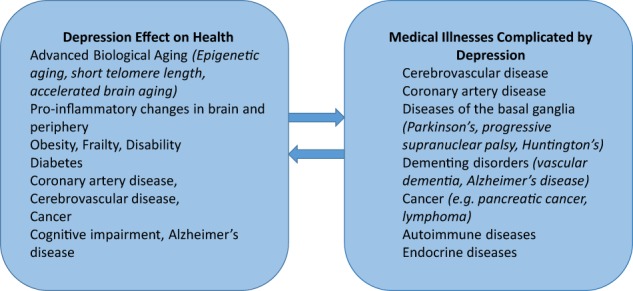
Depression predisposes to medical illnesses and advances biological aging indicated by shorter telomere length, accelerated brain aging and advanced epigenetic aging. Medical illnesses also increase the risk of late-life depression. The reciprocal relationships of depression with aging-related and disease-related processes have generated pathogenetic hypotheses and provided treatment targets. Targeting risk factors of vascular disease in mid-life is a logical approach in prevention of vascular depression. The depression-executive dysfunction and the vascular depression syndromes have clinical presentations and neuroimaging findings consistent with frontostriatal abnormalities. Dopamine D 2/3 agonists are effective in depression of Parkinson’s disease and their efficacy needs to be assessed in these two syndromes. Computerized cognitive remediation targeting functions of the cognitive control network may improve both executive functions and depressive symptoms of late-life major depression. Significant progress has been made in neurostimulation treatments in depressed younger adults. TMS targeting deep structures responsible for mood regulation is well tolerated by older adults and its efficacy in syndromes of late-life depression needs to be studied. Efficacious psychotherapies for late-life depression exist, but are underutilized in part because of their complexity. Streamlined, stepped psychotherapies targeting behaviors assumed to result from dysfunction of brain networks implicated in late-life depression can be easy to learn and have potential for dissemination. However, their effectiveness needs further investigation. Depression increases the risk of dementing disorders. Antidepressants are rather ineffective in treating depression of demented patients, but long-term use of antidepressants may reduce the risk of dementia. However, confirmation studies are needed.
Overview
CoChat Summary
TL;DR
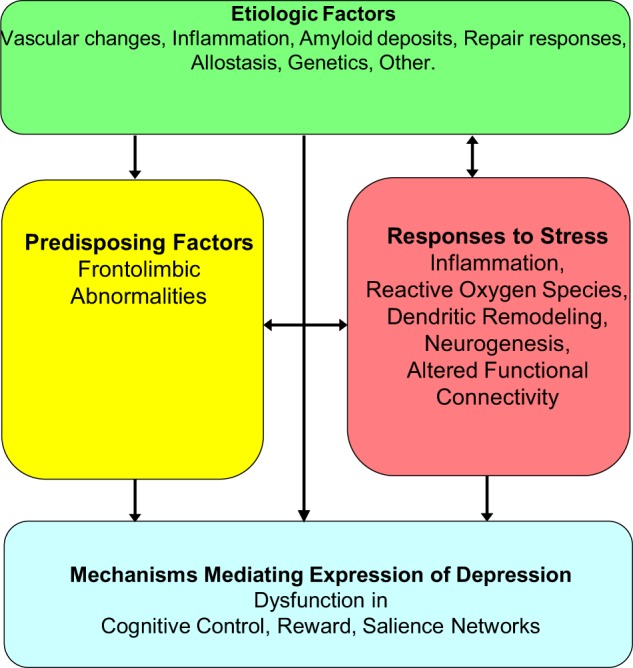
This review proposes that late-life depression reflects dysfunction in reward, salience, and cognitive control networks, with contributions from vascular disease, inflammation, and possibly amyloid/tau pathology. It argues that depression-executive dysfunction and vascular depression respond poorly to antidepressants and reviews novel treatments, while noting that many require confirmation.
Key findings
- Depression was associated with 45% higher risk for stroke (95% CI 1.29–1.63) and 25% higher risk for stroke-related mortality (95% CI 1.11–1.40).
- Approximately 30% of depressed older adults have abnormal executive test performance; depression-executive dysfunction predicts poor antidepressant response and early relapse/recurrence. In late-life major depression, antidepressant NNT was 14.4 (95% CI 8.3–50) for remission and 6.7 (95% CI 4.8–10) for response versus placebo.
- ECT remission rates are 60–80%; right unilateral ultrabrief pulse ECT plus venlafaxine led to remission in 61.7% and response in 70%, with mean 7.3 (SD 3.1) treatments. Deep TMS produced higher remission than sham rTMS (40.0 vs. 14.8%).
- In vascular depression, higher systolic blood pressure (147 vs. 134 mm Hg) increased odds of brain infarcts by 46%, gross infarct by 46%, and microinfarcts by 36%. Nimodipine augmentation achieved remission in 54% vs. 27% (NNT 4, 95% CI 2–12), and fewer recurrences (3.7% vs. 35.7%; NNT 3, 95% CI 2–9).
Methods
- Narrative review of mechanisms and treatment of late-life depression, synthesizing clinical, neuroimaging, neuropathological, biomarker, and treatment literature.
- Organizes evidence around hypotheses including depression-executive dysfunction, vascular depression, inflammation, and amyloid/tau accumulation.
- Discusses evidence-based therapies (antidepressants, ECT, psychotherapy) and novel therapies (D2/3 agonists, computerized cognitive remediation, TMS, antihypertensives, statins, anti-inflammatory agents).
Limitations
- Stated: most novel treatments are not clinically used because of inadequate empirical evidence, small effect size, cost, complexity of administration, and other factors; confirmation studies are needed.
- Stated: discrepancies in amyloid/tau studies make it unclear whether and which Alzheimer’s-related neurobiological changes relate to late-life depression; some neuropathology studies failed to link vascular brain lesions with depression.
- Evident from the text: as a narrative review, it does not report a systematic search strategy, formal quality appraisal, or meta-analytic synthesis.
Model-written summary. Check it against the paper before relying on it.
Integrity signals
Registry
Cites
Statistics
Figures
Verification
Claims the paper makes
43 Valid · 7 Not valid · 65 Not checked · 7 Own results and interpretations
At least one cited source doesn’t support this claim or points to a different paper, and none confirmed it — see the verdicts below.
In the paper
“Depressed individuals have 45% (95% CI: 1.29–1.63) higher risk for stroke than non-depressed individuals and 25% (95% CI: 1.11–1.40) higher risk for stroke-related mortality5.”
§ Mechanisms and treatment of late-life depression > Introduction
What the sources say
- Disputedcites [5] Pan A Sun Q Okereke OI Rexrode KM Hu FB Depression and risk of stroke morbidity and mortality: a meta-analysis and systematic review JAMA 2011 306 1241 1249 10.1001/jama.2011.1282 21934057 PMC3242806 sourceExperimental — accuracy not yet measured
The Abstract’s Results report a pooled hazard ratio of 1.55 (95% CI, 1.25–1.93) for fatal stroke, corresponding to a 55% higher risk—not 25%. The cited 1.25 (95% CI, 1.11–1.40) estimate is for ischemic stroke, not stroke-related mortality. (LLM, conf=0.94)
Checked by a reasoning model — may be wrong.
plainstates an association- Asserted: passes — The authors put it forward as true.
- Checkable: passes — It can be checked against evidence.
- Load-bearing: unclear — It is unclear whether the paper’s conclusions depend on it.
- Based: passes — The paper gives a reason why it holds.
- Disputed
The cited sources support only part of this claim — read each source’s verdict below.
In the paper
“Depressed individuals have 45% (95% CI: 1.29–1.63) higher risk for stroke than non-depressed individuals and 25% (95% CI: 1.11–1.40) higher risk for stroke-related mortality5.”
§ Mechanisms and treatment of late-life depression > Introduction
What the sources say
- Partly supportedcites [5] Pan A Sun Q Okereke OI Rexrode KM Hu FB Depression and risk of stroke morbidity and mortality: a meta-analysis and systematic review JAMA 2011 306 1241 1249 10.1001/jama.2011.1282 21934057 PMC3242806 sourceExperimental — accuracy not yet measured
The Abstract Results and the RESULTS section ('Depression and Risk of Stroke Morbidity & Mortality') confirm the first half: pooled adjusted HR 1.45 (95% CI, 1.29–1.63) for total stroke across 28 prospective cohort studies (n=317,540; 8,478 cases). However, the 25% figure with CI 1.11–1.40 is the source's estimate for ISCHEMIC stroke (6 studies), not for stroke-related mortality; the meta-analysis's fatal-stroke (mortality) estimate is HR 1.55 (95% CI, 1.25–1.93) from 8 studies. So the citing sentence's mortality attribution of the 1.25 (1.11–1.40) number is not supported by this source. (LLM, conf=0.85)
plainstates an association- Asserted: passes — The authors put it forward as true.
- Checkable: passes — It can be checked against evidence.
- Load-bearing: unclear — It is unclear whether the paper’s conclusions depend on it.
- Based: passes — The paper gives a reason why it holds.
- Partly supported
The cited sources support only part of this claim — read each source’s verdict below.
In the paper
“Approximately 30% of depressed older adults have abnormal performance in tests of verbal fluency, response inhibition, novel problem solving, cognitive flexibility, working memory, and/or ideomotor planning11,21 (Table 1).”
§ Mechanisms and treatment of late-life depression > Mechanisms of late-life depression > The depression-executive dysfunction syndrome hypothesis
What the sources say
- Partly supportedcites [11] Manning KJ Steffens DC State of the science of neural systems in late-life depression: impact on clinical presentation and treatment outcome J. Am. Geriatr. Soc. 2018 66 Suppl 1 S17 s23 10.1111/jgs.15353 29659005 PMC5905432 sourceExperimental — accuracy not yet measured
The Executive Dysfunction section (Underlying Network Dysfunction) does support the substance: 'Estimates suggest 30–40% of non-demented older adults with major depression exhibit signs of executive dysfunction on cognitive examination,' followed by the list of tests of verbal fluency, the Wisconsin Card Sorting Test (novel problem solving, cognitive flexibility, working memory), the Tower of London (planning) and the Stroop Color–Word Interference (response inhibition). However, the citing sentence narrows the hedged 'estimates suggest 30–40%' to a flat 'approximately 30%', drops the 'non-demented' qualifier on the population, and converts 'ideomotor planning' from the source's plain 'planning' (Tower of London); it also fuses the prevalence estimate (credited in our copy to ref. 24, Lockwood et al. 2002) with the test battery (credited to ref. 25, Lim et al. 2013) into a single claim that the 30% figure applies to abnormal performance on those named tests. No passage in our copy contradicts the claim; it is our copy's only statement of this prevalence. (LLM, conf=0.75)
- Partly supportedcites [21] Lim J Sensitivity of cognitive tests in four cognitive domains in discriminating MDD patients from healthy controls: a meta-analysis Int. Psychogeriatr. 2013 25 1543 1557 10.1017/S1041610213000689 23725644 sourceExperimental — accuracy not yet measured
Our copy supports impaired performance on tests in the named domains in MDD — the Executive function results (Stroop SMD = 0.84, WCST SMD = -0.40, Verbal Fluency SMD = -0.57) and the Memory/processing-speed sections report significant group-level deficits — but it never reports a proportion or percentage of patients with 'abnormal' performance, so the '~30%' figure has no counterpart; the analysis pools standardized mean differences only (Data extraction and analysis). The population is also not depressed older adults: 22 trials of mixed-age MDD patients (955 patients), of which only six had mean age above 60 (Results), and the age subgroup analysis found Verbal Fluency impairment in younger (<60) patients (Subgroup analysis). The domain vocabulary used here is attention, processing speed, executive function and memory (Cognitive measures), not response inhibition, novel problem solving, cognitive flexibility, working memory or ideomotor planning. (LLM, conf=0.70)
plain- Asserted: passes — The authors put it forward as true.
- Checkable: passes — It can be checked against evidence.
- Load-bearing: passes — The paper’s conclusions depend on it.
- Based: passes — The paper gives a reason why it holds.
- Partly supported
The cited sources support only part of this claim — read each source’s verdict below.
In the paper
“Depression has been associated with greater WMH severity in white matter tracts of the cingulum, uncinate fasciculus, and superior longitudinal fasciculus59,60, as well as the frontal25 and temporal lobes61.”
§ Mechanisms and treatment of late-life depression > Mechanisms of late-life depression > The vascular depression hypothesis
What the sources say
- Partly supportedcites [59] Taylor WD Fiber tract-specific white matter lesion severity Findings in late-life depression and by AGTR1 A1166C genotype Hum. Brain Mapp. 2013 34 295 303 10.1002/hbm.21445 22021115 PMC3772522 sourceExperimental — accuracy not yet measured
Taylor et al. (2013) support the cingulum part with their own result: the depressed cohort showed a significantly greater fiber-tract WML ratio only in the left upper cingulum near the cingulate gyrus (Results, 'Fiber tract WML volume differences between diagnostic cohorts'; Discussion). However, the uncinate fasciculus and superior longitudinal fasciculus associations are not this study's finding — the paper reports them as Sheline et al. (2008)'s result (Introduction) and explicitly states in the Discussion that 'our findings differ from a prior study, where LLD was associated with greater WML volume in multiple fiber tracts, including the SLF, IFO, ILF, and UNC.' So the citation is offered for a multi-tract association that this source only relays (and contrasts with its own data), while its own contribution is the cingulum localization. The frontal/temporal-lobe portion of the sentence carries separate citations (25, 61) and is not judged here, though the Introduction does note that most studies link frontal WMLs to late-life depression via other works. (LLM, conf=0.78)
- Not checked yetcites [60] Sheline YI Regional white matter hyperintensity burden in automated segmentation distinguishes late-life depressed subjects from comparison subjects matched for vascular risk factors Am. J. Psychiatry 2008 165 524 532 10.1176/appi.ajp.2007.07010175 18281408 PMC4118770 source
- Not checked yetcites [25] Taylor WD Localization of age-associated white matter hyperintensities in late-life depression Prog. Neuropsychopharmacol. Biol. Psychiatry 2003 27 539 544 10.1016/S0278-5846(02)00358-5 12691791 source
plainstates an association- Asserted: passes — The authors put it forward as true.
- Checkable: passes — It can be checked against evidence.
- Load-bearing: passes — The paper’s conclusions depend on it.
- Based: passes — The paper gives a reason why it holds.
- Partly supported
Every source the paper cites for this claim was checked and supports it.
In the paper
“Cerebrovascular risk factors are associated with WMH in healthy young adults42.”
§ Mechanisms and treatment of late-life depression > Mechanisms of late-life depression > The vascular depression hypothesis
What the sources say
- Supportedcites [42] Williamson W Association of cardiovascular risk factors with mri indices of cerebrovascular structure and function and white matter hyperintensities in young adults JAMA 2018 320 665 673 10.1001/jama.2018.11498 30140877 PMC6142949 source
The Abstract (Conclusions and Relevance, p. 4) states that in young adults without clinical evidence of cerebrovascular disease, modifiable cardiovascular risk factors were associated with MR indices of cerebral vessel structure and function and with white matter hyperintensities. The Abstract Results (p. 3) likewise report that white matter hyperintensity count correlated with cardiovascular risk factors in univariable and multivariable models in participants of mean age 25, and the Discussion (p. 13) quantifies a ~20% difference in lesion burden between lowest and highest risk scores. The claim's 'healthy young adults' matches the paper's own population descriptor; only the wording differs ('cerebrovascular' vs the paper's 'modifiable cardiovascular' risk factors). (LLM, conf=0.90)
plainstates an association- Asserted: passes — The authors put it forward as true.
- Checkable: passes — It can be checked against evidence.
- Load-bearing: unclear — It is unclear whether the paper’s conclusions depend on it.
- Based: passes — The paper gives a reason why it holds.
- Supported
77 more claims · 34 with their cited sources checked
Create a free account to see all 122 claims and to verify the 102 references still open.
- It may state two separate claims as one. 33
- Probably not a substantial claim. 8
Claims other papers make about this one
Each is checked against this paper’s own text: does it say what the citing paper says it does?
The source backs part of the claim, not all of it — or backs it for a different population, condition or comparison.
In the citing paper
“This is in line with the extensive literature indicating a favorable outcome after adequate treatment in LLD [39].”
From Preliminary evidence for preserved synaptic density in late-life depression (2024) · cites this paper as [39]
Experimental — accuracy not yet measuredThe cited source says what the claim attributes to it.
In the citing paper
“As the first-line pharmacological interventions, selective serotonin reuptake inhibitors exhibit some efficacy in alleviating depressive symptoms, but their ability to address EFD in LLD patients remains limited.4”
From Can Intermittent Theta-Burst Stimulation of Dorsolateral Prefrontal Cortex Relieve Executive Dysfunction in Patients With Late-Life Depression? (2024) · cites this paper as [4]
The cited source says what the claim attributes to it.
In the citing paper
“Notably, the presence of EFD is indicative of resistance to antidepressant treatment, increased disability, poor quality of life, and an elevated susceptibility to suicide.3,4”
From Can Intermittent Theta-Burst Stimulation of Dorsolateral Prefrontal Cortex Relieve Executive Dysfunction in Patients With Late-Life Depression? (2024) · cites this paper as [4]
The cited source says what the claim attributes to it.
In the citing paper
“As the first-line pharmacological interventions, selective serotonin reuptake inhibitors exhibit some efficacy in alleviating depressive symptoms, but their ability to address EFD in LLD patients remains limited.4”
From Can Intermittent Theta-Burst Stimulation of Dorsolateral Prefrontal Cortex Relieve Executive Dysfunction in Patients With Late-Life Depression? (2024) · cites this paper as [4]
The cited source says what the claim attributes to it.
In the citing paper
“Notably, the presence of EFD is indicative of resistance to antidepressant treatment, increased disability, poor quality of life, and an elevated susceptibility to suicide.3,4”
From Can Intermittent Theta-Burst Stimulation of Dorsolateral Prefrontal Cortex Relieve Executive Dysfunction in Patients With Late-Life Depression? (2024) · cites this paper as [4]
2 more claims about this paper
Create a free account to see every claim other papers make about this one.
Citations
Cites
Inflammation and Its Discontents: The Role of Cytokines in the Pathophysiology of Major Depression
Miller, A. H., Maletic, V., & Raison, C. L. (2009) · Biological Psychiatry · doi:10.1016/j.biopsych.2008.11.029 · Cited by 3,848
Cipriani, A., Furukawa, T. A., Salanti, G., Chaimani, A., Atkinson, L. Z., Ogawa, Y., Leucht, S., Ruhe, H. G., Turner, E. H., Higgins, J. P. T., et al. (2018) · The Lancet · doi:10.1016/s0140-6736(17)32802-7 · Cited by 3,541
Slavich, G. M., & Irwin, M. R. (2014) · Psychological Bulletin · doi:10.1037/a0035302 · Cited by 2,206
Alexopoulos, G. S. (2005) · The Lancet · doi:10.1016/s0140-6736(05)66665-2 · Cited by 2,024
Self-citation'Vascular Depression' Hypothesis
Alexopoulos, G. S. (1997) · Archives of General Psychiatry · doi:10.1001/archpsyc.1997.01830220033006 · Cited by 1,843
Self-citationRaison, C. L., Rutherford, R. E., Woolwine, B. J., Shuo, C., Schettler, P., Drake, D. F., Haroon, E., & Miller, A. H. (2013) · JAMA Psychiatry · doi:10.1001/2013.jamapsychiatry.4 · Cited by 1,617
Peripheral cytokine and chemokine alterations in depression: a meta‐analysis of 82 studies
Köhler, C. A., Freitas, T. H., Maes, M., de Andrade, N. Q., Liu, C. S., Fernandes, B. S., Stubbs, B., Solmi, M., Veronese, N., Herrmann, N., et al. (2017) · Acta Psychiatrica Scandinavica · doi:10.1111/acps.12698 · Cited by 1,443
Sertraline treatment of major depression in patients with acute MI or unstable angina
Glassman, A. H. (2002) · JAMA · doi:10.1001/jama.288.6.701 · Cited by 1,414
Mood disorders and allostatic load
McEwen, B. S. (2003) · Biological Psychiatry · doi:10.1016/s0006-3223(03)00177-x · Cited by 1,135
Potential US Population Impact of the 2017 ACC/AHA High Blood Pressure Guideline
Muntner, P., Carey, R. M., Gidding, S., Jones, D. W., Taler, S. J., Wright, J. T., & Whelton, P. K. (2018) · Circulation · doi:10.1161/circulationaha.117.032582 · Cited by 942
Research works printed but not linked: 1
- NAS. Standrards for Psychosocial Interventions. 2015 Washington, D.C NAS
Cited by
Items 601–690 of 690
Ma, C., Xu, H., & Zhao, X. (2026) · Experimental Aging Research · doi:10.1080/0361073x.2026.2759219
Evaluating the role of inflammation on functioning-related outcomes
Lu, W. (2023) · theses.fr (ABES) · doi:10.70675/5820b815z2643z493bz9a4ezce649314554e
Touron, E. (2022) · theses.fr (ABES) · doi:10.70675/505f7db9zd7eez4ff2zb3bazb6577a6b21e5
Chapter 1. Introduction to Late-Life Depression
Walaszek, A. (2022) · American Psychiatric Association Publishing eBooks · doi:10.1176/appi.books.9781615379736.lg01
Multimodale neurobeeldvorming van breinveroudering biomerkers in depressie bij ouderen
Vande Casteele, T. (2025) · Lirias
Understanding Brain Aging Through Behavioural and Microglial Changes: A Lifespan ApproachPreprint
Sisti, M. M., Cervellini, S., Peralta, F., Dolcetti, F. J. C., Basmadjian, O. M., Herrera, M. L., & Bellini, M. J. (2026) · SSRN Electronic Journal · doi:10.2139/ssrn.6148981
Abdullahh, T., & Sihobing, M. (2026) · Magenta Journal De Healthymedi · doi:10.37899/mjdh.v3i1.326
Ho, N. C. W. (2025) · TSpace (University of Toronto)
Marawi, T. (2023) · TSpace (University of Toronto)
Physiological Changes in Elderly and Challenges to Global Health Policy
Farhan, F. S. (2026) · IGI Global eBooks · doi:10.4018/979-8-3373-9094-9.ch010
Lorenzón, N. (2025) · Repositori digital de la UPF (Universitat Pompeu Fabra)
Forn Villanova, M. L. (2024) · Tesis Doctorals en Xarxa (Consorci de Serveis Universitaris de Catalunya)
Cakmak, J. D. (2021) · Scholarship@Western (Western University)
Durantel, T. (2023) · theses.fr (ABES) · doi:10.70675/f102fcd1z3881z4045zb4daz37cb40cb4292
Behavioural activation for depressed older adults in primary care
Janssen, N. P. (2024) · Radboud Repository (Radboud University)
Pharmacogenetics of venlafaxine response in older adults with depression and chronic lower back pain
Kronenbuerger, M., Magarbeh, L., Kloiber, S. M., Tavakoli, E., Gorbovskaya, I., Tiwari, A., Kennedy, J. L., Karp, J. F., Müller, D. J., & Elsheikh, S. S. M. (2026) · Pharmacogenomics · doi:10.1080/14622416.2026.2669395
Depressão: características clínicas e manejo para enfermeiros
Andreu, J. M., Marquez, D. D. S., da Silva, W. R., de França, C. E., Gonçalves, I. C. D. P., dos Santos, G. G., da Silva, J. J. S., dos Santos, A. R., dos Santos, B. H., & Lima, A. D. F. M. (2025) · Global Clinical Research Journal · doi:10.5935/2763-8847.20210084
Ratão, C. M. (2021) · Portuguese National Funding Agency for Science, Research and Technology (RCAAP Project by FCT)
Arnison, T., Nordin, N., & Nordenskjöld, A. (2026) · European Psychiatry · doi:10.1192/j.eurpsy.2026.12248
Mueller, C., Orgeta, V., von Gunten, A., Vandel, P., Ma, R., Stewart, R. J., & Moyano, B. P. (2026) · International Psychogeriatrics · doi:10.1016/j.inpsyc.2026.100314
Li, L. (2026) · Undergraduate Research in Natural and Clinical Science and Technology (URNCST) Journal · doi:10.26685/urncst.932
Ecological momentary assessment for assessing depression in advanced dementia: a pilot study
Niculescu, I., Niculescu, I., Arora, T., Quirt, H., Borsook, T. K., Green, R., Ford, B. Q., & Iaboni, A. (2020) · Journal of the American Medical Directors Association · doi:10.1016/j.jamda.2020.01.084
O efeito da ansiedade e da depressão nas funções cognitivas ao longo do envelhecimento
Alencar, A. (2024) · Portuguese National Funding Agency for Science, Research and Technology (RCAAP Project by FCT)
Apathy in late-life depression : new biomarkers using actimetry and magnetic resonance imaging
Roy, J.-C. (2023) · theses.fr (ABES) · doi:10.70675/9594efe4z6b23z4b61z8d1bz946944a5115d
Öktem, M., Yurtseven, B., Aydemir, E., & Ayaz, F. (2026) · Molecular Biology Reports · doi:10.1007/s11033-026-12656-3
Wang, Z., Wu, C., & Jiang, X. (2026) · Behavioral Medicine · doi:10.1080/08964289.2026.2751215
Beery, D. M. (2023) · ResearchWorks at the University of Washington (University of Washington)
The new normal: neural network adaptations in late-life depression
Haroon, E., & Miller, A. H. (2025) · Neuropsychopharmacology · doi:10.1038/s41386-025-02145-9
Voigts, J., Niederreiter, L., Huber, R., & Kowarschik, S. (2026) · BMC Complementary Medicine and Therapies · doi:10.1186/s12906-026-05307-4
Jekpoo, S., Booncharoen, K., Prompila, S., Wongpakaran, T., Wang, H., & Wongpakaran, N. (2026) · Frontiers in Psychiatry · doi:10.3389/fpsyt.2026.1912953
Hao, H., Deng, Y., Xu, K., Liu, Y., & Steenland, K. (2026) · Nature Mental Health · doi:10.1038/s44220-025-00524-1
Kong, L., Zhao, G., Wang, S., Feng, L., Mao, G., & Wu, D. (2026) · International Psychogeriatrics · doi:10.1016/j.inpsyc.2026.100307
Palacios, V. A. F., Vizuete, R. E. T., & Verdugo, B. A. G. (2026) · Revista horizonte académico · doi:10.70208/3007.8245.v6.n3.628
Lee, G. S., Graham, D. L., Noble, B. L., Trammell, T. S., McCarthy, D. M., Anderson, L. R., Rubinstein, M., Bhide, P. G., & Stanwood, G. D. (2022) · doi:10.3389/fnbeh.2021.815713.s002
Wadkar, P., Giram, P. S., Shirale, S. S., & Umbare, S. V. (2026) · International journal of research and scientific innovation · doi:10.51244/ijrsi.2026.1305000231
Cognitive function in depression: longitudinal perspectives
Price, G. J. (2026) · Spiral (Imperial College London) · doi:10.25560/131176
Chatzikostopoulos, A., Moraitou, D., Pateras, K., Manafi, G., Τσολάκη, Α., Papantoniou, G., Katsouri, I.-G., Sofologi, M., Tsentidou, G., Papadopoulos, E., et al. (2026) · Scientific Reports · doi:10.1038/s41598-026-76646-y
Kolobaric, A. (2024) · D-Scholarship@Pitt (University of Pittsburgh)
A Brain-Friendly Life: How to Manage Cognitive Overload and Reduce Glitching
Menchola, M. (2024) · Routledge eBooks · doi:10.4324/9781003409311
Yakovleva, O. B., Сафарова, Т. П., & Гаврилова, С. И. (2022) · Современная терапия психических расстройств · doi:10.21265/psyph.2022.56.11.005
Zenerato, J., Rodrigues, W., & Lima, L. D. D. S. C. (2026) · Research Society and Development · doi:10.33448/rsd-v15i10.51820
Influence of Priming Effect on the Choice of Statements in the Beck Depression InventoryPreprint
Midlovets, K. K., Krasnienkov, D. S., In, K., Karasevych, N., Khodakovskaya, M., Мельник, Н. А., Papurina, T., Kybenko, D. O., Slipchenko, M., & Атраментова, Л. А. (2025) · Research Square · doi:10.21203/rs.3.rs-7205503/v1
A Multi-country Analysis of the Treatment Options for Late-life Depression in Geriatric Patients
Konidala, C., Sneed, K., & Pathak, Y. V. (2022) · Acta Scientific Medical Sciences · doi:10.31080/asms.2022.06.1285
Антидепрессанты и риск развития деменции у пожилых пациентов
Галямова, К. И., Миронов, С. Е., & Кудряшов, Н. В. (2023) · Экспериментальная и клиническая фармакология · doi:10.30906/0869-2092-2023-86-01-24-30
Zhou, Z., Zhang, J., & Zhang, H. (2026) · Brain Behavior and Immunity · doi:10.1016/j.bbi.2026.107272
Relationships between Covid-19 phobia, geriatric depression, and anxiety in the elderly
Kanpara, D. (2022) · Istanbul Kent University Institutional Repository
López-Sánchez, J. D., Granados-Ramos, D. E., & Bernal‐Morales, B. (2026) · Archivos de Neurociencias · doi:10.24875/anc.m25000046
Moyano, B. P., Orgeta, V., von Gunten, A., Vandel, P., Ma, R., Stewart, R., & Mueller, C. (2026) · UCL Discovery (University College London)
Gangguan Fungsi Kognitif Sebagai Faktor Risiko Utama Kejadian Depresi Pada Lansia
Latasya, C. D., Turana, Y., Handajani, Y. S., & Barus, J. (2024) · Damianus Journal of Medicine · doi:10.25170/djm.v23i2.4356
Huang, S., Li, Y., Shen, J., Liang, W., & Li, C. (2023) · doi:10.3389/fpsyt.2023.1168516.s001
Gupta, R. V., Gupta, S., Lakhanpal, S., Misra, J., Singh, K. K., & Abomughaid, M. M. (2026) · Molecular Neurobiology · doi:10.1007/s12035-026-06341-6
Zeng, Y., Yuan, T., Wang, Z., Mao, X., Tang, D., Liang, Y., Shi, Q., Liu, P., Liu, D., Hu, F.-F., et al. (2026) · Research Square · doi:10.21203/rs.3.rs-11522501/v1
Relações entre Depressão e Disfunção Executiva nos Adultos Idosos: Revisão da Literatura
Leite, A. I. S. (2021) · Portuguese National Funding Agency for Science, Research and Technology (RCAAP Project by FCT)
Relationships Between Depression and Executive Dysfunction in Older Adults: Literature Review
Leite, A. I. S. (2020) · Portuguese National Funding Agency for Science, Research and Technology (RCAAP Project by FCT)
[Psychopathology in older adults: inter-individual variability, specific presentation and ageism].
van Alphen, S. P. J., Videler, A. C., & Sobczak, S. (2022) · Research Publications (Maastricht University)
Analysis of the Clinical Manifestation and Medication Plan of Elderly Depression Patients
董, 琳. (2022) · Advances in Clinical Medicine · doi:10.12677/acm.2022.12121639
Jae, Y. M. (2022) · Neuroscience Applied · doi:10.1016/j.nsa.2022.100496
m’rad, M. B., Jacqdom, L., Berisha, F., Sekhon, H., Rivest‐Beauregard, M., & Brunet, A. (2023) · Journal of Affective Disorders · doi:10.1016/j.jad.2023.07.096
Study on Applications of Radiomics in the Clinical Evaluation of Parkinson’s Disease
韦, 福. (2024) · Advances in Clinical Medicine · doi:10.12677/acm.2024.14102770
Prawesti, P. E. A. (2024) · Majalah Kedokteran Neurosains Perhimpunan Dokter Spesialis Saraf Indonesia · doi:10.52386/neurona.v40i1.399
Véras, Y. P. R., Junio, F. P. C., Guedes, F. C. D. A., Mandarino, N. R., de Chaves, T. A., & Nogueira, G. T. M. (2025) · Revista Ibero-Americana de Humanidades, Ciências e Educação · doi:10.51891/rease.v11i9.21023
An Insight to Geriatric Depression Jarajanya Vishad and its Management
Patel, A., Sharma, K., & Sarakale, G. (2025) · AYUSHDHARA · doi:10.47070/ayushdhara.v12i3.1900
Prevalencia de depresión en mayores de 65 años en el Hospital San Juan de Dios de Zaragoza
Blanco Tolosana, I., & Granada López, J. M. (2023) · Zaguan (University of Zaragoza Repository)
Paesen, L. (2022) · Ghent University Academic Bibliography (Ghent University)
Fontes, N. O. (2025) · Journal of Social Issues and Health Sciences (JSIHS) · doi:10.5281/zenodo.18086053
Iseli, G. C., Castellanos, J. F. V., Coynel, D., Stone, J. M., (23277202), M. Z. S., Allen, P., Zelaya, F. O., Derrien, M., Lang, U. E., Debbané, M., et al. (2026) · Neuroscience Applied · doi:10.1016/j.nsa.2025.105585
Repercussões do consumo de drogas na cognição, humor e suporte familiar de idosos
de Abrantes, G. G. (2024) · LA Referencia (Red Federada de Repositorios Institucionales de Publicaciones Científicas)
韩宇男, 马, 宁., 廖, 静., 祁, 婷., & 杨, 俊. (2026) · 医学与健康科学研究 · doi:10.65196/wcqtcq30
Jihad, A. T. A., Hidayat, F., & Pontoh, L. M. (2026) · Surabaya Physical Medicine and Rehabilitation Journal · doi:10.20473/spmrj.v8i1.67434
Delgado, T. F., & Cardona, L. I. L. (2021) · Repositorio Institucional-Universidad Catolica de Manizales
Quispe, N., Ramírez, A., Ibanez, A., Gutiérrez, E. L., Parodi, J. F., & Runzer-Colmenares, F. M. (2026) · Revista chilena de neuro-psiquiatría · doi:10.4067/s0717-92272026000100017
Depression Heterogeneity as a Confounder in Ketamine Response for Late-Life Depression
Lind, J., Hophing, M., Brody, B. D., & Kanellopoulos, D. (2026) · American Journal of Geriatric Psychiatry · doi:10.1016/j.jagp.2026.07.015
Olfactory Groove Meningioma Mimicking Late-Life Depression: A Case Report
da Silva, A., Matias-Martins, C., & Fernandes, I. G. (2026) · Cureus · doi:10.7759/cureus.113890
Geriatric Depression: Diagnostic and Treatment Approaches
Yılmaz, Ö. F. (2023) · Akademisyen Kitabevi eBooks · doi:10.37609/akya.2539.c18198
Pandemic One Year Later: A Reflection on the Current and Impending Mental Health Crises
Mitchell, C. (2021) · Trinity Student Medical Journal
RASTREAMENTO DA DEPRESSÃO EM IDOSOS ASSISTIDOS EM CENTRO DIA
Damasceno, A. B. O., Neta, M. J. M. D. C., de Farias, G. M. M., Frota, B. B. B., Frota, L. B., Parente, F. L., Maciel, C. M., & Farias, V. E. (2026) · Revista Contemporânea · doi:10.56083/rcv6n10-030
Amygdala Persistence in Aging: Replication and Extension of Puccetti et al. (2021)Preprint
Turnbull, A. G., Ai, M., Gross, J. J., & Vankee-Lin, F. (2026) · bioRxiv (Cold Spring Harbor Laboratory) · doi:10.64898/2026.10.14.759196
Ruan, Y., Li, X., & Wangliu, Y. (2026) · Aging & Mental Health · doi:10.1080/13607863.2026.2754851
Understanding and addressing late-life depression: A multi-faceted approach rooted in evidence
Kotzé, C. (2026) · International Psychogeriatrics · doi:10.1016/j.inpsyc.2026.100315
Sandeep, S. M., Soman, D., & Sreejith, K. (2026) · Brain Behavior and Immunity Integrative · doi:10.1016/j.bbii.2026.100208
Ma, S. L., Tang, K. T., Lau, N. C. T., Chiu, C. L. H., Lin, C., Lam, L. C. W., & Lee, A. T. C. (2024) · doi:10.3389/fpsyt.2023.1287822.s002
Zhai, L., Wang, J., Liu, Y., & Zhang, H. (2022) · doi:10.3389/fpsyt.2022.747334.s001
Zheng, Y., Xiao, L., Wang, H., Chen, Z., & Wang, G. (2022) · doi:10.3389/fpsyt.2022.895892.s001
Xu, D., Gao, P., Wang, W., Liu, H., He, W., Su, T., Zheng, Y., Peng, Z., Tan, H., Yang, M., et al. (2026) · Research Square · doi:10.21203/rs.3.rs-10672734/v1
Metadata
- Authors
- Alexopoulos, G. S.
- Affiliations
- Cornell University (US)
- Corresponding author
- Alexopoulos, George S.
- Venue
- Translational Psychiatry
- Published
- 2019-08-05
- Volume
- 9
- Issue
- 1
- Pages
- 188-188
- ISSN
- 2158-3188 (ISSN-L)
- PMC
- PMC6683149
- OpenAlex
- W2964643970
- Semantic Scholar
- 7d44386c13149a19ac9b0ffb54694253f038ba2a
- Cited by
- 592
- References
- 201
- Citations by year
- 2026: 87 · 2025: 95 · 2024: 111 · 2023: 99 · 2022: 78 · 2021: 86 · 2020: 34
- FWCI
- 6.34
- Type
- journal article
- Language
- en
- Open access
- gold
- doi.org
- Licence
- cc-by
- creativecommons.org/licenses/by/4.0 (tdm)
- creativecommons.org/licenses/by/4.0 (vor)
- Locations
- Translational Psychiatry (publishedVersion, cc-by)
- PubMed Central (publishedVersion, cc-by)
- PubMed (publishedVersion)
- DOAJ (DOAJ: Directory of Open Access Journals) (submittedVersion)
- Funders
- U.S. Department of Health & Human Services | NIH | National Institute of Mental Health (P50 MH113838, R01 MH102252)
- Topics
- Health Sciences › Medicine › Pharmacology (medical) › Treatment of Major Depression
- Life Sciences › Neuroscience › Neurology › Transcranial Magnetic Stimulation Studies
- Health Sciences › Medicine › Psychiatry and Mental health › Dementia and Cognitive Impairment Research
- Keywords
- geriatric depression, vascular depression, telomere length, brain aging, epigenetic aging, executive dysfunction, Parkinson's disease, cognitive control network, transcranial magnetic stimulation, psychotherapy, dementia risk, antidepressants, older adults
- MeSH terms
- Aged, Major Depressive Disorder, Humans, Parkinson Disease, Vascular Diseases
About these checks
Registry, retraction, Cites and statistics results are computed, not judged, with one exception: a printed reference that no index lists is read once by a model before it counts as a citation error. Claims are extracted by a model and kept only when their quote appears verbatim in the text; each cited source is then checked, with a model’s help, for whether it says what the claim relies on. Those verdicts can be wrong — read the claim’s quote and the cited source before relying on one.
The claim verdicts this report counts are experimental: their accuracy is not yet measured.
A language model drew the claims from the paper on 2026-10-05, under version 3 of the claim definition (model deepseek-v4.1-flash, prompt extract-v3).
A second model labelled each claim on 2026-10-05 (model jev-1.13-20260917, definition revision gold-guideline-v0.2).
Cited sources are checked with a language model’s help (gpt-6-sol and qwen3.8-omni-flash).
Statistics and arithmetic are recomputed, not judged.
Confidence bands are shown only for fields calibrated on our annotated test set. None is calibrated yet, so no band is shown.
What counts as a claim ›How we measure confidence ›How we check this ›
Are you an author, or do you see a problem with this page? Request a review
Data sources
Bibliographic data: Semantic Scholar, OpenAlex, Crossref.
Contains information from the Semantic Scholar Academic Graph Datasets, made available under the ODC Attribution License (ODC-BY 1.0).
Semantic Scholar’s data is described in: Kinney, R., et al. (2023). The Semantic Scholar Open Data Platform. arXiv:2301.10140.
