

Genetic evidence of gender difference in autism spectrum disorder supports the female-protective effect
Open accessThe DOI matches its Crossref record; 80 of the 80 references it cites were found in a registry or an index.
Abstract
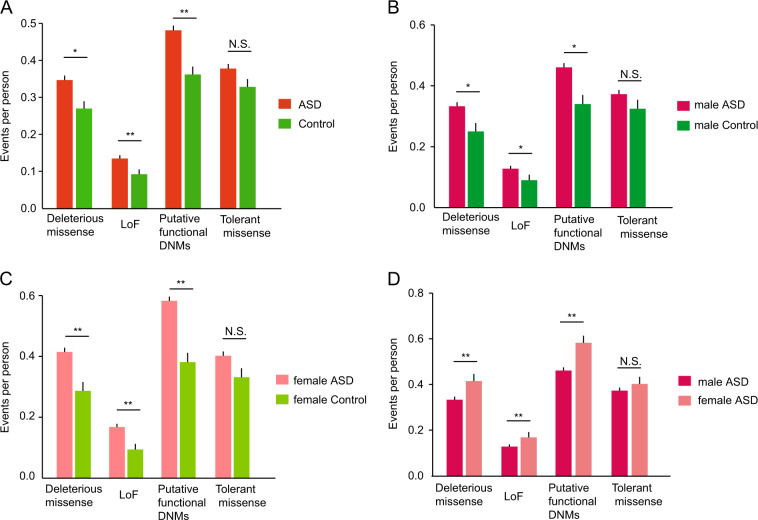
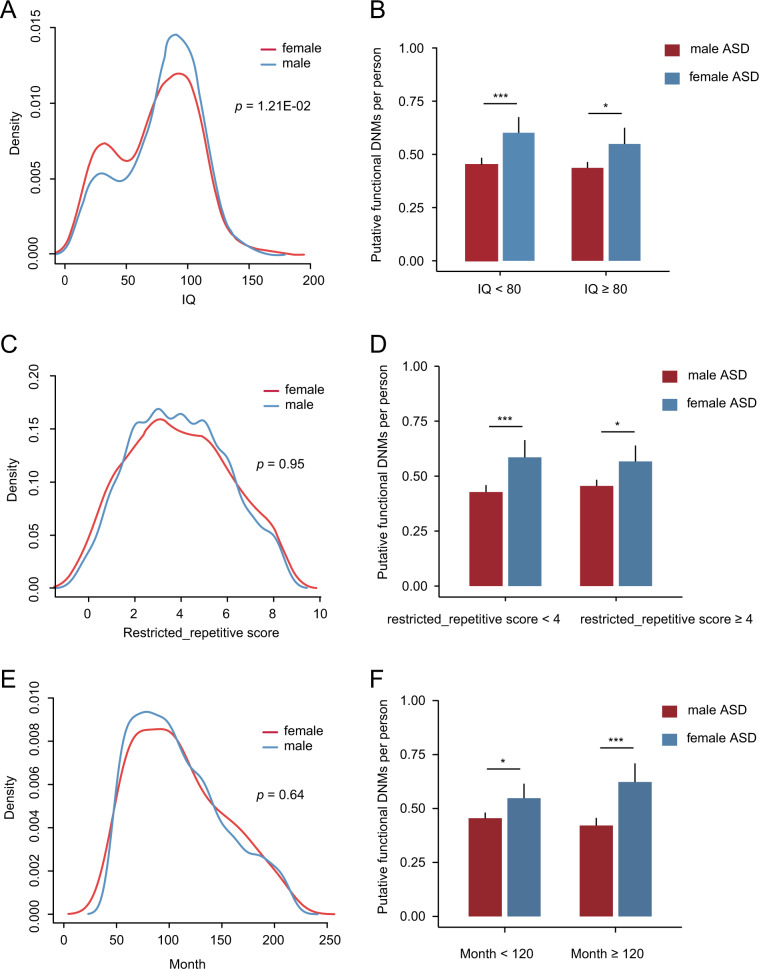
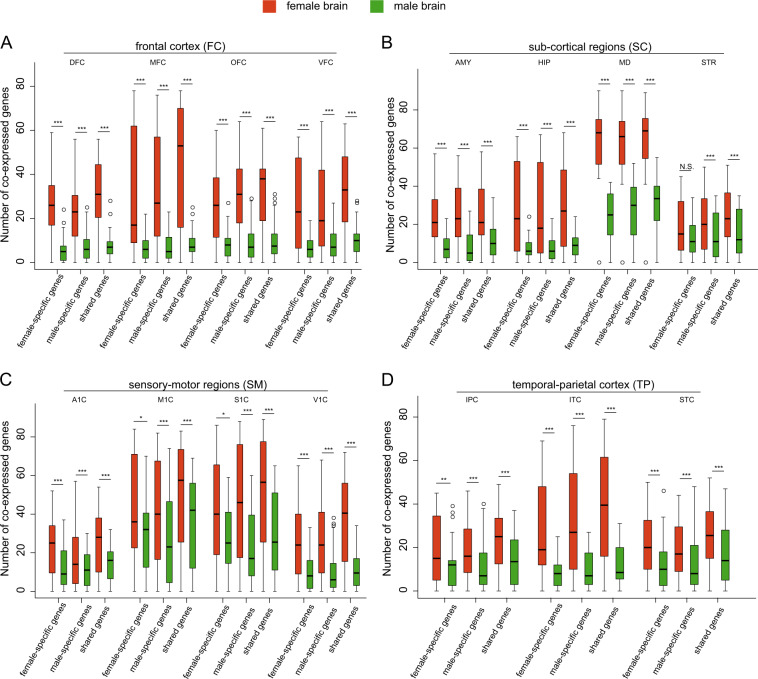
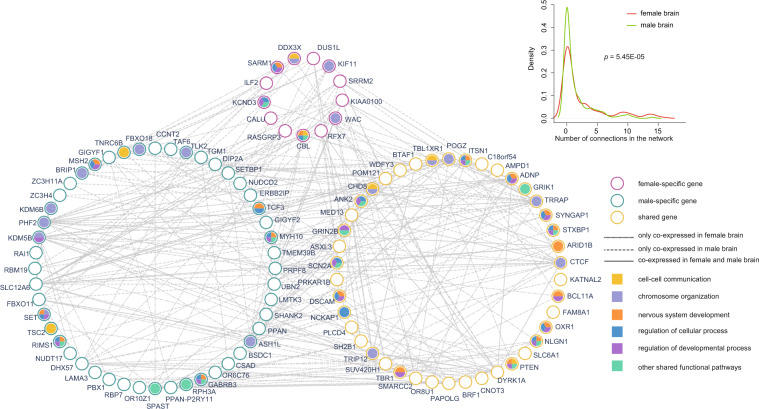
Autism spectrum disorder (ASD) is a complex neurodevelopmental disorder with a male-to-female prevalence of 4:1. However, the genetic mechanisms underlying this gender difference remain unclear. Mutation burden analysis, a TADA model, and co-expression and functional network analyses were performed on de novo mutations (DNMs) and corresponding candidate genes. We found that the prevalence of putative functional DNMs (loss-of-function and predicted deleterious missense mutations) in females was significantly higher than that in males, suggesting that a higher genetic load was required in females to reach the threshold for a diagnosis. We then prioritized 174 candidate genes, including 60 shared genes, 91 male-specific genes, and 23 female-specific genes. All of the three subclasses of candidate genes were significantly more frequently co-expressed in female brains than male brains, suggesting that compensation effects of the deficiency of ASD candidate genes may be more likely in females. Nevertheless, the three subclasses of candidate genes were co-expressed with each other, suggesting a convergent functional network of male and female-specific genes. Our analysis of different aspects of genetic components provides suggestive evidence supporting the female-protective effect in ASD. Moreover, further study is needed to integrate neuronal and hormonal data to elucidate the underlying gender difference in ASD.
Overview
The claims and statistics of this paper haven’t been checked yet.
Free: it reads the open-access text and checks the first 5 claims that cite a source we can check. Create a free account to check every claim.
Integrity signals
Registry
Cites
Statistics
Figures
Verification
Claims the paper makes
The claims and statistics of this paper haven’t been checked yet.
Free: it reads the open-access text and checks the first 5 claims that cite a source we can check. Create a free account to check every claim.
Claims other papers make about this one
Each is checked against this paper’s own text: does it say what the citing paper says it does?
The source backs part of the claim, not all of it — or backs it for a different population, condition or comparison.
In the citing paper
“Due to potential sexual dimorphisms in brain structural lifespan trajectories, sex is often considered a confounding factor in neuroimaging studies and individual analyses need to be conducted by sexes (e.g., depression, autism) [42, 43].”
From Confound Controlled Multimodal Neuroimaging Data Fusion and Its Application to Developmental Disorders (2025) · cites this paper as [43]
Experimental — accuracy not yet measuredThe cited source says what the claim attributes to it.
In the citing paper
“The possibility of a “female protective effect” (FPE) against ASD has been described extensively and has received consistent support from the results of genetic studies of de novo variants.4, 5, 6, 7, 8, 9, 10, 11, 12, 13”
From The female protective effect against autism spectrum disorder (2022) · cites this paper as [13]
The cited source says what the claim attributes to it.
In the citing paper
“Many types of ASD-associated de novo variants are observed more frequently in female cases.4, 5, 6, 7, 8, 9, 10, 11, 12, 13”
From The female protective effect against autism spectrum disorder (2022) · cites this paper as [13]
Self-check
Percentages, sums and reported differences re-computed from the paper’s own numbers.
The self-check needs the paper’s full text.
Citations
Cites
Cytoscape: A software Environment for integrated models of biomolecular interaction networks
Shannon, P., Markiel, A., Ozier, O., Baliga, N. S., Wang, J. T., Ramage, D., Amin, N., Schwikowski, B., & Ideker, T. (2003) · Genome Research · doi:10.1101/gr.1239303 · Cited by 51,888
ANNOVAR: functional annotation of genetic variants from high-throughput sequencing data
Wang, K., Li, M., & Hakonarson, H. (2010) · Nucleic Acids Research · doi:10.1093/nar/gkq603 · Cited by 14,621
REVEL: An Ensemble Method for Predicting the Pathogenicity of Rare Missense Variants
Ioannidis, N. M., Rothstein, J. H., Pejaver, V., Middha, S., McDonnell, S. K., Baheti, S., Musolf, A., Li, Q., Holzinger, E., Karyadi, D., et al. (2016) · The American Journal of Human Genetics · doi:10.1016/j.ajhg.2016.08.016 · Cited by 2,908
Synaptic, transcriptional and chromatin genes disrupted in autism
Study, T. D., De Rubeis, S., Autism, H. M. C. F., UK10K Consortium, The Autism Sequencing Consortium, He, X., Goldberg, A. P., Poultney, C. S., Samocha, K., Ercument Cicek, A., et al. (2014) · Nature · doi:10.1038/nature13772 · Cited by 2,746
The contribution of de novo coding mutations to autism spectrum disorder
Iossifov, I., O’Roak, B. J., Sanders, S. J., Ronemus, M., Krumm, N., Levy, D., Stessman, H. A., Witherspoon, K. T., Vives, L., Patterson, K. E., et al. (2014) · Nature · doi:10.1038/nature13908 · Cited by 2,585
Lai, M.-C., Lombardo, M. V., & Baron-Cohen, S. (2014) · The Lancet · doi:10.1016/s0140-6736(13)61539-1 · Cited by 2,371
Sporadic autism exomes reveal a highly interconnected protein network of de novo mutations
O’Roak, B. J., Vives, L., Girirajan, S., Karakoc, E., Krumm, N., Coe, B. P., Levy, R., Ko, A., Lee, C., Smith, J. D., et al. (2012) · Nature · doi:10.1038/nature10989 · Cited by 2,165
De novo mutations revealed by whole-exome sequencing are strongly associated with autism
Sanders, S. J., Murtha, M. T., Gupta, A. R., Murdoch, J. D., Raubeson, M. J., Willsey, A. J., Ercan-Sencicek, A. G., DiLullo, N. M., Parikshak, N. N., Stein, J. L., et al. (2012) · Nature · doi:10.1038/nature10945 · Cited by 2,084
The extreme male brain theory of autism
Baron-Cohen, S. (2002) · Trends in Cognitive Sciences · doi:10.1016/s1364-6613(02)01904-6 · Cited by 2,007
Patterns and rates of exonic de novo mutations in autism spectrum disorders
Neale, B. M., Kou, Y., Liu, L., Ma’ayan, A., Samocha, K. E., Sabo, A., Lin, C.-F., Stevens, C., Wang, L.-S., Makarov, V., et al. (2012) · Nature · doi:10.1038/nature11011 · Cited by 1,734
Self-citation
Cited by
Items 101–187 of 187
Tian, W., Yan, G., Zhang, X., Zhang, Y., Zhang, J., Peng, J., Zhao, W., Shui, D., Zhou, Y., Liu, T., et al. (2025) · Molecular Psychiatry · doi:10.1038/s41380-025-03172-0 · Cited by 6
Self-citationLouriachi, I., Maza, S., Attıa, A., Zhang, Y., & Mohamed, A. W. (2026) · Computers & Electrical Engineering · doi:10.1016/j.compeleceng.2026.111153 · Cited by 3
Self-citationSupplier-origin gut microbiomes affect host body weight and select autism-related behaviors
McAdams, Z. L., Gustafson, K. L., Russell, A. L., Self, R., Petry, A. L., Lever, T. E., & Ericsson, A. C. (2024) · Gut Microbes · doi:10.1080/19490976.2024.2385524 · Cited by 4
“Multiple genetic and hormonal mechanisms have been proposed to explain the strong male bias in ASD diagnoses; 40–42 however, the contribution of the GM to this sex bias in mouse models of ASD, let alone humans, is yet to be described.”
BackgroundChen, M.-T., Lu, X., Simeonsson, R. J., Marraccini, M. E., & Chang, Y.-P. (2022) · Research in Autism · doi:10.1016/j.rasd.2022.102047 · Cited by 5
Sharing parental genomes by siblings concordant or discordant for autism
Wroten, M., Yoon, S. C., Andrews, P., Yamrom, B., Ronemus, M., Buja, A., Krieger, A. Μ., Levy, D., Ye, K. Q., Wigler, M. H., et al. (2023) · Cell Genomics · doi:10.1016/j.xgen.2023.100319 · Cited by 6
Arutiunian, V., Santhosh, M., Neuhaus, E., Sullivan, C. A. W., Bernier, R., Bookheimer, S. Y., Dapretto, M., Geschwind, D. H., Jack, A., McPartland, J. C., et al. (2024) · Autism Research · doi:10.1002/aur.3193 · Cited by 4
“For the ASD population, it is hypothesized that, for example, multiple genetic factors contribute to the likelihood of developing ASD, and females may require a higher genetic load to meet diagnostic criteria (Zhang et al., 2020).”
Shariatpanahi, M., Sojoudi, Z., Khodagholi, F., Rahmati, H., Jameie, S. B., Eftekharzadeh, M., Karizmeh, M. S., Shabani, M., & Zamani, E. (2023) · International Journal of Developmental Neuroscience · doi:10.1002/jdn.10286 · Cited by 5
“Zhang et al. explained the gender effect as a “ female protective effect ” from the aspects of gene expression levels, and the efficient networks that guide specific functions (Zhang et al., 2020).”
Sex-specific modulation of safety learning in Shank2-deficient mice
Kreutzmann, J. C., Kahl, E., & Fendt, M. (2024) · Progress in Neuro-Psychopharmacology and Biological Psychiatry · doi:10.1016/j.pnpbp.2024.110973 · Cited by 4
“These findings offer a reasonable explanation for the substantial sex difference observed in the prevalence of ASD (male-to-female: 4:1; Zhang et al., 2020).”
BackgroundLiang, C., Silva, R. F., Adali, T., Jiang, R., Zhang, D., Qi, S., & Calhoun, V. D. (2025) · IEEE Transactions on Image Processing · doi:10.1109/tip.2025.3597045 · Cited by 3
“Due to potential sexual dimorphisms in brain structural lifespan trajectories, sex is often considered a confounding factor in neuroimaging studies and individual analyses need to be conducted by sexes (e.g., depression, autism) [42], [43].”
Sanrı, A., Mutlu, M. B., & Sezer, Ö. (2025) · Cytogenetic and Genome Research · doi:10.1159/000549248 · Cited by 6
“One potential explanation for this pattern is the “female protective effect,” which suggests that females have a higher threshold for expressing neuro-developmental phenotypes and therefore, when affected, are more likely to carry highly penetrant, pathogenic genomic variants [24, 25].”
Exploration of Homocysteine Metabolism and Genetics in Autism Spectrum Disorder
Rouphael, M., Bitar, T., Alarcan, H., Gerges, P., Sacre, Y., Andres, C. R., & Hleihel, W. (2025) · Nutrients · doi:10.3390/nu17233761 · Cited by 3
Social functioning in autism: a systematic review and meta-analysis
Li, S., Wang, H., Chen, G., Cheng, X., Wang, Y., Hu, W., Hamilton, A. F. D. C., Schilbach, L., Yi, L., Alaerts, K., et al. (2026) · Nature Human Behaviour · doi:10.1038/s41562-026-02457-w · Cited by 6
“Future diagnostic frameworks must address this sex bias by enhancing sensitivity to subtler presentations of autism in women and ensuring more equitable diagnostic outcomes 74,77,78 .”
Self-citationKılınç, K., Türkoğlu, S., Kocabaş, R., Güler, H. A., Yılmaz, Ç., & Büyükateş, A. (2025) · Progress in Neuro-Psychopharmacology and Biological Psychiatry · doi:10.1016/j.pnpbp.2025.111275 · Cited by 4
Matsudaira, I. Y., Yamaguchi, R., & Taki, Y. (2025) · iScience · doi:10.1016/j.isci.2025.112936 · Cited by 5
“67,68 Recent studies have suggested the involvement of mitochondrial DNA (mtDNA), which is exclusively inherited from the mother, in the pathology of ASD.”
Soccini, A. M., & Clocchiatti, A. (2025) · Electronics · doi:10.3390/electronics14214268 · Cited by 3
“At the time of the main experiment, the DAC population reflected the ASD ratio (4:1) [25,26,32], but among those eligible for the virtual reality experience (DSM-5 Level 1), all were males.”
Sex difference contributes to phenotypic diversity in individuals with neurodevelopmental disorders
Cuppens, T., Shatto, J., Mangnier, L., Kumar, A. A., Ng, A. C., Kaur, M., Bui, T. A., Leclercq, M., Droit, A., Dunham, I., et al. (2023) · Frontiers in Pediatrics · doi:10.3389/fped.2023.1172154 · Cited by 3
“We wanted to assess if differences in mutation load were present in GDD as previously reported in ASD (50).”
Resultda Silva, J. F., Honorato, M. M., Cremaschi, R. C., & Coelho, F. M. S. (2023) · Journal of Neurosciences in Rural Practice · doi:10.25259/jnrp_53_2022 · Cited by 4
“[14] In addition, boys had a lower mean age at diagnosis when compared to girls.”
Yee, E. (2023) · International Conference on Bioinformatics and Computational Biology (ICBCB) · doi:10.1109/icbcb57893.2023.10246705 · Cited by 3
“As recent research shows that autism can present differently in males and females, future studies should conduct neural pattern analysis for each sex separately [11].”
BackgroundNautiyal, H., Jaiswar, A., Jha, P. K., & Dwivedi, S. (2024) · Mammalian Genome · doi:10.1007/s00335-024-10036-5 · Cited by 5
“…in females than in males indicating the requirement of greater genetic load in females to meet the diagnostic criteria, and provided evidence for the “female protective effect”, also reported certain novel genes with specific functions related to the sex difference in ASD Zhang et al. 2020).”
Parental Skills, Assortative Mating, and the Incidence of Autism Spectrum Disorder
Daysal, N. M., Elder, T. E., Hellerstein, J. K., Imberman, S. A., & Orsini, C. (2021) · National Bureau of Economic Research · doi:10.3386/w28652 · Cited by 4
Fu, M., Berk-Rauch, H., Chatterjee, S., & Chakravarti, A. (2025) · medRxiv · doi:10.1101/2025.01.07.25320162 · Cited by 4
Prenatal exposure to extreme heat and autism in children
Luglio, D. G., Yu, X., Lin, J. C., Chow, T., Martinez, M. P., Chen, Z., Eckel, S. P., Schwartz, J. D., Lurmann, F., Pavlovic, N., et al. (2026) · The Science of The Total Environment · doi:10.1016/j.scitotenv.2026.181373 · Cited by 2
Szakal, C., & Crespi, B. J. (2026) · Autism Research · doi:10.1002/aur.70198 · Cited by 2
Cardoso, P. M., Martins, L. C., Machado, F. C., Carrada, C. F., & Scalioni, F. A. R. (2026) · Special Care in Dentistry · doi:10.1111/scd.70158 · Cited by 2
“These include structured training programs for dental professionals focusing on ASD-related behavioral management, development of referral pathways linking primary care to specialized services, and sensory-adapted dental environments to reduce distress during appointments [ 17, 18 ].”
Darvish, H., Omidvar, M. E., Ghaedi, E., & Ghaedi, H. (2020) · Meta Gene · doi:10.1016/j.mgene.2020.100784 · Cited by 3
General and Autism-Related Neurodevelopmental Difficulties in Biliary Atresia
Earl, M., Samyn, M., Blackmore, C. E., Brace, M., Day, J. M., Javed, A., Ali, J. B., Johnson, M. H., Jones, E. J. H., Dhawan, A., et al. (2025) · The Journal of Pediatrics · doi:10.1016/j.jpeds.2025.114673 · Cited by 2
ASXL3 controls cortical neuron fate specification through extrinsic self-renewal pathwaysPreprint
McGrath, B., Wu, P., Salvi, S., Girgla, N. S., Chen, X., Zhu, J., KC, R., Tsan, Y.-C., Moccia, A., Srivastava, A., et al. (2021) · bioRxiv (Cold Spring Harbor Laboratory) · doi:10.1101/2021.07.20.452995 · Cited by 6
Poluliakh, O. Y., Марчук, С. А., Митюкова, Т. А., & Докукина, Т. В. (2022) · Лабораторная диагностика Восточная Европа · doi:10.34883/pi.2022.11.2.015 · Cited by 1
Neurobiological Factors of Executive Dysfunction in Autism Spectrum Disorders
Kozunova, G. L., Zakirov, F., Rytikova, A. M., Stroganova, T. A., & Chernyshev, B. (2023) · Neuroscience and Behavioral Physiology · doi:10.1007/s11055-023-01512-7 · Cited by 2
“Early childhood autism is diagnosed four times less often in girls than boys, though severity is often greater because greater genetic load is needed for a mental disorder to manifest in girls than boys [Zhang et al., 2020].”
BackgroundComprehensive Genetic Study of a Monozygotic Triplet Discordant for Autism Spectrum Disorder
Thanseem, I., Banerjee, M., Melempatt, N., Prakash, A., Iype, M., & Anitha, A. (2024) · Neurology India · doi:10.4103/ni.ni_349_22 · Cited by 1
Li, R., & Ernst, J. (2025) · Genome biology · doi:10.1186/s13059-025-03619-1 · Cited by 3
“Potentially related, previous research found genes with putatively damaging de novo coding variants were more highly expressed in prenatal female brains than in males, suggesting potential compensatory effects in females [36].”
Ji, Y.-S., Liu, F.-Y.-E., Wei, Y., Liu, Y., Chen, K., Cui, L., Yin, A., & Wu, Y. (2025) · Schizophrenia Research · doi:10.1016/j.schres.2025.07.019 · Cited by 1
Cognitive Training of Attention and Executive Functions in Children With Autism
de Santana, A. N., & Roazzi, A. (2025) · Psico · doi:10.15448/1980-8623.2025.1.42282 · Cited by 1
Matsudaira, I. Y., & Yamaguchi, R. (2025) · Developmental Cognitive Neuroscience · doi:10.1016/j.dcn.2025.101635 · Cited by 3
“Mothers do not transmit mtDNA exclusively to sons (daughters also inherit it from their mothers); however, the SMA is associated with autism spectrum disorder (ASD) (Lepping et al., 2022; Müller et al., 2001), which is more prevalent in males (Werling et al., 2016; Zhang et al., 2020).”
Host genetic variation and gut microbiome in pediatric diseases
Meng, Y., Wang, H., Mu, D., Zeng, S., & Wang, S. (2026) · Chinese Medical Journal · doi:10.1097/cm9.0000000000003959 · Cited by 1
“…5-HTTLPR , BDNF-Val66Met , [16] MAOA-uVNTR [37] Autism spectrum disorder TSC1 , TSC2 , NF1 , NF2 , MECP2 , [41] SLC35G1 , [150] TCF4 , FOXP1 [151] Asthma ADRB2 , IL-13 , IL-4 , ORMDL3 , [55] GSTM1 , [56] IL-4RA , IFNG , IFNGR1 , STAT6 , GATA3 , TBX21 , [152] TLR9 [59] Bronchopulmonary…”
Exploring Biases in Autism Diagnostic Pathways
Woolhouse, R., & Nicholson, S. L. (2026) · Autism Research · doi:10.1002/aur.70252 · Cited by 2
“There is also some evidence to suggest that some components of female genetics may interact with the expression of autism, thus making prevalence inherently less in females (Zhang et al. 2020).”
Alruwaili, N. S., Al‐kuraishy, H. M., Al-Gareeb, A. I., Shokr, M. M., Bogari, N. M., Alhelfawi, S., Alruwaili, M., & Batiha, G. E. (2026) · Progress in Neuro-Psychopharmacology and Biological Psychiatry · doi:10.1016/j.pnpbp.2026.111774 · Cited by 2
Adaptive noise depression for functional brain network estimation
Ma, D., Peng, L., & Gao, X. (2023) · Frontiers in Psychiatry · doi:10.3389/fpsyt.2022.1100266 · Cited by 1
“However, traditional SR takes no account of the influence brought by such noise-caused error, and simply assumes that the representation error terms are identically independently distributed [i.i.d., equivalent to the L2-norm in Equation (3)].”
BackgroundMethodInfluentialBinocular rivalry in autistic and socially anxious adults
Kamhout, S., Olivier, J. M., Morris, J., Brimhall, H. R., Black, B. L., Gabrielsen, T. P., South, M., Lundwall, R. A., & Nielsen, J. A. (2023) · Frontiers in Psychiatry · doi:10.3389/fpsyt.2023.1181797 · Cited by 1
L’autisme au féminin : une énigme clinique
Houy‐Durand, E. (2024) · La Presse Médicale Formation · doi:10.1016/j.lpmfor.2024.02.003 · Cited by 1
Steroidogenic pathway in girls diagnosed with autism spectrum disorders
Janšáková, K., Hill, M., Celušáková, H., Repiská, G., Bičíková, M., Máčová, L., Polónyiová, K., Kopčíková, M., & Ostatníková, D. (2024) · PLoS ONE · doi:10.1371/journal.pone.0312933 · Cited by 2
“This sex bias may be caused by several biological or psychological aspects like already described camouflaging of female individuals, non-adapted diagnostical test for females or it is questionable if females are truly less affected by ASD and/or more protected from ASD development [3–5].”
The 'Aha' Moment: Exploring autism narratives as told by the mothers of autistic girls
Wickens, M. V. (2022) · Murmurations Journal of Transformative Systemic Practice · doi:10.28963/4.2.4 · Cited by 2
Nani, D. (2022) · Jurnal Keperawatan Soedirman · doi:10.20884/1.jks.2022.17.1.5312 · Cited by 1
“ASD is a complex neurodevelopmental disorder with a maleto-female occurrence ratio of 4:1 (Lai, Lombardo, & BaronCohen, 2014); (Zhang et al., 2020).”
BackgroundZhang, X. P., Yuan, Y., & Yang, Z. (2025) · Research Square · doi:10.21203/rs.3.rs-6868181/v1 · Cited by 1
Behavioral feeding assessment in autistic children
Abdelhameed, R. S., Mahmoud, N. F., Saleh, S. A., Abdelmonem, A. A., & Ahmed, M. S. (2021) · Egyptian Journal of Medical Research · doi:10.21608/ejmr.2021.146065
Autism Spectrum Disorder in Males: Considerations for Outcomes and Intervention
Testa, R., & Tonge, B. J. (2021) · Cambridge University Press eBooks · doi:10.1017/9781108646765.003
INBORN ERRORS OF METABOLISM AND METABOLIC WORK-UP IN AUTISM SPECTRUM DISORDERS
Penič, A. K., Prijatelj, Ž., Ločičnik, M., & Tanšek, M. Ž. (2021) · Slovenska pediatrija revija pediatrov Slovenije in specialistov šolske ter visokošolske medicine Slovenije · doi:10.38031/slovpediatr-2021-1-03en · Cited by 1
Sex/Gender and Repetitive and Restrictive Behaviors in Autism Spectrum Disorder
Shulman, C., & Bing, O. (2021) · Autism and child psychopathology series · doi:10.1007/978-3-030-66445-9_7 · Cited by 1
Challenged Motherhood: Mothers to Adult Daughters With Asperger Syndrome
Haller, R. L. (2021) · The European Proceedings of Social & Behavioural Sciences · doi:10.15405/epsbs.2021.03.02.43
Investigation of Genetic and Clinical Heterogeneity in Subtypes of Autism Spectrum Disorder
Chan, A. J. S. (2020) · TSpace (University of Toronto)
Etiological investigation of genetic cause in autism spectrum disorder
Fernandes, C., Cardoso, A. F. H., Lopes, C., Henriques, M. M. V., & Pereira, E. P. M. N. (2021) · Scientia Medica · doi:10.15448/1980-6108.2021.1.39581 · Cited by 1
“The “female protective effect” theory postulates that girls need a greater mutational load to manifest the ASD phenotype in relation to boys (19).”
Parental Skills, Assortative Mating, and the Incidence of Autism Spectrum Disorder
Daysal, N. M., Elder, T. E., Hellerstein, J. K., Imberman, S. A., & Orsini, C. (2023) · American Journal of Health Economics · doi:10.1086/724794 · Cited by 1
“likely to be expressed in females (Zhang et al., 2020), potentially explaining the divergence in”
一个非常实用的重要结论——函数的导数(变化率)与函数的凹凸性的关系
王学红 (2009) · 考试周刊 · Cited by 1
Searching for the biology behind autism’s sex bias
Huckins, G. (2022) · The Transmitter · doi:10.53053/qezp6452
Diferenças sexuais nas redes de regulação gênica durante o período fetal do neurodesenvolvimento
de Toledo, V. H. C. (2022) · Digital Library of Theses and Dissertations (Universidade de São Paulo) · doi:10.11606/d.5.2022.tde-01022023-092430
Hassan, M. H., SHEHATA, G. A., Ahmed, A. E., El-Sawy, S. A., Tohamy, A. M., Sakhr, H. M., Bakri, A. H., F, H. A., Ameen, H. H., Abdallah, A. A. M., et al. (2023) · Gazzetta Medica Italiana Archivio per le Scienze Mediche · doi:10.23736/s0393-3660.22.04776-3 · Cited by 2
Do Savant Syndrome and Autism Spectrum Disorders Share Sex Differences? A Comprehensive Review
Navarro‐Pardo, E., Alonso-Esteban, Y., Marín, F. A., & Murphy, M. F. (2023) · Journal of korean Academy of Child and Adolescent Psychiatry · doi:10.5765/jkacap.230008 · Cited by 3
NEUROBIOLOGICAL FACTORS OF EXECUTIVE DYSFUNCTION IN AUTISM SPECTRUM DISORDERS
Kozunova, G. L., Zakirov, F., Rytikova, A. M., Stroganova, T. A., & Chernyshev, B. (2023) · Журнал высшей нервной деятельности им И П Павлова · doi:10.31857/s0044467723020077
Maternal behaviours disrupted by Gprasp2 deletion modulate neurodevelopmental trajectory in progeny
Pereira, M. I., Laranjo, M., Gomes, M. A., Edfawy, M., & Peça, J. (2024) · Scientific Reports · doi:10.1038/s41598-024-62088-x
de Souza, A. C. S., Costa, S. D. S., Pereira, L. B., & Sampaio, A. V. (2024) · Peer Review · doi:10.53660/prw-2441-4433
Impact of intragenic NRXN1 deletions on early cortical developmentPreprint
Polit, L. D., Gatford, N. J. F., Carneiro, T. N. R., Nagy, R., Higgs, V., Consortia, A., Massrali, A., Paul, A., Fasolino, M., Zhou, Z., et al. (2024) · bioRxiv (Cold Spring Harbor Laboratory) · doi:10.1101/2024.08.26.609494 · Cited by 1
KẾT QUẢ CAN THIỆP TRẺ RỐI LOẠN PHỔ TỰ KỶ NẶNG TẠI BỆNH VIỆN NHI ĐỒNG CẦN THƠ
Trần, T. T., Trần, T. K., Bùi, Y. L., Dương, T. T. V., Phạm, V. Đ., & Nguyễn, V. T. (2024) · Tạp chí Y Dược học Cần Thơ · doi:10.58490/ctump.2024i81.2946
Women in Psychiatry 2023: Autism
(2025) · Frontiers research topics · doi:10.3389/978-2-8325-6235-2
Rahdar, M., Salimi, M., Eskandari, K., Nazari, M., Davoudi, S., Raoufy, M. R., Mirnajafi‐Zadeh, J., Hosseinmardi, N., Behzadi, G., & Janahmadi, M. (2025) · Progress in Neuro-Psychopharmacology and Biological Psychiatry · doi:10.1016/j.pnpbp.2025.111507
Gene4Denovo2: an updated platform for human de novo mutations discovery and interpretation
Zhu, Z., Yu, P., Mao, X., Liu, C., Li, K., Zhou, Q., Wang, Y., Luo, T., Xiang, X., Zhu, L., et al. (2025) · Nucleic Acids Research · doi:10.1093/nar/gkaf980
“Researchers have used Gene4Denovo to (i) strengthen genetic evidence for their potential novel genes [ 11 , 21–24 ], (ii) reanalyze the DNMs in specific phenotypes of interest [ 25–29 ], (iii) evaluate variant pathogenicity by integrating evidence of aggregated DNMs under ACMG-AMP guidelines, (iv)…”
Self-citationSystematic review and meta-analysis of late diagnosis of Autism Spectrum Disorder (ASD) in women
Marques, N. S. H., Quint, F. C., da Silveira, J. M., de Vasconcelos, F. A. O., de Souza, M. F., Taconeli, C. A., da Silva, J. L. P., & Shimakura, S. E. (2025) · Brazilian Journal of Biometrics · doi:10.28951/bjb.v43i4.845 · Cited by 1
O’Reilly, C., Huberty, S., van Noordt, S. J. R., Desjardins, J. A., Wright, N., Scorah, J., Webb, S. J., & Elsabbagh, M. (2023) · Figshare · doi:10.6084/m9.figshare.24266051
Jeon, H., Hur, A., Lee, H. Y., Chung, S., & Son, J.-W. (2026) · Journal of korean Academy of Child and Adolescent Psychiatry · doi:10.5765/jkacap.250056 · Cited by 1
“One view is that genetic and biological factors confer a protective effect in females [21], whereas another suggests that ASD is underdiagnosed in females because they camouflage their autistic traits more often [22].”
Osredkar, J., & Godnov, U. (2026) · Research Square · doi:10.21203/rs.3.rs-8333327/v1
杨, 帆. (2026) · Advances in Clinical Medicine · doi:10.12677/acm.2026.162416
Choi, Y., Lee, M., Park, S., Lee, H., Kim, J. H., Kim, J., Yim, S. V., & Oh, M. S. (2026) · Food & Function · doi:10.1039/d5fo04364f
Advancing understanding of the mechanisms of autism spectrum disorder through perinatal risk factors
Jiang, X., Liang, Y., & Lu, J. (2026) · Journal of Neural Transmission · doi:10.1007/s00702-026-03123-1
Modern vıews on features of clınıc, dıagnosıs of autısm spectrum dısorders ın chıldren
Dzhanbakhyshova, E. C., & Asadov, B. (2026) · Azərbaycan Psixiatriya Jurnalı · doi:10.66642/jxhi7630
Chen, B., Wang, Q., Xue, X., Jiang, X., Zhang, M., Zhao, C., Jin, C., Yue, K., Zhao, G., Liu, Y., et al. (2026) · npj Biofilms and Microbiomes · doi:10.1038/s41522-026-01041-4
“Giventhesex-speci fi cprevalenceandmanifestations of ASD 19 – 21 , we performed a multi-omics analysis — including microbiome, methylome, transcriptome, and metabolome — on both male and female offspring.”
Self-citationKelaidoni, K., & Kotsis, K. (2026) · Developmental Psychobiology · doi:10.1002/dev.70173
Bucaro, I., Palanza, P., & Ponzi, D. (2026) · Frontiers in Child and Adolescent Psychiatry · doi:10.3389/frcha.2026.1865057
“The FPE framework suggests that certain genetic or hormonal factors may protect neurodevelopment in girls from the effects of ASD-related risk factors (19, 20).”
Khan, N. A. N., Naskar, S. K., Chatterjee, R., & Maity, N. P. (2026) · Lecture notes in networks and systems · doi:10.1007/978-3-032-25387-3_21
Dhungel, A., Bora, R., & Sharma, C. (2026) · Frontiers in Neuroendocrinology · doi:10.1016/j.yfrne.2026.101285
Minuk, A., Fyie, K., Roth, C. G., & Zwicker, J. D. (2026) · Journal of Autism and Developmental Disorders · doi:10.1007/s10803-026-07489-9
Zuo, Y., Geng, C., Liang, C., Wang, X., Gao, H., Geng, M., Wu, X., Huang, K., Tao, F., & Tong, J. (2026) · Environmental Pollution · doi:10.1016/j.envpol.2026.129176
Sikora, V., Bové, M., Agosti, L. P., Palmieri, R. P., Zafar, M., Tucci, P., Morgese, M. G., Schiavone, S., & Trabace, L. (2026) · British Journal of Pharmacology · doi:10.1111/bph.70693
Huang, Y., Liu, Y., Liu, Y., Liang, H., Tong, Y., Li, R., Zhang, X., Wang, Y., Deng, Y., Wu, J., et al. (2026) · Science Advances · doi:10.1126/sciadv.adt4995
“Since female mice exhibit periodic fluctuations in sex hormones during the estrous cycle, which have been shown to substantially influence OT levels ( 36 , 37 ) as well as social behavior patterns ( 38 ), we exclusively used male mice for all behavioral experiments.”
Self-citationThomas, N. K. (2026) · Routledge eBooks · doi:10.4324/9781003688488
A structural vulnerability model of autism derived from symptom-ability network analysis
Li, H., & Chen, Z. (2026) · Frontiers in Psychiatry · doi:10.3389/fpsyt.2026.1837552
Sex and autism share cell type-specific effects on cortical gene expressionPreprint
Dugan, G., DeCasien, A. R., Ghoddousi, R. A. M., Smith, R. L., Liu, S., Auluck, P. K., Marenco, S., Geschwind, D. H., Lerch, J. P., & Raznahan, A. (2026) · medRxiv · doi:10.64898/2026.10.28.26366315 · Cited by 1
Metadata
- Authors
- Zhang, Y., Li, N., Li, C., Zhang, Z., Teng, H., Wang, Y., Zhao, T., Shi, L., Zhang, K., Xia, K., Li, J., & Sun, Z.
- Affiliations
- Central South University (CN)
- Wenzhou Medical University (CN)
- Chinese Academy of Sciences (CN)
- Corresponding author
- Li, Jinchen
- ORCID
- Venue
- Translational Psychiatry
- Published
- 2020-01-15
- Volume
- 10
- Issue
- 1
- Pages
- 4-4
- ISSN
- 2158-3188 (ISSN-L)
- PMC
- PMC7026157
- OpenAlex
- W3003776320
- Semantic Scholar
- a3efb8d9314ec838c16cd6de307613e87a6bf93b
- Cited by
- 177
- References
- 80
- Citations by year
- 2026: 23 · 2025: 38 · 2024: 27 · 2023: 30 · 2022: 26 · 2021: 28 · 2020: 4
- FWCI
- 11.82
- Type
- journal article
- Language
- en
- Open access
- gold
- doi.org
- Licence
- cc-by
- creativecommons.org/licenses/by/4.0 (tdm)
- creativecommons.org/licenses/by/4.0 (vor)
- Locations
- Translational Psychiatry (publishedVersion, cc-by)
- PubMed Central (publishedVersion, cc-by)
- PubMed (publishedVersion)
- Funders
- National Natural Science Foundation of China (No.31911530148, No.31571301, No.81801133)
- Topics
- Life Sciences › Neuroscience › Cognitive Neuroscience › Autism Spectrum Disorder Research
- Life Sciences › Biochemistry, Genetics and Molecular Biology › Genetics › Genetics and Neurodevelopmental Disorders
- Life Sciences › Biochemistry, Genetics and Molecular Biology › Genetics › Genomics and Rare Diseases
- Keywords
- autism spectrum disorder, sex differences, de novo mutations, mutational burden, candidate genes, functional networks, loss-of-function mutations, missense mutations, sex-specific genes
- MeSH terms
- Autism Spectrum Disorder, Brain, DNA Mutational Analysis, Female, Humans, Male, Sex Characteristics
About these checks
Registry, retraction, Cites and statistics results are computed, not judged, with one exception: a printed reference that no index lists is read once by a model before it counts as a citation error. Claims are extracted by a model and kept only when their quote appears verbatim in the text; each cited source is then checked, with a model’s help, for whether it says what the claim relies on. Those verdicts can be wrong — read the claim’s quote and the cited source before relying on one.
Statistics and arithmetic are recomputed, not judged.
Confidence bands are shown only for fields calibrated on our annotated test set. None is calibrated yet, so no band is shown.
What counts as a claim ›How we measure confidence ›How we check this ›
Are you an author, or do you see a problem with this page? Request a review
Data sources
Bibliographic data: Semantic Scholar, OpenAlex, Crossref.
Contains information from the Semantic Scholar Academic Graph Datasets, made available under the ODC Attribution License (ODC-BY 1.0).
Semantic Scholar’s data is described in: Kinney, R., et al. (2023). The Semantic Scholar Open Data Platform. arXiv:2301.10140.
