

Genetic evidence of gender difference in autism spectrum disorder supports the female-protective effect
Open accessThe DOI matches its Crossref record; 80 of the 80 references it cites were found in a registry or an index.
Abstract
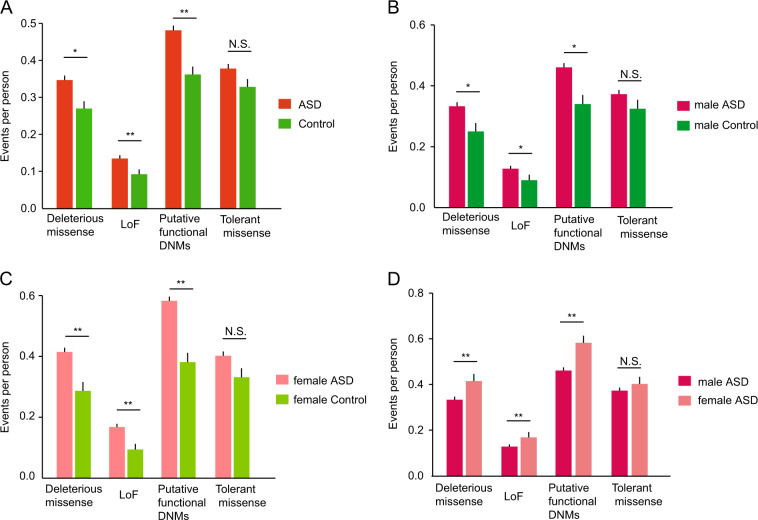
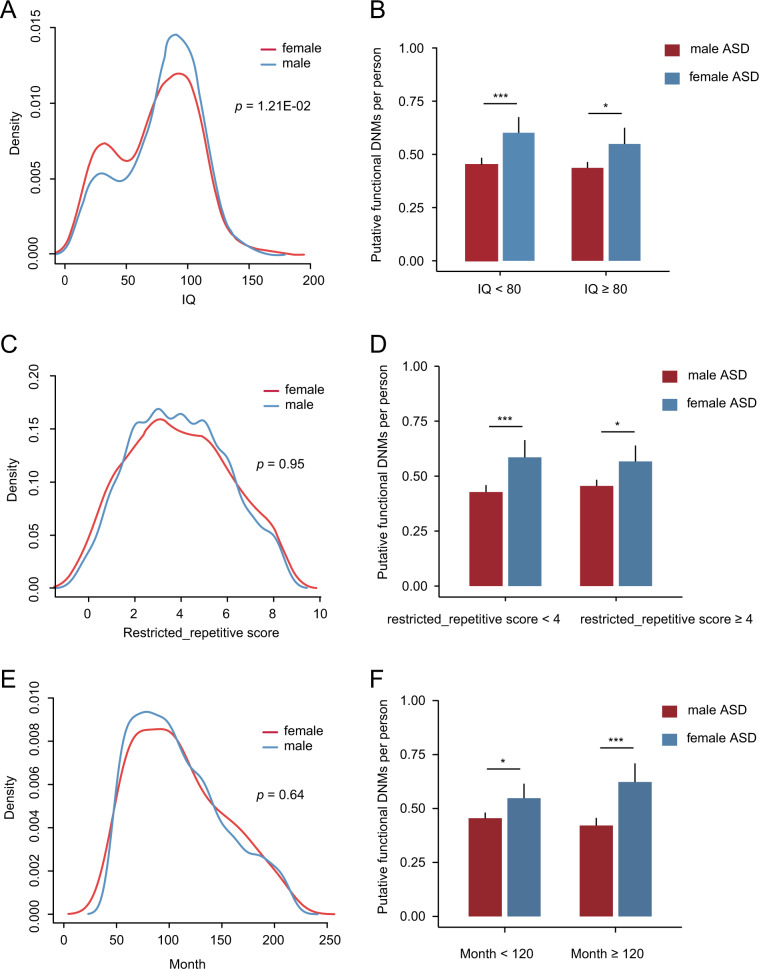
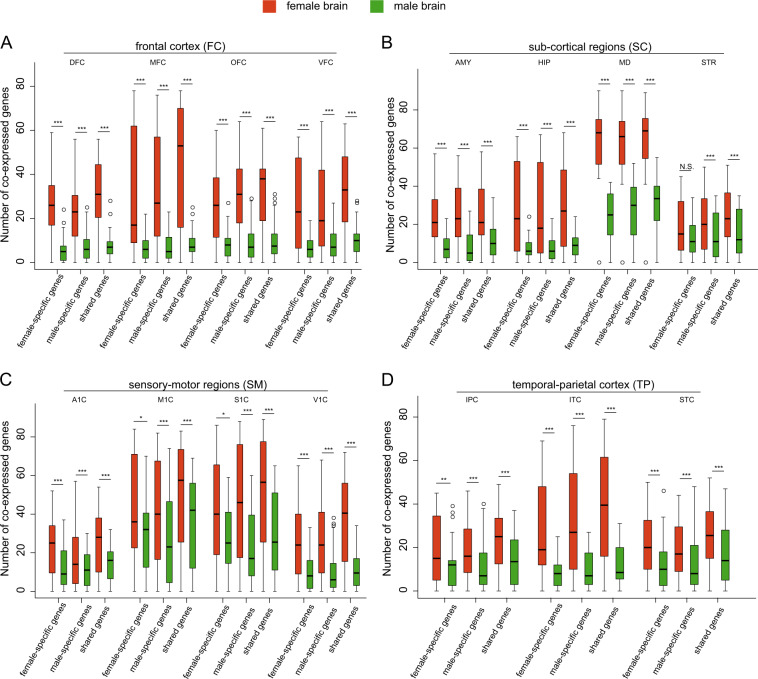
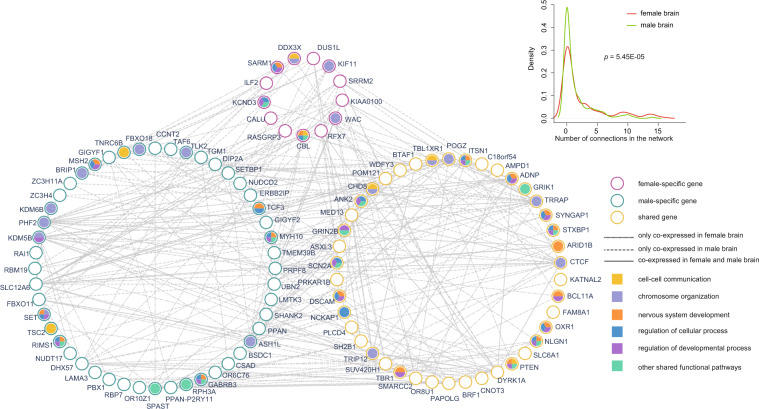
Autism spectrum disorder (ASD) is a complex neurodevelopmental disorder with a male-to-female prevalence of 4:1. However, the genetic mechanisms underlying this gender difference remain unclear. Mutation burden analysis, a TADA model, and co-expression and functional network analyses were performed on de novo mutations (DNMs) and corresponding candidate genes. We found that the prevalence of putative functional DNMs (loss-of-function and predicted deleterious missense mutations) in females was significantly higher than that in males, suggesting that a higher genetic load was required in females to reach the threshold for a diagnosis. We then prioritized 174 candidate genes, including 60 shared genes, 91 male-specific genes, and 23 female-specific genes. All of the three subclasses of candidate genes were significantly more frequently co-expressed in female brains than male brains, suggesting that compensation effects of the deficiency of ASD candidate genes may be more likely in females. Nevertheless, the three subclasses of candidate genes were co-expressed with each other, suggesting a convergent functional network of male and female-specific genes. Our analysis of different aspects of genetic components provides suggestive evidence supporting the female-protective effect in ASD. Moreover, further study is needed to integrate neuronal and hormonal data to elucidate the underlying gender difference in ASD.
Overview
The claims and statistics of this paper haven’t been checked yet.
Free: it reads the open-access text and checks the first 5 claims that cite a source we can check. Create a free account to check every claim.
Integrity signals
Registry
Cites
Statistics
Figures
Verification
Claims the paper makes
The claims and statistics of this paper haven’t been checked yet.
Free: it reads the open-access text and checks the first 5 claims that cite a source we can check. Create a free account to check every claim.
Claims other papers make about this one
Each is checked against this paper’s own text: does it say what the citing paper says it does?
The source backs part of the claim, not all of it — or backs it for a different population, condition or comparison.
In the citing paper
“Due to potential sexual dimorphisms in brain structural lifespan trajectories, sex is often considered a confounding factor in neuroimaging studies and individual analyses need to be conducted by sexes (e.g., depression, autism) [42, 43].”
From Confound Controlled Multimodal Neuroimaging Data Fusion and Its Application to Developmental Disorders (2025) · cites this paper as [43]
Experimental — accuracy not yet measuredThe cited source says what the claim attributes to it.
In the citing paper
“The possibility of a “female protective effect” (FPE) against ASD has been described extensively and has received consistent support from the results of genetic studies of de novo variants.4, 5, 6, 7, 8, 9, 10, 11, 12, 13”
From The female protective effect against autism spectrum disorder (2022) · cites this paper as [13]
The cited source says what the claim attributes to it.
In the citing paper
“Many types of ASD-associated de novo variants are observed more frequently in female cases.4, 5, 6, 7, 8, 9, 10, 11, 12, 13”
From The female protective effect against autism spectrum disorder (2022) · cites this paper as [13]
Self-check
Percentages, sums and reported differences re-computed from the paper’s own numbers.
The self-check needs the paper’s full text.
Citations
Cites
Cytoscape: A software Environment for integrated models of biomolecular interaction networks
Shannon, P., Markiel, A., Ozier, O., Baliga, N. S., Wang, J. T., Ramage, D., Amin, N., Schwikowski, B., & Ideker, T. (2003) · Genome Research · doi:10.1101/gr.1239303 · Cited by 51,888
ANNOVAR: functional annotation of genetic variants from high-throughput sequencing data
Wang, K., Li, M., & Hakonarson, H. (2010) · Nucleic Acids Research · doi:10.1093/nar/gkq603 · Cited by 14,621
REVEL: An Ensemble Method for Predicting the Pathogenicity of Rare Missense Variants
Ioannidis, N. M., Rothstein, J. H., Pejaver, V., Middha, S., McDonnell, S. K., Baheti, S., Musolf, A., Li, Q., Holzinger, E., Karyadi, D., et al. (2016) · The American Journal of Human Genetics · doi:10.1016/j.ajhg.2016.08.016 · Cited by 2,908
Synaptic, transcriptional and chromatin genes disrupted in autism
Study, T. D., De Rubeis, S., Autism, H. M. C. F., UK10K Consortium, The Autism Sequencing Consortium, He, X., Goldberg, A. P., Poultney, C. S., Samocha, K., Ercument Cicek, A., et al. (2014) · Nature · doi:10.1038/nature13772 · Cited by 2,746
The contribution of de novo coding mutations to autism spectrum disorder
Iossifov, I., O’Roak, B. J., Sanders, S. J., Ronemus, M., Krumm, N., Levy, D., Stessman, H. A., Witherspoon, K. T., Vives, L., Patterson, K. E., et al. (2014) · Nature · doi:10.1038/nature13908 · Cited by 2,585
Lai, M.-C., Lombardo, M. V., & Baron-Cohen, S. (2014) · The Lancet · doi:10.1016/s0140-6736(13)61539-1 · Cited by 2,371
Sporadic autism exomes reveal a highly interconnected protein network of de novo mutations
O’Roak, B. J., Vives, L., Girirajan, S., Karakoc, E., Krumm, N., Coe, B. P., Levy, R., Ko, A., Lee, C., Smith, J. D., et al. (2012) · Nature · doi:10.1038/nature10989 · Cited by 2,165
De novo mutations revealed by whole-exome sequencing are strongly associated with autism
Sanders, S. J., Murtha, M. T., Gupta, A. R., Murdoch, J. D., Raubeson, M. J., Willsey, A. J., Ercan-Sencicek, A. G., DiLullo, N. M., Parikshak, N. N., Stein, J. L., et al. (2012) · Nature · doi:10.1038/nature10945 · Cited by 2,084
The extreme male brain theory of autism
Baron-Cohen, S. (2002) · Trends in Cognitive Sciences · doi:10.1016/s1364-6613(02)01904-6 · Cited by 2,007
Patterns and rates of exonic de novo mutations in autism spectrum disorders
Neale, B. M., Kou, Y., Liu, L., Ma’ayan, A., Samocha, K. E., Sabo, A., Lin, C.-F., Stevens, C., Wang, L.-S., Makarov, V., et al. (2012) · Nature · doi:10.1038/nature11011 · Cited by 1,734
Self-citation
Cited by
Sex and gender in neurodevelopmental conditions
Bölte, S., Neufeld, J., Marschik, P. B., Williams, Z. J., Gallagher, L., & Lai, M.-C. (2023) · Nature Reviews Neurology · doi:10.1038/s41582-023-00774-6 · Cited by 249
The female protective effect against autism spectrum disorder
Wigdor, E. M., Weiner, D. J., Grove, J., Fu, J. M., Thompson, W. K., Carey, C. E., Baya, N., van der Merwe, C., Walters, R. K., Satterstrom, F. K., et al. (2022) · Cell Genomics · doi:10.1016/j.xgen.2022.100134 · Cited by 124
The female protective effect against autism spectrum disorder
Wigdor, E. M., Weiner, D. J., Grove, J., Fu, J. M., Thompson, W. K., Carey, C. E., Baya, N., van der Merwe, C., Walters, R. K., Satterstrom, F. K., et al. (2021) · doi:10.1101/2021.03.29.21253866 · Cited by 124
Hollestein, V., Poelmans, G., Forde, N., Beckmann, C., Ecker, C., Mann, C., Schäfer, T., Moessnang, C., Baumeister, S., Banaschewski, T., et al. (2021) · bioRxiv · doi:10.1038/s41398-023-02317-5 · Cited by 109
Diemer, M. C., Gerstein, E. D., & Regester, A. (2022) · Autism · doi:10.1177/13623613221113501 · Cited by 106
“, 2013; Leaper & Friedman, 2006) or genetic/hormonal protection, such as the estrogen protection effect (Robinson et al., 2013; Rylaarsdam & Guemez-Gamboa, 2019; Zhang et al., 2020).”
BackgroundThe genetic architecture of biological age in nine human organ systems
Wen, J., Tian, Y., Skampardoni, I., Yang, Z., Cui, Y., Anagnostakis, F., Mamourian, E., Zhao, B., Toga, A. W., Zalesky, A., et al. (2024) · Nature Aging · doi:10.1038/s43587-024-00662-8 · Cited by 85
“Another study provides genetic evidence of sex differences in autism spectrum disorder, supporting the female-protective effect using a mutation burden analysis 50 .”
A systematic review of problematic video-game use in people with Autism Spectrum Disorders
Craig, F., Tenuta, F., GIACOMO, A. D., Trabacca, A., & Costabile, A. (2021) · Research in Autism · doi:10.1016/j.rasd.2021.101726 · Cited by 88
Sex Differences in Neurodevelopmental Disorders: A Key Role for the Immune System
Breach, M. R., & Lenz, K. M. (2022) · Current Topics in Behavioral Neurosciences · doi:10.1007/7854_2022_308 · Cited by 62
Understanding autism: Causes, diagnosis, and advancing therapies
Wang, M., Zhang, X., Zhong, L., Zeng, L., Li, L., & Yao, P. (2025) · Brain Research Bulletin · doi:10.1016/j.brainresbull.2025.111411 · Cited by 79
“Additionally, female ASD patients carry a higher number of functional de novo mutations than males (Zhang et al., 2020; Kim et al., 2024b; Antaki et al., 2022), exhibit greater tolerance to predicted pathogenic (PP) heteroplasmic mutations in maternally inherited mtDNA (Wang et al., 2022), and…”
Walker, D. M., Zhou, X., Cunningham, A. M., Lipschultz, A. P., Ramakrishnan, A., Cates, H. M., Bagot, R. C., Shen, L., Zhang, B., & Nestler, E. J. (2021) · Biological Psychiatry · doi:10.1016/j.biopsych.2021.02.964 · Cited by 57
Rea, H. M., Øien, R. A., Shic, F., Webb, S. J., & Ratto, A. B. (2023) · Journal of Autism and Developmental Disorders · doi:10.1007/s10803-022-05566-3 · Cited by 50
“Thus, as found in this study, autistic females may show reduced autistic behaviors and characteristics (Zhang et al., 2020).”
BackgroundVieira, M. M., Jeong, J., & Roche, K. W. (2021) · Current Opinion in Neurobiology · doi:10.1016/j.conb.2021.03.001 · Cited by 52
Chromosome X-wide common variant association study in autism spectrum disorder
de Aquino, M. M., Chen, D., Engchuan, W., Leal, T. P., Thiruvahindrapuram, B., Trost, B., Howe, J., Pellecchia, G., Nalpathamkalam, T., Alexandrova, R., et al. (2024) · The American Journal of Human Genetics · doi:10.1016/j.ajhg.2024.11.008 · Cited by 53
Navarro‐Pardo, E., López-Ramón, M. F., Alonso-Esteban, Y., & Marín, F. A. (2021) · Children · doi:10.3390/children8040262 · Cited by 60
De Sales-Millán, A., Aguirre-Garrido, J. F., González-Cervantes, R. M., & Velázquez-Aragón, J. A. (2023) · doi:10.20944/preprints202305.1223.v1 · Cited by 44
Abdelaziz, E. M., Alsadaan, N., Alqahtani, M., Elsharkawy, N. B., Ouda, M. M. A., Ramadan, O. M. E., Shaban, M., & Shokre, E. S. (2024) · Behavioral Sciences · doi:10.3390/bs14010046 · Cited by 57
Sex differentiation of brain structures in autism: Findings from a gray matter asymmetry study
Deng, Z., & Wang, S. (2021) · Autism Research · doi:10.1002/aur.2506 · Cited by 42
“…has been supported primarily by genetic studies showing a higher genetic burden in females with ASD than in males with ASD (Levy et al., 2011; Zhang et al., 2020), as well as by twin investigations showing greater symptom severity for females than for males in twin pairs with ASD (Robinson…”
BackgroundResultInfluentialHealth profiles of adults with autism spectrum disorder: Differences between women and men
DaWalt, L. S., Taylor, J. L., Movaghar, A., Hong, J., Kim, B. I., Brilliant, M. H., & Seltzer, M. M. (2021) · Autism Research · doi:10.1002/aur.2563 · Cited by 57
“For example, females who have an ASD diagnosis have been found to have a heavier “genetic load” than males with the diagnosis (Zhang et al., 2020).”
BackgroundKang, L., Liu, J., Liu, Y., Liang, W., Yang, F., & Liu, M. (2022) · Asian Journal of Psychiatry · doi:10.1016/j.ajp.2022.103359 · Cited by 46
Large-scale metagenomic analysis of oral microbiomes reveals markers for autism spectrum disorders
Manghi, P., Filosi, M., Zolfo, M., Casten, L. G., García-Valiente, A., Mattevi, S., Heidrich, V., Golzato, D., Perini, S., Thomas, A. M., et al. (2024) · Nature Communications · doi:10.1038/s41467-024-53934-7 · Cited by 52
Abruzzo, P. M., Panisi, C., & Marini, M. (2021) · Antioxidants · doi:10.3390/antiox10081316 · Cited by 42
“The prevalence of autism is strongly unbalanced with regard to gender, being diagnosed in about four males for each female; the reason for such sexual dimorphism is still a matter of debate [95].”
BackgroundDelineating the molecular and phenotypic spectrum of the SETD1B-related syndrome
Weerts, M. J. A., Lanko, K., Guzmán‐Vega, F. J., Jackson, A., Ramakrishnan, R., Cardona‐Londoño, K. J., Peña‐Guerra, K. A., van Bever, Y., van Paassen, B. W., Kievit, A. J. A., et al. (2021) · Genetics in Medicine · doi:10.1038/s41436-021-01246-2 · Cited by 46
Park, G., Jang, W. E., Kim, S., Gonzales, E. L., Ji, J., Choi, S., Kim, Y., Park, J. H., Mohammad, H. B., Bang, G., et al. (2023) · Experimental & Molecular Medicine · doi:10.1038/s12276-023-01065-2 · Cited by 42
Kozlova, E. V., Valdez, M. C., Denys, M. E., Bishay, A. E., Krum, J. M., Rabbani, K. M., Carrillo, V., Gonzalez, G. M., Lampel, G., Tran, J. D., et al. (2021) · Archives of Toxicology · doi:10.1007/s00204-021-03163-4 · Cited by 32
Yau, N., Anderson, S., & Smith, I. (2023) · Research in Autism · doi:10.1016/j.rasd.2022.102101 · Cited by 35
Friedman, A., Paltoglou, A. E., & Sorte, R. (2024) · Neurodiversity · doi:10.1177/27546330241307828 · Cited by 41
“This has led to widespread assumptions that autism is more prevalent in men due to genetic factors (Zhang et al., 2020) or as a result of autism de fi ned by an ‘ extreme male brain ’ (Baron-Cohen, 2002).”
Transcriptomic sex differences in postmortem brain samples from patients with psychiatric disorders
Xia, Y., Xia, C., Jiang, Y. W., Chen, Y., Zhou, J., Dai, R., Han, C., Mao, Z., Liu, C., Chen, C., et al. (2024) · Science Translational Medicine · doi:10.1126/scitranslmed.adh9974 · Cited by 35
Gawlińska, K., Gawliński, D., Borczyk, M., Korostyński, M., Przegaliński, E., & Filip, M. (2021) · Nutrients · doi:10.3390/nu13093212 · Cited by 28
Thomas, T., Koomar, T., Casten, L. G., Tener, A. J., Bahl, E., & Michaelson, J. J. (2022) · Translational Psychiatry · doi:10.1038/s41398-022-01982-2 · Cited by 29
“On the other hand, autistic females carry more rare variant burden than autistic males [76].”
BackgroundGoldblum, J., McFayden, T. C., Bristol, S. K., Putnam, O. C., Wylie, A. C., & Harrop, C. (2023) · Journal of Autism and Developmental Disorders · doi:10.1007/s10803-023-06104-5 · Cited by 31
“Additionally, females with fewer support needs are often missed in the diagnostic process entirely (Lockwood Estrin et al., 2021), which may be linked to a genetic female protective effect (Zhang et al., 2020).”
Endocrine insights into the pathophysiology of autism spectrum disorder
Wilson, H. A., Creighton, C., Scharfman, H., Choleris, E., & MacLusky, N. J. (2021) · The Neuroscientist · doi:10.1177/1073858420952046 · Cited by 23
Hiding in Plain Sight: Eating Disorders, Autism, and Diagnostic Overshadowing in Women
Brown, C. M., Hedley, D., Hooley, M., Hayward, S. M., Fuller‐Tyszkiewicz, M., Krug, I., & Stokes, M. A. (2024) · Autism in Adulthood · doi:10.1089/aut.2023.0197 · Cited by 30
Wright, N., Courchesne, V., Pickles, A. R., Bedford, R., Duku, E., Kerns, C. M., Bennett, T., Georgiades, S., Hill, J., Richard, A., et al. (2023) · Psychological Medicine · doi:10.1017/s0033291723001599 · Cited by 24
“Evidence suggests that females who receive an autism diagnosis show greater etiologic risk factors (e.g. a greater genetic mutational burden, Zhang et al., 2020) and that females who receive a diagnosis show higher levels of co-occurring intellectual disability or behavioral problems (Duvekot et…”
BackgroundMao, H., Cheng, L. L., Zhang, Y., & Zhang, F. (2024) · Gender and sustainability in the Global South · doi:10.1515/gsgs-2024-0007 · Cited by 28
Self-citationmTOR-Dependent Spine Dynamics in Autism
Chaudry, S., & Vasudevan, N. (2022) · Frontiers in Molecular Neuroscience · doi:10.3389/fnmol.2022.877609 · Cited by 24
Contribution of autosomal rare and de novo variants to sex differences in autism
Koko, M., Satterstrom, F. K., Aleksić, B., Artomov, M., Barbosa, M., Benetti, E., Betancur, C., Biscaldi-Schafer, M., Børglum, A. D., Brand, H., et al. (2025) · The American Journal of Human Genetics · doi:10.1016/j.ajhg.2025.01.016 · Cited by 23
Wang, T., Zhao, T., Liu, L., Teng, H., Fan, T., Li, Y., Wang, Y., Li, J., Xia, K., & Sun, Z. S. (2022) · EBioMedicine · doi:10.1016/j.ebiom.2022.104091 · Cited by 21
“Patients with ASD have diverse intelligence levels, a crucial phenotypic marker of ASD; 76 therefore, proband stratification was attempted to evaluate the difference in DNM burden in OTRGs between NVIQ-stratified probands and the controls, but no significant difference was observed (Figure 1c).”
Self-citationWang, T., Zhang, Y., Liu, L., Wang, Y., Chen, H., Fan, T., Li, J., Xia, K., & Sun, Z. S. (2021) · Journal of genetics and genomics/Journal of Genetics and Genomics · doi:10.1016/j.jgg.2021.03.002 · Cited by 20
Self-citationCharacterization of cell-cell communication in autistic brains with single-cell transcriptomes
Astorkia, M., Lachman, H. M., & Zheng, D. (2022) · Journal of Neurodevelopmental Disorders · doi:10.1186/s11689-022-09441-1 · Cited by 21
“Taken together, the GO enrichment results are consistent with previous findings that have implicated these same cellular processes in ASD and other psychiatric conditions [10, 11, 13] but put a more clear connection to the important roles of cell-cell communication.”
BackgroundResultDifferently different?: A commentary on the emerging social cognitive neuroscience of female autism
Rippon, G. (2024) · Biology of Sex Differences · doi:10.1186/s13293-024-00621-3 · Cited by 25
“Evidence showing that autistic females may show greater prevalence of candidate mutations has supported this concept [83].”
Jacokes, Z., Jack, A., Sullivan, C. A. W., Aylward, E., Bookheimer, S. Y., Dapretto, M., Bernier, R., Geschwind, D. H., Sukhodolsky, D. G., McPartland, J. C., et al. (2022) · Frontiers in Neuroscience · doi:10.3389/fnins.2022.1040085 · Cited by 12
“One hypothesis centers around the ‘female protective effect,’ which is the theory that females are biologically more resistant to the autism phenotype than males, to the point where they must be more severely affected to be classified as ASD by our current diagnostic standards (Robinson et al., 2013; Gockley et al., 2…”
BackgroundExploring the Lived Experiences of Autistic Women: A Thematic Synthesis
Gosling, J., Purrington, J., & Hartley, G. (2023) · Review Journal of Autism and Developmental Disorders · doi:10.1007/s40489-023-00367-5 · Cited by 28
“…reports detail a predominance of autistic men and boys being diagnosed in comparison to autistic women and girls, with research suggesting this is at a ratio of between 2.5 and 4 males to every 1 female (Kim et al., 2011; Loomes et al., 2017; Yeargin-Allsopp et al., 2003; Zhang et al., 2020).”
InfluentialAuditory Processing Differences Correlate With Autistic Traits in Males
Aykan, S., Gürses, E., Tokgöz-Yılmaz, S., & Kalaycıoğlu, C. (2020) · Frontiers in Human Neuroscience · doi:10.3389/fnhum.2020.584704 · Cited by 18
“There are many possible explanations ranging from the differences in the mechanisms involved in males and females to the presence of protective mechanisms in the latter or vulnerability mechanisms in the former (Halladay et al., 2015; Lai et al., 2015; Ferri et al., 2018; Zhang et al., 2020).”
BackgroundOrnoy, A., Gorobets, D., Weinstein-Fudim, L., & Becker, M. (2023) · International Journal of Molecular Sciences · doi:10.3390/ijms24043287 · Cited by 16
“Several studies reported a higher frequency of autosomal de novo CNVs in autistic females than in males with ASD (reviewed in [33,34]).”
BackgroundMetwally, A. M., El-Din, E. M. S., Sami, S. M., Raouf, E. R. A., Sallam, S. F., Elsaeid, A., El‐Saied, M. M., Ashaat, E. A., Fathy, A. M., El-Hariri, H. M., et al. (2025) · Molecular Autism · doi:10.1186/s13229-025-00665-1 · Cited by 17
“Being a female was considered a protective factor [82, 83].”
Wang, Y., Cao, A., Wang, J., Bai, H., Liu, T., Sun, C., Li, Z., Tang, Y., Xu, F., & Liu, S. (2025) · Autism Research · doi:10.1002/aur.3287 · Cited by 16
“Furthermore, genetic investigations have corroborated the presence of gender disparities in ASD (Zhang et al., 2020).”
Self-citationWin‐Shwe, T., Kyi‐Tha‐Thu, C., Fujitani, Y., Tsukahara, S., & Hirano, S. (2021) · International Journal of Molecular Sciences · doi:10.3390/ijms22020538 · Cited by 17
“Moreover, compensatory effects of de cient ASD related genes may protect female from ASD [59].”
BackgroundDoi, H., Kanai, C., & Ohta, H. (2022) · Autism Research · doi:10.1002/aur.2712 · Cited by 15
“Some previous studies indicate that sex-specific biological factors underlie phenotypic expressions of ASD (Lai et al., 2013; Schwarz et al., 2010; Zhang et al., 2020) and ADHD (Endres et al.”
BackgroundSingla, R., Mishra, A., Joshi, R., Sarma, P., Kumar, R., Kaur, G., Sharma, A. R., Jain, A., Prakash, A., Bhatia, A., et al. (2022) · Brain Research Bulletin · doi:10.1016/j.brainresbull.2022.09.003 · Cited by 14
Ionic Channels as Potential Targets for the Treatment of Autism Spectrum Disorder: A Review
da Silva, B. A., da Silva, P. R., Gonzaga, T. K. S. D. N., & Maia, R. E. (2021) · Current Neuropharmacology · doi:10.2174/1570159x19666210809102547 · Cited by 14
“It is essential to understand the disorder as multifactorial, in which (regardless of sex) genetic, epigenetic, and hormonal changes are involved in its development [26, 27].”
Gawlińska, K., Gawliński, D., Kowal-Wiśniewska, E., Jarmuż‐Szymczak, M., & Filip, M. (2021) · International Journal of Molecular Sciences · doi:10.3390/ijms22189662 · Cited by 14
Disruption of the gene regulatory programme in neurodevelopmental disorders
Griffin, A., Mahesh, A., & Tiwari, V. K. (2022) · Biochimica et Biophysica Acta (BBA) - Gene Regulatory Mechanisms · doi:10.1016/j.bbagrm.2022.194860 · Cited by 16
Harrison, D. J., Creeth, H., Tyson, H. R., Boqué-Sastre, R., Hunter, S., Dwyer, D. M., Isles, A. R., & John, R. M. (2021) · Human Molecular Genetics · doi:10.1093/hmg/ddab154 · Cited by 15
“Several DEGs shared by the male Tg and NTg have previously been linked to early-life stress, anxiety disorders and ADHD (Erbin) (49), sexspecific gene expression in ASD (79) and dopamine changes (Erbb2ip, Neurod6) (80), and to TH-dependent growth and embryonic differentiation processes (Secisbp2l) (50).”
BackgroundYang, D., Svoboda, A. M., George, T. G., Mansfield, P. K., Wheelock, M. D., Schroeder, M. L., Rafferty, S. M., Sherafati, A., Tripathy, K., Burns‐Yocum, T. M., et al. (2024) · Molecular Autism · doi:10.1186/s13229-024-00614-4 · Cited by 15
El‐Bouhali‐Abdellaoui, F., Voltas, N., Morales‐Hidalgo, P., & Canals, J. (2024) · Autism Research · doi:10.1002/aur.3295 · Cited by 13
Gandhi, T., Liu, C., Adeyelu, T. T., Canepa, C. R., & Lee, C. C. (2023) · Frontiers in Behavioral Neuroscience · doi:10.3389/fnbeh.2023.1114789 · Cited by 18
“However, other studies suggest that female protective effects result in the prevalence of autistic conditions diagnosed in males (Sedgewick et al., 2019; Zhang et al., 2020).”
BackgroundEEG functional connectivity in infants at elevated familial likelihood for autism spectrum disorder
O’Reilly, C., Huberty, S., van Noordt, S. J. R., Desjardins, J. A., Wright, N., Scorah, J., Webb, S. J., Elsabbagh, M., BASIS team, Baron‐Cohen, S., et al. (2023) · Molecular Autism · doi:10.1186/s13229-023-00570-5 · Cited by 15
“With respect to social affect symptoms, females appear to be more resilient, requiring higher genetic loading to reach the ASD diagnostic threshold [54].”
BackgroundFowler, L. F., Burry, T. N., Maekawa, A. S., & Cahill, L. S. (2025) · Hormones and Behavior · doi:10.1016/j.yhbeh.2025.105818 · Cited by 14
Davies, W. (2021) · European Journal of Medical Genetics · doi:10.1016/j.ejmg.2021.104169 · Cited by 12
“Females affected by developmental disorders have been reported to exhibit higher rates of deleterious genetic variants compared to males affected by such conditions, even after matching for symptom severity, suggesting the possibility that females are somehow protected, or buffered, against the effects of such variant…”
BackgroundSex-biased single-cell genetic landscape in mice with autism spectrum disorder
Zhang, Q., Wang, Y., Tao, J., Xia, R., Zhang, Y., Liu, Z., & Cheng, J. (2023) · Journal of genetics and genomics/Journal of Genetics and Genomics · doi:10.1016/j.jgg.2023.08.012 · Cited by 11
Self-citationNazari, S., Ramos‐Cabo, S., Nalabolu, S. R., Barnes, C. C., Andreason, C., Zahiri, J., Esquivel, A., Arias, S. J., Grzybowski, A., Lombardo, M. V., et al. (2025) · Nature Human Behaviour · doi:10.1038/s41562-025-02132-6 · Cited by 12
“Thus, there is currently a pronounced lack of clarity on the question of clinical phenotypic differences between girls and boys with autism, and this has led to widely divergent causal and developmental theories, such as the protective effect theory 22,23 and the extreme male brain (EMB) theory 24 .”
Cortical development dynamics across autism spectrum disorder mouse models
Schwarz, L. A., Dotter, C. P., Isaev, S. V., Lisi, M., Malzl, D., Bueschl, C., Ladstätter, S., Oliveira, B., Barel, M., Basilico, B., et al. (2026) · Nature · doi:10.1038/s41586-026-10679-1 · Cited by 14
“Of note, WAC has recently been identified as a female-specific candidate gene 55 , suggesting sex-specific effects and potentially greater disease penetrance in female individuals.”
Sex bias in social deficits, neural circuits and nutrient demand in Cttnbp2 autism models
Yen, T., Huang, T., Lin, M.-H., Hsu, T., Lu, M., Shih, P.-Y., Ellegood, J., Lerch, J. P., & Hsueh, Y. (2022) · Brain · doi:10.1093/brain/awac429 · Cited by 12
“there are more male-enriched genes than for either of the other two groups.(13,14) Thus, sex likely differentially influences the out-”
Olaguez-Gonzalez, J. M., Schaeffer, S. E., Bretón‐Deval, L., Alfaro-Ponce, M., & Chaírez, I. (2024) · Neural Computing and Applications · doi:10.1007/s00521-024-09458-8 · Cited by 9
“ASD is diagnosed more frequently in males (a proportion between four-to-one [30] and five-to-one [31]).”
Torshizi, A. D., & Wang, K. (2022) · npj Systems Biology and Applications · doi:10.1038/s41540-022-00243-8 · Cited by 17
Transcriptomic convergence and the female protective effect in autism
Andersen, R., Talukdar, M., Sakamoto, T., Exposito-Alonso, D., Song, J. H. T., Qian, X., Lee, S., Murugan, N., Delgado, R. N., Zhao, S., et al. (2026) · Nature · doi:10.1101/2025.01.20.634000 · Cited by 11
Tönsing, D., Schiller, B., Vehlen, A., Nickel, K., van Elst, L. T., Domes, G., & Heinrichs, M. (2025) · Molecular Autism · doi:10.1186/s13229-025-00645-5 · Cited by 12
“As there are higher prevalence of autism in males [28] and potential phenotypical differences across male and female autistic individuals [29, 30] which could not be addressed within this study’s framework, this study focused on male participants (see also Limitations).”
Mkhitaryan, M., Avetisyan, T., Yeritsyan, H., Harutyunyan, H. A., & Yenkoyan, K. B. (2025) · Health Science Reports · doi:10.1002/hsr2.70801 · Cited by 9
“The observed gender disparity in mutation rates supports the growing body of evidence suggesting that females are inherently more resilient to genetic risk factors for ASD [49].”
Early establishment and life course stability of sex biases in the human brain transcriptome
Benoit‐Pilven, C., Asteljoki, J. V., Leinonen, J. T., Karjalainen, J. M., Daly, M. J., & Tukiainen, T. (2025) · Cell Genomics · doi:10.1016/j.xgen.2025.100890 · Cited by 14
“7,8 For brain-related traits and diseases, genetic studies have found only minor sex differences both in common variant associations 1 and in rare variant burden, 9,10 although a difference in the liability threshold between sexes may play a part in the sex-biased prevalence of ASD.”
Yan, C., Zhao, S., Cui, J. H., Shangguan, S., Wang, Z., & Tang, K. (2025) · EClinicalMedicine · doi:10.1016/j.eclinm.2025.103305 · Cited by 11
“47 Other studies have sought to explain these differences through behavioral observations.”
Lakatošová, S., Janšáková, K., Babková, J., Repiská, G., Belica, I., Vidošovičová, M., & Ostatníková, D. (2022) · Psychiatry Investigation · doi:10.30773/pi.2021.0094 · Cited by 9
Zhang, Y., Wang, T., Wang, Y., Xia, K., Li, J., & Sun, Z. S. (2021) · Molecular Neurobiology · doi:10.1007/s12035-021-02377-y · Cited by 11
Self-citationTrends in autism research 2021
Spectrum (2021) · The Transmitter · doi:10.53053/rwqq2203 · Cited by 9
Li, Y., Tan, Z.-N., Li, X., Ma, B., Adu‐Nti, F., Lv, X.-Q., Tian, Z., Yan, R., Man, H., & Ma, X. (2024) · Molecular Psychiatry · doi:10.1038/s41380-024-02515-7 · Cited by 9
“The sex-speci fi c neurobehavioral pro fi le of Rfwd2 + / − mice shows similarities to the different clinical phenotypes observed in male and female autistic patients [5, 58].”
BackgroundSex heterogeneity of dynamic brain activity and functional connectivity in autism spectrum disorder
Lu, H., Dong, Q., Gao, L., Xue, Z., Niu, X., Zhou, R., & Guo, X. (2024) · Autism Research · doi:10.1002/aur.3227 · Cited by 8
“At the genetic level, the FPE theory is supported by the finding that females exhibit higher genetic burden than males in ASD group (Levy et al., 2011; Zhang et al., 2020).”
Decoding SCN2A Variants: Bridging Genetics and Phenotypes in Autism Spectrum Disorder
DiStefano, N., Cooper, J. N., Elisha, D. H., Zalta, M., Mittal, J., Cohen, D., Monterrubio, A., Hossain, R., Sangadi, A., Mittal, R., et al. (2025) · Journal of Clinical Medicine · doi:10.3390/jcm14113790 · Cited by 10
“This variability is particularly evident in the context of gender, where the impact of SCN2A mutations appears to differ between males and females, a pattern that has been reported in other genetic studies on ASD [3,35,66].”
Evaluation of familial phenotype deviation to measure the impact of de novo mutations in autism
Kim, S.-W., Lee, H., Song, D. Y., Lee, G., Han, J. H., Lee, J., Byun, H. J., Son, J. H., Kim, Y. R., Lee, Y., et al. (2025) · Genome Medicine · doi:10.1186/s13073-025-01532-7 · Cited by 9
“These genes have primarily been implicated in cancer but were also reported in ASD probands or shown to regulate neurogenesis [81–83].”
Yang, R., Xu, Y., Xu, J., Huang, C., Zhu, F., Wang, T., Kong, R., Xiao, J., He, B., Gu, X., et al. (2025) · npj Biofilms and Microbiomes · doi:10.1038/s41522-025-00808-5 · Cited by 8
The impact of phosphorylated PTEN at threonine 366 on cortical connectivity and behaviour
Ledderose, J. M. T., Benítez, J. A., Roberts, A. J., Reed, R., Bintig, W., Larkum, M. E., Sachdev, R. N. S., Furnari, F. B., & Eickholt, B. J. (2022) · Brain · doi:10.1093/brain/awac188 · Cited by 7
Şener, E. F., Dana, H., Tahtasakal, R., Hamurcu, Z., Taheri, S., Delibaşı, N., Mehmetbeyoğlu, E., Şükranlı, Z. Y., Dal, F., Tufan, E., et al. (2023) · Progress in Neuro-Psychopharmacology and Biological Psychiatry · doi:10.1016/j.pnpbp.2023.110764 · Cited by 9
“Immunohistochemistry results of autophagy markers in hippocampus.”
Autism spectrum disorder and congenital heart disease: a narrative review of the literature
Nayar, K., Katz, L., Heinrich, K. P., & Berger, N. I. (2023) · Cardiology in the Young · doi:10.1017/s1047951123000598 · Cited by 7
Cable, J., Purcell, R. H., Robinson, E., Vorstman, J. A. S., Chung, W. K., Constantino, J. N., Sanders, S., Şahin, M., Dolmetsch, R. E., Maniar, B., et al. (2021) · Annals of the New York Academy of Sciences · doi:10.1111/nyas.14658 · Cited by 8
Cardon, G. J., McQuarrie, M., Calton, S., & Gabrielsen, T. P. (2023) · Research in Autism · doi:10.1016/j.rasd.2023.102263 · Cited by 15
Liu, C., Guo, Z., Pang, J., Zhang, Y., Yang, Z., Cao, J., & Zhang, T. (2024) · Behavioural Brain Research · doi:10.1016/j.bbr.2024.115052 · Cited by 6
Self-citationFrigaux, A., Vacant, C., & Évrard, R. (2022) · L Évolution Psychiatrique · doi:10.1016/j.evopsy.2022.06.001 · Cited by 14
Micro-nanoplastics in the central nervous system: Evidence, mechanisms and perspectives
Pei, Z., Zhong, H., Li, X., Guo, S., & Wang, T. (2026) · Toxicology · doi:10.1016/j.tox.2026.154424 · Cited by 6
The inactive X chromosome as a female protector in autism and beyond
Talukdar, M., & Page, D. C. (2026) · Nature Genetics · doi:10.1038/s41588-026-02534-w · Cited by 8
“…in diagnosed females compared to diagnosed males persists even when individuals are matched on traits such as autism severity or intelligence quotient (IQ), suggesting that this observation is not driven by ascertainment bias for more profoundly affected females 9,15,19,20 (Supplementary Note).”
Luo, S., Gong, Q., Ai, Y., Zhang, J., Chan, L., Wong, W. C. W., Ip, P. C. T., Chan, E. W., Tanuseputro, P., Wong, I. C. K., et al. (2026) · JAMA Internal Medicine · doi:10.1001/jamainternmed.2026.2215 · Cited by 11
Predicting autism traits from baby wellness records: A machine learning approach
Ben‐Sasson, A., Guedalia, J., Ilan, K., Shaham, M., Shefer, G., Cohen, R., Tamir, Y., & Gabis, L. V. (2024) · Autism · doi:10.1177/13623613241253311 · Cited by 5
“Both maternal age and Cesarean section could be strongly related to a genetic and familial burden in ASC males (Zhang et al., 2020).”
Arcebido, K., Tuliao, E. V. F., Ibarra, A. M., Russell, K., Valdes, A., Shinkre, S., Gefen, S., Evans, A. E., Barella, S., Wadei, J., et al. (2025) · Autism · doi:10.1177/13623613241289980 · Cited by 6
“These results align with broader trends in ASD diagnoses where males are about four times more likely to be diagnosed with ASD than females (Y. Zhang et al., 2020).”
Tian, Y., Qiao, H., Odamah, K., Zhu, L., & Man, H. (2025) · iScience · doi:10.1016/j.isci.2025.111868 · Cited by 9
“8,78,79 82 Despite these findings, understanding of the biological mechanisms remains limited.”
Kato, D. (2025) · Journal of Nippon Medical School · doi:10.1272/jnms.jnms.2025_92-306 · Cited by 6
Neuroregulatory effect of royal jelly
Zhu, F., Yang, R., He, B., Xu, Y., & Wang, H. (2025) · The Journal of Nutritional Biochemistry · doi:10.1016/j.jnutbio.2025.110028 · Cited by 5
Futaisi, N. D. A., Schuller, B. W., Ringeval, F., & Pantić, M. (2025) · Frontiers in Digital Health · doi:10.3389/fdgth.2025.1274675 · Cited by 5
Gao, L., Zhang, T., Zhou, R., Zhang, T., & Guo, X. (2025) · NeuroImage · doi:10.1016/j.neuroimage.2025.121495 · Cited by 6
Genetic and Epigenetic Sexual Dimorphism of Brain Cells during Aging
Shirokova, O. M., Zaborskaya, O., Pchelin, P. V., Kozliaeva, E. V., Pershin, V. I., & Mukhina, I. V. (2023) · Brain Sciences · doi:10.3390/brainsci13020195 · Cited by 5
“The role of genetic effects is confirmed by numerous failures in the work of the dopaminergic systems of the midbrain, characterized by significant sex differences in their prevalence and/or nature, which underlie many neurological and mental disorders, including schizophrenia, attention-deficit/hyperactivity disorder…”
BackgroundDISTRIBUTION OF AUTISTIC CHILDREN IN PONTIANAK, WEST KALIMANTAN PROVINCE, INDONESIA
Fathmawati, F., Andari, L., Saimin, J., Damayanti, D. F., Akhmadi, Z., & Septiawan, E. D. (2023) · Malaysian Journal of Public Health Medicine · doi:10.37268/mjphm/vol.23/no.2/art.1826 · Cited by 5
“Research in China found that there were more differences in ASD candidate gene deficiency in women than men, which led to a high prevalence of ASD in men 21 .”
BackgroundGao, L., Zhang, T., Zhang, Y., Liu, J., & Guo, X. (2024) · Journal of Autism and Developmental Disorders · doi:10.1007/s10803-024-06696-6 · Cited by 8
“Genetic studies have indicated that females with ASD exhibit a higher genetic burden compared to males with ASD (Levy et al., 2011; Zhang et al., 2020).”
Self-citationHsu, J.-W., Chen, L.-C., Huang, K., Tsai, S., Bai, Y., Su, T., Chen, T., & Chen, M. (2022) · European Archives of Psychiatry and Clinical Neuroscience · doi:10.1007/s00406-022-01529-y · Cited by 7
“Wigdor et al. indicated that females had a higher liability threshold for receiving a diagnosis of ASD compared with males [28].”
Narratives of siblinghood: exploring perspectives of adult siblings of autistic individuals
Edery, C., & Harvey, C. (2025) · Disability & Society · doi:10.1080/09687599.2025.2455091 · Cited by 6
“The sibling gender imbalance is representative of the diagnostic gender bias, wherein females are at a disparate risk of not receiving an autistic diagnosis because symptomatology and presentation is postulated to manifest differently to that reported in males with autism (Zhang et al. 2020).”
Metadata
- Authors
- Zhang, Y., Li, N., Li, C., Zhang, Z., Teng, H., Wang, Y., Zhao, T., Shi, L., Zhang, K., Xia, K., Li, J., & Sun, Z.
- Affiliations
- Central South University (CN)
- Wenzhou Medical University (CN)
- Chinese Academy of Sciences (CN)
- Corresponding author
- Li, Jinchen
- ORCID
- Venue
- Translational Psychiatry
- Published
- 2020-01-15
- Volume
- 10
- Issue
- 1
- Pages
- 4-4
- ISSN
- 2158-3188 (ISSN-L)
- PMC
- PMC7026157
- OpenAlex
- W3003776320
- Semantic Scholar
- a3efb8d9314ec838c16cd6de307613e87a6bf93b
- Cited by
- 177
- References
- 80
- Citations by year
- 2026: 23 · 2025: 38 · 2024: 27 · 2023: 30 · 2022: 26 · 2021: 28 · 2020: 4
- FWCI
- 11.82
- Type
- journal article
- Language
- en
- Open access
- gold
- doi.org
- Licence
- cc-by
- creativecommons.org/licenses/by/4.0 (tdm)
- creativecommons.org/licenses/by/4.0 (vor)
- Locations
- Translational Psychiatry (publishedVersion, cc-by)
- PubMed Central (publishedVersion, cc-by)
- PubMed (publishedVersion)
- Funders
- National Natural Science Foundation of China (No.31911530148, No.31571301, No.81801133)
- Topics
- Life Sciences › Neuroscience › Cognitive Neuroscience › Autism Spectrum Disorder Research
- Life Sciences › Biochemistry, Genetics and Molecular Biology › Genetics › Genetics and Neurodevelopmental Disorders
- Life Sciences › Biochemistry, Genetics and Molecular Biology › Genetics › Genomics and Rare Diseases
- Keywords
- autism spectrum disorder, sex differences, de novo mutations, mutational burden, candidate genes, functional networks, loss-of-function mutations, missense mutations, sex-specific genes
- MeSH terms
- Autism Spectrum Disorder, Brain, DNA Mutational Analysis, Female, Humans, Male, Sex Characteristics
About these checks
Registry, retraction, Cites and statistics results are computed, not judged, with one exception: a printed reference that no index lists is read once by a model before it counts as a citation error. Claims are extracted by a model and kept only when their quote appears verbatim in the text; each cited source is then checked, with a model’s help, for whether it says what the claim relies on. Those verdicts can be wrong — read the claim’s quote and the cited source before relying on one.
Statistics and arithmetic are recomputed, not judged.
Confidence bands are shown only for fields calibrated on our annotated test set. None is calibrated yet, so no band is shown.
What counts as a claim ›How we measure confidence ›How we check this ›
Are you an author, or do you see a problem with this page? Request a review
Data sources
Bibliographic data: Semantic Scholar, OpenAlex, Crossref.
Contains information from the Semantic Scholar Academic Graph Datasets, made available under the ODC Attribution License (ODC-BY 1.0).
Semantic Scholar’s data is described in: Kinney, R., et al. (2023). The Semantic Scholar Open Data Platform. arXiv:2301.10140.
