

Genetic evidence of gender difference in autism spectrum disorder supports the female-protective effect
Open accessThe DOI matches its Crossref record; 80 of the 80 references it cites were found in a registry or an index.
Abstract
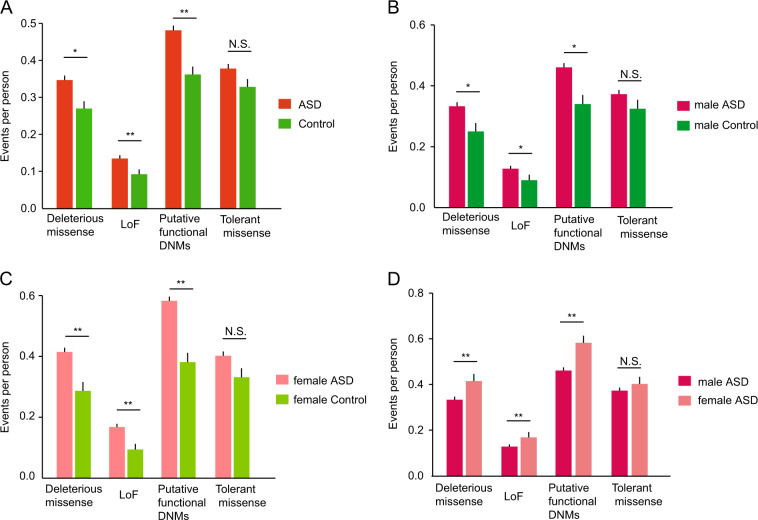
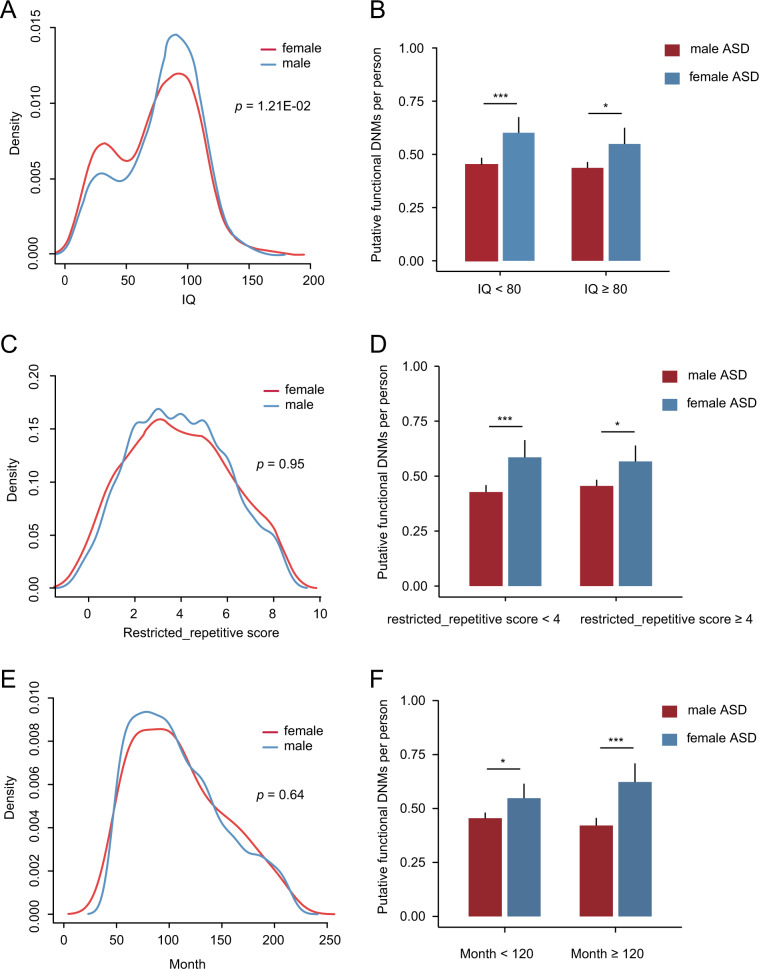
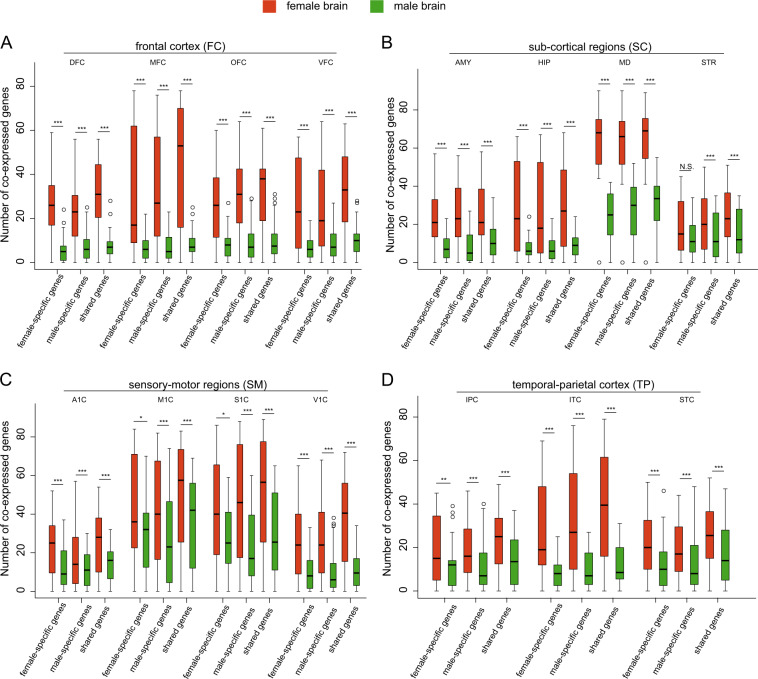
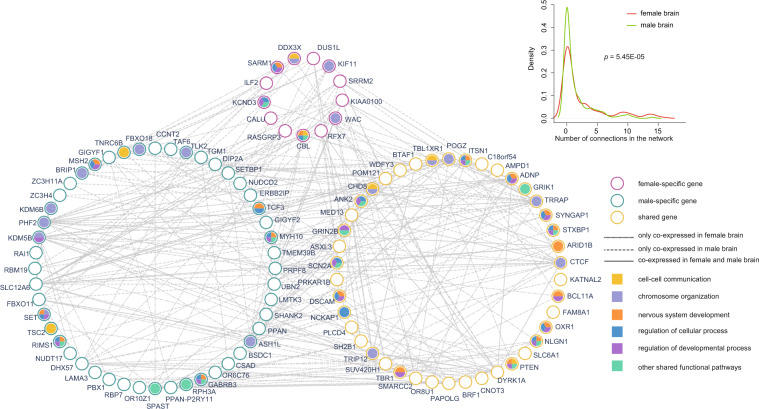
Autism spectrum disorder (ASD) is a complex neurodevelopmental disorder with a male-to-female prevalence of 4:1. However, the genetic mechanisms underlying this gender difference remain unclear. Mutation burden analysis, a TADA model, and co-expression and functional network analyses were performed on de novo mutations (DNMs) and corresponding candidate genes. We found that the prevalence of putative functional DNMs (loss-of-function and predicted deleterious missense mutations) in females was significantly higher than that in males, suggesting that a higher genetic load was required in females to reach the threshold for a diagnosis. We then prioritized 174 candidate genes, including 60 shared genes, 91 male-specific genes, and 23 female-specific genes. All of the three subclasses of candidate genes were significantly more frequently co-expressed in female brains than male brains, suggesting that compensation effects of the deficiency of ASD candidate genes may be more likely in females. Nevertheless, the three subclasses of candidate genes were co-expressed with each other, suggesting a convergent functional network of male and female-specific genes. Our analysis of different aspects of genetic components provides suggestive evidence supporting the female-protective effect in ASD. Moreover, further study is needed to integrate neuronal and hormonal data to elucidate the underlying gender difference in ASD.
Overview
The claims and statistics of this paper haven’t been checked yet.
Free: it reads the open-access text and checks the first 5 claims that cite a source we can check. Create a free account to check every claim.
Integrity signals
Registry
Cites
Statistics
Figures
Verification
Claims the paper makes
The claims and statistics of this paper haven’t been checked yet.
Free: it reads the open-access text and checks the first 5 claims that cite a source we can check. Create a free account to check every claim.
Claims other papers make about this one
Each is checked against this paper’s own text: does it say what the citing paper says it does?
The source backs part of the claim, not all of it — or backs it for a different population, condition or comparison.
In the citing paper
“Due to potential sexual dimorphisms in brain structural lifespan trajectories, sex is often considered a confounding factor in neuroimaging studies and individual analyses need to be conducted by sexes (e.g., depression, autism) [42, 43].”
From Confound Controlled Multimodal Neuroimaging Data Fusion and Its Application to Developmental Disorders (2025) · cites this paper as [43]
Experimental — accuracy not yet measuredThe cited source says what the claim attributes to it.
In the citing paper
“The possibility of a “female protective effect” (FPE) against ASD has been described extensively and has received consistent support from the results of genetic studies of de novo variants.4, 5, 6, 7, 8, 9, 10, 11, 12, 13”
From The female protective effect against autism spectrum disorder (2022) · cites this paper as [13]
The cited source says what the claim attributes to it.
In the citing paper
“Many types of ASD-associated de novo variants are observed more frequently in female cases.4, 5, 6, 7, 8, 9, 10, 11, 12, 13”
From The female protective effect against autism spectrum disorder (2022) · cites this paper as [13]
Self-check
Percentages, sums and reported differences re-computed from the paper’s own numbers.
The self-check needs the paper’s full text.
Citations
Cites
Cytoscape: A software Environment for integrated models of biomolecular interaction networks
Shannon, P., Markiel, A., Ozier, O., Baliga, N. S., Wang, J. T., Ramage, D., Amin, N., Schwikowski, B., & Ideker, T. (2003) · Genome Research · doi:10.1101/gr.1239303 · Cited by 51,888
ANNOVAR: functional annotation of genetic variants from high-throughput sequencing data
Wang, K., Li, M., & Hakonarson, H. (2010) · Nucleic Acids Research · doi:10.1093/nar/gkq603 · Cited by 14,621
REVEL: An Ensemble Method for Predicting the Pathogenicity of Rare Missense Variants
Ioannidis, N. M., Rothstein, J. H., Pejaver, V., Middha, S., McDonnell, S. K., Baheti, S., Musolf, A., Li, Q., Holzinger, E., Karyadi, D., et al. (2016) · The American Journal of Human Genetics · doi:10.1016/j.ajhg.2016.08.016 · Cited by 2,908
Synaptic, transcriptional and chromatin genes disrupted in autism
Study, T. D., De Rubeis, S., Autism, H. M. C. F., UK10K Consortium, The Autism Sequencing Consortium, He, X., Goldberg, A. P., Poultney, C. S., Samocha, K., Ercument Cicek, A., et al. (2014) · Nature · doi:10.1038/nature13772 · Cited by 2,746
The contribution of de novo coding mutations to autism spectrum disorder
Iossifov, I., O’Roak, B. J., Sanders, S. J., Ronemus, M., Krumm, N., Levy, D., Stessman, H. A., Witherspoon, K. T., Vives, L., Patterson, K. E., et al. (2014) · Nature · doi:10.1038/nature13908 · Cited by 2,585
Lai, M.-C., Lombardo, M. V., & Baron-Cohen, S. (2014) · The Lancet · doi:10.1016/s0140-6736(13)61539-1 · Cited by 2,371
Sporadic autism exomes reveal a highly interconnected protein network of de novo mutations
O’Roak, B. J., Vives, L., Girirajan, S., Karakoc, E., Krumm, N., Coe, B. P., Levy, R., Ko, A., Lee, C., Smith, J. D., et al. (2012) · Nature · doi:10.1038/nature10989 · Cited by 2,165
De novo mutations revealed by whole-exome sequencing are strongly associated with autism
Sanders, S. J., Murtha, M. T., Gupta, A. R., Murdoch, J. D., Raubeson, M. J., Willsey, A. J., Ercan-Sencicek, A. G., DiLullo, N. M., Parikshak, N. N., Stein, J. L., et al. (2012) · Nature · doi:10.1038/nature10945 · Cited by 2,084
The extreme male brain theory of autism
Baron-Cohen, S. (2002) · Trends in Cognitive Sciences · doi:10.1016/s1364-6613(02)01904-6 · Cited by 2,007
Patterns and rates of exonic de novo mutations in autism spectrum disorders
Neale, B. M., Kou, Y., Liu, L., Ma’ayan, A., Samocha, K. E., Sabo, A., Lin, C.-F., Stevens, C., Wang, L.-S., Makarov, V., et al. (2012) · Nature · doi:10.1038/nature11011 · Cited by 1,734
Self-citationDe Novo Gene Disruptions in Children on the Autistic Spectrum
Iossifov, I., Ronemus, M., Levy, D., Wang, Z., Hakker, I., Rosenbaum, J., Yamrom, B., Lee, Y.-H., Narzisi, G., Leotta, A., et al. (2012) · Neuron · doi:10.1016/j.neuron.2012.04.009 · Cited by 1,446
Insights into autism spectrum disorder genomic architecture and biology from 71 risk loci
Sanders, S. J., He, X., Willsey, A. J., Ercan-Sencicek, A. G., Samocha, K. E., Cicek, A. E., Murtha, M. T., Bal, V. H., Bishop, S. L., Dong, S., et al. (2015) · Neuron · doi:10.1016/j.neuron.2015.09.016 · Cited by 1,430
The Extreme Male-Brain Theory of Autism
Baron-Cohen, S. (1999) · Neurodevelopmental Disorders · doi:10.7551/mitpress/4945.003.0023 · Cited by 1,413
Sanders, S. J., Ercan-Sencicek, A. G., Hus, V., Luo, R., Murtha, M. T., Moreno-De-Luca, D., Chu, S. H., Moreau, M. P., Gupta, A. R., Thomson, S. A., et al. (2011) · Neuron · doi:10.1016/j.neuron.2011.05.002 · Cited by 1,263
Sex differences in autism spectrum disorders
Werling, D. M., & Geschwind, D. H. (2013) · Current Opinion in Neurology · doi:10.1097/wco.0b013e32835ee548 · Cited by 1,245
Multiplex Targeted Sequencing Identifies Recurrently Mutated Genes in Autism Spectrum Disorders
O’Roak, B. J., Vives, L., Fu, W., Egertson, J. D., Stanaway, I. B., Phelps, I. G., Carvill, G., Kumar, A., Lee, C., Ankenman, K., et al. (2012) · Science · doi:10.1126/science.1227764 · Cited by 1,240
Sex/Gender Differences and Autism: Setting the Scene for Future Research
Lai, M.-C., Lombardo, M. V., Auyeung, B., Chakrabarti, B., & Baron-Cohen, S. (2015) · Journal of the American Academy of Child & Adolescent Psychiatry · doi:10.1016/j.jaac.2014.10.003 · Cited by 1,120
Integrative functional genomic analyses implicate specific molecular pathways and circuits in autism
Parikshak, N. N., Luo, R., Zhang, A., Won, H., Lowe, J. K., Chandran, V., Horvath, S., & Geschwind, D. H. (2013) · Cell · doi:10.1016/j.cell.2013.10.031 · Cited by 1,039
Willsey, A. J., Sanders, S. J., Li, M., Dong, S., Tebbenkamp, A. T., Muhle, R. A., Reilly, S. K., Lin, L., Fertuzinhos, S., Miller, J. A., et al. (2013) · Cell · doi:10.1016/j.cell.2013.10.020 · Cited by 934
SFARI Gene 2.0: a community-driven knowledgebase for the autism spectrum disorders (ASDs)
Abrahams, B. S., Arking, D. E., Campbell, D. B., Mefford, H. C., Morrow, E. M., Weiss, L. A., Menashe, I., Wadkins, T., Banerjee-Basu, S., & Packer, A. (2013) · Molecular Autism · doi:10.1186/2040-2392-4-36 · Cited by 873
Whole genome sequencing resource identifies 18 new candidate genes for autism spectrum disorder
C Yuen, R. K., Merico, D., Bookman, M., L Howe, J., Thiruvahindrapuram, B., Patel, R. V., Whitney, J., Deflaux, N., Bingham, J., Wang, Z., et al. (2017) · Nature Neuroscience · doi:10.1038/nn.4524 · Cited by 844
Modabbernia, A., Velthorst, E., & Reichenberg, A. (2017) · Molecular Autism · doi:10.1186/s13229-017-0121-4 · Cited by 809
Allen Brain Atlas: an integrated spatio-temporal portal for exploring the central nervous system
Sunkin, S. M., Ng, L., Lau, C., Dolbeare, T., Gilbert, T. L., Thompson, C. L., Hawrylycz, M., & Dang, C. (2012) · Nucleic Acids Research · doi:10.1093/nar/gks1042 · Cited by 796
Why are autism spectrum conditions more prevalent in males?
Baron-Cohen, S., Lombardo, M. V., Auyeung, B., Ashwin, E., Chakrabarti, B., & Knickmeyer, R. (2011) · PLoS Biology · doi:10.1371/journal.pbio.1001081 · Cited by 754
Heemers, H. V., & Tindall, D. J. (2007) · Endocrine Reviews · doi:10.1210/er.2007-0019 · Cited by 753
Mandy, W., Chilvers, R., Chowdhury, U., Salter, G., Seigal, A., & Skuse, D. (2012) · Journal of Autism and Developmental Disorders · doi:10.1007/s10803-011-1356-0 · Cited by 715
Rare de novo and transmitted copy-number variation in autistic spectrum disorders
Levy, D., Ronemus, M., Yamrom, B., Lee, Y.-H., Leotta, A., Kendall, J., Marks, S., Lakshmi, B., Pai, D., Ye, K., et al. (2011) · Neuron · doi:10.1016/j.neuron.2011.05.015 · Cited by 712
Gilman, S. R., Iossifov, I., Levy, D., Ronemus, M., Wigler, M., & Vitkup, D. (2011) · Neuron · doi:10.1016/j.neuron.2011.05.021 · Cited by 701
Dworzynski, K., Ronald, A., Bolton, P., & Happé, F. (2012) · Journal of the American Academy of Child & Adolescent Psychiatry · doi:10.1016/j.jaac.2012.05.018 · Cited by 633
Jacquemont, S., Coe, B. P., Hersch, M., Duyzend, M. H., Krumm, N., Bergmann, S., Beckmann, J. S., Rosenfeld, J. A., & Eichler, E. E. (2014) · The American Journal of Human Genetics · doi:10.1016/j.ajhg.2014.02.001 · Cited by 605
Excess of rare, inherited truncating mutations in autism
Krumm, N., Turner, T. N., Baker, C., Vives, L., Mohajeri, K., Witherspoon, K., Raja, A., Coe, B. P., Stessman, H. A., He, Z.-X., et al. (2015) · Nature Genetics · doi:10.1038/ng.3303 · Cited by 587
Identifying Mendelian disease genes with the Variant Effect Scoring Tool
Carter, H., Douville, C., Stenson, P. D., Cooper, D. N., & Karchin, R. (2013) · BMC Genomics · doi:10.1186/1471-2164-14-s3-s3 · Cited by 563
Stessman, H. A. F., Xiong, B., Coe, B. P., Wang, T., Hoekzema, K., Fenckova, M., Kvarnung, M., Gerdts, J., Trinh, S., Cosemans, N., et al. (2017) · Nature Genetics · doi:10.1038/ng.3792 · Cited by 559
Self-citationWhole-Genome Sequencing in Autism Identifies Hot Spots for De Novo Germline Mutation
Michaelson, J. J., Shi, Y., Gujral, M., Zheng, H., Malhotra, D., Jin, X., Jian, M., Liu, G., Greer, D., Bhandari, A., et al. (2012) · Cell · doi:10.1016/j.cell.2012.11.019 · Cited by 544
Self-citationExamining and interpreting the female protective effect against autistic behavior
Robinson, E. B., Lichtenstein, P., Anckarsäter, H., Happé, F., & Ronald, A. (2013) · Proceedings of the National Academy of Sciences · doi:10.1073/pnas.1211070110 · Cited by 531
Whole-genome sequencing of quartet families with autism spectrum disorder
Yuen, R. K. C., Thiruvahindrapuram, B., Merico, D., Walker, S., Tammimies, K., Hoang, N., Chrysler, C., Nalpathamkalam, T., Pellecchia, G., Liu, Y., et al. (2015) · Nature Medicine · doi:10.1038/nm.3792 · Cited by 514
Elevated fetal steroidogenic activity in autism
Baron-Cohen, S., Auyeung, B., Nørgaard-Pedersen, B., Hougaard, D. M., Abdallah, M. W., Melgaard, L., Cohen, A. S., Chakrabarti, B., Ruta, L., & Lombardo, M. V. (2015) · Molecular Psychiatry · doi:10.1038/mp.2014.48 · Cited by 471
A de novo convergence of autism genetics and molecular neuroscience
Krumm, N., O’Roak, B. J., Shendure, J., & Eichler, E. E. (2014) · Trends in Neurosciences · doi:10.1016/j.tins.2013.11.005 · Cited by 423
Sex differences in the evaluation and diagnosis of autism spectrum disorders among children
Giarelli, E., Wiggins, L. D., Rice, C. E., Levy, S. E., Kirby, R. S., Pinto-Martin, J., & Mandell, D. (2010) · Disability and Health Journal · doi:10.1016/j.dhjo.2009.07.001 · Cited by 398
The role of de novo mutations in the genetics of autism spectrum disorders
Ronemus, M., Iossifov, I., Levy, D., & Wigler, M. (2014) · Nature Reviews Genetics · doi:10.1038/nrg3585 · Cited by 390
De novo genic mutations among a Chinese autism spectrum disorder cohort
Wang, T., Guo, H., Xiong, B., Stessman, H. A. F., Wu, H., Coe, B. P., Turner, T. N., Liu, Y., Zhao, W., Hoekzema, K., et al. (2016) · Nature Communications · doi:10.1038/ncomms13316 · Cited by 370
Self-citationASD in Females: Are We Overstating the Gender Difference in Diagnosis?
Kreiser, N. L., & White, S. W. (2014) · Clinical Child and Family Psychology Review · doi:10.1007/s10567-013-0148-9 · Cited by 367
Kaiser, M. D., Hudac, C. M., Shultz, S., Lee, S. M., Cheung, C., Berken, A. M., Deen, B., Pitskel, N. B., Sugrue, D. R., Voos, A. C., et al. (2010) · Proceedings of the National Academy of Sciences · doi:10.1073/pnas.1010412107 · Cited by 352
A unified genetic theory for sporadic and inherited autism
Zhao, X., Leotta, A., Kustanovich, V., Lajonchere, C., Geschwind, D. H., Law, K., Law, P., Qiu, S., Lord, C., Sebat, J., et al. (2007) · Proceedings of the National Academy of Sciences · doi:10.1073/pnas.0705803104 · Cited by 319
Fetal Testosterone Predicts Sexually Differentiated Childhood Behavior in Girls and in Boys
Auyeung, B., Baron-Cohen, S., Ashwin, E., Knickmeyer, R., Taylor, K., Hackett, G., & Hines, M. (2009) · Psychological Science · doi:10.1111/j.1467-9280.2009.02279.x · Cited by 314
He, X., Sanders, S. J., Liu, L., De Rubeis, S., Lim, E. T., Sutcliffe, J. S., Schellenberg, G. D., Gibbs, R. A., Daly, M. J., Buxbaum, J. D., et al. (2013) · PLoS Genetics · doi:10.1371/journal.pgen.1003671 · Cited by 304
Biological sex affects the neurobiology of autism
Lai, M.-C., Lombardo, M. V., Suckling, J., Ruigrok, A. N. V., Chakrabarti, B., Ecker, C., Deoni, S. C. L., Craig, M. C., Murphy, D. G. M., Bullmore, E. T., et al. (2013) · Brain · doi:10.1093/brain/awt216 · Cited by 298
Gene expression in human brain implicates sexually dimorphic pathways in autism spectrum disorders
Werling, D. M., Parikshak, N. N., & Geschwind, D. H. (2016) · Nature Communications · doi:10.1038/ncomms10717 · Cited by 296
Sodium channels SCN1A, SCN2A and SCN3A in familial autism
Weiss, L. A., Escayg, A., Kearney, J. A., Trudeau, M., MacDonald, B. T., Mori, M., Reichert, J., Buxbaum, J. D., & Meisler, M. H. (2003) · Molecular Psychiatry · doi:10.1038/sj.mp.4001241 · Cited by 293
Naviaux, J. C., Wang, L., Li, K., Bright, A., Alaynick, W. A., Williams, K. R., Powell, S. B., & Naviaux, R. K. (2015) · Molecular Autism · doi:10.1186/2040-2392-6-1 · Cited by 285
Lim, E. T., Raychaudhuri, S., Sanders, S. J., Stevens, C., Sabo, A., MacArthur, D. G., Neale, B. M., Kirby, A., Ruderfer, D. M., Fromer, M., et al. (2013) · Neuron · doi:10.1016/j.neuron.2012.12.029 · Cited by 266
Neurodevelopmental and neuropsychiatric disorders represent an interconnected molecular system
Cristino, A. S., Williams, S. M., Hawi, Z., An, J.-Y., Bellgrove, M. A., Schwartz, C. E., Costa, L. D. F., & Claudianos, C. (2014) · Molecular Psychiatry · doi:10.1038/mp.2013.16 · Cited by 231
Performance evaluation of pathogenicity-computation methods for missense variants
Li, J., Zhao, T., Zhang, Y., Zhang, K., Shi, L., Chen, Y., Wang, X., & Sun, Z. (2018) · Nucleic Acids Research · doi:10.1093/nar/gky678 · Cited by 217
Self-citationLi, J., Cai, T., Jiang, Y., Chen, H., He, X., Chen, C., Li, X., Shao, Q., Ran, X., Li, Z., et al. (2016) · Molecular Psychiatry · doi:10.1038/mp.2015.40 · Cited by 210
Self-citationPaternally inherited cis-regulatory structural variants are associated with autism
Brandler, W. M., Antaki, D., Gujral, M., Kleiber, M. L., Whitney, J., Maile, M. S., Hong, O., Chapman, T. R., Tan, S., Tandon, P., et al. (2018) · Science · doi:10.1126/science.aan2261 · Cited by 209
Quantifying the contribution of recessive coding variation to developmental disorders
Martin, H. C., Jones, W. D., McIntyre, R., Sanchez-Andrade, G., Sanderson, M., Stephenson, J. D., Jones, C. P., Handsaker, J., Gallone, G., Bruntraeger, M., et al. (2018) · Science · doi:10.1126/science.aar6731 · Cited by 201
Genotype to phenotype relationships in autism spectrum disorders
Chang, J., Gilman, S. R., Chiang, A. H., Sanders, S. J., & Vitkup, D. (2015) · Nature Neuroscience · doi:10.1038/nn.3907 · Cited by 197
VarCards: an integrated genetic and clinical database for coding variants in the human genome
Li, J., Shi, L., Zhang, K., Zhang, Y., Hu, S., Zhao, T., Teng, H., Li, X., Jiang, Y., Ji, L., et al. (2018) · Nucleic Acids Research · doi:10.1093/nar/gkx1039 · Cited by 197
Self-citationBölte, S., Duketis, E., Poustka, F., & Holtmann, M. (2011) · Autism · doi:10.1177/1362361310391116 · Cited by 168
Sexually dimorphic behavior, neuronal activity, and gene expression in Chd8-mutant mice
Jung, H., Park, H., Choi, Y., Kang, H., Lee, E., Kweon, H., Roh, J. D., Ellegood, J., Choi, W., Kang, J., et al. (2018) · Nature Neuroscience · doi:10.1038/s41593-018-0208-z · Cited by 157
Loss of δ-catenin function in severe autism
Turner, T. N., Sharma, K., Oh, E. C., Liu, Y. P., Collins, R. L., Sosa, M. X., Auer, D. R., Brand, H., Sanders, S. J., Moreno-De-Luca, D., et al. (2015) · Nature · doi:10.1038/nature14186 · Cited by 155
Lehnhardt, F.-G., Falter, C. M., Gawronski, A., Pfeiffer, K., Tepest, R., Franklin, J., & Vogeley, K. (2016) · Journal of Autism and Developmental Disorders · doi:10.1007/s10803-015-2558-7 · Cited by 153
Targeted DNA Sequencing from Autism Spectrum Disorder Brains Implicates Multiple Genetic Mechanisms
D’Gama, A. M., Pochareddy, S., Li, M., Jamuar, S. S., Reiff, R. E., Lam, A.-T. N., Sestan, N., & Walsh, C. A. (2015) · Neuron · doi:10.1016/j.neuron.2015.11.009 · Cited by 153
Placental H3K27me3 establishes female resilience to prenatal insults
Nugent, B. M., O’Donnell, C. M., Epperson, C. N., & Bale, T. L. (2018) · Nature Communications · doi:10.1038/s41467-018-04992-1 · Cited by 150
Ben-David, E., & Shifman, S. (2013) · Molecular Psychiatry · doi:10.1038/mp.2012.148 · Cited by 148
Supekar, K., & Menon, V. (2015) · Molecular Autism · doi:10.1186/s13229-015-0042-z · Cited by 130
Sex-specific gene–environment interactions underlying ASD-like behaviors
Schaafsma, S. M., Gagnidze, K., Reyes, A., Norstedt, N., Månsson, K., Francis, K., & Pfaff, D. W. (2017) · Proceedings of the National Academy of Sciences · doi:10.1073/pnas.1619312114 · Cited by 126
Forrest, M. P., Hill, M., Kavanagh, D. H., Tansey, K. E., Waite, A. J., & Blake, D. J. (2017) · Schizophrenia Bulletin · doi:10.1093/schbul/sbx164 · Cited by 116
Li, J., Wang, L., Guo, H., Shi, L., Zhang, K., Tang, M., Hu, S., Dong, S., Liu, Y., Wang, T., et al. (2017) · Molecular Psychiatry · doi:10.1038/mp.2017.140 · Cited by 104
Self-citationUnscrambling butterfly oogenesis
Carter, J.-M., Baker, S. C., Pink, R., Carter, D. R., Collins, A., Tomlin, J., Gibbs, M., & Breuker, C. J. (2013) · BMC Genomics · doi:10.1186/1471-2164-14-283 · Cited by 102
Whole-exome sequencing and neurite outgrowth analysis in autism spectrum disorder
Hashimoto, R., Nakazawa, T., Tsurusaki, Y., Yasuda, Y., Nagayasu, K., Matsumura, K., Kawashima, H., Yamamori, H., Fujimoto, M., Ohi, K., et al. (2016) · Journal of Human Genetics · doi:10.1038/jhg.2015.141 · Cited by 94
Pleiotropic Mechanisms Indicated for Sex Differences in Autism
Mitra, I., Tsang, K., Ladd-Acosta, C., Croen, L. A., Aldinger, K. A., Hendren, R. L., Traglia, M., Lavillaureix, A., Zaitlen, N., Oldham, M. C., et al. (2016) · PLOS Genetics · doi:10.1371/journal.pgen.1006425 · Cited by 80
Gene4Denovo: an integrated database and analytic platform for de novo mutations in humans
Zhao, G., Li, K., Li, B., Wang, Z., Fang, Z., Wang, X., Zhang, Y., Luo, T., Zhou, Q., Wang, L., et al. (2019) · Nucleic Acids Research · doi:10.1093/nar/gkz923 · Cited by 75
Self-citationSex-specific impact of prenatal androgens on social brain default mode subsystems
Lombardo, M. V., Auyeung, B., Pramparo, T., Quartier, A., Courraud, J., Holt, R. J., Waldman, J., Ruigrok, A. N. V., Mooney, N., Bethlehem, R. A. I., et al. (2020) · Molecular Psychiatry · doi:10.1038/s41380-018-0198-y · Cited by 67
AutismKB 2.0: a knowledgebase for the genetic evidence of autism spectrum disorder
Yang, C., Li, J., Wu, Q., Yang, X., Huang, A. Y., Zhang, J., Ye, A. Y., Dou, Y., Yan, L., Zhou, W., et al. (2018) · Database · doi:10.1093/database/bay106 · Cited by 64
Self-citationTakayama, K., Horie‐Inoue, K., Ikeda, K., Urano, T., Murakami, K., Hayashizaki, Y., Ouchi, Y., & Inoue, S. (2008) · Biochemical and Biophysical Research Communications · doi:10.1016/j.bbrc.2008.07.056 · Cited by 63
Sex differences in frontal lobe connectivity in adults with autism spectrum conditions
Zeestraten, E. A., Gudbrandsen, M. C., Daly, E., de Schotten, M. T., Catani, M., Dell'Acqua, F., Lai, M.-C., Ruigrok, A. N. V., Lombardo, M. V., Chakrabarti, B., et al. (2017) · Translational Psychiatry · doi:10.1038/tp.2017.9 · Cited by 47
Li, J., Cai, T., Jiang, Y., Chen, H., He, X., Chen, C., Li, X., Shao, Q., Ran, X., Li, Z., et al. (2016) · Molecular Psychiatry · doi:10.1038/mp.2015.58 · Cited by 47
Self-citationA comparative study of the genetic components of three subcategories of autism spectrum disorder
Li, J., Hu, S., Zhang, K., Shi, L., Zhang, Y., Zhao, T., Wang, L., He, X., Xia, K., Liu, C., et al. (2018) · Molecular Psychiatry · doi:10.1038/s41380-018-0081-x · Cited by 31
Self-citationLi, J., Wang, L., Yu, P., Shi, L., Zhang, K., Sun, Z. S., & Xia, K. (2017) · American Journal of Medical Genetics Part B Neuropsychiatric Genetics · doi:10.1002/ajmg.b.32543 · Cited by 26
Self-citation
Cited by
Sex and gender in neurodevelopmental conditions
Bölte, S., Neufeld, J., Marschik, P. B., Williams, Z. J., Gallagher, L., & Lai, M.-C. (2023) · Nature Reviews Neurology · doi:10.1038/s41582-023-00774-6 · Cited by 249
The female protective effect against autism spectrum disorder
Wigdor, E. M., Weiner, D. J., Grove, J., Fu, J. M., Thompson, W. K., Carey, C. E., Baya, N., van der Merwe, C., Walters, R. K., Satterstrom, F. K., et al. (2022) · Cell Genomics · doi:10.1016/j.xgen.2022.100134 · Cited by 124
The female protective effect against autism spectrum disorder
Wigdor, E. M., Weiner, D. J., Grove, J., Fu, J. M., Thompson, W. K., Carey, C. E., Baya, N., van der Merwe, C., Walters, R. K., Satterstrom, F. K., et al. (2021) · doi:10.1101/2021.03.29.21253866 · Cited by 124
Hollestein, V., Poelmans, G., Forde, N. J., Beckmann, C. F., Ecker, C., Mann, C., Schäfer, T., Moessnang, C., Baumeister, S., Banaschewski, T., et al. (2023) · Translational Psychiatry · doi:10.1038/s41398-023-02317-5 · Cited by 142
Diemer, M. C., Gerstein, E. D., & Regester, A. (2022) · Autism · doi:10.1177/13623613221113501 · Cited by 106
“, 2013; Leaper & Friedman, 2006) or genetic/hormonal protection, such as the estrogen protection effect (Robinson et al., 2013; Rylaarsdam & Guemez-Gamboa, 2019; Zhang et al., 2020).”
Background
Metadata
- Authors
- Zhang, Y., Li, N., Li, C., Zhang, Z., Teng, H., Wang, Y., Zhao, T., Shi, L., Zhang, K., Xia, K., Li, J., & Sun, Z.
- Affiliations
- Central South University (CN)
- Wenzhou Medical University (CN)
- Chinese Academy of Sciences (CN)
- Corresponding author
- Li, Jinchen
- ORCID
- Venue
- Translational Psychiatry
- Published
- 2020-01-15
- Volume
- 10
- Issue
- 1
- Pages
- 4-4
- ISSN
- 2158-3188 (ISSN-L)
- PMC
- PMC7026157
- OpenAlex
- W3003776320
- Semantic Scholar
- a3efb8d9314ec838c16cd6de307613e87a6bf93b
- Cited by
- 177
- References
- 80
- Citations by year
- 2026: 23 · 2025: 38 · 2024: 27 · 2023: 30 · 2022: 26 · 2021: 28 · 2020: 4
- FWCI
- 11.82
- Type
- journal article
- Language
- en
- Open access
- gold
- doi.org
- Licence
- cc-by
- creativecommons.org/licenses/by/4.0 (tdm)
- creativecommons.org/licenses/by/4.0 (vor)
- Locations
- Translational Psychiatry (publishedVersion, cc-by)
- PubMed Central (publishedVersion, cc-by)
- PubMed (publishedVersion)
- Funders
- National Natural Science Foundation of China (No.31911530148, No.31571301, No.81801133)
- Topics
- Life Sciences › Neuroscience › Cognitive Neuroscience › Autism Spectrum Disorder Research
- Life Sciences › Biochemistry, Genetics and Molecular Biology › Genetics › Genetics and Neurodevelopmental Disorders
- Life Sciences › Biochemistry, Genetics and Molecular Biology › Genetics › Genomics and Rare Diseases
- Keywords
- autism spectrum disorder, sex differences, de novo mutations, mutational burden, candidate genes, functional networks, loss-of-function mutations, missense mutations, sex-specific genes
- MeSH terms
- Autism Spectrum Disorder, Brain, DNA Mutational Analysis, Female, Humans, Male, Sex Characteristics
About these checks
Registry, retraction, Cites and statistics results are computed, not judged, with one exception: a printed reference that no index lists is read once by a model before it counts as a citation error. Claims are extracted by a model and kept only when their quote appears verbatim in the text; each cited source is then checked, with a model’s help, for whether it says what the claim relies on. Those verdicts can be wrong — read the claim’s quote and the cited source before relying on one.
Statistics and arithmetic are recomputed, not judged.
Confidence bands are shown only for fields calibrated on our annotated test set. None is calibrated yet, so no band is shown.
What counts as a claim ›How we measure confidence ›How we check this ›
Are you an author, or do you see a problem with this page? Request a review
Data sources
Bibliographic data: Semantic Scholar, OpenAlex, Crossref.
Contains information from the Semantic Scholar Academic Graph Datasets, made available under the ODC Attribution License (ODC-BY 1.0).
Semantic Scholar’s data is described in: Kinney, R., et al. (2023). The Semantic Scholar Open Data Platform. arXiv:2301.10140.
