

The DOI matches its Crossref record; 137 of the 139 references it cites were found in a registry or an index.
Deep learning in mental health outcome research: a scoping review
Open accessAbstract
Mental illnesses, such as depression, are highly prevalent and have been shown to impact an individual’s physical health. Recently, artificial intelligence (AI) methods have been introduced to assist mental health providers, including psychiatrists and psychologists, for decision-making based on patients’ historical data (e.g., medical records, behavioral data, social media usage, etc.). Deep learning (DL), as one of the most recent generation of AI technologies, has demonstrated superior performance in many real-world applications ranging from computer vision to healthcare. The goal of this study is to review existing research on applications of DL algorithms in mental health outcome research. Specifically, we first briefly overview the state-of-the-art DL techniques. Then we review the literature relevant to DL applications in mental health outcomes. According to the application scenarios, we categorize these relevant articles into four groups: diagnosis and prognosis based on clinical data, analysis of genetics and genomics data for understanding mental health conditions, vocal and visual expression data analysis for disease detection, and estimation of risk of mental illness using social media data. Finally, we discuss challenges in using DL algorithms to improve our understanding of mental health conditions and suggest several promising directions for their applications in improving mental health diagnosis and treatment.
Overview
The claims and statistics of this paper haven’t been checked yet.
Run the check — free, no account needed. It reads the open-access text and checks the sources it cites.
Integrity signals
Registry
Cites
Statistics
Figures
Verification
Claims the paper makes
The claims and statistics of this paper haven’t been checked yet.
Run the check — free, no account needed. It reads the open-access text and checks the sources it cites.
Claims other papers make about this one
Each is checked against this paper’s own text: does it say what the citing paper says it does?
The source backs part of the claim, not all of it — or backs it for a different population, condition or comparison.
In the citing paper
“This “black box” nature of some ML models raises concerns about their transparency and accountability, particularly in the context of public health interventions that can have far-reaching consequences [55, 56].”
From Integrating machine learning and artificial intelligence in life-course epidemiology: pathways to innovative public health solutions (2024) · cites this paper as [56]
Experimental — accuracy not yet measured
Self-check
Percentages, sums and reported differences re-computed from the paper’s own numbers.
The self-check needs the paper’s full text.
Citations
Cites
Diagnostic and Statistical Manual of Mental Disorders
American Psychiatric Association (2013) · doi:10.1176/appi.books.9780890425596 · Cited by 116,369
Hochreiter, S., & Schmidhuber, J. (1997) · Neural Computation · doi:10.1162/neco.1997.9.8.1735 · Cited by 102,318
LeCun, Y., Bengio, Y., & Hinton, G. (2015) · Nature · doi:10.1038/nature14539 · Cited by 84,126
Preferred Reporting Items for Systematic Reviews and Meta-Analyses: the PRISMA statement
Moher, D., Liberati, A., Tetzlaff, J., Altman, D. G., & for the PRISMA Group (2009) · BMJ · doi:10.1136/bmj.b2535 · Cited by 83,823
Gradient-based learning applied to document recognition
Lecun, Y., Bottou, L., Bengio, Y., & Haffner, P. (1998) · Proceedings of the IEEE · doi:10.1109/5.726791 · Cited by 58,805
Preferred reporting items for systematic reviews and meta-analyses: the PRISMA Statement.
(2009) · PubMed Central · Cited by 44,859
Preferred reporting items for systematic reviews and meta-analyses: The PRISMA statement
Moher, D., Liberati, A., Tetzlaff, J., Altman, D. G., & the PRISMA Group* (2009) · Annals of Internal Medicine · doi:10.7326/0003-4819-151-4-200908180-00135 · Cited by 37,554
Learning representations by back-propagating errors
Rumelhart, D. E., Hinton, G. E., & Williams, R. J. (1986) · Nature · doi:10.1038/323533a0 · Cited by 31,892 · cited 1×
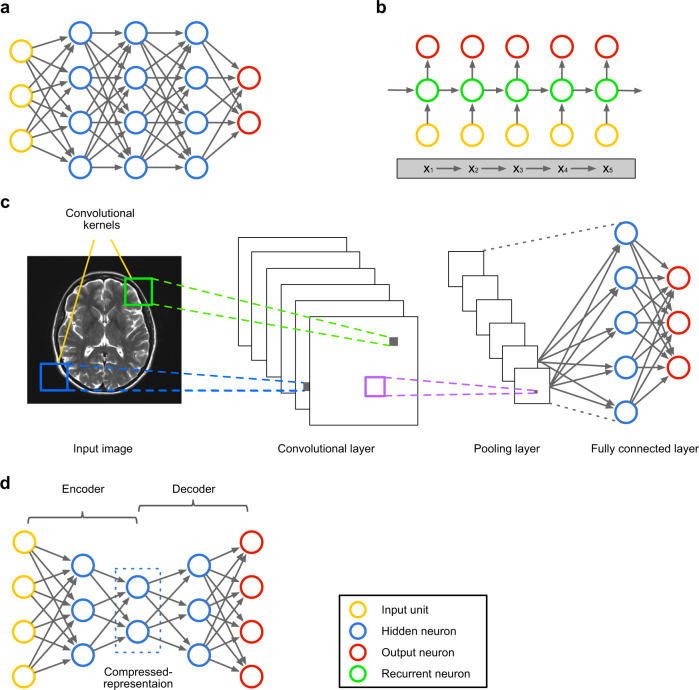
“2a, there is a weight parameter associated with each edge in the DFNN, which needs to be optimized by minimizing some training loss measured on a speci fi c training dataset (usually through back-propagation 17 ).”
MethodThe Elements of Statistical Learning
Hastie, T., Tibshirani, R., & Friedman, J. (2009) · Springer Series in Statistics · doi:10.1007/978-0-387-84858-7 · Cited by 25,970
Semi-supervised classification with graph convolutional networks
Kipf, T. N., & Welling, M. (2016) · arXiv · doi:10.48550/arxiv.1609.02907 · Cited by 24,853
Research works printed but not linked: 7
- Biship, C. M. Pattern Recognition and Machine Learning (Information Science and Statistics) (Springer-Verlag, Berlin, 2007).
- McGuffin, P., Owen, M. J. & Gottesman, I. I. Psychiatric Genetics and Genomics (Oxford Univ. Press, New York, 2004).
- Yue, T. & Wang, H. Deep learning for genomics: a concise overview. Preprint at arXiv:1802.00810 (2018). · arXiv
- Salakhutdinov, R. & Hinton, G. Deep Boltzmann machines. In Proc. 12th Int. Conference on Artificial Intelligence and Statistics 448–455 (Clearwater, Florida, USA, 2009).
- Sadeque, F., Xu, D. & Bethard, S. UArizona at the CLEF eRisk 2017 pilot task: linear and recurrent models for early depression detection. CEUR Workshop Proc. 1866 (2017).
- Yosinski, J., Clune, J., Bengio, Y. & Lipson, H. How transferable are features in deep neural networks? In Proc. Advances in Neural Information Processing Systems 3320–3328 (Montreal, Canada, 2014).
- Srivastava, N., Mansimov, E. & Salakhudinov, R. Unsupervised learning of video representations using LSTMs. In Proc. Int. Conference on Machine Learning 843–852 (Lille, France, 2015).
Cited by
Sorted by citations
Items 201–300 of 367
SOK: Application of machine learning models in child and youth mental health decision-making
Daneshvar, H., Boursalie, O., Samavi, R., Doyle, T. E., Duncan, L., Pires, P., & Sassi, R. B. (2024) · Elsevier eBooks · doi:10.1016/b978-0-443-13671-9.00003-x · Cited by 3
Improving women’s mental health through AI-powered interventions and diagnoses
Negi, R. (2024) · Elsevier eBooks · doi:10.1016/b978-0-443-21889-7.00017-8 · Cited by 3
Research Issues & State of the Art Challenges in Event Detection
Saadat, M. N., Kabir, H., Shuaib, M., Nassr, R. M., Husen, M. N., & Osman, H. (2021) · International Conference on Ubiquitous Information Management and Communication (IMCOM) · doi:10.1109/imcom51814.2021.9377431 · Cited by 3
“Article [58], Owing to the growing accessibility of data related to the mental health state of a person, artificial intelligence (AI) and machine learning (ML) innovations are used to enhance our knowledge of mental health problems and help mental health professionals in making informed clinical…”
BackgroundAutomatic Sleep Staging: Recent Development, Challenges, and Future DirectionsPreprint
Phan, H., & Mikkelsen, K. B. (2021) · arXiv (Cornell University) · Cited by 3
Schmidt, A. L., O’Connor, K., Gonzalez‐Hernandez, G., & Rodriguez‐Esteban, R. (2023) · medRxiv · doi:10.1101/2023.12.11.23299645 · Cited by 3
“SML has been already applied for research into mental disorders 30,31,32,33,34 such as depression 35,36,33 , suicide 37,38 , ADHD 39,33 and anxiety 40,33 .”
MethodThe uses and misuses of artificial intelligence in psychiatry: Promises and challenges
Reutens, S. G., Dandolo, C., Looi, R. C., Karystianis, G., & Looi, J. C. (2024) · Australasian Psychiatry · doi:10.1177/10398562241280348 · Cited by 3
Exploring Deep Learning Architectures for Mental Health Assessment: A Comparative Analysis
Arora, P., & Dahiya, S. (2024) · Global AI Summit - International Conference on Artificial Intelligence and Emerging Technology (AI Summit) · doi:10.1109/globalaisummit62156.2024.10947873 · Cited by 2
“What makes deep learning models very particularly appropriate for mental health diagnostics is that they are capable of learning from large datasets and improving predictive accuracy over time, thus fitting well into an area where symptoms can be nuanced and varied [10].”
Utilizing Deep Learning Methods for Stress Detection in Social Media Platform
Qureshi, A., Manzoor, A., Khan, S. U., & Ali, M. R. (2024) · International Conference on Future Networks and Distributed Systems (ICFNDS) · doi:10.1145/3726122.3726216 · Cited by 2
Li, S., Song, S., & Naqvi, S. M. (2025) · IEEE Transactions on Affective Computing · doi:10.1109/taffc.2025.3604562 · Cited by 5
“While such psychological signals are essential and highly effective in the detection of mental conditions [16], their acquisition often involves expensive specialized equipment, such as fMRI 1949-3045 © 2025 IEEE.”
Liu, J., Ding, X., & Gan, Y. (2026) · Clinical Psychology Review · doi:10.1016/j.cpr.2026.102728 · Cited by 4
Yadav, N., Singh, C., & Srivastava, K. (2022) · Hawaii International Conference on System Sciences (HICSS) · doi:10.24251/hicss.2022.443 · Cited by 2
“These networks can capture the hidden patterns within the data [37].”
Deep Learning: A tool in Biomedical Science
Tanwar, N., & Hasija, Y. (2022) · International Conference for Advancement in Technology (ICONAT) · doi:10.1109/iconat53423.2022.9725866 · Cited by 2
“The prediction given by AI technologies followed by machine learning and deep learning is based on the chronicled data for instance; behavioral data, medical records, and social medial usage [32].”
illustration of attention mechanism in LSTM algorithm for analyzing its performance
Bhuvaneswari, M., & Praba, V. L. (2022) · International Journal of Health Sciences · doi:10.53730/ijhs.v6ns2.7335 · Cited by 2
Explainable Machine Learning Models for Suicidal Behavior Prediction
Nordin, N., Zainol, Z. B., Noor, M. H. M., & FONG, C. L. (2022) · International Conference on Medical and Health Informatics (ICMHI) · doi:10.1145/3545729.3545754 · Cited by 2
Prevention of Global Mental Health Crisis with Transformer Neural Networks
Rajagopal, A. R., Nirmala, V., Andrew, J., Arun, M., & Piush, A. (2023) · Intelligent systems reference library · doi:10.1007/978-3-031-12419-8_11 · Cited by 2
Shao, Z. (2023) · Applied and Computational Engineering · doi:10.54254/2755-2721/18/20230993 · Cited by 2
Modeling Mental Health: Advances in Predictive Science towards Proactive Health Care
Jayakumar, N., & Reshma, N. (2024) · IEEE International Conference for Women in Innovation, Technology & Entrepreneurship (ICWITE) · doi:10.1109/icwite59797.2024.10503111 · Cited by 2
“It takes a systematic approach to examine the advancements in machine learning and deep learning [5] over the past generation, offering a comprehensive overview of the methods employed by researchers for diagnosing or predicting prevalent mental health disorders in the communities.”
BackgroundMental Health Detection using Machine Learning
Naidu, P. B., Ruchitha, M. M. C., Yaswanth, P., Harika, B., Prabhu, P., & Sree, G. V. D. (2024) · International Journal of Innovative Science and Research Technology (IJISRT) · doi:10.38124/ijisrt/ijisrt24apr701 · Cited by 2
Chahar, R., Dubey, A. K., & Narang, S. K. (2024) · International Journal of Electronics and Communication Engineering · doi:10.14445/23488549/ijece-v11i6p103 · Cited by 2
The artistic image processing for visual healing in smart city
Qu, G., Song, Q., & Fang, T. (2024) · Scientific Reports · doi:10.1038/s41598-024-68082-7 · Cited by 2
“DL is a machine learning method based on artificial neural networks, which has made breakthroughs in many fields, including natural language processing, computer vision, and speech recognition 28,29 .”
MethodJacqueline, C., & Singh, D. K. R. (2024) · Journal of Internet Services and Information Security · doi:10.58346/jisis.2024.i4.032 · Cited by 6
A Review on the Applications of Machine Learning Algorithms for Mental Stress Detection
Motghare, R., Bhoyar, S., Verma, P., Tale, A., & Barhate, A. (2024) · DMIHER International Conference on Artificial Intelligence in Healthcare, Education and Industry (IDICAIHEI) · doi:10.1109/idicaiei61867.2024.10842830 · Cited by 2
“The measurement of mental stress utilizes ML to detect stress in real-events and has the potential of being employed in stressful industries such as healthcare [12].”
Patibandla, R. S. M. L., Bhuyan, H. K., Rao, B. T., & Murthy, M. R. (2025) · Elsevier eBooks · doi:10.1016/b978-0-443-32862-6.00004-3 · Cited by 2
Hwang, J., Kang, J.-E., Jeon, S., Lee, K. H., Kim, J.-W., & Lee, J. (2025) · Biological Psychiatry Cognitive Neuroscience and Neuroimaging · doi:10.1016/j.bpsc.2025.04.005 · Cited by 2
Analysis Model of Human Resource Cross-Media Fusion Based on Deep Neural Network
Ma, S., Xuan, S., & Liang, Y. (2022) · Computational Intelligence and Neuroscience · doi:10.1155/2022/6069589 · Cited by 2
Kalyani, G. K., Suneetha, M., Janakiramaiah, B., & Battineni, G. (2023) · Springer eBooks · doi:10.1007/978-981-99-6637-0_2 · Cited by 5
Deep Learning Architectures for Facial Emotion Analysis
Chandra, B., Kindy, G. O., Gunawan, K. S., Satria, G. P., Edbert, I. S., & Suhartono, D. (2023) · International Conference on Sustainable Information Engineering and Technology (SIET) · doi:10.1145/3626641.3627492 · Cited by 2
“It can analyze large amounts of data, such as electronic health records, medical images, and patient-generated data, to identify patterns and risk factors that may not be easily detectable by humans, hence predict mental health illness and improve treatment outcomes [28, 29].”
BackgroundArtificial Intelligence Applications in Decision Making for Disease ManagementPreprint
Abdekhoda, M., & Ranjbaran, F. (2023) · Research Square · doi:10.21203/rs.3.rs-3110088/v1 · Cited by 2
Mental Health Monitoring And Intervention Using Unsupervised Deep Learning On EEG DataPreprint
Yadulla, A. R., Sajja, G. S., Addula, S. R., Maturi, M. H., Nadella, G. S., Cruz, E. D. L., Meduri, K., & Gonaygunta, H. (2024) · Research Square · doi:10.21203/rs.3.rs-5014270/v1 · Cited by 2
Predictive Analysis Model for Mental Health
Rehman, F., Lakshmi, M., Shastry, K. A., Ismail, S., & Irshad, W. (2022) · Advances in intelligent systems and computing · doi:10.1007/978-981-16-9573-5_54 · Cited by 1
Shlkamy, E. S. I., Maher, K., & Sedky, A. A. H. (2024) · BENTHAM SCIENCE PUBLISHERS eBooks · doi:10.2174/9789815256680124010009 · Cited by 1
Li, X., Geenjaar, E., Fu, Z., Pearlson, G. D., & Calhoun, V. D. (2026) · Imaging Neuroscience · doi:10.1162/imag.a.1220 · Cited by 1
“…measures are insufficient to accurately capture the biological deficits and progression patterns of mental disorders, hindering the development of more effective treatments ( Craddock & Mynors-Wallis, 2014; Cuthbert & Insel, 2013; Insel et al., 2010; Scott & Nelson, 2024; Su et al., 2020).”
Applying analytics to sociodemographic disparities in mental health
Baird, A. M., & Xia, Y. (2025) · Nature Mental Health · doi:10.1038/s44220-024-00359-2 · Cited by 1
A Review of Machine Learning-Based Assessment of Depression
Wang, Z., Cai, Z., Dong, S., & Hei, W. (2025) · Communications in computer and information science · doi:10.1007/978-981-96-3755-3_15 · Cited by 1
Exploring Mental Health Status Correlations Through Topic Modeling on Social Media Data
Nanda, K., & Santhanalakshmi, S. (2025) · International Conference on Pervasive Computing and Social Networking (ICPCSN) · doi:10.1109/icpcsn65854.2025.11035345 · Cited by 1
“Chang Su et al. in [4] discusses the different types of data used for understanding, including genetic information, EHR, and social media data.”
Hybrid CNN–GRU Model for Early Detection and Prediction of Mental Health Issues
Ying, L., & Wang, Y. (2025) · Journal of Circuits Systems and Computers · doi:10.1142/s0218126625504328 · Cited by 1
Development and preliminary validation of mental health check-up questionnaire in Korea
Choi, J. Y., & Lee, J. (2025) · BMC Psychology · doi:10.1186/s40359-025-03608-w · Cited by 2
“Furthermore, when combined with other physical health indicators and data on lifestyle habits from health check-ups, this information can form the basis for more comprehensive recommendations on mental and physical health [13, 14].”
Neural Network Analysis of Psychological Data: A Step-by-Step Guide
Tong, L., & Zhang, Z. (2025) · Multivariate Behavioral Research · doi:10.1080/00273171.2025.2587379 · Cited by 1
“…deep learning has been applied to assisting psychiatrists and psychologists in various tasks such as mental disorder diagnosis (Iyortsuun et al., 2023; Su et al., 2020), suicide risk detection (Malhotra & Jindal, 2022; Tadesse et al., 2019), and personality assessment (Abdurahman et al., 2024).”
Ma, W., Sun, K., Li, G., & Wang, Y. (2026) · Biomedical Signal Processing and Control · doi:10.1016/j.bspc.2026.109583 · Cited by 1
Jabbar, U., Iqbal, M. W., Nechifor, A., Abaker, M., Khairalseed, M. A., Antohi, V. M., Forțea, C., & Ștefănescu, C. A. (2026) · Frontiers in Computational Neuroscience · doi:10.3389/fncom.2026.1626315 · Cited by 1
Patel, J., & Patel, P. (2026) · Intelligent Hospital · doi:10.1016/j.inhs.2026.100066 · Cited by 1
A scoping review on conversational AI in mental health: A human-centered perspective
Li, J., Li, H., Zhu, H., Walter, H., Banaschewski, T., Li, C., Li, X., & Zhang, Y. (2026) · International Journal of Medical Informatics · doi:10.1016/j.ijmedinf.2026.106460 · Cited by 2
Raiaan, M. A. K., Mukta, S. H., Fahad, N. M., Ali, M. E., & Islam, N. (2026) · Discover Computing · doi:10.1007/s10791-026-10209-7 · Cited by 1
Social Network Mental Disorders Detection via Online Social Media Mining
Monga, P. N. K. A. L. (2021) · International Journal for Modern Trends in Science and Technology · doi:10.46501/ijmtst0701006 · Cited by 1
Analysing Mental Health Evaluation Techniques from a Statistical Perspective
Koushik, N. S., & Deepu, R. (2021) · Atlantis Highlights in Computer Sciences/Atlantis highlights in computer sciences · doi:10.2991/ahis.k.210913.046 · Cited by 1
Shrestha, I., & Srinivasan, P. (2021) · PubMed Central · Cited by 1
Contributions and Limitations About the Use of Deep Learning for Skin Diagnosis: A Review
Nascimento, E. L. L., & Viera, Á. F. G. (2022) · Lecture notes of the Institute for Computer Sciences, Social Informatics and Telecommunications Engineering · doi:10.1007/978-3-031-22324-2_11 · Cited by 1
Modeling of human behavior in norm and mental pathology
Demidova, L. Y., Ахапкин, Р. В., & Ткаченко, А. А. (2023) · National Health Care (Russia) · doi:10.47093/2713-069x.2023.4.1.31-39 · Cited by 2
Exploring Emotion and Sentiment Landscape of Depression: A Multimodal Analysis Approach
Anekar, D., Deshpande, Y. D., Suryawanshi, R. S., Waman, R., Divekar, V., & Salunke, R. (2023) · IEEE Global Conference for Advancement in Technology (GCAT) · doi:10.1109/gcat59970.2023.10353344 · Cited by 1
Francis, C., & Al-Hababi, A. Y. S. (2023) · IEEE International Conference on Computing (ICOCO) · doi:10.1109/icoco59262.2023.10397625 · Cited by 1
“Machine learning (ML) techniques are being utilizes to predict and classify mental diseases [14], with the main premise being that computers can learn from data by identifying patterns and understanding it with less human interaction [15].”
BackgroundAnekar, Y. D. D. (2024) · Journal of Electrical Systems · doi:10.52783/jes.781 · Cited by 1
“Chang Su et al., (2020) [17] have proposed a work that aims to conduct a literature appraisal on the many uses of DL algorithms that have been studied in the context of psychological health outcome research.”
BackgroundArtificial Intelligence Technology-Driven Teacher Mental State Assessment and Improvement Method
Qin, Y. (2024) · International Journal of Information and Communication Technology Education · doi:10.4018/ijicte.343309 · Cited by 1
Towards a Holistic and Intelligent Model of Care for Gender Dysphoria
Krayneva, M. (2024) · Tsinghua Science & Technology · doi:10.26599/tst.2023.9010151 · Cited by 1
Hyper parameter-Tuned SGD and GB Techniques for Enhanced Accuracy in Mental Health Monitoring
Geeitha, S., Abishree, M., Gopika, P. S., Kanishka, S., Krishnadharshini, K. N., & Renuka, P. (2024) · International Conference on Communication and Electronics Systems (ICCES) · doi:10.1109/icces63552.2024.10859936 · Cited by 1
“It analyze different types of data which includes clinical records, facial expressions, genetic data and social media activity of a people .application in this research is categorized into four areas[14].”
Walker, J. C., Swineford, C., Patel, K. R., Dougherty, L. R., & Wiggins, J. L. (2025) · Neuroimage Reports · doi:10.1016/j.ynirp.2025.100259 · Cited by 4
“…have successfully used CNNs on fMRI data to identify conditions such as autism spectrum disorder (ASD), attention deficit hyperactivity disorder (ADHD), depression, and schizophrenia compared to control groups (Ariyarathne et al., 2020; Durstewitz et al., 2019; Su et al., 2020; Zheng et al., 2021).”
Towards Understanding the Psychological Effects of the COVID-19 Pandemic on the Indian Population
Pandey, D., Khurana, P., & Misra, A. (2021) · International Conference on Machine Learning and Applications · doi:10.1109/icmla52953.2021.00233 · Cited by 1
Kim, A. Y., Jang, E. H., Lee, S., Choi, K., Park, J. G., & Shin, H. (2021) · doi:10.2196/preprints.34474 · Cited by 1
“Since many previous studies have suggested the possibility of detecting depression in speech data [21,26,28,31,35,40,44,45] , so we could easily access speech data for depression detection.”
BackgroundAshrafi, N. (2022) · doi:10.36939/ir.202208251500
“A review of 2,261 articles on the application of deep learning methods in mental health outcomes was presented in [25].”
BackgroundLiu, Y. (2023) · Research Square · doi:10.21203/rs.3.rs-2910523/v1 · Cited by 1
Suicide prediction with natural language processing of electronic health recordsPreprint
Korda, A. I., Heide, M., Nag, A., Trulley, V.-N., Rogg, H. V., Avram, M., Eickhoff, S., Jauch‐Chara, K., Wehkamp, K., Song, X., et al. (2023) · medRxiv · doi:10.1101/2023.09.28.23296268 · Cited by 1
“…identify constellations of symptoms in patients with schizophrenia spectrum disorders and other severe mental illness based on clinical records 10–12 Some novel approaches have attempted to use NLP to determine the possibility of suicide attempts within specific patient subgroups such as US Army…”
Shahidi, F., MacDonald, M. E., Seitz, D. P., & Messier, G. G. (2023) · Research Square · doi:10.21203/rs.3.rs-3592036/v1 · Cited by 1
Nag, P. K., Bhagat, A., & Priya, R. V. (2024) · doi:10.36227/techrxiv.172226053.36460987/v1 · Cited by 1
Patibandla, R. S. M. L. (2025) · doi:10.1002/9781394305216.ch25 · Cited by 1
An Artificial Intelligence-Based Approach to Predict Mental Health and Disabilities
Sekar, P. K. C., & Veerabathiran, R. (2025) · Springer eBooks · doi:10.1007/978-3-031-40858-8_509-1 · Cited by 1
Byeon, H. (2021) · International Journal of Advanced Computer Science and Applications · doi:10.14569/ijacsa.2021.0120507
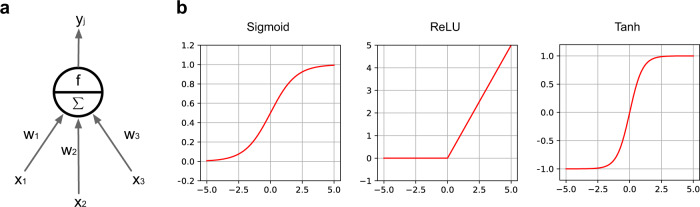
“The Widely used Nonlinear Activation Function of Deep Neural Networks [31].”
MethodDe, J. I. N. G., & Xueling, J. I. A. (2021) · Aggression and Violent Behavior · doi:10.1016/j.avb.2021.101681
RetractedAbd-Alrazaq, A. A., Schneider, J., Alhuwail, D., Toro, C. T., Ahmed, A., Alajlani, M., & Househ, M. S. (2021) · doi:10.2196/preprints.29235
Li, X., Geenjaar, E., Fu, Z., Plis, S., & Calhoun, V. D. (2022) · Annual International Conference of the IEEE Engineering in Medicine and Biology Society (EMBC) · doi:10.1109/embc48229.2022.9871803
“Relying on expert assessment or patient self-report data, the current diagnostic system is insufficient to accurately capture biological deficits and symptom progression [3].”
Machine Learning and Web Integrated Chatting Forum Which Detected Mental Health of the User
Ghonge, M. M., Kachare, T., Kakade, S., Shintre, S., & Nigade, S. (2022) · Lecture notes in networks and systems · doi:10.1007/978-3-031-20141-7_10
DDdeep: deep learning-based text analysis for depression illness detection on social media postsPreprint
Keyvanpour, M. R., Mehrmolaei, S., & Gholami, F. (2022) · Research Square · doi:10.21203/rs.3.rs-2313393/v1
Petrović, S. A., & Marić, N. P. (2022) · Medicinska istrazivanja · doi:10.5937/medi55-37718 · Cited by 1
“Due to the growing availability of data pertaining to an individual’s mental health status nowadays, ML technologies are being increasingly applied to improve the understanding of mental health disorders and assist clinicians for improved decision making process (23).”
Machine Learning approach for detecting mental health on Twitter using chrome extension
Kale, R., Pereira, B., Shah, Y., & Varghese, D. (2022) · IEEE Global Conference for Advancement in Technology (GCAT) · doi:10.1109/gcat55367.2022.9971892
“[8 ] The researchers produced a dataset of 1200 unique words that were absent from the dataset that had previously been used, as seen in Fig.”
MethodMlakar, I., Ariöz, U., Smrke, U., Plohl, N., Šafran, V., & Rojc, M. (2023) · doi:10.2196/preprints.46022
Person Recognition from Gait Analysis for Smart Spaces by using MLP-based DNN model
Yücelbaş, C. (2023) · Düzce Üniversitesi Bilim ve Teknoloji Dergisi · doi:10.29130/dubited.1187065
(2023) · Research Square · doi:10.21203/rs.3.rs-2910523/v2
Mental Health Classification on Social-Media: Systematic Review
Mathur, P., Gupta, A. K., & Dadhich, A. (2022) · International Conference on Information Management & Machine Intelligence (ICIMMI) · doi:10.1145/3590837.3590946 · Cited by 1
“A summary of studies conducted on deep learning techniques for psychiatric prognosis was published [22].”
BackgroundHeterogeneous Patient Graph Embedding in Readmission Prediction
Daneshva, H., & Samavi, R. (2023) · doi:10.32920/24132873
Heterogeneous Patient Graph Embedding in Readmission Prediction
Daneshva, H., & Samavi, R. (2023) · doi:10.32920/24132873.v1
Understanding Intellectual Disability and Genetics with AI Perspective: A Text Mining Approach
Islam, M., Wahid, A., & Kumar, P. (2023) · IEEE International Conference on Machine Learning and Applied Network Technologies (ICMLANT) · doi:10.1109/icmlant59547.2023.10372970
“DL algorithms have been utilized to aid mental health providers in making decisions based on patients’ historical data, which includes medical records, behavioral data, and social media usage [14].”
MethodPsychological behavior Analysis in social media based on automated deep learning method
Shnawa, A. H., Ali, A., Hussien, N. A., Zaydan, N. R. W., Jaffer, Z., & Jawad, I. A. (2023) · Annual International Conference on Emerging Research Areas and International Conference on Microelectronics, Communications and Renewable Energy · doi:10.1109/aicera/icis59538.2023.10420058
“While conventional neural networks are significantly related to time-consuming and incomplete ability, dense vector representational neural networks can generate better results on different processing tasks in the natural language [21].”
BackgroundClinics to Algorithms Using Science and Technology
Pimpalkar, A. P., Gandhewar, N., Shelke, N. M., Somkunwar, R. K., & Raymond, V. J. (2024) · Advances in medical technologies and clinical practice book series · doi:10.4018/979-8-3693-1090-8.ch008
Mental Health Predictive Analysis using Multiple Machine Learning Techniques
Tressa, N., Asha, V., Prasad, A., Prathith, Pramodh Kumar, D., & Saju, B. (2023) · International Conference on Communication, Security and Artificial Intelligence (ICCSAI) · doi:10.1109/iccsai59793.2023.10421007 · Cited by 1
A Comparative Study on Various Detection Techniques to Detect Mental Health Disorders in Children
Gowda, N. L., Kumar, N., & Gowda, N. S. L. (2023) · International Conference on Next Generation Electronics (NELEX) · doi:10.1109/nelex59773.2023.10421503
“CT is less detailed than MRI, but it quickly identifies any structural abnormalities, such as tumors, bleeding, or strokes [12].”
BackgroundNon-Linear Model for Psychiatric Health Analysis
Sah, R. D. (2023) · IEEE International Conference on ICT in Business Industry & Government (ICTBIG) · doi:10.1109/ictbig59752.2023.10456314
“Mental health conditions may have an impact on children and teenagers under the age of 18[1].”
BackgroundVyas, S., & Kumari, A. (2024) · Lecture notes in electrical engineering · doi:10.1007/978-981-99-9554-7_6
Ajith, M., Aycock, D. M., Tone, E. B., Liu, J., Misiura, M. B., Ellis, R., Plis, S., King, T. Z., Dotson, V. M., & Calhoun, V. D. (2024) · Aperture Neuro · doi:10.52294/001c.118576
PredictStr: A Balanced Benchmark Dataset for Improve Stroke Prediction
Romdhane, T. F., Khedher, M. I., & El‐Yacoubi, M. A. (2024) · Conference on Human System Interactions · doi:10.1109/hsi61632.2024.10613533
An ensemble technique to predict mental illness using data mining techniques
Divya, B., & THIRUMALAI, S. R. (2024) · i-manager's Journal on Data Science & Big Data Analytics (JDS). · doi:10.26634/jds.2.1.20542
Zheng, F. (2024) · Applied Mathematics and Nonlinear Sciences · doi:10.2478/amns-2024-2144
MindWell: A Dataset Related to Mental Health
Kumar, P., Punia, A., Dagar, A., & Gaur, S. (2024) · Lecture notes in networks and systems · doi:10.1007/978-981-97-3601-0_34
Jaybhaye, S. M., Hirve, T., Chavan, S., Talele, A. K., Kolekar, Y., Bambal, S., & Tadkase, A. (2024) · Parul International Conference on Engineering and Technology (PICET) · doi:10.1109/picet60765.2024.10716043
Review on Detecting Facial Emotions Using Deep Learning for Mental Health Applications
Veligeti, M. S. R. K., & Pavithra, L. K. (2024) · International Journal of Image and Graphics · doi:10.1142/s0219467826500439
Depression Classification using Bert Embedding Model on Social Media Posts
Nareshkumar, R., & Nimala, K. (2025) · Journal of Machine and Computing · doi:10.53759/7669/jmc202505037
A comprehensive bibliographic study on mental illness
Ding, Y., & Chen, S. (2025) · Acta Neuropsychiatrica · doi:10.1017/neu.2024.64
“Utilising machine learning models, such as neural networks, on this enriched dataset could significantly enhance predictive accuracy for mental health conditions (Su et al ., 2020).”
Majumder, P., Mukherjee, S., Saha, S., Biswas, T., Saha, M., Das, D., & Maiti, S. (2025) · Wiley eBooks · doi:10.1002/9781394234073.ch8
Advancing Emotional State Recognition Using Multi-task Learning with Dual CNN-LSTM
Wang, C.-P., Chien, H.-C., Chen, X.-Y., Lin, H.-K., Chang, C.-S., Lee, C., & Chen, J.-C. (2025) · World Congress on Medical Physics and Biomedical Engineering, September 7 - 12, 2009, Munich, Germany · doi:10.1007/978-3-031-86323-3_46
Lei, D., Zhu, T., Huang, Y., Li, X., Liu, M., Zhang, J., Yan, T., Yang, Y., Wang, W., Hu, L., et al. (2025) · Research Square · doi:10.21203/rs.3.rs-6259115/v1
Sudrajat, M. R., & Zakariyah, M. (2024) · Building of Informatics Technology and Science (BITS) · doi:10.47065/bits.v6i3.6180
Metadata
- Authors
- Su, C., Xu, Z., Pathak, J., & Wang, F.
- Affiliations
- Weill Cornell Medicine (US)
- Corresponding author
- Wang, Fei
- Venue
- Translational Psychiatry
- Published
- 2020-04-22
- Volume
- 10
- Issue
- 1
- Pages
- 116-116
- ISSN
- 2158-3188 (ISSN-L)
- PMC
- PMC7293215
- OpenAlex
- W3034674374
- Cited by
- 368
- References
- 139
- Citations by year
- 2026: 35 · 2025: 83 · 2024: 74 · 2023: 73 · 2022: 60 · 2021: 38 · 2020: 5
- FWCI
- 6.73
- Type
- journal article
- Language
- en
- Open access
- gold
- doi.org
- Locations
- Translational Psychiatry (publishedVersion, cc-by)
- PubMed Central (publishedVersion, cc-by)
- PubMed (publishedVersion)
- Funders
- National Science Foundation
- U.S. Department of Health & Human Services | NIH | National Institute of Mental Health
- Topics
- Health Sciences › Health Professions › Health Information Management › Artificial Intelligence in Healthcare
- Physical Sciences › Computer Science › Artificial Intelligence › Machine Learning in Healthcare
- Health Sciences › Medicine › Health Informatics › Artificial Intelligence in Healthcare and Education
- Keywords
- deep learning, mental health outcomes, depression, artificial intelligence in psychiatry, medical data analysis, social media data, diagnosis and prognosis, clinical decision support
- MeSH terms
- Deep Learning, Algorithms, Artificial Intelligence, Humans, Mental Health, Outcome Assessment, Health Care
About these checks
Registry, retraction, Cites and statistics results are computed, not judged, with one exception: a printed reference that no index lists is read once by a model before it counts as a citation error. Claims are extracted by a model and kept only when their quote appears verbatim in the text; each cited source is then checked, with a model’s help, for whether it says what the claim relies on. Those verdicts can be wrong — read the claim’s quote and the cited source before relying on one.
Statistics and arithmetic are recomputed, not judged.
Confidence bands are shown only for fields calibrated on our annotated test set. None is calibrated yet, so no band is shown.
What counts as a claim ›How we measure confidence ›How we check this ›
Are you an author, or do you see a problem with this page? Request a review
