

The DOI matches its Crossref record; 137 of the 139 references it cites were found in a registry or an index.
Deep learning in mental health outcome research: a scoping review
Open accessAbstract
Mental illnesses, such as depression, are highly prevalent and have been shown to impact an individual’s physical health. Recently, artificial intelligence (AI) methods have been introduced to assist mental health providers, including psychiatrists and psychologists, for decision-making based on patients’ historical data (e.g., medical records, behavioral data, social media usage, etc.). Deep learning (DL), as one of the most recent generation of AI technologies, has demonstrated superior performance in many real-world applications ranging from computer vision to healthcare. The goal of this study is to review existing research on applications of DL algorithms in mental health outcome research. Specifically, we first briefly overview the state-of-the-art DL techniques. Then we review the literature relevant to DL applications in mental health outcomes. According to the application scenarios, we categorize these relevant articles into four groups: diagnosis and prognosis based on clinical data, analysis of genetics and genomics data for understanding mental health conditions, vocal and visual expression data analysis for disease detection, and estimation of risk of mental illness using social media data. Finally, we discuss challenges in using DL algorithms to improve our understanding of mental health conditions and suggest several promising directions for their applications in improving mental health diagnosis and treatment.
Overview
The claims and statistics of this paper haven’t been checked yet.
Run the check — free, no account needed. It reads the open-access text and checks the sources it cites.
Integrity signals
Registry
Cites
Statistics
Figures
Verification
Claims the paper makes
The claims and statistics of this paper haven’t been checked yet.
Run the check — free, no account needed. It reads the open-access text and checks the sources it cites.
Claims other papers make about this one
Each is checked against this paper’s own text: does it say what the citing paper says it does?
The source backs part of the claim, not all of it — or backs it for a different population, condition or comparison.
In the citing paper
“This “black box” nature of some ML models raises concerns about their transparency and accountability, particularly in the context of public health interventions that can have far-reaching consequences [55, 56].”
From Integrating machine learning and artificial intelligence in life-course epidemiology: pathways to innovative public health solutions (2024) · cites this paper as [56]
Experimental — accuracy not yet measured
Self-check
Percentages, sums and reported differences re-computed from the paper’s own numbers.
The self-check needs the paper’s full text.
Citations
Cites
Diagnostic and Statistical Manual of Mental Disorders
American Psychiatric Association (2013) · doi:10.1176/appi.books.9780890425596 · Cited by 116,369
Hochreiter, S., & Schmidhuber, J. (1997) · Neural Computation · doi:10.1162/neco.1997.9.8.1735 · Cited by 102,318
LeCun, Y., Bengio, Y., & Hinton, G. (2015) · Nature · doi:10.1038/nature14539 · Cited by 84,126
Preferred Reporting Items for Systematic Reviews and Meta-Analyses: the PRISMA statement
Moher, D., Liberati, A., Tetzlaff, J., Altman, D. G., & for the PRISMA Group (2009) · BMJ · doi:10.1136/bmj.b2535 · Cited by 83,823
Gradient-based learning applied to document recognition
Lecun, Y., Bottou, L., Bengio, Y., & Haffner, P. (1998) · Proceedings of the IEEE · doi:10.1109/5.726791 · Cited by 58,805
Preferred reporting items for systematic reviews and meta-analyses: the PRISMA Statement.
(2009) · PubMed Central · Cited by 44,859
Preferred reporting items for systematic reviews and meta-analyses: The PRISMA statement
Moher, D., Liberati, A., Tetzlaff, J., Altman, D. G., & the PRISMA Group* (2009) · Annals of Internal Medicine · doi:10.7326/0003-4819-151-4-200908180-00135 · Cited by 37,554
Learning representations by back-propagating errors
Rumelhart, D. E., Hinton, G. E., & Williams, R. J. (1986) · Nature · doi:10.1038/323533a0 · Cited by 31,892 · cited 1×
“2a, there is a weight parameter associated with each edge in the DFNN, which needs to be optimized by minimizing some training loss measured on a speci fi c training dataset (usually through back-propagation 17 ).”
MethodThe Elements of Statistical Learning
Hastie, T., Tibshirani, R., & Friedman, J. (2009) · Springer Series in Statistics · doi:10.1007/978-0-387-84858-7 · Cited by 25,970
Semi-supervised classification with graph convolutional networks
Kipf, T. N., & Welling, M. (2016) · arXiv · doi:10.48550/arxiv.1609.02907 · Cited by 24,853
A Unified Approach to Interpreting Model Predictions
Lundberg, S., & Lee, S.-I. (2017) · arXiv · doi:10.48550/arxiv.1705.07874 · Cited by 23,707 · cited 1×
“In this case, the widely used tools include Shapley Additive Explanation 129 , LIME 127 , DeepLIFT 130 , etc., which are able to assign each feature an importance score for the speci fi c prediction task.”
Method"Why Should I Trust You?": Explaining the Predictions of Any Classifier
Ribeiro, M. T., Singh, S., & Guestrin, C. (2016) · Proceedings of the 22nd ACM SIGKDD International Conference on Knowledge Discovery and Data Mining · doi:10.1145/2939672.2939778 · Cited by 17,555 · cited 2×
“Attempts have been made to open the “ black box ” of DL 59,125 – 127 .”
BackgroundMethodConvolutional Neural Networks for Sentence Classification
Kim, Y. (2014) · Proceedings of the 2014 Conference on Empirical Methods in Natural Language Processing (EMNLP) · doi:10.3115/v1/d14-1181 · Cited by 14,831
Dermatologist-level classification of skin cancer with deep neural networks
Esteva, A., Kuprel, B., Novoa, R. A., Ko, J., Swetter, S. M., Blau, H. M., & Thrun, S. (2017) · Nature · doi:10.1038/nature21056 · Cited by 14,362
STRING v10: protein–protein interaction networks, integrated over the tree of life
Szklarczyk, D., Franceschini, A., Wyder, S., Forslund, K., Heller, D., Huerta-Cepas, J., Simonovic, M., Roth, A., Santos, A., Tsafou, K. P., et al. (2015) · Nucleic Acids Research · doi:10.1093/nar/gku1003 · Cited by 10,436
(2012) · Cited by 9,062
Learning long-term dependencies with gradient descent is difficult
Bengio, Y., Simard, P., & Frasconi, P. (1994) · IEEE Transactions on Neural Networks · doi:10.1109/72.279181 · Cited by 8,542
Development of a Rating Scale for Primary Depressive Illness
Hamilton, M. (1967) · British Journal of Social and Clinical Psychology · doi:10.1111/j.2044-8260.1967.tb00530.x · Cited by 8,410
On the Properties of Neural Machine Translation: Encoder–Decoder Approaches
Cho, K., van Merriënboer, B., Bahdanau, D., & Bengio, Y. (2014) · SSST@EMNLP · doi:10.3115/v1/w14-4012 · Cited by 7,251
Insel, T., Cuthbert, B., Garvey, M., Heinssen, R., Pine, D. S., Quinn, K., Sanislow, C., & Wang, P. (2010) · American Journal of Psychiatry · doi:10.1176/appi.ajp.2010.09091379 · Cited by 7,067
Neurophysiological investigation of the basis of the fMRI signal
Logothetis, N. K., Pauls, J., Augath, M., Trinath, T., & Oeltermann, A. (2001) · Nature · doi:10.1038/35084005 · Cited by 6,551
Hierarchical Attention Networks for Document Classification
Yang, Z., Yang, D., Dyer, C., He, X., Smola, A. J., & Hovy, E. H. (2016) · Conference of the North American Chapter of the Association for Computational Linguistics: Human Language Technologies (NAACL-HLT) · doi:10.18653/v1/n16-1174 · Cited by 5,022 · cited 17×
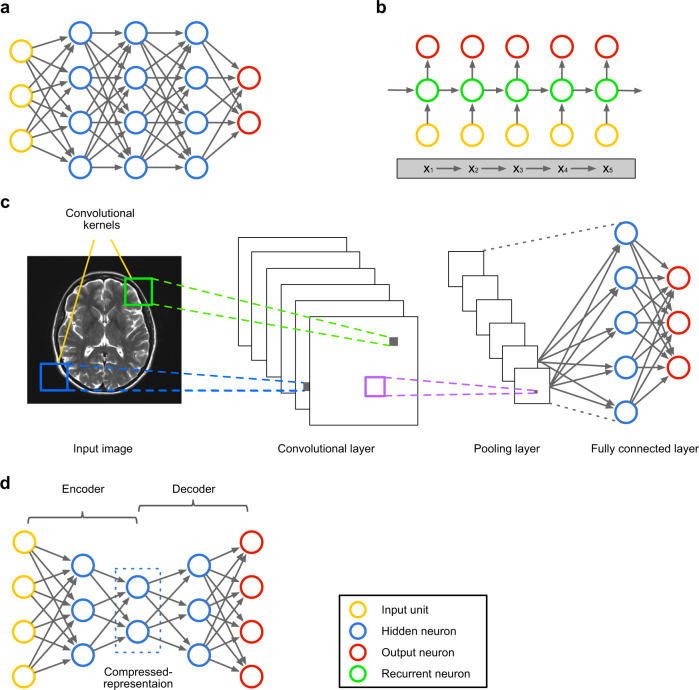
“In this context, the RNN and CNN were largely used by the researchers.”
MethodInfluentialDeep learning in medical image analysis
Shen, D., Wu, G., & Suk, H.-I. (2017) · Annual Review of Biomedical Engineering · doi:10.1146/annurev-bioeng-071516-044442 · Cited by 4,968
Learning Deconvolution Network for Semantic Segmentation
Noh, H., Hong, S., & Han, B. (2015) · 2015 IEEE International Conference on Computer Vision (ICCV) · doi:10.1109/iccv.2015.178 · Cited by 4,422 · cited 1×
“Attempts have been made to open the “ black box ” of DL 59,125 – 127 .”
BackgroundThe unified medical language system (UMLS): integrating biomedical terminology
Bodenreider, O. (2004) · Nucleic Acids Research · doi:10.1093/nar/gkh061 · Cited by 4,356
(2010) · Journal of Machine Learning Research · doi:10.5555/1756006.1953039 · Cited by 4,051 · cited 2×
“Autoencoder is a special variant of the DFNN aimed at learning new (usually more compact) data representations that can optimally reconstruct the original data vectors 16,20 .”
BackgroundMethodfMRIPrep: A robust preprocessing pipeline for functional MRI
Esteban, O., Markiewicz, C. J., Blair, R. W., Moodie, C. A., Isik, A. I., Erramuzpe, A., Kent, J. D., Goncalves, M., DuPre, E., Snyder, M., et al. (2019) · Nature Methods · doi:10.1038/s41592-018-0235-4 · Cited by 3,905
DPARSF: a MATLAB toolbox for “pipeline” data analysis of resting-state fMRI
Yan (2010) · Frontiers in System Neuroscience · doi:10.3389/fnsys.2010.00013 · Cited by 3,475 · cited 1×
“40 , and fMRI Preprocessing Pipeline 41 to extract useful features before feeding to the DL models.”
MethodThe world health report 2001 - Mental health: new understanding, new hope
Sayers, J. (2001) · Europe PMC (PubMed Central) · doi:10.1590/s0042-96862001001100014 · Cited by 3,307 · cited 2×
“Mental health issues including depression, schizophrenia, attention-de fi cit hyperactivity disorder (ADHD), and autism spectrum disorder (ASD), etc., are highly prevalent today and it is estimated that around 450 million people worldwide suffer from such problems 1 .”
BackgroundDeep learning for healthcare: review, opportunities and challenges
Miotto, R., Wang, F., Wang, S., Jiang, X., & Dudley, J. T. (2018) · Briefings in Bioinformatics · doi:10.1093/bib/bbx044 · Cited by 3,076
Self-citationeQTLGen, Wray, N. R., 23andMe, the Major Depressive Disorder Working Group of the Psychiatric Genomics Consortium, Ripke, S., Mattheisen, M., Trzaskowski, M., Byrne, E. M., Abdellaoui, A., Adams, M. J., et al. (2018) · Nature Genetics · doi:10.1038/s41588-018-0090-3 · Cited by 3,005
A review of wearable sensors and systems with application in rehabilitation
Patel, S., Park, H., Bonato, P., Chan, L., & Rodgers, M. (2012) · Journal of NeuroEngineering and Rehabilitation · doi:10.1186/1743-0003-9-21 · Cited by 2,396
Learning Face Representation from ScratchPreprint
Yi, D., Lei, Z., Liao, S., & Li, S. Z. (2014) · arXiv (Cornell University) · doi:10.48550/arxiv.1411.7923 · Cited by 2,282
Torrey, L. A., & SHAVLIK, J. W. (2010) · IGI Global eBooks · doi:10.4018/978-1-60566-766-9.ch011 · Cited by 1,887
Challenges in Representation Learning: A Report on Three Machine Learning Contests
Goodfellow, I. J., Erhan, D., Carrier, P. L., Courville, A., Mirza, M., Hamner, B., Cukierski, W., Tang, Y., Thaler, D., Lee, D.-H., et al. (2013) · Lecture Notes in Computer Science · doi:10.1007/978-3-642-42051-1_16 · Cited by 1,719
Evaluating the Visualization of What a Deep Neural Network Has Learned
Samek, W., Binder, A., Montavon, G., Lapuschkin, S., & Muller, K.-R. (2017) · IEEE Transactions on Neural Networks and Learning Systems · doi:10.1109/tnnls.2016.2599820 · Cited by 1,164
On the Properties of Neural Machine Translation: Encoder-Decoder ApproachesPreprint
Cho, K., van Merriënboer, B., Bahdanau, D., et al. (2014) · arXiv (Cornell University) · doi:10.48550/arxiv.1409.1259 · Cited by 1,112
Machine learning in mental health: a scoping review of methods and applications
Shatte, A. B. R., Hutchinson, D. M., & Teague, S. J. (2019) · Psychological Medicine · doi:10.1017/s0033291719000151 · Cited by 1,047
Visual interpretability for deep learning: a survey
Zhang, Q., & Zhu, S. C. (2018) · Frontiers of Information Technology & Electronic Engineering · doi:10.1631/fitee.1700808 · Cited by 1,018
Depression: A Global Public Health Concern
Marcus, M., Yasamy, M. T., van Ommeren, M., Chisholm, D., & Saxena, S. (2012) · PsycEXTRA Dataset · doi:10.1037/e517532013-004 · Cited by 997 · cited 2×
“For example, depression is a leading cause of disability and can lead to an increased risk for suicidal ideation and suicide attempts 2 .”
BackgroundMachine Learning Approaches for Clinical Psychology and Psychiatry
Dwyer, D. B., Falkai, P., & Koutsouleris, N. (2018) · Annual Review of Clinical Psychology · doi:10.1146/annurev-clinpsy-032816-045037 · Cited by 966
Comprehensive functional genomic resource and integrative model for the human brain
Wang, D., Liu, S., Warrell, J., Won, H., Shi, X., Navarro, F. C. P., Clarke, D., Gu, M., Emani, P., Yang, Y. T., et al. (2018) · Science · doi:10.1126/science.aat8464 · Cited by 965
A primer on deep learning in genomics
Zou, J., Huss, M., Abid, A., Mohammadi, P., Torkamani, A., & Telenti, A. (2019) · Nature Genetics · doi:10.1038/s41588-018-0295-5 · Cited by 891
The genetics of depression: A review
Levinson, D. F. (2006) · Biological Psychiatry · doi:10.1016/j.biopsych.2005.08.024 · Cited by 855
Not Just a Black Box: Learning Important Features Through Propagating Activation DifferencesPreprint
Shrikumar, A., Greenside, P., Shcherbina, A., & Kundaje, A. B. (2016) · arXiv (Cornell University) · doi:10.48550/arxiv.1605.01713 · Cited by 853 · cited 1×
“In this case, the widely used tools include Shapley Additive Explanation 129 , LIME 127 , DeepLIFT 130 , etc., which are able to assign each feature an importance score for the speci fi c prediction task.”
MethodDeep Learning in Drug Discovery
Gawehn, E., Hiss, J. A., & Schneider, G. (2016) · Molecular Informatics · doi:10.1002/minf.201501008 · Cited by 723
Vieira, S., Pinaya, W. H. L., & Mechelli, A. (2017) · Neuroscience & Biobehavioral Reviews · doi:10.1016/j.neubiorev.2017.01.002 · Cited by 682
Patient Subtyping via Time-Aware LSTM Networks
Baytaş, İ. M., Xiao, C., Zhang, X., Wang, F., Jain, A. K., & Zhou, J. (2017) · ACM SIGKDD Conference on Knowledge Discovery and Data Mining (KDD) · doi:10.1145/3097983.3097997 · Cited by 682 · cited 1×
“For instance, Baytas et al. 122 developed a variation of LSTM-autoencoder on patient EHRs and grouped Parkinson ’ s disease patients into meaningful subtypes.”
BackgroundSelf-citationAutomated EEG-based screening of depression using deep convolutional neural network
Acharya, U. R., Oh, S. L., Hagiwara, Y., Tan, J. H., Adeli, H., & Subha, D. P. (2018) · Computer Methods and Programs in Biomedicine · doi:10.1016/j.cmpb.2018.04.012 · Cited by 650
Facebook language predicts depression in medical records
Eichstaedt, J. C., Smith, R. J., Merchant, R. M., Ungar, L. H., Crutchley, P., Preoţiuc-Pietro, D., Asch, D. A., & Schwartz, H. A. (2018) · Proceedings of the National Academy of Sciences · doi:10.1073/pnas.1802331115 · Cited by 643
Human EEG gamma oscillations in neuropsychiatric disorders
Herrmann, C. S., & Demıralp, T. (2005) · Clinical Neurophysiology · doi:10.1016/j.clinph.2005.07.007 · Cited by 620
The eNTERFACE’05 Audio-Visual Emotion Database
Martin, O., Kotsia, I., Macq, B., & Pitas, I. (2006) · 22nd International Conference on Data Engineering Workshops (ICDEW'06) · doi:10.1109/icdew.2006.145 · Cited by 615
Deep Clustering with Convolutional Autoencoders
Guo, X., Liu, X., Zhu, E., & Yin, J. (2017) · Lecture notes in computer science · doi:10.1007/978-3-319-70096-0_39 · Cited by 596
Valstar, M., Schuller, B. W., Smith, K., Eyben, F., Jiang, B., Bilakhia, S., Schnieder, S., Cowie, R., & Pantić, M. (2013) · doi:10.1145/2512530.2512533 · Cited by 581 · cited 1×
“…to elicit facial expressions and speech responses of the subjects of bipolar disorder, unipolar depression, and healthy controls; 72 and (ii) the International Audio/Visual Emotion Recognition Challenges (AVEC) depression dataset 73 – 75 , collected within human – computer interaction scenario.”
BackgroundSocial network determinants of depression
Rosenquist, J. N., Fowler, J. H., & Christakis, N. A. (2011) · Molecular Psychiatry · doi:10.1038/mp.2010.13 · Cited by 543
Valstar, M., Gratch, J. S., Schuller, B. W., Ringeval, F., Lalanne, D., Torres, M. T., Scherer, S. J., Stratou, G., Cowie, R., & Pantić, M. (2016) · International Workshop on Audio/Visual Emotion Challenge (AVEC) · doi:10.1145/2988257.2988258 · Cited by 540 · cited 1×
“…to elicit facial expressions and speech responses of the subjects of bipolar disorder, unipolar depression, and healthy controls; 72 and (ii) the International Audio/Visual Emotion Recognition Challenges (AVEC) depression dataset 73 – 75 , collected within human – computer interaction scenario.”
BackgroundNatural language processing of social media as screening for suicide risk
Coppersmith, G., Leary, R., Crutchley, P., & Fine, A. (2018) · Biomedical Informatics Insights · doi:10.1177/1178222618792860 · Cited by 506
Liou, C., Cheng, W., Liou, J.-W., & Liou, D.-R. (2014) · Neurocomputing · doi:10.1016/j.neucom.2013.09.055 · Cited by 492
Valstar, M., Schuller, B. W., Smith, K., Almaev, T. R., Eyben, F., Krajewski, J., Cowie, R., & Pantić, M. (2014) · International Workshop on Audio/Visual Emotion Challenge (AVEC) · doi:10.1145/2661806.2661807 · Cited by 476
Predicting healthcare trajectories from medical records: a deep learning approach
Pham, T., Tran, T., Phung, D., & Venkatesh, S. (2017) · Journal of Biomedical Informatics · doi:10.1016/j.jbi.2017.04.001 · Cited by 447
Franklin, J. S. (2005) · The Mathematical Intelligencer · Cited by 392
Prediction Modeling Using EHR Data
Wu, J., Roy, J. A., & Stewart, W. F. (2010) · Medical Care · doi:10.1097/mlr.0b013e3181de9e17 · Cited by 381
Moving From Static to Dynamic Models of the Onset of Mental Disorder
Nelson, B., McGorry, P. D., Wichers, M., Wigman, J. T. W., & Hartmann, J. (2017) · JAMA Psychiatry · doi:10.1001/jamapsychiatry.2017.0001 · Cited by 378
Characterizing treatment pathways at scale using the OHDSI network
Hripcsak, G., Ryan, P. B., Duke, J. D., Shah, N. H., Park, R. W., Huser, V., Suchard, M. A., Schuemie, M. J., DeFalco, F. J., Perotte, A., et al. (2016) · Proceedings of the National Academy of Sciences · doi:10.1073/pnas.1510502113 · Cited by 326 · cited 1×
“To address this issue, national/international collaborative efforts such as Observational Health Data Sciences and Informatics (https://ohdsi.org) have developed common data models, such as OMOP, to standardize EHR data representation for conducting observational data analysis 60 .”
BackgroundZou, L., Zheng, J., Miao, C., McKeown, M. J., & Wang, Z. J. (2017) · IEEE Access · doi:10.1109/access.2017.2762703 · Cited by 313
Ma, X., Yang, H., Chen, Q., Huang, D., & Wang, Y. (2016) · International Workshop on Audio/Visual Emotion Challenge (AVEC) · doi:10.1145/2988257.2988267 · Cited by 310
Deep neural networks in psychiatry
Durstewitz, D., Koppe, G., & Meyer‐Lindenberg, A. (2019) · Molecular Psychiatry · doi:10.1038/s41380-019-0365-9 · Cited by 297 · cited 1×
“In another study, Durstewitz et al. 9 explored the emerging area of application of DL techniques in psychiatry.”
BackgroundResearching Mental Health Disorders in the Era of Social Media: Systematic Review
Wongkoblap, A., Vadillo, M. A., & Ćurčin, V. (2017) · Journal of Medical Internet Research · doi:10.2196/jmir.7215 · Cited by 286
Zeng, L., Wang, H., Hu, P., Yang, B., Pu, W., Shen, H., Chen, X., Liu, Z., Yin, H. J., Tan, Q., et al. (2018) · EBioMedicine · doi:10.1016/j.ebiom.2018.03.017 · Cited by 280
Zhang, P., Wang, X., Zhang, W., & Chen, J. (2018) · IEEE Transactions on Neural Systems and Rehabilitation Engineering · doi:10.1109/tnsre.2018.2884641 · Cited by 259
Automated Depression Diagnosis Based on Deep Networks to Encode Facial Appearance and Dynamics
Zhu, Y. M., Shang, Y., Shao, Z., & Guo, G. (2017) · IEEE Transactions on Affective Computing · doi:10.1109/taffc.2017.2650899 · Cited by 258
Characterisation of mental health conditions in social media using Informed Deep Learning
Gkotsis, G., Oellrich, A., Velupillai, S. U., Liakata, M., Hubbard, T., Dobson, R., & Dutta, R. (2017) · Scientific Reports · doi:10.1038/srep45141 · Cited by 255 · cited 1×
“In this study, the articles that used DL to analyze social media data mainly focused on stress detection 98 – 101 , depression identi fi cation 102 – 106 , and estimation of suicide risk 103,105,107 – 109 .”
MethodAutomated depression analysis using convolutional neural networks from speech
He, L., & Cui, C. (2018) · Journal of Biomedical Informatics · doi:10.1016/j.jbi.2018.05.007 · Cited by 250
O’Toole, A. J., Jiang, F., Abdi, H., Pénard, N., Dunlop, J. P., & Parent, M. A. (2007) · Journal of Cognitive Neuroscience · doi:10.1162/jocn.2007.19.11.1735 · Cited by 238
A combined neural network and decision trees model for prognosis of breast cancer relapse
Jerez, J. M., Gómez‐Ruiz, J. A., Ramos-Jiménez, G., Pérez, J. M., & Alba, E. (2002) · Artificial Intelligence in Medicine · doi:10.1016/s0933-3657(02)00086-6 · Cited by 235
Schnack, H. G., Nieuwenhuis, M., van Haren, N. E. M., Abramovic, L., Scheewe, T. W., Brouwer, R. M., Pol, H. E. H., & Kahn, R. S. (2013) · NeuroImage · doi:10.1016/j.neuroimage.2013.08.053 · Cited by 229
Jan, A., Meng, H., Gaus, Y. F. B. A., & Zhang, F. (2018) · IEEE Transactions on Cognitive and Developmental Systems · doi:10.1109/tcds.2017.2721552 · Cited by 219
A general prediction model for the detection of ADHD and Autism using structural and functional MRI
Sen, B., Borle, N. C., Greiner, R., & Brown, M. R. G. (2018) · PLOS ONE · doi:10.1371/journal.pone.0194856 · Cited by 198 · cited 3×
“One application of DL in fMRI and sMRI data is the identi fi cation of ADHD 25 – 31 .”
BackgroundMethodResultRice, S. M., Goodall, J., Hetrick, S. E., Parker, A. G., Gilbertson, T., Amminger, G. P., Davey, C. G., McGorry, P. D., Gleeson, J., & Alvarez-Jimenez, M. (2014) · Journal of Medical Internet Research · doi:10.2196/jmir.3304 · Cited by 194 · cited 1×
“Moreover, although it is possible to discover online users with mental illness by social media analysis, translation of this innovation into practical applications and offer aid to users, such as providing real-time interventions, are largely needed 113 .”
BackgroundLin, E., Kuo, P., Liu, Y.-L., Yu, Y. W. ‐., Yang, A. C., & Tsai, S. (2018) · Frontiers in Psychiatry · doi:10.3389/fpsyt.2018.00290 · Cited by 194
Detecting Stress Based on Social Interactions in Social Networks
Lin, H., Jia, J., Qiu, J., Zhang, Y., Shen, G., Xie, L., Tang, J., Feng, L., & Chua, T. (2017) · IEEE Transactions on Knowledge and Data Engineering · doi:10.1109/tkde.2017.2686382 · Cited by 188
User-level psychological stress detection from social media using deep neural network
Lin, H., Jia, J., Guo, Q., Xue, Y., Li, Q., Jie, H. J., Cai, L., & Feng, L. (2014) · ACM International Conference on Multimedia (ACM MM) · doi:10.1145/2647868.2654945 · Cited by 187 · cited 1×
“In this study, the articles that used DL to analyze social media data mainly focused on stress detection 98 – 101 , depression identi fi cation 102 – 106 , and estimation of suicide risk 103,105,107 – 109 .”
MethodExtracting psychiatric stressors for suicide from social media using deep learning
Du, J., Zhang, Y., Luo, J., Jia, Y., Wei, Q., Tao, C., & Xu, H. (2018) · BMC Medical Informatics and Decision Making · doi:10.1186/s12911-018-0632-8 · Cited by 177 · cited 1×
“In addition, Du et al. 108 attempted to identify suicide-related psychiatric stressors from users ’ posts on Twitter, which plays an important role in the early prevention of suicidal behaviors.”
BackgroundNetwork embedding in biomedical data science
Su, C., Tong, J., Zhu, Y., Cui, P., & Wang, F. (2018) · Briefings in Bioinformatics · doi:10.1093/bib/bby117 · Cited by 176
Self-citationPinaya, W. H. L., Gadelha, A., Doyle, O., Noto, C. D. S., Zugman, A., Cordeiro, Q., Jackowski, A. P., Bressan, R. A., & Sato, J. R. (2016) · Scientific Reports · doi:10.1038/srep38897 · Cited by 164
Cho, Y., Bianchi‐Berthouze, N., & Julier, S. (2017) · International Conference on Affective Computing and Intelligent Interaction and workshops · doi:10.1109/acii.2017.8273639 · Cited by 156 · cited 1×
“In addition, thermal images that track persons ’ breathing patterns were also fed to a deep model to estimate psychological stress level (mental overload) 93 .”
Genetics of Depression: Progress at Last
Mullins, N., & Lewis, C. M. (2017) · Current Psychiatry Reports · doi:10.1007/s11920-017-0803-9 · Cited by 154
Aghdam, M. A., Sharifi, A., & Pedram, M. M. (2018) · Journal of Imaging Informatics in Medicine · doi:10.1007/s10278-018-0093-8 · Cited by 147
Pinaya, W. H. L., Mechelli, A., & Sato, J. R. (2018) · Human Brain Mapping · doi:10.1002/hbm.24423 · Cited by 136
EEG-based mild depression recognition using convolutional neural network
Li, X., La, R., Wang, Y., Niu, J., Zeng, S., Sun, S., & Zhu, J. (2019) · Medical & Biological Engineering & Computing · doi:10.1007/s11517-019-01959-2 · Cited by 136 · cited 1×
“Li et al. 46 presented a computer-aided detection system by extracting multiple types of information (e.g., spectral, spatial, and temporal information) to recognize mild depression based on CNN architecture.”
BackgroundSong, S., Shen, L., & Valstar, M. (2018) · International Conference on Automatic Face and Gesture Recognition · doi:10.1109/fg.2018.00032 · Cited by 132 · cited 1×
“For example, several selected studies proposed to predict symptom severity scores 56,57,77,82,84,87,89 .”
BackgroundTechnology and mental health: The role of artificial intelligence
Lovejoy, C. A. (2019) · European Psychiatry · doi:10.1016/j.eurpsy.2018.08.004 · Cited by 129
AVEC 2016 - Depression, Mood, and Emotion Recognition Workshop and ChallengePreprint
Valstar, M., Gratch, J. S., Schuller, B. W., Ringeval, F., Lalanne, D., Torres, M. T., Scherer, S. J., Stratou, G., Cowie, R., & Pantić, M. (2016) · arXiv (Cornell University) · doi:10.48550/arxiv.1605.01600 · Cited by 129 · cited 1×
“…to elicit facial expressions and speech responses of the subjects of bipolar disorder, unipolar depression, and healthy controls; 72 and (ii) the International Audio/Visual Emotion Recognition Challenges (AVEC) depression dataset 73 – 75 , collected within human – computer interaction scenario.”
BackgroundCho, Y., Bianchi‐Berthouze, N., & Julier, S. (2018) · UCL Discovery (University College London) · Cited by 129
The use of electronic health records for psychiatric phenotyping and genomics
Smoller, J. W. (2017) · American Journal of Medical Genetics Part B Neuropsychiatric Genetics · doi:10.1002/ajmg.b.32548 · Cited by 127
Artificial neural network for classification of depressive and normal in EEG
Mohan, Y., Chee, S. S., Xin, D. K. P., & Foong, L. P. (2016) · IEEE-EMBS Conference on Biomedical Engineering and Sciences · doi:10.1109/iecbes.2016.7843459 · Cited by 118
Challenges in Representation Learning: A report on three machine learning contestsPreprint
Goodfellow, I., Erhan, D., Carrier, P. L., Courville, A. C., Mirza, M., Hamner, B., Cukierski, W., Tang, Y., Thaler, D., Lee, D., et al. (2013) · arXiv (Cornell University) · doi:10.48550/arxiv.1307.0414 · Cited by 114 · cited 1×
“Other studies 83,84 pre-trained CNN over general facial expression datasets 96,97 for extracting face appearance features.”
ResultTran, T., & Kavuluru, R. (2017) · Journal of Biomedical Informatics · doi:10.1016/j.jbi.2017.06.010 · Cited by 101
Psychological stress detection from cross-media microblog data using Deep Sparse Neural Network
Lin, H., Jia, J., Guo, Q., Xue, Y., Jie, H. J., Cai, L., & Feng, L. (2014) · IEEE International Conference on Multimedia and Expo (ICME) · doi:10.1109/icme.2014.6890213 · Cited by 90
Automatic Detection of ADHD and ASD from Expressive Behaviour in RGBD Data
Jaiswal, S., Valstar, M., Gillott, A., & Daley, D. (2017) · International Conference on Automatic Face and Gesture Recognition · doi:10.1109/fg.2017.95 · Cited by 87
Choi, S. B., Lee, W., Yoon, J., Won, J., & Kim, D. W. (2018) · Journal of Affective Disorders · doi:10.1016/j.jad.2018.01.019 · Cited by 85
Classification on ADHD with Deep Learning
Kuang, D., & He, L.-H. (2014) · International Conference on Cloud Computing and Big Data · doi:10.1109/ccbd.2014.42 · Cited by 78 · cited 6×
“They reported accuracy over 0.93 in the diagnostic prediction of ADHD and ASD by using the CNN architecture.”
MethodInfluentialX-A-BiLSTM: a Deep Learning Approach for Depression Detection in Imbalanced Data
Cong, Q., Feng, Z., Li, F., Xiang, Y., Rao, G., & Tao, C. (2018) · IEEE International Conference on Bioinformatics and Biomedicine (BIBM) · doi:10.1109/bibm.2018.8621230 · Cited by 74 · cited 1×
“In this study, the articles that used DL to analyze social media data mainly focused on stress detection 98 – 101 , depression identi fi cation 102 – 106 , and estimation of suicide risk 103,105,107 – 109 .”
MethodGeraci, J., Wilansky, P., Luca, V. D., Roy, A., Kennedy, J. L., & Strauss, J. (2017) · Evidence-Based Mental Health · doi:10.1136/eb-2017-102688 · Cited by 72
Ive, J., Gkotsis, G., Dutta, R., Stewart, R. J., & Velupillai, S. U. (2018) · Workshop on Computational Linguistics and Clinical Psychology (CLPsych) · doi:10.18653/v1/w18-0607 · Cited by 69 · cited 2×
“In this study, the articles that used DL to analyze social media data mainly focused on stress detection 98 – 101 , depression identi fi cation 102 – 106 , and estimation of suicide risk 103,105,107 – 109 .”
BackgroundMethodHuang, K.-Y., Wu, C., & Su, M.-H. (2018) · Pattern Recognition · doi:10.1016/j.patcog.2018.12.016 · Cited by 63
Deep fMRI: AN end-to-end deep network for classification of fMRI data
Riaz, A., Asad, M., Arif, S. M. M. R. A., Alonso, E., Dima, D., Corr, P. J., & Slabaugh, G. (2018) · IEEE International Symposium on Biomedical Imaging (ISBI) · doi:10.1109/isbi.2018.8363838 · Cited by 59 · cited 1×
“Among the studies reviewed in this study, three 29,30,37 reported to involve CNN layers and achieved desirable performances.”
BackgroundDiscrimination of ADHD Based on fMRI Data with Deep Belief Network
Kuang, D., Guo, X.-J., An, X., Zhao, Y., & He, L.-H. (2014) · International Conference on Intelligent Computing · doi:10.1007/978-3-319-09330-7_27 · Cited by 56
Deep Neural Generative Model of Functional MRI Images for Psychiatric Disorder Diagnosis
Matsubara, T., Tashiro, T., & Uehara, K. (2019) · IEEE Transactions on Biomedical Engineering · doi:10.1109/tbme.2019.2895663 · Cited by 55 · cited 1×
“Also, several studies analyzed sMRIs to investigate schizophrenia 32 – 36 , where DFNN, DBN, and autoencoder were utilized.”
BackgroundMulti task sequence learning for depression scale prediction from video
Chao, L., Tao, J., Yang, M., & Li, Y. (2015) · International Conference on Affective Computing and Intelligent Interaction and workshops · doi:10.1109/acii.2015.7344620 · Cited by 53 · cited 5×
“In particular, CNNs were leveraged to encode the temporal and spectral features from the voice signals 76 – 80 and static facial or physical expression features from the video frames 79,81 – 84 .”
BackgroundMethodResultInfluentialDrug knowledge bases and their applications in biomedical informatics research
Zhu, Y., Elemento, O., Pathak, J., & Wang, F. (2017) · Briefings in Bioinformatics · doi:10.1093/bib/bbx169 · Cited by 52 · cited 1×
“The existing biomedical knowledge bases are invaluable sources for solving healthcare problems 133,134 .”
BackgroundSelf-citationA Taxonomy and Library for Visualizing Learned Features in Convolutional Neural Networks
Grün, F., Rupprecht, C., Navab, N., & Tombari, F. (2016) · arXiv · doi:10.48550/arxiv.1606.07757 · Cited by 49
DeepBipolar: Identifying genomic mutations for bipolar disorder via deep learning
Sundaram, L., Bhat, R. R., Viswanath, V., & Li, X. (2017) · Human Mutation · doi:10.1002/humu.23272 · Cited by 49
DCNN and DNN based multi-modal depression recognition
Yang, L., Jiang, D., Han, W., & Hichem Sahli, B. (2017) · International Conference on Affective Computing and Intelligent Interaction and workshops · doi:10.1109/acii.2017.8273643 · Cited by 44 · cited 2×
“In particular, CNNs were leveraged to encode the temporal and spectral features from the voice signals 76 – 80 and static facial or physical expression features from the video frames 79,81 – 84 .”
BackgroundMethodDepression Severity Classification from Speech Emotion
Harati, S., Crowell, A. L., Mayberg, H. S., & Nemati, S. (2018) · Annual International Conference of the IEEE Engineering in Medicine and Biology Society (EMBC) · doi:10.1109/embc.2018.8513610 · Cited by 44
Question Answering for Suicide Risk Assessment Using Reddit
Alambo, A., Gaur, M., Lokala, U., Kursuncu, U., Thirunarayan, K., Gyrard, A., Sheth, A., Welton, R. S., & Pathak, J. (2019) · IEEE International Conference on Semantic Computing (ICSC) · doi:10.1109/icosc.2019.8665525 · Cited by 43 · cited 1×
“In this study, the articles that used DL to analyze social media data mainly focused on stress detection 98 – 101 , depression identi fi cation 102 – 106 , and estimation of suicide risk 103,105,107 – 109 .”
MethodSelf-citationThe Biological Sciences Curriculum Study.
Mayer, W. V. (1970) · Cited by 40
Online Social Networks in Health Care: A Study of Mental Disorders on Reddit
Fraga, B. S., da Silva, A. P. C., & Murai, F. (2018) · IEEE/WIC/ACM International Conference on Web Intelligence · doi:10.1109/wi.2018.00-36 · Cited by 40 · cited 1×
“In this study, the articles that used DL to analyze social media data mainly focused on stress detection 98 – 101 , depression identi fi cation 102 – 106 , and estimation of suicide risk 103,105,107 – 109 .”
MethodRios, A., & Kavuluru, R. (2017) · Journal of Biomedical Informatics · doi:10.1016/j.jbi.2017.05.008 · Cited by 31
Su, M.-H., Wu, C., Huang, K.-Y., & Yang, T. (2019) · IEEE Transactions on Neural Networks and Learning Systems · doi:10.1109/tnnls.2019.2899884 · Cited by 27 · cited 1×
“Autoencoders were used to learn low-dimensional representations for people ’ s vocal 85,86 and visual expression 87,88 , and RNNs were engaged to characterize the temporal evolution of emotion based on the CNN-learned features and/or other handcraft features 76,81,84 – 90 .”
MethodUlloa, A., Plis, S., Erhardt, E. B., & Calhoun, V. D. (2015) · Machine learning for signal processing ... · doi:10.1109/mlsp.2015.7324379 · Cited by 26 · cited 1×
“As reported in some selected studies 28,31,35,37 , the DL models can bene fi t from feature engineering techniques and have been shown to outperform the traditional ML models in the prediction of multiple conditions such as depression, schizophrenia, and ADHD.”
ResultDawood, A. A., Turner, S., & Perepa, P. (2018) · IEEE Access · doi:10.1109/access.2018.2879619 · Cited by 25
The Facial Stress Recognition Based on Multi-histogram Features and Convolutional Neural Network
Prasetio, B. H., Tamura, H., & Tanno, K. (2018) · Conference proceedings/Conference proceedings - IEEE International Conference on Systems, Man, and Cybernetics · doi:10.1109/smc.2018.00157 · Cited by 24 · cited 1×
“Prasetio et al. 91 identi fi ed the stress types (e.g., neutral, low stress, and high stress) from facial frontal images.”
BackgroundDeep learning based automatic diagnoses of attention deficit hyperactive disorder
Zou, L., Zheng, J., & McKeown, M. J. (2017) · IEEE Global Conference on Signal and Information Processing · doi:10.1109/globalsip.2017.8309103 · Cited by 20 · cited 2×
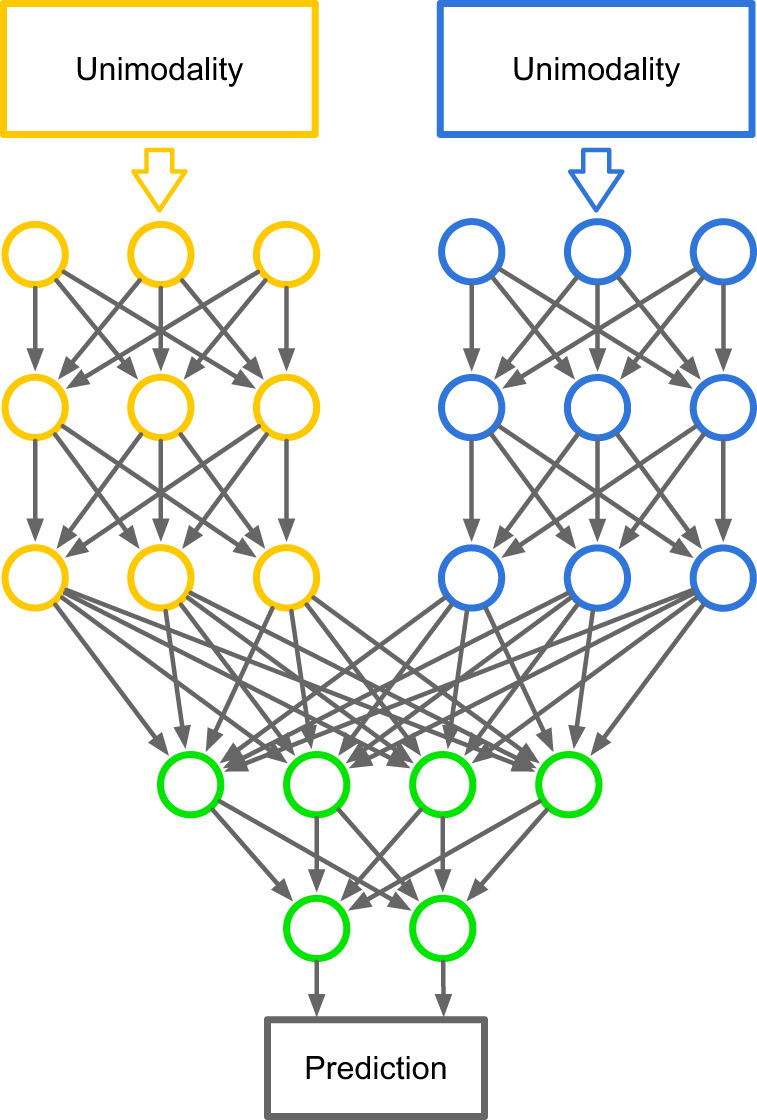
“For example, Zou et al.(28) developed a multimodal model composed of two CNNs for modeling fMRI and sMRI modalities, respectively.”
BackgroundKhan, A., Liu, Q., & Wang, K. (2018) · BMC Bioinformatics · doi:10.1186/s12859-018-2469-7 · Cited by 19 · cited 1×
“To further prioritize susceptibility genes, they designed another deep model, iMEGES 68 , which integrates the ncDeepBrain score, general gene scores, and disease-speci fi c scores for estimating gene risk.”
Improvement on Speech Depression Recognition Based on Deep Networks
Li, J., Fu, X., Shao, Z., & Shang, Y. (2018) · Chinese Automation Congress · doi:10.1109/cac.2018.8623055 · Cited by 16
Application of Autoencoder in Depression Diagnosis
Xiang-Fei, G. E. N. G., & Xu, J. (2017) · DEStech Transactions on Computer Science and Engineering · doi:10.12783/dtcse/csma2017/17335 · Cited by 15 · cited 3×
“Geng et al. 37 proposed to use CNN and autoencoder to acquire meaningful features from the original time series of fMRI data for predicting depression.”
BackgroundMethodResultDai, H.-J., & Jonnagaddala, J. (2018) · PLoS ONE · doi:10.1371/journal.pone.0204493 · Cited by 15 · cited 2×
“For example, several selected studies proposed to predict symptom severity scores 56,57,77,82,84,87,89 .”
BackgroundMethodDetection of mood disorder using speech emotion profiles and LSTM
Yang, T., Wu, C., Huang, K.-Y., & Su, M.-H. (2016) · International Symposium on Chinese Spoken Language Processing (ISCSLP) · doi:10.1109/iscslp.2016.7918439 · Cited by 14 · cited 1×
“Autoencoders were used to learn low-dimensional representations for people ’ s vocal 85,86 and visual expression 87,88 , and RNNs were engaged to characterize the temporal evolution of emotion based on the CNN-learned features and/or other handcraft features 76,81,84 – 90 .”
MethodFarzi, S., Kianian, S., & Rastkhadive, I. (2017) · International Symposium on Computational and Business Intelligence (ISCBI) · doi:10.1109/iscbi.2017.8053552 · Cited by 13
Correlating Stressor Events for Social Network Based Adolescent Stress Prediction
Li, Q., Zhao, L., Xue, Y., Li, J., Alli, M., & Feng, L. (2017) · Lecture notes in computer science · doi:10.1007/978-3-319-55753-3_40 · Cited by 11
Exploring microscopic fluctuation of facial expression for mood disorder classification
Su, M.-H., Wu, C., Huang, K.-Y., Hong, Q.-B., & Wang, H. (2017) · International Conference on Orange Technologies · doi:10.1109/icot.2017.8336090 · Cited by 11
An Affect Prediction Approach Through Depression Severity Parameter Incorporation in Neural Networks
Gupta, R., Sahu, S., Espy-Wilson, C., & Narayanan, S. S. (2017) · Interspeech (USB) · doi:10.21437/interspeech.2017-120 · Cited by 10 · cited 1×
“For example, Gupta et al. 94 designed a DFNN for affective prediction from audio and video modalities.”
MethodData collection of elicited facial expressions and speech responses for mood disorder detection
Huang, K.-Y., Wu, C., Kuo, Y.-T., Yen, H.-H., Jang, F.-L., & Chiu, Y. (2015) · International Conference on Orange Technologies · doi:10.1109/icot.2015.7498502 · Cited by 7 · cited 1×
“…emotional videos to elicit facial expressions and speech responses of the subjects of bipolar disorder, unipolar depression, and healthy controls; 72 and (ii) the International Audio/Visual Emotion Recognition Challenges (AVEC) depression dataset 73 – 75 , collected within human – computer…”
BackgroundA deep learning based scoring system for prioritizing susceptibility variants for mental disorders
Khan, A., & Wang, K. (2017) · IEEE International Conference on Bioinformatics and Biomedicine (BIBM) · doi:10.1109/bibm.2017.8217916 · Cited by 7 · cited 2×
“Wang et al. 69 developed a novel deep architecture that combines deep Boltzmann machine architecture 70 with conditional and lateral connections derived from the gene regulatory network.”
BackgroundMood disorder identification using deep bottleneck features of elicited speech
Huang, K.-Y., Wu, C., Su, M.-H., & Chou, C.-H. (2017) · Asia-Pacific Signal and Information Processing Association Annual Summit and Conference (APSIPA ASC) · doi:10.1109/apsipa.2017.8282296 · Cited by 6 · cited 1×
“Autoencoders were used to learn low-dimensional representations for people ’ s vocal 85,86 and visual expression 87,88 , and RNNs were engaged to characterize the temporal evolution of emotion based on the CNN-learned features and/or other handcraft features 76,81,84 – 90 .”
Method"Why Should I Trust You?": Explaining the Predictions of Any Classifier
Ribeiro, M. T., Singh, S., & Guestrin, C. (2016) · arXiv · cited 2×
“Attempts have been made to open the “ black box ” of DL 59,125 – 127 .”
BackgroundMethod
Research works printed but not linked: 7
- Biship, C. M. Pattern Recognition and Machine Learning (Information Science and Statistics) (Springer-Verlag, Berlin, 2007).
- McGuffin, P., Owen, M. J. & Gottesman, I. I. Psychiatric Genetics and Genomics (Oxford Univ. Press, New York, 2004).
- Yue, T. & Wang, H. Deep learning for genomics: a concise overview. Preprint at arXiv:1802.00810 (2018). · arXiv
- Salakhutdinov, R. & Hinton, G. Deep Boltzmann machines. In Proc. 12th Int. Conference on Artificial Intelligence and Statistics 448–455 (Clearwater, Florida, USA, 2009).
- Sadeque, F., Xu, D. & Bethard, S. UArizona at the CLEF eRisk 2017 pilot task: linear and recurrent models for early depression detection. CEUR Workshop Proc. 1866 (2017).
- Yosinski, J., Clune, J., Bengio, Y. & Lipson, H. How transferable are features in deep neural networks? In Proc. Advances in Neural Information Processing Systems 3320–3328 (Montreal, Canada, 2014).
- Srivastava, N., Mansimov, E. & Salakhudinov, R. Unsupervised learning of video representations using LSTMs. In Proc. Int. Conference on Machine Learning 843–852 (Lille, France, 2015).
Cited by
Sorted by citations
Prefrontal cortex and depression
Pizzagalli, D. A., & Roberts, A. C. (2022) · Neuropsychopharmacology · doi:10.1038/s41386-021-01101-7 · Cited by 667
“Finally, we believe embracing a computational psychiatry approach – including the use of deep learning and artificial neural network to diagnose MDD [266, 267] and predict treatment response [268] – offers unprecedented opportunities, particularly when coupled with improved experimental design to isolate precise psych…”
BackgroundNatural language processing applied to mental illness detection: a narrative review
Zhang, T., Schoene, A. M., Ji, S., & Ananiadou, S. (2022) · npj Digital Medicine · doi:10.1038/s41746-022-00589-7 · Cited by 476
“For the task of mental illness detection from text, deep learning techniques have recently attracted more attention and shown better performance compared to machine learning ones 116 .”
MethodFrom promise to practice: towards the realisation of AI-informed mental health care
Koutsouleris, N., Hauser, T. U., Skvortsova, V., & De Choudhury, M. (2022) · The Lancet Digital Health · doi:10.1016/s2589-7500(22)00153-4 · Cited by 251
Machine learning model to predict mental health crises from electronic health records
Garriga, R., Mas, J., Abraha, S., Nolan, J., Harrison, O., Tadros, G., & Matic, A. (2022) · Nature Medicine · doi:10.1038/s41591-022-01811-5 · Cited by 229
MentalBERT: Publicly Available Pretrained Language Models for Mental Healthcare
Ji, S., Zhang, T., Ansari, L., Fu, J., Tiwari, P., & Cambria, E. (2022) · Proceedings of the Language Resources and Evaluation Conference · doi:10.63317/2d7umxifj8wz · Cited by 233
Metadata
- Authors
- Su, C., Xu, Z., Pathak, J., & Wang, F.
- Affiliations
- Weill Cornell Medicine (US)
- Corresponding author
- Wang, Fei
- Venue
- Translational Psychiatry
- Published
- 2020-04-22
- Volume
- 10
- Issue
- 1
- Pages
- 116-116
- ISSN
- 2158-3188 (ISSN-L)
- PMC
- PMC7293215
- OpenAlex
- W3034674374
- Cited by
- 368
- References
- 139
- Citations by year
- 2026: 35 · 2025: 83 · 2024: 74 · 2023: 73 · 2022: 60 · 2021: 38 · 2020: 5
- FWCI
- 6.73
- Type
- journal article
- Language
- en
- Open access
- gold
- doi.org
- Locations
- Translational Psychiatry (publishedVersion, cc-by)
- PubMed Central (publishedVersion, cc-by)
- PubMed (publishedVersion)
- Funders
- National Science Foundation
- U.S. Department of Health & Human Services | NIH | National Institute of Mental Health
- Topics
- Health Sciences › Health Professions › Health Information Management › Artificial Intelligence in Healthcare
- Physical Sciences › Computer Science › Artificial Intelligence › Machine Learning in Healthcare
- Health Sciences › Medicine › Health Informatics › Artificial Intelligence in Healthcare and Education
- Keywords
- deep learning, mental health outcomes, depression, artificial intelligence in psychiatry, medical data analysis, social media data, diagnosis and prognosis, clinical decision support
- MeSH terms
- Deep Learning, Algorithms, Artificial Intelligence, Humans, Mental Health, Outcome Assessment, Health Care
About these checks
Registry, retraction, Cites and statistics results are computed, not judged, with one exception: a printed reference that no index lists is read once by a model before it counts as a citation error. Claims are extracted by a model and kept only when their quote appears verbatim in the text; each cited source is then checked, with a model’s help, for whether it says what the claim relies on. Those verdicts can be wrong — read the claim’s quote and the cited source before relying on one.
Statistics and arithmetic are recomputed, not judged.
Confidence bands are shown only for fields calibrated on our annotated test set. None is calibrated yet, so no band is shown.
What counts as a claim ›How we measure confidence ›How we check this ›
Are you an author, or do you see a problem with this page? Request a review
