

A randomized placebo-controlled PET study of ketamine´s effect on serotonin1B receptor binding in patients with SSRI-resistant depression
Open accessThe DOI matches its Crossref record; 50 of the 53 references it cites were found in a registry or an index.
Abstract
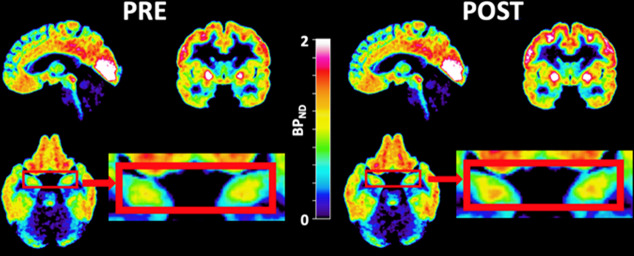
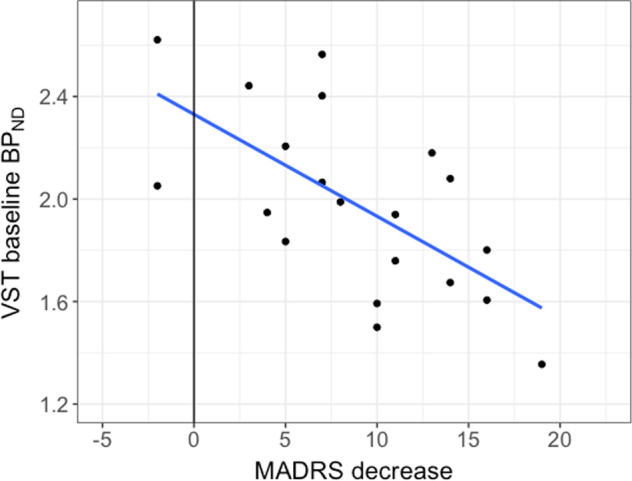
The glutamate N-methyl-d-aspartate receptor antagonist ketamine has a rapid antidepressant effect. Despite large research efforts, ketamine’s mechanism of action in major depressive disorder (MDD) has still not been determined. In rodents, the antidepressant properties of ketamine were found to be dependent on both the α-amino-3-hydroxy-5-methylisoxazole-4-propionic acid (AMPA) and the serotonin (5-HT)1B receptor. Low 5-HT 1B receptor binding in limbic brain regions is a replicated finding in MDD. In non-human primates, AMPA-dependent increase in 5-HT 1B receptor binding in the ventral striatum (VST) has been demonstrated after ketamine infusion. Thirty selective serotonin reuptake inhibitor-resistant MDD patients were recruited via advertisement and randomized to double-blind monotherapy with 0.5 mg/kg ketamine or placebo infusion. The patients were examined with the 5-HT 1B receptor selective radioligand [11 C]AZ10419369 and positron emission tomography (PET) before and 24–72 h after treatment. 5-HT 1B receptor binding did not significantly alter in patients treated with ketamine compared with placebo. An increase in 5-HT 1B receptor binding with 16.7 % (p = 0.036) was found in the hippocampus after one ketamine treatment. 5-HT 1B receptor binding in VST at baseline correlated with MDD symptom ratings (r = −0.426, p = 0.019) and with reduction of depressive symptoms with ketamine (r = −0.644, p = 0.002). In conclusion, reduction of depressive symptoms in MDD patients after ketamine treatment is correlated inversely with baseline 5-HT 1B receptor binding in VST. Further studies examining the role of 5-HT 1B receptors in the antidepressant mechanism of action of ketamine should be conducted, homing in on the 5-HT 1B receptor as an MDD treatment response marker.
Overview
The claims and statistics of this paper haven’t been checked yet.
Free: it reads the open-access text and checks the first 5 claims that cite a source we can check. Create a free account to check every claim.
Integrity signals
Registry
Cites
Statistics
Figures
Verification
Claims the paper makes
The claims and statistics of this paper haven’t been checked yet.
Free: it reads the open-access text and checks the first 5 claims that cite a source we can check. Create a free account to check every claim.
Claims other papers make about this one
Each is checked against this paper’s own text: does it say what the citing paper says it does?
The source backs part of the claim, not all of it — or backs it for a different population, condition or comparison.
In the citing paper
“PET imaging studies found that increased 5-HT 1B receptor binding was associated with ketamine response in participants with TRD and correlated with depression symptom ratings at baseline [207]”
From Ketamine in neuropsychiatric disorders: an update (2024) · cites this paper as [207]
Experimental — accuracy not yet measuredThe cited source says what the claim attributes to it.
In the citing paper
“A significant increase in 5-HT1B receptor binding (16.7%) was observed in the hippocampus following a single ketamine treatment.”
From Mechanisms of ketamine and its metabolites as antidepressants (2022) · cites this paper as Tiger et al., 2020
Self-check
Percentages, sums and reported differences re-computed from the paper’s own numbers.
The self-check needs the paper’s full text.
Citations
Cites
The PHQ-9: Validity of a brief depression severity measure
Kroenke, K., Spitzer, R. L., & Williams, J. B. W. (2001) · Journal of General Internal Medicine · doi:10.1046/j.1525-1497.2001.016009606.x · Cited by 44,910
A Simplex Method for Function Minimization
Nelder, J. A., & Mead, R. (1965) · The Computer Journal · doi:10.1093/comjnl/7.4.308 · Cited by 28,905
(1998) · The Journal of Clinical Psychiatry · Cited by 19,139
EuroQol: a new facility for the measurement of health-related quality of life
(1990) · Health Policy · doi:10.1016/0168-8510(90)90421-9 · Cited by 15,736
A new depression scale designed to be sensitive to change
Montgomery, S. A., & Åsberg, M. (1979) · British Journal of Psychiatry · doi:10.1192/bjp.134.4.382 · Cited by 13,962
Jenkinson, M., Beckmann, C. F., Behrens, T. E. J., Woolrich, M. W., & Smith, S. M. (2012) · NeuroImage · doi:10.1016/j.neuroimage.2011.09.015 · Cited by 11,314
(1998) · PubMed · Cited by 10,216
(1976) · Medical Entomology and Zoology · Cited by 8,899
Domingos da Silveira da Luz, A. C., Pereira Dias, G., do Nascimento Bevilaqua, M. C., Cocks, G., Gardino, P. F., Thuret, S., & Nardi, A. E. (2013) · Neuropsychobiology · doi:10.1159/000353269 · Cited by 3,995
Antidepressant effects of ketamine in depressed patients
Berman, R. M., Cappiello, A., Anand, A., Oren, D. A., Heninger, G. R., Charney, D. S., & Krystal, J. H. (2000) · Biological Psychiatry · doi:10.1016/s0006-3223(99)00230-9 · Cited by 3,856
Cited by
Mechanisms of ketamine and its metabolites as antidepressants
Hess, E. M., Riggs, L. M., Michaelides, M., & Gould, T. D. (2022) · Biochemical Pharmacology · doi:10.1016/j.bcp.2021.114892 · Cited by 175
Ketamine for the treatment of major depression: a systematic review and meta-analysis
Nikolin, S., Rodgers, A., Schwaab, A., Bahji, A., Zarate, C., Vazquez, G., & Loo, C. (2023) · eClinicalMedicine · doi:10.1016/j.eclinm.2023.102127 · Cited by 172
Ketamine: Mechanisms and Relevance to Treatment of Depression
Kim, J., Suzuki, K., Kavalali, E. T., & Monteggia, L. M. (2023) · Annual Review of Medicine · doi:10.1146/annurev-med-051322-120608 · Cited by 148
Ketamine in neuropsychiatric disorders: an update
Johnston, J. N., Kadriu, B., Kraus, C., Henter, I. D., & Zarate, C. A. (2024) · Neuropsychopharmacology · doi:10.1038/s41386-023-01632-1 · Cited by 108
“Paralleling previous preclinical research, PET imaging studies found that increased 5-HT 1B receptor binding was associated with ketamine response in participants with TRD and correlated with depression symptom ratings at baseline [207].”
ResultDean, R. L., Hurducas, C., Hawton, K., Spyridi, S., Cowen, P. J., Hollingsworth, S., Marquardt, T., Barnes, A., Smith, R., McShane, R., et al. (2021) · Cochrane Database of Systematic Reviews · doi:10.1002/14651858.cd011612.pub3 · Cited by 95
Price, R. B., Kissel, N., Baumeister, A., Rohac, R., Woody, M. L., Ballard, E. D., Zarate, C. A., Deakin, W., Abdallah, C. G., Feder, A., et al. (2022) · Molecular Psychiatry · doi:10.1038/s41380-022-01757-7 · Cited by 82
Self-citationcAMP-PKA cascade: An outdated topic for depression?
Gao, F., Yang, S., Wang, J., & Zhu, G. (2022) · Biomedicine & Pharmacotherapy · doi:10.1016/j.biopha.2022.113030 · Cited by 87
Johnston, J. N., Kadriu, B., Allen, J., Gilbert, J. R., Henter, I. D., & Zarate, C. A. (2023) · Neuropharmacology · doi:10.1016/j.neuropharm.2023.109422 · Cited by 76
Ketamine as a therapeutic agent for depression and pain: mechanisms and evidence
Subramanian, S., Haroutounian, S., Palanca, B. J. A., & Lenze, E. J. (2022) · Journal of the Neurological Sciences · doi:10.1016/j.jns.2022.120152 · Cited by 77
Medeiros, G. C., Matheson, M., Demo, I., Reid, M. J., Matheson, S., Twose, C., Smith, G. S., Gould, T. D., Zarate, C. A., Barrett, F. S., et al. (2023) · The Lancet Psychiatry · doi:10.1016/s2215-0366(23)00183-9 · Cited by 49
Mehta, M. A., & Hawkins, P. C. T. (2024) · Elsevier eBooks · doi:10.1016/b978-0-12-820480-1.00068-1 · Cited by 42
Gan, S.-L., Long, Y.-Q., Wang, Q., Feng, C.-D., Lai, C.-X., Liu, C., Ding, Y.-Y., Liu, H., Peng, K., & Ji, F. (2023) · Frontiers in Psychiatry · doi:10.3389/fpsyt.2023.1128406 · Cited by 37
“Depressive symptoms BDI-II score at 48 h postoperatively 6 (5, 8) 6 (5, 8) 0 (−1 to 0) 0.”
BackgroundMethodInfluentialCalder, C. N., Kwan, A. T. H., Teopiz, K. M., Wong, S., Rosenblat, J. D., Mansur, R. B., Rhee, T. G., Ho, R., Cao, B., & McIntyre, R. S. (2024) · Journal of Affective Disorders · doi:10.1016/j.jad.2024.04.039 · Cited by 42
Intrinsic Connectivity Networks of Glutamate-Mediated Antidepressant Response: A Neuroimaging Review
Demchenko, I., Tassone, V. K., Kennedy, S. H., Dunlop, K., & Bhat, V. (2022) · Frontiers in Psychiatry · doi:10.3389/fpsyt.2022.864902 · Cited by 29
“(164) 30, 0 PET ROI in CBM N/A Pre-treatment and 24–72 h post-treatment”
Targeting NMDA Receptors in Emotional Disorders: Their Role in Neuroprotection
Wang, S., Bian, L.-H., Yin, Y., & Guo, J. (2022) · Brain Sciences · doi:10.3390/brainsci12101329 · Cited by 39
The utility of PET imaging in depression
Singh, S. B., Tiwari, A., Katta, M. R., Kafle, R., Ayubcha, C., Patel, K. H., Bhattarai, Y., Werner, T. J., Alavi, A. A., & Revheim, M.-E. R. (2024) · Frontiers in Psychiatry · doi:10.3389/fpsyt.2024.1322118 · Cited by 37
Neuroimaging-Derived Biomarkers of the Antidepressant Effects of Ketamine
Zavaliangos‐Petropulu, A., Al‐Sharif, N., Taraku, B., Leaver, A. M., Sahib, A. K., Espinoza, R. T., & Narr, K. L. (2022) · Biological Psychiatry Cognitive Neuroscience and Neuroimaging · doi:10.1016/j.bpsc.2022.11.005 · Cited by 40
ERK/mTOR signaling may underlying the antidepressant actions of rapastinel in mice
Shen, M., Lv, D., Liu, X., & Wang, C. (2022) · Translational Psychiatry · doi:10.1038/s41398-022-02290-5 · Cited by 22
Gamboa, J. A., Le, G. H., Wong, S., Alteza, E. A. I., Zachos, K. A., Teopiz, K. M., & McIntyre, R. S. (2024) · Journal of Affective Disorders · doi:10.1016/j.jad.2024.10.042 · Cited by 28
Patterns of activity correlate with symptom severity in major depressive disorder patients
Spulber, S. D., Elberling, F., Svensson, J. E., Tiger, M., Ceccatelli, S., & Lundberg, J. (2022) · Translational Psychiatry · doi:10.1038/s41398-022-01989-9 · Cited by 24
Self-citationMatsingos, A., Wilhelm, M., Noor, L., Yildiz, C., Rief, W., Hofmann, S. G., Falkenberg, I., & Kircher, T. T. J. (2024) · Frontiers in Psychiatry · doi:10.3389/fpsyt.2024.1346697 · Cited by 27
Jiang, H., Veldman, E. R., Tiger, M., Ekman, C. J., Lundberg, J., & Svenningsson, P. (2021) · Frontiers in Neuroscience · doi:10.3389/fnins.2021.698633 · Cited by 20
“The primary study, which investigated serotonin receptor densities using Positron Emission Tomography (PET), was previously published (Tiger et al., 2020).”
MethodSelf-citationThe role of NMDARs in the anesthetic and antidepressant effects of ketamine
Zhou, L., & Duan, J. (2023) · CNS Neuroscience & Therapeutics · doi:10.1111/cns.14464 · Cited by 17
“…ketamine could also bind/affect other receptors, such as HCN1 channels, 160,161 σ 1 receptor, 162 dopamine, 163,164 and serotonin receptors, 165 although with a lower affinity compared with that of NMDARs, suggesting that other receptor systems might also mediate ketamine-mediated…”
BackgroundPathogenesis of Depression in Alzheimer’s Disease
Zhan, Q., Kong, F., Shao, S., Zhang, B., & Huang, S.-M. (2023) · Neurochemical Research · doi:10.1007/s11064-023-04061-0 · Cited by 20
“Several antidepressants, including fluoxetine, reboxetine, and ketamine (NMDA receptor antagonists), have demonstrated efficacy in treating depression in AD [67–69].”
Tiger, M., Gärde, M., Tateno, A., Matheson, G. J., Sakayori, T., Nogami, T., Moriya, H., Varnäs, K., Arakawa, R., & Okubo, Y. (2021) · Journal of Affective Disorders · doi:10.1016/j.jad.2021.07.060 · Cited by 17
Self-citationLopresti, B. J., Royse, S. K., Mathis, C. A., Tollefson, S., & Narendran, R. (2022) · Journal of Neurochemistry · doi:10.1111/jnc.15615 · Cited by 16
Blinding Integrity in Psychedelic Randomized Clinical Trials: A Systematic Review
Orsini, D. K., Wong, S., Luch, S. D. D., Chan, B., Vasudeva, S., Lovell, G. F. M., Le, G. H., Jones, B. D. M., Chisamore, N., Mollica, A., et al. (2026) · JAMA Psychiatry · doi:10.1001/jamapsychiatry.2026.0255 · Cited by 22
The Effect of Ketamine on the Immune System in Patients with Treatment-Resistant Depression
Szałach, Ł. P., Ciesielska-Figlon, K., Daca, A., Cubała, W. J., & Lisowska, K. A. (2025) · International Journal of Molecular Sciences · doi:10.3390/ijms26157500 · Cited by 15
“Additionally, ketamine may upregulate serotonin 5-HT 1 B receptor density in key brain areas, potentially enhancing serotonergic signaling [12].”
Guo, H., Tang, L., He, M., Tang, W., Liu, J., Wu, S., Yuan, S., Wang, J., & Tang, X. (2025) · Frontiers in Pharmacology · doi:10.3389/fphar.2025.1681060 · Cited by 16
Hovda, N., Gerrish, W. G., Frizzell, W., & Shackelford, R. (2023) · Journal of Affective Disorders · doi:10.1016/j.jad.2023.10.120 · Cited by 15
Veldman, E. R., Mamula, D., Jiang, H., Tiger, M., Ekman, C. J., Lundberg, J., & Svenningsson, P. (2021) · Journal of Affective Disorders · doi:10.1016/j.jad.2021.04.055 · Cited by 10
Self-citationMeiering, M. S., Weigner, D., Gärtner, M., Schäfer, T., & Grimm, S. (2022) · Journal of Psychiatric Research · doi:10.1016/j.jpsychires.2022.10.062 · Cited by 13
Translating Molecular Psychiatry: From Biomarkers to Personalized Therapies—A Narrative Review
Capatina, T.-F., Oatu, A., Babasan, C., & Trifu, S. C. (2025) · International Journal of Molecular Sciences · doi:10.3390/ijms26094285 · Cited by 13
Esketamine Inhibits Cocaine-Seeking Behaviour Subsequent to Various Abstinence Conditions in Rats
Wydra, K., Witek, K., Suder, A., & Filip, M. (2023) · Biomolecules · doi:10.3390/biom13091411 · Cited by 9
“Thus far, clinical findings have shown transient perceptual disturbances of ketamine [43,44], while laboratory data indicate psychomimetic-like effects of ketamine in rats [45] and mice [46].”
BackgroundCamargo, A., Nilsson, A., Shariatgorji, M., Appleton, E., Branzell, N., Doyon, D., Giovenzana, M., Zhang, X., Dautan, D., Andrén, P. E., et al. (2024) · Molecular Psychiatry · doi:10.1038/s41380-024-02853-6 · Cited by 11
“Accordingly, it is noteworthy to mention that the serotonergic system is implicated in the antidepressant responses elicited by ketamine [60 – 62].”
Self-citationSvensson, J. E., Tiger, M., Plavén‐Sigray, P., Halldin, C., Schain, M., & Lundberg, J. (2022) · Neuropsychopharmacology · doi:10.1038/s41386-022-01369-3 · Cited by 7
“In line with this reasoning, increased 5-HT1B receptor binding in the hippocampus has been demonstrated with PET after rapid acting MDD treatments such as ketamine [50] and electroconvulsive therapy [51].”
BackgroundSelf-citationGärde, M., Matheson, G. J., Varnäs, K., Svenningsson, P., Hedman‐Lagerlöf, E., Lundberg, J., Farde, L., & Tiger, M. (2024) · The International Journal of Neuropsychopharmacology · doi:10.1093/ijnp/pyae021 · Cited by 9
“…(ROIs) were selected based on their relevance for MDD pathophysiology according to the literature (Murrough et al., 2011; Savitz and Drevets, 2013; Tiger et al., 2016, 2020): the anterior cingulate cortex (ACC), the orbitof-rontal cortex (OFC), the hippocampus, and a dorsal brainstem (DBS) region…”
MethodSelf-citationLe, G. H., Wong, S., Johnson, D. E., Lu, A., Orsini, D. K., Chisamore, N., Luch, S. D. D., Rosenblat, J. D., & McIntyre, R. S. (2025) · Journal of Affective Disorders · doi:10.1016/j.jad.2025.121081 · Cited by 7
Wehrman, J., Casey, C., Tanabe, S., Mohanta, S., Filbey, W., Weber, L. A. E., Banks, M. I., Pearce, R. A., Saalmann, Y. B., & Sanders, R. (2023) · British Journal of Anaesthesia · doi:10.1016/j.bja.2023.06.044 · Cited by 7
d’Andrea, G., Chiappini, S., Ciavoni, L., Tucci, R., Martino, F., Semeraro, F. M., Battista, D. D., Mosca, A., Miuli, A., Carlo, F. D., et al. (2025) · Translational Psychiatry · doi:10.1038/s41398-025-03654-3 · Cited by 11
Deka, A., Joseph, E., Sharma, N., Berhanu, T., & Kaplan, J. (2024) · Journal of Psychiatric Practice · doi:10.1097/pra.0000000000000787 · Cited by 5
“34 In 2020, Tiger et al 33 performed a randomized controlled PET study of ketamine ’ s effect on 5-HT1B receptor binding in patients with TRD.”
BackgroundMethod5-HT1B receptor activation produces rapid antidepressant-like effects in rodents
Clark, E. A., Wang, L., Hanania, T., Kretschmannova, K., Bianchi, M., Jagger, E., Hu, T., Li, F., Gallero-Salas, Y., Koblan, K. S., et al. (2024) · Pharmacology Biochemistry and Behavior · doi:10.1016/j.pbb.2024.173917 · Cited by 5
Brain PET imaging in psychiatric disorders
Guedj, É., Tastevin, M., Verger, A., & Richieri, R. M. (2021) · Elsevier eBooks · doi:10.1016/b978-0-12-822960-6.00090-9 · Cited by 4
Molecular imaging findings for treatment resistant depression
Yang, K., & Chou, Y.-H. (2023) · Progress in brain research · doi:10.1016/bs.pbr.2023.03.003 · Cited by 4
Kupferberg, A., & Hasler, G. (2024) · Frontiers in Psychiatry · doi:10.3389/fpsyt.2024.1372650 · Cited by 7
Veldman, E. R., Varrone, A., Varnäs, K., Svedberg, M. M., Cselényi, Z., Tiger, M., Gulyás, B. Z., Halldin, C., & Lundberg, J. (2021) · Journal of Cerebral Blood Flow & Metabolism · doi:10.1177/0271678x211049185 · Cited by 4
Self-citationThe psychedelic-peptide paradox: a hormetic hypothesis
Carter, C. S. (2025) · Comprehensive Psychoneuroendocrinology · doi:10.1016/j.cpnec.2025.100303 · Cited by 5
Réus, G. Z., Abelaira, H. M., Coutellier, L. D., Manosso, L. M., & Pavlovic, Z. M. (2022) · Springer eBooks · doi:10.1007/978-3-030-87480-3_3 · Cited by 4
Ketamine pharmacotherapy for major depressive disorder: A narrative review
Miller, C. H., Hickman, A., Baten, C., Ali, Z., Kahlon, S. K., Klassen, A. M., Zamora, G., Shepherd, J. H., Venegas, G., Miller, J. A., et al. (2026) · Progress in Neuro-Psychopharmacology and Biological Psychiatry · doi:10.1016/j.pnpbp.2026.111651 · Cited by 3
Tangen, Ä., Veldman, E. R., Svensson, J. E., Tiger, M., Nord, M., Sorjonen, K., Andersson, M., Plavén‐Sigray, P., Varrone, A., Halldin, C., et al. (2022) · The International Journal of Neuropsychopharmacology · doi:10.1093/ijnp/pyac084 · Cited by 3
“The 5-HT 1A receptor has gained the most attention in psychiatric research, but studies of the 5-HT 1B receptor are emerging and point to its relevance for the pathophysiology and treatment of MDD (Murrough et al., 2011a, 2011b; Tiger et al., 2014, 2016, 2020).”
Self-citationHandschuh, P. A., Konadu, M. E., Spurny‐Dworak, B., Silberbauer, L., Murgaš, M., & Lanzenberger, R. R. (2022) · Neuromethods · doi:10.1007/978-1-0716-2083-0_18 · Cited by 2
Spulber, S. D., Elberling, F., Ceccatelli, S., Gärde, M., Tiger, M., & Lundberg, J. (2023) · medRxiv · doi:10.1101/2023.09.29.23294935 · Cited by 3
Self-citationDrozd, U. S., Lanshakov, D. A., & Дыгало, Н. Н. (2023) · Neurochemical Journal · doi:10.1134/s181971242303008x · Cited by 4
Matheson, G. J., Lundberg, J., Gärde, M., Veldman, E. R., Tateno, A., Okubo, Y., Tiger, M., & Ogden, R. T. (2025) · Imaging Neuroscience · doi:10.1162/imag.a.1011 · Cited by 3
Self-citationValentino, K., Ballum, H., Cheung, W., Dri, C. E., Teopiz, K. M., Kwan, A. T. H., Wong, S., Shen, B., Cheng, M. C. H., Le, G. H., et al. (2026) · Journal of Psychiatric Research · doi:10.1016/j.jpsychires.2026.02.011 · Cited by 2
Progress, potential and pitfalls of ketamine as a treatment for depression
Orsini, D. K., Luch, S. D. D., Lovell, G. F. M., & Rosenblat, J. D. (2026) · Expert Opinion on Pharmacotherapy · doi:10.1080/14656566.2026.2637587 · Cited by 2
“…individuals functionally behave as if they have been unblinded despite remaining formally blinded, has been repeatedly demonstrated in ketamine RCTs as seen by participants in experimental arms correctly guessing treatment allocation up to 100% of the time when compared to saline placebo [64,89].”
Anaesthetics and time perception: A review
Wehrman, J., Chung, C. C., & Sanders, R. (2022) · Quarterly Journal of Experimental Psychology · doi:10.1177/17470218221144614 · Cited by 3
“Furthermore, ketamine increases binding at serotonin (5-HT 1B ) and α -amino-3-hydroxy-5- methylisoxazole-4-propionic acid (AMPA) receptor sites (Tiger et al., 2020).”
The role of ketamine as an antidepressant agent
Senapathi, T. G. A., Widnyana, M. G., Aryani, L. N. A., & Ryalino, C. (2023) · Bali Journal of Anesthesiology · doi:10.4103/bjoa.bjoa_81_23 · Cited by 3
Marzoughi, S., Ripsman, D., & Ong, M. (2023) · Pain Management · doi:10.2217/pmt-2023-0066 · Cited by 3
Bao, K. H. (2021) · Research Square · doi:10.21203/rs.3.rs-374465/v1 · Cited by 4
“Though ketamine is hypothesized to act primarily on the glutamatergic system to produce antidepressant effects, its mechanism of action may involve other systems as well, including the serotonergic system [57].”
BackgroundMechanism of antidepressant action of ketamine and differences between its two enantiomers
Zhan, J., Zhang, Y., Tian, H., Zhu, X., Guo, M., Qiu, Z., & Xia, Z. (2025) · Journal of Anesthesia and Translational Medicine · doi:10.1016/j.jatmed.2025.06.001 · Cited by 1
Exploring the Role of Drug Repurposing in Bridging the Hypoxia–Depression Connection
Correia, A. S., Marques, L., Cardoso, A., & Vale, N. (2023) · Membranes · doi:10.3390/membranes13090800 · Cited by 1
Tiger, M., & Lundberg, J. (2022) · Neuromethods · doi:10.1007/978-1-0716-2083-0_11 · Cited by 1
Self-citationKetamine in Psychiatric Disorders
Danyeli, L. V., Götting, F. N., Şen, Z. D., Li, M., & Walter, M. (2022) · Springer eBooks · doi:10.1007/978-3-030-62059-2_420 · Cited by 1
Semple, M. G., Mennenga, S. E., Smith, R. C., Dwaraka, V. B., Cahn, B. R., Tafur, J., Rabin, D. M., Yazar‐Klosinski, B., & Lewis, C. R. (2025) · bioRxiv (Cold Spring Harbor Laboratory) · doi:10.1101/2025.07.03.663007 · Cited by 1
Plöderl, M., Cooper, R. E., Walker, T., Shah, V., Horowitz, M. A., Volkmann, C., & Moncrieff, J. (2025) · medRxiv · doi:10.1101/2025.08.19.25333796 · Cited by 2
Ketamine in Psychiatric Disorders
Danyeli, L. V., Götting, F. N., Şen, Z. D., Li, M., & Walter, M. (2021) · Springer eBooks · doi:10.1007/978-3-319-56015-1_420-1 · Cited by 2
Potencial terapéutico de los alucinógenos en las cefaleas: una revisión teórica
Collantes, L., & Navarro, J. F. (2021) · Escritos de Psicología / Psychological Writings · doi:10.24310/espsiescpsi.v14i1.13657
“…mecanismo de acción, la ketamina muestra afinidad por los receptores opioides, de serotonina (especialmente a los receptores 5-HT1 y 5-HT2), muscarínicos (Tiger et al., 2020), así como también interactúa con la dopamina (D2) y con los bloqueadores de los canales de sodio (Peltoniemi et al., 2016).”
BackgroundKhan, T. (2022) · PsyArXiv (OSF Preprints) · doi:10.31234/osf.io/6qcsb
Eleonorasdotter, E. (2023) · Springer eBooks · doi:10.1007/978-3-031-46057-9_8
Drozd, U. S., Lanshakov, D. A., & Дыгало, Н. Н. (2023) · Нейрохимия · doi:10.31857/s1027813323030081
Terao, I., & Kodama, W. (2024) · Psychiatry and Clinical Neurosciences Reports · doi:10.1002/pcn5.70042 · Cited by 1
“IV ketamine demonstrated significant antidepressant effects in seven out of nine studies, 25,26,34,42,44,47,50 and psilocybin showed significant effects in all three studies, 30,40,45 despite being single ‐ dose studies.”
The 5-HT1B Autoreceptor's Role in Emotional Processing in Relation to Acute Psilocybin ExperiencesPreprint
Malinak, M., & Beach, K. (2025) · SSRN Electronic Journal · doi:10.2139/ssrn.5377073
Ketamine’s Multifaceted Neuropharmacological and Neurobiological Actions
Kohtala, S., & Annala, I. (2025) · Neuromethods · doi:10.1007/978-1-0716-4603-8_2
Power Spectral Slope as a Novel Brain Functional Marker for Major Depressive Disorder
Zhou, H., Qiao, K., Zhou, J., Zhu, X., Yang, Z., Wang, G., Wang, Y., & Zang, Z. (2025) · Biological Psychiatry Global Open Science · doi:10.1016/j.bpsgos.2025.100623 · Cited by 2
Bogiel, Z., Machała, A., Bielak, A., Foryś, A., Kałwak, M., Kuczwalska, D., Spychalska, M., & Trocka, D. (2026) · International Journal of Innovative Technologies in Social Science · doi:10.31435/ijitss.1(49).2026.4600
Griffioen, G., Tangen, Ä., Veldman, E. R., Svensson, J. E., Tiger, M., Nord, M., Andersson, M., Sorjonen, K., Varrone, A., Halldin, C., et al. (2026) · EJNMMI Research · doi:10.1186/s13550-026-01435-7
“Brain regions were automatically defined using Freesurfer (version 6.0 [56]), except for the dorsal brainstem (DBS), which was defined based on [ 11 C] AZ10419369 PET template data [61, 62], and gray matter defined by SPM segmentation.”
InfluentialSelf-citationSedeek, N., Rivers, C., Williamson, L., Asadi, A., & Grundy, J. G. (2026) · Journal of Affective Disorders · doi:10.1016/j.jad.2026.121891
Matheson, G. J., Lundberg, J., Gärde, M., Veldman, E. R., Tateno, A., Ekman, C., Arakawa, R., Knudsen, G. M., Okubo, Y., Ogden, R. T., et al. (2026) · Molecular Psychiatry · doi:10.1038/s41380-026-03704-2
Self-citationZolmitriptan ameliorates memory impairment secondary to depression via 5-HT-1B/1D receptors
Afzal, A., Batool, Z., Rafiq, S., Agha, F., Nawaz, A., & Haider, S. (2026) · Next research. · doi:10.1016/j.nexres.2026.102204
Targeting the serotonin 1B receptor for the treatment of depression and anxiety
Fleury, S., & Nautiyal, K. M. (2026) · Expert Opinion on Therapeutic Targets · doi:10.1080/14728222.2026.2738183
“Additionally, SSRI and ketamine treatments cause changes in 5-HT1BR binding that correlate with behavioral effectiveness in MDD patients [29,30].”
Metadata
- Authors
- Tiger, M., Veldman, E. R., Ekman, C.-J., Halldin, C., Svenningsson, P., & Lundberg, J.
- Affiliations
- Region Stockholm (SE)
- Karolinska Institutet (SE)
- Corresponding author
- Tiger, Mikael
- ORCID
- Venue
- Translational Psychiatry
- Published
- 2020-06-01
- Volume
- 10
- Issue
- 1
- Pages
- 159-159
- ISSN
- 2158-3188 (ISSN-L)
- PMC
- PMC7261801
- OpenAlex
- W3032575279
- Cited by
- 81
- References
- 53
- Citations by year
- 2026: 10 · 2025: 13 · 2024: 11 · 2023: 19 · 2022: 18 · 2021: 10
- FWCI
- 7.05
- Type
- journal article
- Language
- en
- Open access
- gold
- doi.org
- Licence
- cc-by
- creativecommons.org/licenses/by/4.0 (tdm)
- creativecommons.org/licenses/by/4.0 (vor)
- Locations
- Translational Psychiatry (publishedVersion, cc-by)
- PubMed Central (publishedVersion, cc-by)
- PubMed (publishedVersion)
- Funders
- Vetenskapsrådet (2013-09304)
- Topics
- Health Sciences › Medicine › Pharmacology (medical) › Treatment of Major Depression
- Health Sciences › Medicine › Psychiatry and Mental health › Electroconvulsive Therapy Studies
- Life Sciences › Neuroscience › Biological Psychiatry › Tryptophan and brain disorders
- Keywords
- ketamine, 5-HT1B receptor, major depressive disorder, antidepressant mechanism, ventral striatum, hippocampus, rapid-acting antidepressants, treatment response biomarkers, AMPA receptors
- MeSH terms
- Depression, Major Depressive Disorder, Humans, Ketamine, Serotonin, Selective Serotonin Reuptake Inhibitors, Receptor, Serotonin, 5-HT1B, Positron-Emission Tomography
About these checks
Registry, retraction, Cites and statistics results are computed, not judged, with one exception: a printed reference that no index lists is read once by a model before it counts as a citation error. Claims are extracted by a model and kept only when their quote appears verbatim in the text; each cited source is then checked, with a model’s help, for whether it says what the claim relies on. Those verdicts can be wrong — read the claim’s quote and the cited source before relying on one.
Statistics and arithmetic are recomputed, not judged.
Confidence bands are shown only for fields calibrated on our annotated test set. None is calibrated yet, so no band is shown.
What counts as a claim ›How we measure confidence ›How we check this ›
Are you an author, or do you see a problem with this page? Request a review
Data sources
Bibliographic data: Semantic Scholar, OpenAlex, Crossref.
Contains information from the Semantic Scholar Academic Graph Datasets, made available under the ODC Attribution License (ODC-BY 1.0).
Semantic Scholar’s data is described in: Kinney, R., et al. (2023). The Semantic Scholar Open Data Platform. arXiv:2301.10140.
