

Loneliness as an active ingredient in preventing or alleviating youth anxiety and depression: a critical interpretative synthesis incorporating principles from rapid realist reviews
Open accessThe DOI matches its Crossref record; 72 of the 72 references it cites were found in a registry or an index.
Abstract
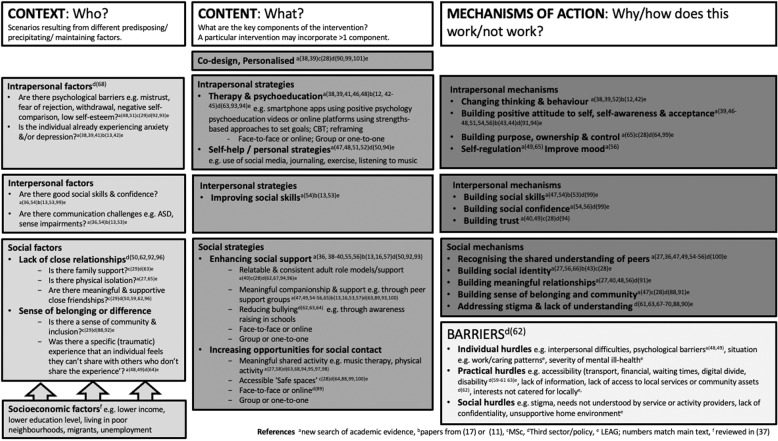
Loneliness is a relatively common problem in young people (14–24 years) and predicts the onset of depression and anxiety. Interventions to reduce loneliness thus have significant potential as active ingredients in strategies to prevent or alleviate anxiety and depression among young people. Previous reviews have focused on quantitative evidence and have not examined potential mechanisms that could be targets for intervention strategies. To build on this work, in this review we aimed to combine qualitative and quantitative evidence with stakeholder views to identify interventions that appear worth testing for their potential effectiveness in reducing loneliness, anxiety and depression in young people aged 14–24 years, and provide insights into the potential mechanisms of action. We conducted a Critical Interpretative Synthesis, a systematic review method that iteratively synthesises qualitative and quantitative evidence and is explicitly focused on building theory through a critical approach to the evidence that questions underlying assumptions. Literature searches were performed using nine databases, and eight additional databases were searched for theses and grey literature. Charity and policy websites were searched for content relevant to interventions for youth loneliness. We incorporated elements of Rapid Realistic Review approaches by consulting with young people and academic experts to feed into search strategies and the resulting conceptual framework, in which we aimed to set out which interventions appear potentially promising in terms of theoretical and empirical underpinnings and which fit with stakeholder views. We reviewed effectiveness data and quality ratings for the included randomised controlled trials only. Through synthesising 27 studies (total participants n = 105,649; range 1–102,072 in different studies) and grey literature, and iteratively consulting with stakeholders, a conceptual framework was developed. A range of ‘Intrapersonal’ (e.g. therapy that changes thinking and behaviour), ‘Interpersonal’ (e.g. improving social skills), and ‘Social’ Strategies (e.g. enhancing social support, and providing opportunities for social contact) seem worth testing further for their potential to help young people address loneliness, thereby preventing or alleviating depression and/or anxiety. Such strategies should be co-designed with young people and personalised to fit individual needs. Plausible mechanisms of action are facilitating sustained social support, providing opportunities for young people to socialise with peers who share similar experiences, and changing thinking and behaviour, for instance through building positive attitudes to themselves and others. The most convincing evidence of effectiveness was found in support of Intrapersonal Strategies: two randomised controlled studies quality-rated as ‘good’ found decreases in loneliness associated with different forms of therapy (Cognitive Behavioural Therapy or peer network counselling), although power calculations were not reported, and effect sizes were small or missing. Strategies to address loneliness and prevent or alleviate anxiety and depression need to be co-designed and personalised. Promising elements to incorporate into these strategies are social support, including from peers with similar experiences, and psychological therapy.
Overview
The claims and statistics of this paper haven’t been checked yet.
Free: it reads the open-access text and checks the first 5 claims that cite a source we can check. Create a free account to check every claim.
Integrity signals
Registry
Cites
Statistics
Figures
Verification
Claims the paper makes
The claims and statistics of this paper haven’t been checked yet.
Free: it reads the open-access text and checks the first 5 claims that cite a source we can check. Create a free account to check every claim.
Claims other papers make about this one
Each is checked against this paper’s own text: does it say what the citing paper says it does?
In the citing paper
“On the other hand, social support is one of the strongest predictors of resilience and increasing social support can provide a beneficial component of effective therapeutic approaches [172].”
From Plasticity of synapses and reward circuit function in the genesis and treatment of depression (2023) · cites this paper as [172]
Self-check
Percentages, sums and reported differences re-computed from the paper’s own numbers.
The self-check needs the paper’s full text.
Citations
Cites
Preferred Reporting Items for Systematic Reviews and Meta-Analyses: the PRISMA statement
Moher, D., Liberati, A., Tetzlaff, J., Altman, D. G., & for the PRISMA Group (2009) · BMJ · doi:10.1136/bmj.b2535 · Cited by 83,823
Preferred Reporting Items for Systematic Reviews and Meta-Analyses: The PRISMA Statement
Moher, D., Liberati, A., Tetzlaff, J., Altman, D. G., & The PRISMA Group (2009) · PLoS Medicine · doi:10.1371/journal.pmed.1000097 · Cited by 64,042 · cited 1×
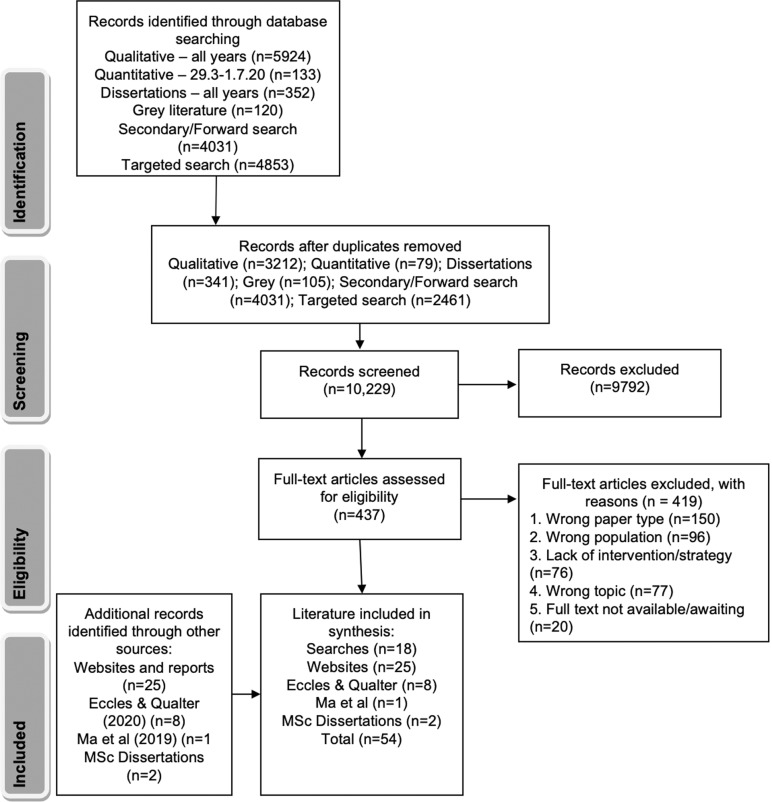
“The Preferred Reporting Items for Systematic Reviews and Meta-Analysis (PRISMA) statement [26] was followed (Fig.”
Tong, A., Sainsbury, P., & Craig, J. (2007) · International Journal for Quality in Health Care · doi:10.1093/intqhc/mzm042 · Cited by 42,509
Kessler, R. C., Berglund, P., Demler, O., Jin, R., Merikangas, K. R., & Walters, E. E. (2005) · Archives of General Psychiatry · doi:10.1001/archpsyc.62.6.593 · Cited by 20,391 · cited 1×
“We focus on the 14–24 age group in line with the Wellcome Trust’s mental health programme strategy [23], since half of all lifetime cases of mental health problems start by age 14 and 75% by age 24 years, meaning that this is a critical period for potential intervention [24].”
MethodWang, G., Ma, R., Qiao, G., Wada, K., Aizawa, Y., & Satoh, T. (2015) · Integrative Medicine International · doi:10.1159/000368408 · Cited by 18,657
UCLA loneliness scale (version 3): reliability, validity, and factor structure
Russell, D. W. (1996) · Journal of Personality Assessment · doi:10.1207/s15327752jpa6601_2 · Cited by 5,800
The Revised UCLA Loneliness Scale: concurrent and discriminant validity evidence
Russell, D., Peplau, L. A., & Cutrona, C. E. (1980) · Journal of Personality and Social Psychology · doi:10.1037/0022-3514.39.3.472 · Cited by 5,173
A Short Scale for Measuring Loneliness in Large Surveys: Results From Two Population-Based Studies
Hughes, M. E., Waite, L. J., Hawkley, L. C., & Cacioppo, J. T. (2004) · Research on Aging · doi:10.1177/0164027504268574 · Cited by 4,781
Loades, M. E., Chatburn, E., Higson-Sweeney, N., Reynolds, S., Shafran, R., Brigden, A., Linney, C., McManus, M. N., Borwick, C., & Crawley, E. (2020) · Journal of the American Academy of Child & Adolescent Psychiatry · doi:10.1016/j.jaac.2020.05.009 · Cited by 2,906 · cited 5×
“[14] reviewed two RCTs of (i) a mentorship programme for 12–15-year olds experiencing victimisation [15], and (ii) a school-based intervention for 15–19-year olds involving either a one-tier intervention comprising class activities and student mentors, or a two-tier programme that additionally involved a staff mental…”
BackgroundMethodInfluentialSelf-citationDixon-Woods, M., Cavers, D., Agarwal, S., Annandale, E., Arthur, A., Harvey, J., Hsu, R., Katbamna, S., Olsen, R., Smith, L., et al. (2006) · BMC Medical Research Methodology · doi:10.1186/1471-2288-6-35 · Cited by 2,289
Research works printed but not linked: 3
- Perlman D, Peplau L. Toward a social psychology of loneliness. In: Duck SW, Gilmour R, editors. Personal relationships in disorder. London: Academic Press; 1981. p. 31–56.
- Weiss RS. Loneliness: the experience of emotional and social isolation. 1973. The MIT Press.
- Leontiev DA, Osin EN. Multidimensional inventory of loneliness experience (MILE). 12th European Conference on Psychological Assessment; 2013. San Sebastian, Spain.
Cited by
Birken, M., Chipp, B., Shah, P., Olive, R. R., Nyikavaranda, P., Hardy, J., Chhapia, A., Barber, N., Lee, S., Pearce, E., et al. (2023) · PLoS ONE · doi:10.1371/journal.pone.0280946 · Cited by 50
Self-citationPlasticity of synapses and reward circuit function in the genesis and treatment of depression
Thompson, S. M. (2023) · Neuropsychopharmacology · doi:10.1038/s41386-022-01422-1 · Cited by 40
“On the other hand, social support is one of the strongest predictors of resilience and increasing social support can provide a beneficial component of effective therapeutic approaches [172].”
BackgroundUyaroğlu, A. K., Ergin, E., Tosun, A. S., & Erdem, Ö. (2022) · Perspectives In Psychiatric Care · doi:10.1111/ppc.13056 · Cited by 54
Predictors of chronic loneliness during adolescence: a population-based cohort study
Hosozawa, M., Cable, N., Yamasaki, S., Ando, S., Endo, K., Usami, S., Nakanishi, M., Niimura, J., Nakajima, N., Baba, K., et al. (2022) · Child and Adolescent Psychiatry and Mental Health · doi:10.1186/s13034-022-00545-z · Cited by 38
Finn, S., Wright, L. H. V., Mak, H. W., Åström, E., Nicholls, L., Dingle, G. A., & Warran, K. (2023) · Frontiers in Psychology · doi:10.3389/fpsyg.2023.1258967 · Cited by 38
Barker, T. G., O’Higgins, A., Fonagy, P., & Gardner, F. E. M. (2024) · Journal of Affective Disorders · doi:10.1016/j.jad.2023.12.080 · Cited by 32
Alvarez, C. V., Mirza, L., Das‐Munshi, J., & Oswald, T. K. (2024) · Social Psychiatry and Psychiatric Epidemiology · doi:10.1007/s00127-024-02722-1 · Cited by 37
“This gap presents a missed public mental health opportunity, as social connection interventions may have the potential to reduce the overall mental illness burden in this age group through prevention of mental illness and promotion of wellbeing [39].”
The impact of working alliance in managing youth anxiety and depression: a scoping review
Dambi, J. M., Mavhu, W. M., Beji‐Chauke, R., Kaiyo-Utete, M., Mills, R., Shumba, R., Muchemwa, S., Musesengwa, R., Verhey, R., Abas, M., et al. (2023) · npj Mental Health Research · doi:10.1038/s44184-023-00021-2 · Cited by 22
Chen, C., Zhu, Y., Sun, Y., & Que, M. (2025) · BMC Psychology · doi:10.1186/s40359-025-02418-4 · Cited by 27
“In addition, Pearce et al. systematically expound that social support can help reduce the perception of individual loneliness, promote their participation in the real social environment, and improve their interpersonal skills through continuous practice and communication [75].”
Social dance and movement for mental health: A narrative review
Delattre, B., Applewhite, B., Buckman, J. E. J., Harmer, C. J., & Murphy, S. E. (2024) · Mental Health Science · doi:10.1002/mhs2.62 · Cited by 26
“Given the important role of loneliness and social functioning in depression risk and symptomatology (Kupferberg et al., 2016; Pearce et al., 2021) targeting individuals' feelings of social disconnectedness may be a useful approach to depression prevention and treatment.”
Sun, X., Shi, Y., Liu, C., Wang, S., Li, D., Zhu, X., Pan, K., Wang, H., & Zhang, H. (2025) · BMC Health Services Research · doi:10.1186/s12913-025-13213-7 · Cited by 23
“This aligns with several studies [52–54].”
Cawthorne, T., Käll, A., Bennett, S. D., Baker, E., Andersson, G., & Shafran, R. (2023) · Behavioural and Cognitive Psychotherapy · doi:10.1017/s1352465823000231 · Cited by 14
“When considering the proposed mechanisms of action for effective loneliness interventions (Pearce et al., 2021), we hypothesise that social strategies, including finding shared understanding with peers, may be an important mechanism for this client group.”
BackgroundInfluentialSelf-citationSundler, A. J., Bergnéhr, D., Haffejee, S., Iqbal, H., Orellana, M. F., del Solar, A. V., Ángeles, S. L., Faircloth, C., Liu, L., Mwanda, A., et al. (2023) · International Journal of Qualitative Studies on Health and Well-Being · doi:10.1080/17482631.2023.2251236 · Cited by 14
“Loneliness is known to influence children’s mental health and well-being negatively (Pearce et al., 2021; Qualter et al., 2013).”
Liu, C., Liu, Y., Liu, C., Lin, R., Wang, X., Zhang, X., Wu, Y., & Wang, D. (2025) · Journal of Medical Internet Research · doi:10.2196/57907 · Cited by 13
“Notably, loneliness can be alleviated by enhancing social skills and strengthening social support [77], providing a novel approach to mitigate the negative consequences of PIU on mental health [78].”
Ernst, M. (2025) · Current Opinion in Behavioral Sciences · doi:10.1016/j.cobeha.2025.101614 · Cited by 16
Eager, S., Johnson, S., Pitman, A., Uribe, M., Qualter, P., & Pearce, E. (2024) · BMC Psychiatry · doi:10.1186/s12888-024-05751-x · Cited by 12
“The importance of lived experience input is underlined by the findings of Pearce and colleagues [43], who identified a co-designed approach to be key in the development of loneliness interventions for this population.”
BackgroundMethodInfluentialSelf-citationThe changing impacts of social determinants on youth mental health in Australia
Baker, D. G., Wang, M., Filia, K., Teo, S. M., Morgan, R., Ziou, M., McGorry, P. D., Browne, V., & Gao, C. X. (2024) · International Journal of Social Psychiatry · doi:10.1177/00207640241280910 · Cited by 7
Social Isolation and Loneliness: Modern Pandemic of a Psychosocial Determinant of Health
Hall, M., Xiao, Y., Öngür, D., Torous, J. B., & Jeste, D. V. (2024) · Psychiatric Annals · doi:10.3928/00485713-20240618-01 · Cited by 9
Analysis of young students' perception of loneliness: a cross-sectional study
Hernández-Díaz, R., Navarro-Vásquez, L., Aguilar‐Latorre, A., Méndez-López, F., Gascón, S., & Botaya, R. M. (2025) · Frontiers in Psychology · doi:10.3389/fpsyg.2025.1553490 · Cited by 11
Onyenwe, C. A., Onwumere, C., & Odilibe, I. P. (2024) · International Journal of Biology and Pharmacy Research Updates · doi:10.53430/ijbpru.2024.3.1.0022 · Cited by 11
“By examining a diverse array of prevention programs and conceptual approaches, this review seeks to provide insights into the most efficacious strategies for mitigating the onset and progression of substance use among youth populations (Pearce et al ., 2021).”
BackgroundLiu, X., Cang, R., Zhang, Z., Li, P., Wu, H. B. K., Liu, W. Y., & Li, S. (2025) · BMC Public Health · doi:10.1186/s12889-025-21506-z · Cited by 9
“A lack of peer interaction can increase loneliness [36] and reduce feelings of social belonging amongst adolescents [11].”
Zhou, H., Xiao, W., Zhu, F., & Liang, H. (2026) · Applied Research in Quality of Life · doi:10.1007/s11482-025-10538-7 · Cited by 6
Cawthorne, T., Käll, A., Bennett, S. D., Andersson, G., & Shafran, R. (2022) · PLoS ONE · doi:10.1371/journal.pone.0278746 · Cited by 6
“A modular approach may be particularly appropriate for this client group, as the population is highly heterogenous and it is not yet known what interventions work for whom [17].”
BackgroundSelf-citationAddressing loneliness in emerging adults in primary care: a pilot feasibility study
Ma, K. P. K., Keiser, B., Garcia, M., Hsu, C., Cortez, K., Johnson, A., Pleho, A., Curran, M. C., Schloredt, K. A., Chan, K. C. G., et al. (2025) · Frontiers in Psychiatry · doi:10.3389/fpsyt.2025.1470725 · Cited by 4
Orsolini, L., Longo, G., & Volpe, U. (2025) · International Review of Psychiatry · doi:10.1080/09540261.2025.2570445 · Cited by 5
“…development and meaningful participation, and building public health strategies addressing intrapersonal, interpersonal and social mechanisms underlying both psychopathological constructs within the context of techno-mediated psychopathology in youths (Pearce et al., 2021; Eccles & Qualter, 2021).”
Huc, M., Bush, K., Berrigan, L. I., Cox, S. M. L., & Jaworska, N. (2025) · Personality and Individual Differences · doi:10.1016/j.paid.2025.113040 · Cited by 4
Depressive symptom network patterns across age and gender
Cho, D., Kim, H., Noh, H. L., & Shim, E. (2025) · Current Psychology · doi:10.1007/s12144-025-08330-9 · Cited by 2
“These findings suggest that while strategies to reduce loneliness may be effective for all age groups (Domènech-Abella et al., 2017 ; Pearce et al., 2021), additional interpersonal focus tailored to specific age groups would be needed.”
Wang, Y., & Gong, G. (2025) · Frontiers in Psychiatry · doi:10.3389/fpsyt.2025.1705792 · Cited by 4
Lee, J. (2024) · Daehan imsang geon-gang jeungjin hakoeji/Daehan imsang geon'gang jeungjin haghoeji · doi:10.15384/kjhp.2024.00038 · Cited by 6
Interventionen gegen Einsamkeit und ihre Wirksamkeit
Seewer, N., & Krieger, T. (2022) · Kulturen der Gesellschaft · doi:10.1515/9783839463505-013 · Cited by 1
Fekih‐Romdhane, F., Chaibi, L. S., Alhuwailah, A., Sakr, F., Helmy, M. S., Shuwiekh, H. A. M., Boudouda, N. E., Zarrouq, B., Naser, A. Y., Jebreen, K., et al. (2025) · Scientific Reports · doi:10.1038/s41598-025-90597-w · Cited by 3
“…factors as a means of mitigating PEs among highly autistic adults should be considered, such as oxytocin administration 100 , improving social skills, providing opportunities for social contact, enhancing social support 101 , as well as interventions addressing maladaptive social cognition 102 .”
Vacca, M., Zagaria, A., Fiori, V., Lombardo, C., & Ballesio, A. (2025) · Behavioral Sleep Medicine · doi:10.1080/15402002.2025.2498364 · Cited by 2
“Moreover, interventions aimed at reducing loneliness and promoting familial and social support might be particularly promising in attenuated worry and other anxiety symptoms of adolescents (Pearce et al., 2021).”
Multidimensional Loneliness Scale: Development and Psychometric Properties of a Peruvian Version
Pérez-Lara, C., Hospinal-Zavaleta, M., Seminario, M. N., Rosas, M. L. S., Saldaña-Bocanegra, J. C., Máximo-Sandoval, L., Haro-León, L. M., Benites-Romero, M., Cabrejo-Paredes, G., & Lara-Malca, D. D. (2025) · Healthcare · doi:10.3390/healthcare13151797 · Cited by 3
Liu, Y., Leaune, É., & Pitman, A. (2026) · Archives of Suicide Research · doi:10.1080/13811118.2026.2635437 · Cited by 1
“Effective and accessible interventions should be co-designed with young people to ensure they are engaging and non-stigmatizing (Eager et al., 2024; Pearce et al., 2021).”
Hyskaj, A., Ramadhanti, A., Farhan, H., Allaham, A., & Ismail, M. A. (2024) · Journal of Educational Technology and Learning Creativity · doi:10.37251/jetlc.v2i1.1414 · Cited by 14
Cawthorne, T., Qualter, P., Bennett, S. D., Käll, A., Andersson, G., & Shafran, R. (2024) · Journal of Child Psychology and Psychiatry · doi:10.1111/jcpp.14097 · Cited by 2
“The intervention included modules spanning each of the hypothesised ‘mechanisms of action’ (Pearce et al., 2021).”
InfluentialSelf-citationLi, X., Zhou, Z., Peng, D., Lü, C., Long, J., Xiong, Y., & Dong, W. (2022) · Research Square · doi:10.21203/rs.3.rs-2397497/v1
Demographic and coping predictors of severe forms of loneliness in young people aged 12-25 yearsPreprint
Jong, A., Riddleston, L., Fuhrmann, D., & Lau, J. Y. F. (2024) · Research Square · doi:10.21203/rs.3.rs-4406667/v1
Alamoudi, A. K., & Jenkins, D. (2024) · doi:10.2196/preprints.67035
Dynamic Cognitive-Neural Effects of Loneliness on Theory of Mind: Evidence from ERPs
韦, 一. (2025) · Advances in Psychology · doi:10.12677/ap.2025.1510559
Wang, Y., Ma, Z., Lin, S., Gong, G., & Huang, X. (2025) · Research Square · doi:10.21203/rs.3.rs-7920077/v1
Hosozawa, M., Cable, N., Yamasaki, S., Ando, S., Endo, K., Usami, S., Nakanishi, M., Niimura, J., Nakajima, N., Baba, K., et al. (2024) · Figshare · doi:10.6084/m9.figshare.26556554
Eager, S., Johnson, S., Pitman, A., Uribe, M., Qualter, P., & Pearce, E. (2024) · Figshare · doi:10.6084/m9.figshare.25678755
Self-citationEager, S., Johnson, S., Alexandra, P., Uribe, M., Qualter, P., & Pearce, E. (2024) · Figshare · doi:10.6084/m9.figshare.25678591
Self-citationHosozawa, M., Cable, N., Yamasaki, S., Ando, S., Endo, K., Usami, S., Nakanishi, M., Niimura, J., Nakajima, N., Baba, K., et al. (2024) · Figshare · doi:10.6084/m9.figshare.26556548
Hosozawa, M., Cable, N., Yamasaki, S., Ando, S., Endo, K., Usami, S., Nakanishi, M., Niimura, J., Nakajima, N., Baba, K., et al. (2024) · Figshare · doi:10.6084/m9.figshare.26556557
Hosozawa, M., Cable, N., Yamasaki, S., Ando, S., Endo, K., Usami, S., Nakanishi, M., Niimura, J., Nakajima, N., Baba, K., et al. (2024) · Figshare · doi:10.6084/m9.figshare.26556551
Loneliness relates to inefficient self-other distinction: behavioral and neural evidencePreprint
Wei, Y., Li, N., Mao, R., & Long, C. (2026) · Research Square · doi:10.21203/rs.3.rs-8506966/v1
Hall, A., Barreto, M., Victor, C., Qualter, P., & Pitman, A. (2026) · Current Research in Behavioral Sciences · doi:10.1016/j.crbeha.2026.100219
Cheng, H. (2026) · Frontiers in Psychiatry · doi:10.3389/fpsyt.2026.1836083
Wilson, J., Essa, M., Mehar, A., Kumar, K., & Alsubaie, A. S. R. (2026) · Next research. · doi:10.1016/j.nexres.2026.102223
Tabit, M. B., Whipple, C. R., Kaynak, Ö., Corcoran, C., & Hoyt, A. (2026) · Emerging Adulthood · doi:10.1177/21676968261489851
Metadata
- Authors
- Pearce, E., Myles-Hooton, P., Johnson, S., Hards, E., Olsen, S., Clisu, D., Pais, S. M. A., Chesters, H. A., Shah, S., Jerwood, G., Politis, M., Melwani, J., Andersson, G., & Shafran, R.
- Affiliations
- University College London (GB)
- University of Bath (GB)
- Linköping University (SE)
- Corresponding author
- Pearce, Eiluned
- ORCID
- Venue
- Translational Psychiatry
- Published
- 2021-12-10
- Volume
- 11
- Issue
- 1
- Pages
- 628-628
- ISSN
- 2158-3188 (ISSN-L)
- PMC
- PMC8661314
- OpenAlex
- W4200575028
- Cited by
- 53
- References
- 72
- Citations by year
- 2026: 7 · 2025: 16 · 2024: 18 · 2023: 5 · 2022: 7
- FWCI
- 1.22
- Type
- journal article
- Language
- en
- Open access
- gold
- doi.org
- Licence
- cc-by
- creativecommons.org/licenses/by/4.0 (tdm)
- creativecommons.org/licenses/by/4.0 (vor)
- Locations
- Translational Psychiatry (publishedVersion, cc-by)
- PubMed Central (publishedVersion, cc-by)
- PubMed (publishedVersion)
- KTH Publication Database DiVA (KTH Royal Institute of Technology) (submittedVersion, other-oa)
- DOAJ (DOAJ: Directory of Open Access Journals) (submittedVersion, cc-by-sa)
- UCL Discovery (University College London) (submittedVersion)
- PsyArXiv (OSF Preprints) (submittedVersion)
- PsyArXiv (OSF Preprints) (submittedVersion, cc-by)
- Funders
- Wellcome Trust (n/a)
- RCUK | Economic and Social Research Council (ES/S004440/1)
- Topics
- Social Sciences › Psychology › Experimental and Cognitive Psychology › Anxiety, Depression, Psychometrics, Treatment, Cognitive Processes
- Social Sciences › Health › Health disparities and outcomes
- Social Sciences › Psychology › Clinical Psychology › Child and Adolescent Psychosocial and Emotional Development
- Keywords
- loneliness, youth anxiety, adolescent depression, depression prevention, anxiety prevention, loneliness interventions, mechanism of action, interpersonal strategies, social strategies, social support, cognitive behavioral therapy, conceptual framework, rapid realist review, stakeholder perspectives, peer support groups, self-compassion
- MeSH terms
- Adolescent, Anxiety, Anxiety Disorders, Depression, Humans, Loneliness, Cognitive Behavioral Therapy
About these checks
Registry, retraction, Cites and statistics results are computed, not judged, with one exception: a printed reference that no index lists is read once by a model before it counts as a citation error. Claims are extracted by a model and kept only when their quote appears verbatim in the text; each cited source is then checked, with a model’s help, for whether it says what the claim relies on. Those verdicts can be wrong — read the claim’s quote and the cited source before relying on one.
Statistics and arithmetic are recomputed, not judged.
Confidence bands are shown only for fields calibrated on our annotated test set. None is calibrated yet, so no band is shown.
What counts as a claim ›How we measure confidence ›How we check this ›
Are you an author, or do you see a problem with this page? Request a review
Data sources
Bibliographic data: Semantic Scholar, OpenAlex, Crossref.
Contains information from the Semantic Scholar Academic Graph Datasets, made available under the ODC Attribution License (ODC-BY 1.0).
Semantic Scholar’s data is described in: Kinney, R., et al. (2023). The Semantic Scholar Open Data Platform. arXiv:2301.10140.
