

Loneliness as an active ingredient in preventing or alleviating youth anxiety and depression: a critical interpretative synthesis incorporating principles from rapid realist reviews
Open accessThe DOI matches its Crossref record; 72 of the 72 references it cites were found in a registry or an index.
Abstract
Loneliness is a relatively common problem in young people (14–24 years) and predicts the onset of depression and anxiety. Interventions to reduce loneliness thus have significant potential as active ingredients in strategies to prevent or alleviate anxiety and depression among young people. Previous reviews have focused on quantitative evidence and have not examined potential mechanisms that could be targets for intervention strategies. To build on this work, in this review we aimed to combine qualitative and quantitative evidence with stakeholder views to identify interventions that appear worth testing for their potential effectiveness in reducing loneliness, anxiety and depression in young people aged 14–24 years, and provide insights into the potential mechanisms of action. We conducted a Critical Interpretative Synthesis, a systematic review method that iteratively synthesises qualitative and quantitative evidence and is explicitly focused on building theory through a critical approach to the evidence that questions underlying assumptions. Literature searches were performed using nine databases, and eight additional databases were searched for theses and grey literature. Charity and policy websites were searched for content relevant to interventions for youth loneliness. We incorporated elements of Rapid Realistic Review approaches by consulting with young people and academic experts to feed into search strategies and the resulting conceptual framework, in which we aimed to set out which interventions appear potentially promising in terms of theoretical and empirical underpinnings and which fit with stakeholder views. We reviewed effectiveness data and quality ratings for the included randomised controlled trials only. Through synthesising 27 studies (total participants n = 105,649; range 1–102,072 in different studies) and grey literature, and iteratively consulting with stakeholders, a conceptual framework was developed. A range of ‘Intrapersonal’ (e.g. therapy that changes thinking and behaviour), ‘Interpersonal’ (e.g. improving social skills), and ‘Social’ Strategies (e.g. enhancing social support, and providing opportunities for social contact) seem worth testing further for their potential to help young people address loneliness, thereby preventing or alleviating depression and/or anxiety. Such strategies should be co-designed with young people and personalised to fit individual needs. Plausible mechanisms of action are facilitating sustained social support, providing opportunities for young people to socialise with peers who share similar experiences, and changing thinking and behaviour, for instance through building positive attitudes to themselves and others. The most convincing evidence of effectiveness was found in support of Intrapersonal Strategies: two randomised controlled studies quality-rated as ‘good’ found decreases in loneliness associated with different forms of therapy (Cognitive Behavioural Therapy or peer network counselling), although power calculations were not reported, and effect sizes were small or missing. Strategies to address loneliness and prevent or alleviate anxiety and depression need to be co-designed and personalised. Promising elements to incorporate into these strategies are social support, including from peers with similar experiences, and psychological therapy.
Overview
The claims and statistics of this paper haven’t been checked yet.
Free: it reads the open-access text and checks the first 5 claims that cite a source we can check. Create a free account to check every claim.
Integrity signals
Registry
Cites
Statistics
Figures
Verification
Claims the paper makes
The claims and statistics of this paper haven’t been checked yet.
Free: it reads the open-access text and checks the first 5 claims that cite a source we can check. Create a free account to check every claim.
Claims other papers make about this one
Each is checked against this paper’s own text: does it say what the citing paper says it does?
In the citing paper
“On the other hand, social support is one of the strongest predictors of resilience and increasing social support can provide a beneficial component of effective therapeutic approaches [172].”
From Plasticity of synapses and reward circuit function in the genesis and treatment of depression (2023) · cites this paper as [172]
Self-check
Percentages, sums and reported differences re-computed from the paper’s own numbers.
The self-check needs the paper’s full text.
Citations
Cites
Preferred Reporting Items for Systematic Reviews and Meta-Analyses: the PRISMA statement
Moher, D., Liberati, A., Tetzlaff, J., Altman, D. G., & for the PRISMA Group (2009) · BMJ · doi:10.1136/bmj.b2535 · Cited by 83,823
Preferred Reporting Items for Systematic Reviews and Meta-Analyses: The PRISMA Statement
Moher, D., Liberati, A., Tetzlaff, J., Altman, D. G., & The PRISMA Group (2009) · PLoS Medicine · doi:10.1371/journal.pmed.1000097 · Cited by 64,042 · cited 1×
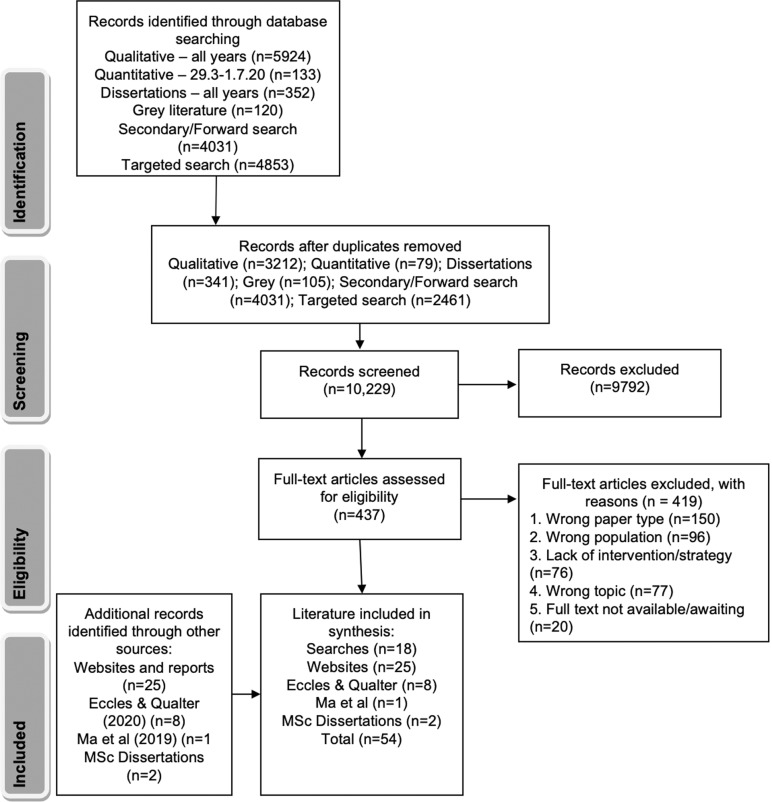
“The Preferred Reporting Items for Systematic Reviews and Meta-Analysis (PRISMA) statement [26] was followed (Fig.”
Tong, A., Sainsbury, P., & Craig, J. (2007) · International Journal for Quality in Health Care · doi:10.1093/intqhc/mzm042 · Cited by 42,509
Kessler, R. C., Berglund, P., Demler, O., Jin, R., Merikangas, K. R., & Walters, E. E. (2005) · Archives of General Psychiatry · doi:10.1001/archpsyc.62.6.593 · Cited by 20,391 · cited 1×
“We focus on the 14–24 age group in line with the Wellcome Trust’s mental health programme strategy [23], since half of all lifetime cases of mental health problems start by age 14 and 75% by age 24 years, meaning that this is a critical period for potential intervention [24].”
MethodWang, G., Ma, R., Qiao, G., Wada, K., Aizawa, Y., & Satoh, T. (2015) · Integrative Medicine International · doi:10.1159/000368408 · Cited by 18,657
UCLA loneliness scale (version 3): reliability, validity, and factor structure
Russell, D. W. (1996) · Journal of Personality Assessment · doi:10.1207/s15327752jpa6601_2 · Cited by 5,800
The Revised UCLA Loneliness Scale: concurrent and discriminant validity evidence
Russell, D., Peplau, L. A., & Cutrona, C. E. (1980) · Journal of Personality and Social Psychology · doi:10.1037/0022-3514.39.3.472 · Cited by 5,173
A Short Scale for Measuring Loneliness in Large Surveys: Results From Two Population-Based Studies
Hughes, M. E., Waite, L. J., Hawkley, L. C., & Cacioppo, J. T. (2004) · Research on Aging · doi:10.1177/0164027504268574 · Cited by 4,781
Loades, M. E., Chatburn, E., Higson-Sweeney, N., Reynolds, S., Shafran, R., Brigden, A., Linney, C., McManus, M. N., Borwick, C., & Crawley, E. (2020) · Journal of the American Academy of Child & Adolescent Psychiatry · doi:10.1016/j.jaac.2020.05.009 · Cited by 2,906 · cited 5×
“[14] reviewed two RCTs of (i) a mentorship programme for 12–15-year olds experiencing victimisation [15], and (ii) a school-based intervention for 15–19-year olds involving either a one-tier intervention comprising class activities and student mentors, or a two-tier programme that additionally involved a staff mental…”
BackgroundMethodInfluentialSelf-citationDixon-Woods, M., Cavers, D., Agarwal, S., Annandale, E., Arthur, A., Harvey, J., Hsu, R., Katbamna, S., Olsen, R., Smith, L., et al. (2006) · BMC Medical Research Methodology · doi:10.1186/1471-2288-6-35 · Cited by 2,289
Synthesising qualitative and quantitative evidence: A review of possible methods
Dixon-Woods, M., Agarwal, S., Jones, D., Young, B., & Sutton, A. (2005) · Journal of Health Services Research & Policy · doi:10.1177/135581960501000110 · Cited by 2,132
A Meta-Analysis of Interventions to Reduce Loneliness
Masi, C. M., Chen, H.-Y., Hawkley, L. C., & Cacioppo, J. T. (2011) · Personality and Social Psychology Review · doi:10.1177/1088868310377394 · Cited by 1,995 · cited 6×
“’s [21] taxonomy of loneliness interventions, the key Interpersonal Strategy is ‘Improving social skills’.”
BackgroundMethodInfluentialA Brief Social-Belonging Intervention Improves Academic and Health Outcomes of Minority Students
Walton, G. M., & Cohen, G. L. (2011) · Science · doi:10.1126/science.1198364 · Cited by 1,992 · cited 2×
“One such promising intervention [76] aimed to modify social appraisals by targeting university students’ sense of belonging (a concept related to loneliness and part of the ‘Social’ pathways in the conceptual framework presented here).”
BackgroundAsher, S. R., Hymel, S., & Renshaw, P. D. (1984) · Child Development · doi:10.2307/1130015 · Cited by 1,219
Gariépy, G., Honkaniemi, H., & Quesnel-Vallée, A. (2016) · British Journal of Psychiatry · doi:10.1192/bjp.bp.115.169094 · Cited by 1,210 · cited 1×
“Given the importance of familial social support for adolescents [75], interventions to improve such relationships might also be helpful.”
BackgroundPerski, O., Blandford, A., West, R., & Michie, S. (2017) · Translational Behavioral Medicine · doi:10.1007/s13142-016-0453-1 · Cited by 1,193 · cited 15×
“Moreover, unlike in ‘standard’ systematic reviews, the aim of the CIS approach is not to identify and include all relevant literature but to reach ‘theoretical saturation’, that is, to include enough literature from a range of sources (including from prior reviews) to ensure that all key themes and concepts are covere…”
BackgroundMethodInfluentialLoneliness Across the Life Span
Qualter, P., Vanhalst, J., Harris, R., Van Roekel, E., Lodder, G., Bangee, M., Maes, M., & Verhagen, M. (2015) · Perspectives on Psychological Science · doi:10.1177/1745691615568999 · Cited by 1,080
No More FOMO: Limiting Social Media Decreases Loneliness and Depression
Hunt, M. G., Marx, R., Lipson, C., & Young, J. (2018) · Journal of Social and Clinical Psychology · doi:10.1521/jscp.2018.37.10.751 · Cited by 947 · cited 15×
“Of the RCTs that did not explicitly report sufficient power, four primarily involved Intrapersonal Strategies (Tables 1 and 2).”
ResultInfluentialChildren's loneliness: A comparison of rejected and neglected peer status.
Asher, S. R., & Wheeler, V. A. (1985) · Journal of Consulting and Clinical Psychology · doi:10.1037/0022-006x.53.4.500 · Cited by 841
Adolescent psychopathology: II. Psychosocial risk factors for depression.
Lewinsohn, P. M., Roberts, R. E., Seeley, J. R., & Rohde, P. (1994) · Journal of Abnormal Psychology · doi:10.1037//0021-843x.103.2.302 · Cited by 565
BASC: Behavior Assessment System for Children.
Merenda, P. F. (1996) · Measurement and Evaluation in Counseling and Development · Cited by 532
Lim, M. H., Eres, R., & Vasan, S. (2020) · Social Psychiatry and Psychiatric Epidemiology · doi:10.1007/s00127-020-01889-7 · Cited by 438 · cited 4×
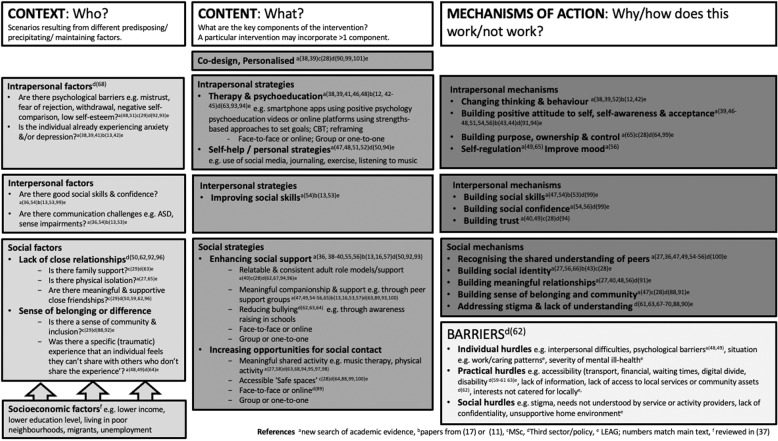
“References: anew search of academic evidence, papers from [17] or [11], MSc, Third sector/policy, LEAG; reference numbers match the main text, reviewed in [37].”
BackgroundInfluentialSituational versus chronic loneliness as risk factors for all-cause mortality
Shiovitz-Ezra, S., & Ayalon, L. (2010) · International Psychogeriatrics · doi:10.1017/s1041610209991426 · Cited by 391 · cited 1×
“If the situation remains unchanged, chronic loneliness may develop: an intrinsically aversive and stable state associated with the inability to develop satisfying social relationships over a sustained period, linked with physical and psychiatric consequences [2].”
BackgroundChildhood loneliness as a predictor of adolescent depressive symptoms: an 8-year longitudinal study
Qualter, P., Brown, S. L., Munn, P., & Rotenberg, K. J. (2010) · European Child & Adolescent Psychiatry · doi:10.1007/s00787-009-0059-y · Cited by 373 · cited 1×
“Loneliness is relatively prevalent amongst 16–25-year olds [3], and longitudinal studies demonstrate that loneliness during childhood increases risk of depression and emotional symptoms up to 24 years later [4, 5].”
BackgroundMann, F., Bone, J. K., Lloyd-Evans, B., Frerichs, J., Pinfold, V., Ma, R., Wang, J., & Johnson, S. (2017) · Social Psychiatry and Psychiatric Epidemiology · doi:10.1007/s00127-017-1392-y · Cited by 346 · cited 5×
“The framework builds on previous taxonomies of interventions for loneliness [21, 22], which only incorporate a classification of the ‘Content’ of strategies to address loneliness.”
BackgroundMethodInfluentialSelf-citationIt is all in their mind: A review on information processing bias in lonely individuals
Spithoven, A. W. M., Bijttebier, P., & Goossens, L. (2017) · Clinical Psychology Review · doi:10.1016/j.cpr.2017.10.003 · Cited by 339 · cited 3×
“We did not find interventions focusing on changing social cognitions, such as interpreting ambiguous social stimuli as threatening, despite theoretical grounds for expecting such interventions to be promising [33].”
BackgroundCrick, N. R., & Ladd, G. W. (1993) · Developmental Psychology · doi:10.1037//0012-1649.29.2.244 · Cited by 321
Tucktuck, M., Ghandour, R., & Abu-Rmeileh, N. M. E. (2018) · BMC Public Health · doi:10.1186/s12889-017-4524-0 · Cited by 316
Review: Alleviating loneliness in young people – a meta‐analysis of interventions
Eccles, A. M., & Qualter, P. (2021) · Child and Adolescent Mental Health · doi:10.1111/camh.12389 · Cited by 285 · cited 6×
“References: anew search of academic evidence, papers from [17] or [11], MSc, Third sector/policy, LEAG; reference numbers match the main text, reviewed in [37].”
BackgroundInfluentialA time-responsive tool for informing policy making: rapid realist review
Saul, J. E., Willis, C. D., Bitz, J., & Best, A. (2013) · Implementation Science · doi:10.1186/1748-5908-8-103 · Cited by 283 · cited 4×
“By drawing together stakeholder input (an innovation to the CIS method based on RRR), quantitative and qualitative academic literature and evidence from third sector and policy grey literature, we iteratively synthesised cross-cutting ‘Intrapersonal’, ‘Interpersonal’, and ‘Social’ constructs, in addition to nested sub…”
MethodInfluentialAchterbergh, L., Pitman, A., Birken, M., Pearce, E., Sno, H., & Johnson, S. (2020) · BMC Psychiatry · doi:10.1186/s12888-020-02818-3 · Cited by 254 · cited 2×
“Consequently, identifying promising approaches also requires qualitative evidence to provide a more nuanced and experiential perspective to complement the quantitative work [10].”
BackgroundSelf-citationMasia-Warner, C., Klein, R. G., Dent, H. C., Fisher, P. H., Alvir, J., Marie Albano, A., & Guardino, M. (2005) · Journal of Abnormal Child Psychology · doi:10.1007/s10802-005-7649-z · Cited by 218 · cited 5×
“[11] examined randomised controlled trial (RCT) interventions for reducing loneliness in individuals of all ages experiencing mental ill-health, and found one intervention for female undergraduates with depression [12] and one for high school students with social anxiety [13].”
BackgroundResultInfluentialMaes, M., Nelemans, S. A., Danneel, S., Fernández-Castilla, B., Van den Noortgate, W., Goossens, L., & Vanhalst, J. (2019) · Developmental Psychology · doi:10.1037/dev0000719 · Cited by 207
Haslam, C., Cruwys, T., Chang, M. X. L., Bentley, S. V., Haslam, S. A., Dingle, G. A., & Jetten, J. (2019) · Journal of Consulting and Clinical Psychology · doi:10.1037/ccp0000427 · Cited by 207 · cited 1×
“Given the clear role of identity and sharing experiences in reducing loneliness, interventions such as Groups4Health [73, 74], which aim to build stronger social identities, might be particularly promising.”
BackgroundMa, R., Mann, F., Wang, J., Lloyd-Evans, B., Terhune, J., Al-Shihabi, A., & Johnson, S. (2020) · Social Psychiatry and Psychiatric Epidemiology · doi:10.1007/s00127-019-01800-z · Cited by 195 · cited 6×
“[11] examined randomised controlled trial (RCT) interventions for reducing loneliness in individuals of all ages experiencing mental ill-health, and found one intervention for female undergraduates with depression [12] and one for high school students with social anxiety [13].”
BackgroundInfluentialSelf-citationVanhalst, J., Luyckx, K., Scholte, R. H. J., Engels, R. C. M. E., & Goossens, L. (2013) · Journal of Abnormal Child Psychology · doi:10.1007/s10802-013-9751-y · Cited by 186 · cited 1×
“‘Intrapersonal Factors’ include whether anxiety and depression are already present, and psychological barriers associated with loneliness, such as cognitive biases [33], low interpersonal trust [34], and low self-esteem [35].”
BackgroundStice, E., Rohde, P., Seeley, J. R., & Gau, J. M. (2008) · Journal of Consulting and Clinical Psychology · doi:10.1037/a0012645 · Cited by 182
Friends and Pets as Companions: Strategies for Coping With Loneliness Among Homeless Youth
Rew, L. (2000) · Journal of Child and Adolescent Psychiatric Nursing · doi:10.1111/j.1744-6171.2000.tb00089.x · Cited by 163
Gallagher, M., Prinstein, M. J., Simon, V., & Spirito, A. (2014) · Journal of Abnormal Child Psychology · doi:10.1007/s10802-013-9844-7 · Cited by 162 · cited 1×
“In a clinical sample of adolescents, loneliness measured at 9 months postbaseline was found to mediate an indirect relationship between baseline social anxiety and suicidal ideation measured at 18 months post-baseline [7].”
BackgroundCoping with loneliness at University: A qualitative interview study with students in the UK
Vasileiou, K., Barnett, J. C., Barreto, M., Vines, J., Atkinson, M., Long, K. S., Bakewell, L. L., Lawson, S. W., & Wilson, M. L. (2018) · Mental Health & Prevention · doi:10.1016/j.mhp.2018.11.002 · Cited by 157
Supporting university students with autism spectrum disorder
Hillier, A., Goldstein, J., Murphy, D., Trietsch, R., Keeves, J., Mendes, E., & Queenan, A. (2018) · Autism · doi:10.1177/1362361317699584 · Cited by 128 · cited 26×
““I think it just makes me feel better, just knowing there’s people out there just like me [with ASD]…I know I have people to talk to and people that I can ask for support”.”
BackgroundMethodInfluentialAn evaluation of an online peer support forum for university students with depressive symptoms
Horgan, A., McCarthy, G., & Sweeney, J. (2013) · Archives of Psychiatric Nursing · doi:10.1016/j.apnu.2012.12.005 · Cited by 127 · cited 3×
“[36] found that lonely university students reported they felt they lacked social skills).”
BackgroundMethodLiving With a Mentally Ill Parent: Exploring Adolescents’ Experiences and Perspectives
Trondsen, M. V. (2012) · Qualitative Health Research · doi:10.1177/1049732311420736 · Cited by 118 · cited 5×
“” The Social Mechanisms construct ‘Recognising the shared understanding of peers’ was strongly supported for in-person and online group activities, and relevant to medical students [47], hospitalised youth [27], young people with a parent suffering mental ill-health [49], youth not in education or employment [55], and…”
BackgroundInfluentialA Pilot Digital Intervention Targeting Loneliness in Youth Mental Health
Lim, M. H., Rodebaugh, T. L., Eres, R., Long, K. M., Penn, D. L., & Gleeson, J. F. M. (2019) · Frontiers in Psychiatry · doi:10.3389/fpsyt.2019.00604 · Cited by 91
Stice, E., Rohde, P., Seeley, J. R., & Gau, J. M. (2010) · Journal of Consulting and Clinical Psychology · doi:10.1037/a0018396 · Cited by 83 · cited 6×
“A group intervention for high-schoolers with depression included a focus on replacing negative cognitions with positive ones, as well as on increasing participant involvement in pleasant activities [42].”
BackgroundResultInfluentialLoneliness and friendships among eight‐year‐old children: time‐trends over a 24‐year period
Lempinen, L., Junttila, N., & Sourander, A. (2018) · Journal of Child Psychology and Psychiatry · doi:10.1111/jcpp.12807 · Cited by 82 · cited 1×
“Loneliness is relatively prevalent amongst 16–25-year olds [3], and longitudinal studies demonstrate that loneliness during childhood increases risk of depression and emotional symptoms up to 24 years later [4, 5].”
BackgroundRohde, P., Jorgensen, J. S., Seeley, J. R., & Mace, D. E. (2004) · Journal of the American Academy of Child & Adolescent Psychiatry · doi:10.1097/01.chi.0000121068.29744.a5 · Cited by 80 · cited 5×
“([44]: n= 109] report an effect size calculation, with this pilot study being powered to detect medium to large effect sizes.”
BackgroundMethodInfluentialAddressing Loneliness in Complex PTSD
Dagan, Y., & Yager, J. (2019) · The Journal of Nervous and Mental Disease · doi:10.1097/nmd.0000000000000992 · Cited by 73 · cited 3×
“In terms of strategies for helping those already experiencing mental illhealth, a case study reported that meaningful close relationships allowed a young woman to engage more fully with therapy for post-traumatic stress disorder [40].”
BackgroundRice, S., O'Bree, B., Wilson, M., McEnery, C., Lim, M. H., Hamilton, M., Gleeson, J., Bendall, S., D'Alfonso, S., Russon, P., et al. (2020) · Internet Interventions · doi:10.1016/j.invent.2020.100323 · Cited by 67 · cited 5×
“attending a party) using a strengthbased approach, alongside support from e-mentors (trained clinicians and peer mentors) who provide opportunities for social connectedness [38, 39].”
BackgroundMethodInfluentialEbesutani, C., Fierstein, M., Viana, A. G., Trent, L., Young, J., & Sprung, M. (2015) · Psychology in the Schools · doi:10.1002/pits.21818 · Cited by 66 · cited 1×
“Moreover, loneliness was found to be a significant mediator in the relationship between anxiety and depression in both a school-based sample and youth receiving residential treatment [8].”
BackgroundEffects of reframing and self-control directives on loneliness, depression, and controllability.
Conoley, C. W., & Garber, R. A. (1985) · Journal of Counseling Psychology · doi:10.1037/0022-0167.32.1.139 · Cited by 60 · cited 4×
“First, undergraduate psychology students with moderate depression receiving a “reframing” intervention were found to experience greater reductions in depressive symptoms than those in “selfcontrol” intervention or control conditions, but loneliness was found to decrease over time irrespective of condition [12].”
BackgroundInfluentialMatthews, N. L., Orr, B. C., Warriner, K., DeCarlo, M., Sorensen, M., Laflin, J., & Smith, C. J. (2018) · Journal of Autism and Developmental Disorders · doi:10.1007/s10803-018-3504-2 · Cited by 58 · cited 21×
““I think it just makes me feel better, just knowing there’s people out there just like me [with ASD]…I know I have people to talk to and people that I can ask for support”.”
BackgroundMethodResultInfluentialMittelmark, M. B., Aarø, L. E., Henriksen, S. G., Siqveland, J., & Torsheim, T. (2004) · International Journal of Mental Health Promotion · doi:10.1080/14623730.2004.9721919 · Cited by 49
An Intervention in Social Connection: Medical Student Reflection Groups
Gold, J. A., Bentzley, J. P., Franciscus, A. M., Forte, C., & Golia, S. G. D. (2019) · Academic Psychiatry · doi:10.1007/s40596-019-01058-2 · Cited by 48 · cited 3×
“Associated qualitative themes included greater self-awareness [47], self-reliance [48], self-confidence [49], and self-efficacy [56].”
BackgroundSmith, N. G., Hart, T. A., Kidwai, A., Vernon, J. R. G., Blais, M., & Adam, B. (2017) · Behavior Therapy · doi:10.1016/j.beth.2017.03.005 · Cited by 44 · cited 2×
“[43]: for gay and bisexual young men, which may be transferable to other demographics, and likely involves Intrapersonal Mechanisms).”
BackgroundA support intervention to promote health and coping among homeless youths.
Stewart, M., Reutter, L., Makwarimba, E., Letourneau, N., & Hungler, K. (2009) · PubMed · doi:10.7939/r3hq3s09r · Cited by 42 · cited 3×
“Associated qualitative themes included greater self-awareness [47], self-reliance [48], self-confidence [49], and self-efficacy [56].”
BackgroundMethodLarsen, T. B., Urke, H. B., Holsen, I., Anvik, C. H., Olsen, T. Å., Waldahl, R. H., Antonsen, K. M., Johnson, R., Tobro, M., Brastad, B., et al. (2018) · BMC Public Health · doi:10.1186/s12889-018-5241-z · Cited by 39 · cited 1×
“[16] indicate in their study protocol [71] that a sample of 975 students and 49 classes was needed to detect a small effect size of 0.”
BackgroundDanneel, S., Bijttebier, P., Bastin, M., Colpin, H., Noortgate, W. V. D., Leeuwen, K. G. V., Verschueren, K., & Goossens, L. (2019) · Journal of Child and Family Studies · doi:10.1007/s10826-019-01354-3 · Cited by 37 · cited 1×
“Despite loneliness, social anxiety and depressive symptoms being interrelated, they are statistically and experientially distinguishable [9, 10].”
BackgroundKing, C. A., Gipson, P. Y., Arango, A., Foster, C. E., Clark, M., Ghaziuddin, N., & Stone, D. (2018) · Journal of Community Psychology · doi:10.1002/jcop.21979 · Cited by 34 · cited 1×
“[14] reviewed two RCTs of (i) a mentorship programme for 12–15-year olds experiencing victimisation [15], and (ii) a school-based intervention for 15–19-year olds involving either a one-tier intervention comprising class activities and student mentors, or a two-tier programme that additionally involved a staff mental…”
BackgroundHamid, P. N., & Lok, D. P. P. (2000) · International Journal of Adolescence and Youth · doi:10.1080/02673843.2000.9747841 · Cited by 30 · cited 1×
“‘Intrapersonal Factors’ include whether anxiety and depression are already present, and psychological barriers associated with loneliness, such as cognitive biases [33], low interpersonal trust [34], and low self-esteem [35].”
BackgroundLarsen, T. B., Urke, H. B., Tobro, M., Årdal, E., Waldahl, R. H., Djupedal, I. L. R., & Holsen, I. (2019) · Scandinavian Journal of Educational Research · doi:10.1080/00313831.2019.1659405 · Cited by 30 · cited 9×
“Approaches included an online peer support forum for university students [36], a Moderated Anonymous Online Group (MAOG) for young adults not in employment or education [55], an in-person school-based intervention comparing peer mentorship versus both peer mentors and a staff mental health support team [16], and in-pe…”
BackgroundMethodInfluentialdos Santos, J. L., Araújo, R. H. D. O., do Nascimento, V. M. S., Couto, J. D. O., & Silva, R. J. D. S. (2020) · Journal of Health Psychology · doi:10.1177/1359105320922298 · Cited by 25 · cited 1×
“Equally, engaging with physical education classes and active leisure time was found to be linked with lower perceived social isolation [58], and part of this benefit may come through engagement with others.”
BackgroundȘtefăniță, O., & Ivan, L. (2018) · Journal of Media Research · doi:10.24193/jmr.31.1 · Cited by 23
Kneer, J., van Eldik, A. K., Jansz, J., Eischeid, S., & Usta, M. (2019) · Media and Communication · doi:10.17645/mac.v7i2.1876 · Cited by 23 · cited 1×
“A one-to-one peer support intervention for refugee adolescents involved both in-person and online communication [57].”
BackgroundBernhold, Q. S. (2019) · Health Communication · doi:10.1080/10410236.2019.1593080 · Cited by 18 · cited 1×
“Activities that ‘build social identity’, such as music therapy ([27]: page 94) or activities that facilitate shared family identity [66], could plausibly reduce loneliness through increasing feelings of belonging.”
BackgroundThe feasibility of an online discussion group as a component of targeted youth work in Finland
Kivijärvi, A., Aaltonen, S., & Välimäki, V. (2019) · Children and Youth Services Review · doi:10.1016/j.childyouth.2019.104411 · Cited by 18 · cited 6×
“Approaches included an online peer support forum for university students [36], a Moderated Anonymous Online Group (MAOG) for young adults not in employment or education [55], an in-person school-based intervention comparing peer mentorship versus both peer mentors and a staff mental health support team [16], and in-pe…”
BackgroundMethodInfluentialCruwys, T., Haslam, C., Walter, Z. C., Rathbone, J., & Williams, E. (2019) · BMC Public Health · doi:10.1186/s12889-019-7011-y · Cited by 17 · cited 1×
“Given the clear role of identity and sharing experiences in reducing loneliness, interventions such as Groups4Health [73, 74], which aim to build stronger social identities, might be particularly promising.”
BackgroundDoes quitting social networks change feelings of loneliness among freshmen? An experimental study
Рафиковна, А. Е., Lovakov, A. V., & Kiselnikova, N. V. (2020) · Journal of Applied Research in Higher Education · doi:10.1108/jarhe-11-2019-0283 · Cited by 17 · cited 4×
“One intervention involved quitting social media [52].”
BackgroundInfluentialReducing Social Stress in Urban Adolescents with Peer Network Counseling
Mason, M. J., Zaharakis, N. M., & Sabo, R. (2016) · Journal of Child and Family Studies · doi:10.1007/s10826-016-0515-5 · Cited by 11 · cited 5×
“Studies looking at young people not explicitly experiencing mental ill-health used in-person interventions and focused on groups potentially at risk of loneliness, such as gay and bisexual [43] or incarcerated [44] young men, adolescents at risk of substance abuse presenting at primary care clinics [45], or ‘runaway’…”
BackgroundResultInfluentialMen and loneliness in the ‘west’: A critical interpretive synthesisPreprint
Ratcliffe, J., Galdas, P., & Kanaan, M. N. (2020) · doi:10.21203/rs.3.rs-17584/v1 · Cited by 8 · cited 2×
“Synthesis Through CIS, the underlying data are transformed into ‘synthetic constructs’: higher-order theoretical concepts that capture diverse evidence [18, 25, 31].”
BackgroundMethodMahdavi, A., Yaghoobi, A., Rashid, K., & Kordnoghabi, R. (2020) · Iranian Evolutionary Educational Psychology Journal · doi:10.29252/ieepj.2.1.33 · Cited by 4
Development of a graphic medicine‐enabled social media‐based intervention for youth social anxiety
Rice, S., O’Bree, B., Wilson, M., McEnery, C., Lim, M. H., Hamilton, M. P., Gleeson, J., Bendall, S., D’Alfonso, S., Russon, P., et al. (2020) · Clinical Psychologist · doi:10.1111/cp.12222 · Cited by 4 · cited 3×
“attending a party) using a strengthbased approach, alongside support from e-mentors (trained clinicians and peer mentors) who provide opportunities for social connectedness [38, 39].”
BackgroundMethod
Research works printed but not linked: 3
- Perlman D, Peplau L. Toward a social psychology of loneliness. In: Duck SW, Gilmour R, editors. Personal relationships in disorder. London: Academic Press; 1981. p. 31–56.
- Weiss RS. Loneliness: the experience of emotional and social isolation. 1973. The MIT Press.
- Leontiev DA, Osin EN. Multidimensional inventory of loneliness experience (MILE). 12th European Conference on Psychological Assessment; 2013. San Sebastian, Spain.
Cited by
Birken, M., Chipp, B., Shah, P., Olive, R. R., Nyikavaranda, P., Hardy, J., Chhapia, A., Barber, N., Lee, S., Pearce, E., et al. (2023) · PLoS ONE · doi:10.1371/journal.pone.0280946 · Cited by 50
Self-citationPlasticity of synapses and reward circuit function in the genesis and treatment of depression
Thompson, S. M. (2023) · Neuropsychopharmacology · doi:10.1038/s41386-022-01422-1 · Cited by 40
“On the other hand, social support is one of the strongest predictors of resilience and increasing social support can provide a beneficial component of effective therapeutic approaches [172].”
BackgroundUyaroğlu, A. K., Ergin, E., Tosun, A. S., & Erdem, Ö. (2022) · Perspectives In Psychiatric Care · doi:10.1111/ppc.13056 · Cited by 54
Predictors of chronic loneliness during adolescence: a population-based cohort study
Hosozawa, M., Cable, N., Yamasaki, S., Ando, S., Endo, K., Usami, S., Nakanishi, M., Niimura, J., Nakajima, N., Baba, K., et al. (2022) · Child and Adolescent Psychiatry and Mental Health · doi:10.1186/s13034-022-00545-z · Cited by 38
Finn, S., Wright, L. H. V., Mak, H. W., Åström, E., Nicholls, L., Dingle, G. A., & Warran, K. (2023) · Frontiers in Psychology · doi:10.3389/fpsyg.2023.1258967 · Cited by 38
Metadata
- Authors
- Pearce, E., Myles-Hooton, P., Johnson, S., Hards, E., Olsen, S., Clisu, D., Pais, S. M. A., Chesters, H. A., Shah, S., Jerwood, G., Politis, M., Melwani, J., Andersson, G., & Shafran, R.
- Affiliations
- University College London (GB)
- University of Bath (GB)
- Linköping University (SE)
- Corresponding author
- Pearce, Eiluned
- ORCID
- Venue
- Translational Psychiatry
- Published
- 2021-12-10
- Volume
- 11
- Issue
- 1
- Pages
- 628-628
- ISSN
- 2158-3188 (ISSN-L)
- PMC
- PMC8661314
- OpenAlex
- W4200575028
- Cited by
- 53
- References
- 72
- Citations by year
- 2026: 7 · 2025: 16 · 2024: 18 · 2023: 5 · 2022: 7
- FWCI
- 1.22
- Type
- journal article
- Language
- en
- Open access
- gold
- doi.org
- Licence
- cc-by
- creativecommons.org/licenses/by/4.0 (tdm)
- creativecommons.org/licenses/by/4.0 (vor)
- Locations
- Translational Psychiatry (publishedVersion, cc-by)
- PubMed Central (publishedVersion, cc-by)
- PubMed (publishedVersion)
- KTH Publication Database DiVA (KTH Royal Institute of Technology) (submittedVersion, other-oa)
- DOAJ (DOAJ: Directory of Open Access Journals) (submittedVersion, cc-by-sa)
- UCL Discovery (University College London) (submittedVersion)
- PsyArXiv (OSF Preprints) (submittedVersion)
- PsyArXiv (OSF Preprints) (submittedVersion, cc-by)
- Funders
- Wellcome Trust (n/a)
- RCUK | Economic and Social Research Council (ES/S004440/1)
- Topics
- Social Sciences › Psychology › Experimental and Cognitive Psychology › Anxiety, Depression, Psychometrics, Treatment, Cognitive Processes
- Social Sciences › Health › Health disparities and outcomes
- Social Sciences › Psychology › Clinical Psychology › Child and Adolescent Psychosocial and Emotional Development
- Keywords
- loneliness, youth anxiety, adolescent depression, depression prevention, anxiety prevention, loneliness interventions, mechanism of action, interpersonal strategies, social strategies, social support, cognitive behavioral therapy, conceptual framework, rapid realist review, stakeholder perspectives, peer support groups, self-compassion
- MeSH terms
- Adolescent, Anxiety, Anxiety Disorders, Depression, Humans, Loneliness, Cognitive Behavioral Therapy
About these checks
Registry, retraction, Cites and statistics results are computed, not judged, with one exception: a printed reference that no index lists is read once by a model before it counts as a citation error. Claims are extracted by a model and kept only when their quote appears verbatim in the text; each cited source is then checked, with a model’s help, for whether it says what the claim relies on. Those verdicts can be wrong — read the claim’s quote and the cited source before relying on one.
Statistics and arithmetic are recomputed, not judged.
Confidence bands are shown only for fields calibrated on our annotated test set. None is calibrated yet, so no band is shown.
What counts as a claim ›How we measure confidence ›How we check this ›
Are you an author, or do you see a problem with this page? Request a review
Data sources
Bibliographic data: Semantic Scholar, OpenAlex, Crossref.
Contains information from the Semantic Scholar Academic Graph Datasets, made available under the ODC Attribution License (ODC-BY 1.0).
Semantic Scholar’s data is described in: Kinney, R., et al. (2023). The Semantic Scholar Open Data Platform. arXiv:2301.10140.
