

Serotonin and dopamine transporter availability in social anxiety disorder after combined treatment with escitalopram and cognitive-behavioral therapy
Open accessThe DOI matches its Crossref record; 79 of the 79 references it cites were found in a registry or an index.
Abstract
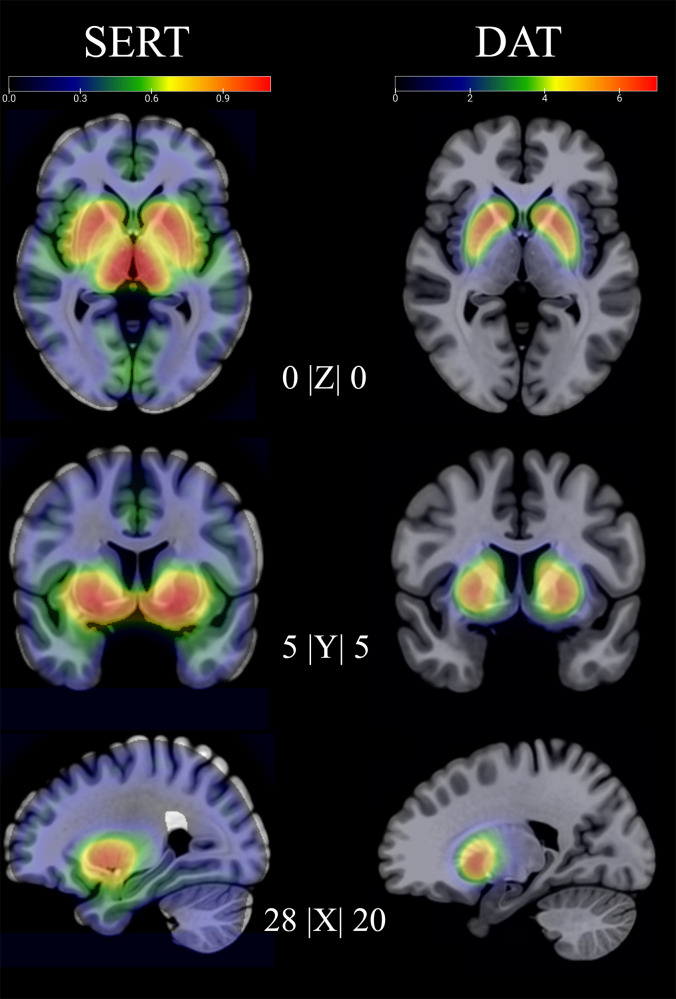
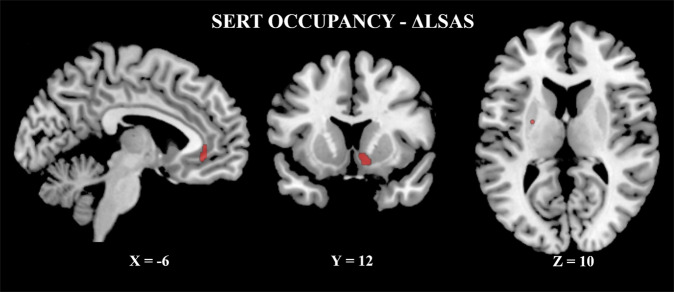
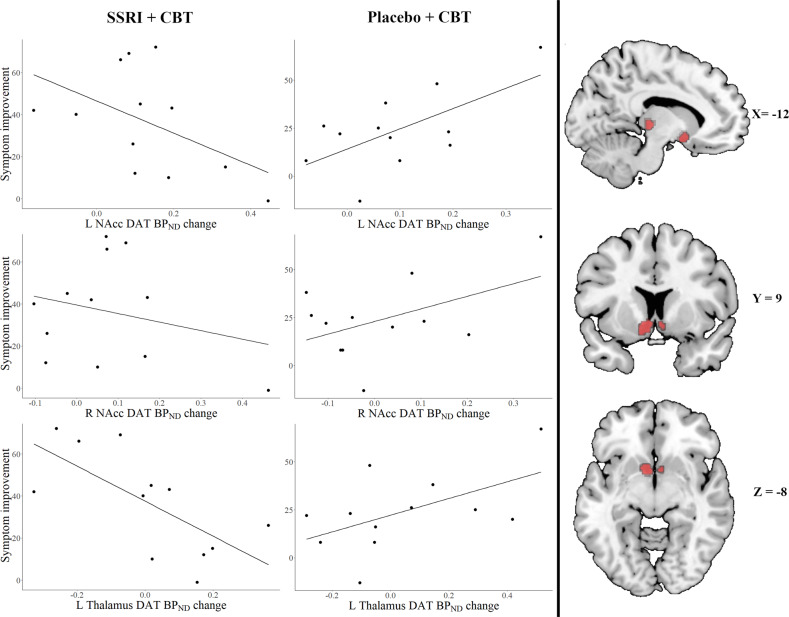
Selective serotonin reuptake inhibitors (SSRIs) and internet-based cognitive behavioral therapy (ICBT) are recommended treatments of social anxiety disorder (SAD), and often combined, but their effects on monoaminergic signaling are not well understood. In this multi-tracer positron emission tomography (PET) study, 24 patients with SAD were randomized to treatment with escitalopram+ICBT or placebo+ICBT under double-blind conditions. Before and after 9 weeks of treatment, patients were examined with positron emission tomography and the radioligands [ 11 C]DASB and [ 11 C]PE2I, probing the serotonin (SERT) and dopamine (DAT) transporter proteins respectively. Both treatment combinations resulted in significant improvement as measured by the Liebowitz Social Anxiety Scale (LSAS). At baseline, SERT-DAT co-expression was high and, in the putamen and thalamus, co-expression showed positive associations with symptom severity. SERT-DAT co-expression was also predictive of treatment success, but predictor-outcome associations differed in direction between the treatments. After treatment, average SERT occupancy in the SSRI + ICBT group was >80%, with positive associations between symptom improvement and occupancy in the nucleus accumbens, putamen and anterior cingulate cortex. Following placebo+ICBT, SERT binding increased in the raphe nuclei. DAT binding increased in both groups in limbic and striatal areas, but relations with symptom improvement differed, being negative for SSRI + ICBT and positive for placebo + ICBT. Thus, serotonin-dopamine transporter co-expression exerts influence on symptom severity and remission rate in the treatment of social anxiety disorder. However, the monoamine transporters are modulated in dissimilar ways when cognitive-behavioral treatment is given concomitantly with either SSRI-medication or pill placebo.
Overview
The claims and statistics of this paper haven’t been checked yet.
Free: it reads the open-access text and checks the first 5 claims that cite a source we can check. Create a free account to check every claim.
Integrity signals
Registry
Cites
Statistics
Figures
Verification
Claims the paper makes
The claims and statistics of this paper haven’t been checked yet.
Free: it reads the open-access text and checks the first 5 claims that cite a source we can check. Create a free account to check every claim.
Claims other papers make about this one
Each is checked against this paper’s own text: does it say what the citing paper says it does?
The cited source doesn’t support the claim as written.
In the citing paper
“In the SSRI + CBT group, reduced anxiety correlated with increased striatal serotonin transporter binding, but not with blood drug concentration.”
From Revisiting the SSRI vs. placebo debate in the treatment of social anxiety disorder: the role of expectancy effects, neural responsivity, and monoamine transporters (2025) · cites this paper as Hjorth et al., 2022
Checked by a reasoning model — may be wrong.
Experimental — accuracy not yet measuredThe source backs part of the claim, not all of it — or backs it for a different population, condition or comparison.
In the citing paper
“In yet another study, combining SSRIs with cognitive-behavioral therapy (CBT) led to more robust and longer-lasting outcomes than placebo combined with CBT, with distinct effects on brain monoamine transporters.”
From Revisiting the SSRI vs. placebo debate in the treatment of social anxiety disorder: the role of expectancy effects, neural responsivity, and monoamine transporters (2025) · cites this paper as Hjorth et al., 2022
Experimental — accuracy not yet measuredThe source backs part of the claim, not all of it — or backs it for a different population, condition or comparison.
In the citing paper
“Decreased dopamine transporter availability in the nucleus accumbens and left thalamus correlated with reduced social anxiety, whereas an opposite correlation was observed in the placebo + CBT group (Hjorth et al., 2022).”
From Revisiting the SSRI vs. placebo debate in the treatment of social anxiety disorder: the role of expectancy effects, neural responsivity, and monoamine transporters (2025) · cites this paper as Hjorth et al., 2022
Experimental — accuracy not yet measuredThe source backs part of the claim, not all of it — or backs it for a different population, condition or comparison.
In the citing paper
“Treatment results showed that both the escitalopram + CBT and placebo + CBT combinations yielded significant improvement (p < 0.001), with social anxiety symptom assessments on the LSAS-SR decreasing by 37 and 24 points, respectively (Hjorth et al., 2022).”
From Revisiting the SSRI vs. placebo debate in the treatment of social anxiety disorder: the role of expectancy effects, neural responsivity, and monoamine transporters (2025) · cites this paper as Hjorth et al., 2022
Experimental — accuracy not yet measuredThe cited source says what the claim attributes to it.
In the citing paper
“No serotonin reuptake inhibition was seen after placebo + CBT; on the contrary, serotonin transporter availability increased in the raphe nuclei.”
From Revisiting the SSRI vs. placebo debate in the treatment of social anxiety disorder: the role of expectancy effects, neural responsivity, and monoamine transporters (2025) · cites this paper as Hjorth et al., 2022
1 more claim about this paper
Create a free account to see every claim other papers make about this one.
Self-check
Percentages, sums and reported differences re-computed from the paper’s own numbers.
The self-check needs the paper’s full text.
Citations
Cites
A new depression scale designed to be sensitive to change
Montgomery, S. A., & Åsberg, M. (1979) · British Journal of Psychiatry · doi:10.1192/bjp.134.4.382 · Cited by 13,962 · cited 1×
“Briefly, participants were recruited through media advertisements and screened for SAD using online versions of the Social Phobia Screening Questionnaire (SPSQ) [56] and the Montgomery-Åsberg Depression Rating Scale–self rated version (MADRS-S) [57].”
Method(1998) · PubMed · Cited by 10,216
Maldjian, J. A., Laurienti, P. J., Kraft, R. A., & Burdette, J. H. (2003) · NeuroImage · doi:10.1016/s1053-8119(03)00169-1 · Cited by 5,085 · cited 1×
“Anatomical regions were defined by masks available in the Automated Anatomical Labeling (AAL) library found in the Wake Forest University Pickatlas [70].”
MethodWang, P. S., Lane, M., Olfson, M., Pincus, H. A., Wells, K. B., & Kessler, R. C. (2005) · Archives of General Psychiatry · doi:10.1001/archpsyc.62.6.629 · Cited by 2,695 · cited 1×
“INTRODUCTION Social anxiety disorder (SAD) is a debilitating and chronic psychiatric disorder associated with severe suffering for the individual, negative impact on working-life and relationships [1] and high barriers to seek treatment [2].”
BackgroundDistribution Volume Ratios without Blood Sampling from Graphical Analysis of PET Data
Logan, J., Fowler, J. S., Volkow, N. D., Wang, G.-J., Ding, Y.-S., & Alexoff, D. L. (1996) · Journal of Cerebral Blood Flow & Metabolism · doi:10.1097/00004647-199609000-00008 · Cited by 1,514 · cited 3×
“When using reference Logan, BPND is derived by subtracting 1 from the Translational Psychiatry (2022) 12:436 distribution volume ratio.”
MethodHammers, A., Allom, R., Koepp, M. J., Free, S. L., Myers, R., Lemieux, L., Mitchell, T. N., Brooks, D. J., & Duncan, J. S. (2003) · Human Brain Mapping · doi:10.1002/hbm.10123 · Cited by 1,286
Carlbring, P., Andersson, G., Cuijpers, P., Riper, H., & Hedman-Lagerlöf, E. (2018) · Cognitive Behaviour Therapy · doi:10.1080/16506073.2017.1401115 · Cited by 1,232 · cited 2×
“The aim of this study was to evaluate changes in serotonin and dopamine transporter availability in SAD patients after 9 weeks of treatment with Internet-delivered CBT (ICBT) [54, 55] combined with an SSRI (escitalopram) or pill-placebo under double-blind conditions, and if such changes are associated with symptom imp…”
BackgroundSelf-citationStein, M. B., & Stein, D. J. (2008) · The Lancet · doi:10.1016/s0140-6736(08)60488-2 · Cited by 1,137
Parametric Imaging of Ligand-Receptor Binding in PET Using a Simplified Reference Region Model
Gunn, R. N., Lammertsma, A. A., Hume, S. P., & Cunningham, V. J. (1997) · NeuroImage · doi:10.1006/nimg.1997.0303 · Cited by 1,084 · cited 1×
“Parametric [(11)C]PE2I binding potential (BPND) images were generated using receptor parametric mapping [65] which is based on a simplified reference region compartmental model and [(11)C]DASB BPND images were calculated using the reference Logan [66] method.”
MethodPharmacokinetics of selective serotonin reuptake inhibitors
Hiemke, C., & Härtter, S. (2000) · Pharmacology & Therapeutics · doi:10.1016/s0163-7258(99)00048-0 · Cited by 883 · cited 1×
“The primary action of SSRIs is to block the serotonin transporter (SERT) protein that facilitates transmembrane reuptake of serotonin into the pre-synaptic cell [16] and 76–85% occupancy has been suggested to exert efficient symptom relief [17, 18].”
BackgroundFRESCO, D. M., COLES, M. E., HEIMBERG, R. G., LIEBOWITZ, M. R., HAMI, S., STEIN, M. B., & GOETZ, D. (2001) · Psychological Medicine · doi:10.1017/s0033291701004056 · Cited by 874 · cited 3×
“Behavioral measures Severity of social anxiety symptoms was measured using the clinicianadministered Liebowitz Social Anxiety Scale [64] before and after treatment.”
MethodInfluentialMayo-Wilson, E., Dias, S., Mavranezouli, I., Kew, K., Clark, D. M., Ades, A. E., & Pilling, S. (2014) · The Lancet Psychiatry · doi:10.1016/s2215-0366(14)70329-3 · Cited by 680 · cited 10×
“Speculatively, SSRIs may act more by modulating amygdala threat signaling.”
BackgroundInfluentialThe role of D2-autoreceptors in regulating dopamine neuron activity and transmission
Ford, C. P. (2014) · Neuroscience · doi:10.1016/j.neuroscience.2014.01.025 · Cited by 590 · cited 1×
“Since changes both in D2 and DAT parameters can be linked to treatment outcome in SAD, and since D2 autoreceptors regulate dopamine synthesis and DAT expression [78], further research on both dopamine sub-systems is warranted.”
BackgroundFurmark, T., Tillfors, M., Marteinsdottir, I., Fischer, H., Pissiota, A., Långström, B., & Fredrikson, M. (2002) · Archives of General Psychiatry · doi:10.1001/archpsyc.59.5.425 · Cited by 530
Self-citationMeyer, J. H., Wilson, A. A., Sagrati, S., Hussey, D., Carella, A., Potter, W. Z., Ginovart, N., Spencer, E. P., Cheok, A., & Houle, S. (2004) · American Journal of Psychiatry · doi:10.1176/appi.ajp.161.5.826 · Cited by 517 · cited 2×
“The primary action of SSRIs is to block the serotonin transporter (SERT) protein that facilitates transmembrane reuptake of serotonin into the pre-synaptic cell [16] and 76–85% occupancy has been suggested to exert efficient symptom relief [17, 18].”
BackgroundGriebel, G. (1995) · Pharmacology & Therapeutics · doi:10.1016/0163-7258(95)98597-j · Cited by 488 · cited 1×
“Serotonin has been implicated as a key neurotransmitter in the neurobiology of anxiety [12].”
BackgroundPetrovic, P., Dietrich, T., Fransson, P., Andersson, J., Carlsson, K., & Ingvar, M. (2005) · Neuron · doi:10.1016/j.neuron.2005.05.023 · Cited by 437
Svarer, C., Madsen, K., Hasselbalch, S. G., Pinborg, L. H., Haugbøl, S., Frøkjær, V. G., Holm, S., Paulson, O. B., & Knudsen, G. M. (2005) · NeuroImage · doi:10.1016/j.neuroimage.2004.10.017 · Cited by 386
Andersson, G., Carlbring, P., Holmström, A., Sparthan, E., Furmark, T., Nilsson-Ihrfelt, E., Buhrman, M., & Ekselius, L. (2006) · Journal of Consulting and Clinical Psychology · doi:10.1037/0022-006x.74.4.677 · Cited by 382 · cited 2×
“The aim of this study was to evaluate changes in serotonin and dopamine transporter availability in SAD patients after 9 weeks of treatment with Internet-delivered CBT (ICBT) [54, 55] combined with an SSRI (escitalopram) or pill-placebo under double-blind conditions, and if such changes are associated with symptom imp…”
BackgroundSelf-citationSocial phobia in the general population: prevalence and sociodemographic profile
Furmark, T., Tillfors, M., Everz, P.-O., Marteinsdottir, I., Gefvert, O., & Fredrikson, M. (1999) · Social Psychiatry and Psychiatric Epidemiology · doi:10.1007/s001270050163 · Cited by 358 · cited 1×
“Briefly, participants were recruited through media advertisements and screened for SAD using online versions of the Social Phobia Screening Questionnaire (SPSQ) [56] and the Montgomery-Åsberg Depression Rating Scale–self rated version (MADRS-S) [57].”
MethodSelf-citationLow Dopamine D2 Receptor Binding Potential in Social Phobia
Schneier, F. R., Liebowitz, M. R., Abi-Dargham, A., Zea-Ponce, Y., Lin, S.-H., & Laruelle, M. (2000) · American Journal of Psychiatry · doi:10.1176/appi.ajp.157.3.457 · Cited by 325
Reduced Serotonin-1A Receptor Binding in Social Anxiety Disorder
Lanzenberger, R. R., Mitterhauser, M., Spindelegger, C., Wadsak, W., Klein, N., Mien, L.-K., Holik, A., Attarbaschi, T., Mossaheb, N., Sacher, J., et al. (2007) · Biological Psychiatry · doi:10.1016/j.biopsych.2006.05.022 · Cited by 300 · cited 1×
“The raphe is regarded as an important target for SSRIs due to its high concentration of serotonergic neurons, and PET studies of SAD have demonstrated lower serotonin 1 A binding [14] and increased serotonin synthesis [13] in this region before treatment.”
BackgroundCarlbring, P., Gunnarsdóttir, M., Hedensjö, L., Andersson, G., Ekselius, L., & Furmark, T. (2007) · British Journal of Psychiatry · doi:10.1192/bjp.bp.105.020107 · Cited by 293
Self-citationHedman, E., Andersson, G., Ljótsson, B., Andersson, E., Rück, C., Mörtberg, E., & Lindefors, N. (2011) · PLoS ONE · doi:10.1371/journal.pone.0018001 · Cited by 285 · cited 1×
“The ICBT program has been found to be effective in several RCTs [55, 60, 61], and found to be as effective as face-to-face CBT [54, 62].”
BackgroundSelf-citationPredicting treatment response in social anxiety disorder from functional magnetic resonance imaging.
Doehrmann, O., Ghosh, S. S., Polli, F. E., Reynolds, G. O., Horn, F., Keshavan, A., Triantafyllou, C., Saygin, Z. M., Whitfield-Gabrieli, S., Hofmann, S. G., et al. (2013) · JAMA Psychiatry · doi:10.1001/2013.jamapsychiatry.5 · Cited by 262
Guided and unguided self-help for social anxiety disorder: randomised controlled trial
Furmark, T., Carlbring, P., Hedman, E., Sonnenstein, A., Clevberger, P., Bohman, B., Eriksson, A., Hållén, A., Frykman, M., Holmström, A., et al. (2009) · British Journal of Psychiatry · doi:10.1192/bjp.bp.108.060996 · Cited by 256 · cited 1×
“The ICBT program has been found to be effective in several RCTs [55, 60, 61], and found to be as effective as face-to-face CBT [54, 62].”
BackgroundSelf-citationLeichsenring, F., & Leweke, F. (2017) · New England Journal of Medicine · doi:10.1056/nejmcp1614701 · Cited by 256
Dopamine reuptake site densities in patients with social phobia
(1997) · American Journal of Psychiatry · doi:10.1176/ajp.154.2.239 · Cited by 242
Daws, L. C. (2009) · Pharmacology & Therapeutics · doi:10.1016/j.pharmthera.2008.10.004 · Cited by 223
Serotonin and emotional processing: does it help explain antidepressant drug action?
Harmer, C. J. (2008) · Neuropharmacology · doi:10.1016/j.neuropharm.2008.06.036 · Cited by 219
Furmark, T., Appel, L., Michelgård, Å., Wahlstedt, K., Åhs, F., Zancan, S., Jacobsson, E., Flyckt, K., Grohp, M., Bergström, M., et al. (2005) · Biological Psychiatry · doi:10.1016/j.biopsych.2005.03.029 · Cited by 206
Self-citationAnxiety in Parkinson’s disease: A critical review of experimental and clinical studies
Prediger, R. D. S., Matheus, F. C., Schwarzbold, M. L., Lima, M. M. S., & Vital, M. A. B. F. (2012) · Neuropharmacology · doi:10.1016/j.neuropharm.2011.08.039 · Cited by 190
Corelease of Dopamine and Serotonin from Striatal Dopamine Terminals
Zhou, F.-M., Liang, Y., Salas, R., Zhang, L., De Biasi, M., & Dani, J. A. (2005) · Neuron · doi:10.1016/j.neuron.2005.02.010 · Cited by 187
The anti-inflammatory mechanism of antidepressants – SSRIs, SNRIs
Gałecki, P., Mossakowska-Wójcik, J., & Talarowska, M. (2018) · Progress in Neuro-Psychopharmacology and Biological Psychiatry · doi:10.1016/j.pnpbp.2017.03.016 · Cited by 180
Goldin, P. R., Ziv, M., Jazaieri, H., Hahn, K., Heimberg, R., & Gross, J. J. (2013) · JAMA Psychiatry · doi:10.1001/jamapsychiatry.2013.234 · Cited by 174
Kohls, G., Perino, M. T., Taylor, J. M., Madva, E. N., Cayless, S. J., Troiani, V., Price, E., Faja, S., Herrington, J. D., & Schultz, R. T. (2013) · Neuropsychologia · doi:10.1016/j.neuropsychologia.2013.07.020 · Cited by 170
Serotonin control of central dopaminergic function: focus on in vivo microdialysis studies
DIMATTEO, V, DIGIOVANNI, G., PIERUCCI, M., & ESPOSITO, E. (2008) · Progress in Brain Research · doi:10.1016/s0079-6123(08)00902-3 · Cited by 169
Kugaya, A., Seneca, N. M., Snyder, P. J., Williams, S. A., Malison, R. T., Baldwin, R. M., Seibyl, J. P., & Innis, R. B. (2003) · Neuropsychopharmacology · doi:10.1038/sj.npp.1300036 · Cited by 162
Kitaichi, Y., Inoue, T., Nakagawa, S., Boku, S., Kakuta, A., Izumi, T., & Koyama, T. (2010) · European Journal of Pharmacology · doi:10.1016/j.ejphar.2010.08.026 · Cited by 145
Serotonin Synthesis and Reuptake in Social Anxiety Disorder: A Positron Emission Tomography Study
Frick, A., Åhs, F., Engman, J., Jonasson, M., Alaie, I., Björkstrand, J., Frans, Ö., Faria, V., Linnman, C., Appel, L., et al. (2015) · JAMA Psychiatry · doi:10.1001/jamapsychiatry.2015.0125 · Cited by 128
Self-citationDremencov, E., El Mansari, M., & Blier, P. (2009) · Journal of Psychiatry and Neuroscience · doi:10.1139/jpn.0930 · Cited by 127
Booij, J., de Jong, J., de Bruin, K. M., Knol, R. J. J., de Win, M. M. L., & van Eck‐Smit, B. L. F. (2007) · PubMed · Cited by 127
Klumpp, H., Fitzgerald, D. A., & Phan, K. L. (2013) · Progress in Neuro-Psychopharmacology and Biological Psychiatry · doi:10.1016/j.pnpbp.2013.05.004 · Cited by 126
van der Wee, N. J., van Veen, J. F., Stevens, H., van Vliet, I. M., van Rijk, P. P., & Westenberg, H. G. (2008) · Journal of Nuclear Medicine · doi:10.2967/jnumed.107.045518 · Cited by 107
Dopamine transporters, D2receptors, and dopamine release in generalized social anxiety disorder
Schneier, F. R., Abi-Dargham, A., Martinez, D., Slifstein, M., Hwang, D.-R., Liebowitz, M. R., & Laruelle, M. (2009) · Depression and Anxiety · doi:10.1002/da.20543 · Cited by 100
Månsson, K. N. T., Carlbring, P., Frick, A., Engman, J., Olsson, C.-J., Bodlund, O., Furmark, T., & Andersson, G. (2013) · Psychiatry Research: Neuroimaging · doi:10.1016/j.pscychresns.2013.08.012 · Cited by 92
Self-citationSerotonin–dopamine interaction: an overview
ESPOSITO, E., DIMATTEO, V, & DIGIOVANNI, G. (2008) · Progress in Brain Research · doi:10.1016/s0079-6123(08)00901-1 · Cited by 88
Voineskos, A. N., Wilson, A. A., Boovariwala, A., Sagrati, S., Houle, S., Rusjan, P., Sokolov, S. T. H., Spencer, E. P., Ginovart, N., & Meyer, J. H. (2007) · Psychopharmacology · doi:10.1007/s00213-007-0806-z · Cited by 81 · cited 2×
“The primary action of SSRIs is to block the serotonin transporter (SERT) protein that facilitates transmembrane reuptake of serotonin into the pre-synaptic cell [16] and 76–85% occupancy has been suggested to exert efficient symptom relief [17, 18].”
BackgroundHjorth, O. R., Frick, A., Gingnell, M., Hoppe, J. M., Faria, V., Hultberg, S., Alaie, I., Månsson, K. N. T., Wahlstedt, K., Jonasson, M., et al. (2019) · Molecular Psychiatry · doi:10.1038/s41380-019-0618-7 · Cited by 81 · cited 3×
“, a significantly higher correlation coefficient between SERT and DAT BPND in SAD patients relative to healthy controls [15].”
BackgroundResultSelf-citationKENT, J. M., Coplan, J. D., Lombardo, I., Hwang, D., Huang, Y. H., Mawlawi, O. R., Heertum, R. V., Slifstein, M., Abi‐Dargham, A., Gorman, J. M., et al. (2002) · Psychopharmacology · doi:10.1007/s00213-002-1218-8 · Cited by 71
Tiger, M., Rück, C., Forsberg, A., Varrone, A., Lindefors, N., Halldin, C., Farde, L., & Lundberg, J. (2014) · Psychiatry Research Neuroimaging · doi:10.1016/j.pscychresns.2014.05.011 · Cited by 70 · cited 1×
“The current results indicate that raphe serotonergic activity could also be modulated by ICBT, in line with findings of reduced serotonin 1B receptor binding in raphe after ICBT for major depressive disorder [74].”
ResultRelationship of cognitions to fear of somatic symptoms: A test of the cognitive theory of panic
Chambless, D. L., Beck, A. T., Gracely, E. J., & Grisham, J. R. (2000) · Depression and Anxiety · doi:10.1002/(sici)1520-6394(2000)11:1<1::aid-da1>3.0.co;2-x · Cited by 65
Cervenka, S., Hedman, E., Ikoma, Y., Djurfeldt, D. R., Rück, C., Halldin, C., & Lindefors, N. (2012) · Translational Psychiatry · doi:10.1038/tp.2012.40 · Cited by 64 · cited 2×
“Very few studies have examined dopaminergic changes in SAD, non-confounded by pharmacological treatment, but Cervenka and coworkers [53] found increased D2 receptor binding potential in limbic and pre-frontal areas with ICBT.”
BackgroundHerold, N., Uebelhack, K., Franke, L., Amthauer, H., Luedemann, L., Bruhn, H., Felix, R., Uebelhack, R., & Plotkin, M. (2006) · Journal of Neural Transmission · doi:10.1007/s00702-005-0429-7 · Cited by 61
Dopamine agonist‐responsive depression
Hori, H., & Kunugi, H. (2013) · Psychogeriatrics · doi:10.1111/psyg.12014 · Cited by 57 · cited 1×
“As we mentioned previously in a study of a different cohort [20], our PET data may indicate dopaminergic dysfunction in SAD similar to at least some subgroups of treatment resistant depression for which dopamine agonists could be effective [79].”
ResultIncreased dopamine transporter density in Parkinson's disease patients with social anxiety disorder
Moriyama, T. S., Felicio, A. C., Chagas, M. H. N., Tardelli, V. S., Ferraz, H. B., Tumas, V., Amaro, E., Andrade, L. E. C., Crippa, J. A. S., & Bressan, R. A. (2011) · Journal of the Neurological Sciences · doi:10.1016/j.jns.2011.06.056 · Cited by 57
SERT and DAT availabilities under citalopram treatment in obsessive–compulsive disorder (OCD)
Pogarell, O. M., Poepperl, G., Mulert, C., Hamann, C., Sadowsky, N., Riedel, M. J., Moeller, H., Hegerl, U., & Tatsch, K. (2005) · European Neuropsychopharmacology · doi:10.1016/j.euroneuro.2005.01.003 · Cited by 49
Ruhé, H. G., Ooteman, W., Booij, J., Michel, M. C., Moeton, M., Baas, F., & Schene, A. H. (2009) · Pharmacogenetics and Genomics · doi:10.1097/fpc.0b013e32831a6a3a · Cited by 49 · cited 1×
“depression [18, 21–23], although it has been observed for certain subpopulations of depression [24, 25].”
BackgroundCatafau, A. M., Perez, V., Plaza, P., Pascual, J.-C., Bullich, S., Suarez, M., Penengo, M. M., Corripio, I., Puigdemont, D., Danus, M., et al. (2006) · Psychopharmacology · doi:10.1007/s00213-006-0540-y · Cited by 46
Hjorth, O. R., Frick, A., Gingnell, M., Hoppe, J. M., Faria, V., Hultberg, S., Alaie, I., Månsson, K. N. T., Rosén, J., Reis, M., et al. (2021) · Translational Psychiatry · doi:10.1038/s41398-021-01682-3 · Cited by 46 · cited 8×
“In a previous PET study, we failed to demonstrate such a relationship in SAD [20], consistent with several studies of major”
BackgroundResultSelf-citationGingnell, M., Frick, A., Engman, J., Alaie, I., Björkstrand, J., Faria, V., Carlbring, P., Andersson, G., Reis, M., Larsson, E.-M., et al. (2016) · British Journal of Psychiatry · doi:10.1192/bjp.bp.115.175794 · Cited by 44 · cited 12×
“For example, SSRI+ ICBT yielded stronger attenuation of amygdala BOLD reactivity to emotional faces than placebo+ICBT in the larger cohort [4].”
BackgroundMethodResultSelf-citationHamel, L., Thangarasa, T., Samadi, O., & Ito, R. (2017) · eneuro · doi:10.1523/eneuro.0330-16.2017 · Cited by 44
Dopamine transporter binding in social anxiety disorder: the effect of treatment with escitalopram
Warwick, J., Carey, P. D., Cassimjee, N., Löchner, C., Hemmings, S. M. J., Moolman-Smook, H., Beetge, E., Dupont, P. J., & Stein, D. J. (2012) · Metabolic Brain Disease · doi:10.1007/s11011-012-9280-3 · Cited by 41 · cited 1×
“In SAD, similar effects of escitalopram have previously been reported in a SPECT study, where DAT increases were limited to the left dorsal striatum and did not correlate with symptom improvement [48].”
ResultRominger, A., Cumming, P. D., Brendel, M., Xiong, G., Zach, C., Karch, S., Tatsch, K., Bartenstein, P., la Fougère, C., Koch, W., et al. (2015) · European Neuropsychopharmacology · doi:10.1016/j.euroneuro.2014.12.010 · Cited by 37
Callaghan, P. D., Irvine, R. J., & Daws, L. C. (2005) · Neurochemistry International · doi:10.1016/j.neuint.2005.04.026 · Cited by 37
Extrastriatal dopamine D2-receptor availability in social anxiety disorder
Plavén‐Sigray, P., Hedman‐Lagerlöf, E., Victorsson, P. I., Matheson, G. J., Forsberg, A., Djurfeldt, D. R., Rück, C., Halldin, C., Lindefors, N., & Červenka, S. (2017) · European Neuropsychopharmacology · doi:10.1016/j.euroneuro.2017.03.007 · Cited by 37
Serotonin transporter availability increases in patients recovering from a depressive episode
Svensson, J. E., Svanborg, C., Plavén‐Sigray, P., Kaldo, V., Halldin, C., Schain, M., & Lundberg, J. (2021) · Translational Psychiatry · doi:10.1038/s41398-021-01376-w · Cited by 35 · cited 1×
“Studies of depression have suggested that SERT binding increases after CBT [72, 73].”
BackgroundAmsterdam, J. D., Newberg, A. B., Newman, C. F., Shults, J., Wintering, N., & Soeller, I. (2013) · Journal of Neuroimaging · doi:10.1111/jon.12035 · Cited by 32
Hood, S. D., Potokar, J. P., Davies, S., Hince, D., Morris, K., Seddon, K., Nutt, D., & Argyropoulos, S. (2008) · Journal of Psychopharmacology · doi:10.1177/0269881108098144 · Cited by 32
Smith, G. S., Kahn, A., Sacher, J., Rusjan, P., van Eimeren, T., Flint, A., & Wilson, A. A. (2011) · The American Journal of Geriatric Psychiatry · doi:10.1097/jgp.0b013e318227f83f · Cited by 32 · cited 1×
“depression [18, 21–23], although it has been observed for certain subpopulations of depression [24, 25].”
BackgroundAssociation between amygdala reactivity and a dopamine transporter gene polymorphism
Bergman, O., Åhs, F., Furmark, T., Appel, L., Linnman, C., Faria, V., Bani, M., Pich, E. M., Bettica, P. U., Henningsson, S., et al. (2014) · Translational Psychiatry · doi:10.1038/tp.2014.50 · Cited by 31
Self-citationAberrant accumulation of serotonin in dopaminergic neurons
Mößner, R., Simantov, R., Marx, A., Lesch, K., & Seif, I. (2006) · Neuroscience Letters · doi:10.1016/j.neulet.2006.02.081 · Cited by 30
Low dose selegiline (L-Deprenyl) in social phobia
Simpson, H. B., Schneier, F. R., Marshall, R. D., Campeas, R. B., Vermes, D., Silvestre, J., Davies, S. O., & Liebowitz, M. R. (1998) · Depression and Anxiety · doi:10.1002/(sici)1520-6394(1998)7:3<126::aid-da5>3.0.co;2-9 · Cited by 29 · cited 1×
“However, dopaminergic medications have not stood out as particularly effective on their own, although this topic is understudied [80, 81].”
BackgroundFrick, A., Engman, J., Wahlstedt, K., Gingnell, M., Fredrikson, M., & Furmark, T. (2018) · BJPsych Open · doi:10.1192/bjo.2018.15 · Cited by 24
Self-citationFrick, A., Åhs, F., Appel, L., Jonasson, M., Wahlstedt, K., Bani, M., Merlo Pich, E., Bettica, P., Långström, B., Lubberink, M., et al. (2016) · European Neuropsychopharmacology · doi:10.1016/j.euroneuro.2016.09.004 · Cited by 22 · cited 2×
“Increased SERT binding, suggesting faster serotonin clearance, is interesting in the context of reduced serotonin synthesis reported after anxiolytic treatment [68].”
BackgroundMethodSelf-citationCavanagh, J., Patterson, J., Pimlott, S., Dewar, D., Eersels, J., Dempsey, M. F., & Wyper, D. (2006) · Biological Psychiatry · doi:10.1016/j.biopsych.2005.06.029 · Cited by 21
Conséquences de l’inter-relation des systèmes monoaminergiques dans l’activité antidépressive
Tritschler, L., Gaillard, R., Gardier, A. M., David, D. J. P., & Guilloux, J. (2018) · L Encéphale · doi:10.1016/j.encep.2018.05.001 · Cited by 21
Treatment of social phobia with the dopamine agonist pergolide
Villarreal, G., Johnson, M., Rubey, R. N., Lydiard, R. B., & Ballanger, J. C. (2000) · Depression and Anxiety · doi:10.1002/(sici)1520-6394(2000)11:1<45::aid-da8>3.0.co;2-8 · Cited by 14 · cited 1×
“However, dopaminergic medications have not stood out as particularly effective on their own, although this topic is understudied [80, 81].”
BackgroundHave No Fear: The Neural Basis of Anxiolytic Drug Action in Generalized Social Phobia
Harmer, C. J. (2013) · Biological Psychiatry · doi:10.1016/j.biopsych.2012.11.025 · Cited by 4
Research works printed but not linked: 3
- First MB, Spitzer RL, Gibbon MB, Williams J. Structured clinical interview for DSM-IV axis i disorders – non-patient edition. New York: New York State Psychiatric Institute. 1997.
- Clark DM, Wells A. A cognitive model of social anxiety. In: Heimberg RG, Liebowitz MR, Hope DA, Schneier FR, editors. Social phobia: diagnosis, assessment and treatment. Guilford Press: New York, NY, 1995, pp 69–93.
- Hjorth OR, Frick A, Gingnell M, Motilla-Hoppe J, Faria V, Hultberg S et al. Regional co-expression of serotonin and dopamine transporters in social anxiety disorder: a multi-tracer positron emission tomography study. submitted. 246:1–24. 31822819
Cited by
Cai, X., Wu, M., Zhang, Z., Liu, H., Huang, S., Song, J., Ren, S., & Huang, Y. (2023) · CNS Neuroscience & Therapeutics · doi:10.1111/cns.14200 · Cited by 28
Hart, X. M., Spangemacher, M., Defert, J., Uchida, H., & Gründer, G. (2024) · Therapeutic Drug Monitoring · doi:10.1097/ftd.0000000000001142 · Cited by 14
“25 This poses general comparability questions when examining healthy subject studies to de fi ne thresholds used for treating SAD or depression.”
BackgroundSun, H., Bian, H., Wang, Y., yu, S., Wu, Y., & Huang, L. (2026) · International Journal of General Medicine · doi:10.2147/ijgm.s594224 · Cited by 6
“47,48 DA and 5-HT are key modulators of anxiety, 49,50 and our findings suggest that AS may alleviate anxiety, at least in part, through modulation of these systems, potentially linked to improved neuroendocrine function.”
Andreoli, G., Kasch, C., Lindsay, C. E., & Hofmann, S. G. (2026) · Expert Review of Neurotherapeutics · doi:10.1080/14737175.2025.2604303 · Cited by 2
“ICBT combined with SSRIs was also investigated by Hjorth et al. [48].”
Wang, Y., Zhou, J., Chen, X., Liu, R., Zhang, Z., Feng, Y., Zhou, Y., & Wang, G. (2025) · NeuroImage Clinical · doi:10.1016/j.nicl.2025.103842 · Cited by 2
Metadata
- Authors
- Hjorth, O., Frick, A., Gingnell, M., Engman, J., Björkstrand, J., Faria, V., Alaie, I., Carlbring, P., Andersson, G., Jonasson, M., Lubberink, M., Antoni, G., Reis, M., Wahlstedt, K., Fredrikson, M., & Furmark, T.
- Affiliations
- Uppsala University (SE)
- Lund University (SE)
- Boston Children's Hospital (US)
- Stockholm University (SE)
- Linköping University (SE)
- Corresponding author
- Hjorth, Olof
- ORCID
- Venue
- Translational Psychiatry
- Published
- 2022-10-07
- Volume
- 12
- Issue
- 1
- Pages
- 436-436
- ISSN
- 2158-3188 (ISSN-L)
- PMC
- PMC9537299
- OpenAlex
- W4302774148
- Cited by
- 13
- References
- 79
- Citations by year
- 2026: 4 · 2025: 6 · 2024: 1 · 2023: 2
- FWCI
- 2.07
- Type
- journal article
- Language
- en
- Open access
- gold
- doi.org
- Licence
- cc-by
- creativecommons.org/licenses/by/4.0 (tdm)
- creativecommons.org/licenses/by/4.0 (vor)
- Locations
- Translational Psychiatry (publishedVersion, cc-by)
- PubMed Central (publishedVersion, cc-by)
- PubMed (publishedVersion)
- DiVA (Linkoping University) (submittedVersion, other-oa)
- Uppsala University Publications (Uppsala University) (submittedVersion, other-oa)
- DOAJ (DOAJ: Directory of Open Access Journals) (submittedVersion, cc-by-sa)
- Lund University Publications (Lund University) (submittedVersion)
- Funders
- Vetenskapsrådet
- Hjärnfonden
- Riksbankens Jubileumsfond
- Topics
- Social Sciences › Psychology › Experimental and Cognitive Psychology › Anxiety, Depression, Psychometrics, Treatment, Cognitive Processes
- Life Sciences › Neuroscience › Cellular and Molecular Neuroscience › Neurotransmitter Receptor Influence on Behavior
- Health Sciences › Medicine › Psychiatry and Mental health › Schizophrenia research and treatment
- Keywords
- social anxiety disorder, serotonin transporter, dopamine transporter, escitalopram, internet-based cognitive behavioral therapy, combined psychotherapy and pharmacotherapy, monoaminergic signaling, treatment response prediction, [11C]DASB, [11C]PE2I, nucleus accumbens, putamen, thalamus, raphe nuclei, striatum
- MeSH terms
- Phobia, Social, Escitalopram, Brain, Dopamine, Humans, Serotonin, Cognitive Behavioral Therapy, Selective Serotonin Reuptake Inhibitors, Dopamine Plasma Membrane Transport Proteins, Serotonin Plasma Membrane Transport Proteins
About these checks
Registry, retraction, Cites and statistics results are computed, not judged, with one exception: a printed reference that no index lists is read once by a model before it counts as a citation error. Claims are extracted by a model and kept only when their quote appears verbatim in the text; each cited source is then checked, with a model’s help, for whether it says what the claim relies on. Those verdicts can be wrong — read the claim’s quote and the cited source before relying on one.
Statistics and arithmetic are recomputed, not judged.
Confidence bands are shown only for fields calibrated on our annotated test set. None is calibrated yet, so no band is shown.
What counts as a claim ›How we measure confidence ›How we check this ›
Are you an author, or do you see a problem with this page? Request a review
Data sources
Bibliographic data: Semantic Scholar, OpenAlex, Crossref.
Contains information from the Semantic Scholar Academic Graph Datasets, made available under the ODC Attribution License (ODC-BY 1.0).
Semantic Scholar’s data is described in: Kinney, R., et al. (2023). The Semantic Scholar Open Data Platform. arXiv:2301.10140.
