

Mismatch repair deficiency is a rare but putative therapeutically relevant finding in non-liver fluke associated cholangiocarcinoma
Open accessThe DOI matches its Crossref record; 25 of the 25 references it cites were found in a registry or an index.
Abstract
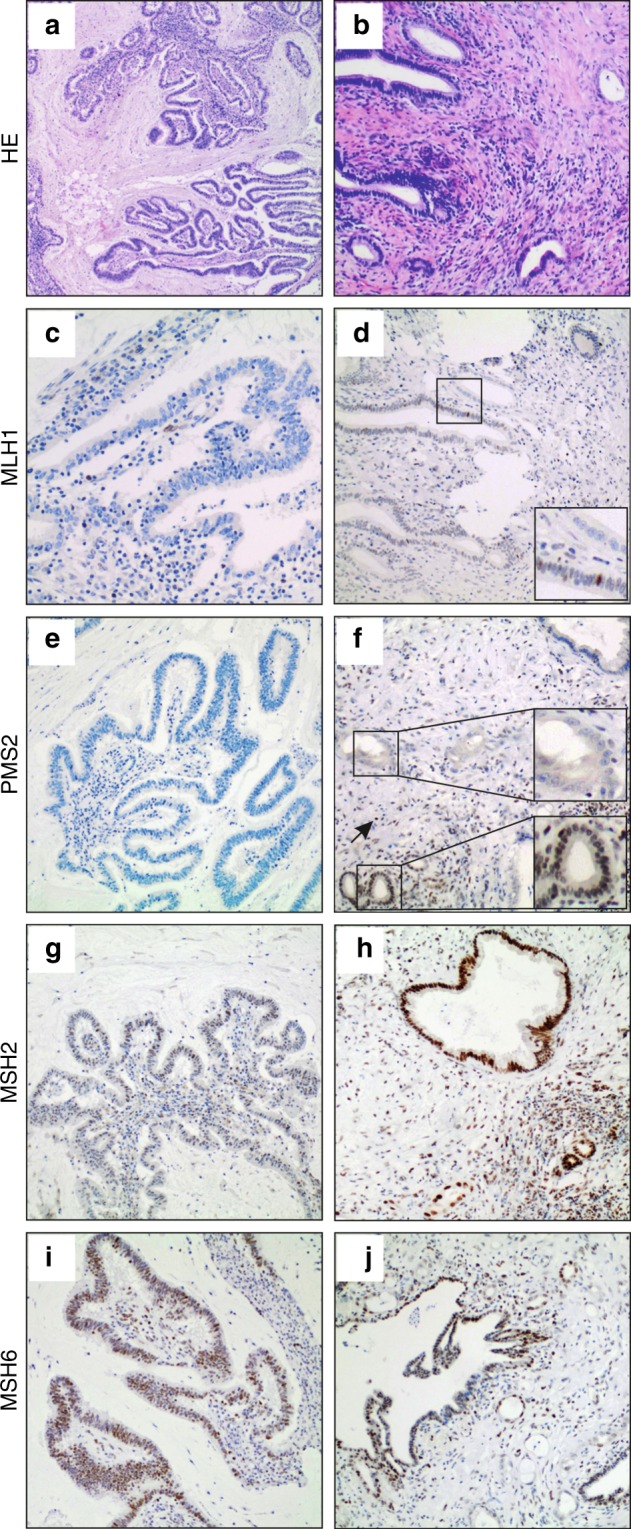
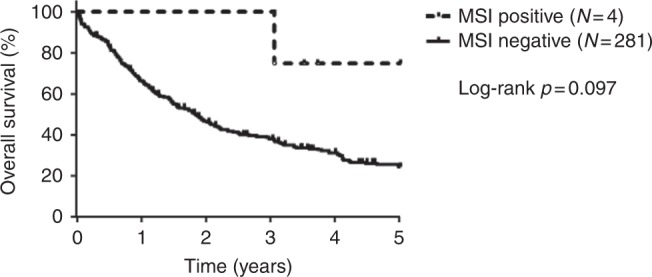
BACKGROUND: A major molecular pathway of genetic instability in cancer is DNA mismatch repair deficiency. High-level microsatellite instability (MSI-H) is currently the best predictor of responsiveness towards immune checkpoint blockade. Data about the prevalence of high-level microsatellite instability in cholangiocarcinoma (CCA) has been conflicting. METHODS: We employed a cohort comprising 308 Western-world, non-liver fluke-associated CCAs (159 intrahepatic, 106 perihilar, and 43 distal). We analysed the mononucleotide microsatellite instability marker panel consisting of BAT25, BAT26, and CAT25 and detected MSI-H in 4/308 CCAs (1.3%). RESULTS: Patients affected by MSI-H CCA had mostly an atypical histomorphology (p = 0.004), showed a longer overall survival, although having a high tumour stage, and were of younger age. Correlation analysis of microsatellite instability status with tumour-infiltrating immune cells, MHC I, and PD-L1 expression in the same cholangiocarcinoma cohort showed higher numbers of CD8 + T cells, FOXP3 + regulatory T cells, CD20 + B cells and high or at least moderate MHC I expression levels in MSI-H CCAs. CONCLUSIONS: Even though the overall number of MSI-H CCAs is low, the dismal prognosis of the disease and the therapeutic option of immune checkpoint blockade in the respective patients justify MSI testing of cholangiocarcinoma, particularly in younger patients showing an atypical histomorphology.
Overview
The claims and statistics of this paper haven’t been checked yet.
Free: it reads the open-access text and checks the first 5 claims that cite a source we can check. Create a free account to check every claim.
Integrity signals
Registry
Cites
Statistics
Figures
Verification
Claims the paper makes
The claims and statistics of this paper haven’t been checked yet.
Free: it reads the open-access text and checks the first 5 claims that cite a source we can check. Create a free account to check every claim.
Claims other papers make about this one
Each is checked against this paper’s own text: does it say what the citing paper says it does?
The source backs part of the claim, not all of it — or backs it for a different population, condition or comparison.
In the citing paper
“Reduced T and B lymphocyte intrahepatic and increased tumor-associated intrahepatic and CD14+CD16+ circulating monocyte numbers are associated with poor survival in patients with intrahepatic cholangiocarcinoma [214–217].”
From Inflammation and immunity in liver homeostasis and disease: a nexus of hepatocytes, nonparenchymal cells and immune cells (2025) · doi:10.1038/s41423-025-01313-7 · cites this paper as [215]
Experimental — accuracy not yet measured
Self-check
Percentages, sums and reported differences re-computed from the paper’s own numbers.
The self-check needs the paper’s full text.
Citations
Cites
The blockade of immune checkpoints in cancer immunotherapy
Pardoll, D. M. (2012) · Nature Reviews Cancer · doi:10.1038/nrc3239 · Cited by 13,838
PD-1 Blockade in Tumors with Mismatch-Repair Deficiency
Le, D. T., Uram, J. N., Wang, H., Bartlett, B. R., Kemberling, H., Eyring, A. D., Skora, A. D., Luber, B. S., Azad, N. S., Laheru, D., et al. (2015) · New England Journal of Medicine · doi:10.1056/nejmoa1500596 · Cited by 9,377
Mismatch repair deficiency predicts response of solid tumors to PD-1 blockade
Le, D. T., Durham, J. N., Smith, K. N., Wang, H., Bartlett, B. R., Aulakh, L. K., Lu, S., Kemberling, H., Wilt, C., Luber, B. S., et al. (2017) · Science · doi:10.1126/science.aan6733 · Cited by 6,645
Banales, J. M., Cardinale, V., Carpino, G., Marzioni, M., Andersen, J. B., Invernizzi, P., Lind, G. E., Folseraas, T., Forbes, S. J., Fouassier, L., et al. (2016) · Nature Reviews Gastroenterology & Hepatology · doi:10.1038/nrgastro.2016.51 · Cited by 1,376
Genomic spectra of biliary tract cancer
Nakamura, H., Arai, Y., Totoki, Y., Shirota, T., Elzawahry, A., Kato, M., Hama, N., Hosoda, F., Urushidate, T., Ohashi, S., et al. (2015) · Nature Genetics · doi:10.1038/ng.3375 · Cited by 1,284
Mlecnik, B., Bindea, G., Angell, H. K., Maby, P., Angelova, M., Tougeron, D., Church, S. E., Lafontaine, L., Fischer, M., Fredriksen, T., et al. (2016) · Immunity · doi:10.1016/j.immuni.2016.02.025 · Cited by 1,034
Classification and characterization of microsatellite instability across 18 cancer types
Hause, R. J., Pritchard, C. C., Shendure, J., & Salipante, S. J. (2016) · Nature Medicine · doi:10.1038/nm.4191 · Cited by 991
Whole-Genome and Epigenomic Landscapes of Etiologically Distinct Subtypes of Cholangiocarcinoma
Jusakul, A., Cutcutache, I., Yong, C. H., Lim, J. Q., Huang, M. N., Padmanabhan, N., Nellore, V., Kongpetch, S., Ng, A. W. T., Ng, L. M., et al. (2017) · Cancer Discovery · doi:10.1158/2159-8290.cd-17-0368 · Cited by 969
Immunohistochemistry Versus Microsatellite Instability Testing in Phenotyping Colorectal Tumors
Lindor, N. M., Burgart, L. J., Leontovich, O. N., Goldberg, R. M., Cunningham, J. M., Sargent, D. J., Walsh-Vockley, C., Petersen, G. M., Walsh, M. D., Leggett, B., et al. (2002) · Journal of Clinical Oncology · doi:10.1200/jco.20.4.1043 · Cited by 817
Chan-on, W., Nairismägi, M.-L., Ong, C. K., Lim, W. K., Dima, S., Pairojkul, C., Lim, K. H., McPherson, J. R., Cutcutache, I., Heng, H. L., et al. (2013) · Nature Genetics · doi:10.1038/ng.2806 · Cited by 497
Cited by
Microsatellite instability: a review of what the oncologist should know
Li, K., Luo, H., Huang, L., Luo, H., & Zhu, X. (2020) · Cancer Cell International · doi:10.1186/s12935-019-1091-8 · Cited by 509
Anatomical, histomorphological and molecular classification of cholangiocarcinoma
Kendall, T., Verheij, J., Gaudio, E., Evert, M., Guido, M., Goeppert, B., & Carpino, G. (2019) · Liver International · doi:10.1111/liv.14093 · Cited by 350
Self-citationImmunology and immunotherapy of cholangiocarcinoma
Greten, T. F., Schwabe, R., Bardeesy, N., Ma, L., Goyal, L., Kelley, R. K., & Wang, X. W. (2023) · Nature Reviews Gastroenterology & Hepatology · doi:10.1038/s41575-022-00741-4 · Cited by 193
The role of tumor-infiltrating lymphocytes in cholangiocarcinoma
Liu, D., Heij, L. R., Czigány, Z., Dahl, E., Lang, S. A., Ulmer, T. F., Luedde, T., Neumann, U. P., & Bednarsch, J. (2022) · Journal of Experimental & Clinical Cancer Research · doi:10.1186/s13046-022-02340-2 · Cited by 134
“investigated a cohort comprising 308 CCAs discovering that patients affected by high-level microsatellite instability (MSIH) had mostly an atypical histomorphology, showed a longer overall survival and higher numbers of CD8 + T cells, FOXP3 + regulatory T cells, CD20 + B cells [36].”
BackgroundJing, C., Fu, Y., Yi, Y., Zhang, M., Zheng, S.-S., Huang, J., Gan, W., Xu, X., Lin, J., Zhang, J., et al. (2019) · Journal for ImmunoTherapy of Cancer · doi:10.1186/s40425-019-0554-8 · Cited by 128
“Therefore, expression levels of other immune checkpoints are worth exploration to offer more immunotherapeutic choices for ICC patients who have been excluded from anti-PD therapy [9, 13].”
BackgroundRushbrook, S., Kendall, T. J., Zen, Y., Albazaz, R., Manoharan, P., Pereira, S. P., Sturgess, R. P., Davidson, B. R., Malik, H., Manas, D., et al. (2023) · Gut · doi:10.1136/gutjnl-2023-330029 · Cited by 125
(2025) · doi:10.1038/s41423-025-01313-7 · Cited by 97
Yoon, J. G., Kim, M. H., Jang, M., Kim, H., Hwang, H. K., Kang, C. M., Lee, W. J., Kang, B., Lee, C., Lee, M. G., et al. (2021) · Hepatology · doi:10.1002/hep.31862 · Cited by 97
“Recent advances in sequencing technology have enabled the characterization and molecular profiling of highly heterogeneous tumors, including BTCs, which is a potential candidate for precision oncology.”
BackgroundInfluentialChung, T., & Park, Y. N. (2022) · Frontiers in Medicine · doi:10.3389/fmed.2022.857140 · Cited by 89
Kang, J., Jeong, J. H., Hwang, H.-S., Lee, S. S., Park, D. H., Oh, D., Song, T. J., Kim, K., Hwang, S., Hwang, D. W., et al. (2019) · Cancer Research and Treatment · doi:10.4143/crt.2019.493 · Cited by 70
Patel, T. H., Marcus, L. J., Horiba, M. N., Donoghue, M. B., Chatterjee, S., Mishra-Kalyani, P. S., Schuck, R. N., Li, Y., Zhang, X., Zirkelbach, J. F., et al. (2022) · Clinical Cancer Research · doi:10.1158/1078-0432.ccr-22-2036 · Cited by 63
Current prognostic and predictive biomarkers for gastrointestinal tumors in clinical practice
Fassan, M., Scarpa, A., Remo, A., Maglio, G. D., Troncone, G., Marchetti, A., Doglioni, C., Ingravallo, G., Perrone, G., Parente, P., et al. (2020) · Pathologica · doi:10.32074/1591-951x-158 · Cited by 68
Genomic characterization and immunotherapy for microsatellite instability-high in cholangiocarcinoma
Yang, X., Lian, B., Zhang, N., Long, J., Li, Y., Xue, J., Chen, X., Wang, Y., Wang, Y., Xun, Z., et al. (2024) · BMC Medicine · doi:10.1186/s12916-024-03257-7 · Cited by 50
Role of molecular genetics in the clinical management of cholangiocarcinoma
Normanno, N., Martinelli, E., Melisi, D., Pinto, C., Rimassa, L., Santini, D., & Scarpa, A. (2022) · ESMO Open · doi:10.1016/j.esmoop.2022.100505 · Cited by 46
Targeting P53 as a Future Strategy to Overcome Gemcitabine Resistance in Biliary Tract Cancers
Wu, C., Pan, Y., Yeh, C., & Lunec, J. (2020) · Biomolecules · doi:10.3390/biom10111474 · Cited by 49
“Pembrolizumab was approved for treatment of a variety of advanced microsatellite instability-high (MSI-H) or deficient mismatch repair (dMMR) solid tumors (including BTC) [23] in 2017, but MSI-H or dMMR rarely occur in BTCs, including iCCA [24,25].”
BackgroundMolecular Targets in Cholangiocarcinoma
O’Rourke, C. J., Muñoz-Garrido, P., & Andersen, J. B. (2020) · Hepatology · doi:10.1002/hep.31278 · Cited by 40
Immunotherapy in Advanced Biliary Tract Cancers
Boilève, A., Hilmi, M., Smolenschi, C., Ducreux, M. P., Hollebecque, A., & Malka, D. (2021) · Cancers · doi:10.3390/cancers13071569 · Cited by 43
“Despite being a reliable biomarker with strong evidence, MSI phenotype is rare (less than 2%) in BTC [94].”
BackgroundPathological, molecular, and clinical characteristics of cholangiocarcinoma: A comprehensive review
Vij, M., Puri, Y., Rammohan, A., Gowripriya, G., Rajalingam, R., Kaliamoorthy, I., & Rela, M. (2022) · World Journal of Gastrointestinal Oncology · doi:10.4251/wjgo.v14.i3.607 · Cited by 43
Frega, G., Cossío, F. P., Bañales, J. M., Cardinale, V., Macías, R. I. R., Braconi, C., & Lamarca, Á. (2023) · Cells · doi:10.3390/cells12162098 · Cited by 40
Cholangiocarcinoma: new perspectives for new horizons
Rimini, M., Puzzoni, M., Pedica, F., Silvestris, N., Fornaro, L., Aprile, G., Loi, E., Brunetti, O., Vivaldi, C., Simionato, F., et al. (2021) · Expert Review of Gastroenterology & Hepatology · doi:10.1080/17474124.2021.1991313 · Cited by 38
“associated in the literature with Lynch syndrome [97,98].”
BackgroundJu, J. Y., Dibbern, M. E., Mahadevan, M. S., Fan, J., Kunk, P. R., & Stelow, E. B. (2019) · American Journal of Clinical Pathology · doi:10.1093/ajcp/aqz199 · Cited by 37
Lee, S. H., Lee, H. S., Lee, S. H., Woo, S. M., Kim, D. U., & Bang, S. (2020) · Journal of Clinical Medicine · doi:10.3390/jcm9061769 · Cited by 35
Intrahepatic Cholangiocarcinoma: A Summative Review of Biomarkers and Targeted Therapies
Acher, A. W., Paro, A., Elfadaly, A., Tsilimigras, D. I., & Pawlik, T. M. (2021) · Cancers · doi:10.3390/cancers13205169 · Cited by 34
“The available data suggest that microsatellite unstable tumors (as defined by loss of DNA mismatch repair proteins MLH1, PMS2, MSH2, MSH6) are uncommon and occur only in a minority of patients with ICC (ranges from 1 to 10%) [43,46].”
BackgroundMishima, S., Taniguchi, H., Akagi, K., Baba, E., Fujiwara, Y., Hirasawa, A., Ikeda, M., Maeda, O., Muro, K., Nishihara, H., et al. (2019) · International Journal of Clinical Oncology · doi:10.1007/s10147-019-01498-8 · Cited by 33
Immunotherapies in clinical development for biliary tract cancer
Vogel, A., Bathon, M., & Saborowski, A. L. (2020) · Expert Opinion on Investigational Drugs · doi:10.1080/13543784.2021.1868437 · Cited by 31
“In BTC, MSI status is rare (less than 1% of patients) but is currently the only reliable marker that appears to be predictive of clinical response to immunotherapy [41,42].”
BackgroundTumor immune microenvironment and the current immunotherapy of cholangiocarcinoma (Review)
Yang, S., Zou, R.-Q., Dai, Y.-S., Hu, Y.-F., Li, F., & Hu, H. (2023) · International Journal of Oncology · doi:10.3892/ijo.2023.5585 · Cited by 36
Low frequency of mismatch repair deficiency in gallbladder cancer
Goeppert, B. F., Roessler, S. K., Renner, M., Loeffler, M., Singer, S., Rausch, M., Albrecht, T., Mehrabi, A., Vogel, M. N., Pathil, A., et al. (2019) · Diagnostic Pathology · doi:10.1186/s13000-019-0813-5 · Cited by 31
Self-citationImmunotherapy of cholangiocarcinoma: Therapeutic strategies and predictive biomarkers
Chen, R., Zheng, D., Li, Q., Xu, S., Ye, C., Jiang, Q., Yan, F., Jia, Y., Zhang, X., & Ruan, J. (2022) · Cancer Letters · doi:10.1016/j.canlet.2022.215853 · Cited by 33
Olkus, A., Tomczak, A., Berger, A. K., Rauber, C., Puchas, P., Wehling, C., Longerich, T., Mehrabi, A., Chang, D., Liermann, J., et al. (2024) · Targeted Oncology · doi:10.1007/s11523-024-01044-1 · Cited by 33
Self-citationFGFR2 testing in cholangiocarcinoma: translating molecular studies into clinical practice
Angerilli, V., Fornaro, L., Pepe, F., Rossi, S. M., Perrone, G., Malapelle, U., & Fassan, M. (2023) · Pathologica · doi:10.32074/1591-951x-859 · Cited by 32
Kehmann, L., Jördens, M. S., Loosen, S. H., Luedde, T., Roderburg, C., & Leyh, C. (2024) · ESMO Open · doi:10.1016/j.esmoop.2024.103706 · Cited by 30
Albrecht, T., Rausch, M., Roessler, S. K., Albrecht, M. C., Braun, J. D., Geissler, V., Mehrabi, A., Vogel, M. N., Pathil‐Warth, A., Mechtersheimer, G., et al. (2019) · BMC Cancer · doi:10.1186/s12885-019-6320-y · Cited by 23
Self-citationPloeger, C., Schreck, J., Huth, T., Fraas, A., Albrecht, T., Charbel, A., Ji, J., Singer, S., Breuhahn, K., Pusch, S., et al. (2022) · Cancers · doi:10.3390/cancers14051154 · Cited by 26
Self-citationHua, S., Gu, X., Jin, H., Zhang, X., Liu, Q., & Yang, J. (2024) · Biomedicine & Pharmacotherapy · doi:10.1016/j.biopha.2024.117080 · Cited by 24
Improved NGS-based detection of microsatellite instability using tumor-only data
Marques, A. C., Ferraro‐Peyret, C., Michaud, F., Song, L., Smith, E., Fabre, G., Willig, A., Wong, M. M. L., Xing, X., Chong, C., et al. (2022) · Frontiers in Oncology · doi:10.3389/fonc.2022.969238 · Cited by 23
“Tissue specific differences on the impact of loss of MMR on microsatellite instability have also been reported in other cancer types, including glioma or sebaceous adenoma or carcinoma, where MSI detection is known to be challenging (23, 24, 26, 27).”
BackgroundYoon, S. B., Woo, S. M., Chun, J. W., Kim, D. U., Kim, J., Park, J. K., So, H., Chung, M. J., Cho, I. R., & Heo, J. (2024) · Frontiers in Immunology · doi:10.3389/fimmu.2024.1321813 · Cited by 22
Lefler, D. S., Tierno, M. B., & Bashir, B. (2022) · Cancer Biology & Therapy · doi:10.1080/15384047.2022.2029128 · Cited by 22
“3% of all CCA cases.(4) The KEYNOTE-158 study also led to pan-tumor approval of pembrolizumab for patient tumors identified as Tumor Mutational Burden (TMB)-High (TMB ≥ 10 mutations/megabase); however, there were no biliary tract tumors in this study that were found to be TMB-High.”
BackgroundAdvanced Bile Duct Cancers: A Focused Review on Current and Emerging Systemic Treatments
Cowzer, D., & Harding, J. J. (2022) · Cancers · doi:10.3390/cancers14071800 · Cited by 20
“At a level of the gene, less than 2% of patients with BTC have DNA mismatch repair protein deficiency (dMMR) and/or MSI-high tumors [29].”
BackgroundHallmarks of liver cancer: Therapeutic implications
Llovet, J. M., Pinyol, R., Affò, S., Yarchoan, M. M., Gores, G. J., Kelley, R. K., Lowe, S. W., Sia, D., & Villanueva, A. (2026) · Cell · doi:10.1016/j.cell.2026.03.001 · Cited by 23
Zhang, C., & Ge, C. (2019) · BioMed Research International · doi:10.1155/2019/3526407 · Cited by 17
“As one of the deadliest cancers, patient prognoses remain poor after systemic chemotherapy [3].”
Liddell, S. S., Chakrabarti, S., Wintheiser, G. A., Zemla, T., Shi, Q., Tella, S. H., Jin, Z., Wookey, V., Hassan, H., Tran, N. H., et al. (2022) · JCO Precision Oncology · doi:10.1200/po.22.00003 · Cited by 16
Milardi, G., & Lleò, A. (2023) · Cancers · doi:10.3390/cancers15072182 · Cited by 18
Recent Advances in Immunotherapy for Advanced Biliary Tract Cancer
Yue, S., Zhang, Y., & Zhang, W. (2024) · Current Treatment Options in Oncology · doi:10.1007/s11864-024-01243-y · Cited by 19
“Conversely, recent studies from China and Germany revealed that only 1.3% to 2.06% of patients with CCA had dMMR or MSI-H status [110–112].”
InfluentialYu, J., Zhang, X., Huang, Q., Tan, S., Xiong, X., & Gou, H. (2021) · Cancer Management and Research · doi:10.2147/cmar.s304281 · Cited by 15
“The number of MSI-H cases in these two studies was less than 10.(32,38,39) In our study, the two patients with dMMR had moderately differentiated adenocarcinoma and did not show mucinous, or signet-ring appearance.”
BackgroundAvila, S., Smani, D. A., & Koay, E. J. (2020) · Chinese Clinical Oncology · doi:10.21037/cco.2019.12.05 · Cited by 15
“Around 1% of cholangiocarcinomas are thought to have high level microsatellite instability (29,30).”
BackgroundNing, Z., Zhao, Y., Xia, Y., Hua, Y., & Meng, Z. (2022) · Nanomaterials · doi:10.3390/nano12122048 · Cited by 13
“The efficacy of immune-checkpoint therapy in p MMR/MSS type ICC is not clear, and the predictive effect of TMB and PDL-1 expression state on the efficacy is not yet confirmed [7,8].”
BackgroundConversion treatment for advanced intrahepatic cholangiocarcinoma: Opportunities and challenges
Liu, J.-J., Zhou, M., Yuan, T., Huang, Z., & Zhang, Z.-Y. (2025) · World Journal of Gastroenterology · doi:10.3748/wjg.v31.i15.104901 · Cited by 14
“Microsatellite instability has been investigated as a biomarker for the treatment of ICC[123], but the infrequency of microsatellite instability in ICC has hindered the ability to draw definitive conclusions about its occurrence and prognostic significance[124].”
Warren, E. A. K., & Maithel, S. K. (2023) · HepatoBiliary Surgery and Nutrition · doi:10.21037/hbsn-22-563 · Cited by 12
Vivaldi, C., Genovesi, V., Ugolini, C., Bernardini, L., Gardini, A. C., Formica, V., Salani, F., Orsi, G., Massa, V., Insilla, A. C., et al. (2023) · Oncology · doi:10.1159/000533406 · Cited by 10
S3-Leitlinie „Diagnostik und Therapie des Hepatozellulären Karzinoms“ – Langversion 4.0
Bitzer, M., Groß, S., Albert, J., Blödt, S., Boda‐Heggemann, J., Brunner, T. B., Caspari, R., Toni, E. D., Dombrowski, F., Evert, M., et al. (2024) · Zeitschrift für Gastroenterologie · doi:10.1055/a-2189-6353 · Cited by 16
Self-citationZhou, Q., Li, J., Shi, X., Deng, D., Guo, F., Wang, Z., Liu, W., Zhang, J., Xia, S., & Shang, D. (2021) · Scientific Reports · doi:10.1038/s41598-021-03017-0 · Cited by 14
Targeted Therapies for Perihilar Cholangiocarcinoma
Gray, S., Lamarca, Á., Edeline, J., Klümpen, H., Hubner, R. A., McNamara, M. G., & Valle, J. W. (2022) · Cancers · doi:10.3390/cancers14071789 · Cited by 11
“Factors determined to be predictive of MSI-H include a younger age at diagnosis and atypical histomorphology [32,93].”
BackgroundCurrent Progress and Future Perspectives of Immune Checkpoint Inhibitors in Biliary Tract Cancer
Seesaha, P. K., Wang, K., Guo-qun, W., Cui, T.-Y., Zhao, F., Pan, L., Li, X., Shu, Y., & Chen, X. (2021) · OncoTargets and Therapy · doi:10.2147/ott.s269671 · Cited by 10
Makino, K., Ishii, T., Takeda, H., Saito, Y., Fujiwara, Y., Fujimoto, M., Ito, T., Wakama, S., Kumagai, K., Munekage, F., et al. (2024) · The Journal of Pathology · doi:10.1002/path.6257 · Cited by 11
Conci, S., Catalano, G., Roman, D., Zecchetto, C., Lucin, E., Bellis, M. D., Tripepi, M., Guglielmi, A., Milella, M., & Ruzzenente, A. (2023) · International Journal of Medical Sciences · doi:10.7150/ijms.82008 · Cited by 9
“Therefore, novel biomarkers are needed to screen for patients with BTC that could benefit from ICI therapy with PD-L1 blockade (35).”
High immune cell infiltration predicts improved survival in cholangiocarcinoma
Wirta, E., Szeto, S., Koppatz, H., Nordin, A. J., Mäkisalo, H., Arola, J. T., Sirén, J., Ahtiainen, M., Böhm, J., Mecklin, J., et al. (2024) · Frontiers in Oncology · doi:10.3389/fonc.2024.1333926 · Cited by 9
Huang, C., Qiu, Z., Huang, H., Xiao, X., Du, F., Ji, J., Xu, X., Jiang, X., Wang, Y., & Gao, C. (2025) · British Journal of Cancer · doi:10.1038/s41416-025-03011-7 · Cited by 11
Mishima, S., Naito, Y., Akagi, K., Hayashi, N., Hirasawa, A., Hishiki, T., Igarashi, A., Ikeda, M., Kadowaki, S., Kajiyama, H., et al. (2023) · International Journal of Clinical Oncology · doi:10.1007/s10147-023-02397-9 · Cited by 9
“They often develop at a young age [24] and are found among both early and advanced cancers [25].”
BackgroundImmunogenomics of cholangiocarcinoma
Gehl, V., O’Rourke, C. J., & Andersen, J. B. (2023) · Hepatology · doi:10.1097/hep.0000000000000688 · Cited by 8
le Brun, I. C., Grapinet, E., Aurillac, V., Hollebecque, A., Parent, P., Girot, P., Tougeron, D., Gendreau, M., Chanez, B., Assénat, E., et al. (2025) · European Journal of Cancer · doi:10.1016/j.ejca.2025.115670 · Cited by 8
Biomarkers for the Evaluation of Immunotherapy in Patients with Cholangiocarcinoma
Bousou, T.-E., Sarantis, P., Anastasiou, I. A., Trifylli, E.-M., Liapopoulos, D., Korakaki, D., Koustas, E., Katsimpoulas, M., & Karamouzis, M. V. (2025) · Cancers · doi:10.3390/cancers17030555 · Cited by 7
“…MSI with tumor-infiltrating immune cells, MHC I, and PD-L1 expression showed a high number of CD8+ T-cells, FOXP3+ regulatory T-cells, CD20+ B cells, and high MHC I expression in MSI-H CCAs, suggesting that these parameters could be correlated with better OS in CCA treated with immunotherapy [28].”
Molecular signatures of intrahepatic cholangiocarcinoma: role in targeted therapy selection
Glushko, T., Costello, J. R., Chima, R., McGettigan, M. J., Kim, R. D., Jeong, D. K., & Qayyum, A. (2025) · European Journal of Radiology · doi:10.1016/j.ejrad.2025.112056 · Cited by 6
CAT25 defines microsatellite instability in colorectal cancer by high-resolution melting PCR
Sánchez, A. V., Juaneda, I., Eynard, H., Basquiera, A. L., Palazzo, E., Calafat, P., Palla, V., Romagnoli, P. A., & Alvarellos, T. R. (2020) · British Journal of Biomedical Science · doi:10.1080/09674845.2020.1730625 · Cited by 6
“9 Tumour samples were considered to have high MSI when at least two of three mononucleotide markers (BAT25, BAT26, CAT25) showed instability by capillary electrophoresis analysis (10,11,22).”
BackgroundCase 8-2021: A 34-Year-Old Woman with Cholangiocarcinoma
Goyal, L., Chen, C. T., Pierce, T. T., & Deshpande, V. (2021) · New England Journal of Medicine · doi:10.1056/nejmcpc2027092 · Cited by 6
Novel insights into molecular and immune subtypes of biliary tract cancers
Bramel, E. R., & Sia, D. (2022) · Advances in cancer research · doi:10.1016/bs.acr.2022.01.008 · Cited by 8
Tan, S., Yu, J., Huang, Q., Zhou, N. Q., Xiong, X., & Gou, H. (2022) · Frontiers in Pharmacology · doi:10.3389/fphar.2022.1037646 · Cited by 7
“However, the incidence of dMMR/MSI-H BTC is less than 5% (Winkelmann et al., 2018; Goeppert et al., 2019).”
BackgroundKhuntikeo, N., Padthaisong, S., Loilome, W., Klanrit, P., Ratchatapusit, S., Techasen, A., Jareanrat, A., Thanasukarn, V., Srisuk, T., Luvira, V., et al. (2023) · Cancers · doi:10.3390/cancers15194831 · Cited by 7
“In addition, MMR status was also an independent factor for the prognostic prediction of the outcome of CCA patients who underwent resection, as found in several other cancers [24,29,30,36].”
ResultWRN Is a Promising Synthetic Lethal Target for Cancers with Microsatellite Instability (MSI)
Chan, E. M., Foster, K. J., & Bass, A. J. (2023) · Cancer treatment and research · doi:10.1007/978-3-031-30065-3_17 · Cited by 6
Molecular Characteristics of Biliary Tract and Primary Liver Tumors
Tsai, S., & Gamblin, T. C. (2019) · Surgical Oncology Clinics of North America · doi:10.1016/j.soc.2019.06.004 · Cited by 8
Is it a new era for intrahepatic cholangiocarcinoma?
Liguori, C., Cacciaguerra, A. B., Giampieri, R., Mocchegiani, F., Sciortino, C., Vivarelli, M., Niger, M., Berardi, R., & Parisi, A. (2025) · Critical Reviews in Oncology/Hematology · doi:10.1016/j.critrevonc.2025.104923 · Cited by 5
Grimsrud, M. M., Förster, M., Goeppert, B. F., Hemmrich‐Stanisak, G., Sax, I., Grzyb, K., Braadland, P. R., Charbel, A., Metzger, C., Albrecht, T., et al. (2024) · Hepatology Communications · doi:10.1097/hc9.0000000000000461 · Cited by 6
Self-citationNiu, S., Zhang, Y., Li, Z., & Wang, T. (2024) · Liver International · doi:10.1111/liv.15984 · Cited by 5
Goeppert, B. F. (2020) · Der Pathologe · doi:10.1007/s00292-020-00808-6 · Cited by 4
Self-citationS3-Leitlinie Diagnostik und Therapie biliärer Karzinome – Langversion
Bitzer, M., Groß, S., Albert, J., Boda‐Heggemann, J., Brunner, T. B., Caspari, R., Toni, E. D., Dombrowski, F., Evert, M., Geier, A., et al. (2023) · Zeitschrift für Gastroenterologie · doi:10.1055/a-2026-1240 · Cited by 5
Self-citationGasparello, J., Piva, V. M., Angerilli, V., Ceccon, C., Sabbadin, M., Luchini, C., Parente, P., Toffolatti, L., Grillo, F., Bergamo, F., et al. (2025) · Pathologica · doi:10.32074/1591-951x-1110 · Cited by 4
“Indeed, MSI status in CCA appears to be associated with liver fluke infection 130 .”
Bitzer, M., Voesch, S., Albert, J., Bartenstein, P., Bechstein, W. O., Blödt, S., Brunner, T. B., Dombrowski, F., Evert, M., Follmann, M., et al. (2022) · Zeitschrift für Gastroenterologie · doi:10.1055/a-1589-7854 · Cited by 6
Self-citationWhaley, J. J. J., Osataphan, S. A., Ponvilawan, B., Charoenngam, N., & Peters, M. L. B. (2025) · JCO Precision Oncology · doi:10.1200/po-24-00475 · Cited by 7
Pathology and molecular pathology of cholangiocarcinoma
Pedica, F., & Grassini, G. (2021) · Hepatoma Research · doi:10.20517/2394-5079.2021.89 · Cited by 3
“MSI is found in around 5% of iCCAs, sometimes occurring in Lynch syndrome[34,35].”
BackgroundMolecular therapeutic targets for cholangiocarcinoma: Present challenges and future possibilities
Høgdall, D., O’Rourke, C. J., & Andersen, J. B. (2022) · Advances in cancer research · doi:10.1016/bs.acr.2022.01.012 · Cited by 3
S3-Leitlinie „Diagnostik und Therapie biliärer Karzinome“ – Langversion 4.0
Groß, S., Bitzer, M., Albert, J., Blödt, S., Boda‐Heggemann, J., Brunner, T. B., Caspari, R., Toni, E. D., Dombrowski, F., Evert, M., et al. (2024) · Zeitschrift für Gastroenterologie · doi:10.1055/a-2189-8567 · Cited by 4
Self-citationA Combined TLR7/TLR9/GATA3 Score Can Predict Prognosis in Biliary Tract Cancer
Branchi, V., Esser, L. K., Boden, C., Jafari, A., Henn, J., Lingohr, P., Gonzalez-Carmona, M. A., Schmitz, M., Weismüller, T. J., Strassburg, C. P., et al. (2021) · Diagnostics · doi:10.3390/diagnostics11091597 · Cited by 3
“However, only in 1–2% of BTC a MSI or MMRd is found [15,16].”
BackgroundApplication of immune checkpoint inhibitors in hepatobiliary cancers
Yuan, J., Xu, L., Zhou, J. M., & Shen, L. (2022) · iLiver · doi:10.1016/j.iliver.2022.03.002 · Cited by 4
How do I distinguish cholangiocarcinoma from metastatic carcinoma and why does it matter?
Vyas, M., & Deshpande, V. (2021) · Diagnostic histopathology · doi:10.1016/j.mpdhp.2021.11.002 · Cited by 3
S3-Leitlinie Diagnostik und Therapie biliärer Karzinome – Langversion
Groß, S., Bitzer, M., Albert, J., Blödt, S., Boda‐Heggemann, J., Borucki, K., Brunner, T. B., Caspari, R., Dombrowski, F., Evert, M., et al. (2025) · Zeitschrift für Gastroenterologie · doi:10.1055/a-2460-6347 · Cited by 4
Self-citationS3-Leitlinie Diagnostik und Therapie des Hepatozellulären Karzinoms – Langversion
Bitzer, M., Groß, S., Albert, J., Blödt, S., Boda‐Heggemann, J., Borucki, K., Brunner, T. B., Caspari, R., Dombrowski, F., Evert, M., et al. (2025) · Zeitschrift für Gastroenterologie · doi:10.1055/a-2460-6298 · Cited by 6
Self-citationGkekas, I., Jan, N., Kaprio, T., Beilmann‐Lehtonen, I., Fabián, P., Tavelin, B., Böckelman, C., Edin, S., Strigård, K., Svoboda, T., et al. (2024) · Journal of Surgical Oncology · doi:10.1002/jso.27619 · Cited by 4
“11,12 Despite these findings, there has been little change in the algorithms for cancer surveillance and prevention strategies in patients with sporadic dMMR CRC.”
BackgroundChoi, J.-W., Lee, J., & Lee, S. (2024) · Briefings in Bioinformatics · doi:10.1093/bib/bbae423 · Cited by 4
Jin, B., Wang, Y., Zhang, B., Xu, H., Lü, X., Sang, X., Wang, W., Mao, Y., Chen, P., Wang, S., et al. (2023) · Cancer Medicine · doi:10.1002/cam4.6441 · Cited by 1
“Although the prognostic significance of MSI-High has been reported in CCA, 45 whether TMB and MSI contribute to the survival of EHCC has not been reported.”
BackgroundInfluentialMSH6 germline mutations leading to Lynch syndrome-associated cholangiocarcinoma: a case report
Zhang, Z., Ma, S., Li, S., Chen, Z., Song, R., & Wang, Z. (2024) · Frontiers in Oncology · doi:10.3389/fonc.2024.1414665 · Cited by 1
Ravi, D., Ahmed, S., Anderson, B. L., Anderson, B. J., Brunet, B., Chalchal, H. I., Elangovan, A., Geller, G., Gordon, V. L., Gowrishankar, B., et al. (2025) · Current Oncology · doi:10.3390/curroncol32070398 · Cited by 1
“MMR mutation [40] Loss of expression has been linked to better prognosis due to improved response to immune checkpoint inhibitors.”
Cholangiokarzinom: Histopathologische Diagnose, Klassifikation und Molekulardiagnostik – ein Update
Goeppert, B. F. (2025) · Die Pathologie · doi:10.1007/s00292-025-01464-4 · Cited by 2
Self-citationVasuri, F., Boccaccino, A., Tamberi, S., & Saragoni, L. (2026) · Apmis · doi:10.1111/apm.70230 · Cited by 1
“In routine practice, HER2 and MMR proteins currently represent the most defensible IHC-based predictive tools because they can identify clinically relevant subgroups, even if both require careful interpretation and, in many cases, correlation with orthogonal testing [4, 6, 7, 9–11].”
Apport de l'immunothérapie dans le traitement des cancers des voies biliaires avancés
Delaye, M., Lièvre, A., & Neuzillet, C. (2022) · Bulletin du Cancer · doi:10.1016/s0007-4551(22)00464-7 · Cited by 1
How to incorporate new agents into precise medicine for cholangiocarcinoma?
Li, Y., Kang, J., & Zhang, X. (2024) · American Journal of Cancer Research · doi:10.62347/nfdl2398 · Cited by 1
Li, Y., Hu, M., Li, L., Liu, S., He, T., Cheng, C., Xu, M., & Yin, X. (2020) · Clinics and Research in Hepatology and Gastroenterology · doi:10.1016/j.clinre.2020.08.004
Swanson, B. J. (2019) · Springer eBooks · doi:10.1007/978-3-030-22258-1_7
Targeted therapy in cholangiocarcinoma: current landscape and future horizon
Pircher, C. C., Sposetti, C., Nichetti, F., Corti, F., Raimondi, A., Bartolomeo, M. D., Edeline, J., & Niger, M. (2022) · Annals of Research in Oncology · doi:10.48286/aro.2022.54
What Role Does Radiotherapy Play in the Molecular Era for Intrahepatic Cholangiocarcinoma?
Koay, E. J., Javle, M. M., Belknap, M., Derasari, S., Roach, M. A., & Ludmir, E. B. (2023) · The Cancer Journal · doi:10.1097/ppo.0000000000000685
Jia, J., & Shroff, R. T. (2022) · Elsevier eBooks · doi:10.1016/b978-0-12-800684-9.00015-0 · Cited by 1
Khuntikeo, N., Jareanrat, A., Thanasukarn, V., Srisuk, T., Luvira, V., Loilome, W., Klanrit, P., Techasen, A., Chindaprasirt, J., Sa-Ngiamwibool, P., et al. (2025) · Journal of Molecular Pathology · doi:10.3390/jmp6040030
“In CCA, although it has been suggested that MSI is found in both OV-[21] and non-OV [22]-associated disease, the outcomes of OV-associated CCA patients who received curative surgery have yet to be investigated.”
Metadata
- Authors
- Goeppert, B., Roessler, S., Renner, M., Singer, S., Mehrabi, A., Vogel, M. N., Pathil, A., Czink, E., Köhler, B., Springfeld, C., Pfeiffenberger, J., Rupp, C., Weiss, K. H., Schirmacher, P., von Knebel Doeberitz, M., & Kloor, M.
- Affiliations
- University Hospital Heidelberg (DE)
- Heidelberg University (DE)
- Corresponding author
- Goeppert, Benjamin
- ORCID
- Venue
- British Journal of Cancer
- Published
- 2018-10-31
- Volume
- 120
- Issue
- 1
- Pages
- 109-114
- ISSN
- 0007-0920 (ISSN-L)
- 1532-1827
- PMC
- PMC6325153
- OpenAlex
- W2898899606
- Cited by
- 108
- References
- 25
- Citations by year
- 2026: 5 · 2025: 14 · 2024: 19 · 2023: 17 · 2022: 22 · 2021: 11 · 2020: 10 · 2019: 10
- FWCI
- 8.06
- Type
- journal article
- Language
- en
- Open access
- hybrid
- doi.org
- Licence
- cc-by
- creativecommons.org/licenses/by/4.0 (tdm)
- Locations
- British Journal of Cancer (publishedVersion, cc-by)
- Europe PMC (PubMed Central) (publishedVersion, cc-by)
- PubMed Central (publishedVersion, cc-by)
- PubMed (publishedVersion)
- Funders
- Deutsche Forschungsgemeinschaft (SFB/TR 209)
- Topics
- Health Sciences › Medicine › Surgery › Cholangiocarcinoma and Gallbladder Cancer Studies
- Health Sciences › Medicine › Pathology and Forensic Medicine › Genetic factors in colorectal cancer
- Health Sciences › Medicine › Surgery › Pediatric Hepatobiliary Diseases and Treatments
- Keywords
- cholangiocarcinoma, mismatch repair deficiency, microsatellite instability, microsatellite instability-high, immune checkpoint blockade, BAT25, BAT26, tumor-infiltrating immune cells, MHC class I expression, PD-L1 expression, overall survival
- MeSH terms
- Adult, Aged, Brain Neoplasms, Female, Humans, Liver, Male, Middle Aged, Neoplasm Staging, Neoplastic Syndromes, Hereditary, Prognosis, Colorectal Neoplasms, Cholangiocarcinoma, CD8-Positive T-Lymphocytes, Microsatellite Repeats, Antigens, CD20, Forkhead Transcription Factors, Microsatellite Instability, DNA Mismatch Repair, B7-H1 Antigen
About these checks
Registry, retraction, Cites and statistics results are computed, not judged, with one exception: a printed reference that no index lists is read once by a model before it counts as a citation error. Claims are extracted by a model and kept only when their quote appears verbatim in the text; each cited source is then checked, with a model’s help, for whether it says what the claim relies on. Those verdicts can be wrong — read the claim’s quote and the cited source before relying on one.
Statistics and arithmetic are recomputed, not judged.
Confidence bands are shown only for fields calibrated on our annotated test set. None is calibrated yet, so no band is shown.
What counts as a claim ›How we measure confidence ›How we check this ›
Are you an author, or do you see a problem with this page? Request a review
Data sources
Bibliographic data: Semantic Scholar, OpenAlex, Crossref.
Contains information from the Semantic Scholar Academic Graph Datasets, made available under the ODC Attribution License (ODC-BY 1.0).
Semantic Scholar’s data is described in: Kinney, R., et al. (2023). The Semantic Scholar Open Data Platform. arXiv:2301.10140.
