

Intestinal microbiota influences clinical outcome and side effects of early breast cancer treatment
Open accessThe DOI matches its Crossref record; 63 of the 63 references it cites were found in a registry or an index.
Abstract
The prognosis of early breast cancer (BC) relies on cell autonomous and immune parameters. The impact of the intestinal microbiome on clinical outcome has not yet been evaluated. Shotgun metagenomics was used to determine the composition of the fecal microbiota in 121 specimens from 76 early BC patients, 45 of whom were paired before and after chemotherapy. These patients were enrolled in the CANTO prospective study designed to record the side effects associated with the clinical management of BC. We analyzed associations between baseline or post-chemotherapy fecal microbiota and plasma metabolomics with BC prognosis, as well as with therapy-induced side effects. We examined the clinical relevance of these findings in immunocompetent mice colonized with BC patient microbiota that were subsequently challenged with histo-compatible mouse BC and chemotherapy. We conclude that specific gut commensals that are overabundant in BC patients compared with healthy individuals negatively impact BC prognosis, are modulated by chemotherapy, and may influence weight gain and neurological side effects of BC therapies. These findings obtained in adjuvant and neoadjuvant settings warrant prospective validation.
Overview
The claims and statistics of this paper haven’t been checked yet.
Free: it reads the open-access text and checks the first 5 claims that cite a source we can check. Create a free account to check every claim.
Integrity signals
Registry
Cites
Statistics
Figures
Verification
Claims the paper makes
The claims and statistics of this paper haven’t been checked yet.
Free: it reads the open-access text and checks the first 5 claims that cite a source we can check. Create a free account to check every claim.
Claims other papers make about this one
Each is checked against this paper’s own text: does it say what the citing paper says it does?
The source backs part of the claim, not all of it — or backs it for a different population, condition or comparison.
In the citing paper
“polychemotherapy and endocrine therapy (such as androgen deprivation) can modulate the alpha and beta diversities of the microbiota, which have been proposed to affect treatment-related adverse events27,28 as well as drug metabolism and efficacy29,30.”
From Gut OncoMicrobiome Signatures (GOMS) as next-generation biomarkers for cancer immunotherapy (2023) · cites this paper as [27]
Experimental — accuracy not yet measuredThe source backs part of the claim, not all of it — or backs it for a different population, condition or comparison.
In the citing paper
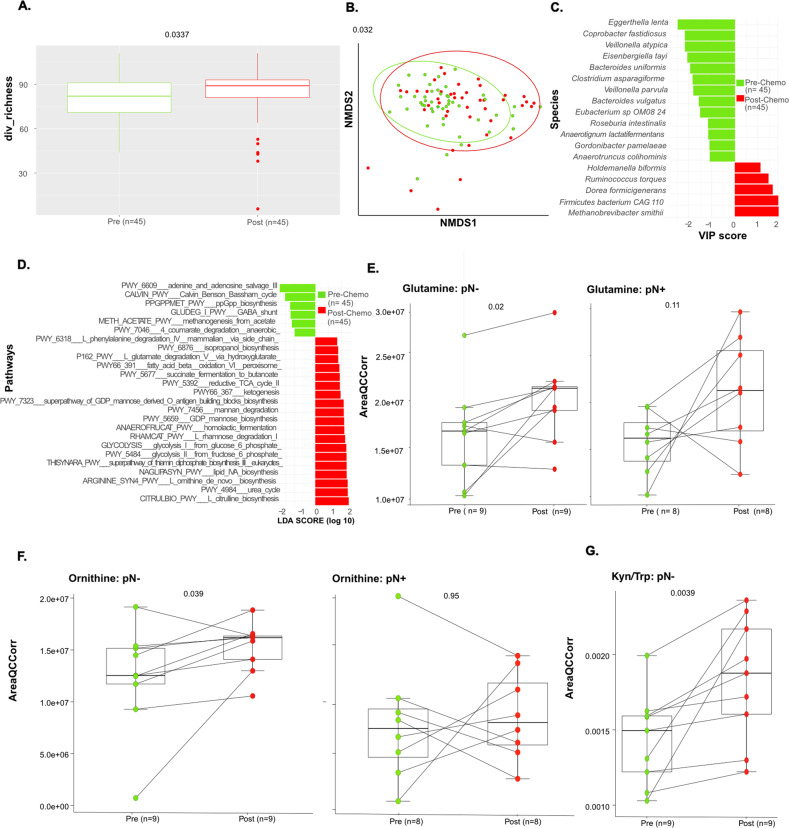
“chemotherapy was associated with a substantial shift in the alpha and beta diversity of stool composition in women with breast cancer towards an anti-inflammatory pattern27, entailing a relative under-representation of distinct species commonly found across several pathological disorders (Veillonella parvula, Veillonella atypica, Eggerthella lenta and E. asparagiformis)23.”
From Gut OncoMicrobiome Signatures (GOMS) as next-generation biomarkers for cancer immunotherapy (2023) · cites this paper as [27]
Experimental — accuracy not yet measuredThe source backs part of the claim, not all of it — or backs it for a different population, condition or comparison.
In the citing paper
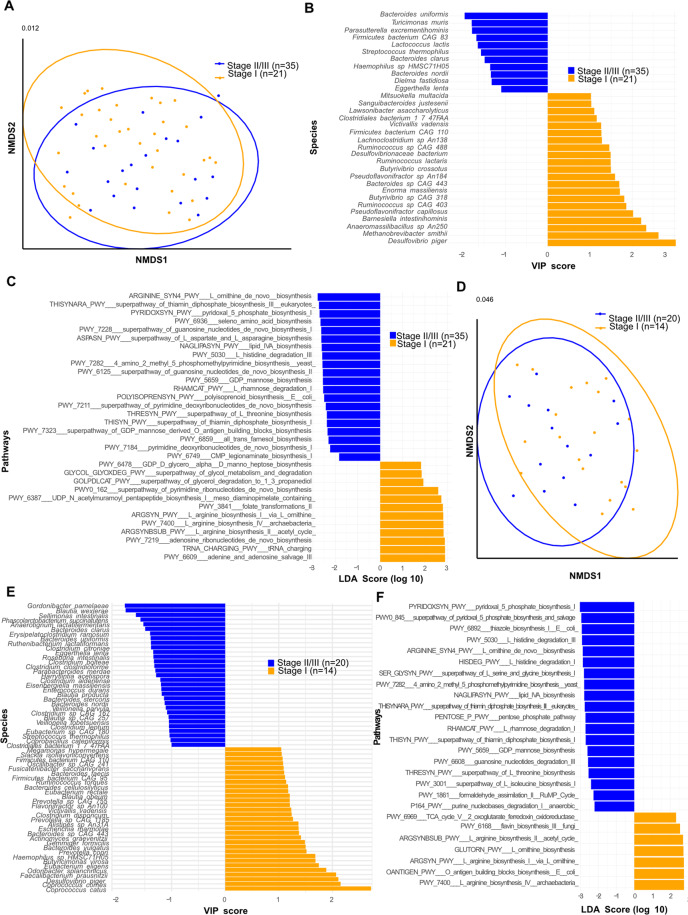
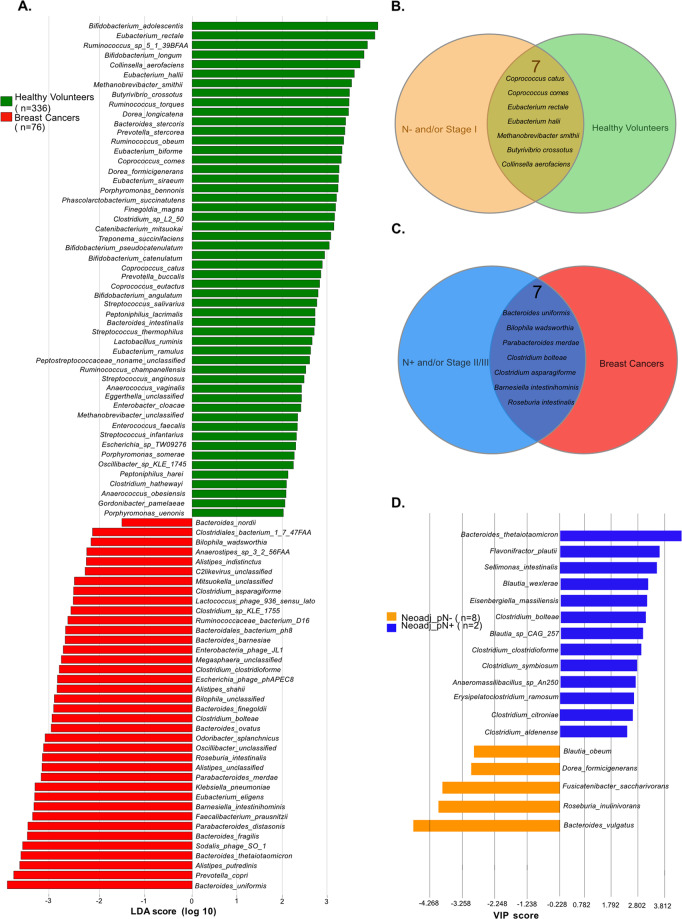
“B. uniformis, Parabacteroides merdae and Enterocloster spp. were over-represented in stools from women presenting with stage II–III breast cancer (compared with stage I breast cancers), and Bacteroides thetaiotaomicron, E. bolteae and E. clostridioformis were associated with resistance to cytotoxic agents.”
From Gut OncoMicrobiome Signatures (GOMS) as next-generation biomarkers for cancer immunotherapy (2023) · cites this paper as [27]
Experimental — accuracy not yet measuredThe source backs part of the claim, not all of it — or backs it for a different population, condition or comparison.
In the citing paper
“This study revealed associations between fecal microbiota and breast cancer staging and neurological side effects 14”
From Impact of the ONCOBIOME network in cancer microbiome research (2025) · cites this paper as [14]
Experimental — accuracy not yet measuredIn the citing paper
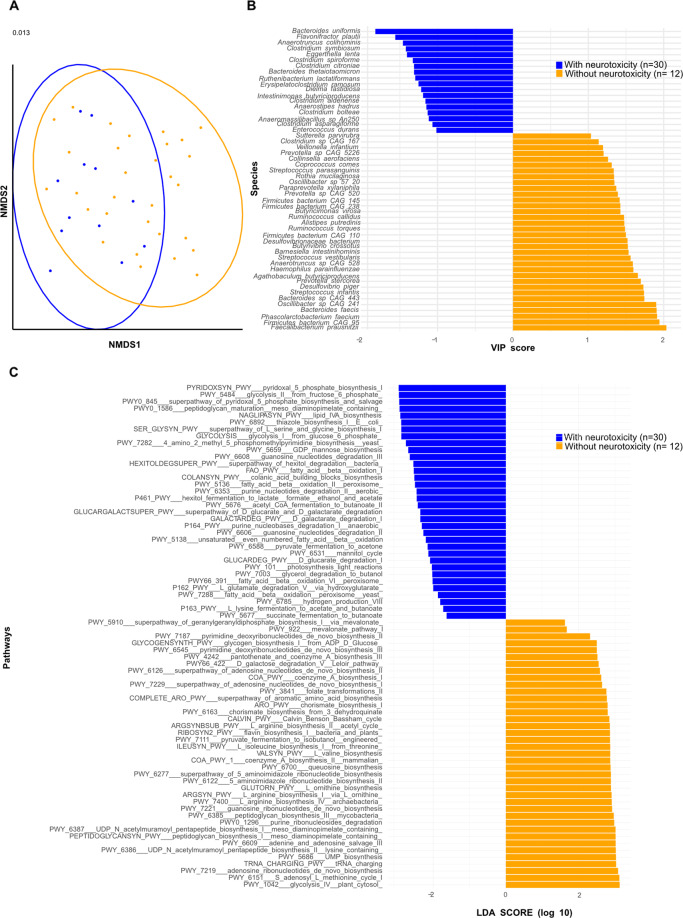
“many breast cancer GOMS species (B. uniformis, B. thetaiotaomicron and many members of the Enterocloster genus) were also substantially associated with adjuvant chemotherapy-related neurotoxicity27.”
From Gut OncoMicrobiome Signatures (GOMS) as next-generation biomarkers for cancer immunotherapy (2023) · cites this paper as [27]
4 more claims about this paper
Create a free account to see every claim other papers make about this one.
Self-check
Percentages, sums and reported differences re-computed from the paper’s own numbers.
The self-check needs the paper’s full text.
Citations
Cites
Fast gapped-read alignment with Bowtie 2
Langmead, B., & Salzberg, S. L. (2012) · Nature Methods · doi:10.1038/nmeth.1923 · Cited by 56,400
Metagenomic biomarker discovery and explanation
Segata, N., Izard, J., Waldron, L., Gevers, D., Miropolsky, L., Garrett, W. S., & Huttenhower, C. (2011) · Genome Biology · doi:10.1186/gb-2011-12-6-r60 · Cited by 16,192 · cited 13×
“Univariate analyses were performed using LEfSe [59] to estimate the”
MethodInfluentialSelf-citationGut microbiome influences efficacy of PD-1-based immunotherapy against epithelial tumors
Routy, B., Le Chatelier, E., Derosa, L., Duong, C. P. M., Alou, M. T., Daillère, R., Fluckiger, A., Messaoudene, M., Rauber, C., Roberti, M. P., et al. (2018) · Science · doi:10.1126/science.aan3706 · Cited by 5,671 · cited 3×
“to immune checkpoint inhibitors [11, 19] (Fig.”
BackgroundSelf-citationGut microbiome modulates response to anti-PD-1 immunotherapy in melanoma patients
Gopalakrishnan, V., Spencer, C. N., Nezi, L., Reuben, A., Andrews, M. C., Karpinets, T. V., Prieto, P. A., Vicente, D., Hoffman, K., Wei, S. C., et al. (2018) · Science · doi:10.1126/science.aan4236 · Cited by 4,812 · cited 3×
“melanoma [12, 14], kidney [19], and lung [11] cancer.”
BackgroundSelf-citationRichness of human gut microbiome correlates with metabolic markers
Le Chatelier, E., Nielsen, T., Qin, J., Prifti, E., Hildebrand, F., Falony, G., Almeida, M., Arumugam, M., Batto, J.-M., Kennedy, S., et al. (2013) · Nature · doi:10.1038/nature12506 · Cited by 4,662 · cited 1×
“processed for rarefaction and normalization and further analysis using the MetaOMineR package [57].”
MethodCommensal Bifidobacterium promotes antitumor immunity and facilitates anti–PD-L1 efficacy
Sivan, A., Corrales, L., Hubert, N., Williams, J. B., Aquino-Michaels, K., Earley, Z. M., Benyamin, F. W., Man Lei, Y., Jabri, B., Alegre, M.-L., et al. (2015) · Science · doi:10.1126/science.aac4255 · Cited by 3,888 · cited 1×
“Such an effect has been achieved with live biotherapeutics in preclinical models [9, 27, 47].”
BackgroundAnticancer immunotherapy by CTLA-4 blockade relies on the gut microbiota
Vétizou, M., Pitt, J. M., Daillère, R., Lepage, P., Waldschmitt, N., Flament, C., Rusakiewicz, S., Routy, B., Roberti, M. P., Duong, C. P. M., et al. (2015) · Science · doi:10.1126/science.aad1329 · Cited by 3,488
Self-citationThe commensal microbiome is associated with anti-PD-1 efficacy in metastatic melanoma patients
Matson, V., Fessler, J., Bao, R., Chongsuwat, T., Zha, Y., Alegre, M.-L., Luke, J. J., & Gajewski, T. F. (2018) · Science · doi:10.1126/science.aao3290 · Cited by 3,107 · cited 8×
“Accumulating evidence points to the capacity of the intestinal ecosystem, and more specifically specific health-associated bacteria commensals to dampen systemic inflammation [5, 6], to shape the innate and adaptive immune tonus [7–10], and reprogram the tumor microenvironment in tumor bearing mice [11, 12] and patien…”
BackgroundInfluentialDepommier, C., Everard, A., Druart, C., Plovier, H., Van Hul, M., Vieira-Silva, S., Falony, G., Raes, J., Maiter, D., Delzenne, N. M., et al. (2019) · Nature Medicine · doi:10.1038/s41591-019-0495-2 · Cited by 2,357 · cited 1×
“muciniphila, and inulin) reduced postprandial glucose levels in type 2 diabetes patients in a randomized double blind placebo controlled trial [48], confirming earlier trials [49].”
ResultBeghini, F., McIver, L. J., Blanco-Míguez, A., Dubois, L., Asnicar, F., Maharjan, S., Mailyan, A., Manghi, P., Scholz, M., Thomas, A. M., et al. (2021) · eLife · doi:10.7554/elife.65088 · Cited by 2,303
Self-citation(2020) · doi:10.1101/2020.11.19.388223 · Cited by 2,303
Commensal Bacteria Control Cancer Response to Therapy by Modulating the Tumor Microenvironment
Iida, N., Dzutsev, A., Stewart, C. A., Smith, L., Bouladoux, N., Weingarten, R. A., Molina, D. A., Salcedo, R., Back, T., Cramer, S., et al. (2013) · Science · doi:10.1126/science.1240527 · Cited by 2,251 · cited 17×
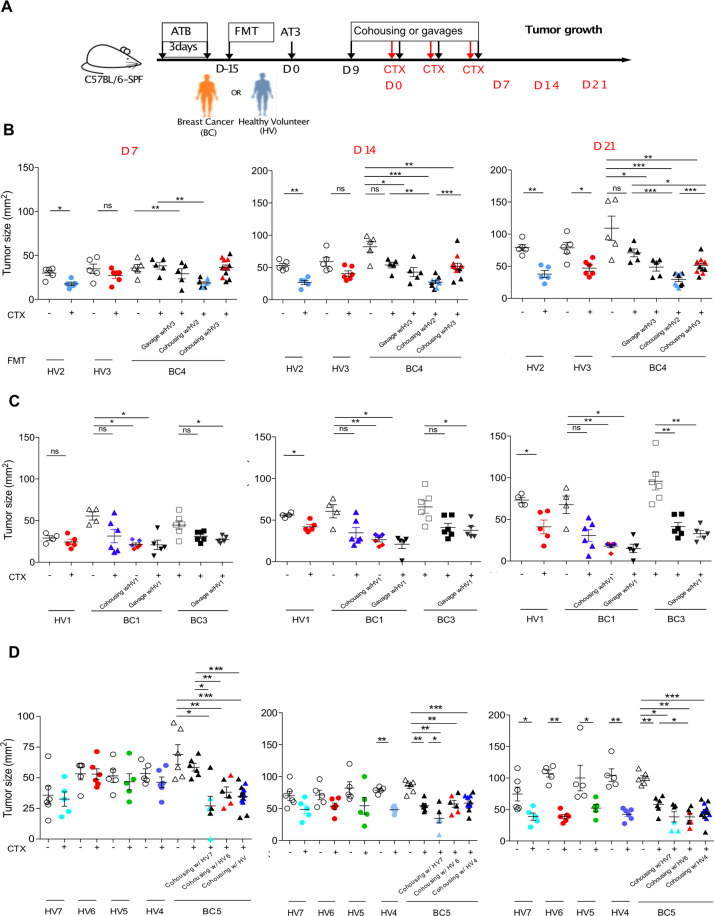
“Mice were treated with CTX or PBS, then randomly assigned to +/− cohousing with humanized mice with HV or BC.”
BackgroundInfluentialAn integrated catalog of reference genes in the human gut microbiome
MetaHIT Consortium, Li, J., Jia, H., Cai, X., Zhong, H., Feng, Q., Sunagawa, S., Arumugam, M., Kultima, J. R., Prifti, E., et al. (2014) · Nature Biotechnology · doi:10.1038/nbt.2942 · Cited by 2,164 · cited 2×
“9 million-gene catalog [54], as described [58].”
Denkert, C., von Minckwitz, G., Darb-Esfahani, S., Lederer, B., Heppner, B. I., Weber, K. E., Budczies, J., Huober, J., Klauschen, F., Furlanetto, J., et al. (2018) · The Lancet Oncology · doi:10.1016/s1470-2045(17)30904-x · Cited by 2,157
Self-citationThe Intestinal Microbiota Modulates the Anticancer Immune Effects of Cyclophosphamide
Viaud, S., Saccheri, F., Mignot, G., Yamazaki, T., Daillère, R., Hannani, D., Enot, D. P., Pfirschke, C., Engblom, C., Pittet, M. J., et al. (2013) · Science · doi:10.1126/science.1240537 · Cited by 2,050 · cited 17×
“Mice were treated with CTX or PBS, then randomly assigned to +/− cohousing with humanized mice with HV or BC.”
BackgroundInfluentialSelf-citationDietary intervention impact on gut microbial gene richness
Cotillard, A., Kennedy, S. P., Kong, L. C., Prifti, E., Pons, N., Le Chatelier, E., Almeida, M., Quinquis, B., Levenez, F., Galleron, N., et al. (2013) · Nature · doi:10.1038/nature12480 · Cited by 1,832
Species-level functional profiling of metagenomes and metatranscriptomes
Franzosa, E. A., McIver, L. J., Rahnavard, G., Thompson, L. R., Schirmer, M., Weingart, G., Lipson, K. S., Knight, R., Caporaso, J. G., Segata, N., et al. (2018) · Nature Methods · doi:10.1038/s41592-018-0176-y · Cited by 1,693 · cited 1×
“The microbiome functional potential was analyzed at the genetic level in the MG data base of our CANTO cohort using the HUMAnN3 database [26].”
MethodSelf-citationSuau, A., Bonnet, R., Sutren, M., Godon, J.-J., Gibson, G. R., Collins, M. D., & Doré, J. (1999) · Applied and Environmental Microbiology · doi:10.1128/aem.65.11.4799-4807.1999 · Cited by 1,490 · cited 1×
“Total fecal DNA was extracted as described [50, 51] and sequenced using ion-proton technology (ThermoFisher) resulting in 22.”
MethodSchmid, P., Rugo, H. S., Adams, S., Schneeweiss, A., Barrios, C. H., Iwata, H., Diéras, V., Henschel, V., Molinero, L., Chui, S. Y., et al. (2020) · The Lancet Oncology · doi:10.1016/s1470-2045(19)30689-8 · Cited by 1,216
MetaHIT Consortium, Nielsen, H. B., Almeida, M., Juncker, A. S., Rasmussen, S., Li, J., Sunagawa, S., Plichta, D. R., Gautier, L., Pedersen, A. G., et al. (2014) · Nature Biotechnology · doi:10.1038/nbt.2939 · Cited by 1,184 · cited 1×
“9 million-gene catalog [54], as described [58].”
A defined commensal consortium elicits CD8 T cells and anti-cancer immunity
Tanoue, T., Morita, S., Plichta, D. R., Skelly, A. N., Suda, W., Sugiura, Y., Narushima, S., Vlamakis, H., Motoo, I., Sugita, K., et al. (2019) · Nature · doi:10.1038/s41586-019-0878-z · Cited by 1,145 · cited 1×
“Such an effect has been achieved with live biotherapeutics in preclinical models [9, 27, 47].”
BackgroundGodon, J. J., Zumstein, E., Dabert, P., Habouzit, F., & Moletta, R. (1997) · Applied and Environmental Microbiology · doi:10.1128/aem.63.7.2802-2813.1997 · Cited by 924 · cited 1×
“Total fecal DNA was extracted as described [50, 51] and sequenced using ion-proton technology (ThermoFisher) resulting in 22.”
MethodHendry, S., Salgado, R., Gevaert, T., Russell, P. A., John, T., Thapa, B., Christie, M., van de Vijver, K., Estrada, M. V., Gonzalez-Ericsson, P. I., et al. (2017) · Advances in Anatomic Pathology · doi:10.1097/pap.0000000000000161 · Cited by 799
Self-citationThe microbiome in cancer immunotherapy: Diagnostic tools and therapeutic strategies
Zitvogel, L., Ma, Y., Raoult, D., Kroemer, G., & Gajewski, T. F. (2018) · Science · doi:10.1126/science.aar6918 · Cited by 777 · cited 1×
“Accumulating evidence points to the capacity of the intestinal ecosystem, and more specifically specific health-associated bacteria commensals to dampen systemic inflammation [5, 6], to shape the innate and adaptive immune tonus [7–10], and reprogram the tumor microenvironment in tumor bearing mice [11, 12] and patien…”
BackgroundSelf-citationHendry, S., Salgado, R., Gevaert, T., Russell, P. A., John, T., Thapa, B., Christie, M., van de Vijver, K., Estrada, M. V., Gonzalez-Ericsson, P. I., et al. (2017) · Advances in Anatomic Pathology · doi:10.1097/pap.0000000000000162 · Cited by 709
Self-citationSpermidine improves gut barrier integrity and gut microbiota function in diet-induced obese mice
Ma, L., Ni, Y., Wang, Z., Tu, W., Ni, L., Zhuge, F., Zheng, A., Hu, L., Zhao, Y., Zheng, L., et al. (2020) · Gut Microbes · doi:10.1080/19490976.2020.1832857 · Cited by 593 · cited 1×
“Polyamines can improve the intestinal barrier function [44] and cancer”
BackgroundKetogenic diet and ketone bodies enhance the anticancer effects of PD-1 blockade
Ferrere, G., Tidjani Alou, M., Liu, P., Goubet, A.-G., Fidelle, M., Kepp, O., Durand, S., Iebba, V., Fluckiger, A., Daillère, R., et al. (2021) · JCI Insight · doi:10.1172/jci.insight.145207 · Cited by 533 · cited 2×
“While promising approaches such as fasting or ketogenic [46] diets have direct cell autonomous or indirect immune effects on cancer, it remains to be determined whether fasting-induced microbial shifts may participate in the immune control of HR BC [24].”
BackgroundSelf-citationThe gut microbiota influences anticancer immunosurveillance and general health
Routy, B., Gopalakrishnan, V., Daillère, R., Zitvogel, L., Wargo, J. A., & Kroemer, G. (2018) · Nature Reviews Clinical Oncology · doi:10.1038/s41571-018-0006-2 · Cited by 523 · cited 3×
“Such “humanized” immunocompetent C57BL/6 mice were inoculated with syngeneic transplantable AT3 BC cells as previously described [27] to”
BackgroundSelf-citationHow does adenosine control neuronal dysfunction and neurodegeneration?
Cunha, R. A. (2016) · Journal of Neurochemistry · doi:10.1111/jnc.13724 · Cited by 441
Derosa, L., Routy, B., Fidelle, M., Iebba, V., Alla, L., Pasolli, E., Segata, N., Desnoyer, A., Pietrantonio, F., Ferrere, G., et al. (2020) · European Urology · doi:10.1016/j.eururo.2020.04.044 · Cited by 398 · cited 8×
“Second, compensatory therapies aimed at providing immunogenic commensals may turn cold HR+ BC into TIL-enriched tumor microenvironment amenable to ICBs and/or more sensitive to chemotherapies.”
BackgroundInfluentialSelf-citationBreast cancer in postmenopausal women is associated with an altered gut metagenome
Zhu, J., Liao, M., Yao, Z., Liang, W., Li, Q., Liu, J., Yang, H., Ji, Y., Wei, W., Tan, A., et al. (2018) · Microbiome · doi:10.1186/s40168-018-0515-3 · Cited by 377
Fasting-mimicking diet and hormone therapy induce breast cancer regression
Caffa, I., Spagnolo, V., Vernieri, C., Valdemarin, F., Becherini, P., Wei, M., Brandhorst, S., Zucal, C., Driehuis, E., Ferrando, L., et al. (2020) · Nature · doi:10.1038/s41586-020-2502-7 · Cited by 355 · cited 2×
“In mice and patients with HR BC, periodic fasting or a fasting-mimicking diet enhanced the activity of the endocrine therapeutics by lowering circulating insulin, insulin-like growth factor-1, and leptin and by inhibiting trophic signaling by the AKT–mTOR pathway [24].”
BackgroundBreast Cancer and Its Relationship with the Microbiota
Fernández, M. F., Reina-Pérez, I., Astorga, J. M., Rodríguez-Carrillo, A., Plaza-Díaz, J., & Fontana, L. (2018) · International Journal of Environmental Research and Public Health · doi:10.3390/ijerph15081747 · Cited by 350 · cited 1×
“of the gut microbiome on BC risk or prognosis [33].”
BackgroundPivotal Role of Innate and Adaptive Immunity in Anthracycline Chemotherapy of Established Tumors
Mattarollo, S. R., Loi, S., Duret, H., Ma, Y., Zitvogel, L., & Smyth, M. J. (2011) · Cancer Research · doi:10.1158/0008-5472.can-11-0753 · Cited by 333
Self-citationRutkowski, M. R., Stephen, T. L., Svoronos, N., Allegrezza, M. J., Tesone, A. J., Perales-Puchalt, A., Brencicova, E., Escovar-Fadul, X., Nguyen, J. M., Cadungog, M. G., et al. (2015) · Cancer Cell · doi:10.1016/j.ccell.2014.11.009 · Cited by 311 · cited 4×
“TLR5 recognition of flagellinexpressing commensals may favor systemic tumor -promoting inflammation and malignant progression of BC.”
BackgroundInfluentialAdenosine Receptor Signaling Modulates Permeability of the Blood–Brain Barrier
Carman, A. J., Mills, J. H., Krenz, A., Kim, D.-G., & Bynoe, M. S. (2011) · The Journal of Neuroscience · doi:10.1523/jneurosci.3337-11.2011 · Cited by 276 · cited 1×
“maintains the blood-brain barrier [38] and avoids neurodegeneration [39–41] through effects on A1, A2A, A2B, and”
BackgroundEpigenetic changes induced by adenosine augmentation therapy prevent epileptogenesis
Williams-Karnesky, R. L., Sandau, U. S., Lusardi, T. A., Lytle, N. K., Farrell, J. M., Pritchard, E. M., Kaplan, D. L., & Boison, D. (2013) · Journal of Clinical Investigation · doi:10.1172/jci65636 · Cited by 266
Elkrief, A., Derosa, L., Kroemer, G., Zitvogel, L., & Routy, B. (2019) · Annals of Oncology · doi:10.1093/annonc/mdz206 · Cited by 246
Self-citationCriscuolo, A., & Brisse, S. (2013) · Genomics · doi:10.1016/j.ygeno.2013.07.011 · Cited by 241
Royer, C. A., Tauc, P., Herve, G., & Brochon, J. C. (1987) · Biochemistry · doi:10.1021/bi00394a027 · Cited by 238
Roberti, M. P., Yonekura, S., Duong, C. P. M., Picard, M., Ferrere, G., Tidjani Alou, M., Rauber, C., Iebba, V., Lehmann, C. H. K., Amon, L., et al. (2020) · Nature Medicine · doi:10.1038/s41591-020-0882-8 · Cited by 208 · cited 1×
“negatively affect the efficacy of CT based on oxaliplatin [28] or cyclophosphamide (CTX) [7, 8], we addressed the”
BackgroundSelf-citationBuchta Rosean, C., Bostic, R. R., Ferey, J. C. M., Feng, T.-Y., Azar, F. N., Tung, K. S., Dozmorov, M. G., Smirnova, E., Bos, P. D., & Rutkowski, M. R. (2019) · Cancer Research · doi:10.1158/0008-5472.can-18-3464 · Cited by 198 · cited 1×
“More importantly, overt commensal dysbiosis might cause systemic inflammation that induced collagen deposition and accelerated fibrosis of the normal and tumor mammary gland through infiltration of myeloid cells [35].”
BackgroundPerraudeau, F., McMurdie, P., Bullard, J., Cheng, A., Cutcliffe, C., Deo, A., Eid, J., Gines, J., Iyer, M., Justice, N., et al. (2020) · BMJ Open Diabetes Research & Care · doi:10.1136/bmjdrc-2020-001319 · Cited by 186 · cited 1×
“muciniphila, and inulin) reduced postprandial glucose levels in type 2 diabetes patients in a randomized double blind placebo controlled trial [48], confirming earlier trials [49].”
ResultLuu, T. H., Michel, C., Bard, J.-M., Dravet, F., Nazih, H., & Bobin-Dubigeon, C. (2017) · Nutrition and Cancer · doi:10.1080/01635581.2017.1263750 · Cited by 184 · cited 1×
“coccoides clusters, which express β-glucuronidases favoring the reabsorption of free estrogen, were enriched in patients with stage II-III (as opposed to stage I) BC [34].”
BackgroundNSCLC Immunotherapy Efficacy and Antibiotic Use: A Systematic Review and Meta-Analysis
Lurienne, L., Cervesi, J., Duhalde, L., de Gunzburg, J., Andremont, A., Zalcman, G., Buffet, R., & Bandinelli, P.-A. (2020) · Journal of Thoracic Oncology · doi:10.1016/j.jtho.2020.03.002 · Cited by 169
Adenosine: setting the stage for plasticity
Dias, R. B., Rombo, D. M., Ribeiro, J. A., Henley, J. M., & Sebastião, A. M. (2013) · Trends in Neurosciences · doi:10.1016/j.tins.2012.12.003 · Cited by 164 · cited 1×
“favors neurotransmission [36], affects neuro-immunity [37],”
Grajeda-Iglesias, C., Durand, S., Daillère, R., Iribarren, K., Lemaitre, F., Derosa, L., Aprahamian, F., Bossut, N., Nirmalathasan, N., Madeo, F., et al. (2021) · Aging · doi:10.18632/aging.202739 · Cited by 161
Self-citationAdenosine and inflammation: what's new on the horizon?
Antonioli, L., Csóka, B., Fornai, M., Colucci, R., Kókai, E., Blandizzi, C., & Haskó, G. (2014) · Drug Discovery Today · doi:10.1016/j.drudis.2014.02.010 · Cited by 154 · cited 1×
“favors neurotransmission [36], affects neuro-immunity [37],”
Goedert, J. J., Hua, X., Bielecka, A., Okayasu, I., Milne, G. L., Jones, G. S., Fujiwara, M., Sinha, R., Wan, Y., Xu, X., et al. (2018) · British Journal of Cancer · doi:10.1038/bjc.2017.435 · Cited by 144 · cited 1×
“ulating systemic levels of estrogens and inflammation [21].”
BackgroundImmunoprophylactic and immunotherapeutic control of hormone receptor-positive breast cancer
Buqué, A., Bloy, N., Perez-Lanzón, M., Iribarren, K., Humeau, J., Pol, J. G., Levesque, S., Mondragon, L., Yamazaki, T., Sato, A., et al. (2020) · Nature Communications · doi:10.1038/s41467-020-17644-0 · Cited by 138 · cited 1×
“Nicotinamide that can be produced by microbial components of the gut could reduce breast tumorigenesis in a T and NK cell-dependent manner [23].”
BackgroundSelf-citationMohiuddin, J. J., Chu, B., Facciabene, A., Poirier, K., Wang, X., Doucette, A., Zheng, C., Xu, W., Anstadt, E. J., Amaravadi, R. K., et al. (2021) · JNCI: Journal of the National Cancer Institute · doi:10.1093/jnci/djaa057 · Cited by 137
Huang, X.-Z., Gao, P., Song, Y.-X., Xu, Y., Sun, J.-X., Chen, X.-W., Zhao, J.-H., & Wang, Z.-N. (2019) · OncoImmunology · doi:10.1080/2162402x.2019.1665973 · Cited by 132
Adenosine receptor neurobiology: overview
Chen, J.-F., Lee, C.-F., & Chern, Y. (2014) · International review of neurobiology · doi:10.1016/b978-0-12-801022-8.00001-5 · Cited by 119 · cited 1×
“A3 adenosine receptors [42]) might prevent the taxaneinduced neuropathy by direct effects on neural circuitries.”
BackgroundLévesque, S., Le Naour, J., Pietrocola, F., Paillet, J., Kremer, M., Castoldi, F., Baracco, E. E., Wang, Y., Vacchelli, E., Stoll, G., et al. (2019) · OncoImmunology · doi:10.1080/2162402x.2019.1657375 · Cited by 86
Self-citationFrontline Science: Microbiota reconstitution restores intestinal integrity after cisplatin therapy
Perales-Puchalt, A., Perez-Sanz, J., Payne, K. K., Svoronos, N., Allegrezza, M. J., Chaurio, R. A., Anadon, C., Calmette, J., Biswas, S., Mine, J. A., et al. (2018) · Journal of Leukocyte Biology · doi:10.1002/jlb.5hi1117-446rr · Cited by 86 · cited 1×
“Accumulating evidence points to the capacity of the intestinal ecosystem, and more specifically specific health-associated bacteria commensals to dampen systemic inflammation [5, 6], to shape the innate and adaptive immune tonus [7–10], and reprogram the tumor microenvironment in tumor bearing mice [11, 12] and patien…”
BackgroundMicrobial Alterations and Risk Factors of Breast Cancer: Connections and Mechanistic Insights
Parida, S., & Sharma, D. (2020) · Cells · doi:10.3390/cells9051091 · Cited by 81 · cited 1×
“Pioneering reports also underscored the positive effects mediated by dietary interventions on BC incidence or prognosis [22].”
BackgroundChen, K. L. A., Liu, X., Zhao, Y. C., Hieronymi, K., Rossi, G., Auvil, L. S., Welge, M. E., Bushell, C., Smith, R. L., Carlson, K. E., et al. (2018) · Scientific Reports · doi:10.1038/s41598-018-26506-1 · Cited by 78
Impact of genistein on the gut microbiome of humanized mice and its role in breast tumor inhibition
Paul, B., Royston, K. J., Li, Y., Stoll, M. L., Skibola, C. F., Wilson, L. S., Barnes, S., Morrow, C. D., & Tollefsbol, T. O. (2017) · PLOS ONE · doi:10.1371/journal.pone.0189756 · Cited by 74 · cited 1×
“Soy isoflavone influenced the composition of the gut microbiota and tumor aggressiveness in immunodeficient mice humanized by fecal transfer of BC stools and inoculated with human BC implants [25].”
BackgroundLee, C., Chang, C., Lin, C., Lai, H., Kao, Y.-H., Cheng, S., Chen, H., Liao, Y., Faivre, É., Buée, L., et al. (2018) · Molecular Neurobiology · doi:10.1007/s12035-018-1030-z · Cited by 66
Desmedt, C., Fornili, M., Clatot, F., Demicheli, R., Bortoli, D. D., Leo, A. D., Viale, G., de Azambuja, E., Crown, J. P., Francis, P. A., et al. (2020) · Journal of Clinical Oncology · doi:10.1200/jco.19.01771 · Cited by 64
The metabolomic signature of extreme longevity: naked mole rats versus mice
Viltard, M., Durand, S., Pérez-Lanzón, M., Aprahamian, F., Lefevre, D., Leroy, C., Madeo, F., Kroemer, G., & Friedlander, G. (2019) · Aging · doi:10.18632/aging.102116 · Cited by 61 · cited 2×
“Germany) coupled to a triple quadrupole 7000C (Agilent Technologies, Waldbronn, Germany) equipped with a High sensitivity electronic impact source operating in positive mode [60].”
MethodSelf-citationGuan, X., Ma, F., Sun, X., Li, C., Li, L., Liang, F., Li, S., Yi, Z., Liu, B., & Xu, B. (2020) · Frontiers in Oncology · doi:10.3389/fonc.2020.00902 · Cited by 57 · cited 1×
“A pioneering study [32] focusing on the possible involvement”
BackgroundHakozaki, T., Richard, C., Okuma, Y., Derosa, L., Elkrief, A., Zitvogel, L., Routy, B., & Hosomi, Y. (2020) · Journal of Clinical Oncology · doi:10.1200/jco.2020.38.15_suppl.3095 · Cited by 7 · cited 1×
“predictive of favorable BC prognosis, nor of side effects [12, 14, 29].”
BackgroundSelf-citation
Cited by
Bacteria in cancer initiation, promotion and progression
El Tekle, G., & Garrett, W. S. (2023) · Nature Reviews Cancer · doi:10.1038/s41568-023-00594-2 · Cited by 343
Targeting the gut microbiota for cancer therapy
Fernandes, M. R., Aggarwal, P., Costa, R. G. F., Cole, A. M., & Trinchieri, G. (2022) · Nature Reviews Cancer · doi:10.1038/s41568-022-00513-x · Cited by 290
Gut microbiota shapes cancer immunotherapy responses
Lei, W., Zhou, K., Lei, Y., Li, Q., & Zhu, H. (2025) · npj Biofilms and Microbiomes · doi:10.1038/s41522-025-00786-8 · Cited by 196
Longitudinal gut microbiome changes in immune checkpoint blockade-treated advanced melanoma
Björk, J. R., Bolte, L. A., Maltez Thomas, A., Lee, K. A., Rossi, N., Wind, T. T., Smit, L. M., Armanini, F., Asnicar, F., Blanco-Miguez, A., et al. (2024) · Nature Medicine · doi:10.1038/s41591-024-02803-3 · Cited by 156
“Recent studies have reported that Eisenbergiella sp., B. wexlerae , C. spiroforme and Erysipelotrichaceae were associated with resistance to ICB 4,36 and enriched in patients with more aggressive tumors 38 .”
Self-citationGut OncoMicrobiome Signatures (GOMS) as next-generation biomarkers for cancer immunotherapy
Thomas, A. M., Fidelle, M., Routy, B., Kroemer, G., Wargo, J. A., Segata, N., & Zitvogel, L. (2023) · Nature Reviews Clinical Oncology · doi:10.1038/s41571-023-00785-8 · Cited by 141
Self-citation
Metadata
- Authors
- Terrisse, S., Derosa, L., Iebba, V., Ghiringhelli, F., Vaz-Luis, I., Kroemer, G., Fidelle, M., Christodoulidis, S., Segata, N., Thomas, A. M., Martin, A.-L., Sirven, A., Everhard, S., Aprahamian, F., Nirmalathasan, N., Aarnoutse, R., Smidt, M., Ziemons, J., Caldas, C., Loibl, S., Denkert, C., Durand, S., Iglesias, C., Pietrantonio, F., Routy, B., André, F., Pasolli, E., Delaloge, S., & Zitvogel, L.
- Affiliations
- Université Paris-Sud (FR)
- Inserm (FR)
- Université de Bourgogne (FR)
- Université Paris-Saclay (FR)
- University of Trieste (IT)
- University of Trento (IT)
- UniCancer Group (FR)
- Institut Gustave Roussy (FR)
- Maastricht University (NL)
- University of Cambridge (GB)
- Goethe University Frankfurt (DE)
- Philipps University of Marburg (DE)
- Fondazione IRCCS Istituto Nazionale dei Tumori (IT)
- Centre Hospitalier de l’Université de Montréal (CA)
- University of Naples Federico II (IT)
- Corresponding author
- Zitvogel, Laurence
- ORCID
- Terrisse, Safae
- Derosa, Lisa
- Iebba, Valerio
- Ghiringhelli, François
- Kroemer, Guido
- Fidelle, Marine
- Christodoulidis, Stergios
- Segata, Nicola
- Thomas, Andrew Maltez
- Martin, Anne-Laure
- Sirven, Aude
- Everhard, Sibille
- Aprahamian, Fanny
- Aarnoutse, Romy
- Smidt, Marjolein
- Ziemons, Janine
- Caldas, Carlos
- Loibl, Sibylle
- Denkert, Carsten
- Pietrantonio, Filippo
- Routy, Bertrand
- André, Fabrice
- Pasolli, Edoardo
- Delaloge, Suzette
- Zitvogel, Laurence
- Venue
- Cell Death & Differentiation
- Published
- 2021-05-07
- Volume
- 28
- Issue
- 9
- Pages
- 2778-2796
- ISSN
- 1350-9047 (ISSN-L)
- 1476-5403
- PMC
- PMC8408230
- OpenAlex
- W3158071568
- Cited by
- 172
- References
- 62
- Citations by year
- 2026: 26 · 2025: 39 · 2024: 25 · 2023: 44 · 2022: 28 · 2021: 9
- FWCI
- 8.31
- Type
- journal article
- Language
- en
- Open access
- hybrid
- doi.org
- Licence
- cc-by
- creativecommons.org/licenses/by/4.0 (tdm)
- creativecommons.org/licenses/by/4.0 (vor)
- Locations
- Cell Death and Differentiation (publishedVersion, cc-by)
- Europe PMC (PubMed Central) (publishedVersion, other-oa)
- PubMed Central (publishedVersion, cc-by)
- PubMed (publishedVersion)
- Research Publications (Maastricht University) (publishedVersion, cc-by)
- HAL (submittedVersion, other-oa)
- ArTS Archivio della ricerca di Trieste (University of Trieste https://www.units.it/) (submittedVersion, cc-by)
- Iris (University of Trento) (submittedVersion, cc-by)
- Apollo (University of Cambridge) (submittedVersion, cc-by)
- Publication Server of Goethe University Frankfurt am Main (Goethe University Frankfurt) (submittedVersion, cc-by)
- Research Publications (Maastricht University) (submittedVersion, other-oa)
- Apollo
- Funders
- Association pour la Recherche sur le Cancer (ANR-18-IDEX-0001)
- Seerave Foundation (ANR-18-IDEX-0001)
- E-Rare
- Cancer Research UK (29567, 16942)
- National Institute for Health and Care Research (NF-SI-0515-10090, NF-SI-0611-10154)
- European Commission (HORIZON2020, 233655)
- Agence Nationale de la Recherche (ANR-10-COHO-0004, UMS3655, 2014-2019, ANR18, ANR-10, E-Rare-2, ANR-16-RHUS-0008, ANR-18-IDEX-0001)
- Fondation Leducq
- Institut National de la Santé et de la Recherche Médicale (UMS3655, Plan Cancer 2014-2019, ANR-18-IDEX-0001)
- Fondation pour la Recherche Médicale (ANR-18-IDEX-0001)
- Ligue Contre le Cancer (ANR-18-IDEX-0001)
- Centre National de la Recherche Scientifique (#ANR-18-IDEX-0001, UMS3655)
- Institut Universitaire de France (ANR-18-IDEX-0001)
- Institut National Du Cancer (#ANR-18-IDEX-0001)
- Institut Gustave-Roussy (UMS3655)
- European Research Area Network on Cardiovascular Diseases
- High-end Foreign Experts Recruitment Plan of China (GDW20171100085)
- Labex Immuno-Oncology ((ANR-18-IDEX-0001))
- Topics
- Life Sciences › Biochemistry, Genetics and Molecular Biology › Molecular Biology › Gut microbiota and health
- Life Sciences › Biochemistry, Genetics and Molecular Biology › Cancer Research › Cancer, Lipids, and Metabolism
- Life Sciences › Agricultural and Biological Sciences › Food Science › Probiotics and Fermented Foods
- Keywords
- early breast cancer, gut microbiota, fecal microbiota, chemotherapy, treatment side effects, prognosis, plasma metabolomics, gut commensals, xenograft mouse model, adjuvant therapy, neoadjuvant therapy, weight gain, neurological adverse events
- MeSH terms
- Gastrointestinal Microbiome, Breast Neoplasms, Female, Humans, Prognosis, Prospective Studies, Treatment Outcome
About these checks
Registry, retraction, Cites and statistics results are computed, not judged, with one exception: a printed reference that no index lists is read once by a model before it counts as a citation error. Claims are extracted by a model and kept only when their quote appears verbatim in the text; each cited source is then checked, with a model’s help, for whether it says what the claim relies on. Those verdicts can be wrong — read the claim’s quote and the cited source before relying on one.
Statistics and arithmetic are recomputed, not judged.
Confidence bands are shown only for fields calibrated on our annotated test set. None is calibrated yet, so no band is shown.
What counts as a claim ›How we measure confidence ›How we check this ›
Are you an author, or do you see a problem with this page? Request a review
Data sources
Bibliographic data: Semantic Scholar, OpenAlex, Crossref.
Contains information from the Semantic Scholar Academic Graph Datasets, made available under the ODC Attribution License (ODC-BY 1.0).
Semantic Scholar’s data is described in: Kinney, R., et al. (2023). The Semantic Scholar Open Data Platform. arXiv:2301.10140.
