

BCL-XL is crucial for progression through the adenoma-to-carcinoma sequence of colorectal cancer
Open accessThe DOI matches its Crossref record; 63 of the 65 references it cites were found in a registry or an index.
Abstract
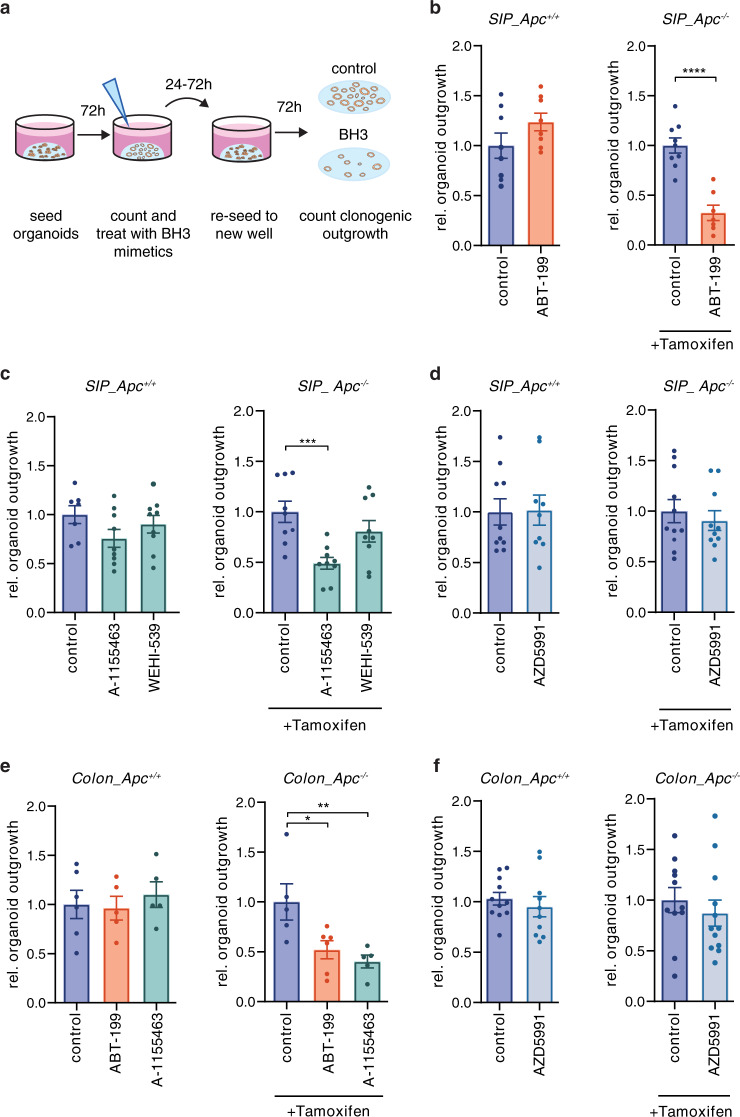
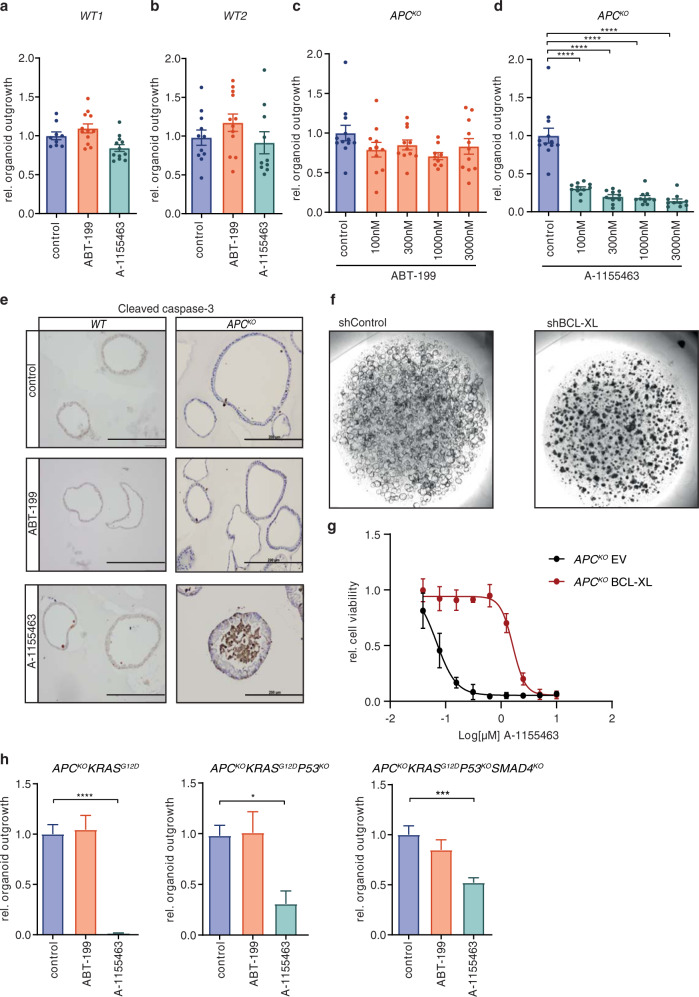
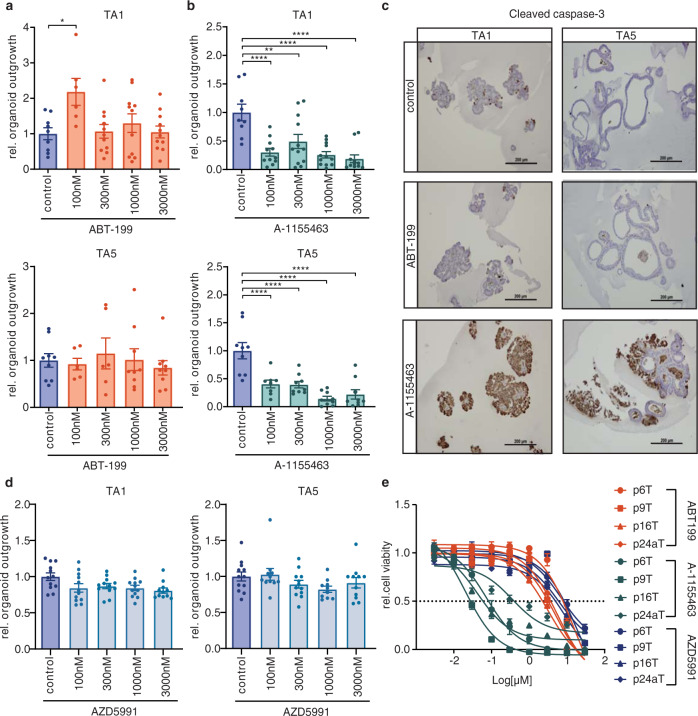
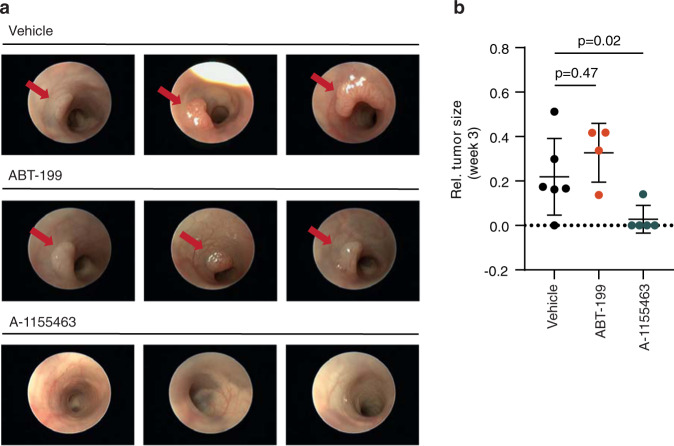
Evasion of apoptosis is a hallmark of cancer, which is frequently mediated by upregulation of the antiapoptotic BCL-2 family proteins. In colorectal cancer (CRC), previous work has highlighted differential antiapoptotic protein dependencies determined by the stage of the disease. While intestinal stem cells (ISCs) require BCL-2 for adenoma outgrowth and survival during transformation, ISC-specific MCL1 deletion results in disturbed intestinal homeostasis, eventually contributing to tumorigenesis. Colon cancer stem cells (CSCs), however, no longer require BCL-2 and depend mainly on BCL-XL for their survival. We therefore hypothesized that a shift in antiapoptotic protein reliance occurs in ISCs as the disease progresses from normal to adenoma to carcinoma. By targeting antiapoptotic proteins with specific BH3 mimetics in organoid models of CRC progression, we found that BCL-2 is essential only during ISC transformation while MCL1 inhibition did not affect adenoma outgrowth. BCL-XL, on the other hand, was crucial for stem cell survival throughout the adenoma-to-carcinoma sequence. Furthermore, we identified that the limited window of BCL-2 reliance is a result of its downregulation by miR-17-5p, a microRNA that is upregulated upon APC -mutation driven transformation. Here we show that BCL-XL inhibition effectively impairs adenoma outgrowth in vivo and enhances the efficacy of chemotherapy. In line with this dependency, expression of BCL-XL , but not BCL-2 or MCL1 , directly correlated to the outcome of chemotherapy-treated CRC patients. Our results provide insights to enable the rational use of BH3 mimetics in CRC management, particularly underlining the therapeutic potential of BCL-XL targeting mimetics in both early and late-stage disease.
Overview
The claims and statistics of this paper haven’t been checked yet.
Free: it reads the open-access text and checks the first 5 claims that cite a source we can check. Create a free account to check every claim.
Integrity signals
Registry
Cites
Statistics
Figures
Verification
Claims the paper makes
The claims and statistics of this paper haven’t been checked yet.
Free: it reads the open-access text and checks the first 5 claims that cite a source we can check. Create a free account to check every claim.
Claims other papers make about this one
Each is checked against this paper’s own text: does it say what the citing paper says it does?
The cited source says what the claim attributes to it.
In the citing paper
“Bcl-xL has been identified as a critical mediator of stem cell survival through the adeno-to-colon carcinoma sequence”
From Bcl-xL Is a Key Mediator of Apoptosis Following KRASG12C Inhibition in KRASG12C -mutant Colorectal Cancer (2023) · cites this paper as [45]
The cited source says what the claim attributes to it.
In the citing paper
“a number of studies have shown that Bcl-xL plays an important role in regulating sensitivity to chemotherapy and other targeted therapies”
From Bcl-xL Is a Key Mediator of Apoptosis Following KRASG12C Inhibition in KRASG12C -mutant Colorectal Cancer (2023) · cites this paper as [45]
In the citing paper
“We and others have showed the association of MCL1 and Bcl-xL expression with tumor progression and survival in solid tumors including CRC [30, 48–52].”
From MCL1 nuclear translocation induces chemoresistance in colorectal carcinoma (2022) · cites this paper as [51]
In the citing paper
“Conversely, BCL-XL is crucial for stem cell survival in late-stage adenomas, and BCL-XL inhibition was found to impair adenoma growth through apoptosis induction (45).”
From Synthetic Lethal Interaction with BCL-XL Blockade Deepens Response to Cetuximab in Patient-Derived Models of Metastatic Colorectal Cancer (2023) · cites this paper as [45]
In the citing paper
“BCL-XL plays a critical role in CRC initiation and progression, as targeting BCL-XL with the more potent BCL-XL antagonist A-1155463 significantly impaired clonogenic potential of adenoma and tumor organoids, while sparing normal colon organoids (Ramesh et al., 2021).”
From BCL-XL inhibition induces an FGFR4-mediated rescue response in colorectal cancer (2022) · cites this paper as Ramesh et al., 2021
2 more claims about this paper
Create a free account to see every claim other papers make about this one.
Self-check
Percentages, sums and reported differences re-computed from the paper’s own numbers.
The self-check needs the paper’s full text.
Citations
Cites
Hanahan, D., & Weinberg, R. A. (2000) · Cell · doi:10.1016/s0092-8674(00)81683-9 · Cited by 29,219
Identification of stem cells in small intestine and colon by marker gene Lgr5
Barker, N., van Es, J. H., Kuipers, J., Kujala, P., van den Born, M., Cozijnsen, M., Haegebarth, A., Korving, J., Begthel, H., Peters, P. J., et al. (2007) · Nature · doi:10.1038/nature06196 · Cited by 5,687
The landscape of somatic copy-number alteration across human cancers
Beroukhim, R., Mermel, C. H., Porter, D., Wei, G., Raychaudhuri, S., Donovan, J., Barretina, J., Boehm, J. S., Dobson, J., Urashima, M., et al. (2010) · Nature · doi:10.1038/nature08822 · Cited by 4,017
Sato, T., Stange, D. E., Ferrante, M., Vries, R. G. J., van Es, J. H., van den Brink, S., van Houdt, W. J., Pronk, A., van Gorp, J., Siersema, P. D., et al. (2011) · Gastroenterology · doi:10.1053/j.gastro.2011.07.050 · Cited by 3,753
Organoid Models and Applications in Biomedical Research
Xinaris, C., Brizi, V., & Remuzzi, G. (2015) · Nephron · doi:10.1159/000433566 · Cited by 3,515
ABT-199, a potent and selective BCL-2 inhibitor, achieves antitumor activity while sparing platelets
Souers, A. J., Leverson, J. D., Boghaert, E. R., Ackler, S. L., Catron, N. D., Chen, J., Dayton, B. D., Ding, H., Enschede, S. H., Fairbrother, W. J., et al. (2013) · Nature Medicine · doi:10.1038/nm.3048 · Cited by 3,058
Mitochondria as multifaceted regulators of cell death
Bock, F. J., & Tait, S. W. G. (2020) · Nature Reviews Molecular Cell Biology · doi:10.1038/s41580-019-0173-8 · Cited by 2,450
Prospective Derivation of a Living Organoid Biobank of Colorectal Cancer Patients
van de Wetering, M., Francies, H. E., Francis, J. M., Bounova, G., Iorio, F., Pronk, A., van Houdt, W., van Gorp, J., Taylor-Weiner, A., Kester, L., et al. (2015) · Cell · doi:10.1016/j.cell.2015.03.053 · Cited by 2,408
c-Myc-regulated microRNAs modulate E2F1 expression
O'Donnell, K. A., Wentzel, E. A., Zeller, K. I., Dang, C. V., & Mendell, J. T. (2005) · Nature · doi:10.1038/nature03677 · Cited by 2,347
Wnt activity defines colon cancer stem cells and is regulated by the microenvironment
Vermeulen, L., De Sousa E Melo, F., van der Heijden, M., Cameron, K., de Jong, J. H., Borovski, T., Tuynman, J. B., Todaro, M., Merz, C., Rodermond, H., et al. (2010) · Nature Cell Biology · doi:10.1038/ncb2048 · Cited by 1,804
Self-citationHow does p53 induce apoptosis and how does this relate to p53-mediated tumour suppression
Aubrey, B. J., Kelly, G. L., Janic, A., Herold, M. J., & Strasser, A. (2018) · Cell Death & Differentiation · doi:10.1038/cdd.2017.169 · Cited by 1,395
Rampino, N., Yamamoto, H., Ionov, Y., Li, Y., Sawai, H., Reed, J. C., & Perucho, M. (1997) · Science · doi:10.1126/science.275.5302.967 · Cited by 1,326
Sequential cancer mutations in cultured human intestinal stem cells
Drost, J., van Jaarsveld, R. H., Ponsioen, B., Zimberlin, C., van Boxtel, R., Buijs, A., Sachs, N., Overmeer, R. M., Offerhaus, G. J., Begthel, H., et al. (2015) · Nature · doi:10.1038/nature14415 · Cited by 1,067
Self-citationAugmentation of tumor angiogenesis by a Myc-activated microRNA cluster
Dews, M., Homayouni, A., Yu, D., Murphy, D., Sevignani, C., Wentzel, E., Furth, E. E., Lee, W. M., Enders, G. H., Mendell, J. T., et al. (2006) · Nature Genetics · doi:10.1038/ng1855 · Cited by 1,047
The MCL1 inhibitor S63845 is tolerable and effective in diverse cancer models
Kotschy, A., Szlavik, Z., Murray, J., Davidson, J., Maragno, A. L., Le Toumelin-Braizat, G., Chanrion, M., Kelly, G. L., Gong, J.-N., Moujalled, D. M., et al. (2016) · Nature · doi:10.1038/nature19830 · Cited by 1,047
Programmed Anuclear Cell Death Delimits Platelet Life Span
Mason, K. D., Carpinelli, M. R., Fletcher, J. I., Collinge, J. E., Hilton, A. A., Ellis, S., Kelly, P. N., Ekert, P. G., Metcalf, D., Roberts, A. W., et al. (2007) · Cell · doi:10.1016/j.cell.2007.01.037 · Cited by 1,031
Lineage-dependent gene expression programs influence the immune landscape of colorectal cancer
Lee, H.-O., Hong, Y., Etlioglu, H. E., Cho, Y. B., Pomella, V., Van den Bosch, B., Vanhecke, J., Verbandt, S., Hong, H., Min, J.-W., et al. (2020) · Nature Genetics · doi:10.1038/s41588-020-0636-z · Cited by 910
Self-citationOoft, S. N., Weeber, F., Dijkstra, K. K., McLean, C. M., Kaing, S., van Werkhoven, E., Schipper, L., Hoes, L., Vis, D. J., van de Haar, J., et al. (2019) · Science Translational Medicine · doi:10.1126/scitranslmed.aay2574 · Cited by 813 · cited 1×
“Patient-derived organoids have been used as a model to predict patient response to chemotherapy [46] and our results highlight the therapeutic potential for BCL-XL inhibition in CRC as A-1155463 treatment effectively impairs viability of organoids derived from FAP and CRC patients.”
MethodPretreatment Mitochondrial Priming Correlates with Clinical Response to Cytotoxic Chemotherapy
Chonghaile, T. N., Sarosiek, K. A., Vo, T.-T., Ryan, J. A., Tammareddi, A., Moore, V. D. G., Deng, J., Anderson, K. C., Richardson, P., Tai, Y.-T., et al. (2011) · Science · doi:10.1126/science.1206727 · Cited by 585
Targeting BCL-2 regulated apoptosis in cancer
Campbell, K. J., & Tait, S. W. G. (2018) · Open Biology · doi:10.1098/rsob.180002 · Cited by 545
SynergyFinder: a web application for analyzing drug combination dose–response matrix data
Ianevski, A., He, L., Aittokallio, T., & Tang, J. (2017) · Bioinformatics · doi:10.1093/bioinformatics/btx162 · Cited by 530
Tron, A. E., Belmonte, M. A., Adam, A., Aquila, B. M., Boise, L. H., Chiarparin, E., Cidado, J., Embrey, K. J., Gangl, E., Gibbons, F. D., et al. (2018) · Nature Communications · doi:10.1038/s41467-018-07551-w · Cited by 490
Distinct Thresholds Govern Myc's Biological Output In Vivo
Murphy, D. J., Junttila, M. R., Pouyet, L., Karnezis, A., Shchors, K., Bui, D. A., Brown-Swigart, L., Johnson, L., & Evan, G. I. (2008) · Cancer Cell · doi:10.1016/j.ccr.2008.10.018 · Cited by 456
miRmap: Comprehensive prediction of microRNA target repression strength
Vejnar, C. E., & Zdobnov, E. M. (2012) · Nucleic Acids Research · doi:10.1093/nar/gks901 · Cited by 390
Why do BCL-2 inhibitors work and where should we use them in the clinic?
Montero, J., & Letai, A. (2018) · Cell Death & Differentiation · doi:10.1038/cdd.2017.183 · Cited by 327
Elevated expression of Bcl-X and reduced Bak in primary colorectal adenocarcinomas.
Krajewska, M., Moss, S. F., Krajewski, S., Song, K. B., Holt, P. R., & Reed, J. C. (1996) · PubMed · Cited by 321
Discovery of a Potent and Selective BCL-X L Inhibitor with in Vivo Activity
Tao, Z.-F., Hasvold, L., Wang, L., Wang, X., Petros, A. M., Park, C. H., Boghaert, E. R., Catron, N. D., Chen, J., Colman, P. M., et al. (2014) · ACS Medicinal Chemistry Letters · doi:10.1021/ml5001867 · Cited by 309
BH3-Mimetic Drugs: Blazing the Trail for New Cancer Medicines
Merino, D., Kelly, G. L., Lessene, G., Wei, A. H., Roberts, A. W., & Strasser, A. (2018) · Cancer Cell · doi:10.1016/j.ccell.2018.11.004 · Cited by 287
Targeting BCL-2 with the BH3 Mimetic ABT-199 in Estrogen Receptor-Positive Breast Cancer
Vaillant, F., Merino, D., Lee, L., Breslin, K., Pal, B., Ritchie, M. E., Smyth, G. K., Christie, M., Phillipson, L. J., Burns, C. J., et al. (2013) · Cancer Cell · doi:10.1016/j.ccr.2013.06.002 · Cited by 276
Targeting mutant RAS in patient-derived colorectal cancer organoids by combinatorial drug screening
Verissimo, C. S., Overmeer, R. M., Ponsioen, B., Drost, J., Mertens, S., Verlaan-Klink, I., Gerwen, B. V., van der Ven, M., Wetering, M. V. D., Egan, D. A., et al. (2016) · eLife · doi:10.7554/elife.18489 · Cited by 263 · cited 1×
“Here we show that BCL-XL inhibition enhances oxaliplatin-induced apoptosis, while earlier studies also observed synergy with inhibitors of kinases such as MEK [48, 49].”
Ongoing chromosomal instability and karyotype evolution in human colorectal cancer organoids
Bolhaqueiro, A. C. F., Ponsioen, B., Bakker, B., Klaasen, S. J., Kucukkose, E., van Jaarsveld, R. H., Vivié, J., Verlaan-Klink, I., Hami, N., Spierings, D. C. J., et al. (2019) · Nature Genetics · doi:10.1038/s41588-019-0399-6 · Cited by 243
Self-citationSarosiek, K. A., Fraser, C., Muthalagu, N., Bhola, P. D., Chang, W., McBrayer, S. K., Cantlon, A., Fisch, S., Golomb-Mello, G., Ryan, J. A., et al. (2017) · Cancer Cell · doi:10.1016/j.ccell.2016.11.011 · Cited by 226
Cragg, M. S., Jansen, E. S., Cook, M., Harris, C., Strasser, A., & Scott, C. L. (2008) · Journal of Clinical Investigation · doi:10.1172/jci35437 · Cited by 207
Miyaki, M., Seki, M., Okamoto, M., Yamanaka, A., Maeda, Y., Tanaka, K., Kikuchi, R., Iwama∥, T., Ikeuchi, T., & Tonomura, A. (1990) · PubMed · Cited by 197
Meijer, G. A., Hermsen, M. A., Baak, J. P., van Diest, P. J., Meuwissen, S. G., Beliën, J. A., Hoovers, J. M., Joenje, H., Snijders, P. J., & Walboomers, J. M. (1998) · Journal of Clinical Pathology · doi:10.1136/jcp.51.12.901 · Cited by 196
Long Noncoding RNA MIR17HG Promotes Colorectal Cancer Progression via miR-17-5p
Xu, J., Meng, Q., Li, X., Yang, H., Xu, J., Gao, N., Sun, H., Wu, S., Familiari, G., Relucenti, M., et al. (2019) · Cancer Research · doi:10.1158/0008-5472.can-18-3880 · Cited by 196
Souers, A. J., Leverson, J. D., Boghaert, E. R., Ackler, S., Catron, N. D., Chen, J., Dayton, B. D., Ding, H., Enschede, S. H., Fairbrother, W. J., et al. (2013) · Cited by 180
Li, Y., Choi, P. S., Casey, S. C., Dill, D. L., & Felsher, D. W. (2014) · Cancer Cell · doi:10.1016/j.ccr.2014.06.014 · Cited by 174
Targeting of MCL-1 kills MYC-driven mouse and human lymphomas even when they bear mutations in p53
Kelly, G. L., Grabow, S., Glaser, S. P., Fitzsimmons, L., Aubrey, B. J., Okamoto, T., Valente, L. J., Robati, M., Tai, L., Fairlie, W. D., et al. (2014) · Genes & Development · doi:10.1101/gad.232009.113 · Cited by 166
TGFβ signaling directs serrated adenomas to the mesenchymal colorectal cancer subtype
Fessler, E., Drost, J., van Hooff, S. R., Linnekamp, J. F., Wang, X., Jansen, M., De Sousa E Melo, F., Prasetyanti, P. R., IJspeert, J. E., Franitza, M., et al. (2016) · EMBO Molecular Medicine · doi:10.15252/emmm.201606184 · Cited by 159
Self-citationSoderquist, R. S., Crawford, L. A., Liu, E., Lu, M., Agarwal, A., Anderson, G. R., Lin, K., Winter, P. S., Çakır, M., & Wood, K. C. (2018) · Nature Communications · doi:10.1038/s41467-018-05815-z · Cited by 140
Ma, Y., Zhang, P., Wang, F., Zhang, H., Yang, Y. P., Shi, C., Xia, Y., Peng, J., Liu, W., Yang, Z., et al. (2012) · Nature Communications · doi:10.1038/ncomms2276 · Cited by 133
BCL-2 family deregulation in colorectal cancer: potential for BH3 mimetics in therapy
Ramesh, P., & Medema, J. P. (2020) · Apoptosis · doi:10.1007/s10495-020-01601-9 · Cited by 127
Self-citationSlattery, M. L., Herrick, J. S., Pellatt, D. F., Stevens, J. R., Mullany, L. E., Wolff, E., Hoffman, M. D., Samowitz, W. S., & Wolff, R. K. (2016) · Carcinogenesis · doi:10.1093/carcin/bgv249 · Cited by 120
Decreased mitochondrial priming determines chemoresistance of colon cancer stem cells
Colak, S., Zimberlin, C. D., Fessler, E., Hogdal, L., Prasetyanti, P. R., Grandela, C. M., Letai, A., & Medema, J. P. (2014) · Cell Death & Differentiation · doi:10.1038/cdd.2014.37 · Cited by 114
Self-citationSarosiek, K. A., & Letai, A. G. (2016) · FEBS Journal · doi:10.1111/febs.13714 · Cited by 113
Bcl-xL is an oncogenic driver in colorectal cancer
Scherr, A.-L., Gdynia, G., Salou, M., Radhakrishnan, P., Duglova, K., Heller, A., Keim, S., Kautz, N., Jassowicz, A., Elssner, C., et al. (2016) · Cell Death & Disease · doi:10.1038/cddis.2016.233 · Cited by 107
BIM Is the Primary Mediator of MYC-Induced Apoptosis in Multiple Solid Tissues
Muthalagu, N., Junttila, M. R., Wiese, K. E., Wolf, E., Morton, J. P., Bauer, B., Evan, G. I., Eilers, M., & Murphy, D. J. (2014) · Cell Reports · doi:10.1016/j.celrep.2014.07.057 · Cited by 100
Prognostic values of the miR‐17‐92 cluster and its paralogs in colon cancer
Yu, G., Tang, J., Tian, M., Li, H., Wang, X., Wu, T., Zhu, J., Huang, S., & Wan, Y. (2012) · Journal of Surgical Oncology · doi:10.1002/jso.22138 · Cited by 89
Kikuchi‐Yanoshita, R., Konishi, M., Fukunari, H., Tanaka, K., & Miyaki, M. (1992) · PubMed · Cited by 86
BH3 profiling discriminates on-target small molecule BH3 mimetics from putative mimetics
Villalobos-Ortiz, M., Ryan, J. A., Mashaka, T., Opferman, J. T., & Letai, A. G. (2019) · Cell Death and Differentiation · doi:10.1038/s41418-019-0391-9 · Cited by 81
Smit, W. L., Spaan, C. N., Johannes de Boer, R., Ramesh, P., Martins Garcia, T., Meijer, B. J., Vermeulen, J. L. M., Lezzerini, M., MacInnes, A. W., Koster, J., et al. (2020) · Proceedings of the National Academy of Sciences · doi:10.1073/pnas.1912772117 · Cited by 77
Self-citationBcl-2 is a critical mediator of intestinal transformation
van der Heijden, M., Zimberlin, C. D., Nicholson, A. M., Colak, S., Kemp, R., Meijer, S. L., Medema, J. P., Greten, F. R., Jansen, M., Winton, D. J., et al. (2016) · Nature Communications · doi:10.1038/ncomms10916 · Cited by 71
Self-citationMaurer, C. A., Friess, H., Buhler, S. S., Wahl, B. R., Graber, H., Zimmermann, A., & Buchler, M. W. (1998) · Digestive Diseases and Sciences · doi:10.1023/a:1026695025990 · Cited by 67
Scherr, M., Elder, A., Battmer, K., Barzan, D., Bomken, S. N., Ricke‐Hoch, M., Schröder, A., Venturini, L., Blair, H., Vormoor, J. H., et al. (2013) · Leukemia · doi:10.1038/leu.2013.361 · Cited by 66
Isolation of Human Colon Stem Cells Using Surface Expression of PTK7
Jung, P., Sommer, C., Barriga, F. M., Buczacki, S. J., Hernando-Momblona, X., Sevillano, M., Duran-Frigola, M., Aloy, P., Selbach, M., Winton, D. J., et al. (2015) · Stem Cell Reports · doi:10.1016/j.stemcr.2015.10.003 · Cited by 61
Li, Y., Lauriola, M., Kim, D., Francesconi, M., D’Uva, G., Shibata, D., Malafa, M., Yeatman, T. J., Coppola, D., Solmi, R., et al. (2016) · Oncogene · doi:10.1038/onc.2015.522 · Cited by 57
Intricate crosstalk between MYC and non‐coding RNA s regulates hallmarks of cancer
Swier, L. J. Y. M., Dzikiewicz‐Krawczyk, A., Winkle, M., van den Berg, A., & Kluiver, J. L. (2018) · Molecular Oncology · doi:10.1002/1878-0261.12409 · Cited by 56
Zhang, H., Xue, J., Hessler, P., Tahir, S. K., Chen, J., Jin, S., Souers, A. J., Leverson, J. D., & Lam, L. T. (2015) · Molecular Cancer · doi:10.1186/s12943-015-0397-y · Cited by 54
Significance of Bcl-xL in human colon carcinoma
Zhang, Y.-L., Pang, L.-Q., Wu, Y., Wang, X.-Y., Wang, C.-Q., & Fan, Y. (2008) · World Journal of Gastroenterology · doi:10.3748/wjg.14.3069 · Cited by 34
MCL1 is required for maintenance of intestinal homeostasis and prevention of carcinogenesis in mice
Healy, M. E., Boege, Y., Hodder, M. C., Böhm, F., Malehmir, M., Scherr, A.-L., Jetzer, J., Chan, L. K., Parrotta, R., Jacobs, K., et al. (2020) · Gastroenterology · doi:10.1053/j.gastro.2020.03.017 · Cited by 33
Self-citationIsolation, Propagation, and Clonogenicity of Intestinal Stem Cells
Ramesh, P., Kirov, A. B., Huels, D. J., & Medema, J. P. (2018) · Methods in molecular biology · doi:10.1007/7651_2018_179 · Cited by 16
Self-citationZhang, L., Ramesh, P., Steinmetz, M., & Medema, J. P. (2021) · International Journal of Molecular Sciences · doi:10.3390/ijms22083811 · Cited by 16
Self-citation
Cited by
BCL-2 protein family: attractive targets for cancer therapy
Kaloni, D., Diepstraten, S. T., Strasser, A., & Kelly, G. L. (2023) · Apoptosis · doi:10.1007/s10495-022-01780-7 · Cited by 500
Apoptotic cell death in disease—Current understanding of the NCCD 2023
Vitale, I., Pietrocola, F., Guilbaud, E., Aaronson, S. A., Abrams, J. M., Adam, D., Agostini, M., Agostinis, P., Alnemri, E. S., Altucci, L., et al. (2023) · Cell Death & Differentiation · doi:10.1038/s41418-023-01153-w · Cited by 361
Programmed cell death: molecular mechanisms, biological functions, diseases, and therapeutic targets
Qian, S., Long, Y., Tan, G., Li, X., Xiang, B., Tao, Y., Xie, Z., & Zhang, X. (2024) · MedComm · doi:10.1002/mco2.70024 · Cited by 97
ABCC1 and glutathione metabolism limit the efficacy of BCL-2 inhibitors in acute myeloid leukemia
Ebner, J., Schmoellerl, J., Piontek, M., Manhart, G., Troester, S., Carter, B. Z., Neubauer, H. A., Moriggl, R., Szakács, G., Zuber, J. A., et al. (2023) · Nature Communications · doi:10.1038/s41467-023-41229-2 · Cited by 53
Gene expression in organoids: an expanding horizon
Smirnov, A., Melino, G., & Candi, E. (2023) · Biology Direct · doi:10.1186/s13062-023-00360-2 · Cited by 35
Metadata
- Authors
- Ramesh, P., Lannagan, T. R. M., Jackstadt, R., Atencia Taboada, L., Lansu, N., Wirapati, P., van Hooff, S. R., Dekker, D., Pritchard, J., Kirov, A. B., van Neerven, S. M., Tejpar, S., Kops, G. J. P. L., Sansom, O. J., & Medema, J. P.
- Affiliations
- Oncode Institute (NL)
- Cancer Research UK Scotland Institute (GB)
- University Medical Center Utrecht (NL)
- SIB Swiss Institute of Bioinformatics (CH)
- KU Leuven (BE)
- Corresponding author
- Medema, Jan Paul
- ORCID
- Venue
- Cell Death & Differentiation
- Published
- 2021-06-11
- Volume
- 28
- Issue
- 12
- Pages
- 3282-3296
- ISSN
- 1350-9047 (ISSN-L)
- 1476-5403
- PMC
- PMC8630104
- OpenAlex
- W3166580483
- Semantic Scholar
- be4ba178ddc83c49f2fd0c04498f0f5c9b7cf9c4
- Cited by
- 52
- References
- 65
- Citations by year
- 2026: 4 · 2025: 13 · 2024: 8 · 2023: 15 · 2022: 11 · 2021: 1
- FWCI
- 2.75
- Type
- journal article
- Language
- en
- Open access
- hybrid
- doi.org
- Licence
- cc-by
- creativecommons.org/licenses/by/4.0 (tdm)
- creativecommons.org/licenses/by/4.0 (vor)
- Locations
- Cell Death and Differentiation (publishedVersion, cc-by)
- PubMed Central (publishedVersion, cc-by)
- PubMed (publishedVersion)
- KNAW Research Portal (The Royal Netherlands Academy of Arts and Sciences) (publishedVersion, other-oa)
- SERVAL (Université de Lausanne) (publishedVersion, cc-by)
- Pure Amsterdam UMC (acceptedVersion, cc-by)
- IRIS (submittedVersion, cc-by)
- Lirias (submittedVersion, cc-by)
- Data Archiving and Networked Services (DANS) (submittedVersion, other-oa)
- Utrecht University Repository (Utrecht University) (submittedVersion, other-oa)
- Funders
- Cancer Research UK (A21139/, A17196/, 21139)
- Topics
- Life Sciences › Biochemistry, Genetics and Molecular Biology › Molecular Biology › Cell death mechanisms and regulation
- Health Sciences › Medicine › Oncology › Cancer-related Molecular Pathways
- Life Sciences › Biochemistry, Genetics and Molecular Biology › Cancer Research › MicroRNA in disease regulation
- Keywords
- Bcl-xL, colorectal cancer, adenoma-carcinoma sequence, intestinal stem cells, cancer stem cells, apoptosis evasion, Bcl-2, Mcl-1, BH3 mimetics, miR-17-5p, APC mutation, colorectal organoids, chemotherapy response
- MeSH terms
- Adenoma, Animals, Female, Humans, Male, Colorectal Neoplasms, Survival Analysis, Apoptosis, Disease Progression, bcl-X Protein, Mice
About these checks
Registry, retraction, Cites and statistics results are computed, not judged, with one exception: a printed reference that no index lists is read once by a model before it counts as a citation error. Claims are extracted by a model and kept only when their quote appears verbatim in the text; each cited source is then checked, with a model’s help, for whether it says what the claim relies on. Those verdicts can be wrong — read the claim’s quote and the cited source before relying on one.
Statistics and arithmetic are recomputed, not judged.
Confidence bands are shown only for fields calibrated on our annotated test set. None is calibrated yet, so no band is shown.
What counts as a claim ›How we measure confidence ›How we check this ›
Are you an author, or do you see a problem with this page? Request a review
Data sources
Bibliographic data: Semantic Scholar, OpenAlex, Crossref.
Contains information from the Semantic Scholar Academic Graph Datasets, made available under the ODC Attribution License (ODC-BY 1.0).
Semantic Scholar’s data is described in: Kinney, R., et al. (2023). The Semantic Scholar Open Data Platform. arXiv:2301.10140.
