

Modeling radiation injury-induced cell death and countermeasure drug responses in a human Gut-on-a-Chip
Open accessThe DOI matches its Crossref record; 67 of the 68 references it cites were found in a registry or an index.
Abstract
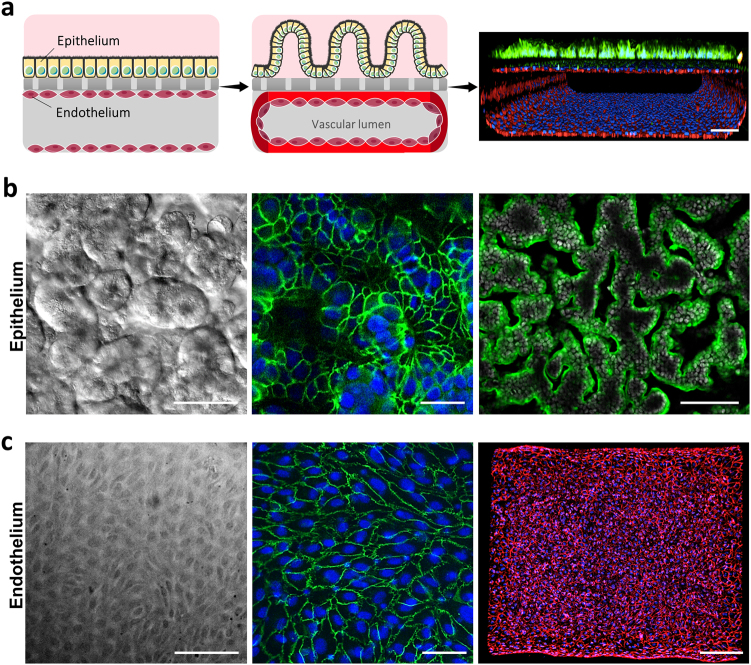
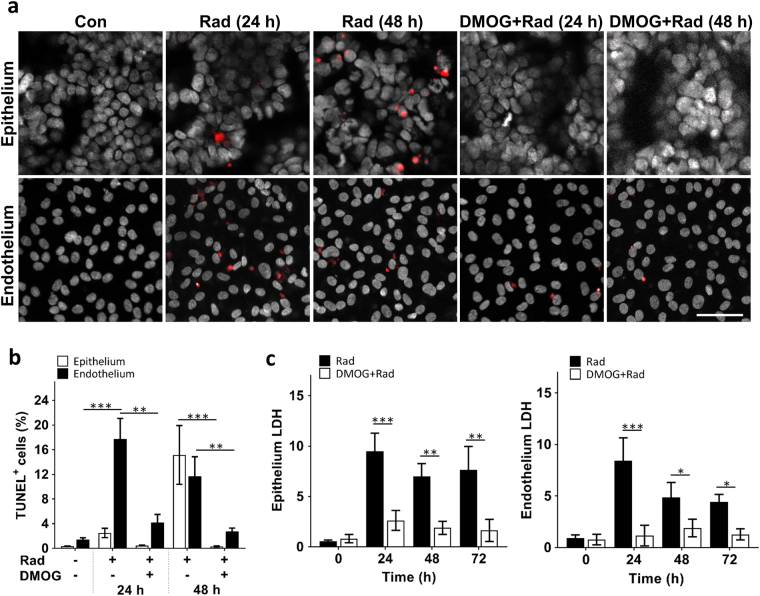
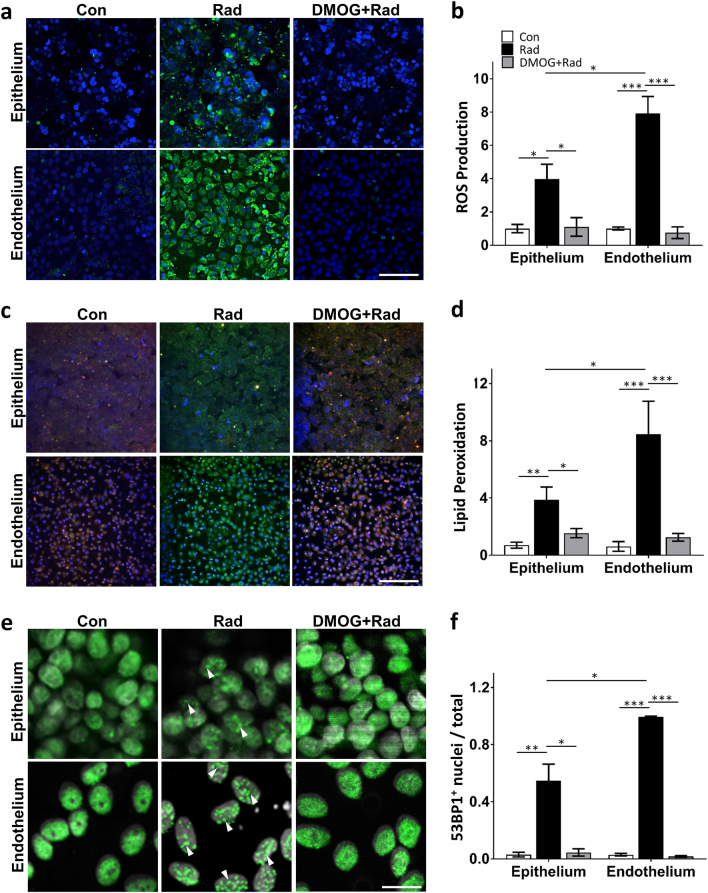
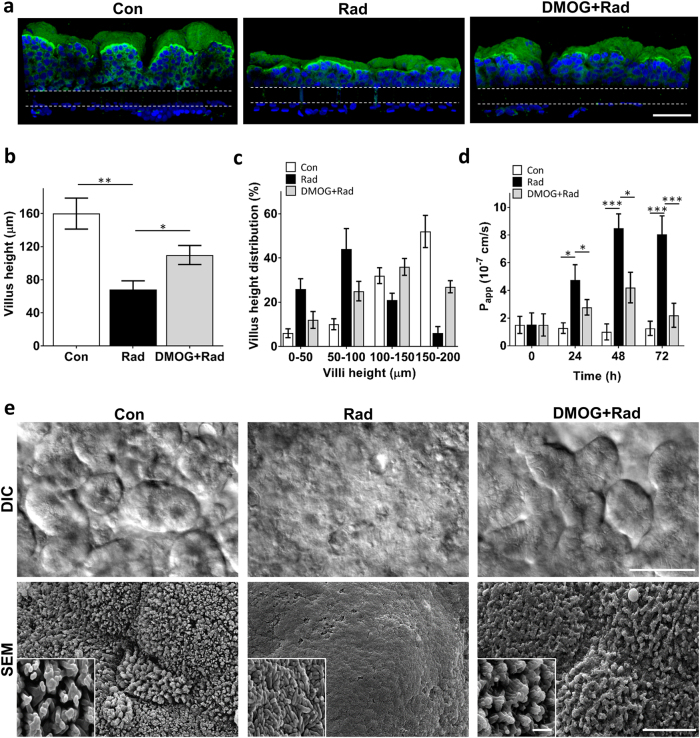
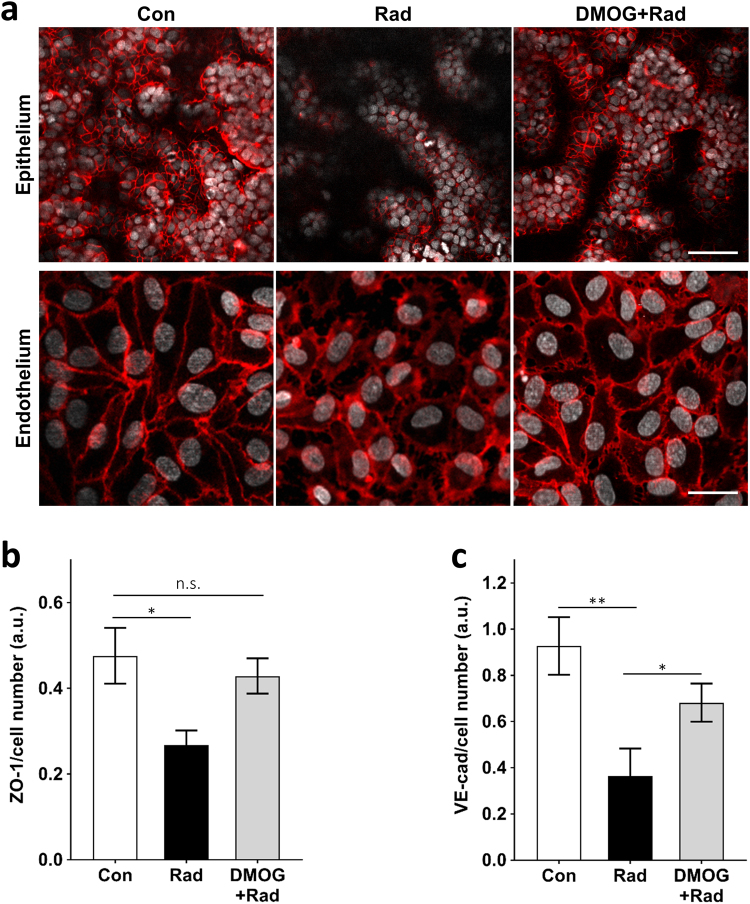
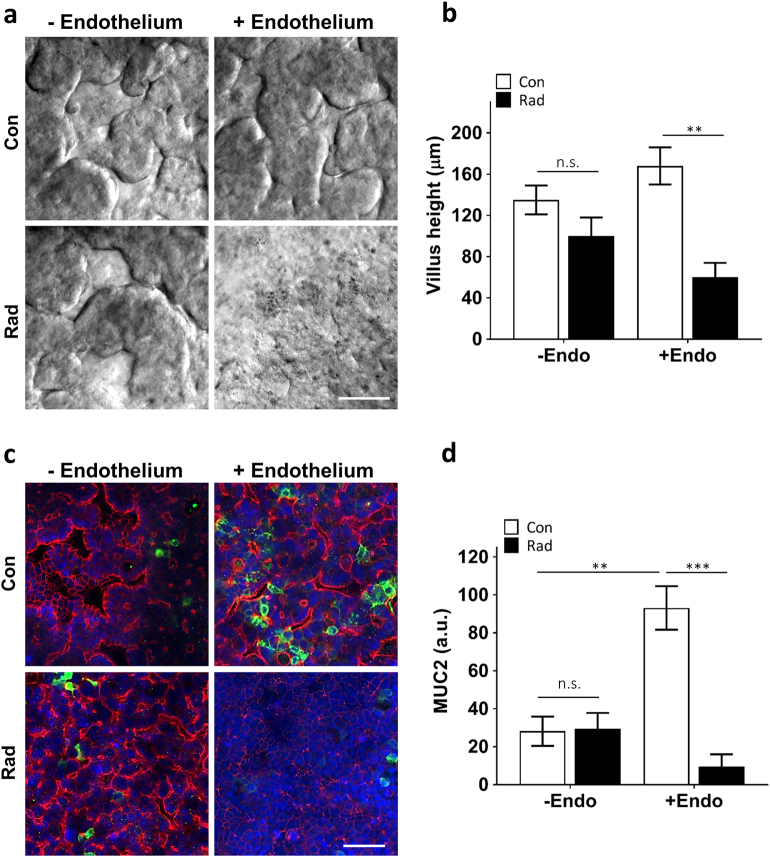
Studies on human intestinal injury induced by acute exposure to γ-radiation commonly rely on use of animal models because culture systems do not faithfully mimic human intestinal physiology. Here we used a human Gut-on-a-Chip (Gut Chip) microfluidic device lined by human intestinal epithelial cells and vascular endothelial cells to model radiation injury and assess the efficacy of radiation countermeasure drugs in vitro. Exposure of the Gut Chip to γ-radiation resulted in increased generation of reactive oxygen species, cytotoxicity, apoptosis, and DNA fragmentation, as well as villus blunting, disruption of tight junctions, and compromise of intestinal barrier integrity. In contrast, pre-treatment with a potential prophylactic radiation countermeasure drug, dimethyloxaloylglycine (DMOG), significantly suppressed all of these injury responses. Thus, the human Gut Chip may serve as an in vitro platform for studying radiation-induced cell death and associate gastrointestinal acute syndrome, in addition to screening of novel radio-protective medical countermeasure drugs.
Overview
The claims and statistics of this paper haven’t been checked yet.
Free: it reads the open-access text and checks the first 5 claims that cite a source we can check. Create a free account to check every claim.
Integrity signals
Registry
Cites
Statistics
Figures
Verification
Claims the paper makes
The claims and statistics of this paper haven’t been checked yet.
Free: it reads the open-access text and checks the first 5 claims that cite a source we can check. Create a free account to check every claim.
Claims other papers make about this one
Each is checked against this paper’s own text: does it say what the citing paper says it does?
The cited source says what the claim attributes to it.
In the citing paper
“Recent studies suggest that the same Gut Chip model can be used to model the radiation injury response of human intestine (eg, cell death, villus blunting, compromised barrier function) when exposed to γ-radiation, and prevention of these responses using a potential prophylactic radiation countermeasure drug.67”
From Microfluidic Organ-on-a-Chip Models of Human Intestine (2018) · cites this paper as [67]
The cited source says what the claim attributes to it.
In the citing paper
“Crucially, these organ chip microdevices are able to recapitulate organ-level responses to toxins79,96,97, drugs86,98, radiation99, cigarette smoke100, pathogens96, and normal microorganisms96, as well as the dependence on flow-circulating immune cells and organs to recruit specific in vitro inflammatory responses101, which are very important for preclinical drug screening and disease modeling.”
From Tumor-on-a-chip: from bioinspired design to biomedical application (2021) · cites this paper as [99]
Self-check
Percentages, sums and reported differences re-computed from the paper’s own numbers.
The self-check needs the paper’s full text.
Citations
Cites
Intestinal mucosal barrier function in health and disease
Turner, J. R. (2009) · Nature reviews. Immunology · doi:10.1038/nri2653 · Cited by 3,952
Kim, J.-W., Tchernyshyov, I., Semenza, G. L., & Dang, C. V. (2006) · Cell Metabolism · doi:10.1016/j.cmet.2006.02.002 · Cited by 3,905
Hypoxia-inducible factors in physiology and medicine
Semenza, G. L. (2012) · Cell · doi:10.1016/j.cell.2012.01.021 · Cited by 3,645
The Tumour Microenvironment after Radiotherapy: Mechanisms of Resistance and Recurrence
Barker, H. E., Paget, J. T. E., Khan, A. A., & Harrington, K. J. (2015) · Nature Reviews Cancer · doi:10.1038/nrc3958 · Cited by 2,144
Kim, H. J., Huh, D., Hamilton, G., & Ingber, D. E. (2012) · Lab on a Chip · doi:10.1039/c2lc40074j · Cited by 1,734
Self-citationTumor Response to Radiotherapy Regulated by Endothelial Cell Apoptosis
Garcia-Barros, M., Paris, F., Cordon-Cardo, C., Lyden, D., Rafii, S., Haimovitz-Friedman, A., Fuks, Z., & Kolesnick, R. (2003) · Science · doi:10.1126/science.1082504 · Cited by 1,593
Intestinal Goblet Cells and Mucins in Health and Disease: Recent Insights and Progress
Kim, Y. S., & Ho, S. B. (2010) · Current Gastroenterology Reports · doi:10.1007/s11894-010-0131-2 · Cited by 1,435
Endothelial Apoptosis as the Primary Lesion Initiating Intestinal Radiation Damage in Mice
Paris, F., Fuks, Z., Kang, A., Capodieci, P., Juan, G., Ehleiter, D., Haimovitz-Friedman, A., Cordon-Cardo, C., & Kolesnick, R. (2001) · Science · doi:10.1126/science.1060191 · Cited by 1,283
Double-strand break repair: 53BP1 comes into focus
Panier, S., & Boulton, S. J. (2014) · Nature Reviews Molecular Cell Biology · doi:10.1038/nrm3719 · Cited by 1,098
Kim, H. J., Li, H., Collins, J. J., & Ingber, D. E. (2016) · Proceedings of the National Academy of Sciences · doi:10.1073/pnas.1522193112 · Cited by 922
Self-citation
Cited by
Items 101–200 of 218
Metabolic regulation of intestinal homeostasis: molecular and cellular mechanisms and diseases
Zhang, R., Perekatt, A. O., & Chen, L. (2024) · MedComm · doi:10.1002/mco2.776 · Cited by 22
Yuan, L., de Haan, P., Peterson, B. W., de Jong, E., Verpoorte, E. M. J., van der Mei, H. C., & Busscher, H. J. (2020) · Microscopy and Microanalysis · doi:10.1017/s143192762002454x · Cited by 22
“, 2018) or reconstructed cross-sectional images covering field-of-view lengths of around 300 μm (Kim et al., 2012, 2016; Jalili-Firoozinezhad et al., 2018).”
BackgroundMethodInfluentialWang, Y., Li, Z., Bao, Y., Cui, H., Li, J., Song, B., Wang, M., Li, H., Cui, X., Chen, Y., et al. (2023) · Critical Reviews in Food Science and Nutrition · doi:10.1080/10408398.2023.2266842 · Cited by 22
“C) transwell ® -based cell models (Xu et al. 2021). d) gut-on-a-chip (Jalili-Firoozinezhad et al. 2018; Kim et al. 2012; Xavier et al. 2021). e) everted gut sac (Huang, yajun et al. 2021).”
Particle Beam Radiobiology Status and Challenges: A PTCOG Radiobiology Subcommittee Report
Ahmad, R., Barcellini, A., Baumann, K. S., Benje, M., Bender, T., Bragado, P., Charalampopoulou, A., Chowdhury, R., Davis, A. J., Ebner, D. K., et al. (2024) · International Journal of Particle Therapy · doi:10.1016/j.ijpt.2024.100626 · Cited by 25
Beterams, A., Paepe, K. D., Maes, L., Wise, I. J., Keersmaecker, H. D., Rajković, A., Laukens, D., de Wiele, T. V., & Arroyo, M. C. (2021) · The FASEB Journal · doi:10.1096/fj.202101135r · Cited by 22
Intestine‐on‐a‐chip for intestinal disease study and pharmacological research
Zhang, D., & Qiao, L. (2022) · View · doi:10.1002/viw.20220037 · Cited by 20
Gut bioengineering promotes gut repair and pharmaceutical research: a review
Huang, J., Ren, Y., Wu, X., Li, Z., & Ren, J. (2019) · Journal of Tissue Engineering · doi:10.1177/2041731419839846 · Cited by 20
Irrechukwu, O., Yeager, R., David, R. M., Ekert, J., Saravanakumar, A., & Choi, C. K. (2023) · ALTEX · doi:10.14573/altex.2204071 · Cited by 25
“Such a model to evaluate the cellular response and relationship between intestinal endothelium and epithelium may provide research opportunities toward mitigation of radiation-associated or related toxicities (Jalili-Firoozinezhad et al., 2018).”
BackgroundOrgan-on-a-chip and 3D printing as preclinical models for medical research and practice
Jain, A., Mathur, T., Pandian, N. K. R., & Selahi, A. (2019) · Elsevier eBooks · doi:10.1016/b978-0-12-819178-1.00009-5 · Cited by 26
Personalised radiation therapy taking both the tumour and patient into consideration
Overgaard, J., Aznar, M. C., Bacchus, C., Coppes, R. P., Deutsch, É., Georg, D., Haustermans, K. M., Hoskin, P., Krause, M., Lartigau, E. F., et al. (2022) · Radiotherapy and Oncology · doi:10.1016/j.radonc.2022.01.010 · Cited by 20
“Indeed, gut-on-a-chip models have successfully been shown to recapitulate the radiation response of intestinal injury in vivo [30].”
BackgroundSimulating the Effect of Gut Microbiome on Cancer Cell Growth Using a Microfluidic Device
Mittal, E., Cupp, G., & Kang, Y. B. (2023) · Sensors · doi:10.3390/s23031265 · Cited by 18
Biomaterials for on-chip organ systems
Hassan, S., Heinrich, M. A., Çeçen, B., Prakash, J., & Zhang, Y. S. (2020) · Elsevier eBooks · doi:10.1016/b978-0-08-102906-0.00019-2 · Cited by 23
Organ-on-Chip Technology for Aerobic Intestinal Host – Anaerobic Microbiota Research
Bossink, E. G. B. M., Segerink, L. I., & Odijk, M. (2021) · Organs-on-a-Chip · doi:10.1016/j.ooc.2021.100013 · Cited by 18
Zhao, W., Yao, Y., Zhang, T., Lu, H., Zhang, X., Zhao, L., Chen, X., Zhu, J., Sui, G., & Wang, Z. (2022) · Frontiers in Bioengineering and Biotechnology · doi:10.3389/fbioe.2022.1035647 · Cited by 18
German, S. V., Abalymov, A. A., Kurochkin, M. A., Kan, Y., Gorin, D. A., & Novoselova, M. V. (2023) · International Journal of Molecular Sciences · doi:10.3390/ijms24043183 · Cited by 19
Nasiri, R., Madadelahi, M., Nikmaneshi, M. R., Gökçe, B., Bijarchi, M. A., Shah, S., Tirpáková, Z., Gastel, D. V., Taebnia, N., de Barros, N. R., et al. (2025) · Biomaterials · doi:10.1016/j.biomaterials.2025.123739 · Cited by 19
Nasiri, R., Sankaranthi, A., & Pratx, G. (2025) · Trends in biotechnology · doi:10.1016/j.tibtech.2025.07.002 · Cited by 17
Nasiri, R., Jalil, M. K., Gaspar, V. I., Perez, A. S. F., Nguyen, H. T. M., Khan, S., Tang, S. K. Y., Yang, Y., & Pratx, G. (2025) · Lab on a Chip · doi:10.1039/d5lc00373c · Cited by 15
Adebayo, O. A., Akinloye, O., & Adaramoye, O. A. (2020) · Journal of Biochemical and Molecular Toxicology · doi:10.1002/jbt.22687 · Cited by 16
Organoids as Complex In Vitro Models for Studying Radiation-Induced Cell Recruitment
Hacker, B. C., & Rafat, M. (2020) · Cellular and Molecular Bioengineering · doi:10.1007/s12195-020-00625-0 · Cited by 15
Establishment of a Modular Anaerobic Human Intestine Chip
Jalili‐Firoozinezhad, S., Bein, A., Gazzaniga, F. S., Fadel, C. W., Novak, R., & Ingber, D. E. (2021) · Methods in molecular biology · doi:10.1007/978-1-0716-1693-2_5 · Cited by 14
Self-citationBiomimetic microfluidic chips for toxicity assessment of environmental pollutants
Du, X.-Y., & Yang, J. (2024) · The Science of The Total Environment · doi:10.1016/j.scitotenv.2024.170745 · Cited by 13
Critical Suitability Evaluation of Caco-2 Cells for Gut-on-a-Chip
Pan, X., Chen, J., Han, J., Zhang, W., Su, W., Xu, Z., Li, X., Song, M., Song, W., Xie, X., et al. (2024) · ACS Applied Materials & Interfaces · doi:10.1021/acsami.4c11409 · Cited by 14
Zhao, Y., Yin, N., Yang, R., & Faiola, F. (2024) · Food and Chemical Toxicology · doi:10.1016/j.fct.2024.115022 · Cited by 14
Acute radiation syndrome drug discovery using organ-on-chip platforms
Singh, V. K., & Seed, T. M. (2022) · Expert Opinion on Drug Discovery · doi:10.1080/17460441.2022.2099833 · Cited by 14
“Only two organ-on-a-chip models have been utilized to any degree: the bone-marrow-on-a-chip and gut-on-a-chip, which have been used for assessments of acute radiation injury and the evaluation of countermeasures [3,10,11,27,48].”
BackgroundMethodResultInfluentialYang, S., Zhang, T., Ge, Y., Niu, Y., Chen, M., Yin, L., Pu, Y., Chen, Z., Gu, Z., & Liang, G. (2026) · The Innovation · doi:10.1016/j.xinn.2025.101252 · Cited by 19
“For instance, in a notable study by Ingber’s group, 67 a gut-on-a-chip model was employed to investigate radiation-induced intestinal injury.”
Three-Dimensional Scaffolds for Intestinal Cell Culture: Fabrication, Utilization, and Prospects
Liu, T., Gu, J. L., Fu, C., & Su, L. (2024) · Tissue Engineering Part B Reviews · doi:10.1089/ten.teb.2023.0124 · Cited by 13
Hosic, S., Lake, W., Stas, E., Koppes, R. A., Breault, D. T., Murthy, S. K., & Koppes, A. N. (2020) · Cellular and Molecular Bioengineering · doi:10.1007/s12195-020-00633-0 · Cited by 13
Sensor-integrated gut-on-a-chip for monitoring senescence-mediated changes in the intestinal barrier
Brandauer, K., Lorenz, A., Schobesberger, S., Schuller, P., Frauenlob, M., Spitz, S., & Ertl, P. (2025) · Lab on a Chip · doi:10.1039/d4lc00896k · Cited by 11
Agrawal, R., Garg, A., & Deshmukh, R. (2023) · Current Pharmaceutical Design · doi:10.2174/1381612829666230228115442 · Cited by 12
On-a-Chip-Based Sensitive Detection of Drug-Induced Apoptosis in Polarized Gastric Epithelial Cells
Bakhchova, L., Jantaree, P., Gupta, A., Isermann, B., Steinmann, U., & Naumann, M. (2021) · ACS Biomaterials Science & Engineering · doi:10.1021/acsbiomaterials.1c01094 · Cited by 11
Han, J. M., Mwiti, G., Yeom, S., Lim, J., Kim, W. S., Lim, S., Lim, S.-T., & Byun, E. (2024) · Advanced Healthcare Materials · doi:10.1002/adhm.202403192 · Cited by 10
Engineered Cell Microenvironments: A Benchmark Tool for Radiobiology
Akolawala, Q., & Accardo, A. (2025) · ACS Applied Materials & Interfaces · doi:10.1021/acsami.4c20455 · Cited by 10
Plateau Environment, Gut Microbiota, and Depression: A Possible Concealed Connection?
Qiao, Y., Cheng, R., Li, X., Zheng, H., Guo, J., Wei, L., Gao, T., & Bi, H. (2025) · Current Issues in Molecular Biology · doi:10.3390/cimb47070487 · Cited by 10
“Simultaneously, it can damage immune cells within the gut mucosa, weakening the immune surveillance and defense capabilities of the gut, thus facilitating pathogen invasion [55–57].”
3D In Vitro Human Organ Mimicry Devices for Drug Discovery, Development, and Assessment
Rodríguez‐García, A., Oliva, J., Flores, C., & Hosseini, S. (2020) · Advances in Polymer Technology · doi:10.1155/2020/6187048 · Cited by 11
“[84] in which the villus intestinal epithelium polarization with ZO1 tight junctions and an apical brush border were created within a gut-on-chip device.”
BackgroundInfluentialUnlocking the future: converging multi-organ-on-a-chip on the current biomedical sciences
Basak, S. (2020) · Emergent Materials · doi:10.1007/s42247-020-00124-y · Cited by 10
Biofabrication and simulation techniques for gut-on-a-chip
Wang, K., Wang, Y., Han, J., Liang, Z., Zhang, W., Li, X., Chen, J., & Wang, L. (2025) · Biofabrication · doi:10.1088/1758-5090/adb7c1 · Cited by 9
“These models facilitate in-depth investigations into multiple aspects of intestinal function in health and disease, including nutrient absorption [40], microbiome-host interactions [41–43], immune homeostasis maintenance [44, 45], and fine-tuned regulation of motility.”
Biological Barrier Models-on-Chips: A Novel Tool for Disease Research and Drug Discovery
Caragnano, G., Monteduro, A. G., Rizzato, S., Giannelli, G., & Maruccio, G. (2025) · Biosensors · doi:10.3390/bios15060338 · Cited by 12
Skok, K., Vihar, B., Maver, U., Gradišnik, L., Bräutigam, K., Trapečar, M., & Skok, P. (2025) · World Journal of Gastroenterology · doi:10.3748/wjg.v31.i28.108297 · Cited by 10
“Additionally, advanced chip devices allow for the inclusion of other cells ( e.g. , endothelial cells on the basolateral side, immune cells[191,192].”
Frazer, L. C., Yamaguchi, Y., Jania, C. M., Lanik, W. E., Gong, Q., Singh, D. K., Mackay, S., Akopyants, N. S., & Good, M. L. (2023) · Journal of Visualized Experiments · doi:10.3791/65605 · Cited by 9
Bouges, E., Segers, C., Leys, N., Lebeer, S., Zhang, J., & Mastroleo, F. (2023) · Cancers · doi:10.3390/cancers15245859 · Cited by 9
Potential value of animal microphysiological systems
Brown, P. C., Hooberman, B. H., Skinner, B. L., Wrzesinski, C., Petibone, D. M., Ford, K. A., Muldoon‐Jacobs, K., Sung, K. E., Valerio, L. G., Sadrieh, N. K., et al. (2024) · ALTEX · doi:10.14573/altex.2311141 · Cited by 9
“Under this contract, scientists developed models of radiation damage in their lung, gut, and bone marrow organs-on-chips and applied these models to test candidate medical countermeasures to treat such damage (Torisawa et al. 2014; Jalili-Firoozinezhad et al., 2018).”
BackgroundRecent advances and future prospects of functional organ-on-a-chip systems
Moghaddam, A. S., Moghaddam, Z. S., Davachi, S. M., Sarikhani, E., Mahand, S. N., Khonakdar, H. A., Bagher, Z., & Ashammakhi, N. A. (2022) · Materials Chemistry Frontiers · doi:10.1039/d2qm00072e · Cited by 9
Bio–Microfabrication of 2D and 3D Biomimetic Gut-on-a-Chip
Jang, Y., Jung, J., & Oh, J. (2023) · Micromachines · doi:10.3390/mi14091736 · Cited by 11
Lysosomal Acid Lipase Is Required for Donor T Cells to Induce Graft-versus-Host Disease
Nguyen, H. D., Ticer, T. D., Bastian, D. A., Kuril, S., Li, H., Du, H., Yan, C., & Yu, X. (2020) · Cell Reports · doi:10.1016/j.celrep.2020.108316 · Cited by 9
Gholizadeh, H., Cheng, S., Kourmatzis, A., Xing, H., Traini, D., Young, P. M., & Ong, H. X. (2022) · Bioengineering · doi:10.3390/bioengineering9040150 · Cited by 11
Ding, X., Xu, N., Zhang, W., & Wang, P. (2025) · Lab on a Chip · doi:10.1039/d5lc00631g · Cited by 10
Naik, A., & Misra, S. K. (2021) · Journal of Agricultural and Food Chemistry · doi:10.1021/acs.jafc.1c02736 · Cited by 10
Strelez, C., Ghaffarian, K., & Mumenthaler, S. M. (2021) · STAR Protocols · doi:10.1016/j.xpro.2021.100984 · Cited by 8
Characterization of Early and Late Damage in a Mouse Model of Pelvic Radiation Disease
Vitali, R., Palone, F., Stefano, I. D., Fiorente, C., Novelli, F., Pasquali, E., Fratini, E., Tanori, M., Leonardi, S., Tanno, B., et al. (2023) · International Journal of Molecular Sciences · doi:10.3390/ijms24108800 · Cited by 8
Bonaccorsi, S. (2024) · Royal Society of Chemistry eBooks · doi:10.1039/9781837673476-00461 · Cited by 10
Dey, S., Kinoshita, M., Puttick, S. G., Rose, S., Trau, M., Roberts, M. J., & Koo, K. M. (2024) · Advanced Sensor Research · doi:10.1002/adsr.202300193 · Cited by 9
Dynamic Culture Systems and 3D Interfaces Models for Cancer Drugs Testing
Fernandes, D. C., Canadas, R. F., Reis, R. L., & Oliveira, J. M. (2020) · Advances in experimental medicine and biology · doi:10.1007/978-3-030-36588-2_9 · Cited by 7
Clinical Trial in a Dish for Space Radiation Countermeasure Discovery
Cao, X., Weil, M. M., & Wu, J. C. (2022) · Life Sciences in Space Research · doi:10.1016/j.lssr.2022.05.006 · Cited by 7
Distinct molecular responses of human intestinal organoids to proton and photon radiation
Poplaski, V. B., Patel, T. D., Nguyen‐Phuc, H., Kambal, A., Bronk, L. F., Estes, M. K., Coarfa, C., & Blutt, S. E. (2025) · American Journal of Physiology-Gastrointestinal and Liver Physiology · doi:10.1152/ajpgi.00186.2025 · Cited by 6
“A dose of 1 Gy was selected based on earlier studies (41–43) that indicate this low sublethal dose is sufficient to induce detectable molecular changes without causing excessive cell death that would compromise HIO integrity.”
Lacombe, J., Dunn, S. E., Layac, M., Soldevila, M., Fakrudin, N. M., Duane, B., Chen, K., Barrett, M. W., Helton, J., Laiakis, E. C., et al. (2025) · iScience · doi:10.1016/j.isci.2025.114236 · Cited by 7
“51 In recent years, gut, 52 bone marrow, 53 lung, 54 vessel, 55 and even multi OoC 56 have been exposed to different radiation regimens and qualities.”
Examining the Effects of 4He Exposure on the Gut-Brain Axis
Jones, C. B., Peiffer, L. B., Davis, C. M., & Sfanos, K. S. (2021) · Radiation Research · doi:10.1667/rade-20-00285.1 · Cited by 7
“tract would be expected if there is an acute decrease in GI mucous (69).”
BackgroundKutsuzawa, N., Goto, T., Nakamura, H., Maeda, M., Kinehara, M., Sakagami, J., & Kimura, H. (2025) · Micromachines · doi:10.3390/mi16030327 · Cited by 6
“This may be because the microfluidic chip material is PDMS [25,26], which has higher oxygen permeability and thus did not cause a hypoxic environment, especially in the flow channel, or may have caused non-uniformity in oxygen concentration.”
Millet, L. J., Giannone, R. J., Greenwood, M. S., Foster, C. M., O’Neil, K. M., Braatz, A. D., & Davern, S. M. (2021) · Micromachines · doi:10.3390/mi12080904 · Cited by 6
“Two medical countermeasure drug application experiments have been performed by other researchers using human gut-on-a-chip and bone marrow-on-a-chip models [61,62].”
MethodImmunocompetent Human Intestinal Models in Preclinical Drug Development
Weindl, G. (2020) · Handbook of experimental pharmacology · doi:10.1007/164_2020_429 · Cited by 6
Organ-On-A-Chip (OOAC) Technology: Impact on Drug Screening and Personalized Medicine
Singh, S., Das, N., Rathore, M., Nishad, A., Kumari, N., & Guha, R. (2025) · Regenerative Engineering and Translational Medicine · doi:10.1007/s40883-025-00409-w · Cited by 8
“Dimethyloxaloylglycine was discovered to be a successful preventative countermeasure against the negative effects of radiation therapy using the device as a screening platform [50].”
The future of toxicity testing: the emerging role of organ-on-a-chip platforms
Kocadal, K., Battal, D., & Saygı, Ş. (2025) · Toxicological Research · doi:10.1007/s43188-025-00327-7 · Cited by 8
“Radiation is considered a significant environmental contaminant, and its effects on the gastrointestinal tract were explored by Jalili-Firoozinezhad et al. (2018) using a gut-on-a-chip microdevice.”
Nieuwenhuyse, B. V., Merabishvili, M., Goeders, N., Vanneste, K., Bogaerts, B., de Jode, M., Ravau, J., Wagemans, J., Belkhir, L., & der Linden, D. V. (2024) · Viruses · doi:10.3390/v16071047 · Cited by 5
“Besides having different outcome measurements (mRNA vs. antigen), this difference might be induced by the different culture conditions (two-dimensional static vs. three-dimensional dynamic), in line with previous reports of MUC2 secretion by Caco-2 cells in GOACs [57].”
ResultHIF2 Regulates Intestinal Wnt5a Expression
García, C. J. G., Acevedo-Diaz, A., Kumari, N., Govindaraju, S., Bonilla, M. D. L. C., Lucas, F. A. S., Nguyen, N. D., Jiménez-Sacarello, I., Piwnica-Worms, H. M., Maitra, A., et al. (2021) · Frontiers in Oncology · doi:10.3389/fonc.2021.769385 · Cited by 5
Cultivating human tissues and organs over lab-on-a-chip models: Recent progress and applications
Bhagat, S., & Singh, S. (2022) · Progress in molecular biology and translational science · doi:10.1016/bs.pmbts.2021.07.023 · Cited by 5
Hutchinson, N. T., Pang, Z., Chimezie, C. I., Hamp, B., Haley, A. E., & Li, J. (2026) · Journal of Controlled Release · doi:10.1016/j.jconrel.2026.115160 · Cited by 4
Organs on chips: fundamentals, bioengineering and applications
Awad, N. K. (2024) · Journal of Artificial Organs · doi:10.1007/s10047-024-01460-0 · Cited by 4
Caratis, F., Mruk, I., Konieczna-Wolska, K., Rojek, B., Hałas, M., Czaplewska, P., Karaszewski, B., Furihata, T., & Rutkowska, A. (2025) · Brain Behavior & Immunity - Health · doi:10.1016/j.bbih.2025.101045 · Cited by 7
Ma, W., Yin, R., Ren, G., Zhang⋆, Y., Li, L., Liu, W., Chen, T., Zhou, W., Zu, M., Yin, R., et al. (2025) · Animal Models and Experimental Medicine · doi:10.1002/ame2.70109 · Cited by 3
Yock, A. D., Brown, J. A., Eley, J. G., Lwin, C., Liu, D., & Wikswo, J. P. (2025) · Brain Research · doi:10.1016/j.brainres.2025.150092 · Cited by 3
Bioengineered intestinal models: structural precision drives functional and microbial fidelity
Gao, Z., Du, H., Yu, S., Li, Q., Li, Y., Yin, J., Yang, H., Wang, Y., Zhou, H., & Shen, L. (2025) · Bio-Design and Manufacturing · doi:10.1631/bdm.2500353 · Cited by 3
García, F. L., Leng, J., Oliveira, H., Nassoy, P., & Dementhon, K. (2026) · Advanced Materials Technologies · doi:10.1002/admt.71187 · Cited by 3
“This design emerges from the initial developments pioneered by Ingber and colleagues [ 8, 15, 16 ].”
Gut-on-a-Chip: From Biomimetic Design to Precision Biomedical Applications
Lin, Q., Zhou, F., Hao, W., Zhang, P., Xiao, R., & Cha, R. (2026) · ACS Applied Materials & Interfaces · doi:10.1021/acsami.6c10688 · Cited by 3
In vitro relevant information for the assessment of nanoparticles for oral drug administration
Lozano, M. V., Santander-Ortega, M. J., & Alonso, M. J. (2020) · Elsevier eBooks · doi:10.1016/b978-0-12-818038-9.00014-4 · Cited by 6
A Short Review on Organ-on-a-chip Technology
Marnoor, S. A. (2023) · Asian Journal of Pharmacy and Technology · doi:10.52711/2231-5713.2023.00021 · Cited by 2
Intestinal organoids as advanced modeling platform for food research: a review
Wang, X., Xia, Y., Wang, J., Zhang, Y., Lv, P., & Wang, Y. (2025) · Critical Reviews in Food Science and Nutrition · doi:10.1080/10408398.2025.2546510 · Cited by 3
“Jalili-Firoozinezhad et al. (2018) used human intestinal epithelial cells and vascular endothelial cells to build gut-on a-chips that spontaneously differentiated and formed three-dimensional intestinal villi by controlling the flow rate and shear force in the microfluidic liquid, proving that this…”
The protective effects of ginseng on x-irradiation-induced intestinal damage in rats
Özdemir, A., Tümkaya, L., Mercantepe, T., Samancı, T. Ç., Uyan, M., Kalcan, S., Demiral, G., Pergel, A., Kutlu, E. Y., & Yılmaz, H. K. (2023) · Radiation and Environmental Biophysics · doi:10.1007/s00411-023-01039-y · Cited by 2
Vascularized platforms for investigating cell communication via extracellular vesicles
Kim, J., Ro, J., & Cho, Y. (2024) · Biomicrofluidics · doi:10.1063/5.0220840 · Cited by 2
Organ-on-chip for assessing environmental toxicants
Polaka, S., Pulugu, P., Tekade, M., Sharma, M. C., & Tekade, R. K. (2022) · Elsevier eBooks · doi:10.1016/b978-0-323-98367-9.00018-4 · Cited by 2
Shi, L., Sun, X., Wang, X., & Zhao, H. (2025) · International Journal of Radiation Research · doi:10.61882/ijrr.23.3.35 · Cited by 1
Li, Y., Liang, J., Yin, H., & Liu, T. (2026) · AIMS Microbiology · doi:10.3934/microbiol.2026003 · Cited by 3
“Static cell cultures fail to recapitulate the complex physicochemical forces of the intestine, such as fluid shear stress and the distinct oxygen gradients that define the microbial niche [138].”
Venkidesh, B. S., Acharya, M., Narasimhamurthy, R. K., Murali, T. S., Rao, B. S. S., & Mumbrekar, K. D. (2026) · Scientific Reports · doi:10.1038/s41598-026-47773-3 · Cited by 1
The Tumor Microenvironment: Translating Intravital Insights into Microphysiological Systems
Imparato, G., Mazio, C., Nevola, P., & Netti, P. A. (2026) · Cellular and Molecular Bioengineering · doi:10.1007/s12195-026-00910-4 · Cited by 2
Organ-on-a-chip as a next-generation tool in drug development: A bibliometric and patent analysis
Du, Y., Yang, X., Tang, P., & Meng, G. (2026) · Cell Transplantation · doi:10.1177/09636897261462781 · Cited by 2
Human organ-on-a-chip technology as a catalyst for drug discovery
Posey, R. R., Özkan, A., & Ingber, D. E. (2026) · Advanced Drug Delivery Reviews · doi:10.1016/j.addr.2026.115920 · Cited by 2
Self-citationTang, S., Ji, J., Gulati, A., Man, Y., Belgur, C., Junaid, A., & Ingber, D. E. (2026) · Frontiers in Global Women s Health · doi:10.3389/fgwh.2026.1878598 · Cited by 1
Self-citationThe potential of complex in vitro models in pharmaceutical toxicology
Enrich, M. V., & WALLACE, H. M. (2021) · Elsevier eBooks · doi:10.1016/b978-0-323-85215-9.00027-1 · Cited by 1
Organ-on-chip-based disease models
Fernández‐Costa, J. M., Chiara, F. D., & Ramón‐Azcón, J. (2024) · Elsevier eBooks · doi:10.1016/b978-0-443-15384-6.00005-7 · Cited by 1
Comparing fabrication techniques for engineered cardiac tissue
Hatano, R., Smith, A. M., Raman, R., Zamora, J. E., Bashir, R., & McCloskey, K. E. (2024) · Journal of Biomedical Materials Research Part A · doi:10.1002/jbm.a.37737 · Cited by 1
Primary cell culture for organ-on-a-chip
Hegde, M., Girisa, S., & Harsha, C. (2024) · Elsevier eBooks · doi:10.1016/b978-0-443-13782-2.00012-7 · Cited by 1
Nanomedicine‐mediated Radiotherapy for Cancer Treatment
Zhu, R., & Song, Y. (2024) · Nanomedicine · doi:10.1002/9783527830404.ch15 · Cited by 1
Partial-body Models of Radiation Exposure
Sproull, M. T., & Camphausen, K. A. (2025) · Radiation Research · doi:10.1667/rade-24-00189.1 · Cited by 1
Özkan, A., Merry, G. E., Piatok, J., Naziripour, A., LoGrande, N., Matthiessen, T., Posey, R. R., Sperry, M. M., Gould, R., Ho, K., et al. (2025) · medRxiv · doi:10.1101/2025.10.03.25337298 · Cited by 1
“In a past study, we modeled ARI in the intestine using organ-on-a-chip (Organ Chip) microfluidic culture devices 15,16 lined with an established intestinal epithelial cell line originally isolated from a tumor (Caco-2 cells) interfaced with intestinal microvascular endothelium 17 .”
Self-citationMartello, S. E., Luna, S. N., Derr, K., Franco, G. M., Paul, M., Veigh, M. M., Bellan, L. M., & Rafat, M. (2026) · bioRxiv (Cold Spring Harbor Laboratory) · doi:10.64898/2026.09.03.749257 · Cited by 1
Probiotic Bacteria and Their Encapsulation Evaluated in Advanced Co-culture Models
Yuan, L. (2021) · University of Groningen research database (University of Groningen / Centre for Information Technology) · doi:10.33612/diss.160691131
Liangxue Guyuan decoction alleviates radiation enteritis through PI3K/AKT pathway in rats
Wang, Y. G., Xu, H., Feng, J., Xu, C., & Dou, Y. (2021) · Internatuinal Journal of Radiation Research · doi:10.52547/ijrr.19.4.3
“After exposure to ionizing radiation, intestinal crypt cell apoptosis and intestinal epithelial cell regeneration are blocked, leading to RE, which can cause bacteremia, toxemia, and even death (1-2).”
BackgroundAli, A., Shah, I. M., Bhat, M. S., Manzoor, Z., Ayaz, A., Rehman, M. U., & Ahmad, S. B. (2024) · Elsevier eBooks · doi:10.1016/b978-0-443-23971-7.00014-6
Lab-on-a-chip: An Emerging Analytical Tool for Drug Testing
Sarbadhikary, P., Olofinsan, K. A., & George, B. P. A. (2024) · Royal Society of Chemistry eBooks · doi:10.1039/9781837673476-00310
Metadata
- Authors
- Jalili-Firoozinezhad, S., Prantil-Baun, R., Jiang, A., Potla, R., Mammoto, T., Weaver, J. C., Ferrante, T. C., Kim, H. J., Cabral, J. M. S., Levy, O., & Ingber, D. E.
- Affiliations
- Boston Children's Hospital (US)
- Harvard University (US)
- The University of Texas at Austin (US)
- University of Lisbon (PT)
- Corresponding author
- Ingber, Donald E.
- ORCID
- Venue
- Cell Death & Disease
- Published
- 2018-02-14
- Volume
- 9
- Issue
- 2
- Pages
- 223-223
- ISSN
- 2041-4889 (ISSN-L)
- PMC
- PMC5833800
- OpenAlex
- W2792265734
- Cited by
- 209
- References
- 68
- Citations by year
- 2026: 15 · 2025: 30 · 2024: 29 · 2023: 22 · 2022: 19 · 2021: 35 · 2020: 34 · 2019: 17 · 2018: 8
- FWCI
- 16.24
- Type
- journal article
- Language
- en
- Open access
- gold
- doi.org
- Licence
- cc-by
- creativecommons.org/licenses/by/4.0 (tdm)
- creativecommons.org/licenses/by/4.0 (vor)
- Locations
- Cell Death and Disease (publishedVersion, cc-by)
- PubMed Central (publishedVersion, cc-by)
- PubMed (publishedVersion)
- Digital Access to Scholarship at Harvard (DASH) (Harvard University) (submittedVersion, cc-by)
- DOAJ (DOAJ: Directory of Open Access Journals) (submittedVersion)
- Funders
- Harvard University
- Institute for Bioengineering and Biosciences
- Hamilton Health Sciences Foundation
- U.S. Food and Drug Administration (HHSF223201310079C)
- Hansjörg Wyss Institute for Biologically Inspired Engineering, Harvard University
- Fundação para a Ciência e a Tecnologia
- Topics
- Health Sciences › Medicine › Radiology, Nuclear Medicine and Imaging › Effects of Radiation Exposure
- Physical Sciences › Engineering › Biomedical Engineering › 3D Printing in Biomedical Research
- Health Sciences › Medicine › Physiology (medical) › Spaceflight effects on biology
- Keywords
- gut-on-a-chip, gamma radiation, radiation enteritis, apoptosis, reactive oxygen species, intestinal barrier integrity, tight junctions, DNA fragmentation, human intestinal epithelial cells, vascular endothelial cells, organ-on-a-chip
- MeSH terms
- Amino Acids, Dicarboxylic, Animals, Cells, Cultured, Gamma Rays, Humans, Intestinal Mucosa, Models, Biological, Permeability, Radiation Injuries, Radiation-Protective Agents, Lipid Peroxidation, Apoptosis, Reactive Oxygen Species, Caco-2 Cells, Tight Junctions, DNA Fragmentation, Lab-On-A-Chip Devices, Human Umbilical Vein Endothelial Cells
About these checks
Registry, retraction, Cites and statistics results are computed, not judged, with one exception: a printed reference that no index lists is read once by a model before it counts as a citation error. Claims are extracted by a model and kept only when their quote appears verbatim in the text; each cited source is then checked, with a model’s help, for whether it says what the claim relies on. Those verdicts can be wrong — read the claim’s quote and the cited source before relying on one.
Statistics and arithmetic are recomputed, not judged.
Confidence bands are shown only for fields calibrated on our annotated test set. None is calibrated yet, so no band is shown.
What counts as a claim ›How we measure confidence ›How we check this ›
Are you an author, or do you see a problem with this page? Request a review
Data sources
Bibliographic data: Semantic Scholar, OpenAlex, Crossref.
Contains information from the Semantic Scholar Academic Graph Datasets, made available under the ODC Attribution License (ODC-BY 1.0).
Semantic Scholar’s data is described in: Kinney, R., et al. (2023). The Semantic Scholar Open Data Platform. arXiv:2301.10140.
