

Modeling radiation injury-induced cell death and countermeasure drug responses in a human Gut-on-a-Chip
Open accessThe DOI matches its Crossref record; 67 of the 68 references it cites were found in a registry or an index.
Abstract
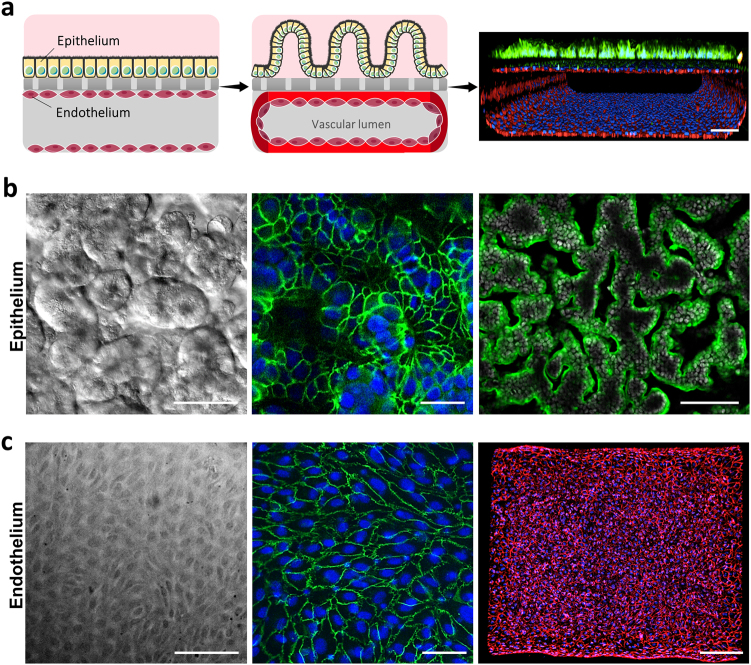
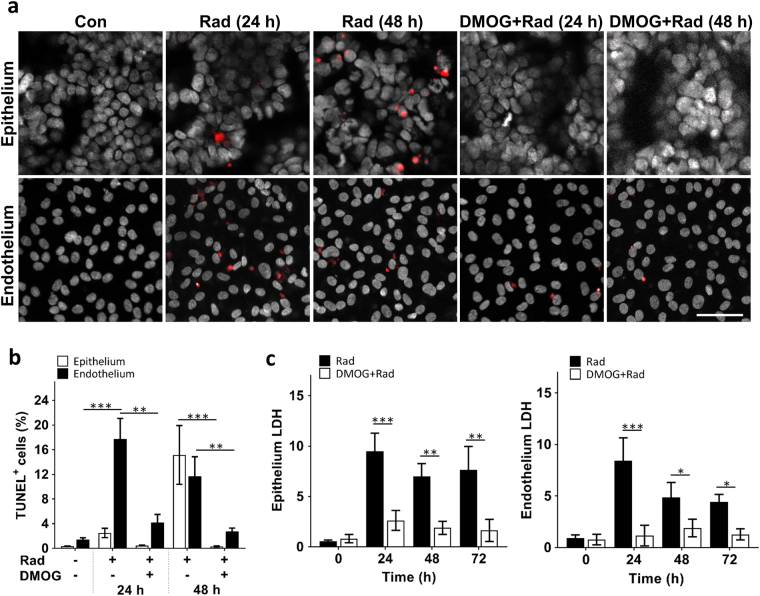
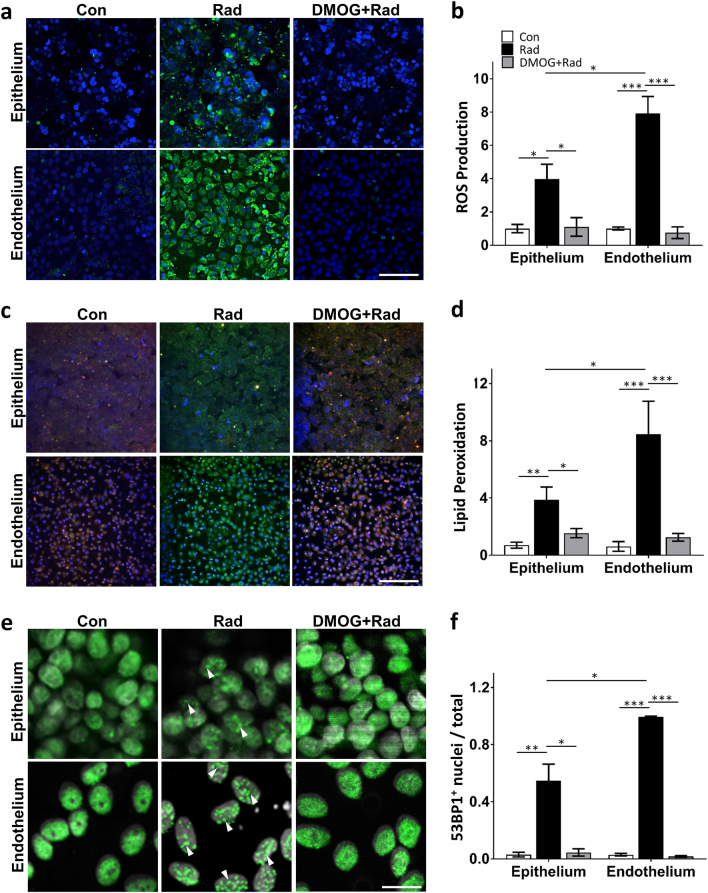
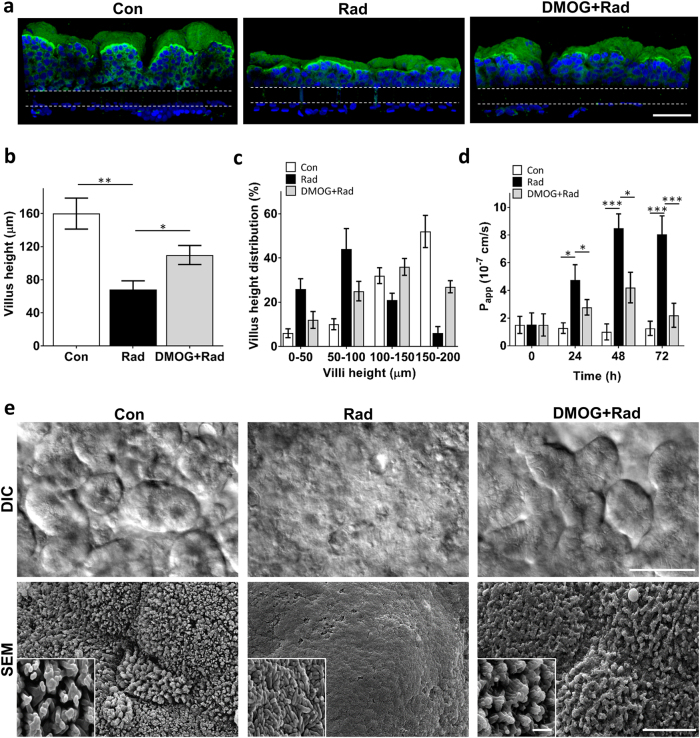
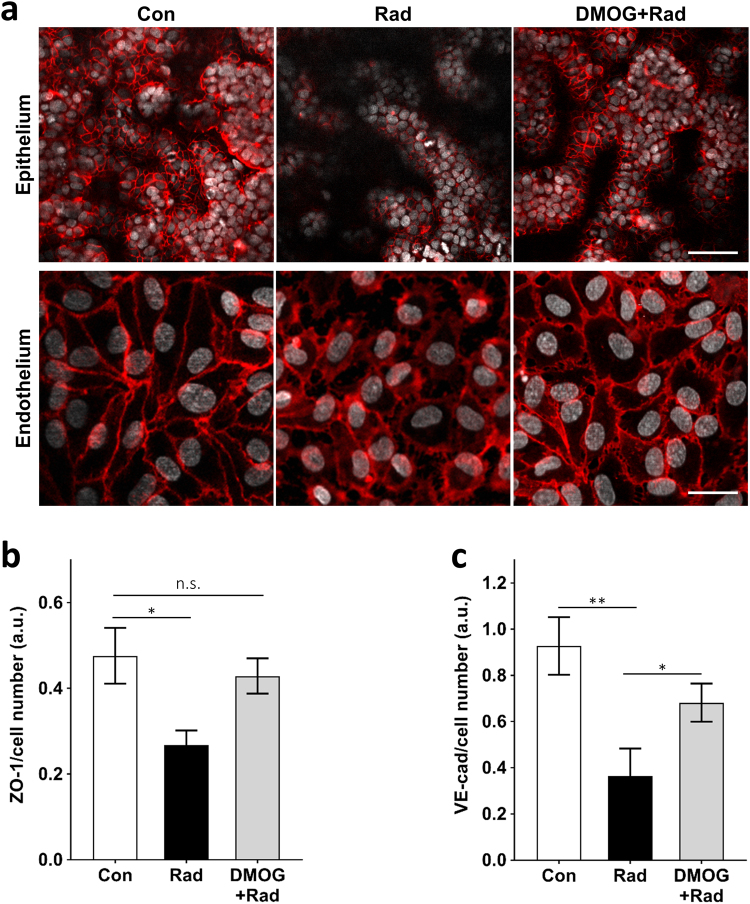
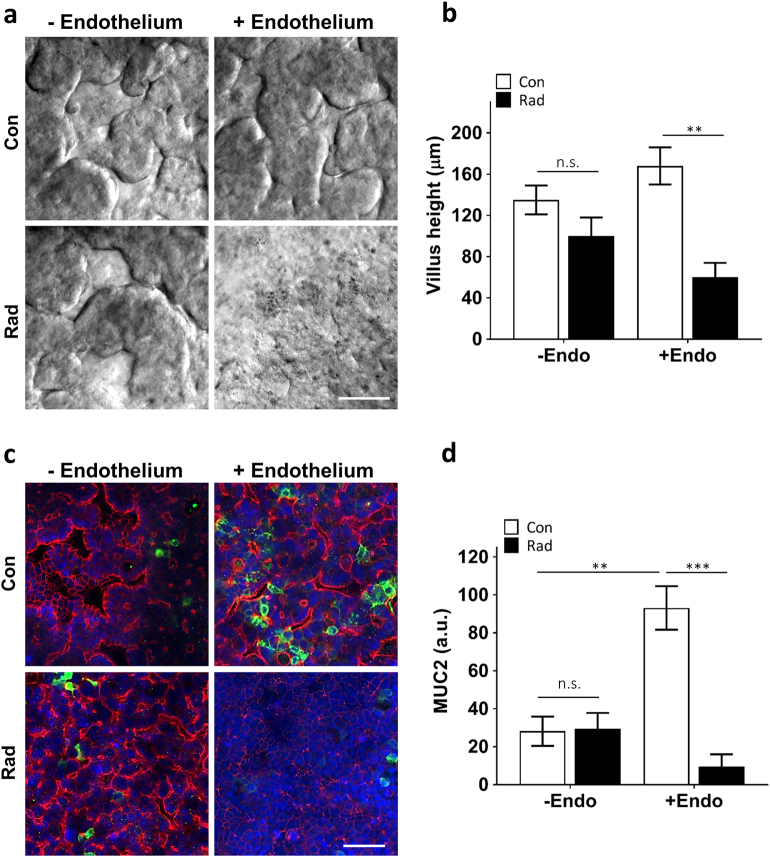
Studies on human intestinal injury induced by acute exposure to γ-radiation commonly rely on use of animal models because culture systems do not faithfully mimic human intestinal physiology. Here we used a human Gut-on-a-Chip (Gut Chip) microfluidic device lined by human intestinal epithelial cells and vascular endothelial cells to model radiation injury and assess the efficacy of radiation countermeasure drugs in vitro. Exposure of the Gut Chip to γ-radiation resulted in increased generation of reactive oxygen species, cytotoxicity, apoptosis, and DNA fragmentation, as well as villus blunting, disruption of tight junctions, and compromise of intestinal barrier integrity. In contrast, pre-treatment with a potential prophylactic radiation countermeasure drug, dimethyloxaloylglycine (DMOG), significantly suppressed all of these injury responses. Thus, the human Gut Chip may serve as an in vitro platform for studying radiation-induced cell death and associate gastrointestinal acute syndrome, in addition to screening of novel radio-protective medical countermeasure drugs.
Overview
The claims and statistics of this paper haven’t been checked yet.
Free: it reads the open-access text and checks the first 5 claims that cite a source we can check. Create a free account to check every claim.
Integrity signals
Registry
Cites
Statistics
Figures
Verification
Claims the paper makes
The claims and statistics of this paper haven’t been checked yet.
Free: it reads the open-access text and checks the first 5 claims that cite a source we can check. Create a free account to check every claim.
Claims other papers make about this one
Each is checked against this paper’s own text: does it say what the citing paper says it does?
The cited source says what the claim attributes to it.
In the citing paper
“Recent studies suggest that the same Gut Chip model can be used to model the radiation injury response of human intestine (eg, cell death, villus blunting, compromised barrier function) when exposed to γ-radiation, and prevention of these responses using a potential prophylactic radiation countermeasure drug.67”
From Microfluidic Organ-on-a-Chip Models of Human Intestine (2018) · cites this paper as [67]
The cited source says what the claim attributes to it.
In the citing paper
“Crucially, these organ chip microdevices are able to recapitulate organ-level responses to toxins79,96,97, drugs86,98, radiation99, cigarette smoke100, pathogens96, and normal microorganisms96, as well as the dependence on flow-circulating immune cells and organs to recruit specific in vitro inflammatory responses101, which are very important for preclinical drug screening and disease modeling.”
From Tumor-on-a-chip: from bioinspired design to biomedical application (2021) · cites this paper as [99]
Self-check
Percentages, sums and reported differences re-computed from the paper’s own numbers.
The self-check needs the paper’s full text.
Citations
Cites
Intestinal mucosal barrier function in health and disease
Turner, J. R. (2009) · Nature reviews. Immunology · doi:10.1038/nri2653 · Cited by 3,952
Kim, J.-W., Tchernyshyov, I., Semenza, G. L., & Dang, C. V. (2006) · Cell Metabolism · doi:10.1016/j.cmet.2006.02.002 · Cited by 3,905
Hypoxia-inducible factors in physiology and medicine
Semenza, G. L. (2012) · Cell · doi:10.1016/j.cell.2012.01.021 · Cited by 3,645
The Tumour Microenvironment after Radiotherapy: Mechanisms of Resistance and Recurrence
Barker, H. E., Paget, J. T. E., Khan, A. A., & Harrington, K. J. (2015) · Nature Reviews Cancer · doi:10.1038/nrc3958 · Cited by 2,144
Kim, H. J., Huh, D., Hamilton, G., & Ingber, D. E. (2012) · Lab on a Chip · doi:10.1039/c2lc40074j · Cited by 1,734
Self-citationTumor Response to Radiotherapy Regulated by Endothelial Cell Apoptosis
Garcia-Barros, M., Paris, F., Cordon-Cardo, C., Lyden, D., Rafii, S., Haimovitz-Friedman, A., Fuks, Z., & Kolesnick, R. (2003) · Science · doi:10.1126/science.1082504 · Cited by 1,593
Intestinal Goblet Cells and Mucins in Health and Disease: Recent Insights and Progress
Kim, Y. S., & Ho, S. B. (2010) · Current Gastroenterology Reports · doi:10.1007/s11894-010-0131-2 · Cited by 1,435
Endothelial Apoptosis as the Primary Lesion Initiating Intestinal Radiation Damage in Mice
Paris, F., Fuks, Z., Kang, A., Capodieci, P., Juan, G., Ehleiter, D., Haimovitz-Friedman, A., Cordon-Cardo, C., & Kolesnick, R. (2001) · Science · doi:10.1126/science.1060191 · Cited by 1,283
Double-strand break repair: 53BP1 comes into focus
Panier, S., & Boulton, S. J. (2014) · Nature Reviews Molecular Cell Biology · doi:10.1038/nrm3719 · Cited by 1,098
Kim, H. J., Li, H., Collins, J. J., & Ingber, D. E. (2016) · Proceedings of the National Academy of Sciences · doi:10.1073/pnas.1522193112 · Cited by 922
Self-citationOxidative Stress and Lipid Peroxidation Products in Cancer Progression and Therapy
Barrera, G. (2012) · ISRN Oncology · doi:10.5402/2012/137289 · Cited by 820
The role of hypoxia inducible factor 1 (HIF-1) in hypoxia induced apoptosis: Figure 1
Greijer, A. E., & van der Wall, E. (2004) · Journal of Clinical Pathology · doi:10.1136/jcp.2003.015032 · Cited by 784
Gut-on-a-Chip microenvironment induces human intestinal cells to undergo villus differentiation
Kim, H. J., & Ingber, D. E. (2013) · Integrative Biology · doi:10.1039/c3ib40126j · Cited by 750
Self-citationRadiation enteropathy—pathogenesis, treatment and prevention
Hauer-Jensen, M., Denham, J. W., & Andreyev, H. J. N. (2014) · Nature Reviews Gastroenterology & Hepatology · doi:10.1038/nrgastro.2014.46 · Cited by 489
The intestinal epithelial stem cell: the mucosal governor
POTTEN, C. S., BOOTH, C., & PRITCHARD, D. M. (1997) · International Journal of Experimental Pathology · doi:10.1046/j.1365-2613.1997.280362.x · Cited by 488
Tumor Suppressor P53 Binding Protein 1 (53bp1) Is Involved in DNA Damage–Signaling Pathways
Rappold, I., Iwabuchi, K., Date, T., & Chen, J. (2001) · The Journal of Cell Biology · doi:10.1083/jcb.153.3.613 · Cited by 487
Animal Models for Medical Countermeasures to Radiation Exposure
Williams, J. P., Brown, S. L., Georges, G. E., Hauer-Jensen, M., Hill, R. P., Huser, A. K., Kirsch, D. G., MacVittie, T. J., Mason, K. A., Medhora, M. M., et al. (2010) · Radiation Research · doi:10.1667/rr1880.1 · Cited by 423
The Hydroxylase Inhibitor Dimethyloxalylglycine Is Protective in a Murine Model of Colitis
Cummins, E. P., Seeballuck, F., Keely, S. J., Mangan, N. E., Callanan, J. J., Fallon, P. G., & Taylor, C. T. (2008) · Gastroenterology · doi:10.1053/j.gastro.2007.10.012 · Cited by 407
Colon, J., Hsieh, N., Ferguson, A., Kupelian, P., Seal, S., Jenkins, D. W., & Baker, C. H. (2010) · Nanomedicine: Nanotechnology, Biology and Medicine · doi:10.1016/j.nano.2010.01.010 · Cited by 381
Mucosal Protection by Hypoxia-Inducible Factor Prolyl Hydroxylase Inhibition
Robinson, A., Keely, S., Karhausen, J., Gerich, M. E., Furuta, G. T., & Colgan, S. P. (2008) · Gastroenterology · doi:10.1053/j.gastro.2007.09.033 · Cited by 368
Baumgart, D. C., & Dignass, A. U. (2002) · Current Opinion in Clinical Nutrition and Metabolic Care · doi:10.1097/00075197-200211000-00012 · Cited by 275
Gastrointestinal radiation injury: Symptoms, risk factors and mechanisms
Shadad, A. K. (2013) · World Journal of Gastroenterology · doi:10.3748/wjg.v19.i2.185 · Cited by 273
A Comprehensive Study of the Radiobiological Response of the Murine (BDF1) Small Intestine
Potten, C. S. (1990) · International Journal of Radiation Biology · doi:10.1080/09553009014552281 · Cited by 272
Liauw, S. L., Connell, P. P., & Weichselbaum, R. R. (2013) · Science Translational Medicine · doi:10.1126/scitranslmed.3005148 · Cited by 257
The Response of the Microvascular System to Radiation: A Review
Baker, D. G., & Krochak, R. J. (1989) · Cancer Investigation · doi:10.3109/07357908909039849 · Cited by 255
Microbial regulation of intestinal radiosensitivity
Crawford, P. A., & Gordon, J. I. (2005) · Proceedings of the National Academy of Sciences · doi:10.1073/pnas.0504830102 · Cited by 243
Wang, J., Boerma, M., Fu, Q., & HauerJensen, M. (2007) · World Journal of Gastroenterology · doi:10.3748/wjg.v13.i22.3047 · Cited by 202
Acute Gastrointestinal Syndrome in High-Dose Irradiated Mice
Booth, C., Tudor, G., Tudor, J., Katz, B. P., & MacVittie, T. J. (2012) · Health Physics · doi:10.1097/hp.0b013e318266ee13 · Cited by 198
Medical Treatment of Radiological Casualties: Current Concepts
Koenig, K. L., Goans, R. E., Hatchett, R. J., Mettler, F. A., Schumacher, T. A., Noji, E. K., & Jarrett, D. G. (2005) · Annals of Emergency Medicine · doi:10.1016/j.annemergmed.2005.01.020 · Cited by 198
The effects of mechanical forces on intestinal physiology and pathology
Gayer, C. P., & Basson, M. D. (2009) · Cellular Signalling · doi:10.1016/j.cellsig.2009.02.011 · Cited by 195
Mucin Gene Deficiency in Mice Impairs Host Resistance to an Enteric Parasitic Infection
Hasnain, S. Z., Wang, H., Ghia, J., Haq, N., Deng, Y., Velcich, A., Grencis, R. K., Thornton, D. J., & Khan, W. I. (2010) · Gastroenterology · doi:10.1053/j.gastro.2010.01.045 · Cited by 190
Modulation of radiation-induced alteration in the antioxidant status of mice by naringin
Jagetia, G. C., & Reddy, T. K. (2005) · Life Sciences · doi:10.1016/j.lfs.2005.01.015 · Cited by 184
Morphologic response of the mucosa of human small intestine to x-ray exposure.
Trier, J. S., & Browning, T. H. (1966) · Journal of Clinical Investigation · doi:10.1172/jci105332 · Cited by 179
Medical management of the acute radiation syndrome
López, M., & Martín, M. (2011) · Reports of Practical Oncology & Radiotherapy · doi:10.1016/j.rpor.2011.05.001 · Cited by 167
ATM regulates target switching to escalating doses of radiation in the intestines
Ch'ang, H.-J., Maj, J. G., Paris, F., Xing, H. R., Zhang, J. J., Truman, J., Cardon‐Cardo, C., Haimovitz‐Friedman, A., Kolesnick, R., & FUKS, Z. Y. (2005) · Nature Medicine · doi:10.1038/nm1237 · Cited by 150
Microvascular function regulates intestinal crypt response to radiation.
Maj, J. G., Paris, F., Haimovitz‐Friedman, A., Venkatraman, E. S., Kolesnick, R., & FUKS, Z. Y. (2003) · PubMed · Cited by 143
Inflammation and Immunity in Radiation Damage to the Gut Mucosa
François, A., Milliat, F., Guipaud, O., & Benderitter, M. (2013) · BioMed Research International · doi:10.1155/2013/123241 · Cited by 139
PHD Inhibition Mitigates and Protects Against Radiation-Induced Gastrointestinal Toxicity via HIF2
Taniguchi, C. M., Miao, Y. R., Diep, A. N., Wu, C., Rankin, E. B., Atwood, T. F., Xing, L., & Giaccia, A. J. (2014) · Science Translational Medicine · doi:10.1126/scitranslmed.3008523 · Cited by 132
Microvascular studies in human radiation bowel disease.
Carr, N. D., Pullen, B. R., Hasleton, P. S., & Schofield, P. F. (1984) · Gut · doi:10.1136/gut.25.5.448 · Cited by 120
Late Effects of Ionizing Radiation on the Microvascular Networks in Normal Tissue
Nguyen, V., Waleed Gaber, M., Sontag, M. R., & F Kiani, M. (2000) · Radiation Research · doi:10.1667/0033-7587(2000)154[0531:leoiro]2.0.co;2 · Cited by 112
Intestinal stem cell injury and protection during cancer therapy.
Yu, J. (2013) · PubMed · Cited by 99
Intestinal permeability in humans is increased after radiation therapy
Nejdfors, P., Ekelund, M., Weström, B. R., Wïllén, R., & Jeppsson, B. W. (2000) · Diseases of the Colon & Rectum · doi:10.1007/bf02236743 · Cited by 98
Radiation Effects on the Cytoskeleton of Endothelial Cells and Endothelial Monolayer Permeability
Gabryś, D., Greco, O., Patel, G., Prise, K. M., Tozer, G. M., & Kanthou, C. (2007) · International Journal of Radiation Oncology*Biology*Physics · doi:10.1016/j.ijrobp.2007.08.039 · Cited by 96
What Does Radiotherapy Do to Endothelial Cells?
Folkman, J., & Camphausen, K. A. (2001) · Science · doi:10.1126/science.1062892 · Cited by 95
Early Effects of Ionizing Radiation on the Microvascular Networks in Normal Tissue
Roth, N. M., Sontag, M. R., & Kiani, M. F. (1999) · Radiation Research · doi:10.2307/3579938 · Cited by 92
Animal models for radiation injury, protection and therapy
Augustine, A. D., Gondré-Lewis, T., McBride, W., Miller, L., Pellmar, T. C., & Rockwell, S. (2005) · Radiation Research · doi:10.1667/rr3388 · Cited by 89
Hauer‐Jensen, M. (1990) · Acta Oncologica · doi:10.3109/02841869009090022 · Cited by 88
Hatoum, O. A., Otterson, M. F., Kopelman, D., Miura, H., Sukhotnik, I., Larsen, B. T., Selle, R. M., Moulder, J. E., & Gutterman, D. D. (2005) · Arteriosclerosis Thrombosis and Vascular Biology · doi:10.1161/01.atv.0000198399.40584.8c · Cited by 77
Endothelial perturbations and therapeutic strategies in normal tissue radiation damage
Korpela, E., & Liu, S. K. (2014) · Radiation Oncology · doi:10.1186/s13014-014-0266-7 · Cited by 70
Reducing radiation-induced gastrointestinal toxicity — the role of the PHD/HIF axis
Olcina, M. M., & Giaccia, A. J. (2016) · Journal of Clinical Investigation · doi:10.1172/jci84432 · Cited by 64
Preclinical models in radiation oncology
Kahn, J., Tofilon, P. J., & Camphausen, K. (2012) · Radiation Oncology · doi:10.1186/1748-717x-7-223 · Cited by 63
In vivo evidence for an endothelium-dependent mechanism in radiation-induced normal tissue injury
Rannou, E., François, A., Toullec, A., Guipaud, O., Buard, V., Tarlet, G., Mintet, E., Jaillet, C., Iruela-Arispe, M. L., Benderitter, M., et al. (2015) · Scientific Reports · doi:10.1038/srep15738 · Cited by 62
Wang, M., Saha, J., Hada, M., Anderson, J. A., Pluth, J. M., O’Neill, P., & Cucinotta, F. A. (2013) · Nucleic Acids Research · doi:10.1093/nar/gks1038 · Cited by 57
Hirota, S. A., Beck, P. L., & MacDonald, J. A. (2009) · Recent Patents on Inflammation & Allergy Drug Discovery · doi:10.2174/187221309787158434 · Cited by 57
Schuller, B. W., Binns, P. J., Riley, K. J., Ma, L., Hawthorne, M. F., & Coderre, J. A. (2006) · Proceedings of the National Academy of Sciences · doi:10.1073/pnas.0600133103 · Cited by 52
Effects of radiation damage on intestinal morphology
Carr, K. E. (2001) · International review of cytology · doi:10.1016/s0074-7696(01)08002-0 · Cited by 50
Biologics as countermeasures for acute radiation syndrome: where are we now?
Singh, V. K., Romaine, P. L. P., & Newman, V. L. (2014) · Expert Opinion on Biological Therapy · doi:10.1517/14712598.2015.986453 · Cited by 49
Thiagarajah, J. R., Gourmelon, P., Griffiths, N. M., Lebrun, F., Naftalin, R. J., & Pedley, K. (2000) · Gut · doi:10.1136/gut.47.5.675 · Cited by 43
Ayrapetov, M. K., Xu, C., Sun, Y., Zhu, K., Parmar, K., D'Andrea, A. D., & Price, B. D. (2011) · PLoS ONE · doi:10.1371/journal.pone.0026064 · Cited by 41
Lipid Peroxidation After Ionizing Irradiation Leads to Apoptosis and Autophagy
Juliann, G., Fukumoto, R., & Nikolai, V. (2012) · InTech eBooks · doi:10.5772/48189 · Cited by 40
Jang, H., Park, S., Lee, J. S., Myung, J. K., Jang, W., Lee, S., Myung, H., Lee, C.-S., Kim, H., Lee, S., et al. (2018) · Journal of Gastroenterology and Hepatology · doi:10.1111/jgh.14021 · Cited by 39
Self-citationMorini, J., Babini, G., Barbieri, S., Baiocco, G., & Ottolenghi, A. (2017) · Frontiers in Immunology · doi:10.3389/fimmu.2017.00223 · Cited by 28
Carr, K. E., Hamlet, R., Nias, A. H. W., & Watt, C. (1983) · British Journal of Radiology · doi:10.1259/0007-1285-56-667-467 · Cited by 16
Screening of Intestinal Crypt Organoids: A Simple Readout for Complex Biology
Ley, S., Galuba, O., Salathe, A., Mélin, N., Aebi, A., Pikiolek, M., Knehr, J., Carbone, W., Beibel, M., Nigsch, F., et al. (2017) · SLAS DISCOVERY · doi:10.1177/2472555216683651 · Cited by 15
Hatoum, O. A., Binion, D. G., Phillips, S. A., OLOUGHLIN, C., KOMOROWSKI, R. A., Gutterman, D. D., & Otterson, M. F. (2005) · Gut · doi:10.1136/gut.2005.073734 · Cited by 11
Multinucleate giant enterocytes in small intestinal villi after irradiation
Carr, K. E., Hamlet, R., Nias, A. H. W., & Watt, C. (1981) · Journal of Microscopy · doi:10.1111/j.1365-2818.1981.tb01292.x · Cited by 9
Kirichenko, A., Mason, K. A., Straume, M., Teates, C. D., & Rich, T. A. (2000) · International Journal of Radiation Oncology*Biology*Physics · doi:10.1016/s0360-3016(00)00507-1 · Cited by 2
Cited by
Is it time to start transitioning from 2D to 3D cell culture?
Jensen, C., & Teng, Y. (2020) · Frontiers in Molecular Biosciences · doi:10.3389/fmolb.2020.00033 · Cited by 1,640
“, 2017), toxins (66), radiation (Jalili-Firoozinezhad et al., 2018), cigarette smoke (Benam et al.”
BackgroundHuman organs-on-chips for disease modelling, drug development and personalized medicine
Ingber, D. E. (2022) · Nature Reviews Genetics · doi:10.1038/s41576-022-00466-9 · Cited by 1,589
Self-citationModelling cancer in microfluidic human organs-on-chips
Sontheimer-Phelps, A., Hassell, B. A., & Ingber, D. E. (2019) · Nature Reviews Cancer · doi:10.1038/s41568-018-0104-6 · Cited by 906
Self-citationA complex human gut microbiome cultured in an anaerobic intestine-on-a-chip
Jalili-Firoozinezhad, S., Gazzaniga, F. S., Calamari, E. L., Camacho, D. M., Fadel, C. W., Bein, A., Swenor, B., Nestor, B., Cronce, M. J., Tovaglieri, A., et al. (2019) · Nature Biomedical Engineering · doi:10.1038/s41551-019-0397-0 · Cited by 855
Self-citationMicrofluidic Organ-on-a-Chip Models of Human Intestine
Bein, A., Shin, W., Jalili-Firoozinezhad, S., Park, M. H., Sontheimer-Phelps, A., Tovaglieri, A., Chalkiadaki, A., Kim, H. J., & Ingber, D. E. (2018) · Cellular and Molecular Gastroenterology and Hepatology · doi:10.1016/j.jcmgh.2017.12.010 · Cited by 625
Self-citation
Metadata
- Authors
- Jalili-Firoozinezhad, S., Prantil-Baun, R., Jiang, A., Potla, R., Mammoto, T., Weaver, J. C., Ferrante, T. C., Kim, H. J., Cabral, J. M. S., Levy, O., & Ingber, D. E.
- Affiliations
- Boston Children's Hospital (US)
- Harvard University (US)
- The University of Texas at Austin (US)
- University of Lisbon (PT)
- Corresponding author
- Ingber, Donald E.
- ORCID
- Venue
- Cell Death & Disease
- Published
- 2018-02-14
- Volume
- 9
- Issue
- 2
- Pages
- 223-223
- ISSN
- 2041-4889 (ISSN-L)
- PMC
- PMC5833800
- OpenAlex
- W2792265734
- Cited by
- 209
- References
- 68
- Citations by year
- 2026: 15 · 2025: 30 · 2024: 29 · 2023: 22 · 2022: 19 · 2021: 35 · 2020: 34 · 2019: 17 · 2018: 8
- FWCI
- 16.24
- Type
- journal article
- Language
- en
- Open access
- gold
- doi.org
- Licence
- cc-by
- creativecommons.org/licenses/by/4.0 (tdm)
- creativecommons.org/licenses/by/4.0 (vor)
- Locations
- Cell Death and Disease (publishedVersion, cc-by)
- PubMed Central (publishedVersion, cc-by)
- PubMed (publishedVersion)
- Digital Access to Scholarship at Harvard (DASH) (Harvard University) (submittedVersion, cc-by)
- DOAJ (DOAJ: Directory of Open Access Journals) (submittedVersion)
- Funders
- Harvard University
- Institute for Bioengineering and Biosciences
- Hamilton Health Sciences Foundation
- U.S. Food and Drug Administration (HHSF223201310079C)
- Hansjörg Wyss Institute for Biologically Inspired Engineering, Harvard University
- Fundação para a Ciência e a Tecnologia
- Topics
- Health Sciences › Medicine › Radiology, Nuclear Medicine and Imaging › Effects of Radiation Exposure
- Physical Sciences › Engineering › Biomedical Engineering › 3D Printing in Biomedical Research
- Health Sciences › Medicine › Physiology (medical) › Spaceflight effects on biology
- Keywords
- gut-on-a-chip, gamma radiation, radiation enteritis, apoptosis, reactive oxygen species, intestinal barrier integrity, tight junctions, DNA fragmentation, human intestinal epithelial cells, vascular endothelial cells, organ-on-a-chip
- MeSH terms
- Amino Acids, Dicarboxylic, Animals, Cells, Cultured, Gamma Rays, Humans, Intestinal Mucosa, Models, Biological, Permeability, Radiation Injuries, Radiation-Protective Agents, Lipid Peroxidation, Apoptosis, Reactive Oxygen Species, Caco-2 Cells, Tight Junctions, DNA Fragmentation, Lab-On-A-Chip Devices, Human Umbilical Vein Endothelial Cells
About these checks
Registry, retraction, Cites and statistics results are computed, not judged, with one exception: a printed reference that no index lists is read once by a model before it counts as a citation error. Claims are extracted by a model and kept only when their quote appears verbatim in the text; each cited source is then checked, with a model’s help, for whether it says what the claim relies on. Those verdicts can be wrong — read the claim’s quote and the cited source before relying on one.
Statistics and arithmetic are recomputed, not judged.
Confidence bands are shown only for fields calibrated on our annotated test set. None is calibrated yet, so no band is shown.
What counts as a claim ›How we measure confidence ›How we check this ›
Are you an author, or do you see a problem with this page? Request a review
Data sources
Bibliographic data: Semantic Scholar, OpenAlex, Crossref.
Contains information from the Semantic Scholar Academic Graph Datasets, made available under the ODC Attribution License (ODC-BY 1.0).
Semantic Scholar’s data is described in: Kinney, R., et al. (2023). The Semantic Scholar Open Data Platform. arXiv:2301.10140.
