

Ischemic preconditioning attenuates ischemia/reperfusion-induced kidney injury by activating autophagy via the SGK1 signaling pathway
Open accessThe DOI matches its Crossref record; 47 of the 47 references it cites were found in a registry or an index.
Abstract
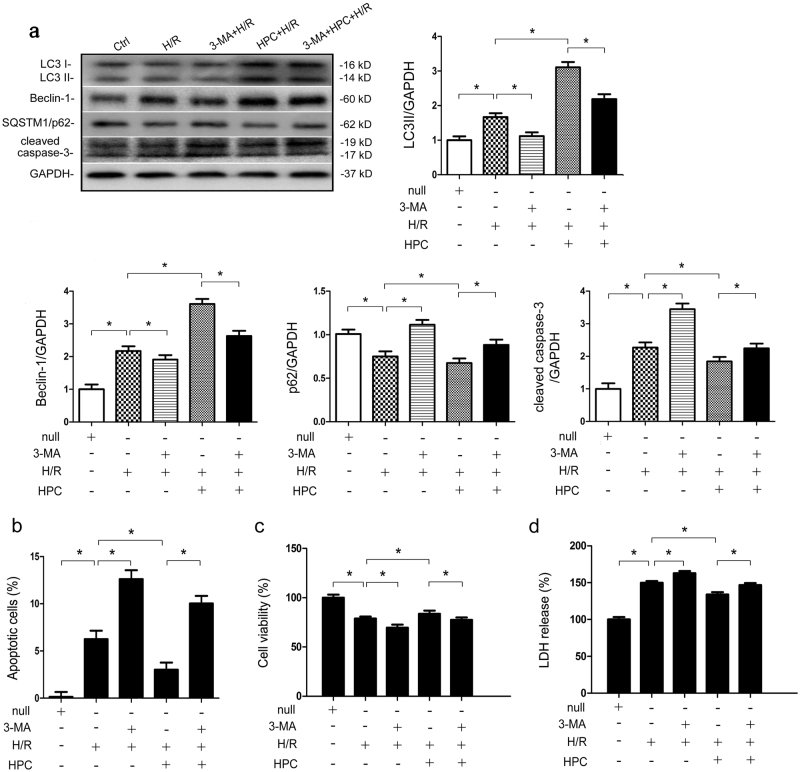
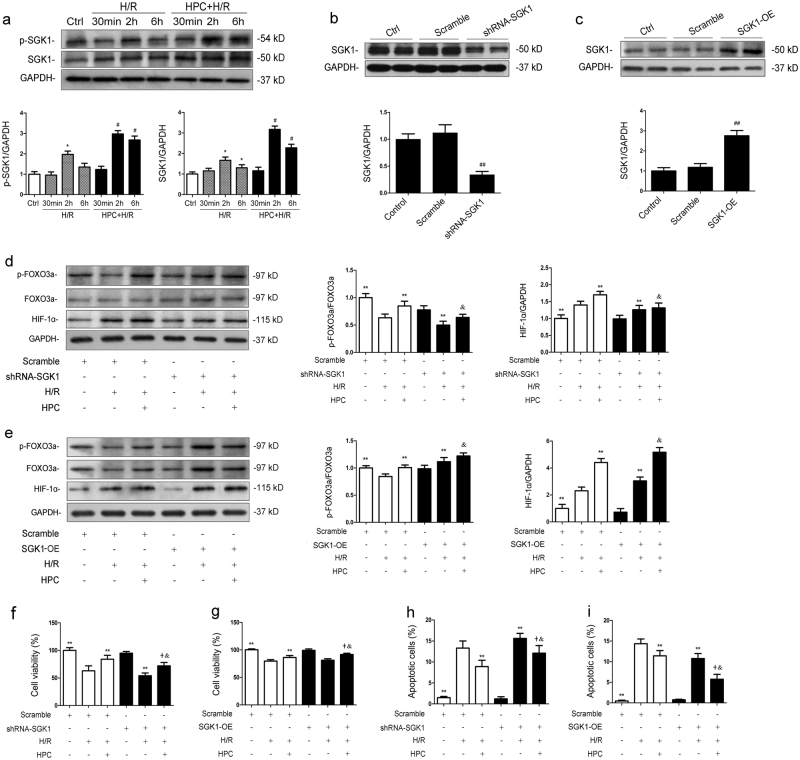
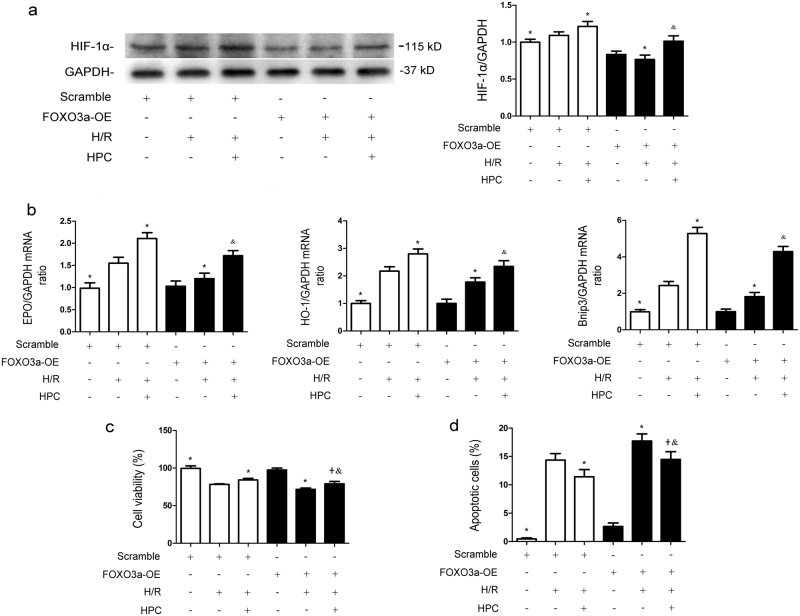
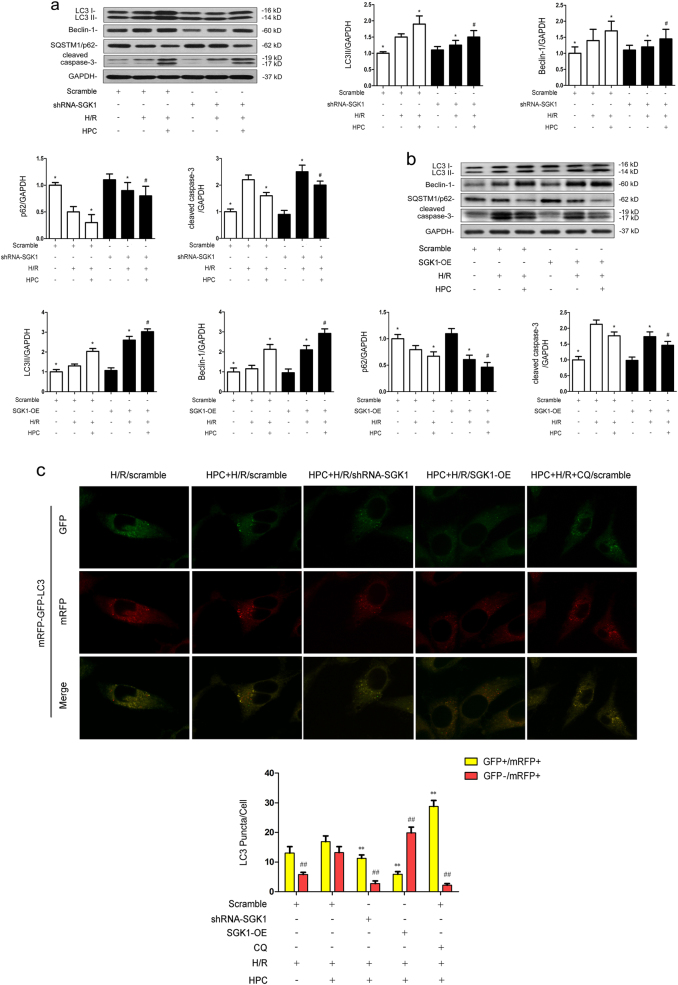
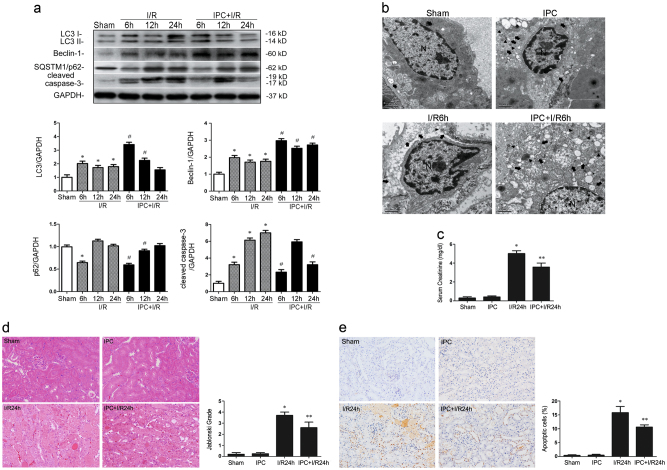
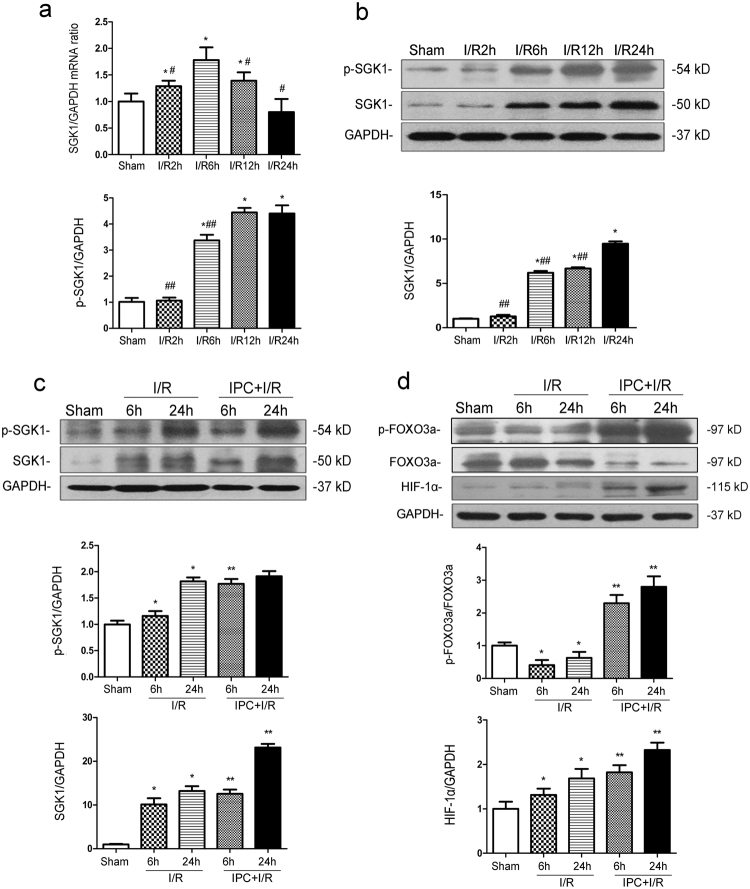
Ischemic preconditioning (IPC) has a strong renoprotective effect during renal ischemia/reperfusion (I/R) injury that is thought to relate to autophagy. However, the role of autophagy during IPC-afforded renoprotection and the precise mechanisms involved are unknown. In this study, an in vitro hypoxia/reoxygenation (H/R) model was established in which oxygen and glucose deprivation (OGD) was applied to renal cells for 15 h followed by reoxygenation under normal conditions for 30 min, 2 h or 6 h; transient OGD and subsequent reoxygenation were implemented before prolonged H/R injury to achieve hypoxic preconditioning (HPC). 3-Methyladenine (3-MA) was used to inhibit autophagy. In a renal I/R injury model, rats were subjected to 40 min of renal ischemia followed by 6 h, 12 h or 24 h of reperfusion. IPC was produced by four cycles of ischemia (8 min each) followed by 5 min of reperfusion prior to sustained ischemia. We found that IPC increased LC3II and Beclin-1 levels and decreased SQSTM/p62 and cleaved caspase-3 levels in a time-dependent manner during renal I/R injury, as well as increased the number of intracellular double-membrane vesicles in injured renal cells. IPC-induced renal protection was efficiently attenuated by pretreatment with 5 mM 3-MA. Pretreatment with IPC also dynamically affected the expression of SGK1/FOXO3a/HIF-1α signaling components. Moreover, knocking down SGK1 expression significantly downregulated phosphorylated-FOXO3a (p-FOXO3a)/FOXO3 and HIF-1α, suppressed LC3II and Beclin-1 levels, increased SQSTM/p62 and cleaved caspase-3 levels, and abolished the protective effect of IPC against I/R-induced renal damage. SGK1 overexpression efficiently increased p-FOXO3a/FOXO3 and HIF-1α levels, promoted the autophagy flux and enhanced the protective effect mediated by HPC. Furthermore, FOXO3a overexpression decreased HIF-1α protein levels, inhibited HIF-1α transcriptional activity and reduced the protective effect of IPC. Our study indicates that IPC can ameliorate renal I/R injury by promoting autophagy through the SGK1 pathway.
Overview
The claims and statistics of this paper haven’t been checked yet.
Free: it reads the open-access text and checks the first 5 claims that cite a source we can check. Create a free account to check every claim.
Integrity signals
Registry
Cites
Statistics
Figures
Verification
Claims the paper makes
The claims and statistics of this paper haven’t been checked yet.
Free: it reads the open-access text and checks the first 5 claims that cite a source we can check. Create a free account to check every claim.
Claims other papers make about this one
Each is checked against this paper’s own text: does it say what the citing paper says it does?
The source backs part of the claim, not all of it — or backs it for a different population, condition or comparison.
In the citing paper
“These findings suggest that autophagy might interact with other defence mechanisms to protect the kidneys from AKI.”
From Autophagy in kidney homeostasis and disease (2020) · cites this paper as [85]
Experimental — accuracy not yet measuredIn the citing paper
“in a rat model of ischaemic AKI, IPC protection was mediated by autophagy and regulated by a signalling pathway that involved a serine/threonine protein kinase SGK1–FOXO3a–hypoxia-inducible factor 1α (HIF1α) signalling axis”
From Autophagy in kidney homeostasis and disease (2020) · cites this paper as [85]
Self-check
Percentages, sums and reported differences re-computed from the paper’s own numbers.
The self-check needs the paper’s full text.
Citations
Cites
1 retracted
Mitochondrial Autophagy Is an HIF-1-dependent Adaptive Metabolic Response to Hypoxia
Zhang, H., Bosch-Marce, M., Shimoda, L. A., Tan, Y. S., Baek, J. H., Wesley, J. B., Gonzalez, F. J., & Semenza, G. L. (2008) · Journal of Biological Chemistry · doi:10.1074/jbc.m800102200 · Cited by 1,601
RetractedRegulation of Mammalian Autophagy in Physiology and Pathophysiology
Ravikumar, B., Sarkar, S., Davies, J. E., Futter, M., Garcia-Arencibia, M., Green-Thompson, Z. W., Jimenez-Sanchez, M., Korolchuk, V. I., Lichtenberg, M., Luo, S., et al. (2010) · Physiological Reviews · doi:10.1152/physrev.00030.2009 · Cited by 1,727
Brunet, A., Park, J., Tran, H., Hu, L. S., Hemmings, B. A., & Greenberg, M. E. (2001) · Molecular and Cellular Biology · doi:10.1128/mcb.21.3.952-965.2001 · Cited by 860 · cited 2×
“Brunet et al.(16) demonstrated that the SGK1/forkhead transcription factor 3a (FOXO3a) pathway promotes cell survival by inhibiting cell cycle arrest and apoptosis.”
Sgk1-Dependent Stimulation of Cardiac Na+/H+Exchanger Nhe1 by Dexamethasone
Voelkl, J., Pasham, V., Ahmed, M. S. E., Walker, B., Szteyn, K., Kuhl, D., Metzler, B., Alesutan, I., & Lang, F. (2013) · Cellular Physiology and Biochemistry · doi:10.1159/000350120 · Cited by 857
Semenza, G. L. (2007) · Science · doi:10.1126/science.1147949 · Cited by 703
(Patho)physiological Significance of the Serum- and Glucocorticoid-Inducible Kinase Isoforms
Lang, F., Böhmer, C., Palmada, M., Seebohm, G., Strutz-Seebohm, N., & Vallon, V. (2006) · Physiological Reviews · doi:10.1152/physrev.00050.2005 · Cited by 689
Response to myocardial ischemia/reperfusion injury involves Bnip3 and autophagy
Hamacher-Brady, A., Brady, N. R., Logue, S. E., Sayen, M. R., Jinno, M., Kirshenbaum, L. A., Gottlieb, R. A., & Gustafsson, Å. B. (2007) · Cell Death & Differentiation · doi:10.1038/sj.cdd.4401936 · Cited by 609
FOXOs, cancer and regulation of apoptosis
Fu, Z., & Tindall, D. J. (2008) · Oncogene · doi:10.1038/onc.2008.24 · Cited by 584
Autophagy in proximal tubules protects against acute kidney injury
Jiang, M., Wei, Q., Dong, G., Komatsu, M., Su, Y., & Dong, Z. (2012) · Kidney International · doi:10.1038/ki.2012.261 · Cited by 477
Autophagy Protects the Proximal Tubule from Degeneration and Acute Ischemic Injury
Kimura, T., Takabatake, Y., Takahashi, A., Kaimori, J.-Y., Matsui, I., Namba, T., Kitamura, H., Niimura, F., Matsusaka, T., Soga, T., et al. (2011) · Journal of the American Society of Nephrology · doi:10.1681/asn.2010070705 · Cited by 461
AN EXPERIMENTAL MODEL FOR ASSESSMENT OF RENAL RECOVERY FROM WARM ISCHEMIA
JABLONSKI, P., HOWDEN, B. O., RAE, D. A., BIRRELL, C. S., MARSHALL, V. C., & TANGE, J. (1983) · Transplantation · doi:10.1097/00007890-198303000-00002 · Cited by 356 · cited 2×
“Tubular injury was graded in terms of tubular dilatation, tubular cell necrosis, debris accumulation, and cast formation on a scale from 0 to 4, as outlined by Jablonski et al.46.”
Hypoxia signals autophagy in tumor cells via AMPK activity, independent of HIF-1, BNIP3, and BNIP3L
Papandreou, I., Lim, A. L., Laderoute, K., & Denko, N. C. (2008) · Cell Death & Differentiation · doi:10.1038/cdd.2008.84 · Cited by 334
Inhibition of oxygen sensors as a therapeutic strategy for ischaemic and inflammatory disease
Fraisl, P., Aragonés, J., & Carmeliet, P. (2009) · Nature Reviews Drug Discovery · doi:10.1038/nrd2761 · Cited by 326
Bakker, W. J., Harris, I. S., & Mak, T. W. (2007) · Molecular Cell · doi:10.1016/j.molcel.2007.10.035 · Cited by 277
Cai, Z., Zhong, H., Bosch-Marce, M., Fox-Talbot, K., Wang, L., Wei, C., Trush, M. A., & Semenza, G. L. (2007) · Cardiovascular Research · doi:10.1093/cvr/cvm035 · Cited by 244
Leong, M. L. L., Maiyar, A. C., Kim, B., O'Keeffe, B. A., & Firestone, G. L. (2003) · Journal of Biological Chemistry · doi:10.1074/jbc.m211649200 · Cited by 242
Emerling, B. M., Weinberg, F., Liu, J.-L., Mak, T. W., & Chandel, N. S. (2008) · Proceedings of the National Academy of Sciences · doi:10.1073/pnas.0706790105 · Cited by 217
Delayed ischemic preconditioning contributes to renal protection by upregulation of miR-21
Xu, X., Kriegel, A. J., Liu, Y., Usa, K., Mladinov, D., Liu, H., Fang, Y., Ding, X., & Liang, M. (2012) · Kidney International · doi:10.1038/ki.2012.241 · Cited by 172 · cited 1×
“Xu et al.(36) reported that IPC-mediated HIF-1α stabilization upregulates miR-21 in the kidney, which decreases the translation of programmed cell death protein 4 (PDCD4) and thereby inhibits apoptosis.”
Ong, S.-G., Lee, W. H., Theodorou, L., Kodo, K., Lim, S. Y., Shukla, D. H., Briston, T., Kiriakidis, S., Ashcroft, M., Davidson, S. M., et al. (2014) · Cardiovascular Research · doi:10.1093/cvr/cvu172 · Cited by 159
Autophagy regulates hypoxia‐induced osteoclastogenesis through the HIF‐1α/BNIP3 signaling pathway
Zhao, Y., Chen, G., Zhang, W., Xu, N., Zhu, J., Jia, J., Sun, Z., Wang, Y., & Zhao, Y. (2012) · Journal of Cellular Physiology · doi:10.1002/jcp.22768 · Cited by 156
Joo, J. D., Kim, M., D’Agati, V. D., & Lee, H. T. (2006) · Journal of the American Society of Nephrology · doi:10.1681/asn.2006050424 · Cited by 121
Sengupta, A., Kalinichenko, V. V., & Yutzey, K. E. (2012) · Circulation Research · doi:10.1161/circresaha.112.277442 · Cited by 111
The endogenous inhibitor of Akt, CTMP, is critical to ischemia-induced neuronal death
Miyawaki, T., Ofengeim, D., Noh, K.-M., Latuszek-Barrantes, A., Hemmings, B. A., Follenzi, A., & Zukin, R. S. (2009) · Nature Neuroscience · doi:10.1038/nn.2299 · Cited by 109
Sarkar, K., Cai, Z. P., Gupta, R., Parajuli, N., Fox-Talbot, K., Darshan, M. S., Gonzalez, F. J., & Semenza, G. L. (2012) · Proceedings of the National Academy of Sciences · doi:10.1073/pnas.1208314109 · Cited by 105
Hölscher, M., Silter, M., Krull, S., von Ahlen, M., Hesse, A., Schwartz, P., Wielockx, B., Breier, G., Katschinski, D. M., & Zieseniß, A. (2011) · Journal of Biological Chemistry · doi:10.1074/jbc.m110.186809 · Cited by 104
Jang, W., Kim, H., Li, H., Jo, K. D., Lee, M. K., & Yang, H. O. (2015) · Molecular Neurobiology · doi:10.1007/s12035-015-9316-x · Cited by 92
Autophagy Induced by HIF1α Overexpression Supports Trophoblast Invasion by Supplying Cellular Energy
Tatematsu, M., Nakashima, A., Fujita, N., Shima, T., Yoshimori, T., & Saito, S. (2013) · PLoS ONE · doi:10.1371/journal.pone.0076605 · Cited by 85 · cited 2×
“Yamanaka-Tatematsu et al.11 reported that autophagy activated by cobalt chloride, which induces HIF-1α overexpression, is an energy source that maintains homeostasis and plays a protective role against prolonged hypoxia.”
Chen, G., Zhang, W., Li, Y., Ren, J., Xu, N., Liu, H., Wang, F., Sun, Z., Jia, J., & Zhao, Y. (2013) · Cardiovascular Research · doi:10.1093/cvr/cvt035 · Cited by 82
Lee, H. T., & Emala, C. W. (2001) · Journal of the American Society of Nephrology · doi:10.1681/asn.v122233 · Cited by 78
Mahfoudh-Boussaid, A., Zaouali, M. A., Hadj-Ayed, K., Miled, A.-H., Saidane-Mosbahi, D., Rosello-Catafau, J., & Abdennebi, H. B. (2012) · Journal of Biomedical Science · doi:10.1186/1423-0127-19-7 · Cited by 76
Liu, A., Fang, H., Wei, W., Dirsch, O., & Dahmen, U. (2014) · Critical Care Medicine · doi:10.1097/ccm.0000000000000659 · Cited by 72
Akt protects the heart against ischaemia-reperfusion injury by modulating mitochondrial morphology
Ong, S., Hall, A. R., Dongworth, R. K., Kalkhoran, S. B., Pyakurel, A., Scorrano, L., & Yellon, D. M. (2015) · Thrombosis and Haemostasis · doi:10.1160/th14-07-0592 · Cited by 70
Rohailla, S., Clarizia, N. A., Sourour, M., Sourour, W., Gelber, N., Wei, C., Li, J., & Redington, A. N. (2014) · PLoS ONE · doi:10.1371/journal.pone.0111291 · Cited by 57
Liu, T., Fang, Y., Liu, S., Yu, X., Zhang, H., Liang, M., & Ding, X. (2014) · Free Radical Biology and Medicine · doi:10.1016/j.freeradbiomed.2014.10.509 · Cited by 56
Cho, S., Cho, M., Kim, J., Kaeberlein, M. R., Lee, S. J., & Suh, Y. (2014) · Oncotarget · doi:10.18632/oncotarget.2723 · Cited by 50
Fan, J., Zhang, Z., Xie, C., Gu, J., Cai, W., Zhou, W., Yin, G., & Li, Q. (2014) · Brain Research · doi:10.1016/j.brainres.2014.03.019 · Cited by 45
Self-citationLiu, Z., & Gong, R. (2015) · American Journal of Kidney Diseases · doi:10.1053/j.ajkd.2015.06.026 · Cited by 44
Zhang, X., Yan, Z., Sheng, W.-W., Xiao, J., Zhang, Z., & Ye, Z. (2011) · Molecular and Cellular Biochemistry · doi:10.1007/s11010-011-0979-y · Cited by 39
Self-citationProtective effect of SGK1 in rat hippocampal neurons subjected to ischemia reperfusion
Zhang, W., Qian, C. Y., & Li, S. Q. (2014) · Cellular Physiology and Biochemistry · doi:10.1159/000363000 · Cited by 34
Fujiki, K., Inamura, H., & Matsuoka, M. (2013) · Archives of Toxicology · doi:10.1007/s00204-013-1077-6 · Cited by 34
SGK-1 protects kidney cells against apoptosis induced by ceramide and TNF-α
Pastore, D., Della-Morte, D., Coppola, A., Capuani, B., Lombardo, M. F., Pacifici, F., Ferrelli, F., Arriga, R., Mammi, C., Federici, M., et al. (2015) · Cell Death & Disease · doi:10.1038/cddis.2015.232 · Cited by 33
Martín-Puig, S., Tello, D., & Aragonés, J. (2015) · Frontiers in Physiology · doi:10.3389/fphys.2015.00137 · Cited by 31
The Serum and Glucocorticoid-Regulated Kinase 1 in Hypoxic Renal Injury
Rusai, K., Wagner, B., Roos, M., Schmaderer, C., Strobl, M., Boini, K. M., Grenz, A., Kuhl, D., Heemann, U. W., Lang, F. J. W., et al. (2009) · Cellular Physiology and Biochemistry · doi:10.1159/000257527 · Cited by 27
Rusai, K., Prókai, Á., Szebeni, B., Fekete, A., Treszl, A., Vannay, Á., Müller, V., Reusz, G., Heemann, U. W., Lutz, J., et al. (2009) · Biochemical Pharmacology · doi:10.1016/j.bcp.2009.11.022 · Cited by 25 · cited 2×
“Rusai et al.26 reported that erythropoietin (EPO) promotes SGK1 activation and downregulation of SGK1 ameliorated the anti-apoptotic effects of EPO during renal I/R injury, which indicates that SGK1 might facilitate the beneficial effects of EPO under ischemic conditions.”
SGK1 Is Involved in Cardioprotection of Urocortin-1 Against Hypoxia/Reoxygenation in Cardiomyocytes
Cong, B., Wang, L., Zhu, X., Li, X., Liu, B., & Ni, X. (2014) · Canadian Journal of Cardiology · doi:10.1016/j.cjca.2014.03.024 · Cited by 19
Cong, B., Du, J., Zhu, X., Lu, J., & Ni, X. (2014) · International Journal of Cardiology · doi:10.1016/j.ijcard.2014.10.113 · Cited by 8 · cited 2×
“Fujiki et al.28 showed that phosphorylation of FOXO3a is associated with increased translocation of FOXO3a from the nucleus to the cytoplasm, which inhibits FOXO3adependent nuclear transcription and promotes HK-2 cell survival.”
Modulation of apoptosis by ischemic preconditioning: an emerging role for miR-21
El‐Achkar, T. M. (2012) · Kidney International · doi:10.1038/ki.2012.305 · Cited by 7
Cited by
Autophagy in kidney homeostasis and disease
Tang, C., Livingston, M. J., Liu, Z., & Dong, Z. (2020) · Nature Reviews Nephrology · doi:10.1038/s41581-020-0309-2 · Cited by 496
Chen, H., Deng, Y., Gan, X., Li, Y., Huang, W., Lu, L., Wei, L., Su, L., Luo, J., Zou, B., et al. (2020) · Molecular Neurodegeneration · doi:10.1186/s13024-020-00372-w · Cited by 182
ER–Mitochondria Microdomains in Cardiac Ischemia–Reperfusion Injury: A Fresh Perspective
Zhou, H., Wang, S., Hu, S., Chen, Y., & Ren, J. T. (2018) · Frontiers in Physiology · doi:10.3389/fphys.2018.00755 · Cited by 166
“, 2017), although it is significantly upregulated by ischemia preconditioning (Xie et al., 2018).”
BackgroundWen, J., Xu, B., Sun, Y., Lian, M., Li, Y., Lin, Y., Chen, D., Diao, Y.-P., Almoiliqy, M., & Wang, L. (2019) · Pharmacological Research · doi:10.1016/j.phrs.2019.104308 · Cited by 140
Packer, M. (2020) · Journal of the American Society of Nephrology · doi:10.1681/asn.2020010010 · Cited by 123
Metadata
- Authors
- Xie, Y., Jiang, D., Xiao, J., Fu, C., Zhang, Z., Ye, Z., & Zhang, X.
- Affiliations
- Fudan University (CN)
- Corresponding author
- Zhang, Xiaoli
- Venue
- Cell Death & Disease
- Published
- 2018-03-01
- Volume
- 9
- Issue
- 3
- Pages
- 338-338
- ISSN
- 2041-4889 (ISSN-L)
- PMC
- PMC5832808
- OpenAlex
- W2791743420
- Cited by
- 73
- References
- 47
- Citations by year
- 2025: 4 · 2024: 6 · 2023: 8 · 2022: 11 · 2021: 9 · 2020: 17 · 2019: 12 · 2018: 6
- FWCI
- 9.02
- Type
- journal article
- Language
- en
- Open access
- gold
- doi.org
- Licence
- cc-by
- creativecommons.org/licenses/by/4.0 (tdm)
- creativecommons.org/licenses/by/4.0 (vor)
- Locations
- Cell Death and Disease (publishedVersion, cc-by)
- Europe PMC (PubMed Central) (publishedVersion, cc-by)
- PubMed Central (publishedVersion, cc-by)
- PubMed (publishedVersion)
- DOAJ (DOAJ: Directory of Open Access Journals) (submittedVersion)
- Funders
- National Natural Science Foundation of China (81200494, 12ZR1409400, 124119a8700)
- Science and Technology Commission of Shanghai Municipality (124119a8700, 12ZR1409400, 81200494)
- Topics
- Health Sciences › Medicine › Nephrology › Acute Kidney Injury Research
- Life Sciences › Biochemistry, Genetics and Molecular Biology › Cell Biology › Autophagy in Disease and Therapy
- Health Sciences › Medicine › Cardiology and Cardiovascular Medicine › Cardiac Ischemia and Reperfusion
- Keywords
- ischemic preconditioning, renal ischemia-reperfusion injury, autophagy, SGK1, FOXO3, HIF-1α, hypoxic preconditioning, 3-methyladenine, LC3-II, Beclin-1, caspase-3, renal protection, oxygen-glucose deprivation, hypoxia/reoxygenation
- MeSH terms
- Beclin-1, Forkhead Box Protein O3, Sequestosome-1 Protein, Serum-Glucocorticoid Regulated Kinases, Animals, Autophagy, Humans, Kidney, Kidney Diseases, Male, Microtubule-Associated Proteins, Signal Transduction, Reperfusion Injury, Rats, Sprague-Dawley, Protein Serine-Threonine Kinases, Immediate-Early Proteins, Ischemic Preconditioning, Rats, Hypoxia-Inducible Factor 1, alpha Subunit
About these checks
Registry, retraction, Cites and statistics results are computed, not judged, with one exception: a printed reference that no index lists is read once by a model before it counts as a citation error. Claims are extracted by a model and kept only when their quote appears verbatim in the text; each cited source is then checked, with a model’s help, for whether it says what the claim relies on. Those verdicts can be wrong — read the claim’s quote and the cited source before relying on one.
Statistics and arithmetic are recomputed, not judged.
Confidence bands are shown only for fields calibrated on our annotated test set. None is calibrated yet, so no band is shown.
What counts as a claim ›How we measure confidence ›How we check this ›
Are you an author, or do you see a problem with this page? Request a review
Data sources
Bibliographic data: Semantic Scholar, OpenAlex, Crossref.
Contains information from the Semantic Scholar Academic Graph Datasets, made available under the ODC Attribution License (ODC-BY 1.0).
Semantic Scholar’s data is described in: Kinney, R., et al. (2023). The Semantic Scholar Open Data Platform. arXiv:2301.10140.
