

The DOI matches its Crossref record; 49 of the 50 references it cites were found in a registry or an index.
Activation of the DNA damage response in vivo in synucleinopathy models of Parkinson’s disease
Open accessAbstract
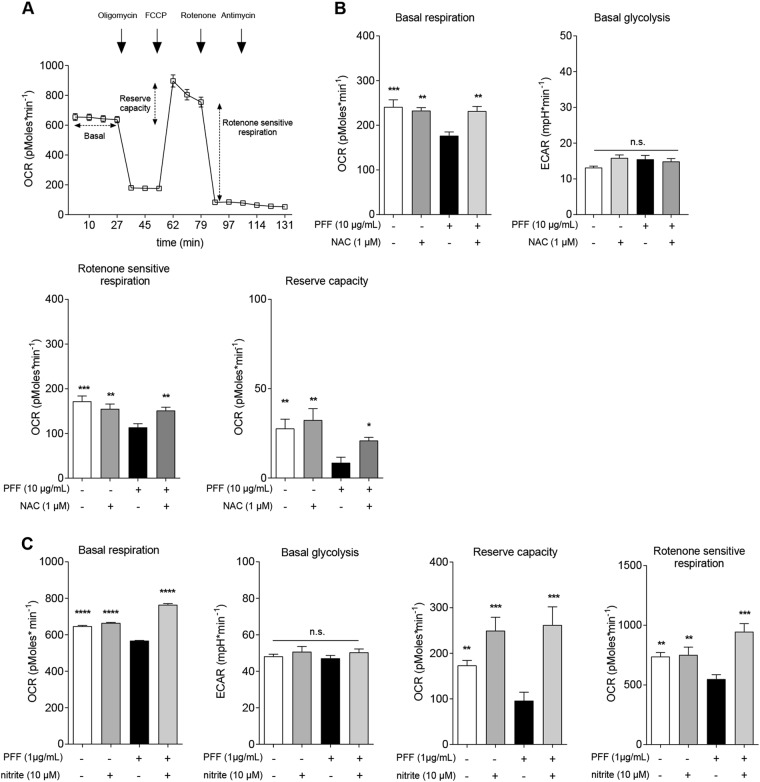
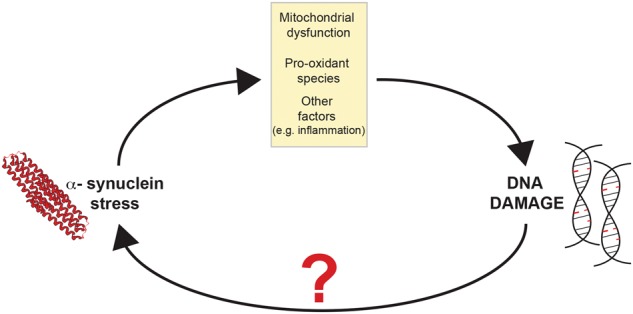
The involvement of DNA damage and repair in aging processes is well established. Aging is an unequivocal risk factor for chronic neurodegenerative diseases, underscoring the relevance of investigations into the role that DNA alterations may have in the pathogenesis of these diseases. Consistently, even moderate impairment of DNA repair systems facilitates the onset of pathological features typical of PD that include derangement of the dopaminergic system, mitochondrial dysfunction, and alpha-synuclein stress. The latter establishes a connection between reduced DNA repair capacity and a cardinal feature of PD, alpha-synuclein pathology. It remains to be determined, however, whether alpha-synuclein stress activates in vivo the canonical signaling cascade associated with DNA damage, which is centered on the kinase ATM and substrates such as γH2Ax and 53BP1. Addressing these issues would shed light on age-related mechanisms impinging upon PD pathogenesis and neurodegeneration in particular. We analyzed two different synucleinopathy PD mouse models based either on intranigral delivery of AAV-expressing human alpha-synuclein, or intrastriatal injection of human alpha-synuclein pre-formed fibrils. In both cases, we detected a significant increase in γH2AX and 53BP1 foci, and in phospho-ATM immunoreactivity in dopaminergic neurons, which collectively indicate DNA damage and activation of the DNA damage response. Mechanistic experiments in cell cultures indicate that activation of the DNA damage response is caused, at least in part, by pro-oxidant species because it is prevented by exogenous or endogenous antioxidants, which also rescue mitochondrial anomalies caused by proteotoxic alpha-synuclein. These in vivo and in vitro findings reveal that the cellular stress mediated by alpha-synuclein—a pathological hallmark in PD—elicits DNA damage and activates the DNA damage response. The toxic cascade leading to DNA damage involves oxidant stress and mitochondrial dysfunction The data underscore the importance of DNA quality control for preservation of neuronal integrity and protection against neurodegenerative processes.
Overview
The claims and statistics of this paper haven’t been checked yet.
Run the check — free, no account needed. It reads the open-access text and checks the sources it cites.
Integrity signals
Registry
Cites
Statistics
Figures
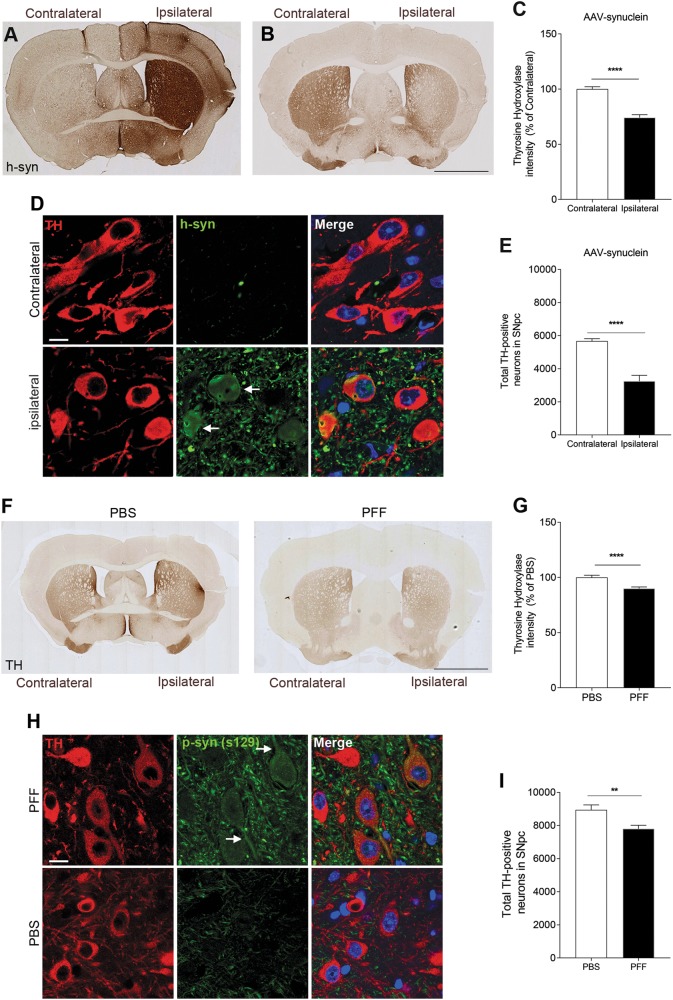
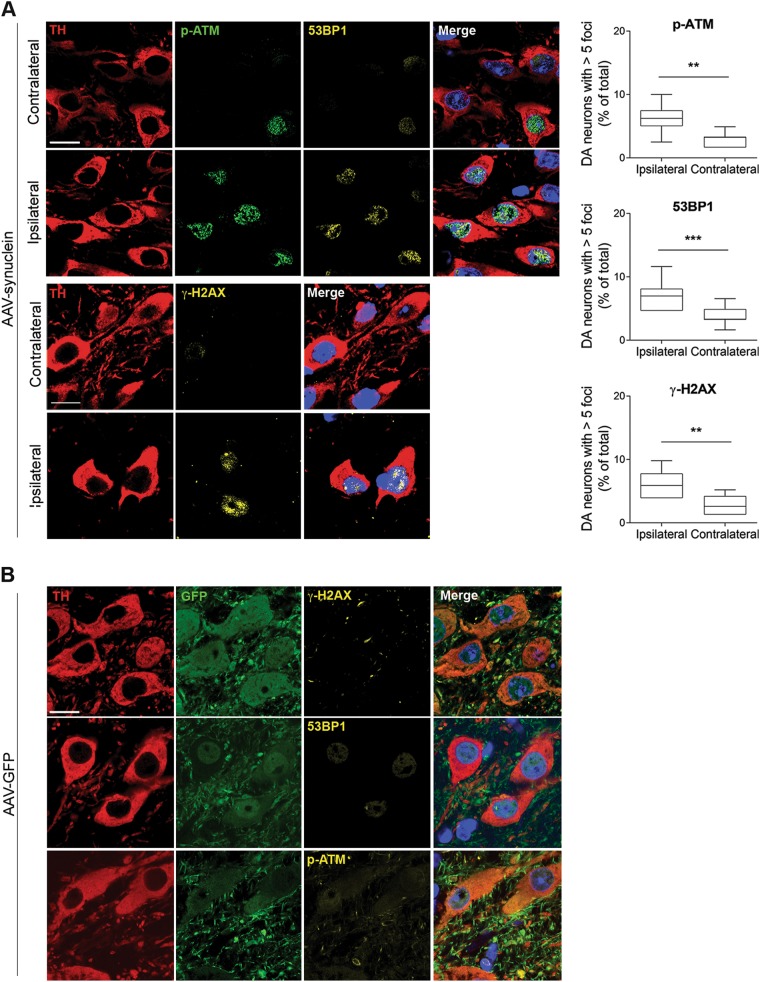
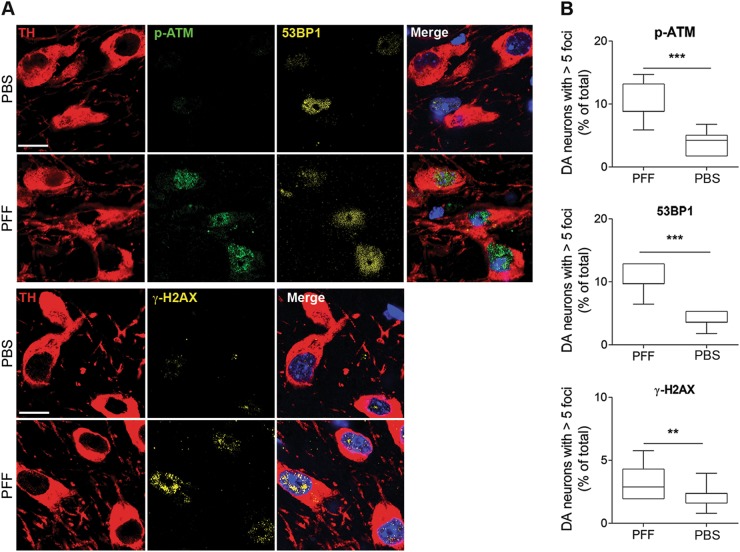
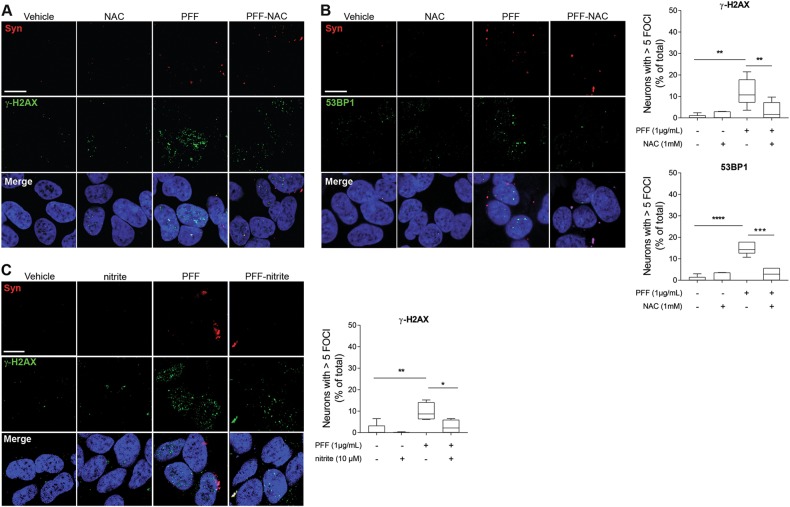
Verification
Claims the paper makes
The claims and statistics of this paper haven’t been checked yet.
Run the check — free, no account needed. It reads the open-access text and checks the sources it cites.
Claims other papers make about this one
Each is checked against this paper’s own text: does it say what the citing paper says it does?
In the citing paper
“However, toxic aggregation of α‐synuclein in the nucleus or cytosol elicits the accumulation of DSBs (Vasquez et al, 2017; Milanese et al, 2018).”
From Mechanisms of DNA damage-mediated neurotoxicity in neurodegenerative disease (2022) · cites this paper as Milanese et al, 2018
Self-check
Percentages, sums and reported differences re-computed from the paper’s own numbers.
The self-check needs the paper’s full text.
Citations
Cites
López-Otín, C., Blasco, M. A., Partridge, L., Serrano, M., & Kroemer, G. (2013) · Cell · doi:10.1016/j.cell.2013.05.039 · Cited by 14,982
The Mouse Brain in Stereotaxic Coordinates
Paxinos, G. (2001) · Cited by 12,859
Staging of brain pathology related to sporadic Parkinson’s disease
Braak, H., Tredici, K. D., Rüb, U., de Vos, R. A. I., Jansen Steur, E. N. H., & Braak, E. (2003) · Neurobiology of Aging · doi:10.1016/s0197-4580(02)00065-9 · Cited by 10,777
Spillantini, M. G., Schmidt, M. L., Lee, V. M.-Y., Trojanowski, J. Q., Jakes, R., & Goedert, M. (1997) · Nature · doi:10.1038/42166 · Cited by 8,382
How mitochondria produce reactive oxygen species
Murphy, M. P. (2009) · Biochemical Journal · doi:10.1042/bj20081386 · Cited by 8,207
Chemistry and biochemistry of 4-hydroxynonenal, malonaldehyde and related aldehydes
Esterbauer, H., Schaur, R. J., & Zollner, H. (1991) · Free Radical Biology and Medicine · doi:10.1016/0891-5849(91)90192-6 · Cited by 6,672
Chronic systemic pesticide exposure reproduces features of Parkinson's disease
Betarbet, R. S., Sherer, T., MacKenzie, G. M., Garcia‐Osuna, M., Panov, A. V., & Greenamyre, J. T. (2000) · Nature Neuroscience · doi:10.1038/81834 · Cited by 3,770
West, M. J., Slomianka, L., & Gundersen, H. J. G. (1991) · The Anatomical Record · doi:10.1002/ar.1092310411 · Cited by 2,994
Luk, K. C., Kehm, V., Carroll, J., Zhang, B., O’Brien, P., Trojanowski, J. Q., & Lee, V. M.-Y. (2012) · Science · doi:10.1126/science.1227157 · Cited by 2,563
Mitochondrial Complex I Deficiency in Parkinson's Disease
Schapira, A. H. V., Cooper, J. M., Dexter, D., Clark, J. B., Jenner, P., & Marsden, C. D. (1990) · Journal of Neurochemistry · doi:10.1111/j.1471-4159.1990.tb02325.x · Cited by 2,283
Cited by
Sorted by citations
Items 101–119 of 119
Systems for Genetic Assessment of the Impact of Environmental Factors
Кисляк, С., Дуган, О. М., & Yalovenko, O. (2024) · Innovative Biosystems and Bioengineering · doi:10.20535/ibb.2024.8.2.288127 · Cited by 9
Antoniou, N., Prodromidou, K., Kouroupi, G., Samiotaki, M. K., Panayotou, G., Xilouri, M., Stefanis, L., Grailhe, R., Taoufik, E., & Matsas, R. (2020) · bioRxiv (Cold Spring Harbor Laboratory) · doi:10.1101/2020.06.12.148031 · Cited by 3
Sproviero, D., Payán‐Gómez, C., Milanese, C., Sun, S., Gyenis, Á., Delia, D., Lashley, T., Vijg, J., Hoeijmakers, J. H. J., & Mastroberardino, P. G. (2024) · medRxiv · doi:10.1101/2024.03.25.24301713 · Cited by 3
Self-citationChromatin remodeler BRG1 recruits huntingtin to repair DNA double-strand breaks in neuronsPreprint
Pradhan, S., Bush, K. M., Zhang, N., PANDITA, R. K., Tsai, C.-L., Smith-Geater, C., Pandlebury, D. F., Gaikwad, S., Leonard, F., Nie, L., et al. (2024) · bioRxiv (Cold Spring Harbor Laboratory) · doi:10.1101/2024.09.19.613927 · Cited by 4
Lewy body disease as a potential negative outcome modifier of glioblastoma treatment: a case report
Wong, E. T., Rosenberg, H. J., Dawood, O., Hertan, L. M., Vega, R. A., Anderson, M. P., & Uhlmann, E. J. (2023) · BMC Neurology · doi:10.1186/s12883-023-03313-4 · Cited by 2
Meesilpavikkai, K., Kaikaew, K., Zhou, Z., Dalm, V. A. S. H., Kaiser, F. M. P., Schliehe, C., Swagemakers, S. M. A., van der Spek, P. J., Schrijver, B., Vasic, P., et al. (2025) · Immune Network · doi:10.4110/in.2025.25.e18 · Cited by 2
Self-citationYeasmin, A., & Torrente, M. P. (2025) · Biology · doi:10.3390/biology14111556 · Cited by 1
Wu, Z., Jia, R., Zhang, Q., Huang, L.-Y., Yan, J.-T., Zhang, Y. H., & Fan, Y. (2026) · Biomarker Research · doi:10.1186/s40364-026-00906-2 · Cited by 2
Aryl Hydrocarbon Receptor Signaling in Aging: A Key Modulator of Brain Homeostasis
Juárez-Solano, H., Martínez‐Coria, H., Pérez‐Osorio, I. N., Hernández-Esquivel, R. A., & Torres-Ramos, M. (2026) · Molecular Neurobiology · doi:10.1007/s12035-026-05874-0 · Cited by 1
Tuxworth, R. I., Taylor, M. J., Anduaga, A. M., Hussien-Ali, A., Chatzimatthaiou, S., Longland, J., Thompson, A. M., Alhajlah, S., Alifragis, P., Kyriacou, C. P., et al. (2018) · bioRxiv (Cold Spring Harbor Laboratory) · doi:10.1101/440636
Insulin resistance and Parkinson’s disease
Farooqui, A. A. (2020) · Elsevier eBooks · doi:10.1016/b978-0-12-819603-8.00007-9
RNA sequence analysis of somatic mutations in aging and Parkinson’s DiseasePreprint
Sun, S., Sproviero, D., Payán‐Gómez, C., Hoeijmakers, J. H. J., Maslov, A. Y., Mastroberardino, P. G., & Vijg, J. (2025) · bioRxiv (Cold Spring Harbor Laboratory) · doi:10.1101/2025.03.26.645360 · Cited by 1
Self-citationDerouin-Tochon, F., Robert, V., Lomet, D., Fleurot, R., Hellier, V., Beltramo, M., & Dufourny, L. (2025) · Journal of Neuroendocrinology · doi:10.1111/jne.70102
Liu, J., González-Hunt, C. P., Richbourg, T., Barraza, I., Chen, C. G., Montes, C., Ma, L., Cao, R., Hanumaihgari, V., Gassman, N. R., et al. (2026) · bioRxiv (Cold Spring Harbor Laboratory) · doi:10.64898/2026.02.27.708379
Vinciguerra, M., Kharef, C. E., Bruhn, C., Falbo, L., Milanese, C., Audano, M., Beznoussenko, G. V., Aa, M., Delia, D., Foiani, M., et al. (2026) · Cell Death and Disease · doi:10.1038/s41419-026-08507-5
Self-citationA DNA Threshold of Four G/C Base Pairs Drives Intramolecular β-Sheet Formation in α-Synuclein
Zhang, Y.-H., Gong, S., Yuan, Y., & Shen, L. (2026) · Chinese Journal of Polymer Science · doi:10.1007/s10118-026-3674-x
Therapeutic targeting of DNA repair pathway dysregulation in aging, cancer, and neurodegeneration
Kumar, V., Kashif, M., Singh, V., Rawat, R. S., Khan, A., Sarkar, G. C., & Majood, M. (2026) · Expert Opinion on Therapeutic Targets · doi:10.1080/14728222.2026.2683686
Praharaj, S., Chakraborty, E., & Mahalingam, G. (2026) · Frontiers in Cellular Neuroscience · doi:10.3389/fncel.2026.1909393
Ma, Y., Li, X., Chen, H., & Fan, R. (2026) · Frontiers in Aging Neuroscience · doi:10.3389/fnagi.2026.1772217
Metadata
- Authors
- Milanese, C., Cerri, S., Ulusoy, A., Gornati, S. V., Plat, A., Gabriels, S., Blandini, F., Di Monte, D. A., Hoeijmakers, J. H., & Mastroberardino, P. G.
- Affiliations
- Fondazione Istituto Neurologico Nazionale Casimiro Mondino (IT)
- Erasmus MC (NL)
- University of Cologne (DE)
- Corresponding author
- Mastroberardino, Pier G.
- ORCID
- Venue
- Cell Death & Disease
- Published
- 2018-07-26
- Volume
- 9
- Issue
- 8
- Pages
- 818-818
- ISSN
- 2041-4889 (ISSN-L)
- PMC
- PMC6062587
- OpenAlex
- W2883768767
- Cited by
- 118
- References
- 50
- Citations by year
- 2026: 8 · 2025: 16 · 2024: 14 · 2023: 13 · 2022: 19 · 2021: 16 · 2020: 15 · 2019: 16 · 2018: 1
- FWCI
- 8.15
- Type
- journal article
- Language
- en
- Open access
- gold
- doi.org
- Locations
- Cell Death and Disease (publishedVersion, cc-by)
- Europe PMC (PubMed Central) (publishedVersion, cc-by)
- PubMed Central (publishedVersion, cc-by)
- PubMed (publishedVersion)
- Kölner Universitäts PublikationsServer (Universität zu Köln) (publishedVersion)
- EUR Research Repository (Erasmus University Rotterdam) (publishedVersion, other-oa)
- Archivio Istituzionale della Ricerca - Università degli Studi dell Aquila (submittedVersion, cc-by-nc-nd)
- EUR Research Repository (Erasmus University Rotterdam) (submittedVersion, other-oa)
- RePub (Erasmus University Rotterdam) (submittedVersion, other-oa)
- DOAJ (DOAJ: Directory of Open Access Journals) (submittedVersion)
- DZNE Pub (submittedVersion, cc-by)
- RePub (Erasmus University Rotterdam) (submittedVersion)
- Funders
- Michael J. Fox Foundation for Parkinson's Research (Target Advancement Program)
- Topics
- Health Sciences › Medicine › Clinical Neurology › Parkinson's Disease Mechanisms and Treatments
- Life Sciences › Biochemistry, Genetics and Molecular Biology › Molecular Biology › DNA Repair Mechanisms
- Life Sciences › Biochemistry, Genetics and Molecular Biology › Molecular Biology › Nuclear Receptors and Signaling
- Keywords
- Parkinson's disease, DNA damage response, alpha-synuclein, synucleinopathies, ATM kinase, γH2AX, 53BP1, oxidative stress, mitochondrial dysfunction, dopaminergic neurons, neurodegeneration, DNA repair, antioxidants, mouse model
- MeSH terms
- Tumor Suppressor p53-Binding Protein 1, Animals, Disease Models, Animal, DNA Damage, DNA Repair, Histones, Humans, Mice, Inbred C57BL, Mitochondria, Parkinson Disease, Substantia Nigra, Reactive Oxygen Species, Cell Line, Tumor, Mice, alpha-Synuclein, Dopaminergic Neurons, Ataxia Telangiectasia Mutated Proteins
About these checks
Registry, retraction, Cites and statistics results are computed, not judged, with one exception: a printed reference that no index lists is read once by a model before it counts as a citation error. Claims are extracted by a model and kept only when their quote appears verbatim in the text; each cited source is then checked, with a model’s help, for whether it says what the claim relies on. Those verdicts can be wrong — read the claim’s quote and the cited source before relying on one.
Statistics and arithmetic are recomputed, not judged.
Confidence bands are shown only for fields calibrated on our annotated test set. None is calibrated yet, so no band is shown.
What counts as a claim ›How we measure confidence ›How we check this ›
Are you an author, or do you see a problem with this page? Request a review
