

Activation of BNIP3-mediated mitophagy protects against renal ischemia–reperfusion injury
Open accessThe DOI matches its Crossref record; 40 of the 40 references it cites were found in a registry or an index.
Abstract
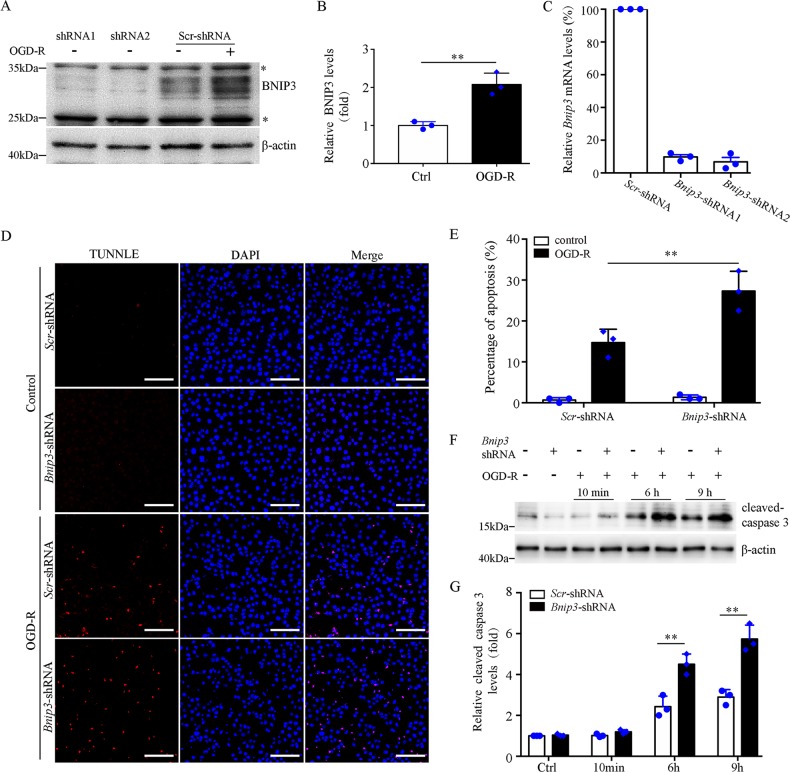
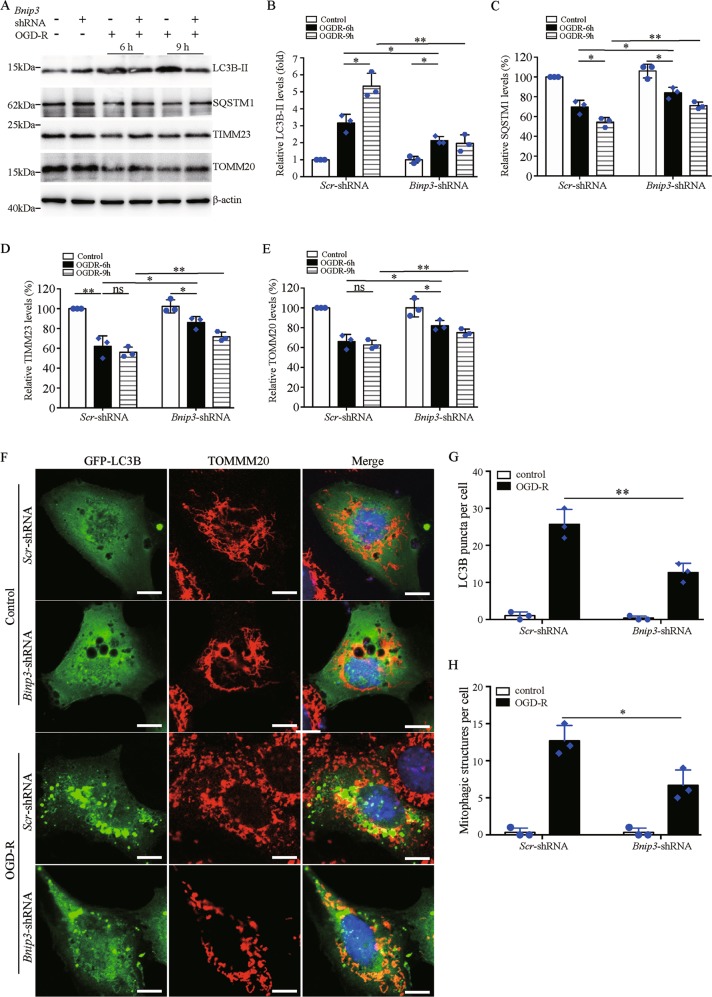
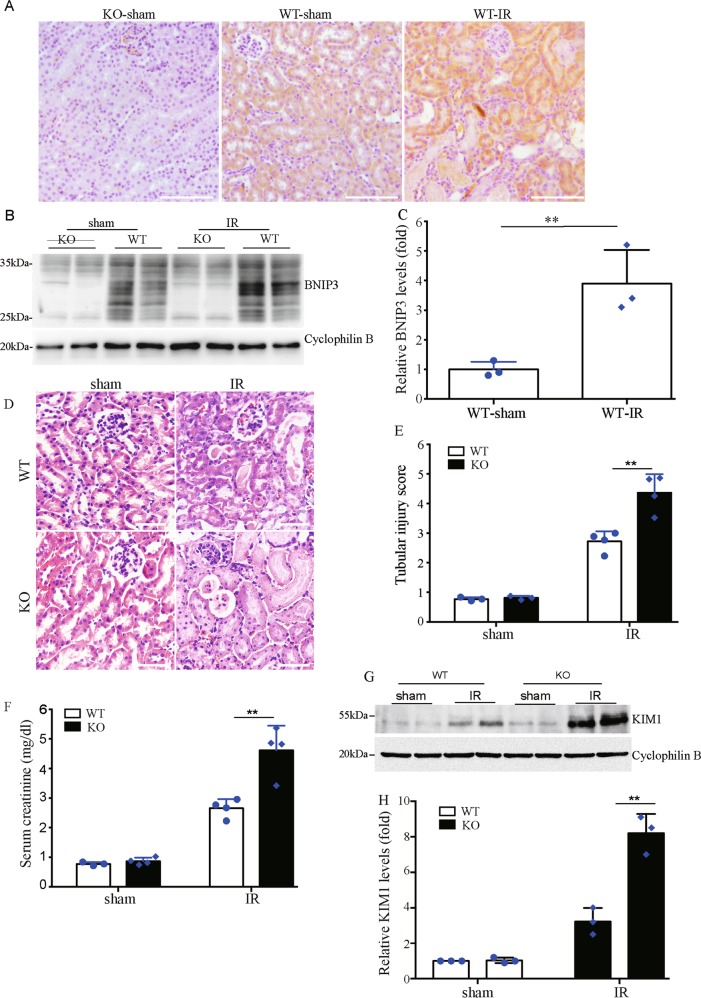
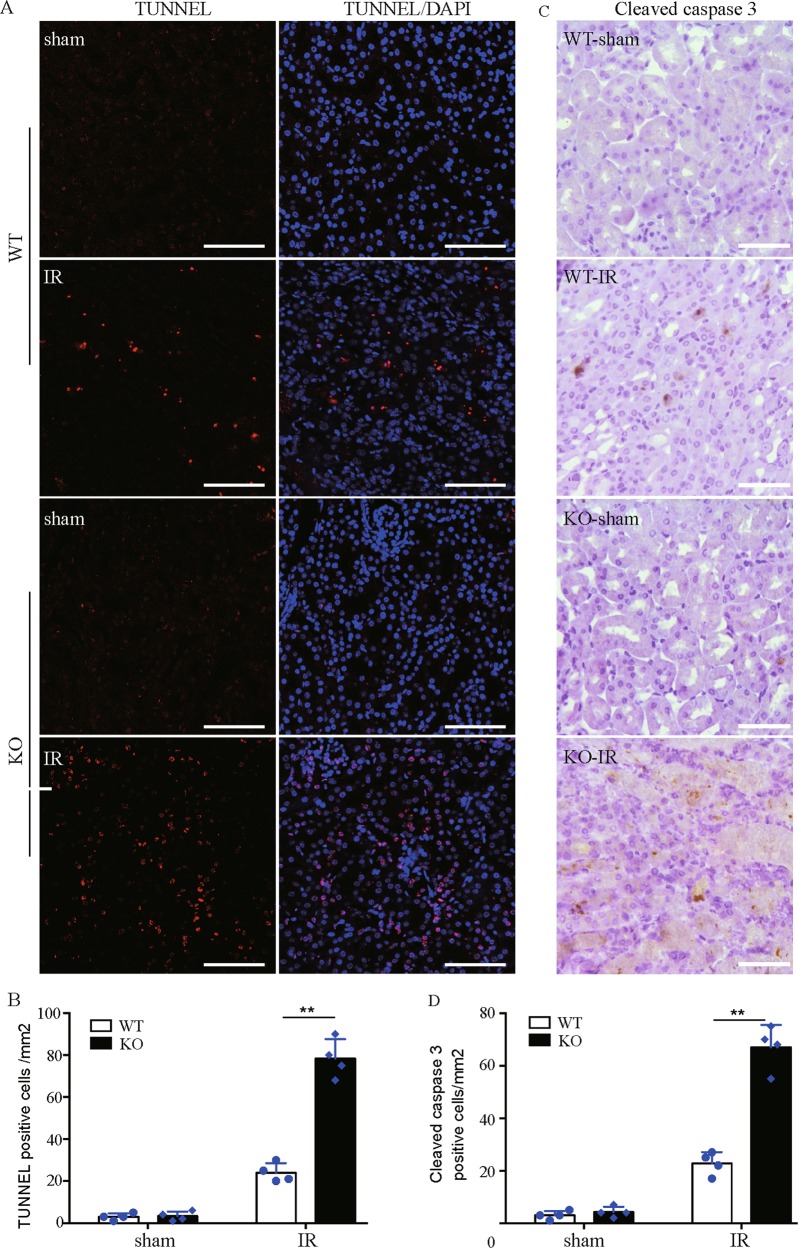
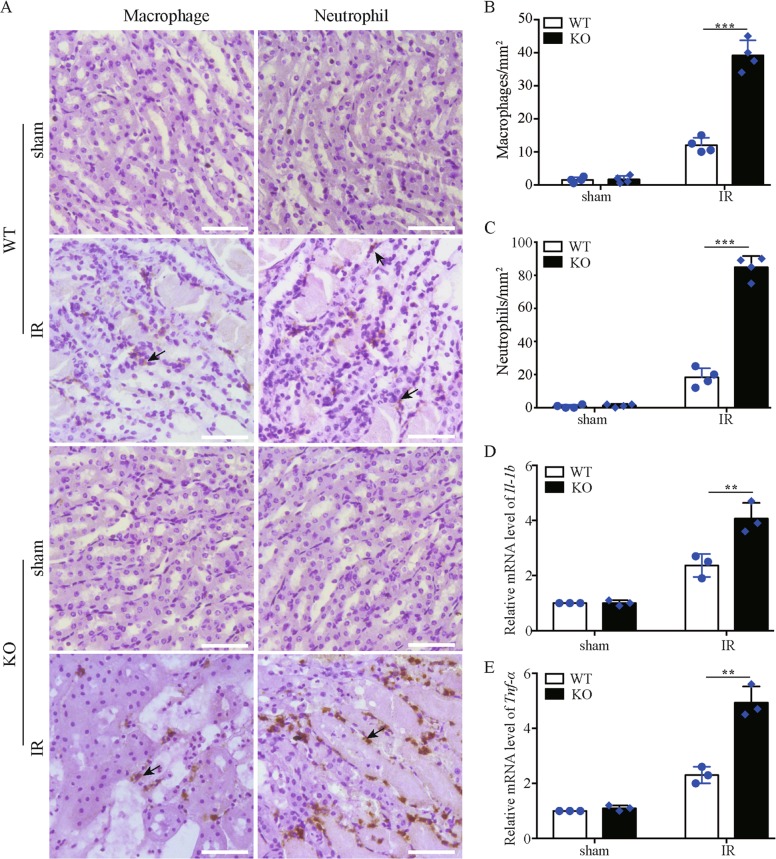
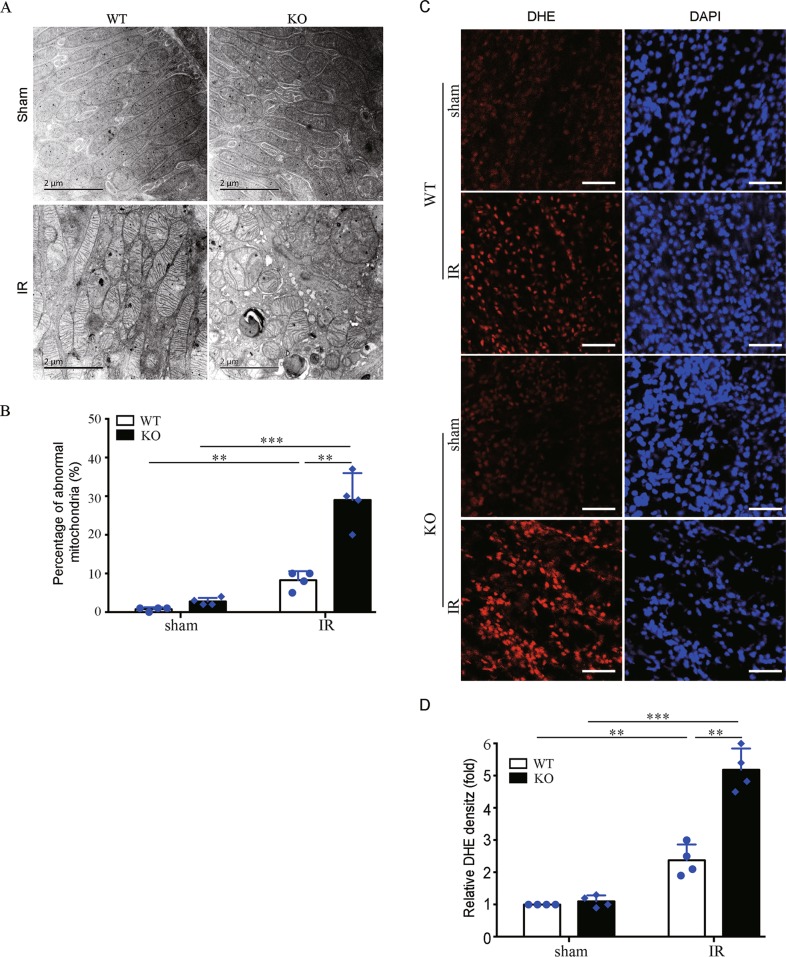
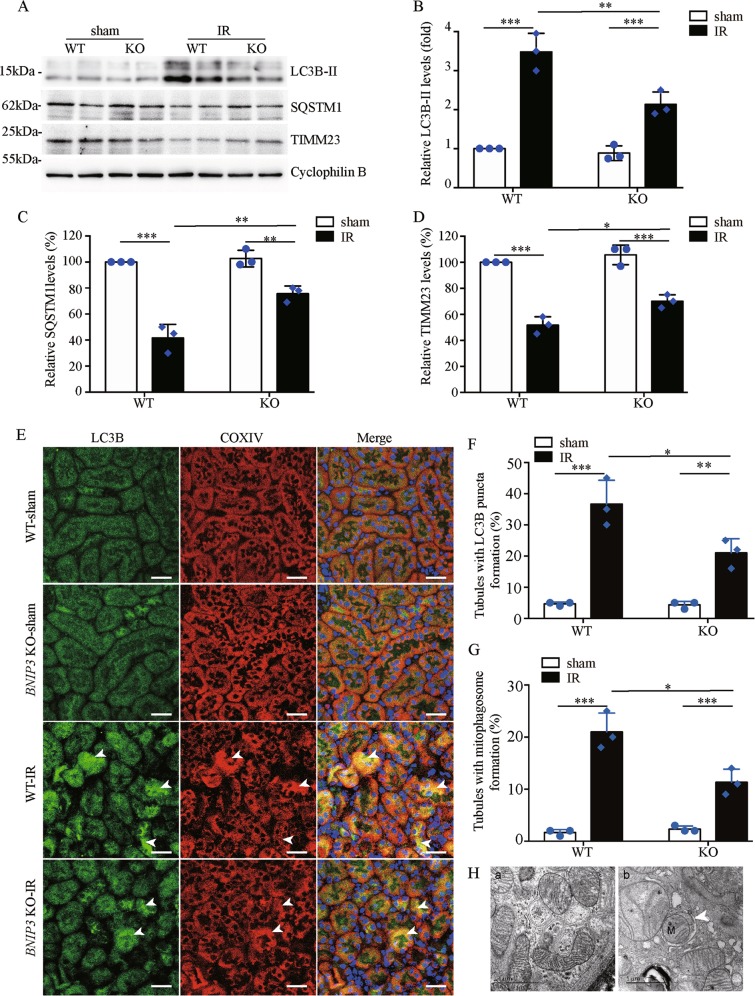
Acute kidney injury (AKI) is a syndrome of abrupt loss of renal functions. The underlying pathological mechanisms of AKI remain largely unknown. BCL2-interacting protein 3 (BNIP3) has dual functions of regulating cell death and mitophagy, but its pathophysiological role in AKI remains unclear. Here, we demonstrated an increase of BNIP3 expression in cultured renal proximal tubular epithelial cells following oxygen-glucose deprivation-reperfusion (OGD-R) and in renal tubules after renal ischemia–reperfusion (IR)-induced injury in mice. Functionally, silencing Bnip3 by specific short hairpin RNAs in cultured renal tubular cells reduced OGD-R-induced mitophagy, and potentiated OGD-R-induced cell death. In vivo, Bnip3 knockout worsened renal IR injury, as manifested by more severe renal dysfunction and tissue injury. We further showed that Bnip3 knockout reduced mitophagy, which resulted in the accumulation of damaged mitochondria, increased production of reactive oxygen species, and enhanced cell death and inflammatory response in kidneys following renal IR. Taken together, these findings suggest that BNIP3-mediated mitophagy has a critical role in mitochondrial quality control and tubular cell survival during AKI.
Overview
The claims and statistics of this paper haven’t been checked yet.
Free: it reads the open-access text and checks the first 5 claims that cite a source we can check. Create a free account to check every claim.
Integrity signals
Registry
Cites
Statistics
Figures
Verification
Claims the paper makes
The claims and statistics of this paper haven’t been checked yet.
Free: it reads the open-access text and checks the first 5 claims that cite a source we can check. Create a free account to check every claim.
Claims other papers make about this one
Each is checked against this paper’s own text: does it say what the citing paper says it does?
The cited source says what the claim attributes to it.
In the citing paper
“We subsequently demonstrated that induction of BCL-2/adenovirus E1B 19 kDa protein-interacting protein 3 (BNIP3)-mediated mitophagy also provided renoprotection during ischaemic AKI”
From Autophagy in kidney homeostasis and disease (2020) · cites this paper as [89]
Self-check
Percentages, sums and reported differences re-computed from the paper’s own numbers.
The self-check needs the paper’s full text.
Citations
Cites
BCL-2 family proteins: changing partners in the dance towards death
Kale, J., Osterlund, E. J., & Andrews, D. W. (2018) · Cell Death & Differentiation · doi:10.1038/cdd.2017.186 · Cited by 1,574
Mitochondrial energetics in the kidney
Bhargava, P., & Schnellmann, R. G. (2017) · Nature Reviews Nephrology · doi:10.1038/nrneph.2017.107 · Cited by 1,334
Failed Tubule Recovery, AKI-CKD Transition, and Kidney Disease Progression
Venkatachalam, M. A., Weinberg, J. M., Kriz, W., & Bidani, A. K. (2015) · Journal of the American Society of Nephrology · doi:10.1681/asn.2015010006 · Cited by 744
Zuk, A., & Bonventre, J. V. (2016) · Annual Review of Medicine · doi:10.1146/annurev-med-050214-013407 · Cited by 739
Regulation of mitochondrial dynamics in acute kidney injury in cell culture and rodent models
Brooks, C., Wei, Q., Cho, S.-G., & Dong, Z. (2009) · Journal of Clinical Investigation · doi:10.1172/jci37829 · Cited by 735
Self-citationDeciphering the Molecular Signals of PINK1/Parkin Mitophagy
Nguyen, T. N., Padman, B. S., & Lazarou, M. (2016) · Trends in Cell Biology · doi:10.1016/j.tcb.2016.05.008 · Cited by 732
Response to myocardial ischemia/reperfusion injury involves Bnip3 and autophagy
Hamacher-Brady, A., Brady, N. R., Logue, S. E., Sayen, M. R., Jinno, M., Kirshenbaum, L. A., Gottlieb, R. A., & Gustafsson, Å. B. (2007) · Cell Death & Differentiation · doi:10.1038/sj.cdd.4401936 · Cited by 609
PGC1α drives NAD biosynthesis linking oxidative metabolism to renal protection
Tran, M. T., Zsengeller, Z. K., Berg, A. H., Khankin, E. V., Bhasin, M. K., Kim, W., Clish, C. B., Stillman, I. E., Karumanchi, S. A., Rhee, E. P., et al. (2016) · Nature · doi:10.1038/nature17184 · Cited by 541
Mediators of Inflammation in Acute Kidney Injury
Akcay, A., Nguyen, Q., & Edelstein, C. L. (2009) · Mediators of Inflammation · doi:10.1155/2009/137072 · Cited by 518
Zhang, X., Yan, H., Yuan, Y., Gao, J., Shen, Z., Cheng, Y., Shen, Y., Wang, R.-R., Wang, X., Hu, W.-W., et al. (2013) · Autophagy · doi:10.4161/auto.25132 · Cited by 510
Cited by
Items 201–219 of 219
He, X., Lu, L., Ni, D., Wang, Q., Xu, X., Feng, Y., Wang, W., Li, Z., Yang, J., & Sun, G. (2026) · Aquaculture and Fisheries · doi:10.1016/j.aaf.2026.04.004
Yuan, Y., Chen, H., Ou, S., Cai, B., Zhang, R., Qin, Y., Pan, M., Cao, S., Pei, D., & Hou, F. F. (2022) · Figshare · doi:10.6084/m9.figshare.21341607
Yuan, Y., Chen, H., Ou, S., Cai, B., Zhang, R., Qin, Y., Pan, M., Cao, S., Pei, D., & Hou, F. F. (2022) · Figshare · doi:10.6084/m9.figshare.21341604
Li, X., Li, Z., Chen, Y., Wu, H., Liu, Y., Ye, Z., Yang, Q., Hou, H., Hao, J., Song, R., et al. (2025) · Scientific Reports · doi:10.1038/s41598-025-34083-3 · Cited by 1
Self-citationMitochondrial transfer: A novel mechanism and promising therapeutic strategy in ageing kidney
Xu, J., Li, X., Zhang, Z., Wu, J., Yu, H., Wu, Y. C., Wang, D., Bao, R., Wang, T., Zhang, Y., et al. (2026) · Ageing Research Reviews · doi:10.1016/j.arr.2026.103051
Self-citationZheng, K., Song, Y., 韩金选, Han, J., Duan, S., & Xin, C. (2026) · Research Square · doi:10.21203/rs.3.rs-8338298/v1
Xu, M., Wang, Y., Lv, W., Ding, Y., Liu, J., Diao, R., Ma, X., Yin, M., & Jin, Y. (2026) · DNA and Cell Biology · doi:10.1177/10445498261442835
“Furthermore, BNIP3-mediated mitophagy confers protection against ischemia-reperfusion-induced AKI (Tang et al., 2019).”
Zhen-long, J., Zhang, J., Sheng, J., Li, P., Huang, Y., Chen, A., Zhu, Y., Zhao, F., Wang, Y., Zhu, Z., et al. (2026) · Archives of Biochemistry and Biophysics · doi:10.1016/j.abb.2026.110843
Yu, W., Qin, S., Xin, W., Gong, S., & Zhao, J. (2026) · Biochemical and Biophysical Research Communications · doi:10.1016/j.bbrc.2026.153940
Yuan, Q., Li, Y., Shen, K., Zhang, R., Wang, Q., Xia, S.-S., & Shen, J. (2026) · International Immunopharmacology · doi:10.1016/j.intimp.2026.116872 · Cited by 1
The role of mitochondria in the gut-kidney axis: implications for kidney health
Hu, Q., Jin, H., Hu, L., & Li, X. (2026) · Frontiers in Pharmacology · doi:10.3389/fphar.2026.1851705 · Cited by 1
“Deficiency of Pink1, Park2, or Bnip3 worsens IRI by enhancing mitochondrial damage, ROS production, tubular apoptosis, and tubulointerstitial inflammation (Tang et al., 2018; Tang et al., 2019).”
C5a/C5aR1 mediates AKI–CKD transition by enhancing autophagy
Ma, J., Yiu, W. H., Lok, S. W. Y., Zou, Y., Lam, D. K., Feng, Y., Lai, K. N., Zhou, W., Köhl, J., Chen, M., et al. (2026) · Nephrology Dialysis Transplantation · doi:10.1093/ndt/gfag157
Zhu, L., Wan, C., Li, Z., Fan, X., Liu, D., Jia, X., Li, H., & Zhang, J. (2026) · Chemico-Biological Interactions · doi:10.1016/j.cbi.2026.112261
Feng, L., Zhai, Y.-R., Liang, W., Kan, S.-J., & Nie, K. (2026) · Journal of Chinese Integrative Medicine · doi:10.1016/j.joim.2026.08.008
Luo, L., Liu, J., Zhang, N., Meng, W., & Liu, Y. (2026) · European Journal of Pharmacology · doi:10.1016/j.ejphar.2026.179356
Self-citationMa, H., Zhang, Y., Yang, J., Wu, T., 朱功兵, & Yang, X. (2026) · Frontiers in Surgery · doi:10.3389/fsurg.2026.1920366
“BNIP3 is a hypoxia-inducible BCL2-family protein with two potential outcomes in ischemic tissue: It can trigger regulated cell death or promote mitophagy and mitochondrial quality control (14, 15).”
Hu, K., Zhou, K., Fei, A., & Dong, C. (2026) · Frontiers in Endocrinology · doi:10.3389/fendo.2026.1957312
“BNIP3-and FUNDC1-dependent mitophagy was likewise protective in ischemic AKI or ischemic-preconditioning models (41, 42).”
KHARAT, A. (2026) · KIDNEYS · doi:10.65327/kidneys.v15i3.681
“During hypoxic stress, BNIP3-induced mitophagy can rescue renal cells from damage by eliminating damaged mitochondria [21] and HIF-1α activates BNIP3 to further maintain the quality of renal tubular mitochondria [22].”
Metadata
- Authors
- Tang, C., Han, H., Liu, Z., Liu, Y., Yin, L., Cai, J., He, L., Liu, Y., Chen, G., Zhang, Z., Yin, X.-M., & Dong, Z.
- Affiliations
- Central South University (CN)
- Indiana University School of Medicine (US)
- Corresponding author
- Tang, Chengyuan
- Dong, Zheng
- ORCID
- Venue
- Cell Death & Disease
- Published
- 2019-09-12
- Volume
- 10
- Issue
- 9
- Pages
- 677-677
- ISSN
- 2041-4889 (ISSN-L)
- PMC
- PMC6742651
- OpenAlex
- W2972636836
- Semantic Scholar
- d332c55f7b4d62f1738509251706ba0532d3eef0
- Cited by
- 219
- References
- 39
- Citations by year
- 2026: 20 · 2025: 36 · 2024: 39 · 2023: 36 · 2022: 35 · 2021: 26 · 2020: 25 · 2019: 1
- FWCI
- 16.80
- Type
- journal article
- Language
- en
- Open access
- gold
- doi.org
- Licence
- cc-by
- creativecommons.org/licenses/by/4.0 (tdm)
- creativecommons.org/licenses/by/4.0 (vor)
- Locations
- Cell Death and Disease (publishedVersion, cc-by)
- PubMed Central (publishedVersion, cc-by)
- PubMed (publishedVersion)
- DOAJ (DOAJ: Directory of Open Access Journals) (submittedVersion)
- IUScholarWorks (Indiana University) (submittedVersion, cc-by)
- Purdue University Indianapolis (Indiana University) (submittedVersion, cc-by)
- Funders
- National Science Foundation
- School of Medicine, Boston University
- National Natural Science Foundation of China (81870474, 81720108008, 2018YFC1312700, 81570622)
- Natural Science Foundation of Hunan Province
- Key Research and Development Program of Hunan Province of China
- Topics
- Health Sciences › Medicine › Nephrology › Acute Kidney Injury Research
- Life Sciences › Biochemistry, Genetics and Molecular Biology › Cell Biology › Autophagy in Disease and Therapy
- Life Sciences › Biochemistry, Genetics and Molecular Biology › Molecular Biology › Cell death mechanisms and regulation
- Keywords
- BNIP3, mitophagy, acute kidney injury, renal ischemia-reperfusion injury, mitochondrial quality control, proximal tubular epithelial cells, oxygen-glucose deprivation/reoxygenation, reactive oxygen species, cell death, inflammation
- MeSH terms
- Animals, Kidney, Kidney Tubules, Male, Mice, Inbred C57BL, Mitochondria, Signal Transduction, Reperfusion Injury, Apoptosis, Reactive Oxygen Species, Mice, Knockout, Mice, Acute Kidney Injury, Mitophagy
About these checks
Registry, retraction, Cites and statistics results are computed, not judged, with one exception: a printed reference that no index lists is read once by a model before it counts as a citation error. Claims are extracted by a model and kept only when their quote appears verbatim in the text; each cited source is then checked, with a model’s help, for whether it says what the claim relies on. Those verdicts can be wrong — read the claim’s quote and the cited source before relying on one.
Statistics and arithmetic are recomputed, not judged.
Confidence bands are shown only for fields calibrated on our annotated test set. None is calibrated yet, so no band is shown.
What counts as a claim ›How we measure confidence ›How we check this ›
Are you an author, or do you see a problem with this page? Request a review
Data sources
Bibliographic data: Semantic Scholar, OpenAlex, Crossref.
Contains information from the Semantic Scholar Academic Graph Datasets, made available under the ODC Attribution License (ODC-BY 1.0).
Semantic Scholar’s data is described in: Kinney, R., et al. (2023). The Semantic Scholar Open Data Platform. arXiv:2301.10140.
