

Proteomics analysis of human intestinal organoids during hypoxia and reoxygenation as a model to study ischemia-reperfusion injury
Open accessThe DOI matches its Crossref record; 65 of the 65 references it cites were found in a registry or an index.
Abstract
Intestinal ischemia-reperfusion (IR) injury is associated with high mortality rates, which have not improved in the past decades despite advanced insight in its pathophysiology using in vivo animal and human models. The inability to translate previous findings to effective therapies emphasizes the need for a physiologically relevant in vitro model to thoroughly investigate mechanisms of IR-induced epithelial injury and test potential therapies. In this study, we demonstrate the use of human small intestinal organoids to model IR injury by exposing organoids to hypoxia and reoxygenation (HR). A mass-spectrometry-based proteomics approach was applied to characterize organoid differentiation and decipher protein dynamics and molecular mechanisms of IR injury in crypt-like and villus-like human intestinal organoids. We showed successful separation of organoids exhibiting a crypt-like proliferative phenotype, and organoids exhibiting a villus-like phenotype, enriched for enterocytes and goblet cells. Functional enrichment analysis of significantly changing proteins during HR revealed that processes related to mitochondrial metabolism and organization, other metabolic processes, and the immune response were altered in both organoid phenotypes. Changes in protein metabolism, as well as mitophagy pathway and protection against oxidative stress were more pronounced in crypt-like organoids, whereas cellular stress and cell death associated protein changes were more pronounced in villus-like organoids. Profile analysis highlighted several interesting proteins showing a consistent temporal profile during HR in organoids from different origin, such as NDRG1, SDF4 or DMBT1. This study demonstrates that the HR response in human intestinal organoids recapitulates properties of the in vivo IR response. Our findings provide a framework for further investigations to elucidate underlying mechanisms of IR injury in crypt and/or villus separately, and a model to test therapeutics to prevent IR injury.
Overview
The claims and statistics of this paper haven’t been checked yet.
Free: it reads the open-access text and checks the first 5 claims that cite a source we can check. Create a free account to check every claim.
Integrity signals
Registry
Cites
Statistics
Figures
Verification
Claims the paper makes
The claims and statistics of this paper haven’t been checked yet.
Free: it reads the open-access text and checks the first 5 claims that cite a source we can check. Create a free account to check every claim.
Claims other papers make about this one
Each is checked against this paper’s own text: does it say what the citing paper says it does?
The source backs part of the claim, not all of it — or backs it for a different population, condition or comparison.
In the citing paper
“Single-cell and spatial profiling at transcriptional, proteomic and epigenetic levels (Box 2) can substantially improve disease model validation161,162”
From Human disease models in drug development (2023) · cites this paper as [162]
Experimental — accuracy not yet measuredThe source backs part of the claim, not all of it — or backs it for a different population, condition or comparison.
In the citing paper
“Mass spectrometry-based proteomics measures protein abundance and dynamics, identifies subcellular protein localization and post-transcriptional modifications, and facilitates the generation of interaction networks162”
From Human disease models in drug development (2023) · cites this paper as [162]
Experimental — accuracy not yet measured
Self-check
Percentages, sums and reported differences re-computed from the paper’s own numbers.
The self-check needs the paper’s full text.
Citations
Cites
1 retracted
Gilkes, D. M., Bajpai, S., Chaturvedi, P., Wirtz, D., & Semenza, G. L. (2013) · Journal of Biological Chemistry · doi:10.1074/jbc.m112.442939 · Cited by 467
RetractedMetascape provides a biologist-oriented resource for the analysis of systems-level datasets
Zhou, Y., Zhou, B., Pache, L., Chang, M., Khodabakhshi, A. H., Tanaseichuk, O., Benner, C., & Chanda, S. K. (2019) · Nature Communications · doi:10.1038/s41467-019-09234-6 · Cited by 14,611
Single Lgr5 stem cells build crypt-villus structures in vitro without a mesenchymal niche
Sato, T., Vries, R. G., Snippert, H. J., van de Wetering, M., Barker, N., Stange, D. E., van Es, J. H., Abo, A., Kujala, P., Peters, P. J., et al. (2009) · Nature · doi:10.1038/nature07935 · Cited by 7,204
Sato, T., Stange, D. E., Ferrante, M., Vries, R. G. J., van Es, J. H., van den Brink, S., van Houdt, W. J., Pronk, A., van Gorp, J., Siersema, P. D., et al. (2011) · Gastroenterology · doi:10.1053/j.gastro.2011.07.050 · Cited by 3,753
Ischemia and reperfusion—from mechanism to translation
Eltzschig, H. K., & Eckle, T. (2011) · Nature Medicine · doi:10.1038/nm.2507 · Cited by 3,382
Prospective Derivation of a Living Organoid Biobank of Colorectal Cancer Patients
van de Wetering, M., Francies, H. E., Francis, J. M., Bounova, G., Iorio, F., Pronk, A., van Houdt, W., van Gorp, J., Taylor-Weiner, A., Kester, L., et al. (2015) · Cell · doi:10.1016/j.cell.2015.03.053 · Cited by 2,408
Chiu, C.-J. (1970) · Archives of Surgery · doi:10.1001/archsurg.1970.01340280030009 · Cited by 1,800
Long-Term Culture of Genome-Stable Bipotent Stem Cells from Adult Human Liver
Huch, M., Gehart, H., van Boxtel, R., Hamer, K., Blokzijl, F., Verstegen, M. M. A., Ellis, E., van Wenum, M., Fuchs, S. A., de Ligt, J., et al. (2015) · Cell · doi:10.1016/j.cell.2014.11.050 · Cited by 1,619
Cellular Adaptation to Hypoxia through Hypoxia Inducible Factors and beyond
Lee, P., Chandel, N. S., & Simon, M. C. (2020) · Nature Reviews Molecular Cell Biology · doi:10.1038/s41580-020-0227-y · Cited by 1,272
The sites and topology of mitochondrial superoxide production
Brand, M. D. (2010) · Experimental Gerontology · doi:10.1016/j.exger.2010.01.003 · Cited by 1,217
Cited by
Human disease models in drug development
Loewa, A., Feng, J. J., & Hedtrich, S. (2023) · Nature Reviews Bioengineering · doi:10.1038/s44222-023-00063-3 · Cited by 331
Human Intestinal Organoids: Promise and Challenge
Taelman, J., Díaz, M., & Guiu, J. (2022) · Frontiers in Cell and Developmental Biology · doi:10.3389/fcell.2022.854740 · Cited by 122
Xiang, D., He, A., Zhou, R., Wang, Y., Xiao, X., Gong, T., Kang, W., Lin, X., Wang, X., Consortium11, P.-B. D., et al. (2024) · Theranostics · doi:10.7150/thno.96027 · Cited by 108
“Multi-omics investigations, including genomics [45], proteomics [46, 47], and metabolomics [48], further enhance the reliability of applying PDOs for discovering novel therapeutic targets.”
BackgroundAI‐organoid integrated systems for biomedical studies and applications
Maramraju, S., Kowalczewski, A. C., Kaza, A., Liu, X., Singaraju, J. P., Albert, M. V., Ma, Z., & Yang, H. (2024) · Bioengineering & Translational Medicine · doi:10.1002/btm2.10641 · Cited by 111
“24 In a recent study, proteomics discovered several dysregulated proteins from neural progenitor cells from schizophrenic patients-derived cerebral organoids that can alter and disturb normal neuronal development.”
BackgroundMicrobiome as an immune regulator in health, disease, and therapeutics
Juarez, V. M., Montalbine, A. N., & Singh, A. K. (2022) · Advanced Drug Delivery Reviews · doi:10.1016/j.addr.2022.114400 · Cited by 79
Organoid assessment technologies
Gu, Y., Zhang, W. C., Wu, X., Zhang, Y., Xu, K., & Su, J. (2023) · Clinical and Translational Medicine · doi:10.1002/ctm2.1499 · Cited by 61
“22 Collectively, a deeper understanding of personalized patient-specific organoid proteome profiles contributes to diagnosis of patients leading to the developments of personalized therapies.”
Chu, C., Wang, X., Chen, F., Yang, C., Shi, L., Xu, W., Wang, K., Liu, B., Wang, C., Sun, D., et al. (2023) · Cell Proliferation · doi:10.1111/cpr.13538 · Cited by 51
Intestinal oxygen utilisation and cellular adaptation during intestinal ischaemia–reperfusion injury
Barakakis, P. A., Mavridis, T., Chlorogiannis, D., Barakakis, G., Laou, E., Sessler, D. I., Gkiokas, G., & Chalkias, A. F. (2024) · Clinical and Translational Medicine · doi:10.1002/ctm2.70136 · Cited by 36
Tackling Ischemic Reperfusion Injury With the Aid of Stem Cells and Tissue Engineering
Zamorano, M., Castillo, R. L., Beltrán, J. F., Herrera, L., Farias, J. A., Antileo, C., Aguilar-Gallardo, C., Pessoa, A., Calle, Y., & Farías, J. G. (2021) · Frontiers in Physiology · doi:10.3389/fphys.2021.705256 · Cited by 30
Antiviral responses in a Jamaican fruit bat intestinal organoid model of SARS-CoV-2 infection
Hashimi, M., Sebrell, T. A., Hedges, J. F., Snyder, D. T., Lyon, K. N., Byrum, S. D., Mackintosh, S. G., Crowley, D. E., Cherne, M. D., Skwarchuk, D., et al. (2023) · Nature Communications · doi:10.1038/s41467-023-42610-x · Cited by 29
“2c) 54 .”
Huang, J., Xu, Z. Z., Jiao, J., Li, Z., Li, S., Liu, Y., Li, Z., Qu, G., Wu, J., Zhao, Y., et al. (2023) · Bioactive Materials · doi:10.1016/j.bioactmat.2023.07.001 · Cited by 39
From Microbial Switches to Metabolic Sensors: Rewiring the Gut–Brain Kynurenine Circuit
Tanaka, M., & Vécsei, L. (2025) · Biomedicines · doi:10.3390/biomedicines13082020 · Cited by 23
“Recent advancements demonstrate that intestinal organoids effectively model complex physiological responses, such as ischemia–reperfusion injury and gluten-induced inflammation seen in celiac disease, highlighting their suitability for detailed proteomic investigations [84–86].”
From Microbial Switches to Metabolic Sensors: Rewiring the Gut–Brain Kynurenine Circuit
Tanaka, M., & Vécsei, L. (2025) · doi:10.20944/preprints202506.0880.v1 · Cited by 24
Li, A., Zhong, Y., Tan, J. W., Liu, Y., Li, A., Yang, T., Yang, T., Liu, Y., & Gao, H. (2023) · International Immunopharmacology · doi:10.1016/j.intimp.2023.110219 · Cited by 23
Ji, T., Chen, M., Liu, Y., Jiang, H.-X., Li, N., & He, X. (2023) · International Immunopharmacology · doi:10.1016/j.intimp.2023.110571 · Cited by 23
Duivenvoorden, A. A. M., Claes, B. S. R., van der Vloet, L., Lubbers, T., Glunde, K., Damink, S. W. M. O., Heeren, R. M. A., & Lenaerts, K. (2023) · Analytical Chemistry · doi:10.1021/acs.analchem.3c03543 · Cited by 24
Self-citationKip, A. M., Grootjans, J., Manca, M., Hadfoune, M., Boonen, B., Derikx, J. P. M., Biessen, E. A. L., Damink, S. W. M. O., Dejong, C. H. C., Buurman, W. A., et al. (2021) · Cellular and Molecular Gastroenterology and Hepatology · doi:10.1016/j.jcmgh.2021.11.001 · Cited by 21
“Based on our analysis, we selected one of the predominantly regulated processes and further investigated its potential as a therapeutic target in ischemia-reperfusion injury, using a human intestinal organoid model.(11)”
MethodSelf-citationTang, L., Yang, C., Peng, Y., Liu, M., Wei, N., Fan, X., Yang, B., Jia, J., Chen, Y., Feng, J., et al. (2025) · Redox Biology · doi:10.1016/j.redox.2025.103811 · Cited by 27
“It occurs when there is a sudden decrease in blood supply to the intestines and is commonly associated with various clinical conditions, including shock, mesenteric artery thrombosis, and intestinal obstruction [1,2].”
Kip, A. M., Valverde, J. M., Altelaar, M. A. F., Heeren, R. M. A., Hundscheid, I. H. R., Dejong, C. H. C., Damink, S. W. M. O., Balluff, B., & Lenaerts, K. (2021) · Journal of Proteome Research · doi:10.1021/acs.jproteome.1c00447 · Cited by 21
Self-citationHypoxia and Tissue Regeneration: Adaptive Mechanisms and Therapeutic Opportunities
Vásquez, I. C., Domínguez, C. M. C., Sánchez, M. J. F., & Garavito-Aguilar, Z. V. (2025) · International Journal of Molecular Sciences · doi:10.3390/ijms26199272 · Cited by 26
Multicellular 3D models to study myocardial ischemia–reperfusion injury
Peletier, M. C., Zhang, X., Klein, S., & Kroon, J. (2024) · Frontiers in Cell and Developmental Biology · doi:10.3389/fcell.2024.1494911 · Cited by 15
Novel, Innovative Models to Study Ischemia/Reperfusion-Related Redox Damage in Organ Transplantation
Hofmann, J. D., Pühringer, M., Steinkellner, S., Holl, A.-S., Mészáros, A., Schneeberger, S., Troppmair, J., & Hautz, T. (2022) · Antioxidants · doi:10.3390/antiox12010031 · Cited by 17
Mass Spectrometry Imaging of Organoids to Improve Preclinical Research
Zivko, C., Hahm, T., Tressler, C., Brown, D. R., Glunde, K., & Mahairaki, V. (2024) · Advanced Healthcare Materials · doi:10.1002/adhm.202302499 · Cited by 14
Hypoxia and Multilineage Communication in 3D Organoids for Human Disease Modeling
Ehab, S., Gaser, O. A., & Dayem, A. A. (2025) · Biomimetics · doi:10.3390/biomimetics10090624 · Cited by 13
“Kip et al. developed and characterized human small intestinal organoids (hSIOs) as a multicellular 3D model to investigate intestinal ischemia–reperfusion (IR) injury [314].”
InfluentialGuo, X., Fan, X., Xie, C., Afe, A. E., Yang, Y., & Zhou, R. (2024) · International Journal of Biological Macromolecules · doi:10.1016/j.ijbiomac.2024.137785 · Cited by 10
Senda, A., Kojima, M., Watanabe, A., Kobayashi, T., Morishita, K., Aiboshi, J., & Otomo, Y. (2023) · PLoS ONE · doi:10.1371/journal.pone.0283702 · Cited by 9
de Lange, I. H., van Gorp, C., Massy, K. R. I., Kessels, L. C. G. A., Kloosterboer, N., Bjørnshave, A., Ostenfeld, M. S., Damoiseaux, J. G. M. C., Derikx, J. P. M., van Gemert, W. G., et al. (2023) · Nutrients · doi:10.3390/nu15020393 · Cited by 10
“previously showed on the protein level that crypt-like and villus-like HIOs differentially adapt their mitochondrial metabolism during hypoxia [64].”
BackgroundMulti-omics analysis and machine learning in the study of intestinal ischemia/reperfusion injury
Chen, X.-D., & Liu, K. (2025) · Anesthesiology and Perioperative Science · doi:10.1007/s44254-025-00097-3 · Cited by 8
“Kip and colleagues embraced mass spectrometry-based proteomics to unveil distinct molecular mechanisms in intestinal I/R injury for crypts and villi respectively [3].”
A matter of differentiation: equine enteroids as a model for the in vivo intestinal epithelium
Windhaber, C., Heckl, A., Csukovich, G., Pratscher, B., Burgener, I. A., Biermann, N. M., & Dengler, F. (2024) · Veterinary Research · doi:10.1186/s13567-024-01283-0 · Cited by 9
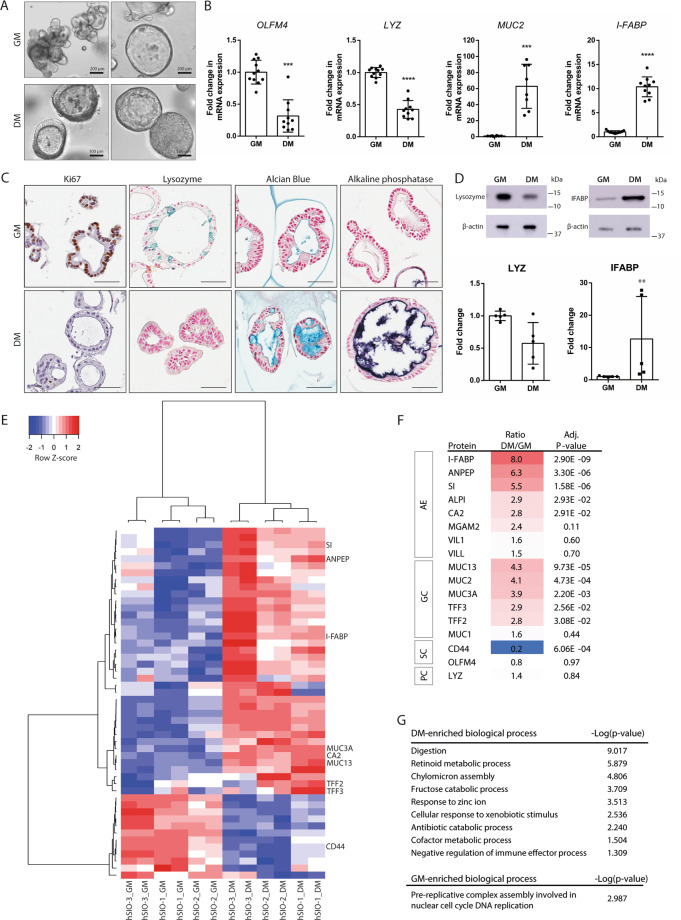
“A decreased expression of the crypt cell markers OLFM4 and LYZ upon differentiation could also be observed in human enteroids and human enteroid derived 2D monolayers [28, 61].”
BackgroundResultInfluentialAlicehajic, A., Duivenvoorden, A. A. M., & Lenaerts, K. (2024) · PROTEOMICS · doi:10.1002/pmic.202300160 · Cited by 12
“…models enable the study of the epithelial component of IR, and the human organoid model enables the separate investigation of the intestinal crypt, housing stem cells crucial for epithelial regeneration, and the intestinal villus, containing mature cells that are more vulnerable to IR injury [62].”
BackgroundSelf-citationCognitive Impairment Mechanisms in High-Altitude Exposure: Proteomic and Metabolomic Insights
Zhao, Q., Meng, J., Feng, L., Wang, S., Xiang, K., Huang, Y., Li, H., Li, X., Hu, X., Che, L., et al. (2024) · Journal of Proteome Research · doi:10.1021/acs.jproteome.4c00841 · Cited by 7
Chen, W., Xu, W., Ma, L., Bi, C., Yang, M., & Yang, W. (2025) · Frontiers in Immunology · doi:10.3389/fimmu.2024.1513196 · Cited by 8
Gao, Y., Zhang, Y., Hakke, S., Mohren, R., Sijbers, L. J. P. M., Peters, P. J., & Ravelli, R. B. G. (2024) · Biochimica et Biophysica Acta (BBA) - Bioenergetics · doi:10.1016/j.bbabio.2024.149045 · Cited by 6
Self-citationRole of the bone marrow microenvironment in multiple myeloma treatment using CAR-T therapy
Yao, H., Cheng, L., Chen, D., Zhang, Q., Qiu, L., Ren, S.-H., Dou, B.-T., Wang, H., Huang, J., & Fan, F. (2023) · Expert Review of Anticancer Therapy · doi:10.1080/14737140.2023.2229029 · Cited by 6
“a plethora of secreted cytokines and membrane-bound ligands that function as negative regulators of T-cell function [64].”
BackgroundLv, S., Ma, C., Fu, W., Hu, C., Han, X., Chen, J., Tan, X., Liu, T., & Li, W. (2025) · International Immunopharmacology · doi:10.1016/j.intimp.2025.115484 · Cited by 5
Mouse Paneth Cell-Enriched Proteome Enabled by Laser Capture Microdissection
Woo, J. J., Schoenfeld, M., Sun, X., Iraguha, T., Zhou, Z., & Zhang, Q. (2022) · Journal of Proteome Research · doi:10.1021/acs.jproteome.2c00311 · Cited by 5
Kim, S. J., Park, Y., Cho, Y., Hwang, H., Joo, D. J., Huh, K. H., & Lee, J. (2024) · Journal of Proteome Research · doi:10.1021/acs.jproteome.4c00170 · Cited by 4
[Study on the measurement of ambient ammonia in urban area based on open-path DOAS technique].
Wang, J., Xie, P.-H., Qin, M., Ling, L.-Y., Ye, C.-L., Liu, J., & Liu, W. (2012) · PubMed · Cited by 6
Tumor organoid and tumor-on-a-chip equipped next generation precision medicine
Zhao, W., Zhang, Z., Xu, S., Sun, X., Wang, Y., Ye, J., Wang, X., Gu, Z., & Chen, Z. (2025) · Biofabrication · doi:10.1088/1758-5090/ae0bb3 · Cited by 4
“In terms of basic model construction, proteomics revealed the key protein changes and differences in the expression of cell type markers in human small intestine organoids under hypoxic and reoxygenation conditions, providing a model basis for ischemia-reperfusion injury research [181].”
Huang, A., Wu, W., Chen, S., Hu, H., Shen, J., Qie, J., Zhong, M., & Zhang, L. (2022) · Applied Biochemistry and Biotechnology · doi:10.1007/s12010-022-04005-4 · Cited by 3
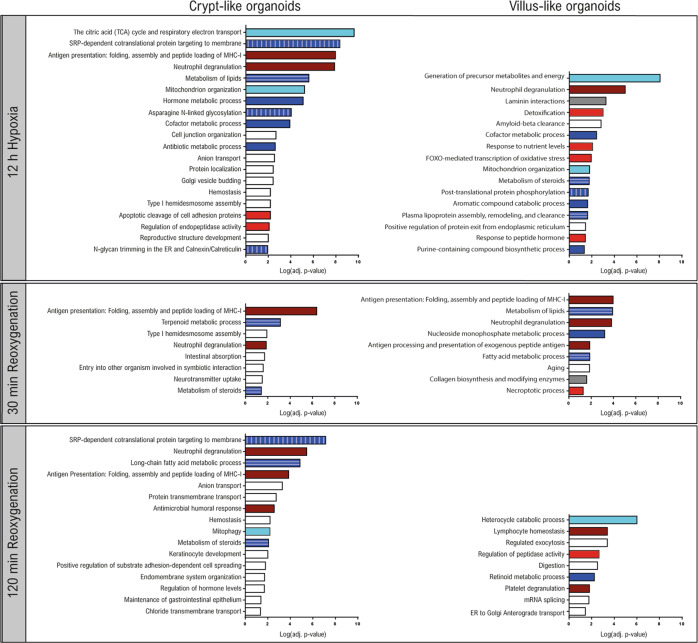
“whereas the upregulated proteins were involved in the complement cascade [13, 14].”
BackgroundThe effect of hypoxia on rheumatoid arthritis
Liu, A., Li, S., Huo, C., Qian, T., Zhu, Y., & Jiang, T. (2025) · Modern Rheumatology · doi:10.1093/mr/roaf046 · Cited by 6
Tomasina, C., Mohren, R. J. C., Camarero‐Espinosa, S., Cillero‐Pastor, B., & Moroni, L. (2024) · Small Science · doi:10.1002/smsc.202300316 · Cited by 1
Self-citationUtagawa, Y., Ogihara, A., Shinoda, Y., Li, F., Abe, H., Shiku, H., & Ino, K. (2026) · Analytical Chemistry · doi:10.1021/acs.analchem.5c07602 · Cited by 1
Ünay, S., Şirinyıldız, F., Keskin, A., & Çetin, N. K. (2026) · Journal of Molecular Histology · doi:10.1007/s10735-026-10790-7 · Cited by 1
Progress and challenges in the development of advanced pancreatic cancer organoids
Detert, K., Piotrowsky, A., Marongiu, L., Leischner, C., Lauer, U. M., Venturelli, S., & Burkard, M. (2026) · Journal of Experimental & Clinical Cancer Research · doi:10.1186/s13046-026-03717-3 · Cited by 2
“…systems, hypoxia-modulated organoid-on-chip platforms reveal how low-oxygen environments have been integrated into advanced 3D microphysiological systems, including bioelectronic, microfluidic, and vascularized chips, to mimic in vivo physiology and investigate organ-specific responses [87, 88].”
Nian, H., Li, Y., Chen, Z., Zhu, J., Yang, P., & Cui, L. (2026) · Biology · doi:10.3390/biology15120930 · Cited by 1
“These porcine intestinal organoids served as a physiologically relevant ex vivo epithelial model for evaluating the effects of surgical stress, as intestinal organoids have been widely used to study epithelial injury, regeneration, and ischemia/reperfusion-related responses [42].”
Kip, A. M. (2022) · Research Publications (Maastricht University) · doi:10.26481/dis.20220210ak
Self-citationWindhaber, C., Heckl, A., Csukovich, G., Pratscher, B., Burgener, I. A., Biermann, N., & Dengler, F. (2024) · Figshare · doi:10.6084/m9.figshare.26694378
Windhaber, C., Heckl, A., Csukovich, G., Pratscher, B., Burgener, I. A., Biermann, N., & Dengler, F. (2024) · Figshare · doi:10.6084/m9.figshare.25424762
Windhaber, C., Heckl, A., Csukovich, G., Pratscher, B., Burgener, I. A., Biermann, N., & Dengler, F. (2024) · Figshare · doi:10.6084/m9.figshare.25424811
Windhaber, C., Heckl, A., Csukovich, G., Pratscher, B., Burgener, I. A., Biermann, N., & Dengler, F. (2024) · Figshare · doi:10.6084/m9.figshare.26694375
ADH1C Down-Regulation Is a Key Hypoxia Response in Colon Epithelium
Zeineldin, M., Bi, T., Rastogi, V., Dong, Y., Abu-Shamma, R., & Larman, T. (2026) · American Journal Of Pathology · doi:10.1016/j.ajpath.2025.12.008 · Cited by 2
Recent advancements and limitations of intestinal organoids for clinical applications
Khan, M. Z. I., Roy, S., Nair, S., Pinkey, A. A. H., Al-Hilal, T. A., Law, H. K., & Roy, S. (2026) · Progress in Biomedical Engineering · doi:10.1088/2516-1091/ae8107
E-cadherin acts as a dynamic switch in epithelial regeneration in inflammatory bowel disease
Girma, B., Ayansola, H., Chen, J., Kim, J., Miko, C., Gruskin, Z. L., & Jin, Y. (2026) · American Journal of Physiology-Gastrointestinal and Liver Physiology · doi:10.1152/ajpgi.00044.2026
Elango, M., Arikath, K., Qiu, H., Ponnusamy, M. P., Black, A., & Salomon, J. (2026) · Research Square · doi:10.21203/rs.3.rs-10296197/v1
Verstraete, P., Heylen, E., Sánchez‐Castillo, A., Fontela, J., Matthys, L., Meykens, S., Herranz, Ó., Verma, S., Doan, L. M. T., Aerschot, L. V., et al. (2026) · bioRxiv (Cold Spring Harbor Laboratory) · doi:10.64898/2026.08.17.744660
Metadata
- Authors
- Kip, A. M., Soons, Z., Mohren, R., Duivenvoorden, A. A. M., Röth, A. A. J., Cillero-Pastor, B., Neumann, U. P., Dejong, C. H. C., Heeren, R. M. A., Olde Damink, S. W. M., & Lenaerts, K.
- Affiliations
- Maastricht University Medical Centre (NL)
- Maastricht University (NL)
- Corresponding author
- Lenaerts, Kaatje
- ORCID
- Venue
- Cell Death & Disease
- Published
- 2021-01-18
- Volume
- 12
- Issue
- 1
- Pages
- 95-95
- ISSN
- 2041-4889 (ISSN-L)
- PMC
- PMC7813872
- OpenAlex
- W3125323472
- Cited by
- 55
- References
- 65
- Citations by year
- 2026: 9 · 2025: 9 · 2024: 16 · 2023: 11 · 2022: 6 · 2021: 3
- FWCI
- 8.45
- Type
- journal article
- Language
- en
- Open access
- gold
- doi.org
- Licence
- cc-by
- creativecommons.org/licenses/by/4.0 (tdm)
- creativecommons.org/licenses/by/4.0 (vor)
- Locations
- Cell Death and Disease (publishedVersion, cc-by)
- PubMed Central (publishedVersion, cc-by)
- PubMed (publishedVersion)
- RWTH Publications (RWTH Aachen) (submittedVersion, cc-by)
- Research Publications (Maastricht University) (submittedVersion, cc-by)
- DOAJ (DOAJ: Directory of Open Access Journals) (submittedVersion, cc-by-sa)
- Research Publications (Maastricht University) (submittedVersion, other-oa)
- RWTH Publications (RWTH Aachen)
- Funders
- NWO Dutch Research council
- Topics
- Health Sciences › Medicine › Surgery › Abdominal vascular conditions and treatments
- Health Sciences › Medicine › Cardiology and Cardiovascular Medicine › Cardiac Ischemia and Reperfusion
- Physical Sciences › Chemistry › Spectroscopy › Advanced Proteomics Techniques and Applications
- Keywords
- intestinal ischemia-reperfusion injury, intestinal organoids, hypoxia/reoxygenation, epithelial damage, mitochondrial metabolism, mitophagy, oxidative stress, immune response, NDRG1, DMBT1, in vitro disease model
- MeSH terms
- Animals, Cell Differentiation, Disease Models, Animal, Humans, Intestines, Organoids, Reperfusion Injury, Cell Hypoxia, Proteomics
About these checks
Registry, retraction, Cites and statistics results are computed, not judged, with one exception: a printed reference that no index lists is read once by a model before it counts as a citation error. Claims are extracted by a model and kept only when their quote appears verbatim in the text; each cited source is then checked, with a model’s help, for whether it says what the claim relies on. Those verdicts can be wrong — read the claim’s quote and the cited source before relying on one.
Statistics and arithmetic are recomputed, not judged.
Confidence bands are shown only for fields calibrated on our annotated test set. None is calibrated yet, so no band is shown.
What counts as a claim ›How we measure confidence ›How we check this ›
Are you an author, or do you see a problem with this page? Request a review
Data sources
Bibliographic data: Semantic Scholar, OpenAlex, Crossref.
Contains information from the Semantic Scholar Academic Graph Datasets, made available under the ODC Attribution License (ODC-BY 1.0).
Semantic Scholar’s data is described in: Kinney, R., et al. (2023). The Semantic Scholar Open Data Platform. arXiv:2301.10140.
