

Proteomics analysis of human intestinal organoids during hypoxia and reoxygenation as a model to study ischemia-reperfusion injury
Open accessThe DOI matches its Crossref record; 65 of the 65 references it cites were found in a registry or an index.
Abstract
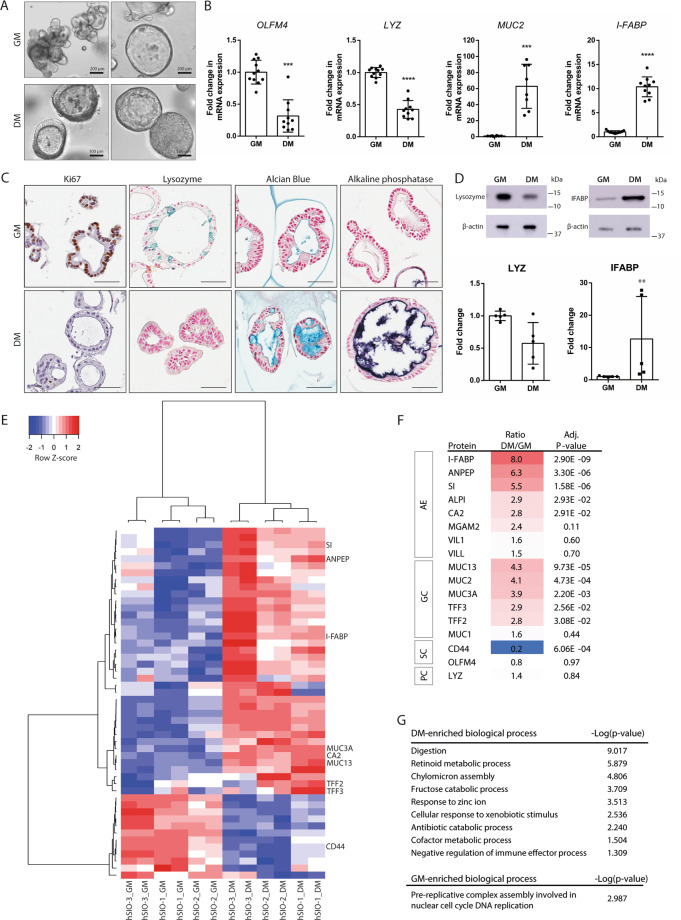
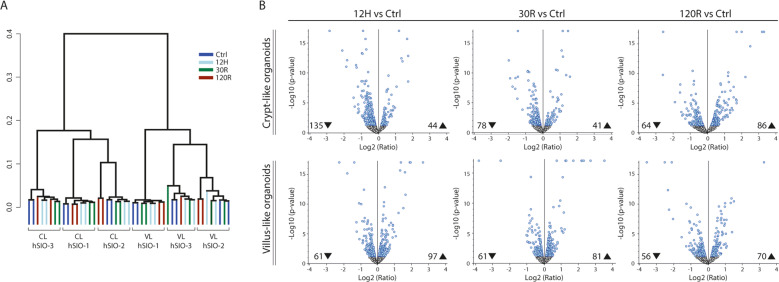
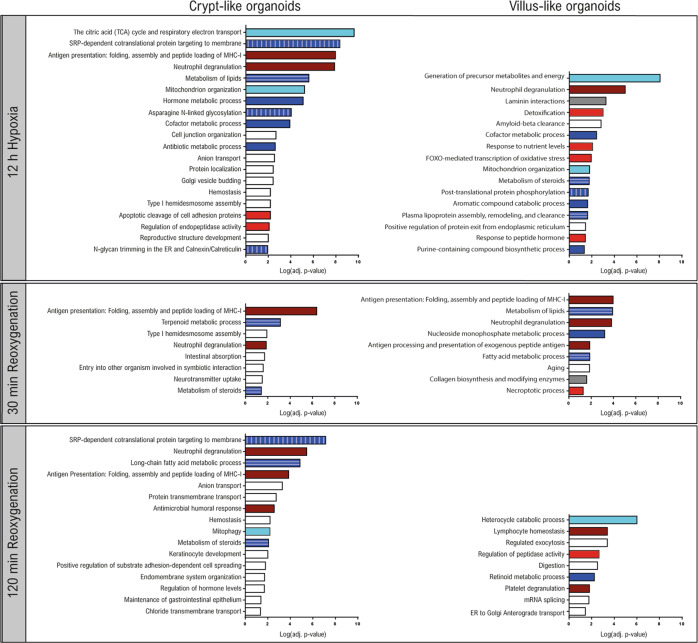
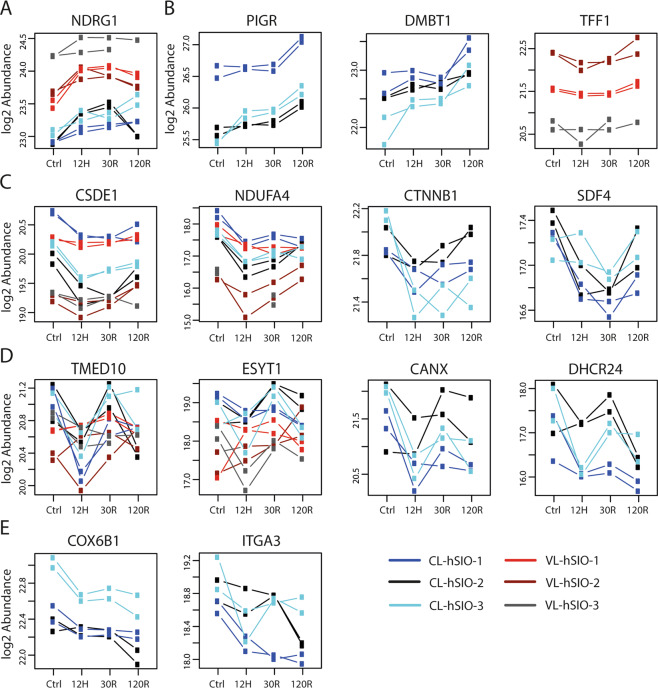
Intestinal ischemia-reperfusion (IR) injury is associated with high mortality rates, which have not improved in the past decades despite advanced insight in its pathophysiology using in vivo animal and human models. The inability to translate previous findings to effective therapies emphasizes the need for a physiologically relevant in vitro model to thoroughly investigate mechanisms of IR-induced epithelial injury and test potential therapies. In this study, we demonstrate the use of human small intestinal organoids to model IR injury by exposing organoids to hypoxia and reoxygenation (HR). A mass-spectrometry-based proteomics approach was applied to characterize organoid differentiation and decipher protein dynamics and molecular mechanisms of IR injury in crypt-like and villus-like human intestinal organoids. We showed successful separation of organoids exhibiting a crypt-like proliferative phenotype, and organoids exhibiting a villus-like phenotype, enriched for enterocytes and goblet cells. Functional enrichment analysis of significantly changing proteins during HR revealed that processes related to mitochondrial metabolism and organization, other metabolic processes, and the immune response were altered in both organoid phenotypes. Changes in protein metabolism, as well as mitophagy pathway and protection against oxidative stress were more pronounced in crypt-like organoids, whereas cellular stress and cell death associated protein changes were more pronounced in villus-like organoids. Profile analysis highlighted several interesting proteins showing a consistent temporal profile during HR in organoids from different origin, such as NDRG1, SDF4 or DMBT1. This study demonstrates that the HR response in human intestinal organoids recapitulates properties of the in vivo IR response. Our findings provide a framework for further investigations to elucidate underlying mechanisms of IR injury in crypt and/or villus separately, and a model to test therapeutics to prevent IR injury.
Overview
The claims and statistics of this paper haven’t been checked yet.
Free: it reads the open-access text and checks the first 5 claims that cite a source we can check. Create a free account to check every claim.
Integrity signals
Registry
Cites
Statistics
Figures
Verification
Claims the paper makes
The claims and statistics of this paper haven’t been checked yet.
Free: it reads the open-access text and checks the first 5 claims that cite a source we can check. Create a free account to check every claim.
Claims other papers make about this one
Each is checked against this paper’s own text: does it say what the citing paper says it does?
The source backs part of the claim, not all of it — or backs it for a different population, condition or comparison.
In the citing paper
“Single-cell and spatial profiling at transcriptional, proteomic and epigenetic levels (Box 2) can substantially improve disease model validation161,162”
From Human disease models in drug development (2023) · cites this paper as [162]
Experimental — accuracy not yet measuredThe source backs part of the claim, not all of it — or backs it for a different population, condition or comparison.
In the citing paper
“Mass spectrometry-based proteomics measures protein abundance and dynamics, identifies subcellular protein localization and post-transcriptional modifications, and facilitates the generation of interaction networks162”
From Human disease models in drug development (2023) · cites this paper as [162]
Experimental — accuracy not yet measured
Self-check
Percentages, sums and reported differences re-computed from the paper’s own numbers.
The self-check needs the paper’s full text.
Citations
Cites
1 retracted
Gilkes, D. M., Bajpai, S., Chaturvedi, P., Wirtz, D., & Semenza, G. L. (2013) · Journal of Biological Chemistry · doi:10.1074/jbc.m112.442939 · Cited by 467
RetractedMetascape provides a biologist-oriented resource for the analysis of systems-level datasets
Zhou, Y., Zhou, B., Pache, L., Chang, M., Khodabakhshi, A. H., Tanaseichuk, O., Benner, C., & Chanda, S. K. (2019) · Nature Communications · doi:10.1038/s41467-019-09234-6 · Cited by 14,611
Single Lgr5 stem cells build crypt-villus structures in vitro without a mesenchymal niche
Sato, T., Vries, R. G., Snippert, H. J., van de Wetering, M., Barker, N., Stange, D. E., van Es, J. H., Abo, A., Kujala, P., Peters, P. J., et al. (2009) · Nature · doi:10.1038/nature07935 · Cited by 7,204
Sato, T., Stange, D. E., Ferrante, M., Vries, R. G. J., van Es, J. H., van den Brink, S., van Houdt, W. J., Pronk, A., van Gorp, J., Siersema, P. D., et al. (2011) · Gastroenterology · doi:10.1053/j.gastro.2011.07.050 · Cited by 3,753
Ischemia and reperfusion—from mechanism to translation
Eltzschig, H. K., & Eckle, T. (2011) · Nature Medicine · doi:10.1038/nm.2507 · Cited by 3,382
Prospective Derivation of a Living Organoid Biobank of Colorectal Cancer Patients
van de Wetering, M., Francies, H. E., Francis, J. M., Bounova, G., Iorio, F., Pronk, A., van Houdt, W., van Gorp, J., Taylor-Weiner, A., Kester, L., et al. (2015) · Cell · doi:10.1016/j.cell.2015.03.053 · Cited by 2,408
Chiu, C.-J. (1970) · Archives of Surgery · doi:10.1001/archsurg.1970.01340280030009 · Cited by 1,800
Long-Term Culture of Genome-Stable Bipotent Stem Cells from Adult Human Liver
Huch, M., Gehart, H., van Boxtel, R., Hamer, K., Blokzijl, F., Verstegen, M. M. A., Ellis, E., van Wenum, M., Fuchs, S. A., de Ligt, J., et al. (2015) · Cell · doi:10.1016/j.cell.2014.11.050 · Cited by 1,619
Cellular Adaptation to Hypoxia through Hypoxia Inducible Factors and beyond
Lee, P., Chandel, N. S., & Simon, M. C. (2020) · Nature Reviews Molecular Cell Biology · doi:10.1038/s41580-020-0227-y · Cited by 1,272
The sites and topology of mitochondrial superoxide production
Brand, M. D. (2010) · Experimental Gerontology · doi:10.1016/j.exger.2010.01.003 · Cited by 1,217
Growing Self-Organizing Mini-Guts from a Single Intestinal Stem Cell: Mechanism and Applications
Sato, T., & Clevers, H. (2013) · Science · doi:10.1126/science.1234852 · Cited by 1,170
Lipotoxicity: when tissues overeat
Schaffer, J. E. (2003) · Current Opinion in Lipidology · doi:10.1097/00041433-200306000-00008 · Cited by 896
Disease modeling in stem cell-derived 3D organoid systems
Dutta, D., Heo, I., & Clevers, H. (2017) · Trends in Molecular Medicine · doi:10.1016/j.molmed.2017.02.007 · Cited by 838
Ooft, S. N., Weeber, F., Dijkstra, K. K., McLean, C. M., Kaing, S., van Werkhoven, E., Schipper, L., Hoes, L., Vis, D. J., van de Haar, J., et al. (2019) · Science Translational Medicine · doi:10.1126/scitranslmed.aay2574 · Cited by 813
Mitochondrial composition and function under the control of hypoxia
Fuhrmann, D. C., & Brüne, B. (2017) · Redox Biology · doi:10.1016/j.redox.2017.02.012 · Cited by 643
Molecular Mechanisms of Superoxide Production by the Mitochondrial Respiratory Chain
Dröse, S., & Brandt, U. (2012) · Advances in Experimental Medicine and Biology · doi:10.1007/978-1-4614-3573-0_6 · Cited by 520
Regulation of intestinal lipid metabolism: current concepts and relevance to disease
Ko, C.-W., Qu, J., Black, D. D., & Tso, P. (2020) · Nature Reviews Gastroenterology & Hepatology · doi:10.1038/s41575-019-0250-7 · Cited by 510
Very long-chain fatty acids: elongation, physiology and related disorders
Kihara, A. (2012) · Journal of Biochemistry · doi:10.1093/jb/mvs105 · Cited by 441
Park, P.-O., Haglund, U., Bulkley, G. B., & Fält, K. (1990) · PubMed · Cited by 429
Zhou, H., Zhu, P., Wang, J., Zhu, H., Ren, J., & Chen, Y. (2018) · Cell Death & Differentiation · doi:10.1038/s41418-018-0086-7 · Cited by 416
Saxena, K., Blutt, S. E., Ettayebi, K., Zeng, X.-L., Broughman, J. R., Crawford, S. E., Karandikar, U. C., Sastri, N. P., Conner, M. E., Opekun, A. R., et al. (2016) · Journal of Virology · doi:10.1128/jvi.01930-15 · Cited by 375
Mitochondrial Quality Control and Disease: Insights into Ischemia-Reperfusion Injury
Anzell, A. R., Maizy, R., Przyklenk, K., & Sanderson, T. H. (2018) · Molecular Neurobiology · doi:10.1007/s12035-017-0503-9 · Cited by 350
Next maSigPro: updating maSigPro bioconductor package for RNA-seq time series
Nueda, M. J., Tarazona, S., & Conesa, A. (2014) · Bioinformatics · doi:10.1093/bioinformatics/btu333 · Cited by 348
Muralidharan, S., & Mandrekar, P. (2013) · Journal of Leukocyte Biology · doi:10.1189/jlb.0313153 · Cited by 329
Control of intestinal stem cell function and proliferation by mitochondrial pyruvate metabolism
Schell, J. C., Wisidagama, D. R., Bensard, C., Zhao, H., Wei, P., Tanner, J., Flores, A., Mohlman, J., Sorensen, L. K., Earl, C. S., et al. (2017) · Nature Cell Biology · doi:10.1038/ncb3593 · Cited by 322
Mitochondria, Oxidative Stress and Innate Immunity
Chen, Y., Zhou, Z., & Min, W. (2018) · Frontiers in Physiology · doi:10.3389/fphys.2018.01487 · Cited by 315
Tang, C., Han, H., Yan, M., Zhu, S., Liu, J., Liu, Z., He, L., Tan, J., Liu, Y., Liu, H., et al. (2018) · Autophagy · doi:10.1080/15548627.2017.1405880 · Cited by 309
Thuerauf, D. J., Marcinko, M., Gude, N., Rubio, M., Sussman, M. A., & Glembotski, C. C. (2006) · Circulation Research · doi:10.1161/01.res.0000233317.70421.03 · Cited by 306
Unchanged high mortality rates from acute occlusive intestinal ischemia: six year review
Kassahun, W. T., Schulz, T., Richter, O., & Hauss, J. (2008) · Langenbeck's Archives of Surgery · doi:10.1007/s00423-007-0263-5 · Cited by 262
Gonzalez, L. M., Moeser, A. J., & Blikslager, A. T. (2015) · American Journal of Physiology-Gastrointestinal and Liver Physiology · doi:10.1152/ajpgi.00112.2013 · Cited by 252
Stringari, C., Edwards, R. A., Pate, K. T., Waterman, M. L., Donovan, P. J., & Gratton, E. (2012) · Scientific Reports · doi:10.1038/srep00568 · Cited by 250
Cellular Differences in Protein Synthesis Regulate Tissue Homeostasis
Buszczak, M., Signer, R. A. J., & Morrison, S. J. (2014) · Cell · doi:10.1016/j.cell.2014.09.016 · Cited by 220
Characterization of epithelial cell shedding from human small intestine
Bullen, T. F., Forrest, S., Campbell, F., Dodson, A. R., Hershman, M. J., Pritchard, D. M., Turner, J. R., Montrose, M. H., & Watson, A. J. M. (2006) · Laboratory Investigation · doi:10.1038/labinvest.3700464 · Cited by 214
Human Enteroids as a Model of Upper Small Intestinal Ion Transport Physiology and Pathophysiology
Foulke-Abel, J., In, J., Yin, J., Zachos, N. C., Kovbasnjuk, O., Estes, M. K., de Jonge, H., & Donowitz, M. (2016) · Gastroenterology · doi:10.1053/j.gastro.2015.11.047 · Cited by 201
A ribosome assembly stress response regulates transcription to maintain proteome homeostasis
Albert, B., Kos-Braun, I. C., Henras, A. K., Dez, C., Rueda, M. P., Zhang, X., Gadal, O., Kos, M., & Shore, D. (2019) · eLife · doi:10.7554/elife.45002 · Cited by 182
Altay, G., Larrañaga, E., Tosi, S., Barriga, F. M., Batlle, E., Fernández‐Majada, V., & Martínez, E. (2019) · Scientific Reports · doi:10.1038/s41598-019-46497-x · Cited by 161
Grootjans, J., Lenaerts, K., Buurman, W. A., Dejong, C. H. C., & Derikx, J. P. M. (2016) · World Journal of Gastroenterology · doi:10.3748/wjg.v22.i9.2760 · Cited by 160
Self-citationBadiola, N., Penas, C., Miñano-Molina, A., Barneda-Zahonero, B., Fadó, R., Sánchez-Opazo, G., Comella, J. X., Sabriá, J., Zhu, C., Blomgren, K., et al. (2011) · Cell Death & Disease · doi:10.1038/cddis.2011.31 · Cited by 159
Cristobal, A., van den Toorn, H. W. P., van de Wetering, M., Clevers, H., Heck, A. J. R., & Mohammed, S. (2017) · Cell Reports · doi:10.1016/j.celrep.2016.12.016 · Cited by 153
Unfolded protein response (UPR) integrated signaling networks determine cell fate during hypoxia
Bartoszewska, S., & Collawn, J. F. (2020) · Cellular & Molecular Biology Letters · doi:10.1186/s11658-020-00212-1 · Cited by 146
(2000) · Gastroenterology · doi:10.1016/s0016-5085(00)70182-x · Cited by 141
Grootjans, J., Hodin, C. M. I. M., de Haan, J. J., Derikx, J. P. M., Rouschop, K. M. A., Verheyen, F., van Dam, R. M., Dejong, C. H. C., Buurman, W. A., & Lenaerts, K. (2010) · Gastroenterology · doi:10.1053/j.gastro.2010.10.040 · Cited by 139
Self-citationDerikx, J. P. M., Matthijsen, R. A., de Bruïne, A. P., van Bijnen, A. A., Heineman, E., van Dam, R. M., Dejong, C. H. C., & Buurman, W. A. (2008) · PLoS ONE · doi:10.1371/journal.pone.0003428 · Cited by 130
Self-citationWang, Z., Chen, K., Han, Y., Zhu, H., Zhou, X., Tan, T., Zeng, J., Zhang, J., Liu, Y., Li, Y., et al. (2018) · Journal of Cardiovascular Pharmacology · doi:10.1097/fjc.0000000000000608 · Cited by 128
Ex vivo culture of the intestinal epithelium: strategies and applications
Leushacke, M., & Barker, N. (2014) · Gut · doi:10.1136/gutjnl-2014-307204 · Cited by 115
Long-term expansion, genomic stability and in vivo safety of adult human pancreas organoids
Georgakopoulos, N., Prior, N., Angres, B., Mastrogiovanni, G., Cagan, A., Harrison, D., Hindley, C. J., Arnes-Benito, R., Liau, S.-S., Curd, A., et al. (2020) · BMC Developmental Biology · doi:10.1186/s12861-020-0209-5 · Cited by 112
Sassa, T., Suto, S., Okayasu, Y., & Kihara, A. (2012) · Biochimica et Biophysica Acta (BBA) - Molecular and Cell Biology of Lipids · doi:10.1016/j.bbalip.2012.04.008 · Cited by 102
Sahni, S., Bae, D.-H., Lane, D. J. R., Kovacevic, Z., Kalinowski, D. S., Jansson, P. J., & Richardson, D. R. (2014) · Journal of Biological Chemistry · doi:10.1074/jbc.m113.529511 · Cited by 101
DMBT1, a regulator of mucosal homeostasis through the linking of mucosal defense and regeneration?
Kang, W., & Reid, K. B. M. (2003) · FEBS Letters · doi:10.1016/s0014-5793(03)00217-5 · Cited by 96
Mitochondrial Thioredoxin Reductase Is Essential for Early Postischemic Myocardial Protection
Horstkotte, J., Perisic, T., Schneider, M., Lange, P., Schroeder, M., Kiermayer, C., Hinkel, R., Ziegler, T., Mandal, P. K., David, R., et al. (2011) · Circulation · doi:10.1161/circulationaha.111.059253 · Cited by 95
Okkelman, I. A., Neto, N., Papkovsky, D. B., Monaghan, M. G., & Dmitriev, R. I. (2020) · Redox Biology · doi:10.1016/j.redox.2019.101420 · Cited by 94
Dissolved oxygen concentration in culture medium: assumptions and pitfalls
Newby, D., Marks, L., & Lyall, F. (2004) · Placenta · doi:10.1016/j.placenta.2004.07.002 · Cited by 89
Cab45S inhibits the ER stress-induced IRE1-JNK pathway and apoptosis via GRP78/BiP
Chen, L., Xu, S., Liu, L., Wen, X., Xu, Y., Chen, J., & Teng, J. (2014) · Cell Death & Disease · doi:10.1038/cddis.2014.193 · Cited by 85
Oligosaccharyltransferase: A Gatekeeper of Health and Tumor Progression
Harada, Y., Ohkawa, Y., Kizuka, Y., & Taniguchi, N. (2019) · International Journal of Molecular Sciences · doi:10.3390/ijms20236074 · Cited by 81
The role of CSDE1 in translational reprogramming and human diseases
Guo, A.-X., Cui, J., Wang, L., & Yin, J. (2020) · Cell Communication and Signaling · doi:10.1186/s12964-019-0496-2 · Cited by 81
New insights in intestinal ischemia–reperfusion injury: implications for intestinal transplantation
Lenaerts, K., Ceulemans, L. J., Hundscheid, I. H. R., Grootjans, J., Dejong, C. H. C., & Damink, S. W. M. O. (2013) · Current Opinion in Organ Transplantation · doi:10.1097/mot.0b013e32835ef1eb · Cited by 76
Self-citationIntestinal cells produce basement membrane proteins in vitro.
Hahn, U., Schuppan, D., Hahn, E. G., Merker, H.-J., & Riecken, E. O. (1987) · Gut · doi:10.1136/gut.28.suppl.143 · Cited by 40
Onozato, D., Akagawa, T., Kida, Y., Ogawa, I., Hashita, T., Iwao, T., & Matsunaga, T. (2020) · Biological and Pharmaceutical Bulletin · doi:10.1248/bpb.b20-00088 · Cited by 40
A New Model to Study Intestinal Ischemia-Reperfusion Damage in Man
Derikx, J. P. M., Matthijsen, R. A., de Bruïne, A. P., van Dam, R. M., Buurman, W. A., & Dejong, C. H. C. (2009) · Journal of Surgical Research · doi:10.1016/j.jss.2009.09.046 · Cited by 38
Self-citationHypoxia-Induced Collagen Synthesis of Human Lung Fibroblasts by Activating the Angiotensin System
Liu, S., Wang, H.-Y., Tang, J., & Zhou, X. (2013) · International Journal of Molecular Sciences · doi:10.3390/ijms141224029 · Cited by 36
Life in the Gut Without Oxygen: Adaptive Mechanisms and Inflammatory Bowel Disease
Blikslager, A. T. (2008) · Gastroenterology · doi:10.1053/j.gastro.2007.11.049 · Cited by 31
The metastasis suppressor, NDRG1, differentially modulates the endoplasmic reticulum stress response
Merlot, A. M., Porter, G., Sahni, S., Lim, E. G., Peres, P., & Richardson, D. R. (2019) · Biochimica et Biophysica Acta (BBA) - Molecular Basis of Disease · doi:10.1016/j.bbadis.2019.04.007 · Cited by 31
Cab45S promotes cell proliferation through SERCA2b inhibition and Ca2+ signaling
Chen, L., Xu, S., Xu, Y., Lu, W. Y., Liu, L., Yue, D., Teng, J., & Chen, J. (2015) · Oncogene · doi:10.1038/onc.2015.56 · Cited by 30
Tajima, R., Kawaguchi, N., Horino, Y., Takahashi, Y. K., Toriyama, K., Inou, K., Torii, S., & Kitagawa, Y. (2001) · Biochimica et Biophysica Acta (BBA) - Molecular Cell Research · doi:10.1016/s0167-4889(01)00114-8 · Cited by 25
Dissolved oxygen concentration in the medium during cell culture: Defects and improvements
Zhang, K., Zhao, T., Huang, X. H., He, Y., Zhou, Y., Wu, L., Wu, K., Fan, M., & Zhu, L. (2015) · Cell Biology International · doi:10.1002/cbin.10570 · Cited by 18
Cited by
Human disease models in drug development
Loewa, A., Feng, J. J., & Hedtrich, S. (2023) · Nature Reviews Bioengineering · doi:10.1038/s44222-023-00063-3 · Cited by 331
Human Intestinal Organoids: Promise and Challenge
Taelman, J., Díaz, M., & Guiu, J. (2022) · Frontiers in Cell and Developmental Biology · doi:10.3389/fcell.2022.854740 · Cited by 122
Xiang, D., He, A., Zhou, R., Wang, Y., Xiao, X., Gong, T., Kang, W., Lin, X., Wang, X., Consortium11, P.-B. D., et al. (2024) · Theranostics · doi:10.7150/thno.96027 · Cited by 108
“Multi-omics investigations, including genomics [45], proteomics [46, 47], and metabolomics [48], further enhance the reliability of applying PDOs for discovering novel therapeutic targets.”
BackgroundAI‐organoid integrated systems for biomedical studies and applications
Maramraju, S., Kowalczewski, A. C., Kaza, A., Liu, X., Singaraju, J. P., Albert, M. V., Ma, Z., & Yang, H. (2024) · Bioengineering & Translational Medicine · doi:10.1002/btm2.10641 · Cited by 111
“24 In a recent study, proteomics discovered several dysregulated proteins from neural progenitor cells from schizophrenic patients-derived cerebral organoids that can alter and disturb normal neuronal development.”
BackgroundMicrobiome as an immune regulator in health, disease, and therapeutics
Juarez, V. M., Montalbine, A. N., & Singh, A. K. (2022) · Advanced Drug Delivery Reviews · doi:10.1016/j.addr.2022.114400 · Cited by 79
Metadata
- Authors
- Kip, A. M., Soons, Z., Mohren, R., Duivenvoorden, A. A. M., Röth, A. A. J., Cillero-Pastor, B., Neumann, U. P., Dejong, C. H. C., Heeren, R. M. A., Olde Damink, S. W. M., & Lenaerts, K.
- Affiliations
- Maastricht University Medical Centre (NL)
- Maastricht University (NL)
- Corresponding author
- Lenaerts, Kaatje
- ORCID
- Venue
- Cell Death & Disease
- Published
- 2021-01-18
- Volume
- 12
- Issue
- 1
- Pages
- 95-95
- ISSN
- 2041-4889 (ISSN-L)
- PMC
- PMC7813872
- OpenAlex
- W3125323472
- Cited by
- 55
- References
- 65
- Citations by year
- 2026: 9 · 2025: 9 · 2024: 16 · 2023: 11 · 2022: 6 · 2021: 3
- FWCI
- 8.45
- Type
- journal article
- Language
- en
- Open access
- gold
- doi.org
- Licence
- cc-by
- creativecommons.org/licenses/by/4.0 (tdm)
- creativecommons.org/licenses/by/4.0 (vor)
- Locations
- Cell Death and Disease (publishedVersion, cc-by)
- PubMed Central (publishedVersion, cc-by)
- PubMed (publishedVersion)
- RWTH Publications (RWTH Aachen) (submittedVersion, cc-by)
- Research Publications (Maastricht University) (submittedVersion, cc-by)
- DOAJ (DOAJ: Directory of Open Access Journals) (submittedVersion, cc-by-sa)
- Research Publications (Maastricht University) (submittedVersion, other-oa)
- RWTH Publications (RWTH Aachen)
- Funders
- NWO Dutch Research council
- Topics
- Health Sciences › Medicine › Surgery › Abdominal vascular conditions and treatments
- Health Sciences › Medicine › Cardiology and Cardiovascular Medicine › Cardiac Ischemia and Reperfusion
- Physical Sciences › Chemistry › Spectroscopy › Advanced Proteomics Techniques and Applications
- Keywords
- intestinal ischemia-reperfusion injury, intestinal organoids, hypoxia/reoxygenation, epithelial damage, mitochondrial metabolism, mitophagy, oxidative stress, immune response, NDRG1, DMBT1, in vitro disease model
- MeSH terms
- Animals, Cell Differentiation, Disease Models, Animal, Humans, Intestines, Organoids, Reperfusion Injury, Cell Hypoxia, Proteomics
About these checks
Registry, retraction, Cites and statistics results are computed, not judged, with one exception: a printed reference that no index lists is read once by a model before it counts as a citation error. Claims are extracted by a model and kept only when their quote appears verbatim in the text; each cited source is then checked, with a model’s help, for whether it says what the claim relies on. Those verdicts can be wrong — read the claim’s quote and the cited source before relying on one.
Statistics and arithmetic are recomputed, not judged.
Confidence bands are shown only for fields calibrated on our annotated test set. None is calibrated yet, so no band is shown.
What counts as a claim ›How we measure confidence ›How we check this ›
Are you an author, or do you see a problem with this page? Request a review
Data sources
Bibliographic data: Semantic Scholar, OpenAlex, Crossref.
Contains information from the Semantic Scholar Academic Graph Datasets, made available under the ODC Attribution License (ODC-BY 1.0).
Semantic Scholar’s data is described in: Kinney, R., et al. (2023). The Semantic Scholar Open Data Platform. arXiv:2301.10140.
