

MCL1 nuclear translocation induces chemoresistance in colorectal carcinoma
Open accessThe DOI matches its Crossref record; 53 of the 53 references it cites were found in a registry or an index; none of the 40 sources its claims cite is checked for support yet.
Abstract
Colorectal cancer (CRC) is one of the most common and deadliest forms of cancer. Myeloid Cell Leukemia 1 (MCL1), a pro-survival member of the Bcl-2 protein family is associated with chemo-resistance in CRC. The ability of MCL1 to inhibit apoptosis by binding to the BH3 domains of pro-apoptotic Bcl-2 family members is a well-studied means by which this protein confers resistance to multiple anti-cancer therapies. We found that specific DNA damaging chemotherapies promote nuclear MCL1 translocation in CRC models. In p53 null CRC, this process is associated with resistance to chemotherapeutic agents, the mechanism of which is distinct from the classical mitochondrial protection. We previously reported that MCL1 has a noncanonical chemoresistance capability, which requires a novel loop domain that is distinct from the BH3-binding domain associated with anti-apoptotic function. Herein we disclose that upon treatment with specific DNA-damaging chemotherapy, this loop domain binds directly to alpha-enolase which in turn binds to calmodulin; we further show these protein−protein interactions are critical in MCL1’s nuclear import and chemoresistance. We additionally observed that in chemotherapy-treated p53 −/− CRC models, MCL1 nuclear translocation confers sensitivity to Bcl-xL inhibitors, which has significant translational relevance given the co-expression of these proteins in CRC patient samples. Together these findings indicate that chemotherapy-induced MCL1 translocation represents a novel resistance mechanism in CRC, while also exposing an inherent and targetable Bcl-xL co-dependency in these cancers. The combination of chemotherapy and Bcl-xL inhibitors may thus represent a rational means of treating p53 −/− CRC via exploitation of this unique MCL1-based chemoresistance mechanism.
Overview
CoChat Summary
TL;DR
DNA-damaging chemotherapy promotes MCL1 nuclear translocation in colorectal carcinoma through an ENO1/calmodulin-dependent, loop-domain-dependent mechanism, and this nuclear MCL1 drives chemoresistance in p53-deficient models. Nuclear MCL1 also creates sensitivity to Bcl-xL inhibition, suggesting a rational combination strategy.
Key findings
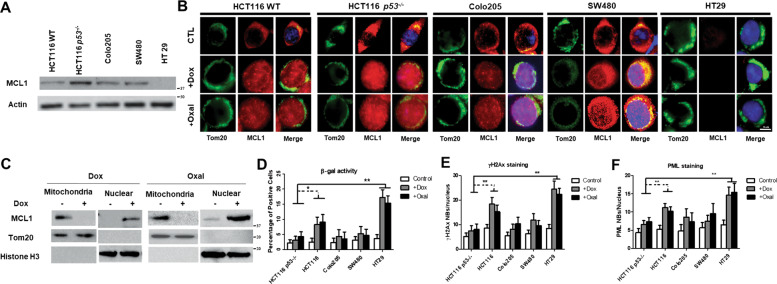
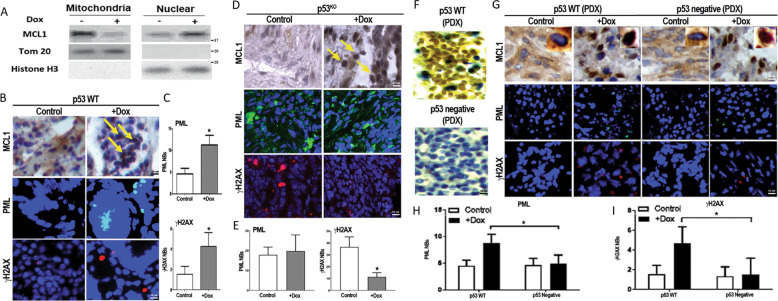
- Doxorubicin (100 ng/ml) and oxaliplatin (10 μM) induced MCL1 nuclear translocation in CRC cell lines and in vivo; in p53−/− HCT116 and p53-deficient models this correlated with resistance to chemotherapy-induced senescence markers (β-gal, γH2AX, PML foci). SW480 and Colo205 were also resistant, though statistically insignificant compared with p53WT HCT116.
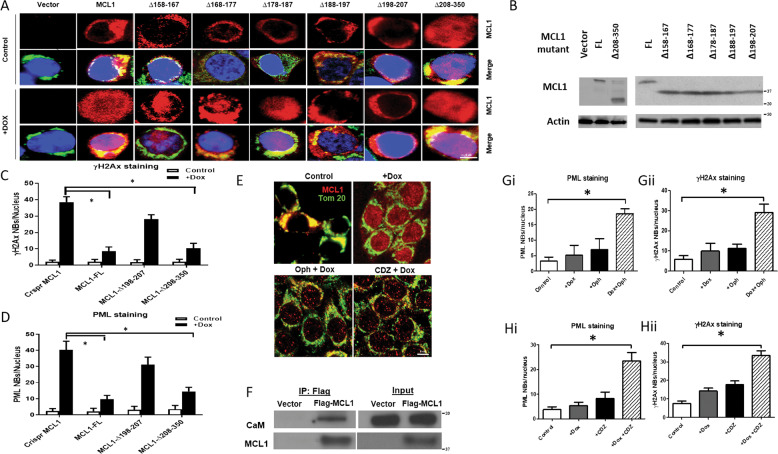
- MCL1 nuclear translocation required the loop domain: deletion ∆198–207 impaired nuclear translocation and reduced chemoresistance, whereas BH3-domain deletion ∆208–350 did not. CaM inhibitors Ophiobolin A (5 µM) or calmidazolium chloride (5 µM) blocked translocation and increased PML/γH2AX foci.
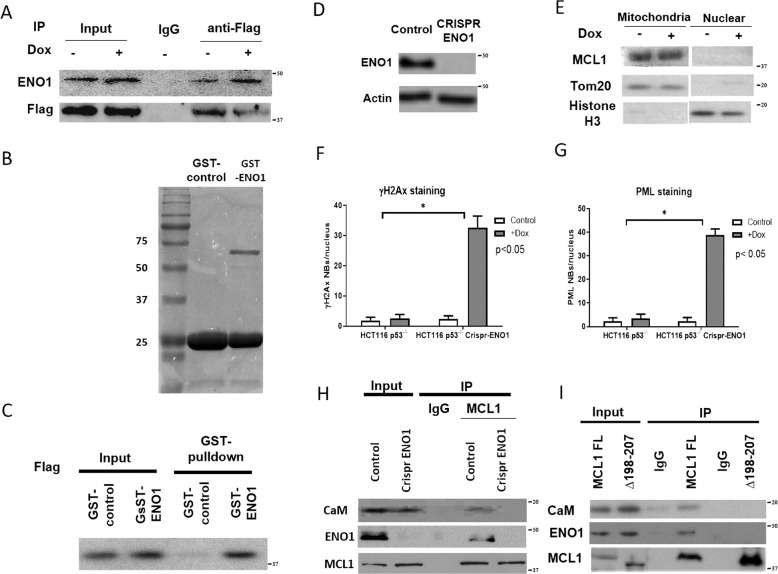
- ENO1 bridged MCL1 and CaM: ENO1 deficiency blocked doxorubicin-induced MCL1 nuclear translocation and sensitized p53−/− HCT116 to doxorubicin-induced DNA damage; MCL1/CaM co-immunoprecipitation failed in ENO1-deficient cells, and only full-length MCL1 co-immunoprecipitated with CaM and ENO1.
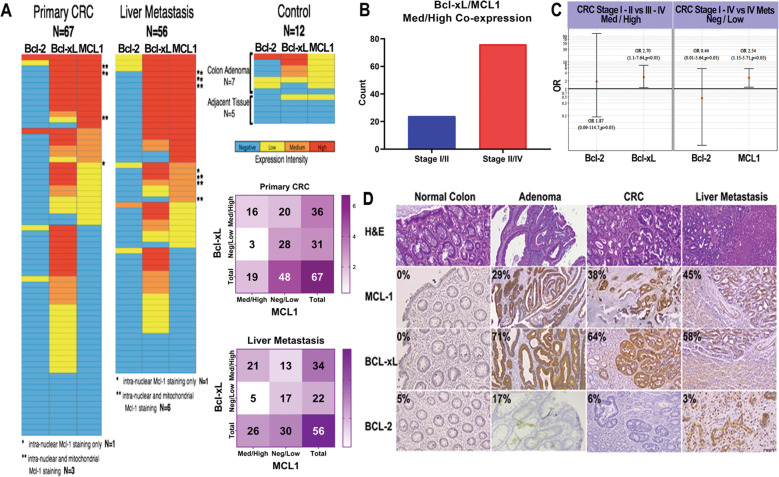
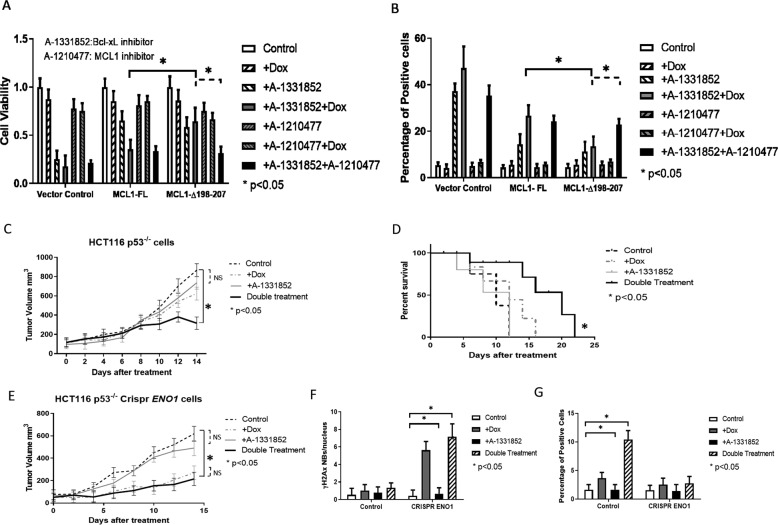
- In human CRC IHC, primary CRC had medium/high Bcl-xL in 36/67 (54%), medium/high MCL1 in 19/67 (28%), intra-nuclear MCL1 in 1/67 (1%), and both mitochondrial/intra-nuclear MCL1 in 3/67 (4%); liver metastases had medium/high Bcl-xL in 33/56 (60%), medium/high MCL1 in 26/56 (46%), intra-nuclear MCL1 in 1/56 (2%), and both in 6/56 (11%). Bcl-2 was low/negative in 65/67 (97%) primary and 55/56 (98%) liver metastases. Nuclear MCL1 sensitized cells to Bcl-xL inhibitor A-1331852; in vivo only doxorubicin + A-1331852 inhibited HCT116 p53−/− tumor growth and lengthened survival, while ENO1-deficient tumors were inhibited by doxorubicin but not A-1331852.
Methods
- In vitro: human CRC lines HCT116 p53+/+ and p53−/−, HT29, Colo205, SW480, and PDX cells; CRISPR MCL1/ENO1 derivatives; transfected Flag-MCL1 WT/mutants; treated with doxorubicin (100 ng/ml), oxaliplatin (10 μM), A-1331852 (1 μM), A-1210477 (10 μM), Ophiobolin A (5 µM), or calmidazolium chloride (5 μM).
- In vivo: AOM/DSS inflammatory CRC mouse model; NSG xenografts with HCT116 p53−/− control or CRISPR ENO1 cells; PDX models; treatments included doxorubicin (1.2 mg/kg i.p. q3d) and/or A-1331852 (25 mg/kg PO q1d); xenograft experiments used 5 mice per group and 40 mice total without randomization.
- Human samples and analysis: primary CRC and metastatic liver FFPE samples, described as a panel of n = 133 biopsies, stained by IHC for MCL1, Bcl-xL, and Bcl-2; scoring was negative/low vs medium/high; chi-square tests and odds ratios were used, alongside t-tests, immunoblotting, subcellular fractionation, immunofluorescence, co-immunoprecipitation, GST pulldown, viability assays, and senescence-associated β-galactosidase assays.
Limitations
- The paper does not state limitations explicitly.
- Evident from the text: in vivo xenograft experiments used 5 mice per group and 40 mice total without randomization, limiting statistical power and causal inference.
- Evident from the text: some cell-line comparisons were statistically insignificant (SW480 and Colo205 resistance to chemotherapy-induced senescence compared with p53WT HCT116), and the human IHC findings are correlative co-expression data rather than direct proof of mechanism in patients.
Model-written summary. Check it against the paper before relying on it.
Integrity signals
Registry
Cites
Statistics
Figures
Verification
Claims the paper makes
0 Valid · 0 Not valid · 21 Not checked · 92 Own results and interpretations
A result the paper reports from its own data — it cites no other source for it, so there is none to check. The quote shows it is in the paper.
In the paper
“recombinant ILF2 failed to pull down MCL1 in vitro (data not shown)”
§ MCL1 nuclear translocation induces chemoresistance in colorectal carcinoma > Results > ENO1 mediates calmodulin-dependent MCL1 nuclear translocation
plain- Asserted: passes — The authors put it forward as true.
- Checkable: passes — It can be checked against evidence.
- Load-bearing: passes — The paper’s conclusions depend on it.
- Based: passes — The paper gives a reason why it holds.
A result the paper reports from its own data — it cites no other source for it, so there is none to check. The quote shows it is in the paper.
In the paper
“since ILF2-deficiency did not affect doxorubicin-induced MCL1 nuclear translocation”
§ MCL1 nuclear translocation induces chemoresistance in colorectal carcinoma > Results > ENO1 mediates calmodulin-dependent MCL1 nuclear translocation
plain- Asserted: passes — The authors put it forward as true.
- Checkable: passes — It can be checked against evidence.
- Load-bearing: passes — The paper’s conclusions depend on it.
- Based: passes — The paper gives a reason why it holds.
A result the paper reports from its own data — it cites no other source for it, so there is none to check. The quote shows it is in the paper.
In the paper
“In the presence of doxorubicin, MCL1 translocated into the nucleus in both p53WT and p53KO mice (Fig. 2B, D).”
§ MCL1 nuclear translocation induces chemoresistance in colorectal carcinoma > Results > MCL1 nucleus translocation protects cells against senescence in the absence of p53
plainstates a cause- Asserted: passes — The authors put it forward as true.
- Checkable: passes — It can be checked against evidence.
- Load-bearing: passes — The paper’s conclusions depend on it.
- Based: passes — The paper gives a reason why it holds.
A result the paper reports from its own data — it cites no other source for it, so there is none to check. The quote shows it is in the paper.
In the paper
“Subcellular fractionation confirmed that doxorubicin-induced MCL11 nuclear translocation in vivo (Fig. 2A).”
§ MCL1 nuclear translocation induces chemoresistance in colorectal carcinoma > Results > MCL1 nucleus translocation protects cells against senescence in the absence of p53
boostedstates a cause- Asserted: passes — The authors put it forward as true.
- Checkable: passes — It can be checked against evidence.
- Load-bearing: passes — The paper’s conclusions depend on it.
- Based: passes — The paper gives a reason why it holds.
A result the paper reports from its own data — it cites no other source for it, so there is none to check. The quote shows it is in the paper.
In the paper
“We validated CaM/MCL1 binding by co-immunoprecipitation (Fig. 3F).”
§ MCL1 nuclear translocation induces chemoresistance in colorectal carcinoma > Results > MCL1 nuclear translocation is sensitive to calmodulin inhibition
plainstates an association- Asserted: passes — The authors put it forward as true.
- Checkable: passes — It can be checked against evidence.
- Load-bearing: passes — The paper’s conclusions depend on it.
- Based: passes — The paper gives a reason why it holds.
61 more claims
Create a free account to see all 113 claims and to verify the 40 references still open.
- It may state two separate claims as one. 33
- Probably not a substantial claim. 19
Self-check
Percentages, sums and reported differences re-computed from the paper’s own numbers.
Rated minor: it would not touch a result — a value no result rests on, a p-value that stays on the same side of the significance level, or a conflict that is clerical, resolved elsewhere in the paper, or outside its own findings.
In the paper
“we evaluated the expression of MCL1 and the related family members Bcl-2 and Bcl-xL in a large panel of CRC tumor biopsies (n = 133) by IHC.”
§ MCL1 nuclear translocation induces chemoresistance in colorectal carcinoma > Results > MCL1 and Bcl-xL co-expression in primary CRC patient
Reported 133 · recomputed 123
Rated minor: it would not touch a result — a value no result rests on, a p-value that stays on the same side of the significance level, or a conflict that is clerical, resolved elsewhere in the paper, or outside its own findings.
In the paper
“medium/high in 33 of 56 (60%, p < 0.05)”
§ MCL1 nuclear translocation induces chemoresistance in colorectal carcinoma > Results > MCL1 and Bcl-xL co-expression in primary CRC patient
Reported 60 · recomputed 58.928571
Citations
Cites
Dekker, E., Tanis, P. J., Vleugels, J. L. A., Kasi, P. M., & Wallace, M. B. (2019) · The Lancet · doi:10.1016/s0140-6736(19)32319-0 · Cited by 4,974
The landscape of somatic copy-number alteration across human cancers
Beroukhim, R., Mermel, C. H., Porter, D., Wei, G., Raychaudhuri, S., Donovan, J., Barretina, J., Boehm, J. S., Dobson, J., Urashima, M., et al. (2010) · Nature · doi:10.1038/nature08822 · Cited by 4,017
ABT-199, a potent and selective BCL-2 inhibitor, achieves antitumor activity while sparing platelets
Souers, A. J., Leverson, J. D., Boghaert, E. R., Ackler, S. L., Catron, N. D., Chen, J., Dayton, B. D., Ding, H., Enschede, S. H., Fairbrother, W. J., et al. (2013) · Nature Medicine · doi:10.1038/nm.3048 · Cited by 3,058
Self-citationLocke, F. L., Ghobadi, A., Jacobson, C. A., Miklos, D. B., Lekakis, L. J., Oluwole, O. O., Lin, Y., Braunschweig, I., Hill, B. T., Timmerman, J. M., et al. (2019) · The Lancet Oncology · doi:10.1016/s1470-2045(18)30864-7 · Cited by 2,286 · cited 1×
“The Bcl-2 selective inhibitor venetoclax is highly active alone or in the combination setting in patients with CLL [9, 10] or AML [11, 12], and efforts to understand its clinical activity in specific solid tumor indications are underway [13].”
BackgroundABT-263: A Potent and Orally Bioavailable Bcl-2 Family Inhibitor
Tse, C., Shoemaker, A. R., Adickes, J., Anderson, M. G., Chen, J., Jin, S., Johnson, E. F., Marsh, K. C., Mitten, M. J., Nimmer, P., et al. (2008) · Cancer Research · doi:10.1158/0008-5472.can-07-5836 · Cited by 1,992 · cited 1×
“MCL1 and Bcl-xL co-expression in primary CRC patient Small molecule inhibitors that selectively target individual members of the Bcl-2 family of anti-apoptotic proteins [5, 7, 8] are being evaluated in patients with hematologic and solid tumors.”
BackgroundTargeting BCL2 with Venetoclax in Relapsed Chronic Lymphocytic Leukemia
Roberts, A. W., Davids, M. S., Pagel, J. M., Kahl, B. S., Puvvada, S. D., Gerecitano, J. F., Kipps, T. J., Anderson, M. A., Brown, J. R., Gressick, L., et al. (2016) · New England Journal of Medicine · doi:10.1056/nejmoa1513257 · Cited by 1,900
DiNardo, C. D., Pratz, K., Pullarkat, V., Jonas, B. A., Arellano, M., Becker, P. S., Frankfurt, O., Konopleva, M., Wei, A. H., Kantarjian, H. M., et al. (2019) · Blood · doi:10.1182/blood-2018-08-868752 · Cited by 1,825 · cited 1×
“The Bcl-2 selective inhibitor venetoclax is highly active alone or in the combination setting in patients with CLL [9, 10] or AML [11, 12], and efforts to understand its clinical activity in specific solid tumor indications are underway [13].”
BackgroundKonopleva, M., Pollyea, D. A., Potluri, J., Chyla, B., Hogdal, L., Busman, T., McKeegan, E., Salem, A. H., Zhu, M., Ricker, J. L., et al. (2016) · Cancer Discovery · doi:10.1158/2159-8290.cd-16-0313 · Cited by 1,064
The MCL1 inhibitor S63845 is tolerable and effective in diverse cancer models
Kotschy, A., Szlavik, Z., Murray, J., Davidson, J., Maragno, A. L., Le Toumelin-Braizat, G., Chanrion, M., Kelly, G. L., Gong, J.-N., Moujalled, D. M., et al. (2016) · Nature · doi:10.1038/nature19830 · Cited by 1,047
Venetoclax-Rituximab in Relapsed or Refractory Chronic Lymphocytic Leukemia
Seymour, J. F., Kipps, T. J., Eichhorst, B., Hillmen, P., D’Rozario, J., Assouline, S., Owen, C., Gerecitano, J., Robak, T., De la Serna, J., et al. (2018) · New England Journal of Medicine · doi:10.1056/nejmoa1713976 · Cited by 940 · cited 1×
“The Bcl-2 selective inhibitor venetoclax is highly active alone or in the combination setting in patients with CLL [9, 10] or AML [11, 12], and efforts to understand its clinical activity in specific solid tumor indications are underway [13].”
BackgroundMutant p53 as a guardian of the cancer cell
Mantovani, F., Collavin, L., & Del Sal, G. (2019) · Cell Death & Differentiation · doi:10.1038/s41418-018-0246-9 · Cited by 775
Yap, K. L., Kim, J., Truong, K., Sherman, M., Yuan, T., & Ikura, M. (2000) · Journal of Structural and Functional Genomics · doi:10.1023/a:1011320027914 · Cited by 551
Leverson, J. D., Phillips, D. C., Mitten, M. J., Boghaert, E. R., Diaz, D., Tahir, S. K., Belmont, L. D., Nimmer, P., Xiao, Y., Ma, X. M., et al. (2015) · Science Translational Medicine · doi:10.1126/scitranslmed.aaa4642 · Cited by 541 · cited 3×
“Pre-clinical data emphasizes that Bcl-xL and MCL1 function as resistant factors to small molecule inhibitors that respectively target these two anti-apoptotic proteins [15].”
BackgroundSelf-citationThe BCL-2 arbiters of apoptosis and their growing role as cancer targets
Adams, J. M., & Cory, S. (2018) · Cell Death & Differentiation · doi:10.1038/cdd.2017.161 · Cited by 530
Leverson, J. D., Zhang, H., Chen, J., Tahir, S. K., Phillips, D. C., Xue, J., Nimmer, P., Jin, S., Smith, M., Xiao, Y., et al. (2015) · Cell Death & Disease · doi:10.1038/cddis.2014.561 · Cited by 440 · cited 1×
“Therapeutic agents that target the anti-apoptotic Bcl-2 family members are currently in development for oncology indications in combination with site of care chemotherapeutics [6, 15, 35].”
BackgroundSelf-citationPerciavalle, R. M., Stewart, D. P., Koss, B., Lynch, J., Milasta, S., Bathina, M., Temirov, J., Cleland, M. M., Pelletier, S., Schuetz, J. D., et al. (2012) · Nature Cell Biology · doi:10.1038/ncb2488 · Cited by 410
α-Enolase, a Multifunctional Protein: Its Role on Pathophysiological Situations
Díaz-Ramos, À., Roig-Borrellas, A., García-Melero, A., & López-Alemany, R. (2012) · Journal of Biomedicine and Biotechnology · doi:10.1155/2012/156795 · Cited by 373
Nakayama, M., & Oshima, M. (2019) · Journal of Molecular Cell Biology · doi:10.1093/jmcb/mjy075 · Cited by 282
Deletion of MCL-1 causes lethal cardiac failure and mitochondrial dysfunction
Wang, X., Bathina, M., Lynch, J., Koss, B., Calabrese, C., Frase, S., Schuetz, J. D., Rehg, J. E., & Opferman, J. T. (2013) · Genes & Development · doi:10.1101/gad.215855.113 · Cited by 279
Loss of MCL-1 leads to impaired autophagy and rapid development of heart failure
Thomas, R. L., Roberts, D. J., Kubli, D. A., Lee, Y., Quinsay, M. N., Owens, J. B., Fischer, K. M., Sussman, M. A., Miyamoto, S., & Gustafsson, Å. B. (2013) · Genes & Development · doi:10.1101/gad.215871.113 · Cited by 269
Analysis of TP53 Mutation Status in Human Cancer Cell Lines: A Reassessment
Leroy, B., Girard, L., Hollestelle, A., Minna, J. D., Gazdar, A. F., & Soussi, T. (2014) · Human Mutation · doi:10.1002/humu.22556 · Cited by 224 · cited 1×
“Double p53-mutant SW480 (R273H, P309S), HT29 (R273H) and Colo205 (Y103fs*37, Y103F) have loss of p53 function [28].”
Wei, G., Margolin, A. A., Haery, L., Brown, E., Cucolo, L., Julian, B., Shehata, S., Kung, A. L., Beroukhim, R., & Golub, T. R. (2012) · Cancer Cell · doi:10.1016/j.ccr.2012.02.028 · Cited by 183
Chang, G.-C., Liu, K.-J., Hsieh, C.-L., Hu, T.-S., Charoenfuprasert, S., Liu, H.-K., Luh, K.-T., Hsu, L.-H., Wu, C.-W., Ting, C.-C., et al. (2006) · Clinical Cancer Research · doi:10.1158/1078-0432.ccr-06-0324 · Cited by 166
Structure-Guided Design of a Series of MCL-1 Inhibitors with High Affinity and Selectivity
Bruncko, M., Wang, L., Sheppard, G. S., Phillips, D. C., Tahir, S. K., Xue, J., Erickson, S., Fidanze, S., Fry, E., Hasvold, L., et al. (2015) · Journal of Medicinal Chemistry · doi:10.1021/jm501258m · Cited by 164
Self-citationEnolase 1 stimulates glycolysis to promote chemoresistance in gastric cancer
Qian, X., Xu, W., Xu, J., Shi, Q., Li, J., Weng, Y., Jiang, Z., Feng, L., Wang, X., Zhou, J., et al. (2017) · Oncotarget · doi:10.18632/oncotarget.17868 · Cited by 149
Mcl-1 Degradation Is Required for Targeted Therapeutics to Eradicate Colon Cancer Cells
Tong, J., Wang, P., Tan, S., Chen, D., Nikolovska-Coleska, Z., Zou, F., Yu, J., & Zhang, L. (2017) · Cancer Research · doi:10.1158/0008-5472.can-16-3242 · Cited by 129
Targeting myeloid-derived suppressor cells for cancer immunotherapy
Liu, Y., Wei, G., Cheng, W. A., Dong, Z., Sun, H., Lee, V. Y., Cha, S.-C., Smith, D. L., Kwak, L. W., & Qin, H. (2018) · Cancer Immunology, Immunotherapy · doi:10.1007/s00262-018-2175-3 · Cited by 102
Tsai, S.-T., Chien, I.-H., Shen, W.-H., Kuo, Y.-Z., Jin, Y.-T., Wong, T.-Y., Hsiao, J.-R., Wang, H.-P., Shih, N.-Y., & Wu, L.-W. (2010) · European Journal of Cancer · doi:10.1016/j.ejca.2010.03.018 · Cited by 100
Weeden, C. E., Ah-Cann, C., Holik, A. Z., Pasquet, J., Garnier, J.-M., Mérino, D., Lessène, G., & Asselin-Labat, M.-L. (2018) · Oncogene · doi:10.1038/s41388-018-0268-2 · Cited by 97
Alpha-Enolase i ENO1 i a potential target in novel immunotherapies
Novelli, F. (2017) · Frontiers in Bioscience · doi:10.2741/4526 · Cited by 86
Sweitzer, T. D., & Hanover, J. A. (1996) · Proceedings of the National Academy of Sciences · doi:10.1073/pnas.93.25.14574 · Cited by 79
JAMIL, S., SOBOUTI, R., HOJABRPOUR, P., RAJ, M., KAST, J., & DURONIO, V. (2005) · Biochemical Journal · doi:10.1042/bj20041596 · Cited by 77
Rasmussen, M. L., Kline, L. A., Park, K. P., Ortolano, N. A., Romero-Morales, A. I., Anthony, C. C., Beckermann, K. E., & Gama, V. (2018) · Stem Cell Reports · doi:10.1016/j.stemcr.2018.01.005 · Cited by 74
ATM-dependent expression of IEX-1 controls nuclear accumulation of Mcl-1 and the DNA damage response
Pawlikowska, P., Leray, I., de Laval, B., Guihard, S., Kumar, R., Rosselli, F., & Porteu, F. (2010) · Cell Death & Differentiation · doi:10.1038/cdd.2010.56 · Cited by 72
The N Terminus of the Anti-apoptotic BCL-2 Homologue MCL-1 Regulates Its Localization and Function
Germain, M., & Duronio, V. (2007) · Journal of Biological Chemistry · doi:10.1074/jbc.m706408200 · Cited by 69
Rodriguez-Mora, O. G., LaHair, M. M., McCubrey, J. A., & Franklin, R. A. (2005) · Cancer Research · doi:10.1158/0008-5472.can-05-0271 · Cited by 65
MCL-1 localizes to sites of DNA damage and regulates DNA damage response
Jamil, S., Stoica, C., Hackett, T.-L., & Duronio, V. (2010) · Cell Cycle · doi:10.4161/cc.9.14.12354 · Cited by 64
Bolesta, E., Pfannenstiel, L. W., Demelash, A., Lesniewski, M. L., Tobin, M., Schlanger, S. E., Nallar, S. C., Papadimitriou, J. C., Kalvakolanu, D. V., & Gastman, B. R. (2012) · Molecular and Cellular Biology · doi:10.1128/mcb.06214-11 · Cited by 58
Self-citationZhang, H., Xue, J., Hessler, P., Tahir, S. K., Chen, J., Jin, S., Souers, A. J., Leverson, J. D., & Lam, L. T. (2015) · Molecular Cancer · doi:10.1186/s12943-015-0397-y · Cited by 54
Self-citationBCL-XL is crucial for progression through the adenoma-to-carcinoma sequence of colorectal cancer
Ramesh, P., Lannagan, T. R. M., Jackstadt, R., Atencia Taboada, L., Lansu, N., Wirapati, P., van Hooff, S. R., Dekker, D., Pritchard, J., Kirov, A. B., et al. (2021) · Cell Death & Differentiation · doi:10.1038/s41418-021-00816-w · Cited by 52
Calmodulin-driven Nuclear Entry: Trigger for Sex Determination and Terminal Differentiation
Hanover, J. A., Love, D. C., & Prinz, W. A. (2009) · Journal of Biological Chemistry · doi:10.1074/jbc.r800076200 · Cited by 52
Backus, H. H. J., van Riel, J. M. G. H., van Groeningen, C. J., Vos, W., Dukers, D. F., Bloemena, E., Wouters, D., Pinedo, H. M., & Peters, G. J. (2001) · Annals of Oncology · doi:10.1023/a:1011112227044 · Cited by 47
Mutant TRP53 exerts a target gene-selective dominant-negative effect to drive tumor development
Aubrey, B. J., Janic, A., Chen, Y., Chang, C., Lieschke, E. C., Diepstraten, S. T., Kueh, A. J., Bernardini, J. P., Dewson, G., O'Reilly, L. A., et al. (2018) · Genes & Development · doi:10.1101/gad.314286.118 · Cited by 47
Kawakami, H., Huang, S., Pal, K., Dutta, S. K., Mukhopadhyay, D., & Sinicrope, F. A. (2016) · Molecular Cancer Therapeutics · doi:10.1158/1535-7163.mct-16-0017 · Cited by 41
Abdoul-Azize, S., Buquet, C., Li, H., Picquenot, J.-M., & Vannier, J.-P. (2018) · Oncogene · doi:10.1038/s41388-018-0329-6 · Cited by 39
Significance of Bcl-xL in human colon carcinoma
Zhang, Y.-L., Pang, L.-Q., Wu, Y., Wang, X.-Y., Wang, C.-Q., & Fan, Y. (2008) · World Journal of Gastroenterology · doi:10.3748/wjg.14.3069 · Cited by 34
Mcl-1 regulates reactive oxygen species via NOX4 during chemotherapy-induced senescence
Demelash, A., Pfannenstiel, L. W., Liu, L., & Gastman, B. R. (2017) · Oncotarget · doi:10.18632/oncotarget.15962 · Cited by 28
Self-citationStructure-Function Analysis of the Mcl-1 Protein Identifies a Novel Senescence-regulating Domain
Demelash, A., Pfannenstiel, L. W., Tannenbaum, C. S., Li, X., Kalady, M. F., DeVecchio, J., & Gastman, B. R. (2015) · Journal of Biological Chemistry · doi:10.1074/jbc.m115.663898 · Cited by 27
Self-citationMCL1 binds and negatively regulates the transcriptional function of tumor suppressor p73
Widden, H., Kaczmarczyk, A., Subedi, A., Whitaker, R. H., & Placzek, W. J. (2020) · Cell Death and Disease · doi:10.1038/s41419-020-03068-7 · Cited by 21
Lathwal, A., Arora, C., & Raghava, G. P. S. (2019) · PLOS ONE · doi:10.1371/journal.pone.0217527 · Cited by 13
Mikuriya, K., Kuramitsu, Y., Ryozawa, S., Fujimoto, M., Mori, S., Oka, M., Hamano, K., Okita, K., Sakaida, I., & Nakamura, K. (2007) · International Journal of Oncology · doi:10.3892/ijo.30.4.849 · Cited by 11
Dunne, P. D., Coleman, H. G., Bankhead, P., Alderdice, M., Gray, R. T., McQuaid, S., Bingham, V., Loughrey, M. B., James, J. A., McCorry, A. M. B., et al. (2018) · Oncotarget · doi:10.18632/oncotarget.24481 · Cited by 10
(2015) · Europe PMC (PubMed Central)
Research works printed but not linked: 1
- Perciavalle RM Stewart DP Koss B Lynch J Milasta S Bathina M Anti-apoptotic MCL-1 localizes to the mitochondrial matrix and couples mitochondrial fusion to respiration Nat Cell Biol 2012 14 575 83. 22544066 PMC3401947 · DOI · Paper page
Cited by
Dakkak, B. E., Taneera, J., El‐Huneidi, W., Abu‐Gharbieh, E., Hamoudi, R., Semreen, M. H., Soares, N. C., Abu-rish, E. Y., Alkawareek, M. Y., Alkilany, A. M., et al. (2024) · Biomolecules & Therapeutics · doi:10.4062/biomolther.2023.149 · Cited by 40
Albadari, N. G., Xie, Y., & Li, W. (2024) · Frontiers in Pharmacology · doi:10.3389/fphar.2023.1340401 · Cited by 38
Chiou, J., Wu, Y., Lee, Y., & Chang, L. (2023) · Biochemical Pharmacology · doi:10.1016/j.bcp.2023.115738 · Cited by 24
Exploring Predictive and Prognostic Biomarkers in Colorectal Cancer: A Comprehensive Review
Ashouri, K., Wong, A., Mittal, P., Torres‐Gonzalez, L., Lo, J. H., Soni, S., Algaze, S. D., Khoukaz, T., Zhang, W., Yang, Y., et al. (2024) · Cancers · doi:10.3390/cancers16162796 · Cited by 24
Sodium Butyrate: A Multifaceted Modulator in Colorectal Cancer Therapy
Mederle, A. L., Semenescu, A.-D., Drăghici, G. A., Dehelean, C. A., VLĂDUT, N.-V., & Nica, D. V. (2025) · Medicina · doi:10.3390/medicina61010136 · Cited by 21
Metadata
- Authors
- Fu, D., Pfannenstiel, L., Demelash, A., Phoon, Y. P., Mayell, C., Cabrera, C., Liu, C., Zhao, J., Dermawan, J., Patil, D., DeVecchio, J., Kalady, M., Souers, A. J., Phillips, D. C., Li, X., & Gastman, B.
- Affiliations
- Cleveland Clinic (US)
- Cleveland State University (US)
- Case Western Reserve University (US)
- AbbVie (United States) (US)
- Corresponding author
- Phoon, Yee Peng
- Gastman, Brian
- ORCID
- Venue
- Cell Death & Disease
- Published
- 2022-01-18
- Volume
- 13
- Issue
- 1
- Pages
- 63-63
- ISSN
- 2041-4889 (ISSN-L)
- PMC
- PMC8766550
- OpenAlex
- W4206594822
- Semantic Scholar
- 56537c455cc6bcb4a1e6ed9dba26d790d137d210
- Cited by
- 29
- References
- 53
- Citations by year
- 2026: 10 · 2025: 6 · 2024: 7 · 2023: 6
- FWCI
- 1.31
- Type
- journal article
- Language
- en
- Open access
- gold
- doi.org
- Licence
- cc-by
- creativecommons.org/licenses/by/4.0 (tdm)
- creativecommons.org/licenses/by/4.0 (vor)
- Locations
- Cell Death and Disease (publishedVersion, cc-by)
- PubMed (publishedVersion)
- PubMed Central (publishedVersion, cc-by)
- DOAJ (DOAJ: Directory of Open Access Journals) (submittedVersion, cc-by-sa)
- Funders
- Abbvie Company This work was supported in part by NIH RO1 grant
- Topics
- Life Sciences › Biochemistry, Genetics and Molecular Biology › Molecular Biology › Cell death mechanisms and regulation
- Health Sciences › Medicine › Oncology › Cancer-related Molecular Pathways
- Health Sciences › Medicine › Oncology › Drug Transport and Resistance Mechanisms
- Keywords
- Mcl-1, nuclear translocation, chemoresistance, colorectal cancer, Bcl-xL inhibitors, alpha-enolase, calmodulin, DNA-damaging chemotherapy, Bcl-2 family proteins, apoptosis, protein-protein interaction
- MeSH terms
- Humans, Colorectal Neoplasms, Tumor Suppressor Protein p53, Apoptosis, Drug Resistance, Neoplasm, Proto-Oncogene Proteins c-bcl-2, Cell Line, Tumor, Myeloid Cell Leukemia Sequence 1 Protein
About these checks
Registry, retraction, Cites and statistics results are computed, not judged, with one exception: a printed reference that no index lists is read once by a model before it counts as a citation error. Claims are extracted by a model and kept only when their quote appears verbatim in the text; each cited source is then checked, with a model’s help, for whether it says what the claim relies on. Those verdicts can be wrong — read the claim’s quote and the cited source before relying on one.
A language model drew the claims from the paper on 2026-11-20, under version 3 of the claim definition (model deepseek-v4.1-flash, prompt extract-v3).
A second model labelled each claim on 2026-11-20 (model jev-1.13-20260917, definition revision gold-guideline-v0.2).
Statistics and arithmetic are recomputed, not judged.
Confidence bands are shown only for fields calibrated on our annotated test set. None is calibrated yet, so no band is shown.
What counts as a claim ›How we measure confidence ›How we check this ›
Are you an author, or do you see a problem with this page? Request a review
Data sources
Bibliographic data: Semantic Scholar, OpenAlex, Crossref.
Contains information from the Semantic Scholar Academic Graph Datasets, made available under the ODC Attribution License (ODC-BY 1.0).
Semantic Scholar’s data is described in: Kinney, R., et al. (2023). The Semantic Scholar Open Data Platform. arXiv:2301.10140.
