

LPS-induced macrophage HMGB1-loaded extracellular vesicles trigger hepatocyte pyroptosis by activating the NLRP3 inflammasome
Open accessThe DOI matches its Crossref record; 28 of the 28 references it cites were found in a registry or an index.
Abstract
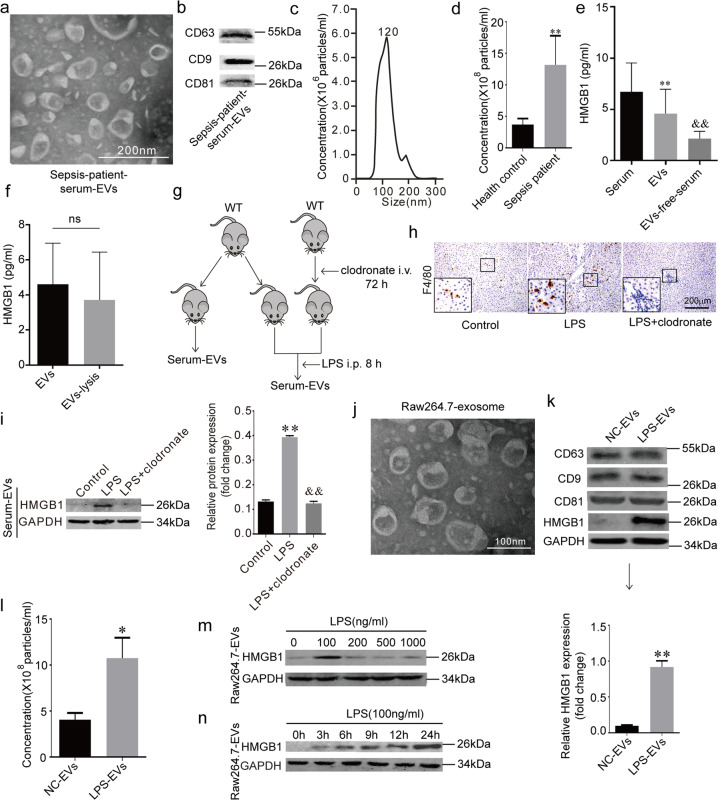
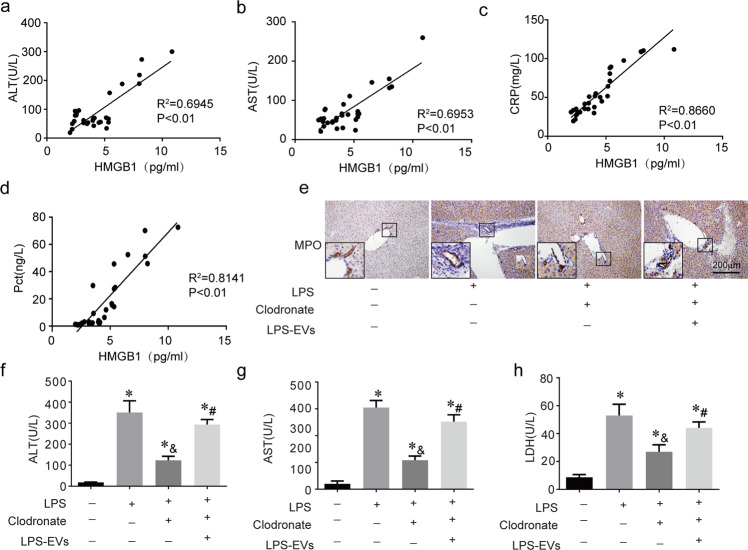
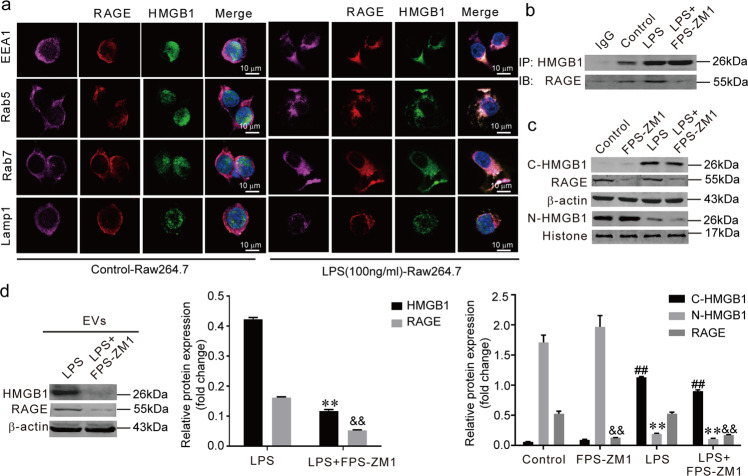
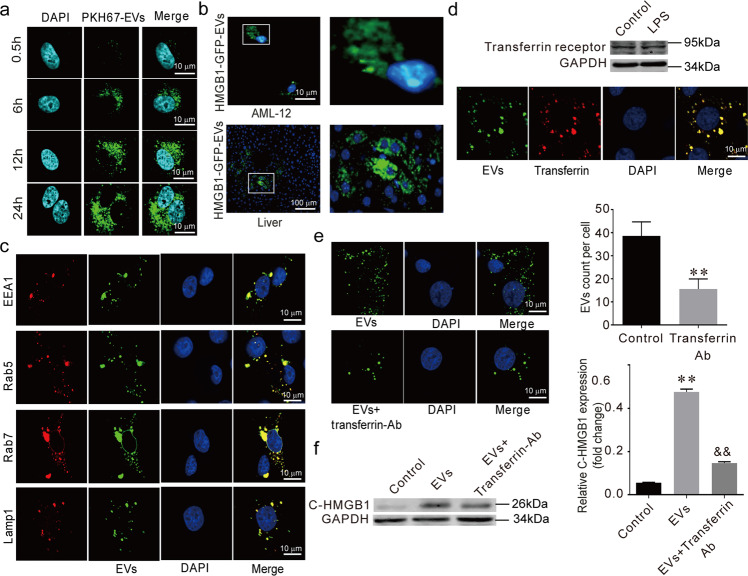
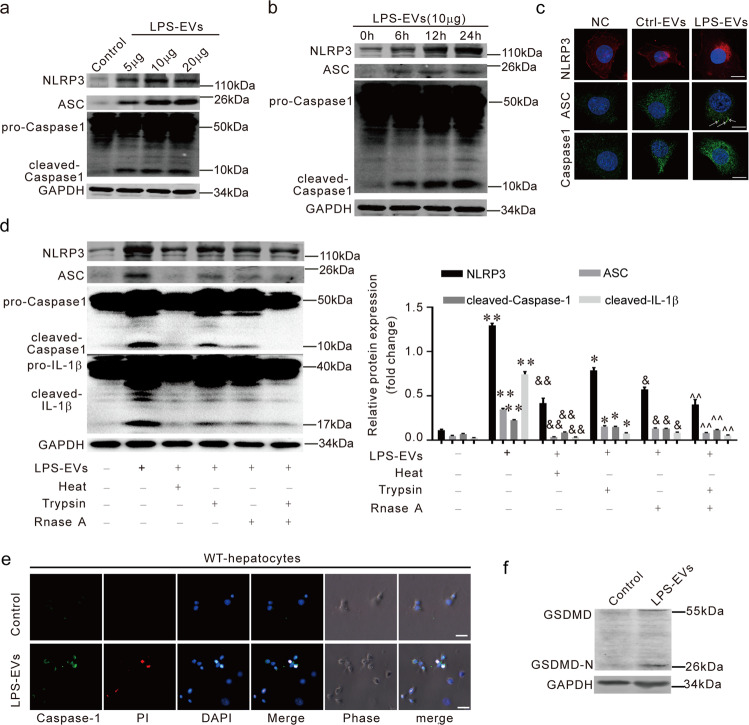
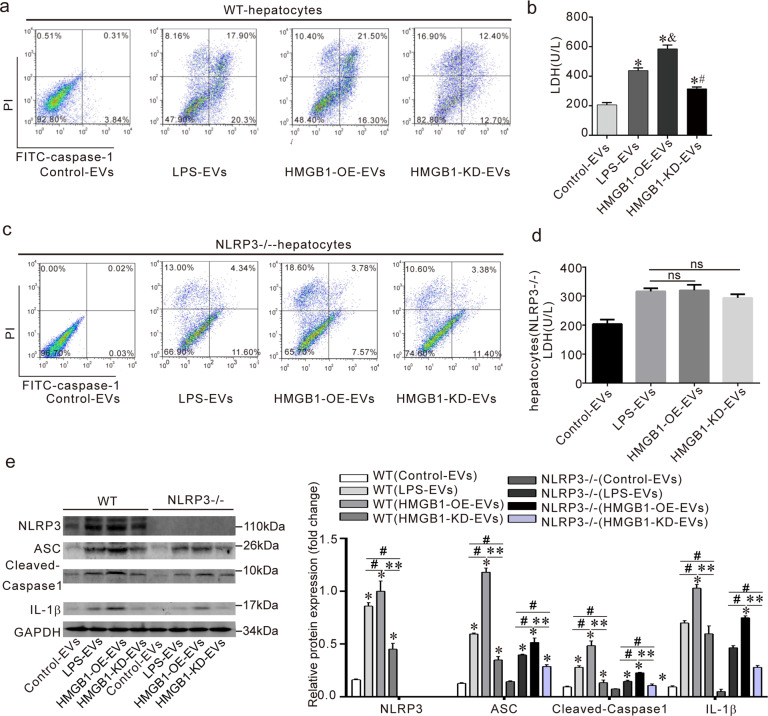
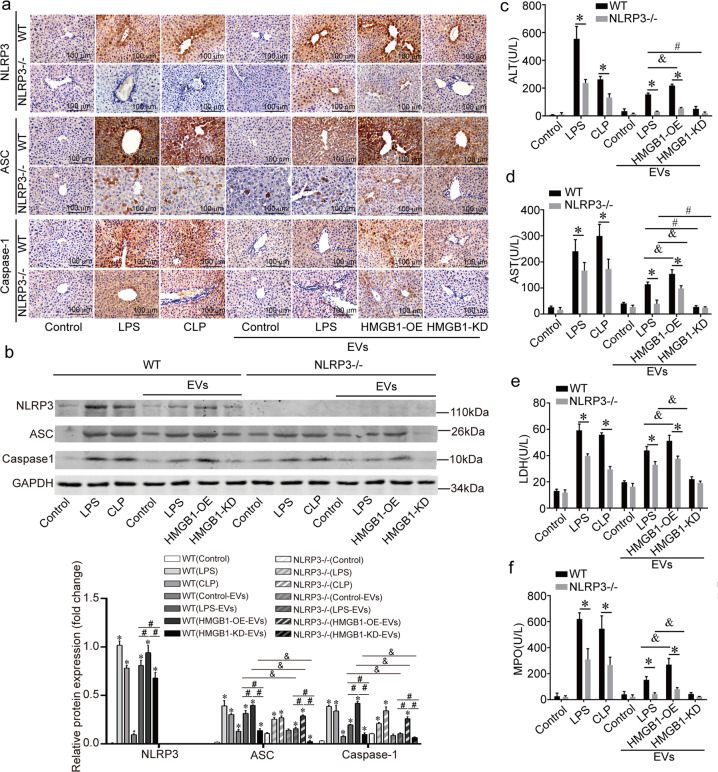
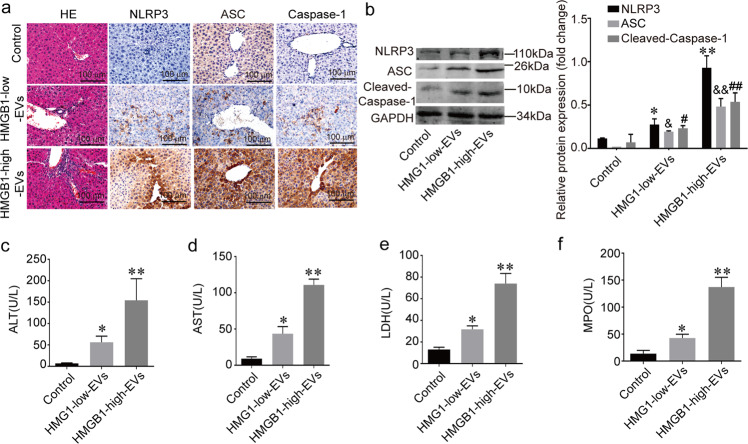
Extracellular vesicles (EVs) have emerged as important vectors of intercellular dialogue. High mobility group box protein 1 (HMGB1) is a typical damage-associated molecular pattern (DAMP) molecule, which is cytotoxic and leads to cell death and tissue injury. Whether EVs are involved in the release of HMGB1 in lipopolysaccharide (LPS)-induced acute liver injuries need more investigation. EVs were identified by transmission electron microscopy, nanoparticle tracking analysis (NTA), and western blotting. The co-localization of HMGB1, RAGE (receptor for advanced glycation end-products), EEA1, Rab5, Rab7, Lamp1 and transferrin were detected by confocal microscopy. The interaction of HMGB1 and RAGE were investigated by co-immunoprecipitation. EVs were labeled with the PKH67 and used for uptake experiments. The pyroptotic cell death was determined by FLICA 660-YVAD-FMK. The expression of NLRP3 (NOD-like receptor family pyrin domain containing 3) inflammasomes were analyzed by western-blot or immunohistochemistry. Serum HMGB1, ALT (alanine aminotransferase), AST (aspartate aminotransferase), LDH (lactate dehydrogenase) and MPO (myeloperoxidase) were measured using a commercial kit. The extracellular vesicle HMGB1 was detected in the serums of sepsis patients. Macrophages were found to contribute to HMGB1 release through the EVs. HMGB1-RAGE interactions participated in the loading of HMGB1 into the EVs. These EVs shuttled HMGB1 to target cells by transferrin-mediated endocytosis leading to hepatocyte pyroptosis by the activation of NLRP3 inflammasomes. Moreover, a positive correlation was verified between the sepsis serum EVs-HMGB1 level and clinical liver damage. This finding provides insights for the development of novel diagnostic and therapeutic strategies for acute liver injuries.
Overview
The claims and statistics of this paper haven’t been checked yet.
Free: it reads the open-access text and checks the first 5 claims that cite a source we can check. Create a free account to check every claim.
Integrity signals
Registry
Cites
Statistics
Figures
Verification
Claims the paper makes
The claims and statistics of this paper haven’t been checked yet.
Free: it reads the open-access text and checks the first 5 claims that cite a source we can check. Create a free account to check every claim.
Claims other papers make about this one
Each is checked against this paper’s own text: does it say what the citing paper says it does?
The check wasn’t confident either way, so it gives no verdict — never disputed.
In the citing paper
“In the context of OA pathogenesis, it is observed that Damage-associated molecular patterns (DAMPs) accumulate within the articular space [20].”
From Picroside II suppresses chondrocyte pyroptosis through MAPK/NF-κB/NLRP3 signaling pathway alleviates osteoarthritis (2024) · cites this paper as [20]
Experimental — accuracy not yet measured
Self-check
Percentages, sums and reported differences re-computed from the paper’s own numbers.
The self-check needs the paper’s full text.
Citations
Cites
Shedding light on the cell biology of extracellular vesicles
van Niel, G., D'Angelo, G., & Raposo, G. (2018) · Nature Reviews Molecular Cell Biology · doi:10.1038/nrm.2017.125 · Cited by 8,369 · cited 2×
“INTRODUCTION Extracellular vesicles (EVs) have emerged as important vectors of intercellular communication [1, 2].”
BackgroundCleavage of GSDMD by inflammatory caspases determines pyroptotic cell death
Shi, J., Zhao, Y., Wang, K., Shi, X., Wang, Y., Huang, H., Zhuang, Y., Cai, T., Wang, F., & Shao, F. (2015) · Nature · doi:10.1038/nature15514 · Cited by 6,659 · cited 1×
“Gasdermin D (GSDMD) is a substrate for both caspase-1 and caspase-11/4/5 [16].”
BackgroundBiogenesis, Secretion, and Intercellular Interactions of Exosomes and Other Extracellular Vesicles
Colombo, M., Raposo, G., & Théry, C. (2014) · Annual Review of Cell and Developmental Biology · doi:10.1146/annurev-cellbio-101512-122326 · Cited by 6,186 · cited 2×
“INTRODUCTION Extracellular vesicles (EVs) have emerged as important vectors of intercellular communication [1, 2].”
BackgroundSystemically Injected Exosomes Targeted to EGFR Deliver Antitumor MicroRNA to Breast Cancer Cells
Ohno, S.-I., Takanashi, M., Sudo, K., Ueda, S., Ishikawa, A., Matsuyama, N., Fujita, K., Mizutani, T., Ohgi, T., Ochiya, T., et al. (2013) · Molecular Therapy · doi:10.1038/mt.2012.180 · Cited by 1,666 · cited 1×
“For instance, exosomes engineered to express the EGFR ligand on their surfaces preferentially bind to EGFR-expressing breast cancer cells and successfully deliver microRNA to recipient cells [19].”
BackgroundThe ESCRT machinery in endosomal sorting of ubiquitylated membrane proteins
Raiborg, C., & Stenmark, H. (2009) · Nature · doi:10.1038/nature07961 · Cited by 1,359 · cited 1×
“Studies have revealed that the ESCRT machinery is essential for controlling specific protein sorting into intraluminal vesicles (ILVs) within the first step of ubiquitination [17, 18].”
BackgroundMethodological Guidelines to Study Extracellular Vesicles
Coumans, F. A. W., Brisson, A. R., Buzas, E. I., Dignat-George, F., Drees, E. E. E., El-Andaloussi, S., Emanueli, C., Gasecka, A., Hendrix, A., Hill, A. F., et al. (2017) · Circulation Research · doi:10.1161/circresaha.117.309417 · Cited by 1,017
Kang, R., Chen, R., Zhang, Q., Hou, W., Wu, S., Cao, L., Huang, J., Yu, Y., Fan, X.-G., Yan, Z., et al. (2014) · Molecular Aspects of Medicine · doi:10.1016/j.mam.2014.05.001 · Cited by 956 · cited 2×
“Previous studies have highlighted the function of HMGB1 through the binding of receptors to activate pro-inflammatory signaling [6].”
BackgroundWree, A., Eguchi, A., McGeough, M. D., Pena, C. A., Johnson, C. D., Canbay, A., Hoffman, H. M., & Feldstein, A. E. (2014) · Hepatology · doi:10.1002/hep.26592 · Cited by 945
The Endotoxin Delivery Protein HMGB1 Mediates Caspase-11-Dependent Lethality in Sepsis
Deng, M., Tang, Y., Li, W., Wang, X., Zhang, R., Zhang, X., Zhao, X., Liu, J., Tang, C., Liu, Z., et al. (2018) · Immunity · doi:10.1016/j.immuni.2018.08.016 · Cited by 591 · cited 1×
“Mechanistically, hepatocyte-released HMGB1 bound LPS and targeted its internalization into the lysosomes of macrophages and endothelial cells via the receptor for advanced glycation end-products (RAGE) [21].”
BackgroundSelf-citationMechanisms of inflammasome activation: recent advances and novel insights
Vanaja, S. K., Rathinam, V. A. K., & Fitzgerald, K. A. (2015) · Trends in Cell Biology · doi:10.1016/j.tcb.2014.12.009 · Cited by 499 · cited 1×
“NLRP3 activation causes the activation of caspase-1, which cleaves pro-IL1β and pro-IL-18 to their mature forms and induces cell pyroptosis [12].”
BackgroundSundén-Cullberg, J., Norrby-Teglund, A., Rouhiainen, A., Rauvala, H., Herman, G., Tracey, K. J., Lee, M. L., Andersson, J., Tokics, L., & Treutiger, C. J. (2005) · Critical Care Medicine · doi:10.1097/01.ccm.0000155991.88802.4d · Cited by 428 · cited 2×
“Previous research has shown that HMGB1 appears to be an early stage mediator in trauma [22], while HMGB1 is conversely a latestage mediator in sepsis [23].”
BackgroundBianchi, M. E., Crippa, M. P., Manfredi, A. A., Mezzapelle, R., Rovere Querini, P., & Venereau, E. (2017) · Immunological Reviews · doi:10.1111/imr.12601 · Cited by 330
Cohen, M. J., Brohi, K., Calfee, C. S., Rahn, P., Chesebro, B. B., Christiaans, S. C., Carles, M., Howard, M., & Pittet, J.-F. (2009) · Critical Care · doi:10.1186/cc8152 · Cited by 281 · cited 1×
“Previous research has shown that HMGB1 appears to be an early stage mediator in trauma [22], while HMGB1 is conversely a latestage mediator in sepsis [23].”
BackgroundMacrophage endocytosis of high-mobility group box 1 triggers pyroptosis
Xu, J., Jiang, Y., Wang, J., Shi, X., Liu, Q., Liu, Z., Li, Y., Scott, M. J., Xiao, G., Li, S., et al. (2014) · Cell Death & Differentiation · doi:10.1038/cdd.2014.40 · Cited by 239 · cited 1×
“revealed that HMGB1 initiates HMGB1 endocytosis through RAGE binding, which in turn induces cell pyroptosis [14].”
BackgroundSelf-citationHeatstroke induces liver injury via IL-1β and HMGB1-induced pyroptosis
Geng, Y., Ma, Q., Liu, Y.-N., Peng, N., Yuan, F.-F., Li, X.-G., Li, M., Wu, Y.-S., Li, B.-L., Song, W.-B., et al. (2015) · Journal of Hepatology · doi:10.1016/j.jhep.2015.04.010 · Cited by 238 · cited 1×
“A previous study has shown that heatstroke-induced HMGB1 binds to the receptor for advanced glycation endproducts (RAGE), leading to NLRP3 inflammasome activation and subsequent pyroptosis of hepatocytes [13].”
BackgroundSelf-citationAngus, D. C., Yang, L., Kong, L., Kellum, J. A., Delude, R. L., Tracey, K. J., & Weissfeld, L. (2007) · Critical Care Medicine · doi:10.1097/01.ccm.0000259534.68873.2a · Cited by 210 · cited 2×
“Nevertheless, there is no significant difference in the survival rate [27].”
BackgroundHMGB1 as a predictor of organ dysfunction and outcome in patients with severe sepsis
Karlsson, S., Pettilä, V., Tenhunen, J., Laru-Sompa, R., Hynninen, M., & Ruokonen, E. (2008) · Intensive Care Medicine · doi:10.1007/s00134-008-1032-9 · Cited by 162 · cited 2×
“Numerous animal studies have revealed that HMGB1 is a negative outcome predictor of sepsis [26].”
BackgroundTargeting HMGB1 in the treatment of sepsis
Wang, H., Ward, M. F., & Sama, A. E. (2014) · Expert Opinion on Therapeutic Targets · doi:10.1517/14728222.2014.863876 · Cited by 151 · cited 1×
“Remarkably, the neutralization of inflammation by HMGB1-specific antibodies prevents endotoxin-induced lethality [8, 9].”
BackgroundImportance of Kupffer Cells in the Development of Acute Liver Injuries in Mice
Tsutsui, H., & Nishiguchi, S. (2014) · International Journal of Molecular Sciences · doi:10.3390/ijms15057711 · Cited by 147 · cited 2×
“Through toll-like receptor 4 (TLR4), KCs take up endotoxins and contribute significantly to inflammation and liver damage [10].”
BackgroundLi, W., Deng, M., Loughran, P. A., Yang, M., Lin, M., Yang, C., Gao, W., Jin, S., Li, S., Cai, J., et al. (2020) · Frontiers in Immunology · doi:10.3389/fimmu.2020.00229 · Cited by 139 · cited 2×
“Through toll-like receptor 4 (TLR4), KCs take up endotoxins and contribute significantly to inflammation and liver damage [10].”
BackgroundSelf-citationRegulation of Posttranslational Modifications of HMGB1 During Immune Responses
Tang, Y., Zhao, X., Antoine, D., Xiao, X., Wang, H., Andersson, U., Billiar, T. R., Tracey, K. J., & Lu, B. (2016) · Antioxidants & Redox Signaling · doi:10.1089/ars.2015.6409 · Cited by 131 · cited 3×
“Circulating TNF-α and IL-6 are elevated for 5 days after the onset of sepsis, and serum HMGB1 levels are elevated from day 7 until at least day 28 [17].”
BackgroundExtracellular vesicles: Novel mediator for cell to cell communications in liver pathogenesis
Devhare, P. B., & Ray, R. B. (2018) · Molecular Aspects of Medicine · doi:10.1016/j.mam.2017.11.001 · Cited by 114 · cited 1×
“There is evidence that EVs have crucial roles in many liver diseases including hepatitis viral infections, hepatocellular carcinoma, liver fibrosis, non-alcoholic fatty liver disease, alcoholic liver disease, and liver-specific tumor metastasis [3, 4].”
BackgroundStevens, N. E., Chapman, M. J., Fraser, C. K., Kuchel, T. R., Hayball, J. D., & Diener, K. R. (2017) · Scientific Reports · doi:10.1038/s41598-017-06205-z · Cited by 104 · cited 1×
“Remarkably, the neutralization of inflammation by HMGB1-specific antibodies prevents endotoxin-induced lethality [8, 9].”
BackgroundSheller‐Miller, S., Urrabaz‐Garza, R., Saade, G. R., & Menon, R. (2017) · Journal of Reproductive Immunology · doi:10.1016/j.jri.2017.08.003 · Cited by 91 · cited 1×
“One study has shown that amnion epithelial cells release exosomes containing HMGB1 to other uterine tissues to produce parturition-associated inflammatory changes [7].”
BackgroundEmerging role of exosomes in liver physiology and pathology
Cai, S.-P., Cheng, X., Pan, X., & Li, J. (2016) · Hepatology Research · doi:10.1111/hepr.12794 · Cited by 68 · cited 1×
“There is evidence that EVs have crucial roles in many liver diseases including hepatitis viral infections, hepatocellular carcinoma, liver fibrosis, non-alcoholic fatty liver disease, alcoholic liver disease, and liver-specific tumor metastasis [3, 4].”
BackgroundIsolation of Non-parenchymal Cells from the Mouse Liver
Mohar, I., Brempelis, K. J., Murray, S. A., Ebrahimkhani, M. R., & Crispe, I. N. (2015) · Methods in molecular biology · doi:10.1007/978-1-4939-2815-6_1 · Cited by 66 · cited 1×
“Cell culture The primary hepatocytes were isolated and cultured in RPMI-1640 medium as indicated [28].”
MethodGut–Liver Axis: Role of Inflammasomes
Bawa, M., & Saraswat, V. A. (2013) · Journal of Clinical and Experimental Hepatology · doi:10.1016/j.jceh.2013.03.225 · Cited by 49 · cited 1×
“NLRP3 inflammasomes are mediators of LPS-induced acute liver injury [11].”
BackgroundA small molecule binding HMGB1 inhibits caspase-11-mediated lethality in sepsis
Wang, X., Li, Z., Bai, Y., Zhang, R., Meng, R., Chen, F., Wang, H., Billiar, T. R., Xiao, X., Lü, B., et al. (2021) · Cell Death and Disease · doi:10.1038/s41419-021-03652-5 · Cited by 24 · cited 1×
“Wang showed that treatment of FeTPPS (a small molecule selectively inhibits HMGB1- mediated caspase-11 activation) attenuates HMGB1- and caspase-11mediated immune responses, organ damage, and lethality in endotoxemia and bacterial sepsis [24].”
Background
Research works printed but not linked: 1
- Deng M Tang Y Li W Wang X Zhang R Zhang X The endotoxin delivery protein HMGB1 mediates caspase-11-dependent lethality in sepsis Immunity. 2018 49 740 53 10.1016/j.immuni.2018.08.016 30314759 PMC6300139 · DOI · Paper page
Cited by
Context-specific regulation of extracellular vesicle biogenesis and cargo selection
Dixson, A. C., Dawson, T. R., Di Vizio, D., & Weaver, A. M. (2023) · Nature Reviews Molecular Cell Biology · doi:10.1038/s41580-023-00576-0 · Cited by 791
Recent Advances in Understanding of Pathogenesis of Alcohol-Associated Liver Disease
Wu, X., Fan, X., Miyata, T., Kim, A., Cajigas-Du Ross, C. K., Ray, S., Huang, E., Taiwo, M., Arya, R., Wu, J., et al. (2023) · Annual Review of Pathology: Mechanisms of Disease · doi:10.1146/annurev-pathmechdis-031521-030435 · Cited by 289
“For example, macrophage-derived EVs shuttle HMGB1 via endocytosis and promote hepatocyte pyroptosis by activating the NLRP3 inflammasome (59).”
BackgroundLipopolysaccharide delivery systems in innate immunity
Liu, J., Kang, R., & Tang, D. (2024) · Trends in Immunology · doi:10.1016/j.it.2024.02.003 · Cited by 113
The pathogenesis and potential therapeutic targets in sepsis
Zhang, W., Jiang, H., Wu, G., Huang, P., Wang, H., An, H., Liu, S., & Zhang, W. (2023) · MedComm · doi:10.1002/mco2.418 · Cited by 98
“274 This transmission triggers caspase-11-mediated pyroptosis, eventually resulting in shock, multiorgan failure, and death.”
BackgroundSingle-cell RNA sequencing analysis of shrimp immune cells identifies macrophage-like phagocytes
Yang, P., Chen, Y., Huang, Z., Xia, H., Cheng, L., Wu, H., Zhang, Y., & Wang, F. (2022) · eLife · doi:10.7554/elife.80127 · Cited by 58
“Additionally, Nlrp3 and Casp1 , two well-known mammalian macrophage inflammasome components were identified in these cells, suggesting that inflammasome-mediated anti-pathogenic processes might exist in invertebrate innate immunity and play a role in microbial restriction ( Wang et al., 2021 ).”
Metadata
- Authors
- Wang, G., Jin, S., Huang, W., Li, Y., Wang, J., Ling, X., Huang, Y., Hu, Y., Li, C., Meng, Y., & Li, X.
- Affiliations
- Nanfang Hospital (CN)
- Corresponding author
- Meng, Ying
- Li, Xu
- Venue
- Cell Death Discovery
- Published
- 2021-11-06
- Volume
- 7
- Issue
- 1
- Pages
- 337-337
- ISSN
- 2058-7716 (ISSN-L)
- PMC
- PMC8572226
- OpenAlex
- W3211703389
- Cited by
- 114
- References
- 28
- Citations by year
- 2026: 23 · 2025: 32 · 2024: 22 · 2023: 27 · 2022: 10
- FWCI
- 4.94
- Type
- journal article
- Language
- en
- Open access
- gold
- doi.org
- Licence
- cc-by
- creativecommons.org/licenses/by/4.0 (tdm)
- creativecommons.org/licenses/by/4.0 (vor)
- Locations
- Cell Death Discovery (publishedVersion, cc-by)
- PubMed Central (publishedVersion, cc-by)
- PubMed (publishedVersion)
- DOAJ (DOAJ: Directory of Open Access Journals) (submittedVersion, cc-by-sa)
- Funders
- National Natural Science Foundation of China (No. 81670556, No. 81900581)
- China Postdoctoral Science Foundation (No. F119NF0124)
- Topics
- Life Sciences › Biochemistry, Genetics and Molecular Biology › Molecular Biology › Extracellular vesicles in disease
- Life Sciences › Biochemistry, Genetics and Molecular Biology › Molecular Biology › Inflammasome and immune disorders
- Life Sciences › Biochemistry, Genetics and Molecular Biology › Clinical Biochemistry › Advanced Glycation End Products research
- Keywords
- extracellular vesicles, HMGB1, NLRP3 inflammasome, pyroptosis, hepatocytes, macrophages, lipopolysaccharide, acute liver injury, sepsis, RAGE, damage-associated molecular patterns, liver injury biomarkers
About these checks
Registry, retraction, Cites and statistics results are computed, not judged, with one exception: a printed reference that no index lists is read once by a model before it counts as a citation error. Claims are extracted by a model and kept only when their quote appears verbatim in the text; each cited source is then checked, with a model’s help, for whether it says what the claim relies on. Those verdicts can be wrong — read the claim’s quote and the cited source before relying on one.
Statistics and arithmetic are recomputed, not judged.
Confidence bands are shown only for fields calibrated on our annotated test set. None is calibrated yet, so no band is shown.
What counts as a claim ›How we measure confidence ›How we check this ›
Are you an author, or do you see a problem with this page? Request a review
Data sources
Bibliographic data: Semantic Scholar, OpenAlex, Crossref.
Contains information from the Semantic Scholar Academic Graph Datasets, made available under the ODC Attribution License (ODC-BY 1.0).
Semantic Scholar’s data is described in: Kinney, R., et al. (2023). The Semantic Scholar Open Data Platform. arXiv:2301.10140.
