

Single-cell transcriptomics reveals intestinal cell heterogeneity and identifies Ep300 as a potential therapeutic target in mice with acute liver failure
Open accessThe DOI matches its Crossref record; 82 of the 82 references it cites were found in a registry or an index.
Abstract
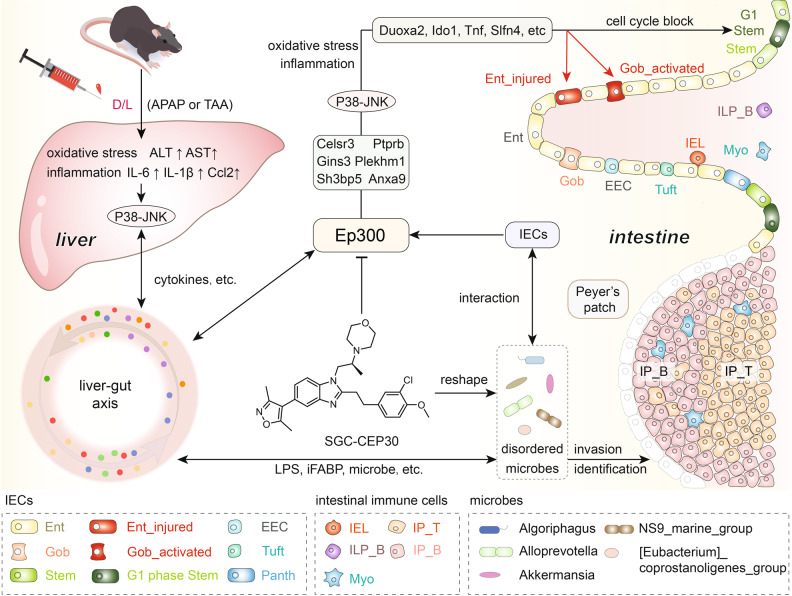
Acute liver failure (ALF) is a severe life-threatening disease associated with the disorder of the gut-liver axis. However, the cellular characteristics of ALF in the gut and related therapeutic targets remain unexplored. Here, we utilized the D-GALN/LPS (D/L)-induced ALF model to characterize 33,216 single-cell transcriptomes and define a mouse ALF intestinal cellular atlas. We found that unique, previously uncharacterized intestinal immune cells, including T cells, B cells, macrophages, and neutrophils, are responsive to ALF, and we identified the transcriptional profiles of these subsets during ALF. We also delineated the heterogeneity of intestinal epithelial cells (IECs) and found that ALF-induced cell cycle arrest in intestinal stem cells and activated specific enterocyte and goblet cell clusters. Notably, the most significantly altered IECs, including enterocytes, intestinal stem cells and goblet cells, had similar activation patterns closely associated with inflammation from intestinal immune activation. Furthermore, our results unveiled a common Ep300 -dependent transcriptional program that coordinates IEC activation during ALF, which was confirmed to be universal in different ALF models. Pharmacological inhibition of Ep300 with an inhibitor (SGC-CBP30) inhibited this cell-specific program, confirming that Ep300 is an effective target for alleviating ALF. Mechanistically, Ep300 inhibition restrained inflammation and oxidative stress in the dysregulated cluster of IECs through the P38-JNK pathway and corrected intestinal ecology by regulating intestinal microbial composition and metabolism, thereby protecting IECs and attenuating ALF. These findings confirm that Ep300 is a novel therapeutic target in ALF and pave the way for future pathophysiological studies on ALF.
Overview
The claims and statistics of this paper haven’t been checked yet.
Free: it reads the open-access text and checks the first 5 claims that cite a source we can check. Create a free account to check every claim.
Integrity signals
Registry
Cites
Statistics
Figures
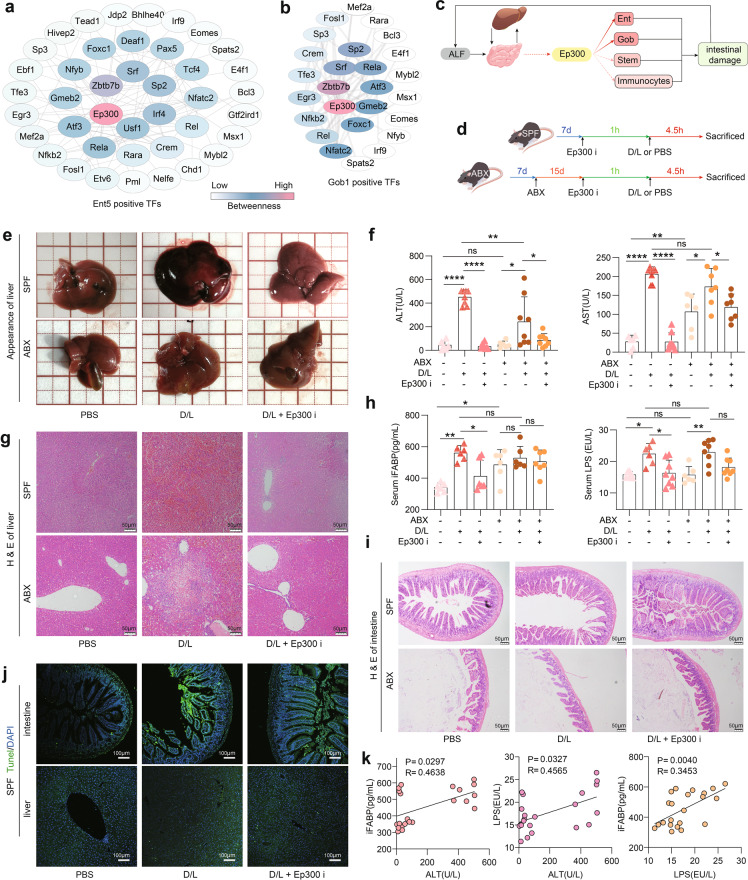
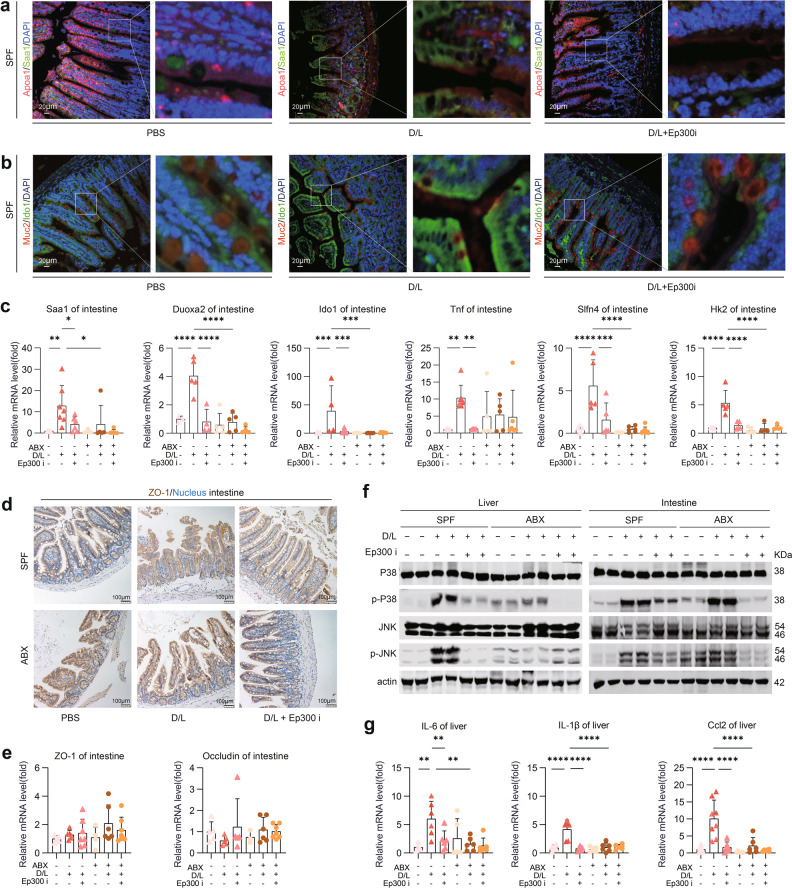
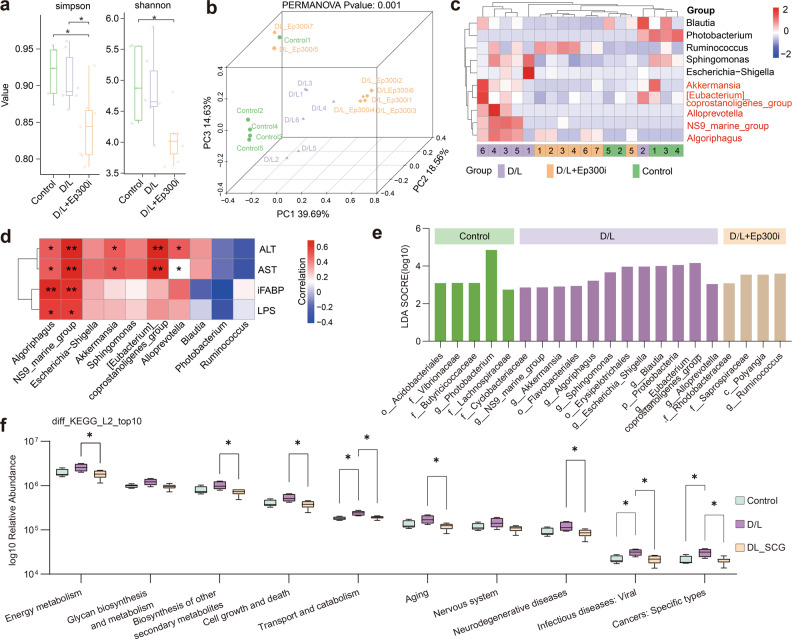
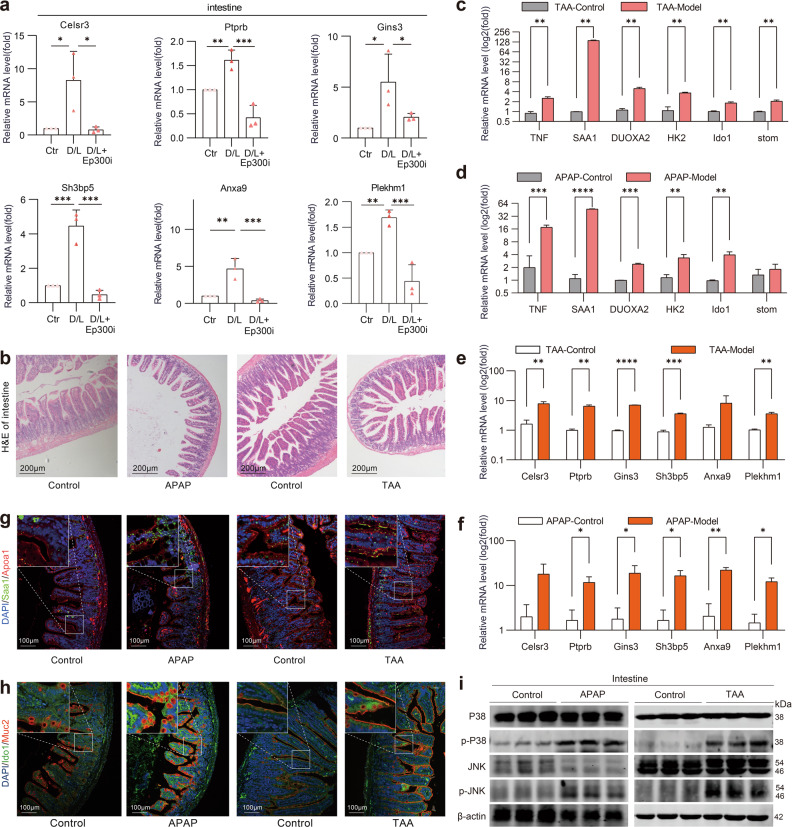
Verification
Claims the paper makes
The claims and statistics of this paper haven’t been checked yet.
Free: it reads the open-access text and checks the first 5 claims that cite a source we can check. Create a free account to check every claim.
Claims other papers make about this one
Each is checked against this paper’s own text: does it say what the citing paper says it does?
In the citing paper
“The research utilized LPS-induced mouse model of ALF and employed single-cell RNA sequencing analysis to uncover the cellular landscape of intestinal cells during ALF (Fig. 4A) [111].”
From Constructing biomimetic microenvironments for liver regeneration (2025) · doi:10.1186/s12951-025-03729-9 · cites this paper as [111]
Self-check
Percentages, sums and reported differences re-computed from the paper’s own numbers.
The self-check needs the paper’s full text.
Citations
Cites
Szklarczyk, D., Gable, A. L., Lyon, D., Junge, A., Wyder, S., Huerta-Cepas, J., Simonovic, M., Doncheva, N. T., Morris, J. H., Bork, P., et al. (2019) · Nucleic Acids Research · doi:10.1093/nar/gky1131 · Cited by 17,749
Inference and analysis of cell-cell communication using CellChat
Jin, S., Guerrero-Juarez, C. F., Zhang, L., Chang, I., Ramos, R., Kuan, C.-H., Myung, P., Plikus, M. V., & Nie, Q. (2021) · Nature Communications · doi:10.1038/s41467-021-21246-9 · Cited by 8,409 · cited 1×
“CellChat 79 , a tool capable of quantitatively inferring and analyzing intercellular communication networks from scRNA-seq data was applied.”
Trapnell, C., Cacchiarelli, D., Grimsby, J., Pokharel, P., Li, S., Morse, M., Lennon, N. J., Livak, K. J., Mikkelsen, T. S., & Rinn, J. L. (2014) · Nature Biotechnology · doi:10.1038/nbt.2859 · Cited by 7,314
Scenic: single-cell regulatory network inference and clustering.
Aibar, S., González-Blas, C. B., Moerman, T., Huynh-Thu, V. A., Imrichova, H., Hulselmans, G., Rambow, F., Marine, J.-C., Geurts, P., Aerts, J., et al. (2017) · Nature Methods · doi:10.1038/nmeth.4463 · Cited by 6,520
Intestinal epithelial cells: regulators of barrier function and immune homeostasis
Peterson, L. W., & Artis, D. (2014) · Nature Reviews Immunology · doi:10.1038/nri3608 · Cited by 3,173 · cited 2×
“Microbial signals can be recognized by IECs and further affect intestinal homeostasis and barrier function 8 .”
The gut-liver axis in liver disease: Pathophysiological basis for therapy
Albillos, A., de Gottardi, A., & Rescigno, M. (2020) · Journal of Hepatology · doi:10.1016/j.jhep.2019.10.003 · Cited by 2,166 · cited 1×
“It functions as a site of interaction between foreign substances and those present in the gut and liver, allowing nutrients to enter the circulation and reach the liver while limiting the systemic dissemination of microbes and toxins 6 .”
Stem Cells, Self-Renewal, and Differentiation in the Intestinal Epithelium
van der Flier, L. G., & Clevers, H. (2009) · Annual Review of Physiology · doi:10.1146/annurev.physiol.010908.163145 · Cited by 1,871 · cited 1×
“The process of renewal and differentiation of the IE has been extensively studied 47 .”
Large-scale association analyses identify host factors influencing human gut microbiome composition
Kurilshikov, A., Medina-Gomez, C., Bacigalupe, R., Radjabzadeh, D., Wang, J., Demirkan, A., Le Roy, C. I., Raygoza Garay, J. A., Finnicum, C. T., Liu, X., et al. (2021) · Nature Genetics · doi:10.1038/s41588-020-00763-1 · Cited by 1,786 · cited 1×
“Ent8_Apoa1, which speci fi cally expressed Rbp2 (which promotes vitamin A absorption 42 ), Lct (which regulates intestine microbiological composition 43 ), and Clca3a1 (which controls intestinal mucus 44 ), was identi-fi ed as a cluster of mature enterocytes associated with intestinal mucosal…”
A single-cell survey of the small intestinal epithelium
Haber, A. L., Biton, M., Rogel, N., Herbst, R. H., Shekhar, K., Smillie, C., Burgin, G., Delorey, T. M., Howitt, M. R., Katz, Y., et al. (2017) · Nature · doi:10.1038/nature24489 · Cited by 1,750 · cited 4×
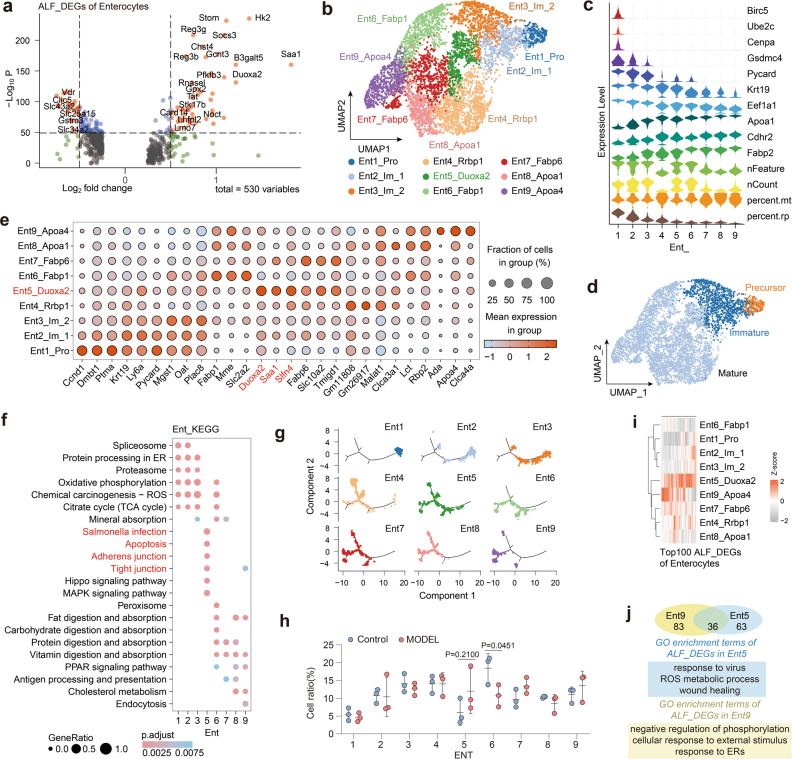
“Based on marker genes for maturation status 38 , enterocytes were subdivided into the following groups: precursor enter-ocytes (with high expression of Birc5 , Ube2c , and Cenpa ), immature enterocytes (with high expression of Gsdmc4 , Picard , Krt19 , and Eef1a1 ) and mature enterocytes (with high…”
InfluentialAmir, E.-A. D., Davis, K. L., Tadmor, M. D., Simonds, E. F., Levine, J. H., Bendall, S. C., Shenfeld, D. K., Krishnaswamy, S., Nolan, G. P., & Pe'er, D. (2013) · Nature Biotechnology · doi:10.1038/nbt.2594 · Cited by 1,550 · cited 1×
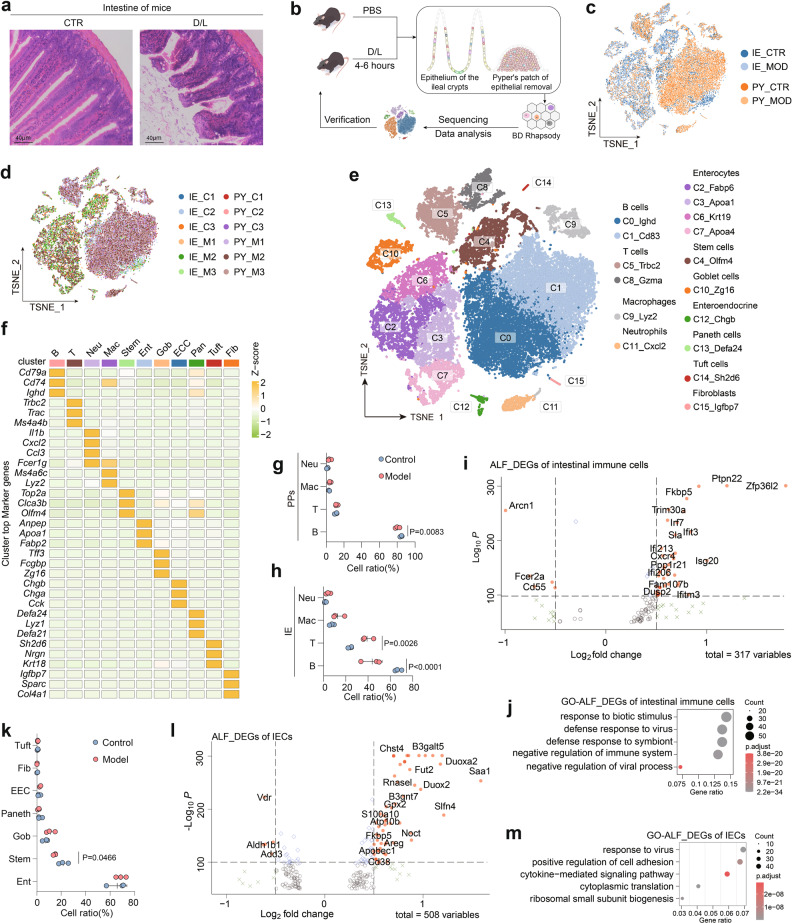
“Unsupervised clustering partitioned the cells into 16 clusters (C0 to C15), which were visualized using t-distributed stochastic neighbor embedding (tSNE) 16 (Fig.”
The gut-liver axis and the intersection with the microbiome
Tripathi, A., Debelius, J., Brenner, D. A., Karin, M., Loomba, R., Schnabl, B., & Knight, R. (2018) · Nature Reviews Gastroenterology & Hepatology · doi:10.1038/s41575-018-0011-z · Cited by 1,480 · cited 1×
“Advances in the gut – liver axis research have provided important insights into the pathophysiology and potential therapeutic targets of several liver diseases 4 , including ALF 5 .”
CytoNCA: A cytoscape plugin for centrality analysis and evaluation of protein interaction networks
Tang, Y., Li, M., Wang, J., Pan, Y., & Wu, F.-X. (2015) · Biosystems · doi:10.1016/j.biosystems.2014.11.005 · Cited by 1,288
Stravitz, R. T., & Lee, W. M. (2019) · The Lancet · doi:10.1016/s0140-6736(19)31894-x · Cited by 844
Gut-liver axis: Pathophysiological concepts and clinical implications
Tilg, H., Adolph, T. E., & Trauner, M. (2022) · Cell Metabolism · doi:10.1016/j.cmet.2022.09.017 · Cited by 843 · cited 2×
“After that, microbial antigens, metabolites and other substances can reach the liver through the portal circulation and affect hepatic immunity and in fl ammation; meanwhile, the immune cells in the gut can also reach the liver through the lymphatic circulation 3 .”
New insights into the interplay between autophagy, gut microbiota and inflammatory responses in IBD
Larabi, A., Barnich, N., & Nguyen, H. T. T. (2020) · Autophagy · doi:10.1080/15548627.2019.1635384 · Cited by 835
GLUT2, glucose sensing and glucose homeostasis
Thorens, B. (2015) · Diabetologia · doi:10.1007/s00125-014-3451-1 · Cited by 722 · cited 1×
“Ent6_Fabp1 highly expressed Slc2a2 (a glucose transporter 39 ) and Fabp1 , and the associated DEGs were uniquely enriched in the peroxisome-associated KEGG pathway and have thus been identi fi ed as a cluster of mature enterocytes involved in absorption and antioxidative effects.”
Uptake through glycoprotein 2 of FimH+ bacteria by M cells initiates mucosal immune response
Hase, K., Kawano, K., Nochi, T., Pontes, G. S., Fukuda, S., Ebisawa, M., Kadokura, K., Tobe, T., Fujimura, Y., Kawano, S., et al. (2009) · Nature · doi:10.1038/nature08529 · Cited by 632 · cited 1×
“PPs play an important role in intestinal mucosal immunity by recognizing intestinal luminal antigens through epithelial microfold cells (M cells) and delivering them to B cells via the mononuclear phagocytic system, thereby triggering a speci fi c immune response 11 .”
T Helper Cell Cytokines Modulate Intestinal Stem Cell Renewal and Differentiation
Biton, M., Haber, A. L., Rogel, N., Burgin, G., Beyaz, S., Schnell, A., Ashenberg, O., Su, C.-W., Smillie, C., Shekhar, K., et al. (2018) · Cell · doi:10.1016/j.cell.2018.10.008 · Cited by 588 · cited 1×
“…(scRNA-seq), a state-of-the-art technology for unraveling the heterogeneity and complexity of individual cells within highly organized tissues 12 , we performed a comprehensive and comparative phenotypic analysis of the intestinal cellular atlas in a D-galactosamine/lipopolysaccharide…”
Single-cell transcriptomes of the regenerating intestine reveal a revival stem cell
Ayyaz, A., Kumar, S., Sangiorgi, B., Ghoshal, B., Gosio, J., Ouladan, S., Fink, M., Barutcu, S., Trcka, D., Shen, J., et al. (2019) · Nature · doi:10.1038/s41586-019-1154-y · Cited by 573
PLEKHM1 Regulates Autophagosome-Lysosome Fusion through HOPS Complex and LC3/GABARAP Proteins
McEwan, D. G., Popovic, D., Gubas, A., Terawaki, S., Suzuki, H., Stadel, D., Coxon, F. P., Miranda de Stegmann, D., Bhogaraju, S., Maddi, K., et al. (2015) · Molecular Cell · doi:10.1016/j.molcel.2014.11.006 · Cited by 563 · cited 1×
“Plekhm1 , a multivalent endocytic adapter, mediates lysosomal fusion of the autophagic pathway 69 . μ m. e q-PCR analysis of ZO-1 and Occludin mRNA levels in mouse intestinal. f P38, p-P38, JNK and p-JNK expression in mouse liver and intestinal, as analyzed by western blotting assay. g q-PCR…”
Luissint, A.-C., Parkos, C. A., & Nusrat, A. (2016) · Gastroenterology · doi:10.1053/j.gastro.2016.07.008 · Cited by 555 · cited 1×
“Alterations in the intestinal microenvironment in ALF mice may induce changes in cellular communication patterns 50 .”
Contribution of the Intestinal Microbiome and Gut Barrier to Hepatic Disorders
Chopyk, D. M., & Grakoui, A. (2020) · Gastroenterology · doi:10.1053/j.gastro.2020.04.077 · Cited by 490 · cited 1×
“The mucosal immune barrier is a selectively permeable barrier that consists of physical, immune, and microbial components, and intestinal epithelial cells (IECs) are key regulators of the physical barrier 7 .”
WDFY4 is required for cross-presentation in response to viral and tumor antigens
Theisen, D. J., Davidson, J. T., Briseño, C. G., Gargaro, M., Lauron, E. J., Wang, Q., Desai, P., Durai, V., Bagadia, P., Brickner, J. R., et al. (2018) · Science · doi:10.1126/science.aat5030 · Cited by 346 · cited 1×
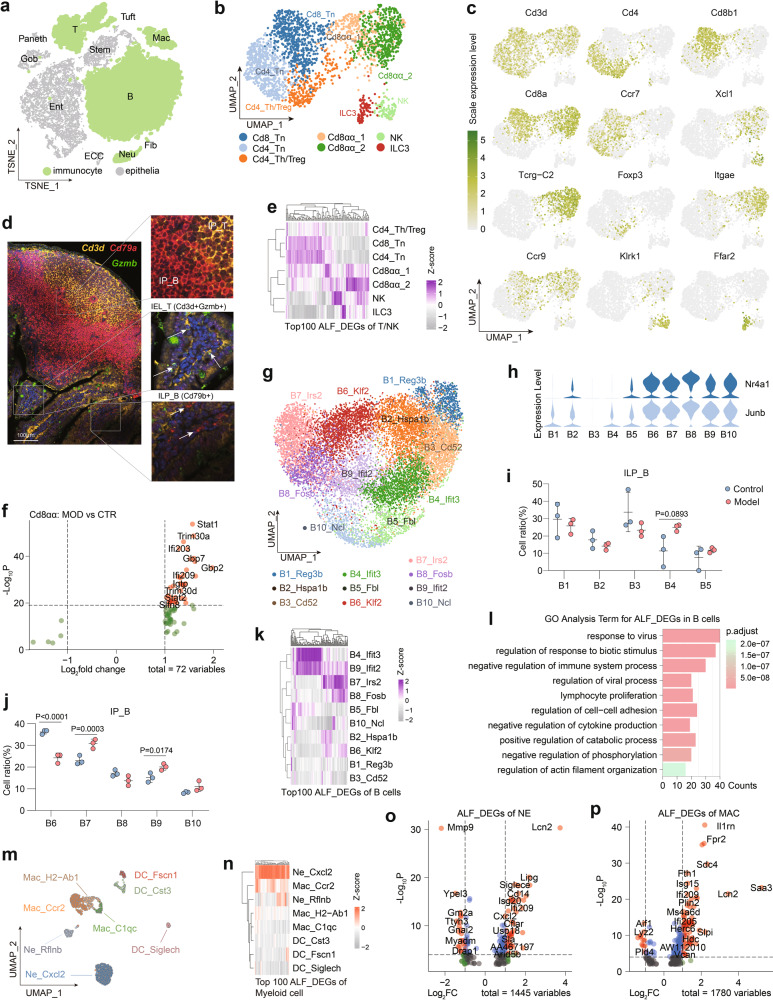
“Among the DC clusters, DC_Cst3 was classi fi ed as cDC1 due to high expression of the cDC1 cell marker genes Cst3 and Wdfy4 30,31 , while DC_Fscn1 speci fi cally expressed Cst3 and Fscn1 and was classi fi ed as a sub-population of cDC1 with high migration capacity 31 .”
Metabolite-Sensing Receptor Ffar2 Regulates Colonic Group 3 Innate Lymphoid Cells and Gut Immunity
Chun, E., Lavoie, S., Fonseca-Pereira, D., Bae, S., Michaud, M., Hoveyda, H. R., Fraser, G. L., Gallini Comeau, C. A., Glickman, J. N., Fuller, M. H., et al. (2019) · Immunity · doi:10.1016/j.immuni.2019.09.014 · Cited by 336 · cited 1×
“Finally, based on the speci fi c expression of Ffar2 and Il22 , we identi fi ed an ILC3 cluster (type 3 innate lymphoid cells 23 ) (Fig.”
Peyer's patches: organizing B‐cell responses at the intestinal frontier
Reboldi, A., & Cyster, J. G. (2016) · Immunological Reviews · doi:10.1111/imr.12400 · Cited by 311 · cited 1×
“Peyer ’ s patches (PPs), located mainly in the ileum, are organized inter-lymphatic tissues of the intestine and are key routes for the invasion of many pathogens into the intestine 9,10 .”
Kobayashi, N., Takahashi, D., Takano, S., Kimura, S., & Hase, K. (2019) · Frontiers in Immunology · doi:10.3389/fimmu.2019.02345 · Cited by 220 · cited 1×
“Peyer ’ s patches (PPs), located mainly in the ileum, are organized inter-lymphatic tissues of the intestine and are key routes for the invasion of many pathogens into the intestine 9,10 .”
Experimental models of hepatotoxicity related to acute liver failure
Maes, M., Vinken, M., & Jaeschke, H. (2016) · Toxicology and Applied Pharmacology · doi:10.1016/j.taap.2015.11.016 · Cited by 204 · cited 1×
“The current consensus is that the metabolic imbalance and excessive accumulation of toxins and their metabolites lead to oxidative stress, mitochondrial damage and the in fl ammatory response, which further activates multiple signaling pathways and promotes death of liver and intestinal cells 70 .”
Xia, J., Lv, L., Liu, B., Wang, S., Zhang, S., Wu, Z., Yang, L., Bian, X., Wang, Q., Wang, K., et al. (2022) · Microbiology Spectrum · doi:10.1128/spectrum.01596-21 · Cited by 173 · cited 3×
“The in fl uence of the gut – liver axis and its relationship to microbes have been reported in ALF 5 and acute-on-chronic liver failure 64 .”
Inflammatory bowel disease: exploring gut pathophysiology for novel therapeutic targets
Yadav, V., Varum, F., Bravo, R., Furrer, E., Bojic, D., & Basit, A. W. (2016) · Translational Research · doi:10.1016/j.trsl.2016.04.009 · Cited by 168
Alvarado, D. M., Chen, B., Iticovici, M. S., Thaker, A. I., Dai, N., VanDussen, K. L., Shaikh, N., Lim, C. K., Guillemin, G. J., Tarr, P. I., et al. (2019) · Gastroenterology · doi:10.1053/j.gastro.2019.07.013 · Cited by 165
Makita, S., Takatori, H., & Nakajima, H. (2021) · Frontiers in Immunology · doi:10.3389/fimmu.2021.711633 · Cited by 156 · cited 1×
“In immune cells, differential gene expression analysis revealed that genes associated with immune regulation, biotic stimulus, and in fl ammatory bowel disease (IBD) were signi fi cantly upregulated, including Zfp36 , Ptpn22 , and Isg20 17 – 19 (Fig.”
Acute liver failure is regulated by MYC- and microbiome-dependent programs
Kolodziejczyk, A. A., Federici, S., Zmora, N., Mohapatra, G., Dori-Bachash, M., Hornstein, S., Leshem, A., Reuveni, D., Zigmond, E., Tobar, A., et al. (2020) · Nature Medicine · doi:10.1038/s41591-020-1102-2 · Cited by 153 · cited 4×
“Advances in the gut – liver axis research have provided important insights into the pathophysiology and potential therapeutic targets of several liver diseases 4 , including ALF 5 .”
InfluentialInterleukin-33 Promotes Serotonin Release from Enterochromaffin Cells for Intestinal Homeostasis
Chen, Z., Luo, J., Li, J., Kim, G., Stewart, A., Urban, J. F., Huang, Y., Chen, S., Wu, L.-G., Chesler, A., et al. (2021) · Immunity · doi:10.1016/j.immuni.2020.10.014 · Cited by 152 · cited 1×
“The intestine is considered to be the largest immune and endocrine organ of the digestive system, and it plays a central role in regulating systemic immune homeostasis 34,35 .”
Hou, Q., Huang, J., Ayansola, H., Masatoshi, H., & Zhang, B. (2021) · Frontiers in Immunology · doi:10.3389/fimmu.2020.623691 · Cited by 150 · cited 1×
“The intestine is considered to be the largest immune and endocrine organ of the digestive system, and it plays a central role in regulating systemic immune homeostasis 34,35 .”
Self-citationHuman Geminin promotes pre‐RC formation and DNA replication by stabilizing CDT1 in mitosis
Ballabeni, A., Melixetian, M. B., Zamponi, R., Masiero, L., Marinoni, F., & Helin, K. (2004) · The EMBO Journal · doi:10.1038/sj.emboj.7600314 · Cited by 141 · cited 1×
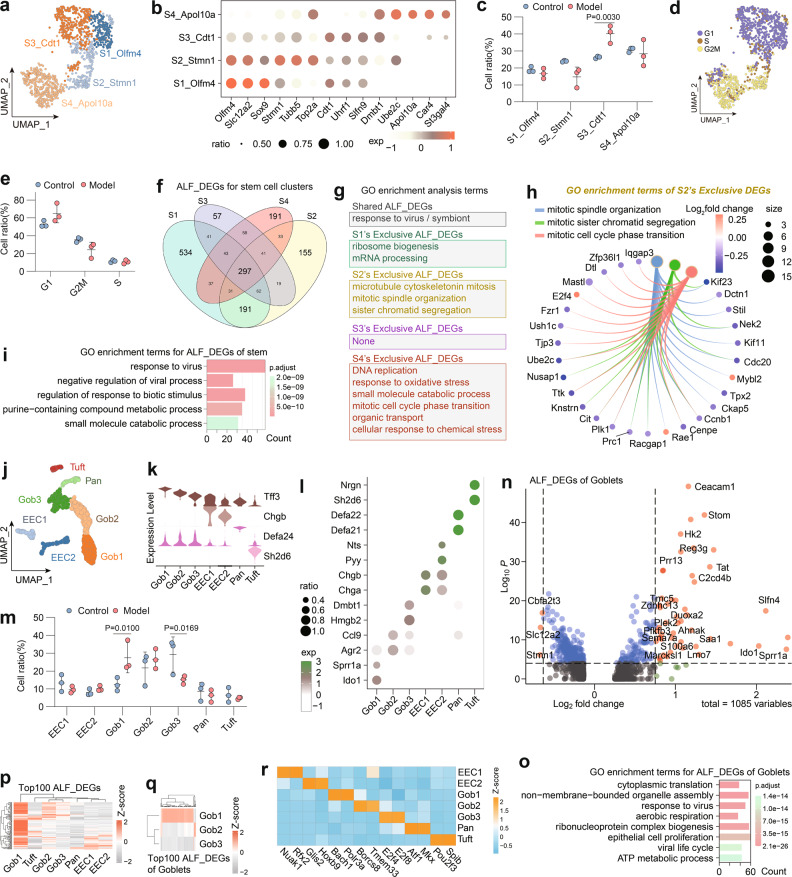
“High expression of Cdt1 (a component of the G1 phase prereplication complex 53 ) and Uhrf1 (highly expressed in late G1 phase 54 ) was used to classify S3_Cdt1 as a late G1 stem cell cluster.”
Epithelial TLR4 Signaling Activates DUOX2 to Induce Microbiota-Driven Tumorigenesis
Burgueño, J. F., Fritsch, J., Gonzalez-Horta, E. E., Landau, K. S., Santander, A. M., Fernández, I., Hazime, H., Davies, J. M., Santaolalla, R., Phillips, M. C., et al. (2020) · Gastroenterology · doi:10.1053/j.gastro.2020.10.031 · Cited by 139 · cited 5×
“Importantly, Ep300 i reduced the mRNA expression levels of key genes ( Saa1 , Duoxa2 , Ido1 and Hk2 ) in intestinal tissues (Fig.”
InfluentialCurrent development of CBP/p300 inhibitors in the last decade
He, Z.-X., Wei, B.-F., Zhang, X., Gong, Y.-P., Ma, L.-Y., & Zhao, W. (2021) · European Journal of Medicinal Chemistry · doi:10.1016/j.ejmech.2020.112861 · Cited by 133 · cited 1×
“Ep300 (E1A binding protein p300) is a key transcriptional coactivator and histone acetyltransferase that is crucial to key cellular processes such as cell differentiation, proliferation, and hypoxia response; it is also an attractive target for many diseases 13,14 .”
Gut-resident CX3CR1 hi macrophages induce tertiary lymphoid structures and IgA response in situ
Koscsó, B., Kurapati, S., Rodrigues, R. R., Nedjic, J., Gowda, K., Shin, C., Soni, C., Ashraf, A. Z., Purushothaman, I., Palisoc, M., et al. (2020) · Science Immunology · doi:10.1126/sciimmunol.aax0062 · Cited by 118
Linecker, M., Krones, T., Berg, T., Niemann, C. U., Steadman, R. H., Dutkowski, P., Clavien, P., Busuttil, R. W., Truog, R. D., & Petrowsky, H. (2017) · Journal of Hepatology · doi:10.1016/j.jhep.2017.11.008 · Cited by 118 · cited 1×
“In addition, the scarcity of donors severely limits the application of liver transplantation 1,2 , highlighting the imperative for fundamental research into ALF and the search for new relevant therapeutic targets for drug development to improve the treatment of ALF.”
Microbial regulation of hexokinase 2 links mitochondrial metabolism and cell death in colitis
Hinrichsen, F., Hamm, J., Westermann, M., Schröder, L., Shima, K., Mishra, N., Walker, A., Sommer, N., Klischies, K., Prasse, D., et al. (2021) · Cell Metabolism · doi:10.1016/j.cmet.2021.11.004 · Cited by 114 · cited 4×
“…of ALF mice, and genes associated with intestinal microbes, absorption, and in fl ammation, e.g., Saa1, Hk2 (promoting epithelial microbial infection 36 ), Stom (regulating ion transport), Socs3 (promoting IBD progression 37 ) and Reg3g (intestinal antimicrobial peptide), were signi fi cantly…”
InfluentialGey, M., Wanner, R., Schilling, C., Pedro, M. T., Sinske, D., & Knöll, B. (2016) · Open Biology · doi:10.1098/rsob.160091 · Cited by 110 · cited 1×
“The goblet cell cluster included Gob1 with high expression of Ido1 (associated with intestinal barrier mucus 55 ) and Sprr1a (associated with tissue damage repair 56 ).”
Planar cell polarity genes control the connectivity of enteric neurons
Sasselli, V., Boesmans, W., Berghe, P. V., Tissir, F., Goffinet, A. M., & Pachnis, V. (2013) · Journal of Clinical Investigation · doi:10.1172/jci66759 · Cited by 108 · cited 1×
“Celsr3 , a key gene in the development of the mouse enteric nervous system 65 , has previously been shown to be highly expressed in patients with congenital megacolon and to promote dysregulation of the innervation pattern of the intestine 54 .”
Intestinal Dysbiosis Amplifies Acetaminophen-Induced Acute Liver Injury
Schneider, K. M., Elfers, C., Ghallab, A., Schneider, C. V., Galvez, E. J. C., Mohs, A., Gui, W., Candels, L. S., Wirtz, T. H., Zuehlke, S., et al. (2021) · Cellular and Molecular Gastroenterology and Hepatology · doi:10.1016/j.jcmgh.2020.11.002 · Cited by 108
Mechanisms of activation of mouse and human enteroendocrine cells by nutrients
Symonds, E. L., Peiris, M., Page, A. J., Chia, B., Dogra, H., Masding, A., Galanakis, V., Atiba, M., Bulmer, D., Young, R. L., et al. (2015) · Gut · doi:10.1136/gutjnl-2014-306834 · Cited by 107 · cited 1×
“The two EEC clusters included EEC1 with high expression of Chgb and Chga and EEC2 with high expression of the classic marker genes Pyy 58 and Nts (Fig.”
Billing, L. J., Larraufie, P., Lewis, J., Leiter, A., Li, J., Lam, B., Yeo, G. S., Goldspink, D. A., Kay, R. G., Gribble, F. M., et al. (2019) · Molecular Metabolism · doi:10.1016/j.molmet.2019.09.001 · Cited by 107 · cited 1×
“EEC1 and EEC2 were similar to the previously reported ECM (intestinal chromosome) and L cell clusters, respectively 59 .”
Nyström, E. E. L., Birchenough, G. M. H., van der Post, S., Arike, L., Gruber, A. D., Hansson, G. C., & Johansson, M. E. V. (2018) · EBioMedicine · doi:10.1016/j.ebiom.2018.05.031 · Cited by 102 · cited 1×
“…which speci fi cally expressed Rbp2 (which promotes vitamin A absorption 42 ), Lct (which regulates intestine microbiological composition 43 ), and Clca3a1 (which controls intestinal mucus 44 ), was identi-fi ed as a cluster of mature enterocytes associated with intestinal mucosal homeostasis (Fig.”
Antibiotic pretreatment alleviates liver transplant damage in mice and humans
Nakamura, K., Kageyama, S., Ito, T., Hirao, H., Kadono, K., Aziz, A., Dery, K. J., Everly, M. J., Taura, K., Üemoto, S., et al. (2019) · Journal of Clinical Investigation · doi:10.1172/jci127550 · Cited by 102 · cited 1×
“Extensive research on gut microbes has focused on the removal of gut microbes or the inhibition of Toll-like receptors associated with microbial recognition 5,74,75 .”
Zhu, Y. X., Shi, C.-X., Bruins, L. A., Wang, X., Riggs, D. L., Porter, B., Ahmann, J. M., de Campos, C. B., Braggio, E., Bergsagel, P. L., et al. (2019) · Blood Cancer Journal · doi:10.1038/s41408-019-0173-0 · Cited by 100 · cited 1×
“SGC-CBP30, a potent inhibitor of the highly selective CBP/p300 bromodomain, has shown therapeutic potential in a variety of diseases, including cancers, gastrointestinal syndromes, sepsis, and organ fi brosis 62,71 – 73 .”
Identifying collagen VI as a target of fibrotic diseases regulated by CREBBP/EP300
Williams, L. M., McCann, F. E., Cabrita, M., Layton, T., Cribbs, A. P., Knezevic, B., Fang, H., Knight, J. C., Zhang, M., Fischer, R., et al. (2020) · Proceedings of the National Academy of Sciences · doi:10.1073/pnas.2004281117 · Cited by 98
Wang, G., Zhang, Y., Zhang, R., Pan, J., Qi, D., Wang, J., & Yang, X. (2020) · International Journal of Biological Macromolecules · doi:10.1016/j.ijbiomac.2020.06.055 · Cited by 97 · cited 1×
“…high-fructose diet-induced liver injury in mice, [Eubacterium]_coprostanoligenes_group has been positively associated with high-fat diet-induced nonalcoholic steatohepatitis-related intestinal ecological dysregulation, and Akkermansia has been found to ameliorate APAP-induced liver injury 63,64 .”
Self-citationTargeting epigenetic regulators for inflammation: Mechanisms and intervention therapy
Zhang, S., Meng, Y., Zhou, L., Qiu, L., Wang, H., Su, D., Zhang, B., Chan, K. M., & Han, J. (2022) · MedComm · doi:10.1002/mco2.173 · Cited by 93 · cited 1×
“Ep300 (E1A binding protein p300) is a key transcriptional coactivator and histone acetyltransferase that is crucial to key cellular processes such as cell differentiation, proliferation, and hypoxia response; it is also an attractive target for many diseases 13,14 .”
Self-citationGut Microbiota and Chemical-Induced Acute Liver Injury
Chen, T., Li, R., & Chen, P. (2021) · Frontiers in Physiology · doi:10.3389/fphys.2021.688780 · Cited by 83 · cited 2×
“In general, intestinal barrier disruption caused by alterations in IECs precedes intestinal immune system activation during the progression of ALF 61 .”
Bao, X., Li, Q., Chen, J., Chen, D., Ye, C., Dai, X., Wang, Y., Li, X., Rong, X., Cheng, F., et al. (2022) · Cancer Immunology Research · doi:10.1158/2326-6066.cir-21-1101 · Cited by 80 · cited 2×
“Apoe + macrophages have previously been reported to be associated with chronic in fl ammation 30 ; thus, Mac_C1qc was de fi ned as an in fl ammation-associated macrophage cluster.”
Human AGR2 Deficiency Causes Mucus Barrier Dysfunction and Infantile Inflammatory Bowel Disease
Al‐Shaibi, A., Abdel‐Motal, U. M., Hubrack, S., Bullock, A. N., Al-Marri, A. A., Agrebi, N., Al-Subaiey, A. A., Ibrahim, N. A., CHARLES, A. K., Al-Kaabi, S., et al. (2021) · Cellular and Molecular Gastroenterology and Hepatology · doi:10.1016/j.jcmgh.2021.07.001 · Cited by 77
Li, Y., de Haar, C. G., Peppelenbosch, M. P., & van der Woude, C. J. (2012) · Cytokine & Growth Factor Reviews · doi:10.1016/j.cytogfr.2012.04.005 · Cited by 75 · cited 1×
“…microbes, absorption, and in fl ammation, e.g., Saa1, Hk2 (promoting epithelial microbial infection 36 ), Stom (regulating ion transport), Socs3 (promoting IBD progression 37 ) and Reg3g (intestinal antimicrobial peptide), were signi fi cantly upregulated in the enterocytes of ALF mice (Fig.”
Lindholm, H. T., Parmar, N., Drurey, C., Poveda, M. C., Vornewald, P. M., Ostrop, J., Díez-Sánchez, A., Maizels, R. M., & Oudhoff, M. J. (2022) · Science Immunology · doi:10.1126/sciimmunol.abl6543 · Cited by 75 · cited 1×
“In contrast, activation of the EGF pathway and BMP pathway (which promotes epithelial differentiation under in fl am-matory conditions 51 ), which constitute the communication between IECs, may be a repair signal from Ent_inj (Supplementary Fig.”
Fibroblastic reticular cell lineage convergence in Peyer’s patches governs intestinal immunity
Prados, A., Onder, L., Cheng, H., Mörbe, U., Lütge, M., Gil‐Cruz, C., Perez‐Shibayama, C., Koliaraki, V., Ludewig, B., & Kollias, G. A. (2021) · Nature Immunology · doi:10.1038/s41590-021-00894-5 · Cited by 70
Kunst, R. F., Verkade, H. J., Oude Elferink, R. P. J., & van de Graaf, S. F. J. (2021) · Hepatology · doi:10.1002/hep.31651 · Cited by 52 · cited 1×
“…molecules for intestinal brush border formation 40 ), and Slc10a2 (a marker of intestinal bile acid uptake by apical cells of the distal ileum 41 ), and the associated DEGs were enriched in the KEGG pathways associated with inorganic salt, protein, and vitamin absorption and was therefore…”
Li, Z., Shi, J., Zhang, N., Zheng, X., Jin, Y., Wen, S., Hu, W., Wu, Y., & Gao, W. (2022) · Journal of Cancer · doi:10.7150/jca.67977 · Cited by 51 · cited 3×
“DC_Siglech highly expressed Siglech and Ly6d and was therefore classi fi ed as pDC 22 (Supplementary Fig.”
Moore, M. L., McKissic, E. L., Brown, C. C., Wilkinson, J. E., & Spindler, K. R. (2004) · Journal of Virology · doi:10.1128/jvi.78.11.5584-5590.2004 · Cited by 48 · cited 2×
“The decrease in B cells in the intestine may have been caused by microbial infection 33 or by the migration of B cells from the PPs to the liver in response to liver injury.”
Retinol-binding protein 2 (RBP2): biology and pathobiology
Blaner, W. S., Brun, P., Calderon, R. M., & Golczak, M. (2020) · Critical Reviews in Biochemistry and Molecular Biology · doi:10.1080/10409238.2020.1768207 · Cited by 42 · cited 1×
“Ent8_Apoa1, which speci fi cally expressed Rbp2 (which promotes vitamin A absorption 42 ), Lct (which regulates intestine microbiological composition 43 ), and Clca3a1 (which controls intestinal mucus 44 ), was identi-fi ed as a cluster of mature enterocytes associated with intestinal mucosal…”
Newly recruited intraepithelial Ly6A+CCR9+CD4+ T cells protect against enteric viral infection
Parsa, R., London, M., Castro, T. B. R., Reis, B. S., Amorie, J. R. B. D., Smith, J. G., & Mucida, D. (2022) · Immunity · doi:10.1016/j.immuni.2022.05.001 · Cited by 42
Win, S., Min, R. W. M., Zhang, J., Kanel, G. C., Wanken, B., Chen, Y., Li, M., Wang, Y., Suzuki, A., Aung, F. W. M., et al. (2021) · Hepatology · doi:10.1002/hep.32083 · Cited by 38 · cited 2×
“Sh3bp5 acts as a target of JNK and has been found to maintain its activation by promoting the production of reactive oxygen species in an acute liver injury model 67,68 .”
Tao, C., Zhang, Q., Zeng, W., Liu, G., & Shao, H. (2020) · Applied Microbiology and Biotechnology · doi:10.1007/s00253-020-10611-1 · Cited by 33 · cited 1×
“Although antibiotic treatment attenuates D/ L-induced ALF, nonselective depletion of gut microbes simultaneously disrupts the microbial balance of the gut – liver axis and leads to damage to the liver and intestine (especially the ileum 76 ).”
KLF2– A Negative Regulator of Pre-B Cell Clonal Expansion and B Cell Activation
Winkelmann, R., Sandrock, L., Kirberg, J., Jäck, H., & Schuh, W. (2014) · PLoS ONE · doi:10.1371/journal.pone.0097953 · Cited by 32
Uyar, O., Dominguez, J. M., Bordeleau, M., Lapeyre, L., Ibáñez, F. G., Vallières, L., Tremblay, M., Corbeil, J., & Boivin, G. (2022) · Journal of Neuroinflammation · doi:10.1186/s12974-022-02437-7 · Cited by 28 · cited 1×
“First, among neutrophils, Ne_R fl nb cells with high expression of Syne1 , Ccr3 , R fl nb and Retnlg (classic neutrophil markers 29 ) were identi fi ed as unactivated neutrophils.”
Psf3 is a prognostic biomarker in lung adenocarcinoma
Hokka, D., Maniwa, Y., Tane, S., Nishio, W., Yoshimura, M., Okita, Y., Ohbayashi, C., Sakai, Y., Chen, X., & Hayashi, Y. (2012) · Lung Cancer · doi:10.1016/j.lungcan.2012.10.001 · Cited by 27 · cited 1×
“Gins3 is involved in the formation of replication forks and has been shown to be associated with a variety of epithelial cell carcinogenesis processes 66 .”
Bothe, M. K., Braun, J. M., Mundhenk, L., & Gruber, A. D. (2008) · Journal of Histochemistry & Cytochemistry · doi:10.1369/jhc.2008.950592 · Cited by 26 · cited 1×
“Ent9_Apoa4, which highly expressed Clca4a (enterocyte apical membrane protein 45 ) and Ada (an IBD candidate biomarker 46 ) and was enriched in pathways associated with microbial infection and endocytosis, was identi fi ed as a cluster of mature enter-ocytes involved in mucosal immunity (Fig.”
Lypd8 inhibits attachment of pathogenic bacteria to colonic epithelia
Okumura, R., Kodama, T., Hsu, C.-C., Sahlgren, B. H., Hamano, S., Kurakawa, T., Iida, T., & Takeda, K. (2019) · Mucosal Immunology · doi:10.1038/s41385-019-0219-4 · Cited by 26 · cited 1×
“B1 was characterized by high expression of Reg3b (an antimicrobial peptide), Lypd8 (involved in inhibition of microbiota adhesion to IECs 24 ), and Zg16 (a mucus component), and B1 was enriched for GO terms associated with cell killing and microbial resistance (Fig.”
Castellanos–Rubio, A., Martín‐Pagola, A., Santín, I., Hualde, I., Aransay, A. M., Castaño, L. A., Vitoria, J. C., & Bilbao, J. R. (2007) · Gastroenterology · doi:10.1053/j.gastro.2007.11.041 · Cited by 25
ZAMORANO, J., Kelly, A. E., Austrian, J. S., Wang, H. Y., & Keegan, A. D. (2001) · Cell Research · doi:10.1038/sj.cr.7290065 · Cited by 23
Regulation of nuclear DNA damage response by mitochondrial morphofunctional pathway
Oanh, N. T. K., Lee, H., Kim, Y., Min, S., Park, Y., Heo, J., Park, Y., Lim, W., & Cho, H. (2022) · Nucleic Acids Research · doi:10.1093/nar/gkac690 · Cited by 22 · cited 1×
“Sh3bp5 acts as a target of JNK and has been found to maintain its activation by promoting the production of reactive oxygen species in an acute liver injury model 67,68 .”
Franks, J. L., Martinez‐Chacin, R. C., Wang, X., Tiedemann, R. L., Bonacci, T., Choudhury, R., Bolhuis, D. L., Enrico, T. P., Mouery, R. D., Damrauer, J. S., et al. (2020) · PLoS Biology · doi:10.1371/journal.pbio.3000975 · Cited by 21 · cited 2×
“High expression of Cdt1 (a component of the G1 phase prereplication complex 53 ) and Uhrf1 (highly expressed in late G1 phase 54 ) was used to classify S3_Cdt1 as a late G1 stem cell cluster.”
Loss of serum response factor induces microRNA-mediated apoptosis in intestinal smooth muscle cells
Park, C.-K., Lee, M. Y., Slivano, O. J., Park, P. J., Ha, S., Berent, R. M., Fuchs, R., Collins, N. C., Yu, T. J., Syn, H., et al. (2015) · Cell Death and Disease · doi:10.1038/cddis.2015.353 · Cited by 20 · cited 2×
“Srf is a TF that mediates plasticity in smooth muscle cells and inhibits apoptosis of intestinal smooth muscle cells 77 .”
InfluentialIntestinal brush border formation requires a TMIGD1-based intermicrovillar adhesion complex
Hartmann, C., Thüring, E.-M., Greune, L., Michels, B. E., Pajonczyk, D., Leußink, S., Brinkmann, F., Glaesner-Ebnet, M., Wardelmann, E., Zobel, T., et al. (2022) · Science Signaling · doi:10.1126/scisignal.abm2449 · Cited by 19 · cited 1×
“The Ent7_Fabp6 cluster highly expressed Fabp6 , Tmigd1 (cell adhesion molecules for intestinal brush border formation 40 ), and Slc10a2 (a marker of intestinal bile acid uptake by apical cells of the distal ileum 41 ), and the associated DEGs were enriched in the KEGG pathways associated with…”
Bi, X., Jiang, B., Zhou, J., Fan, X., Yan, X., Liang, J., Luo, L., & Yin, Z. (2021) · Frontiers in Immunology · doi:10.3389/fimmu.2020.625542 · Cited by 16 · cited 1×
“SGC-CBP30, a potent inhibitor of the highly selective CBP/p300 bromodomain, has shown therapeutic potential in a variety of diseases, including cancers, gastrointestinal syndromes, sepsis, and organ fi brosis 62,71 – 73 .”
ten Klooster, J. P., Bol‐Schoenmakers, M., van Summeren, K., van Vliet, A. L. W., de Haan, C. A. M., van Kuppeveld, F. J. M., Verkoeijen, S., & Pieters, R. H. H. (2021) · Communications Biology · doi:10.1038/s42003-021-02176-0 · Cited by 16 · cited 1×
“In immune cells, differential gene expression analysis revealed that genes associated with immune regulation, biotic stimulus, and in fl ammatory bowel disease (IBD) were signi fi cantly upregulated, including Zfp36 , Ptpn22 , and Isg20 17 – 19 (Fig.”
Adducin family proteins possess different nuclear export potentials
Liu, C.-M., Hsu, W., Lin, W.-Y., & Chen, H. (2017) · Journal of Biomedical Science · doi:10.1186/s12929-017-0333-0 · Cited by 15 · cited 2×
“Then, IE-associated clusters of unactivated B cells were identi fi ed due to B2-speci fi c expression of Add3 (involved in epithelial cell attachment 21 ) and Hspa1b (a marker for unactivated B cells).”
Effect of Anti-Mouse CD52 Monoclonal Antibody on Mouse Intestinal Intraepithelial Lymphocytes
Qu, L., Li, Q., Jiang, H., Gu, L., Zhang, Q., Wang, C., & Li, J. (2009) · Transplantation · doi:10.1097/tp.0b013e3181b47c61 · Cited by 15 · cited 1×
“High expression of Cd52 (an essential gene for intestinal homeostasis 25 ) and Vpreb3 (a pre-B cell marker gene) was used to identify B3 as the pre-B cell population in the intestine.”
Rao, X., Tang, P., Li, Y., Fu, G., Chen, S., Xu, X., Zhou, Y. X., Li, X., Zhang, L., Mo, S., et al. (2021) · International Journal of Radiation Oncology*Biology*Physics · doi:10.1016/j.ijrobp.2021.01.046 · Cited by 13 · cited 1×
“SGC-CBP30, a potent inhibitor of the highly selective CBP/p300 bromodomain, has shown therapeutic potential in a variety of diseases, including cancers, gastrointestinal syndromes, sepsis, and organ fi brosis 62,71 – 73 .”
Self-citationSebti, Y., Ferri, L., Zecchin, M., Beauchamp, J., Mogilenko, D. A., Staels, B., Duez, H., & Pourcet, B. (2019) · Methods in molecular biology · doi:10.1007/978-1-4939-9130-3_15 · Cited by 11
A triplex for intestinal protection: Neurons, microbes, and goblet cells
Kim, D., & Mucida, D. (2022) · Immunity · doi:10.1016/j.immuni.2022.11.006 · Cited by 4 · cited 1×
“As goblet cells are essential for intestinal homeostasis and the intestinal barrier 60 , our results suggest that the disruption of the intestinal barrier in ALF is accompanied by goblet cell activation and that speci fi c inhibition of the goblet cell-activation cluster may help protect the IE.”
Cited by
Lin, Y.-H., Chen, C.-W., Chen, M.-Y., Xu, L., Tian, X., Cheung, S.-H., Wu, Y.-C., Siriwon, N., Wu, S., & Mou, Y. (2025) · ACS Nano · doi:10.1021/acsnano.5c02541 · Cited by 37
Shen, J., Liang, W., Zhao, R., Chen, Y., Liu, Y., Cheng, W., Chai, T., Zhang, Y., Chen, S., Liu, J., et al. (2025) · iMeta · doi:10.1002/imt2.272 · Cited by 34
“The natural IETs expressing integrin α E β 7 and showing a Cd3d + Cd8a + Cd8b – Tcrg – C4 + Trbc2 + signature were defined as CD8 αα _1 (subtype 16) and CD8 αα _2 (subtype 18), respectively [36, 37] (Figure S9A).”
Self-citationSun, M., Li, M., Hu, M., Fan, Y., Liu, Y., Sun, J. Q., & Zhang, J. (2024) · ACS Nano · doi:10.1021/acsnano.4c07408 · Cited by 30
The Role of Lactate and Lactylation in the Dysregulation of Immune Responses in Psoriasis
Wu, X., Liu, C., Zhang, C., Kuai, L., Hu, S., Jia, N., Song, J., Jiang, W., Chen, Q., & Li, B. (2025) · Clinical Reviews in Allergy & Immunology · doi:10.1007/s12016-025-09037-2 · Cited by 16
Constructing biomimetic microenvironments for liver regeneration
(2025) · doi:10.1186/s12951-025-03729-9 · Cited by 11
Metadata
- Authors
- Yin, J., Zhao, Z., Huang, J., Xiao, Y., Rehmutulla, M., Zhang, B., Zhang, Z., Xiang, M., Tong, Q., & Zhang, Y.
- Affiliations
- Huazhong University of Science and Technology (CN)
- Corresponding author
- Tong, Qingyi
- Zhang, Yonghui
- Venue
- Cell Discovery
- Published
- 2023-07-25
- Volume
- 9
- Issue
- 1
- Pages
- 77-77
- ISSN
- 2056-5968 (ISSN-L)
- PMC
- PMC10366100
- OpenAlex
- W4385230628
- Semantic Scholar
- 361eb3a13a526c43e062fef52b377240cc67d610
- Cited by
- 24
- References
- 82
- Citations by year
- 2026: 9 · 2025: 10 · 2024: 5
- FWCI
- 2.14
- Type
- journal article
- Language
- en
- Open access
- gold
- doi.org
- Licence
- cc-by
- creativecommons.org/licenses/by/4.0 (tdm)
- creativecommons.org/licenses/by/4.0 (vor)
- Locations
- Cell Discovery (publishedVersion, cc-by)
- PubMed Central (publishedVersion, cc-by)
- PubMed (publishedVersion)
- DOAJ (DOAJ: Directory of Open Access Journals) (submittedVersion, cc-by-sa)
- Informationszentrum Lebenswissenschaften (ZB MED) (submittedVersion, cc-by)
- Funders
- National Natural Science Foundation of China (2021ACA012, 81721005, 81725021)
- Ministry of Education of the People's Republic of China (81725021, T2016088)
- Huazhong University of Science and Technology (2017QYTD19)
- Fundamental Research Funds for the Central Universities (2172019kfyXJJS166)
- Topics
- Life Sciences › Biochemistry, Genetics and Molecular Biology › Molecular Biology › Single-cell and spatial transcriptomics
- Health Sciences › Medicine › Hepatology › Liver Disease and Transplantation
- Health Sciences › Medicine › Hepatology › Liver physiology and pathology
- Keywords
- acute liver failure, gut-liver axis, EP300, intestinal epithelial cells, intestinal stem cells, enterocytes, goblet cells, intestinal immune cells, intestinal inflammation, oxidative stress, gut microbiota, therapeutic target
About these checks
Registry, retraction, Cites and statistics results are computed, not judged, with one exception: a printed reference that no index lists is read once by a model before it counts as a citation error. Claims are extracted by a model and kept only when their quote appears verbatim in the text; each cited source is then checked, with a model’s help, for whether it says what the claim relies on. Those verdicts can be wrong — read the claim’s quote and the cited source before relying on one.
Statistics and arithmetic are recomputed, not judged.
Confidence bands are shown only for fields calibrated on our annotated test set. None is calibrated yet, so no band is shown.
What counts as a claim ›How we measure confidence ›How we check this ›
Are you an author, or do you see a problem with this page? Request a review
Data sources
Bibliographic data: Semantic Scholar, OpenAlex, Crossref.
Contains information from the Semantic Scholar Academic Graph Datasets, made available under the ODC Attribution License (ODC-BY 1.0).
Semantic Scholar’s data is described in: Kinney, R., et al. (2023). The Semantic Scholar Open Data Platform. arXiv:2301.10140.
