

Sodium oligomannate therapeutically remodels gut microbiota and suppresses gut bacterial amino acids-shaped neuroinflammation to inhibit Alzheimer’s disease progression
Open accessThe DOI matches its Crossref record; 61 of the 61 references it cites were found in a registry or an index.
Abstract
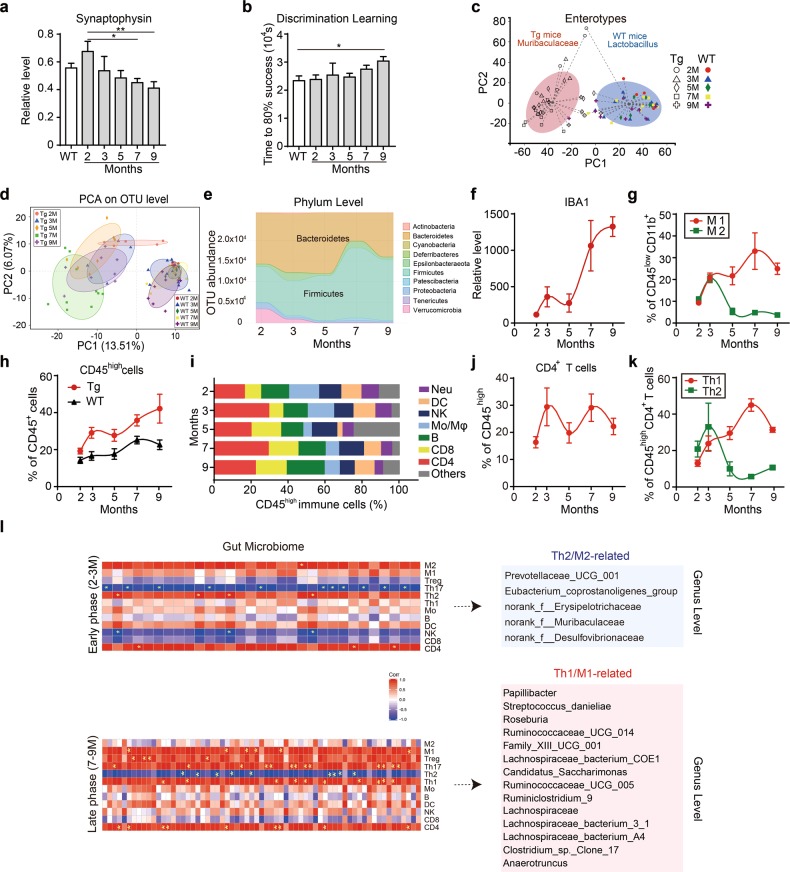
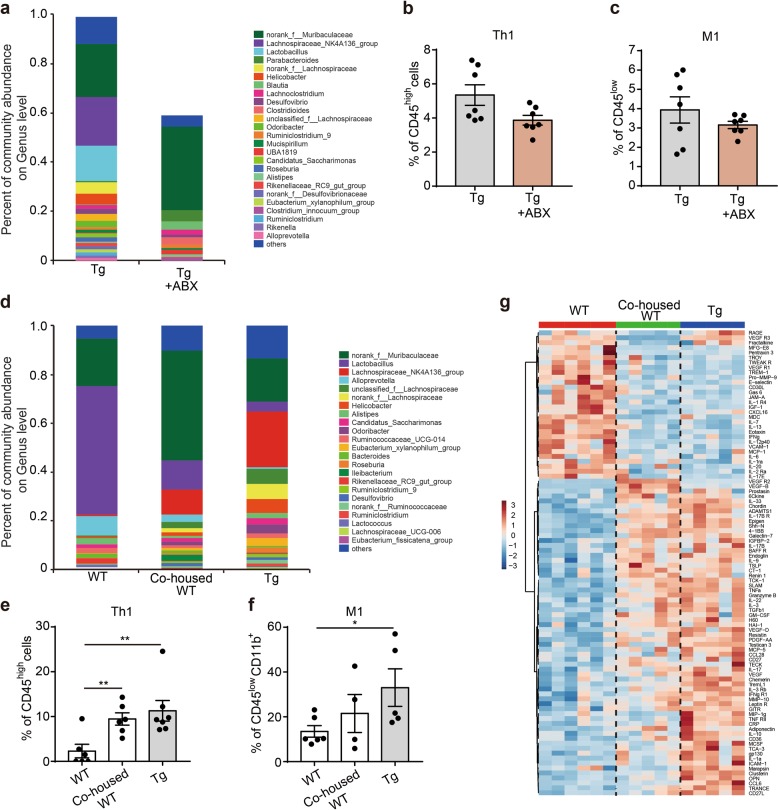
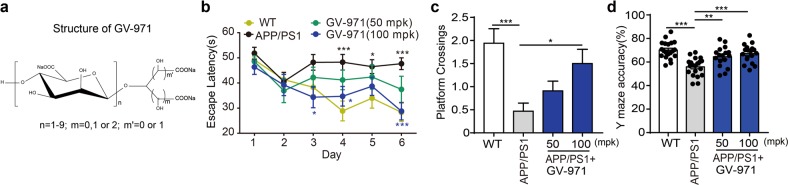
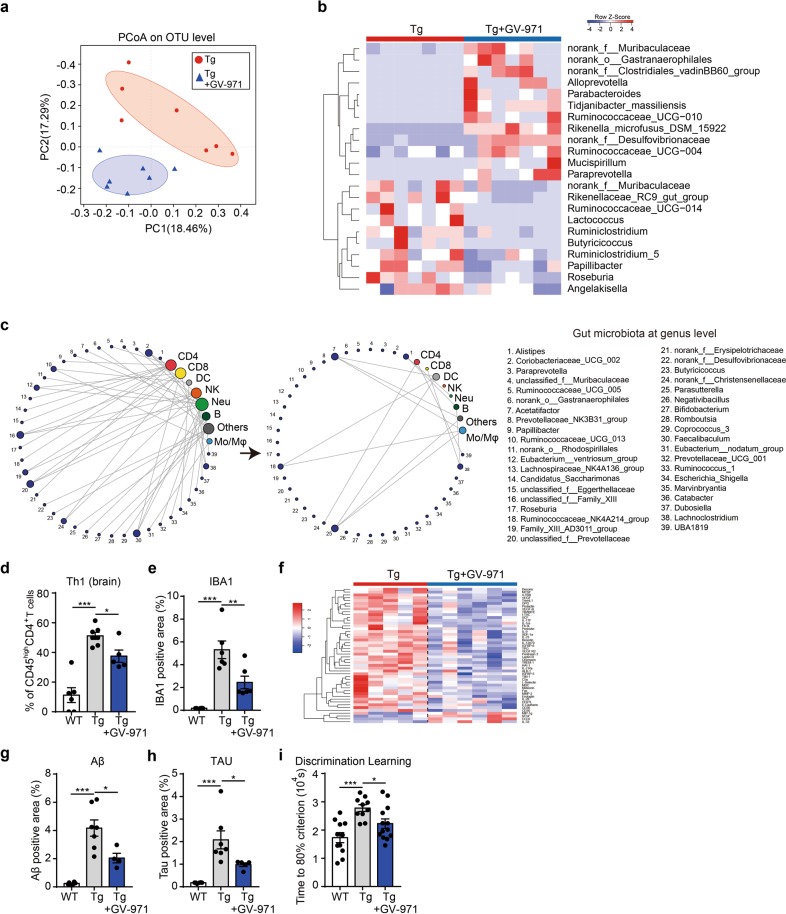
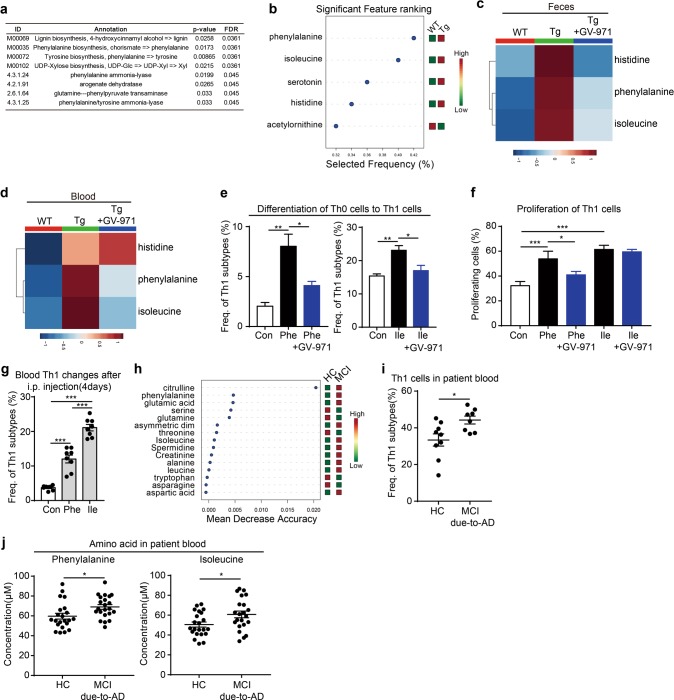
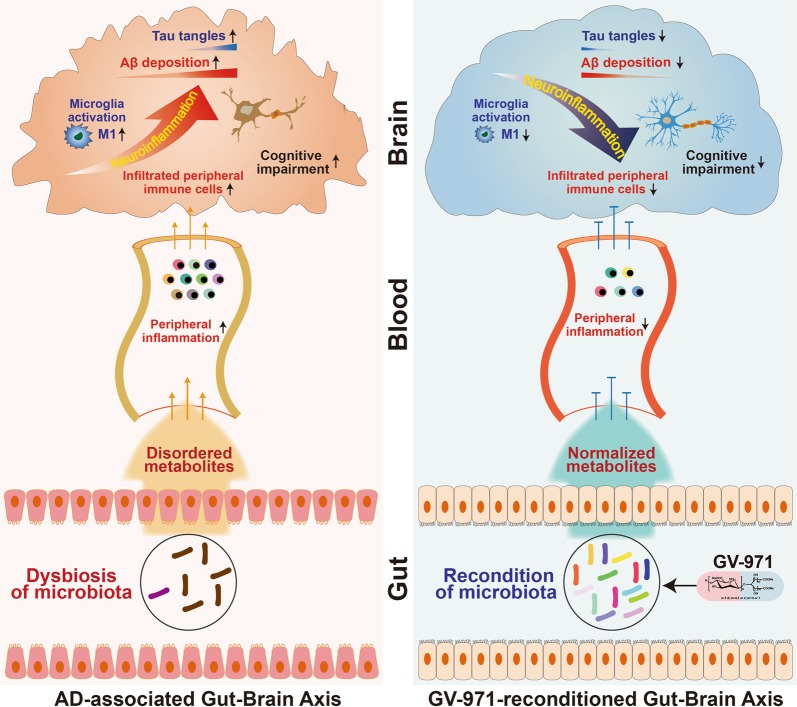
Recently, increasing evidence has suggested the association between gut dysbiosis and Alzheimer's disease (AD) progression, yet the role of gut microbiota in AD pathogenesis remains obscure. Herein, we provide a potential mechanistic link between gut microbiota dysbiosis and neuroinflammation in AD progression. Using AD mouse models, we discovered that, during AD progression, the alteration of gut microbiota composition leads to the peripheral accumulation of phenylalanine and isoleucine, which stimulates the differentiation and proliferation of pro-inflammatory T helper 1 (Th1) cells. The brain-infiltrated peripheral Th1 immune cells are associated with the M1 microglia activation, contributing to AD-associated neuroinflammation. Importantly, the elevation of phenylalanine and isoleucine concentrations and the increase of Th1 cell frequency in the blood were also observed in two small independent cohorts of patients with mild cognitive impairment (MCI) due to AD. Furthermore, GV-971, a sodium oligomannate that has demonstrated solid and consistent cognition improvement in a phase 3 clinical trial in China, suppresses gut dysbiosis and the associated phenylalanine/isoleucine accumulation, harnesses neuroinflammation and reverses the cognition impairment. Together, our findings highlight the role of gut dysbiosis-promoted neuroinflammation in AD progression and suggest a novel strategy for AD therapy by remodelling the gut microbiota.
Overview
The claims and statistics of this paper haven’t been checked yet.
Free: it reads the open-access text and checks the first 5 claims that cite a source we can check. Create a free account to check every claim.
Integrity signals
Registry
Cites
Statistics
Figures
Verification
Claims the paper makes
The claims and statistics of this paper haven’t been checked yet.
Free: it reads the open-access text and checks the first 5 claims that cite a source we can check. Create a free account to check every claim.
Claims other papers make about this one
Each is checked against this paper’s own text: does it say what the citing paper says it does?
The source backs part of the claim, not all of it — or backs it for a different population, condition or comparison.
In the citing paper
“Targeting the intestinal microbiota for the treatment of AD opens up a new way to treat other neurological diseases [11].”
From Neuroprotective Effect of Ceftriaxone on MPTP‐Induced Parkinson’s Disease Mouse Model by Regulating Inflammation and Intestinal Microbiota (2021) · cites this paper as [11]
Experimental — accuracy not yet measuredThe source backs part of the claim, not all of it — or backs it for a different population, condition or comparison.
In the citing paper
“Metabolomic analyses on the feces of these animals revealed significant changes in amino acid–related metabolism, in particular for the phenylalanine- and isoleucine-related pathways.”
From The gut-brain axis: how microbiota and host inflammasome influence brain physiology and pathology (2020) · cites this paper as [163]
Experimental — accuracy not yet measuredThe source backs part of the claim, not all of it — or backs it for a different population, condition or comparison.
In the citing paper
“The effects of GV-971 on mild to severe form of AD were tested in a phase 3 study that started in April 2014 and the results of this study highlighted the fact that GV-971 has significant cognitive benefits.”
From An update on the novel and approved drugs for Alzheimer disease (2022) · cites this paper as Wang et al., 2019
Experimental — accuracy not yet measuredThe source backs part of the claim, not all of it — or backs it for a different population, condition or comparison.
In the citing paper
“it plays a major role in the bidirectional communication between the GI tract and the central nervous system (CNS).”
From The Role of Short-Chain Fatty Acids From Gut Microbiota in Gut-Brain Communication (2020) · cites this paper as [11]
Experimental — accuracy not yet measuredThe cited source says what the claim attributes to it.
In the citing paper
“Sodium oligomannate (9, GV-971) was postulated to counteract AD by inhibiting neuroinflammation triggered by gut dysbiosis and disrupting the formation of Aβ fibrils.56,414”
From Recent advances in Alzheimer's disease: Mechanisms, clinical trials and new drug development strategies. (2024) · cites this paper as [414]
15 more claims about this paper
Create a free account to see every claim other papers make about this one.
Self-check
Percentages, sums and reported differences re-computed from the paper’s own numbers.
The self-check needs the paper’s full text.
Citations
Cites
Classification and Regression by randomForest
Liaw, A. I., & Wiener, M. C. (2007) · Cited by 18,594
Morris water maze: procedures for assessing spatial and related forms of learning and memory
Vorhees, C. V., & Williams, M. T. (2006) · Nature Protocols · doi:10.1038/nprot.2006.116 · Cited by 4,629
Oakley, H., Cole, S. L., Logan, S., Maus, E., Shao, P., Craft, J., Guillozet-Bongaarts, A., Ohno, M., Disterhoft, J., Van Eldik, L., et al. (2006) · The Journal of Neuroscience · doi:10.1523/jneurosci.1202-06.2006 · Cited by 3,530
Gut microbiota, metabolites and host immunity
Rooks, M. G., & Garrett, W. S. (2016) · Nature reviews. Immunology · doi:10.1038/nri.2016.42 · Cited by 3,409
Krasemann, S., Madore, C., Cialic, R., Baufeld, C., Calcagno, N., El Fatimy, R., Beckers, L., O’Loughlin, E., Xu, Y., Fanek, Z., et al. (2017) · Immunity · doi:10.1016/j.immuni.2017.08.008 · Cited by 2,979
NLRP3 is activated in Alzheimer’s disease and contributes to pathology in APP/PS1 mice
Heneka, M. T., Kummer, M. P., Stutz, A., Delekate, A., Schwartz, S., Vieira-Saecker, A., Griep, A., Axt, D., Remus, A., Tzeng, T.-C., et al. (2013) · Nature · doi:10.1038/nature11729 · Cited by 2,898
Differential Roles of M1 and M2 Microglia in Neurodegenerative Diseases
Tang, Y., & Le, W. (2016) · Molecular Neurobiology · doi:10.1007/s12035-014-9070-5 · Cited by 2,190
Gut microbiome alterations in Alzheimer’s disease
Vogt, N. M., Kerby, R. L., Dill-McFarland, K. A., Harding, S. J., Merluzzi, A. P., Johnson, S. C., Carlsson, C. M., Asthana, S., Zetterberg, H., Blennow, K., et al. (2017) · Scientific Reports · doi:10.1038/s41598-017-13601-y · Cited by 2,137
The microbiome and innate immunity
Thaiss, C. A., Zmora, N., Levy, M., & Elinav, E. (2016) · Nature · doi:10.1038/nature18847 · Cited by 2,012
The microbiota in adaptive immune homeostasis and disease
Honda, K., & Littman, D. R. (2016) · Nature · doi:10.1038/nature18848 · Cited by 1,846
Using MetaboAnalyst 3.0 for Comprehensive Metabolomics Data Analysis
Xia, J., & Wishart, D. S. (2016) · Current Protocols in Bioinformatics · doi:10.1002/cpbi.11 · Cited by 1,544
The central nervous system and the gut microbiome
Sharon, G., Sampson, T. R., Geschwind, D. H., & Mazmanian, S. K. (2016) · Cell · doi:10.1016/j.cell.2016.10.027 · Cited by 1,513
Lever, J., Krzywinski, M., & Altman, N. (2017) · Nature Methods · doi:10.1038/nmeth.4346 · Cited by 1,433
Cattaneo, A., Cattane, N., Galluzzi, S., Provasi, S., Lopizzo, N., Festari, C., Ferrari, C., Guerra, U. P., Paghera, B., Muscio, C., et al. (2017) · Neurobiology of Aging · doi:10.1016/j.neurobiolaging.2016.08.019 · Cited by 1,382
TREM2 Maintains Microglial Metabolic Fitness in Alzheimer’s Disease
Ulland, T. K., Song, W. M., Huang, S. C.-C., Ulrich, J. D., Sergushichev, A., Beatty, W. L., Loboda, A. A., Zhou, Y., Cairns, N. J., Kambal, A., et al. (2017) · Cell · doi:10.1016/j.cell.2017.07.023 · Cited by 1,263
Standardizing immunophenotyping for the Human Immunology Project
Maecker, H. T., McCoy, J. P., & Nussenblatt, R. (2012) · Nature Reviews Immunology · doi:10.1038/nri3158 · Cited by 1,176
Commensal microbiota affects ischemic stroke outcome by regulating intestinal γδ T cells
Benakis, C., Brea, D., Caballero, S., Faraco, G., Moore, J., Murphy, M., Sita, G., Racchumi, G., Ling, L., Pamer, E. G., et al. (2016) · Nature Medicine · doi:10.1038/nm.4068 · Cited by 1,114
Mrdjen, D., Pavlovic, A., Hartmann, F. J., Schreiner, B., Utz, S. G., Leung, B. P., Lelios, I., Heppner, F. L., Kipnis, J., Merkler, D., et al. (2018) · Immunity · doi:10.1016/j.immuni.2018.01.011 · Cited by 1,010
Microglia-derived ASC specks cross-seed amyloid-β in Alzheimer’s disease
Venegas, C., Kumar, S., Franklin, B. S., Dierkes, T., Brinkschulte, R., Tejera, D., Vieira-Saecker, A., Schwartz, S., Santarelli, F., Kummer, M. P., et al. (2017) · Nature · doi:10.1038/nature25158 · Cited by 983
Sinclair, L. V., Rolf, J., Emslie, E., Shi, Y.-B., Taylor, P. M., & Cantrell, D. A. (2013) · Nature Immunology · doi:10.1038/ni.2556 · Cited by 930
Bacterial Extracellular Polysaccharides in Biofilm Formation and Function
Limoli, D. H., Jones, C. J., & Wozniak, D. J. (2015) · Microbiology Spectrum · doi:10.1128/microbiolspec.mb-0011-2014 · Cited by 924
Gut Microbiota is Altered in Patients with Alzheimer’s Disease
Zhuang, Z.-Q., Shen, L.-L., Li, W.-W., Fu, X., Zeng, F., Gui, L., Lü, Y., Cai, M., Zhu, C., Tan, Y.-L., et al. (2018) · Journal of Alzheimer's Disease · doi:10.3233/jad-180176 · Cited by 885
Brain-Gut-Microbiota Axis in Alzheimer’s Disease
Kowalski, K., & Mulak, A. (2019) · Journal of Neurogastroenterology and Motility · doi:10.5056/jnm18087 · Cited by 826
APP mouse models for Alzheimer’s disease preclinical studies.
Sasaguri, H., Nilsson, P., Hashimoto, S., Nagata, K., Saito, T., De Strooper, B., Hardy, J., Vassar, R., Winblad, B., & Saido, T. C. (2017) · The EMBO Journal · doi:10.15252/embj.201797397 · Cited by 793
Alzheimer's disease drug development pipeline: 2018
Cummings, J., Lee, G., Ritter, A., & Zhong, K. (2018) · Alzheimer's & Dementia: Translational Research & Clinical Interventions · doi:10.1016/j.trci.2018.03.009 · Cited by 697
The role of peripheral immune cells in the CNS in steady state and disease
Prinz, M., & Priller, J. (2017) · Nature Neuroscience · doi:10.1038/nn.4475 · Cited by 657
Minter, M. R., Zhang, C., Leone, V., Ringus, D. L., Zhang, X., Oyler-Castrillo, P., Musch, M. W., Liao, F., Ward, J. F., Holtzman, D. M., et al. (2016) · Scientific Reports · doi:10.1038/srep30028 · Cited by 655
Regulation of inflammation by microbiota interactions with the host
Blander, J. M., Longman, R. S., Iliev, I. D., Sonnenberg, G. F., & Artis, D. (2017) · Nature Immunology · doi:10.1038/ni.3780 · Cited by 646
He, Z., Guo, J. L., McBride, J. D., Narasimhan, S., Kim, H., Changolkar, L., Zhang, B., Gathagan, R. J., Yue, C., Dengler, C., et al. (2018) · Nature Medicine · doi:10.1038/nm.4443 · Cited by 645
Jawhar, S., Trawicka, A., Jenneckens, C., Bayer, T. A., & Wirths, O. (2012) · Neurobiology of Aging · doi:10.1016/j.neurobiolaging.2010.05.027 · Cited by 623
Sochocka, M., Donskow-Łysoniewska, K., Diniz, B. S., Kurpas, D., Brzozowska, E., & Leszek, J. (2019) · Molecular Neurobiology · doi:10.1007/s12035-018-1188-4 · Cited by 584
High-dimensional, single-cell characterization of the brain's immune compartment
Korin, B., Ben-Shaanan, T. L., Schiller, M., Dubovik, T., Azulay-Debby, H., Boshnak, N. T., Koren, T., & Rolls, A. (2017) · Nature Neuroscience · doi:10.1038/nn.4610 · Cited by 421
Neuroinflammation: Microglia and T Cells Get Ready to Tango
Schetters, S. T. T., Gomez-Nicola, D., Garcia-Vallejo, J. J., & Van Kooyk, Y. (2018) · Frontiers in Immunology · doi:10.3389/fimmu.2017.01905 · Cited by 382
Dietary salt promotes neurovascular and cognitive dysfunction through a gut-initiated TH17 response
Faraco, G., Brea, D., Garcia-Bonilla, L., Wang, G., Racchumi, G., Chang, H., Buendia, I., Santisteban, M. M., Segarra, S. G., Koizumi, K., et al. (2018) · Nature Neuroscience · doi:10.1038/s41593-017-0059-z · Cited by 343
Ajami, B., Samusik, N., Wieghofer, P., Ho, P. P., Crotti, A., Bjornson, Z., Prinz, M., Fantl, W. J., Nolan, G. P., & Steinman, L. (2018) · Nature Neuroscience · doi:10.1038/s41593-018-0100-x · Cited by 338
Kimura, R., & Ohno, M. (2009) · Neurobiology of Disease · doi:10.1016/j.nbd.2008.10.006 · Cited by 333
Vidal, R., Ma, Y., & Sastry, S. S. (2016) · Interdisciplinary Applied Mathematics · doi:10.1007/978-0-387-87811-9_2 · Cited by 324
Matarin, M., Salih, D. A., Yasvoina, M., Cummings, D. M., Guelfi, S., Liu, W., Nahaboo Solim, M. A., Moens, T. G., Paublete, R. M., Ali, S. S., et al. (2015) · Cell Reports · doi:10.1016/j.celrep.2014.12.041 · Cited by 290
Sex-specific effects of microbiome perturbations on cerebral Aβ amyloidosis and microglia phenotypes
Dodiya, H. B., Kuntz, T., Shaik, S. M., Baufeld, C., Leibowitz, J., Zhang, X., Gottel, N., Zhang, X., Butovsky, O., Gilbert, J. A., et al. (2019) · Journal of Experimental Medicine · doi:10.1084/jem.20182386 · Cited by 288
Human gut microbiota: the links with dementia development
Alkasir, R., Li, J., Li, X., Jin, M., & Zhu, B. (2017) · Protein & Cell · doi:10.1007/s13238-016-0338-6 · Cited by 285
Zhang, X., Deeke, S. A., Ning, Z., Starr, A. E., Butcher, J., Li, J., Mayne, J., Cheng, K., Liao, B., Li, L., et al. (2018) · Nature Communications · doi:10.1038/s41467-018-05357-4 · Cited by 258
Thomson, P., Medina, D. A., & Garrido, D. (2018) · Food Microbiology · doi:10.1016/j.fm.2017.09.001 · Cited by 241
Intrahippocampal LPS injections reduce Aβ load in APP+PS1 transgenic mice
DiCarlo, G. (2001) · Neurobiology of Aging · doi:10.1016/s0197-4580(01)00292-5 · Cited by 223
Peripheral immune system in aging and Alzheimer’s disease
Cao, W., & Zheng, H. (2018) · Molecular Neurodegeneration · doi:10.1186/s13024-018-0284-2 · Cited by 214
Merlini, M., Kirabali, T., Kulic, L., Nitsch, R. M., & Ferretti, M. T. (2018) · Neurodegenerative Diseases · doi:10.1159/000486200 · Cited by 212
MetaPro-IQ: a universal metaproteomic approach to studying human and mouse gut microbiota
Zhang, X., Ning, Z., Mayne, J., Moore, J. I., Li, J., Butcher, J., Deeke, S. A., Chen, R., Chiang, C.-K., Wen, M., et al. (2016) · Microbiome · doi:10.1186/s40168-016-0176-z · Cited by 202
Herber, D. L., Mercer, M., Roth, L. M., Symmonds, K., Maloney, J. L., Wilson, N., Freeman, M. J., Morgan, D., & Gordon, M. N. (2007) · Journal of Neuroimmune Pharmacology · doi:10.1007/s11481-007-9069-z · Cited by 167
Chen, C., Wang, Z., Zhang, Z., Liu, X., Kang, S. S., Zhang, Y., & Ye, K. (2018) · Proceedings of the National Academy of Sciences · doi:10.1073/pnas.1718683115 · Cited by 167
MBRole: enrichment analysis of metabolomic data
Chagoyen, M., & Pazos, F. (2011) · Bioinformatics · doi:10.1093/bioinformatics/btr001 · Cited by 146
Distinct gene expression profiles of human type 1 and type 2 T helper cells
Hämäläinen, H., Zhou, H., Chou, W., Hashizume, H., Heller, R. A., & Lahesmaa, R. (2001) · Genome biology · doi:10.1186/gb-2001-2-7-research0022 · Cited by 108
Mouse Naïve CD4+ T Cell Isolation and In vitro Differentiation into T Cell Subsets
Flaherty, S., & Reynolds, J. M. (2015) · Journal of Visualized Experiments · doi:10.3791/52739 · Cited by 107
Glucosamine as carbon source for amino acid-producing Corynebacterium glutamicum
Uhde, A., Youn, J.-W., Maeda, T., Clermont, L., Matano, C., Krämer, R., Wendisch, V. F., Seibold, G. M., & Marin, K. (2012) · Applied Microbiology and Biotechnology · doi:10.1007/s00253-012-4313-8 · Cited by 97
Of microbes and minds: A narrative review on the second brain aging
Calvani, R., Picca, A., Lo Monaco, M. R., Landi, F., Bernabei, R., & Marzetti, E. (2018) · Frontiers in Medicine · doi:10.3389/fmed.2018.00053 · Cited by 92
Assessment of different carbohydrates as exogenous carbon source in cultivation of cyanobacteria
Francisco, É. C., Franco, T. T., Wagner, R. C., & Lopes, E. J. (2014) · Bioprocess and Biosystems Engineering · doi:10.1007/s00449-013-1121-1 · Cited by 90
Kanno, T., Tsuchiya, A., & Nishizaki, T. (2014) · Behavioural Brain Research · doi:10.1016/j.bbr.2014.08.034 · Cited by 76
Microbial Immuno-Communication in Neurodegenerative Diseases
Main, B. S., & Minter, M. R. (2017) · Frontiers in Neuroscience · doi:10.3389/fnins.2017.00151 · Cited by 68
Li, L., Zhang, X., Ning, Z., Mayne, J., Moore, J. I., Butcher, J., Chiang, C., Mack, D. R., Stintzi, A., & Figeys, D. (2017) · Journal of Proteome Research · doi:10.1021/acs.jproteome.7b00461 · Cited by 54
Remmelink, E., Smit, A. B., Verhage, M., & Loos, M. (2016) · Learning & Memory · doi:10.1101/lm.042085.116 · Cited by 52
Tracing investment in drug development for Alzheimer disease
Kodamullil, A. T., Zekri, F., Sood, M., Hengerer, B., Canard, L., McHale, D., & Hofmann‐Apitius, M. (2017) · Nature Reviews Drug Discovery · doi:10.1038/nrd.2017.169 · Cited by 49
Linking T cells to Alzheimer's disease: from neurodegeneration to neurorepair
Bryson, K. J., & Lynch, M. A. (2015) · Current Opinion in Pharmacology · doi:10.1016/j.coph.2015.10.003 · Cited by 36
Mannoside recognition and degradation by bacteria
Ladevèze, S., Laville, É., Despres, J., Mosoni, P., & Potocki-Véronèse, G. (2016) · Biological reviews/Biological reviews of the Cambridge Philosophical Society · doi:10.1111/brv.12316 · Cited by 18
Cited by
Scheltens, P., De Strooper, B., Kivipelto, M., Holstege, H., Chételat, G., Teunissen, C. E., Cummings, J., & van der Flier, W. M. (2021) · The Lancet · doi:10.1016/s0140-6736(20)32205-4 · Cited by 5,465
The Role of Short-Chain Fatty Acids From Gut Microbiota in Gut-Brain Communication
Silva, Y. P., Bernardi, A., & Frozza, R. L. (2020) · Frontiers in Endocrinology · doi:10.3389/fendo.2020.00025 · Cited by 3,043
The gut microbiota–brain axis in behaviour and brain disorders
Morais, L. H., Schreiber, H. L., & Mazmanian, S. K. (2021) · Nature Reviews Microbiology · doi:10.1038/s41579-020-00460-0 · Cited by 2,149
Role of neuroinflammation in neurodegeneration development
Zhang, W., Xiao, D., Mao, Q., & Xia, H. (2023) · Signal Transduction and Targeted Therapy · doi:10.1038/s41392-023-01486-5 · Cited by 1,668
Microbiota–gut–brain axis and its therapeutic applications in neurodegenerative diseases
Loh, J. S., Mak, W. Q., Tan, L. K. S., Ng, C. X., Chan, H. H., Yeow, S. H., Foo, J. B., Ong, Y. S., How, C. W., & Khaw, K. Y. (2024) · Signal Transduction and Targeted Therapy · doi:10.1038/s41392-024-01743-1 · Cited by 1,193
Metadata
- Authors
- Wang, X., Sun, G., Feng, T., Zhang, J., Huang, X., Wang, T., Xie, Z., Chu, X., Yang, J., Wang, H., Chang, S., Gong, Y., Ruan, L., Zhang, G., Yan, S., Lian, W., Du, C., Yang, D., Zhang, Q., Lin, F., Liu, J., Zhang, H., Ge, C., Xiao, S., Ding, J., & Geng, M.
- Affiliations
- Chinese Academy of Sciences (CN)
- Shanghai Jiao Tong University (CN)
- Corresponding author
- Geng, Meiyu
- ORCID
- Venue
- Cell Research
- Published
- 2019-09-06
- Volume
- 29
- Issue
- 10
- Pages
- 787-803
- ISSN
- 1001-0602 (ISSN-L)
- 1748-7838
- PMC
- PMC6796854
- OpenAlex
- W2972007077
- Cited by
- 1,144
- References
- 61
- Citations by year
- 2026: 104 · 2025: 146 · 2024: 179 · 2023: 196 · 2022: 200 · 2021: 175 · 2020: 132 · 2019: 11
- FWCI
- 89.30
- Type
- journal article
- Language
- en
- Open access
- hybrid
- doi.org
- Licence
- cc-by
- creativecommons.org/licenses/by/4.0 (tdm)
- creativecommons.org/licenses/by/4.0 (vor)
- Locations
- Cell Research (publishedVersion, cc-by)
- PubMed Central (publishedVersion, cc-by)
- PubMed (publishedVersion)
- Funders
- Chinese Academy of Sciences (XDA12040101)
- National Key New Drug Creation and Manufacturing Program, Ministry of Science and Technology
- Topics
- Life Sciences › Neuroscience › Cellular and Molecular Neuroscience › Alzheimer's disease research and treatments
- Life Sciences › Biochemistry, Genetics and Molecular Biology › Molecular Biology › Gut microbiota and health
- Life Sciences › Neuroscience › Neurology › Neuroinflammation and Neurodegeneration Mechanisms
- Keywords
- Alzheimer's disease, gut microbiota, gut dysbiosis, neuroinflammation, phenylalanine, isoleucine, Th1 cells, mild cognitive impairment, gut-brain axis, cognitive impairment
- MeSH terms
- Gastrointestinal Microbiome, Alzheimer Disease, Amino Acids, Animals, Anti-Bacterial Agents, Bacteria, Disease Models, Animal, Humans, Isoleucine, Mannose, Mice, Inbred C57BL, Mice, Transgenic, Oligosaccharides, Phenylalanine, Clinical Trials, Phase III as Topic, Microglia, Th1 Cells, Disease Progression, Maze Learning, Mice, Cognitive Dysfunction
About these checks
Registry, retraction, Cites and statistics results are computed, not judged, with one exception: a printed reference that no index lists is read once by a model before it counts as a citation error. Claims are extracted by a model and kept only when their quote appears verbatim in the text; each cited source is then checked, with a model’s help, for whether it says what the claim relies on. Those verdicts can be wrong — read the claim’s quote and the cited source before relying on one.
Statistics and arithmetic are recomputed, not judged.
Confidence bands are shown only for fields calibrated on our annotated test set. None is calibrated yet, so no band is shown.
What counts as a claim ›How we measure confidence ›How we check this ›
Are you an author, or do you see a problem with this page? Request a review
Data sources
Bibliographic data: Semantic Scholar, OpenAlex, Crossref.
Contains information from the Semantic Scholar Academic Graph Datasets, made available under the ODC Attribution License (ODC-BY 1.0).
Semantic Scholar’s data is described in: Kinney, R., et al. (2023). The Semantic Scholar Open Data Platform. arXiv:2301.10140.
